• About Me
  • Other Writings
  • Interview Clips
  • All About Me: American Racism, American Narcissism, and the Conversation America Can’t Have
  • Video Clips
  • Boy @ The Window Pictures
  • Boy @ The Window Theme Music

Notes from a Boy @ The Window

~

Notes from a Boy @ The Window

Category Archives: Pittsburgh

We Really Are A Center-Right Nation

28 Thursday Jul 2016

Posted by decollins1969 in 1, culture, Eclectic, Patriotism, Pittsburgh, Politics, Pop Culture, race, Sports

≈ Leave a comment

Tags

"U-S-A! U-S-A! U-S-A!", Center-Right Nation, Corporate Media, Delusions, DNC Convention, Election 2016, Hyper-Patriotism, Leon Panetta, Michael Moore, News, Two-Party System
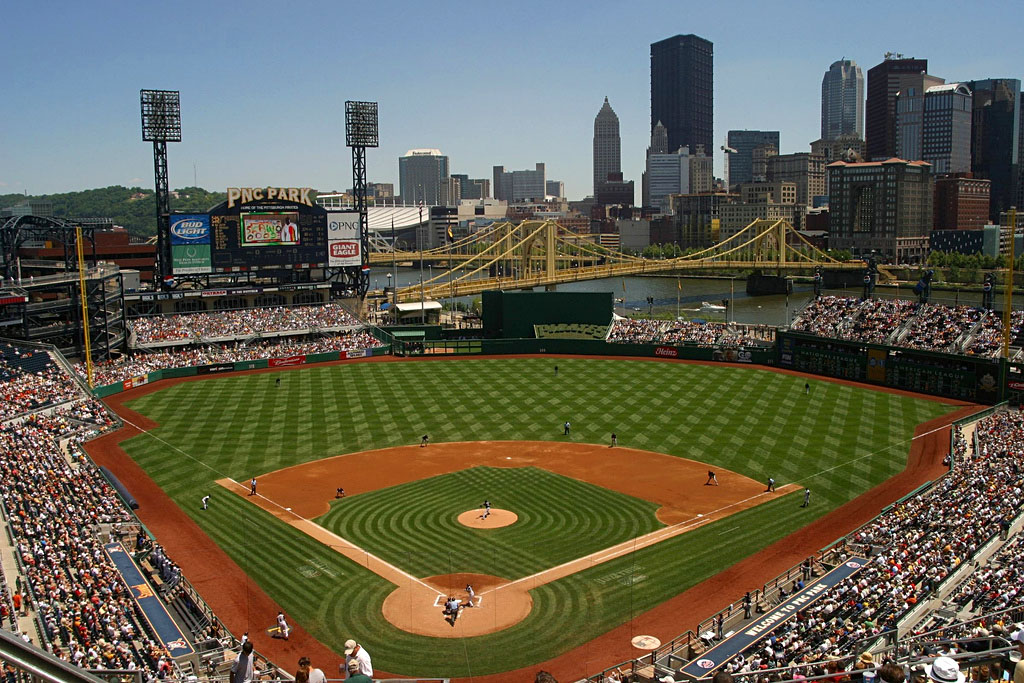

First pitch, Mets vs Pirates (Pedro Martinez pitched for the Mets this day), July 20, 2005. (alpineinc via Wikipedia/Flickr). Released to public domain via CC-SA-3.0.

First pitch, Mets vs Pirates (Pedro Martinez pitched for the Mets this day), PNC Park, Pittsburgh, PA, July 20, 2005. (alpineinc via Wikipedia/Flickr). Released to public domain via CC-SA-3.0.

Folks, I cannot put it any simpler than this. Imagine a baseball game in which all the players played between home plate, second base, first base, and from center field, right-center field, and far right field. It would be a harder game to watch, and it’s hard enough to sit through already. That is the state of America’s national discourse and decision-making. Perhaps it’s always been the default setting on which the US was built four centuries ago.

Crop of PNC Park (as metaphor for the political state of the US), Pittsburgh, PA, July 20 2005 (alpineinc via Wikipedia/Flickr). Released to public domain via CC-SA-3.0.

Crop of PNC Park (as metaphor for the political state of the US), Pittsburgh, PA, July 20 2005 (alpineinc via Wikipedia/Flickr). Released to public domain via CC-SA-3.0.

One of the more optimist points that Michael Moore attempted to make in his books Stupid White Men (2001) and Dude, Where’s My Country? (2003) was that he saw that, after all, the US was a center-left nation. Moore’s evidence came from polls suggesting that most Americans would support gun control legislation and gay marriage, were pro-choice and peace doves. His wasn’t the only White progressive voice trying to flip the script on some of the media’s narrative that the US has and remains mostly center-right politically and ideologically. Bill Maher, Jon Stewart, and a host of comedians-turned-news-makers have similar points in words or deeds over the past two decades.

The problem is, they are dead wrong. The US really is center-right. Why? Because polls are but a snapshot of people and their thinking. It’s a moment where people may put on their best selves, and frequently skew their attitudes toward more forward-thinking ideals, even if they don’t believe them. Polls are about as accurate as a Soviet/Iraqi Scud missile from the First Gulf War. And they’re also about as worthless.

The media contributes to this delusion of center-left by portraying everything as if there are two sides to it. CNN, MSNBC, the major mainstream networks, even FOX News frames everything between liberal and conservative, as if 160 million people belong to one side or the other. While the best arguments on most issues tend to be left-of-center, they aren’t the best just because of one’s ideology. Most left-of-center arguments contain nuance and context, two things that have been anathema in the world of mainstream corporate media for at least a generation.

Since the press presents everything from agricultural subsidies to zoo protections as an either-or, left-or-right, good-or-bad, nuance and context are missing in action, like whole grain from Wonder Bread. So really, if there are any differences in argument, they are in degree. Being pro-choice with a plethora of restrictions is a centrist argument, not a leftist one. Being for some regulation of military-style rifles and guns is a centrist argument. Wanting to raise the minimum wage to $15 per hour — the equivalent of the minimum wage in the mid-1990s — is a centrist argument.

Chants of "No More War!" and "U-S-A! U-S-A! U-S-A!" erupt from crowd during Leon Panetta's 2016 DNC Convention speech, Philadelphia, PA, July 27, 2016. (http://theguardian.com).

Chants of “No More War!” and “U-S-A! U-S-A! U-S-A!” erupt from crowd during Leon Panetta’s 2016 DNC Convention speech, Philadelphia, PA, July 27, 2016. (http://theguardian.com).

Most scholars have it correct when they say that the Democratic Party has lurched to the right over the past forty years. That lurch kicked in big time during the Bill Clinton years. The corporate mainstream media during the DNC Convention in Philadelphia has discussed the “left-wing” of the Democratic Party all week. But they have it wrong. This so-called left-wing is really just “less centrist.”

Nothing proved this more than last night’s competing chants during Leon Panetta’s speech. “No more war!” was quickly drowned out by the narcissistic chants of “U-S-A! U-S-A! U-S-A!” These are the same chants repeated by RNC delegates in Cleveland the week before. Both chants were meant to shut up those handful of folk committed to something other than getting in line with a political process or their party’s nominee. Both chants basically said to anyone who is truly in left-center field or further left than that to “shut the hell up.” The tone and rhetoric of the two parties may be different — and stances on cultural issues may be as well. But overall, the state of the American belief in the plutocratic/oligarchic nature of our democracy and projection of American power remains strong.

Independence Day On The 6’s

04 Monday Jul 2016

Posted by decollins1969 in 1, Boy @ The Window, culture, Eclectic, High Rise Buildings, Jimme, Marriage, Mount Vernon New York, My Father, New York City, Patriotism, Pittsburgh, Pop Culture, race, Sports, Work, Youth

≈ Leave a comment

Tags

1976, 1996, 2006, 7 Train, Adulthood, Coming-of-Age, Dwight Gooden, Escapism, Growing Up, Independence Day, July 4th, Lee Iacocca, Manhood, Metro-North, Mets, New York Mets, Nolan Ryan, Peace, Shea Stadium, Siblings, Statue of Liberty, Subway, Technisort


Shea Stadium (taken from 7 Subway), Flushing Meadows, Queens, NY, September 10, 2008. (Gary Dunaier via http://farm4.static.flickr.com/). In public domain.

Shea Stadium (taken from 7 Subway), Flushing Meadows, Queens, NY, September 10, 2008. (Gary Dunaier via http://farm4.static.flickr.com/). In public domain.

For me, the 6’s are ’76, ’86, ’96, and ’06. For 2016, all I’ve done today is make BBQ chicken legs and thigh (after an hour of so of marinating), corn on the cob, mac and cheese, and New York Style blondies with chocolate chips and walnuts. It’s a rainy 240th anniversary of America’s independence from the United Kingdom of Great Britain, England, Wales, Scotland, and Northern Ireland. About as dreary the Mid-Atlantic and the nation, really, can be during an election cycle.

It wasn’t that way for most of my on-the-6 Independence Days. I’ve talked about my first one, the bicentennial of 1976, the summer of “baseball, hot dogs, apple pie, and Chevrolet.” That Saturday down in a ship and fireworks smoked filled New York Harbor, followed a train ride with my inebriated father to New Haven. I slept more peacefully on that train ride than I probably did at home. At least, until the conductor woke us up to let us know we were in Connecticut. We were lucky the trains in and out of New York were free that day.

Typical Pittsburgh fireworks show for Independence Day, Point State Park, Pittsburgh, PA, July 4, 2014. (http://davedicello.com/).

Typical Pittsburgh fireworks show for Independence Day, Point State Park, Pittsburgh, PA, July 4, 2014. (http://davedicello.com/).

Independence Day/Week 1996 was pretty good, if not as meandering. Me and my future spouse Angelia went to Point State Park in Downtown Pittsburgh to watch the fireworks. For all of the issues that po-dunk Pittsburgh has, bad fireworks shows weren’t one of them. I needed the break, after a spring of turmoil with my advisor Joe Trotter and weeks revised my then 430-page dissertation (I would end up writing seventy-five pages [net] that month while doing a second set of revisions). It rained that afternoon and early evening, but it cleared up at 8 pm, just in time for some excellent fireworks. We perched ourselves where we could see sparkles and artwork over the confluence of the Allegheny, Monongahela, and Ohio Rivers.

Tuesday, July 4th of ’06 wasn’t memorable. It was my first summer working on Boy @ The Window, and I had already began planning my escape from AED and the daily grind of nonprofit work and raising money. I think we had my sister-in-law over.  I made some ribs and chicken, bought dinner rolls and macaroni salad, and talked mostly about my then nearly three-year-old son and his potty training woes. Ah, the boring stability of a more typical middle-class American life!

Of all my Independence Days — on a “6” year or not — one stands out over all the rest. Friday, July 4, 1986. It was the grand re-opening of the Statue of Liberty, courtesy of one-time Chrysler head Lee Iacocca and The Statue of Liberty-Ellis Island Foundation, which had raised hundreds of millions to restore both symbols of American inclusion (via European immigrants, at least) and American freedom to museum-quality glory. My Mom, my idiot stepfather Maurice, and my younger siblings Sarai and Eri went down to Battery Park by Subway and Bee-Line bus to see the grand ships and fireworks for that celebration of the Statue of Liberty at 100 years old.

Dwight Gooden, aka, "Dr. K," Shea Stadium, 1986. (Source/http://itsonbroadway.wordpress.com/2011/05/16/dwight-gooden-aka-dr-k/).

Dwight Gooden, aka, “Dr. K,” Shea Stadium, 1986. (Source/http://itsonbroadway.wordpress.com/2011/05/16/dwight-gooden-aka-dr-k/).

Not so for me and the rest of us. I took me, my older brother Darren, and my then near-seven year-old brother Maurice and nearly five year-old brother Yiscoc to Shea Stadium to watch the Mets play. It was either a 1:05 pm or 1:35 pm start, I don’t remember. What I do remember, though, is that was a beautiful eighty-five degree afternoon, beautiful because it wasn’t particularly humid, and there were no storm clouds to be found that Friday. Dwight Gooden was on the mound for the Mets, starting against the all-time great Nolan Ryan. It was built up to be a duel, and it was.

Keith Hernandez drove in a run in the first, and that was it until the top of the seventh inning, when Dr. K gave up a home run to Kevin Bass. Other than that, fly balls, walks, double-plays, and strikeouts were the order of the day. Lenny Dykstra drove in the game-winning run with a double to right-center field at the bottom of the seventh inning off of a reliever, as Ryan was out after beginning the bottom of the sixth giving up a walk and a hit. Despite giving up five walks and only striking out four, Gooden got a complete-game win, and 30,000 saw the Mets go to 54-21, well on their way toward their World Series title for 1986.

That was already a good day. But it so much better with three of my brothers there, away from 616 and Mount Vernon, hanging out, without an adult to supervise, or rather, abuse us in some way. It was one of the first times I actually felt like a responsible adult. I took the four of us down to the city on Metro-North at the Pelham stop, rode into grimy Grand Central, took the Shuttle train to Times Square, and then the 7 Subway to Shea. Maurice and Yiscoc were so enamored with the trains and the city that it seemed all they did was stare at skyscrapers and out of train windows when we weren’t at the game. Darren, though mostly quiet, at least wasn’t staring off into space plotting some revenge on me for my “5” on the AP US History Exam while doing the Wave.

Shea Stadium, second level, behind visitors dugout, Flushing Meadow, Queens, NY, 2008. (http://www.bloggingmets.com/)

Shea Stadium, second level, behind visitors dugout, Flushing Meadow, Queens, NY, 2008. (http://www.bloggingmets.com/)

It was so cheap to do what we did that day. The four upper-deck, left-of-home plate tickets we bought cost $4 each, but each hot dog was $3, and the sodas were $2. apiece Given my $3.40-per-hour job with Technisort, though, the $50 excursion wasn’t so cheap that I wasn’t thinking about sneaking a Sabrett hot dog from a street vendor in before we got to the stadium. To be sure, the hot dogs at Shea were better than my usual fare on the street or at Gray’s Papaya.

It was probably the best day I had during my Boy @ The Window years. I was with innocent family members, watching my favorite team and one of my favorite players. I was lost in the humongous human mob of New York on a double-whammy of an Independence Day weekend. I slept well that evening, knowing that I’d drawn a 10 am-2 pm shift that Saturday. I planned on buying a new Walkman at the Cross County Mall that Saturday afternoon. A normal weekend for many sixteen-year-olds was a small eye-wall in the chaotic hurricane that was my life back then.

Everyone Needs A Ferris Bueller

16 Thursday Jun 2016

Posted by decollins1969 in 1, Boy @ The Window, culture, Eclectic, Mount Vernon High School, Mount Vernon New York, Movies, Pittsburgh, Pop Culture, race, University of Pittsburgh, Youth

≈ 2 Comments

Tags

Alan Ruck, Chicago, Comedy, Diversity, Dramedy, Ferris Bueller's Day Off (1986), Friendships, Interventions, Intolerance, John Hughes, Lily-White, Matthew Broderick, Mia Sara, Narcissism, Pitt, Teenage Angst


Mia Sara, Alan Ruck, and Matthew Broderick in Ferris Bueller's Day Off (1986) screen shot, June 16, 2016. (http://www.playbuzz.com).

Mia Sara, Alan Ruck, and Matthew Broderick in Ferris Bueller’s Day Off (1986) screen shot, June 16, 2016. (http://www.playbuzz.com).

This week mark thirty years since the release of the Hollywood hit Ferris Bueller’s Day Off (1986). The movie is mostly known for Matthew Broderick imbuing energy into the title character, taking his best friend Cameron Frye (Alan Ruck played him) and his girlfriend Sloane Peterson (Mia Sara played her) on a joy ride through North Side Chicago while embarrassing his high school principal and avoiding his parents. Going to a Cubs game, insinuating himself into a parade, and otherwise making Chicago pretty lily-White. For most watchers, Ferris Bueller’s Day Off was a John Hughes comedy. Period.

Not so for me. At least once I finally watched the film. Like with most movies made between ’81 and ’87, I didn’t see it when it first came out. With my high school classmates only quoting Ben Stein’s character saying “Bueller?” over and over again, or commenting on the ability of anyone to roam the streets of Chicago so easily between roughly 8 am and 6 pm in the middle of the work week, I had no interest in seeing it. I eventually caught bits and pieces of scenes from Ferris Bueller on cable, but by nearly a decade after the movie first came out, I’d seen maybe fifteen minutes of the film.

It took my eventual wife Angelia to get me to see the movie in ’96. By then, I’d seen other Matthew Broderick films, enough where I was willing to give a comedy on White teen Gen Xer angst a chance. For whatever reason, I realized for the first time Ferris Bueller really wasn’t a comedy. It had plenty of funny moments, but at best it was a dramedy. I even remember saying to Angelia after I watched it, “Are you sure this is a comedy?”

The movie’s not-so-hidden theme is friendship. In this case, how one friend in Ferris Bueller goes above and beyond as a high school senior to save his best friend from a quietly tragic future. In Cameron’s case, one in which he wouldn’t be in charge of the shape of his life. It would either be guided by his domineering father (whom we never see in the movie) or by some future domineering wife. Apparently that was the real reason behind all of Ferris Bueller’s days off from school in the final months of his senior year.

Cameron Frye (Alan Ruck) underwater in pool (literal and figurative), Ferris Bueller's Day Off (1986), June 16, 2016. (http://www.giphy.com).

Cameron Frye (Alan Ruck) underwater in pool (literal and figurative), Ferris Bueller’s Day Off (1986), June 16, 2016. (http://www.giphy.com).

By Bueller and his girlfriend colluding to permit Cameron his first look at a naked female body and performing an intervention through the use of Cameron’s father’s precious classic car, Cameron would somehow recognize the need to break free. That Bueller also got to thumb his nose at authority and hang out with his girlfriend was a bonus, of course. Otherwise, the movie is a zany comedy about playing hooky in the streets of Chicago on the most unlikely of school days in the middle of May.

I certainly didn’t have any Ferris Buellers in my life during my Humanities years. If there were classmates like him, they didn’t shine a light on me. Sure, there was White male angst, Black male angst, teenager angst, middle class angst, and Black and White female angst at Mount Vernon High School. I would assume now that this has been true as long as the concept of teenager and comprehensive high school has existed (about eighty years in all). But to deliberately perform an intervention on behalf of a friend to save them from themselves and their upbringing? I’m sure it happened, just not with me or any of my Humanities classmates.

This realization begs a question. Would a Ferris Bueller have emerged in my life in middle school or in high school if I were from a family of means? All issues aside, the reason why Bueller and Frye were friends probably had as much to do with location as anything else. And with residential segregation also comes income segregation. Money may not have been the reason the two teenagers were friends. Yet with both families firmly in the ranks of the affluent (not one percent, but certainly in the top 10-25 percent), their friendship is more unlikely than a Cubs game and a White ethnic pride parade on the same day. The answer to my question, of course, is no. Diversity without acknowledgement or discussion — whether by race, gender, and/or class — doesn’t exist, leaving the teenage angst that was my experience unresolved until college.

The rainbow flag waving in the wind at San Francisco's Castro District, San Francisco, CA, August 5, 2010. (Benson Kua via Wikipedia). Released to public domain via CC-SA-2.0.

The rainbow flag waving in the wind at San Francisco’s Castro District, San Francisco, CA, August 5, 2010. (Benson Kua via Wikipedia). Released to public domain via CC-SA-2.0.

As for the events in Orlando in the past week, aside from the obvious implications of misogyny, homophobia, racism, and hate/terror, there is another more subtle issue. That people who grow up with angst but minus interventions can easily become disaffected adults. Obviously most of these adults don’t become mass shooters or stalkers who kill. But it does mean that in a society geared toward narcissistic individualism and winning, there are millions out of touch with themselves and lacking empathy (forget about love) for other human beings.

Ferris Bueller’s Day Off is a sense that we all need one friend to intervene in our lives at least one time or for one day. We need that one day, to draw perspective, or maybe even, to find out that we truly need help and healing. My Ferris Buellers didn’t intervene until college at the University of Pittsburgh. They were gay and straight, Christian and Jewish and atheist, old and young, men and women, and Black, White, Brown, and Yellow. They came into my life later than I wanted, but not too late for me.

Lifetimes of Hypocrisy

08 Wednesday Jun 2016

Posted by decollins1969 in 1, Academia, Carnegie Mellon University, culture, Eclectic, Pittsburgh, Politics, Pop Culture, race, University of Pittsburgh, Work, Youth

≈ Leave a comment

Tags

"Hard Habit to Break" (1984), Academia, Academy for Educational Development, AED, Capitalism, Chicago, CMU, Contradictions, Disillusionment, Hypocrisy, Illusions, Ironic, Irony, Leftists, Liberals, New Voices, Nonprofit Organizations, Nonprofit World, Pitt, Progressives, Social Justice, Worker Exploitation, Working-Class History Seminar


Twitter conversation on labor historian job and irony, May 26, 2016. (screen shot Donald Earl Collins).

Twitter conversation on labor historian job and irony, May 26, 2016. (screen shot Donald Earl Collins).

Irony/Ironic is a word that we in the West use a bit too often. It is ironic, for instance, that I left the job insecurity and financial instability of the nonprofit world after a decade, only to find myself part of the unstable world that is academia these days. But it isn’t ironic that nonprofit organizations working for a better world exist only because their leaders have the task of constantly raising money for their work. The best of these leaders make high-six-figure incomes and their nonprofits make billions, in organizations like Educational Testing Service, College Board, and my former organization, Academy for Educational Development. This isn’t an example of irony, at least not just. It’s maybe a contradiction, it’s maybe hypocrisy, it’s maybe even straight-up bullcrap.

A week and a half ago, a colleague became part of a Twitter conversation about a labor historian job at Rutgers University. (Full disclosure: I’d already seen the job a week earlier on Rutgers’ website, so no surprises for me). The job was for a non-tenure track position teaching a 4/3 load (four undergraduate courses one semester, three the other, with no summer courses, at least), the position potentially renewable after one year. The standard teaching load at most four-year institutions is between five and six courses (counting summers) per year. The ironic punch line was that it was the Labor Studies & Employment Relations Department that advertised this position, a department that ought to “know better.”

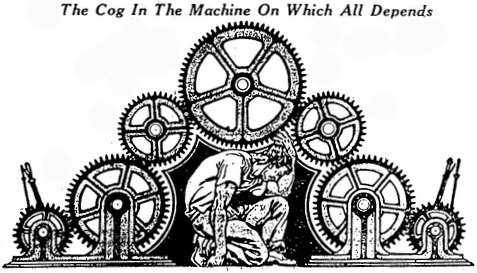
The Cog in the Machine, June 8, 2016. (http://catholicreadingproject.blogspot.com).

The Cog in the Machine, June 8, 2016. (http://catholicreadingproject.blogspot.com).

The problem for me is that this isn’t ironic at all. This department exists within the Rutgers School of Management and Labor Relations. These schools are not exactly incubators for “workers of the world unite” types, and would be most likely to take advantage of the weak job market to hire a labor historian desperately in need of a one-year or more gig. This is naked exploitation to be sure, but I find no irony in this job search at all. This is typical of the majority of jobs in higher education these days.

It is definitely hypocrisy, at least on the level of academia at large. Especially in considering that supposed bastions of liberal ideals (which universities really aren’t — they’re capitalist business enterprises which sometimes house some leftist leaning faculty) have turned the secure work of the professoriate into non-tenured service industry work. That this has coincided with the plunge in the number of full-time positions and in the number of living-wage positions in the US labor force in general is telling. It says that academia is nothing special beyond the expensive education, that it isn’t some sacred place for intellectual exchange and political mobilization. It is as firmly tied to capitalist pursuits as Wall Street and K Street.

I learned this lesson a quarter-century ago, thanks to the working-class history seminars at the University of Pittsburgh and Carnegie Mellon University. Between Dick Oestreicher, Bill Chase, Reid Andrews, Joe Trotter, and Joel Tarr (among others), the level of hypocrisy was enough to make me sick. The distance between what these people wrote regarding leftist movements, ideas, ideals, and exploited workers and how they treated students and colleagues sometimes was breathtaking. It was like the distance between the Terran system (Earth) and Alpha Centauri (roughly 25 trillion miles).

Hammer & Sickle & Pitt Flag [symbolic of Pitt's history department], December 13, 2012. (Donald Earl Collins).

Hammer & Sickle & Pitt Flag [symbolic of Pitt’s history department], December 13, 2012. (Donald Earl Collins).

Sure, it’s all “let’s start a communist revolution” when discussing the 180th nuanced on E. P. Thompson’s The Making of the English Working-Class. But when graduate students wanted to unionize to have their work recognized as workers, then these leftists suddenly became capitalists. “No, you’re not workers,” they said. “You’re students.” In the face of virulent racism, they said, “Get use to it. Shit happens.” Heck, some of these so-called bleeding-heart-liberals were themselves harassing students, exploiting their work for prestige and profit, and playing favorites to promote yes-men and yes-women while keeping others from pursuing their doctorates.

I saw the same distance between noble liberal ideals and center-right realities in my decade in the nonprofit world, mostly working in social justice. Yes, some of the very people who had made it their calling to ameliorate racism and combat injustices were also knee-deep in their own contradictions. Gender-based, race-based, and intersectional harassment wasn’t exactly uncommon. Exploitative labor practices like working two people full-time for the price of one, denying promotions based on gender or racial bias, even paranoia over power within a social justice organization. They all were the usual things I witnessed or experienced in the years between 1997 and 2008.

Wolf in sheep's clothing, a false prophet (a symbol of my ex-stepfather), November 2008. (Source/flickr.com)

Wolf in sheep’s clothing, a false prophet (a symbol of my ex-stepfather), November 2008. (Source/flickr.com)

There is nothing sacred and no safe space for those of us looking for such things. This belief in academia as being so different from the rest of the working world is an illusion cooked up by neo-conservatives who’ve made millions selling the idea that academia is a liberal bastion. We should all look for positions and places in which our work can thrive and we as individuals or even groups of people can grow. Those obviously still exist. But believe me, it’s been years since I thought that academia was a place where being far left-of-center was a good thing. It’s only good if you’re good at acting like this is so. It’s another illusion that others have chosen to create to cover up their hypocrisies. The irony is that people still believe in these ideals anyway.

My Busing Blues

25 Wednesday May 2016

Posted by decollins1969 in 1, Academia, Boy @ The Window, culture, Eclectic, Jimme, Marriage, Mount Vernon New York, My Father, Pittsburgh, Politics, Pop Culture, race, University of Pittsburgh, Youth

≈ Leave a comment

Tags

425 South Sixth Avenue, 616, 616 East Lincoln Avenue, Boston, Busing, Classism, Common Ground (1985), Community, Desegregation Orders, Divorce, Economic Inequality, Educational Equity, Friendships, J. Anthony Lukas, Ms. Hirsch, Nathan Hale Elementary, Ostracism, Racism, School Desegregation, Second Grade, William H. Holmes Elementary, Youth


TFD bus (they're still around?), South Side, Mount Vernon, NY, May 25, 2016. (http://zztalon.tripod.com/).

TFD bus (they’re still around?), May 25, 2016. (http://zztalon.tripod.com/).

Schooling and friendships have been the main theme of my posts this month. I find myself in deeper reflection about my years before the Boy @ The Window years these days. Maybe because I’ve come to realize that those years between ’74 and ’81 were far more influential in how I saw the world than I’d previously given credit.

One issue that I think I’ve had insight into for years before actually becoming an educator is busing. Maybe not so much in relation to school desegregation, though. As a seven-year-old, it would’ve been in terms of friendships and belonging. The only time I faced a no-choice busing situation was my last two and a half months of second grade, between April and late-June 1977. My Mom and Maurice had moved in together and moved me and my brother Darren to North Side Mount Vernon and 616, the house of horrors that would become the central locale of my memoir.

The Soiling of Old Glory, Boston, MA, April 5, 1976. (Stanley Forman/Boston Herald American via Wikipedia). Qualifies as fair use due to historical important of photo and low resolution.

The Soiling of Old Glory, Boston, MA, April 5, 1976. (Stanley Forman/Boston Herald American via Wikipedia). Qualifies as fair use due to historical important of photo and low resolution.

The only thing I knew of busing before the move from 425 South Sixth to 616 East Lincoln was that Darren had been taking a bus to Clear View School in Dobbs Ferry every school day since my first day of kindergarten in ’74. Also, the images in my head from national news on the three main networks about Boston Public Schools and protests in ’74 and ’75. I had no idea in the spring of ’77 that many White and more than a few Black parents were fighting a desegregation order that required widespread busing in Boston. All I knew at the time was that a lot of angry people with signs and bricks and bottles were on my TV screen at the beginning of September almost every year.

My spring of busing was one of misery. Not because Mount Vernon was under any desegregation order, which it was. Mom had made the decision to not disrupt second grade for me by keeping me at Nathan Hale Elementary, the school that we had lived two doors down from prior to our 616 move. The other option was for me to start at William H. Holmes Elementary five months sooner, so that my transition to third grade would’ve been easier. Thanks, Mom.

Even at the time, I wished she had. Mom had been sick for half that school year. She and my father Jimme were in the midst of a nasty divorce. We had already moved. It made no sense for me to continue to go to Nathan Hale Elementary. I couldn’t stand my teacher Ms. Hirsch. She was the only teacher prior to Humanities, and especially Humanities at Mount Vernon HS, who thought of me and other students as essentially kids without a future. Ms. Hirsch was the only teacher prior to my senior year at MVHS who told me that I wouldn’t “amount to anything.” I hated, hated being in her classroom. It was a feeling I wouldn’t have again until David Wolf and AP Physics my senior year, and even then, that feeling only lasted for forty-five minutes, and even then, it wasn’t with me every day.

By the end of second grade, I was without any friends. Not because I did anything weird, which I’m sure I did. The constant disruptions in our living arrangements meant that I no longer played in the playground next to Nathan Hale after school, where I could hang out with other first, second, and third graders. (I was scared to go there by myself otherwise, anyway — this issue, to be continued.) A bunch of my first grade friends from Ms. Griffin’s class had left during the summer of ’76, leaving Winston, a first grader, as my only friend at Nathan Hale. Yeah, I talked to Lauren and one other girl in Ms. Hirsch’s class, but that was pretty much it.

Now and Later candies, made by Farley's and Sathers, October 26, 2010. (Evan-Amos/Vanamo Media via Wikipedia). Released to public domain.

Now and Later candies, made by Farley’s and Sathers, October 26, 2010. (Evan-Amos/Vanamo Media via Wikipedia). Released to public domain.

Taking the bus to and from school for those last fifty days or so of school was torture. Not because kids make fun of me, which they didn’t, or because I was part of some experiment related to desegregation, which I wasn’t. I hated the smell, of bubblegum and Now-&-Laters, of sweat from recess and gym, of exhaust fumes from cars because our little TFD bus wasn’t air-conditioned. Mostly, I couldn’t stand the forty-five minutes or hour that it would take to go from 616 to Nathan Hale, picking up kids all through Mount Vernon along the way.

Fourteen years later, in an upper-level US urban history undergraduate course (my last history class before grad school) at the University of Pittsburgh, one of my required readings was J. Anthony Lukas‘ Common Ground (1985), his Pulitzer Prize-winning book on busing and school desegregation in Boston. There were so many powerful parts of Lukas’ book that piqued my interest. His coverage of parents from all sides of the busing controversy. The sense that school desegregation was a bit of a Pyrrhic victory legally, but not so much culturally, because of the “hearts and minds” issues around race. What struck me, though, was the limited perspective Lukas provided on kids who had to ride these buses between Black, White, and Puerto Rican neighborhoods to get to these schools throughout Boston.

Front cover of Common Ground (1985) by J. Anthony Lukas, September 3, 2014. (http://goodreads.com).

Front cover of Common Ground (1985) by J. Anthony Lukas, September 3, 2014. (http://goodreads.com).

I imagined what it would’ve been like to bus in Boston during my K-2 years. I had it hard enough as a child of abuse and divorce, with a move to an uncertain future, and with at least one teacher who saw me as little more than human garbage. Add screaming and spit-flying from White parents raging over school desegregation? I really could’ve been written off, never having a chance to become a good student, and more importantly, a lifelong learner. Maybe the only lesson I would’ve learned from busing was that Whites against busing have serious high-blood pressure issues. Or, more realistically, that White parents didn’t want me to become friends with their kids.

Either way, Lukas helped me realize, maybe for the first time, how twisted and evil American society would have to be to expose kids to blatant racism and not-so-blatant economic inequalities as demonstrated through busing.

My Nuanced History as a Historian

16 Monday May 2016

Posted by decollins1969 in 1, Academia, Boy @ The Window, Carnegie Mellon University, culture, Eclectic, Mount Vernon High School, Mount Vernon New York, Pittsburgh, Politics, Pop Culture, race, Youth

≈ Leave a comment

Tags

Ambivalence, AP US History, Career Decisions, Career Development, CMU, Commitment, Editors, Graduate School, Historian, History, Nonprofit World, Nuance, PhD, Self-Discovery, Self-Reflection, Teaching and Learning, UMUC, Writer, Writing


The Road Less Traveled quote, via Robert Frost (with me adding, "but it's not always good to get lost in the woods"), May 16, 2016. (http://www.chicagonow.com).

The Road Less Traveled quote, via Robert Frost (with me adding, “but it’s not always good to get lost in the woods”), May 16, 2016. (http://www.chicagonow.com).

Right now I sit between two important dates in my life. One was a few days ago, the thirtieth anniversary of my triumph on the AP US History exam in eleventh grade. Two will be in two days, the nineteenth anniversary me of graduating from Carnegie Mellon with my PhD in History. Both are signifiers of my achievements, my ambitions, and of my becoming a professional historian. But in the decade after earning my first college credits and the nearly two decades since earning my doctorate, I’ve still had a few lingering questions about where and who I am professionally.

One of those questions I’ve discussed ad nauseam here. Am I a writer who’s also an academically trained historian, or am I a historian first and a writer second? Or, can I be both at the same time? For better and worse, I am always both, but can emphasize one or the other at random, depending on context.

Sliced onion layers, May 7, 2015. (http://www.medicaldaily.com).

Sliced onion layers, May 7, 2015. (http://www.medicaldaily.com).

Other questions, though, have lingered even after spending more than a decade in the nonprofit world and another eight years teaching a full slate of undergraduate history courses. Do I still enjoy teaching history? Does my experience working on real world issues in civic education, social justice, and educational equity cloud how I see myself when I’m lecturing on the Agricultural Revolution or the Middle Passage? How is it possible for me to reconcile myself as a freelance writer who wants to take my academic historian experience, combine it with my other professional and personal experiences, and write about it for editors with little clue about the roads I’ve traveled? Is it even possible to un-layer the onion of my life and write about it to my or anyone else’s satisfaction? And if so, am I still a historian when doing so?

To that next to last question, I think that’s already a yes-no answer. Since 2013, I’ve written articles for publication with newspapers and magazines, and am working on my first new scholarly piece in six years. It’s difficult, to say the least, to explain to an editor what in academia or even among US or African American historians is a settled issue. Editors always believe that any story has two equal and opposing sides, because that’s how most ordinary people see most stories. As an academic historian, I’m trained to see nuance, to know when one side has a stockpile of evidence, while another one has a stockpile of bullshit.

Or, more often, to know that the no man’s land of gray present several or even multiple perspectives on issues like racism, poverty, college retention and graduation, American individualism, or the rigging of the federal election process. That no man’s land, I have found, more often than not scares away an editor, even ones working for intellectual magazines. They think their audience is incapable of getting nuance, when I think that they often reflect their own narrow and elitist view of the world.

Timeline of Europe and the US, March 2015. (http://www.worldhistorycharts.com).

Timeline of Europe and the US, March 2015. (http://www.worldhistorycharts.com).

As for teaching history, I find myself literally bored with the basic facts of any survey or even upper-level history course. To me, history is a panoramic lens through which students and experts can study human beliefs and behaviors in all its glory, ugliness, and ordinary-ness. Understanding how and why a person or a group of people did x, y, or z is much, much, much more important than knowing the exact date a specific event took place or coming up with some interesting but irrelevant fact in the process.

Which was why I began to teach my undergraduate courses with far more discussion and less lecturing than I did when I taught history as a grad student. (I taught a bunch of graduate-level education foundations courses in between my various nonprofit stints between 1997 and 2008.) I decided it didn’t matter if my students had done the readings, hated history, or were tired and ready to nap through three hours of lecture. I will facilitate discussion. I will make sure to make this process one about human interaction. Even when the lack of independent thinking among my students has me near ready to strangle a few of them. Why? Because understanding how people think and why they draw the conclusions they do can be as eye-opening as the knowledge they pull from one of my classes, maybe more so.

So, do I still see myself as a historian, or more as a psychologist or sociologist? Does it really matter how I see myself? Probably not. I just know that after years of teaching, writing, and all of my ups and downs professionally, that I remain two things most of all — a writer and a learner. Those two callings fuel my ability to raise my game, to want to be a better professor, a more expert historian, and an insightful writer. That, I hope, won’t change as I continue my long march toward fifty.

End of the Dorm Room State

30 Saturday Apr 2016

Posted by decollins1969 in 1, Academia, Boy @ The Window, culture, Eclectic, Jimme, Mount Vernon New York, My Father, New York City, Pittsburgh, Pop Culture, race, University of Pittsburgh, Work, Youth

≈ Leave a comment

Tags

25 Welsford Street, 616 East Lincoln Avenue, Computing and Information Systems, Father-Son Relationship, Financial Aid, Freshman Year, Homelessness, La Guardia Airport, Lothrop Hall, Naivete, Pitt, Pork Neck Bones and Rice, South Oakland, Tuna Fish, unemployment, US Air, Western Union


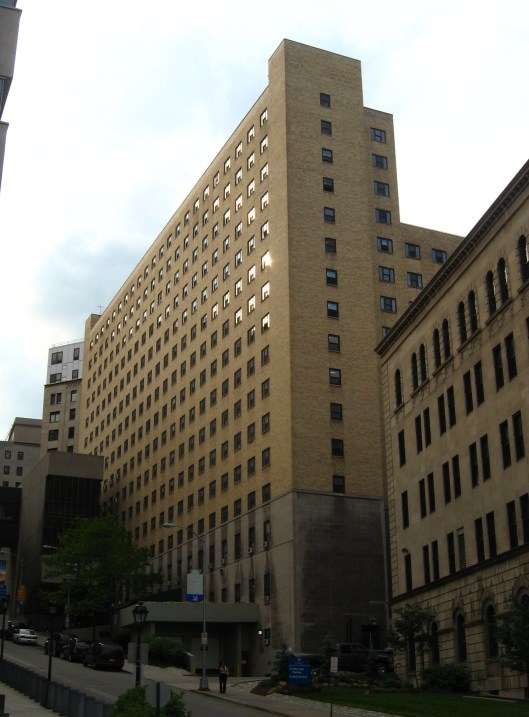
Lothrop Hall (we lived on the fourth floor in 1987-88), University of Pittsburgh, June 8, 2008. (TheZachMorrisExperience via Wikipedia). Released to the public domain via CC-SA-3.0.

Lothrop Hall (we lived on the fourth floor in 1987-88), University of Pittsburgh, June 8, 2008. (TheZachMorrisExperience via Wikipedia). Released to the public domain via CC-SA-3.0.

On this day and date twenty-eight years ago was the Saturday end to my freshman year at the University of Pittsburgh. Like today here in the DMV, it was a cool and cloudy day, a day in which I was tired from the year, but hopeful now that I had survived many of my inner doubts and outward troubles to make it to another fall of courses.

But there was a lot of unfinished business at Pitt. And, no, after my first Dean’s List, it wasn’t my grades. Six weeks earlier that year was March 15. That was the deadline for me to put down a $350 deposit to guarantee a dorm room for next year. Otherwise, I’d have to participate in a lottery for one. And the deadline for that was April 30th.

As of that morning, I had more than enough money to cover my deposit, as I’d gotten paid for my eighty or so hours of computer lab work with Pitt from the month of March. That money was way too late now. I knew that I’d have to go back to New York, to Mount Vernon, to find work for the summer, to have the money I needed to find a place to live for the fall when I’d come back to Pitt.

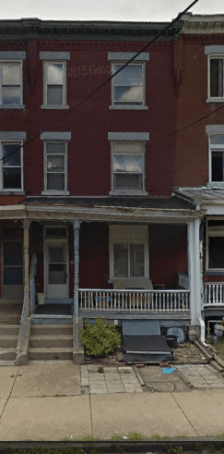
25 Welsford Street, Pittsburgh (where I lived my sophomore and junior years at Pitt), August 2015. (Google Maps).

25 Welsford Street, Pittsburgh (where I lived my sophomore and junior years at Pitt), August 2015. (Google Maps).

It wasn’t like I didn’t ask my parents. Mom didn’t have the money, between my idiot stepfather, my four younger siblings and my older brother Darren. Eight-hundred and fifty dollars of AFDC, food stamps, and WIC per month can only be stretched so far in a place as expensive as the New York metropolitan area. And my father Jimme, well, I let him know a month before the dorm reservation deadline that I needed the money. He said at least twice that he had wired me the funds via Western Union. I checked both times with the check cashing place in North Oakland, only to walk out empty-handed.

The timing just didn’t work out. That’s what I told myself, at least. I’d find a better place to live than Lothrop Hall. Between carousing Pitt basketball players, underaged boozers, the more than occasional tokers, and the terrible cafeteria food, I was probably better off living off-campus anyway.

You can convince yourself of a lot of things in the hours before a US Air flight to La Guardia when you’re staring at 120 days of living at 616 and being in Mount Vernon. Both places where I’d barely fit in before thirty-three weeks of college and relative independence. I was about to reclaim my emotionless role as the eldest son, all but running a house that was never mine to run in the first place. The fact of my questionable residential status as a sophomore at the University of Pittsburgh could wait.

Like with so many things going on in my life that leap year, I was terribly wrong. I found myself unemployed for the summer, homeless in Pittsburgh for five days, and broke and malnourished for most of the Fall ’88 semester. From April 30th to the Tuesday before Thanksgiving, I’d live with financial crisis, without a place to lay my head, and with tuna fish sandwiches and pork neck bones and rice as food for many of those days.

I did make friends my freshman year, and I did have friends my sophomore year, some of whom probably would’ve taken me in had they known about my troubles. But that’s the thing about abuse and poverty and race in a country that purports to be great and yet contradicts itself. You seldom tell anyone about anything bad in your life, out of embarrassment or out of pride, because you don’t want to be the living embodiment of a stereotype. Still, when I hinted about my lack of eats in October and November, my friends and even my classmates did help.

Fast-forward to ’92, the spring my father refused to believe that I knocked off my MA in Pitt’s history program in two semesters. He had told my brother Darren and his drinking buddies for years that he had paid my way through college. I also found out about that bit of Jimme braggadocio that spring.

Bumble Bee Tuna in oil (not water for me - still has been almost 28 years since eating), April 30, 2016. (http://www.upcitemdb.com).

Bumble Bee Tuna in oil (not water for me – still has been almost 28 years since eating), April 30, 2016. (http://www.upcitemdb.com).

When I went over to his place in late June to show him my MA degree, he even tried to tell me how he paid for my BA for four years. “What are you talking about?,” I said.

“My bachelor’s cost $32,000, and my other expenses over four years were another $20,000. In four years, you sent me $480 total,” I yelled, even though my drunk father was only a couple of feet away.

“Naw, naw, naw, I paid, I paid,” my father kept saying, with very little of the confidence than he had displayed before.

The total of my father’s payments for me and college was actually $880, including $480 he Western Union-ed to me my first three semesters. I’d forgotten the $400 I managed to get from him in August ’88 so that I could find a place to live my sophomore year in Pittsburgh. It is true, without that money, and without me surviving my first days in Pittsburgh minus a dorm room, I wouldn’t have finished college. But as a father myself, I’m not sure I’d ever claim credit for that, drunk or sober.

← Older posts
Newer posts →

Boy @ The Window: A Memoir

Boy @ The Window: A Memoir

Places to Buy/Download Boy @ The Window

There's a few ways in which you can read excerpts of, borrow and/or purchase and download Boy @ The Window. There's the trade paperback edition of Boy @ The Window, available for purchase via Amazon.com at http://www.amazon.com/Boy-Window-Donald-Earl-Collins/dp/0989256138/

There's also a Kindle edition on Amazon.com. The enhanced edition can be read only with Kindle Fire, an iPad or a full-color tablet. The links to the enhanced edition through Apple's iBookstore and the Barnes & Noble NOOK edition are below. The link to the Amazon Kindle version is also immediately below:

scr2555-proj697-a-kindle-logo-rgb-lg

Boy @ The Window on Amazon.com: http://www.amazon.com/Boy-The-Window-Memoir-ebook/dp/B00CD95FBU/

iBookstore-logo-300x100

Boy @ The Window on Apple's iBookstore: https://itunes.apple.com/us/book/boy-the-window/id643768275?ls=1

Barnes & Noble (bn.com) logo, June 26, 2013. (http://www.logotypes101.com).

Boy @ The Window on Barnes & Noble: http://www.barnesandnoble.com/w/boy-the-window-donald-earl-collins/1115182183?ean=2940016741567

You can also add, read and review Boy @ The Window on Goodreads.com. Just click on the button below:

Boy @ The Window

Twitter Updates

Tweets by decollins1969
  • RSS - Posts
  • RSS - Comments

Archives

  • June 2025
  • April 2023
  • September 2022
  • August 2022
  • July 2022
  • June 2022
  • May 2022
  • April 2022
  • March 2022
  • January 2022
  • December 2021
  • November 2021
  • October 2021
  • September 2021
  • August 2021
  • July 2021
  • June 2021
  • April 2021
  • March 2021
  • February 2021
  • January 2021
  • December 2020
  • November 2020
  • October 2020
  • September 2020
  • August 2020
  • July 2020
  • May 2020
  • April 2020
  • March 2020
  • January 2020
  • December 2019
  • November 2019
  • August 2019
  • July 2019
  • June 2019
  • May 2019
  • April 2019
  • March 2019
  • February 2019
  • January 2019
  • December 2018
  • November 2018
  • October 2018
  • September 2018
  • August 2018
  • July 2018
  • June 2018
  • May 2018
  • March 2018
  • February 2018
  • January 2018
  • December 2017
  • November 2017
  • October 2017
  • September 2017
  • August 2017
  • July 2017
  • June 2017
  • May 2017
  • April 2017
  • March 2017
  • February 2017
  • January 2017
  • December 2016
  • November 2016
  • October 2016
  • September 2016
  • August 2016
  • July 2016
  • June 2016
  • May 2016
  • April 2016
  • March 2016
  • February 2016
  • January 2016
  • December 2015
  • November 2015
  • October 2015
  • September 2015
  • August 2015
  • July 2015
  • June 2015
  • May 2015
  • April 2015
  • March 2015
  • February 2015
  • January 2015
  • December 2014
  • November 2014
  • October 2014
  • September 2014
  • August 2014
  • July 2014
  • June 2014
  • May 2014
  • April 2014
  • March 2014
  • February 2014
  • January 2014
  • December 2013
  • November 2013
  • October 2013
  • September 2013
  • August 2013
  • July 2013
  • June 2013
  • May 2013
  • April 2013
  • March 2013
  • February 2013
  • January 2013
  • December 2012
  • November 2012
  • October 2012
  • September 2012
  • August 2012
  • July 2012
  • June 2012
  • May 2012
  • April 2012
  • March 2012
  • February 2012
  • January 2012
  • December 2011
  • November 2011
  • October 2011
  • September 2011
  • August 2011
  • July 2011
  • June 2011
  • May 2011
  • April 2011
  • March 2011
  • February 2011
  • January 2011
  • December 2010
  • November 2010
  • October 2010
  • September 2010
  • August 2010
  • July 2010
  • June 2010
  • May 2010
  • April 2010
  • March 2010
  • February 2010
  • January 2010
  • December 2009
  • November 2009
  • October 2009
  • September 2009
  • August 2009
  • July 2009
  • June 2009
  • May 2009
  • April 2009
  • March 2009
  • February 2009
  • January 2009
  • December 2008
  • November 2008
  • October 2008
  • September 2008
  • August 2008
  • July 2008
  • June 2008
  • May 2008
  • April 2008
  • March 2008
  • February 2008
  • January 2008
  • December 2007
  • November 2007
  • October 2007
  • September 2007
  • August 2007
  • July 2007
  • June 2007

Recent Comments

MaryPena's avatarMaryPena on My Day of Atonement/Bitter Hat…
decollins1969's avatardecollins1969 on No Good Teaching Deed Goes…
Mary Rose O’Connell's avatarMary Rose O’Connell on No Good Teaching Deed Goes…

NetworkedBlogs on Facebook

NetworkedBlogs
Blog:
Notes From a Boy @ The Window
Topics:
My Life, Culture & Education, Politics & Goofyness
 
Follow my blog

616 616 East Lincoln Avenue A.B. Davis Middle School Abuse Academia Academy for Educational Development AED Afrocentricity American Narcissism Authenticity Bigotry Blackness Boy @ The Window Carnegie Mellon University Child Abuse Class of 1987 CMU Coping Strategies Crush #1 Crush #2 Death Disillusionment Diversity Domestic Violence Economic Inequality Education Family Friendship Friendships Graduate School Hebrew-Israelites High-Stakes Testing Higher Education History Homelessness Humanities Humanities Program Hypocrisy Internalized Racism Jealousy Joe Trotter Joe William Trotter Jr. K-12 Education Love Manhood Maurice Eugene Washington Maurice Washington Misogyny Mother-Son Relationship Mount Vernon High School Mount Vernon New York Mount Vernon public schools Multiculturalism MVHS Narcissism NFL Pitt Pittsburgh Politics of Education Poverty President Barack Obama Race Racial Stereotypes Racism Relationships Self-Awareness Self-Discovery Self-Reflection Sexism Social Justice Teaching and Learning University of Pittsburgh Violence Whiteness Writing

Top Rated

Blog at WordPress.com.

  • Subscribe Subscribed
    • Notes from a Boy @ The Window
    • Join 103 other subscribers
    • Already have a WordPress.com account? Log in now.
    • Notes from a Boy @ The Window
    • Subscribe Subscribed
    • Sign up
    • Log in
    • Report this content
    • View site in Reader
    • Manage subscriptions
    • Collapse this bar
 

Loading Comments...