• About Me
  • Other Writings
  • Interview Clips
  • All About Me: American Racism, American Narcissism, and the Conversation America Can’t Have
  • Video Clips
  • Boy @ The Window Pictures
  • Boy @ The Window Theme Music

Notes from a Boy @ The Window

~

Notes from a Boy @ The Window

Category Archives: New York City

My Take: A Tale All Too Familiar

05 Tuesday Apr 2022

Posted by decollins1969 in 1, Academia, Boy @ The Window, Carnegie Mellon University, culture, Eclectic, Mount Vernon New York, New York City, Pittsburgh, Pop Culture, race, Youth

≈ Leave a comment

Tags

CMU, Heterosexual Manhood, Hypermasculinity, Jealousy, Misogynoir, Misogyny, Narcissism, Oscars 2022, Patriarchy, PhD Graduation, Pride, The Slap, Yonkers


Hazel-green eyes – maybe hazel-green eyed envy, too? (cropped), April 5, 2022. (Google Images).

“The Slap” at the Oscars has been so much discussed that it seems as if there’s nothing left to say or to write about it. But so many of the columns and comments about Will Smith defending Jada Pinkett Smith’s honor against comedian Chris Rock’s ableist misogyny are also hot takes. For Black folk famous and ordinary, this is a double-dose of deadly, especially in public settings. The white gaze is forever present, especially now with smartphone cameras and recorders everywhere. Black people end up caught between their own fallible humanity and their training to be as respectable as possible during these big moments, precisely because white folks are watching. The result is usually a tangled mess. The vultures will keep circling for meat, fresh and rotten. Such are the ways of a capitalistic, narcissistic, and racist society.

My own story isn’t quite as dramatic as Will, Jada, and Chris’, but it does reflect how narcissism, green-eyed jealousy, hypermasculinity, and other ills can get anyone caught up. A quarter-century ago, I completed my history PhD thesis at Carnegie Mellon University. A few weeks before my two graduation ceremonies, I made the decision to fly my mom in from New York to celebrate with me. She hadn’t been able to attend my bachelor’s or master’s degree ceremonies because my four younger siblings were too young to be left at home. Now, they were all teenagers. 

I had no idea the hell I had set myself up for. That same graduation week was also the same week as my mom’s associate’s degree graduation in White Plains. I flew home to New York to be there for her. Afterward, my mom said, “You know, you were in school so long, you could’ve had another high school diploma.” Then she forced a laugh. “It’s a joke,” she said. What was the joke? My degree, or the amount of time and energy I spent in earning it? “I don’t have to tell you that I’m proud of you. I tell other folks, just not you,” she said the next day. 

It was a figurative slap to the face I can still feel 25 years later. From the moment we left for LaGuardia that Friday to the moment I left her at Pittsburgh International Airport that Sunday afternoon, my event was all about her. That Sunday, she refused to be in a photo with my partner, my partner’s mom, a high school friend, and several other friends. She skipped out on the second ceremony, the one where my department chair and my PhD advisor would speak about my accomplishments, where I would also have time to publicly speak about my experiences and celebrate. I abruptly left the ceremony with my degree in hand.

Then, while waiting outside for the airport bus, my mom gave me a look. She seemed confused and lost, as if she would need help getting to her flight. Unthinkingly, I agreed to help her get to the airport, and ended up missing the second ceremony. With each passing moment on our way to the airport, I grew madder and madder. At the gate, I went off on my mom. “You have ruined every good moment in my adult life!,” I yelled. 

I should have gone to my graduation ceremonies without her. But I wanted my mom’s approval. I wanted her to make her proud. I wanted her to see me as a full-grown man. My mom took advantage of my yearning for the kind of relationship we never had. Transparent, honest, loving, affectionate. None of those were her. 

Her comments all week were signs of her jealousy over my doctorate. I just refused to see it, because she’s my mom. Her actions that weekend were of a narcissist. I didn’t know any mom could be that way. Her statements and actions were as much about questioning my manhood as they were about anything else. Ten years of undergraduate and graduate education instead of working jobs to help her with “the kids”? Using my unconscious reflex to get me to take her to the airport instead of doing it on her own? My mom’s sense of patriarchy and what men ought to do was a big part of my ruined moment, too. My relationship with her has never fully recovered.

This is what the proverbial they miss in everyday public human moments. Jealousy and vanity, like the other five Deadly Sins, are normal human emotions. But living in a hypermasculine, patriarchal, and narcissistic nation allows people to weaponize such emotions, just as Pinkett Smith did at the Oscars, just as she did on Red Table Talk with her husband two years earlier. And Smith took the bait despite knowing there was a possibility that his Oscar win would be the culminating moment of his career. His manhood and his image of his relationship with his partner was on the line. So was his hypermasculine pride. Especially with a comedian like Chris Rock, who has operated in sexism and misogynoir for years, especially toward Pinkett Smith, even with Good Hair to his documentarian credit. The white gaze is withering, and will likely warp the way people see Oscars 2022 for years to come.

I had far fewer white eyeballs on me on my PhD day. But the anger and despair I showed that day stayed with me for years afterward. I have been professor or Dr. for nearly half my life, but I never had my moment to enjoy that moment. For Smith, for his sons and daughter, for the Williams sisters, for everyone who worked on King Richard, that moment was cut far too short, ruined by the societal ills that corrupt us all.

The Ultimate Sports Corruption Scandal

29 Tuesday Mar 2022

Posted by decollins1969 in 1, Boy @ The Window, culture, Eclectic, Jimme, Marriage, Mount Vernon New York, New York City, Patriotism, Politics, Pop Culture, race, Sports, Youth

≈ Leave a comment

Tags

Betting, Cheating, Collusion, Corruption, Duke, Entertainment, Fakery, Money, Officiating


Rolls of $100 bills (makes me think of Cyndi Lauper’s “Money Changes Everything”), April 9, 2018. (https://www.gtgoodtimes.com/)

I have long believed professional sports and elite college sports as severely compromised enterprises. It’s not just the obvious examples of league officials turning a blind eye away from the lack of fair play, like with baseball players doping and hitting home runs between 1998 and 2004. Or with the New England Patriots and them filming their opponents’ practices to gain an advantage during games. Or with the Houston Astros stealing baserunning signs from the Los Angeles Dodgers during the 2017 World Series. Or even with NCAA Division I football and men’s basketball, where there are enough recruiting and (until last year) pay-for-play violations to render the student part of student-athlete a really bad joke.

No, I believe owners, universities, and league offices collude to put their thumbs on the scale, and have done so for years. They do it for two reasons: 1., to generate revenue and renewed interest in their sport (whether basketball, hockey, baseball, or football, or — more obviously — WWE) and/or 2., to steer a sport-wide championship in the direction of a particular team (also a way to keep those multi-billion-dollar TV contracts aflowing). 

This doesn’t just explain the New England Patriots and the mysterious “tuck rule” ruling during the 2001 NFL Playoffs, a ruling that cost the Oakland Raiders the game and catapulted the Patriots toward the first post-9/11 Super Bowl (patriotism and sports — it’s kismet!). It explains when referees, umpires, and other officials make consistently favorable rulings helping certain teams win playoffs series and championships. Game 4 of the Western Conference Finals between the LA Lakers and the Sacramento Kings in the 2002 NBA Playoffs comes to mind. An official even admitted they may have rigged this particular series in favor of the Lakers. And Duke and Coach K. All anyone has to do is look at the difference between the team UNLV stomped in by 30 points in 1990 and the team UNLV “lost” to in 1991. Really? What difference — no difference! 

Even this isn’t the worst of it. With the newly opened frontier of legal betting on professional and college sports across the board, the temptations for individuals, for officials, for athletes themselves to alter outcomes to win bets will be enormous. The sports would is only a few years away from healthy athletes dying in their athletic prime of suicide or “suspicious circumstances,” stemming from their own gambling addiction, or because of a fan’s gambling addiction and narcissism.

I kid you not. We are a decade or two away at most from discovering how some of these great moments we have seen in a sport should have never been. All because money changed hands, or because of deliberately calibrated officiating, or because of tampering with equipment or with schedules, or because of general collusion among college conferences and universities or between sports leagues and team owners (or, with the student-athlete system, between all of the above). 

And when these turds hit an industrial-sized fan meant for a large indoor arena, what do any of us say then? That we knew all along? That we just went along because we wanted the distraction of sports free from corruption and politics? All of this is bullshit.

The truth is, sports has always been a source of entertainment, a place where we have pretended for years the outcome was never fully assured. But, we all have known the outcome has been helped along, sometimes by a lot. To build a fantasy around sports as set of institutions that brings people together and creates a sense of community is incredibly superficial. Those moments are fleeting and do nothing to change communities, cities, or our societies. Those moments, even as they temporarily unite folks around as flimsy a thing as a win or winning a title, are not untainted ones. 

Listen, I love sports, and have appreciated athleticism going all the way back to the Ali v. Frazier and Ali v. Foreman days. Heck, when my Uncle Sam clotheslined my father as payback for psychologically torturing my mother after she filed for divorce in 1977, I had appreciation for it then. That moment of college athletic-level tackling and the physics around it have been in super-slo-mo in my mind for 45 years. I have loved watching sports since I was 12, and playing sports since puberty grew me to five-foot-eight before I turned 13, and six-feet-even before my 14th birthday. The business of professional sports (including college sports programs and Olympic sports), though, is ugly. That is why I no longer care if athletes dope, stopped caring ages ago how much money they and the sports team owners make, or care much about wins and losses for my Knicks or other teams I kinda root for. 

Because I believe as much as I believe in anything a day of reckoning is coming for these institutions. And when it does, don’t say I didn’t write about it. When it does occur, we can then finally agree there is no difference in pop culture between commercialized music, PG-13 movies, fashion, and the world of sports.

Signs of Elitism

17 Monday Jan 2022

Posted by decollins1969 in 1, Academia, Boy @ The Window, Carnegie Mellon University, culture, Eclectic, High Rise Buildings, Jimme, Mount Vernon High School, Mount Vernon New York, My Father, New York City, Pittsburgh, Politics, Pop Culture, race, Upper East Side, Upper West Side, Work, Youth

≈ Leave a comment

Tags

Academia, Academy for Educational Development, CMU, Crabgrass Frontier, Elitism, Elitist Assumptions, Nonprofit World, Presidential Classroom, Racism, Savage Inequalities, Wet Rags, White Women's Tears


Front cover, Joel Stein’s In Defense of Elitism (2019, cropped), January 16, 2022. (https://amazon.com).

I have spent four-fifths of my life in elite spaces among affluent whites, middle class Blacks, and Americans elites in general. I have so little in common with them aside from eating, drinking, breathing, and having a sex drive. So little that I sometimes think that God made a mistake and missed my exact time and place for my existence by 20 or 30 years, meaning 1949 or 1994 would have been better years for my birth. 

But it’s not when I was born so much as the lack of material resources with which I lived growing up in the most resourced area in the US. And that has brought consequences for me since the year I began puberty. The years in Humanities in middle school and in high school in Mount Vernon, New York. Hearing about everyone’s summers those first days of school between seventh and 12th grade, for example. Black and Black Caribbean classmates regaling us with their summers spent down South, in Jamaica or Barbados or  Trinidad and Tobago visiting close relatives. Or, their trips around the US, from the Grand Canyon to cities I wouldn’t travel to until I was 24 or 35. Or my white peers spending their Junes, Julys, and Augusts in France, the UK, Japan, Germany, Italy, Greece, Egypt, or Israel. I lied about going to Tel Aviv my first year.

I rarely left Mount Vernon and New York City those years. Albany was the furthest I’d been away from home, on a school trip in October 1985. My walks occasionally took me across the New York-Connecticut border (in 1986 and in 1987), but that was somewhat accidental.

In grad school, especially once I transferred to Carnegie Mellon to complete my PhD, these awkward communications involving my lack of socioeconomic privilege and my white classmates’ rose-colored worldviews continued. In my final semester of grad courses in Spring 1994, I took Comparative Urban History with Katherine Lynch. One week, we were in a discussion of Kenneth Jackson’s Crabgrass Frontier: The Suburbanization of the United States, about the correlation between suburbanization and the expansion of the white middle class. Jennifer, one of my classmates, contributed her not-so-insightful analysis of what this correlation meant, about how “most Americans benefited” from the growth of suburbs between 1945 and 1980. 

I was not happy with her elitist worldview. I already knew that she was 23 or 24, married, and from suburban Philly (think a place like Cherry Hill, New Jersey). I also knew that Jackson’s point correlated well with White Flight from increasingly Black and Brown cities like Philly, New York, Boston, DC, Detroit, and Chicago. Being in my third year of grad school overall and surrounded in this course by first-years, I had one advantage. I was almost as well read on topics of inequality as most of my professors. 

So I said to Jennifer and the rest of the class, “Well, if by ‘most Americans benefited,’ you mean white Americans, then yes, suburbanization was a good thing. But cities’ tax bases didn’t benefit, and neither did the African Americans who moved into cities that whites flew out of. Redlining and restrictive covenants made it harder for middle-class Blacks to ‘benefit’ from suburbanization. And last I checked, poor people live in suburbs, too.” That last past was a direct reference to my growing up with poverty in Mount Vernon, and the scores of poor Black and Latinx and Black Caribbean folk I knew in Mount Vernon and throughout the New York area, suburban and urban. 

During the class break, Jennifer came up to me as I was standing outside the seminar talking with my other white classmates congratulating me for my eye-opening perspective on how to break down Jackson’s book. She brought all five-foot-three of her frame to bear, almost as if she had attempted to stand on a soap box (even with one, at six-three, I would’ve had to bend down to see her ire). She had tears in her eyes and one running down each cheek. “I can’t help how I grew up. I am not a racist,” she said, and then walked away in a huff. “I guess I struck a nerve,” I said in response to one of my other peers.

I really didn’t give a rat’s ass about her crying. None of it was going to make the lives of Blacks and Latinx people with poverty in Camden or Philly or even Cherry Hill any better. White women’s tears and crying foul when challenged for their elitism had already hardened me against placating them. My experiences matter, damn it!, was what I thought after that exchange.

Even outside academia, the elitism wafted like millions of gallons of human shit at a sewage treatment plant. Between Presidential Classroom and AED, I spent much of my nonprofit years (meaning, a good portion of my thirties) proving to others that despite my background, I could do work on behalf of others. My bosses held it against me that my parents weren’t GS-12 or higher federal employees, or diplomats, or advisors, or members of country clubs. Or, especially in AED’s case, that neither I nor my parents ever served in the Peace Corps or traveled overseas. I practically had to do somersaults and cartwheels to do my work between 1999 and 2008, but could not maintain social connections, because my doctorate from Carnegie Mellon would never be good enough.

Maybe I’ll discuss Black middle class folk and their rites of privilege and passage, especially fraternities and other organizations. But I’ve already written quite extensively about why I’ll never fit it with such groups. And at 52, I’m not entirely sure I want to. I guess after a lifetime of my peers ignoring me or erasing me or acting as if only their socioeconomic and racial privileges matter in explaining how the world works, I simply don’t care anymore.

My mom grew up as part of a sharecropping family in southwestern, Red River Arkansas. She’s the oldest of 12 children. She worked mostly in the kitchen of Mount Vernon Hospital or in the billing department of Westchester County Medical Center in Valhalla as a paraprofessional for 34 years, with a 16-year period on welfare in between. My dad worked as a janitor or a supervisor of janitors and building cleaners all his time in New York and in Jacksonville. He grew up as a tenant farmer (before his family bought out their land) in rural south-central Georgia. He barely finished seventh grade. His two sisters were the first in the family to go to college, and both spent years teaching during segregated times. Despite it all, I am proud of their work. No pedigree is fine with me.

Another Year of Not Seeing Family

20 Monday Dec 2021

Posted by decollins1969 in 1, Boy @ The Window, Christianity, culture, Eclectic, Mount Vernon New York, New York City, Politics, Pop Culture, race, Religion

≈ Leave a comment

Tags

Anti-Vaxxers, COVID-19, Dysfunction, Family, Home, Hypermasculity, Jealousy, Misogynoir, Mixed Feelings, Patriarchy, Vanity


The Welsh word hiraeth, not easy to say, but easy to understand, December 19, 2021. (Reddit.com)

I wish I could say I am fine with going into my eighth year since my last visit with my mother and sibs in Mount Vernon, New York. I am and I ain’t. The one thing this pandemic has exposed is how little things have changed with my folks back in the New York area, and how little and how much I have changed living away from them and New York in the past couple of decades.

I had originally planned to visit my mom in March 2020 during my “Spring” Break week from teaching at American University and University of Maryland Global Campus. But we know what began to occur in the US due to bad policies combined with brutal narcissism, racism, and capitalism. COVID-19 Alpha slammed into the Big Apple like one of those ginormous worms from Dune, and ate into it faster than a supernova. My mom was sick by mid-April, as was my younger brother Maurice. If you ask her, my mom would say her “tests came back inconclusive,” but given the accuracy of her tests and the reality of her symptoms, she had COVID Alpha. My youngest brother contracted the virus a month later. I do not know for certain if I would have contracted COVID-19 if I had gone through with my plans in March 2020, but had I done so, I very likely could have infected my wife and then 16-year-old son, unacceptable by my standards then and today.

Then they started doing the unthinkably ignorant. They started having gatherings sans masks and vaccinations. My mom had my siblings and niece and nephew over for Thanksgiving 2020, and babysat the young’uns all during this shitstorm. My mom’s apartment is barely 800 square feet. Ten people gathered in the living room/kitchenette area of her place, nine not masked at all. My older brother Darren wore a KN-95, “except when [he] was eating and drinking,” he said. I all but facepalmed my forehead into mashed potatoes.

When the vaccines finally came on line for emergency use last December and the beginning of 2021, I assumed my mom would reluctantly but definitely get hers. After all, she worked for Mount Vernon Hospital and Westchester County Medical Center for a combined 27 or 28 years. Boy was I wrong! We last discussed it in May. “I don’t know what’s in it,” she said. “I wanna wait and see how it affects people,” she also said. Keep in mind, the younger brother between Maurice and the youngest one (convoluted, I know, but the 40-year-old doesn’t want me to mention him on my blog anymore) and his wife caught COVID-19 Delta earlier that month. They went out to eat at a restaurant, unvaccinated. “Probably got it off a fork or something,” my mom said.

After I explained the facts, that at that point, a billion people had been partially or fully vaxxed, she gave her usual defensive response. “I know the facts, Donald. You think I’m stupid?” Even now, though I may think, No mom, but you are acting as stupid as stupid can be, I don’t say it. It’s all part of her vanity, her anger and misunderstanding of me. At this point in her life, I couldn’t convince my mom that water is wet and the sky is blue, not even if I quoted Jesus himself. So I conceded. Do what you want. But it’ll be a long, long time before I come visit again. Don’t expect a lot of phone calls or letters or cards moving forward, either. For me, this was and remains about self-preservation, body, mind, and spirit, and not about anger or spite.

I last checked on my mom and brothers during Thanksgiving last month. I didn’t even bother to ask my mom about her vaccination status or her health. I knew she wouldn’t tell me the truth about her decisions, anyway. But my brother Maurice. Yep. He too refused to vaccinate. “I don’t know what’s in that stuff!,” he raised his voice while lilting on “stuff.” He was out of work, too, because New York State’s not allowing unvaccinated people to work for them.

He said one other thing that made me truly sad. I asked about what being unvaccinated has done with his social life. “I can’t be around these…’modern women’,” Maurice said with a pause and the feel of air quotes around the term. Somehow, a woman who doesn’t need a man to “take care of them” is “modern,” and made Maurice feel obsolete. All I could think was, Wow! Mom’s misogynoir and patriarchy really rubbed off on you. You, and all of us at some point.

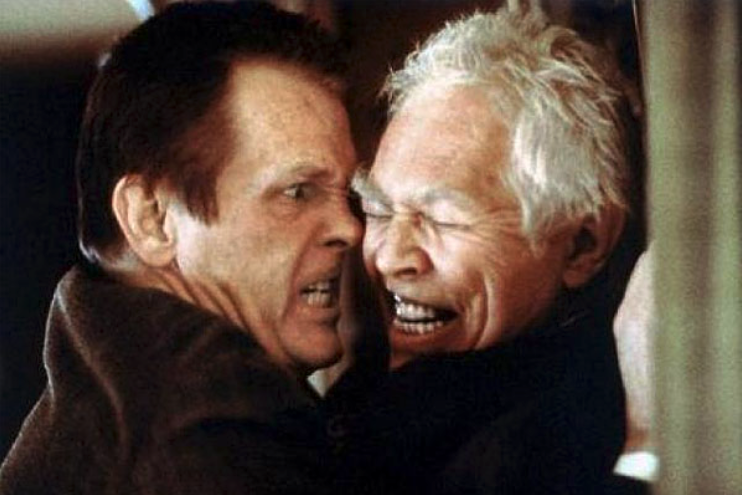
Nick Nolte’s character about ready to kill James Coburn’s (screen shot, cropped), Affliction (1997), December 20, 2021. (http://www.camera-roll.com/raging-bulls-affliction/)

There’s this not-so-famous 1997 movie Affliction, starring the late James Coburn, Nick Nolte, and Willem Dafoe. The cycles of physical and psychological abuse, the obvious misogyny and hypermasculinity, the mental breakdown, the need for distance from family, are all part of this movie. Nolte’s character eventually kills his father (Coburn), and eventually loses his grip with reality. His withdrawn and recluse brother (Dafoe), a writer and English professor, wrote down his brother’s story for posterity. This as Nolte’s character disappears to Canada, where someone eventually finds a cadaver matching his physical features. 

I wonder if I am Willem Dafoe’s character. Probably not. At least, I don’t think my partner since 1995 and my 18-year-old see me that way. But I do feel the lurch to stay away from people, especially my immediate family outside of Silver Spring, Maryland. It’s not like I don’t want to see them. But they have never ever seen me, not even during all the years I stared them in the face.

When Their Lies Become The Truth

16 Monday Aug 2021

Posted by decollins1969 in 1, Academia, Carnegie Mellon University, culture, Eclectic, eclectic music, music, New York City, Pittsburgh, Pop Culture, race, Work, Youth

≈ Leave a comment

Tags

"Billie Jean", Distractions, Doctoral Thesis, Failure, Fear of a "Black" America, Michael Jackson, Plagiarism, Theft, Whose America?, Writing


Michael Jackson in the middle of his first public moonwalk while singing “Billie Jean” (cropped screen shot), Motown 25: Yesterday, Today, Forever, May 16, 1983. (NBC/Starvista; https://www.smoothradio.com/artists/michael-jackson/first-moonwalk-motown-video-1983/)

This is the third of my multi-part series on my paths as a writer. This piece is one that I’ve work on for nearly a year. Mostly because of the issue to out or not out the guy who plagiarized me in 2002. Partly because I do not really want the kind of attention this post could bring. But the more uncomfortable and painful a writing becomes all the more reason to share it with readers.


There is an ugly truth that inhabits every arena of work. Racist, misogynistic, and elitist politics make all workplaces toxic, some dangerously and lethally so. The never-ending palace intrigue, the perpetual ambitious drive and thirst for clout, the absolute must of self-promotion. All of it makes the idea of “just here to do a job” laughable.

With this toxicity comes the need to lay claim to words and works that are not one’s own. In academia, it means stealing ideas, references to primary resources, even actual words from the work of lesser known academicians. All for the lofty prize of permanent tenure and plum professorships at elite universities. All while destroying careers and breaking people.

I was a victim of such a theft. The plagiarist was one Dr. Jonathan Zimmerman, today a decently prominent full professor at the University of Pennsylvania Graduate School of Education, with a career that was undoubtedly helped along by a book about the so-called culture wars. It nearly broke me as a writer. It took nearly 15 years for me to fully recover. In some ways, I am still recovering.

My story is a case study of how easily White mediocrity can trump Black excellence unless or until the latter forces acknowledgment out of the world. But it is also my tale of an aspiring academician snuffed out in his younger years, a wonder-man who had yet to decide the kind of thinker, writer, educator, and gift-user he wanted to be.

I was only partly aware of the possibility of being plagiarized in the 1990s. Oh, I was paranoid enough. As a Black doctoral candidate at lily-White Carnegie Mellon University, I worried about losing my own work and not finishing. By the summer of 1996, I was mailing out seven 3.5-inch, not-so-floppy-disks-at-a-time to my trusted circle, because I had little trust for folks in my academic world, including my dissertation advisor. But I had no idea that I should have extended my lack of trust to trained academicians who were so devoid of ideas and so bereft of imagination that they would steal from little-old me.

My off-and-on dealings with Zimmerman was where I learned eggs should never mix with stones. In 1994, Zimmerman was an assistant professor in the subfield of social and historical foundations of education at West Chester University. I and a couple of other Black doctoral students (the latter two from the University of Pittsburgh School of Education) had promised to present our work at a conference Zimmerman had organized, but reneged at the last minute. The two thirtysomething Black students felt leery about the invitation. “This is very disappointing…I wish you’d let us know sooner…I was so looking forward to reading your work,” Zimmerman said haltingly over the phone with a tone that combined reassurance with condescension when I informed him of our cancellation. Zimmerman had me agree to send him a copy of my dissertation, “A Substance of Things Hoped For”: Multiculturalism, Desegregation, and Identity in African-American Washington, D.C., 1930–1960, once I finished it.

I bumped into Dr. Zimmerman twice at scholarly conferences after that, in 1996 and 1997. He sought me out about my dissertation, for what purpose, I wasn’t sure. I was too worn out after finishing my degree to find out. The next and last time I saw Zimmerman was at the end of April 1999. New York University invited me to their campus for a job interview in the school of education. It was for a social foundations in education opening. I learned that Zimmerman was on the search committee. He had moved on from his previous job, and was now a tenured associate professor.

I gave a seventy-five-minute job talk about my dissertation research and soon-to-be book topic, titled “Fear of a ‘Black’ America: Multiculturalism and Black Education in Washington, DC.” During the talk and Q-and-A session that followed, I noticed Zimmerman had brought with him a paperback copy of my doctoral thesis to the talk. He must have ordered a copy from ProQuest, the main depository for dissertations in the US.

“Can you tell me more about why Black parents didn’t want Little Black Sambo taught in DC Public Schools?,” Zimmerman asked. “Why do you keep using ‘multiculturalism’ to describe what happened in the past — isn’t this anachronistic?,” he inquired with a bit of disdain. “Do you have a publisher lined up for your manuscript?,” I remember him probing, as if that was really his damn business.

It should have been obvious, but at the time, I honestly wasn’t sure why Zimmerman asked me so many questions. Between a two-year-long search for full-time work, of living off fumes from the one $1,850-class I taught at Duquesne University every semester, of burnout and rage from completing my degree, my head wasn’t right. I also wanted to move on from Pittsburgh. “I’d just about have to wait for Joe or Larry [my former dissertation and graduate advisors] to die before I’d get a job that pays around here,” I said to my significant other numerous times.

I didn’t get the NYU job. Six weeks after that interview, I ended up with a job in civic education in suburban DC, working with high-potential high school juniors and seniors. Soon after, I landed a literary agent with my book proposal for Fear of a “Black” America.

Three years and two jobs later, I heard from Zimmerman again, indirectly. I had stumbled into an opportunity while already working as a nonprofit administrator for the New Voices National Fellowship Program to teach a graduate course in social foundations of education at George Washington University. In looking for books suitable for the class, I discovered Zimmerman had published Whose America?: Culture Wars in the Public Schools, his book on a century of America’s culture wars as embodied in history textbooks. I decided to buy it in case any of my students wanted to research this topic.

In those pages, Zimmerman carefully avoided referring to the book Little Black Sambo. Instead, he used the term “Sambo” in reference to mainline history textbooks from the 1940s and 1950s. But in one paragraph, Zimmerman’s skill in textual microsurgery broke down like an old and rusted-out car. Where Zimmerman had written, “[e]ven champions of so-called intergroup education in the 1950s turned a blind eye — or a disdainful frown — on black text protests,” I had written, “the Washington Post [in September 1947] published an editorial on the Little Black Sambo controversy that accused the [NAACP-DC] Branch and the…black Washington community of overreacting.”

Where he had wrapped his quote with “opined the Washington Post, denouncing blacks’ ‘humorless touchiness’ about the term ‘Sambo’ in textbooks,” I had the fuller quote, as “the Post could not ‘believe that the humorless touchiness reflected in these protests represents the attitude of Negroes in general.’” And where Zimmerman cited the original sources as the Washington Post from September 30, 1947 and some reference to papers from the Moorland-Spingarn Research Center, I also had those same references, plus additional references to the Washingtoniana Division of DC Public Library.

If this theft of ideas and research was pure coincidence, then so is the existence of systemic racism in the US. Zimmerman had access to my doctoral thesis for at least three years before the publication of his book. The likelihood that Zimmerman independently went through the same files at Moorland-Spingarn to address the specific issue of “Sambo” references in textbooks during the 1950s when the controversy over the children’s book Little Black Sambo occurred in 1947 is infinitesimally low (he doesn’t refer to Moorland-Spingarn as a place he visited to conduct research in Whose America?).

The specific Washington Post quote could be coincidental, but not when combined with the Moorland-Spingarn citation. Back in the late 1990s and early 2000s, one couldn’t just do a Google search for a then-55-year-old article. One either had to dig it out from among the thousands of files in archives like Moorland-Spingarn at Howard University, where I spent nearly two weeks in March 1995 uncovering information about issues like the 1947 Little Black Sambo controversy. Or, a researcher would have had to go through reels of newspaper microfilm at libraries looking for clues and key words, like I did for another two weeks at the Washingtoniana Division of DC Public Library’s main branch, the Martin Luther King, Jr. Library, in February 1995. My doctoral thesis was never cited as a source in these sections, either.

A couple of weeks later, I found Dr. Zimmerman’s NYU email address. I wrote to him about his erasure of my years of sweat, tears, and even blood (in the case of paper cuts) in gathering the information that had gone into my dissertation. “I don’t know who you are,” was his one-sentence response, as was and remains the typical retort from those who are caught using another’s words, work, and ideas as their own. “Fuck it,” I said to myself after that exchange. I definitely should have found a lawyer back then.

I received a note a few days after I discovered Zimmerman’s thievery from my one-time agent Claudia Menza about the acquisition editors at Random House. They had come close to accepting my book, but ultimately rejected Fear of a “Black” America for publication. It was a gut punch while walking carelessly through Central Park on a cloudless early fall day. The kind of punch that leaves one falling on their ass while exchanging pain for air, trying one’s hardest not to cry or scream for fear of embarrassment. I eventually self-published my book in 2004, a shell of the dream I originally held for this manuscript.

I hated academia and academicians. I hated myself for the desperate academic/nonacademic/non-writing writer-who-also-wanted-to-write-more it turned me into. I hated that I had earned a PhD, only to find myself working as a nonprofit administrator where the only thing people cared about was bringing in more multimillion-dollar grants. Most of all, I hated that I had never thought enough of the possibility that others would find ingenious and craven ways to steal from me, and that I couldn’t do a damn thing about it.

Fast-forward more than a decade later to 2018. I am no longer working as a nonprofit administrator chasing dollars for watered-down education and social justice efforts. I am teaching full-time as contingent faculty between two universities. My writings are now meant for the world, and not for academia. After reading a story about how a plagiarist had copied and pasted huge portions of the author Leta Hong Fincher’s words from Leftover Women, it dredged up my experiences with Dr. Zimmerman.

This is how the big dogs do it. They steal your ideas, your ideals and your soul, really. They do it while simultaneously erasing you from the public record. They violently make you into the intellectual undead, a ghost that exists, but cannot haunt. Like with Napoleon allegedly blasting away at the Sphinx’s nose for fear that the truth of ancient Egypt as a Black civilization would drown the myth of white Egypt. The big dogs make you feel the theft, the death, and the erasure, right down to them blowing your bits of graphite, wood pulp, and synthetic rubber off of history’s pages.

“And mother always told me be careful of who you love/And be careful of what you do ’cause the lie becomes the truth.” These are the last two lines of the second stanza in Michael Jackson’s “Billie Jean.” That Michael Jackson — the Black genius that he was — also was a pedophile who preyed on star-struck children and their naive parents. He lied by omission and commission, for nearly half his life. The topic of multiculturalism, and being able to profit from it, no longer matters to me. But having people like Zimmerman out there profiting from their theft and their lies does.

Agents and Not Agents, The Hard Way

10 Tuesday Aug 2021

Posted by decollins1969 in 1, Academia, Boy @ The Window, Carnegie Mellon University, culture, Eclectic, music, New York City, Patriotism, Pittsburgh, Politics, Pop Culture, race, University of Pittsburgh, Work, Youth

≈ Leave a comment

Tags

Barbara Sizemore, Book Publishing, Claudia Menza, Failure, Fear of a "Black" America, Joe William Trotter Jr., Literary Agents, Mistakes, The Business of Writing, The Hard Way, Writing


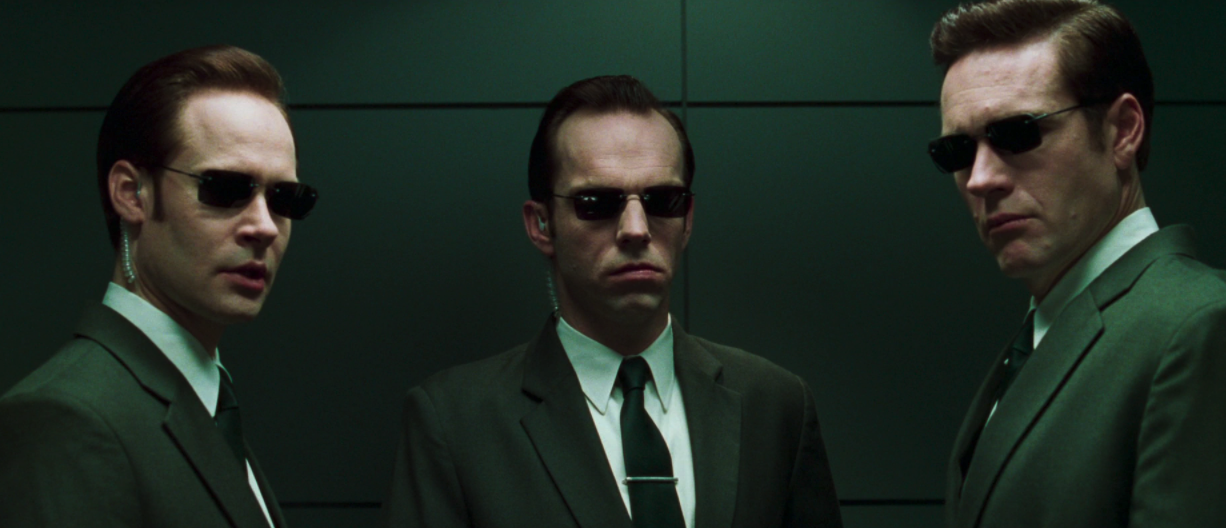
Agents from The Matrix (1999) screenshot (cropped), August 8, 2021. (https://matrix.fandom.com)

This is the second of several posts I’ve put together about my journeys as a writer. Please laugh when and where appropriate.


“You always gotta do things the hard way, don’t you?” my one-time professor Barbara Sizemore said with some sighed frustration. It was in response to me telling her I had decided to stay at Pitt, to pursue my history doctorate at the University of Pittsburgh and possibly transfer to Carnegie Mellon to complete it. It was April 1992. We were standing in the main corridor of the third floor of Wesley Posvar Hall (née Forbes Quadrangle), I was on my way back to my grad student cubicle in the History Department. Sizemore was heading back to her office in the adjacent Africana Studies Department. If I had known this would be my last conversation with the prickly educator, her of squinty eyes and well-manicured afro, before she return to Chicago, took a position at DePaul, and passed away in 2004, I would have done more than given Sizemore a blank stare. As the tall, lanky, and sarcastic 23-year-old I was, I probably would’ve said, “Why yes, professor, I really do!”

I knew what Sizemore was really saying. It was about attending a lily-white university, where there were only four tenured Black professors out of 800 total faculty. My advisor Joe William Trotter, Jr. was one of them. Sizemore assumed that going to Ohio State or Temple to earn a doctorate in Black studies would have been my best move. But even though Sizemore was incorrect about my education decision, she was definitely correct about me taking “always doing things the hard way” paths toward so many of my goals.

Claudia Menza became my first (and so far, only) literary agent in July 1999. The idea of finding a literary agent to help me publish my first book was something I had played with as an idea for nearly a year. At least once I had begun to emerge from my state of rage, depression, and sheer burnout from my years finishing my doctorate at Carnegie Mellon and having Professor “running interference” Trotter as my advisor. I made the decision to turn my doctoral thesis into a book that would straddle the fence between the scholarly and the general. I wanted to publish what would become Fear of a “Black” America for a larger audience, to include both the academic and the personal in the same book. No one told me this was impossible. No one said this was the harder road for a first-time book author. I owned books by scholars that had mainstream imprints and labels. And many, if not most of them, had an agent helping them.

Soon after I finally found my full-time gig with the nonprofit Presidential Classroom in the DMV, I went ahead, did some research in those big, thick books on books and lit agents at Pitt’s Hillman Library, and wrote pitch letters to seven of them. Three weeks later, Menza wrote me back offering to represent me.

She started querying publishing house editors in October 2000, just as I was leaving Presidential Classroom for a higher paying nonprofit job working in social justice in DC. I was so busy with work and my New York family and with married life that I took my eye off the process. One year went by, with a few rejection letters here and there. Then 9/11 happened. I met up with Menza in New York six weeks later. I was already there to do a site visit with a social justice fellow. That’s when I learned Menza at this stage of her time as an agent predominantly represented fiction and poetry. Still, she had some high-powered authors under her belt. I remained confident in her and the mysterious process of finding an editor willing to publish me, in between bites of delicious pasta at a wonderful Italian bistro in the Village.

Two more years went by after that. I received rejections from Basic Books, Random House, Palgrave, Oxford University Press, Farrar, Straus, and Giroux, among others. Some stood out because the acquiring editors met to debate the merits for my book before ultimately rejecting it. Some stood out for being two-sentence rejections. I remember Menza saying, “I don’t understand why they don’t want your book.” That was at the end of 2002. By then, even though I remained outwardly confident, I had given up on finding a mainstream commercial publisher. “Maybe I need to go learn how to write again,” I said to my partner more than once. This, just after she became pregnant with our first and only egg.

With the ugly transition between jobs within my nonprofit organization and the birth of and caring for our one and only son, I knew I didn’t have it in me to continue the process of pitch-and-reject with Menza. I was also thinking about writing a memoir, something that could explain how I got to be me. I wrote Menza in March 2004, formally cutting ties with her as my agent. “I wish it had all worked out,” she wrote back.

That July, with some encouragement from my new boss and from my significant other, I decided to look at Fear of a “Black” America one last time, but this time, to self-publish. I went and found a house that did its own reviews of manuscripts and provided adequate enough copyediting to make sure I didn’t embarrass myself. Sometime in that process, Barbara Sizemore died. I read about her death in a nicely done obituary DePaul University put out (The Washington Post obit, not so nice about her years as DC Public Schools chancellor). I imagined Sizemore looking down at me that July and August, shaking her head.

The book came out at the end of August. Somehow, despite myself, I sold over a thousand copies in 16 months, did radio and newspaper interviews and talks and signings all over the DMV. I was happy and a bit bitter, like a cup of black coffee not sugary enough for my taste buds. This book could’ve been so much more, I thought so many times in 2004 and 2005.

But none of this is Menza’s fault, or Trotter’s, or even my fault, not in any direct sense. The world of book writing is more mysterious than the cloistered world of academia, and much more mercurial, too. It’s a popularity contest cloaked in American -isms, especially individualism and elitism (which of course contains racism and misogyny, too). It puts all the effort and blame on you and me. In my case, for not having a job in academia that lined up with my expertise in writing Fear of a “Black” America. For not having a degree from an Ivy League institution, or for not having enough successful writer contacts in my genre(s) or in general. For not living in New York as a writer. Maybe even for not being light enough or good-looking enough.

And, even in the four-and-a-half years of having an agent, for not paying close enough attention to how the industry had become a set of six monopolies. All with independent presses being squeezed, to sell out, to fold, to become niches for a small group of aspiring authors. It went from being an industry where you could pitch your books directly to publishers with or without an agent to “Get outta here!” unless you do have an agent. So many agents would prefer DIY schlock or books that easily fit the tastes of elite or hokey white readers than to ever read a query from me. I’m too eclectic, too determined to write for Black folk and beat up on white ways of thinking. I received more than 130 rejections from agents for my memoir Boy @ The Window, between 2007 and 2011, including one that read, “Alas, another book on childhood abuse!”

So, is it really me making it more difficult, because I like to “do things the hard way?” Is it because I have frequently put the need to pay bills and eat over pursuing my art and craft first? Is it because my writing sucks and agents see that immediately? Is it because I don’t know what I’m doing, or because of all of the above? Well, fam, what I do know is that I need help. I don’t quite know what I need to know to navigate this strange world of finding representation. I don’t quite know what I need to know to make publishing with a reputable press work without representation. Kenny Loggins says “when you can’t give love, you give out advice.” Advice with love is preferable, and usually, specific to where I am.

More Confessions From an Educated Fool

03 Tuesday Aug 2021

Posted by decollins1969 in 1, Boy @ The Window, Cleaning, culture, Eclectic, Hebrew-Israelite, Mount Vernon New York, New York City, race, Religion, Youth

≈ Leave a comment

Tags

Calling, Careers, Educated Fool, Failure, Foolery, Gift, Jobs, Journeys, Writing


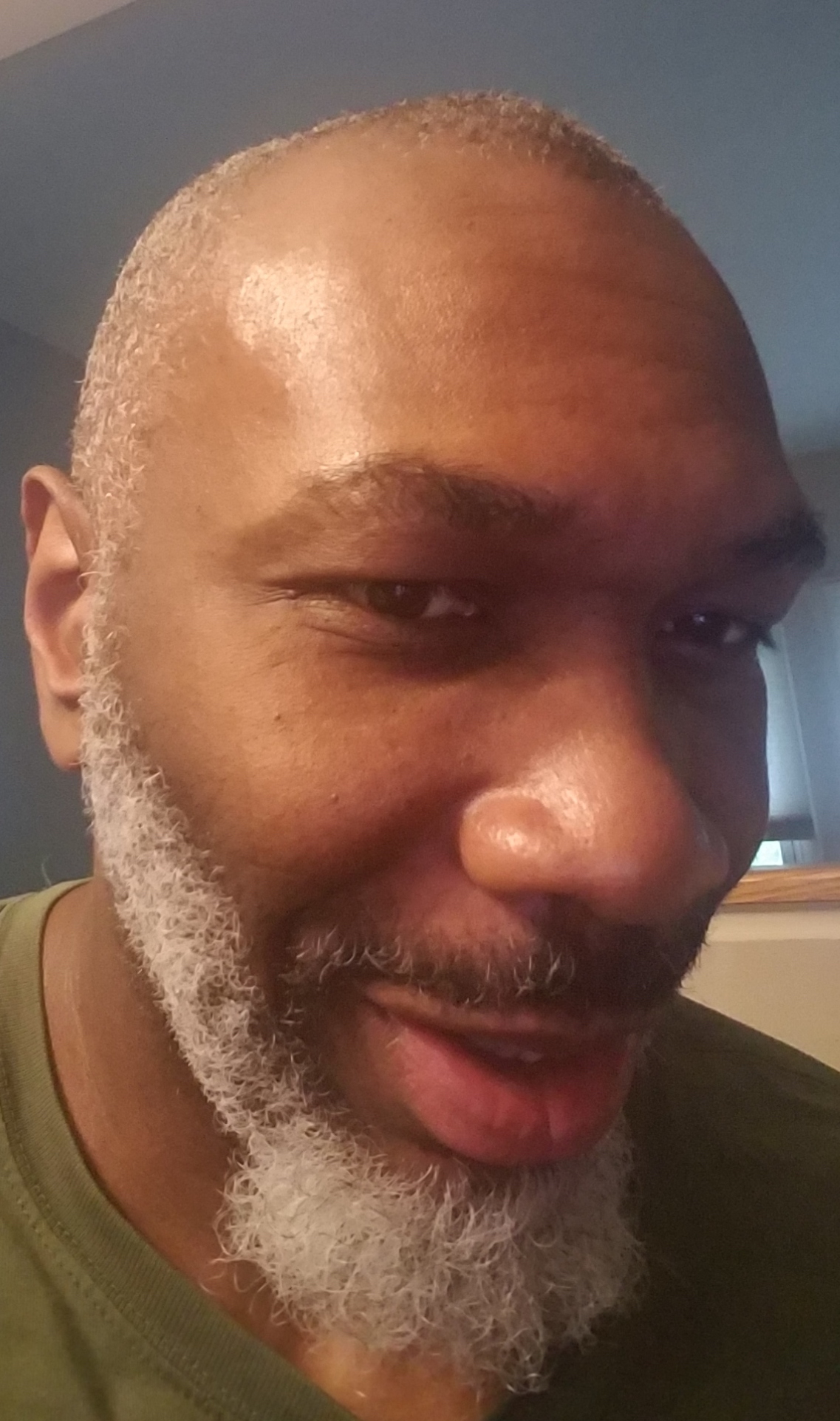
Me and my receding hairline, May 22, 2020 (Donald Earl Collins)

This is the first of a series of essays and posts that I am doing this month about my journey as a writer, an educator, and a fool over the past four decades, simultaneously between Medium and my blog. I hope to educate, to entertain, to make people laugh and cry laughing, but (hopefully) not to feel too sorry for me. I am who I am, a work still in progress, even as my knees and my neck ache, even as my mind and spirit are exhausted. Still, I want to fly. “Ain’t that crazy?,” to quote music artist Seal, this as his song “Crazy” turns 30 this week.

—

Serving as a contingent faculty member at two different universities with few benefits, few avenues for promotion, and having lived through one obsequious toad for a supervisor after another year after year? This was not how I imagined my life would end up by the time I reached middle age. I didn’t even think I’d make it to 30 when I was a fourteen-year-old, so there’s that. But when I was 11 in 1981, I did discover my first true calling. I wanted to be a writer, what kind of a writer, I wasn’t sure. But after two years of reading World Book Encyclopedia and more than 40 college-level or higher books on World War II — mostly by British authors — I was ready to write something. That spring, I wrote a 500-word essay as part of a city-wide writing contest in Mount Vernon, New York, back in the days when this New York City suburb had its own separate newspaper, the Mount Vernon Daily Argus. I don’t remember what they asked us K-12 students to write about, probably something civic-minded and somewhat trite. But I finished second overall out of hundreds of entries. The first-place winner was a high school junior. I won something, on my first try, too. Yay, me!

I got a note in the Daily Argus, along with an invitation to an awards ceremony at A. B. Davis Middle School that June, where a photographer took my picture and a representative from the newspaper handed me a $15 check. Technically, this was the first time someone paid me for my writing. This wouldn’t happen again until I was a doctoral student at the University of Pittsburgh. Between that and me introducing the keynote speaker for our graduating class of sixth-graders earlier that morning — the eventual Mount Vernon mayor Ernest Davis — I was truly inspired. I thought, for the first time in my life, This is MY gift! I want to write! I want to be a writer!

I went for it a week after graduation. I decided that I would write a book about the latest in American military hardware and how this would create the most efficient killing machine “in the history of mankind.” I wrote about the prototypes of the B1 and B2 bomber and bomber-fighter planes. I wrote about the prototype of the original M1 Abrams tank, which had recently come into service. I even jotted down paragraphs on ICBMs (Inter-Continental Ballistic Missiles) MX and MX2s and SLBMs (Submarine-Launched Ballistic Missiles), the Trident-class missiles and the Ohio-class submarines being built to house them. Unbelievably, I wrote a letter to the Pentagon to get pictures of these machines of destruction, and they obliged me with more than a dozen color photos a month later. I was sure that at least two pictures were classified.

By the time my mom had birthed my then youngest sibling Yiscoc (this is a form of Hebrew for Isaac), and my next youngest brother Maurice had turned two, both at the end of July, I had written 48 pages of what was to be a nearly 100-page book. It wasn’t a children’s book. I wrote about the modern United States military and its ability to wage a traditional war and a tactical nuclear war, and what that meant for the rest of the world. And then I hit a wall, and fell into a sinkhole somewhere in Florida. I couldn’t reconcile my fascination with these weapons and the tens of millions of people who could be killed by such weapons. My 11-year-old mind could not grapple with the real-life consequences of such expensive and deadly military hardware. And as a still immature preteen, I didn’t want to consider the vaporizing and pulverizing ugly side of military weaponry. After more than a week of trying to move into another section of this book, I stopped at 52 hand-written pages. It was mid-August, and middle school and all the hell that would come with it was just three weeks away.

Did I mention that as I wrote my first book in the summer of 1981, my stepfather had converted me and my siblings and my mother to Judaism, making us Hebrew-Israelites, without asking me or my 13-year-old older brother Darren for our opinion? Or that I was a month away from social suicide in the classroom, in the magnet program I would be a part of for the next six years, all because I had to wear a kufi outside our two-bedroom apartment? Or that the Carter-Reagan years and two more kids had left my mom broke, and us without food in the house on the regular? All of this was in process even as I was writing my summer away. It would be one of the only times in my life where being blissfully ignorant of the future while pursuing my gift as a writer with all of my heart and mind was such luxurious joy. Where time itself was as abundant as all the atoms in the universe.

I lost my way after that. The growing-up years had already been brutal, between a sexual assault I endured at six and a half, a suicide attempt, and years of therapy my mom administered with homophobia and a belt. With us sinking into welfare poverty, no food at home a third of the time, and my bullying, constant threatening no-good stepfather, my childhood love for reading and writing would take a beating. And still, when I emerged from the eight years of constant abuse to see my true face in my mind’s mirror, I still saw a writer. And then I lost my way, again. This time, to academia, to career-chasing, to chasing dollars, to the responsibilities of living an adult life.

My story is one of constantly denying who I am as a writer, and paying for it with blood, tears, and a damaged spirit, every single time. It doesn’t matter if I am a particularly good writer or a mediocre and overwrought one. After all, there are horrible writers who’ve published best-selling books, and great writers who’ve died before their work was ever read by more than a handful of family members or friends.

No, my story is about how the pursuit of all America pretends to offer can really fuck up one’s priorities. My story is about the spiral of falling in and falling out of love with life and the pursuit of making one’s life better, the illusion of choices, and the hypocrisy of the US, embedded in all of its institutions. My story is about the elliptical ebbs and flows of life, about my journeys as a writer, and how much of an educated fool I have been in these journeys. I promise laughter, sadness, and anger, and joy and victories, too.

← Older posts
Newer posts →

Boy @ The Window: A Memoir

Boy @ The Window: A Memoir

Places to Buy/Download Boy @ The Window

There's a few ways in which you can read excerpts of, borrow and/or purchase and download Boy @ The Window. There's the trade paperback edition of Boy @ The Window, available for purchase via Amazon.com at http://www.amazon.com/Boy-Window-Donald-Earl-Collins/dp/0989256138/

There's also a Kindle edition on Amazon.com. The enhanced edition can be read only with Kindle Fire, an iPad or a full-color tablet. The links to the enhanced edition through Apple's iBookstore and the Barnes & Noble NOOK edition are below. The link to the Amazon Kindle version is also immediately below:

scr2555-proj697-a-kindle-logo-rgb-lg

Boy @ The Window on Amazon.com: http://www.amazon.com/Boy-The-Window-Memoir-ebook/dp/B00CD95FBU/

iBookstore-logo-300x100

Boy @ The Window on Apple's iBookstore: https://itunes.apple.com/us/book/boy-the-window/id643768275?ls=1

Barnes & Noble (bn.com) logo, June 26, 2013. (http://www.logotypes101.com).

Boy @ The Window on Barnes & Noble: http://www.barnesandnoble.com/w/boy-the-window-donald-earl-collins/1115182183?ean=2940016741567

You can also add, read and review Boy @ The Window on Goodreads.com. Just click on the button below:

Boy @ The Window

Twitter Updates

Tweets by decollins1969
  • RSS - Posts
  • RSS - Comments

Archives

  • June 2025
  • April 2023
  • September 2022
  • August 2022
  • July 2022
  • June 2022
  • May 2022
  • April 2022
  • March 2022
  • January 2022
  • December 2021
  • November 2021
  • October 2021
  • September 2021
  • August 2021
  • July 2021
  • June 2021
  • April 2021
  • March 2021
  • February 2021
  • January 2021
  • December 2020
  • November 2020
  • October 2020
  • September 2020
  • August 2020
  • July 2020
  • May 2020
  • April 2020
  • March 2020
  • January 2020
  • December 2019
  • November 2019
  • August 2019
  • July 2019
  • June 2019
  • May 2019
  • April 2019
  • March 2019
  • February 2019
  • January 2019
  • December 2018
  • November 2018
  • October 2018
  • September 2018
  • August 2018
  • July 2018
  • June 2018
  • May 2018
  • March 2018
  • February 2018
  • January 2018
  • December 2017
  • November 2017
  • October 2017
  • September 2017
  • August 2017
  • July 2017
  • June 2017
  • May 2017
  • April 2017
  • March 2017
  • February 2017
  • January 2017
  • December 2016
  • November 2016
  • October 2016
  • September 2016
  • August 2016
  • July 2016
  • June 2016
  • May 2016
  • April 2016
  • March 2016
  • February 2016
  • January 2016
  • December 2015
  • November 2015
  • October 2015
  • September 2015
  • August 2015
  • July 2015
  • June 2015
  • May 2015
  • April 2015
  • March 2015
  • February 2015
  • January 2015
  • December 2014
  • November 2014
  • October 2014
  • September 2014
  • August 2014
  • July 2014
  • June 2014
  • May 2014
  • April 2014
  • March 2014
  • February 2014
  • January 2014
  • December 2013
  • November 2013
  • October 2013
  • September 2013
  • August 2013
  • July 2013
  • June 2013
  • May 2013
  • April 2013
  • March 2013
  • February 2013
  • January 2013
  • December 2012
  • November 2012
  • October 2012
  • September 2012
  • August 2012
  • July 2012
  • June 2012
  • May 2012
  • April 2012
  • March 2012
  • February 2012
  • January 2012
  • December 2011
  • November 2011
  • October 2011
  • September 2011
  • August 2011
  • July 2011
  • June 2011
  • May 2011
  • April 2011
  • March 2011
  • February 2011
  • January 2011
  • December 2010
  • November 2010
  • October 2010
  • September 2010
  • August 2010
  • July 2010
  • June 2010
  • May 2010
  • April 2010
  • March 2010
  • February 2010
  • January 2010
  • December 2009
  • November 2009
  • October 2009
  • September 2009
  • August 2009
  • July 2009
  • June 2009
  • May 2009
  • April 2009
  • March 2009
  • February 2009
  • January 2009
  • December 2008
  • November 2008
  • October 2008
  • September 2008
  • August 2008
  • July 2008
  • June 2008
  • May 2008
  • April 2008
  • March 2008
  • February 2008
  • January 2008
  • December 2007
  • November 2007
  • October 2007
  • September 2007
  • August 2007
  • July 2007
  • June 2007

Recent Comments

decollins1969's avatardecollins1969 on No Good Teaching Deed Goes…
Mary Rose O’Connell's avatarMary Rose O’Connell on No Good Teaching Deed Goes…
Lyndah McCaskill's avatarLyndah McCaskill on The Raunchiest of Them Al…

NetworkedBlogs on Facebook

NetworkedBlogs
Blog:
Notes From a Boy @ The Window
Topics:
My Life, Culture & Education, Politics & Goofyness
 
Follow my blog

616 616 East Lincoln Avenue A.B. Davis Middle School Abuse Academia Academy for Educational Development AED Afrocentricity American Narcissism Authenticity Bigotry Blackness Boy @ The Window Carnegie Mellon University Child Abuse Class of 1987 CMU Coping Strategies Crush #1 Crush #2 Death Disillusionment Diversity Domestic Violence Economic Inequality Education Family Friendship Friendships Graduate School Hebrew-Israelites High-Stakes Testing Higher Education History Homelessness Humanities Humanities Program Hypocrisy Internalized Racism Jealousy Joe Trotter Joe William Trotter Jr. K-12 Education Love Manhood Maurice Eugene Washington Maurice Washington Misogyny Mother-Son Relationship Mount Vernon High School Mount Vernon New York Mount Vernon public schools Multiculturalism MVHS Narcissism NFL Pitt Pittsburgh Politics of Education Poverty President Barack Obama Race Racial Stereotypes Racism Relationships Self-Awareness Self-Discovery Self-Reflection Sexism Social Justice Teaching and Learning University of Pittsburgh Violence Whiteness Writing

Top Rated

Blog at WordPress.com.

  • Subscribe Subscribed
    • Notes from a Boy @ The Window
    • Join 103 other subscribers
    • Already have a WordPress.com account? Log in now.
    • Notes from a Boy @ The Window
    • Subscribe Subscribed
    • Sign up
    • Log in
    • Report this content
    • View site in Reader
    • Manage subscriptions
    • Collapse this bar
 

Loading Comments...