• About Me
  • Other Writings
  • Interview Clips
  • All About Me: American Racism, American Narcissism, and the Conversation America Can’t Have
  • Video Clips
  • Boy @ The Window Pictures
  • Boy @ The Window Theme Music

Notes from a Boy @ The Window

~

Notes from a Boy @ The Window

Category Archives: Mount Vernon New York

Summer of Sound

05 Sunday Aug 2012

Posted by decollins1969 in 1, Boy @ The Window, culture, Eclectic, eclectic music, Mount Vernon New York, Movies, music, New York City, Pop Culture, race, Work, Youth

≈ Leave a comment

Tags

"End Of The Road", "Walking On Broken Glass, Annie Lennox, Boyz II Men, Garth Brooks, Grover Washington Jr., Growing Up, John Coltrane, Jon Secada, Mariah Carey, Mary J. Blige, Michael Jackson, Miles Davis, Musical Tastes, Ronny Jordan, Sounds of Blackness, U2, What's the 411?


Mary J. Blige’s What’s the 411? (1992) CD cover, August 5, 2012. (Donald Earl Collins).

One of the few great things for me about being back in Mount Vernon and New York City the summer of ’92 was that I was ahead of the slow pop cultural curve that was Pittsburgh two decades ago (although it’s still slow — just not as slow as it used to be). For one last summer, despite the turmoil of kids and my mother treating me like I was one (see my post “The Last 616 Summer” from June ’12) and the constant chaos at my job (see my “Working With Wackos, Part I” post from July ’12), I had access to all the immediate in music, movies and other forms of culture, pop or otherwise.

This was truly the summer that my tastes turned from randomly weird to eclectic. To think that just five years earlier, early Whitney Houston, Thompson Twins, Glass Tiger and ABC were all part of my regular cassette rotation for my Walkman! My tastes had grown up to the point where music had to have a mood or rhythm to it. It no longer needed to be quirky or silly in order to put me in a quirky or silly mood.

But those weren’t the only emotions available to me by the summer of ’92. I could actually feel sexy, romantic, generous, loving, caring, and not just angry, depressed and goofy in my normal life. A half-decade away from the crushing life of strife at 616 and in Mount Vernon, high school, Humanities and in general, had something to do with that. Dating off and on had brought others into my life, which meant that Crush #1 and Crush #2 had become somewhat repressed memories. The bottom line was, I no longer needed music or pop culture to block out the daily emotional pain that had been my life in the ’80s.

And that opened me up to new and more eclectic (if still occasionally goofy experiences) music experiences that year and summer. I became a big Jon Secada fan that summer (see my “Otro Dia Mas Sin Verte” post from August ’09), both in English and en Espanol. I was so glad he branched off from Gloria Estefan, as I’d had it with the Miami Sound Machine’s sound years ago.

I also became enthralled a bit with jazz and what we now call smooth jazz that summer, between Grover Washington, Jr., Ronny Jordan’s “After Hours”, John Coltrane, even some Miles Davis (who I did appreciate, but never quite understood). I had friend at Pitt who had exposed me to jazz over the previous five years, but it took graduate school for me to finally fully appreciate it. It also took working in an office with a woman who played all kinds of music all the time for me to actually go out and buy their stuff on CDs.
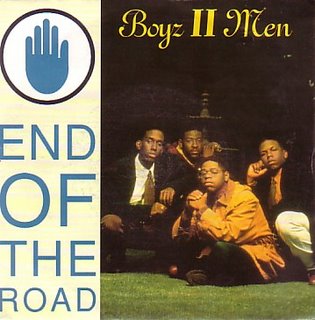
Boyz II Men’s “End Of The Road” (1992) singles cover, May 19, 2009. (Undermedveten via Wikipedia). Qualifies as fair use under US Copyright laws (low resolution picture).

The expansion of hip-hop and rap twenty summers ago to include new and fresh sounds ended up having an impact on my own music collection as well. Mary J. Blige’s What’s The 411? hit the stores and her songs the NYC-area airwaves that July and August, so raw and so new that even I the late-bloomer noticed. And who could forget Boyz II Men’s “End Of The Road.” I heard that song at least eight times a day nearly every day between the end of June and the middle of August, especially at my Mount Vernon Clinic job. I guess if I’d been divorced or in a bad relationship, I would’ve appreciated it more. As it was, any thought of buying Boyz II Men’s second album disappeared by the beginning of August. The same was true for me regarding Jodeci, the hip-hop screechers and beggars from the Upper South. They were like nails on chalkboard to me then.

Still, I incorporated music more typical of my earlier tastes into my collection that summer as well. Mariah Carey’s “I Don’t Wanna Cry” became the song I went to every time my sister Sarai started whining about me telling her to do chores at 616. Sounds of Blackness’ “Optimistic,” I discovered that summer (one summer after its release). U2’s Achtung Baby, Garth Brooks’ “The Thunder Rolls” and Michael Jackson’s “Remember The Time” rounded out my catching up to the current that summer, while Annie Lennox’s “Walking On Broken Glass” was, new, silly and serious at the same time.

There have been other times, other summer in which my tastes have taken leaps forward. I must admit, this has usually occurred after great pain or after having recovered from a major trial in my life. The summer of ’92, though, was a transition summer for me, from having to act like an adult due to stressful circumstances to just being an adult because I actually was.

On Hugs and Walks

01 Wednesday Aug 2012

Posted by decollins1969 in 1, Boy @ The Window, culture, Eclectic, Mount Vernon New York, Politics, Pop Culture, race, Youth

≈ Leave a comment

Tags

616, 616 East Lincoln Avenue, Adulthood, Bronxville, Chester Heights, Child Abuse, College Plans, Crush #2, Dreams, Eastchester, Economic Inequality, Manhood, Maurice Eugene Washington, Maurice Washington, Pelham, Poverty, Puberty, Self-Discovery, Shuckin' an' Jivin', Tuckahoe, Walks


Commodus hugging Maximus as he plunges dagger into back (screenshot), Gladiator (2000), August 1, 2012. (Donald Earl Collins). Qualifies as fair use under US Copyright laws – low resolution of picture.

The beginning of August for me thirty years ago was the beginning of adulthood for me. I had little choice. After five weeks of emotional, psychological, physical and spiritual abuse, my choices were to either allow myself to be broken or to find something to hope for. Otherwise, my life would’ve been over before my thirteenth birthday.

I thought hard about how to end the summer of ’82’s abuse. I figured that I could pretended to be something I wasn’t — a loving, wayward stepson. I begged for my stepfather’s forgiveness and even called him “Dad” while he beat me for the sixth time in a month, on August 1, ’82. He stopped, finally, and gave me a hug. I cried tears of rage and hate, because I couldn’t even stand to touch or smell the man, much less being pressed against his overabundance of fat. I prayed for his death to be long and painful, as if I had a dagger in my right hand, ready to plunge into his back left ribs.

Dagger through back rib and heart (screenshot), Gladiator (2000), August 1, 2012. (Donald Earl Collins). Qualifies as fair use – low resolution of picture.

If masturbation were the only thing that I discovered that month, I might’ve begun aspiring for some other kind of life. Instead, I decided on a boring early August day to do something else novel. I didn’t want to go to Wilson Woods again. We didn’t have any money anyway. I decided to take my siblings on a walk on the wild side, to walk outside our immediate neighborhood. Darren and I took baby Maurice and Yiscoc in his new stroller out of 616. We walked and strollered down East Lincoln Avenue, across the stone bridge over the Hutchinson River Parkway into Pelham, and turned left on Fifth Avenue to go north. This was uncharted territory for all of us, especially me. North Pelham might as well have been Helena, Montana to me.

“We don’t know where we’re going,” Darren said.

“Yeah, and?,” I said in response.

“Okay, but it’s your fault if we get lost, Donald,” Darren said.

Sarah Lawrence College, Bronxville, NY, August 1, 2012. (http://slc.edu). In public domain.

We didn’t get lost. We walked until we hit Chester Heights, the beginning of the village of Eastchester, and then Bronxville. It was amazing in that it was much more suburban than Mount Vernon or the part of Pelham that I’d known up until that moment. The homes were luxurious by my standards. Everyone seemed to own a BMW, Volvo, Mercedes-Benz, or Peugeot. There weren’t many sidewalks around, only well-manicured lawns. We had walked into several ritzy communities without any warning.

I began to think that the world was a cruel place, having rich Whites living so close to us yet their lives were so far apart from ours. But instead of becoming depressed or angry, it made me introspective. “Look at these houses!,” I said to Darren as we walked by one Tudor-style home after another three-story mansion, broken up only by a few cul-de-sacs. Darren, having been around rich Whites through Clear View for nearly eight years, didn’t think too much of it.

That’s when it hit me. If I wanted to live a better life, to have a nice house and a car and a family, it seemed to me that I needed an education, a college education. I wasn’t going to get there just graduating from high school, especially in Humanities, where the expectations for college were so high that some kids already knew that they were going to law school. I just knew that I couldn’t go through another summer of abuse. So I said to myself, “I’ve got to get through the next five years. I’ve got to go to college.” Yet it seemed like an impossible task.

As we meandered our way back toward Mount Vernon, we ended up on North Columbus Avenue/Route 22. That’s when we passed by a ranch-style home with a stone facade. I looked and saw someone out in front I hadn’t seen since the end of the school year. It was “P,” my eventual Crush #2, outside in the front yard with her sister, apparently back from bike riding. She called us over, and the four of us talked. This was the first Black family I’d seen during our two-hour walk.

Of course I didn’t go into any detail about what we’d been up to. After all, the one thing that the past year had taught me was not to open up my mouth and say everything that was on my mind! So I let her and her older sister do most of the talking. They’d gone somewhere down South to visit family.

“Do you live around here?,” P asked.

“Oh, we’re on a long walk and just happened to be in the neighborhood,” I said.

“Okay,” she said in response.

The Denzel Washington Walk, American Gangster (2007), August 1, 2012. (http://variety.com)

“In the neighborhood.” Sure, if Bronxville, Eastchester, Pelham and 616, all part of our eight-mile trek, were all one gigantic neighborhood! After about ten minutes, we continued home. Darren was more excited about seeing my eventual Crush #2 and her sister than I was.

I wasn’t unexcited. P was far and away the nicest person to me in 7S all year. She stepped up when others made fun of me. I just took her being nice to me the same way Laura Ingalls from Little House on the Prairie probably took it when Mrs. Olsen was nice to her.

Still, I finally had a plan. I knew that there would be a lot of smaller steps that I’d have to take before even getting to college, though. But in looking at where P and her sister lived, I at least knew that someone in their family must’ve taken similar steps in the not-too-distant past.

The Third Armpit of Hell

27 Friday Jul 2012

Posted by decollins1969 in 1, Boy @ The Window, culture, Eclectic, High Rise Buildings, Marriage, Mount Vernon New York, My Father, New York City, Politics, Pop Culture, race, Upper East Side, Upper West Side, Work, Youth

≈ 1 Comment

Tags

Coming-of-Age, Dante's Inferno, Economic Inequality, Growing Up, Home, Metro-North, Neighborhoods, New York, New York City, NYC, Poverty, Race, Self-Discovery, Subway Trains, The City


Illustration of Dante’s Inferno, Map of Lower Hell, 16th century. (Giovanni Stradano via Wikipedia). In public domain.

During most of my Pittsburgh years, whenever someone I knew asked me what it was like to live in the New York City area, I often said two things. One, that “New York was a great place to live if you have money.” But, “if you don’t have money, New York could be like the third armpit of hell.”

I didn’t even bother to discuss Mount Vernon until I was well into graduate school. Too unknown, too complicated to explain its proximity to the Bronx and to midtown Manhattan. And from the average Pittsburgher’s perspective, it was a distinction without a difference. As far as some were concerned, Mount Vernon could’ve just as easily been outside of Buffalo as it could’ve been in the heart of Harlem.

But I definitely knew better, that my relationship with Mount Vernon and “The City” was a love-hate one, born from my growing-up experiences during the Reagan years. The lens with which I viewed the New York City area, a trifocal one of race, poverty and “outsider” status, made me ambivalent about my times growing up in Mount Vernon and all of my times in New York.

2 NYC subway train with graffiti (cropped), 1980s, December 20, 2009. (Cope2 via http://www.doobybrain.com/). Qualifies as fair use – low resolution picture.

I have my father Jimme to thank, though. Without him, I would still be afraid of New York, not just ambivalent about it. Drunk or not, working or on his way to a hole-in-the-wall bar. Jimme would take me and my older brother Darren out and down to the city often enough, to ride the Subway, to hang out with him in Harlem, Spanish Harlem, and especially Midtown. Whether it was to help him with his janitorial work on weekends, or just to hang out, we frequented Manhattan and other parts of the five boroughs off and on between ’80 and ’85, ’82 — the year of abuse — excepted.

Because of that year, the longest time I spent outside of the city growing up was between April ’81 and July ’83. After not making it down to Manhattan in all of ’82, we went to Midtown in July, where we learned about two of my father’s watering holes between 43rd and 47th. They were both near Mickey Mantle’s restaurant on 47th. He also had an Irish pub he’d like to go to around East 59th and Third, a drinking bar near his job on 64th and Columbus, and a couple of places near Macy’s on 34th Street. Because of our height and the times, when it was still legal for eighteen-year-olds to drink in public watering holes, me and Darren were allowed into these fine establishments. I learned a lot about vermouth, vodka, Cosmos and Long Island Iced Tea that summer.

Grand Central Terminal Main Concourse in New York City, March 4, 2006. (Janke and Diliff via Wikipedia). Permission granted via cc-Attribution-Share Alike 3.0 license.

I also learned a lot about the not-so-nice side of New York in those years. I recognized this as I’d board the Uptown 2 Subway from West 42nd Street and 7th Avenue in Manhattan at the tail end of rush hour. As I’d board the train, I’d notice the crunch of humanity in all of its oblivion, self-absorption, and diversity. As the doors close, I’d watch as the express train passed 50th, 59th, and 66th Street before it would grind to a halt at 72nd Street. I’d notice that a fair number of the White passengers alighted here. Between 96th and 125th Street, the load of the train would gradually lighten as about half of the passengers who’d crushed me between a tall, stale-breathed smoker and a woman who wasn’t my girlfriend were now at street level.

About three-quarters of the passengers for the rest of my trip would be Latino and Afro-Caribbean. After another hour of endless stops in the Bronx, the 2 would pull me out of my slumber as it would slowly roll into the rickety East 241st stop.

By the time I was a rising senior at Pitt, I certainly didn’t need my father to accompany on my trips into Manhattan. I also avoided the long trek from 616 across Mount Vernon to 241st to take the 2 whenever I could afford to. Metro-North was a luxurious godsend compared to the puddles of piss and infinite amounts of graffiti on the Subway I’d seen throughout the ’80s.

Toph’s “Hairy Pits” from Avatar: The Last Airbender (screenshot), July 26, 2012. (Donald Earl Collins). Qualifies as fair use — low resolution picture.

But it introduced me to other odious issues. Like Grand Central Station, which by the summer of ’90 was in desperate need of renovation. Especially the restrooms, festooned with enough garbage, feces and bodily odors and fluids to make a coroner vomit.

Off a return trip from Pittsburgh that summer, I made the mistake of having no choice but to use the almost  unusable facilities there, which in the end I couldn’t use. Meanwhile, I observed homeless males hanging out in the restroom with carts, along with an individual who looked to have Kaposi’s sarcoma, an obvious sign of full-blown AIDS.

That’s when I coined New York to be “the third armpit of hell,” the place where poverty had meant your dreams were dead on arrival. For once, it made me content that I was from a place where many smug New Yorkers disdainly considered “upstate.” Though the New York City area has changed — and mostly for the better — since ’90, it’s still a place where economic inequality can easily grind the life out of people.

The “Invisible” Poor & The Middle Class Mythology

19 Thursday Jul 2012

Posted by decollins1969 in 1, Academia, Boy @ The Window, Eclectic, Mount Vernon New York, race, Work, Youth

≈ Leave a comment

Tags

American Dream, Aspirations, Chris Hayes, Creflo Dollar, Economic Inequality, Gospel of Prosperity, Journalists, Media, Media Coverage, Middle Class, Mitt Romney, MSNBC, Political Optics, poor, Poverty, President Barack Obama, President Obama, Social Castes, social mobility, Up with Chris Hayes, Uppers, Wealthy


Transparent (or invisible) Woman (cropped), July 19, 2012. (http://cgtrader.com).

This past weekend, I found myself drawn into the discussion of the middle class and middle class aspirations on MSNBC’s Up with Chris Hayes (otherwise known as “Uppers”). It was a good and yet wholly unsatisfying discussion of technical definitions of what middle class is and of the political optics of only discussing the middle class as a socioeconomic category. Chris Hayes and his guests justified this with an all-too-common refrain. “If you’re poor, you’re aspiring to be middle class,” Hayes said on Saturday. With that, Hayes and his guests rendered America’s poor invisible, and failed to see beyond the politics of invisibility in the process.

There are two issues here, and many layers within them, about America’s poor, working, on welfare, or otherwise. One issue is that journalists, commentators, political operatives and most politicians treat the poor as if they are an unknowable group of people. It’s as if they all think the same way, as if there are all Black or of color, and a complete drag on the American economy and the federal budget. And that’s on a day in which the media and politics deem America’s poor as discussable. Most of the time, America’s poor are invisible, shoved into the middle class category by commentators and politicians at every turn.

Yes, America’s middle class is struggling too, fighting tooth and nail to not slip into the class of the invisible working poor, treading water to avoid food banks and food stamps. But they have something to struggle with — and for — at least. Their homes, their cars, a retirement account, their families’ net worth, all accoutrements of being middle class in America. America’s poor don’t possess anything to struggle with or for.

Chris Hayes on a train in Switzerland, November 10, 2008. (Matthew Yglesias via Wikimedia Commons/Flickr.com). Released to public domain via cc-Attribution-Share Alike 2.0 Generic license.

Except, maybe, with their vote, if they care to vote at all. Yet no mainstream commentator nor presidential candidate has truly spoken to their needs, their plight, to how their situation is completely interconnected with the struggles of the American middle class, not their aspirations. Not Chris Hayes, nor his weekend compadre, Melissa Harris-Perry, not President Barack Obama, and definitely not the presumptive GOP nominee, Mitt Romney.

It’s a story I’m all too familiar with, as someone who grew up in poverty in Mount Vernon, New York. Not to mention as someone who had to go to college and graduate school and then struggled for two years at part-time work before finding a job with a Ph.D. in ’99 (see my “The Five Senses of Poverty” post from July ’10). I was thirty years old by the time I earned a middle class income. Yet in all of that time, the only mainstream politician who spent time on the issues of the American poor as if these were real people was President Jimmy Carter, and we know what happened with him. Outside of my degrees and my publications, I was invisible until the fall of ’99.

Otherwise, it’s been four decades of Presidents Nixon, Reagan and Clinton concerned with “welfare queens,” “pink Cadillacs,” and “mend it, don’t end it” welfare policies, and the media following suit. It’s like being kicked hard by someone as one is laying on the ground with broken ribs and internal hemorrhaging, as if they want to poor to die, painfully.

But it’s not just the ones with microphones and word processing programs that kill America’s poor by rendering them invisible. Despite the general notion that the media and politicians nurture — that everyone not rich aspires to be firmly entrenched in the middle class — most Americans middle class and poor aspire to be rich, wealthy, well-off.

Creflo Dollar, pastor, World Changers Church International, November 1, 2010. (Zwicky Institut via Flickr.com). In public domain.

This is the other neglected issue, whether inadvertent like with Chris Hayes and his guests on Uppers, or deliberate on the part of President Obama and Romney. Why so? Because they don’t acknowledge that it’s hard to be truly middle class in America these days. To be in the middle class, one must borrow, borrow, borrow, beg and sometimes steal while struggling to pay student loans, car notes, a mortgage and child care costs.

This wasn’t the case even thirty years ago, before the severe double-dip recession, high interest rates and inflation and Reagan Revolution took full hold. Then, a high school diploma and raw initiative was all most folks needed to find a job at a GM plant or to get an administrative job in government or with a large corporation (although, typing at 90 words per minute enhanced a woman’s chances, at least). Now, two years of college or postsecondary technical training, some experience in a specialized field, and a personal connection is the floor for a living wage — not exactly middle class. Of course, no one wants to be in the basement with nearly one in five Americans, 50 million in all, working just to be poor.

Stacks of money, April 13, 2008. (Allureme via Wikipedia). Released to public domain via cc-Attribution 3.0 License.

America’s poor and fledgling middle class both aspire to be rich (or die tryin’), and not just middle class. The rise of fundamentalist Christianity, mega-churches and the cult of prosperity as these pastors reimagine the New Testament. The endless lines for Powerball and Mega Millions whenever the pot is more than $100 million. The fascination with reality shows about the well-off or about competing to be well-off. All of this is the manifestation of the warping of the American Dream since the early 1970s, where the pursuit of riches has led to debt slavery for millions.

The old American Dream has become myth, and the old American middle class is but the story of Camelot, Timbuktu and Shangri-La. In our new world, “the poor will be with us always” has been made a plain and unyielding truth by those in power, reinforced by those with a media platform.

Boy, Interrupted

16 Monday Jul 2012

Posted by decollins1969 in 1, Boy @ The Window, culture, Eclectic, Hebrew-Israelite, Jimme, Mount Vernon New York, Movies, race, Religion, Youth

≈ 1 Comment

Tags

"Oz" (HBO), 616, 616 East Lincoln Avenue, Child Abuse, Crush #1, Girl, Hatred, Imagination, Interrupted", Judah ben Israel, Maurice Eugene Washington, Maurice Washington, Stolen Childhood, Torture, Uncle Sam


Oz (HBO series) wallpaper, July 15, 2012. (http://blabla-series.com).

As I continue on my blogger’s journey reliving parts of my summer of abuse from thirty years ago, I’m reminded of some simple truths. That in terms of time, while I certainly remember everything that happened to me in July ’82, I don’t remember being outside the confines of 616 at any point during that month, even during those times when I actually was. Mount Vernon had become my prison. I don’t recall a single moment of laughter or goofiness, a single song or thought beyond surviving my ordeal. It was as if someone had kidnapped and then tortured me for five weeks. It was the longest interruption of my higher ordered thinking that I can remember.

Not only did my stepfather Maurice/Judah forbid me from the outdoors or from reading because I refused to acknowledge him as my father, but he forced me to do every conceivable household chore (see my “Whipped And Beaten” post from earlier this month). He invented them on a whim to keep me busy every day. His justification, of course, was the Torah. “Honour thy father and thy mother…” was what I’d allegedly violated as a sinful Hebrew-Israelite. I scrubbed behind our two refrigerators on a Saturday afternoon in mid-July — our so-called Sabbath day — while they were turned on, burning myself on coils and cleaning walls with plain water. I whitewashed the bedroom, living room, foyer, and hallway walls on Saturdays and other days, again without any soap or other cleansers.

Maurice inspected my work for any mistake, and if there were any, I’d get beat with a belt or punched in the chest or gut and would have to start the whole thing all over again. All while he laid on his unemployed ass farting and watching the ’30s Tarzan movie series starring Johnny Weissmuller on WNEW-Channel 5. On a Sanyo TV set my father Jimme had bought us the year before, just before his Louisville Slugger incident! I scrubbed those kitchen walls as if I were scrubbing Maurice with a steel rake tipped with Brillo pads. It didn’t matter that I didn’t have anything but water to clean them with.

A modern jail cell (numbering modified by author), Brecksville, Ohio PD, January 3, 2006. (Andrew Bardwell via Wikipedia/Flickr.com). In public domain.

Both Jimme and my Uncle Sam tried to see me during this torture. My stepfather threatened to kill Jimme, practically running him off. I got in trouble for chasing after my father down East Lincoln Avenue after Maurice threatened him. Maurice yelled at me, “If you go after him, you betta keep goin’!” Mom stopped my Uncle Sam from confronting my stepfather about his abuse of her and me when he came over for a visit at the end of July. He was obviously frustrated beyond belief. Uncle Sam said, “Don’t expect me to keep comin’ over here while that son-of-a-bitch’s still here!”

I was completely exhausted by then. I dreamed every day of slaughter. I thought about cutting up my stepfather in his sleep with a steak knife and feeding him to wild dogs. I’d start with his balls, then his whale-blubber belly, and then his throat. Then I would stuff his balls down his throat. These wonderful thoughts probably kept me from committing suicide.

Despite it all, the idiot had failed to break me. Off and on throughout my month of torture, I did think of Crush #1. She’d sometimes show up in my dreams. Or I’d think of her as I walked the streets of North Side Mount Vernon, as I passed her  block near East Prospect, on the way to pick up a new stroller for Yiscoc or to go to Waldbaum’s or some other grocery store. Then I started thinking that this was a pitiful waste of time. After all that had happened, there was no way someone as great as Crush #1 would ever be interested in me, I thought one day at the end of July, just a couple of days before my five weeks of continual abuse had ended.

I assumed that I was damaged goods, a person no self-respecting individual would see as having any value. Kids, even poor kids, made fun of me all the time, my religion was a sham since my stepfather had become a worse person, Mom was making dumb decisions, and my grades despite my end-of-the-year rally didn’t meet my usual standards. It was July ’82 and I didn’t know if I’d make it to my thirteenth birthday.

I was so stressed out that I hadn’t noticed that I was in the midst of growing four inches in two short months. I missed my foot growing a full size in a span of a month, my first pubic hair growth. I even masturbated without knowing what it was I was doing, having made it my way to release all of my fear and stress. If a psychiatrist had evaluated me on July 16 of ’82, they would’ve put me on antidepressants. That’s how out of sorts I was.

Whipped and Beaten

06 Friday Jul 2012

Posted by decollins1969 in 1, Boy @ The Window, culture, Eclectic, Hebrew-Israelite, Mount Vernon New York, Movies, race, Religion, Youth

≈ 1 Comment

Tags

616, 616 East Lincoln Avenue, Child Abuse, Childhood, Judah ben Israel, Maurice Eugene Washington, Maurice Washington, Pookie


Whipped and beaten buttercream, October 10, 2010. (http://farm5.static.flickr.com/). In public domain.

Another day, another “thirty years ago on this date” post. But this one was my full confirmation that my childhood was over, that humans — especially Blacks males — couldn’t be trusted, and that I had a long way to go to make my life worth living (see my post “Another Day of Days” from July ’07 for more). It took years for me to undo the conclusions I drew from what occurred on this date.

My stepfather cut my Pookie hunt three days short on the sixth of July (see my “Lightning On A Cloudless Day” from last week) of ’82. Because I wasn’t man enough to actually find and confront Pookie to get the money back, it was now time for my whuppin’.

Whap! Whap! Whap!

“Are you gonna do what I say nigga!,” Maurice kept saying as he kept whipping me with his belt.

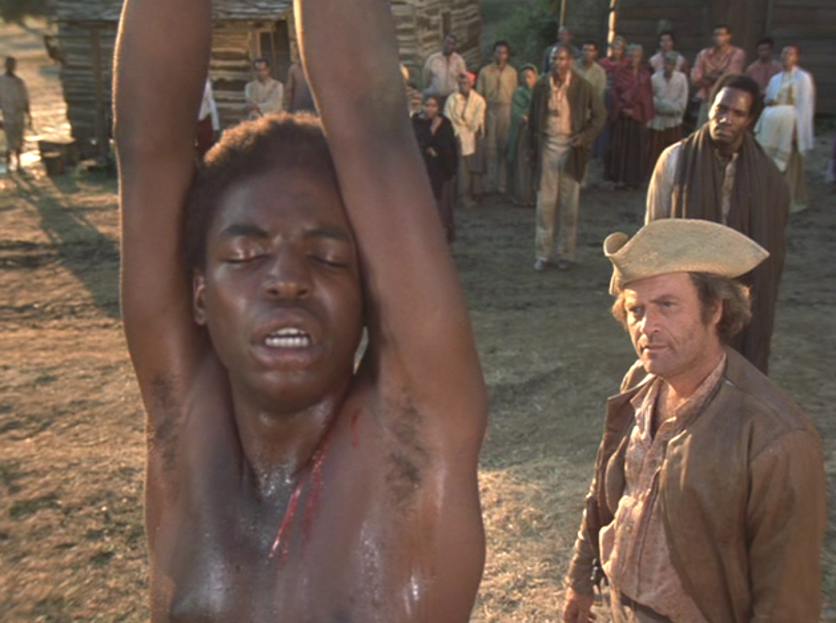
Kunta Kinte being whipped, Roots (1977) screenshot, July 6, 2012. (http://irvine.wikis.gdc.georgetown.edu). Qualifies as fair use under US Copyright laws because of low resolution.

I stood there with my arms and legs stretched out — and with my pants and underwear pulled down to my ankles — in front of a grimy white wall in my room being whipped by him with his leather belt. I could hear the belt cut through the air before it landed on my nearly naked body. I assumed that he pulled this straight from the ABC miniseries Roots.

Whap! Whap! Whap!

“I’m yo’ father and yo’ gonna listen to me!” he barked.

As the inquisition continued, my room started to spin in my head, and the white walls turned yellow and red.

Whap! Whap! Whap!

“Are you gonna listen to me? Are you gonna listen to me?” he kept saying as each hit became harder and harder on my back, butt, and legs. I started seeing pools of blood forming on the ceiling and nothing but hatred was forming in my mind.

Whap! Whap! Whap!

“Are you gonna listen to me?,” he screamed.

“I hate you! I hate you! You’re not my father, you’re just a bully!” I yelled.

My stepfather then paused from whipping me. Punches and kicks followed about a second later. First came three punches to my head and jaw, after he spun me around from the wall.

“You hate me, huh nigga?!?”

Then he kicked me in the stomach and the mouth as I lay on the floor, at least until I started to spit blood. After I threatened to go to the police, Maurice picked me up and threw me by my arms four feet into a corner wall, almost knocking me unconscious.

“Go to the police, muthafucka! I dare you! If you talk to the police, I’ll kill you!,” he said.

When I came out of my daze, my stepfather told me to move out and go live with Jimme. He told me, “This is MY house. If you hate me get out!” A suitcase then greeted my head as my stepfather said, “Start packin’!”

Mom arrived from a long day at work, around 3:15 pm, as Mount Vernon Hospital was about to go on strike, and she wasn’t a part of the union. “My poor mom,” I thought. When she came into my room, she immediately became angry. “What happened?,” she asked. I told her the story, and she told me to unpack.

After five minutes of quiet, I heard her arguing with Maurice in the living room.

“He’s a defiant child. We have to get rid of IT!,” he said.

“Who pays the bills? Who feeds your fat black ass? If this child of mine leaves, we’re gonna turn this mutha out, and you’re gonna be the one goin’ to hell!,” Mom said in response. I guess she really didn’t remember what happened to her on Memorial Day.

My stepfather then walked into my room to say “Unpack, nigga.” I finished unpacking, and then I sat in my walk-in closet and began to cry. I hadn’t cried in the closet since the day I finished third grade, because Mrs. Shannon was no longer my teacher. I had a crush on her all through that year. Now I closed the closet door, wanting no light to shine on me.

I felt trapped, with no place to escape from the wrath of my stepfather. I thought about poisoning his food, the fat slob. Or slitting his throat when he was asleep, because he could sleep through a thermonuclear detonation. Then I thought about killing myself again. I could jump out of the window in the living room and land flat on the blue-gray slate walkway between 616’s front door and the five stairs leading to the sidewalk and street. I thought that one of us would have to die to end this senseless ordeal.

Muhammad Ali at end of last fight, SI cover, October 13, 1980. (http://www.crowntiques.com). Qualifies as fair use under US Copyright laws because of low resolution.

I discovered that my waking nightmare had just begun. It turned out that my ribs and stomach were bruised, I had another knot on my forehead, my lower lip was busted, and my butt and right leg had bloody scars on them as a result of the belt. And I knew, all too well now, that there was more to come.

If there’s anything to learn from my experience, it’s to not wait for a teacher to notice — in my case, the late Harold Meltzer — or twenty years to feel comfortable enough to talk about your child abuse without being embarrassed.

Working With Wackos, Part I

02 Monday Jul 2012

Posted by decollins1969 in 1, Academia, Boy @ The Window, culture, Eclectic, eclectic music, Mount Vernon New York, music, Pop Culture, race, Work, Youth

≈ 2 Comments

Tags

"End Of The Road", Boyz II Men, Deception, Micromanaging, Office Politics, Ralph Williams, Valerie Johnstone, Westchester County Department of Community Mental Health, Workplace Abuse, Workplace Issues


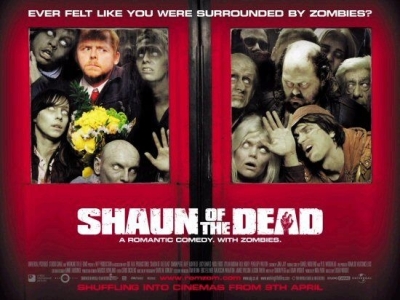
Shaun Of The Dead (2004) poster, August 22, 2011. (Quentin X via Wikipedia). Qualifies as fair use under US Copyright laws because of poster’s low resolution.

I don’t mean this in a literal sense, although in this particular case, it’s pretty close to true. In the case of my last summer working for Westchester County Department of Community Mental Health at its Mount Vernon clinic on 9 East First Street, it’s ironic that the least sane folks around were my bosses and colleagues. The amount of drama generated from such a small office was enough to start a nuclear fusion reaction, providing power for Mount Vernon’s residents for years on end.

Unlike the summer of ’89, the summer of ’92 wasn’t just about the dreaded Valerie Johnstone (see my post “Fried Green Toenails”  from February ’11). This summer involved the head of the clinic, a Dr. Ralph Williams. From my first day there, it was obvious that there was a strange and sordid dynamic at the clinic, one that had little to do with the patients who showed up with everything from associative disorder to schizophrenia, for drugs from Dilantin to Xanax. I got a dressing down from Johnstone about having earned my master’s degree two months earlier, as she said, “See, I have a master’s degree, too.” Except that she was sixty, and I was twenty-two, at least that’s what went through my head while she was telling me how much better she was than me.

Williams wasn’t much better. My first one-on-one with him at the end of June was about how much better we were than “ordinary” folks like Johnstone because he had the ultimate prize – a medical degree from Harvard – and I was about to embark on the ultimate degree, a doctorate. From our first meeting, Williams had described Johnstone as a “dummy” and an “overbearing bitch.” While I knew that the latter was true, I would’ve have never said it, certainly in a workplace setting. And I certainly didn’t expect it from my boss.

By the beginning of July, it had become obvious to me that the main issue with the clinic front office and its director was much more than being three years behind in back-billing to New York State Medicaid and Medicare for psychiatric services. On the first Friday in July, I happened to be outside the director’s office, pulling old files for re-billing to New York State, when I heard someone crying. I overheard Williams say, “you are the dumbest person that I’ve ever worked with,” and another sentence where he called the woman in his office “a bitch.”

The calmness in which Williams spoke, it was as if he was attempting to comfort parents who had learned their kid was autistic. It was scary. I knew that the woman crying was Johnstone, as I’d seen her later on that afternoon, eyes unusually burgundy, mood unusually insecure.

The secret war between the office manager and the clinic director became an open one later on in mid-July, a Thursday to be more precise. They became embroiled in a shouting match over a patient’s records, escalating from “stupid” and “idiot” to “bitch” and “motherfucker” in a matter of seconds. All right in front of the office pool and waiting patients, at 3:30 pm. If I hadn’t known any better, I’d guessed that Johnstone and Williams had been involved prior to a breakup, and were using the office as a way to work out their frustrations over their relationship. But I probably read too much into what was going on.

Finally, at the end of July, came the most foul thing I’d ever been a part of in the workplace. Williams requested a one-on-one meeting with me. He wanted me to write a report that would implicate Johnstone as both incompetent and capricious as the office manager. Williams said, “people like us need to stick together.”

I knew that I wouldn’t be coming back to work for this clinic or the county again. At least, not in this capacity, and not with me starting Pitt’s doctoral program, so I really had no skin in this game. At the same time, I knew that if I wrote the report exactly as Williams had requested, that Johnstone would be out of a job. In their own way, they were both terrible bosses, lousy leaders, and had warped perceptions of the people and the world around them. I didn’t know yet what to do. I just knew that if I did exactly what I’d been told, it would lead to more office chaos, something the outpatients at the clinic didn’t need or deserve.

← Older posts
Newer posts →

Boy @ The Window: A Memoir

Boy @ The Window: A Memoir

Places to Buy/Download Boy @ The Window

There's a few ways in which you can read excerpts of, borrow and/or purchase and download Boy @ The Window. There's the trade paperback edition of Boy @ The Window, available for purchase via Amazon.com at http://www.amazon.com/Boy-Window-Donald-Earl-Collins/dp/0989256138/

There's also a Kindle edition on Amazon.com. The enhanced edition can be read only with Kindle Fire, an iPad or a full-color tablet. The links to the enhanced edition through Apple's iBookstore and the Barnes & Noble NOOK edition are below. The link to the Amazon Kindle version is also immediately below:

scr2555-proj697-a-kindle-logo-rgb-lg

Boy @ The Window on Amazon.com: http://www.amazon.com/Boy-The-Window-Memoir-ebook/dp/B00CD95FBU/

iBookstore-logo-300x100

Boy @ The Window on Apple's iBookstore: https://itunes.apple.com/us/book/boy-the-window/id643768275?ls=1

Barnes & Noble (bn.com) logo, June 26, 2013. (http://www.logotypes101.com).

Boy @ The Window on Barnes & Noble: http://www.barnesandnoble.com/w/boy-the-window-donald-earl-collins/1115182183?ean=2940016741567

You can also add, read and review Boy @ The Window on Goodreads.com. Just click on the button below:

Boy @ The Window

Twitter Updates

Tweets by decollins1969
  • RSS - Posts
  • RSS - Comments

Archives

  • June 2025
  • April 2023
  • September 2022
  • August 2022
  • July 2022
  • June 2022
  • May 2022
  • April 2022
  • March 2022
  • January 2022
  • December 2021
  • November 2021
  • October 2021
  • September 2021
  • August 2021
  • July 2021
  • June 2021
  • April 2021
  • March 2021
  • February 2021
  • January 2021
  • December 2020
  • November 2020
  • October 2020
  • September 2020
  • August 2020
  • July 2020
  • May 2020
  • April 2020
  • March 2020
  • January 2020
  • December 2019
  • November 2019
  • August 2019
  • July 2019
  • June 2019
  • May 2019
  • April 2019
  • March 2019
  • February 2019
  • January 2019
  • December 2018
  • November 2018
  • October 2018
  • September 2018
  • August 2018
  • July 2018
  • June 2018
  • May 2018
  • March 2018
  • February 2018
  • January 2018
  • December 2017
  • November 2017
  • October 2017
  • September 2017
  • August 2017
  • July 2017
  • June 2017
  • May 2017
  • April 2017
  • March 2017
  • February 2017
  • January 2017
  • December 2016
  • November 2016
  • October 2016
  • September 2016
  • August 2016
  • July 2016
  • June 2016
  • May 2016
  • April 2016
  • March 2016
  • February 2016
  • January 2016
  • December 2015
  • November 2015
  • October 2015
  • September 2015
  • August 2015
  • July 2015
  • June 2015
  • May 2015
  • April 2015
  • March 2015
  • February 2015
  • January 2015
  • December 2014
  • November 2014
  • October 2014
  • September 2014
  • August 2014
  • July 2014
  • June 2014
  • May 2014
  • April 2014
  • March 2014
  • February 2014
  • January 2014
  • December 2013
  • November 2013
  • October 2013
  • September 2013
  • August 2013
  • July 2013
  • June 2013
  • May 2013
  • April 2013
  • March 2013
  • February 2013
  • January 2013
  • December 2012
  • November 2012
  • October 2012
  • September 2012
  • August 2012
  • July 2012
  • June 2012
  • May 2012
  • April 2012
  • March 2012
  • February 2012
  • January 2012
  • December 2011
  • November 2011
  • October 2011
  • September 2011
  • August 2011
  • July 2011
  • June 2011
  • May 2011
  • April 2011
  • March 2011
  • February 2011
  • January 2011
  • December 2010
  • November 2010
  • October 2010
  • September 2010
  • August 2010
  • July 2010
  • June 2010
  • May 2010
  • April 2010
  • March 2010
  • February 2010
  • January 2010
  • December 2009
  • November 2009
  • October 2009
  • September 2009
  • August 2009
  • July 2009
  • June 2009
  • May 2009
  • April 2009
  • March 2009
  • February 2009
  • January 2009
  • December 2008
  • November 2008
  • October 2008
  • September 2008
  • August 2008
  • July 2008
  • June 2008
  • May 2008
  • April 2008
  • March 2008
  • February 2008
  • January 2008
  • December 2007
  • November 2007
  • October 2007
  • September 2007
  • August 2007
  • July 2007
  • June 2007

Recent Comments

MaryPena's avatarMaryPena on My Day of Atonement/Bitter Hat…
decollins1969's avatardecollins1969 on No Good Teaching Deed Goes…
Mary Rose O’Connell's avatarMary Rose O’Connell on No Good Teaching Deed Goes…

NetworkedBlogs on Facebook

NetworkedBlogs
Blog:
Notes From a Boy @ The Window
Topics:
My Life, Culture & Education, Politics & Goofyness
 
Follow my blog

616 616 East Lincoln Avenue A.B. Davis Middle School Abuse Academia Academy for Educational Development AED Afrocentricity American Narcissism Authenticity Bigotry Blackness Boy @ The Window Carnegie Mellon University Child Abuse Class of 1987 CMU Coping Strategies Crush #1 Crush #2 Death Disillusionment Diversity Domestic Violence Economic Inequality Education Family Friendship Friendships Graduate School Hebrew-Israelites High-Stakes Testing Higher Education History Homelessness Humanities Humanities Program Hypocrisy Internalized Racism Jealousy Joe Trotter Joe William Trotter Jr. K-12 Education Love Manhood Maurice Eugene Washington Maurice Washington Misogyny Mother-Son Relationship Mount Vernon High School Mount Vernon New York Mount Vernon public schools Multiculturalism MVHS Narcissism NFL Pitt Pittsburgh Politics of Education Poverty President Barack Obama Race Racial Stereotypes Racism Relationships Self-Awareness Self-Discovery Self-Reflection Sexism Social Justice Teaching and Learning University of Pittsburgh Violence Whiteness Writing

Top Rated

Blog at WordPress.com.

  • Subscribe Subscribed
    • Notes from a Boy @ The Window
    • Join 103 other subscribers
    • Already have a WordPress.com account? Log in now.
    • Notes from a Boy @ The Window
    • Subscribe Subscribed
    • Sign up
    • Log in
    • Report this content
    • View site in Reader
    • Manage subscriptions
    • Collapse this bar
 

Loading Comments...