• About Me
  • Other Writings
  • Interview Clips
  • All About Me: American Racism, American Narcissism, and the Conversation America Can’t Have
  • Video Clips
  • Boy @ The Window Pictures
  • Boy @ The Window Theme Music

Notes from a Boy @ The Window

~

Notes from a Boy @ The Window

Category Archives: Mount Vernon New York

Me The Little Runaway

25 Sunday Aug 2013

Posted by decollins1969 in 1, Boy @ The Window, Christianity, culture, Eclectic, Hebrew-Israelite, Jimme, Mount Vernon High School, Mount Vernon New York, music, My Father, Pop Culture, race, Religion, University of Pittsburgh, Youth

≈ 2 Comments

Tags

"Runnin'" (1995), 616, 616 East Lincoln Avenue, Abuse, Child Abuse, Father-Son Relationships, Maurice Eugene Washington, Maurice Washington, Poverty, Running Away, Self-Defense, Self-Discovery, Self-Reflection, The Pharcyde


Literally on this day and date, and at this time twenty-eight years ago, I was at the beginning of a twenty-three hour adventure away from 616, my idiot stepfather (no longer, of course, and recently deceased) Maurice Washington and his abuse, a trek that took me all over Mount Vernon and into both my dreams and fears. As I wrote in Boy @ The Window:

“We got into it over the ‘Dad’ issue again. He told me to do something, and I only said, ‘Okay.’ I didn’t say ‘Okay, Dad,’ and my ‘Okay’ wasn’t exactly enthusiastic. This was the one thing about Maurice that I refused to accept – him as anything other than the leech and bully that he was. He certainly wasn’t my dad, and he gave up the right to be called “stepfather” three years before. Yet he insisted on me calling him “Dad!” I usually walked a fine line between open defiance and acquiescence with him, not referring to him by anything at all. He had no name, no title, no label. Maurice was nothing and meant nothing to me other than the reason I’d eventually have to leave 616. Our incidents had become less frequent only because he worked nights as a security guard and slept during the day. And I stayed home as little as I could when he was around.

“So on the last Sunday of August ’85, we had another round.

“I’m your father, and the Bible says to ‘honor thy father and mother’. . .”

“You’ll never be my father. My father lives at 149 South Tenth Avenue.”

“As long as you live under my roof, you’re gonna call me ‘Dad’.”

“No, I’m not,” I said shaking my head at the same time.

“I’m gonna show you how to respect me, nigga!,” he said as he balled his fists.

“Luckily I had fast feet. He tried to grab me and then hit me at the same time, not a good tactic when you’re significantly overweight and off balance. I slithered past him, got out of his grasp, and dashed down our long hallway to the front door. I ran down the stairs that led to the back dirt courtyard area of 616 and didn’t stop running into I ran into the woods nearby, Wilson Woods. It was a mostly cloudy late summer day, thank God, because I wasn’t in any shape to be bothered with anybody.

“I wound my way through Wilson Woods on its serpentine path toward the southeast side of Mount Vernon. I saw a few folks who recognized me as I walked from the woods toward East Third and South Columbus, but the walk was mostly a blur. I made my way to Jimme’s place on West Third and South Tenth, all the while thinking about the reality of my long-lost childhood and quickly evaporating time as a teenager. Jimme wasn’t home, and I didn’t feel like going on a hunt for him at one of his watering hole after a meandering three-mile walk. So I waited there for a while, maybe an hour or so.

“I made my way past downtown Mount Vernon, up Gramatan Avenue, taking on the hill on which Davis Middle School sits. From there I reached Fleetwood and walked past homes and cars that I thought me and my family deserved but would never own. I likely walked by the homes of some of my classmates without even knowing it. Tudors and townhomes, beamers and Volvos populated this neighborhood. I turned right on Birch Street and headed east, eventually meandering past Pennington-Grimes Elementary. I noted that this was the place where the remaining affluent and most assertive Humanities classmates went to as kids. It made me think for a moment about the reality that when put together, Mom, Maurice and Jimme had no clue about what it was like for me to be in a program like this, with students whose parents owned their own homes or were able to take a vacation overseas. These compadres were more sophisticated than I was, even after four years in the program. Just thinking about it made me clinch my teeth.”

I eventually made my way to Mount Vernon High School, where I spent the night sleeping on the floor in the classroom next to the Humanities coordinator’s office (Joyce Flanagan’s office at the time). I had a morning of meandering, ended up at St. Ursula Catholic Church for three hours of prayer and contemplation about my future. All before going home to my worried (for once) Mom, my dispassionate dipshit of a stepfather, and my uncivilized siblings.

There, around 3 pm that Monday, I just collapsed, in my sometimes bed and bedroom, not knowing I was literally two years away from being on my way to Pitt and Pittsburgh. But I knew for sure that I couldn’t keep running away, either.

The Lazarus Woman

22 Thursday Aug 2013

Posted by decollins1969 in 1, Academia, Boy @ The Window, Carnegie Mellon University, culture, Eclectic, Mount Vernon New York, Pittsburgh, Politics, Pop Culture, race, Religion, Youth

≈ Leave a comment

Tags

Barbara B. Lazarus, Barbara Lazarus, Brandie Weston, Carl Zimring, Death, Friendship, Graduate School, Harold Meltzer, Joe Trotter, John Hinshaw, Life and Death, Maurice Eugene Washington, Maurice Washington, Mentoring, Politics of Academia, Politics of Graduate School, Sarai Washington, Susan McElroy


Barbara B. Lazarus, obituary picture, July 17, 2003. (http://cmu.edu).

Barbara B. Lazarus, obituary picture, July 17, 2003. (http://cmu.edu).

Now that my book’s been out for a couple of months (between two and four months, depending on the e-book platform, actually), I’ve found that my thoughts sometimes drift toward those that are no longer around to read it.

Not so much my family or nemeses, though. Sarai, my only sister, who died in July ’10, would likely have never read a word of Boy @ The Window — it would be too honest an assessment of life at 616 for her. My late idiot ex-stepfather Maurice Washington was already unhappy with my numerous posts about his borderline personality issues and constant psychological and physical abuse of me and family when I picked up the phone one day that same week my sister passed.

As for my former classmate Brandie Weston — to whom I’ve dedicated my memoir (actually, a co-dedication that includes my son) — maybe, if she had been well enough. My favorite teacher, the late Harold Meltzer, though, would’ve begun reading  Boy @ The Window five minutes after it had gone live on Amazon.com!

But of all of those folks who are no longer a part of this corporeal world (or who have gone into some state of seclusion from it), one other person stands out today. My dear friend and mentor from my Carnegie Mellon years (and the six years after I finished), Barbara Lazarus. I’ve discussed her here before, but not lately. Probably because I do tear up sometimes when thinking about her support of me specifically and her work at CMU in general. Barbara helped make my otherwise rough and dehumanizing experience at CMU manageable and even career-affirming.

As I wrote about Barbara for the memorial service at CMU in September ’03:

I want to communicate to you that I am in complete solidarity with everyone who attends the gathering at CMU on October 17.  For me, Barbara’s work was more than about women’s equity in the engineering and science fields.  She was about ensuring that all (regardless of gender or race, and regardless of the degree) who attempted the grand enterprise of competing for a degree actually made it through the process … Barbara was a dear friend and mentor who truly believed in me, even in spite of myself.  I loved her, and I will surely miss her, as I am sure you will also.

That only approximated how much she meant to me during and after my four years of doctoral success and failures at CMU. The months immediately before my advisor Joe Trotter and my committee approved my dissertation were the worst, as is well documented on this blog. Barbara convinced me to not become hot-headed and drop-out of the program with a completed first-draft of my dissertation under my belt. She also managed to keep me from requesting a change of advisors so close to the finish line. She did offer to “step in” as her duties as Associate Provost would’ve allowed, but warned me that this political solution would delay my graduation. My connection with Barbara kept me from meeting Trotter in one of CMU’s parking lots late at night wearing a ski mask and dark leather gloves!

She became my best reference professionally and otherwise after those dark days ended with the end of ’96. She read my articles and my first book before they went to print. We swapped stories about family and life and religion. We stayed in touch even after I moved to Silver Spring, Maryland in ’99. Barbara died on July 14, ’03, just sixteen days before my son Noah was born. It’s been a decade, a month and eight days since she passed, nearly as long as I actually knew Barbara (roughly between October ’92 and July ’03). Boy, I wish I could’ve shared my first photos of my son with her!

There were a few people like Barbara at CMU during those years. Susan McElroy (now at UT-Dallas), John Hinshaw (at least prior to my Spencer Fellowship), Carl Zimring (before the O.J. verdict), the Gants and the other Black doctoral students I’d met there (all fourteen of us) were my CMU lifeline beyond multiculturalism and Trotter tired sense of migration studies.

But Barbara Lazarus and I had a friendship that went well beyond academia and career, and went undamaged by petty jealousies or sudden bursts of outrage from jury verdicts. I’d been to her home, met her husband and her kids, learned something about her as a person, and in the process, managed to be my better self even in the worst of circumstances. That is being a good mentor, friend and person. I just hope that I was the same to her, and that Boy @ The Window proves to be the same to others.

My First Walk (and Making Plans)

15 Thursday Aug 2013

Posted by decollins1969 in 1, Academia, Boy @ The Window, culture, Eclectic, Hebrew-Israelite, Mount Vernon New York, race, Religion, Youth

≈ Leave a comment

Tags

Affluence, Bronxville, Child Abuse, College, Coping Strategies, Domestic Violence, Eastchester, Economic Inequality, Making Plans, New Rochelle, Pelham, Phyllis, Poverty, Racism, Tuckahoe, Walking


Thirty-one years ago this week was the beginning of an inadvertent coping strategy that would lead me away from 616, out of Mount Vernon, New York, into Pittsburgh, and college, and grad school. (And eventually, to a worn-out right knee, leg exercises and a running regiment that I’ve adhered to for nearly a decade.) It was a walk that was literally my only time away from home and my summer of abuse at the hands of my late idiot ex-stepfather Maurice Washington (or Judah ben Israel). It was a walk in which I began to plan my escape from the madness.

From Boy @ The Window:

“It was August ’82, and I didn’t know if I’d make it to the end of the year.

“If masturbation were the only thing that I discovered that month, I might’ve begun aspiring for some other kind of life. Instead, I decided on another boring August day to do something else novel. I didn’t want to go to Wilson Woods again. We didn’t have any money anyway. I decided to take my siblings on a walk on the wild side, to walk outside our immediate neighborhood. First Darren and I took baby Maurice and Yiscoc in his new stroller out of 616 and walked to Pelham…The four of us walked and strollered down East Lincoln Avenue, across the stone bridge over the Hutchinson River Parkway into Pelham, and turned left on Fifth Avenue to go north. This was uncharted territory for all of us, especially me. I hadn’t been down in the city all year, and my life for most of the summer was spent between Wilson Woods, Pearsall Drive, and 616. North Pelham might as well have been Helena, Montana to me.

‘We don’t know where we’re going,’ Darren said.

‘Yeah, and?,’ I said in response.

‘Okay, but it’s your fault if we get lost, Donald,’ Darren said.

“We didn’t get lost. We walked until we hit Chester Heights, the beginning of the village of Eastchester. It was amazing in that it was much more suburban than Mount Vernon or the part of Pelham that I’d known up until that moment. The homes were luxurious by my standards. Everyone seemed to own a BMW, Volvo, Mercedes-Benz, or Peugeot. There weren’t many sidewalks around, only well-manicured lawns. We had walked into a ritzy community without any warning. But instead of becoming depressed or angry, it made me introspective. ‘Look at these houses!,’ I said to Darren as we walked by one Tudor-style home after another three-story mansion, broken up only by a few cul-de-sacs.

We walked across another bridge, this one with an overhanging meshed metal fence, across the Cross-County Parkway, and ended up in Mount Vernon for a brief moment. We veered right as we walked up a hill and out of Mount Vernon again. After walking through what appeared to be an enchanted forest, we discovered we were in Bronxville. Even at twelve, I knew that Bronxville was just about the richest community in America. And it looked like it, too. I began to think that the world was a cruel place, having rich Whites living so close to us yet their lives were so far apart from ours. Darren, having been around rich Whites through Clear View for nearly eight years, didn’t think too much of it.

“That’s when it hit me. If I wanted to live a better life, to have a nice house and a car and a family, it seemed to me that I needed an education, a college education. I wasn’t going to get there just graduating from high school, especially in Humanities, where the expectations for college were so high that some kids already knew that they were going to law school. I just knew that I couldn’t go through another summer of abuse. So I said to myself, ‘I’ve got to get through the next five years. I’ve got to go to college.’ I knew almost intuitively that my choices were to continue to experience abuse without reaching for something that I thought I could do based on my smarts. Yet it seemed like an impossible task.

“So as we walked through the villages of Bronxville and Tuckahoe, ending up on North Columbus Avenue/Route 22, I began to think about what I wanted to get out of eighth grade. It seemed to me that the most important class for my future was Algebra, since that led to higher forms of math. I knew English and Social Studies would be really easy, but with success in Algebra, I could go into high school with a little more confidence.

First Walk

First Walk

“That’s when we passed by a ranch-style home with a stone facade. I looked and saw someone out in front I hadn’t seen since the end of the school year. It was Phyllis, outside in the front yard with her sister, apparently back from bike riding. She called us over, and the four of us talked. Phyllis asked what we’d been up to over the summer. This was the first Black family I’d seen during our two-hour walk.

“Of course I didn’t go into any detail about what we’d been up to. After all, the one thing that the past year had taught me was not to open up my mouth and say everything that was on my mind! So I let her and her older sister Claudia do most of the talking. They’d gone somewhere, somewhere down South to visit family. It looked like they were having a good time, the time of their lives compared to us.

‘Do you live around here?,’ Phyllis asked.

‘Oh, we’re on a long walk and just happened to be in the neighborhood,’ I said.

‘Okay,’ she said in response.

“In the neighborhood. Sure, if Bronxville, Eastchester, Pelham and 616, all part of our eight-mile trek, was all part of one gigantic neighborhood. After about ten minutes, we continued home. Darren was more excited about seeing Phyllis and her sister than I was.

“Yet it wasn’t that I was unexcited… I finally had a plan, a long-term plan, for dealing with the situation at 616. I knew that there would be a lot of smaller steps that I’d have to take before even getting to college, much less getting a degree…Otherwise I really didn’t have anything else to look forward to, except what I thought would be a very painful life and an extremely early death.”

That walk — and the hundreds of walks (and runs) I went on all through eighth grade and high school –was the difference between becoming a professor and a writer and having died well before the turn of this century. If not literally, then certainly psychologically.

How High-Stakes Testing Strangles Motivation and Competition

31 Wednesday Jul 2013

Posted by decollins1969 in 1, Academia, Boy @ The Window, culture, Eclectic, Mount Vernon New York, Pop Culture, race, Youth

≈ Leave a comment

Tags

Ability Grouping, Competition, Education Reform, High-Stakes Testing, K-12 Education, MAP-M, MAP-R, Montgomery County Public Schools, Motivation, Mount Vernon public schools, MSA, SRA, Teacher Effectiveness, Teaching and Learning, Teaching Styles, Testing, Tracking


Homer strangles Bart (again), The Simpsons, February 2011. (http://www.goodwp.com/).

Homer strangling Bart (again), The Simpsons, February 2011. (http://www.goodwp.com/).

One of the biggest casualties in the current K-12 education reform effort — otherwise known as measuring teacher effectiveness through high-stakes testing — is the notion of competition, academic and otherwise. At least, students competing to make themselves better students, better athletes and even better people in the process of matriculating through elementary, middle and high school. Competition suffers when the teaching, motivational, psychological and financial resources necessary to level the K-12 playing field have gone instead to testing companies and psychometricians.

So much has been the emphasis on testing and raising test scores that most in education reform now think competition among students on the K-12 stage is an abomination that must be rooted out, and not part and parcel of the learning and human development process. This is really too bad. For what often makes school fun for children is a healthy dose of competition throughout the process.

To use myself and my ten-year-old son as but two examples of what has occurred in K-12 education reform over the past three and a half decades, it is apparent to most educators how much has changed as a result of the fear of competition and lack of autonomy to motivate students. Testing, of course, was part of my educational experience growing up. From third grade through sixth grade in Mount Vernon, New York’s public schools, the school district tested us with the SRA (Science Research Associates, Inc.) exam in reading comprehension and mathematics every spring. At the end of the school year, we’d learn how well or not so well we tested in these areas in terms of grade level.

Data mining (one of the hallmarks of reduced teacher autonomy), cropped and edited, September 2006. (http://www.qualitydigest.com).

Data mining (one of the hallmarks of reduced teacher autonomy), cropped and edited, September 2006. (http://www.qualitydigest.com).

The Mount Vernon Board of Education used the test for two purposes. One, it was a diagnostic exam, as it would show students with reading and math comprehension skills at, above or below grade level. When I took the SRA in third grade, for example, I read at the 3.9 grade level, or on par as a third marking period third-grader. When I took the fourth grade version of the SRA the following year, I had jumped up to a 7.4 in reading, or the equivalent of a mid-year seventh-grader.

The district used the SRA for a second purpose, though, at least by the end of sixth grade. It was part of a package that determined what academic track a student would take as they moved on to middle school. In my case, my straight A’s and my SRA scores (which put me at the 12th grade level in reading comprehension and 11th grade level in math) put me in the gifted-track magnet program called Humanities in 1981. For some of my elementary school classmates, it meant general education classes, or, in a couple of cases, remedial or special education classes.

Ability tracking through an examination and grades over four years has its own sinister flaws in terms of race and class — it has tended to disadvantage Black students, especially poor Black kids. But it at least wasn’t the constant mantra of testing that millions like my ten-year-old son has faced since he began kindergarten in August 2008. For nearly every year, my son has taken a school-level, county-district level, or state-level exam in Montgomery County (Maryland) Public Schools, including MAP-M and MAP-R, TerraNova and the MSA assessments. What’s more, teachers have administered practice versions of these exams (including unit guides and what they call formatives) about once every six weeks during the school year since my son began second grade.

The constant testing would be meaningful if teachers could get together and decide at the classroom level how best to address students’ needs in areas like reading comprehension and mathematics. These determinations now are tightly controlled at the state, district and school leadership levels, leaving teachers with little room to use their abilities to, well, teach. Really, motivating students — the most critical tool a teacher has in challenging students to become better learners — has become a secondary tool. Especially since these test scores only count in favor or against individual teachers and individual schools, and not specifically for or against students.

Robot teaching math 3d illustration, July 31, 2013. (http://www.123rf.com).

Robot teaching math 3d illustration, July 31, 2013. (http://www.123rf.com).

The last piece is a good thing. Most educators now agree that ability grouping or tracking has fostered too much competition for a school district’s resources among students, teachers, administrators and parents. K-12 education reform has leaned so far the other way, though, that teachers have virtually no say in the curriculum from which they teach, even in kindergarten, and have little from which to motivate their students as learners. In fact, teachers and school-level administrators are the only ones with some motivation and sense of competition, as dollars and jobs are at stake every spring as a result of annual testing. This motivation, though, is all about teaching students how to get better test scores, and not about actual learning, development or academic improvement, a poor way to reform K-12 education.

And it is the motivation to learn that sparks the competition necessary for students to improve themselves, to work with each other to become better students. Another student’s success can even encourage other students to work harder, to make themselves better academically, athletically or even socially. In the current K-12-as-laboratory-experiment-environment, this theme of motivation and healthy competition leading to student success is not only missing. For reformers, it’s been deliberately omitted, as if poor kids and students of color in urban environments don’t need motivation and competition to become better students and people.

Earth, Wind & Fire’s “Fantasy,” My Reality

18 Thursday Jul 2013

Posted by decollins1969 in 1, Boy @ The Window, culture, earth, wind & fire, Eclectic, eclectic music, Mount Vernon New York, music, New York City, Politics, Pop Culture, race, Youth

≈ Leave a comment

Tags

"Fantasy" (1978), Anger, Anger Management, Bigotry, Fear, Forgiveness, George Zimmerman, Lyrics, Police Brutality, Racism, Reality, Trayvon Martin, Zimmerman Trial


n  Cover of Earth, Wind & Fire's single "Fantasy" (1978), February 29, 2008. (Columbia Records). Qualifies as fair use due to low resolution and subject matter of this blog post.

Cover of Earth, Wind & Fire’s single “Fantasy” (1978), February 29, 2008. (Columbia Records). Qualifies as fair use due to low resolution and subject matter of this blog post.

Below are two excerpts from Boy @ The Window about how I viewed Mount Vernon, New York and my world between the ages of ten and twelve:

“My only links to the great metropolis to the south were WNBC-TV (Channel 4), Warner Wolf – with his famous “Let’s go to the video tape!” line – doing sports on WCBS-TV (Channel 2), and WABC-AM 77 and WBLS-FM 107.5 on the radio. I found the AM station more fun to listen to, but I also liked listening to the sign-off song WBLS played at the end of the evening, Moody’s Mood for Love, with that, ‘There I go, There I go, The-ere I go…’ start. Music had been an important part of my imagination in ’79, with acts like Earth, Wind & Fire, Christopher Cross, Billy Joel and The Commodores. Not to mention Frank Sinatra, Queen, Donna Summer and Michael Jackson’s Off The Wall album. The music also made me feel like I was as much a part of New York as I was a part of Mount Vernon. It left me thinking of the ozone and burnt rubber smell that I noticed as soon as I would walk down into the Subway system in Manhattan…

“Besides the occasional reminder of life outside of my world, of Mount Vernon, I was the center of my own universe. Mount Vernon was but a stage on which my life played out, a place I hoped would stay this way forever. I was an eleven-year-old who thought that my world was the world. I lived my life like Philip Bailey and Maurice White would’ve wanted me to. I came to see ‘victory in a life called fantasy’ as my own life, living as if my imagination and dreams could be made into reality. All I had to do was wish it so.”

(And yes, I know the actual lyrics are about a land called fantasy, but that’s not how I sang it back then).

There have been so many moments since then where my Earth, Wind & Fire visions have collided with the reality that life for me and people who look like me has hardly been a fantasy. I had to get over my idiot ex-stepfather’s abuse in order to even listen to Earth, Wind & Fire again, because he was a fan as well, and I didn’t want us to both like the same music. But even more than that has been the reality that there are people, places and things who’ve (and that have) come through my life and stood in between me and all the things I wanted out of life. Individuals like Joe Trotter or Ken, policies like racial profiling and redlining, institutions like Columbia University or the former Academy for Educational Development.

The Enchanted Garden of Messer Ansaldo (1889), by Marie Spartali Stillman, March 7, 2006. (Charivari via Wikipedia). In public domain.

The Enchanted Garden of Messer Ansaldo (1889), by Marie Spartali Stillman, March 7, 2006. (Charivari via Wikipedia). In public domain.

While some of these instances have been disappointing in the sense of betrayal that I felt, the disillusionment that came with these incidents of discrimination and harassment pushed me ever closer to the person and writer I wanted to be. I don’t know what to make of how I’ve been feeling about the Zimmerman trial and verdict, the response of so-called White liberals and more obviously racist and gleeful White teabaggers over the past five days. I’ve felt badly for Trayvon Martin’s family, Rachel Jeantel and for so many others who’ve been figuratively beaten down by media coverage and stereotypes over the past months.

But I didn’t think I was angry. Not until I went for a run this morning. It’s was a comparatively pedestrian 3.1-mile run after I’d done a five-miler a day and a half before. Earth, Wind & Fire’s “Fantasy” started playing on my iPod as I was running uphill. All it made me think about was all the challenges that I and so many others have had to face because of individual bigotry and fear and institutional racism and indifference. I know that many things in life aren’t fair. What I realized at that moment, though, was that there really are folks in this world who wish evil and unfairness on people like me. That’s their fantasy!

That made me angry again, but not for too long. For I also knew that I had the power to ask for forgiveness, as well as the power to forgive others. It’s a power that no one can take away from me, that enables me to be honest about where I am, and clear-headed about where I want to go. That power, among others, does truly help bring my “mind to everlasting liberty.” Even in the face of the evil, indifference and ignorance that I see every day.

38.990666 -77.026088

The Walking Danger

12 Friday Jul 2013

Posted by decollins1969 in 1, Boy @ The Window, culture, Eclectic, Hebrew-Israelite, Jimme, Mount Vernon New York, music, My Father, New York City, Pop Culture, race, Upper West Side, Youth

≈ Leave a comment

Tags

Abuse, Black Males, Distrust, Escape, Exploration, Life, Racial Stereotypes, Stigma of Criminality, Value, Walking, Walking While Black


blackbox1-290x160

Justice4Trayvon blackout box, July 12, 2013. (http://jet.com).

Regardless of the verdict in the Florida v. Zimmerman (a.k.a. Justice4Trayvon) trial, there’s one sad and terrifying lesson to take away from the past seventeen months. No Black male past puberty can assume themselves to be safe once they leave their homes to do so much as to cross the street. It doesn’t matter if you’re 6’1″ and 173 pounds, like I was my senior year of high school, or 6’6″ and 300 pounds, like a good- sized high school offensive lineman. We’re not just assumed guilty. We’re assumed to have a value the equivalent of a quart of recycled cooking oil.

It amazes me that with as much walking as I did while growing up in Mount Vernon and in walking all through the city, I only faced a handful of Walking While Black incidents. From the time my Mom and my late idiot ex-stepfather Maurice moved me and my older brother Darren into 616, I was a frequent walker. At seven, my Mom sent us to the store for groceries, for soda, for cigarettes and pork rinds. Yeah, the store was a block and a half away on East Lincoln, but that block and a half led to my first mugging at nine.

By then, my walks to the store went into Pelham and Milk ‘n Things, a three-block walk, as well as stores within three blocks of the Pelham border. That led to the first weird stares from Italian store owners. At the same time, when my father Jimme came back into our lives in ’79, we’d walk to Mount Vernon’s South Side. We’d walk to East Third Street and Wino Park on Fulton and Third, to the rib shack across the street from the park, to Sanford Blvd, even into the Bronx depending on Jimme’s alcohol level. That would lead to confrontations with street folks, and even occasional stares from cops.

Wise Cheez Doodles, one of my favorites to buy as a teenager, July 12, 2013. (http://twitter.com).

Wise Cheez Doodles, one of my favorites to buy as a teenager, July 12, 2013. (http://twitter.com).

By the time I hit puberty in the spring and summer of ’82, in no small part because of the collapse of anything resembling a family at Hebrew-Israelite 616, I began to walk everywhere. Some of my walks were because my Mom’s marriage had given her more mouths to feed and no time to go to the store. So me (mostly) and Darren (on occasion) would walk from 616 to stores like C-Town in Pelham (a mile or so away), Waldbaum’s on East Prospect (a mile and a quarter away) or stores in between for food. This became part of an eventual everyday routine, one that would last until well after I began college at the University of Pittsburgh (at least, when I was home for the holidays or the summer).

We also walked to get my younger brothers and sister Sarai out of the stifling apartment, especially because it was quite literally so during the summer months. We walked from 616 to Pelham, Pelham Manor, the Bronx, Bronxville and New Rochelle in those first couple of summers after puberty. The kids helped us look less suspicious, I suppose, because two teenage Black males had no business being anywhere near the six-figure-income-set’s communities in the mid-80s (or even now) otherwise.

I also began walking to explore, escape and think. It was next to impossible to think at home, with the constant noise, threats of abuse and actual abuse and domestic violence. So by the time I’d reached tenth grade, I needed to walk, by myself and with no agenda other than to make plans for my future while clearing my head. I did get followed by Bronxville PD a couple of times. But mostly, lost Whites from out-of-state would stop and ask for directions to the Bronx River Parkway or I-87.

Hershey's Chocolate Milk (at 17, a 16oz was my favorite store-bought drink), July 12, 2013. (http://www.gifarmer.com).

Hershey’s Chocolate Milk (at 17, a 16oz was my favorite store-bought drink), July 12, 2013. (http://www.gifarmer.com).

It wasn’t until after my seventeenth birthday — when I finally began to put on a little weight (muscle, I guess) — that walking around New York, Mount Vernon and nearby environs began to feel dangerous. Or at least, others began to act as if I was the danger. I’d become a regular weekend strap-hanger on the 2 out of 241st Street headed either to the Upper West Side, Midtown or Downtown, as well as parts of the Bronx. To hunt for the latest tapes, to go to a museum or a library, to just walk around and take the city in. But I also knew to be careful, to be leery of the NYPD, to keep my hands out of my pockets whenever I went to Tower Records or Crazy Eddie’s or even Gray’s Papaya.

Still, there were incidents at Milk-N-Things and Tower Records and a general feeling that folks, older, often White but also frequently Black were genuinely afraid that I — a person who’d been mugged four times before my fourteenth birthday — would hurt them.

Walking was how I learned how different I was from a societal perspective. That though a teenage, I was the dangerous Black male, to be treated as if I just escaped the plantation, as if I hope to find a store to knock over and a White girl to knock up against her will.

I’d hoped to spare my son this lesson. Sadly, because of George Zimmerman killing Trayvon Martin, I can’t. But at least he won’t have to learn this lesson from scratch like I did. And luckily, I knew and did enough to avoid danger — or being seen as the danger — long before I turned seventeen.

Get Rich, Or Whine Trying

08 Monday Jul 2013

Posted by decollins1969 in 1, Boy @ The Window, culture, Eclectic, eclectic music, Hebrew-Israelite, Marriage, Mount Vernon New York, Pop Culture, race, Religion, Work, Youth

≈ Leave a comment

Tags

Afrocentric, Business Ideas, Communications Business, Get-Rich-Quick Schemes, Half-Baked Ideas, Limo Business, Ponzi Scheme, Poverty, Pyramid Scheme, Sun-Lion Communications, Underemployment, unemployment, Whining


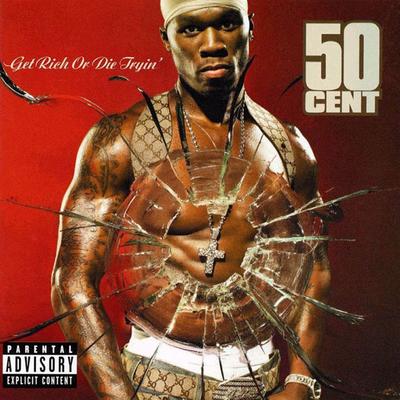
50 Cent, Get Rich or Die Tryin' album cover art (2003), June 27, 2007. (Hundredalexander via Wikipedia). Qualifies as fair use because of picture's low resolution.

50 Cent, Get Rich Or Die Tryin’ album cover art (2003), June 27, 2007. (Hundredalexander via Wikipedia). Qualifies as fair use because of picture’s low resolution.

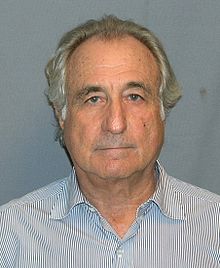
When people grow up impoverished, there’s a strong impulse to come up with all kinds of scenarios for becoming rich. Some of these ideas require hard work, some require the fulfillment of dreams through tapping into one’s individual potential. Many ideas, though, remain half-baked shortcuts, ones that never reach fruition. Ideas like winning the lottery or Powerball, becoming a professional athlete or a singer or a rap artist. Others involve get-rich-quick schemes, ones that often take advantage of desperate wish of those in poverty to no longer be poor.

I’ve had plenty of experience observing examples of this last point. Especially in growing up at 616. My late idiot ex-stepfather Maurice Washington was susceptible to all kinds of ideas for making money, particularly schemes that required others to invest. I guess I can understand. As the fledgling writer and author I am, I can certainly see the appeal of finding shortcuts to, say, selling 100,000 copies of Boy @ The Window in a month. If only I could somehow get Oprah to endorse my book on her website and on the air!

Bernie Madoff (mugshot), the ultimate get-rich-quick scam artist, March 16, 2009. (US Department of Justice via Wikipedia). In public domain.

Bernie Madoff (mugshot), the ultimate get-rich-quick scam artist, March 16, 2009. (US Department of Justice via Wikipedia). In public domain.

But I digress, as my scheme at least has a least a puncher’s chance at working (I have written a book, after all). My then stepfather, having held the jobs of Air Force MP, hospital orderly and taxicab driver, spent most of the ’80s trying to find ways to make easy money without putting forth any effort at all. In ’82, his grand scheme was Sun-Lion Corporation, which later turned into Sun-Lion Communications, the latter his attempt to do the equivalent of Bob Johnson’s Black Entertainment Television. My idiot ex-stepfather intended both the overall corporation and the communications arm to have what we would now call an Afrocentric slant. His vision was to be an emphasis on Hebrew-Israelite or similar foods, clothing, and other products and services meant for Black folks in the New York City area.

Maurice did everything he could to get my Mom involved in these schemes. My Mom went so far as to buy a corporation’s license for $2,500 in March ’82 for Sun-Lion. In the meantime, they argued and fought, and my ex-stepfather beat my mother up once in part over her lukewarm support for his grandiose schemes. At one point, they argued because Maurice wanted to raise $100 million in capital to put Sun-Lion Communications together! God, that man was an idiot!

After getting back on his feet after three years and three months of unemployment as a part-time security guard of an empty Vicks building in August ’82, Maurice came up with more schemes. He went to trucking school for four months between October ’86 and February ’87 outside of Scranton, Pennsylvania, but never spent a day as a truck driver. Then Maurice was a car salesman for a few months in ’87, actually making commissions while selling Cadillacs. But of course he couldn’t hold on to a job he was tailor-made for, a gift-of-gab con man!

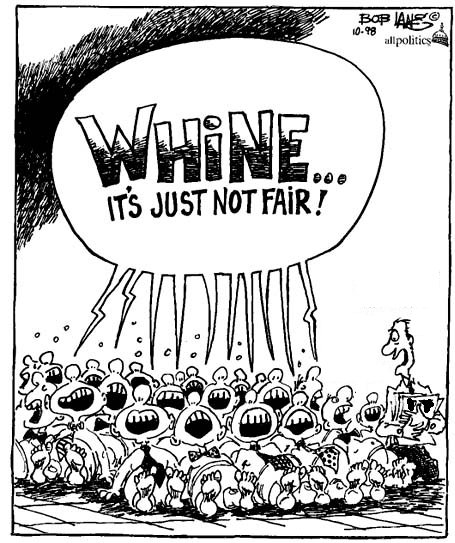
Finally, in the spring and summer of ’88, Maurice tried to talk his way into the limo business by attempting to get a fellow 616 resident to give him access to a limo or capital. They laughed. My Mom laughed. I laughed. Maurice cried and whined about how no one ever supported his get-rich-quick efforts, not realizing that most of his so-called effort came in the form of getting others to give him something he either already.

"Whine...it's just not fair!" cartoon, October 1998. (http://allpolitics.com).

“Whine…it’s just not fair!” cartoon, October 1998. (http://allpolitics.com).

When Maurice finally left 616 in June ’89, I thought all those days of ludicrous schemes and bullshit ideas for making lots of money were over. But when you’re poor, you’re vulnerable, and others looking to take advantage sense that vulnerability. In the two periods of my adult life in which I’ve been unemployed or significantly underemployed, people have approached me about selling Amway products. My younger siblings have proven themselves to be susceptible to alleged golden opportunities that were much closer to rust than gold.

This is not a screed in which I’m crapping on pursuing dreams or long shots. What I’m saying, though, is that dreams and long shots need to be tethered to serious plans, hard work, maximized gifts and talents, prayer and even some good luck. Yes, reaching out for help will help, but not in a spirit of draining others in order to help yourself first and only. That’s what my deceased ex-stepfather never learned.

← Older posts
Newer posts →

Boy @ The Window: A Memoir

Boy @ The Window: A Memoir

Places to Buy/Download Boy @ The Window

There's a few ways in which you can read excerpts of, borrow and/or purchase and download Boy @ The Window. There's the trade paperback edition of Boy @ The Window, available for purchase via Amazon.com at http://www.amazon.com/Boy-Window-Donald-Earl-Collins/dp/0989256138/

There's also a Kindle edition on Amazon.com. The enhanced edition can be read only with Kindle Fire, an iPad or a full-color tablet. The links to the enhanced edition through Apple's iBookstore and the Barnes & Noble NOOK edition are below. The link to the Amazon Kindle version is also immediately below:

scr2555-proj697-a-kindle-logo-rgb-lg

Boy @ The Window on Amazon.com: http://www.amazon.com/Boy-The-Window-Memoir-ebook/dp/B00CD95FBU/

iBookstore-logo-300x100

Boy @ The Window on Apple's iBookstore: https://itunes.apple.com/us/book/boy-the-window/id643768275?ls=1

Barnes & Noble (bn.com) logo, June 26, 2013. (http://www.logotypes101.com).

Boy @ The Window on Barnes & Noble: http://www.barnesandnoble.com/w/boy-the-window-donald-earl-collins/1115182183?ean=2940016741567

You can also add, read and review Boy @ The Window on Goodreads.com. Just click on the button below:

Boy @ The Window

Twitter Updates

Tweets by decollins1969
  • RSS - Posts
  • RSS - Comments

Archives

  • June 2025
  • April 2023
  • September 2022
  • August 2022
  • July 2022
  • June 2022
  • May 2022
  • April 2022
  • March 2022
  • January 2022
  • December 2021
  • November 2021
  • October 2021
  • September 2021
  • August 2021
  • July 2021
  • June 2021
  • April 2021
  • March 2021
  • February 2021
  • January 2021
  • December 2020
  • November 2020
  • October 2020
  • September 2020
  • August 2020
  • July 2020
  • May 2020
  • April 2020
  • March 2020
  • January 2020
  • December 2019
  • November 2019
  • August 2019
  • July 2019
  • June 2019
  • May 2019
  • April 2019
  • March 2019
  • February 2019
  • January 2019
  • December 2018
  • November 2018
  • October 2018
  • September 2018
  • August 2018
  • July 2018
  • June 2018
  • May 2018
  • March 2018
  • February 2018
  • January 2018
  • December 2017
  • November 2017
  • October 2017
  • September 2017
  • August 2017
  • July 2017
  • June 2017
  • May 2017
  • April 2017
  • March 2017
  • February 2017
  • January 2017
  • December 2016
  • November 2016
  • October 2016
  • September 2016
  • August 2016
  • July 2016
  • June 2016
  • May 2016
  • April 2016
  • March 2016
  • February 2016
  • January 2016
  • December 2015
  • November 2015
  • October 2015
  • September 2015
  • August 2015
  • July 2015
  • June 2015
  • May 2015
  • April 2015
  • March 2015
  • February 2015
  • January 2015
  • December 2014
  • November 2014
  • October 2014
  • September 2014
  • August 2014
  • July 2014
  • June 2014
  • May 2014
  • April 2014
  • March 2014
  • February 2014
  • January 2014
  • December 2013
  • November 2013
  • October 2013
  • September 2013
  • August 2013
  • July 2013
  • June 2013
  • May 2013
  • April 2013
  • March 2013
  • February 2013
  • January 2013
  • December 2012
  • November 2012
  • October 2012
  • September 2012
  • August 2012
  • July 2012
  • June 2012
  • May 2012
  • April 2012
  • March 2012
  • February 2012
  • January 2012
  • December 2011
  • November 2011
  • October 2011
  • September 2011
  • August 2011
  • July 2011
  • June 2011
  • May 2011
  • April 2011
  • March 2011
  • February 2011
  • January 2011
  • December 2010
  • November 2010
  • October 2010
  • September 2010
  • August 2010
  • July 2010
  • June 2010
  • May 2010
  • April 2010
  • March 2010
  • February 2010
  • January 2010
  • December 2009
  • November 2009
  • October 2009
  • September 2009
  • August 2009
  • July 2009
  • June 2009
  • May 2009
  • April 2009
  • March 2009
  • February 2009
  • January 2009
  • December 2008
  • November 2008
  • October 2008
  • September 2008
  • August 2008
  • July 2008
  • June 2008
  • May 2008
  • April 2008
  • March 2008
  • February 2008
  • January 2008
  • December 2007
  • November 2007
  • October 2007
  • September 2007
  • August 2007
  • July 2007
  • June 2007

Recent Comments

MaryPena's avatarMaryPena on My Day of Atonement/Bitter Hat…
decollins1969's avatardecollins1969 on No Good Teaching Deed Goes…
Mary Rose O’Connell's avatarMary Rose O’Connell on No Good Teaching Deed Goes…

NetworkedBlogs on Facebook

NetworkedBlogs
Blog:
Notes From a Boy @ The Window
Topics:
My Life, Culture & Education, Politics & Goofyness
 
Follow my blog

616 616 East Lincoln Avenue A.B. Davis Middle School Abuse Academia Academy for Educational Development AED Afrocentricity American Narcissism Authenticity Bigotry Blackness Boy @ The Window Carnegie Mellon University Child Abuse Class of 1987 CMU Coping Strategies Crush #1 Crush #2 Death Disillusionment Diversity Domestic Violence Economic Inequality Education Family Friendship Friendships Graduate School Hebrew-Israelites High-Stakes Testing Higher Education History Homelessness Humanities Humanities Program Hypocrisy Internalized Racism Jealousy Joe Trotter Joe William Trotter Jr. K-12 Education Love Manhood Maurice Eugene Washington Maurice Washington Misogyny Mother-Son Relationship Mount Vernon High School Mount Vernon New York Mount Vernon public schools Multiculturalism MVHS Narcissism NFL Pitt Pittsburgh Politics of Education Poverty President Barack Obama Race Racial Stereotypes Racism Relationships Self-Awareness Self-Discovery Self-Reflection Sexism Social Justice Teaching and Learning University of Pittsburgh Violence Whiteness Writing

Top Rated

Blog at WordPress.com.

  • Subscribe Subscribed
    • Notes from a Boy @ The Window
    • Join 103 other subscribers
    • Already have a WordPress.com account? Log in now.
    • Notes from a Boy @ The Window
    • Subscribe Subscribed
    • Sign up
    • Log in
    • Report this content
    • View site in Reader
    • Manage subscriptions
    • Collapse this bar
 

Loading Comments...