• About Me
  • Other Writings
  • Interview Clips
  • All About Me: American Racism, American Narcissism, and the Conversation America Can’t Have
  • Video Clips
  • Boy @ The Window Pictures
  • Boy @ The Window Theme Music

Notes from a Boy @ The Window

~

Notes from a Boy @ The Window

Category Archives: Mount Vernon New York

On Regrets and Forgiveness

22 Tuesday Oct 2013

Posted by decollins1969 in 1, Boy @ The Window, Christianity, culture, Eclectic, Hebrew-Israelite, Jimme, Mount Vernon High School, Mount Vernon New York, New York City, Pop Culture, race, Religion, Youth

≈ Leave a comment

Tags

Child Abuse, Domestic Violence, Forgiveness, Indecision, Love, Maurice Eugene Washington, Maurice Washington, Mother-Son Relationship, Regret, Regrets, Second-Guessing, Self-Reflection, Unforgiveness
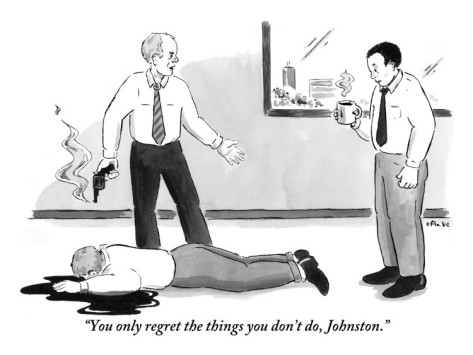

Emily Flake's "You only regret the things you don't do, Johnston," February 28, 2011. (http://newyorker.com)

Emily Flake’s “You only regret the things you don’t do, Johnston,” February 28, 2011. (http://newyorker.com)

One of the things I’ve read and heard from others so far about Boy @ The Window since April has been about catharsis. As in, “this book must’ve been cathartic for you.” I’ve said in response, “Yeah, it sure has.” But that’s not been the whole truth. In more than a few respects, Boy @ The Window has opened up a Pandora’s box of wounds I’d kept locked for years and years.

This might surprise some folks, especially the ones who attended Mount Vernon public schools, Humanities and specifically Mount Vernon High School with me. But there is a dark side to being me. Beneath my well wishes, good graces and generic smile has also been a person with deep regret, repressed anger, smoldering rage over what by far were the worst years of my life. All of which has translated into a person whose worst days since are days of blame — almost always of and for myself. I can forgive almost anyone or anything — my late idiot ex-stepfather, my father Jimme and his years of alcoholism, friends or superiors who’ve attempted to take advantage of me.

The Physics of a Bottomless Pit, February 27, 2013. (MatsuKami of deviantART via http://www.scienceblogs.com).

The Physics of a Bottomless Pit, February 27, 2013. (MatsuKami of deviantART via http://www.scienceblogs.com).

Yet there’s one person I’ve found very hard to forgive — myself. I hold myself to such high standards that it would be impossible for anyone other than Jesus to meet. And God knows I’m not perfect. But in looking at my past, my growing up years in Boy @ The Window, I’ve found that so much of my life’s force and energy has gone into redeeming myself for having to live through those terrible, terrible years. Even though I’ve been at a place in my life in which I’ve pretty much known myself, my passions, my calling, my abilities and limitations, for the better part of twenty years. Until recently, though, I hadn’t given myself any breaks from my past. Putting it under lock and key obviously didn’t work, and airing it for the world to read — while beneficial — had brought with it a truck-load of emotions that I had yet to work through.

As I wrote at the end of Boy @ The Window:

I can say without a doubt that Humanities did make a difference in my life. I wouldn’t be the person I am today without those six bittersweet and indifferent years. It makes any setback I might suffer today seem small and laughable by comparison. There are things I wish would’ve happened, things that would’ve made it easier to enjoy life and savor glorious moments even now. I wish Humanities had been as serious about developing me as a writer as it was about accelerated math and science classes. I regret not asking Phyllis out for a date. I lament not revealing more about the tragedies of my family life or my keen sense of humor to the few classmates and teachers I had some bond with, however weak. I wish I had trusted my instincts and never worn that kufi to Holmes or Davis. I know I should’ve stayed with football or tried out for basketball. And I wish I had the opportunity as a twelve-year-old to kiss Wendy one time. Admittedly, there’s a part of me that wishes I could kiss her now.

I imagine that if I had done all of these things, I would’ve been even more bruised up (especially in the case of Wendy), but at least I could’ve said I tried. Instead of looking back at my past and picking it apart like a forensic vulture.

But my deepest regret, and one that I hadn’t forgiven myself for, at least until recently, was for not calling the cops on my then stepfather after he beat up Mom on Memorial Day, Monday, May 31, ’82. Between my near-photographic memory and my training as an academic historian, it’s been hard to look at my past without reliving it.

How do you mend a broken heart?, 2005, October 22, 2013. (digitalman via deviantART at http://deviantart.net).

How do you mend a broken heart?, 2005, October 22, 2013. (digitalman via deviantART at http://deviantart.net).

I hadn’t figured out that I hadn’t forgiven myself until a few weeks ago. I realized that I hadn’t let go of the worst of my past. Now, letting go doesn’t mean that you forget your past, bury it or repress it emotionally. For me, it simply means not reliving the moment as if it happened last week instead of thirty-one years ago. To treat the moment as a memory, an important reminder that I am not Superman, that I couldn’t have saved my Mom from domestic violence anymore than I could’ve saved myself from poverty as a twelve-year-old.

You know, when I was younger, I thought that I didn’t have any regrets, any resentment or any dark side from growing up the way I did. We all tend to believe that pushing forward to a brighter future will take care of our past. That’s simply not true. We need to live in the present in order to achieve that brighter future. That means working through our pasts, and then letting it go. I should know.

God, Graviano and Darwin

10 Thursday Oct 2013

Posted by decollins1969 in 1, Boy @ The Window, Christianity, culture, Eclectic, Hebrew-Israelite, Mount Vernon High School, Mount Vernon New York, Politics, Pop Culture, race, Religion, Youth

≈ Leave a comment

Tags

Atheism, Biology, Charles Darwin, Creationism, Evangelical Christianity, Evolution, God, Higher Power, Identity, John Graviano, Politics of Religion, Salvation, Self-Discovery, Self-Reflection, The Universe


Galaxies in clusters/ superclusters of  dark matter filaments,  as part of Pan-STARRS sky survey, July 17, 2010. (Boylan-Kolchin/The Virgo Consortium/Durham University/PA Wire)

Tens of thousands of galaxies in clusters/superclusters of dark matter filaments, as part of Pan-STARRS sky survey, July 17, 2010. (Boylan-Kolchin/The Virgo Consortium/Durham University/PA Wire)

From Boy @ The Window, circa October ’83:

Bio with Mr. Graviano did provide some answers for me beyond the science. The man was also an assistant coach for MVHS’ basketball team. Although I know he loved basketball, Graviano was a heck of a science teacher. He didn’t do anything particularly exciting. He just made it seem as if we were learning how to tie our shoes when he was teaching us binomial nomenclature or the difference between mitosis and meiosis. Graviano began the year with Charles Darwin’s trip aboard the HMS Beagle to South America and the Galapagos Islands in the 1830s, observing finches and developing his theory of natural selection. We were learning about Darwin and evolution, something I knew flew in the face of my family’s Hebrew-Israelite beliefs. Despite that, what I learned in Biology every day made more sense to me than attempting to interpret the first chapter of Genesis or Balkis Makeda’s dreams warning us against the imperfect science of intellectual types like Darwin. What surprised me more was the fact that no one in our class questioned Graviano or the fact that he was teaching evolution, at least not in the open.

Biology gave me food for thought. I understood the science, the process of natural selection and mutation, the reality that over numerous eons life gradually evolved on earth to include intelligent mammals, primates, and humans. At the same time, we were being taught in temple that God had created or reclaimed (depending on interpretation) the earth in six days or six thousand years. The reclamation interpretation left room for everything that science said had occurred prior to the ascent of modern humans. The creation story obviously didn’t. I was confused, having to reconcile the scientific method with religious beliefs. I solved the problem in my own mind by choosing to stand on the reclamation interpretation of Genesis’ first chapter. But that didn’t completely satisfy me.

It was part of a long but interesting period that led me to become a plain old, nondenominational Christian by April ’84. But at this point in the Boy @ The Window story, I was literally caught between the stupidity of being a Hebrew-Israelite and the idea that there wasn’t a higher power at all.

Yet, despite Graviano’s class, I couldn’t wrap my head around the idea that evolution was a random process. To me, that seemed to approach the ridiculous. Biological evolution’s hardly been perfect. But one completely random set of changes built upon another set of completely random changes over three or four billion years likely doesn’t yield life on this planet in its current state. Too many patterns for me reflected in biology, mathematics and — as I’d learn in a couple of years — physics to accept evolution as a completely random process.

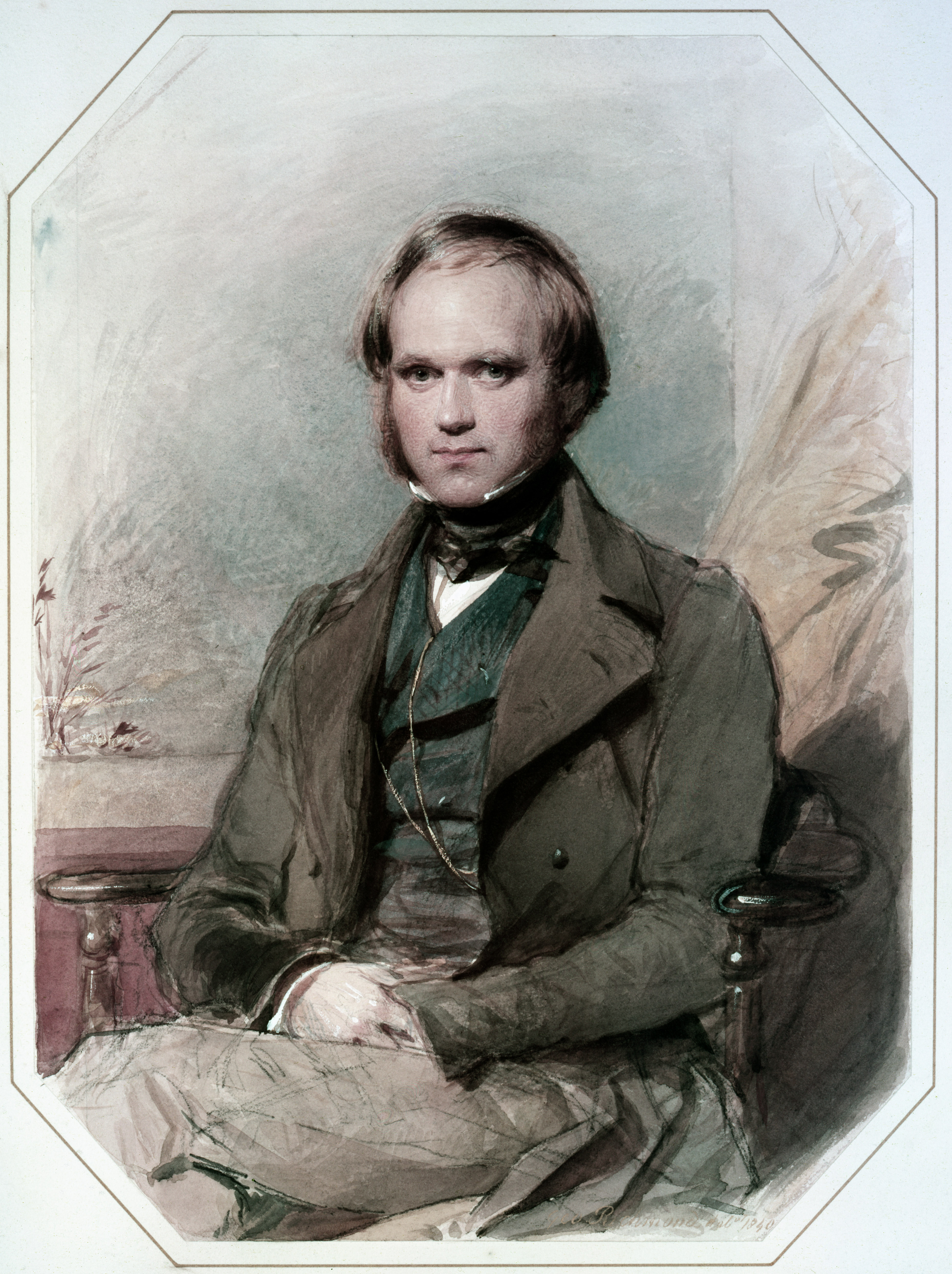
Portrait of Charles Darwin, by George Richmond (circa 1838), October 15, 2012. (Jdcollins13 via Wikipedia). In public domain.

Portrait of Charles Darwin, by George Richmond (circa 1838), October 15, 2012. (Jdcollins13 via Wikipedia). In public domain.

That was really my only sticking point. For my ninth and tenth-grade classmates, though, I couldn’t believe their stone-faced silences over the Darwin story. I knew that some of them held beliefs that ran completely counter to the idea of evolution. Some, even, were likely what we now call evangelical, literal-interpretation-of-the-Bible Christians. Yet they were as silent as comatose patients for most of the first marking period. What I learned a little later on in life was that silence was as much a form of protest or disapproval as outright vocal opposition.

As for me, I found the processes of mutation, mitosis and meiosis fascinating. I felt as if I was learning a small but important secret about God and the universe. That both — if one believes in God and has some understanding of the universe — have intellectual and scientific minds. Graviano, through his mechanical teaching style, was at least able to convey that to us, if any of us paid close enough attention.

If Graviano opened my eyes to modern science and the understanding of life on its most basic level, Yom Kippur ’83 opened me up to understanding why I no longer put my trust in Maurice’s God.

I guess if I hadn’t already been in the midst of a spiritual identity crisis, I wouldn’t have used my classes in ninth grade as my way of figuring out how to rebuild my identity, and in the process, figure out what and in whom I wanted to believe. Too bad folks who now run things in this country never took one moment’s time to do the same.

The Week The Lights Went Out In America

08 Tuesday Oct 2013

Posted by decollins1969 in 1, Boy @ The Window, culture, Eclectic, Mount Vernon New York, New York City, Politics, Pop Culture, race, Work, Youth

≈ Leave a comment

Tags

American Dominance, American Economy, Arab-Israeli War 1973, Best Days, Brighter Future, Economic Inequality, Gas Lines, Inflation, Job Discrimination, Low-Wage Jobs, OPEC Oil Crisis, OPEC Oil Embargo, Political Will, Politicians, Poverty, Prosperity, social mobility, Stagflation, Superpower, unemployment, Yom Kippur War


Gas station displayed a sign that explained the flag policy during the first OPEC oil embargo and crisis (Oregon), May 1974. March 26, 2013. (NARA via Wikipedia). In public domain.

Gas station displayed a sign that explained the flag policy during the first OPEC oil embargo and crisis (Oregon), May 1974. March 26, 2013. (NARA via Wikipedia). In public domain.

It wasn’t the middle of September of ’08, either. It was the beginning of October ’73, forty Yom Kippur holy days ago. There had been signs for any American who had cared to look at the cracks in the US dominance of the world economy ceiling. Rising unemployment, higher inflation, new monetary control measure, competition from a mostly rebuilt West Germany and Japan. The twenty-eight year-long run America had as the undisputed and undefeated leader of the capitalist world was on its way to a close, and ninety-nine percent of all Americans didn’t know or didn’t care enough to know.

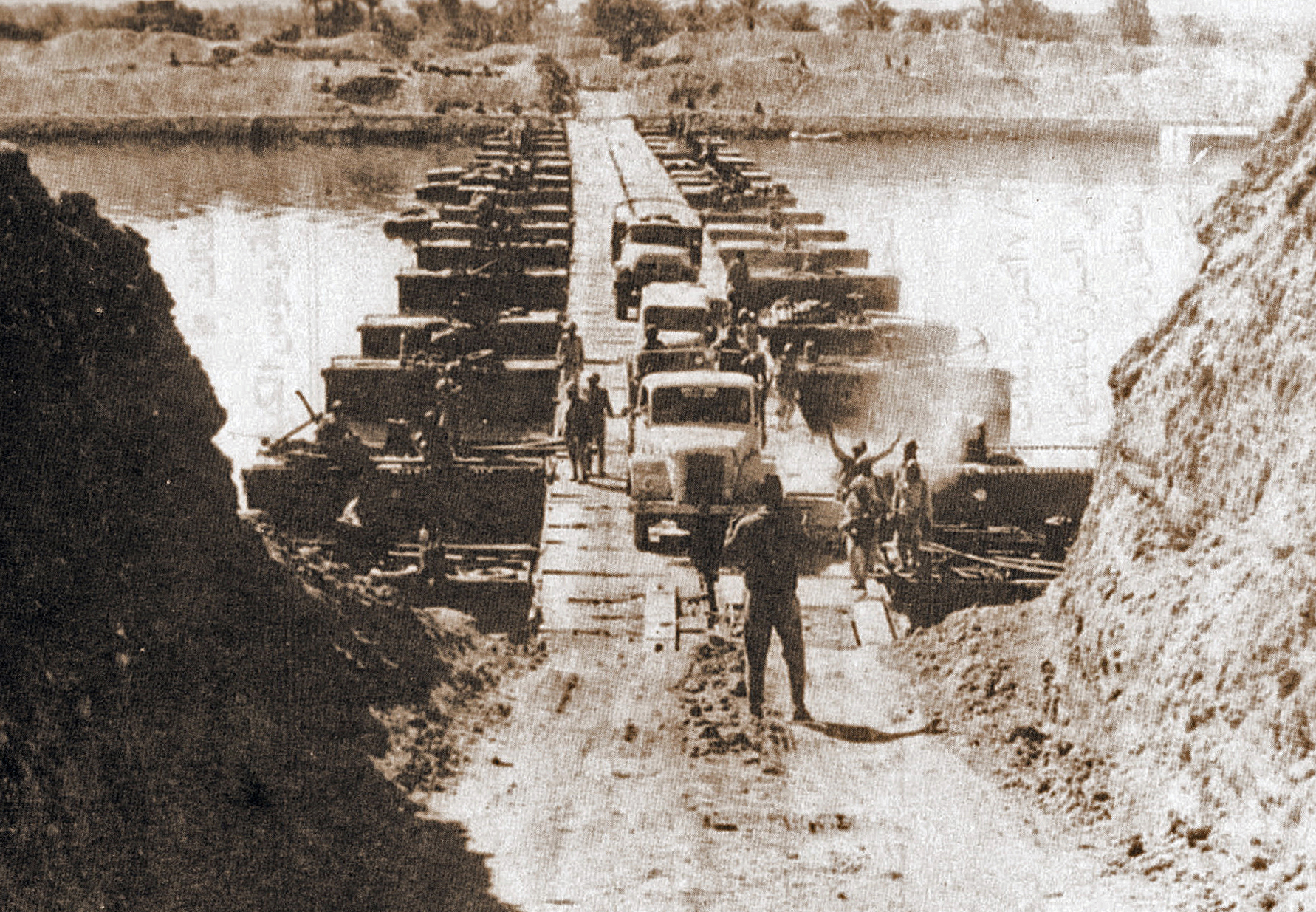
No, the Yom Kippur War between Syria, Egypt and Israel didn’t cause the US to become more dependent on the rest of the world. But our support of Israel against countries from which we imported oil did lead to OPEC’s decision to deny us oil. Up to that point, our government had pretty much done whatever it wanted geopolitically, on behalf of containing Communism and American corporations. It was this week forty years ago, though, that truly began to teach ordinary Americans that there would be consequences for our foreign policy actions without regard for folks who lived at the blunt end of them.

Egyptian forces cross on one of the bridges laid across the Suez Canal, October 7, 1973.   (CIA/Soerfm via Wikipedia). In public domain.

Egyptian forces cross on one of the bridges laid across the Suez Canal, October 7, 1973. (CIA/Soerfm via Wikipedia). In public domain.

I was just a couple of months away from turning four, but I do have vague memories of the week and month from four decades ago. Within a block of where my Mom worked, Mount Vernon Hospital, was a gas station, one that by the end of October had lines wrapped around the block as motorists in their six-miles-to-the-gallon guzzlers desperately waited for some petrol. It was loud and chaotic, from the little bit that I do remember. Fast forward to about a year later, when my Mom took me and my other brother Darren to the old Met grocery store on South Fulton in Mount Vernon. There, she complained about the $2.69 she had to spend on a five-pound bag of Domino’s Sugar ($14.53 in 2013 dollars). I remember her sighing about the high prices and the fact that her paycheck wouldn’t be able to keep up.

It would be years later still before I realized that the last of America’s easiest days as an economic and geopolitical superpower were during my years as a toddler. I did feel secure back then, not knowing about my father’s alcoholism, my mother’s insecurities about being a Black Southern girl living in and around New York City. I had yet to witness the violence embedded in my family, or in my neighborhoods, for that matter. I knew nothing of drug addiction or authentic Blackness, of racism and systemic job discrimination. I had yet to learn that the economic and educational opportunities that had been available to millions of Americans — almost regardless of race and gender — were about to become that much harder to attain and retain as I grew older.

Now, forty years later, as memories of the Reagan and Clinton years have faded, I think of America’s heady days, ones that now seem of lore. I realize that America could have even better days ahead. If we were to acknowledge human involvement in climate change and invest heavily in a green economy. If quality, well-funded universal pre-K to higher education became our reality, without creating one system for elites and another for everyone else. If we as a people finally said it was time to repair $3 trillion worth of infrastructural damage to our bridges and roads, to our sewer and water systems, and to our electrical grid. If we somehow decided to end our expensive wars on drugs and on Black men, on anyone whom we think (but do not know) may do our nation’s interests (if not our people) harm.

Collage of workers placing an F-Series bed onto frame at  Louisville Assembly Plant (Kentucky), 1973. (http://media.ford.com)and a woman carrying a sign past a McDonald's on East 125th Street during a protest by fast food workers and supporters, New York, NY, April 4, 2013. (Stan Honda/AFP/Getty Images via http//:financialpost.com).

Collage of workers placing an F-Series bed onto frame at Louisville Assembly Plant (Kentucky), 1973. (http://media.ford.com); a woman carrying a sign past a McDonald’s on East 125th Street during a protest by fast food workers and supporters, New York, NY, April 4, 2013. (Stan Honda/AFP/Getty Images via http://financialpost.com).

But I know that we won’t have those better days, at least not yet. Not with narcissistic politicians either lining their pockets with money or lining their minds with sugarplum hopes for the Rapture and Armageddon. Not with a media more interested in the political horserace and petty optics than in giving us the full story. And not with an American public more interested in Miley Cyrus than in funding for more psychologists in public schools.

It’s truly depressing to know how far our nation hasn’t come in four decades, virtually my entire lifetime. At least I know, though. For so many born after me — not to mention lacking self-reflection — they may never know what should’ve been.

My Day of Atonement/Bitter Hatred

14 Saturday Sep 2013

Posted by decollins1969 in 1, Boy @ The Window, culture, Eclectic, Hebrew-Israelite, Jimme, Marriage, Mount Vernon New York, My Father, Politics, Pop Culture, race, Religion, Youth

≈ 2 Comments

Tags

Afrocentricity, Day of Atonement, Disillusionment, Family, Forgiveness, Hatred, Judah ben Israel, Judaism, Love, Maurice Eugene Washington, Self-Discovery, Ten Lost Tribes, Torah, Yom Kippur


Prayer at the Wailing Wail, Second Temple, Jerusalem, February 1, 2013. (Steve Ibrom). Released by public domain by author.

Prayer at the Wailing Wail, Second Temple, Jerusalem, February 1, 2013. (Steve Ibrom). Released by public domain by author.

“Yom Kippur ’83 opened me up to understanding why I no longer put my trust in Maurice’s God. I spent part of another September fasting and going to temple to atone for my sins. The temple was on Fifth Avenue and Second Street, just down the street from Washington Elementary School. I’d gone to temple maybe a half-dozen times since the spring of ’81, three of those times to have some rabbi with a ragged beard tell me that Yahweh had forgiven me for my wicked ways.

“And it left me thinking, ‘Well, what about Maurice? His sins are many, and we get treated the same? Does he get forgiveness even if the sin is still in progress?’ It didn’t make sense to me that I needed to starve myself for three days and ask for forgiveness in a situation where a fat, greasy SOB for a stepfather could steal from, cheat on, beat up on, and lie to Mom, get forgiveness, and keep on trying to do what he’d done before Yom Kippur. I said to whoever was a higher power, ‘What did I do to deserve this?’ I didn’t get an answer, and nothing anyone at temple said gave me any answers either. I felt empty, as if everything I thought being in this faith was about was a farce, a morbid, diabolical joke that was played on me and my family. And Maurice was the devil himself.”

That’s what I wrote in Boy @ The Window about my last Yom Kippur as a Hebrew-Israelite. That Saturday, September 17, ’83, was the last time I went to temple, the last time I looked at any aspect of our bizarre and goofy mix of Judaism and Afrocentricity with a modicum of seriousness. By the time I left, I wasn’t in a forgiving mood at all. I hated my then stepfather Maurice, and hated the people who claimed that people like Maurice were descendants of one of the Ten Lost Tribes of Ancient Israelites.

Please understand. When I said, “I hated Maurice,” it wasn’t a euphemism for me in the fall of ’83. If I had access to a gun, I would’ve blown him away and gladly served time in prison for doing so. I had stomach ulcers in the fall of ’83, because I couldn’t stand the smell, sound or sight of the obese asshole. I all but prayed to Yahweh that he get hit by a Mack truck going eighty miles an hour down East Lincoln Avenue. I wanted him dead, and I wanted to piss on his ashes to boot.

Even at thirteen, though, I also understood that this kind of anger and rage wouldn’t help me in the long run between ninth grade and college. Or with sports. Or dating. Or in finding my own path to God or to anything else worth believing. My bitterness and hatred were so deep, about as deep as any love that I’d experienced up to that point in my life. Whether my Mom, my father Jimme, my Uncle Sam or my version of Wendy, all that love was nearly drowned out by my hate for my stepfather.

Even on my irony scale, this hatred broke all records. Especially on a day of atonement, where we all but sacrificed an unblemished lamb at the temple over four hours that Saturday. But I had other reasons to be bitter on this, the holiest of holy days. No bar mitzvah, no celebrations of Hanukkah, no participation in Hebrew-Israelite life for me beyond their 613 rules and regs for nearly two and a half years. I understood and yet didn’t understand this sense of pride and Blackness that came through in a near Asian religion that allowed for reincarnation and an post-Babylonian Israelite diaspora to Sub-Saharan Africa to boot. That confusion didn’t help me deal with a man who wasn’t one, but was a teenage bully who did everything he could to keep me and Mom in submission to him, with Yahweh and Torah as his excuse.

Yom Kippur 1983

Yom Kippur 1983

I knew after I left temple that Yom Kipper afternoon that it would be my last. I didn’t know how, but my days of wearing a kufi or yarmulke were on their way to an end. Still, with hatred and confusion in my heart and mind, I was also lost, more lost than the other ten ancient Israelite tribes undoubtedly were in the aftermath of the Babylonian conquest.

Second Day of High School, Wake-Up Call #17

08 Sunday Sep 2013

Posted by decollins1969 in 1, Boy @ The Window, culture, Eclectic, Hebrew-Israelite, Mount Vernon High School, Mount Vernon New York, race, Religion, Youth

≈ Leave a comment

Tags

Bullying, Disillusionment, Faith, Fights, Hatred, Kufi, Louis Cuglietto, Maurice Eugene Washington, MVHS, Nes, Vindication, Wake-Up Call


Laurence Fishburne yelling "Wake up!" at end of movie School Daze (1988), December 9, 2009. (screenshot via Tumblr.com). Qualifies as fair use due to low resolution and clarity of picture.

Laurence Fishburne yelling “Wake up!” at end of movie School Daze (1988), December 9, 2009. (screenshot via Tumblr.com). Qualifies as fair use due to low resolution and clarity of picture.

I talked about my first day at Mount Vernon High School in ’83 a few days ago. But as I said in my book Boy @ The Window, my second day was just as memorable. It was already the beginning of the end of my days as a Hebrew-Israelite by the time the summer of ’83 had turned into ninth grade. I didn’t need any more wake-up calls than the reality that my then stepfather was more of a hypocritical bastard than he’d been before finding this strange Afrocentric and “Jewish” religion. But my classmate Nes gave me yet another one anyway:

“After a day of assignments and learning the names of our new teachers, I went to Louis Cuglietto’s eighth-period Geometry class. It was on the first floor of the school, just to the right of the front entrance and the cafeteria. As I milled around the classroom looking to take my seat, my Latino classmate Nes came out of nowhere and snatched my kufi off my head.

“’Give it back now!,’ I yelled.

“’Make me!,’ Nes responded with a bit of sarcasm.

“Just as he was about to throw it to another classmate. I grabbed Nes and knocked him to the floor. There we were, on the floor by the dark green chalkboard, me on top of Nes, who was struggling to hold on to my kufi. I lay on top of him, punched him in the face a couple of times, and took my kufi back from him just before Cuglietto came into the room. By this time everyone in our class had formed a circle to watch the spectacle. I don’t remember all of what Cuglietto said, but he did ask, ‘Do you want to get suspended?’ After we dusted ourselves off, we went to our desks and got back to work.

“For me, the incident marked a transition point in my life at school. This would be the last fight I’d have in school. Some people continued to try to verbally intimidate me. But they left it at that, probably because my height and my face said ‘Don’t mess with me’ before I’d say anything.

“The more immediate result was that I began to question more consciously my motives for defending myself as a Hebrew-Israelite. ‘Why do I care if Nes snatches my kufi from me?,’ I said to myself on the way home from school that day. It wasn’t as if I truly believed in any of the teachings anymore. I definitely didn’t want anyone messing with me at home or in school. At the same time, I didn’t want to use up energy defending something in which I didn’t believe.”

To say that I was disillusioned would be like saying active volcanoes are dangerous. I had a smoldering anger from the previous twenty-eight months of physical and mental abuse at home (along with our plunge into welfare poverty), and ridicule and isolation at school. But I also realized that making a move to declare that I was no longer a Hebrew-Israelite meant that much of what I had gone through at school, though, was a complete waste of time and energy. And with nothing and no one to believe in or for, I still wasn’t ready to move on.

But the month of September ’83 had more in store for me, Yom Kippur especially (to be continued).

First Day of High School, Thirty Years Ago

05 Thursday Sep 2013

Posted by decollins1969 in 1, Boy @ The Window, culture, Eclectic, Mount Vernon High School, Mount Vernon New York, Politics, Pop Culture, race, Youth

≈ 1 Comment

Tags

Educational Inequality, Educational Leadership, MVHS, Paternalism, Principal Leadership, Principals, Racism, Richard Capozzola, School-to-Prison Pipeline, Tough-Love, Violence, White Paternalism


Oz (HBO) poster, September 5, 2013. (http://www.brain-dead-blog.blogspot.com).

Oz (HBO) poster, September 5, 2013. (http://www.brain-dead-blog.blogspot.com).

Our/my first day at Mount Vernon High School (New York) was the first Thursday after Labor Day thirty years ago, which means the exact date was September 8, ’83. It was mostly a very good day, except for our third period assembly with then Principal Richard Capozzola. He pronounced at least half of our class dead on arrival not quite two hours into ninth grade. Capozzola said, “There are 1,075 of you here today. Four years from now, only half of you will graduate” from MVHS. It turned out that he was wrong. Only 545 of us were eligible to march by September ’86, and 509 of us ended up doing so in June ’87. Even when accounting for the twenty or so Class of ’87 folks who decided to take their nineteen credits and graduate in ’86 instead of ’87, less than half of our original cohort graduated in years.

In Boy @ The Window and on the five or so occasions I’ve had to talk about the late Richard Capozzola and MVHS, I’ve attributed much of this to “the reality of self-fulfilling prophecies” and “the damage that low expectations can do.”  There isn’t a single word that I’d change in my description of Capozzola and in my thoughts about what he said, thirty years ago or right now. When you run a school as if the students are inmates and security act on your behalf as corrections officers, it is really a surprise when students drop out? When your security measures have the effect of increasing tensions so that more fights break out, shouldn’t it mean that the head school building administrator re-evaluate such measures? Apparently not.

That’s the principal and school that I remember outside of my Humanities days. Where girls ripped off each other’s earrings in the process of slugging each other. When witnessing one or two fights a week in building was a normal part of the process. When White potheads would sneak a smoke in between classes in the courtyard, but no security would intrude.

Mount Vernon High School main entrance, Mount Vernon, NY, November 22, 2006. (Donald Earl Collins).

Mount Vernon High School main entrance, Mount Vernon, NY, November 22, 2006. (Donald Earl Collins).

I have no doubt that trying to curtail this was a difficult job for any principal in ’83. But MVHS wasn’t Ft. Apache, or Jersey City, or South Central LA in this era. No MVHS student had brought a gun to school to shoot someone, at least in my time there. Short of a Swiss army knife, most students used their words to cut each other down, or in threatening to use a knife, maybe, off school grounds, after school.

Over the past couple of  years, I received comments about what I’ve written about my late principal from one of his children, who has repeatedly defended his father as a hero of sorts. He has disagreed, and rather bitterly, about what I’ve written, as if his experience with his father actually negates my experience with him as a principal. As part of my response to Capozzola’s son two years ago, I wrote:

Make no mistake, I for one, didn’t feel one iota safer in my four years at MVHS because of security sweeps, the closing of the courtyard to student use. Not to mention the general feeling I had that people who looked like me — regardless of my grades — weren’t welcome, whether that was intended or not. It’s a bit paternalistic to suggest that a heavy-handed approach to security “saved my life” or led to a national award for educational excellence in 1983 [It was actually a Blue Ribbon School in 1987]. As an educator myself, I know all too well the politics involved in such descriptions of schools like MVHS and with such awards.

Lion eating wildebeest - "animals" was what administrators & White classmates sometimes called MVHS students, but ironically referencing themselves, September 5, 2013. (YouTube).

Lion eating wildebeest – “animals” was what the White administrators & classmates sometimes called MVHS students, but ironically referencing themselves, September 5, 2013. (YouTube).

I’d add to this, though. I don’t really think that Capozzola actually cared about learning or the closing of achievement gap, either, not based on how he treated Humanities. And “tough love and a firm hand?” Really? That’s how you describe a father or an overseer — it should never be how you describe a principal. There was no love in his so-called toughness, and not enough firmness to prevent fights and slights that were a frequent part of my four-year experience at MVHS. And yes, many of MVHS’ students lived in poverty, but there was a sizable number of middle class Black students who attended as well. To forget that would be to, I don’t know, lump MVHS as a monolithic block of Black (and Latino) kids ready to start a riot. How is this different from a stop and frisk policy that targets poor neighborhoods and Black and Latinos between sixteen and thirty?

Which, in the end, is what both the late Capozzola and his son have done, thirty years ago and much more recently than that. To think that I put up with this for four years, at least one year too long. The embedded racial paternalism and institutional bigotry, in their words and deeds — it just takes my breath away.

“I Marched With Dr. Martin Luther King!” – and Other Record Scratchers

28 Wednesday Aug 2013

Posted by decollins1969 in 1, Boy @ The Window, culture, Eclectic, Mount Vernon High School, Mount Vernon New York, Pittsburgh, Politics, Pop Culture, race, University of Pittsburgh, Youth

≈ Leave a comment

Tags

American Dream, Bill Cosby, Civil Rights Generation, Civil Rights Movement, Disillusionment, Don Lemon, Estelle Abel, March on Washington, Post-Civil Rights Generation, Rev. Dr. Martin Luther King Jr., Tavis Smiley, Tough-Love


Dr. Martin Luther King and Benjamin Spock leading antiwar protest, Chicago, IL, March 25, 1967. (AP via LA Times).

Dr. Martin Luther King and Dr. Benjamin Spock leading antiwar protest, Chicago, IL, March 25, 1967. (AP via LA Times).

I’ve posted about my last official contact at Mount Vernon High School in June ’87 before graduating several times, and documented it well. The brow-beating I took from one Estelle Abel moments after my last day and last class of high school was one of the most puzzling and humiliating moments of a long series of them up to that point in my life. As I’ve written in both Fear of a “Black” America and Boy @ The Window:

I walked down the second floor steps and the first floor halls of the high schools to my locker one more time. While clearing out my locker, Estelle Abel walked by and asked to meet with me. I went over to her office, and for the next fifteen minutes, she attacked me for being a slacker.

“You’ve been a disappointment, young man,” Abel said.

“What?,” I said, completely shocked.

“Your work this year is nothing to be proud of.”

I stood across from the tall, witchy-looking lady, speechless, but telling her “Fuck you” in my head. Abel claimed that I had underachieved throughout my four years as a student, that I should have been ranked in the top ten of my class, and that my performance in AP Physics was beyond abominable. All I could focus on was the amount of anger and emotion she possessed in her voice and eyes. You’d have thought that I’d been expelled from school or had raped her daughter!

“By you not graduating in the top ten of your class, you’ve let everyone down. Your family, your friends and our community,” she said, as if anyone around here really cared about me.

Abel continued. “You could’ve been a shining example of achievement to us,” all but hinting at Sam as the person I should’ve been like.

I guess I did let my Black classmates down. I only ranked second in GPA among Black males and eighth among all African Americans and Afro-Caribbeans in my class. I guess I should’ve been taking out back, blindfolded, with cigarette in mouth, and executed by a firing squad.

Abel finished her soliloquy. “You don’t have any excuses! There is nothing going on at home that could justify your performance!”

“Well, that’s not true…” I interrupted. I felt rage rising up from the pit of my stomach. If she’d been anywhere near my age, I would’ve taken all of the Jimme-ese I knew and laid it all on her stupid ass.

Her face turned stern as she cut me off, determined to make some sort of point, to prove that I was a worthless Black man in her eyes.

“Nothing going on in your life would ever compare to what we went through back in the ’60s . . . I marched with Dr. Martin Luther King!”

My mind clicked off my eardrums at that point. Short of showing her my war wounds and having her meet my family, what could I possibly do or say to that? I left her office feeling like my years at MVHS and in Humanities were just bullshit. Abel’s tirade reminded me of the fact that I simply didn’t fit in anywhere.

What I’ve never discussed in all my posts about Abel and her tough-love speech is how this incident — and others like it — have shaped my thinking about the Civil Rights generation. Those local Urban League or NAACP members who gave talks at MVHS or at Pitt or at Carnegie Library of Pittsburgh who said, “I’ve got mine. Now go and get yours” — a reference to businesses, jobs and higher education, as if we were all well financed enough to achieve their American Dream goals. Those usual suspects on the local or national level who gave the same speech year after year about the one time they shook Dr. King’s hand, or about their personal experience at the March on Washington in ’63. As if their experience would be more inspiring than the fact that folks like Medgar Evers and MLK actually gave their lives for the movement.

So many folks like Abel have used their kernels of experience with the March on Washington or the Civil Rights Movement more broadly as a club to beat over the heads of other African Americans, particularly those of us born after 1965. What they thought of as inspiration felt like damnation to me. The idea that nothing was worse than fighting for civil rights in the ’60s would be humorous to the four million slaves who lived in the South 150 years ago. It’s certainly an insult to so many deeply impoverished Blacks, White and other people of color who would have to stretch themselves like Plastic Man just to touch the first rung of the American middle class ladder.

Would I had been able to attend Pitt without a Challenge Scholarship for high-achieving Blacks in ’87? Probably not. Would I had been a part of a gifted-track program for six years without the NAACP filing a desegregation lawsuit against Mount Vernon public schools in ’76? Of course not. But those small windows of opportunity do not a movement make. Nor should it make me forever grateful to folks who considered me a waste of space to begin with — I wasn’t righteously “Black” enough for them, respectable enough for them, and obviously did not come from a home well-resourced enough for them, either.

Caned by Abel, Civil Rights

Caned by Abel, Civil Rights

So what if Abel or anyone else marched with Dr. King? What have you done with your life and for the lives of other since then besides discouraged where you could have encouraged, disillusioned where you could’ve provided comfort, or acted as if people like me owed you libations and gratitude? Estelle Abel represented for me in ’87 what folks like Bill Cosby, Don Lemon, Tavis Smiley and so many others have done in recent years — condemning those most in need of help and inspiration. They’ve all in their words helped turn the most hopeful and rhetorical part of “the Dream” into a nightmare.

← Older posts
Newer posts →

Boy @ The Window: A Memoir

Boy @ The Window: A Memoir

Places to Buy/Download Boy @ The Window

There's a few ways in which you can read excerpts of, borrow and/or purchase and download Boy @ The Window. There's the trade paperback edition of Boy @ The Window, available for purchase via Amazon.com at http://www.amazon.com/Boy-Window-Donald-Earl-Collins/dp/0989256138/

There's also a Kindle edition on Amazon.com. The enhanced edition can be read only with Kindle Fire, an iPad or a full-color tablet. The links to the enhanced edition through Apple's iBookstore and the Barnes & Noble NOOK edition are below. The link to the Amazon Kindle version is also immediately below:

scr2555-proj697-a-kindle-logo-rgb-lg

Boy @ The Window on Amazon.com: http://www.amazon.com/Boy-The-Window-Memoir-ebook/dp/B00CD95FBU/

iBookstore-logo-300x100

Boy @ The Window on Apple's iBookstore: https://itunes.apple.com/us/book/boy-the-window/id643768275?ls=1

Barnes & Noble (bn.com) logo, June 26, 2013. (http://www.logotypes101.com).

Boy @ The Window on Barnes & Noble: http://www.barnesandnoble.com/w/boy-the-window-donald-earl-collins/1115182183?ean=2940016741567

You can also add, read and review Boy @ The Window on Goodreads.com. Just click on the button below:

Boy @ The Window

Twitter Updates

Tweets by decollins1969
  • RSS - Posts
  • RSS - Comments

Archives

  • June 2025
  • April 2023
  • September 2022
  • August 2022
  • July 2022
  • June 2022
  • May 2022
  • April 2022
  • March 2022
  • January 2022
  • December 2021
  • November 2021
  • October 2021
  • September 2021
  • August 2021
  • July 2021
  • June 2021
  • April 2021
  • March 2021
  • February 2021
  • January 2021
  • December 2020
  • November 2020
  • October 2020
  • September 2020
  • August 2020
  • July 2020
  • May 2020
  • April 2020
  • March 2020
  • January 2020
  • December 2019
  • November 2019
  • August 2019
  • July 2019
  • June 2019
  • May 2019
  • April 2019
  • March 2019
  • February 2019
  • January 2019
  • December 2018
  • November 2018
  • October 2018
  • September 2018
  • August 2018
  • July 2018
  • June 2018
  • May 2018
  • March 2018
  • February 2018
  • January 2018
  • December 2017
  • November 2017
  • October 2017
  • September 2017
  • August 2017
  • July 2017
  • June 2017
  • May 2017
  • April 2017
  • March 2017
  • February 2017
  • January 2017
  • December 2016
  • November 2016
  • October 2016
  • September 2016
  • August 2016
  • July 2016
  • June 2016
  • May 2016
  • April 2016
  • March 2016
  • February 2016
  • January 2016
  • December 2015
  • November 2015
  • October 2015
  • September 2015
  • August 2015
  • July 2015
  • June 2015
  • May 2015
  • April 2015
  • March 2015
  • February 2015
  • January 2015
  • December 2014
  • November 2014
  • October 2014
  • September 2014
  • August 2014
  • July 2014
  • June 2014
  • May 2014
  • April 2014
  • March 2014
  • February 2014
  • January 2014
  • December 2013
  • November 2013
  • October 2013
  • September 2013
  • August 2013
  • July 2013
  • June 2013
  • May 2013
  • April 2013
  • March 2013
  • February 2013
  • January 2013
  • December 2012
  • November 2012
  • October 2012
  • September 2012
  • August 2012
  • July 2012
  • June 2012
  • May 2012
  • April 2012
  • March 2012
  • February 2012
  • January 2012
  • December 2011
  • November 2011
  • October 2011
  • September 2011
  • August 2011
  • July 2011
  • June 2011
  • May 2011
  • April 2011
  • March 2011
  • February 2011
  • January 2011
  • December 2010
  • November 2010
  • October 2010
  • September 2010
  • August 2010
  • July 2010
  • June 2010
  • May 2010
  • April 2010
  • March 2010
  • February 2010
  • January 2010
  • December 2009
  • November 2009
  • October 2009
  • September 2009
  • August 2009
  • July 2009
  • June 2009
  • May 2009
  • April 2009
  • March 2009
  • February 2009
  • January 2009
  • December 2008
  • November 2008
  • October 2008
  • September 2008
  • August 2008
  • July 2008
  • June 2008
  • May 2008
  • April 2008
  • March 2008
  • February 2008
  • January 2008
  • December 2007
  • November 2007
  • October 2007
  • September 2007
  • August 2007
  • July 2007
  • June 2007

Recent Comments

MaryPena's avatarMaryPena on My Day of Atonement/Bitter Hat…
decollins1969's avatardecollins1969 on No Good Teaching Deed Goes…
Mary Rose O’Connell's avatarMary Rose O’Connell on No Good Teaching Deed Goes…

NetworkedBlogs on Facebook

NetworkedBlogs
Blog:
Notes From a Boy @ The Window
Topics:
My Life, Culture & Education, Politics & Goofyness
 
Follow my blog

616 616 East Lincoln Avenue A.B. Davis Middle School Abuse Academia Academy for Educational Development AED Afrocentricity American Narcissism Authenticity Bigotry Blackness Boy @ The Window Carnegie Mellon University Child Abuse Class of 1987 CMU Coping Strategies Crush #1 Crush #2 Death Disillusionment Diversity Domestic Violence Economic Inequality Education Family Friendship Friendships Graduate School Hebrew-Israelites High-Stakes Testing Higher Education History Homelessness Humanities Humanities Program Hypocrisy Internalized Racism Jealousy Joe Trotter Joe William Trotter Jr. K-12 Education Love Manhood Maurice Eugene Washington Maurice Washington Misogyny Mother-Son Relationship Mount Vernon High School Mount Vernon New York Mount Vernon public schools Multiculturalism MVHS Narcissism NFL Pitt Pittsburgh Politics of Education Poverty President Barack Obama Race Racial Stereotypes Racism Relationships Self-Awareness Self-Discovery Self-Reflection Sexism Social Justice Teaching and Learning University of Pittsburgh Violence Whiteness Writing

Top Rated

Blog at WordPress.com.

  • Subscribe Subscribed
    • Notes from a Boy @ The Window
    • Join 103 other subscribers
    • Already have a WordPress.com account? Log in now.
    • Notes from a Boy @ The Window
    • Subscribe Subscribed
    • Sign up
    • Log in
    • Report this content
    • View site in Reader
    • Manage subscriptions
    • Collapse this bar
 

Loading Comments...