• About Me
  • Other Writings
  • Interview Clips
  • All About Me: American Racism, American Narcissism, and the Conversation America Can’t Have
  • Video Clips
  • Boy @ The Window Pictures
  • Boy @ The Window Theme Music

Notes from a Boy @ The Window

~

Notes from a Boy @ The Window

Category Archives: culture

The Things Dumb Racists Say

27 Saturday Jul 2013

Posted by decollins1969 in 1, Academia, Christianity, culture, Eclectic, Movies, Patriotism, Politics, Pop Culture, race, Religion

≈ Leave a comment

Tags

Anthea Butler, Bigotry, Ignorance, Professor Anthea Butler, Racism, Religious Studies, The American President (1995), Trolls, Tumblr, Twitter, UPenn, Willful Ignorance, Zimmerman Trial, Zimmerman Verdict


John Bauer's illustration from Walter Stenström's The boy and the trolls or The Adventure in childrens' anthology Among pixies and trolls (1915), November 1, 2005. (Thuresson via Wikipedia). In public domain.

John Bauer’s illustration from Walter Stenström’s The boy and the trolls or The Adventure, in childrens’ anthology Among Pixies and Trolls (1915), November 1, 2005. (Thuresson via Wikipedia). In public domain.

I loved, I loved, I loved reading and hearing what Anthea Butler had to say in the wake of the Zimmerman not-guilty verdict from two weeks ago (via her piece “The Zimmerman Verdict: America’s Racist God” and MSNBC). I love the courage and strength she’s shown over the past two weeks in standing up to the trolls in social media who’ve literally called her everything except a child of God in expressing the very racism they’ve attempted to deny.

If I’ve been reminded of nothing else in the past fortnight, it’s the fact that the US has a significant reading and writing crisis. In looking at Butler’s The Things People Say Tumblr page, it’s never been clearer to me that the average American can’t write a single sentence without a significant misspelling or grammatical error, and that angry people expressing their bigotry are even more prone to screw up the English language in any form.

UPenn Professor Anthea Butler, circa 2011. (http://www.sas.upenn.edu/religious_studies/faculty/butler).

UPenn Professor Anthea Butler, circa 2011. (http://www.sas.upenn.edu/religious_studies/faculty/butler).

Yet the most ignorant thing I’ve seen beyond the indirect threats, the nasty racist name-calling and the demeaning of academia for making Butler one of their “affirmative action” hires is the sheer ignorance about religion, Christianity and the ways in which this group of (mostly) White trolls has use both to justify their vitriol and racism. On one level, it’s pretty simple. How dare this [pick any expletive and add either the N-word or the C-word] say anything to point out how some Whites use Christianity and God to support their racist world views, right?

But this simplicity belies a greater truth. That not one of Butler’s post-Zimmerman trolls understood their own religion and the walk of Christianity. They haven’t a clue as to the sheer work it would take to earn any doctorate, much less one in religious studies. These folks have no idea that a PhD in religious studies doesn’t require becoming a priest or a pastor, or sounding all high-brow and polite in the face of injustice. (Heck, I’ve met religious studies professors who are agnostic or atheists!).

They are ignorant, and willfully so. My guess is, they are a small sample size of maybe 100 million Americans — mostly, but hardly exclusively White — who wallow in ignorance thinking that this will shield them from the inexorable march toward a majority of color country that the US will be well before mid-twenty-first century. The fact is, Butler’s trolls are so scared of change that they are threatened by a seventeen-year-old wearing a hoodie with cellphone, Skittles and iced tea in hand. As well as by a University of Pennsylvania professor who they see as unqualified (a bit of a contradiction to be threatened by someone they see as insignificant, but that’s racism for ya!).

I might have worded it a bit differently, though (but then again, I’m a different writer, no?). As a Christian for more than twenty-nine years, I don’t see my God as one who represents racist Whites. After all, we are commanded to “treat our neighbors as we would treat ourselves.”
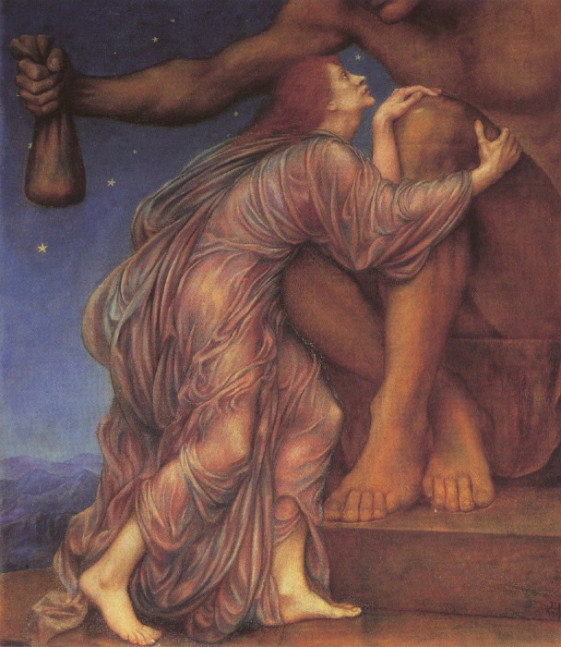
Evelyn de Morgan's The Worship of Mammon (1909), September 7, 2006. (Shell Kinney via Wikipedia). In public domain.

Evelyn de Morgan’s The Worship of Mammon (1909), September 7, 2006. (Shell Kinney via Wikipedia). In public domain.

But since Butler’s trolls obviously do think that they worship God, let me at least say this. If you believe in corporate capitalism and the corrections of the market, then your god is money, and the love of/lust for it. If you believe in the criminality of Blacks and Black male bodies, then your god is White. If you believe it’s okay to voice your displeasure by calling Butler a “n—-r c–t,” then your god is one that subjugates women, especially Black women. These beliefs do not and cannot represent my beliefs in God, in the life of Jesus, heck, in life of anyone who has ever spoken on behalf of social justice and human rights in history.

To misquote The American President (1995):

“Professor Anthea Butler has done nothing to you, trolls….You want a character debate? You better stick with me, ‘cuz Professor Anthea Butler is way out of your league.”
We Have Syllogisms, But I Have Silly-isms

20 Saturday Jul 2013

Posted by decollins1969 in 1, Academia, Boy @ The Window, Carnegie Mellon University, culture, Eclectic, eclectic music, Movies, music, Pittsburgh, Pop Culture, University of Pittsburgh, Youth

≈ Leave a comment

Tags

"Once In A Lifetime" (1983), Anita Baker, Authors, Book Titles, Books, Chicago, Chicago 17, Christine Stansell, Derrick Bell, Graduate School, Leon Litwack, Memory, Otis Redding, Patricia Cooper, Sean Wilentz, Silly-isms, Syllogisms, The Commodores, The Police, Writing Craft


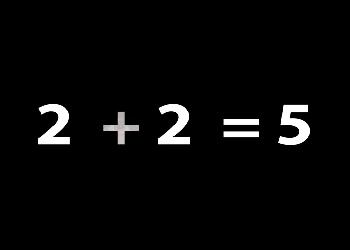
Bad Math (2+2=5) picture, July 20, 2013. (http://www.scenicreflections.com).

Bad Math (2+2=5) picture, July 20, 2013. (http://www.scenicreflections.com).

I’m far from done discussing issues of race, racism, civil rights and education this summer. Not by a long shot. Especially with the half-century anniversary of the March on Washington and W. E. B. Du Bois’ death just over five weeks away. But a one or two blog break is needed, if only because I need it today.

When it comes to so many things in my life, my memory is better than IBM’s Watson. You give me a date anytime in the previous seventy years, I can tell you within a day what day of the week it falls on. I can tell you what I had for dinner on many a given day twenty or thirty years ago, what 616 smelled like in the middle of a July heat wave in ’82, and which of my former Humanities classmates were dating in the summer of ’85. Yeah, and where I walked to clear my head on any given Saturday or Sunday between July ’85 and August ’87.

But I frequently forget people’s names, but never their faces. I forget to bring reuseable bags with me to the grocery store, but recall physics facts and figures I haven’t looked at since AP Physics my senior year of high school. And — most importantly for today’s post — I often forget book titles. But I almost always remember the book’s content, context, audience, writing tone and style, where it fits in the historical literature or in its genre (and even whether it gave me a headache or inspired me), or whether it forced me to truly change the way I thought about a given issue or topic.

When I was a grad student at Pitt and Carnegie Mellon, reading books the way Joey Chestnut and Takeru Kobayashi suck down hot dogs, I couldn’t keep the book titles in my head when I referred to them in seminars or in my papers. I just couldn’t. Maybe it was because the titles were boring, or because the books themselves were regurgitative snore-fests. Whatever the case, by the middle of my second year of grad school in late ’92, I needed a way to find a way back to a title and an author’s name, especially when in class refuting another student’s argument, in delivering a paper at a conference, or in answering questions from my professors about multiculturalism.

Otis Redding, The Dock of The Bay (posthumous album - 1968), July 20, 2013. (http://vibe.com; Atlantic Records).

Otis Redding, The Dock of The Bay (posthumous album – 1968), July 20, 2013. (http://vibe.com; Atlantic Records).

That’s when I inadvertently took my penchant for pop cultural references and began applying them liberally to the task of keeping book titles and authors’ names straight in my head. (I would’ve tried to memorize them otherwise). It started with the late Derrick Bell’s Faces at the Bottom of the Well (1992), which somehow bounced around a few neurons to conjure Otis Redding’s “Sittin’ On the Dock of the Bay” (1966). I didn’t need Redding to remind me of Bell or the title of his best-selling allegorical book. What it did, though, was free my mind to think of my massive amounts of reading on two levels, one scholarly, and one as reminders of my life and the lives of those suffering from inequality on the basis of race, class, gender and education.

So, when more boring book titles and/or books would come along, my mind would automatically go there. I turned David Tyack’s One Best System (1974) — a book about America’s K-12 system as a sorting out machine for the majority of the nation’s students — into Paul Carrick’s “One Good Reason,” a minor pop hit from ’88. My mind translated Patricia Cooper’s Once a Cigar Maker — all about gender and working-class issues in industrialization at the turn of the twentieth century — into Chicago’s “Once In A Lifetime” (not a hit, but on the Chicago 17 album). Or, even more often, I’d go, “You’re once, twiiiceee, three times a cigar maker, and I looooathe you” — a nod to Lionel Richie and The Commodores.

Anita Baker's Rapture (1986) album cover, July 20, 2013. (Donald Earl Collins).

Anita Baker’s Rapture (1986) album cover, July 20, 2013. (Donald Earl Collins).

I went further — and sillier — as I transferred from the University of Pittsburgh to CMU. Sean Wilentz’s Chants Democratic (1984) became Sean Wilentz “and the Pirates of Penzance” because of the rhyme scheme between “Wilentz” and “Chants.” Historian Christine Stansell was “don’t stand, don’t stand so, don’t Stansell close to me,” my homage to The Police. Leon Litwack’s Been in the Storm So Long (1979) became Anita Baker’s “Been So Long” (1986) from her Rapture album, while Michael Katz’s In the Shadow of the Poorhouse (1989) for me morphed into “Under The Poorhouse,” set to the tune of The Drifters’ “Under The Boardwalk” (1964).

It’s been nearly two decades since my last graduate seminar, yet I still find myself setting my book titles and authors to tunes and cinema. It makes reading an adventure for me, even as it helps me remember who wrote what. Silly, yes, it’s true. But don’t tell me I’m the only one who does this!

38.990666 -77.026088

Earth, Wind & Fire’s “Fantasy,” My Reality

18 Thursday Jul 2013

Posted by decollins1969 in 1, Boy @ The Window, culture, earth, wind & fire, Eclectic, eclectic music, Mount Vernon New York, music, New York City, Politics, Pop Culture, race, Youth

≈ Leave a comment

Tags

"Fantasy" (1978), Anger, Anger Management, Bigotry, Fear, Forgiveness, George Zimmerman, Lyrics, Police Brutality, Racism, Reality, Trayvon Martin, Zimmerman Trial


n  Cover of Earth, Wind & Fire's single "Fantasy" (1978), February 29, 2008. (Columbia Records). Qualifies as fair use due to low resolution and subject matter of this blog post.

Cover of Earth, Wind & Fire’s single “Fantasy” (1978), February 29, 2008. (Columbia Records). Qualifies as fair use due to low resolution and subject matter of this blog post.

Below are two excerpts from Boy @ The Window about how I viewed Mount Vernon, New York and my world between the ages of ten and twelve:

“My only links to the great metropolis to the south were WNBC-TV (Channel 4), Warner Wolf – with his famous “Let’s go to the video tape!” line – doing sports on WCBS-TV (Channel 2), and WABC-AM 77 and WBLS-FM 107.5 on the radio. I found the AM station more fun to listen to, but I also liked listening to the sign-off song WBLS played at the end of the evening, Moody’s Mood for Love, with that, ‘There I go, There I go, The-ere I go…’ start. Music had been an important part of my imagination in ’79, with acts like Earth, Wind & Fire, Christopher Cross, Billy Joel and The Commodores. Not to mention Frank Sinatra, Queen, Donna Summer and Michael Jackson’s Off The Wall album. The music also made me feel like I was as much a part of New York as I was a part of Mount Vernon. It left me thinking of the ozone and burnt rubber smell that I noticed as soon as I would walk down into the Subway system in Manhattan…

“Besides the occasional reminder of life outside of my world, of Mount Vernon, I was the center of my own universe. Mount Vernon was but a stage on which my life played out, a place I hoped would stay this way forever. I was an eleven-year-old who thought that my world was the world. I lived my life like Philip Bailey and Maurice White would’ve wanted me to. I came to see ‘victory in a life called fantasy’ as my own life, living as if my imagination and dreams could be made into reality. All I had to do was wish it so.”

(And yes, I know the actual lyrics are about a land called fantasy, but that’s not how I sang it back then).

There have been so many moments since then where my Earth, Wind & Fire visions have collided with the reality that life for me and people who look like me has hardly been a fantasy. I had to get over my idiot ex-stepfather’s abuse in order to even listen to Earth, Wind & Fire again, because he was a fan as well, and I didn’t want us to both like the same music. But even more than that has been the reality that there are people, places and things who’ve (and that have) come through my life and stood in between me and all the things I wanted out of life. Individuals like Joe Trotter or Ken, policies like racial profiling and redlining, institutions like Columbia University or the former Academy for Educational Development.

The Enchanted Garden of Messer Ansaldo (1889), by Marie Spartali Stillman, March 7, 2006. (Charivari via Wikipedia). In public domain.

The Enchanted Garden of Messer Ansaldo (1889), by Marie Spartali Stillman, March 7, 2006. (Charivari via Wikipedia). In public domain.

While some of these instances have been disappointing in the sense of betrayal that I felt, the disillusionment that came with these incidents of discrimination and harassment pushed me ever closer to the person and writer I wanted to be. I don’t know what to make of how I’ve been feeling about the Zimmerman trial and verdict, the response of so-called White liberals and more obviously racist and gleeful White teabaggers over the past five days. I’ve felt badly for Trayvon Martin’s family, Rachel Jeantel and for so many others who’ve been figuratively beaten down by media coverage and stereotypes over the past months.

But I didn’t think I was angry. Not until I went for a run this morning. It’s was a comparatively pedestrian 3.1-mile run after I’d done a five-miler a day and a half before. Earth, Wind & Fire’s “Fantasy” started playing on my iPod as I was running uphill. All it made me think about was all the challenges that I and so many others have had to face because of individual bigotry and fear and institutional racism and indifference. I know that many things in life aren’t fair. What I realized at that moment, though, was that there really are folks in this world who wish evil and unfairness on people like me. That’s their fantasy!

That made me angry again, but not for too long. For I also knew that I had the power to ask for forgiveness, as well as the power to forgive others. It’s a power that no one can take away from me, that enables me to be honest about where I am, and clear-headed about where I want to go. That power, among others, does truly help bring my “mind to everlasting liberty.” Even in the face of the evil, indifference and ignorance that I see every day.

38.990666 -77.026088

Richard Cohen & Rational Racism

17 Wednesday Jul 2013

Posted by decollins1969 in 1, culture, Eclectic, New York City, Politics, race, Youth

≈ Leave a comment

Tags

Affirmative Action, Derrick Bell, Paternalism, Racial Profiling, Racism, Richard Cohen, Stop and Frisk, Ta-Nehisi Coates, White Liberals, Whiteness


Electron microscope image of a lymphocyte, (a.k.a. cancer cell), September 20, 1976. (Dr. Triche/NCI via Wikipedia). In public domain.

Electron microscope image of a lymphocyte, (a.k.a. cancer cell), September 20, 1976. (Dr. Triche/NCI via Wikipedia). In public domain.

Ta-Nehisi Coates’ response to Richard Cohen’s “Racism vs. reality” column in The Washington Post (July 15, 2013) is so spot on that I had to post something about it. “The Banality of Richard Cohen and Racist Profiling” is a must read for anyone who’s tired of those White “liberals” who remain okay with racism for the sake of perceived safety. Below was my two cents on both Coates’ piece and the sidetracking some whom commented on Coates’ piece tried to do by equating racial profiling with affirmative action:

“Richard Cohen is no different than the racist and race-baiting journalists of not too long ago. You know, the ones who’d put ‘Negro Rapes A White Girl’ on the front page of the Chicago Tribune, Washington Post or New York Times, back in the days when Whites would riot and destroy Black neighborhoods upon seeing such headlines. All to sell newspapers, not to actually start a real and serious dialogue on race, racism and remedies.

And this is precisely what makes Cohen and his ill-conceived logic so dangerous. His is a piece that’s meant to make White ‘liberals’ feel okay about the denial of humanity and rights to Blacks. Especially since White ‘liberals’ must also feel that they’re protected and safe from the Black male boogieman criminal.

Don’t get caught up in a debate about affirmative action as some sort of intellectual counterbalance. It’s a false equivalency, plain and simple. More to the point, it’s a distraction from the real point. Like TNC, the late Derrick Bell wrote about this at length. The idea that we as African Americans, male and female, must embody all of the evils and stereotypes of this nation in order for Whites to feel safe. It’s so insulting, so soul-destroying, so infuriating, this immutable racism of Cohen and the millions of folk who think like him.”

Hey George

16 Tuesday Jul 2013

Posted by decollins1969 in 1, culture, Eclectic, eclectic music, music, Politics, race

≈ Leave a comment

Tags

"Hey Joe" (1966/67), George Zimmerman, Injustice, Jimi Hendrix, Juror B37, Justice System, Lyrics, Murder, Trayvon Martin, Whiteness


One of 1st George Zimmerman mugshots, February 26, 2012. (http://nydailynews.com).

One of 1st George Zimmerman mugshots, February 26, 2012. (http://nydailynews.com).

Cover for The Jimi Hendrix Experience's "Hey Joe" single, February 28, 2010. (Kohoutek1138 via Wikipedia). Qualifies as fair use because of picture's low resolution.

Cover for The Jimi Hendrix Experience’s “Hey Joe” single, February 28, 2010. (Kohoutek1138 via Wikipedia). Qualifies as fair use because of picture’s low resolution.

I’d originally planned to use Jimi Hendrix’s version of the classic lyrics from “Hey Joe” (1966/67) to talk about my former doctoral/dissertation advisor Joe Trotter. But even Trotter wasn’t evil and emotionally disconnected enough to attempt to end my life, even though his decisions could’ve easily ended my career before it started.

In any case, below is my ode to George Zimmerman, Trayvon Martin’s murderer, walking free because of racism and Whiteness, a racially stacked deck of law enforcement and criminal justice. Some won’t like what I did to Hendrix’s song. Others likely will. I can only imagine what Hendrix would say:

“Hey George, where you goin’ with that gun in your hand
Hey George, I said where you goin’ with that gun in your hand
I’m goin’ down to shoot that young man
You know I caught him walkin’ ’round with a different shade, man
Yeah, I’m goin’ down to shoot that young punk
You know I caught him walkin’ ’round with a different shade, man
Huh! and that ain’t cool
Huh hey George, I heard you shot your n—-r down
You shot him down now
Hey George, I heard you shot that asshole down
You shot him down in the ground yeah!
Yeah!
Yes, I did, I shot him
You know I caught him walkin’ round walkin’ round town
Huh, yes I did I shot him
You know I caught that young n—-r walkin’ ’round town
And I gave him the gun
And I shot him
Alright
Shoot him one more time again baby!
Yeah!”
….

“Hey George, I said
Where you gonna run to now, where you gonna go
I’m goin’ stay down south
Stay down in Florida way
Alright
I’m goin’ stay down South
Way down where I can be free
Ain’t no one gonna jail me
Ain’t no hang-man gonna
He ain’t gonna put a rope around me
You better believe it right now”

The saddest truth is, George Zimmerman, his brother, his family, Juror B37 and others of his racist, murdering ilk will like this rendition and see it as soul-affirming, rather than a simple but painful truth about this nation in which we live.

The Myth of the Earnest Adult Learner

15 Monday Jul 2013

Posted by decollins1969 in 1, Academia, culture, Eclectic, Politics, Pop Culture, race, Work, Youth

≈ Leave a comment

Tags

Adult Learners, Higher Education, K-16 Reform, MOOCs, Myth, Reality, Teacher-Student Relationship, University of Phoenix


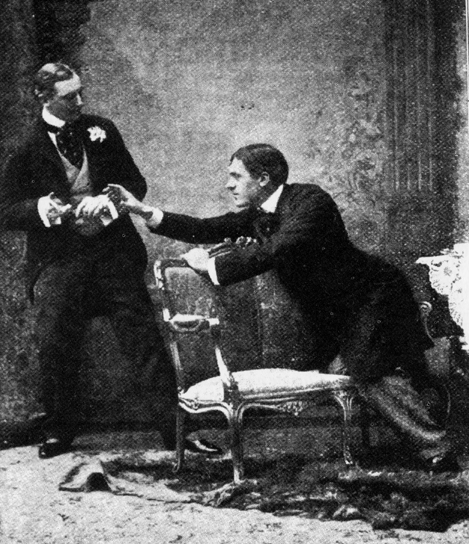
Oscar Wilde's The Importance of Being Earnest, with Allan Aynesworth as Algernon (left) and George Alexander as John (right), St. James Theatre, London, UK, February 14, 1895. (Ramac via Wikipedia). In public domain.

Oscar Wilde’s The Importance of Being Earnest, with Allan Aynesworth as Algernon (left) and George Alexander as John (right), St. James Theatre, London, UK, February 14, 1895. (Ramac via Wikipedia). In public domain.

One of the great myths in higher education is that of the adult learner as earnest student. Aside from the fairly obvious differences in lifestyle between a high-achieving, straight-to-college seventeen-year-old and a 34-year-old mother of two who works as a paralegal, the fact is that most adult learners act in the classroom like many traditional college students. Except that they are often academically and socially unprepared for college, not likely to attend a traditional college — with the resources necessary to help them become successful students — and are much more susceptible to dropping out of college because of the challenges they face in the classroom and in their own lives.

Myth vs. Reality:

This myth of the earnest adult learner has become a big one over the past thirty years, especially in light of the rise of for-profit postsecondary institutions like University of Phoenix and DeVry Institute. Anyone who has seen an ad on TV, in a newspaper or online can describe the mythical adult learner. Someone who’s 24 years old or older, often a paraprofessional or attempting to rise in a white-collar occupation like nursing, accounting, or information technology. A person who may be married or a parent or in the military. A potential student that has somehow been let down by traditional two-year colleges and four-year institutions, because the 10-week quarter-system and 16-week semester-system didn’t fit their real-world schedule.

The myth doesn’t fit at all with my own experience. As someone who has taught hundreds of adult learners off and on over the past 15 years – especially the past five – the behavior of older students in the classroom is really no different that than of traditional college-age students. Like 17 to 24-year-olds, the over-24 crowd is typically disorganized and lack the reading, note-taking and study skills needed to keep up with the pace of a college course. Like students who attend more traditional college settings such as Princeton, the University of Pittsburgh or Howard University, the adult learners I have taught miss deadlines, plagiarize their papers and cheat on final exams.

One of multitude of "I Am A Phoenix" ads, July 15, 2013. (University of Phoenix).

One of multitude of “I Am A Phoenix” ads, July 15, 2013. (University of Phoenix).

This shouldn’t be a surprise to anyone in higher education. Ad after ad sells college to adult learners as a service or a product that will lead them to a higher paying job. Period. College for them is hardly about forming new friendships or discovering themselves or their calling in life. The mythical adult learner is way too busy for such trifling pursuits. No, it is all about a piece of paper that they can wave around to get a promotion from junior accountant to accountant or from nurse’s aide to nurse.

Yet this too is a myth. Most adult learners are not really paraprofessionals or in low-level white-collar careers, poised for career advancement. They work at Walmart or Dunkin Donuts, as tellers at Wachovia Bank or as security guards with G4S. Some are active military or ex-Armed Forces, but many more are underemployed or even unemployed. Most are part of America’s rising welfare and working poor, or struggling to stay working-class or lower-middle class. At best, finishing a four-year degree would make them more employable than they would be otherwise, but not to the point that they should expect to become a doctor or an architect.

This background leaves most adult learners socially unprepared for college, but not because they cannot relate to college students between the ages of 17 and 24. They simply do not see school as a personal journey or even as an opportunity for educational advancement. It is a means to a new career and a higher income. Relationship-building to find a potential employer would not make any sense to most adult learners, as they are often segregated in virtual or physical classrooms with other adult learners, and not in classes with the sons and daughters of potential employers. Forming a bond with a professor would seem ridiculous, because they tend to see their often part-time instructors as customer-service representatives.

Adult Learners vs. Traditional College-Age Students:

This isn’t much different than the mindset of most traditional college students. I have taught a couple thousand of them over the past two decades, and in my experience, most of them view college as the means to the start of a great career making good money. The difference, really, is that there remains a wider diversity of thought about the higher education experience among younger college students than among those over 24. The quality of their education, the bonds of friendship or relationship they form with each other and with their professors, what they are able to take away from their college experience beyond their degree. All matter much more to so-called traditional students than they do to adult learners.

Student debt cartoon (although this is hardly the only stressor adult learners and other nontraditional-traditional students face), May 2, 2012. (Phil Hands/Wisconsin State Journal).

Student debt cartoon (although this is hardly the only stressor adult learners and other nontraditional-traditional students face), May 2, 2012. (Phil Hands/Wisconsin State Journal).

What is also similar is the idea that college is 13th, 14th, 15th and 16th grade for both groups of students. Both are just as apt to come up with myriad excuses for missing a paper submission deadline or for failing an exam. They had a big project at work that took up all of their spare time. They had a bad cold or the flu or strep throat or mononucleosis. Their computer crashed at the last minute, or they lost electricity or their Internet access went down. What I don’t often hear from traditional higher education students — but do expect to hear from adult learners — are excuses about children in emergency rooms, bad marriages, sick spouses and older parents, foreclosures on homes and cars breaking down on highways. For some, sometimes more than once in the same semester. Adult learners are as good at whining as traditional students.

The biggest myth on this end, though, is that younger college students face fewer obstacles to a degree than adult learners because 17-to-24 year-olds don’t have real-world problems. That’s completely false. Nearly two-thirds of traditional college students work part-time or full-time to cover everything from beer costs to their student loans and college tuition. Less advantaged students have pressures from parents and family around income loss, poverty and healthcare. Though most younger college students aren’t married, don’t have kids or work at the bottom rung of a career ladder, they do confront many of the same real-world financial and familial pressures.

Ending the Myth of the Traditional:

Are there any new innovations, such as Massive Open Online Courses (MOOCs), that would help adult learners achieve their degree — if not educational or academic — aspirations? It is really too early to tell with MOOCs. What is safe to say, though, is that adult learners as a group need to break out of mindset that higher education owes them flexibility without them taking responsibility for their own education. Higher education institutions, meanwhile, do need to recognize that adult learners have never been traditional, and traditional college students aren’t traditional anymore. Myth-busting on both the student side and instructor side would be a good place to start to make college aspirations and success a reality for adult learners.

38.990666 -77.026088

The Walking Danger

12 Friday Jul 2013

Posted by decollins1969 in 1, Boy @ The Window, culture, Eclectic, Hebrew-Israelite, Jimme, Mount Vernon New York, music, My Father, New York City, Pop Culture, race, Upper West Side, Youth

≈ Leave a comment

Tags

Abuse, Black Males, Distrust, Escape, Exploration, Life, Racial Stereotypes, Stigma of Criminality, Value, Walking, Walking While Black


blackbox1-290x160

Justice4Trayvon blackout box, July 12, 2013. (http://jet.com).

Regardless of the verdict in the Florida v. Zimmerman (a.k.a. Justice4Trayvon) trial, there’s one sad and terrifying lesson to take away from the past seventeen months. No Black male past puberty can assume themselves to be safe once they leave their homes to do so much as to cross the street. It doesn’t matter if you’re 6’1″ and 173 pounds, like I was my senior year of high school, or 6’6″ and 300 pounds, like a good- sized high school offensive lineman. We’re not just assumed guilty. We’re assumed to have a value the equivalent of a quart of recycled cooking oil.

It amazes me that with as much walking as I did while growing up in Mount Vernon and in walking all through the city, I only faced a handful of Walking While Black incidents. From the time my Mom and my late idiot ex-stepfather Maurice moved me and my older brother Darren into 616, I was a frequent walker. At seven, my Mom sent us to the store for groceries, for soda, for cigarettes and pork rinds. Yeah, the store was a block and a half away on East Lincoln, but that block and a half led to my first mugging at nine.

By then, my walks to the store went into Pelham and Milk ‘n Things, a three-block walk, as well as stores within three blocks of the Pelham border. That led to the first weird stares from Italian store owners. At the same time, when my father Jimme came back into our lives in ’79, we’d walk to Mount Vernon’s South Side. We’d walk to East Third Street and Wino Park on Fulton and Third, to the rib shack across the street from the park, to Sanford Blvd, even into the Bronx depending on Jimme’s alcohol level. That would lead to confrontations with street folks, and even occasional stares from cops.

Wise Cheez Doodles, one of my favorites to buy as a teenager, July 12, 2013. (http://twitter.com).

Wise Cheez Doodles, one of my favorites to buy as a teenager, July 12, 2013. (http://twitter.com).

By the time I hit puberty in the spring and summer of ’82, in no small part because of the collapse of anything resembling a family at Hebrew-Israelite 616, I began to walk everywhere. Some of my walks were because my Mom’s marriage had given her more mouths to feed and no time to go to the store. So me (mostly) and Darren (on occasion) would walk from 616 to stores like C-Town in Pelham (a mile or so away), Waldbaum’s on East Prospect (a mile and a quarter away) or stores in between for food. This became part of an eventual everyday routine, one that would last until well after I began college at the University of Pittsburgh (at least, when I was home for the holidays or the summer).

We also walked to get my younger brothers and sister Sarai out of the stifling apartment, especially because it was quite literally so during the summer months. We walked from 616 to Pelham, Pelham Manor, the Bronx, Bronxville and New Rochelle in those first couple of summers after puberty. The kids helped us look less suspicious, I suppose, because two teenage Black males had no business being anywhere near the six-figure-income-set’s communities in the mid-80s (or even now) otherwise.

I also began walking to explore, escape and think. It was next to impossible to think at home, with the constant noise, threats of abuse and actual abuse and domestic violence. So by the time I’d reached tenth grade, I needed to walk, by myself and with no agenda other than to make plans for my future while clearing my head. I did get followed by Bronxville PD a couple of times. But mostly, lost Whites from out-of-state would stop and ask for directions to the Bronx River Parkway or I-87.

Hershey's Chocolate Milk (at 17, a 16oz was my favorite store-bought drink), July 12, 2013. (http://www.gifarmer.com).

Hershey’s Chocolate Milk (at 17, a 16oz was my favorite store-bought drink), July 12, 2013. (http://www.gifarmer.com).

It wasn’t until after my seventeenth birthday — when I finally began to put on a little weight (muscle, I guess) — that walking around New York, Mount Vernon and nearby environs began to feel dangerous. Or at least, others began to act as if I was the danger. I’d become a regular weekend strap-hanger on the 2 out of 241st Street headed either to the Upper West Side, Midtown or Downtown, as well as parts of the Bronx. To hunt for the latest tapes, to go to a museum or a library, to just walk around and take the city in. But I also knew to be careful, to be leery of the NYPD, to keep my hands out of my pockets whenever I went to Tower Records or Crazy Eddie’s or even Gray’s Papaya.

Still, there were incidents at Milk-N-Things and Tower Records and a general feeling that folks, older, often White but also frequently Black were genuinely afraid that I — a person who’d been mugged four times before my fourteenth birthday — would hurt them.

Walking was how I learned how different I was from a societal perspective. That though a teenage, I was the dangerous Black male, to be treated as if I just escaped the plantation, as if I hope to find a store to knock over and a White girl to knock up against her will.

I’d hoped to spare my son this lesson. Sadly, because of George Zimmerman killing Trayvon Martin, I can’t. But at least he won’t have to learn this lesson from scratch like I did. And luckily, I knew and did enough to avoid danger — or being seen as the danger — long before I turned seventeen.

← Older posts
Newer posts →

Boy @ The Window: A Memoir

Boy @ The Window: A Memoir

Places to Buy/Download Boy @ The Window

There's a few ways in which you can read excerpts of, borrow and/or purchase and download Boy @ The Window. There's the trade paperback edition of Boy @ The Window, available for purchase via Amazon.com at http://www.amazon.com/Boy-Window-Donald-Earl-Collins/dp/0989256138/

There's also a Kindle edition on Amazon.com. The enhanced edition can be read only with Kindle Fire, an iPad or a full-color tablet. The links to the enhanced edition through Apple's iBookstore and the Barnes & Noble NOOK edition are below. The link to the Amazon Kindle version is also immediately below:

scr2555-proj697-a-kindle-logo-rgb-lg

Boy @ The Window on Amazon.com: http://www.amazon.com/Boy-The-Window-Memoir-ebook/dp/B00CD95FBU/

iBookstore-logo-300x100

Boy @ The Window on Apple's iBookstore: https://itunes.apple.com/us/book/boy-the-window/id643768275?ls=1

Barnes & Noble (bn.com) logo, June 26, 2013. (http://www.logotypes101.com).

Boy @ The Window on Barnes & Noble: http://www.barnesandnoble.com/w/boy-the-window-donald-earl-collins/1115182183?ean=2940016741567

You can also add, read and review Boy @ The Window on Goodreads.com. Just click on the button below:

Boy @ The Window

Twitter Updates

Tweets by decollins1969
  • RSS - Posts
  • RSS - Comments

Archives

  • June 2025
  • April 2023
  • September 2022
  • August 2022
  • July 2022
  • June 2022
  • May 2022
  • April 2022
  • March 2022
  • January 2022
  • December 2021
  • November 2021
  • October 2021
  • September 2021
  • August 2021
  • July 2021
  • June 2021
  • April 2021
  • March 2021
  • February 2021
  • January 2021
  • December 2020
  • November 2020
  • October 2020
  • September 2020
  • August 2020
  • July 2020
  • May 2020
  • April 2020
  • March 2020
  • January 2020
  • December 2019
  • November 2019
  • August 2019
  • July 2019
  • June 2019
  • May 2019
  • April 2019
  • March 2019
  • February 2019
  • January 2019
  • December 2018
  • November 2018
  • October 2018
  • September 2018
  • August 2018
  • July 2018
  • June 2018
  • May 2018
  • March 2018
  • February 2018
  • January 2018
  • December 2017
  • November 2017
  • October 2017
  • September 2017
  • August 2017
  • July 2017
  • June 2017
  • May 2017
  • April 2017
  • March 2017
  • February 2017
  • January 2017
  • December 2016
  • November 2016
  • October 2016
  • September 2016
  • August 2016
  • July 2016
  • June 2016
  • May 2016
  • April 2016
  • March 2016
  • February 2016
  • January 2016
  • December 2015
  • November 2015
  • October 2015
  • September 2015
  • August 2015
  • July 2015
  • June 2015
  • May 2015
  • April 2015
  • March 2015
  • February 2015
  • January 2015
  • December 2014
  • November 2014
  • October 2014
  • September 2014
  • August 2014
  • July 2014
  • June 2014
  • May 2014
  • April 2014
  • March 2014
  • February 2014
  • January 2014
  • December 2013
  • November 2013
  • October 2013
  • September 2013
  • August 2013
  • July 2013
  • June 2013
  • May 2013
  • April 2013
  • March 2013
  • February 2013
  • January 2013
  • December 2012
  • November 2012
  • October 2012
  • September 2012
  • August 2012
  • July 2012
  • June 2012
  • May 2012
  • April 2012
  • March 2012
  • February 2012
  • January 2012
  • December 2011
  • November 2011
  • October 2011
  • September 2011
  • August 2011
  • July 2011
  • June 2011
  • May 2011
  • April 2011
  • March 2011
  • February 2011
  • January 2011
  • December 2010
  • November 2010
  • October 2010
  • September 2010
  • August 2010
  • July 2010
  • June 2010
  • May 2010
  • April 2010
  • March 2010
  • February 2010
  • January 2010
  • December 2009
  • November 2009
  • October 2009
  • September 2009
  • August 2009
  • July 2009
  • June 2009
  • May 2009
  • April 2009
  • March 2009
  • February 2009
  • January 2009
  • December 2008
  • November 2008
  • October 2008
  • September 2008
  • August 2008
  • July 2008
  • June 2008
  • May 2008
  • April 2008
  • March 2008
  • February 2008
  • January 2008
  • December 2007
  • November 2007
  • October 2007
  • September 2007
  • August 2007
  • July 2007
  • June 2007

Recent Comments

MaryPena's avatarMaryPena on My Day of Atonement/Bitter Hat…
decollins1969's avatardecollins1969 on No Good Teaching Deed Goes…
Mary Rose O’Connell's avatarMary Rose O’Connell on No Good Teaching Deed Goes…

NetworkedBlogs on Facebook

NetworkedBlogs
Blog:
Notes From a Boy @ The Window
Topics:
My Life, Culture & Education, Politics & Goofyness
 
Follow my blog

616 616 East Lincoln Avenue A.B. Davis Middle School Abuse Academia Academy for Educational Development AED Afrocentricity American Narcissism Authenticity Bigotry Blackness Boy @ The Window Carnegie Mellon University Child Abuse Class of 1987 CMU Coping Strategies Crush #1 Crush #2 Death Disillusionment Diversity Domestic Violence Economic Inequality Education Family Friendship Friendships Graduate School Hebrew-Israelites High-Stakes Testing Higher Education History Homelessness Humanities Humanities Program Hypocrisy Internalized Racism Jealousy Joe Trotter Joe William Trotter Jr. K-12 Education Love Manhood Maurice Eugene Washington Maurice Washington Misogyny Mother-Son Relationship Mount Vernon High School Mount Vernon New York Mount Vernon public schools Multiculturalism MVHS Narcissism NFL Pitt Pittsburgh Politics of Education Poverty President Barack Obama Race Racial Stereotypes Racism Relationships Self-Awareness Self-Discovery Self-Reflection Sexism Social Justice Teaching and Learning University of Pittsburgh Violence Whiteness Writing

Top Rated

Blog at WordPress.com.

  • Subscribe Subscribed
    • Notes from a Boy @ The Window
    • Join 103 other subscribers
    • Already have a WordPress.com account? Log in now.
    • Notes from a Boy @ The Window
    • Subscribe Subscribed
    • Sign up
    • Log in
    • Report this content
    • View site in Reader
    • Manage subscriptions
    • Collapse this bar
 

Loading Comments...