
• About Me
  • Other Writings
  • Interview Clips
  • All About Me: American Racism, American Narcissism, and the Conversation America Can’t Have
  • Video Clips
  • Boy @ The Window Pictures
  • Boy @ The Window Theme Music

Notes from a Boy @ The Window

~

Notes from a Boy @ The Window

Category Archives: Carnegie Mellon University

Cold Snap 1994

09 Thursday Jan 2014

Posted by decollins1969 in 1, Academia, Carnegie Mellon University, culture, Eclectic, Pittsburgh, Pop Culture, University of Pittsburgh, Youth

≈ Leave a comment

Tags

Cold Snap, John Modell, Media Coverage, Polar Vortex, The Day After Tomorrow (2004)


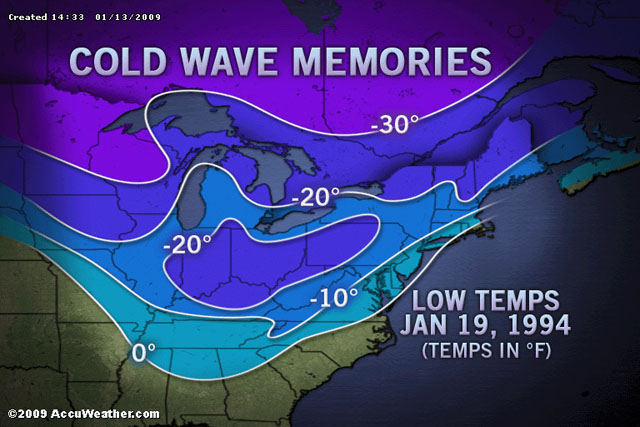
East Cold Wave Compared To 1994,  January 13, 2009. (http://www.accuweather.com).

East Cold Wave Compared To 1994, January 13, 2009. (http://www.accuweather.com).

This week’s so-called polar vortex is hardly the coldest weather I’ve ever experienced, whether living in New York, Pittsburgh or DC, or visiting places like Chicago and New Hampshire in the dead of winter. But like all things driven by traditional and social media coverage, anything that happened five minutes ago becomes the penultimate event of all time.

But imagine a day that was so cold that when the temperature rose to -20°C (that’s -4°F) three days later, it felt like a heat wave. A day that produced multiple states of emergency for much of the country. A day where your windows had thick sheets of ice on their panes, and your breath turned into icicles before you started to take in air.

I’m remembering a day twenty years ago exactly like that, one very different from the current cold snap across much of the Northern US right now.  And yes, the term is and will always be cold snap, as a vortex conjures end-of-times climate change similar to the movie The Day After Tomorrow (2004). Torrents of snow fell in the ‘Burgh, in New York, in Chicago and DC. So much snow fell in Pittsburgh that both Pitt and Carnegie Mellon shut down — something that only happens on near apocalyptic days. By the end of that month, Pittsburgh had already set a seasonal record for snowfall at 96 inches. Of course, that was nothing compared to Chicago, Cleveland or Buffalo that winter.

Frozen Pittsburgh, panoramic three rivers shot,  January 7, 2014. (Steve Mellon, http://www.post-gazette.com).

Frozen Pittsburgh, panoramic three rivers shot, January 7, 2014. (Steve Mellon, http://www.post-gazette.com).

What made it worse was the record cold weather. Over the course of nine days, between January 10 and 19, the temperature fell from a bearable 15° to 10, 8° , 5°, -2°, -10°, -15°, and to -22° on Wednesday, January 19, ’94. The wind chill that day made it feel like -50°. New York was -15° that day, and DC a balmy -11°. Only Chicago had it worse in terms of major cities, a -26° degree day with Lake Michigan wind chills of -70°. It snowed on most of those days, making conditions about as bad as living in Fairbanks, Alaska in the dead of winter.

I awoke to a cold studio apartment on January 19, even though the heat was at full blast and I’d sealed my windows with plastic. I turned on the TV, and found that the Pennsylvania governor had declared a state of emergency because of the cold and because the state’s electrical grid was on the verge of collapse. All businesses, schools, and colleges, as well as all non-essential state work, was to stop that day to preserve energy so that we wouldn’t freeze to death. To a business, everyone complied with the governor’s order.

Everyone except Carnegie Mellon, that is. They cited that they were a private and not a state institution as the reason for them not shutting down that day. Never mind that students who lived off campus would have to brave the killer temperatures to come to class. Or the fact that Pitt, a private institution with far more students than Carnegie Mellon, only two blocks away, was completely shut down. Or the fact that Carnegie Mellon, like the rest of the state, relied on the same overloaded power grid and was stretching limited resources.

So I prepared to go to my 2 pm course. Normally I would’ve walked the 2.75 miles from East Liberty to campus. Even I recognized that -22 was too cold for me to be out in for more than a half-hour, and this a forty minute walk for me in the ice and snow. I wore long-johns and sweats, two layers of socks insulted in plastic Giant Eagle bags that I’d put in my high-tops. I wore six layers of upper body clothing, snapped my hood on my winter jacket, pulled down my black wool cap to my eye lids, and wrapped my blue scarf around my mouth and neck.

I tried to time the bus so that I wouldn’t outside more than a few minutes. With the twenty-mile-per-hour wind gusts, it was like someone was trying to suck the life out of me. It hurt to breathe. Yet I found it funny to feel the icicles forming on my nose hairs and mustache. I took the first bus that came, the old 71C, which didn’t stop close to Carnegie Mellon, did stop right across the street from the Cathedral of Learning, about a half-mile from Baker Hall and my class.

Pitt, of course, was a ghost town. On the bridge that connected Pitt to Schenley Park and the southern entrance to Carnegie Mellon, two idiot joggers passed me, proving once again the dominance of brave alpha males in their attempts to control the world.

Michigan lighthouse entombed by ice, St. Joseph, Michigan, January 6, 2014. (Thomas Zakowski, HotSpot Media, via http://dailymail.co.uk).

Michigan lighthouse entombed by ice, St. Joseph, Michigan, January 6, 2014. (Thomas Zakowski, HotSpot Media, via http://dailymail.co.uk).

Upon entering Baker Hall, I was told by security that Carnegie Mellon was closing after all. I learned from the departmental office that the governor had personally called the president of Carnegie Mellon and ordered the closing under the threat of a $1 million-per-day fine, or something pretty close to that. So the elitist university was shutting down after all, at 2 pm. We could all go home. Or so we thought. John Modell decided that our classes were too precious to cancel over a little thing like a state of emergency. Now I knew that the man had taught for years at U Minnesota, so -22 for him was just a normal winter day, I guessed.

An hour later, with the heat off, we could all see our breath as Modell yammered on and on about cultural anthropology and the meaning of objectivity in that discipline. All I know was that it was way too cold to sit in a classroom wondering what would kill us first, Modell’s disjointed diatribes or the bitter cold classroom. If we’d been ten years younger, Modell would’ve gone to jail.

Finally, Modell released us from his professorial grip, around 3:20 pm. He even acknowledged that is was just too cold to continue class. “We’ll make this up next week,” he said. Yeah, as if he couldn’t have said that an hour before.

On Becoming A Father — 11 Years Later

16 Monday Dec 2013

Posted by decollins1969 in 1, Boy @ The Window, Carnegie Mellon University, culture, Eclectic, Jimme, Marriage, Mount Vernon New York, My Father, New York City, Pittsburgh, Pop Culture, University of Pittsburgh, Youth

≈ Leave a comment

Tags

Fatherhood, Fear, Fears, Pregnancy, Self-Awareness, Self-Discovery, Self-Revelation, Thanksgiving


Wife and son, August 16, 2003. (Donald Earl Collins).

Wife and son, latter at two weeks and change old, August 16, 2003. (Donald Earl Collins).

This week eleven years ago is when I first learned from my wife that she was pregnant with our one and only child, our son Noah. It was a high that took a few months of post-natal sleep deprivation to come down from, not to mention a fight to keep my job and move on from it courtesy of AED in ’03 and early ’04. But learning that I was soon to become a father didn’t just bring joy and euphoria. It came with baggage and the fear that my baggage would be a handicap to me as a father and to my gestating son.

Luckily I had a bit of time to prepare for becoming a father. I figured out that my wife was pregnant a few weeks before she did. It was on Thanksgiving Day ’02, and I was whisking a cream sauce to go with some chocolate torte dessert I was making. I asked my wife to watch over the cream and to make sure that it didn’t boil over when I went to the bathroom. Sure enough, the sauce was boiling over when I came back. I said sarcastically, “Thanks for messing up the cream!,” which led to my wife going to the bathroom, crying. You have to understand, my wife rarely cries, and never cries over my brand of New York-esque sarcasm. So when she said, “I’m sorry,” I said, “It’s okay, honey,” followed by, “Why are you literally crying over boiling cream? Are you sure you’re not pregnant?”

From that moment until my wife had given herself an EPT test three weeks later, I’d already started the process of psychological preparation. We’d barely begun trying to have a kid. We talked about it in July ’02, changed our diets in August and September, and I started taking herbal supplements by the end of September. Two months of actual trying in total. Really? That’s all it took?

All I knew was that fatherhood would bring back so many memories, some good, most of them bad and ugly. About my father Jimme and his alcoholism and homophobia as directed at me, my ex-stepfather’s physical and psychological abuse, about having to serve in my father-like role with my younger siblings and with Darren. By the time I’d reached grad student, some eleven years earlier, I wasn’t sure if I’d ever fall in love or get married, much less become a father. I mean, who would want to be with me, have little Donalds and Donnas running around that had about half of my features and traits? I wasn’t sure if I’d ever want that.

Fast-forward through grad school at Pitt and Carnegie Mellon, through four and half years of dating and two years of marriage. I was in a different place, not much different, but different enough to be much more sure about what I wanted. As I said to my wife, “There are four days out of the week where I’m sure about having a kid, two where I don’t want a child, and one where I simply don’t know.”

Be(com)ing A Father

Be(com)ing A Father

That was still good enough for my wife. And she’s the reason I could be firmly committed to fatherhood. I don’t think that I would’ve become a father otherwise. Have I made mistakes over the past ten years and five months with Noah? Of course! I once left him in a carrier on our table when he was five months over, and it flipped over end-over-end, scaring the crap out of him (literally!). I’ve yelled at him when I shouldn’t have, and I’ve cursed out at least one hundred too many bad DC area drivers with him in the back seat of our Honda Element over the years.

But despite all of the ups and downs in my life, career(s) and even marriage, one of the handful of things I’m sure about is having become a father to my son a good eight and a half months before he was born. I still check on him nearly every night to watch him sleep (and breath).

Ambient Hero

18 Monday Nov 2013

Posted by decollins1969 in 1, Academia, Boy @ The Window, Carnegie Mellon University, culture, Eclectic, Pittsburgh, Pop Culture, University of Pittsburgh, Youth

≈ Leave a comment

Tags

AMB, Breaking Up, Dating, Hero Complex, Kiss of the Spider Woman, Long Distance Relationships, Maturity, Oscillating Relationships, Pitt, Relationships, Smallville, Superman, Tom Welling, U Maryland, University of Maryland, Vanessa Williams


Tom Welling as Clark Kent/The Blur (almost Superman) from Smallville series, November 18, 2013. (http://latimesherocomplex.files.wordpress.com/).

Tom Welling as Clark Kent/The Blur (almost Superman) from Smallville series, April 2011. (http://latimesherocomplex.files.wordpress.com/).

In the years between the chronological end of Boy @ The Window (February ’90) and when I began dating my wife (December ’95) of now thirteen and a half years, my relationship life was hit and miss, at times in a silo, and for two of those years, almost completely nonexistent. Grad school took up much of my time and energy, and there were times I barely had the money to catch a bus to campus at Pitt or Carnegie Mellon, much less go out for a dinner and a movie.

It was at the end of ’94, after becoming ABD (All But Dissertation for those not pursuing PhDs) that I felt I finally had the time to take my dating life more seriously. I realized that I’d been separating my sex life from my wanting-a-more-serious-relationship-life. Casual sex was fine, but I still found it more daunting to be in a relationship when I wanted more. So did the women in my life back then.

These realizations came to a head in my relationship with a woman I’ll call AMB for the purposes of this post. I’d known AMB off and on since ’90, as a result of a mutual friend whom I’d worked with during my Western Psych job years. By ’95, she was in grad school herself at the University of Maryland, working on her master’s degree in history. It was a different area in the field, luckily, so no frequent debates about how many historians can dance on the head of a pin.

During that summer and into the fall, we began seeing each other off and on. I found it wonderful at first. After years of grad school, of not even being remotely attracted to anyone who was a historian, I could have a conversation with someone about my doctoral thesis research and about my family at the same time. And all without having to explain it as if I were teaching a class or their eyes glazing over!

But there were issues right from the start. At the time, AMB lived with her mother in Maryland, and with me not owning a car, it was a four-and-a-half-hour trip by bus, longer by train, and costly on a grad school budget if I planned on renting a car. My dissertation research, though, brought me to the DC area frequently. So I visited her in August, October and November, while she came to visit me in July and October as well.

Oscillating balls hitting each other, November 18, 2013. (http://www.burbuja.info).

Oscillating balls hitting each other, November 18, 2013. (http://www.burbuja.info).

There was also the matter of her little one. At the time, I couldn’t have imagined working on an M.A. or PhD with a young son or daughter to raise. And although I admired how AMB was juggling, she was also struggling with this as well. Between her ex and the psychological abuse that came with him, her daughter, her mother and grad school, it was no wonder that our phone conversations could turn from boyfriend-girlfriend to psychologist-client on a dime.

The biggest issue, though, was defining the nature of our more-than-friendship as it began to evolve after July ’95. Depending on the week and what set of friends were around, AMB either introduced me as her “boyfriend” or as her “friend.” The first time this occurred, we were around a group of her U Maryland friends during my October visit, the weekend before the Million Man March. But one-on-one or over the phone, she didn’t slip up. I found it a bit strange, even as someone who didn’t date between December ’92 and October ’94.

Then, on AMB’s last visit with me in Pittsburgh, at the end of October ’95, she did it again, at Hillman Library, among a group of our mutual acquaintances and friends. What really clinched it for me, though, was when she added that I was her “hero.” That was a record scratcher for me. Really? How many lives had I saved? Could I shoot laser beams out of my eyes or phase through walls? After having put two younger women on a pedestal in my previous life (Crush #1 and Crush #2, Wendy and Phyllis — see blog), I couldn’t — no, I wouldn’t — allow someone to do the same to me. Especially someone with much more serious issues in her life than dating and high school.

So when AMB invited her up to her hotel room, I came up, but I definitely wasn’t in any mood for anything other than an explanation. She didn’t really give me one then. And three weeks later, after ditching our date to see the Kiss of the Spider Woman musical (it was playing in Baltimore at the time, headlined by Vanessa Williams) by going to see it with her friends two days earlier (all without telling me in advance), I’d had enough.

Vanessa Williams in Kiss of the Spider Woman poster, circa 1994. (http://geminibroadway.com).

Vanessa Williams in Kiss of the Spider Woman poster, circa 1994. (http://geminibroadway.com).

On this date eighteen years ago, we had a two-hour phone conversation, where I broke up with AMB. I told her that I’d tired of our “oscillating relationship, where I was just a ‘friend’ one minute, and a ‘boyfriend’ the next.” I told her that she needed to figure out herself and her relations with her ex, her daughter and her mother if she really wanted a more meaningful relationship in the future.

I’d broken off relationships before, but not like this. Mostly, I’d just ignore phone calls and email, or say something so sarcastic that the woman would get the message. This was hard. I was destroying AMB’s image of me as a hero, not just agreeing not to kiss or hug her anymore. Or maybe, just maybe, I was doing what a real hero does, which in this case meant not taking advantage of another human being at their most vulnerable.

The Things I Can’t Say

28 Monday Oct 2013

Posted by decollins1969 in 1, Boy @ The Window, Carnegie Mellon University, Christianity, culture, Hebrew-Israelite, Marriage, Mount Vernon New York, Pop Culture, race, Religion, University of Pittsburgh, Work, Youth

≈ Leave a comment

Tags

616, 616 East Lincoln Avenue, Competition, Happy Birthday, Intervention, Jealousy, Life, Mom, Mother-Son Relationship, Sharing, Silence, Trust


U.S. Route 66 shield, made to the specifications of the 2004 edition of Standard Highway Sign, January 27, 2006. (SPUI via Wikipedia). Released to public domain.

U.S. Route 66 shield, made to the specifications of the 2004 edition of Standard Highway Sign, January 27, 2006. (SPUI via Wikipedia). Released to public domain.

Today was my Mom’s sixty-sixth birthday. I’m just beginning to come to grips with the fact that Mom’s a senior citizen, considering that she was only twenty-two when she had me in ’69. It’s been a roller coaster ride through hell, with many downs and only a handful of ups over those years. The one casualty in those years that we haven’t overcome has been the ability to share everything that has been my life with her, especially in the last decade.

I learned the hard way sixteen years ago that the lack of distance in age between me and Mom resulted in a sort-of competition. It was one of which I hadn’t been aware until ’97. It involved higher education, finding work and finding full-time work. It involved friendships and relationships, God and church, and finding a passion for a calling. Week after week, and year after year, from ’87 to ’02, I talked on the phone or at 616 with my Mom about these situations and issues. Only to find that my triumphs and failures were only a point of comparison for her, and not a conversation involving life and lessons.

When I finally realized this in ’97, and did an intervention involving my family on this and other issues in ’02, it was the third most emotionally painful thing I’d ever been through. I had to decide how I should talk to my Mom moving forward. I made the choice to not share significant parts of my life with Mom. From that point on, I chose to not discuss any victories or struggles in my jobs, in finding work, in consulting or teaching with her. Nor have I talked about my marriage’s ups and occasional downs, my writings, my publications, my projects, my hopes, my dreams, my fears, or my struggles. Mostly, I’ve only talked about my son and his glacial journey toward adulthood, the weather, my siblings, or something in the news that may be funny or relevant.

Ginsu 9-Inch Japanese Stainless Steel Slicer, October 28, 2013. (http://www.amazon.com).

Ginsu 9-Inch Japanese Stainless Steel Slicer, October 28, 2013. (http://www.amazon.com).

This has been the case since the summer of ’02. Uncomfortable silences and frequent struggles to think about what to actually discuss that could have real meaning, have been what this has meant for the two of us. Given her response to the intervention I conducted in January ’02, I can only imagine what Mom’s response would be to Boy @ The Window. On the one hand, she would act unimpressed, as if I’d written a book about organic chemistry and nanotechnology. On the other hand, my Mom would likely be seething behind her ho-hum mask, ready to rip my throat out for airing family secrets and dirty laundry. (I actually dreamt as much the other night, being at a book talk with Mom coming over the table, slashing at me with a Ginsu knife).

I haven’t been angry with my Mom for years, and I forgave Mom for any mistakes she made regarding me growing up years ago. But I know my Mom well enough to know that our relationship could never be an adult mother-son one, where I get to be an adult and her son at the same time. Part of that means me remaining silent about a significant part of my life, including a memoir in which she’s a main character. It’s too bad, yet it’s also the way it must be. For my emotional sanity, as well as for hers.

The Road to Boy @ The Window, Part 4: Fear of a “Black” America

26 Thursday Sep 2013

Posted by decollins1969 in 1, Academia, Boy @ The Window, Carnegie Mellon University, culture, Eclectic, eclectic music, music, Patriotism, Pittsburgh, Politics, Pop Culture, race, University of Pittsburgh, Youth

≈ Leave a comment

Tags

Academia, Afrocentricity, Authentic Blackness, Authenticity, Emotion, Estelle Abel, Fear of a "Black" America, Fear Of A Black Planet, Fear of Black Males, Joe Trotter, Multicultural Education, Multiculturalism, PE, Personal Vignettes, Politics of Academia, Politics of Education, Politics of Fear, Public Enemy, Rage, Richard Altenbaugh


FearBookCover3copy

Given that Fear of a “Black” America was my first book, but one based on my doctoral dissertation, and that Boy @ The Window is a memoir, the road from one to the other may not be that obvious with an initial glance. But despite the intellectual, semi-scholarly nature of my book on Blacks and multiculturalism, there are parallel themes that run between Fear of a “Black” America and Boy @ The Window. Perhaps none are more important, though, than the challenge of authenticity, of fitting in, of being able to mesh the complicated onion that I’ve found myself to be over the years.

I think that was why I decided in November ’98 to turn my dissertation “A Substance of Things Hoped For” into a more readable book. Yes, after all that work to write a 505-page thesis, it would’ve been a shame to just let it sit on my then girlfriend’s coffee table, to be used either as a door stop or a base for her doing her nails. Yes, I still had something to prove to academia. That my scholarship as a historian and educator on the issue of multiculturalism was sound. That the conventional academic wisdom around Blacks, people of color and multiculturalism was paternalistic fear-mongering.

Public Enemy, Fear Of A Black Planet (1990) Album Cover

Public Enemy, Fear Of A Black Planet (1990) Album Cover

And in thinking that last part through, I came up with my Public Enemy-inspired title and thread for the first book. It was about fear in many forms. Elite White fears of a majority-people-of-color US within their own lifetimes. Conservative fears of a K-16 education system that included the cultural and historical perspectives of peoples of color, of the poor, of women, of the LGBT, of so many others they’d rather discard. General American skepticism that any Blacks had ever given any thought at all to cultural pluralism, intercultural education, or multiculturalism/multicultural education, at least before White theorists had thought through these ideas first.

Afrocentrists and nationalists who thought of multiculturalism as soft and utterly unrepresentative of the Black experience — or, at least, what they considered an authentic version thereof? That was as difficult a challenge as any I faced in writing both my dissertation and Fear of a “Black” America. So much so that I made a few interesting decisions along the way. I sought out an agent — yes, a literary agent — for the first book, and found one, too (things were so much easier in ’99). I wanted the book to have an impact beyond academia.

In the writing process, I decided to weave the theme of fear, skepticism, willful and inadvertent misunderstandings throughout the 200-page book. All while covering Black intellectual thought about what we now call Afrocentricity and multiculturalism, Black activism and activities around education and Negro History Week, and the so-called Culture Wars of the 1980s and 1990s. All to show that multiculturalism was/is a part of America’s evolution, even if some folks are gnashing their teeth and wearing sackcloth and ashes along the way.

One thing was missing, though, from my six chapters. Me, in a word. Yes, my argument was crystal clear, my evidence was sound, my notes and analysis lined up well enough by the summer of ’00. Yet, as my one-time agent noted, “there’s not enough of you in this manuscript.”  Bottom line: folks weren’t going to buy the book unless I made it more compelling, which meant putting something of me or about me in it.

Fear Book & The Authentic Me

Fear Book & The Authentic Me

So I did. I wrote mostly about my experiences in academia and how they paralleled with some of the critical issues in Fear of a “Black” America. I talked about my Duquesne University students in the College of Education in ’98 and ’99, most of whom were cultural conservatives. I brought up conversations I had with professors skeptical about my scholarship, like Richard Altenbaugh in March ’98 or my former dissertation advisor Joe Trotter in April ’96. I also wrote about my conversation with Estelle Abel over my lack of authenticity as a young Black man in June ’87, having thought about it for the first time in thirteen years. I wasn’t sure if that made Fear of a “Black” America any better, but it made me feel better about my first book.

By the time I’d given my agent the final draft of Fear of a “Black” America in October ’00, I was ready — maybe for the first time in years — to take a look at my life before Pitt, grad school, Spencer Fellowship and becoming Dr. Collins. I wasn’t sure if I wanted to open up the emotional side of that Pandora’s box just yet. But in some ways, I really needed to, precisely because of my experiences with people in grad school at Pitt and Carnegie Mellon. And precisely because of my occasional moments of rage and overreaction, if only because Fear of a Black “America” helped me tap into emotions I didn’t know I had.

On Academic Entourages & Standing Apart From Them

11 Wednesday Sep 2013

Posted by decollins1969 in 1, Academia, Carnegie Mellon University, culture, Eclectic, Pittsburgh, Politics, Pop Culture, race, Religion, University of Pittsburgh, Work, Youth

≈ Leave a comment

Tags

Academia, African American Studies, Afrocentricity, Authenticity, Black Issues in Higher Education, Blackness, Entourage, Fear of a "Black" America, Followers, Loner, Marc, Molefi Asante, Multiculturalism, Politics of Academia, Publishing, Sycophants, Writing


Lil Wayne entourage, Hartford, CT, July 2011. (http://4umf.com/).

Lil Wayne entourage, Hartford, CT, July 2011. (http://4umf.com/).

This week for many is about anniversary number twelve of the 9/11 attacks, which if I hadn’t lived through them, would sound like something out of a Kurt Vonnegut novel. But because I’ve been counting my days for years, this week also represents two decades since I realized that radical “Islamic” terrorists, pro athletes and popular music artists aren’t the only ones with followers. I learned for the first time that even in the world of academia, paragons and those who allege themselves as such also have their entourages of true believers and sycophants. It was a realization that bothered the loner and the aspiring academic historian in me.

Letters to the Editor, Black Issues in Higher Education, September 9, 1993. (Donald Earl Collins)

Letters to the Editor, Black Issues in Higher Education, September 9, 1993. (Donald Earl Collins).

It all occurred in the aftermath of my first major publication, co-written with my friend Marc and published in Black Issues In Higher Education in August ’93. “Afrocentricity: The Fight for Control of African-American Thought” was our 1,200 word contribution to the debate over multicultural education and Afrocentricity in both higher education and in Black culture more generally. It was a publication that came as a surprise, because the editors at Black Issues In Higher Education (the same folks who ran Emerge Magazine, by the way) hadn’t contacted us about receiving our pitch and article, about accepting it for publication, or about when they intended to publish. And even though our article was literally in the centerfold of their August 12, ’93 issue, the folks at Black Issues in Higher Education never paid us for the publication of our work.

The reason why because clearer in their September 9 and September 23 issues. In the “Letters to the Editor” section, the editors published a dozen letters, ten of which were critical of our work. These weren’t scholarly or even logical critiques — we were wrong because we weren’t members of the Church of Afrocentric Babble, plain and simple. These were “How dare you!” or “Shame on you!” letters, not ones based on what we’d actually written.

What became obvious  to me was that Molefi Asante’s former and current students had written most of the letters. Not exactly an unbiased set of sources, as in the circle of Afrocentricity in the early ’90s, there were few people more prominent than Asante (he was the Father of Afrocentricity, after all). Once I realized this, I found myself disappointed. With Black Issues in Higher Education, with Black folks in academia — particularly at Temple University — and with academia itself. Me and Marc weren’t being challenged on our ideas, but on the idea that two alleged neophytes had the balls to challenge the orthodoxy of the early ’90s in African American studies and in high-brow Black cultural circles.

Marc pushed for a response from one of the editors about their unprofessionalism (and to find out why we weren’t being paid for our piece), which led to a conversation with one of the big-wigs. He apparently said to Marc, “We published it [the “Afrocentricity” piece] to teach you a lesson.” When Marc told me, I said, “Well, I guess we’re not gonna get paid.” (Turned out this was standard practice for the likes of Black Issues in Higher Education, Emerge, and for freelancers at BET as well). Marc, pissed and disillusioned, said, “We were just trying to help.”

Letters to the Editor, Black Issues in Higher Education, September 23, 1993. (Donald Earl Collins).

Letters to the Editor, Black Issues in Higher Education, September 23, 1993. (Donald Earl Collins).

It was the last one of many factors that pushed me to write my dissertation and my first book Fear of a “Black” America (2004) on the relationship between education, multiculturalism, and Black identity. I wanted to show that Afrocentricity wasn’t the only strain of thought that ran through the heads of Black scholars and found its way into small “c” curriculum and cultural events in Black communities. In doing so, I certainly stood apart, but I also stood alone a lot, too.

In recent years, I’ve seen numerous entourages eviscerate lone wolfs. On Twitter, in our 24/7 media coverage of the mundane and insignificant yet insane, and at academic conferences. As recently as a couple of months ago, I saw a version of this on Facebook in response to a post I wrote about Mark Anthony Neal’s Looking for Leroy (2013). The entourage makes it difficult for an up-and-comer to get off to an honest start, for conformity with only subatomic levels of independent thought seems to be the norm.

Somewhere between now and when my son (knock on wood) reaches my age of forty-three, maybe some of what I’ve written over the past twenty years will break through the ice of entourages, mad-dog and otherwise. Still, it is a damnable thing when groups get together to stomp out different voices (literally and figuratively), because that’s seems to be the only way to keep the band together.

The Lazarus Woman

22 Thursday Aug 2013

Posted by decollins1969 in 1, Academia, Boy @ The Window, Carnegie Mellon University, culture, Eclectic, Mount Vernon New York, Pittsburgh, Politics, Pop Culture, race, Religion, Youth

≈ Leave a comment

Tags

Barbara B. Lazarus, Barbara Lazarus, Brandie Weston, Carl Zimring, Death, Friendship, Graduate School, Harold Meltzer, Joe Trotter, John Hinshaw, Life and Death, Maurice Eugene Washington, Maurice Washington, Mentoring, Politics of Academia, Politics of Graduate School, Sarai Washington, Susan McElroy


Barbara B. Lazarus, obituary picture, July 17, 2003. (http://cmu.edu).

Barbara B. Lazarus, obituary picture, July 17, 2003. (http://cmu.edu).

Now that my book’s been out for a couple of months (between two and four months, depending on the e-book platform, actually), I’ve found that my thoughts sometimes drift toward those that are no longer around to read it.

Not so much my family or nemeses, though. Sarai, my only sister, who died in July ’10, would likely have never read a word of Boy @ The Window — it would be too honest an assessment of life at 616 for her. My late idiot ex-stepfather Maurice Washington was already unhappy with my numerous posts about his borderline personality issues and constant psychological and physical abuse of me and family when I picked up the phone one day that same week my sister passed.

As for my former classmate Brandie Weston — to whom I’ve dedicated my memoir (actually, a co-dedication that includes my son) — maybe, if she had been well enough. My favorite teacher, the late Harold Meltzer, though, would’ve begun reading  Boy @ The Window five minutes after it had gone live on Amazon.com!

But of all of those folks who are no longer a part of this corporeal world (or who have gone into some state of seclusion from it), one other person stands out today. My dear friend and mentor from my Carnegie Mellon years (and the six years after I finished), Barbara Lazarus. I’ve discussed her here before, but not lately. Probably because I do tear up sometimes when thinking about her support of me specifically and her work at CMU in general. Barbara helped make my otherwise rough and dehumanizing experience at CMU manageable and even career-affirming.

As I wrote about Barbara for the memorial service at CMU in September ’03:

I want to communicate to you that I am in complete solidarity with everyone who attends the gathering at CMU on October 17.  For me, Barbara’s work was more than about women’s equity in the engineering and science fields.  She was about ensuring that all (regardless of gender or race, and regardless of the degree) who attempted the grand enterprise of competing for a degree actually made it through the process … Barbara was a dear friend and mentor who truly believed in me, even in spite of myself.  I loved her, and I will surely miss her, as I am sure you will also.

That only approximated how much she meant to me during and after my four years of doctoral success and failures at CMU. The months immediately before my advisor Joe Trotter and my committee approved my dissertation were the worst, as is well documented on this blog. Barbara convinced me to not become hot-headed and drop-out of the program with a completed first-draft of my dissertation under my belt. She also managed to keep me from requesting a change of advisors so close to the finish line. She did offer to “step in” as her duties as Associate Provost would’ve allowed, but warned me that this political solution would delay my graduation. My connection with Barbara kept me from meeting Trotter in one of CMU’s parking lots late at night wearing a ski mask and dark leather gloves!

She became my best reference professionally and otherwise after those dark days ended with the end of ’96. She read my articles and my first book before they went to print. We swapped stories about family and life and religion. We stayed in touch even after I moved to Silver Spring, Maryland in ’99. Barbara died on July 14, ’03, just sixteen days before my son Noah was born. It’s been a decade, a month and eight days since she passed, nearly as long as I actually knew Barbara (roughly between October ’92 and July ’03). Boy, I wish I could’ve shared my first photos of my son with her!

There were a few people like Barbara at CMU during those years. Susan McElroy (now at UT-Dallas), John Hinshaw (at least prior to my Spencer Fellowship), Carl Zimring (before the O.J. verdict), the Gants and the other Black doctoral students I’d met there (all fourteen of us) were my CMU lifeline beyond multiculturalism and Trotter tired sense of migration studies.

But Barbara Lazarus and I had a friendship that went well beyond academia and career, and went undamaged by petty jealousies or sudden bursts of outrage from jury verdicts. I’d been to her home, met her husband and her kids, learned something about her as a person, and in the process, managed to be my better self even in the worst of circumstances. That is being a good mentor, friend and person. I just hope that I was the same to her, and that Boy @ The Window proves to be the same to others.

← Older posts
Newer posts →

Boy @ The Window: A Memoir

Boy @ The Window: A Memoir

Places to Buy/Download Boy @ The Window

There's a few ways in which you can read excerpts of, borrow and/or purchase and download Boy @ The Window. There's the trade paperback edition of Boy @ The Window, available for purchase via Amazon.com at http://www.amazon.com/Boy-Window-Donald-Earl-Collins/dp/0989256138/

There's also a Kindle edition on Amazon.com. The enhanced edition can be read only with Kindle Fire, an iPad or a full-color tablet. The links to the enhanced edition through Apple's iBookstore and the Barnes & Noble NOOK edition are below. The link to the Amazon Kindle version is also immediately below:

scr2555-proj697-a-kindle-logo-rgb-lg

Boy @ The Window on Amazon.com: http://www.amazon.com/Boy-The-Window-Memoir-ebook/dp/B00CD95FBU/

iBookstore-logo-300x100

Boy @ The Window on Apple's iBookstore: https://itunes.apple.com/us/book/boy-the-window/id643768275?ls=1

Barnes & Noble (bn.com) logo, June 26, 2013. (http://www.logotypes101.com).

Boy @ The Window on Barnes & Noble: http://www.barnesandnoble.com/w/boy-the-window-donald-earl-collins/1115182183?ean=2940016741567

You can also add, read and review Boy @ The Window on Goodreads.com. Just click on the button below:

Boy @ The Window

Twitter Updates

Tweets by decollins1969
  • RSS - Posts
  • RSS - Comments

Archives

  • June 2025
  • April 2023
  • September 2022
  • August 2022
  • July 2022
  • June 2022
  • May 2022
  • April 2022
  • March 2022
  • January 2022
  • December 2021
  • November 2021
  • October 2021
  • September 2021
  • August 2021
  • July 2021
  • June 2021
  • April 2021
  • March 2021
  • February 2021
  • January 2021
  • December 2020
  • November 2020
  • October 2020
  • September 2020
  • August 2020
  • July 2020
  • May 2020
  • April 2020
  • March 2020
  • January 2020
  • December 2019
  • November 2019
  • August 2019
  • July 2019
  • June 2019
  • May 2019
  • April 2019
  • March 2019
  • February 2019
  • January 2019
  • December 2018
  • November 2018
  • October 2018
  • September 2018
  • August 2018
  • July 2018
  • June 2018
  • May 2018
  • March 2018
  • February 2018
  • January 2018
  • December 2017
  • November 2017
  • October 2017
  • September 2017
  • August 2017
  • July 2017
  • June 2017
  • May 2017
  • April 2017
  • March 2017
  • February 2017
  • January 2017
  • December 2016
  • November 2016
  • October 2016
  • September 2016
  • August 2016
  • July 2016
  • June 2016
  • May 2016
  • April 2016
  • March 2016
  • February 2016
  • January 2016
  • December 2015
  • November 2015
  • October 2015
  • September 2015
  • August 2015
  • July 2015
  • June 2015
  • May 2015
  • April 2015
  • March 2015
  • February 2015
  • January 2015
  • December 2014
  • November 2014
  • October 2014
  • September 2014
  • August 2014
  • July 2014
  • June 2014
  • May 2014
  • April 2014
  • March 2014
  • February 2014
  • January 2014
  • December 2013
  • November 2013
  • October 2013
  • September 2013
  • August 2013
  • July 2013
  • June 2013
  • May 2013
  • April 2013
  • March 2013
  • February 2013
  • January 2013
  • December 2012
  • November 2012
  • October 2012
  • September 2012
  • August 2012
  • July 2012
  • June 2012
  • May 2012
  • April 2012
  • March 2012
  • February 2012
  • January 2012
  • December 2011
  • November 2011
  • October 2011
  • September 2011
  • August 2011
  • July 2011
  • June 2011
  • May 2011
  • April 2011
  • March 2011
  • February 2011
  • January 2011
  • December 2010
  • November 2010
  • October 2010
  • September 2010
  • August 2010
  • July 2010
  • June 2010
  • May 2010
  • April 2010
  • March 2010
  • February 2010
  • January 2010
  • December 2009
  • November 2009
  • October 2009
  • September 2009
  • August 2009
  • July 2009
  • June 2009
  • May 2009
  • April 2009
  • March 2009
  • February 2009
  • January 2009
  • December 2008
  • November 2008
  • October 2008
  • September 2008
  • August 2008
  • July 2008
  • June 2008
  • May 2008
  • April 2008
  • March 2008
  • February 2008
  • January 2008
  • December 2007
  • November 2007
  • October 2007
  • September 2007
  • August 2007
  • July 2007
  • June 2007

Recent Comments

MaryPena's avatarMaryPena on My Day of Atonement/Bitter Hat…
decollins1969's avatardecollins1969 on No Good Teaching Deed Goes…
Mary Rose O’Connell's avatarMary Rose O’Connell on No Good Teaching Deed Goes…

NetworkedBlogs on Facebook

NetworkedBlogs
Blog:
Notes From a Boy @ The Window
Topics:
My Life, Culture & Education, Politics & Goofyness
 
Follow my blog

616 616 East Lincoln Avenue A.B. Davis Middle School Abuse Academia Academy for Educational Development AED Afrocentricity American Narcissism Authenticity Bigotry Blackness Boy @ The Window Carnegie Mellon University Child Abuse Class of 1987 CMU Coping Strategies Crush #1 Crush #2 Death Disillusionment Diversity Domestic Violence Economic Inequality Education Family Friendship Friendships Graduate School Hebrew-Israelites High-Stakes Testing Higher Education History Homelessness Humanities Humanities Program Hypocrisy Internalized Racism Jealousy Joe Trotter Joe William Trotter Jr. K-12 Education Love Manhood Maurice Eugene Washington Maurice Washington Misogyny Mother-Son Relationship Mount Vernon High School Mount Vernon New York Mount Vernon public schools Multiculturalism MVHS Narcissism NFL Pitt Pittsburgh Politics of Education Poverty President Barack Obama Race Racial Stereotypes Racism Relationships Self-Awareness Self-Discovery Self-Reflection Sexism Social Justice Teaching and Learning University of Pittsburgh Violence Whiteness Writing

Top Rated

Blog at WordPress.com.

  • Subscribe Subscribed
    • Notes from a Boy @ The Window
    • Join 103 other subscribers
    • Already have a WordPress.com account? Log in now.
    • Notes from a Boy @ The Window
    • Subscribe Subscribed
    • Sign up
    • Log in
    • Report this content
    • View site in Reader
    • Manage subscriptions
    • Collapse this bar
 

Loading Comments...