• Spinning Sage’s Gold: Allegories on the Western-Dominated Present and a Possible Post-Western Future (2025)
  • About Me
  • Other Writings
  • Interview Clips
  • Video Clips
  • Boy @ The Window Pictures
  • Boy @ The Window Theme Music

Notes from a Boy @ The Window

~

Notes from a Boy @ The Window

Category Archives: Boy @ The Window

What Being #1 Is and Isn’t

24 Thursday May 2018

Posted by decollins1969 in 1, Academia, Boy @ The Window, culture, Eclectic, Politics, Pop Culture, race, Youth

≈ Leave a comment

Tags

American Narcissism, Augusta Uwamanzu, Being #1, College Acceptances, Elite Colleges and Universities, Harold Ekeh, Higher Education, Ivy League Schools, Jealousy, Kelley Williams-Bolar, Micheal Brown, Obsessive Individualism, Racism, Rigged System, Winners and Losers


#1 (cropped), May 24, 2018. (http://www.modern-senior.com).

Augusta Uwamanzu-Nna, Harold Ekeh, Micheal Brown, Elmont Memorial High School, and Mirabeau B. Lamar High School must be very proud of themselves these days. And they all should be. After all, Ms. Uwamanzu-Nna joined Mr. Ekeh as being the only two students in the history of this high school to gain acceptance to all eight Ivy League universities — in back-to-back years, in 2015 and 2016. Mr. Brown was four-for-four in his quest for Ivy League admissions at Harvard, Yale, Princeton, and the University of Pennsylvania in 2017-18, and went 20-for-20 in college admissions overall. Uwamanza-Nna and Ekeh each went 13 for 13 in their applications to colleges ranging from Johns Hopkins and New York University to Harvard, Yale, and Princeton.

They are among a very short list of above-the-rim, high-achieving high school students who have the distinction of winning the college entrance lottery. They have credentials (and with full rides, the means) to attend any and every elite institution in the US. That’s just it, though. In so many ways, this narrative of American education as one of  “winners and losers” merely reinforces a society of haves and have-nots narcissistically competing for limited and segregated resources.

With a closer look at Uwamanzu-Nna’s, Ekeh’s, and Brown’s backgrounds, it becomes obvious that despite their amazing achievements, their success was predestined. Both Uwamanzu-Nna and Ekeh’s families are from Nigeria, and both moved to the US when they were of elementary school age. Uwamanzu-Nna’s father remained a physical therapist after moving to the US, while Ekeh’s parents “left comfortable lives in Nigeria” to take jobs at a Target store in Queens to provide opportunities for their five children. Both families picked places within the Sewanhaka Central High School District to live. The district is made up of a group of Long Island bedroom suburban towns within Nassau County, including Elmont.
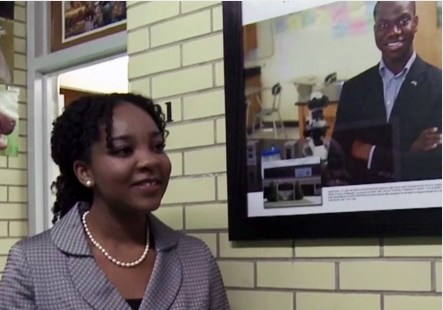
Augusta Uwamanzu-Nna standing next to a picture of 2015 graduate, Harold Ekeh (cropped), Elmont Memorial High School, Elmont, NY, April 5, 2016. (CBS2).

This decision for the two Nigerian families could not have occurred by accident. The Sewanhaka Central High School District and especially Elmont Memorial High School has long had a reputation of providing an atmosphere of academic excellence and being a welcoming environment to students from immigrant families. Uwamanzu-Nna and Ekeh both benefited from such an environment and from families willing to sacrifice in order to push their children to win the academic lottery. In the US, getting into any Ivy League institution — much less all eight — is the pinnacle of being #1.

Brown’s case is a little less obvious in terms of advantages. But clearly Brown’s mother’s continuous efforts to enrich her life and her son’s life academically and socially were critical to his high-flying success. “When I was in elementary school, I saw my mom graduate from community college and that just meant a lot to me,”  Brown said to USA Today last month. Involvement in extracurricular activities in school and year-round after school programs like “QuestBridge, Emerge Fellowship and Breakthrough Collaborative,” where Brown got to mingle with students of color with college aspirations, must’ve helped with both his academic motivations and preparations. This more than made up for whatever deficiencies Brown faced in his education because of growing up in the Third Ward in Houston (where several of my uncles and cousins on my mother’s side lived between the mid-1970s and the early ’00s).

There are a couple of ways to look at Uwamanzu-Nna’s, Ekeh’s, and Brown’s success. One is to take the route of racist jealousy. “It’s a little obnoxious because you can only go to one, you can only take one full ride, and you are taking a spot from someone else who worked really hard,” co-anchor Holly Morris said on her FOX5 DC morning show. There was a huge backlash in response. The response implied that Brown’s achievement was a sign of showboating, that Brown was merely an attention-seeker. Keep in mind, the media sought Brown out, not the other way around. Keep in mind, Americans obsess over obvious measures of success. But somehow, if you’re Black, you can’t be joyful and in the moment over such success, even when the press is shining a floodlight on you.

Micheal Brown and his mother Berthinia Rutledge-Brown sharing the news of him getting into all 20 schools to which he applied, Houston, TX, March 31, 2018. (https://www.rawstory.com/).

Another way to look at Uwamanzu-Nna’s, Ekeh’s, and Brown’s achievements, though, would be to see their stories as a positive for them as individuals, but a negative for our society as a whole. With the increased emphasis on standardized curricula, standardized testing, and standardized individual teacher evaluations based on this testing has come an obsessive focus on the individual in education. The savior teacher as superhuman, somehow able to make every student into a proficient test-taker. The grinding student, ready to score a proficient or higher score on every school district, state-level, and national standardized test. The tiger mom-esque parent, willing at a moment’s notice to spend money that most Americans do not have to tutor and drill their child into excellent test scores. All involved in education for the greater good, but more and more, for their greater good. All without knowing about what their children have really learned, whether their students can really work in unison on a common goal, or if their kids can create, innovate, or think independently of a test-taking script.

I’m sure that Uwamanzu-Nna, Ekeh, and Brown’s have learned a lot in their respective journeys to Harvard, Yale, and Stanford. But what does this measure of achievement mean for them down the line? Is it merely their ability to meet the right people and find job opportunities looking for them around every corner as a result of their academic achievements? Or do their achievements mean anything beyond the material, for them and for the rest of us?

The “winners and losers” narrative also plays itself out in insidious ways for parents at the have-nots end of the scale. Because America’s educational resources are unevenly segregated by race and social class across its 14,000 school districts, the opportunities for winning this competition are also segregated. School district boundary hopping has become more prevalent in recent years. This as the competition for better-resourced schools has become more intense, all in the wake of the Great Recession and the resulting reduction in education budgets.

Unlevel playing field (soccer in this case), August 5, 2013. (http://funatico.com).

One famous case of boundary hopping occurred in 2011. Kelley Williams-Bolar, an African American, Akron, Ohio-area mother, was arrested for and convicted of falsifying records to enable her two daughters to attend a more affluent school district in the area for two years. (Williams-Bolar’s now deceased father Edward L. Williams was a legal resident of the Copley Township district at the time.) The real crime here is that a patchwork public education system based on income and place of residence exists at all. That it also promotes an obsession with competition and mostly pre-selects students to be #1 in the line for the elite university is worse still. That is why Uwamanzu-Nna’s, Ekeh’s, and Brown’s achievements look so remarkable. They won an educational game that in so many ways our society had rigged for them to lose.

Augusta Uwamanzu-Nna, Harold Ekeh, and Micheal Brown are among a truly lucky handful. Their parents found a welcoming home in a diverse suburban community with well-resourced (if somewhat segregated) schools, or enriched their child with resources not available to most kids in poorer and segregated urban school districts. They won the competition for #1. For most Americans, though, the education game is rigged, as the system reproduces and reinforces residential, racial, income, and academic inequality. Not to mention, the American idea that there should be winners, losers, and a grinding competition to show who won and lost.

It’s Been A While Since I’ve Been a Sports “Fan”

03 Thursday May 2018

Posted by decollins1969 in 1, Boy @ The Window, culture, Eclectic, Mount Vernon New York, New York City, Pittsburgh, Politics, Pop Culture, race, Sports, University of Pittsburgh, Youth

≈ Leave a comment

Tags

DC, Disillusionment, DMV, Escapism, Evolution, Fandom, Misogyny, Narcissism, Pitt, Politics and Sports, Racism, Sports


Cropped image of seven year-old Linus Van Pelt sucking his thumb and holding his security blanket (like the average American sports fan), May 3, 2018. (http://amazon.com).

If my 25 year-old self and my 48 year-old self met in the same hotel bar on Rolling Rock Beer and Wings night in Pittsburgh, Buffalo, or Cleveland, they would have so much in common (or explode space-time). But they would have one hell of a disagreement about the quality, purpose, and feeling of being a sports fanatic. We’d both be ex-baseball fans, courtesy of the sports’ over-inflated view of itself, its long history of racism, exclusion, and paternalism, and George Will’s ludicrous books on America’s so-called pastime. We’d both watch NBA basketball, NHL hockey, a fútbol match or a tennis tournament or a golf major here and there. But the reasons for watching, the rationale for whom to root for and why, the purpose for either of us to indulge in such athletic delights? We would be at an obtuse angle, at least 120 degrees apart.

My history of sports fandom began pretty much in middle school, even though I’d been exposed to all of New York’s underdog teams from the womb. Mets, Jets, and Knicks (Mom still doesn’t watch or understand hockey, by the way) were her teams by the time she and my dad conceived me. But me being me, I reinvented the wheel between the end of ’81 and the spring of ’84. I watched/listened to Yankees and Mets games, as well as the Knicks and Nets, the Islanders, Rangers, and Devils, and the Jets and Giants.

I picked my childhood teams based on low expectations, the balance between them being underdogs and being doormats, the players I’d most likely would want to emulate if I ever wanted to be a professional athlete. And, mostly important, based on that team’s ability to help me forget about all that was wrong in my world, for at least three hours per day (in baseball), or six hours a week (between the other sports combined).

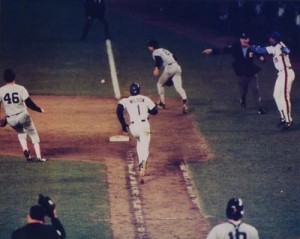
The Mookie Wilson-Bill Buckner connection, Game 6, 1986 World Series, Bottom 10th, Shea Stadium, Queens, NY, October 25, 1986. (http://halloffamememorabilia.net).

That gradually began to change once my teams started winning championships, or at least, regularly competing for them. The change accelerated once I left the New York area for Pittsburgh and its Western Pennsylvania ways. Between my Mets winning a World Series and my Giants winning two Super Bowls between ’86 and ’91, I found myself no longer a fan of hometown underdog teams. Sports weren’t an escape from my reality anymore. Especially as I began regularly working out and playing sports myself.

But I still saw sports fandom as a good thing, something that could unite people and cross the barriers of racism, classism, and even sexism (depending on the sport). That was my next phase of fandom, beginning around ’93. This view was what fueled my divorce from baseball after the ’94 MLB strike and lockout, and what caused me to begin watching more golf and international soccer, and not just falling asleep to it.

I still rooted for my Giants, Rangers, and especially the Knickerbockers. Too bad only the Rangers broke through in the ’90s, although the Knicks had their chances between ’93 and ’99. With living in Pittsburgh, though, I also began to cheer for the Steelers, the Penguins (except when they played the Rangers), and sometimes the Pirates.

But even in this phase of my fandom, I recognized the basic truth. I was cheering for athletes and their talent and will to shine in competition. That they happened to be a linebacker for the Giants or a pitcher for the Mets was a bonus, but I would’ve enjoyed their talent on other teams and in other athletic contexts anyway. I recognized this already with Reggie Jackson and Dave Winfield in the ’80s, and I saw another glimpse of it in ’96, when Dwight Gooden, at this point with the Yankees, finally threw a no-hitter. I wasn’t even a baseball fan anymore, but I was so happy for the diminished Gooden to achieve this feat.

Venus hitting a backhand against Elise Mertens in 1st round of Wimbledon, Wimbledon, England, UK, July 3, 2017. (https://www.telegraph.co.uk/; John Walton/PA).

I think that’s why I started rooting for Venus (who does not get nearly enough credit for being an elite athlete and tennis player) and Serena Williams, Tiger Woods, Kevin Garnett, LeBron James, and so many others while they were still in their teens. I’m sure that’s why I stopped putting up with cockamamie excuses from other fans about too much money in professional sports, about free agency, about the difficulties of running a franchise, when I’d see the same teams losing year after year. It didn’t help that the athletes I rooted for growing up or in the ’90s began to retire, often with a vocal and unappreciative fan base trying to shove them out to door.

Most importantly, I saw the greed and narcissism and conservative politics and racism and misogyny and homophobia that is embedded in the ownership of teams and in the building of franchises. That sports are no more divorced from the politics and malignancies in society than our choices in food and clothing, or the decision of most Americans to berate the poor for their poverty. That sports teams and franchises are about as “clean” and “merit-based” as legacies in college admissions (the ultimate form of affirmative action) and the American election process at any and all levels. Despite this, a hundred million people still entertain this naive view that sports fandom is an essential good, a form of escape, a place for camaraderie. It is not. It’s escapism, a form a narcissism that allows millions to feel a bit better about their lives without doing anything to change their lives and the lives of untold others for the better.

Maybe my jadedness comes from nearly two decades in the DC area, where I regularly root for the local teams to fail, because I love it when the fans here are disillusioned. Maybe it’s because of the poor quality of most of the sports I watch (or in the case of the NFL, have stopped watching for going on three years now). Or, maybe it’s because my Knicks haven’t a title since Nixon was president! Whatever it is, I will continue to root for athletes, but not for teams. Especially those who take a stand, those who have a purpose beyond their athleticism, those whose bodies make me a bit envious, but only envious enough to keep working out, to keep running, to keep draining Js. Also, the NFL is still blackballing Colin Kaepernick!


Rich, Lorde, and What I Care/Don’t Care About

20 Tuesday Mar 2018

Posted by decollins1969 in 1, Boy @ The Window, Christianity, culture, Eclectic, Hebrew-Israelite, Mount Vernon High School, Mount Vernon New York, music, Pittsburgh, Politics, Pop Culture, race, Religion, University of Pittsburgh, Youth

≈ Leave a comment

Tags

Adrienne Rich, Audre Lorde, General Writing, Intersectionality, Pitt, Poetry, Poets, Positioning, Privilege, Sexual Orientation, The Last Poets


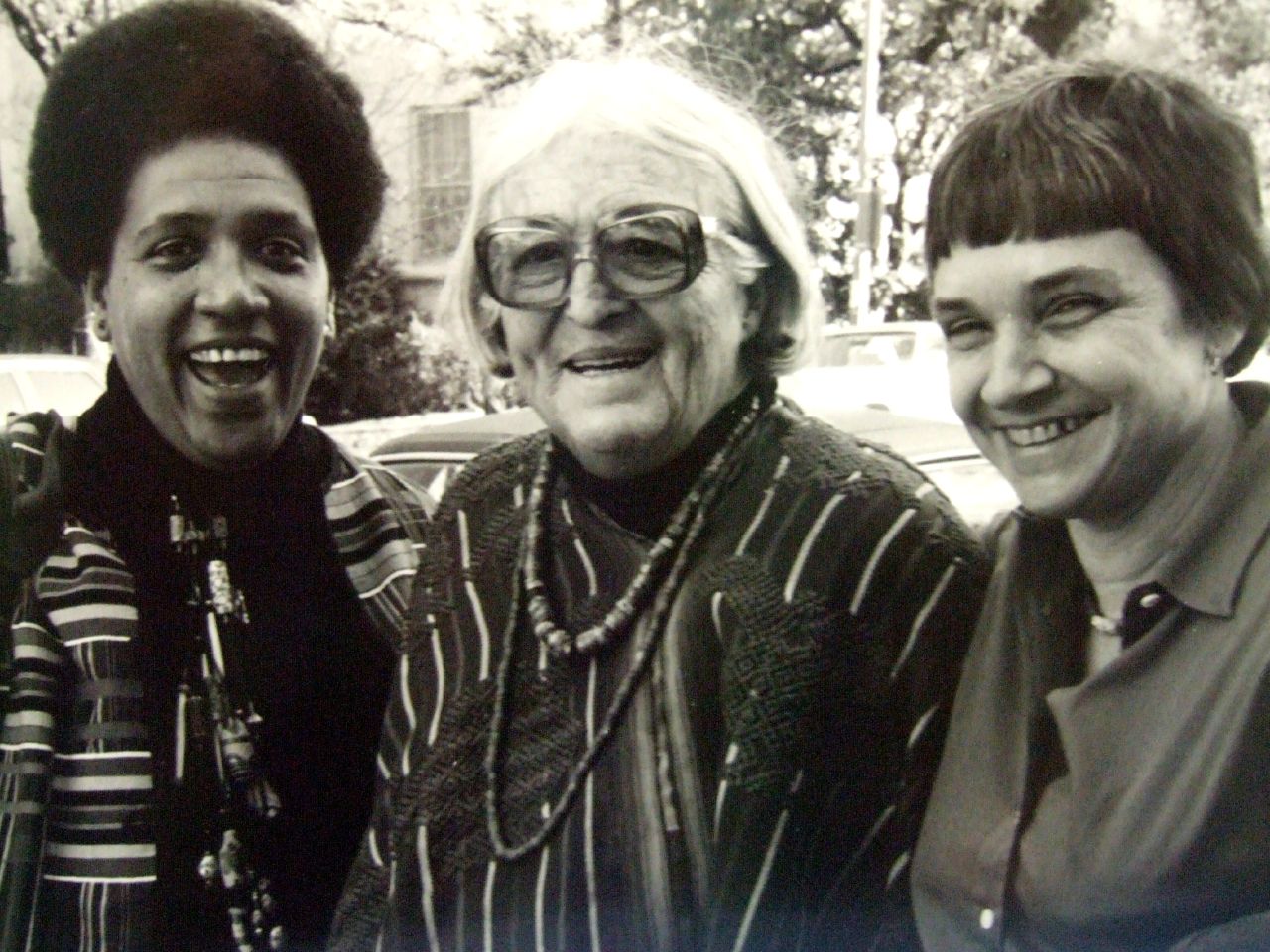
Audre Lorde, Meridel Lesueur, and Adrienne Rich after leading a writing workshop, Austin, TX, 1980. (K. Kendall/Flickr, July 15, 2007). Released to the public domain via CC-SA-2.0.

Among the literary arts, poetry is somewhere between okay and blech for me. At least most of the time. That doesn’t mean I hate all poetry or all poets. I fully appreciate the rhyme and meter (and lack thereof) of so many, from James Weldon Johnson and Archibald MacLeish to Phillis Wheatley and Langston Hughes. I love the emotional layering in the choice of the words, and in more modern times, the delivering of such words, with The Last Poets, with Gil Scott-Heron, and of course, Maya Angelou. Rap legends like Tupac, Nas, Eminem, Public Enemy have lyrics that are essentially spoken-word poetry put to bass, beats, and music loops. Heck, I’ve even enjoyed W. E. B. DuBois’ forays in the art in my scholarly research (when I more regularly did it) over the years.

But as a writer of prose (and often, long-winded prose), I also find the form of poetry ill-fitting. For me, it’s like being a home-run hitter in baseball playing hard-court tennis. It’s not that I can’t hit a baseline winner or an ace. But for every one of those, I could easily hit four tennis balls in a row out of the court, and literally onto the roof of a house half a block away. I prefer the ability to lay out my thoughts and explain them in full sentences, without worrying over every single word and the rhythm that a sequence of carefully chosen words may or may not bring.

I barely read any poetry during my Humanities years, unless my English classes forced me to. Emily Dickinson, Edgar Allan Poe, John Keats, Alexander Pope, all for 10th grade English, and with the exception of Pope’s “The Rape of the Lock,” not particularly entertaining. I was convinced after high school in ’87 that I’d never read poetry again.

What brought on a new interest in poetry came from my sophomore year at Pitt. I had to take a General Writing class in Fall 1988. I had to because if I wanted to take upper-level History classes as a History major, this general education requirement needed to be knocked off.  But I had an enthusiastic graduate student as my instructor. When I say enthusiastic, I mean someone who knew their students wouldn’t be, but whose passion for teaching and literature of all kinds made the class and the readings more interesting. She told me early on, after reading one of my first essays, that I should’ve been able to pass out of General Writing through the diagnostic tests Pitt gave my freshman year. “I wasn’t exactly awake when I took it last year,” I said in response.

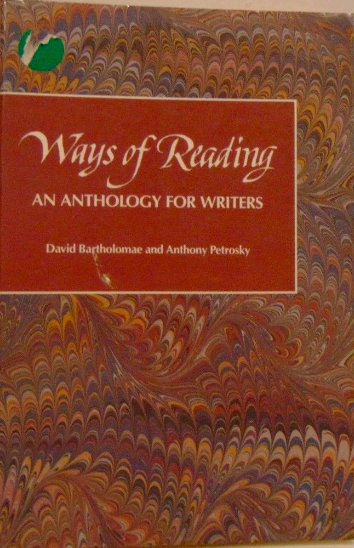
Ways of Reading anthology book (2nd edition), used in 1988. (http://ebay.ca).

When we got to the poetry portion of the course, I thought at first I was going to die from boredom. But our instructor didn’t assign us the usual suspects. The main poet we read that week was Adrienne Rich. She was someone I’d heard of growing up, but that was about it. Until the assignment of reading both Rich’s poetry and her essay “When We Dead Awaken: Writing as Re-Vision,” that is.

There were three things I’d never considered before reading Rich. One was the idea that writing was both art and craft, and that most writing was editing and re-envisioning one’s work. Two was the notion of transforming and being transformed through the writing process, and all as a proxy for a meaningful life. Three was the positioning of poets and other writers in literature, the privileging of men over women, of White males over feminists, of White heterosexual feminists over lesbian feminists, and especially Black lesbian feminists.

That last one about power, privilege, and positioning, it really grabbed me. So much so that I read more Rich that October weekend, in between pangs of hunger from lack of money and my Saturday evening shift at the Cathedral of Learning computer lab.

And the more I read of Rich, the more I decided to read about one of Rich’s contemporaries. I moved on to Audre Lorde the following week. She wasn’t among the long list of readings we had for General Writing, but she should’ve been. I couldn’t believe that someone who lived only miles away from my growing up experience in Mount Vernon and in New York could yet have such a vastly different experience with the city and the area.

I picked up Sister Outsider (1984) for the first time near the end of that fall semester. Lorde’s collection of essays about civil rights, about Black feminism (or womanism), about what we now call intersectionality, opened my eyes to how even Rich’s brand of feminism could be problematic. But more than that. Lorde, along with Rich, helped me realize, and not for the first time, that I didn’t care if the person I read or learned from was straight or gay, male or female (or later on, transgender), Black, Brown, or White. This despite what the Hebrew-Israelites and the evangelicals tried to teach me. They just had to be excellent in their work.

Excerpt of Audre Lorde’s Power (1978) (screenshot). (http://poetryfoundation.org).

Sister Outsider also opened up my eyes to the possibility that even my poetry-loathing ass could appreciate a true master at work in the art. So early on the following semester, I read Lorde’s poetry for the first time, likely some poems from her Coal (1976). Lorde talking about her upbringing, her relationship with her mother, and her issues with her own skin color, resonated with me.

But that was it with poetry for me until I borrowed my friend E’s recording of The Lost Poets 1971 album, and then read Angelou’s poetry, both in the summer of ’91. By then, I knew that while I’d never be a full-fledged fan of it, I could still appreciate the work, the art, and the layering of ideologies, emotions, and ideas contained in the best of poetry.

Is “Never” the Best Time for a Critique?

03 Saturday Mar 2018

Posted by decollins1969 in 1, Boy @ The Window, Christianity, culture, Eclectic, Patriotism, Politics, Pop Culture, race, Religion

≈ Leave a comment

Tags

Anthea Butler, Billy Graham, Blasphemy, Blind Support, Critique, Sacred Cows


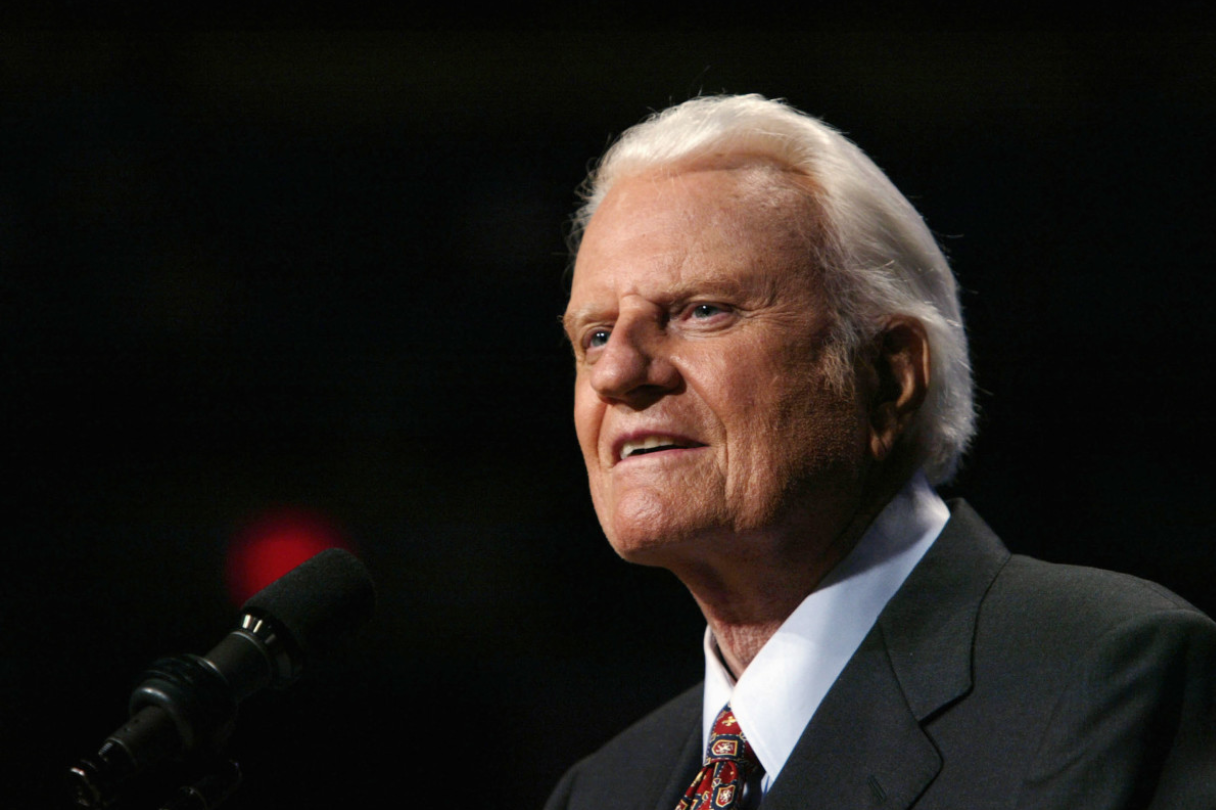
Rev. Billy Graham, 2003. (David Hume/Getty Images). Cropped slightly; qualifies as fair use due to cropping and subject matter.

I’ve been watching the variety of responses to the death of the late great Billy Graham over the past seven or ten days. Most people have been in mourning, which was something to expect. Many, like UPenn religious studies professor Anthea Butler, have reminded the world of the White nationalist, segregationist, and sexist views Graham either represented or excused during his six-decade-long run on the national stage.

And like mechanical clockwork, those who have Victorian and transactional notions of Christianity have defended, deflected, and denied on Graham’s behalf. It’s led to this series of questions for me. When can we critique the legacy of a famous person? While they’re alive? “No siree! That would be disrespectful.” If they claim to be serving God, they’ll add, “That would be blasphemous!” If I were to ask, When they die?, they’ll respond, “Now’s not the time — can’t you see their family’s in morning? The Bible says, ‘Judge not, lest thou be judged’.”

Translation: apparently, we’re never supposed to question what some famous person has done. Especially if they have the word “reverend” or “pastor” as part of their official title. It’s a thought process that imbues power to religious leaders, so much so that we might as well make them god-like, since our job is merely to obey and stay quiet.

But as I’ve learned over the past three-and-a-half decades, religious leaders are fallible. They aren’t sacrosanct. And while seminaries or other religious institutions have ordained them, that doesn’t mean that every vision they’ve ever had came straight from God. Meaning that we can question. Meaning that we can critique. Meaning that we can provide evidence that humanizes whom others would consider a pedestal perfect being. For those whom aren’t Christian, it certainly means they can judge Graham, too.

To err is human, no? Which means we shouldn’t have any sacred cows. Graham might’ve saved millions of souls for eternal life. But that shouldn’t automatically exempt him from a critique of his unwillingness to help those same souls while they were still here on Earth.

“Grace,” #MeToo, and Our Binary World

20 Saturday Jan 2018

Posted by decollins1969 in 1, Boy @ The Window, culture, Eclectic, Mount Vernon High School, Pittsburgh, Politics, Pop Culture, race

≈ Leave a comment

Tags

#MeToo, Alexander Pope, and Our Binary World, Babe.net, Binary Thinking, Context, Either-Or, Feminism, Gender, Grace, Hypermasculinity, Intersectionality, Jade Martin, Katie Way, Larry Nassar, Maturity, Misogyny, Mrs. Buckley, Privilege, Rohingya Crisis, Sexism, Sexual Assault, The Rape of the Lock (1715), Whiteness


Water buffaloes in mud, January 2017. (http://reddit.com).

Part of me knows that some of you will assume that I shouldn’t be discussing this on my blog at all. I’m a man, a Black man, a middle-aged Black man, so what do I know, really? I haven’t been on a date with anyone other than my wife since 1995. And my own history with hypermasculinity and sexism combined with my exposure to patriarchy and misogyny should disqualify me from making any comments on Babe.net’s “Grace” piece, right?

But I do have a few things to say. That is, after a week of reading tweets, articles, Facebook posts, as well as conversations with my wife and a couple of friends. Most of the divide has been between those adamant that “Grace” was a #MeToo victim of some form of sexual violation and those who believed that her evening with Aziz Ansari was little more than a bad date. This is yet another time in which the American penchant for seeing the world as white or black, or in computer code, as 0s or 1s, can literally blind most from the truth. Both sides are sort of right and sort of wrong. And like an electron (which can be in two places seemingly at once), this isn’t a binary issue. It’s a both-and situation.

Either-or thinking, December 2014. (http://survivingchurch.org).

Ansari was a doggish pig. Period. His intent with “Grace” was purely sexual. He saw her as a piece of meat (or, really, a “piece of ass”). That would explain both Ansari’s words and actions as Katie Way wrote them last week. Does that make his sexist? Of course!

Ansari also tried to persuade “Grace” into full-blown intercourse a couple of times after she had expressed her uncomfortability with moving beyond kissing, oral sex, and other fondling. Coercive behave is also doggish, venturing toward the misogynistic. All of this is true, and is certainly part of how entitlement and patriarchy can work together in sexual relationships.

Context, however, is always important in any situation. Especially one that isn’t as cut and dry as what Way described regarding “Grace” and her Ansari date. So many have harped on the idea that questioning “Grace’s” decision-making in any form is the equivalent of what misogynists do to rape victims. Not true. Not when the power dynamic is limited and diffuse at best. Not when Ansari never used physical coercion or the threat thereof to get the sex he obviously wanted.

And certainly not when “Grace’s” actions didn’t line up with her word. Some have argued about the inability of men to read the subliminal subtext of women when they are saying “No” or “I’m leaning toward no.” And for many men, this may well be the case. For so many women, being too direct may well lead to a verbal or physical confrontation with a misogynistic man. But that negates the context of Way’s piece. “Grace’s” physical responses and cues throughout the sexual encounter either belied her words, or her words were simply unclear.

Truth is, after their first try, Ansari should’ve not only just stopped, which he did. He should’ve also immediately called “Grace” a cab and sent her home. But in even writing this, isn’t this as much a form of ceding power to patriarchy as it would be a sign of sexual maturity, at least on Ansari’s part? 

Truth is, “Grace” should’ve also have been clearer with herself about what she wanted from her date. And should’ve just ended the date, rudely, discreetly, with clearer words and clearer actions, either at the restaurant or after the first sign of being uncomfortable. Because feminism is about taking charge of one’s own womanhood, and not just merely resisting patriarchy and misogyny with mealy-mouthed language.

Truth is, “Grace” had very different expectations of Ansari and that one-and-only date. The kind of expectations that are a bit immature, especially for a women who thinks that “[y]ou guys are all the same. You guys are all the fucking same.” That the main divide among women who’ve commented on “Grace” is age (with the over-under around 35 years old) is telling. Some will say that women (especially younger women) shouldn’t put up with legal yet boorish behavior, either. So don’t!

Truth is, “Grace’s” story via Way’s article is a hit piece, a sort of revenge for Ansari bursting her internalized image of him as one of the few “good guys.” “Grace” got to violate Ansari’s private life because she was enraged that Ansari saw her as little more than a piece of sexual meat. And while Ansari showed himself on this date with “Grace” to be a sexist pig, this isn’t a #MeToo moment.

Unless, of course, we distance ourselves from context, privilege, and intersectionality. Most assume that “Grace” was a 22-year-old White woman. Probably. But even if not, Way’s article about “Grace” is drowning in Whiteness. Especially when considering “Grace’s” relatively lofty expectations that Ansari would be different from other men. Especially when taking the approach that she wanted Ansari to calm her down after the awkwardness of their first sexual try. What made “Grace” think that he was so different? What made her actions as confusing as they were?

A lock of blonde hair (an allusion to Pope’s Rape of the Lock), June 18, 2013. (http://allure.com).

The Sturm und Drang over this hit piece reminds me of when I read Alexander Pope’s mock epic poem The Rape of the Lock in tenth grade. I might not remember much from Mrs. Buckley’s otherwise boring-ass English class in 1984-85, but I do remember the story of how a war started because a baron cut a lock of Belinda’s hair and kept it. It’s also typical of how race riots and lynchings of Black men often occurred, over perceived slights and embarrassing winks.

Speaking of intersectionality, where have all the “Grace” defenders been this week on serious #MeToo issues? Where have they been on Jade Martin for the past week, as a video of her assault at the hands of a Pizza Milano manager in Pittsburgh went viral, an instance of both racism and misogyny? Where have they been on the sentencing phase for Larry Nassar, a man who sexually assault over 100 young women and girls over decades? Where are they on the Rohingya, as the Myanmar security forces have admitted killing and raping women and children while driving them out of the country?

No, for so many privileged, younger, and White American women, a bad sexual encounter with a man whose sexual sexism was obvious is more important that the felony assault of a Black women for wanting to use the bathroom. The last week has shown yet again the racial, ethnic, class, and even age divide that has plagued #MeToo ever since it became more about White women and less about marginalized women and people.

Colson Whitehead’s a Genius, But What’s Slavery to Me?

06 Saturday Jan 2018

Posted by decollins1969 in 1, Boy @ The Window, culture, Eclectic, Politics, Pop Culture, race, Religion, University of Pittsburgh

≈ Leave a comment

Tags

Colson Whitehead, Cora, DNA, Emotional Detachment, Escape, John Blassingame, Joseph Heller, Pitt, Ralph Ellison Octavia Butler, Slavery, Slavery Studies, Sterling Stuckey, Teaching and Learning, The Underground Railroad (2016), Toni Morrison, UMUC


Colson Whitehead is a genius. I am absolutely convinced of this truth. I’ve read other things by him. But his novel The Underground Railroad is one part Joseph Heller’s Catch-22 and two parts Ralph Ellison’s Invisible Man mixed with the macabre and mystical in Octavia Butler and Toni Morrison. Every sentence in Underground Railroad was written with precision, especially the first 120 pages. It was as if Whitehead put every word through a metal acid bath, every phrase was pored over with an electron microscope. I was hooked by page 24, and didn’t stop to put the book down again until page 160. I finished the book in eight hours over two days, not a record, but pretty close.

The Underground Railroad is all about escape, of course, but not just the obvious, physical escape from slavery’s asphyxiating grasp. It was a need to escape the post-traumatic stress of having been a slave. It was finding ways to use the mind and spirit to cope with torture, whippings, rapes, mangled bodies, demonic rhythms of an existence in which humans are little more than broken toys. It was escaping inhumanity to find humanity and the divine, even in the most minuscule of proportions.

I loved the main character Cora. That Whitehead made his main character female, a third-generation slave from a plantation in Georgia during the antebellum period wasn’t lost on me. As with all of his characters, Whitehead developed Cora with a full sense of imperfection, making her a nearly perfect lens for me to view the novel. She and Mabel and Ajarry fully embodied kidnapping and slavery in all its horror. Folks, if you want anyone to come close to the actual experience of what slavery was for Africans in America, Whitehead got as close as any writer I’ve read in my lifetime.

I could nitpick about Whitehead a bit, too. That Cora’s femaleness wasn’t fully explored, with everything from not having periods to how she may have experienced her development as a woman prior to her first escapes or her one almost romantic moment. Or about the mystical mashup of the last twenty to thirty pages. Or about the railroad going on to infinity, in this case, Missouri, as Cora never really escapes.

My biggest criticism, though, isn’t really a criticism at all. It’s an admission. I really didn’t want to read The Underground Railroad. I made no plans to buy it or to check it out from a library. I would’ve been content in life to have never read this masterpiece.

Why? I’m sick and tired of talking about slavery, about the physical, mental, psychic, and spiritual torture of millions of Africans so that a few Whites could profit financially and many more could profit psychologically. It feels like I’ve been talking about slavery my whole life, even though I’ve only been aware of it since Roots and its television debut in February 1977, or for 41 of my forty-eight years.

I studied slavery with deliberate disembodiment in my teens and twenties. It might’ve been through reading books by Alice Walker or Morrison. But by the Fall Semester 1989 at Pitt, I was reading and writing about slavery and American racism in earnest. I wrote my undergraduate readings paper about the slavery studies literature for my professor Larry Glasco’s class. The next semester, I took a grad course in Comparative Slavery, reading about the differences between slave systems in Brazil, Cuba, the US, and for my 34-page paper, slavery in South Africa before 1838.

Having done that, nearly every course I took through my master’s program in 1991-92 had a slavery studies component. So I read White paternalists like Ulrich B. Phillips. Racist historians like him contended that Blacks in the US should be on their knees and thankful that Whites stole them, sold them, and slaughtered their ancestors during slavery, such was the civilizing effect. I read slavery studies by not-so-obscure authors like Sterling Stuckey and John Blassingame, who made the living hell that was slavery come alive in stories and statistics. I also read White apologists like Fogel and Engerman in their Time on the Cross. I remember saying in my US history grad seminar in 1991, “so they’re saying that slavery wasn’t so harsh because the average slave received 21 lashes per year versus the standard 39?.” It was my translation of their multiple regression analysis.

By the time I started my PhD work in September 1992, I was through with studying slavery. It was too painful to be in class with White students who at their best could never really understand slavery beyond statistics and ideology. Even if it was in their DNA via an unknown African ancestor (some estimate that as many as one in eight Southern Whites carry recent African DNA, and about four percent of Whites in the US overall). That any person could and did regularly argue that slavery was a “necessary evil” or “saved” Africans in the US from “savagery” helped me move into twentieth-century US and African American history as a field of study. Still brutal, still mind-destroying, but not the complete horror show of slavery.

Whenever I touch the subject of slavery in the courses I teach these days, I still get that sense of outrage and indignation when I see students unable to deal with the bitter, devastating truth. “C’mon, slavery wasn’t that bad. They were fed and clothed. And wasn’t there White slavery for the Irish, too?” That’s what one of my White students said in a world history course I taught a couple of years ago, in response to a discussion of the differences between the American, French, and Haitian Revolutions. The latter was the first fully successful slave revolt in the Western Hemisphere, leading to the founding of Haiti as an independent nation in 1804.

I don’t know how Whitehead could write this novel and not go through hours of emotional torment at the end of each day. In my own experience, writing about any trauma has left me dazed for minutes or even an hour or two at a time, unable to sleep, and wondering why I’ve never smoked weed. I’m thankful Whitehead did, and I hope that he’s healing.

I was so uncomfortable reading Whitehead’s The Underground Railroad because I knew that the horror and pain of slavery was literally encoded in my DNA. I was uncomfortable because I knew that people like this one UMUC student would never get it, even if he did read the novel. Whitehead didn’t write the novel for him, though. I think he wrote it for me, freeing me from my discomfort with the horrible.

“You Can Tell From The Lines On Her Face…”

01 Monday Jan 2018

Posted by decollins1969 in 1, Boy @ The Window, culture, Eclectic, eclectic music, Mount Vernon New York, music, New York City, Pittsburgh, Politics, Pop Culture, race, Religion, University of Pittsburgh, Youth

≈ Leave a comment

Tags

"Another Day In Paradise" (1989), American Narcissism, Homelessness, Humanity, Phil Collins, Pitt, Winners and Losers


One of the more haunting songs for me from the ’80s is Phil Collins’ “Another Day In Paradise.” It came out in the mid-fall of 1989, and ended the ’80s as a #1 hit. It was also #1 to start the ’90s. For those who were younger than ten in late ’89, “Another Day In Paradise” was a song about chronic homelessness and the callousness of folk toward the homeless, in the UK and in the US.

There were at least three million people living on the streets between Battery Park in New York and the Santa Monica Pier in Southern California when Collins released his admonishment for the world and God to do something about what was then considered a serious crisis. It’s not Phil Collins’ best song. But if you gave a damn about people you saw every day, leather-faced, wearing tatters, obviously sick in body and broken in mind, then this song may have touched you in some way.

It touched me. Just sixteen months removed from five days of worry about my future, sleeping on a concrete slab, and washing up in public bathrooms, I was going to be moved by “Another Day In Paradise” anyway. Unlike most Americans, I cannot walk by someone homeless and not have it register that this could be me. I don’t give change every time a panhandler asks me. I’m not made of money. Sometimes, though, I do tear up, because seeing families without a place or home sitting on a sidewalk in the rain should make anyone sad or angry. Especially on days like today, when much of the nation is around 10ºF (-11 or -12ºC).

America had as many as five million homeless people during the height of the Great Recession, and as few as about 600,000 as recently as a year or two ago. But as with most social statistics, this is likely an underestimate. There are plenty of well-washed, well-kempt, and somewhat healthy folk in this country who don’t have a place of permanent residence. They bounce from friend to friend or from extended family member to caring loved one. They may have access to a bed or some halfway house or temporary housing. Still, they aren’t guaranteed a place to sleep, sit, or rest from one day, week, or month to the next. And this takes a toll.

It took a toll on my own family between April 1995 and March 1998, especially the first seven months after the 616 fire. I’m convinced it’s why my younger siblings struggled for years afterward to earn a high school diploma or GED. The disruption in their lives, of their dreams, in their peace of mind. It can and does drive many people to drink, drugs, and madness. It drives those who are with mental illness to the grave, like my former classmate Brandie Weston.

Yet our nation homeless-proofs itself with jagged spikes on stone walls, covered steam grates, and patrol officers hell-bent on making sure homeless Americans will not see one moment of sleep and rest. We treat our most vulnerable Americans as if they’re some form of contagion, a diseased sort of garbage that we’d love to put on a barge and dump in the middle of the Pacific.

America in our policies and our people visits indignities, malignancies, and wrath upon our homeless, whether military veterans, impoverished families, or mentally ill individuals. It’s what we do to anyone in our nation who isn’t a so-called winner. And if you’re a person of color who’s homeless, the best you can hope for is being near a college campus, where a steady stream of the well-off exploit your stories for A’s and writing jobs.

America does “to the least of us” whatever it can to take advantage, ridicule, hide, and even eliminate their existence. Proving once again that while America is a great nation, we are a horrible people. Phil Collins was right. We “can tell from the lines on her face” that America has forever calloused itself, human but often devoid of humanity.

← Older posts
Newer posts →

Boy @ The Window: A Memoir

Boy @ The Window: A Memoir

Places to Buy/Download Boy @ The Window

There's a few ways in which you can read excerpts of, borrow and/or purchase and download Boy @ The Window. There's the trade paperback edition of Boy @ The Window, available for purchase via Amazon.com at http://www.amazon.com/Boy-Window-Donald-Earl-Collins/dp/0989256138/

There's also a Kindle edition on Amazon.com. The enhanced edition can be read only with Kindle Fire, an iPad or a full-color tablet. The links to the enhanced edition through Apple's iBookstore and the Barnes & Noble NOOK edition are below. The link to the Amazon Kindle version is also immediately below:

scr2555-proj697-a-kindle-logo-rgb-lg

Boy @ The Window on Amazon.com: http://www.amazon.com/Boy-The-Window-Memoir-ebook/dp/B00CD95FBU/

iBookstore-logo-300x100

Boy @ The Window on Apple's iBookstore: https://itunes.apple.com/us/book/boy-the-window/id643768275?ls=1

Barnes & Noble (bn.com) logo, June 26, 2013. (http://www.logotypes101.com).

Boy @ The Window on Barnes & Noble: http://www.barnesandnoble.com/w/boy-the-window-donald-earl-collins/1115182183?ean=2940016741567

You can also add, read and review Boy @ The Window on Goodreads.com. Just click on the button below:

Boy @ The Window

Twitter Updates

Tweets by decollins1969
  • RSS - Posts
  • RSS - Comments

Archives

  • June 2025
  • April 2023
  • September 2022
  • August 2022
  • July 2022
  • June 2022
  • May 2022
  • April 2022
  • March 2022
  • January 2022
  • December 2021
  • November 2021
  • October 2021
  • September 2021
  • August 2021
  • July 2021
  • June 2021
  • April 2021
  • March 2021
  • February 2021
  • January 2021
  • December 2020
  • November 2020
  • October 2020
  • September 2020
  • August 2020
  • July 2020
  • May 2020
  • April 2020
  • March 2020
  • January 2020
  • December 2019
  • November 2019
  • August 2019
  • July 2019
  • June 2019
  • May 2019
  • April 2019
  • March 2019
  • February 2019
  • January 2019
  • December 2018
  • November 2018
  • October 2018
  • September 2018
  • August 2018
  • July 2018
  • June 2018
  • May 2018
  • March 2018
  • February 2018
  • January 2018
  • December 2017
  • November 2017
  • October 2017
  • September 2017
  • August 2017
  • July 2017
  • June 2017
  • May 2017
  • April 2017
  • March 2017
  • February 2017
  • January 2017
  • December 2016
  • November 2016
  • October 2016
  • September 2016
  • August 2016
  • July 2016
  • June 2016
  • May 2016
  • April 2016
  • March 2016
  • February 2016
  • January 2016
  • December 2015
  • November 2015
  • October 2015
  • September 2015
  • August 2015
  • July 2015
  • June 2015
  • May 2015
  • April 2015
  • March 2015
  • February 2015
  • January 2015
  • December 2014
  • November 2014
  • October 2014
  • September 2014
  • August 2014
  • July 2014
  • June 2014
  • May 2014
  • April 2014
  • March 2014
  • February 2014
  • January 2014
  • December 2013
  • November 2013
  • October 2013
  • September 2013
  • August 2013
  • July 2013
  • June 2013
  • May 2013
  • April 2013
  • March 2013
  • February 2013
  • January 2013
  • December 2012
  • November 2012
  • October 2012
  • September 2012
  • August 2012
  • July 2012
  • June 2012
  • May 2012
  • April 2012
  • March 2012
  • February 2012
  • January 2012
  • December 2011
  • November 2011
  • October 2011
  • September 2011
  • August 2011
  • July 2011
  • June 2011
  • May 2011
  • April 2011
  • March 2011
  • February 2011
  • January 2011
  • December 2010
  • November 2010
  • October 2010
  • September 2010
  • August 2010
  • July 2010
  • June 2010
  • May 2010
  • April 2010
  • March 2010
  • February 2010
  • January 2010
  • December 2009
  • November 2009
  • October 2009
  • September 2009
  • August 2009
  • July 2009
  • June 2009
  • May 2009
  • April 2009
  • March 2009
  • February 2009
  • January 2009
  • December 2008
  • November 2008
  • October 2008
  • September 2008
  • August 2008
  • July 2008
  • June 2008
  • May 2008
  • April 2008
  • March 2008
  • February 2008
  • January 2008
  • December 2007
  • November 2007
  • October 2007
  • September 2007
  • August 2007
  • July 2007
  • June 2007

Recent Comments

MaryPena's avatarMaryPena on My Day of Atonement/Bitter Hat…
decollins1969's avatardecollins1969 on No Good Teaching Deed Goes…
Mary Rose O’Connell's avatarMary Rose O’Connell on No Good Teaching Deed Goes…

NetworkedBlogs on Facebook

NetworkedBlogs
Blog:
Notes From a Boy @ The Window
Topics:
My Life, Culture & Education, Politics & Goofyness
 
Follow my blog

616 616 East Lincoln Avenue A.B. Davis Middle School Abuse Academia Academy for Educational Development AED Afrocentricity American Narcissism Authenticity Bigotry Blackness Boy @ The Window Carnegie Mellon University Child Abuse Class of 1987 CMU Coping Strategies Crush #1 Crush #2 Death Disillusionment Diversity Domestic Violence Economic Inequality Education Family Friendship Friendships Graduate School Hebrew-Israelites High-Stakes Testing Higher Education History Homelessness Humanities Humanities Program Hypocrisy Internalized Racism Jealousy Joe Trotter Joe William Trotter Jr. K-12 Education Love Manhood Maurice Eugene Washington Maurice Washington Misogyny Mother-Son Relationship Mount Vernon High School Mount Vernon New York Mount Vernon public schools Multiculturalism MVHS Narcissism NFL Pitt Pittsburgh Politics of Education Poverty President Barack Obama Race Racial Stereotypes Racism Relationships Self-Awareness Self-Discovery Self-Reflection Sexism Social Justice Teaching and Learning University of Pittsburgh Violence Whiteness Writing

Top Rated

Blog at WordPress.com.

  • Subscribe Subscribed
    • Notes from a Boy @ The Window
    • Join 103 other subscribers
    • Already have a WordPress.com account? Log in now.
    • Notes from a Boy @ The Window
    • Subscribe Subscribed
    • Sign up
    • Log in
    • Report this content
    • View site in Reader
    • Manage subscriptions
    • Collapse this bar
 

Loading Comments...