• About Me
  • Other Writings
  • Interview Clips
  • All About Me: American Racism, American Narcissism, and the Conversation America Can’t Have
  • Video Clips
  • Boy @ The Window Pictures
  • Boy @ The Window Theme Music

Notes from a Boy @ The Window

~

Notes from a Boy @ The Window

Category Archives: Academia

The Arrogance of Youth, Grad School Style

05 Tuesday Jun 2012

Posted by decollins1969 in 1, Academia, Boy @ The Window, culture, Eclectic, eclectic music, Mount Vernon New York, music, Politics, Pop Culture, race, Work, Youth

≈ 1 Comment

Tags

6007 Penn Circle South, 616, 616 East Lincoln Avenue, Academic Arrogance, Allegheny County Department of Federal Programs, Americn Arrogance, Arrogance, Assumptions, Carnegie Mellon University, East Liberty, Graduate Fellowships, Graduate School, Independence, Pitt, Self-Discovery, Self-Reflection, unemployment, University of Pittsburgh, Westchester County Department of Community Mental Health


Me taking the most thuggishly-goofy-arrogant picture I could, June 5, 2012. (Donald Earl Collins).

I’m sure that there are plenty of folks I’ve met and known over the past three decades who think that they could sum me up in one word – arrogant. I know beyond a doubt that’s what Crush #1 thought of me back in ’82. I know that some my grad school classmates and friends varied between seeing me as “aloof,” “arrogant,” “cocky,” and “focused” in my five and a half years of master’s and doctoral work. And I know that one person I worked with in the past fifteen years thought of me as arrogant, even though I doubt that he would know what arrogance looked like if he saw it in the mirror every day, which he did (see my post “The Messiah Complex At Work, Part 1” from November ’11).

Former Sen. John Edwards [and new symbol of arrogance], after acquittal/mistrial, Greensboro, NC, May 31, 2012. (AP/Chuck Burton via Salon.com).

But arrogance isn’t simply cockiness run amok, or people bragging about what they intend to do without doing it, or doing it and then showing off with a Tiger Woods’ fist pump or my occasional cross-kick. It’s making assumptions about the things of life as if the march to success is a given, as if victory is guaranteed, like taking the next breath or being able to stand upright.

I did that in the spring and summer of ’93, in the transition between my grad school days at the University of Pittsburgh and my more successful yet gloomy times at Carnegie Mellon. I was a year removed from my great first year of master’s work (see my post “The 4.0 Of It All” from December ’11), and a summer removed from working for Westchester Country Department of Community Mental Health in Mount Vernon for the last time (which I will discuss later this summer). The way I saw things, I knew that God was on my side, that my hard work would pay off, that everything I did led to more success, or more money in my pocket.

I acted on those beliefs that March, April and May. I wanted to move out of my crappy studio and drug-infested apartment building on Penn Circle South in East Liberty, to what I called grad student’s row — Stratford Avenue — off North Negley and Penn Avenue between East Liberty and Friendship. I even put a deposit down on a one-bedroom apartment at the beginning of March, anticipating that I’d find something work-wise for the summer. “Something would come up,” I often thought and said. So typically American of me!

Terrell Owens, somewhere between arrogant and suicidal, 2012. (http://queensofkings.com).

I had applied for three fellowships that year, including a summer fellowship through Pitt and the Ford Foundation’s Predoctoral Fellowship Program (via the National Academies). I just knew that I’d get at least one. But the least laid plans of the arrogant often lead to the land of losses. Throughout April and May, I received rejections for all of my well-received, coming-in-second or “Honorable Mention” applications. Not to mention that my soon-to-be former grad program wouldn’t allow me to teach a US history course, though they didn’t have anyone else to teach it other than me at the time.

I realized after my mid-May root canal (see my “Facing The Tooth” post from May ’12) that I was about to enter a tough summer financially. I managed to get back my deposit for my dream apartment two weeks before I was due to move in, paying my Penn Circle South studio rent in the process. Then, with $350 to work with until further notice, I waited.

It wasn’t until the end of the first week in June that, after some qualms about my over-qualifications, Randy Brockington and the Allegheny County Department of Federal Programs hired me to work on a report. They wanted me to assess the work of their staff on the Job Training Partnership Act portion of their department. And all to the tune of $6 an hour. My mother spent the next four years teasing me about it. As if I had another option, as if coming back to 616 for the summer would be less torturous than falling six weeks behind on my rent and receiving an eviction notice.

I made one minor adjustment in my halcyon days of grad school that in-between summer of ’93. To simply not assume anything to be a sure thing, even when it was, to make Richard Marx’s “Don’t Mean Nothing” my mantra when it came to anything around money. Who knew that a little more than two months later, me and my friend Marc would have a controversial article in Black Issues in Higher Education? Who knew that less than two years later, I’d have a Spencer Foundation Dissertation Fellowship, this despite my advisor? Life is a funny, ironic walk.
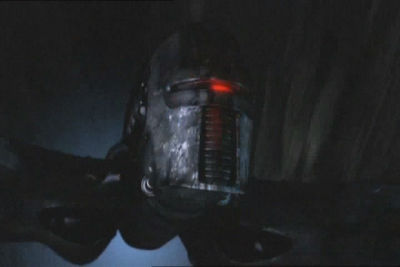
Battlescar Galactica

02 Saturday Jun 2012

Posted by decollins1969 in 1, Academia, Boy @ The Window, culture, Eclectic, eclectic music, music, Patriotism, Politics, Pop Culture, race, Religion, Youth

≈ 1 Comment

Tags

"All Along The Watchtower", Battlestar Galactica (2004 series), Cylon Attack, Cylons, Divine Hand, Divine Intervention, Entertainment, Epic Story, Epic Tale, Extinction, Fandom, Human Condition, Humanity, Jimi Hendrix, Late Bloomer, Miniseries, Nuclear Annihilation, Reimagining, Revisioning, Technology, TV Series


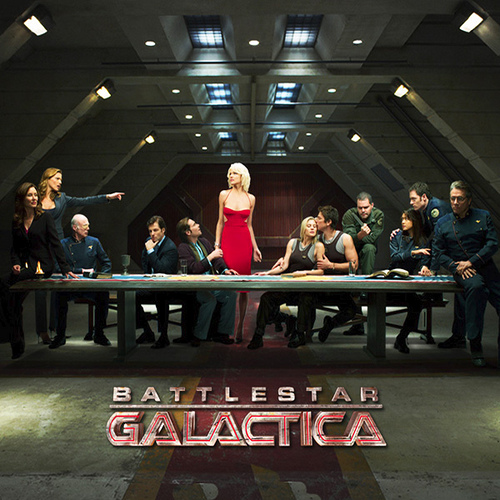
Battlestar Galactica artwork, Season 4, October 12, 2008. (Halil Gökdal via Flickr.com/iTunes TV). Battlestar Galactica Prologue (2003)

I’m a sucker for an epic story in any form. A book, a movie, a TV series, even the occasional epic poem. It really doesn’t matter. I’m also a late bloomer, one who discovers the stuff of life late, but probably enjoys the stuff I discover more because it’s on my own time, without necessarily being part of a crowd or trend.

That convergence has hit me once again, at the ripe old age of forty-two, in the form of the revisioned series Battlestar Galactica (2003, 2004-09). I had planned to watch the original miniseries for this drama when it came out in December ’03, but with so many things outside the realm of then newborn baby Noah, writing and work that year, my watching Battlestar Galactica fell to the side.

I already had a lineup of shows to watch — Six Feet Under, Queer As Folk, Law & Order, CSI. I didn’t need a new thing on my screen, especially something that was based on such an old and goofy series from the ’70s with Lorne Greene, Dirk Benedict and Richard Hatch. “What are they gonna do next, redo BJ & The Bear?,” I said to my wife when I first heard about the Battlestar Galactica miniseries in September ’03.

But as with so many events in my life, I stumbled on the miniseries, thanks in no small part to my wife. It was one late Friday night this past Easter weekend. I woke up about a quarter after three, having only been

Cylon Raider Scar screen shot, September 16, 2009. (Skier Dude via Wikipedia). Qualifies as fair use under US Copyright laws due to image’s poor resolution.

asleep about three hours, to my wife dosing off to the TV in our bedroom. I woke up to the sight of Cylon Raiders in flight, to a strange scientist seeing visions of either a skinny angel or his dead Cylon girlfriend, and Edward James Olmos playing the mercurial Commander Adama. I could tell in ten minutes that this series was way different from the Battlestar Galactica series of my ’70s youth.

The miniseries was on BBC America, so I watched it until 5 am, and then discovered that they had skipped two full seasons ahead to a random Battlestar Galactica episode. I was fully awake by then, so I went on Netflix to find the entire Battlestar Galactica series available on streaming video. I watched season one that day, and season two Easter Sunday and that Monday.

In fact, I watched all four seasons of Battlestar Galactica in six days. I found the story engrossing, the acting intense, and the series an in-depth exploration of the worst features of the human condition under the most difficult of stresses and circumstances. It was so unlike the original series that after a few episodes, I didn’t even think about the differences anymore. The story of a flawed, destructive race of humans fighting each other while fighting for their survival against their more destructive yet more rational creations. I couldn’t help but fall in love with the series.

After that week, I finally read and watched the reviews and the comments about the series. They fell into two categories. There were plenty of folks who refused to watch the new Battlestar Galactica on principle. They saw the recasting of Starbuck as a woman an insult, the ability to make Cylons as human-esque machines blasphemy, and the revisioning of these humans as ones with many of our worst features multipled by a factor of ancient Greece, Rome and Persia an abomination. Oh well! I never liked the original series, with its idealized version of humanity, with its archetype good and evil characters, and with its goofy atmosphere in the midst of potential extinction, the ultimate epic crisis (“All Along The Watchtower” notwithstanding).

The other group was just like me. Fascinated by the lengths to which the producers and writers for the show went to present humanity at its most monstrous, between violence, selfishness, lust, greed, avarice and strive. Mesmerized by the cast’s ability to explore our worst and deepest fears, to hold out hope against hope, to take us into the depths of despair again and again.

The battle-scarred Battlestar Galactica finally reaches Earth (orbiting over the horn of Africa, March 21, 2009. (http://graphic-engine.swarthmore.edu).

I had to watch Battlestar Galactica a second time, this time more slowly and deliberately. So, through the second half of April and first half of May, I watched again, to find something remarkable. Despite their deep flaws, many scars and scabs, and twisted minds, there was something noble and redeemable about these humans, about the Cylons. Even the fact that the Cylons were a human creation didn’t matter. And to top that all off with a divine hand, a guiding force as the prime mover for the 50,000 humans that survived the nuclear annihilation of their twelve planets by the Cylons.

That really is an epic journey. One that heals as much as it scars. The story of my life the past thirty years, not to mention a reference in three of my posts over the past month. A commentary on the state of humanity in the early twenty-first century. What more can a late-bloomer ask for?

Curriculum 2.0 – Been There, Done That

21 Monday May 2012

Posted by decollins1969 in 1, Academia, Boy @ The Window, culture, Eclectic, Mount Vernon New York, Politics, Pop Culture, race, Youth

≈ Leave a comment

Tags

Academic Excellence, Closing the Achievement Gap, Curriculum 2.0, Desegregation, Diane Ravitch, Grimes Center for Creative Education, High-Stakes Testing, Humanities Program, Integrated Curriculum, MCPS, Montgomery County Public Schools, Mount Vernon public schools, Pennington-Grimes ES, Politics of Education, Reinventing the Wheel, White Flight


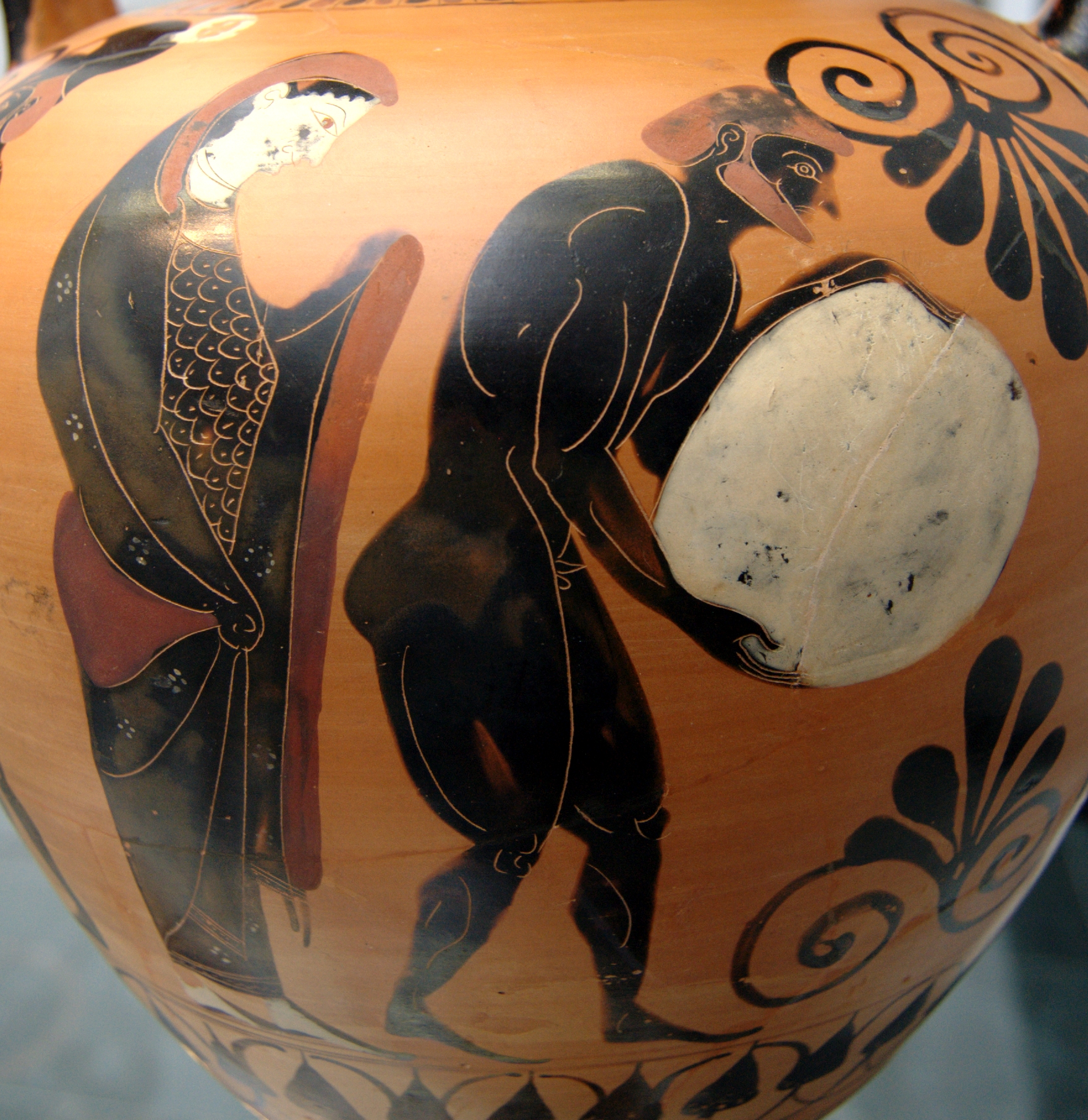
Nekyia: Persephone supervising Sisyphus pushing his rock in the Underworld. Side A of an Attic black-figure amphora, ca. 530 BCE, from Vulci, February 13, 2007. (Bibi Saint-Pol via Wikipedia). In public domain.

This school year, my son’s school district, Montgomery County Public Schools in Maryland, began implementation of what they call Curriculum 2.0. This new curriculum, formerly known as the Elementary Integrated Curriculum, has been in the works for the better part of a decade. As MCPS explained in a flyer to parents, Curriculum 2.o will be one that will “better engage students and teachers, and dedicate more learning time to subjects such as the arts, information literacy, science, social studies and physical education. By blending these subjects with the core content areas of reading, writing, and mathematics, students will receive robust, engaging instruction across all subjects in the early grades.”

Why is better engagement of teachers and students necessary, and how will an integrated curriculum make this possible? The answer to the first part of this question is much more obvious than the answer to the second part. In light of county-level and state-level testing (in the latter case, the MSA for third, fourth and fifth grades), an engaging and integrated curriculum will enable students to be better prepared for the heavy doses of critical reasoning and reading comprehension that this testing involves, at least theoretically.

What hasn’t made much sense has been the implementation process itself, as Curriculum 2.0 became the curriculum for kindergarten and first graders in this 2011-12 school year, with the option of having it for second graders at some schools (like my son’s school in Silver Spring). Meanwhile, third and fourth graders won’t become part of Curriculum 2.0 until 2012-13, and this year’s fifth graders won’t see Curriculum 2.0 at all. It seems as if the implementation process was about as well planned as the SS Minnow’s tour of the South Pacific.

But that’s not the only story here. For someone’s who’s spent a great deal of time attempting to understand

A One Thousand and One Night manuscript written in Arabic under the second half of the Abbasid Era (750-1258 CE), February 9, 2008 (Danieliness via Wikipedia). Released into public domain via cc-by-sa-3.0 license.

the circumstances under which I grew up, including my times in Mount Vernon, New York’s public schools in the ’70s and ’80s, MCPS’s Curriculum 2.0 is sort of like deja vu all over again. Except that in the period between ’76 and ’93, the kind of curriculum MCPS is implementing now was mostly for Mount Vernon’s gifted and talented students then, students who were part of the district’s Humanities Program, particularly those in the Grimes Center for Creative Education. The motivations for developing a similar curriculum three and half decades earlier came out of the need for racial integration and preventing White Flight, and in the process, a measure of academic excellence. Different circumstances in search of the same results, I guess.

A piece of evidence I uncovered a few years ago while working on Boy @ The Window shows how much educators reinvent the wheel in terms of curriculum development, a pitfall in education on which Diane Ravitch has been proven correct for the past thirty years. Charlotte Evans wrote in her April 1981 New York Times article on the Grimes Center that there “is a flowering of creativity at Pennington-Grimes [Grimes had combined with Pennington in the 1980-81 school year] that is evident in the hallways as well as in the classrooms.” Leroy L. Ramsey, New York State Department of Education Administrator of Intercultural Affairs and Educational Integration, when asked by Evans to comment, said that “the intent” of a school like Pennington-Grimes “was to break racial isolation and to stop white flight, and we have done that in Mount Vernon.”

As detailed by Evans in her April 1981 New York Times article, with the

[c]oordinating [of] language, math and science with social studies in the same way, first graders study the family and its roots, how people live and lived in different places. Second graders focus on prehistoric times – the old and new Stone Ages; third graders on the ancient Middle East, fourth graders on Greek and Roman civilization and sixth graders on the Renaissance, Reformation and the Age of Discovery.

This interdisciplinary approach to creating a magnet-style gifted track curriculum did not stop with a focuson other histories and cultures in social studies. “Fifth-graders, for example, specialize in studying the Middle Ages in Islamic nations and in Africa and Europe,” but they also “read Arabian Nights in connection with their Islamic study and went on to African folk tales,” according to fifth-grade teacher Mattie Lucadamo. In addition, there were other “flourishes,” such as “learning the foundation of Hindu-Arabic numbers” and “study[ing] astronomy, tracing it back to the Babylonians.”

It never ceases to amaze me how we as educators, education researchers, and governments spend time, money and human resources recreating what was already in existence, in this case, when I was my son’s age. But, like with the experiment that was the Grimes Center and Humanities, parents with resources will find a way to game the system. In one case, an innovative program was moved to Mount Vernon’s predominantly White North Side in May ’80, and tended to give more preferences to White students in general.

In the case of Curriculum 2.0, the more aware parents will send their kids to Kumon or Kaplan or other testing centers to give their kids every opportunity to do well in this new curriculum, score in the top percentiles on the MSA, and garner the gifted label in time for middle school.

After The Fall

18 Friday May 2012

Posted by decollins1969 in 1, Academia, Boy @ The Window, Eclectic, Mount Vernon New York, New York City, Politics, race, Youth

≈ Leave a comment

Tags

6007 Penn Circle South, Angelia N. Levy, Betrayal, Bitterness, Carnegie Mellon University, Contaminated Food, Disappointment, Emotional Wreck, Gastrointestinal Illness, Heartbroken, Joe Trotter, Maurice Eugene Washington, Maurice Washington, My Mother, PhD Graduation, Pittsburgh, Rage, Summer of Abuse


The planet Caprica under nuclear attack, Battlestar Galactica (2003), September 28, 2011. (Gary Hutzel/SyFy Channel via http://soundonsight.org). Qualifies as fair use under US Copyright laws because of low resolution of picture.

Fifteen years ago this date, I officially graduated from Carnegie Mellon University with my PhD, no thanks to Carnegie Mellon itself (see my post “The Audacity of Youth, Grad School Style” from August ’11). I’d been done with the dissertation since the Friday before Thanksgiving ’96, so the ceremony itself was anticlimactic. The week of my graduation, though, revealed more about my mother and the ugly truth about how conditional our relationship was than I knew or thought possible (see my post “My Post-Doctoral Life” from May ’08 for much more).

All of that was on top of a week that included doing an interview at Teachers College, going to my mother’s associate’s degree graduation and being followed while Black at the Barnes & Noble that used to be on 66th and Broadway in Manhattan. That week came on the heels of recovering from the ordeal that was the political struggle over my dissertation process with Joe Trotter (see my “You’re Not Ready” and “Running Interference” posts from November ’08 and April ’11).

By the time I went back into town with my girlfriend (now wife of twelve years) Angelia from Pittsburgh International Airport, I was in a space I hadn’t been in since the late spring and summer of ’82. The “summer of abuse” at 616, as I call it now (see my “To My Ex-Stepfather” post from July ’09).  My pursuit of higher education, then advanced degrees and career options, and all of the success — direct, collateral and otherwise — that came with that striving and those triumphs was apparently a lot of what had kept me grounded for the previous fifteen years.

Lava lake, Mount Nyiragongo (volcano), Virunga National Park, Democratic Republic of Congo, May 7, 2011. (Cai Tjeenk Willink via Wikipedia). Released to public domain via cc-Attribution-Share Alike 3.0 license.

Now that I was done, and I was able to see people for who they really were, I found myself unbound. A deep well of rage — along with a bucket of betrayal with which to haul it up — was suddenly available to me, and would remain so for years to come. For the first time since the beginning of my sophomore year at Pitt, I felt despair, as if I was homeless and sleeping on a stairwell landing in Forbes Quadrangle again. I spent that cab ride back to East Liberty in an emotional fog, somewhere between tearing up and ready to beat someone half to death.

Angelia brought me back to her place, made me sit down, and insisted that she make dinner for me. She pulled out of her freezer some leftover stir-fry vegetables and turkey from Thanksgiving ’96, and made it into a stir-fry over rice. I was about halfway through this meal before my brain began receiving messages from my normally precise palate. “Stop eating!,” my synapses started screaming. The food I’d eaten had probably gone bad long before Angelia had frozen it. And despite the sweet and sour and soy sauces, it also became apparent that the meat had experienced severe freezer burn.

Within a few minutes, I had severe bloating and pain in my stomach, and Angelia had given me water and Pepto Bismol to settle my stomach. She apologized, “Sorry, Donald,” with an ironic laugh, adding, “This just isn’t your day.” I went back to my studio apartment on Penn Circle South that evening, in pain in many more ways than one.

My intestinal pains became worse over the next three days. I wasn’t eating much to begin with, and what I

Chemical structure of bismuth subsalicylate, aka, Pepto Bismol, September 5, 2007. (Edgar181 via Wikipedia). In public domain.

had in my system as a result of Angelia’s poisonous gruel had resulted in an intestinal blockage. A clear-headed person would’ve gone to the ER and had himself checked out. But my brain was about as clear as a mushroom cloud in the middle of Central Park. I could barely move, it hurt just sitting up, and I cried, sometimes in my sleep. At some point, the pain in my gastrointestinal tract and the pain from my graduation ceremony merged as one and the same.

Was I experiencing some psychosomatic trauma? It wouldn’t have been the first time my emotional flaying manifested itself in my G/I tract. Angelia’s food may have been the catalyst, but the realization that my mother was never really on my side — along with my advisor and some of my friends — was the root cause.

By that Friday, I was able to eat again. But like my relationship with my mother, my intestinal tract has never been the same. Betrayal and loss of trust — and faith — will do that to the most confident of us.

Facing The Tooth

14 Monday May 2012

Posted by decollins1969 in 1, Academia, Boy @ The Window, culture, Eclectic, Politics, race, Work, Youth

≈ 1 Comment

Tags

6007 Penn Circle South, Advil, Carnegie Mellon University, Comps, Dentistry, Department of HIstory, Departmental Politics, Doctoral, Drug, East Liberty, History Department, Joe Trotter, Joe William Trotter, John Modell, Jr., Motrin, Naivete, PhD, Pitt, Pittsburgh, Root Canal, Stress, Toothache, unemployment, University of Pittsburgh, Written Comprehensives


My front teeth, including slightly darker lower tooth (right/my left), two root canals later, May 14, 2012, (Donald Earl Collins).

A funny series of events occurred on the transition from Pitt PhD student to Carnegie Mellon doctoral student in the spring and summer of ’93. Well, not really funny at the time. Nineteen years later, the months between April and October ’93 look like a semi-hilarious blip on my screen of life compared to what I’d gone through before and have faced since. But for a three-week period in April and May of that year, one of my teeth helped me both begin grad school at Carnegie Mellon and brought home the truth of my impoverished existence at the same time.

The week before the end of spring semester at the University of Pittsburgh — as well as the end of six years of undergraduate, master’s and doctoral work there — I woke up with a throbbing that went around the left side of my jaw. It radiated up through my left cheekbone, ear and temple. It was a toothache, one that I assumed was stress-related. Between the transfer to Carnegie Mellon, my efforts to move out of my crappy studio in East Liberty, and my search for summer work, I assume that it was just me grinding my teeth.

I relieved my stress and pain the way any normal twenty-three year-old male would. I took some Advil, went to sleep, hung out with friends and at hole-in-the-wall bars once the semester was over, and had myself a pretty good time. I took the approach that “everything will work itself out” to all the worries I had.

I also met with Carnegie Mellon’s History department’s graduate advisor that first week, John Modell (I learned later that he had been Joe Trotter’s dissertation advisor back in the mid-1970s). Modell cleared me to take the written part of the PhD comprehensive examination that the department’s second year students could take at the end of the year, which in ’93 was on May 14. Modell cleared me despite the fact that my first course as a Carnegie Mellon student wouldn’t begin until the end of August.

Then, after a week or so pain-free, I woke up a little after 5 am. I snapped up in my bed, knowing that

Severe premolar tooth decay (abscess), December 17, 2006. (Lycaon via Wikipedia). Released to public domain via Creative Commons 3.0 license.

something was wrong. Then, the pain came. It was like Mike Tyson had punched me in the left side of my jaw and I’d fallen head-first onto a boulder. The pain shot up and around like a puck in an NHL playoff game in overtime. The toothache was back, and it wasn’t going away.

Dumb-ass me, who rarely took meds for headaches, much less a rare toothache, tried to gut it out for a couple of days without much medicine at all. I went to Pitt that Monday and Tuesday to see if there was any chance to pick up a course to teach for the summer. There, I discovered how cold the History department administrators were regarding my time there. It turned out that there were two courses available. Even though I technically could’ve taught those courses, they held my transfer to the “other program” against me.

That made my pain worse. I couldn’t eat without a construction team of bacteria pounding my jaw. I couldn’t have a conversation without feeling brass knuckles punch my face in. I certainly couldn’t sleep more than four or five hours, and then only sitting up in a chair. By Wednesday afternoon, I couldn’t think straight anymore.

I finally walked across the bridge on South Highland Avenue to a dentist’s office next to the local neighborhood laundromat, and after an hour, scheduled an appointment for 2 pm that Friday, and picked up a prescription for 800 mg Motrin pills. For someone as drug adverse as me, it might as well have been heroin. I was taking two at a time — the equivalent of eight Advil tablets — between Wednesday evening and Friday morning. In doing so, it became obvious that my lower left front tooth was the culprit, and that my dentist was correct. I needed a root canal procedure to drain the abscess.

Second floor of Baker Hall, Carnegie Mellon University, Pittsburgh, PA, December 2, 2010. (Daderot via Wikimedia). In public domain.

So it was that on that fateful May 14, with three more horse-sized Motrin pills in my system, that I took my written comprehensives on the second floor of dark and factory-like (with its sloped floors) Baker Hall. I hadn’t studied at all, and all I really wanted to do was sleep. I chose two questions: one on women’s history/rights and historiography, the other on immigration history. From 9 am until about 12:30 pm, I wrote page after page on both subjects and conjured all the books and articles that I knew on both topics, which turned out to be quite considerable. I found the comps quite easy. Easier than any hoop that I had to jump through while at Pitt.

Still, I felt the throbbing of my tooth. Not the pain — the Motrin did its job — just the nerve in the tooth and the blood supply pushing pass the well of abscess in that tooth. I handed in my essays (I filled out four booklets’ worth of essays) and meandered my way to my dentist’s office. The root canal surgery took about two hours, but it only seemed like a dream, as I fell asleep off and on throughout.

I floated the two blocks home to 6007 Penn Circle South, secure in the fact that I passed my comps (as it turned out, with high distinction, although one of the examiners was puzzled by the fact that I had used sources not taught by any of the professors in the department). Just before I hit my pillow, ready to snore for the next fifteen hours, I thought, “Boy, is this going to be a long summer!”

Meeting Joe Trotter

10 Thursday May 2012

Posted by decollins1969 in 1, Academia, Boy @ The Window, culture, Eclectic, Mount Vernon New York, Politics, Pop Culture, race, Youth

≈ Leave a comment

Tags

African American History, Afrocentricity, Black History in Pennsylvania, Carnegie Mellon University, HBCUs, Horace Mann Bond, Intercultural Education, Joe Trotter, Joe William Trotter Jr., Julian Bond, Lincoln University, Molefi Asante, Multicultural Education, Multiculturalism, Pitt, Road Trip, Self-Discovery, Trust, University of Pittsburgh, V. P. Franklin, Vincent P. Franklin


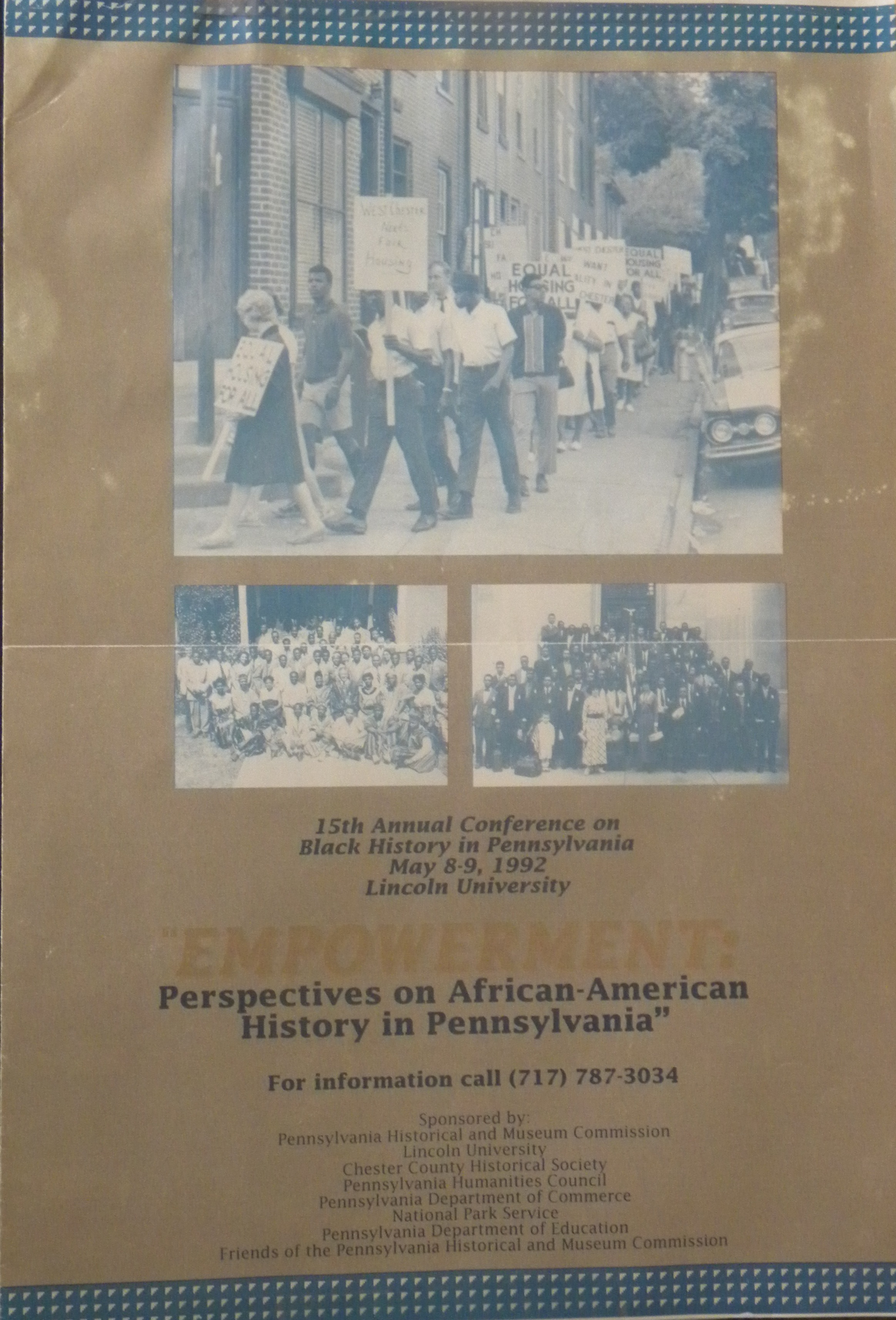
Conference agenda, 15th Annual Conference on Black History in Pennsylvania, Lincoln University (May 8/9 1992), May 10, 2012. (Donald Earl Collins).

This time two decades ago, I was driving my way home from a conference at Lincoln University in southeastern Pennsylvania. It was a week of more firsts that had become a small sample of a year of many firsts for me since getting into graduate school at the University of Pittsburgh in April ’91. It was my first road trip anywhere, and the first time I’d been in a car since earning my driver’s license in January ’92 (see my post “Taking the Long Road: Driver’s Delight” from January ’12). It was part of my first visit to NYC, Mount Vernon, and 616 since finishing my master’s degree.

That’s where my road trip began, Mount Vernon, as I’d wind my way to Yonkers, the Bronx, the GW Bridge, New Jersey and Philly (where I got lost twice) before ending up on the bucolic HBCU campus. I was at Lincoln University to present at my first academic conference, the 15th Annual Conference on Black History in Pennsylvania. The theme for that year’s conference was “Empowerment: Perspectives on African-American History in Pennsylvania. Somehow, the conference organizers approved me to present my paper comparing elements of intercultural education, multicultural education and Afrocentric education in Pittsburgh and Philadelphia during the 1930s and early 1990s.

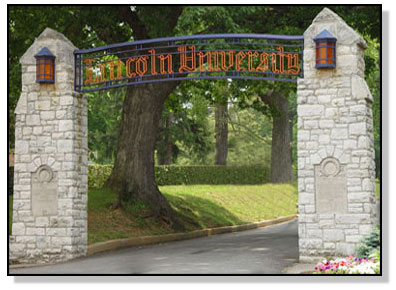
Lincoln University entrance and alumni arch, dedicated in 1921, May 10, 2012. (http://lincoln.edu).

If the road trip and the presentation were the only things important about this conference, that would’ve been plenty for me in May ’92. But there was so much more to this first conference for me than driving a Ford Escort in North Philly or getting on stage for the first time since sixth grade (see my post “Peaking As A Sixth Grader” from June ’11). It was my first time around a large number of Black academicians and activists. I met Julian Bond for the first time (his father, Horace Mann Bond, by the way, had served as president of Lincoln University from 1945 to 1957). Folks from the African American studies department at Temple University attempted to recruit me for their doctoral program. Knowing that Molefi Asante was there, I respectfully declined.

Above all else, I came away with two valuable experiences that would have an effect on me for years to come. One was being in the audience for a presentation from V.P. (or Vincent P.) Franklin, whose work on Black education in Philadelphia in the 1920s and 1930s I already knew. His was an extemporaneous presentation that lasted for well over twenty minutes. It was full of quotes, links between different historians’ research, and stories. It was extremely entertaining, delivered in an engrossing public speaking style, though not like some Southern Baptist preacher, either.

I was blown away by Franklin’s presentation. Especially in comparison to the one that I’d deliver some

Conference agenda (inside pages), 15th Annual Conference on Black History in Pennsylvania, Lincoln University (1992), May 10, 2012 (Donald Earl Collins).

twenty hours later. Mine was a well-studied delivery of ten pages of excerpts from my original paper. It was okay, not exactly a winner compared to anything that I’ve done in the two decades since. For it was with Franklin’s presentation and style from the day before that stuck with me. I decided immediately after my lackluster performance to always present my work extemporaneously, to work on my public speaking skills, to understand that presenting one’s work was a very different task than simply reading from it.

The second takeaway was in meeting my eventual dissertation advisor, Joe William Trotter, Jr. I met him after the first set of presentations on Friday morning, and ended up sitting with him for part of the Friday luncheon. I learned a few things in that first meeting. Up until that day, the only Black historians I knew in the Pittsburgh area were at Pitt or somehow affiliated with Pitt, including my then advisor Larry Glasco. The fact that Joe was across the way at Carnegie Mellon meant that there was at least the hope of gaining a different perspective on African American history than the stiff responses to Whites misconstruing the Black experience.

What made this first meeting even more intriguing was that Joe was in the process of putting together a graduate seminar for the Fall ’92 semester in African American history. It would be the first time that one had been taught at Carnegie Mellon. No such course existed at Pitt, either, at least as a graduate seminar. It meant that I could expect to get something out of my second year of graduate school (and first year as a PhD student) after all. “Where do I sign up?,” I asked after hearing what seemed like wonderful news at the time.

I returned to 616 twenty years ago on this date recharged and ready for another year of intellectual growth. But I should’ve also returned with far more insight into the politics of race, academia, trust, and academic competition than I actually had. The dynamics within the conference were extremely subtle, like an ultrasonic pulse undetected by most human hearing, but there driving the subconscious crazy anyway.

I didn’t see Joe’s invite to his classroom as a competition for me initially because I was obviously all-too-desperate to move on from Pitt, but not desperate enough to join Asante’s Temple of Afrocentricity (see my post “Writer’s Start” from August ’10 for more). Joe got me, all right. I just didn’t know it yet.

Chronicle of Higher Education – Shame On You!

03 Thursday May 2012

Posted by decollins1969 in 1, Academia, culture, Eclectic, Politics, Pop Culture, race, Religion

≈ Leave a comment

Tags

Academia, Arrogance, Black Studies, Brainstorm section, Conversations on Education Reform, Conversations on Race, Doctoral Research, Education Reform, Gender, Higher Education, Ignorance, Journalism, Naomi Schaefer Riley, Northwestern University, Offensive, Publicity, Race, Readership, Snarky, Social Media, Social Media Presence, The Chronicle of Higher Education


Naomi Schaefer Riley, Chronicle of Higher Education blogger, September 25, 2011. (http://c-span.org). In public domain.

On April 30, Naomi Schaefer Riley, a blogger for The Chronicle of Higher Education’s Brainstorm digital platform, wrote the disrespectful and snarky/offensive post “The Most Persuasive Case for Eliminating Black Studies? Just Read the Dissertations.”

It was disrespectful, snarky and offensive because Riley used the post to go after Northwestern University graduate students who had literally just finished their doctoral theses. Not to mention the fact that Riley hadn’t actually read the dissertations she discussed in her post. For example, Riley called Ruth Hayes and her dissertation “‘So I Could Be Easeful’: Black Women’s Authoritative Knowledge on Childbirth” on the carpet. All because Hayes wrote that she “noticed that nonwhite women’s experiences were largely absent from natural-birth literature, which led me to look into historical black midwifery” in her abstract. “How could we overlook the nonwhite experience in ‘natural birth literature,’ whatever the heck that is?,” was Riley’s disrespectful and idiotic response. Riley based her response on a title and one sentence from a dissertation.

Riley wrote about two other dissertations, one about the origins of the subprime lending crisis for Blacks — going back to policies enacted by the federal government in the 1960s — the other about the history of Black Republicanism. She not only concluded based solely on the titles and a couple of statements that this was “a  collection of left-wing victimization claptrap.” Riley also decided the fate of Black Studies as a discipline, saying that these three doctoral thesis made the “case for eliminating the discipline,” at least in her snarky and offended mind.

If this was Riley’s one and only post, I’d simply accuse her of being an ill-informed ex-Wall Street Journal journalist who obviously has a limited understanding of the history of research in the humanities and social sciences fields of academia. One of marginalization and exclusion of the experiences of all Americans who aren’t White, male, rich and powerful. One in which remains the automatic assumption in many circles that any research done by Blacks on race, women on sexism, and gays and lesbians on homophobia is less valuable or unscholarly. I’ve known more than my share of colleagues who have experienced disdain, even occasional ostracism, because of their work, in the so-called liberal environment that is academia.

Riley, however, has posted multiple times about Blacks in academia blaming all of their ills on the “white man,” as she would put it. She’s complained about the validity of women’s studies and about the usefulness of so-called liberal research in her posts as well. It proves that Riley has as much understanding about research and academia as I do about embroidery. And I’ve at least had a couple of embroidery classes.

But Riley, for all of her snarky arrogance and willful ignorance — the very thing that defines her posts — isn’t the most significant culprit on this. The Chronicle of Higher Education is ultimately to blame. After years of writing the same turgid stories over and over again about the “two-body problem,” faculty compensation and university endowments, The Chronicle in the past year or so has attempted a turn toward the provocative. Instead of real attempts to reach out to educators, education reformers and other practitioners who aren’t tenured/tenure-track faculty and graduate students aspiring to such, they have settled on bringing in a group of bloggers whose sole job is to stir the pot.

There are big issues in higher education begging for coverage. The issue of the effectiveness of online higher education. The corruption that runs rampant at for-profit institutions and the public institutions that adopt for-profit practices. The over-reliance on data sets to determine higher education (as well as K-12) policies. The dominance of private foundations like the Bill & Melinda Gates Foundation in determining how twenty-first century education reform will look — to the detriment of perhaps millions of children and college students.

No, these articles and discussions are rare in the world of The Chronicle. Instead, they had the wonderful idea of letting tenured faculty and inane journalists blog on issues that could possibly cause controversy, stir up discussions, even lead to an uptick in viewers of the Chronicle.com website. But The Chronicle isn’t Charlie Sheen or Kim Kardashian, where any publicity is good publicity. Especially when a journalist in the case of Riley didn’t do their due diligence before foaming at the mouth.

The most offensive thing about all of this is that The Chronicle, as the arrogant institution they are, will continue to allow the likes of Riley a platform, under the cloak of journalistic freedom. That is a shame, and a pitiful one at that.

← Older posts
Newer posts →

Boy @ The Window: A Memoir

Boy @ The Window: A Memoir

Places to Buy/Download Boy @ The Window

There's a few ways in which you can read excerpts of, borrow and/or purchase and download Boy @ The Window. There's the trade paperback edition of Boy @ The Window, available for purchase via Amazon.com at http://www.amazon.com/Boy-Window-Donald-Earl-Collins/dp/0989256138/

There's also a Kindle edition on Amazon.com. The enhanced edition can be read only with Kindle Fire, an iPad or a full-color tablet. The links to the enhanced edition through Apple's iBookstore and the Barnes & Noble NOOK edition are below. The link to the Amazon Kindle version is also immediately below:

scr2555-proj697-a-kindle-logo-rgb-lg

Boy @ The Window on Amazon.com: http://www.amazon.com/Boy-The-Window-Memoir-ebook/dp/B00CD95FBU/

iBookstore-logo-300x100

Boy @ The Window on Apple's iBookstore: https://itunes.apple.com/us/book/boy-the-window/id643768275?ls=1

Barnes & Noble (bn.com) logo, June 26, 2013. (http://www.logotypes101.com).

Boy @ The Window on Barnes & Noble: http://www.barnesandnoble.com/w/boy-the-window-donald-earl-collins/1115182183?ean=2940016741567

You can also add, read and review Boy @ The Window on Goodreads.com. Just click on the button below:

Boy @ The Window

Twitter Updates

Tweets by decollins1969
  • RSS - Posts
  • RSS - Comments

Archives

  • June 2025
  • April 2023
  • September 2022
  • August 2022
  • July 2022
  • June 2022
  • May 2022
  • April 2022
  • March 2022
  • January 2022
  • December 2021
  • November 2021
  • October 2021
  • September 2021
  • August 2021
  • July 2021
  • June 2021
  • April 2021
  • March 2021
  • February 2021
  • January 2021
  • December 2020
  • November 2020
  • October 2020
  • September 2020
  • August 2020
  • July 2020
  • May 2020
  • April 2020
  • March 2020
  • January 2020
  • December 2019
  • November 2019
  • August 2019
  • July 2019
  • June 2019
  • May 2019
  • April 2019
  • March 2019
  • February 2019
  • January 2019
  • December 2018
  • November 2018
  • October 2018
  • September 2018
  • August 2018
  • July 2018
  • June 2018
  • May 2018
  • March 2018
  • February 2018
  • January 2018
  • December 2017
  • November 2017
  • October 2017
  • September 2017
  • August 2017
  • July 2017
  • June 2017
  • May 2017
  • April 2017
  • March 2017
  • February 2017
  • January 2017
  • December 2016
  • November 2016
  • October 2016
  • September 2016
  • August 2016
  • July 2016
  • June 2016
  • May 2016
  • April 2016
  • March 2016
  • February 2016
  • January 2016
  • December 2015
  • November 2015
  • October 2015
  • September 2015
  • August 2015
  • July 2015
  • June 2015
  • May 2015
  • April 2015
  • March 2015
  • February 2015
  • January 2015
  • December 2014
  • November 2014
  • October 2014
  • September 2014
  • August 2014
  • July 2014
  • June 2014
  • May 2014
  • April 2014
  • March 2014
  • February 2014
  • January 2014
  • December 2013
  • November 2013
  • October 2013
  • September 2013
  • August 2013
  • July 2013
  • June 2013
  • May 2013
  • April 2013
  • March 2013
  • February 2013
  • January 2013
  • December 2012
  • November 2012
  • October 2012
  • September 2012
  • August 2012
  • July 2012
  • June 2012
  • May 2012
  • April 2012
  • March 2012
  • February 2012
  • January 2012
  • December 2011
  • November 2011
  • October 2011
  • September 2011
  • August 2011
  • July 2011
  • June 2011
  • May 2011
  • April 2011
  • March 2011
  • February 2011
  • January 2011
  • December 2010
  • November 2010
  • October 2010
  • September 2010
  • August 2010
  • July 2010
  • June 2010
  • May 2010
  • April 2010
  • March 2010
  • February 2010
  • January 2010
  • December 2009
  • November 2009
  • October 2009
  • September 2009
  • August 2009
  • July 2009
  • June 2009
  • May 2009
  • April 2009
  • March 2009
  • February 2009
  • January 2009
  • December 2008
  • November 2008
  • October 2008
  • September 2008
  • August 2008
  • July 2008
  • June 2008
  • May 2008
  • April 2008
  • March 2008
  • February 2008
  • January 2008
  • December 2007
  • November 2007
  • October 2007
  • September 2007
  • August 2007
  • July 2007
  • June 2007

Recent Comments

MaryPena's avatarMaryPena on My Day of Atonement/Bitter Hat…
decollins1969's avatardecollins1969 on No Good Teaching Deed Goes…
Mary Rose O’Connell's avatarMary Rose O’Connell on No Good Teaching Deed Goes…

NetworkedBlogs on Facebook

NetworkedBlogs
Blog:
Notes From a Boy @ The Window
Topics:
My Life, Culture & Education, Politics & Goofyness
 
Follow my blog

616 616 East Lincoln Avenue A.B. Davis Middle School Abuse Academia Academy for Educational Development AED Afrocentricity American Narcissism Authenticity Bigotry Blackness Boy @ The Window Carnegie Mellon University Child Abuse Class of 1987 CMU Coping Strategies Crush #1 Crush #2 Death Disillusionment Diversity Domestic Violence Economic Inequality Education Family Friendship Friendships Graduate School Hebrew-Israelites High-Stakes Testing Higher Education History Homelessness Humanities Humanities Program Hypocrisy Internalized Racism Jealousy Joe Trotter Joe William Trotter Jr. K-12 Education Love Manhood Maurice Eugene Washington Maurice Washington Misogyny Mother-Son Relationship Mount Vernon High School Mount Vernon New York Mount Vernon public schools Multiculturalism MVHS Narcissism NFL Pitt Pittsburgh Politics of Education Poverty President Barack Obama Race Racial Stereotypes Racism Relationships Self-Awareness Self-Discovery Self-Reflection Sexism Social Justice Teaching and Learning University of Pittsburgh Violence Whiteness Writing

Top Rated

Blog at WordPress.com.

  • Subscribe Subscribed
    • Notes from a Boy @ The Window
    • Join 103 other subscribers
    • Already have a WordPress.com account? Log in now.
    • Notes from a Boy @ The Window
    • Subscribe Subscribed
    • Sign up
    • Log in
    • Report this content
    • View site in Reader
    • Manage subscriptions
    • Collapse this bar
 

Loading Comments...