• About Me
  • Other Writings
  • Interview Clips
  • All About Me: American Racism, American Narcissism, and the Conversation America Can’t Have
  • Video Clips
  • Boy @ The Window Pictures
  • Boy @ The Window Theme Music

Notes from a Boy @ The Window

~

Notes from a Boy @ The Window

Author Archives: decollins1969

Ego Inflation

18 Wednesday May 2011

Posted by decollins1969 in 1, Academia, Boy @ The Window, culture, Eclectic, Politics, race

≈ 2 Comments

Tags

A Room With A View, Academia, Academic Politics, Carnegie Mellon University, College of Humanities & Social Sciences, Denholm Elliott, Dune, Ego Inflation, Egocentrism, Elite Institution, Elitist Institutions, George Mason University, Grade Inflation, Jace Nance, Mercurial, Napoleonic Complex, Nefud, Peter N. Stearns, Peter Stearns, PhD Graduation, Provost, Race, World History, World Stereotypes


My PhD Graduation, Thackeray Club, Pittsburgh, PA, May 18, 1997. Angelia N. Levy

May 18th. Another year, fourteen years now, in fact. I’ve been Dr. Collins to my students and the world of academia officially for that long. I’ve learned a lot of lessons about the values and limits of having a doctorate in history over the course of the past decade and a half. One of them is how easily egos are inflated by it. And everything else gets inflated in the process of having an ego that could challenge the Himalayas for supremacy.

One of the more stunning and thoughtful moments I had during the graduation ceremony at Carnegie Mellon on that hot and sticky Sunday in ’97 — besides the dreadful realization that my own mother was jealous of me — was shaking Peter Stearns‘ hand on stage. The Napoleonic red-and-white-haired Stearns — currently the university provost at George Mason — was the Dean of Humanities & Social Sciences at
Provost Peter N. Stearns, George Mason University, 2008. Source: http://provost.gmu.edu.

Carnegie Mellon at the time. Having to touch his rough yet clammy right hand as they read off the names of the doctorates that afternoon brought back quite a few not-so-pleasant memories of why I found Carnegie Mellon a terrible elitist (as opposed to elite) school to attend for four years.

I’d most recently co-presented with Stearns on how to successfully finish a doctorate that March, which wasn’t so unpleasant. Except for the fact that most of his presentation was off-the-cuff ego-stroking. Except that the lessons learned from writing a dissertation in six weeks in ’64 were mostly irrelevant to the students in front of us that day. Except that I already knew that Stearns was equally polite and dismissive of my presentation by proxy.

Too bad hand sanitizers — or as my son Noah calls them, hanitizers — were in their infancy in ’97. For as I shook Stearns’ hand, the memory that crept to the fore was my other experience working with the man, when I was a teaching assistant for two sections of his world-famous World Stereotypes, oops, World History course in the fall of ’94. He spent lecture after lecture entertaining mostly White college freshman with dirty jokes about beer and sex in covering World History Plato-to-NATO style. I spent most of my teaching time attempting to refocus my group of students away from stereotyping South Asian women as “demur” and Arab men as horn dogs.

Then the end of that semester came, and I turned in all of my grades. I had a few students with D’s and F’s because they had failed their exams, or hadn’t shown up for class really, or both. One of those students was a White male freshman who’d only been to class twice, had failed one exam and barely passed his final. I received an email from Stearns two days before the end of the semester ordering me to change the student’s grade from an F to a C. The reason: “[h]e’s a good kid…he showed up for a couple of my sections…” [emphasis added]. I send an email back that basically read, “So?” Stearns repeated his order to change the grade, in person, which meant that I needed to change the grades of five other students so that their grades weren’t worse than the student that Stearns had coddled.

It was the one and only time I found myself inflating grades. That exchange confirmed so much that I heard and suspected about the father of college-level World History. Stearns was mercurial, egotistical and played favorites, who somehow were usually White and often male. I knew of at least one former grad student who’d all but been blackballed from finding academic jobs because of him. I also knew that he arbitrarily provided vastly different pay levels to grad students and instructors when he was the history department chair.

Denholm Elliott in A Room With A View, 1985. Source: http://content8.flixster.com/photo/13/52/75/13527526_gal.jpg

When my future wife first saw Stearns in ’96 at some history department conference in which my then advisor Joe Trotter forced me to do a presentation, she said that the five-foot-four man looked like the late British actor Denholm Elliott, especially from the movie A Room With A View (1985). That’s really an insult to Elliott. A better comparison would be between the actor who played the emperor in the Star Wars prequel trilogy. Or, more specifically, like the late actor Jack Nance’s character Nefud from Dune (1984). Very mean of me, I suppose, not to mention, a digression.

As I began to walk off the stage after shaking Stearns’ hand, I felt agitated, and thought of all that I’d gone through with him and with Carnegie Mellon in general. Ultimately, like the characters I mentioned above, Stearns was and remains an imperialist, building an academic empire in his image and crushing all opposition (real and imagined) along the way. His legacy will be the multiplication of inflated student egos who believe they understand the world but instead really only understand how to see the world in their own egocentric ways.

Jack Nance as Nefud in Dune, 1984. Source: http://www.aveleyman.com/FilmCredit.aspx?FilmID=5459

The Miracle of Dr. Jack Daniel

16 Monday May 2011

Posted by decollins1969 in 1, Academia, Boy @ The Window, culture, Politics, race, Youth

≈ Leave a comment

Tags

"Sometimes Starvation", Cathedral of Learning, Challenge Scholarship, Department of HIstory, Diversity, Divine Intervention, Dr. Jack Daniel, Dr. Jack L. Daniel, Grad School, Graduate Fellowships, History Department, Jack Daniel, Joe Carbone, Miracles, Pitt, Qualifications, Race, Students of Color, University of Pittsburgh, Van Beck Hall, Westchester County Department of Community Mental Health


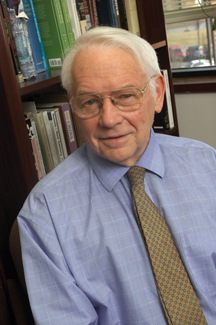
Dr. Jack L. Daniel, University of Pittsburgh, 2004. Pitt Magazine. http://www.pittmag.pitt.edu/summer2004/feature1.html. The use of this photo falls under fair use under US Copyright laws because this blog post is in fact about the subject in this photo.

Last week I started a conversation about my three weeks of starvation in order to secure my entry into graduate school through my post, “Sometimes Starvation.” I’m continuing that conversation with today’s post. For it was that on this date twenty years ago that divine intervention came in the form of a voice inside my head, leading me to a meeting with then University of Pittsburgh Vice-Provost for Academic Affairs, Dr. Jack L. Daniel.

Even as I turned down the opportunity to go back to Mount Vernon and work up in White Plains with Joe Carbone and Westchester County Department of Community Mental Health for the summer of ’91, a name kept popping in my head. And I didn’t know why. I’d only met Jack Daniel on two occasions, both during my freshman year at Pitt. I was a Challenge Scholar, in the inaugural class of Challenge Scholars no less, a merit-based half-tuition scholarship meant to attract more students of color to Pitt, and Dr. Daniel was the author of the program.

I knew that he was a professor with expertise in Black communications. I also knew that he was one of the activists who helped bring the Black Studies Department to Pitt in ’69 by occupying the central computing system on the seventh floor of the Cathedral of Learning, back when he was a freshly minted Ph.D. Other than that, I had zero contact with the man in my four years of undergrad.

For once, I listened to the voice inside my head and, after some coaxing of Dr. Daniel’s assistant, made an appointment with him to discuss my financial options for going to Pitt for my history MA. I figured that I had nothing to lose. I really only hoped that there was an extra $1,000 or two left in his budget that would at least help to feed me through my first year of grad school.

That Thursday, the sixteenth of May, I arrived at my 2:30 pm meeting with Dr. Daniel on the eighth floor of the Cathedral of Learning, not knowing exactly what I was going to say. I walked into the Office of the Provost, where the stale stone of the super-tall building turned into the sights and smells of dark wood, cherry, mahogany even. We exchanged pleasantries, shook hands, and I sat down feeling like I was in sixth grade instead of like I’d recently finished my bachelor’s.

I started. “I’m looking for a little extra money for grad school this fall, so that I don’t have to borrow money to cover tuition and eat,” I said. Dr. Daniel then asked

“What was your GPA here?”

“A 3.4,” I said, rounding up from a 3.37 average.

“What about your GRE scores?”

“60th and 70th percentile on math and reading,” I said.

“What about your major?,” Dr. Daniel asked.

“I was a history major with a 3.82 average,” I said with a smile.

Then Dr. Daniel got this look on his face, like he was actually angry, like there was a piece to the puzzle that I was missing. “Hold on for a second, I need to make a phone call,” he said.

He called Pitt’s History Department Chair, who at the time was one of my future grad school professors, Van Beck Hall, and spent the next couple of minutes chewing him out about my record and about why I hadn’t been awarded a fellowship. I sat there with a stone face, not wanting to give away the sense of glee I felt watching Dr. Daniel on the phone while verbally beating up on a department chair. Politely, of course.

After he got off the phone, he said, “You’ve got your money for school next year.” My mouth fell open, and not just because I couldn’t believe it. I couldn’t believe how easy it was. Then Dr. Daniel explained how his office had worked with the Faculty of Arts and Sciences (and the other major schools within the university) to create a new fellowship to attract more students of color and women into Pitt’s grad programs. He also explained how some departments and programs had resisted communicating the existence of this new fellowship program to potential grad students. I apparently was another case demonstrating how some folks within the university simply refused to address Pitt’s lack of diversity at the graduate level.

I was beyond thankful. Incredulous, thankful, even speechless. I couldn’t stop shaking Dr. Daniel’s hand. Despite three weeks and a loss of twenty-plus pounds, I played basketball at Pitt’s athletic center that evening, making shots as if I’d been on an athlete’s diet for the past three weeks. I was more excited about the possibility of grad school being paid for than I was about getting my first paycheck of the summer that Friday.

The following Tuesday evening, the twenty-first of May, I saw Dr. Daniel walking down Fifth Avenue outside of the Cathedral of Learning as I was on my evening walk home from work. I told him that I’d gotten the paperwork for my full-tuition fellowship and $7,000 graduate student assistantship stipend for the ’91-’92 school year. As he walked away after I said, “Thank you!,” again, I yelled “You’re the man!” All Dr. Daniel did was stretch out his long arms, shrugging it off as if he’d given me a nickel to buy a Tootsie Roll.

No Good Teaching Deed Goes Unpunished

13 Friday May 2011

Posted by decollins1969 in 1, Academia, Boy @ The Window, culture, Eclectic, Mount Vernon High School, Politics, race, Youth

≈ 2 Comments

Tags

AP American History, AP US History, AP US History Exam, Blue Ribbon Schools, Burnout, Harold Meltzer, Mount Vernon High School, Mount Vernon New York, Politics of Education, Richard Capozzola, Student Achievement, Teacher Effectiveness, Teachers Unions, William Prattella


AP US History, Harold Meltzer & Teachers Under Assault

AP US History, Harold Meltzer & Teachers Under Assault

It’s never really been much of a surprise to me how much we don’t appreciate good teachers. I should know. A few semesters ago, a student of mine filed a complaint against me because she couldn’t see my lecture notes well enough due to some issue with the LCD projector for my classroom. Mind you, she admitted that she didn’t have her glasses that day. When I didn’t allow her to interrupt me in the middle of class over the issue, she stormed out, yelled a couple of obscenities at me, and slammed the classroom door shut.

I know, it’s much worse on the K-12 level, between incorrigible students and insolent parents, school and district administration. Not to mention the pressures of NCLB, initiatives like Race to the Top (or bottom, really) and private foundations with their own agendas. Add to that article after article blaming teachers unions for being on the wrong side of corporatized education reform that emphasizes math and science and test scores over humanities and social science and critical thinking.

Former NYC DOE Chancellor Joel Klein’s now among them, in his lengthy (really, too long) piece on “The Failure of American Schools” in this month’s Atlantic Monthly, laid much of the blame on teachers and teachers unions. Not our nation’s economic woes, an overemphasis on math and science, or a system that was created not to teach academic excellence, but to weed out the so-called weak-minded. It’s no wonder that the average career of a teacher is five years!

A quarter-century ago on this date, my former teacher Harold Meltzer’s good deeds came to fruition through our AP US History class and our AP exam that year. We learned in September ’86 —  the beginning of our senior year — that three of us (including yours truly) all scored 5’s on the AP American History exam on this date. That meant that three of us had earned six college credits a year before enrolling in any university. There were at least four others who scored a 4, guaranteeing them three college credits. Another five scored a 3, considered a passing score by colleges and the College Board.

It was the best an MVHS AP class had ever done on any AP exam up to that point in the high school’s history, and should’ve been a crowning achievement for Meltzer and the school. Yet instead of praise or at least a “Congratulations,” Meltzer was treated as if he’d shown up MVHS by his boss, Social Studies Department Chair Larry Smith, a red-headed man who looked like a character from Dune. He snickered at me every time he saw me with Meltzer. Neither Superintendent William Prattella nor Richard Capozzola saw fit to honor Meltzer or our class for our achievements. It was ironic, because MVHS won a Blue Ribbon Schools of Excellence award from the US Department of Education a few months later, off of the work of teachers like Meltzer, as well as Humanities students.

There were rumors that some of the White parents were unhappy with Meltzer’s methods of teaching, which typically involved us interpreting history rather than answering straightforward history trivia questions. More than rumors, actually, as I walked in on a meeting between Meltzer and a parent my senior year. That mother demanded an A for her daughter in Meltzer’s AP US History class. What wasn’t exactly a rumor, either was that Smith was looking for any excuse to take AP US History away from Meltzer. Especially since it was so shocking that both White and Black students did equally well on the exam that year. Of course, there were other, more deeply personal issues between the two men that likely involved jealousy and other not-so-secret secrets.

For our part, our cohort stopped talking to Meltzer altogether. Sure he was eccentric, even a bit strange and unorthodox as a teacher, but at least he cared. And by the way our scores turned out, he didn’t deserve the cold shoulders he received from most of my classmates our senior year. It bothered me when I’d see Meltzer saying “Hello” to one of us as we passed his Room 275, only for one of us to walk by as if Meltzer had phased out of our space-time continuum.

I was sure that some of it was related to Meltzer being a “confirmed bachelor.” But mostly, I thought that despite Meltzer’s lack of a normal teaching style, that my classmates were total assholes toward him. Meltzer spent the week before the AP exam after school with us going over every conceivable fact of American history for the more anal of us. It was above and beyond, and also unnecessary. Because Meltzer had taught us enough about egalitarianism, critical and independent thinking, and “coming to the point at once” in the first months of his class for all of us to do well.

Meltzer died from a number of ailments at the age of sixty-six in early January ’03. But one thing I was sure of that hastened his decline was the bitter and broken heart he had from the way he’d been treated in his last years as a teacher. I just hope that I brought a little bit of laughter to the man in his final months and weeks. Or at least, something to smile about.

Sometimes Starvation

12 Thursday May 2011

Posted by decollins1969 in 1, Academia, Boy @ The Window, Eclectic, race, Work, Youth

≈ 1 Comment

Tags

Andrea Hegedus, Department of HIstory, East Liberty, Graduate School, Job, Joe Carbone, Malnourishment, Oakland, PAARC, PAARC project, Shadyside, Starvation, Undergrad, University of Pittsburgh, Weight Training, Weights, Westchester County Department of Community Mental Health, Western Psych, Western Psychiatric Institute & Clinic, Work


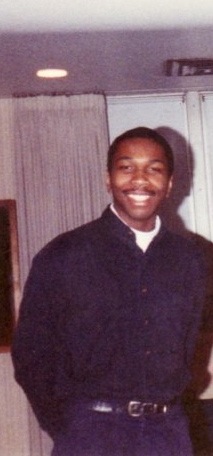
Me (at 185 lbs) & Mark James (Cropped), Pan-African Graduate & Professional Student Association, University of Pittsburgh, February 27, 1993. Lois Nembhard.

My last semester at the University of Pittsburgh as an undergrad (Spring ’91), I took a one-credit Weight Training course. I wanted to learn how to use free weights and weight machines so that I could build muscle tone. I wanted a course that would be easy for me to pass, one in which I could burn up my anxieties while awaiting word about my graduate school future.

Over the course of the semester, I did build muscle. I weighed 175 pounds in January. By my last class on the twenty-third of April, I weighed 183 pounds. I was proud of the fact that the eight-pound gain was all muscle.

But with the end of the school year and undergrad at Pitt came a crisis. Even though I’d start work on the twenty-ninth with the PAARC project at Western Psychiatric as a full-time employee, I wouldn’t receive a paycheck that Friday, the third of May. Instead, I’d have to work for three weeks before receiving pay. After a year of underemployment as a student (I only worked ten or twelve hours a week because I couldn’t pay the other half of my tuition via student loans and keep my work-study allotment at the same time), I thought I was finally over the hump.

It was bad enough that despite my degree, which qualified me for $8.50 an hour, Andrea Hegedus and the other PAARC  bosses only saw fit to pay me at $5.20 per hour. Now I knew that I’d have to figure out how to live on $30 for the next three weeks.

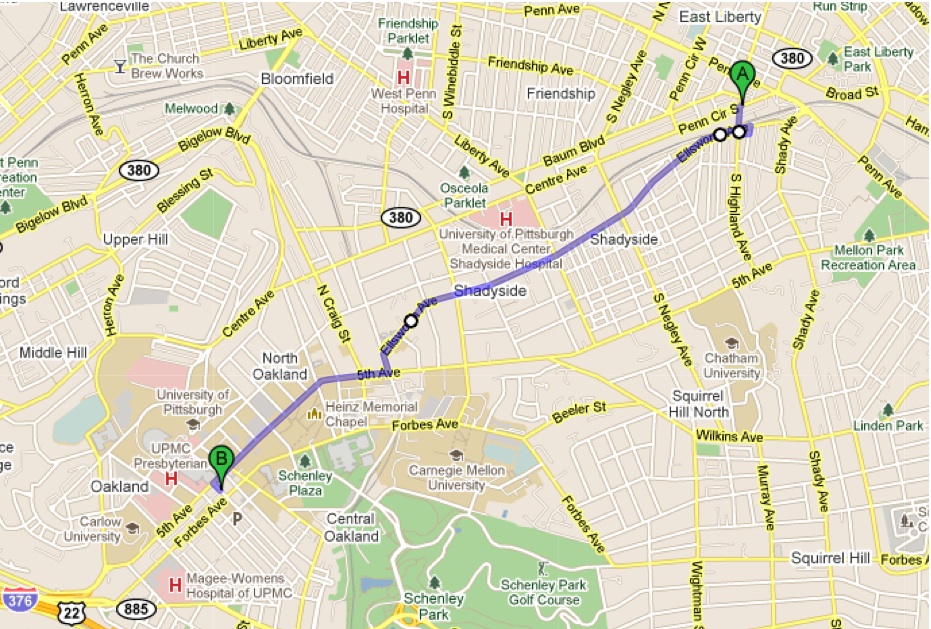
The first week went well enough. I brought lunch from home, consisting of a dried-up hamburger on wheat bread one day, leftover spaghetti the next, and a couple of days in which I didn’t eat lunch at all. That was because I saved my baked chicken and spaghetti leftovers for dinner. I also conserved money by walking the two and a half miles between my apartment on the East Liberty/Shadyside neighborhood border and the Oakland neighborhood in which Pitt and Western Psychiatric are located. Each way.

My Route To/From Work, 6007 Penn Cir S, Pittsburgh, PA 15206 to Atwood St & Forbes Ave – Google Maps, May 12, 2011.

By the end of the second week, I was down to my last $5. It was the tenth of May, and I had another week before payday. It was bad enough I walked five miles to and from work every day and skipped lunch all that second week. The PAARC folks used me to do everything from going to Giant Eagle to buy half-and-half for their coffee to running across Pitt’s campus hunting for books and making 3,000 copies of X and 2,200 copies of Y. Mind you, they hired me to design databases and input data. Surprise, surprise, I had a headache at the end of every work day.

That Friday, I got a call from my old job at Westchester County Department of Federal Programs. It was my boss from the previous summer and holiday season, Joe Carbone, wanting to know if I’d come work for him another summer. Working for him had been a wonderful experience. But the reason I stayed in Pittsburgh was because I wanted to explore the option of grad school as far as possible, even if it meant getting doors slammed in my face. I couldn’t do that while working in White Plains and living at 616 all summer. So, reluctantly, I said, “No, I can’t do it this year,” knowing that I’d get an earful from Mom once I told her my decision.

The one and only time in my life I dined on these, May 12-16, 1991. Source: http://www.stevegarufi.com/ramen1.jpg

It seemed a ridiculous decision two days later. I was down to my final $2.10. I went to Giant Eagle that Sunday, bought a six-pack of ramen noodles for a dollar, and two packs of Kool-Aid for forty cents more. I had enough to by a can of soda, maybe some candy, and that was it until the seventeenth of May.

What compounded my confounding decision was that I remained sixth on the teaching assistant fellowship waiting list in Pitt’s History Department. What made that worse was the fact that no fewer than four students had passed me on the list since I’d first seen it four weeks earlier, all White and male.

Somehow, though, I had faith beyond my circumstances that things were going to work out just fine. I guess all those years of malnutrition at 616 helped me. By the week after my first paycheck for the summer, grad school at Pitt was a done deal, and I had food to eat again.

I weighed myself about five days after my starvation diet at the student athletic center. I weighed 167 pounds, which meant that my weight had dropped to nearly 160 pounds by May 17, and had only begun to recover. I could see nearly all of my ribs, front and back, not to mention my collarbone.

By the Wednesday after three weeks of little and no food, none of that ordeal mattered. For the miracle that I’d hoped in happened just days after my infamous “No” to Joe Carbone. (to be continued).

On Mother’s Day and Areas of Gray

07 Saturday May 2011

Posted by decollins1969 in 1, Boy @ The Window, culture, Eclectic, race, Religion, Youth

≈ Leave a comment

Tags

616, 616 East Lincoln Avenue, Bad Mothers, Clothing, Facebook, Food, Good Mothers, Gray Areas, Love, Mother's Day, Mother-Son Relationship, Mount Vernon New York, Nurturing, Shelter, Support, Twitter


My Mother, Thanksgiving Day 2006. Donald Earl Collins

“I took care of my kids! I put food on the table, put a roof over y’all’s heads, put clothes on yo’ back! I did the best that I could, and none of y’all can tell me different…” That’s what my mother yelled to us the day before Sarai’s funeral last July. It was an excited utterance, after she had spent five days in a trance, unable to do as much as eat a piece of toast. We were in the living room of our place at 616, me, Mom, Maurice, Yiscoc and Eri, being yelled at over a lifetime of disappointment and frustration. Ours and hers.

Folks have been posting all week on Facebook and Twitter about their wonderful, loving and supportive mothers, practically requiring people like me to do the same. As if all mothers all alike. As if all mothers are either the best or the worse. As if a good mother should be put on a pedestal like a trophy or gold medal, and a bad mother to not be mentioned at all. After all, most of us prefer not to hear bad news.

My mother was neither the best nor the worst mother in the world. She ultimately was and remains a contradiction of advice and action. She told us growing up never to depend on the government for handouts, but ended up on welfare from ’83 to ’99. She’d advise us to go to school and college, yet did almost nothing to help any of us get there. She’d complain about us not getting along as a family. Then call my younger siblings “Judah babies” and tell me that I was just like my alcoholic dad.

I’d dealt with all of this, all of the awful decisions and refusals to make any decisions about family, her life, her marriage to Maurice, the abuse that I had to put up with. The intervention I did for my younger siblings, for me and for Mom back in January ’02 had in most respects put the issue of my mother’s mistakes to bed for the family. Or so I thought.

My Mother's Associate's Degree Photo, Westchester Business Institute, May 12, 1997.

All of that came back to me as I listened to my mother yell at us from seemingly out of nowhere that terribly hot and sticky Friday, the sixteenth of July last summer. I stood, then sat, on the new yet cheap beige couch in the living room, sweating next to a barely working window fan. I watched Mom’s contorted face spew its sharpen words, like arrows raining down on us. I could only think, “Not good enough, Mom! Your best wasn’t good enough.” I didn’t say it. Because I’d already said it back in ’02.

Her best hadn’t been good enough that week. Neither Sarai nor Mom had taken out life insurance, so it was either “ask Donald” or pass-the-hat time. Mom’s best hadn’t put food on the table one out of every three days between the end of ’81 and the middle of ’86. Her best left us behind in rent for nearly three years, had lost her a job with Mount Vernon Hospital, had led us to welfare. Doing the best that she could had made us Hebrew-Israelites and left us with an abusive, cheating Maurice/Judah as the alleged man of the house for most of the ’80s.

Most importantly, Mom’s fatal flaw as a mother was her lack of love and support for us as we moved from baby to toddler, toddler to little kid, kid to preteen, teenager to adulthood. We were all one group of burdens dumped onto her by a God that used us as a test of her as a mother and person. Mom said as much, multiple times, over the ’80s and ’90s.

I know that some of you will find this post offensive simply because I’m talking about my mother, the woman who gave birth to me. That’s just too bad. There’s a lot of gray between a great mother and a horrible one. My mother made a lifetime’s worth of bad decisions and path-of-least-resistance non-decisions that scarred me and my other siblings for life.

I love my mother for all the good that she did and all the good that she did teach me growing up. But that doesn’t me I should gloss over her record as a mother, provider and worker, especially during my growing up years. It means that there’s a lot I don’t like about my mother, who she was and is, and things she didn’t do well or didn’t do at all. It means that she has a limited sense of the responsibility she had when giving birth to me and to my five other siblings.

Mother’s Day 2011

Mother’s Day 2011

It also means that Mother’s Day for me remains very complicated. I’ve been buying my mother cards since ’84, and will continue to do so. And every year, finding the right card is hard, like looking for a good shoe for my nearly flat, quadruple-wide, size-fourteen feet. Still, I do the very best I can, because after all, she’s still my mother, and I love her with all of my heart.

Humanities Origins: Goofball

05 Thursday May 2011

Posted by decollins1969 in 1, Boy @ The Window, culture, Eclectic, race, Religion, Youth

≈ Leave a comment

Tags

Academic Identity, Class, Della Bryant, Friendships, Growing Pains, Hebrew-Israelites, Humanities, Humanities Program, Identity, Italian, Languages, Mount Vernon New York, Mount Vernon public schools, Ostracism, Preteen, Race, Sixth Grade, SRA Test, Straight-A Student, William H. Holmes Elementary


X-Men Origins: Wolverine Poster, May 12, 2009. http://movies.yahoo.com/photos/movie-stills/gallery/1263/xmen-origins-wolverine#photo41

This week marks thirty years since I learned that my sixth grade teacher Mrs. Della Bryant had recommended me and two other classmates into Mount Vernon public schools’ Humanities Program. It was a great achievement, but it felt bittersweet at the same time. For it came a week after the end of my friendship to Starling, and three weeks into the bizarre-ness of being a Hebrew-Israelite. It was the beginning of six long years of learning life’s lessons the hard way, like a soft-shelled crab in the middle of a hailstorm.

====================

Mrs. Bryant had pushed for my acceptance into Mount Vernon’s Humanities Program at the beginning of May. Between my SRA scores (Reading, 12th grade level; Math, 11th grade level), three years as a straight-A student and her recommendation, it was pretty much a slam dunk. This meant that I could spend as much as the next six years taking accelerated courses with the brightest students in Mount Vernon. When Mrs. Bryant told me about her recommendation, I bounced the seven blocks home to tell Mom about the opportunity. Mom asked, “Are you sure about this?,” as if I was planning to become a Catholic priest. I responded with an emphatic, sportscaster Marv Albert-esque “Yes!”

Of all the things that I was first asked to do after Mrs. Bryant told me that I was in, I had to pick a language of study — for the next four years! I didn’t think much past the next couple of weeks, except when waxing philosophic, so four years might as well have been forty. I opted for Italian over Spanish and French, mostly because of my love for spaghetti and pizza and Italian cheeses, a desire to visit Little Italy, and because the other six Holmes School classmates who had been accepted into Humanities chose the other languages.

====================

But with the loss of Starling as my best friend, it was hard to celebrate without feeling lost and loss. I hoped that, at the least, that I could connect with the other kids that would make up Humanities at A.B. Davis Middle School in seventh grade. I hoped that I would do as well as I’d done between fourth and sixth grade, that I could prove myself as among the smartest — if not the smartest — kid in the program. Most of all, I hoped that I’d be challenged in ways that fourth, fifth and sixth grade hadn’t.

A.B. Davis Middle School, Humanities Wing, November 21, 2006. Donald Earl Collins.

As it turned out, I was challenged. Thoroughly. My future and now former classmates challenged all of my assumptions about people and life, about how the world works, about relationships, tolerance and acceptance. I faced challenges that I couldn’t have possibly anticipated three decades ago.

I attended William H. Holmes Elementary, a school that was 99.8 Black and Latino, with high number of kids from poor and low-income backgrounds. I assumed that with a greater degree of intelligence came a greater degree of acceptance, but I hadn’t learned anything about eugenics or Nazism as an intellectual practice yet. (Not that Humanities was an incubator of Nazism, but it shows how poor my assumptions were.) I was arguably the highest performing student in my class, but that’s like saying that I’d won a hot-dog eating contest against a two-year-old.

But that was all to come with the transition to middle school, the economic collapse of my family and the puberty process. In the moment of origin in May ’81, I was on an academic high that I wouldn’t achieve again until my junior year at the University of Pittsburgh. I was a newborn baby, beautiful yet naive, not yet ready for the torture of the growing pains that would follow.

White House Revises Account Of Bin Laden’s Final Moments

03 Tuesday May 2011

Posted by decollins1969 in Uncategorized

≈ Leave a comment


Why do we need to see photos confirming that bin Laden’s dead? Do we distrust our government and Obama so much that we need to see a bullet hole in his head to know for sure? Last I checked, they have blood and DNA evidence right? What more do we need?

This only proves how uncivilize­d and imperialis­tically depraved we can be. Really, we’re not much different from the Romans. We want to parade a dead bin Laden down Constituti­on Avenue, with troops marching in triumph, have vanquished an enemy. Or, better still, we could’ve captured bin Laden alive and forced him to march in chains after days of torture, showing how great a nation we are in the process.

Do people really think a picture of a dead bin Laden honors the dead from 9/11 and his other attacks? Does it bring closure to the survivors, widowers, orphans and other loved ones who lost someone that day? Does it vindicate the use of US troops in Afghanista­n and Iraq over the past nine years and seven months?

Of course it doesn’t. It merely satisfies those with blood lust and revenge in their hearts, as well as those who distrust everything Obama does.
Read the Article at HuffingtonPost

← Older posts
Newer posts →

Boy @ The Window: A Memoir

Boy @ The Window: A Memoir

Places to Buy/Download Boy @ The Window

There's a few ways in which you can read excerpts of, borrow and/or purchase and download Boy @ The Window. There's the trade paperback edition of Boy @ The Window, available for purchase via Amazon.com at http://www.amazon.com/Boy-Window-Donald-Earl-Collins/dp/0989256138/

There's also a Kindle edition on Amazon.com. The enhanced edition can be read only with Kindle Fire, an iPad or a full-color tablet. The links to the enhanced edition through Apple's iBookstore and the Barnes & Noble NOOK edition are below. The link to the Amazon Kindle version is also immediately below:

scr2555-proj697-a-kindle-logo-rgb-lg

Boy @ The Window on Amazon.com: http://www.amazon.com/Boy-The-Window-Memoir-ebook/dp/B00CD95FBU/

iBookstore-logo-300x100

Boy @ The Window on Apple's iBookstore: https://itunes.apple.com/us/book/boy-the-window/id643768275?ls=1

Barnes & Noble (bn.com) logo, June 26, 2013. (http://www.logotypes101.com).

Boy @ The Window on Barnes & Noble: http://www.barnesandnoble.com/w/boy-the-window-donald-earl-collins/1115182183?ean=2940016741567

You can also add, read and review Boy @ The Window on Goodreads.com. Just click on the button below:

Boy @ The Window

Twitter Updates

Tweets by decollins1969
  • RSS - Posts
  • RSS - Comments

Archives

  • June 2025
  • April 2023
  • September 2022
  • August 2022
  • July 2022
  • June 2022
  • May 2022
  • April 2022
  • March 2022
  • January 2022
  • December 2021
  • November 2021
  • October 2021
  • September 2021
  • August 2021
  • July 2021
  • June 2021
  • April 2021
  • March 2021
  • February 2021
  • January 2021
  • December 2020
  • November 2020
  • October 2020
  • September 2020
  • August 2020
  • July 2020
  • May 2020
  • April 2020
  • March 2020
  • January 2020
  • December 2019
  • November 2019
  • August 2019
  • July 2019
  • June 2019
  • May 2019
  • April 2019
  • March 2019
  • February 2019
  • January 2019
  • December 2018
  • November 2018
  • October 2018
  • September 2018
  • August 2018
  • July 2018
  • June 2018
  • May 2018
  • March 2018
  • February 2018
  • January 2018
  • December 2017
  • November 2017
  • October 2017
  • September 2017
  • August 2017
  • July 2017
  • June 2017
  • May 2017
  • April 2017
  • March 2017
  • February 2017
  • January 2017
  • December 2016
  • November 2016
  • October 2016
  • September 2016
  • August 2016
  • July 2016
  • June 2016
  • May 2016
  • April 2016
  • March 2016
  • February 2016
  • January 2016
  • December 2015
  • November 2015
  • October 2015
  • September 2015
  • August 2015
  • July 2015
  • June 2015
  • May 2015
  • April 2015
  • March 2015
  • February 2015
  • January 2015
  • December 2014
  • November 2014
  • October 2014
  • September 2014
  • August 2014
  • July 2014
  • June 2014
  • May 2014
  • April 2014
  • March 2014
  • February 2014
  • January 2014
  • December 2013
  • November 2013
  • October 2013
  • September 2013
  • August 2013
  • July 2013
  • June 2013
  • May 2013
  • April 2013
  • March 2013
  • February 2013
  • January 2013
  • December 2012
  • November 2012
  • October 2012
  • September 2012
  • August 2012
  • July 2012
  • June 2012
  • May 2012
  • April 2012
  • March 2012
  • February 2012
  • January 2012
  • December 2011
  • November 2011
  • October 2011
  • September 2011
  • August 2011
  • July 2011
  • June 2011
  • May 2011
  • April 2011
  • March 2011
  • February 2011
  • January 2011
  • December 2010
  • November 2010
  • October 2010
  • September 2010
  • August 2010
  • July 2010
  • June 2010
  • May 2010
  • April 2010
  • March 2010
  • February 2010
  • January 2010
  • December 2009
  • November 2009
  • October 2009
  • September 2009
  • August 2009
  • July 2009
  • June 2009
  • May 2009
  • April 2009
  • March 2009
  • February 2009
  • January 2009
  • December 2008
  • November 2008
  • October 2008
  • September 2008
  • August 2008
  • July 2008
  • June 2008
  • May 2008
  • April 2008
  • March 2008
  • February 2008
  • January 2008
  • December 2007
  • November 2007
  • October 2007
  • September 2007
  • August 2007
  • July 2007
  • June 2007

Recent Comments

MaryPena's avatarMaryPena on My Day of Atonement/Bitter Hat…
decollins1969's avatardecollins1969 on No Good Teaching Deed Goes…
Mary Rose O’Connell's avatarMary Rose O’Connell on No Good Teaching Deed Goes…

NetworkedBlogs on Facebook

NetworkedBlogs
Blog:
Notes From a Boy @ The Window
Topics:
My Life, Culture & Education, Politics & Goofyness
 
Follow my blog

616 616 East Lincoln Avenue A.B. Davis Middle School Abuse Academia Academy for Educational Development AED Afrocentricity American Narcissism Authenticity Bigotry Blackness Boy @ The Window Carnegie Mellon University Child Abuse Class of 1987 CMU Coping Strategies Crush #1 Crush #2 Death Disillusionment Diversity Domestic Violence Economic Inequality Education Family Friendship Friendships Graduate School Hebrew-Israelites High-Stakes Testing Higher Education History Homelessness Humanities Humanities Program Hypocrisy Internalized Racism Jealousy Joe Trotter Joe William Trotter Jr. K-12 Education Love Manhood Maurice Eugene Washington Maurice Washington Misogyny Mother-Son Relationship Mount Vernon High School Mount Vernon New York Mount Vernon public schools Multiculturalism MVHS Narcissism NFL Pitt Pittsburgh Politics of Education Poverty President Barack Obama Race Racial Stereotypes Racism Relationships Self-Awareness Self-Discovery Self-Reflection Sexism Social Justice Teaching and Learning University of Pittsburgh Violence Whiteness Writing

Top Rated

Blog at WordPress.com.

  • Subscribe Subscribed
    • Notes from a Boy @ The Window
    • Join 103 other subscribers
    • Already have a WordPress.com account? Log in now.
    • Notes from a Boy @ The Window
    • Subscribe Subscribed
    • Sign up
    • Log in
    • Report this content
    • View site in Reader
    • Manage subscriptions
    • Collapse this bar
 

Loading Comments...