• About Me
  • Other Writings
  • Interview Clips
  • All About Me: American Racism, American Narcissism, and the Conversation America Can’t Have
  • Video Clips
  • Boy @ The Window Pictures
  • Boy @ The Window Theme Music

Notes from a Boy @ The Window

~

Notes from a Boy @ The Window

Monthly Archives: October 2012

My Take On K-12 & Higher Education & Corporatism

08 Monday Oct 2012

Posted by decollins1969 in 1, Academia, Boy @ The Window, culture, Eclectic, Mount Vernon High School, Mount Vernon New York, Movies, New York City, Politics, Pop Culture, race, Youth

≈ Leave a comment

Tags

Adult Learners, Bill & Melinda Gates Foundation, Corporatized Education Reform, Education, For-Profit Colleges, Future of American Education, High-Stakes Testing, Higher Education, Higher Education Access and Success, K-12 Education, K-12 Education Reform, KIPP, Knowledge Is Power Program, Low-Income Students, Poverty, Privatization, Self-Discovery, Students of Color, Teach for America, Technocrats, The New Teacher Project, University of Phoenix
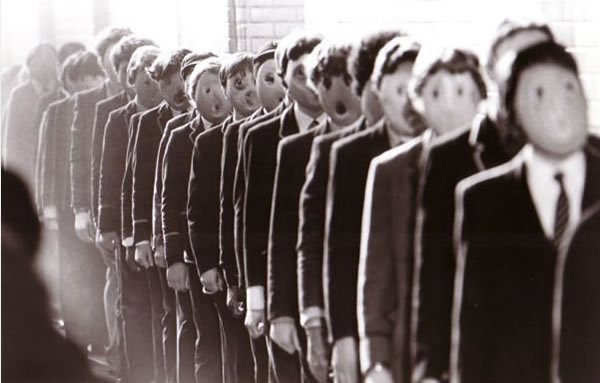

Pink Floyd–The Wall (1982), February 16, 2012. (http://free-education.info). Qualifies as fair use under US Copyright laws – low res and related to blog subject.

We often treat K-12 education and higher education as if they have nothing in common, as if they possess completely separate values and have developed in complete isolation from each other. But in this age where the American technocratic and the plutocratic elites want to privatize everything, there are clear connections behind and between emerging trends in corporatized K-12 education reform and with the rise of for-profit colleges and universities. These trends and connections aren’t good ones for the mass of American students, particularly for those who are poor and of color.

It’s pretty simply really. Both public education and postsecondary education have been under attack from profiteers and the politicians who do their bidding for at least a quarter century. In particular, the issues have been how to improve public schools so that poor Black and Latino kids can graduate high school on the one hand, and how to modify higher education so that the adult version of these kids can obtain a serviceable certificate or degree on the other. With these changes comes the theme of a watered-down education for the poorest twenty-five percent of Americans. It’s the new pathway to a sub-living wage job and tens of thousand of dollars of student loan debt.

A better way of presenting this reality, though, would be to overlay my own educational journey as a poor African American growing up in Mount Vernon, New York onto this corporatized educational insanity. I would’ve gone to public school to be sure. But instead of the SRA exam test that I took every year between third and sixth grade (not a high-stakes test evaluating teaching effectiveness, by the way), I would’ve seen some sort of comprehensive reading/mathematics test from at least second grade on.
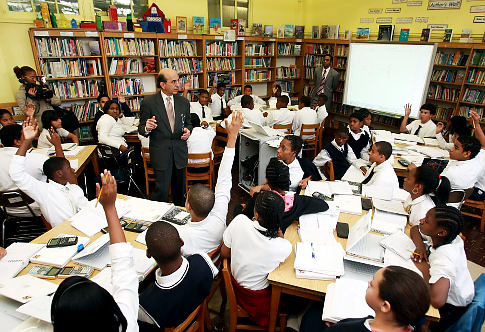
Overcrowded classroom (with DOE Chancellor Joel Klein) with two teachers, PS 189, Brooklyn, NY, September 16, 2009. (Craig Warga/NY Daily News). Qualifies as fair use – blog subject with no comparable picture.

Given where I grew up, instead of having a group of veteran Black teachers for most of elementary schools, I would’ve ended up with some teachers from Teach for America or The New Teacher Project. For the technocrats surely would’ve held my teachers responsible for the sixty-percent poverty rate at my elementary schools, um, I mean, the low test scores. Teachers from these alternate certification programs tend to be well-meaning, perhaps even extremely smart, but not passionate or fully trained teachers. Certainly not like the highly dedicated African American teachers I had at Nathan Hale (now Cecil Cooper) and William H. Holmes Elementary, who held us all to high enough standards to prepare me for a gifted-talented magnet school program known as Humanities.

Of course, given the resources devoted to high-stakes testing, and the constant practice tests, there would’ve been the virtual elimination of music, art, PE, and creative writing. With that shift, there wouldn’t have been a Humanities Program, just a few classes for the best and brightest students. Instead, the option of a private charter school or a KIPP program may have been a possibility. With an average cost of $10,000, however, I doubt a $1,000 or $2,500 voucher would’ve made it possible for me to attend the one, and with KIPP schools being all about discipline, I would’ve thrived there about as much as fish thrive in the desert.

I would’ve moved on to middle school and high school, received algebra in ninth or tenth grade (if at all), struggled to enhance my reading, writing, science, math and other skills, and otherwise would’ve goofed my way to a high school diploma. Would I have taken an AP class, or had a Meltzer as a history teacher, or taken the PSAT or SAT? I’m not sure, but highly unlikely. Still, I would’ve graded with a diploma, with proof that my education was the equivalent of an average ninth or tenth grader’s, confirmed by a decade of standardized state tests!

Then, after three to five years of struggling to find full-time work above minimum wage, or after several years in the military, I’d make the choice between  a University of Phoenix, Kaplan University, DeVry University or some other for-profit college. I’d discover quite quickly that I was wholly unprepared for even the most watered-down online college curriculum, taking courses in a four, six or eight-week format (instead of the typical ten or sixteen-week semester format).

Romanian Army POWs from Battle of Stalingrad, February 3, 1943. (http://ww2incolor.com).

There would’ve been no agonizing choice between Columbia University and the University of Pittsburgh, no switch of majors from computer science to history, no big moment in my development as a person. All because I wouldn’t have had the kind of earth-shattering experience that attending college full-time and in-person often can be.

Somehow, if I’d somehow survived the first semester or first year, I might’ve eventually graduated, albeit with a degree that will be of limited use in obtaining a good living wage. And with $70,000 in student loan debt and a degree from a disreputable for-profit college, forget about me going to graduate school to be a professor.

That’s what this K-16 system will lead to. Money flowing into the hands of illegitimate technocrats, testing companies, charter schools and for-profit institutions. Money and influence flowing from entities like the Bill & Melinda Gates Foundation and Teach for America. A permanent, if slightly better educated, low-wage underclass. That’s the now and future construction of K-16 education if we allow these trends to continue.
Coping in the Boy @ The Window World

06 Saturday Oct 2012

Posted by decollins1969 in 1, Boy @ The Window, Christianity, culture, earth, wind & fire, Eclectic, eclectic music, Marriage, Mount Vernon High School, Mount Vernon New York, music, Politics, Pop Culture, race, Religion, Sports, Youth

≈ 1 Comment

Tags

"Owner Of A Lonely Heart", Battlestar Galactica, Battlestar Galactica (2004 series), Coping Strategies, Fantasy, Football, Humanities, Imagination, Inner Vision, Inner World, New York Giants, New York Knicks, New York Mets, Psychology, Self-Discovery, Touré, Who's Afraid of Post-Blackness (2011), Yes


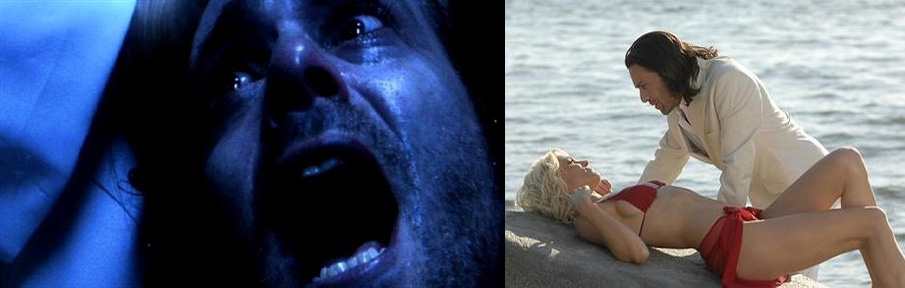
Gaius Baltar tortured/in imagination (merged pics), Battlestar Galactica, October 6, 2012. Qualifies as fair use under US Copyright laws – low res (1st picture) and merged rendering.

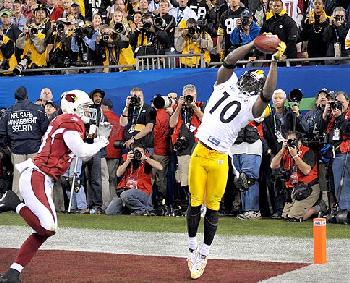
“A wide receiver tiptoeing the sideline of a football field after making an acrobatic catch, barely keeping his left foot in-bounds by tapping his big toe in the two inches of space between the grass and the thick white line in front of him. A note in a song that is so inspiring, so well-balanced between rhythm and harmony, so well sung that the hairs on my neck stand up and my spirit feels like soaring.” This is what I wrote in the first paragraph of the preface (which I need to revise yet again, by the way) to my Boy @ The Window manuscript.

In context, I was writing about the infinitesimal decisions and actions that could’ve added up to success or failure for me growing up in those dismal days and years. But I could’ve just as easily been writing about what imaginations and fantasies went through my head growing up to make my inner world more powerful than anything I saw and experienced in the real world. Much of Boy @ The Window is about how I coped, good, bad and ugly (see my posts “Peanuts Land” from April ’12 and “Mr. Mister’s ‘Kyrie’” from March ’11 for more).

How I coped through imagination, inner projection and fantasy changed during the worst of my preteen and post-puberty years. I went from imagining and acting out an entire city, nation-state and culture in my room to the need for an internal world that couldn’t be taken apart by abuse, poverty and isolation. Ultimately it came for me in the form of the everyday things I either already liked or was on the cusp of liking. I already enjoyed a wide variety of music by the fall of ’82. Once I became a sports fan and occasional sports participant, those images and achievements became part of my inner movie and soundtrack.

It became a partnership that I eventually learned to conjure up at will, that became part of my residual sleeping state, that made the madness of 616, MVHS and Mount Vernon, New York dissolve into background noise.

Santonio Holmes’ Super Bowl XLIII game-winning catch, Tampa, FL, February 1, 2009. (http://bleacherreport.com).

It meant, though, that watching a Mets, Giants or Knicks game or listening to Earth, Wind & Fire wasn’t a simple casual experience. It involved rooting for the underdog, which in turn meant rooting for myself. It included the synching of home runs, touchdown passes and three-pointers to guitar riffs, crescendos and other highlights in a particular song or series of songs. It meant that my imagination became itself a fully dedicated line for coping with stress, checking anger, solving problems, and seeing my world the way I chose to see it, rather than the way my world actually was.

Take one of my favorite songs as a teenager, Yes’ “Owner Of A Lonely Heart” (1983). It wasn’t just the fact that I actually felt lonely and could relate to the song. When I heard the song, I could see myself running a screen play in football, following a group of well set-up blockers all the way to the end zone for a touchdown. I could relate emotionally, because the song was about me as an underdog, because of my unrequited love for Crush #1, because I now knew what a screen pass was. It made existential philosophy easier for me to understand my senior year of high school in my AP English and Philosophy classes.

“Owner Of A Lonely Heart” also reminded me to never “concede my free will,” even when my now ex-stepfather Maurice’s fists met my face and teeth and ribs at fifteen and sixteen. Like a scene from the ’00s Battlestar Galactica involving Gaius Baltar or Caprica Six, I often projected a view of the world I wanted over whatever was going on in reality. Going the mile or so between 616 and the C-Town in Pelham could either be a chance for me to catch a long touchdown pass or for me to figure out to which colleges I should apply.

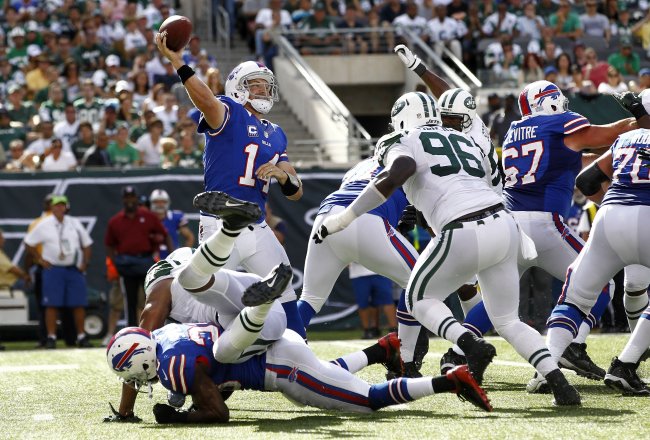
Ryan Fitzpatrick of Buffalo Bills v. NY Jets, in rare protection against blitz while in pocket, October 6, 2012. (http://bleacherreport.com).

Sometimes, if I allowed myself to slip deeply enough, like, in the moments before an exam, I could use a buildup point in the song to bring in an extra blocking tight end to run a max-protect play. I’d snap the ball, send three receivers on one side of the defense, and wait just long enough for one to cross before delivering a perfect pass that allowed my receiver to split the secondary for a long score. All while taking a hit in my right ribs and being knocked down to the turf, just a quarter-second after my index finger’s come off the ball, giving it a smoother spiral rotation while in flight. And so many times, that re-visioning of my world made it so that my natural ability to remember everything and discern many things resulted in very good grades, solid performances, and a balancing act that made life at 616 and MVHS just bearable enough.

I was reminded of how often my mind went down this road by Touré’s Who’s Afraid of Post-Blackness (which I blogged about earlier this week), particularly his chapter on imagination and art, “Keep It Real Is a Prison.” Except that my mind does still go there sometimes. Usually as I’m about to give a speech, or while running a five-miler, drilling a three or driving. Or in writing something for publication, like Boy @ The Window.

The Great “Original Sin” Debate

03 Wednesday Oct 2012

Posted by decollins1969 in 1, Academia, Boy @ The Window, culture, Eclectic, eclectic music, music, Politics, Pop Culture, race, Youth

≈ Leave a comment

Tags

"Moment of Surrender" (2009), Black Reconstruction (1935), Carnegie Mellon University, Chants Democratic (1984), David Roediger, Marcus Rediker, Media's Game Mentality, Obama-Romney Debate, Original Sin, Pitt, Race, Sean Wilentz, Slavery, U2, University of Pittsburgh, W. E. B. Du Bois, Wages of Whiteness (1991), Wendy Goldman


Obama-McCain Third Debate (post-debate picture), Hofstra University, Hempstead, NY, October 15, 2008. (Jim Bourg/Reuters).

We’ve finally meandered our way into the presidential debate cycle portion of our Election ’12 cycle. I’m grateful to finally see what the media has built up to be a match between the Pittsburgh Steelers and the New York Giants! Not really, of course. But from standpoint of political reporters and pundits alike, tonight’s first debate between President Barack Obama and Mitt Romney might as well be a sports event.

In the end, though, this isn’t as much a presidential debate as it is a personality contest with questions and psychologists’ interpretations of nonverbal communication. It will be more hype than substance, more stiff than an overbaked souffle. One of the men — most likely President Obama — will win this first debate, though it won’t be clear how significant this “win” will be, given the trends for the past couple of months.

Professor Wendy Goldman, Carnegie Mellon University, circa 2012, October 3, 2012. (http://www.history.cmu.edu).

I am reminded of another debate, one that occurred in my Comparative Working-Class Formation graduate seminar at Carnegie Mellon University in the fall of ’93. It was taught by Professor Wendy Goldman, wife of Marcus Rediker, both decidedly Marxist, but in Goldman’s case, Marxist without any considerations of race at all. It was a course that turned into a debate because I’d already grown tired of professors at Pitt who believed race and gender to be identities subsumed under the long, hard human battle over class inequality (see my post “Dairy Queens, Dick Oestreicher and Race” from February ’11).

All semester-long, there had been a three-way tug-of-war between me (and occasionally, my former Pitt grad school colleague who decided to hop across the bridge to Carnegie Mellon to take this course), ten brown-nosing students who’d agree with her despite the evidence (led by Mike and Mark, the “M&M Boys,” as I labeled them for my friends and colleagues) and Goldman. I didn’t expect my now fellow Carnegie Mellon grad students to take my side. But I did expect them to read E.P. Thompson and Sean Wilentz and other folks with a critical eye and not just to get an A out of our professor. There may have been one or two other classes I dreaded more in three years of grad school. Yet I’d never been around a professor more unaware of their own biases than Goldman (see my “Crying Over E.P. Thompson” post from September ’09).

It all came to a head when it was time to discuss David Roediger’s Wages of Whiteness (1991) and, indirectly, Sean Wilentz’s Chants Democratic (1984) on the last Thursday in October ’93, which happened to be my mother’s forty-sixth birthday. Both authors looked at the formation of the White American (and male) working-class in the first half of the nineteenth century. Goldman, as usual, took the stance that the only ideology of significance was one that proclaimed class inequalities the predominant issue explaining the radicalization of the American working-class.

Michelangelo’s sin of Adam and Eve painting, Sistine Chapel ceiling, Vatican City (1508-1512), May 20, 2005. (The Yorck Project via Wikipedia). In public domain.

Finding this a bit laughable (a mistake on my part), I pressed my argument that at least in the case of US history, race and class distinctions have been and remain intertwined. So much so that a typical neo-Marxist analysis of the American working-class couldn’t apply. The next two hours were me and my Pitt colleague against the M&M Boys, the other brown-nosers and Professor Goldman. Luckily in my case, I could not only quote Roediger and Wilentz, but Herbert Gutmann, W.E.B. Du Bois, and a host of other scholars to press home my counterargument. At the end, our professor said to me, in utter exasperation, “I guess we should just go back to original sin.” It meant that I was being a racial determinist, which I guess was supposed to be an insult as well as her version of “No mas, no mas!”

Aside from the fact that America’s “original sin” really was the taking of Native American lands and the systemic destruction of Native American peoples and culture, I really didn’t have much of a response to Goldman’s excited utterance. I finished my argument with a final volley that included Du Bois’ Black Reconstruction (1935) and Roediger, and class adjourned sooner thereafter.

My brown-nosing classmates looked pretty beat from the class session, while me and my colleague from Pitt were both energized from the three-hour class. Still, we couldn’t help but discuss Goldman’s Moment of Surrender at the end of the class. Of course we knew what her “original sin” comment meant when it came to race and slavery. The comment, though, seemed small and petty coming from a professor, one that was too personal, and not professional.

Still, the worst thing I learned is that it took Roediger’s Wages of Whiteness to confirm ideas that Du Bois had begun writing about in 1903 and 1935. That, for me, made me apprehensive about wanting to work with scholars who may well see me and my work as well-intentioned, but inferior to theirs. At the same time, I learned that, for better and for worse, that not going along to get along can be a good thing, especially after years of ridicule from people of all stripes for doing so.

My “original sin” of not going along with whatever Goldman said forced a debate, one of the more exciting times I had in grad school, certainly at Carnegie Mellon. How could that be bad?

Touré’s Post-Blackness ≈ I’ma Be Me?

01 Monday Oct 2012

Posted by decollins1969 in 1, Academia, Boy @ The Window, Christianity, culture, Eclectic, eclectic music, Hebrew-Israelite, Mount Vernon New York, Patriotism, Politics, Pop Culture, race, Religion, Youth

≈ Leave a comment

Tags

"Pound Cake" speech, Acting White, American Identity, Authentic Blackness, Authenticity, Bill Cosby, Black Identity, Blackness, Boy @ The Window, I'ma Be Me (2009), Identity Issues, Intrarace Relations, Litmus Test, Post-Blackness, Post-Civil Rights Generation, Post-Racialism, Race, Racism, Reaching Youth, Self-Discovery, Self-Loathing, Self-Reflection, Touré, Wanda Sykes, Who's Afraid of Post-Blackness (2011)


Illustration of red wolf with dinner after a hunt, by Sandra Koch, September 29, 2012. (http://nc-es.fws.gov). In public domain.

I know, I know. Touré’s Who’s Afraid of Post-Blackness (2011) has been out for over a year, and I’ve finally, finally managed to read it in the past couple of weeks. I did not want to like this book. I found — and still find — the title to be pretentious and over the top, a perfect fit for Touré’s Twitter and TV persona. Touré values his ideas like they all are new finds of platinum or a form of safe and sustained nuclear fusion. Sometimes Touré can be cutting-edge, but many times, he goes over the edge (as was the case in August on MSNBC with his “niggerization” of Obama comment).

But in Who’s Afraid of Post-Blackness, Touré puts forward a variety of ideas and insights that I’ll be contemplating in my blogo-neighborhood off and on over the next few months. Touré’s is a very good book. It’s one that is both intellectual and yet revealing about the challenges Blacks face inter- and intraracially in the early twenty-first century.

The premise — once I got past the ridiculous term post-Blackness — is that African Americans and America has advanced just far enough in terms of race for all of our old conceptions of Blackness to have now become meaningless. That Blackness is fully infused in American — maybe even world — culture. That there was never one way to be Black in the first place. Touré himself says, “[t]here is no dogmatically narrow, authentic Blackness because the possibilities for Black identity are infinite. To say something or someone is not Black — or is inauthentically Black — is to sell Blackness short. To limit the potential of Blackness. To be a child of a lesser blackness.” (p. 5).

Litmus paper used in litmus tests, September 29, 2012. (http://chemistry.about.com).

Ironically, though, much of Touré’s book picks apart the notion that the US has become post-racial in the past couple of decades, as best exemplified by the election of President Barack Obama in 2008. Of course, Touré uses notions of Blackness and where it has expanded beyond the authenticity litmus test to show that race/racial bias/racism is still alive and well in America. At the same time, Touré shows how post-Blackness has also provided opportunities for millions of Americans White, Black and Brown to reach beyond their own misconceptions of race and themselves, to enrich our lives in politics, scholarship, the arts, not to mention through hip-hop.

One of my main criticisms of Who’s Afraid of Post-Blackness is that Touré uses a term like post-Blackness (mind you, I hate terms like post-structuralism, post-modernism, and post-racialism too) and doesn’t try in any way to provide a definition that distinguishes it from post-racial. For the purposes of this post, though, the main issue I have revolves around Touré virtually ignoring poor and struggling African Americans in his post-Blackness tour-de-force.

I get it when Touré says that he “never lived a typical Black experience.” (p. 53). At least, I think I do. That despite Touré middle class upbringing, middle-class neighborhood, private school experience, that his is but one representation of Blackness. And that Touré’s experience is as representative of Blackness as my experience of being a Hebrew-Israelite preteen in a working poor family while enrolled in Humanities in Mount Vernon, New York would’ve been thirty years ago (see my post “A Question of My Blackness, Sexuality and Masculinity” from September ’11). Or, for that matter, Wanda Sykes’ comedy special I’ma Be Me (2009) was for her.

That’s great for us, for anyone with enough intellectual power, outsider status, unusual amounts of wisdom, or just plain middle class standing to get the details of Who’s Afraid of Post-Blackness. But when Touré does bring up the twenty-five percent of Blacks who aren’t part of this post-Blackness elite, he talks at them, and not to them. Yes, I completely agree that Blackness isn’t to be defined in terms of poverty, prison, and projects. No, Blackness shouldn’t be defined by how “down” one is with an impoverished community or how “hard” someone is for beating the shit out of another person (see my “Raised on Hip-Hop?” post from April ’10).

Hakeem Olajuwon posting up Patrick Ewing, 1994 NBA Finals, June 1994. (http://rgj.com).

Still, while I stand with almost one hundred percent of what Touré says in Who Afraid of Post-Blackness in ’12, I don’t think that this book would’ve reached me thirty years ago. The way I would’ve seen it in ’82 or even ’87, a middle class Black guy telling me about how my poverty is insignificant to who I was would’ve been excommunicated from my life for eternity. It wouldn’t have helped me at all deal with the pressures I faced socially, academically and in my family (see my “The Silent Treatment” post from June ’10).

Touré wouldn’t have been able to provide for me a roadmap for how to be me and to ignore the crowd of those in my life — White and Black — who regularly told me that I wasn’t authentically Black or that I was “talkin’ White.” If mild-mannered me at twelve wouldn’t have been reached by Touré’s chapter on Black artists taking Blackness and standing it on its head, I imagine that young African Americans growing up in poverty or struggling with identity issues would find Who’s Afraid of Post-Blackness about as easy to embrace as Bill Cosby’s criticism of poor Blacks in ’04.

For me as a writer, the question of how to reach beyond the already converted is always an issue. Touré, as good as he is in his book, merely affirms the path I’ve traveled over the past thirty-one years. He doesn’t really reach those whose path of Blackness has barely begun.

Newer posts →

Boy @ The Window: A Memoir

Boy @ The Window: A Memoir

Places to Buy/Download Boy @ The Window

There's a few ways in which you can read excerpts of, borrow and/or purchase and download Boy @ The Window. There's the trade paperback edition of Boy @ The Window, available for purchase via Amazon.com at http://www.amazon.com/Boy-Window-Donald-Earl-Collins/dp/0989256138/

There's also a Kindle edition on Amazon.com. The enhanced edition can be read only with Kindle Fire, an iPad or a full-color tablet. The links to the enhanced edition through Apple's iBookstore and the Barnes & Noble NOOK edition are below. The link to the Amazon Kindle version is also immediately below:

scr2555-proj697-a-kindle-logo-rgb-lg

Boy @ The Window on Amazon.com: http://www.amazon.com/Boy-The-Window-Memoir-ebook/dp/B00CD95FBU/

iBookstore-logo-300x100

Boy @ The Window on Apple's iBookstore: https://itunes.apple.com/us/book/boy-the-window/id643768275?ls=1

Barnes & Noble (bn.com) logo, June 26, 2013. (http://www.logotypes101.com).

Boy @ The Window on Barnes & Noble: http://www.barnesandnoble.com/w/boy-the-window-donald-earl-collins/1115182183?ean=2940016741567

You can also add, read and review Boy @ The Window on Goodreads.com. Just click on the button below:

Boy @ The Window

Twitter Updates

Tweets by decollins1969
  • RSS - Posts
  • RSS - Comments

Archives

  • June 2025
  • April 2023
  • September 2022
  • August 2022
  • July 2022
  • June 2022
  • May 2022
  • April 2022
  • March 2022
  • January 2022
  • December 2021
  • November 2021
  • October 2021
  • September 2021
  • August 2021
  • July 2021
  • June 2021
  • April 2021
  • March 2021
  • February 2021
  • January 2021
  • December 2020
  • November 2020
  • October 2020
  • September 2020
  • August 2020
  • July 2020
  • May 2020
  • April 2020
  • March 2020
  • January 2020
  • December 2019
  • November 2019
  • August 2019
  • July 2019
  • June 2019
  • May 2019
  • April 2019
  • March 2019
  • February 2019
  • January 2019
  • December 2018
  • November 2018
  • October 2018
  • September 2018
  • August 2018
  • July 2018
  • June 2018
  • May 2018
  • March 2018
  • February 2018
  • January 2018
  • December 2017
  • November 2017
  • October 2017
  • September 2017
  • August 2017
  • July 2017
  • June 2017
  • May 2017
  • April 2017
  • March 2017
  • February 2017
  • January 2017
  • December 2016
  • November 2016
  • October 2016
  • September 2016
  • August 2016
  • July 2016
  • June 2016
  • May 2016
  • April 2016
  • March 2016
  • February 2016
  • January 2016
  • December 2015
  • November 2015
  • October 2015
  • September 2015
  • August 2015
  • July 2015
  • June 2015
  • May 2015
  • April 2015
  • March 2015
  • February 2015
  • January 2015
  • December 2014
  • November 2014
  • October 2014
  • September 2014
  • August 2014
  • July 2014
  • June 2014
  • May 2014
  • April 2014
  • March 2014
  • February 2014
  • January 2014
  • December 2013
  • November 2013
  • October 2013
  • September 2013
  • August 2013
  • July 2013
  • June 2013
  • May 2013
  • April 2013
  • March 2013
  • February 2013
  • January 2013
  • December 2012
  • November 2012
  • October 2012
  • September 2012
  • August 2012
  • July 2012
  • June 2012
  • May 2012
  • April 2012
  • March 2012
  • February 2012
  • January 2012
  • December 2011
  • November 2011
  • October 2011
  • September 2011
  • August 2011
  • July 2011
  • June 2011
  • May 2011
  • April 2011
  • March 2011
  • February 2011
  • January 2011
  • December 2010
  • November 2010
  • October 2010
  • September 2010
  • August 2010
  • July 2010
  • June 2010
  • May 2010
  • April 2010
  • March 2010
  • February 2010
  • January 2010
  • December 2009
  • November 2009
  • October 2009
  • September 2009
  • August 2009
  • July 2009
  • June 2009
  • May 2009
  • April 2009
  • March 2009
  • February 2009
  • January 2009
  • December 2008
  • November 2008
  • October 2008
  • September 2008
  • August 2008
  • July 2008
  • June 2008
  • May 2008
  • April 2008
  • March 2008
  • February 2008
  • January 2008
  • December 2007
  • November 2007
  • October 2007
  • September 2007
  • August 2007
  • July 2007
  • June 2007

Recent Comments

decollins1969's avatardecollins1969 on No Good Teaching Deed Goes…
Mary Rose O’Connell's avatarMary Rose O’Connell on No Good Teaching Deed Goes…
Lyndah McCaskill's avatarLyndah McCaskill on The Raunchiest of Them Al…

NetworkedBlogs on Facebook

NetworkedBlogs
Blog:
Notes From a Boy @ The Window
Topics:
My Life, Culture & Education, Politics & Goofyness
 
Follow my blog

616 616 East Lincoln Avenue A.B. Davis Middle School Abuse Academia Academy for Educational Development AED Afrocentricity American Narcissism Authenticity Bigotry Blackness Boy @ The Window Carnegie Mellon University Child Abuse Class of 1987 CMU Coping Strategies Crush #1 Crush #2 Death Disillusionment Diversity Domestic Violence Economic Inequality Education Family Friendship Friendships Graduate School Hebrew-Israelites High-Stakes Testing Higher Education History Homelessness Humanities Humanities Program Hypocrisy Internalized Racism Jealousy Joe Trotter Joe William Trotter Jr. K-12 Education Love Manhood Maurice Eugene Washington Maurice Washington Misogyny Mother-Son Relationship Mount Vernon High School Mount Vernon New York Mount Vernon public schools Multiculturalism MVHS Narcissism NFL Pitt Pittsburgh Politics of Education Poverty President Barack Obama Race Racial Stereotypes Racism Relationships Self-Awareness Self-Discovery Self-Reflection Sexism Social Justice Teaching and Learning University of Pittsburgh Violence Whiteness Writing

Top Rated

Blog at WordPress.com.

  • Subscribe Subscribed
    • Notes from a Boy @ The Window
    • Join 103 other subscribers
    • Already have a WordPress.com account? Log in now.
    • Notes from a Boy @ The Window
    • Subscribe Subscribed
    • Sign up
    • Log in
    • Report this content
    • View site in Reader
    • Manage subscriptions
    • Collapse this bar
 

Loading Comments...