• About Me
  • Other Writings
  • Interview Clips
  • All About Me: American Racism, American Narcissism, and the Conversation America Can’t Have
  • Video Clips
  • Boy @ The Window Pictures
  • Boy @ The Window Theme Music

Notes from a Boy @ The Window

~

Notes from a Boy @ The Window

Tag Archives: Race

How People of Color Should Re-Interpret the Rules of Race

05 Tuesday Oct 2010

Posted by decollins1969 in 1, Eclectic, Politics, Pop Culture, race

≈ Leave a comment

Tags

CNN, Derrick A. Bell, Derrick Bell, Faces at the Bottom of the Well, Hype, LeBron James, Media, Minorities, People of Color, Race, Racism, Rick Sanchez, Rules of Racial Standing, Social Justice, Soledad O'Brien
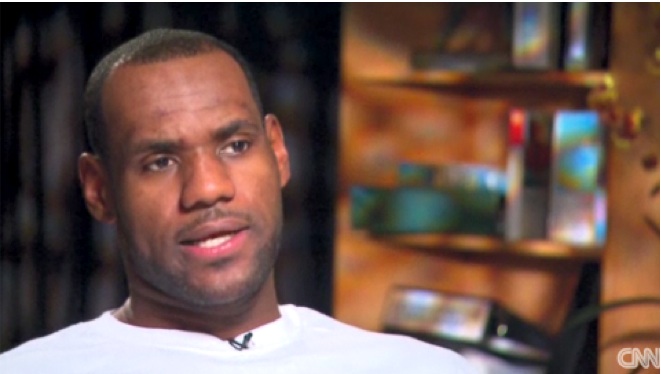

LeBron CNN Interview Screen Shot, September 29, 2010. Source: http://www.youtube.com/watch?v=SvQhaCIa8lM

Soledad O’Brien, LeBron James (and his foot-in-mouth manager) and Rick Sanchez all have something in common. They are persons of color whose understanding of the rules of race — or the “Rules of Racial Standing,” as law professor Derrick Bell describes them — is about as sophisticated as an amoeba’s. If you ask me, they all played “the race doesn’t matter, even if it does” game, and they all got burned in some way as a result.

O’Brien to many — mostly Black and Latino — came off as a race-baiter, while James looked overly sensitive in his understated response to O’Brien’s “Do you think there’s a role that race plays…?” question. Sanchez was the worst of all, calling Daily Show host Jon Stewart a “bigot” and insinuating that CNN and shows like The Daily Show are controlled by Jews, liberal Jews of course, but Jews nevertheless. All while scoffing at the idea that Jews are an oppressed minority in the US.

It all points to one simple problem. That many, if not most, persons of color in the public eye don’t understand — or care to understand — the rules of race in the media. This is important. For people of color cannot re-interpret these rules without understanding them first.

Faces at the Bottom of the Well Book Cover, October 5, 2010 (Donald Earl Collins)

Derrick Bell‘s “Rules of Racial Standing,” from his bestselling Faces at the Bottom of the Well (1992), is a guidepost for why independent voices on issues of race are difficult to come by, in law and in the media. But as a person of color, there are ways to re-interpret these rules to make them work in unintended ways, at least, unintended by those in the media. The five rules (and their re-interpretations) are:

First Rule

(“Rule of Illegitimate Standing”) …No matter their experience or expertise, Blacks’ statements involving race are deemed “special pleading” and thus not entitled to serious consideration.

Translation: when in the public idea and asked a question on race, give an unexpected answer, one that is thought-provoking, even controversial, to at least push a more lengthy and serious discussion of race.

Second Rule
(“Rule of Legitimate Standing”) Not only are Blacks’ complaints discounted, but Black victims of racism are less effective witnesses than are Whites, who are members of the oppressor class. This phenomenon reflects a widespread assumption that…cannot be objective on racial issues…

Translation: While even having a DVD or an iPhone filming racist behavior or actions in progress may be ignored, having a multicultural group in support of a complaint will receive much more attention than striking out alone.

Third Rule

(“Rule of Enhanced Standing”) …The usual exception…is the Black person who publicly disparages or criticizes other Blacks who are speaking or acting in ways that upset Whites. Instantly, such statements are granted “enhanced standing” even when the speaker has no special expertise or experience in the subject he or she is criticizing.

Translation: Let the Tara Wall’s, Anna Holmes’, John McWhorter’s and Dinesh D’Souza’s of this world know that their opinions will not go unchallenged, that their alleged expertise on race is nothing more than an opinion sanitized for center-right consumption. That’s what blogs, Twitter, Facebook, and Huffington Post are for.

Fourth Rule
(“Rule of Superenhanced Standing”) When a Black person or group makes a statement or takes an action that the White community or vocal opponents thereof deem “outrageous,” the latter will actively recruit Blacks willing to refute the statement or condemn the action. Blacks who respond to the call for condemnation will receive superstanding status…

Translation: See the re-interpretation of the Second Rule, especially in the case of Fox (or Faux ) News. One Alan Keyes or Alex Castellanos does not equal a group of progressives using their numbers, media savvy and social media as an antidote to the “one sane person of color” rule.

Fifth Rule
(“Rule of Prophetic Understanding”) …Using this knowledge, one gains the gift of prophecy about racism, its essence, its goals, even its remedies. The price of this knowledge is the frustration that…that no amount of public prophecy, no matter its accuracy, can either repeal the Rules of Racial Standing or prevent their operation.

Translation: This may be true, but there are still millions of Americans who would prefer to hear people of color and truly progressive Whites make better use of the media to dilute the piss and vinegar that is pseudo-liberalism and mainstream news these day.

There are exceptions to these rules, such as when someone White or of legitimate standing vouch for his or her otherwise controversial views. But people of color need to bend these rules, break them when necessary. All so that the answer to the question “Was race a factor in…?” isn’t, “No,” or “No, this is a colorblind society,” or “Yes,” without a sophisticated answer. This is what the media wants, not necessarily out of racism, but out of making money. In order to get what Americans need, the media it needs, people of color must resist giving the media the hype that it wants.

Anger Issues and Management, Inc

25 Saturday Sep 2010

Posted by decollins1969 in 1, Boy @ The Window, Christianity, Mount Vernon High School, Religion, Youth

≈ Leave a comment

Tags

7S, A.B. Davis Middle School, Anger, Anger Management, Christianity, Envy, Fights, Jealousy, Mount Vernon High School, Mount Vernon New York, MVHS, Patience, Pittsburgh, Race, Ridicule, Righteous Indignation, Scorn, University of Pittsburgh, Wisdom


Rage of the Incredible Hulk. Source:http://www.ramasscreen.com

Exposure to abuse, ridicule and scorn in fairly large dosages when you’re young will leave you with anger issues to manage. I should know. Don’t believe the impressions that my classmates from Humanities and MVHS and my friends from my first two years at Pitt have of me. I may have appeared to smile, to be happy-go-lucky, to be sober and monk-like. But mostly, I was angry, not in a raging, vengeful way, but in a depressed way, a constant, gnawing, sometimes envious, sometimes ironic and sarcastic way. My anger was the kind of anger that I chewed on and swallowed, simmered at low heat for a while in the pit of my belly, then I’d regurgitate it into my mouth, and then chewed on it and swallowed it again.

But, despite what some folks in certain religious circles may say, not all anger is bad, evil or sinful. In fact, sometimes anger is necessary, even if and when it’s dangerous as an emotion or a state of mind. Why, you may ask? Because without anger, you take what life gives to you, even when most of what good you get out of life comes in a miserly and begrudging way. Everything else that comes, if indeed bad or evil for you, isn’t taken in stride or taken with difficulty. You simply don’t take it at all. You become so emotionless that whatever happens doesn’t matter at all, as if your purpose for existing is merely to exist, not to succeed, not to do good works or make yourself a better person because of or despite your circumstances.

That, by the way, is what I’ve heard over the years when some of my former classmates from Mount Vernon — and a few people who knew me in my early days at the University of Pittsburgh — describe me. It was as if I was Porgy in Porgy and Bess, Louis Armstrong or Paul Robeson singing, “I’ve got plenty of nothin’, and nothin’s plenty for me.” That would and did piss me off, but I reminded myself that this was how I had to be to deal with the anger I had within. With emotion, I could’ve easily flown into a rage many

In Treatment Screen Shot. Source: http://sepinwall.blogspot.com

a day between ’81 and ’89.

At the same time, I had the wisdom to allow my anger to rise up, to channel it many more times than not into what I needed to have happen at a particular moment in time. It’s amazing how much you can get done with a sense of righteous anger and indignation, a feeling of got-to-get-it-done-or-else anger. It came at the right time, usually when I felt that my back was up against a concrete wall, with no way out except to fight my way out.

Like in February ’82, the middle of seventh grade, when I just got tired of my 7S classmates thinking that they could say and do anything to me without me getting angry, and tired of days on end at 616 without food to eat. After a fight in the boy’s locker room with one of my classmates — which I won, by the way — I channeled the energy unleashed by that rage and fight into two things. Improving my mediocre grades, and my infatuation over Crush #1. It was three months of relative bliss in the middle of the worst eighteen months of my life.

Richard Marx, 1987.

Or in January ’88, after recovering from the crash-and-burn of my first semester at Pitt. I was mad and disappointed with myself over allowing my obsession with Crush #2 hijack the final six weeks of my semester, not to mention my generally hopeful and creative imagination. After an incident with a couple of my more evil and drunken dorm mates — one in which I cracked a broom handle on the crowns of their heads (no injuries or investigation, luckily) — I summoned some discipline and theme music to get through that second semester. From Richard Marx’s “Should’ve Known Better” to Paul Carrick’s “Don’t Shed A Tear,” I spent fifteen weeks turning anger into A’s and jadedness into new friendships.

I’ve had other periods in my life — in ’93, ’98, and ’03 — where the circumstances dictated that anger, with some patience and understanding, was absolutely necessary in my overcoming of them. The lesson here is that anger — like fire, electricity and nuclear fusion — can be and is often dangerous. Yet it’s also necessary, a potential evil that can be an actual good, if channeled, allowed to dissipate, if tempered by wisdom and patience. At the least, anger allows those of us under stress to know that we are very much alive.

Letter of Recommendation (or Wreck-o-mendation)

23 Thursday Sep 2010

Posted by decollins1969 in 1, Academia, Boy @ The Window, Eclectic, Mount Vernon High School

≈ Leave a comment

Tags

Academia, Carnegie Mellon University, Dan Resnick, Daniel P. Resnick, George Reid Andrews, Joe Trotter, Joe William Trotter Jr., Letters of Recommendation, Pittsburgh, Race, References, Sy Drescher, Transparency, University of Pittsburgh


George Reid Andrews, University of Pittsburgh

About a year and a half ago, I wrote about a string of not-so-wonderful professors I had at Pitt and Carnegie Mellon who were less than fine with me pursuing anything beyond a bachelor’s degrees, much less with me becoming Dr. Collins. I talked about how some of them went so far as to tell me that I wasn’t “graduate material,” as if I were made from parts found at a junk yard instead of in the shop of an Italian tailor.

I’m more than aware of the fact that I didn’t let those doubters stop me from becoming who I am today. Some were undoubtedly ones whose skepticism bordered on racist because of their assumptions about my intelligence and writing ability. Still, it should be noted that there are pitfalls to be avoided, if at all possible, when you’re applying for a job or applying to a college or graduate and professional school.

One, even if a professor or teacher has assigned an A for your performance in one of their courses, that doesn’t mean that think that you’re a great student. I learned that the hard way with George Reid Andrews, my professor for Latin American Revolutions my junior year at Pitt. Twenty years ago this week, I asked him for letters of recommendation for graduate school. Andrews agreed, but only to tell me seven months later what he really thought of my work. My research writing samples were “problematic,” my GRE scores were “barely adequate,” and I should’ve considered myself “lucky” just to get into the master’s program in the history department. That terse conversation told me that Andrews’ letter was lukewarm at best, or had found me seriously deficient at worst.

Two, and related to my interactions with Andrews, the process of providing a letter of recommendation or a reference ought to be transparent, so that the student or employee can be confident that they’re not being back-stabbed by the same people in which they’re placing significant trust. It was never a question I dared asked — to see my letter of recommendation — before I’d reached the final stages of grad school.

It would’ve helped with Andrews, and it would’ve helped with two of my three dissertation committee members, Joe Trotter and Dan Resnick. I found out through my Spencer Fellowship that Trotter had written me a lukewarm letter, while Resnick had rambled on and on about my “close relationship” with my “mentor Sy Drescher,” who had played “an instrumental role” in making me a scholar. Drescher, while one of my best professors at Pitt, played much less of a role in me pursuing grad school than so many other professors and students, including his former student Paul Riggs. It was a Leslie Stahl, “let’s give the poor Black boy a hand” kind of letter.

Later, when I asked to see my letters of recommendation from Resnick before sending them out for jobs, he went on for ten minutes about the “sanctity” of the recommendation process, about how privacy and “anonymity” were critical to provide protection for all parties involved. Needless to say, if someone blusters about privacy when politely asked about a letter of recommendation they’re writing for you, do not use that letter!

Bruce Anthony Jones, University of South Florida

Three, it’s important to get to know a person, to gain some sense of trust from them, before asking for a letter or a reference. You don’t have to become friends with them or meet their family — although that does help. They just have to know that their recommendation or reference will be put to good use by you and that what they say about you matters to both of you, in the most positive light possible. Otherwise, what’s the point of writing a letter or spending fifteen minutes on the phone talking about your qualities as a student or worker, right? This can go a bit too far, of course, as I wrote one of my own recommendations for Bruce Anthony Jones, another dissertation committee member, for him to merely put his signature to. Once he changed jobs for the University of Missouri-Columbia, his, um, my letter became worthless, if it had been worth anything at all to begin with.

I’ve written about two dozen letters of recommendation for high school, college and graduate students, for jobs, school applications and fellowship programs. Not to mention about an equal number of recommendations and references for professional colleagues and friends in academia and the nonprofit world. I’ve always written my own letters, insisted on them being seen by the people I’ve recommended and required that they explain their own rationale for their acceptance in the process. Most importantly, I’ve made sure to say “No” if I didn’t feel I could recommend them well or provide a great reference.

Class Silence

20 Monday Sep 2010

Posted by decollins1969 in 1, culture, Eclectic, Politics, race

≈ Leave a comment

Tags

"Silence Must Be Heard", Affluence, Bill Cosby, Bill Gates, Bill O"Reilly, Class, Enigma, Hard Work, Middle Class, Poverty, Race, Rush Limbaugh, Social Class, Working Class, Working Poor


Mum's the word on class.

One of the things that has driven me nuts over the past three decades is how we in this country walk in silence around issues of wealth and social class. We must never speak of our wealth, or poverty, lest we risk embarrassing ourselves or appearing arrogant. All Americans with an income between $20,000 and $20 million a year are middle class, not upper middle class, not affluent, not rich, just middle class.

Any mention of the top three percent in income (people whose income is more than $250,000 a year) amounts to class warfare, even though they control some 35-40 percent of the nation’s $57 trillion in wealth. No, poverty and affluence are relative, not absolute, and can only be measured subjectively,

Atacama Desert in Chile. Driest desert on Earth and place to stick our heads. (Public Domain)

through one’s own experience. Which is why any mention of our troubles is closer to sacrilege than declaring that there isn’t a God, especially in a nation that prints “In God We Trust” on its money.

There are ways to measure affluence and poverty regardless of cost of living and inflation. And please spare me the comparisons between the poor in the US and the poor in the Global South (Third World to those of you who like making other distinctions between fellow humans that actually dehumanize). I’ve seen too many corrugated roofs in Arkansas and Louisiana (all before Katrina), too many outhouses in rural Arkansas and Mississippi, too many families sleeping in the streets in San Francisco and New York, too many malnourished kids in Oklahoma and in DC to hear that “our poor are the richest poor people in the world” song-and-dance.

It’s simple really. Truly middle class people own a car and a home, or at least, have the option of doing both, with a steady income from a permanent job or from an established niche for work. If folks have one and rent an apartment or home, and aren’t really in a position to buy, they’re right on the borderline of the American middle class, but not quite there.

Of course, this definition does not mean that everything’s all right. Tens of millions of Americans, including yours truly, are struggling to pay car notes, student loans, mortgages and rent — not to mention credit card and other debt — and maintain a middle class or lower middle class lifestyle. Unfortunately, there are millions more who are working toward middle class, but aren’t quite there. They may say they’re middle class, but they’re really working-class or working poor.

Upper middle class or affluent Americans do more than own a house or a car. They own quality homes and quality cars, a Volvo or an Acura, maybe even a Lexus. They take at least one vacation a year with their families or friends, to other parts of the US, and on occasion, international trips. They eat at restaurants with their families at least as often as they eat a home-cooked meal. When shopping for groceries, sales are fine, as long as the sales aren’t on off-brand products like Faygo or Giant, Safeway or Krasdale. They have life insurance on every family member, 529 plans for their kids and contribute at least half as much to their 401K as their employer does in any given year (more than that if self-employed).

I’m certainly not arguing that the lives of the upper middle class or affluent or sub-rich are like being on Real Housewives or Keeping Up With the Kardashians. Yet so many in our public discourse make their lives now and times growing up sound humble, as if they grew up like me or others I’ve known over the past thirty years. People like Bill Cosby, Bill Gates or Bill O’Reilly, Dinesh D’Souza or Rush Limbaugh. It’s well beyond dishonest. It’s disgusting, and it helps to perpetuate the myth that the only reason all of us aren’t affluent is due only to our lack of hard work.

As the richest country on Earth — for the time being, at least — we’ve never reconciled our democratic ideals with our capitalistic obsessions. What helps maintain some sense of order, though, is our silence and quiet, desperate acquiescence to ever-increasing economic divisions in a country full of allegedly middle class people. As a song from Enigma goes, however, we should “question the absurd” here, as “silence must be heard.”

Hard Work and the Human Race

17 Friday Sep 2010

Posted by decollins1969 in 1, Boy @ The Window, culture, Eclectic, New York City, Politics, race, Work, Youth

≈ Leave a comment

Tags

Advantage, Boy @ The Window, Daydreams, Hard Work, Holmes Elementary School, Human Race, Individualism, Mount Vernon New York, New York City Marathon, Race, Social Class


Race card cartoon, no date, August 5, 2015. (Emanu!, http://pinterest.com).

Race card cartoon, no date, August 5, 2015. (Emanu!, http://pinterest.com).

When I was nine years old, my fourth grade teacher at Holmes, Mrs. Pierce — a grouch of an older White woman, really — talked about the human race and attempted to describe our species’ variations. She tried to do what we’d call a discussion of diversity now. It went over our heads, no doubt because she didn’t quite get the concept of diversity herself.

Holmes Elementary. Top left corner was Mrs. Pierce's classroom in 1978-79 year.

Holmes Elementary. Top left corner was Mrs. Pierce’s classroom in 1978-79 year.

Like the fourth-grader I was, I daydreamed about the term, human race. I thought of Whites, Blacks, Asians, Hispanics, young and old, male and female, from all over the world, all on a starting line. It was as if four billion people — that was the world population in ’79 — were lined up to run a race to the top of the world. In my daydream, some were faster than others, or at least appeared to be, while others hobbled along on crutches and in wheelchairs. Still others crawled along, falling farther and farther behind those who were in the lead, the ones that looked like runners in the New York City marathon. Before I could ponder the daydream further, Mrs. Pierce yelled, “Wake up, Donald!.” as if I’d really been asleep.

A high school friend recently gave me some much-needed feedback on my manuscript. Her feedback was helpful and insightful, and very much appreciated. But some of it reminded me of the realities of having someone who’s a character in a story actually read that story. Their perceptions will never fully match up with those of the writer, which is what is so groovy and fascinating about writing in the first place.

One of the things that struck me as a thread in her comments — not to mention in so many conversations I’ve had with my students about race and socioeconomics — was the theme of individual hard work trumping all obstacles and circumstances. As if words, slights, and mindsets in the world around us don’t matter. As if poverty is merely a mirage, and bigotry, race and racism merely words on a page. Sure, a story such as the one I have told in this blog for the past three years is about overcoming roadblocks, especially the ones that we set ourselves up for in life, forget about the ones external to our own fears and doubts.

2009 London Marathon. Source: http://www.newsoftheworld.co.uk/

2009 London Marathon. Source: http://www.newsoftheworld.co.uk/

At the same time, I realized what my weird daydream from thirty-one years ago meant. Some people get a head start — or, in NASCAR terms, the pole — before the race even starts. That certainly doesn’t make what that individual accomplishes in life any less meaningful, but knowing that the person had an advantage that most others didn’t possess does provide perspective and illuminates how much distance the disadvantaged need to cover to make up ground. Those who limp and crawl and somehow are able to compete in this human race have also worked hard, likely at least as hard as those with a head start, and more than likely, harder than most human beings should ever have to work.

Plus, there are intangibles that go with race, class and other variables that determines how the human race unfolds. “Good luck is where hard work meets opportunity,” at least according to former Pittsburgh Penguins goaltender Tom Barrasso. Most human beings work hard, but all need opportunities that may provide a real sprint to catch up or take a lead in the human race. Family status, political influence, social and community networks, religious memberships, being in the right place at the right time, all matter and are connected to race and class, at least in the US.

The moral of this story is, hard work matters, individual accomplishment matters. Yet a panoramic view of the race in which humans are engaged matters more in putting our individual successes and the distance that remains in some reasonable perspective. Without that, we’re all just pretending that individual hard work is the only thing that matters, when that’s only half the battle, or half of half the battle.

The Eclectic, Authentic Donald

04 Saturday Sep 2010

Posted by decollins1969 in 1, Boy @ The Window, culture, earth, wind & fire, Eclectic, eclectic music, Mount Vernon High School, Pop Culture, race, Youth

≈ Leave a comment

Tags

"Broken Wings", "What About Love", 616 East Lincoln Avenue, Authenticity, BET, Cable, Heart, Humanities, Mount Vernon High School, Mount Vernon New York, Mr. Mister, MTV, Music, Race, Sade, VH1


Maxwell's Embrya (1997) Album Art

I am, and will always remain, a goofy oddball. I’ve known that for at least twenty-five years, probably closer to thirty. For it was this week in ’85 that we finally got cable at 616. More than four years after MTV, and a few months into VH1, we finally no longer needed antennas to watch TV. My fat, greasy slob of a stepfather hogged the gigantic wood-framed hand-me-down of a nineteen-inch Zenith, along with the living room, most of the time. But I came home from the beginning of the school year — my junior year of Meltzer and AP US History at MVHS — at the end of the first week, with no one home.

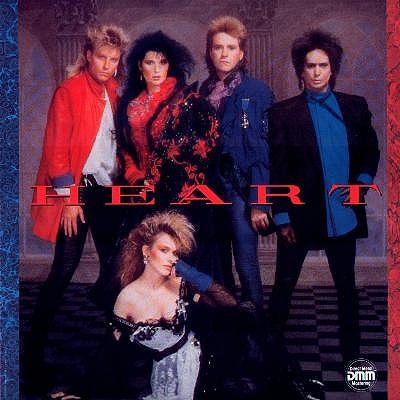
I turned on the TV, found MTV, and boom, I was in the heart of the ’80s. As soon as I hit the channel, a new video began, heavily synthesized and very much over the top. It turned out to be Heart’s “What About Love,” the first release off of their new album. I liked the song immediately. But more importantly, I liked

Heart, 1985. (Look at that hair!?!)

the fact that I could now also put faces and styles to voices and lyrics. I was late, four years too late in understanding the jokes, the fashion motifs and consumerism concerns of my more socioeconomically- blessed classmates. As the saying goes, though, better late than never.

That afternoon, I ended up seeing videos from Sade, Tears for Fears, Dire

Mr. Mister (1985) Welcome To The Real World

Straits, Sting, and Mr. Mister’s “Broken Wings.” The last one was a weird video, but very heartfelt, and one that has stayed with as long as any song I’ve heard or video I’ve seen since (more on that in December). I eventually checked out some boring Alexander O’Neal videos on BET before my mother and younger siblings came home from school and grocery shopping.

It wasn’t as if I hadn’t listened to music before September ’85. I was already well aware of the fact that my music tastes weren’t stereotypically Black, weren’t all that White, and certainly weren’t all that old and mature. Having played the trombone in fifth grade, the fife for Hebrew-Israelite stuff all through ’82, and sang in school choirs sixth, seventh and eighth grade (until my voice started cracking), it wasn’t as if I didn’t know when someone was off key or timing their drum sequences.

Still, I found music that didn’t have the voice of Luther (Vandross) or Patti (Austin or LaBelle) or the beats of Doug E. Fresh, Grandmaster Flash or Run-D.M.C. appealing. It reached me because I had moments I needed to be reached, to be serious, to focus on the pain that was my life in the mid-80s, a pain that few artists sang or wrote about in any direct way. I could relate to the lyrics of rejection, redemption and

The Best of Sade (1992) Album Art

resolution more than I could relate to someone stepping on my brand new sneakers and getting attitude. Songs that could reach me because I had moments I needed to feel and be goofy, to laugh at myself for feeling as pathetic as I did back then. Nothing, and I mean nothing, in the R&B and early hip-hop repertoire of ’85 did that for me.

So I branched out, almost immediately after that MTV afternoon in early-fall early-September. I became even more interested in what some of my classmates called “that White music,” even deliberately listening to WPLJ and Z-100, adding that to WBLS. I also took the occasional turn to WCBS-101 (oldies station of Sinatra, Nat King Cole and Dean Martin), had a brief foray into Phillip Glass and ’80s new age, a rare stumble into jazz, and yes, for those who believe I embody the rejection of all things “Black,” found my need for R&B and some rap in my eyes and ears.That first week in September ’85 pretty much sealed my fate as an eclectic music listener. Many who know me and my Mount Vernon past would say that Humanities and being around all those White kids had something to do with this. Some, including my mother, would say that my education has led to some sense of racial self-loathing, that I deliberately gave up my heritage to chase some false sense of Whiteness — or,

Seal (1994) Album Art

that I’m “acting White.”

I’d say that I was a goofy and serious late-bloomer, who listened to music and lyrics for meaning, for a kernel of wisdom and hope. Some or all of those things can be found in any genre of music, anywhere, anytime, under any circumstance. Music, like people, can’t be separated into races unless people choose to be separate, a truth I understand now and guessed at intuitively then.

What A Fool Believes

23 Monday Aug 2010

Posted by decollins1969 in 1, Boy @ The Window, Cleaning, Mount Vernon High School, Religion, Youth

≈ Leave a comment

Tags

616 East Lincoln Avenue, Domestic Violence, Mount Vernon High School, Mount Vernon New York, Pittsburgh, Poverty, Race, University of Pittsburgh, Urban Decay, Violence


Wall Collapse Rattles Mount Vernon High School - wcbstv.com, April 13, 2010

Mount Vernon really has changed, and unfortunately, not for the better. I’m talking about in the past four years, and not just since I left for college and Pittsburgh twenty-three years ago this week. As some of you may know, I was threatened the week of my sister’s death and funeral by a young thug because I stopped him from choking his girlfriend in front of me and her three-year-old daughter.

That’s not a completely accurate description. I yelled “Hey! Stop!” as I ran toward the side gate of 616. I saw a short, nappy-headed, unkempt-corn-rowed-haired, light-skinned thug. At first, he was yelling, “Get out the godd**m car you B***H” at a young woman in a blue older-modeled Toyota Camry, punching his fists on the driver’s side window at the same time. Then, when she did get out, she grabbed her three or four-year-old daughter and attempted to get toward the side gate. The fool then pushed her up against the back right side of the car and proceeded to wrap his hands around the young woman’s neck, as if no one else was around.

I was on the telephone with my father, talking to him about the rough week it had been, standing outside to get away from folks for a moment or two, staring across the gates and driveway to the five-story red-brick sister complex 630 East Lincoln when I witnessed this episode of domestic violence. After I yelled and distracted the dumb ass, the young woman ran inside with her daughter. Then the short butt attempted to run up on me, telling me to “mind your own godd**m bisness, you stupid f**k!” He tried to get in my face, but at five-foot-four, he was much too short to intimidate me with rage. I told him if he took another step, that I’d call the cops. He did, and then I dialed 911.

“Oh, you think your life’s miserable now! It just got a whole lot worse for you and your family. And for what? You willing to risk your life for her? For a b***h?,” the stupid ass said as he gradually backed out of the yard and then outside the 616 gate. Apparently he wasn’t as stupid as he looked, as he kept moving farther away while yelling “I ain’t goin’ nowhere, you stupid f**k!” Finally, I said something. “Yeah, I’m a stupid f**k. You and your homies could beat me up, kill me, put me out of my misery. But I’m not the one walking away, you are!” Mr. Thuggish Ruggish Bone then disappeared.

There were numerous other reminders that what was once my hometown would never be again. The fact that neighborhoods that were once affluent White ones were now a mixture of White, African American and Latino, and weren’t so affluent anymore. The closings of Athena’s and Baskin-Robbins and other businesses in once ritzy Fleetwood, the rundown sense that I saw in faces Black and White and Brown all during that week.

Other parts of the city had long succumbed to poverty, crime and neglect, but with the middle class regardless of race in full flight, the uphill battle for a thriving bedroom suburb was now an unorganized retreat, with carnage all along the way. The newest thing I saw in Mount Vernon during my midsummer night and day-mare was the track behind Mount Vernon High School and the construction crew working on a new wall for the southwest corner of the building.

I know that a fair number of my Mount Vernon-based or nostalgic readers will think me biased, ungrateful even for having grown up in a town that they themselves found enriching and enjoyable. If that is the case, then that’s wonderful. Your Mount Vernon wasn’t the one I experienced, and “your blues ain’t like mine” (as the late Bebe Moore Campbell would say), sorry to say.

Aside from the atypical experience of dealing with the death of my sister, the Mount Vernon I grew up with and the one I witnessed last month were one and the same. My time growing up there included unpleasant moments with young punks and thugs, far too much rage and violence and poverty for me to stick around after high school. The difference now is, the city as a whole has become a reflection of my worst experiences, and not a “city on the move.” Silver linings like Ben Gordon or Denzel Washington or not, anyone who refuses to acknowledge that this is the reality for most living in Mount Vernon should tune into a 70s station and look up Michael McDonald for advice on foolishness and wisdom.

← Older posts
Newer posts →

Boy @ The Window: A Memoir

Boy @ The Window: A Memoir

Places to Buy/Download Boy @ The Window

There's a few ways in which you can read excerpts of, borrow and/or purchase and download Boy @ The Window. There's the trade paperback edition of Boy @ The Window, available for purchase via Amazon.com at http://www.amazon.com/Boy-Window-Donald-Earl-Collins/dp/0989256138/

There's also a Kindle edition on Amazon.com. The enhanced edition can be read only with Kindle Fire, an iPad or a full-color tablet. The links to the enhanced edition through Apple's iBookstore and the Barnes & Noble NOOK edition are below. The link to the Amazon Kindle version is also immediately below:

scr2555-proj697-a-kindle-logo-rgb-lg

Boy @ The Window on Amazon.com: http://www.amazon.com/Boy-The-Window-Memoir-ebook/dp/B00CD95FBU/

iBookstore-logo-300x100

Boy @ The Window on Apple's iBookstore: https://itunes.apple.com/us/book/boy-the-window/id643768275?ls=1

Barnes & Noble (bn.com) logo, June 26, 2013. (http://www.logotypes101.com).

Boy @ The Window on Barnes & Noble: http://www.barnesandnoble.com/w/boy-the-window-donald-earl-collins/1115182183?ean=2940016741567

You can also add, read and review Boy @ The Window on Goodreads.com. Just click on the button below:

Boy @ The Window

Twitter Updates

Tweets by decollins1969
  • RSS - Posts
  • RSS - Comments

Archives

  • June 2025
  • April 2023
  • September 2022
  • August 2022
  • July 2022
  • June 2022
  • May 2022
  • April 2022
  • March 2022
  • January 2022
  • December 2021
  • November 2021
  • October 2021
  • September 2021
  • August 2021
  • July 2021
  • June 2021
  • April 2021
  • March 2021
  • February 2021
  • January 2021
  • December 2020
  • November 2020
  • October 2020
  • September 2020
  • August 2020
  • July 2020
  • May 2020
  • April 2020
  • March 2020
  • January 2020
  • December 2019
  • November 2019
  • August 2019
  • July 2019
  • June 2019
  • May 2019
  • April 2019
  • March 2019
  • February 2019
  • January 2019
  • December 2018
  • November 2018
  • October 2018
  • September 2018
  • August 2018
  • July 2018
  • June 2018
  • May 2018
  • March 2018
  • February 2018
  • January 2018
  • December 2017
  • November 2017
  • October 2017
  • September 2017
  • August 2017
  • July 2017
  • June 2017
  • May 2017
  • April 2017
  • March 2017
  • February 2017
  • January 2017
  • December 2016
  • November 2016
  • October 2016
  • September 2016
  • August 2016
  • July 2016
  • June 2016
  • May 2016
  • April 2016
  • March 2016
  • February 2016
  • January 2016
  • December 2015
  • November 2015
  • October 2015
  • September 2015
  • August 2015
  • July 2015
  • June 2015
  • May 2015
  • April 2015
  • March 2015
  • February 2015
  • January 2015
  • December 2014
  • November 2014
  • October 2014
  • September 2014
  • August 2014
  • July 2014
  • June 2014
  • May 2014
  • April 2014
  • March 2014
  • February 2014
  • January 2014
  • December 2013
  • November 2013
  • October 2013
  • September 2013
  • August 2013
  • July 2013
  • June 2013
  • May 2013
  • April 2013
  • March 2013
  • February 2013
  • January 2013
  • December 2012
  • November 2012
  • October 2012
  • September 2012
  • August 2012
  • July 2012
  • June 2012
  • May 2012
  • April 2012
  • March 2012
  • February 2012
  • January 2012
  • December 2011
  • November 2011
  • October 2011
  • September 2011
  • August 2011
  • July 2011
  • June 2011
  • May 2011
  • April 2011
  • March 2011
  • February 2011
  • January 2011
  • December 2010
  • November 2010
  • October 2010
  • September 2010
  • August 2010
  • July 2010
  • June 2010
  • May 2010
  • April 2010
  • March 2010
  • February 2010
  • January 2010
  • December 2009
  • November 2009
  • October 2009
  • September 2009
  • August 2009
  • July 2009
  • June 2009
  • May 2009
  • April 2009
  • March 2009
  • February 2009
  • January 2009
  • December 2008
  • November 2008
  • October 2008
  • September 2008
  • August 2008
  • July 2008
  • June 2008
  • May 2008
  • April 2008
  • March 2008
  • February 2008
  • January 2008
  • December 2007
  • November 2007
  • October 2007
  • September 2007
  • August 2007
  • July 2007
  • June 2007

Recent Comments

MaryPena's avatarMaryPena on My Day of Atonement/Bitter Hat…
decollins1969's avatardecollins1969 on No Good Teaching Deed Goes…
Mary Rose O’Connell's avatarMary Rose O’Connell on No Good Teaching Deed Goes…

NetworkedBlogs on Facebook

NetworkedBlogs
Blog:
Notes From a Boy @ The Window
Topics:
My Life, Culture & Education, Politics & Goofyness
 
Follow my blog

616 616 East Lincoln Avenue A.B. Davis Middle School Abuse Academia Academy for Educational Development AED Afrocentricity American Narcissism Authenticity Bigotry Blackness Boy @ The Window Carnegie Mellon University Child Abuse Class of 1987 CMU Coping Strategies Crush #1 Crush #2 Death Disillusionment Diversity Domestic Violence Economic Inequality Education Family Friendship Friendships Graduate School Hebrew-Israelites High-Stakes Testing Higher Education History Homelessness Humanities Humanities Program Hypocrisy Internalized Racism Jealousy Joe Trotter Joe William Trotter Jr. K-12 Education Love Manhood Maurice Eugene Washington Maurice Washington Misogyny Mother-Son Relationship Mount Vernon High School Mount Vernon New York Mount Vernon public schools Multiculturalism MVHS Narcissism NFL Pitt Pittsburgh Politics of Education Poverty President Barack Obama Race Racial Stereotypes Racism Relationships Self-Awareness Self-Discovery Self-Reflection Sexism Social Justice Teaching and Learning University of Pittsburgh Violence Whiteness Writing

Top Rated

Blog at WordPress.com.

  • Subscribe Subscribed
    • Notes from a Boy @ The Window
    • Join 103 other subscribers
    • Already have a WordPress.com account? Log in now.
    • Notes from a Boy @ The Window
    • Subscribe Subscribed
    • Sign up
    • Log in
    • Report this content
    • View site in Reader
    • Manage subscriptions
    • Collapse this bar
 

Loading Comments...