• About Me
  • Other Writings
  • Interview Clips
  • All About Me: American Racism, American Narcissism, and the Conversation America Can’t Have
  • Video Clips
  • Boy @ The Window Pictures
  • Boy @ The Window Theme Music

Notes from a Boy @ The Window

~

Notes from a Boy @ The Window

Category Archives: University of Pittsburgh

My First Boy @ The Window Interview

29 Wednesday Jan 2014

Posted by decollins1969 in 1, Academia, Boy @ The Window, Carnegie Mellon University, culture, Pittsburgh, Politics, Pop Culture, race, University of Pittsburgh, Youth

≈ Leave a comment

Tags

Book Promotion, CMU, Honesty, Lily-White, PR, Public Relations, Whiteness


Screen shot of CMU website's front page, January 29, 2014. (Donald Earl Collins).

Screen shot of CMU website’s front page, January 29, 2014. (Donald Earl Collins).

I had my first interview related to Boy @ The Window two and a half weeks ago, with a public relations person working on behalf of the Carnegie Mellon University website, CMU.edu. But this interview will likely never be posted on Carnegie Mellon’s website. Why, pray tell? Because I was honest about my CMU experience, in that it was bitter work, a frustrating time, a place in which I felt isolated in its lily-White conservatism (with a nod toward Asian students as honorary Whites).

I didn’t say all this in my interview. Okay, here’s what they asked and what I actually said (also on my Boy @ The Window Facebook  page):

Q: Why did you choose to attend CMU and pursue a Ph.D. in history?
A: Joe Trotter, in a word, was my deciding factor. I didn’t want to earn all of my degrees in history at the University of Pittsburgh, and the history department offered to accept my master’s degree and Ph.D. credits from Pitt. Plus, CMU’s history program was simply better, in that I knew I could graduate years ahead of time. But I came because I wanted to work with Joe Trotter.

Q: You mention that you’ve based your career in the areas of education reform and multiculturalism -why? Could you describe your work in these areas a bit more?
A: From the time I began reading history when I was nine years old, I’ve wondered about the horrors of this world, and how we as humans have shown a capacity for compassion and strength despite those horrors. My interest in multiculturalism was a natural extension of my quest to understand my past, those horrors, and especially the people from various backgrounds whom were my classmates in middle school and high school in Mount Vernon, New York. The irony was, though, that I didn’t consciously recognize these connections until I began working on Boy @ The Window. As for education reform, especially around college access and retention, it’s that sense that despite it all, access to higher education can and does transform lives, and provide a pathway to a more productive life. Multiculturalism was my dissertation research while at CMU – not to mention my first book, Fear of a “Black” America (2004) — while my interest in education reform began in my work in the nonprofit world. First with Presidential Classroom in 1999 and 2000, then with an initiative known as Partnerships for College Access and Success (PCAS), where I was the deputy director from 2004 to 2008.

Q: Did CMU play a role in your difficult journey to success? (Perhaps network, training, culture, etc…) Any professor/mentors to note?
A: Yes, because I earned my Ph.D. while at CMU. But in order to become the writer I am now, I actually had to unlearn much of what I learned as a writer while at CMU. By the time I began my doctoral work at CMU in the fall of 1993, my difficult journey was mostly complete. In terms of mentors, the late Barbara Lazarus was mine during my four years at CMU. She was the toughest and kindest administrator, a sharp and clear mind, a quick wit, one of the positive memories I have of CMU.

Q: You work as an author, academic, consultant and more – why such a varied path? Did your time at CMU help you to span these various fields and topics?
A: CMU helped me on my eclectic path because my dissertation committee provided no help in my search for work after I graduated in May 1997. I had to find a way to use the skills I picked up as a historian and academic writer before I could go about the task of remaking myself as a writer. Luckily my dissertation research was as much about education history – and to a lesser extent, education policy – as it was about US and African American history. This helped me find work in the nonprofit sector, as well as adjunct work in schools of education like at Duquesne and George Washington University. I think that the lesson I learned at CMU was that I needed to decide and define my own path, with or without the help of those who taught me.

Q: Have you stayed in touch with anyone, been back to campus or been involved in any CMU groups or activities I should mention? (I realize you live in Silver Spring..)
A: I’ve been back to CMU four times since I graduated in 1997, two of those times to visit with Barbara Lazarus before she passed away in 2003. I have remained in touch with a couple of folks who were in graduate school with me at CMU between 1993 and 1997, but with a wife, a near-preteen son and so much taking up my time, I don’t stay involved with CMU much at all. Mine was hardly a positive experience, and there were times that I as an African American male didn’t exactly feel welcome on campus. So by necessity, my interactions with the CMU community have been limited over the past 17 years.

Within 24 hours of my interview answers, I noticed on my blog site that traffic regarding my CMU-related posts had increased by nine-fold, and stayed that way for a day or two. I guess the public relations folks at Carnegie Mellon wanted a more positive and race-less view from me about my experiences there. Oh well.

When I followed up to find out what they planned to do with my interview, this was what they emailed in response:

Dear Dr. Collins,

Melissa forwarded your message to me. Thank you for sharing your story with us. We are currently vetting a larger number than expected potential stories for use on the homepage. We will keep your responses on file, and let you know if we move forward on a story.

Have a great day,
Heidi

What they really meant to say was, “We’re experiencing technical difficulties with your answers, please stand by…”
When Work Really Is Too Much

27 Monday Jan 2014

Posted by decollins1969 in 1, Carnegie Mellon University, culture, High Rise Buildings, Jimme, My Father, New York City, Pittsburgh, Politics, Pop Culture, race, University of Pittsburgh, Work, Youth

≈ Leave a comment

Tags

Bigotry, Burnout, CIS, Computer and Information Systems, Hard Work, Hard Work Mythology, Jay Wickliff, Long Hours, Pitt, Presidential Classroom, Racism, Sexual Harassment, Sleep Deprivation, Workplace Harassment


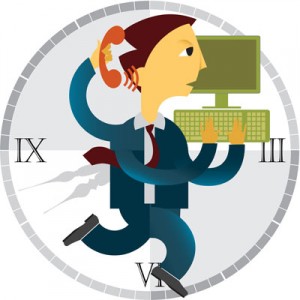
From "How to Do More Work in Less Time" article, Forbes Magazine, February 28, 2012. (Deborah L. Jacobs/http://forbes.com).

From “How to Do More Work in Less Time” article, Forbes Magazine, February 28, 2012. (Deborah L. Jacobs/http://forbes.com).

I’ve been working for a paycheck in some capacity since September ’84, when me and my brother Darren began working with our father Jimme down in Upper West/East Side and Midtown Manhattan. Back then, we cleaned the floors of corporate offices, the carpets of condos and co-ops, and endured Jimme’s alcoholic ups and downs. There was one lesson, though, that stuck with me in the year or so that we worked for our father, one that extended the lesson we observed from our Mom before we fell into welfare in April ’83. That we wouldn’t get far without hard work or without having work, and that if we wanted to avoid the work of a low-paying, back-breaking job like buffing and waxing floors, we also needed to work smart, to use our brains and our muscles

Since then, the longest I’ve been without a job has been ten months, between August ’86 and June ’87. I worked all the way through undergrad at Pitt and was a grad assistant and teaching assistant throughout grad school (with the exception of my time as a Spencer Foundation Dissertation Fellow in ’95-’96, and even then, I worked on two of Joe Trotter’s research projects). I’ve faced periods of unemployment and longer periods where I’ve cobbled together part-time and full-time work, as well as held stable full-time work in the nonprofit and higher education worlds.

Working long hours, January 23, 2014. (Mark Holder/http://www.findersandsellers.com).

Working long hours, January 23, 2014. (Mark Holder/http://www.findersandsellers.com).

In all that time, I’ve only held two jobs where I’d been overwhelmed with work. Not the actual act of performing the duties of these jobs, mind you. The number of hours in which I had to show up for work was what eventually made these jobs overwhelming. My first time experiencing full-time work outside of a summer job was in the middle of my Winter/Spring ’89 semester. I worked for Pitt’s Computer and Information Systems’ (CIS) computer labs back then. I had requested more hours, and had gone from twelve to twenty to thirty-six between the beginning of January and the second-half of February, covering for folks who had moved on to real full-time work after graduating.

This was a seven-week period in which I averaged 36 hours per week while taking sixteen credits — five classes — and all while facing sexual harassment from my co-worker Pam, harassment tacitly sanctioned by our boss and her friend Cindy. Despite it all and my $4.15/hour salary, I focused on the work, the need for extra cash, and my friends, and came out the other side, and hoped to avoid a situation like that again.

I stumbled my way into a worse situation in my first full-time work after earning my doctorate, with the now out-of-business Presidential Classroom. My official title was Director of Curriculum, but that was my main job for only nine months out of the year. Because Presidential Classroom had dedicated itself to edu-tainment with a full-time staff of only a dozen, this meant that all full-time staff were also part of what we called Program. Fifteen weeks during the winter, early spring and summer, one group of 300-400 high school juniors and seniors from across the country (and Puerto Rico and outside the US/commonwealth) after another would spend a week in DC learning about “how government and politics work on Capitol Hill.” Or, as our brochures would say, “Not your typical week in Washington.”

One version of Presidential Classroom logo, January 27, 2014. (http://congressionalaward.org).

One version of Presidential Classroom logo, January 27, 2014. (http://congressionalaward.org).

I worked on-site at the Georgetown University Conference Center (where Marriott had a hotel, primarily for families visiting their hospitalized loved ones at Georgetown University Hospital) for seven of those weeks. I supervised interns, so-called faculty (some of whom were government employees who seemed more interested in chasing skirts than in sharing their experiences) and worked with other staff while watching over these groups of students roaming all over DC and Northern Virginia week after week.

One week in February ’00, I counted up, and found that I’d worked 120 hours in all. This included a 21-hour-day, in which I’d caught a boy in a girls’ hotel room, and then proceeded to contact his parents and expel him from the program. Between that and the bigoted staff I worked with — including my boss, the ED, who once told the joke that “slavery was a hoax” — I knew that putting in 100+ hours per week and sleeping in lumpy beds for $35,000 a year wasn’t worth it. By the last week of June ’00, I was severely sleep-deprived and ready to run my co-workers through with a long spear.

The lesson here was that we all need work, and we all need to work hard in order to guarantee success. But working hard also requires hard thinking and decision-making. It required me to say “No” to things that I had said “Yes” to when I was younger and more desperate for any job. What’s the damnable misery of it, though, is knowing that there are millions of people stuck in jobs that require so much more of them than they should be willing to give.

No job should require the kind of hours I put in combined with harassment and bigotry unless the salary is in the six-figure range, and even then, it’s not worth it. It won’t be worth the loss of self-esteem, the sleep deprivation, the sudden weight gain, the irritability and the temptation to turn to forms of self-medication. It wasn’t worth it for me in ’89 or in ’00, as I’m sure it isn’t for those of you in jobs like this now.

In Denigration of the Black and Accomplished

20 Monday Jan 2014

Posted by decollins1969 in 1, Academia, Carnegie Mellon University, culture, Eclectic, Pittsburgh, Politics, Pop Culture, race, University of Pittsburgh, Work

≈ 1 Comment

Tags

Abuse, Academic Culture, Academic Politics, Accomplishments, Achievements, Black Milwaukee, CMU, Denigration, Joe Trotter, Joe William Trotter Jr., Larry Glasco, Laurence Glasco, Meritocracy, Neglect, Pitt, Richard Oestreicher, Running Interference, Scholarship, Whiteness


Screenshot of Richard Sherman post-game interview with Erin Andrews, NFC Championship Game, Seattle, WA, January 19, 2014. (http://msn.foxsports.com).

Screenshot of Richard Sherman post-game interview with Erin Andrews, NFC Championship Game, Seattle, WA, January 19, 2014. (http://msn.foxsports.com).

I plan half of my blog posts in advance. At the beginning of every year, I make up a list of topics that I intend to cover, listed by month, and then go through that list. For the other half, I take advantage of relevant news stories or sudden life experiences that also seem relevant. Screen shot 2014-01-20 at 9.25.25 AM

Today’s post is a combination of planning and the impromptu. I’d already planned to write about the tightrope of being Black and accomplished — actually, more like the noose of it. But thanks to @profragsdale’s tweet, aka, Rhonda Ragsdale, an Associate Professor of History at Lone Star College-North Harris (Houston, Texas) and a PhD candidate at Rice University, I started on this topic a day early. Her tweet was the kick-off to eight hours of tweets about the cold and often cold-shoulder reception women — and Black male and LGBT — faculty and grad students receive when bringing up, discussing or even promoting themselves and their accomplishments.

Only to see more of these tweets and thoughts confirmed in another arena. The response of the racist, George-Zimmerman-set to Richard Sherman’s post-game interview with Erin Andrews on FOX within a couple of moments after he made the play to seal the game for his Seattle Seahawks to go play in Super Bowl XLVIII. You, Black man, can’t have a flash of anger and moment of passion on TV after playing in the NFC Championship Game, for then your accomplishments will be used against you. (Sarcasm aside, Sherman’s taunting will likely result in a fine, but that’s the NFL).

Single Drum Rollers with Rock Crushing Drum crushing soil and rocks (similar to how Whiteness can crush Black accomplishments), January 20, 2014. (http://bomag.com).

Single Drum Rollers with Rock Crushing Drum crushing soil and rocks (similar to how Whiteness can crush Black accomplishments), January 20, 2014. (http://bomag.com).

My post is much, much closer to home. I had the blessing and the curse of having two Black males as my official advisors while in grad school at Pitt and Carnegie Mellon, Larry Glasco for two years at Pitt, and Joe Trotter for four years at CMU. My gripes and complaints about their neglect, selective attentions to my development, and, in Trotter’s case, harassment and psychological torture I’ve already documented well here. What I haven’t discussed is that they were part of a cycle of academic abuse that they passed down to my generation of grad students, and likely some of my colleagues are passing on to their grad students as I write today.

My best example of how denigration in academia works was a conversation I had with Dick Oestreicher, a Pitt professor for my grad seminar in American Working-Class History in Fall ’92. I was in Trotter’s African American History seminar at CMU at the same time. Oestreicher asked me what else I was taking that semester, I guess because I’d proven resistant to the idea that social class had primacy over all forms of inequality, even in the US (a neo-Marxist to the core, I guessed).

When I told him I was in Trotter’s seminar, Oestreicher said, “Oh, I’ve heard of him,” with the disdain a fashion designer usually reserved for suits off Sears’ rack. You’ve “heard of him?” Really? Trotter, an award-winner scholar and author with a groundbreaking book on Black migration, urbanization and class formation in Black Milwaukee: The Making of an Industrial Proletariat, 1915-1945 (1985; 2007), and you’ve heard of him? A colleague only three blocks and one bridge away, and you’ve heard of him? Even now, the only word I have to that is, “Wow!”

If Oestreicher was the only one to do that, and only to Trotter, then my observations here would be suspect. But I witnessed this same kind of thing from other White history professors at Pitt and CMU toward Trotter and Glasco during my grad school years. Heck, one of the reasons I left for CMU in the first place was because I knew several of the most powerful professors in the Pitt history department didn’t respect Glasco’s work, and by extension, my own progress and work.

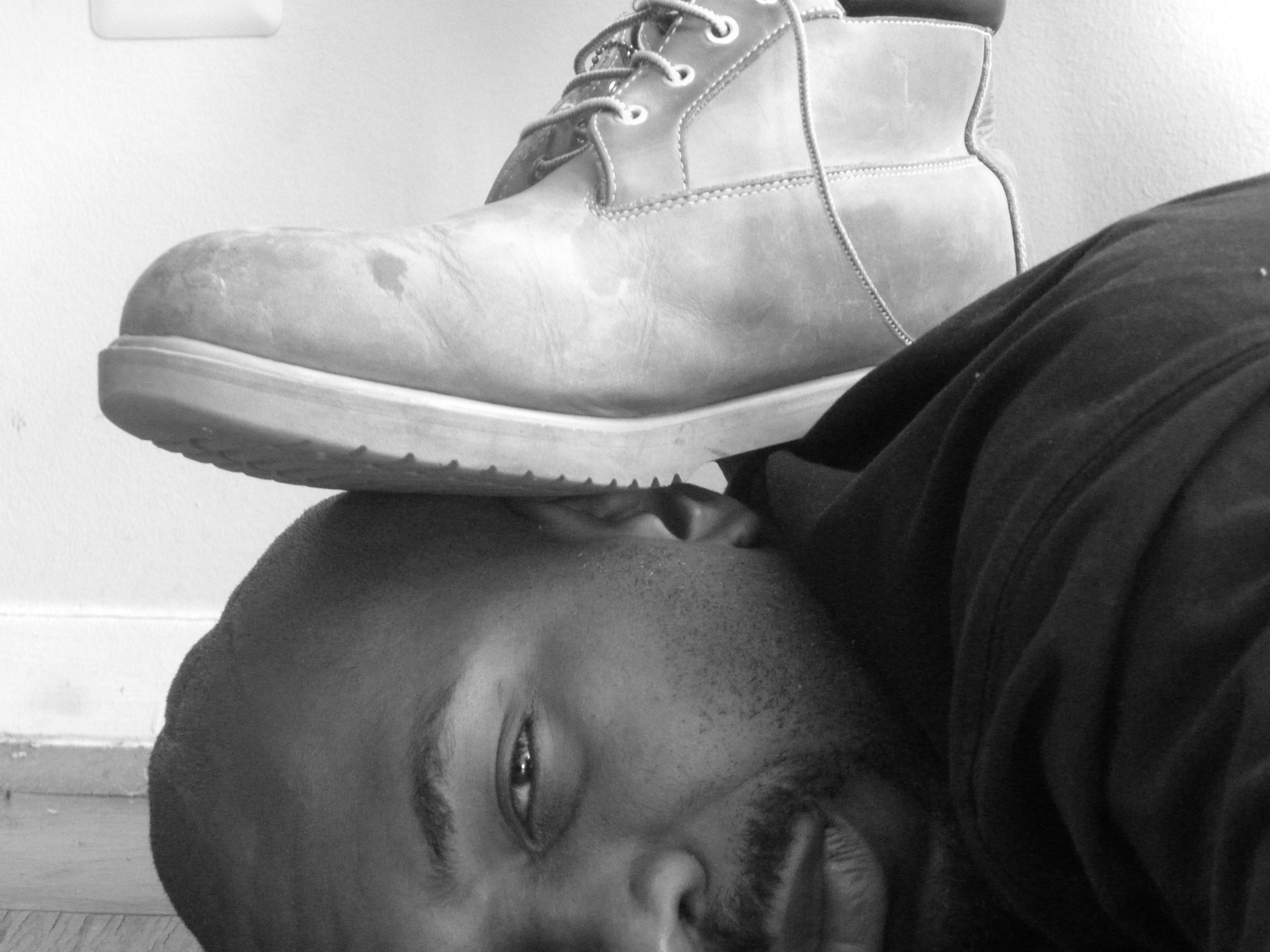
Foot On My Neck & Head, symbolic of my years as a Hebrew-Israelite (also of grad school), April 18, 2011. (Donald Earl Collins).

Foot On My Neck & Head, symbolic of my years as a Hebrew-Israelite (also of grad school), April 18, 2011. (Donald Earl Collins).

Maybe that was part of the reason why Trotter would constantly “run interference” on my behalf, to protect my “interests” during my four years there. Because, despite all the long hours, the sweat, tears and blood, there were folks at CMU who just saw him as a mere Black man, not a colleague or scholar every bit their equal. Given the books, the articles, the grants and so many other accomplishments, Trotter was easily the most productive professor in the department.

None of this justified how Trotter treated me when I was his student. I was semi-aware of the racial politics of accomplishment denial that folks around us practiced. I often chalked it up to jealousy or stress, thinking that the quality of my work or — to use Trotter’s terminology — my scholarship would show the academic world my worth. What White disdain toward Glasco and Trotter — and Trotter’s harassment of me — taught me, though, is that I’d have to be White in order for my accomplishments to seriously matter in academia, and I wasn’t planning on being White in my lifetime. And, that intellectual Whiteness can be nurtured and grown into Black professors.

In the years since finishing my own PhD, I’ve faced my own dilemmas around my achievements. I’ve at times attempted to fit in by downplaying my publications, by not bringing up my degrees, by not talking about my fellowship awards. What have I learned? To deny myself of my own accomplishments is like making a fine wine but not even daring to take a sip. White accomplishment deniers be damned.

Cold Snap 1994

09 Thursday Jan 2014

Posted by decollins1969 in 1, Academia, Carnegie Mellon University, culture, Eclectic, Pittsburgh, Pop Culture, University of Pittsburgh, Youth

≈ Leave a comment

Tags

Cold Snap, John Modell, Media Coverage, Polar Vortex, The Day After Tomorrow (2004)


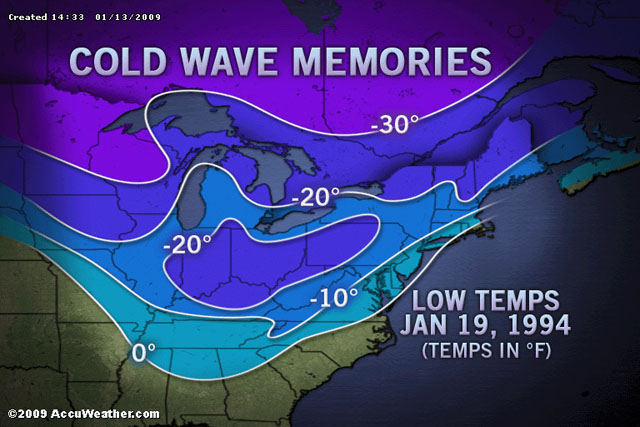
East Cold Wave Compared To 1994,  January 13, 2009. (http://www.accuweather.com).

East Cold Wave Compared To 1994, January 13, 2009. (http://www.accuweather.com).

This week’s so-called polar vortex is hardly the coldest weather I’ve ever experienced, whether living in New York, Pittsburgh or DC, or visiting places like Chicago and New Hampshire in the dead of winter. But like all things driven by traditional and social media coverage, anything that happened five minutes ago becomes the penultimate event of all time.

But imagine a day that was so cold that when the temperature rose to -20°C (that’s -4°F) three days later, it felt like a heat wave. A day that produced multiple states of emergency for much of the country. A day where your windows had thick sheets of ice on their panes, and your breath turned into icicles before you started to take in air.

I’m remembering a day twenty years ago exactly like that, one very different from the current cold snap across much of the Northern US right now.  And yes, the term is and will always be cold snap, as a vortex conjures end-of-times climate change similar to the movie The Day After Tomorrow (2004). Torrents of snow fell in the ‘Burgh, in New York, in Chicago and DC. So much snow fell in Pittsburgh that both Pitt and Carnegie Mellon shut down — something that only happens on near apocalyptic days. By the end of that month, Pittsburgh had already set a seasonal record for snowfall at 96 inches. Of course, that was nothing compared to Chicago, Cleveland or Buffalo that winter.

Frozen Pittsburgh, panoramic three rivers shot,  January 7, 2014. (Steve Mellon, http://www.post-gazette.com).

Frozen Pittsburgh, panoramic three rivers shot, January 7, 2014. (Steve Mellon, http://www.post-gazette.com).

What made it worse was the record cold weather. Over the course of nine days, between January 10 and 19, the temperature fell from a bearable 15° to 10, 8° , 5°, -2°, -10°, -15°, and to -22° on Wednesday, January 19, ’94. The wind chill that day made it feel like -50°. New York was -15° that day, and DC a balmy -11°. Only Chicago had it worse in terms of major cities, a -26° degree day with Lake Michigan wind chills of -70°. It snowed on most of those days, making conditions about as bad as living in Fairbanks, Alaska in the dead of winter.

I awoke to a cold studio apartment on January 19, even though the heat was at full blast and I’d sealed my windows with plastic. I turned on the TV, and found that the Pennsylvania governor had declared a state of emergency because of the cold and because the state’s electrical grid was on the verge of collapse. All businesses, schools, and colleges, as well as all non-essential state work, was to stop that day to preserve energy so that we wouldn’t freeze to death. To a business, everyone complied with the governor’s order.

Everyone except Carnegie Mellon, that is. They cited that they were a private and not a state institution as the reason for them not shutting down that day. Never mind that students who lived off campus would have to brave the killer temperatures to come to class. Or the fact that Pitt, a private institution with far more students than Carnegie Mellon, only two blocks away, was completely shut down. Or the fact that Carnegie Mellon, like the rest of the state, relied on the same overloaded power grid and was stretching limited resources.

So I prepared to go to my 2 pm course. Normally I would’ve walked the 2.75 miles from East Liberty to campus. Even I recognized that -22 was too cold for me to be out in for more than a half-hour, and this a forty minute walk for me in the ice and snow. I wore long-johns and sweats, two layers of socks insulted in plastic Giant Eagle bags that I’d put in my high-tops. I wore six layers of upper body clothing, snapped my hood on my winter jacket, pulled down my black wool cap to my eye lids, and wrapped my blue scarf around my mouth and neck.

I tried to time the bus so that I wouldn’t outside more than a few minutes. With the twenty-mile-per-hour wind gusts, it was like someone was trying to suck the life out of me. It hurt to breathe. Yet I found it funny to feel the icicles forming on my nose hairs and mustache. I took the first bus that came, the old 71C, which didn’t stop close to Carnegie Mellon, did stop right across the street from the Cathedral of Learning, about a half-mile from Baker Hall and my class.

Pitt, of course, was a ghost town. On the bridge that connected Pitt to Schenley Park and the southern entrance to Carnegie Mellon, two idiot joggers passed me, proving once again the dominance of brave alpha males in their attempts to control the world.

Michigan lighthouse entombed by ice, St. Joseph, Michigan, January 6, 2014. (Thomas Zakowski, HotSpot Media, via http://dailymail.co.uk).

Michigan lighthouse entombed by ice, St. Joseph, Michigan, January 6, 2014. (Thomas Zakowski, HotSpot Media, via http://dailymail.co.uk).

Upon entering Baker Hall, I was told by security that Carnegie Mellon was closing after all. I learned from the departmental office that the governor had personally called the president of Carnegie Mellon and ordered the closing under the threat of a $1 million-per-day fine, or something pretty close to that. So the elitist university was shutting down after all, at 2 pm. We could all go home. Or so we thought. John Modell decided that our classes were too precious to cancel over a little thing like a state of emergency. Now I knew that the man had taught for years at U Minnesota, so -22 for him was just a normal winter day, I guessed.

An hour later, with the heat off, we could all see our breath as Modell yammered on and on about cultural anthropology and the meaning of objectivity in that discipline. All I know was that it was way too cold to sit in a classroom wondering what would kill us first, Modell’s disjointed diatribes or the bitter cold classroom. If we’d been ten years younger, Modell would’ve gone to jail.

Finally, Modell released us from his professorial grip, around 3:20 pm. He even acknowledged that is was just too cold to continue class. “We’ll make this up next week,” he said. Yeah, as if he couldn’t have said that an hour before.

Lies We Tell Each Other When In College

04 Saturday Jan 2014

Posted by decollins1969 in 1, Academia, Boy @ The Window, culture, Eclectic, Mount Vernon High School, Mount Vernon New York, Pittsburgh, Politics, Pop Culture, race, University of Pittsburgh, Youth

≈ Leave a comment

Tags

Big Lies, Campus Climate, College Culture, College Retention, College Success, Dishonesty, Disidentification Hypothesis, Grade Inflation, Higher Education, Lying, Stereotype Threat


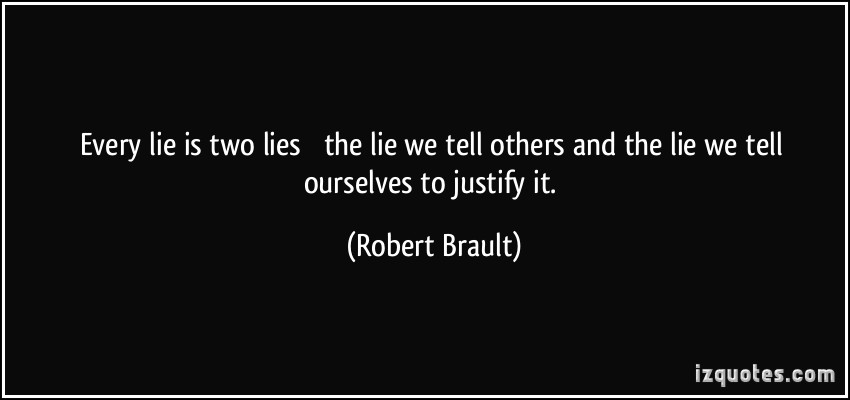
Every lie is two lies quote, Robert Brauilt, January 4, 2014. (http://izquote.com).

Every lie is two lies quote, Robert Brauit, January 4, 2014. (http://izquotes.com).

I thought about posting this at the beginning of this week, but decided against it, figuring that I should end ’13 on a more positive tip. But it must be said that one of the critical issues that we in higher education face in terms of college retention and success is the sheer lack of honesty surrounding student performance, especially in the first year or two of any student’s enrollment. No, I’m not talking about grade inflation — for students doing okay, especially at elite colleges, that’s another rampant issue. It’s about the lies students tell themselves, each other and their loved ones about their performance prior to either being caught in a web of them or, worse still, dropping out altogether.

As a college student and as a professor, I found and find it fascinating and disheartening when I’ve learned of the fantasy life of a student’s alleged good grades being shattered by reality. I fell into this trap myself during my first semester at the University of Pittsburgh. I only tell part of this story in Boy @ The Window. Yeah, I was nowhere near dropping out after a 2.63 GPA first semester (A in Astronomy, B- in Pascal, C in Honors Calc I, and a C in East Asian History), but I relied on an annual GPA of a 3.0 or higher to maintain my academic scholarship.

Yet from about the second week in December ’87 until I received my grades from Pitt on this date twenty-six years ago, I maintained the lie that my GPA was “around a 3.2.” The main difference — I gave myself a C+ in Honors Calc and a B in East Asian History. Mind you, I hardly showed up for either class most of the month of November! I was homesick, heartbroken, and unhealthily horny (and on two occasions hung over) most of the last six weeks of that semester.

The lies we tell ourselves (self-deception), Scientific America, February 4, 2012. (Richard Mia).

The lies we tell ourselves (self-deception), Scientific America, February 4, 2012. (Richard Mia).

So I told my former classmates like Laurell and Erika that my GPA was a 3.2. I told my dorm mates Samir and Chuck the same. It was a mild lie, I realized even at the time, and I knew that if I buckled down, that I could overcome my own lie, especially since I could lose my scholarship if I didn’t. And with a 3.33 second semester in Winter ’88, I did pull my GPA over the 3.0 mark, and in the process, decided not to tell any lies that big ever again.

But over the years, I’ve learned that I was hardly alone in the lying-about-my-college-experience category. The first time I figured this out was at the end of ’88, twenty-five years ago this week. It was a lunch outing with Laurell, her friend Maria and former classmates JD and Joshua at a pizza shop in the Fleetwood section of Mount Vernon. After the previous sixteen months of the Phyllis obsession, rage and grade-raising campaign, homelessness and financial struggles, I was finally fully on track for graduation and potentially, grad school. With this group of former classmates, though, almost all White, all but Laurell with upper middle class resources, I realized too that their struggles, or blues, weren’t exactly like mine.

As I wrote in Boy @ The Window:

There was a lot of “everything’s goin’ well” type of discussion going. Yet I got the sense that things weren’t all that great. Then JD admitted that he was a semester away from academic probation at Berkeley. His engineering classes were kicking his butt. From the looks of things, he was doing much better athletically than anywhere else, having bulked up to 190 with twenty extra pounds of muscle. Josh then admitted that his academic and social life wasn’t exactly going as planned. “I don’t know which one is worse,” he told us. He’d grown four or five inches since MVHS, good enough to put him around five-five or five-six. Laurell, of course, had a killer GPA at Johns Hopkins…and just loved things there. What she didn’t mention, between home and school, was that she was on the verge of burnout, 3.6 average or not…As for me, I talked a bit about some of my new friends and a couple of my classes. Nothing, though, about the drama of the previous year.

Umm, New York style pizza, Vesuvius Pizza, Brooklyn, NY, January 4, 2014. (http://yelp.com).

Umm, New York style pizza, Vesuvius Pizza, Brooklyn, NY, January 4, 2014. (http://yelp.com).

Given how they had reacted to my previous revelations of tiny nuggets from my life while we were in high school, I knew that they would have nothing to say about overcoming homelessness and my Phyllis obsession, much less my now 3.2 GPA overall. At the same time, though, I thought it better to say nothing at all than to tell half-truths and bald-faced lies about my college performance and experiences.

I’ve seen so many students do what I and my former classmates did during our first semesters of college over the years. They lie to me about their issues with my courses, they lie to themselves about their performance and preparation. Mostly, they lie to their friends and family to protect themselves from embarrassment. They lie until the truth of their performance shows up, in their grades, in academic probation, in suspensions and expulsions, in dropping out, in other myriad and dangerous ways.

And we in higher education encourage these lies, as if the money and grade trail won’t expose the reality of struggle and failure for so many. This is where we as educators and administrators need to be much more proactive, to encourage students to seek help, to tell the truth and not bury themselves in a coffin of lies.

Observation and Action, Before and Now

01 Wednesday Jan 2014

Posted by decollins1969 in 1, Boy @ The Window, culture, Eclectic, Mount Vernon High School, Mount Vernon New York, My Father, Pittsburgh, Pop Culture, University of Pittsburgh, Youth

≈ Leave a comment

Tags

Acceptance, Action, Activism, Coping Strategies, Growing Up, Inaction, Observation Mode, Resolutions, Self-Awareness, Self-Reflection


Michael Cerveris as The Observer, code name September, via Fringe (2008-13), January 1, 2014. (http://fringepedia.net/wiki/The_Observer).

Michael Cerveris as The Observer, code name “September,” via Fringe (2008-13), January 1, 2014. (http://fringepedia.net/wiki/The_Observer).

Believe it or not, I’m a naturally shy person. I realize that this sounds like a contradiction, especially since so much of my life is out there for the world to read and see. But shyness doesn’t necessarily mean introverted and scared of people and the world. That came later, my preteen and teenage years. The crush of cliques and ostracism that forced me into becoming a loner helped shape the way I saw people.

On the one hand, I’ve always found our tremendous capacity for love and hate, compassion and coldness, creation and destruction fascinating. On the other, I have a well-developed sense of disdain for the great human capacity for willful ignorance, bigotry and shallow thinking. It means that there are times that I love being around family, friends and people in general, and there are times I could put a good portion of humanity in a sack and drop them over Niagara Falls.

For both sides of my love-disdain relationship with my fellow humans, I developed a coping strategy more than thirty years ago that I’ve come to recognize as my “observation mode.” It was especially helpful to be an observer during my Boy @ The Window years at Davis Middle School and Mount Vernon High School. I saw so many things occur that aren’t in my memoir, but informed my thinking about people and life and myself. Things like young women yanking out hair and earrings and nails over some idiot guy. Or a Class of ’87 student giving birth near the Cosmetology Department. Or teachers driving out of the parking lot at warp factor nine within fifteen seconds of that end-of-the-school-day, 2:50 pm bell.

USS Enterprise at warp screen shot, Star Trek (2009 - alt reality), January 1, 2014. (http://static3.wikia.nocookie.net/).

USS Enterprise at warp screen shot, Star Trek (2009 – alt reality), January 1, 2014. (http://static3.wikia.nocookie.net/).

Most of all, I observed that no matter how hard I tried, no matter how smart I showed myself to be, that I would never be one of them, at home or at school. At 616, I was a brother, the usurper eldest brother who was also a bit of a father, uncle, worker, husband, and resistance leader, but not part of a functioning family. In Humanities — at Davis and MVHS — I was an underachieving smart guy who never said anything and too uncool to be around, even though I said plenty — and attempted to do plenty — while I was there.

I understood back then that my observations and my actions in response to my observations didn’t and couldn’t match up. I had very little control over my life prior to the University of Pittsburgh. I had precious little access to money, time and the physical and mental space necessary to act upon my observations. So much so that I could easily stay in observation mode in my own life for months at a time, turning one of my key coping strategies into a ball and chain, allowing opportunities to change how I saw myself and others go by in the process.

There were a few areas in which I acted beyond observation. My efforts to get into college, my constant resistance to my then idiot stepfather Maurice, taking care of my younger siblings, trying out for football and baseball, and tracking down my father Jimme for money. And though this was hardly enough for a growing young man to live on, it was enough for me to survive Mount Vernon before moving to Pittsburgh.

Artist rendering of supernova SN 2006gy, May 7, 2007. (http://science.nasa.gov).

Artist rendering of SN 2006gy, the brightest supernova observed to date, May 7, 2007. (http://science.nasa.gov).

But it would take my five days as a homeless student before I decided to be the actor I needed to be in my own life, and not just an observer. I found my way because the only other alternative I had was to go back to Mount Vernon and 616 and wait around for something to happen, and I’d long grown tired of waiting, even on God. It was beyond time for me to help myself, to come out of the bleachers and get on the playing field as the quarterback in my own life. That bout with homelessness was the supernova I needed and used to shoot myself forward to three degrees, a career as a historian, educator, nonprofit manager and writer, to dating and marriage and fatherhood.

I still have an observation mode, though. At conferences, particularly academic conferences, and especially ones in which I am not a presenter. At literary festivals and other gatherings in which I feel the brown-nosing bullshit quotient is just too high. But with Boy @ The Window now out in paperback after more than seven years of interviewing, writing and rewriting, with my son more than halfway toward adulthood, and with me within two years of the middle ages, I need to be done with observation for now.

On Becoming A Father — 11 Years Later

16 Monday Dec 2013

Posted by decollins1969 in 1, Boy @ The Window, Carnegie Mellon University, culture, Eclectic, Jimme, Marriage, Mount Vernon New York, My Father, New York City, Pittsburgh, Pop Culture, University of Pittsburgh, Youth

≈ Leave a comment

Tags

Fatherhood, Fear, Fears, Pregnancy, Self-Awareness, Self-Discovery, Self-Revelation, Thanksgiving


Wife and son, August 16, 2003. (Donald Earl Collins).

Wife and son, latter at two weeks and change old, August 16, 2003. (Donald Earl Collins).

This week eleven years ago is when I first learned from my wife that she was pregnant with our one and only child, our son Noah. It was a high that took a few months of post-natal sleep deprivation to come down from, not to mention a fight to keep my job and move on from it courtesy of AED in ’03 and early ’04. But learning that I was soon to become a father didn’t just bring joy and euphoria. It came with baggage and the fear that my baggage would be a handicap to me as a father and to my gestating son.

Luckily I had a bit of time to prepare for becoming a father. I figured out that my wife was pregnant a few weeks before she did. It was on Thanksgiving Day ’02, and I was whisking a cream sauce to go with some chocolate torte dessert I was making. I asked my wife to watch over the cream and to make sure that it didn’t boil over when I went to the bathroom. Sure enough, the sauce was boiling over when I came back. I said sarcastically, “Thanks for messing up the cream!,” which led to my wife going to the bathroom, crying. You have to understand, my wife rarely cries, and never cries over my brand of New York-esque sarcasm. So when she said, “I’m sorry,” I said, “It’s okay, honey,” followed by, “Why are you literally crying over boiling cream? Are you sure you’re not pregnant?”

From that moment until my wife had given herself an EPT test three weeks later, I’d already started the process of psychological preparation. We’d barely begun trying to have a kid. We talked about it in July ’02, changed our diets in August and September, and I started taking herbal supplements by the end of September. Two months of actual trying in total. Really? That’s all it took?

All I knew was that fatherhood would bring back so many memories, some good, most of them bad and ugly. About my father Jimme and his alcoholism and homophobia as directed at me, my ex-stepfather’s physical and psychological abuse, about having to serve in my father-like role with my younger siblings and with Darren. By the time I’d reached grad student, some eleven years earlier, I wasn’t sure if I’d ever fall in love or get married, much less become a father. I mean, who would want to be with me, have little Donalds and Donnas running around that had about half of my features and traits? I wasn’t sure if I’d ever want that.

Fast-forward through grad school at Pitt and Carnegie Mellon, through four and half years of dating and two years of marriage. I was in a different place, not much different, but different enough to be much more sure about what I wanted. As I said to my wife, “There are four days out of the week where I’m sure about having a kid, two where I don’t want a child, and one where I simply don’t know.”

Be(com)ing A Father

Be(com)ing A Father

That was still good enough for my wife. And she’s the reason I could be firmly committed to fatherhood. I don’t think that I would’ve become a father otherwise. Have I made mistakes over the past ten years and five months with Noah? Of course! I once left him in a carrier on our table when he was five months over, and it flipped over end-over-end, scaring the crap out of him (literally!). I’ve yelled at him when I shouldn’t have, and I’ve cursed out at least one hundred too many bad DC area drivers with him in the back seat of our Honda Element over the years.

But despite all of the ups and downs in my life, career(s) and even marriage, one of the handful of things I’m sure about is having become a father to my son a good eight and a half months before he was born. I still check on him nearly every night to watch him sleep (and breath).

← Older posts
Newer posts →

Boy @ The Window: A Memoir

Boy @ The Window: A Memoir

Places to Buy/Download Boy @ The Window

There's a few ways in which you can read excerpts of, borrow and/or purchase and download Boy @ The Window. There's the trade paperback edition of Boy @ The Window, available for purchase via Amazon.com at http://www.amazon.com/Boy-Window-Donald-Earl-Collins/dp/0989256138/

There's also a Kindle edition on Amazon.com. The enhanced edition can be read only with Kindle Fire, an iPad or a full-color tablet. The links to the enhanced edition through Apple's iBookstore and the Barnes & Noble NOOK edition are below. The link to the Amazon Kindle version is also immediately below:

scr2555-proj697-a-kindle-logo-rgb-lg

Boy @ The Window on Amazon.com: http://www.amazon.com/Boy-The-Window-Memoir-ebook/dp/B00CD95FBU/

iBookstore-logo-300x100

Boy @ The Window on Apple's iBookstore: https://itunes.apple.com/us/book/boy-the-window/id643768275?ls=1

Barnes & Noble (bn.com) logo, June 26, 2013. (http://www.logotypes101.com).

Boy @ The Window on Barnes & Noble: http://www.barnesandnoble.com/w/boy-the-window-donald-earl-collins/1115182183?ean=2940016741567

You can also add, read and review Boy @ The Window on Goodreads.com. Just click on the button below:

Boy @ The Window

Twitter Updates

Tweets by decollins1969
  • RSS - Posts
  • RSS - Comments

Archives

  • June 2025
  • April 2023
  • September 2022
  • August 2022
  • July 2022
  • June 2022
  • May 2022
  • April 2022
  • March 2022
  • January 2022
  • December 2021
  • November 2021
  • October 2021
  • September 2021
  • August 2021
  • July 2021
  • June 2021
  • April 2021
  • March 2021
  • February 2021
  • January 2021
  • December 2020
  • November 2020
  • October 2020
  • September 2020
  • August 2020
  • July 2020
  • May 2020
  • April 2020
  • March 2020
  • January 2020
  • December 2019
  • November 2019
  • August 2019
  • July 2019
  • June 2019
  • May 2019
  • April 2019
  • March 2019
  • February 2019
  • January 2019
  • December 2018
  • November 2018
  • October 2018
  • September 2018
  • August 2018
  • July 2018
  • June 2018
  • May 2018
  • March 2018
  • February 2018
  • January 2018
  • December 2017
  • November 2017
  • October 2017
  • September 2017
  • August 2017
  • July 2017
  • June 2017
  • May 2017
  • April 2017
  • March 2017
  • February 2017
  • January 2017
  • December 2016
  • November 2016
  • October 2016
  • September 2016
  • August 2016
  • July 2016
  • June 2016
  • May 2016
  • April 2016
  • March 2016
  • February 2016
  • January 2016
  • December 2015
  • November 2015
  • October 2015
  • September 2015
  • August 2015
  • July 2015
  • June 2015
  • May 2015
  • April 2015
  • March 2015
  • February 2015
  • January 2015
  • December 2014
  • November 2014
  • October 2014
  • September 2014
  • August 2014
  • July 2014
  • June 2014
  • May 2014
  • April 2014
  • March 2014
  • February 2014
  • January 2014
  • December 2013
  • November 2013
  • October 2013
  • September 2013
  • August 2013
  • July 2013
  • June 2013
  • May 2013
  • April 2013
  • March 2013
  • February 2013
  • January 2013
  • December 2012
  • November 2012
  • October 2012
  • September 2012
  • August 2012
  • July 2012
  • June 2012
  • May 2012
  • April 2012
  • March 2012
  • February 2012
  • January 2012
  • December 2011
  • November 2011
  • October 2011
  • September 2011
  • August 2011
  • July 2011
  • June 2011
  • May 2011
  • April 2011
  • March 2011
  • February 2011
  • January 2011
  • December 2010
  • November 2010
  • October 2010
  • September 2010
  • August 2010
  • July 2010
  • June 2010
  • May 2010
  • April 2010
  • March 2010
  • February 2010
  • January 2010
  • December 2009
  • November 2009
  • October 2009
  • September 2009
  • August 2009
  • July 2009
  • June 2009
  • May 2009
  • April 2009
  • March 2009
  • February 2009
  • January 2009
  • December 2008
  • November 2008
  • October 2008
  • September 2008
  • August 2008
  • July 2008
  • June 2008
  • May 2008
  • April 2008
  • March 2008
  • February 2008
  • January 2008
  • December 2007
  • November 2007
  • October 2007
  • September 2007
  • August 2007
  • July 2007
  • June 2007

Recent Comments

MaryPena's avatarMaryPena on My Day of Atonement/Bitter Hat…
decollins1969's avatardecollins1969 on No Good Teaching Deed Goes…
Mary Rose O’Connell's avatarMary Rose O’Connell on No Good Teaching Deed Goes…

NetworkedBlogs on Facebook

NetworkedBlogs
Blog:
Notes From a Boy @ The Window
Topics:
My Life, Culture & Education, Politics & Goofyness
 
Follow my blog

616 616 East Lincoln Avenue A.B. Davis Middle School Abuse Academia Academy for Educational Development AED Afrocentricity American Narcissism Authenticity Bigotry Blackness Boy @ The Window Carnegie Mellon University Child Abuse Class of 1987 CMU Coping Strategies Crush #1 Crush #2 Death Disillusionment Diversity Domestic Violence Economic Inequality Education Family Friendship Friendships Graduate School Hebrew-Israelites High-Stakes Testing Higher Education History Homelessness Humanities Humanities Program Hypocrisy Internalized Racism Jealousy Joe Trotter Joe William Trotter Jr. K-12 Education Love Manhood Maurice Eugene Washington Maurice Washington Misogyny Mother-Son Relationship Mount Vernon High School Mount Vernon New York Mount Vernon public schools Multiculturalism MVHS Narcissism NFL Pitt Pittsburgh Politics of Education Poverty President Barack Obama Race Racial Stereotypes Racism Relationships Self-Awareness Self-Discovery Self-Reflection Sexism Social Justice Teaching and Learning University of Pittsburgh Violence Whiteness Writing

Top Rated

Blog at WordPress.com.

  • Subscribe Subscribed
    • Notes from a Boy @ The Window
    • Join 103 other subscribers
    • Already have a WordPress.com account? Log in now.
    • Notes from a Boy @ The Window
    • Subscribe Subscribed
    • Sign up
    • Log in
    • Report this content
    • View site in Reader
    • Manage subscriptions
    • Collapse this bar
 

Loading Comments...