• About Me
  • Other Writings
  • Interview Clips
  • All About Me: American Racism, American Narcissism, and the Conversation America Can’t Have
  • Video Clips
  • Boy @ The Window Pictures
  • Boy @ The Window Theme Music

Notes from a Boy @ The Window

~

Notes from a Boy @ The Window

Category Archives: race

Walking In New Orleans

12 Thursday Apr 2012

Posted by decollins1969 in 1, Academia, Boy @ The Window, culture, Eclectic, High Rise Buildings, Pop Culture, race, Youth

≈ Leave a comment

Tags

1994, Absolut Vodka, AERA, American Educational Research Association, Armstrong Park, Bruce Anthony Jones, Career Development, Citron Lemonade, Conference Presentation, Identity Issues, In The Closet, New Orleans, Pralines, Presentation, Travel, Trips, Tulane


My AERA 1994 annual meeting program for New Orleans, April 11, 2012. (Donald Earl Collins).

Only in the past two decades have I done any travel worth mentioning (see “My First Vacation, Valedictorian Included” post from March ’12). When I have traveled, it’s mostly been for work or for career.

Some of my most significant career-related trips have been as a result of presentations at the American Educational Research Association (AERA) annual meetings, which will be in Vancouver, British Columbia (I won’t be in attendance this year — too expensive, and other reasons beyond that). It is just about the largest gathering of academic professionals that I know of in the US/Canada, with 15,000-20,000 attendees and presenters.

Over the years, I’ve attended six AERA conferences, and presented at three (in ’94, ’96 and ’07). The first one, though, was the most memorable, for a variety of reasons. For one, I actually spent my first two days of this nine-day trip in Houston, as I managed to arrange a layover before heading out to New Orleans to visit the Gill side of my lineage for the first time (see my “We Are Family” post from April ’09). That was strange, mostly in a good way, as I could see my mother reflected in the eyes and accents of my uncles and cousins.
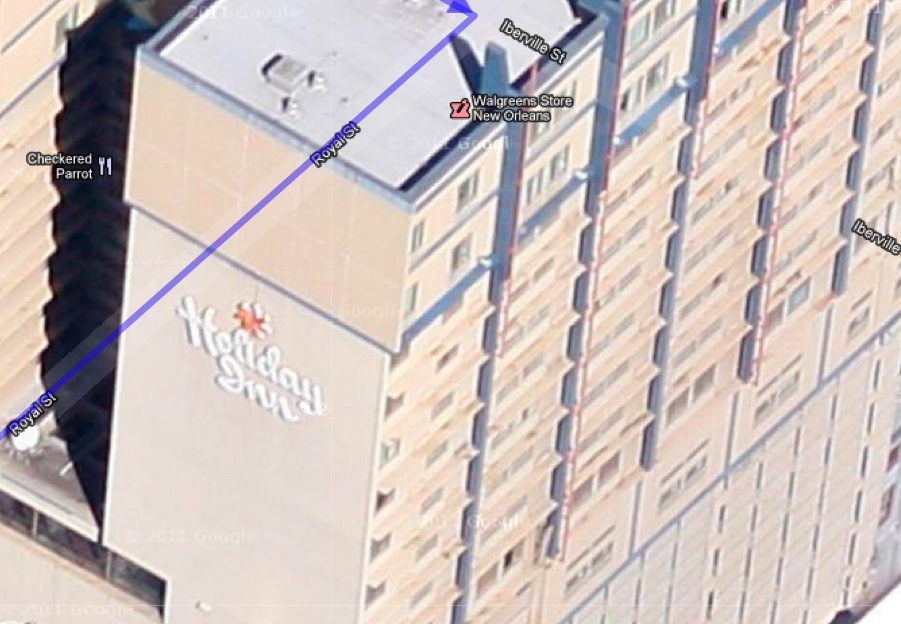
Holiday Inn, French Quarter, New Orleans, 2012. (Google Maps), where folks stayed for AERA 1994.

But New Orleans was a unique experience beyond my two days with my extended family in Houston. The night I arrived, there were five homicides, including at least two in the French Quarter. About an hour after I check in at the rundown Holiday Inn in which I roomed with my professor Bruce Anthony Jones, another professor, and a doctoral student from Pitt’s School of Education, we went for a walk on Bourbon Street. It was a nice, warm and breezy night for the walk, at least until I saw two people doing ballistic vomiting on a corner about two blocks from our hotel.

The next day, that Monday afternoon, was our presentation on multicultural education. We went and met up with another Pitt education doctoral student at some restaurant a couple of blocks away for lunch, all dressed up and ramped up for our presentations. It was sunny and warm at midday, the perfect day to eat outdoors. When we ordered, I hadn’t really noticed the fact that all of the drinks on the menu were alcoholic ones. I asked Bruce about the Citron Lemonade, and he said, “That’s a good choice.” Despite years around my alcohol dad, I didn’t know that the Citron part was Absolut Vodka with a lemon twist.

Apparently, neither did my fellow grad students. I was on my second one when I felt a serious buzz, before I

1-liter bottle of Absolut Citron Vodka, April 11, 2012. (Donald Earl Collins).

slowed down to savor the taste of lemons, sugar and vodka on my tongue. The other two students seemed similarly relaxed. I said to Bruce, “[y]ou didn’t tell me that this drink had vodka in it!”  Bruce said to all of us in response, “but you’re all relaxed now, right?,” in reference to our presentation. His comment reminded me to look at my watch, which showed that our presentation was in fifteen minutes. We hurried to pay our bill, walked quickly to the Marriott, and did what turned out to be a solid presentation.

The business part of the week was over, but the rest of the week in New Orleans became a learning experience. I did an informational interview with two professors from Illinois State University, who told me to finish my doctorate at Carnegie Mellon. Barbara (one of the two Pitt doctoral students) and me checked out the blues and jazz bars in the Quarter, and went to Armstrong Park for an Afrocentric event that Saturday. I took the trolley out of downtown to the Tulane district and then back to experience more of the city. And I bought pralines on behalf of Kate Lynch, a professor at Carnegie Mellon, who apparently loved the stuff.

But the most disturbing part of the trip occurred between that Friday morning and Sunday morning. The other Pitt grad student had been acting a bit strange during the week, spending less time at AERA, sleeping in late at our hotel, and showing no interest in hanging out with the rest of us. Then, he just disappeared. He packed up and left without a note and without paying his share of the hotel bill. We didn’t know until the following Tuesday that he had spent the weekend in Biloxi, Mississippi, allegedly hanging out on the beach.

I said to Bruce, “[m]aybe there was just too much testosterone in the room for him.” Bruce didn’t say anything, as he looked completely confused. I knew that at least one of the professors with whom we roomed was gay, and that Bruce was in the closet as well. I assumed, correctly as it turned out, that my grad student roommate bugged out because he needed a release from the tension he felt being around these professors. Me being heterosexual and spending the week at AERA and on the town, I didn’t notice that my fellow grad student was gay until after he’d disappeared himself.

It was a sad way to end such a wonderfully strange trip. New Orleans was a great city with a diverse culture and history, and despite Katrina and the city’s Whitening, maybe it still is. I just have no desire to return, as once was enough for me, good and bad.

Anatomy of An Abuser, Hebrew-Israelite Style

07 Saturday Apr 2012

Posted by decollins1969 in 1, Boy @ The Window, culture, Eclectic, Hebrew-Israelite, Marriage, Mount Vernon New York, music, Pop Culture, race, Religion, Youth

≈ Leave a comment

Tags

Benson & Hedges Menthol, Blackness, Child Abuse, Emotional Abuse, Isshin-ryu Karate, Manhood, Psychological Abuse, Religion, The Jammers, Verbal Abuse


Abomination as played by Tim Roth, The Incredible Hulk (2008) screen shot, April 6, 2012. (http://www.comics2film.com). Qualifies as fair use under US Copyright laws, as the image is only used once and is rendered in low resolution to avoid piracy.

This month marks thirty years since my idiot stepfather Maurice Washington first attempted to make me a man, a Black man, a Hebrew-Israelite man, all at the same time, through karate and physical abuse. But there were any number of signs that his conversion to this strange mix of Afrocentricity and Judaism wasn’t genuine, and that his re-entry into our lives as husband and father in April ’81 was teetering on the edge of disaster only twelve months later. At least for me, my older brother Darren, Maurice’s two young boys, and for my mother. Certainly not for him.

As early as September ’81, my chronically unemployed stepfather had started acting strange, expecting us to run errands for him without question or comment. Armed with the conviction that comes with a recent religious conversion (who during the early-80s was “Judah ben Israel;” see my “The Tyranny of Salvation” post from April ’11), Maurice began to demand that we call him “Dad.” We were required to wear our kufis whenever we left 616, which identified us immediately as our stepfather’s kids to our idiot 616 and 630 East Lincoln neighbors.

Maurice also made it mandatory for us to pray aloud every night, giving us a four-page, single-spaced document full of “Blessed art thou, O Lord our God, King of the Universe…” lines to recite as part of our daily Black Jewish ritual. The first time we went through it, in both Hebrew and English, it took well over an hour. If we started to nod off, Maurice would slap us upside the head, or actually give us one of his “whuppins.”

His language was also changing, becoming coarser and more threatening as ’81 turned into ’82. For just asking, “Why?” or “What?,” my stepfather would often say, “Take that base outta ya voice, boy, before I cave yo’ chest in!” Maurice would sometimes sing his threats, bellowing “I’m gonna beat yo’ ass, jus’ like a car burns gas,” adding, “And you know that!” at the end. That last part was something he pulled from a song by a disco group called The Jammers. His language was worse now than it had been before he had separated from Mom eighteen months earlier. I found myself scratching my head, and not just because it itched.

By April, Maurice had become a hanger-on at a newly opened Karate studio down the street from 616, next

Benson & Hedges Menthol, hard green pack, April 6, 2012. (http://cigarettespedia.com).

door to the old dry cleaner business on East Lincoln Avenue. He made me come to the studio because he wanted to show me “how to be a man.” But when I saw him on my almost daily runs to the grocery store, he mostly hung out with young Turks and wannabe thugs from the Pearsall Drive projects across the street. Maurice smoked up a storm of Benson & Hedges Menthol while talking about women, being a Hebrew-Israelite, and about me as his kid, at least when I happened to walk by.

My stepfather made it known that he thought of me as soft, a boy who spent too much time in books and not enough time on New York’s mean streets. These despite the fact that we lived in Mount Vernon, a quietly violent city whose meanest streets were on the South Side, the part of town that bordered the Bronx. Not that 616 and the Pearsall Drive projects (consisting of six five-story buildings) down the street didn’t qualify as “mean.” They were tough by North Side standards, but at least people didn’t go into parks with baseball bats attempting to head hunt (see my “A Baseball Bat and a Father’s Absence” post from July ’11).

Maurice had tried to teach me and my older brother Darren Isshin-ryu Karate two years earlier. Despite myself, I did pick up a few moves. Now he decided that I would learn how to fight no matter the consequences. It was all about breaking bones and inflicting maximum pain. When I told Maurice that I didn’t want to learn, he said “You will learn because I’m your father” as he started to throw hard punches into my midsection.

Squidward losing to Seabear, SpongeBob camping episode, 2011, April 6, 2012. (Nickelodeon). Qualifies as fair use under US Copyright laws due to picture's low resolution.

After I yelled “You’re not my father!,” he drop-kicked me to the floor. Maurice, all six-foot-one and 270 pounds of him, then pulled me up by my arms, slammed me back-first into a mirrored wall, and punched me several times in the head, chest, and stomach until several of the men in the studio surrounded him. My stepfather, completely exasperated and winded, yelled “Don’t you EVER say that again, muthafucka! I’ll kill you next time!” I ran for home with a knot on my forehead that didn’t go down for almost a week.

I was slowly learning a very valuable lesson (see my “Never As Good As The First Time” post from April ’11). I didn’t have control over anything in my life, even my emotions. I also learned to not trust Black men, especially fast talkers who thought with their fists and penises like dumb ass Maurice. It took several years for me to unlearn part of that second lesson, no thanks to him.

The Value of An American (Black) Life

04 Wednesday Apr 2012

Posted by decollins1969 in 1, Boy @ The Window, Christianity, culture, Eclectic, Patriotism, Politics, Pop Culture, race, Religion

≈ Leave a comment

Tags

American Life, Final Toxicology Report, George Zimmerman, Life and Death, N-Word, Race, Rick Santorum, Sanford Florida, Trayvon Martin, Value of Human Life, Whitney Houston


Flag and flag pole from US Marine Corps War Memorial, Arlington, VA, March 31, 2006. (Christopher Hollis via Wikipedia). In public domain via Creative Commons Attribution 2.5 Generic license.

I learned years ago that many in this great country in which I’m a citizen didn’t value my life relative to other citizens. It wasn’t just my right to live that has occasionally come into question. It was my right to “life, liberty and the pursuit of happiness,” including in K-12 education, higher education, the world of work, where I should live, how I should speak, what I should wear, and whether I should have any success or joy in my life. To have to fight for the most basic and assumed of rights in the richest and most powerful nation on Earth is exhausting, disheartening and maddening.

But enough about my own experience at forty-two years and three months. Recent events involving Whitney Houston, Trayvon Martin and Rick Santorum also illustrate the lack of value some Americans place on other Americans’ lives. We know now after the release of Houston’s final autopsy and toxicology report that in her final days cocaine, alcohol and over-the-counter medications fueled her bloodstream, and years of heart disease combined to an overdose, accidental drowning and death in February. We all know how sad and tragic Whitney’s end was, and the outpouring of support and condolences from all over the world for her and her family.

At the same time, this shows the lack of value Whitney placed on her own life, at least in her final days and moments. More importantly, the death of this once great diva also showed how little the folks around Houston valued her life, and how she lived her life, over her final years and days. I’m not just talking about Whitney’s drug use, alcohol abuse or even taking care of her body and heart. Really, it’s about being a true friend, a person willing to sacrifice a friendship in order to save a friend, to help a friend find herself (or himself, as the case may be). The fact that Whitney is dead is evidence that there weren’t many folks looking out for her best interests in her life, including her.

The Trayvon Martin case is more evidence that some American lives are worth more than others. After more than three weeks of media coverage, we’ve confirmed that, if nothing else. First in line is the great George Zimmerman, the man of the people — at least some of them. He cared another about the life that he took to call Martin among the “assholes [who] always get away” and a “fucking coon.” Second was the Sanford PD, who closed their investigation within hours of beginning it, and took three days to notify Martin’s parents that their seventeen-year-old son was dead. This despite the fact the parents had filed a missing persons report with this same police department. Third in line is the city of Sanford itself, as well as Florida justice in general. It’s been five weeks, and Zimmerman still has yet to be arrested, much less charged or indicted, much less a trial. I guess, in the end, that Zimmerman’s life is worth more than Martin’s to some Americans.

Then there are the words of Rick “Sanitarium” Santorum, a GOP presidential candidate caught frothing out of his butthole for a mouth last Friday. During a speech in Wisconsin, Santorum said “nig-,” then stopped himself, stumbled and started again with “America…” in making a completely different point. Santorum rarely, if ever, describes President Barack Obama as “President Barack Obama.” Him and his opponents have all but allowed constituents to attend their rallies with guns and a bulls-eye with the President’s picture on it. Yet, these pro-lifers supposedly value life. It’s just that they care only for some Americans’ lives, and not others.

Rick Santorum Calls Obama the N-Word (YouTube)

Rick Santorum Calls Obama the N-Word (YouTube)

The only time we as Americans seem to value the lives of “other” Americans is usually when those others are in uniform, overseas in a theater of action projecting American power. Only then, American lives are far more valuable than the lives of Iraqis, Afghans, Pakistanis, and myriad other humans we’ve slaughtered in the hundreds of thousands over the past sixty-two years. But, at least one American life is more valuable than a hundred non-American humans, right?

Today marks forty-four years since James Earl Ray cold-bloodedly murdered Martin Luther King, Jr. while he stood on a balcony of a Memphis motel. He thought that the lives of poor, misguided and racist White Americans was far more valuable than the life of one of the greatest Americans there ever was or will be. Despite forty-four years of using King’s words as fuel for rhetoric and action on civil rights and human justice, we still haven’t solved the problem of the relative value of an American life, especially when it’s a Black one.

Peanuts Land

01 Sunday Apr 2012

Posted by decollins1969 in 1, Boy @ The Window, culture, Eclectic, Jimme, Marriage, Mount Vernon New York, Politics, Pop Culture, race, Youth

≈ 1 Comment

Tags

Ass-Whuppin', Charles Schulz, Charlie Brown, Ebony Pictorial History of Black America, Grounding, Imagination, Inspiration, Intellectual Development, Lucy Van Pelt, Peanuts, Peanuts Gang, Reading, Running Away, Snoopy, World Book Encyclopedia, World War II


Snoopy and Charlie Brown taking a nap, circa 1964, March 10, 2012. (http://wallpaperpimp.com via United Features Syndicate). Qualifies as fair use under US Copyright laws because of low resolution, subject matter and is no longer in production.

I loved Charles Schulz’ Peanuts comic strip and his Charlie Brown and Snoopy books growing up. From the time I turned seven all the way through sixth grade, they helped expand my mind and world beyond 616 East Lincoln Avenue, apartment number A32 and Mount Vernon, New York. So much so that when I had read all of the books available to me through Mount Vernon Public Library, I took the idea of Charlie Brown

Lucy and Charlie Brown, from a Charlie Brown Thanksgiving, November 20, 1973. (http://billluton.com via United Features Syndicate). Qualifies as fair use under US Copyright laws because of low resolution and subject matter.

to heart. I saw myself as the Black version of the lonely misfit of a kid, who could almost grab the brass ring but couldn’t quite hold on to it, who had some friends, but not close ones.

World Book Encyclopedia literally changed my life between December ’78 and April ’79. And with that change came my ability to use Charles Schulz’ Peanuts as the image in my mind’s eye for understanding it all. It was after running away from home to get away from my new stepfather, the now-and-forever abuser and idiot Maurice Washington, whom had married my mother in October ’78. Because my stepfather had pissed me off with another one of his rules, and because I knew that my guardians had already started to argue about money, I ran away from home. I packed two days’ worth of clothing and walked out with the plan that I would get to New Rochelle, find a boat, stowaway and eventually get to Europe or France. There, I could be free.

The Pelham Manor Police found me three-and-a-half hours later, having lured me into the squad car with the promise of hot dogs and orange soda. My mother gave me the belt-ass-whuppin’ of my life at the time, as it seemed to last forever, with her screaming, “You do this again, you won’t be around to cry about it!” I was on lockdown in me and my older brother Darren’s bedroom for six weeks afterward.

It was during those six weeks of no TV and no going outside that I decided to punish my mother and stepfather by ignoring them with books. I cracked open the “A” volume of the ’78 edition of The World Book Encyclopedia and began reading. And reading. And reading. “I’ll show them!,” I thought. Pretty soon I didn’t miss TV. I didn’t have lots of friends, so going out to play became less and less of a hardship. So I kept reading.

By the time I decided to go outside again, it was April ’79, well past my six-week grounding. But going

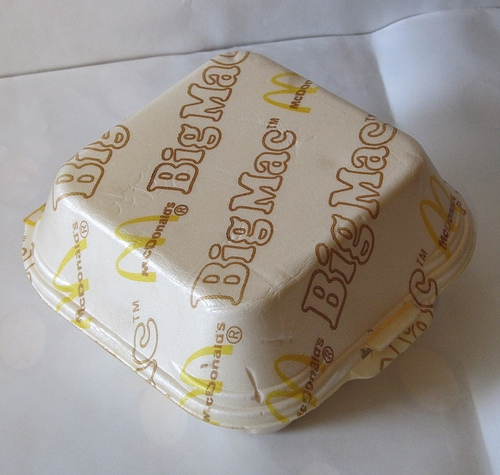
McDonald's Big Mac styrofoam container, 1975, February 27, 2011. (bolio88 via Flickriver.com). Qualifies as fair use under US Copyright laws, as picture is for illustrative purposes only, and said container is no longer manufactured by McDonald.

outside to play for the first time in four months felt more alien to me that what I had been doing after reading sections of World Book Encyclopedia. I’d taken what I’d learned about city government, taxes, urban planning, population density, and created what I called “Peanuts Town” in our bedroom. Charlie Brown was the mayor, and Lucy Van Pelt was his wife. Snoopy, of course, was the deputy mayor and in charge of law enforcement. Once my father Jimme came back into our lives, I’d buy Matchbox cars to drive around the city, and created a restaurant and entertainment row of the city that included a McDonald’s Big Mac and Burger King fries containers as restaurants.

By the end of fifth grade in June ’80, my encyclopedic world view had expanded to include national and international issues, including history and World War II. And not just through World Book Encyclopedia, as I cruised through Ebony’s four-volume Pictorial History of Black America collection that spring also. I made “Peanuts Town” the capital of “Peanuts Land,” and Charlie Brown was the president. By this time, Charlie and Lucy had kids, just like I had a younger baby brother in Maurice.

Snoopy as the World War I Flying Ace on his doghouse Sopwith Camel, circa 1964 (scanned from Thermos lunchbox), January 23, 2008. (Maravin via Wikipedia). Qualifies as fair use under US Copyright laws because of low resolution, with image no longer in production.

I made up maps of this country, including its natural resources and its naval bases. I’d make ships out of aluminum foil, stamped into shapes using the old, heavy wooden frame windows we had in our bedroom. I had made at least fifty battleships, aircraft carriers and cruisers, preparing for the Soviet threat. All without the prospect of nuclear war.

As I kept reading and using my imagination, my SRA tests for fourth and fifth grade confirmed that all of this deep thinking was paying off. I had raised my reading score from 3.9 (just barely at the fourth grade level) to a 7.4 (the equivalent of an above average seventh grader) by the end of fourth grade, and to an 11.0 by the end of fifth. A story of irony, imagination and naivete, the story of my young life, a boy at the window. One of success, of living, of wisdom and love and understand, of self-discovery, of all the things that makes one human.

Almost Doesn’t Count

24 Saturday Mar 2012

Posted by decollins1969 in 1, Academia, culture, Eclectic, Politics, Pop Culture, race

≈ Leave a comment

Tags

Arrogance, Burnout, Carnegie Mellon University, Dissertation, Joe Trotter, Joe William Trotter Jr., Multiculturalism, New York University Press, Niko Pfund, NYU Press, Publishing, Publishing World, Rage, Rejection, Steven Schlossman, Trust


LA Lakers Shannon Brown's missed dunk in Game 1 of NBA Western Conference Finals vs. Phoenix Suns, May 17, 2010. (Getty Images).

The title for this post could also be “It Was Never Almost.” I had one of my best chances at publishing my dissertation on multiculturalism and mid-twentieth century Black Washington, DC (now the book Fear of a “Black” America) in March ’97. But not knowing the publishing world, combined with PTDD (post-traumatic dissertation disorder) from the past year of surviving Joe Trotter and my dissertation committee (see my “’It Is Done’” – 15 Years Later” post from November ’11 and “Letter of Recommendation (or “Wreck-o-Mendation)” post from September ’10) made this three-week period of negotiations a total communications mash-up.

I was in an “I’ll show them” mode in the months after my committee approved my dissertation “‘A Substance of Things Hoped For’: Multiculturalism, Desegregation, and Identity in African American Washington, DC, 1930-1960” at the end of November ’96. Within a month, I made some minor revisions to the 505-page tome, and worked on some query letters for academic publishing houses about turning the dissertation into a book.

I contacted Oxford University Press, Cambridge University Press, Princeton University Press and a few others. I also sent a query to New York University Press. Their acquisitions editor responded enthusiastically, and asked for a copy of the manuscript, which I dutifully sent their way in mid-February ’97.

And that’s when the communications about converting my doctoral thesis into a book went haywire. What was unknown to me was that Steven Schlossman, the chair of the history department at Carnegie Mellon, had been in contact with Niko Pfund, the then head of NYU Press (now president of Oxford University Press), about my dissertation. Three weeks after sending out my manuscript, I received a rejection letter from NYU Press, saying that while my manuscript was worthy of publication, that my “anachronistic use” of multiculturalism to describe the ideas and activities of Black intellectuals and educators in Washington, DC didn’t fly for them.

That same week, I received a telephone call from Schlossman asking me to meet about the dissertation. At his office, I not only learned that he had been in contact with Pfund and NYU Press. I also found out that he had sent them the first fifty pages or so of my dissertation without my permission. I told Schlossman about the fact that I’d already been in contact with NYU Press and that they had rejected the manuscript. But he insisted that his way of going through this process was the best way to go.

I was incensed at the idea that folks were working to publish my dissertation without my input. Especially someone like Schlossman, whom I knew didn’t understand why or how I had planned to use multiculturalism from a historical perspective for a book. I didn’t understand what I planned to do yet, but Schlossman could explain it? I left his office, upset and confused about the lack of communication between me and my department, and within NYU Press itself.

NYU Press-Niko Pfund Letter from March 1997, March 24, 2012. (Donald Earl Collins).

A few days later, I received a letter and then a telephone call from Niko Pfund. In the letter, he expressed interest in my manuscript, and wanted me to send in the whole thing. But his assistant had already done an extensive review of the partial manuscript they had received from Schlossman. It was one that was mixed, but it leaned slightly toward rejection because they didn’t get the term “multiculturalism” in the context of “Black history.”

I complained that I was getting mixed signals from Pfund and NYU Press. I’d been rejected, yet this was the second time I’d been invited to submit the same manuscript. The folks there didn’t understand why I used the term multiculturalism in my dissertation, yet never discussed the issue with me directly, just with Schlossman. Someone did a decidedly thorough yet biased review of a portion of my manuscript, yet never had the chapter in hand that was specifically about why multiculturalism has a history.

All I heard from Pfund were excuses, that Schlossman sought them out, that I was being offered an opportunity here for review, but certainly not for publication, because the NYU Press has “high standards.” I rejected him and his unapologetic bull crap on the spot. I decided that I couldn’t work with a place where the director didn’t even know that his acquisitions editor had rejected my manuscript, nor had the common sense to contact a potential author directly to clear up contradictory communications.

It turned out that Pfund and NYU Press weren’t my best opportunities for publishing my first book. But it would’ve been the best time to publish it, within months of completing the dissertation. It would’ve remained a timely topic, with President Bill Clinton’s Commission on Race commencing the following year.

It just wouldn’t have been the best time for me. I was pissed with the world, and burned out to boot. There really wasn’t anyone in my life who could’ve given me sage advice about the publishing process, and I certainly didn’t and couldn’t trust anyone in Carnegie Mellon’s history department to play that role. That much, I was certain about.

Why Black Men Carry A Public Anger

21 Wednesday Mar 2012

Posted by decollins1969 in 1, Academia, Boy @ The Window, culture, Eclectic, eclectic music, High Rise Buildings, Mount Vernon High School, music, New York City, Politics, Pop Culture, race, Upper West Side, Youth

≈ 3 Comments

Tags

Anger, Barnes & Noble, Bigotry, Black Males, Columbia University, Driving While Black, Fear, George Zimmerman, Lincoln Square, Manhattan, Murder, Racism, Teachers College, Tower Records, Trayvon Martin, Walking While Black, West Side


Harvard University Professor Henry Louis Gates, Jr. arrested by Cambridge Police, Cambridge, MA, July 22, 2009. (http://assets.nydailynews.com/img/2009/07/22/alg_henry-louis.jpg via Wikipedia). Qualifies as fair use under US Copyright laws because of historical significance of photo and topic and its poor resolution.

I hadn’t planned on posting this piece until June, when it will be twenty-five and fifteen years since my shopping while Black incidents literally a block apart on the Upper West Side of Manhattan. But in light of the Trayvon Martin murder — and that’s what this is, a murder — at the hands of the racist vigilante George Zimmerman more than three weeks ago, it makes sense to do this post now.

Tower Records, 1961 Broadway (NW corner of 66th and Broadway, Lincoln Square), New York City, November 22, 2006. (Stuart Johnson via Flickr.com). In public domain.

Tower Records, Friday afternoon, June 19th, ’87, the day after I graduated from Mount Vernon High School (see more from my “The Day After” post from June ’08). With high school now over, I was in a celebratory mood. I took the 2 train from 241st to 72nd and walked the six short blocks to the great Tower Records on 66th. I had my latest Walkman, my first Sony Walkman, actually, and my book bag with my recent tape investments, including a few I’d bought at Tower Records the previous Friday. Investments like Fleetwood Mac’s Tango In The Night, Genesis’ Invisible Touch, and Glass Tiger (yes, Glass Tiger — absolutely terrible).

I went into the store and began to browse the R&B and Pop/Rock sections for tapes. There I noticed some plastic wrapping on the floor, as if someone had taken a tape out of its case and stolen it. While I thought about the wrapper on the floor, three White security guards came out of nowhere, grabbed me and dragged me to a storage room downstairs.

“We got you for stealing,” one of them said, presumably the store’s head of security.

“You don’t have me for anything. Is this because I’m Black?”

“Well, how do you explain the wrappers we found on the floor and the tapes in your bag?”

“The wrappers were on the floor when I got there and the tapes . . .”

“You’re going to jail, asshole, when we bring the cops in here!”

“First of all, I’m not going anywhere. The tapes are all mine, and some of them I bought in this store last Friday. I have the receipt at home. Don’t you have ways to verify my purchases?”

“We don’t believe you!”

“It doesn’t matter if you don’t believe me. I’m under eighteen. You can’t hold me or turn me over to police without calling my parents. I’m not even from here, I’m from Westchester County, and my receipts are back home there.”

“If we were outside instead of in here, I’d slap you around, wise-ass!”

“Then I guess I’m the lucky one. Why don’t we check the receipts from your cash registers up front for my purchases from last Friday? I know they’ll show that I’m right and you’re wrong!”

The hotheaded White man who did all of the talking got up and made a threatening slap gesture with the back of his left hand before the other ones grabbed him and told him to calm down. They let me go. On my way out, I said, “I hope you learned that not every Black person coming in your store is a thief!” It would be ten years before I went into Tower Records again (of course, Tower Records went out of business in ’06).

That next time was May 12, ’97, and I had just finished a day-long interview for an assistant professor

Barnes & Noble, 1972 Broadway (NE corner of 66th and Broadway), New York City, December 30, 2010, three days before it closed. (Jim In Times Square via Flickr.com). In public domain.

position at Teacher College (Columbia University’s school of education). I had no problems as I browsed Tower Records for about twenty minutes. It was my first time there since the ’87 incident. Then I went across the street to the Barnes & Noble mega-store. From the moment I walked in the door until I left a half-hour later, a Latino security guard tailed me as I perused books in the African American nonfiction, Cultural Studies and Music sections of the store, across three floors. As I walked out, I walked up to the guard and said

“While you were stalking me, you probably let half a dozen White folks slip out of here with books and CDs. Did you learn anything while you were watching me?”

“I was just doing my job,” the dumb-ass security guard said in response.

“Well, if following a Black guy around for thirty minutes is part of your job, you deserve to lose your job,” I said as I walked out, not to return until Christmas ’02.

Over the years, I have been stopped by police in Mount Vernon, Pittsburgh, DC and L.A., followed by police in Maryland, Pittsburgh and L.A., patted down by police at Carnegie Mellon and the University of Pittsburgh, and followed by more security guards — including ones guarding those precious gated communities — than I’d ever care to count. My only crime was being a Black male in America’s public sphere.

Trayvon Martin in hoodie, March 19, 2012. (http://media.metronews.topscms.com/). Qualifies as fair use under US Copyright laws because photo is an illustration of one of the subjects of this post.

Like so many others, I could’ve easily been Trayvon Martin twenty-five, fifteen and even five years ago. This constant tightrope dance that we must do to make old White ladies and scared White guys and ig’nit Black folks feel comfortable. So that I’m not arrested, or maimed, or killed. So that I can go about the business of being me and making myself and the people in my life better. As Nathan McCall would say, it “makes me wanna holler.”

Short of moving to a nation not built on the imperialism and fear of Black males in particular, all I can do, for better and for worse, is to prepare my son for this very racial America in which we still live. And yes, that makes me angry.

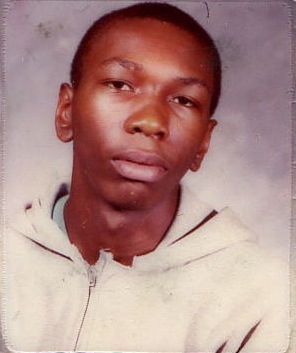
Me at 16 (with torn gray hoodie), Mount Vernon High School ID, Mount Vernon, NY, November 1985, March 21, 2012. (Donald Earl Collins).

The Ivy League Dilemma

17 Saturday Mar 2012

Posted by decollins1969 in 1, Academia, Boy @ The Window, culture, Eclectic, Jimme, Mount Vernon High School, Mount Vernon New York, My Father, New York City, Politics, race, Upper West Side, Youth

≈ 1 Comment

Tags

Acceptance Letters, Advice, Class of 1987, Classmates, College Decisions, Columbia University, Counsel, Financial Aid, Humanities, Manhood, MVHS, Pitt, Pittsburgh, Private Investigators, scholarships, University of Pittsburgh, Yale University


Columbia University's Butler Library at night, New York City, October 13, 2008. (Andrew Chen via Wikipedia). Permission granted via GNU Free Documentation License.

A quarter-century ago this weekend, I made the decision to attend the University of Pittsburgh over Columbia University. Given that I lived in Mount Vernon, New York, this was a decidedly weird decision. So much so that I didn’t tell my mother of my plans for nearly two weeks, and waited until April to tell my classmates. But there’s a well marbled story here, of bad Ivy League practices, not to mention my need to get away from family and classmates alike.

I applied to eight schools in all, including Yale, Columbia and Pitt. If it weren’t for Pitt’s brochure of pizza and students having a good time, I wouldn’t have applied there to begin with. The only rejection I received was from Yale, in early February ’87. Oh well!

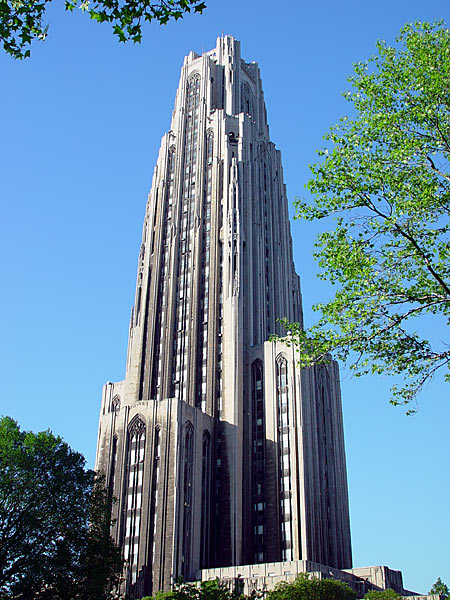
Cathedral of Learning, University of Pittsburgh, December 20, 2010. (http://www.photohome.com). In public domain.

Over the next five weeks, I received one acceptance and packet of materials after another, including Columbia and the University of Pittsburgh. All but Columbia gave me a full financial aid package of one kind or another. All offered either a partial or a full-tuition scholarship for four years except for Columbia. Pitt had offered me one of their inaugural half-tuition academic scholarships that they called the Challenge Scholarship, meant to attract low-income students and students of color from across the country.

I called Columbia’s financial aid office in mid-March to ask why they hadn’t offered me any kind of academic scholarship. They called me back to tell me that they wanted to “make sure” that I really couldn’t afford to go their West Harlem, er, Morningside Heights school.

“But you have my Mom’s financial paperwork,” I said.

“Well, we could send out a private investigator to track down your father and take a look at his finances. If everything checks out, either he can cover part of your tuition or we can offer you a scholarship,” the man on the other end of the phone said.

I was floored by the smug arrogance coming out of the phone. “My dad hasn’t paid child support in eight years,” I said, ready for an argument.

“We want to make sure that he doesn’t have money for your tuition,” was the creditor’s response.

“Thanks but no thanks. You either trust me or you don’t,” I said with conviction, and hung up the phone.

I was torn between having some idiot private investigator digging through my father Jimme’s pitiful life and finances and saying “Go to Hell!” to Columbia. I didn’t want to see the worst case scenario occur, which was that some fool would go back to Columbia and say that Jimme could afford to pay $3,000 of my tuition per year. In the three years up to March ’87, Jimme had given me $3,500 total.

Then I thought of other pros and cons, and as I thought of them, I wrote them out. Columbia was an Ivy League school, the University of Pittsburgh wasn’t. Yet, Columbia was more expensive than Pitt by more than two dollars to one ($18,000 per year versus $7,500) and the students at Columbia would likely be similar in education, socioeconomic background and attitudes to my Humanities classmates.

But the most important factor in saying “No” to Columbia besides their financial aid sleaziness was 616 and Mount Vernon. If I went to school there, where would I live and where would I study? Home? You got to be kidding! Mount Vernon Public Library? They only stayed open until nine pm, and were never open on Sundays. On campus? That would only work if I were able to get a decent paying part-time job on campus. After sorting through this, I knew that Columbia was out.

The look on my mother’s face when I told her said it all. She was as shocked as I’d ever seen her. She kept

Low Memorial Library, Columbia University, New York City, August 25, 2006. (Wikipedia). Permission granted via Creative Commons Attribution-Share Alike 2.5 Generic.

trying to convince me to go upstate to Hobart and William Smith, to see about going to Columbia for their private investigator. This after a year of her telling me that applying to West Point would “make me a man” because “women love men in uniform” and applying to HBCUs made sense because she’d given $25 to the United Negro College Fund.

My classmates spent the next couple of months asking me where Pittsburgh was and why I wanted to go there. All I knew was that I needed to get away from the New York area for a while and that the University of Pittsburgh’s tuition was cheaper than almost anything I would’ve faced in New York. I knew that they had a decent computer science program — this was to be my first major. But I also knew that I wasn’t stuck if I wanted to change majors or study something other that computer science.

In the end, I obviously made the right decision for me at the time. If I had to do it again, maybe I would’ve applied to the University of Pennsylvania or Georgetown. I certainly would’ve been better off in terms of immediate career options and income. But given the friendships that I formed, the degrees I earned and the wife that I have, I’m not sure if another good choice like the ones above would’ve been any better than going to Pitt. At least for my rather fragile psyche and near nonexistent social life.

← Older posts
Newer posts →

Boy @ The Window: A Memoir

Boy @ The Window: A Memoir

Places to Buy/Download Boy @ The Window

There's a few ways in which you can read excerpts of, borrow and/or purchase and download Boy @ The Window. There's the trade paperback edition of Boy @ The Window, available for purchase via Amazon.com at http://www.amazon.com/Boy-Window-Donald-Earl-Collins/dp/0989256138/

There's also a Kindle edition on Amazon.com. The enhanced edition can be read only with Kindle Fire, an iPad or a full-color tablet. The links to the enhanced edition through Apple's iBookstore and the Barnes & Noble NOOK edition are below. The link to the Amazon Kindle version is also immediately below:

scr2555-proj697-a-kindle-logo-rgb-lg

Boy @ The Window on Amazon.com: http://www.amazon.com/Boy-The-Window-Memoir-ebook/dp/B00CD95FBU/

iBookstore-logo-300x100

Boy @ The Window on Apple's iBookstore: https://itunes.apple.com/us/book/boy-the-window/id643768275?ls=1

Barnes & Noble (bn.com) logo, June 26, 2013. (http://www.logotypes101.com).

Boy @ The Window on Barnes & Noble: http://www.barnesandnoble.com/w/boy-the-window-donald-earl-collins/1115182183?ean=2940016741567

You can also add, read and review Boy @ The Window on Goodreads.com. Just click on the button below:

Boy @ The Window

Twitter Updates

Tweets by decollins1969
  • RSS - Posts
  • RSS - Comments

Archives

  • June 2025
  • April 2023
  • September 2022
  • August 2022
  • July 2022
  • June 2022
  • May 2022
  • April 2022
  • March 2022
  • January 2022
  • December 2021
  • November 2021
  • October 2021
  • September 2021
  • August 2021
  • July 2021
  • June 2021
  • April 2021
  • March 2021
  • February 2021
  • January 2021
  • December 2020
  • November 2020
  • October 2020
  • September 2020
  • August 2020
  • July 2020
  • May 2020
  • April 2020
  • March 2020
  • January 2020
  • December 2019
  • November 2019
  • August 2019
  • July 2019
  • June 2019
  • May 2019
  • April 2019
  • March 2019
  • February 2019
  • January 2019
  • December 2018
  • November 2018
  • October 2018
  • September 2018
  • August 2018
  • July 2018
  • June 2018
  • May 2018
  • March 2018
  • February 2018
  • January 2018
  • December 2017
  • November 2017
  • October 2017
  • September 2017
  • August 2017
  • July 2017
  • June 2017
  • May 2017
  • April 2017
  • March 2017
  • February 2017
  • January 2017
  • December 2016
  • November 2016
  • October 2016
  • September 2016
  • August 2016
  • July 2016
  • June 2016
  • May 2016
  • April 2016
  • March 2016
  • February 2016
  • January 2016
  • December 2015
  • November 2015
  • October 2015
  • September 2015
  • August 2015
  • July 2015
  • June 2015
  • May 2015
  • April 2015
  • March 2015
  • February 2015
  • January 2015
  • December 2014
  • November 2014
  • October 2014
  • September 2014
  • August 2014
  • July 2014
  • June 2014
  • May 2014
  • April 2014
  • March 2014
  • February 2014
  • January 2014
  • December 2013
  • November 2013
  • October 2013
  • September 2013
  • August 2013
  • July 2013
  • June 2013
  • May 2013
  • April 2013
  • March 2013
  • February 2013
  • January 2013
  • December 2012
  • November 2012
  • October 2012
  • September 2012
  • August 2012
  • July 2012
  • June 2012
  • May 2012
  • April 2012
  • March 2012
  • February 2012
  • January 2012
  • December 2011
  • November 2011
  • October 2011
  • September 2011
  • August 2011
  • July 2011
  • June 2011
  • May 2011
  • April 2011
  • March 2011
  • February 2011
  • January 2011
  • December 2010
  • November 2010
  • October 2010
  • September 2010
  • August 2010
  • July 2010
  • June 2010
  • May 2010
  • April 2010
  • March 2010
  • February 2010
  • January 2010
  • December 2009
  • November 2009
  • October 2009
  • September 2009
  • August 2009
  • July 2009
  • June 2009
  • May 2009
  • April 2009
  • March 2009
  • February 2009
  • January 2009
  • December 2008
  • November 2008
  • October 2008
  • September 2008
  • August 2008
  • July 2008
  • June 2008
  • May 2008
  • April 2008
  • March 2008
  • February 2008
  • January 2008
  • December 2007
  • November 2007
  • October 2007
  • September 2007
  • August 2007
  • July 2007
  • June 2007

Recent Comments

MaryPena's avatarMaryPena on My Day of Atonement/Bitter Hat…
decollins1969's avatardecollins1969 on No Good Teaching Deed Goes…
Mary Rose O’Connell's avatarMary Rose O’Connell on No Good Teaching Deed Goes…

NetworkedBlogs on Facebook

NetworkedBlogs
Blog:
Notes From a Boy @ The Window
Topics:
My Life, Culture & Education, Politics & Goofyness
 
Follow my blog

616 616 East Lincoln Avenue A.B. Davis Middle School Abuse Academia Academy for Educational Development AED Afrocentricity American Narcissism Authenticity Bigotry Blackness Boy @ The Window Carnegie Mellon University Child Abuse Class of 1987 CMU Coping Strategies Crush #1 Crush #2 Death Disillusionment Diversity Domestic Violence Economic Inequality Education Family Friendship Friendships Graduate School Hebrew-Israelites High-Stakes Testing Higher Education History Homelessness Humanities Humanities Program Hypocrisy Internalized Racism Jealousy Joe Trotter Joe William Trotter Jr. K-12 Education Love Manhood Maurice Eugene Washington Maurice Washington Misogyny Mother-Son Relationship Mount Vernon High School Mount Vernon New York Mount Vernon public schools Multiculturalism MVHS Narcissism NFL Pitt Pittsburgh Politics of Education Poverty President Barack Obama Race Racial Stereotypes Racism Relationships Self-Awareness Self-Discovery Self-Reflection Sexism Social Justice Teaching and Learning University of Pittsburgh Violence Whiteness Writing

Top Rated

Blog at WordPress.com.

  • Subscribe Subscribed
    • Notes from a Boy @ The Window
    • Join 103 other subscribers
    • Already have a WordPress.com account? Log in now.
    • Notes from a Boy @ The Window
    • Subscribe Subscribed
    • Sign up
    • Log in
    • Report this content
    • View site in Reader
    • Manage subscriptions
    • Collapse this bar
 

Loading Comments...