• About Me
  • Other Writings
  • Interview Clips
  • All About Me: American Racism, American Narcissism, and the Conversation America Can’t Have
  • Video Clips
  • Boy @ The Window Pictures
  • Boy @ The Window Theme Music

Notes from a Boy @ The Window

~

Notes from a Boy @ The Window

Category Archives: Pop Culture

Summer of Sound

05 Sunday Aug 2012

Posted by decollins1969 in 1, Boy @ The Window, culture, Eclectic, eclectic music, Mount Vernon New York, Movies, music, New York City, Pop Culture, race, Work, Youth

≈ Leave a comment

Tags

"End Of The Road", "Walking On Broken Glass, Annie Lennox, Boyz II Men, Garth Brooks, Grover Washington Jr., Growing Up, John Coltrane, Jon Secada, Mariah Carey, Mary J. Blige, Michael Jackson, Miles Davis, Musical Tastes, Ronny Jordan, Sounds of Blackness, U2, What's the 411?


Mary J. Blige’s What’s the 411? (1992) CD cover, August 5, 2012. (Donald Earl Collins).

One of the few great things for me about being back in Mount Vernon and New York City the summer of ’92 was that I was ahead of the slow pop cultural curve that was Pittsburgh two decades ago (although it’s still slow — just not as slow as it used to be). For one last summer, despite the turmoil of kids and my mother treating me like I was one (see my post “The Last 616 Summer” from June ’12) and the constant chaos at my job (see my “Working With Wackos, Part I” post from July ’12), I had access to all the immediate in music, movies and other forms of culture, pop or otherwise.

This was truly the summer that my tastes turned from randomly weird to eclectic. To think that just five years earlier, early Whitney Houston, Thompson Twins, Glass Tiger and ABC were all part of my regular cassette rotation for my Walkman! My tastes had grown up to the point where music had to have a mood or rhythm to it. It no longer needed to be quirky or silly in order to put me in a quirky or silly mood.

But those weren’t the only emotions available to me by the summer of ’92. I could actually feel sexy, romantic, generous, loving, caring, and not just angry, depressed and goofy in my normal life. A half-decade away from the crushing life of strife at 616 and in Mount Vernon, high school, Humanities and in general, had something to do with that. Dating off and on had brought others into my life, which meant that Crush #1 and Crush #2 had become somewhat repressed memories. The bottom line was, I no longer needed music or pop culture to block out the daily emotional pain that had been my life in the ’80s.

And that opened me up to new and more eclectic (if still occasionally goofy experiences) music experiences that year and summer. I became a big Jon Secada fan that summer (see my “Otro Dia Mas Sin Verte” post from August ’09), both in English and en Espanol. I was so glad he branched off from Gloria Estefan, as I’d had it with the Miami Sound Machine’s sound years ago.

I also became enthralled a bit with jazz and what we now call smooth jazz that summer, between Grover Washington, Jr., Ronny Jordan’s “After Hours”, John Coltrane, even some Miles Davis (who I did appreciate, but never quite understood). I had friend at Pitt who had exposed me to jazz over the previous five years, but it took graduate school for me to finally fully appreciate it. It also took working in an office with a woman who played all kinds of music all the time for me to actually go out and buy their stuff on CDs.
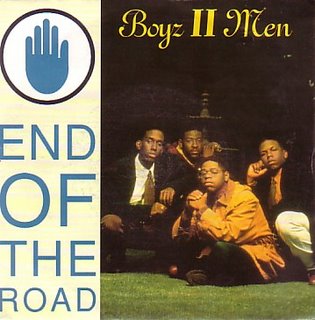
Boyz II Men’s “End Of The Road” (1992) singles cover, May 19, 2009. (Undermedveten via Wikipedia). Qualifies as fair use under US Copyright laws (low resolution picture).

The expansion of hip-hop and rap twenty summers ago to include new and fresh sounds ended up having an impact on my own music collection as well. Mary J. Blige’s What’s The 411? hit the stores and her songs the NYC-area airwaves that July and August, so raw and so new that even I the late-bloomer noticed. And who could forget Boyz II Men’s “End Of The Road.” I heard that song at least eight times a day nearly every day between the end of June and the middle of August, especially at my Mount Vernon Clinic job. I guess if I’d been divorced or in a bad relationship, I would’ve appreciated it more. As it was, any thought of buying Boyz II Men’s second album disappeared by the beginning of August. The same was true for me regarding Jodeci, the hip-hop screechers and beggars from the Upper South. They were like nails on chalkboard to me then.

Still, I incorporated music more typical of my earlier tastes into my collection that summer as well. Mariah Carey’s “I Don’t Wanna Cry” became the song I went to every time my sister Sarai started whining about me telling her to do chores at 616. Sounds of Blackness’ “Optimistic,” I discovered that summer (one summer after its release). U2’s Achtung Baby, Garth Brooks’ “The Thunder Rolls” and Michael Jackson’s “Remember The Time” rounded out my catching up to the current that summer, while Annie Lennox’s “Walking On Broken Glass” was, new, silly and serious at the same time.

There have been other times, other summer in which my tastes have taken leaps forward. I must admit, this has usually occurred after great pain or after having recovered from a major trial in my life. The summer of ’92, though, was a transition summer for me, from having to act like an adult due to stressful circumstances to just being an adult because I actually was.

On Hugs and Walks

01 Wednesday Aug 2012

Posted by decollins1969 in 1, Boy @ The Window, culture, Eclectic, Mount Vernon New York, Politics, Pop Culture, race, Youth

≈ Leave a comment

Tags

616, 616 East Lincoln Avenue, Adulthood, Bronxville, Chester Heights, Child Abuse, College Plans, Crush #2, Dreams, Eastchester, Economic Inequality, Manhood, Maurice Eugene Washington, Maurice Washington, Pelham, Poverty, Puberty, Self-Discovery, Shuckin' an' Jivin', Tuckahoe, Walks


Commodus hugging Maximus as he plunges dagger into back (screenshot), Gladiator (2000), August 1, 2012. (Donald Earl Collins). Qualifies as fair use under US Copyright laws – low resolution of picture.

The beginning of August for me thirty years ago was the beginning of adulthood for me. I had little choice. After five weeks of emotional, psychological, physical and spiritual abuse, my choices were to either allow myself to be broken or to find something to hope for. Otherwise, my life would’ve been over before my thirteenth birthday.

I thought hard about how to end the summer of ’82’s abuse. I figured that I could pretended to be something I wasn’t — a loving, wayward stepson. I begged for my stepfather’s forgiveness and even called him “Dad” while he beat me for the sixth time in a month, on August 1, ’82. He stopped, finally, and gave me a hug. I cried tears of rage and hate, because I couldn’t even stand to touch or smell the man, much less being pressed against his overabundance of fat. I prayed for his death to be long and painful, as if I had a dagger in my right hand, ready to plunge into his back left ribs.

Dagger through back rib and heart (screenshot), Gladiator (2000), August 1, 2012. (Donald Earl Collins). Qualifies as fair use – low resolution of picture.

If masturbation were the only thing that I discovered that month, I might’ve begun aspiring for some other kind of life. Instead, I decided on a boring early August day to do something else novel. I didn’t want to go to Wilson Woods again. We didn’t have any money anyway. I decided to take my siblings on a walk on the wild side, to walk outside our immediate neighborhood. Darren and I took baby Maurice and Yiscoc in his new stroller out of 616. We walked and strollered down East Lincoln Avenue, across the stone bridge over the Hutchinson River Parkway into Pelham, and turned left on Fifth Avenue to go north. This was uncharted territory for all of us, especially me. North Pelham might as well have been Helena, Montana to me.

“We don’t know where we’re going,” Darren said.

“Yeah, and?,” I said in response.

“Okay, but it’s your fault if we get lost, Donald,” Darren said.

Sarah Lawrence College, Bronxville, NY, August 1, 2012. (http://slc.edu). In public domain.

We didn’t get lost. We walked until we hit Chester Heights, the beginning of the village of Eastchester, and then Bronxville. It was amazing in that it was much more suburban than Mount Vernon or the part of Pelham that I’d known up until that moment. The homes were luxurious by my standards. Everyone seemed to own a BMW, Volvo, Mercedes-Benz, or Peugeot. There weren’t many sidewalks around, only well-manicured lawns. We had walked into several ritzy communities without any warning.

I began to think that the world was a cruel place, having rich Whites living so close to us yet their lives were so far apart from ours. But instead of becoming depressed or angry, it made me introspective. “Look at these houses!,” I said to Darren as we walked by one Tudor-style home after another three-story mansion, broken up only by a few cul-de-sacs. Darren, having been around rich Whites through Clear View for nearly eight years, didn’t think too much of it.

That’s when it hit me. If I wanted to live a better life, to have a nice house and a car and a family, it seemed to me that I needed an education, a college education. I wasn’t going to get there just graduating from high school, especially in Humanities, where the expectations for college were so high that some kids already knew that they were going to law school. I just knew that I couldn’t go through another summer of abuse. So I said to myself, “I’ve got to get through the next five years. I’ve got to go to college.” Yet it seemed like an impossible task.

As we meandered our way back toward Mount Vernon, we ended up on North Columbus Avenue/Route 22. That’s when we passed by a ranch-style home with a stone facade. I looked and saw someone out in front I hadn’t seen since the end of the school year. It was “P,” my eventual Crush #2, outside in the front yard with her sister, apparently back from bike riding. She called us over, and the four of us talked. This was the first Black family I’d seen during our two-hour walk.

Of course I didn’t go into any detail about what we’d been up to. After all, the one thing that the past year had taught me was not to open up my mouth and say everything that was on my mind! So I let her and her older sister do most of the talking. They’d gone somewhere down South to visit family.

“Do you live around here?,” P asked.

“Oh, we’re on a long walk and just happened to be in the neighborhood,” I said.

“Okay,” she said in response.

The Denzel Washington Walk, American Gangster (2007), August 1, 2012. (http://variety.com)

“In the neighborhood.” Sure, if Bronxville, Eastchester, Pelham and 616, all part of our eight-mile trek, were all one gigantic neighborhood! After about ten minutes, we continued home. Darren was more excited about seeing my eventual Crush #2 and her sister than I was.

I wasn’t unexcited. P was far and away the nicest person to me in 7S all year. She stepped up when others made fun of me. I just took her being nice to me the same way Laura Ingalls from Little House on the Prairie probably took it when Mrs. Olsen was nice to her.

Still, I finally had a plan. I knew that there would be a lot of smaller steps that I’d have to take before even getting to college, though. But in looking at where P and her sister lived, I at least knew that someone in their family must’ve taken similar steps in the not-too-distant past.

The Third Armpit of Hell

27 Friday Jul 2012

Posted by decollins1969 in 1, Boy @ The Window, culture, Eclectic, High Rise Buildings, Marriage, Mount Vernon New York, My Father, New York City, Politics, Pop Culture, race, Upper East Side, Upper West Side, Work, Youth

≈ 1 Comment

Tags

Coming-of-Age, Dante's Inferno, Economic Inequality, Growing Up, Home, Metro-North, Neighborhoods, New York, New York City, NYC, Poverty, Race, Self-Discovery, Subway Trains, The City


Illustration of Dante’s Inferno, Map of Lower Hell, 16th century. (Giovanni Stradano via Wikipedia). In public domain.

During most of my Pittsburgh years, whenever someone I knew asked me what it was like to live in the New York City area, I often said two things. One, that “New York was a great place to live if you have money.” But, “if you don’t have money, New York could be like the third armpit of hell.”

I didn’t even bother to discuss Mount Vernon until I was well into graduate school. Too unknown, too complicated to explain its proximity to the Bronx and to midtown Manhattan. And from the average Pittsburgher’s perspective, it was a distinction without a difference. As far as some were concerned, Mount Vernon could’ve just as easily been outside of Buffalo as it could’ve been in the heart of Harlem.

But I definitely knew better, that my relationship with Mount Vernon and “The City” was a love-hate one, born from my growing-up experiences during the Reagan years. The lens with which I viewed the New York City area, a trifocal one of race, poverty and “outsider” status, made me ambivalent about my times growing up in Mount Vernon and all of my times in New York.

2 NYC subway train with graffiti (cropped), 1980s, December 20, 2009. (Cope2 via http://www.doobybrain.com/). Qualifies as fair use – low resolution picture.

I have my father Jimme to thank, though. Without him, I would still be afraid of New York, not just ambivalent about it. Drunk or not, working or on his way to a hole-in-the-wall bar. Jimme would take me and my older brother Darren out and down to the city often enough, to ride the Subway, to hang out with him in Harlem, Spanish Harlem, and especially Midtown. Whether it was to help him with his janitorial work on weekends, or just to hang out, we frequented Manhattan and other parts of the five boroughs off and on between ’80 and ’85, ’82 — the year of abuse — excepted.

Because of that year, the longest time I spent outside of the city growing up was between April ’81 and July ’83. After not making it down to Manhattan in all of ’82, we went to Midtown in July, where we learned about two of my father’s watering holes between 43rd and 47th. They were both near Mickey Mantle’s restaurant on 47th. He also had an Irish pub he’d like to go to around East 59th and Third, a drinking bar near his job on 64th and Columbus, and a couple of places near Macy’s on 34th Street. Because of our height and the times, when it was still legal for eighteen-year-olds to drink in public watering holes, me and Darren were allowed into these fine establishments. I learned a lot about vermouth, vodka, Cosmos and Long Island Iced Tea that summer.

Grand Central Terminal Main Concourse in New York City, March 4, 2006. (Janke and Diliff via Wikipedia). Permission granted via cc-Attribution-Share Alike 3.0 license.

I also learned a lot about the not-so-nice side of New York in those years. I recognized this as I’d board the Uptown 2 Subway from West 42nd Street and 7th Avenue in Manhattan at the tail end of rush hour. As I’d board the train, I’d notice the crunch of humanity in all of its oblivion, self-absorption, and diversity. As the doors close, I’d watch as the express train passed 50th, 59th, and 66th Street before it would grind to a halt at 72nd Street. I’d notice that a fair number of the White passengers alighted here. Between 96th and 125th Street, the load of the train would gradually lighten as about half of the passengers who’d crushed me between a tall, stale-breathed smoker and a woman who wasn’t my girlfriend were now at street level.

About three-quarters of the passengers for the rest of my trip would be Latino and Afro-Caribbean. After another hour of endless stops in the Bronx, the 2 would pull me out of my slumber as it would slowly roll into the rickety East 241st stop.

By the time I was a rising senior at Pitt, I certainly didn’t need my father to accompany on my trips into Manhattan. I also avoided the long trek from 616 across Mount Vernon to 241st to take the 2 whenever I could afford to. Metro-North was a luxurious godsend compared to the puddles of piss and infinite amounts of graffiti on the Subway I’d seen throughout the ’80s.

Toph’s “Hairy Pits” from Avatar: The Last Airbender (screenshot), July 26, 2012. (Donald Earl Collins). Qualifies as fair use — low resolution picture.

But it introduced me to other odious issues. Like Grand Central Station, which by the summer of ’90 was in desperate need of renovation. Especially the restrooms, festooned with enough garbage, feces and bodily odors and fluids to make a coroner vomit.

Off a return trip from Pittsburgh that summer, I made the mistake of having no choice but to use the almost  unusable facilities there, which in the end I couldn’t use. Meanwhile, I observed homeless males hanging out in the restroom with carts, along with an individual who looked to have Kaposi’s sarcoma, an obvious sign of full-blown AIDS.

That’s when I coined New York to be “the third armpit of hell,” the place where poverty had meant your dreams were dead on arrival. For once, it made me content that I was from a place where many smug New Yorkers disdainly considered “upstate.” Though the New York City area has changed — and mostly for the better — since ’90, it’s still a place where economic inequality can easily grind the life out of people.

Tells In Telling The Tale

21 Saturday Jul 2012

Posted by decollins1969 in 1, culture, Eclectic, Movies, Politics, Pop Culture

≈ Leave a comment

Tags

Art Imitating Life, Battlestar Galactica (2004 series), Bones, DS9, Firefly, Fringe, Imagination, Phalanges, Sarcoidosis, Star Trek: Deep Space 9, Star Trek: Deep Space Nine, Star Trek: DS9, Stories, Tales, Telling, Tells, TV Shows, Writing


Adm. Adama hugging Starbuck scene (screen shot/cropped), Battlestar Galactica, 2009. (http://blazingangel.tumblr.com).

I guess that we as individuals each have tells in telling stories, including our life stories. Certainly all writers have a tell, a catch phrase or common set of words that use in telling a story or in setting a scene. All artists have a unique signature, a nuance within a particular style or genre that sets them apart from someone painting by numbers. Sometimes, at least for me, it takes heavy doses of a writer’s style or of someone’s art for me to see the unique tells in the telling.

Firefly series opening logo, July 21, 2012. (Adamwankenobi via Wikia.com).

That’s been so true for me in watching entire TV series through Netflix over the past two years, whether through DVD or online streaming. Since the spring of ’10, I’ve watched, in order and their entirety, Star Trek: DS9, Star Trek: Enterprise, Star Trek: Voyager, House, Firefly, Heroes, Breaking Bad, Dexter, Six Feet Under, Oz, Eureka, Warehouse 13, Battlestar Galactica, Bones and Fringe, mostly through Netflix. Now, some of these shows I’d seen plenty of when they were regular series, especially DS9, Six Feet Under, House and Oz, while I viewed most of these series for the first time.

There’s something different about watching a TV series all at once than watching it once a week in twelve, twenty-four or twenty-six episode blocks year by year. Especially with unlimited streaming. Earlier this year, I watched all seventy-six episodes of Battlestar Galactica over a six-day span in April, including the first two seasons between Saturday morning and Sunday evening Easter weekend (see my post “Battlescar Galactica” from June ’12).

In watching so many episodes, you quickly sense the rapport being actors, the plot and its direction, and the tells about a particular episode or season of a show. In watching DS9, I learned that whenever Quark would mention Dax’s relationship with a Gallamite (a race with a transparent skull) or a Tholian ambassador, I’d learn something revealing about one of the main characters, especially Dax or Quark. Only, there may’ve been only one scene in 176 episodes in which there was a Gallamite character, and none for a Tholian ambassador.

With House, if the “sarcoidosis” diagnosis came up before the last segment of an episode, it was always wrong, but if it came up in the last segment, it would occasionally be correct. The writers obviously knew that sarcoidosis was such a general diagnosis that it could mean nothing in nearly all the show’s mystery illnesses, revealing the desperation and pressure the characters felt in finding the right diagnosis to save someone’s life.

Bones in the human hand (from authentic human skeleton), March 25, 2004. (Raul654 via Wikipedia). Released to public domain via GNU Free Documentation License.

For other shows, it could be a word, a line, an appearance of a sign or character even. For the first five seasons of Bones, the tell for Brennan’s emotional state — or lack of one — was how she’d say “phalanges,” “distal phalanges,” or even “ungual phalanges.” Brennan wiggled her “phalanges” with delight for babies and kids, and examined microscopic details of dead peoples’ phalanges with scientific coldness otherwise. For the sci-fi western Firefly, lines like “the money was too good” and cursing in Mandarin Chinese illuminated the contrast between haves and have-nots of twenty-sixth century humans, between technological advances and moral devolution.

There’s also Fringe’s opening with changes in colors signifying alternate universes and timelines. Not to mention Breaking Bad’s opening scenes foreshadowing how a season would conclude, or the use of light-skinned or biracial actresses as either technically or ephemerally brilliant characters on Fringe, Warehouse 13 and Bones.

But my all-time favorite tell in any season these days is from Battlestar Galactica, when Adama asks,

“What do you hear, Starbuck?”

“Nothing but the rain, sir,” she says

“Then grab your gun and bring in the cat.”

No matter how the characters felt, how dire the situation, or how triumphant the moment, it was the line that showed how precious the connections we have and need to have with each other and with our humanity.

I think that the way I can — we can — watch movies, TV series, read books and articles, look at art, and listen to music through these tells can tell me a lot about a writer, a musician or an artist. But it also tells me a lot about me. Not just that I’m a little weird. I’m also a sucker for a good story, one that is a bit ironic, a tad asymmetrical, that is quirky and epic, unique and yet mundane. A story that mirrors my life is one that tells me about me, at least in part.

This Is No Korra-Nation

14 Saturday Jul 2012

Posted by decollins1969 in 1, culture, Eclectic, Pop Culture, Youth

≈ Leave a comment

Tags

Authenticity, Avatar, Avatar: The Last Airbender, Avatar: The Legend of Korra, Bryan Konietzko, Cultural Traditions, Disappointment, Korra, Michael DiMartino, Modernity, Nickelodeon


Avatar: The Legend of Korra – Welcome to Republic City (game screen shot), April 10, 2012. (Harryhogwarts via Wikia.com). Qualifies as fair use under US Copyright laws because image is only being used to visually identify the subject.

I wish that this was only a pun. But, Michael DiMartino and Bryan Konietzko’s Avatar: The Last Airbender spinoff The Legend Of Korra was only a legend in their own minds. It’s not that Korra’s first season wasn’t a good one. It’s that Korra could not possibly live up to what was the greatest animation series of all-time.

Any fan of Avatar: The Last Airbender couldn’t help but be disappointed with the first season of Korra. First, it took four years for them to bring Korra to Nickelodeon, and a full twenty months after they released the first stills for the new series in August ’10. They wasted two of those years making the terrible live-action The Last Airbender (2010) as directed by M. Night Shyamalan (see my “The Last Airbender, or Shyamalan’s Cynical Egg?” post from July ’10).

Korra, Avatar: The Legend of Korra (artwork), October, 2011. (http://fanpop.com). Qualifies as fair use under US Copyright laws, as image is only being used to identify blog subject.

So Korra was behind the 8-ball already when the show officially launched in April. Then the first episode began, exploding through waterbender Avatar Korra’s growing-up years in about three and a half minutes. That opening scene set the tone for all twelve of the first season’s episodes. One could sort of justify the rapid pace of Korra because she’d already mastered three of the four elements and because the spin-off had moved seventy years into the future, and a somewhat modern one at that. But the pace left little room for character development and the clear-cut personality distinctions that made Avatar: The Last Airbender the ultimate experience.

It took three episodes for me to find a good-and-honest scene that produced a personality quirk (see Bolin as a poor man’s Sokka here) and a hearty laugh. You got no sense of how Tenzin became part of Republic City’s council, or how tension-filled his life must’ve been as the responsible son of the great Avatar Aang. The elderly Katara appeared in a couple of scenes, and there was no attempt to explain the intervening years between the end of the Hundred-Year War until the last couple of episodes. Even then, these were fleeting scenes in a fast-paced, let’s-get-Korra-to-the-Avatar-State season.

The sheer lack of an attempt at authenticity with Korra, though, was what I found most disappointing. Seven decades into the future with modern technologies would create cultural tensions for sure, but it certainly wouldn’t wipe out the traditions of the four nations, even in Republic City. That, and only flashes of the spirituality that was completely infused in Avatar: The Last Airbender, made Korra a poor facsimile for whatever tensions between tradition and modernity that the main character faced in the first season.

I plan to watch Season 2, assuming that DiMartino, Konietzko and Nickelodeon plan on putting out a second season of Korra now that Season 1 is over. But I’ve lowered my expectations for the new series, especially if the creators intend to continue to rush through plots. It was as if Avatar Korra was on an out-of-control 2 Subway rumbling through Midtown Manhattan, about to flip over and derail.

American Un-Exceptionalism

04 Wednesday Jul 2012

Posted by decollins1969 in 1, Academia, culture, Eclectic, Movies, Patriotism, Politics, Pop Culture, race

≈ 3 Comments

Tags

American Exceptionalism, American History, Capitalism, Chris Matthews, Democracy, Dorian Gray, Freedom, Imperialism, League of Extraordinary Gentlemen, Myths, Oppression, Patriotism, Representative Democracy, Superpower


Captain America and waving US flag, July 4, 2012. (http://http://www.vitaver.com).

One of the great myths of American history is that the US is an exceptional society with an exceptional history, earned as the shining light on the hill of democracy, the first modern republic in world history. Despite all the claims of such luminaries as Chris Matthews (of MSNBC lore) and presidential historian Doris Kerns Goodwin, America is hardly exceptional. What makes us exceptional is the frequency with which we claim to be so different and so unique from the rest of world. Beyond that, we’re about as exceptional as a C+ level college student.

Chris Matthews at 2011 Time 100 gala, April 27, 2011. (David Shankbone via Wikipedia). Released to public domain via cc-Attribution 3.0 Unported license.

Speaking of students, my US history students have laid claim to American exceptionalism almost as often as Chris Matthews. If it’s US history prior to the Civil War, then the claim has been about breaking free from Great Britain’s empire, the Founding Fathers and the writing of the US Constitution, and building the first modern representative democracy. If it’s the twentieth century, then it’s about the good ol’ US saving the world from the tyranny of communism — or at least, anything that wasn’t supportive of US-style capitalism (which isn’t the same as democracy, by the way). Both are hogwash, as full of half-truths as George Washington’s honesty, Abraham Lincoln believing in Black equality and Henry Longfellow’s portrayal of Paul Revere’s ride.

I’m sorry, but I don’t find it exceptional that the US formed a representative democracy that represented the interests of rich, landowning White males, many of whom were plantation slave owners too chicken to deal with the issue in the summer of 1787. Even the comparison to ancient Greece and Rome is specious on a power-blue cloudless day in New York in September. Whether it was direct or representative democracy, both were limited democracies that relied heavily on slavery, warfare, and eventually became empires. America was born out of an empire, and to this day, has imperialist notions about itself and its relationship to the world.

As far as American the Superpower since 1945, I find it laughable that people see us as this shining beacon of truth, justice and the American democratic way on the world stage. There are folks who really think that we were too generous and altruistic in our Marshall Plan largesse, in our dealings with nations whom became aligned with us in the quarter-century after the end of World War II. Hogwash! With the US controlling fifty percent of economic production and activity in the world in 1945, it needed trading partners to ensure its future prosperity and dominance. The Marshall Plan was as much about the creation of stable trading partners and economies as was about checking Soviet influence in Central and Southeastern Europe.

Besides this, for every West Germany, South Korea and Japan, there were also our CIA-sponsored coups in Guatemala, Iran, Chile, military disruptions in Vietnam, Cambodia and Laos, and protections of American corporate interests throughout sub-Saharan Africa, South America and the Middle East. But I’m sure that this was only about spreading our exceptional democracy and economic prowess to the rest of the world. At least, that’s what American exceptionalists keep telling us.

“Dorian Gray” as played by Stuart Townshend, The League of Extraordinary Gentlemen (2003), July 4, 2012. (http://empireonline.com).

There’s another perspective here, though. One that would describe America as an empire, or an empire in the making, at least. For American history is the stuff of imperialism, including the very justification we use for our actions on the world stage. Based on this point of view, America is unexceptional. As Dorian Gray of The League of Extraordinary Gentlemen (2003) would say, “Empires rise and fall. There are no exceptions.” The choice we as Americans have is whether we prefer the soft landing that Great Britain recently experienced, or a crash-and-burn.

Working With Wackos, Part I

02 Monday Jul 2012

Posted by decollins1969 in 1, Academia, Boy @ The Window, culture, Eclectic, eclectic music, Mount Vernon New York, music, Pop Culture, race, Work, Youth

≈ 2 Comments

Tags

"End Of The Road", Boyz II Men, Deception, Micromanaging, Office Politics, Ralph Williams, Valerie Johnstone, Westchester County Department of Community Mental Health, Workplace Abuse, Workplace Issues


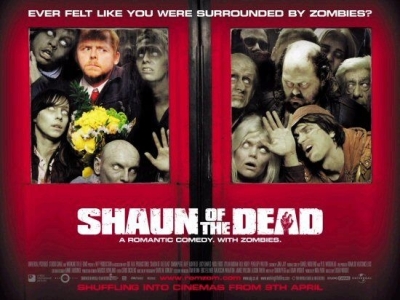
Shaun Of The Dead (2004) poster, August 22, 2011. (Quentin X via Wikipedia). Qualifies as fair use under US Copyright laws because of poster’s low resolution.

I don’t mean this in a literal sense, although in this particular case, it’s pretty close to true. In the case of my last summer working for Westchester County Department of Community Mental Health at its Mount Vernon clinic on 9 East First Street, it’s ironic that the least sane folks around were my bosses and colleagues. The amount of drama generated from such a small office was enough to start a nuclear fusion reaction, providing power for Mount Vernon’s residents for years on end.

Unlike the summer of ’89, the summer of ’92 wasn’t just about the dreaded Valerie Johnstone (see my post “Fried Green Toenails”  from February ’11). This summer involved the head of the clinic, a Dr. Ralph Williams. From my first day there, it was obvious that there was a strange and sordid dynamic at the clinic, one that had little to do with the patients who showed up with everything from associative disorder to schizophrenia, for drugs from Dilantin to Xanax. I got a dressing down from Johnstone about having earned my master’s degree two months earlier, as she said, “See, I have a master’s degree, too.” Except that she was sixty, and I was twenty-two, at least that’s what went through my head while she was telling me how much better she was than me.

Williams wasn’t much better. My first one-on-one with him at the end of June was about how much better we were than “ordinary” folks like Johnstone because he had the ultimate prize – a medical degree from Harvard – and I was about to embark on the ultimate degree, a doctorate. From our first meeting, Williams had described Johnstone as a “dummy” and an “overbearing bitch.” While I knew that the latter was true, I would’ve have never said it, certainly in a workplace setting. And I certainly didn’t expect it from my boss.

By the beginning of July, it had become obvious to me that the main issue with the clinic front office and its director was much more than being three years behind in back-billing to New York State Medicaid and Medicare for psychiatric services. On the first Friday in July, I happened to be outside the director’s office, pulling old files for re-billing to New York State, when I heard someone crying. I overheard Williams say, “you are the dumbest person that I’ve ever worked with,” and another sentence where he called the woman in his office “a bitch.”

The calmness in which Williams spoke, it was as if he was attempting to comfort parents who had learned their kid was autistic. It was scary. I knew that the woman crying was Johnstone, as I’d seen her later on that afternoon, eyes unusually burgundy, mood unusually insecure.

The secret war between the office manager and the clinic director became an open one later on in mid-July, a Thursday to be more precise. They became embroiled in a shouting match over a patient’s records, escalating from “stupid” and “idiot” to “bitch” and “motherfucker” in a matter of seconds. All right in front of the office pool and waiting patients, at 3:30 pm. If I hadn’t known any better, I’d guessed that Johnstone and Williams had been involved prior to a breakup, and were using the office as a way to work out their frustrations over their relationship. But I probably read too much into what was going on.

Finally, at the end of July, came the most foul thing I’d ever been a part of in the workplace. Williams requested a one-on-one meeting with me. He wanted me to write a report that would implicate Johnstone as both incompetent and capricious as the office manager. Williams said, “people like us need to stick together.”

I knew that I wouldn’t be coming back to work for this clinic or the county again. At least, not in this capacity, and not with me starting Pitt’s doctoral program, so I really had no skin in this game. At the same time, I knew that if I wrote the report exactly as Williams had requested, that Johnstone would be out of a job. In their own way, they were both terrible bosses, lousy leaders, and had warped perceptions of the people and the world around them. I didn’t know yet what to do. I just knew that if I did exactly what I’d been told, it would lead to more office chaos, something the outpatients at the clinic didn’t need or deserve.

← Older posts
Newer posts →

Boy @ The Window: A Memoir

Boy @ The Window: A Memoir

Places to Buy/Download Boy @ The Window

There's a few ways in which you can read excerpts of, borrow and/or purchase and download Boy @ The Window. There's the trade paperback edition of Boy @ The Window, available for purchase via Amazon.com at http://www.amazon.com/Boy-Window-Donald-Earl-Collins/dp/0989256138/

There's also a Kindle edition on Amazon.com. The enhanced edition can be read only with Kindle Fire, an iPad or a full-color tablet. The links to the enhanced edition through Apple's iBookstore and the Barnes & Noble NOOK edition are below. The link to the Amazon Kindle version is also immediately below:

scr2555-proj697-a-kindle-logo-rgb-lg

Boy @ The Window on Amazon.com: http://www.amazon.com/Boy-The-Window-Memoir-ebook/dp/B00CD95FBU/

iBookstore-logo-300x100

Boy @ The Window on Apple's iBookstore: https://itunes.apple.com/us/book/boy-the-window/id643768275?ls=1

Barnes & Noble (bn.com) logo, June 26, 2013. (http://www.logotypes101.com).

Boy @ The Window on Barnes & Noble: http://www.barnesandnoble.com/w/boy-the-window-donald-earl-collins/1115182183?ean=2940016741567

You can also add, read and review Boy @ The Window on Goodreads.com. Just click on the button below:

Boy @ The Window

Twitter Updates

Tweets by decollins1969
  • RSS - Posts
  • RSS - Comments

Archives

  • June 2025
  • April 2023
  • September 2022
  • August 2022
  • July 2022
  • June 2022
  • May 2022
  • April 2022
  • March 2022
  • January 2022
  • December 2021
  • November 2021
  • October 2021
  • September 2021
  • August 2021
  • July 2021
  • June 2021
  • April 2021
  • March 2021
  • February 2021
  • January 2021
  • December 2020
  • November 2020
  • October 2020
  • September 2020
  • August 2020
  • July 2020
  • May 2020
  • April 2020
  • March 2020
  • January 2020
  • December 2019
  • November 2019
  • August 2019
  • July 2019
  • June 2019
  • May 2019
  • April 2019
  • March 2019
  • February 2019
  • January 2019
  • December 2018
  • November 2018
  • October 2018
  • September 2018
  • August 2018
  • July 2018
  • June 2018
  • May 2018
  • March 2018
  • February 2018
  • January 2018
  • December 2017
  • November 2017
  • October 2017
  • September 2017
  • August 2017
  • July 2017
  • June 2017
  • May 2017
  • April 2017
  • March 2017
  • February 2017
  • January 2017
  • December 2016
  • November 2016
  • October 2016
  • September 2016
  • August 2016
  • July 2016
  • June 2016
  • May 2016
  • April 2016
  • March 2016
  • February 2016
  • January 2016
  • December 2015
  • November 2015
  • October 2015
  • September 2015
  • August 2015
  • July 2015
  • June 2015
  • May 2015
  • April 2015
  • March 2015
  • February 2015
  • January 2015
  • December 2014
  • November 2014
  • October 2014
  • September 2014
  • August 2014
  • July 2014
  • June 2014
  • May 2014
  • April 2014
  • March 2014
  • February 2014
  • January 2014
  • December 2013
  • November 2013
  • October 2013
  • September 2013
  • August 2013
  • July 2013
  • June 2013
  • May 2013
  • April 2013
  • March 2013
  • February 2013
  • January 2013
  • December 2012
  • November 2012
  • October 2012
  • September 2012
  • August 2012
  • July 2012
  • June 2012
  • May 2012
  • April 2012
  • March 2012
  • February 2012
  • January 2012
  • December 2011
  • November 2011
  • October 2011
  • September 2011
  • August 2011
  • July 2011
  • June 2011
  • May 2011
  • April 2011
  • March 2011
  • February 2011
  • January 2011
  • December 2010
  • November 2010
  • October 2010
  • September 2010
  • August 2010
  • July 2010
  • June 2010
  • May 2010
  • April 2010
  • March 2010
  • February 2010
  • January 2010
  • December 2009
  • November 2009
  • October 2009
  • September 2009
  • August 2009
  • July 2009
  • June 2009
  • May 2009
  • April 2009
  • March 2009
  • February 2009
  • January 2009
  • December 2008
  • November 2008
  • October 2008
  • September 2008
  • August 2008
  • July 2008
  • June 2008
  • May 2008
  • April 2008
  • March 2008
  • February 2008
  • January 2008
  • December 2007
  • November 2007
  • October 2007
  • September 2007
  • August 2007
  • July 2007
  • June 2007

Recent Comments

MaryPena's avatarMaryPena on My Day of Atonement/Bitter Hat…
decollins1969's avatardecollins1969 on No Good Teaching Deed Goes…
Mary Rose O’Connell's avatarMary Rose O’Connell on No Good Teaching Deed Goes…

NetworkedBlogs on Facebook

NetworkedBlogs
Blog:
Notes From a Boy @ The Window
Topics:
My Life, Culture & Education, Politics & Goofyness
 
Follow my blog

616 616 East Lincoln Avenue A.B. Davis Middle School Abuse Academia Academy for Educational Development AED Afrocentricity American Narcissism Authenticity Bigotry Blackness Boy @ The Window Carnegie Mellon University Child Abuse Class of 1987 CMU Coping Strategies Crush #1 Crush #2 Death Disillusionment Diversity Domestic Violence Economic Inequality Education Family Friendship Friendships Graduate School Hebrew-Israelites High-Stakes Testing Higher Education History Homelessness Humanities Humanities Program Hypocrisy Internalized Racism Jealousy Joe Trotter Joe William Trotter Jr. K-12 Education Love Manhood Maurice Eugene Washington Maurice Washington Misogyny Mother-Son Relationship Mount Vernon High School Mount Vernon New York Mount Vernon public schools Multiculturalism MVHS Narcissism NFL Pitt Pittsburgh Politics of Education Poverty President Barack Obama Race Racial Stereotypes Racism Relationships Self-Awareness Self-Discovery Self-Reflection Sexism Social Justice Teaching and Learning University of Pittsburgh Violence Whiteness Writing

Top Rated

Blog at WordPress.com.

  • Subscribe Subscribed
    • Notes from a Boy @ The Window
    • Join 103 other subscribers
    • Already have a WordPress.com account? Log in now.
    • Notes from a Boy @ The Window
    • Subscribe Subscribed
    • Sign up
    • Log in
    • Report this content
    • View site in Reader
    • Manage subscriptions
    • Collapse this bar
 

Loading Comments...