• About Me
  • Other Writings
  • Interview Clips
  • All About Me: American Racism, American Narcissism, and the Conversation America Can’t Have
  • Video Clips
  • Boy @ The Window Pictures
  • Boy @ The Window Theme Music

Notes from a Boy @ The Window

~

Notes from a Boy @ The Window

Category Archives: Politics

Academia’s Silence Must Be Heard

24 Monday Feb 2014

Posted by decollins1969 in 1, Academia, Carnegie Mellon University, culture, Eclectic, Politics, Pop Culture, University of Pittsburgh, Youth

≈ Leave a comment

Tags

Academe Magazine, Academic Writing, Banishment, Exile, Fear of a "Black" America, Joshua Rothman, Nicholas Kristof, OAH, Organization of American Historians, Scholar-Activist, Scholarship, Shunning, Silence, Troublemaker


At Eternity's Gate, by Vincent Van Gogh, oil on canvas painting, Kröller-Müller Museum (The Netherlands), May 1890. (Eloquence via Wikipedia). In public domain.

At Eternity’s Gate, by Vincent Van Gogh, oil on canvas painting, Kröller-Müller Museum (The Netherlands), May 1890. (Eloquence via Wikipedia). In public domain.

I’ve learned the hard way how the world of academia treats folks who break its unwritten covenants. The ones that say accept all of our strictures about what to publish, how to write, when to write it, about tenured/tenure-streamed vs. non-tenured, adjuncts and graduate student TAs and unionization, among so many others. Those of us who make trouble, who question the archaic wisdom of those in our world, are often cast out, rendered invisible or otherwise completely forgotten about.

The funny thing about going against the grain of academia — or at least, my fields of US/African American history and American education/ed policy — has been that criticism can serve as a better sign of acceptance than hearing nothing at all. It was like this for me in grad school at Pitt and Carnegie Mellon, and even my first five years after finishing my doctorate. Whenever someone said that my work on multiculturalism and Black history was “interesting,” the flatness with which a professor or grad student said “interesting” was the key for me. If the “interesting” was completely flat, it meant “but I completely disagree with your line of research” or “this thing is too simplistic and boring for me as a scholar to get excited about.” If the “interesting” had a lilt to it or even a slightly raised eyebrow, it meant that one of my colleagues or more senior folk really found my work intriguing.
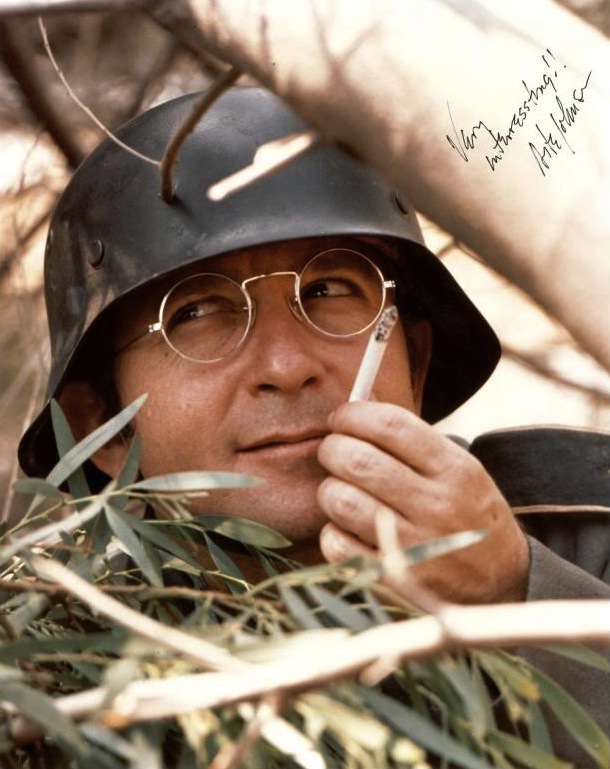
Actor Arte Johnson as the Nazi German character Wolfgang on NBC's Laugh-In (1968-73), saying "Very interresting..." per usual,  September 4, 2011. (http://photobucket.com)

Actor Arte Johnson as the Nazi German character Wolfgang on NBC’s Laugh-In (1968-73), saying “Very interesting…” per usual, September 4, 2011. (http://photobucket.com)

That term “interesting” was my indication that some people acknowledged and understood the importance of my work, and that some absolutely couldn’t and wouldn’t. But over the past decade, as I’ve complained about the nature of academic writing, about the limits of scholarship and about the changing nature of academia itself (from a hiring perspective), the one thing I’ve noticed the most has been academia’s silence. The collective silence has been deafening, so much so that I finally concluded it meant not only disagreement, but a shunning as well. Like the Amish, only without the Rumspringa.

I had fleeting moments when I noticed the silence, like at my second OAH presentation in Los Angeles in ’01 on Black women intellectuals and multiculturalism. Even though my research was sound, I knew I needed to work on drawing clearer connections between how I’d been defining intellectual and connecting it with notions of cultural pluralism, and thus, multiculturalism. With forty people in the audience, and with thirty-five minutes of Q and A, no one asked me a single question. No one in the audience, it seemed, was interested in multiculturalism or historical contributions to the idea from Anna Julia Cooper, Zora Neale Hurston, Mary Church Terrell or anyone else.

I noticed even more as I submitted my first book Fear of a “Black” America for publication with the university presses prior to ’04. At least with the likes of Praeger and Farrar, Straus & Giroux, I’d frequently get a detailed response, good and bad. But with the university presses, it was deadly silence. I guess me working full-time in the nonprofit world and only teaching ed foundation courses part-time was one of my deficits.

The final set of hints of silence that came my way was in the year after I published Fear of a “Black” America. I decided in ’05 to write an article on the overuse of the term scholar-activist, an article I published in Academe Magazine that fall. Grad students tended to like it, activists outside of academia have cited it hundreds of times, and my immediate circle of friends in academia loved it. But my relevant fields within academia remained silent about it. They were silent about my argument that exercising academic freedom doesn’t automatically make one an activist, and that academic writing, even writings that lean hard to the left, don’t make an academician an activist either.

Dante in Exile (n.d.), painting by anonymous, Archivo Iconografico S.A., Itália, June 3, 2006. (Fernando S. Aldado via Wikipedia). In public domain.

Dante in Exile (n.d.), painting by anonymous author, Archivo Iconografico S.A., Itália, June 3, 2006. (Fernando S. Aldado via Wikipedia). In public domain.

I realize then I had evolved as a writer to the point where I wasn’t just uncomfortable with academic writing, the tenure process and the lack of unionization for adjuncts and grad students — I’d been uncomfortable for years. No, I wanted a teaching, even administrative relationship with higher education for sure, but not one where all of my eggs were in the academic writing basket. Unlike Joshua Rothman’s grand assumption in his “Why Is Academic Writing So Academic?” piece in last week’s New Yorker, that “[p]rofessors live inside that system [of academic writing] and have made peace with it,” I have not and will not make peace with this. Ever.

I think Nicholas Kristof is a hack, and that most of the columnists of The New York Times are hacks as well. But in knowing the sadistic silence of academia as well as I do, I also know that this world of higher education can and does grind many of its participants up, often without making the slightest sound. It’s a wonder that I’m still teaching and writing anything at all.

Over 3 Billion Blacks Killed

19 Wednesday Feb 2014

Posted by decollins1969 in 1, culture, Eclectic, Movies, music, Politics, Pop Culture, race, Youth

≈ Leave a comment

Tags

Black Lives, Dehumanization, Gangsta Rap, George Zimmerman, Hunger Games, Independence Day, Individual Racism, Institutional Racism, Jordan Davis, Michael Dunn, Nikita (2010-13), Popular Culture, Racial Stereotypes, Racism, Sardonic, Terminator, The Day After Tomorrow (2004), The Purge (2013), The War of The Worlds (2005), Trayvon Martin, Violence


McDonald's signage, Austin, MN, May 20, 2006. (Jonathunder via Wikipedia). Released to public domain via CC and GFDL.

McDonald’s signage, Austin, MN, May 20, 2006. (Jonathunder via Wikipedia). Released to public domain via CC and GFDL.

Do you remember those McDonald’s signs back in the ’70 and ’80s, before the corporation went global (from 6,000 to 30,000 franchises since ’92), where they said, “Over 100 Million Served” hamburgers or “10 Billion Served?” If the signage is there at all these days, it usually says “Billions and Billions Served.” That’s about as cheap as Black life is in the US as well, though maybe a bit more expensive in Western countries in general (they do use the Euro, after all!).

I’ve been thinking about the low value of Black lives for years, even in the middle of grad school at Pitt. But I must admit, it’s been on my mind more and more since George Zimmerman shot and killed Trayvon Martin nearly two years ago. Now, with the hung jury over the murder of Jordan Davis, with so many who find it easy to render Black and Brown lives cheaper than dog meat in the middle of the Roman Coliseum 2,000 years ago, it seems that there’s no such thing as a dead stereotype.

Jordan Davis' Facebook picture, February 17, 2014. (via Huffington Post).

Jordan Davis’ Facebook picture, February 17, 2014. (via Huffington Post).

It’s so infused in popular culture, as life and art intertwine in a macabre dance on Black and Brown bodies. Blacks especially (and for the most part, Latinos) don’t feel pain the same way as Whites. We lack the emotional and psychological control of Whites. We’re irrational and prone to criminal behavior. We’re lazy and don’t mind living in abject poverty. We love illegal drugs, but love malt liquor and hard alcohol even more. We’ll eat anything deep-fried, and don’t mind dying before middle age just so that we can save the Social Security dollars for elderly White folk.

With that as the backdrop, it’s no wonder much of the movies, music, TV and Internet depictions of us ultimately ends in our gratuitous, ubiquitous and anonymous deaths. Yes, even in 2014! I’ve recently binge-watched the now defunct CW series Nikita (2010-14) with Maggie Q as the lead. I counted at least thirty Black actors on the series over its seventy-four episodes. Only two survived the series, and one (character played by Lyndie Greenwood) wasn’t even in the last two episodes because the actress was doing double-duty on FOX’s Sleepy Hollow!

But if anyone were to take some of the largest grossing films and franchises of all time, it would become obvious how cheap folks in the US and elsewhere think Black and Brown lives really are. Between Independence Day (1996) and The Terminator series of films (1984-2009) alone, you would have to assume that almost all of the forty million Blacks living in the US died in these fictional realities, not to mention the 1.2 billion folks of at least partial African descent living in other Western nations, Africa, the Caribbean, Brazil and the rest of Latin America. That this has occurred more than once in these films alone puts us at 2.48 billion Blacks killed.

Then, between lesser known/lesser quality films like The Day After Tomorrow (2004), Deep Impact (1998), The War of the Worlds (2005) and Hunger Games (2012-present), it would seem that in every global calamity, most Blacks draw the short straw. These movies (and, prior to these movies, books) put us easily over three billion Blacks and Browns killed. And that’s without accounting for standard action films, cops-and-criminals shows, and other cinematographic renderings of the Black and Brown as disposable human beings. Unless you’re Don Cheadle, Denzel Washington, Will Smith, Morgan Freeman (sometimes) or Halle Berry, if you’re Black or Brown, your job in popular culture is to die a violent death.

Of course, those upset with my sardonic take will say, “Well what about gansta rap? What about Ice-T, Ice Cube, Snoop Dogg and so many other rappers who present Black lives as cheaper than bottled water?” Three things: 1. you really need to update yourself on today’s rap, between Lil Jon, Rick Ross and Lil Wayne, before commenting; 2. the “gansta rappers” of the ’90s were mostly rapping about a lived experience, not some fantasy life; and 3. they figured out that they could and can make money off of Black deaths in lyrical rhymes, just like folks in the movie, TV and real worlds.

Venison meat for braising, February 19, 2014. (http://www.simplyscratch.com).

Venison meat for braising, February 19, 2014. (http://www.simplyscratch.com).

This will make the likes of George Zimmerman, Michael Dunn, and substantial numbers in the NYPD and LAPD happy. Actually, what would really make them happy would be a version of the movie The Purge (2013). But instead of crime and murder being legal for one day a year, they would have to get a “coon hunting” license to kill themselves a Black or Brown person one day a year. That way, they could keep our numbers low, just like hunters do with deer every fall.

Public Education Fights To See, & Politeness Be Damned

15 Saturday Feb 2014

Posted by decollins1969 in 1, Academia, Boy @ The Window, culture, Eclectic, Politics, Pop Culture, race, Youth

≈ Leave a comment

Tags

Accommodationism, American Federation of Teachers, Bill & Melinda Gates Foundation, Bill Gates, Celebrity Deathmatch, Corporate Education Reform, Diane Ravitch, Dr. Steve Perry, Education Reform, Eli and Edythe Broad Foundation, Frederick Hess, Good Intentions, Joel I. Klein, Kissing the Ring, Leonie Haimson, Manny Pacquiao, Michelle Rhee, Oscar de la Hoya, Pedro Noguera, Politics of Respectability, Public Education, Public Schools, Richard Barth, The Borgias, Walton Family Foundation, Wendy Kopp


Diane Ravitch and Michelle Rhee, the two faces of American education, October 10, 2013. (James Ferguson, The New York Review of Books, http://nybooks.com).

Diane Ravitch and Michelle Rhee, the two faces of American education, October 10, 2013. (James Ferguson, The New York Review of Books, http://nybooks.com).

Unlike the whole George Zimmerman vs. DMX debacle bandied about by idiot promoter Damon Feldman, there are some fights truly worth seeing for us Americans. Especially in the realm of public education, because it involves all of our futures, not to mention the future of our democracy. I’d pay top dollar to see Diane Ravitch pummel Michelle Rhee. Literally pummel, that is. Not just with words, sarcasm, passion and a highly sharpened argument. But with boxing gloves and an uppercut to the right side of Rhee’s jaw.

Oscar de la Hoya getting beat up by Manny Pacquiao, Las Vegas, NV, December 6, 2008. (http://beatsboxingmayhem.com).

Oscar de la Hoya getting beat up by Manny Pacquiao (or in my imagination, Ravitch beating up Rhee), Las Vegas, NV, December 6, 2008. (http://beatsboxingmayhem.com).

Okay, I’m being tongue-in-cheek. Yet there’s a part of me — the same part that wrote Celebrity Deathmatch Meets Brave New Media back in ’10 about watching politicians and journalists beat on each other — that could imagine some of these fights play out in a boxing ring. To have Bill Gates get his head knocked in by Anthony Cody. Or Leonie Haimson lay out former New York City DOE Chancellor Joel I. Klein. Or, for that matter, the White soccer moms US Secretary of Education Arne Duncan made fun of giving him a full-on beatdown. Then, after the ten-second countdown, they stitch and bandage him up, and begin again.

Collage of who's who in corporate education reform and who stands against it (from top left, across and down, John Deasy, LAUSD/Gates Fdn; Anthony Cody; Haimson; Perry; Hess; Duncan, Pedro Noguera; Barth; Kopp), February 13, 2014. (Donald Earl Collins).

Collage of who’s who in corporate education reform and who stands against it (from top left, across and down, John Deasy, LAUSD/Gates Fdn; Anthony Cody; Haimson; Perry; Hess; Duncan, Pedro Noguera; Barth; Kopp), February 13, 2014. (Donald Earl Collins).

I imagine this because this fight to save our public schools from the corporate education reform agenda has been an ugly one. Folks like Gates, Duncan, Klein, Rhee, Wendy Kopp, Richard Barth, Dr. Steve Perry and several big-name others have taken full advantage of the financial needs of public schools and the greed of politicians. Not to mention the concerns and worries of parents and the perpetual fear-mongering of the media. They took possession of the conversation about the future of public education long before actual educators and parents had a chance to pick up our weapons and respond.

For those like me who saw the potential dangers of this shift to high-stakes testing-as-teaching, to punitive measures as teacher evaluations, to data for data’s sake, we politely lodged our concerns. We wrote our occasional letters to the editor and comments on blogs, and asked our questions at conferences. And all while applying for grants from the Walton Family Foundation, for jobs at Gates and consultancies with Teach for America.

Where public education fight meeting March Madness bracket, February 13, 2014. (Donald Earl Collins).

Where public education fight meeting March Madness bracket, February 13, 2014. (Donald Earl Collins).

Of course we were wrong. We may have even been hypocritical. But if folks like American Enterprise Institute’s Frederick Hess are to be believed, we’ve also been mean-spirited and disrespectful to this group of “good-intentioned” do-gooders. Speaking at the American Federation of Teachers Albert Shanker Institute on “Philanthropy & Democratic Education: Friends or Foes” this week, Hess called for educators, parents and children to be “patient” with people like Gates and foundations like the Eli and Edythe Broad Foundation. Why? Because, according to Hess, because “there are a lot of easier ways for them to spend their money than on education.” We need to be “reasonable,” and to “disagree without engaging in personal attacks” or jumping to conclusions about their personal “motivations.” Translation: rich people have thin skins after they’ve spent their lives in hubris and racial paternalism in playing with our lives.

Hess’ was the typical bullshit argument of a neoconservative who, instead of focusing on the fact that we’ve put our kids, teachers and schools in jeopardy, he focused on optics, and a false sense of optics at that. Hess would have poor kids kissing Gates’ ring for spending his money on reforming our schools in his image, and have impoverished parents crying tears of joy for supposedly saving them from bleak futures. Heck, Hess would have us groveling in thanks for dollars from any of these folks, because all that matters are their alleged good intentions, not the road to perdition leading from their good intentions.

Jeremy Irons as Pope Alexander VI, The Borgias series (SHO), 2011. (http://ohnotheydidnt.livejournal.com).

Jeremy Irons as Pope Alexander VI, waiting for his ring to be kissed by Cardinal Orsini, The Borgias series (SHO), 2011. (http://ohnotheydidnt.livejournal.com).

So, no, I’m not going to be patient. Nor should the millions of kids doomed to see school as a testing factory. Nor should parents who want a brighter future that they play a role in determining, not some family worth $140 billion in Arkansas. Nor should the millions of teachers who’ve been turned into scared lab technicians, worried about their jobs every minute of every day.

We shouldn’t be reasonable, because being reasonable with deep-pocketed plutocrats amounts to bowing and scraping. And for goodness’ sake, let’s not excuse foundations like Gates or Broad because of “good intentions.” Screw good intentions! We’re not personally attacking any individual program officer or an administrative assistant. We’re criticizing their leaders and their use of their foundations for attempting to remake public education into a free-market monstrosity. Period.

Racism Doesn’t Care What Year It Is

09 Sunday Feb 2014

Posted by decollins1969 in 1, culture, Eclectic, eclectic music, Movies, music, Politics, Pop Culture, Youth

≈ 1 Comment

Tags

"And The Beat Goes On" (1979), "I Have A Dream" speech, "We Shall Overcome", Bigotry, Civil Rights Act, Individual Racism, Institutional Racism, Internet, James Byrd, Jonathan Ferrell, Laws, Marissa Alexander, MOVE, Oppression, Philadelphia PD, Racism, Rev. Dr. Martin Luther King Jr., Social Justice, Social Media, Sophia Stewart, Structural Racism, Technology, Television, The Matrix (1999), The Whispers, Trayvon Martin, Voting Rights Act, Wachowski Siblings, Yusef Hawkins


Joel Ward in celebration with Washington Capitals teammates after scoring game/series winning goal in Round 1 of Stanley Cup Playoffs against Boston Bruins (all while fans chanted racial slurs), April 26, 2012. (http://www.flightunit.com/).

Joel Ward in celebration with Washington Capitals teammates after scoring game/series winning goal in Round 1 of Stanley Cup Playoffs against Boston Bruins (all while fans chanted racial slurs), April 26, 2012. (http://www.flightunit.com/).

One of the many throwaway sentences I’ve heard and read for almost all of my life has increasingly driven me more nuts over the years. In response to a racist statement or incident, an interviewee on the air or someone writing a column will say, “It’s 1984!” or “This is 2006!,” with “and we’re still putting up with this?” or “and we’re still dealing with” racism or bigotry to finish the thought. It’s the one phrase you can expect anyone White, Black, Latino, Asian and/or American Indian to use when interviewed or with access to a public platform. As if the year in which racial injustice and bigotry manifests itself actually matters!

Seriously, did people think that marches, speeches and laws alone would end up killing the complex and morphing structure of American racism that’s existed for more than three centuries? Did we really think that singing “We Shall Overcome” and quoting Dr. Martin Luther King’s “I Have A Dream” speech would allow individual Whiteness and hatred to melt away? Was the Civil Rights Act of 1964 and the Voting Rights Act of 1965 somehow supposed to end all race-based discrimination, even when fully enforced (of course, the federal government has never fully enforced these laws)?

Picture of Michael Griffith, killed by car after group of Whites in Howard Beach, Queens attempted to beat him and his friends with baseball bats on December 20, 1986. (Denis Hamill; http://nydailynews.com).

Picture of Michael Griffith, killed by car after group of Whites in Howard Beach, Queens attempted to beat him and his friends with baseball bats on December 20, 1986. (Denis Hamill; http://nydailynews.com).

Yes, we live in an ultra-modern age, where my generation and my son’s generation know more about the world, the universe and life than my mother and grandfather’s generations. But having more knowledge often means that we as humans tend to be more destructive toward each other before becoming wise enough to end that specific pattern of destruction. Or, as has often been the case in human history, until a new group comes along and topples one structure of oppression before implementing a new and sometimes kinder and gentler one.

To think about it another way, just because we’re technologically advanced and more scientifically driven doesn’t mean that humans in general — and Americans specifically — will act rationally and change their behaviors. Especially if it involves giving up an advantage — real or perceived — in the process.

Even though we invented the atomic bomb in 1945, it didn’t stop us from using it against the Japanese or racist White rednecks from beating to death Black veterans of World War II. Though we had television sets in nearly every American home in the 1960s, it didn’t stop Bull Conner from unleashing dogs and turning fire hoses on Black kids in Birmingham, Alabama, Medgar Evers from getting shot in Mississippi or Selma, Alabama marchers from getting beat up. And though we were poised to land on the Moon in July ’69, it didn’t mean that James Earl Ray wouldn’t take a moment to blow away Dr. King fifteen months earlier.

The first oracle from The Matrix (1999, 2003), played by the late Gloria Foster, February 9, 2014. (http://matrix.wikia.com).

The first oracle from The Matrix (1999, 2003), played by the late Gloria Foster, February 9, 2014. (http://matrix.wikia.com).

In my own lifetime, there’s been more of this lag between knowledge, self-interest and racism. From Yusef Hawkins in Bensonhurst in ’89 to James Byrd being beaten, chained and dragged behind a pickup truck in Jasper, Texas in ’98. From the Philly PD’s bombing of MOVE and the community around it in ’85 to Hurricane Katrina in ’05. Not to mention individual incidents and distinctions, like Trayvon Martin, Marissa Alexander and Jonathan Ferrell. As the ’70s hit by The Whispers goes, “And The Beat Goes On.” We have the Internet, social media, the ability to mobilize outrage and righteous indignation into demonstrations for human rights and social justice. But the human capacity to build oppressive institutions remains, as well as our capacity to hate.

But, to quote The Oracle from The Matrix trilogy (1999-2003), not to mention Buddha, “Everything that has a beginning has an End,” right? Of course, that quote might well have been inspired by a story written by Sophia Stewart in ’81, whom the Wachowski siblings apparently plagiarized in making their multi-billion dollar films. Again, why does the year racism manifests itself matter?

Black History = American History, But For American Stupidity

04 Tuesday Feb 2014

Posted by decollins1969 in 1, Academia, culture, Eclectic, Patriotism, Politics, Pop Culture, race

≈ 2 Comments

Tags

African American History, American History, Black History, Black History Month, Prejudice, Racism, Self-Discovery, Teaching, Teaching and Learning, US History, Willful Ignorance


Pythagorean Theorem (except when it comes to Black history and race), February 4, 2014. (http://ncalculators.com/)

Pythagorean Theorem (except when it comes to Black history and race), February 4, 2014. (http://ncalculators.com/)

It’s Black History Month. It’s a month that often feels more like an obligation to honor the Civil Rights Movement than it does a full month to celebrate and appreciate all African American contributions to the development and success of the United States over the previous four centuries. Yet there are many Whites, Blacks and other people of color who refuse to see this at all. Some argue for a White History Month, some argue that Blacks don’t have a culture or history at all — or at least, one worth celebrating. And some argue that the time and need for a Black History Month has passed.

Some of this ridiculousness I parody here:

Black History=American History

Black History=American History

No argument is more central to the reason why Black History Month needs to continue than the one I’ve heard from conservatives and former students over the years. That because Black history shines a light on America’s racist, economic loading of the dice in favor of White elites and business interests, I’m being “anti-patriotic” when I talk about or teach on this. Then, of course, I get the “love-America-or-leave-it” response.

People who respond this way are such assholes. Some of your ancestors brought my ancestors here in chains, well before most of these alleged patriots’ ancestors even thought about coming here. My ancestors built plantations, chopped down forests, grew the cash crops that made White men rich and provided the money necessary to make America an industrial capitalistic powerhouse, built the White House and the Capitol, and have fought in every war this country’s been a part of. But I’m unpatriotic when through Black history I can point out America’s flaws and great failings?

The less evolved part of me would say, at least in a street argument, “Kiss my Black ass!” But to be honest, I don’t want these folks to touch me, much less kiss my butt. What I want them to do is read, listen, watch and learn, and not just assume everything they’ve heard from FOX News, their parents and in elementary school social studies is the gospel truth. That way, they would then have the choice between understanding that US history and Black history are one and the same and wallowing in their willful stupidity.

One Good Job, On Real Education Reform

31 Friday Jan 2014

Posted by decollins1969 in 1, Academia, culture, Eclectic, New York City, Politics, race

≈ Leave a comment

Tags

Academy for Educational Development, AED, Bill & Melinda Gates Foundation, Bipolar Disorder, College Access, College Retention, Corporate Education Reform, FHI 360, Honesty, Hostile Work Environment, Hostile Workplace, Ken, Lumina Foundation for Education, Mentoring, New Voices Fellowship Program, Partnership Development, Partnerships for College Access and Success, PCAS, Racism, Sandra, Sandy, Student Success


PCAS Visual Model, AED, June 14, 2006. (Donald Earl Collins and Lynda Barbour).

PCAS Visual Model, AED, June 14, 2006. (Donald Earl Collins and Lynda Barbour).

Yesterday marked ten years since I accepted the position of deputy director for a brand-new, embryonic initiative known as Partnerships for College Access and Success (PCAS). Who knew that, given the circumstances, this would turn out to be the best full-time work of my nonprofit sector years, with a good boss, a large measure of autonomy to make decisions and to brainstorm new ideas? And to put together a plan that, in the end, was about getting more low-income/first-generation students and students of color into and then through college? Looking at where corporate education reform has moved since, it’s a wonder that this initiative got off the ground at all.

There were two problems with this new position, neither of which were related to the job itself. One was that it kept me at the Academy for Educational Development (AED – now FHI 360), an organization that had screwed me in terms of pay and had left me in a hostile work environment with my then immediate supervisor at New Voices. I was a bit burned out from having to work in this environment of cynicism, distrust and bipolar disorder by the end of January ’04. Two was that my new boss, Sandy, would be more than 200 miles away from me for most of the time that we were to work together, since the job didn’t pay enough for me to consider a move to the New York City area.

A week into January ’04, I interviewed with Sandy for the first time. After weeks of interviews with two other organizations — not to mention three years with AED — I actually had low expectations as my Amtrak train arrived at Penn Station. Somehow, though, being in the city again, riding the 1 down to 14th Street and walking over to Fifth Avenue did take me out of my metro DC malaise.

Union Square, Manhattan (about two blocks from NY office on Fifth Avenue), November 14, 2005. (Postdlf via Wikipedia). Released to public domain via Creative Commons 3.0.

Union Square, Manhattan (about two blocks from NY office on Fifth Avenue), November 14, 2005. (Postdlf via Wikipedia). Released to public domain via Creative Commons 3.0.

I went up to the eighth floor and realized that I already knew two people at the NY office, one whom had overlapped with me during my Pitt/Carnegie Mellon grad school days. More importantly, though, I met Sandy. After three years of working for duplicitous people, at least Sandy was honest, maybe too honest, about the job and about her thinking regarding the people around her. For me, this was definitely refreshing. Maybe this was the Mount Vernonite/New Yorker in me that yearned for old-style New York honesty. It caused me to relax and to talk passionately about my writing and education, about what reform really should look like, about my disdain for data as the answer to everything, about the need to reach students and then help build the skills necessary for college.

After two hours, I learned a few things. Sandy could be a bit scattered, sometimes even sound a bit paternalistic, like a good, Daniel Patrick Moynihan, ’60s-era liberal can. Meaning she could rub folks outside of New York the wrong way, like the potential funders for this initiative. But Sandy wasn’t stuck in that moment, either, and the fact that her ideas for this new initiative were wide-open was wonderful for me. PCAS was so new that the grant money wasn’t quite in yet, and the folks at Lumina Foundation for Education wanted more clarity as to what we meant when we said partnerships.

So when I was offered the position three weeks later, I wasn’t actually surprised. I came pretty cheap, didn’t need to learn how AED worked, and had experience with providing technical assistance and in higher education (particularly in teaching teachers about the history of K-16 education and education reform). Still, how was working in DC with my boss in NY with a team of technical assistance folks scattered throughout AED (not to mention consultants, Lumina Foundation, the eventual grantees, the independent third-party evaluator in Philly) going to work successfully?

Ultimately, it was about having a foundation that was open, at least initially, to trying out new ideas. It was because we selected grantees with a variety of nonprofit organizational experiences around college access, youth development, workforce development, grassroots organizing and high school reform. We entrusted them to know their local context, their school district and college/university connections better than we could operating in DC or NY. We worked as hard as we could to help these organizations build real partnerships with their local high schools, school districts and colleges, because we and they wanted to reach students and encourage their pursuit of a college degree. And I had a good boss in Sandy who trusted me to do my job and to grow the work.

Current Lumina Foundation logo (at least their 3rd change in eight years), January 31, 2014. (http://luminafoundation.org).

Current Lumina Foundation logo (at least 3rd change in eight years), January 31, 2014. (http://luminafoundation.org).

It was a good four-year run, one that ended in no small part because neither AED as a whole nor Lumina were interested in increasing college access and retention for underrepresented students. They were both interested in finding out where the dollars were or in leveraging those dollars to remake K-16 education. In AED’s case, it became about data and data systems, because of course, that’s where a lot of the Gates Foundation money for education has been since ’06. For Lumina, a change in leadership at the beginning of ’07 meant a shift away from a diversity of initiatives to a big focus on research grants into making college more affordable through student loans.

My last day at AED as a full-time staffer will be six years ago tomorrow. The grant funding from Lumina was almost done, and after seven total years, I needed to build a future beyond AED for myself. I learned a lot working for and with Sandy and did a lot working on PCAS. The sad truth is, though, that an initiative like the one we were able to put together, make work and grow wouldn’t happen in today’s corporate reform environment. And where does that leave someone like me?

My First Boy @ The Window Interview

29 Wednesday Jan 2014

Posted by decollins1969 in 1, Academia, Boy @ The Window, Carnegie Mellon University, culture, Pittsburgh, Politics, Pop Culture, race, University of Pittsburgh, Youth

≈ Leave a comment

Tags

Book Promotion, CMU, Honesty, Lily-White, PR, Public Relations, Whiteness


Screen shot of CMU website's front page, January 29, 2014. (Donald Earl Collins).

Screen shot of CMU website’s front page, January 29, 2014. (Donald Earl Collins).

I had my first interview related to Boy @ The Window two and a half weeks ago, with a public relations person working on behalf of the Carnegie Mellon University website, CMU.edu. But this interview will likely never be posted on Carnegie Mellon’s website. Why, pray tell? Because I was honest about my CMU experience, in that it was bitter work, a frustrating time, a place in which I felt isolated in its lily-White conservatism (with a nod toward Asian students as honorary Whites).

I didn’t say all this in my interview. Okay, here’s what they asked and what I actually said (also on my Boy @ The Window Facebook  page):

Q: Why did you choose to attend CMU and pursue a Ph.D. in history?
A: Joe Trotter, in a word, was my deciding factor. I didn’t want to earn all of my degrees in history at the University of Pittsburgh, and the history department offered to accept my master’s degree and Ph.D. credits from Pitt. Plus, CMU’s history program was simply better, in that I knew I could graduate years ahead of time. But I came because I wanted to work with Joe Trotter.

Q: You mention that you’ve based your career in the areas of education reform and multiculturalism -why? Could you describe your work in these areas a bit more?
A: From the time I began reading history when I was nine years old, I’ve wondered about the horrors of this world, and how we as humans have shown a capacity for compassion and strength despite those horrors. My interest in multiculturalism was a natural extension of my quest to understand my past, those horrors, and especially the people from various backgrounds whom were my classmates in middle school and high school in Mount Vernon, New York. The irony was, though, that I didn’t consciously recognize these connections until I began working on Boy @ The Window. As for education reform, especially around college access and retention, it’s that sense that despite it all, access to higher education can and does transform lives, and provide a pathway to a more productive life. Multiculturalism was my dissertation research while at CMU – not to mention my first book, Fear of a “Black” America (2004) — while my interest in education reform began in my work in the nonprofit world. First with Presidential Classroom in 1999 and 2000, then with an initiative known as Partnerships for College Access and Success (PCAS), where I was the deputy director from 2004 to 2008.

Q: Did CMU play a role in your difficult journey to success? (Perhaps network, training, culture, etc…) Any professor/mentors to note?
A: Yes, because I earned my Ph.D. while at CMU. But in order to become the writer I am now, I actually had to unlearn much of what I learned as a writer while at CMU. By the time I began my doctoral work at CMU in the fall of 1993, my difficult journey was mostly complete. In terms of mentors, the late Barbara Lazarus was mine during my four years at CMU. She was the toughest and kindest administrator, a sharp and clear mind, a quick wit, one of the positive memories I have of CMU.

Q: You work as an author, academic, consultant and more – why such a varied path? Did your time at CMU help you to span these various fields and topics?
A: CMU helped me on my eclectic path because my dissertation committee provided no help in my search for work after I graduated in May 1997. I had to find a way to use the skills I picked up as a historian and academic writer before I could go about the task of remaking myself as a writer. Luckily my dissertation research was as much about education history – and to a lesser extent, education policy – as it was about US and African American history. This helped me find work in the nonprofit sector, as well as adjunct work in schools of education like at Duquesne and George Washington University. I think that the lesson I learned at CMU was that I needed to decide and define my own path, with or without the help of those who taught me.

Q: Have you stayed in touch with anyone, been back to campus or been involved in any CMU groups or activities I should mention? (I realize you live in Silver Spring..)
A: I’ve been back to CMU four times since I graduated in 1997, two of those times to visit with Barbara Lazarus before she passed away in 2003. I have remained in touch with a couple of folks who were in graduate school with me at CMU between 1993 and 1997, but with a wife, a near-preteen son and so much taking up my time, I don’t stay involved with CMU much at all. Mine was hardly a positive experience, and there were times that I as an African American male didn’t exactly feel welcome on campus. So by necessity, my interactions with the CMU community have been limited over the past 17 years.

Within 24 hours of my interview answers, I noticed on my blog site that traffic regarding my CMU-related posts had increased by nine-fold, and stayed that way for a day or two. I guess the public relations folks at Carnegie Mellon wanted a more positive and race-less view from me about my experiences there. Oh well.

When I followed up to find out what they planned to do with my interview, this was what they emailed in response:

Dear Dr. Collins,

Melissa forwarded your message to me. Thank you for sharing your story with us. We are currently vetting a larger number than expected potential stories for use on the homepage. We will keep your responses on file, and let you know if we move forward on a story.

Have a great day,
Heidi

What they really meant to say was, “We’re experiencing technical difficulties with your answers, please stand by…”

← Older posts
Newer posts →

Boy @ The Window: A Memoir

Boy @ The Window: A Memoir

Places to Buy/Download Boy @ The Window

There's a few ways in which you can read excerpts of, borrow and/or purchase and download Boy @ The Window. There's the trade paperback edition of Boy @ The Window, available for purchase via Amazon.com at http://www.amazon.com/Boy-Window-Donald-Earl-Collins/dp/0989256138/

There's also a Kindle edition on Amazon.com. The enhanced edition can be read only with Kindle Fire, an iPad or a full-color tablet. The links to the enhanced edition through Apple's iBookstore and the Barnes & Noble NOOK edition are below. The link to the Amazon Kindle version is also immediately below:

scr2555-proj697-a-kindle-logo-rgb-lg

Boy @ The Window on Amazon.com: http://www.amazon.com/Boy-The-Window-Memoir-ebook/dp/B00CD95FBU/

iBookstore-logo-300x100

Boy @ The Window on Apple's iBookstore: https://itunes.apple.com/us/book/boy-the-window/id643768275?ls=1

Barnes & Noble (bn.com) logo, June 26, 2013. (http://www.logotypes101.com).

Boy @ The Window on Barnes & Noble: http://www.barnesandnoble.com/w/boy-the-window-donald-earl-collins/1115182183?ean=2940016741567

You can also add, read and review Boy @ The Window on Goodreads.com. Just click on the button below:

Boy @ The Window

Twitter Updates

Tweets by decollins1969
  • RSS - Posts
  • RSS - Comments

Archives

  • June 2025
  • April 2023
  • September 2022
  • August 2022
  • July 2022
  • June 2022
  • May 2022
  • April 2022
  • March 2022
  • January 2022
  • December 2021
  • November 2021
  • October 2021
  • September 2021
  • August 2021
  • July 2021
  • June 2021
  • April 2021
  • March 2021
  • February 2021
  • January 2021
  • December 2020
  • November 2020
  • October 2020
  • September 2020
  • August 2020
  • July 2020
  • May 2020
  • April 2020
  • March 2020
  • January 2020
  • December 2019
  • November 2019
  • August 2019
  • July 2019
  • June 2019
  • May 2019
  • April 2019
  • March 2019
  • February 2019
  • January 2019
  • December 2018
  • November 2018
  • October 2018
  • September 2018
  • August 2018
  • July 2018
  • June 2018
  • May 2018
  • March 2018
  • February 2018
  • January 2018
  • December 2017
  • November 2017
  • October 2017
  • September 2017
  • August 2017
  • July 2017
  • June 2017
  • May 2017
  • April 2017
  • March 2017
  • February 2017
  • January 2017
  • December 2016
  • November 2016
  • October 2016
  • September 2016
  • August 2016
  • July 2016
  • June 2016
  • May 2016
  • April 2016
  • March 2016
  • February 2016
  • January 2016
  • December 2015
  • November 2015
  • October 2015
  • September 2015
  • August 2015
  • July 2015
  • June 2015
  • May 2015
  • April 2015
  • March 2015
  • February 2015
  • January 2015
  • December 2014
  • November 2014
  • October 2014
  • September 2014
  • August 2014
  • July 2014
  • June 2014
  • May 2014
  • April 2014
  • March 2014
  • February 2014
  • January 2014
  • December 2013
  • November 2013
  • October 2013
  • September 2013
  • August 2013
  • July 2013
  • June 2013
  • May 2013
  • April 2013
  • March 2013
  • February 2013
  • January 2013
  • December 2012
  • November 2012
  • October 2012
  • September 2012
  • August 2012
  • July 2012
  • June 2012
  • May 2012
  • April 2012
  • March 2012
  • February 2012
  • January 2012
  • December 2011
  • November 2011
  • October 2011
  • September 2011
  • August 2011
  • July 2011
  • June 2011
  • May 2011
  • April 2011
  • March 2011
  • February 2011
  • January 2011
  • December 2010
  • November 2010
  • October 2010
  • September 2010
  • August 2010
  • July 2010
  • June 2010
  • May 2010
  • April 2010
  • March 2010
  • February 2010
  • January 2010
  • December 2009
  • November 2009
  • October 2009
  • September 2009
  • August 2009
  • July 2009
  • June 2009
  • May 2009
  • April 2009
  • March 2009
  • February 2009
  • January 2009
  • December 2008
  • November 2008
  • October 2008
  • September 2008
  • August 2008
  • July 2008
  • June 2008
  • May 2008
  • April 2008
  • March 2008
  • February 2008
  • January 2008
  • December 2007
  • November 2007
  • October 2007
  • September 2007
  • August 2007
  • July 2007
  • June 2007

Recent Comments

MaryPena's avatarMaryPena on My Day of Atonement/Bitter Hat…
decollins1969's avatardecollins1969 on No Good Teaching Deed Goes…
Mary Rose O’Connell's avatarMary Rose O’Connell on No Good Teaching Deed Goes…

NetworkedBlogs on Facebook

NetworkedBlogs
Blog:
Notes From a Boy @ The Window
Topics:
My Life, Culture & Education, Politics & Goofyness
 
Follow my blog

616 616 East Lincoln Avenue A.B. Davis Middle School Abuse Academia Academy for Educational Development AED Afrocentricity American Narcissism Authenticity Bigotry Blackness Boy @ The Window Carnegie Mellon University Child Abuse Class of 1987 CMU Coping Strategies Crush #1 Crush #2 Death Disillusionment Diversity Domestic Violence Economic Inequality Education Family Friendship Friendships Graduate School Hebrew-Israelites High-Stakes Testing Higher Education History Homelessness Humanities Humanities Program Hypocrisy Internalized Racism Jealousy Joe Trotter Joe William Trotter Jr. K-12 Education Love Manhood Maurice Eugene Washington Maurice Washington Misogyny Mother-Son Relationship Mount Vernon High School Mount Vernon New York Mount Vernon public schools Multiculturalism MVHS Narcissism NFL Pitt Pittsburgh Politics of Education Poverty President Barack Obama Race Racial Stereotypes Racism Relationships Self-Awareness Self-Discovery Self-Reflection Sexism Social Justice Teaching and Learning University of Pittsburgh Violence Whiteness Writing

Top Rated

Blog at WordPress.com.

  • Subscribe Subscribed
    • Notes from a Boy @ The Window
    • Join 103 other subscribers
    • Already have a WordPress.com account? Log in now.
    • Notes from a Boy @ The Window
    • Subscribe Subscribed
    • Sign up
    • Log in
    • Report this content
    • View site in Reader
    • Manage subscriptions
    • Collapse this bar
 

Loading Comments...