• About Me
  • Other Writings
  • Interview Clips
  • All About Me: American Racism, American Narcissism, and the Conversation America Can’t Have
  • Video Clips
  • Boy @ The Window Pictures
  • Boy @ The Window Theme Music

Notes from a Boy @ The Window

~

Notes from a Boy @ The Window

Category Archives: New York City

Songs in the Key of Life at 40

18 Friday Nov 2016

Posted by decollins1969 in 1, Boy @ The Window, Christianity, culture, Eclectic, eclectic music, Hebrew-Israelite, Jimme, Marriage, Mount Vernon New York, music, My Father, New York City, Pittsburgh, Politics, Pop Culture, race, Religion, University of Pittsburgh, Work, Youth

≈ Leave a comment

Tags

"As", "I Wish", "Love's in Need of Love Today", "Sir Duke", Black Genius, Blackness, Elaine, Growing Up, Love, Pitt, Prescience, Songs in the Key of Life (1976), Stevie Wonder, Uplift, Wendy


Stevie Wonder's Songs in the Key of Life LP/CD cover and sleeve, 1976, 1999. (http://genius.com).

Stevie Wonder’s Songs in the Key of Life LP/CD cover and sleeve, 1976, 1999. (http://genius.com).

In all the nuclear meltdowns in the last weeks of Election ’16 and in the asteroid impact of Donald Trump becoming the 45th president of the United States, I almost completely forgot about one of the modern era’s greatest milestones. At the end of September, Stevie Wonder’s Songs in the Key of Life double-album turned forty years old!

My wife swears that this was Stevie Wonder’s last great production of genius, that virtually all the music he’s done since has either been merely “that’s nice” or complete schlock. But compared to Songs In The Key Of Life, at least 75 percent of the music produced since 1500 CE would be schlock! I mean, between “I Wish,” “Sir Duke,” “Love’s in Need of Love Today,” “Have a Talk with God,” “Village Ghetto Land,” and my all-time favorite, “As,” who could ask for anything more out of an album or an artist?

My fandom for Songs in the Key of Life has occurred over several stages since its release on September 28, 1976. I was nearly seven when the double-album dropped, and my life couldn’t have been messier. Between my Mom and my father Jimme’s rocky and violent divorce process, my own coping with sexual assault, and my Mom getting kidney sick and ending up at Mount Vernon Hospital as a patient for three months. Add to this having babysitters as primary caregivers during that time, and a second-grade teacher who wasn’t exactly sympathetic to Black kids who couldn’t settle down. It was a rough time, maybe even rougher than my Hebrew-Israelite years.

But songs from the double-LP were there, either thanks to WBLS-107.5 FM, or to people blasting songs off 8-tracks and cassette decks out of their cars in South Side Mount Vernon. Or, in the case of hanging out with my dad, because of his drinking buddies playing Stevie Wonder’s songs over and over again. For those first few years, “I Wish” and “Sir Duke” were my favorite songs from Songs in the Key of Life. That was probably because they were the only songs from the set I’d heard in full prior to 1982.

Then, with the Wendy crush/puppy love/mini-love of the spring and summer of ’82, one of the songs my mind conjured up was “As.” The song’s more than seven minutes long, and I barely knew the words “until the rainbow burns the stars out in the sky,” much less the entirety of the poetry of that song, much less its full meaning. But my heart knew how that song made me feel, and for matter, how Wendy made me feel, at least for a time. Once my stepfather Maurice began beating on me, my Mom lost her job, and we slipped into welfare poverty, though, Stevie Wonder’s greatest works slipped from my mind.

Nine years later, and it was my friend Elaine who reintroduced me to Songs in the Key of Life. It was during the spring and summer of ’91, when I both liked and loathed Elaine at the same time. It was also the summer before graduate school at the University of Pittsburgh, and it was like my mind and heart knew I needed to feed myself more than Phil Collins, Anita Baker, PE, and Salt ‘n Pepa. I borrowed Elaine’s set of cassette recordings from the genius’ 2-LP set, and spent parts of April, May, and June walking the 3.4 miles between my place in S’Liberty and my job at Western Psychiatric in Oakland listening to Stevie Wonder. I played Songs in the Key of Life straight through a half-dozen times. But of all the songs, “Love’s in Need of Love Today” and “Have a Talk with God” became two of my favorites. After the potential for a more serious relationship with Elaine faded, I gave her back her cassettes in August.

It would be another fifteen years before I finally got Songs in the Key of Life on CD. It was 2006, and I’d finally gotten me and my wife into the iPod era. Between that and my work on my memoir Boy @ The Window, I wanted to explore what made me me musically over the years. In remembering my Wendy-love days, I literally had to go through every song on Songs in the Key of Life again before I remembered “As” in full. I was shocked that after thirty years and so many other Stevie Wonder songs, that it had remained a melody in my heart and mind. It was in the summer of ’06 that “As” became my favorite song off this all-time great album(s).

Given what had occurred in the US over the past decade, and what has been happening to people of color in the US for as long as I’ve been alive, Stevie Wonder’s music from Songs in the Key of Life is always relevant, always uplifting, always life-affirming. Trust me, with Trump’s ascendancy to the White House, “the force of evil plans” will try “to make you its possession.” And yes, I did think “that love would be in need of love today,” because it wasn’t as if “hate” wasn’t going around “breaking hearts” and bodies during the Obama years.

But I’ll close with this, perhaps the most important stanza from “As.” This, to remind myself and all of you America’s may be in more trouble than ever before, but know that trouble has been with America longer than we’ve had the privilege of Stevie Wonder’s Songs in the Key of Life as genius. Thanks to Wendy, Elaine, my former Mount Vernon neighbors, and unknown New Yorkers, for playing these songs for me over the years, whether they meant to or not.

We all know sometimes life’s hates and troubles
Can make you wish you were born in another time and space
But you can bet you life times that and twice its double
That God knew exactly where he wanted you to be placed
So make sure when you say you’re in it but not of it
You’re not helping to make this earth a place sometimes called Hell
Change your words into truths and then change that truth into love
And maybe our children’s grandchildren
And their great-great grandchildren will tell
I’ll be loving you

David Wolf, A Teacher I Hope To Never Become

27 Thursday Oct 2016

Posted by decollins1969 in 1, Academia, Boy @ The Window, Carnegie Mellon University, culture, Eclectic, Jimme, Mount Vernon High School, Mount Vernon New York, My Father, New York City, Pop Culture, race, Sports, University of Pittsburgh, Youth

≈ Leave a comment

Tags

1986 World Series, 616, 616 East Lincoln Avenue, AP Physics, Bad Teaching Habits, David Wolf, Escapism, Humanities, Jesse Orosco, Mets, Mother-Son Relationship, MVHS, New York Mets, Senioritis, Teaching and Learning


Film critic Gene Shalit (closest approximation I could find to David Wolf), circa 1980. (http://imdb.com).

Film critic Gene Shalit (closest approximation I could find to David Wolf), circa 1980. (http://imdb.com).

This date was one of the great ones during my Boy @ The Window years. It was a day (and evening) that almost made me forget the role I’d been in since the spring of ’81. One as the sometimes adult male with adult responsibilities on the one hand, and as the nearly ostracized emotional equivalent of a twelve-year-old on the other. But yes, even small miracles (at least in my mind at the time) did happen. The New York Metropolitans, my Mets, won Game 7 of the 1986 World Series thirty years ago on this date 8-5, a biting cold Monday night at the end of October! My Giants beat and beat up the Redskins that same evening 27-24, on their way to a 14-2 record and their first Super Bowl. My underdogs weren’t anymore.

Within three days of that ultimate day of vicarious escapism, the reality of having neglected my studies had sunk in. Or, to be completely honest, the reality of needing much more time to study than I could’ve ever devoted, even without the distractions of senioritis, my Mets and Giants winning or on their way to championships, set in. Because that’s what it would’ve taken for me to have a successful senior year at Mount Vernon High School academically. A greater commitment to AP Physics C, AP English, and AP Calculus AB than my bifurcated life would have allowed. Between four siblings ages two to seven, college applications, and constant errands and chores for my Mom, my weekends of tracking down my father at one watering hole or another, I should’ve gone off to college after my junior year. I should’ve used the summer of ’86 to take gym or something to get the one-quarter credit I needed to graduate.

Instead, here I was with the one teacher who was probably the one most ill-equipped to handle any students other than near-genius devotees to AP Physics. I had David Wolf the year before in high school Physics, so I knew how intolerant he could be toward students who were unprepared, or “just [didn’t] get it.” Or, at least I thought I knew. The week before the Mets’ Game 7 win, Wolf had given us our end-of-marking-period exam on mechanics, and the day after was when we received our exams back with grades. I had the fourth highest score out of seven students, a 22 out of 100. You can look at any grades I’d earned prior to and since this exam in any course between kindergarten and doctorate, and none come close to a 22.

But it obviously wasn’t just me.

David Wolf was another character who was sometimes funny but otherwise sucked as a teacher. It would’ve been hard for me to know what Butler had been like as a teacher when he was happily married. Wolf was a mediocre teacher on his best days because he simply didn’t care if we learned anything in his class. Of course that didn’t make him much different from most of our other teachers. What made Wolf different was the fact that he went out of his way to embarrass students, as if the shock of being outed by him would somehow make us better.

Wolf “taught” us the more difficult AP Physics C version of this Physics course, involving mechanics, electricity and magnetism. It was the equivalent of second semester Physics right from the start, and most of us needed at least a semester of Calculus to keep up with him. Had I known this was Wolf’s plan, I may well have taken my former classmate Laurell’s advice (eight years too late) and switched to AP Biology. Instead, I chose to see this as a new challenge I could take on and will myself through, just like I had in every other difficult class I’d taken up to that point. But after the first two months of the year, it crossed my mind that struggling through this course wasn’t worth it.

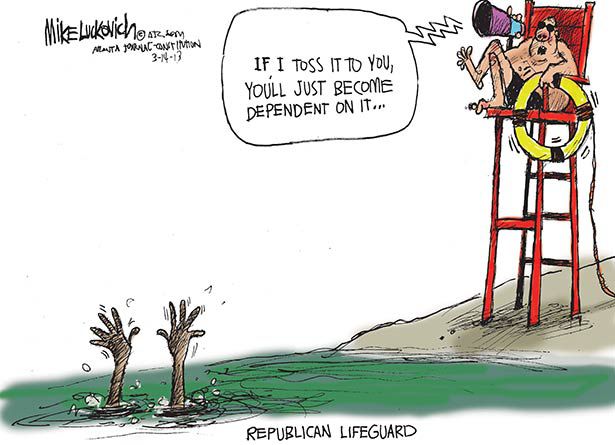
Sink or Swim Republican Lifeguard Cartoon, Mike Luckovich, March 14, 2013. (Luckovich/Atlanta Journal-Constitution; http://luckovich.blog.ajc.com).

Sink or Swim Republican Lifeguard Cartoon, Mike Luckovich, March 14, 2013. (Luckovich/Atlanta Journal-Constitution; http://luckovich.blog.ajc.com).

When I wrote in Boy @ The Window, “Laurell was practically using third-semester Calculus to build the Great Pyramids by comparison,” it was hyperbole, of course. Partly because Egyptian calculus was likely more complicated. And partly because Laurell had done something that I couldn’t do. She had gone to Wolf at the end of eleventh grade and borrowed from him a copy of the AP Physics textbook. She had devoted much of her summer to studying up on AP Physics and AP Calculus BC (once the harder version of AP Calculus) before day one of twelfth grade. So Laurell was going to do well, no matter what. Dozens of hours to study wasn’t sometime I had at chaotic 616, textbook weeks ahead of time or otherwise.

However, me doing well or terribly wasn’t my issue with Wolf. It was his sink-or-swim approach, with no attempt to help struggling students in any way. It was his dickish attitude, where he would literally lean on his stool or against the chalkboard insulting us as we attempted to answer a Physics problem.

Wolf’s class remained the most painful academic experience I’d have in Humanities. Period…Wolf continued to berate and belittle us, wondering, ‘Why are you still here?,’ or exclaiming ‘You decided to show up today!’ On the rare occasions I managed to solve a problem at the chalkboard, he gave me a Bronx cheer, the kind good Yankees fans gave when their team was down ten runs and a Yankee hit a home run to close the gap to nine.

Now, some would say this was good preparation for college. Where? While I certainly have known indifferent professors regarding my own abilities or their distance from other students in general, I’ve only known a few who even threw out the rare bit of sarcasm in the classroom. Plus, for courses like Physics, there were TAs who could walk students through problems better than Khan Academy. Even saying that Wolf was good preparation for graduate school would be a stretch. Quiet exclusion, rather than insults and ostracism, is the rule at the doctoral level. And having an advisor like Wolf would’ve led to blood, and not my own, plain and simple.

After years in the classroom with high school, undergrad, and grad students, I understand that being a professor isn’t the same as being a K-12 teacher. Most of the time, I’m not dealing with parents (except as students), I don’t teach five days a week, and I have the expectation that my students should behave as college students. All the more reason that as I have grown older and more experienced as an educator, the more I’ve found Wolf’s behavior objectionable, even almost unforgivable. In all seriousness, why even show up to teach if your primary form of solace at work is yelling insults at students while standing in the hallway in between class periods?

The Meat-Market Society

08 Saturday Oct 2016

Posted by decollins1969 in 1, culture, Eclectic, New York City, Politics, Pop Culture, race

≈ Leave a comment

Tags

Access Hollywood, American Narcissism, Billy Bush, Black Women, Dehumanization, Donald Trump, Facebook, Meat Market, Meat-Market Mentality, Misogyny, Racism, Reading Terminal Market, Washington Post


Slaughtered pigs in a slaughterhouse line, accessed October 8, 2016. (dezeen.com via Pinterest).

Slaughtered pigs in a slaughterhouse line, accessed October 8, 2016. (dezeen.com via Pinterest).

About a year ago, I figured out someone in my Facebook timeline was a bit of a misogynist. He had been posting pics of Black women as if it was his and his followers’ jobs to rate, or rather, berate women based on how “respectable” they looked while out in public. The comments he elicited were so stereotypical and nasty that I will not quote them here. But I can quote part of my own response. “Why do we get to choose? Are we at a grocery store shopping for ass or something?”

It was as if it never dawned on anyone responding that this was far more than objectifying women. (The truth is, we all objectify, regardless of gender, as any form of attraction comes with this as part of the equation. It’s a question of the degree to which we do so). This was a case of putting “good” versus “bad” women on display. It was as if I had gone to Whole Foods, or, more aptly, Reading Terminal Market in Philly. But instead of butchers and mongers and other vendors with stalls selling cuts of boneless/skinless chicken thighs, prime rib, duck breasts, pork tenderloin, and fresh caught salmon, they were selling big butts, round asses, wide hips, perky breasts, and sanded feet. The post was straight up misogyny, and I all but dropped the person as a result of it.

Cuts of beef, lamb, and pork (plus ground beef), Martin's Quality Meats & Sausages, Reading Terminal Market, Philadelphia, PA, March 2013. (http://hobbiesonabudget).

Cuts of beef, lamb, and pork (plus ground beef), Martin’s Quality Meats & Sausages, Reading Terminal Market, Philadelphia, PA, March 2013. (http://hobbiesonabudget).

But it did make me think. The folks who responded acted as if they really were shopping for groceries, as if you could buy a woman at a store for say, $4.99 a pound, or find a sale where “prime rib” goes for $10.89 instead of $12.99 per pound. The key to this frame on misogyny, then, is literally how little the men in question valued women, and more specifically, Black women, physically and otherwise. After all, with an average weight of 140 pounds, $700 or $1550 is a clear-cut and sickening example of cheapening a person, with slavery auction overtones included. At the very least, if these alleged men were truly interested in any kind of relationship or a long-term commitment, a minimum of three additional zeros should be added to this misogynist numbers, no?

Of course this isn’t the point, that no price tag should be put on the value of a human life, and on women specifically. It’s fairly obvious, though, that many, if not most, men and women think, speak, and act on this mindset. Donald Trump has been an example of this for decades. That it took the release of unused footage from an Access Hollywood clip from 2005 to confirm Trump’s meat-market views on White women is both sad and unsurprising. Sad because it’s as if many Americans haven’t paid attention to Trump’s ridiculousness since announcing his candidacy 17 months ago. Unsurprising because the tape reveals what those of us who have been paying attention over the past months — and in my case, years — already knew.

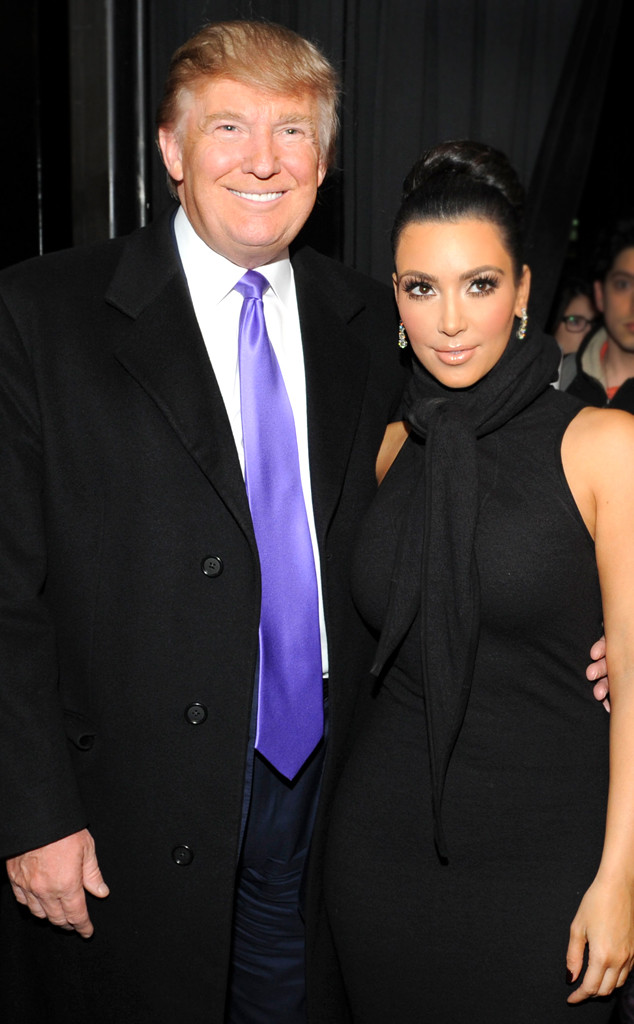
Donald Trump posing with Kim Kardashian at Celebrity Apprentice event, New York, 2010. (Mathew Imaging/WireImage via http://eonline.com).

Donald Trump posing with Kim Kardashian at Celebrity Apprentice event, New York, 2010. (Mathew Imaging/WireImage via http://eonline.com).

Sure, Trump apologized via video on Facebook late last night. But he won’t stop being a misogynist, or seeing people as meat. Heck, the Central Park 5 are still guilty and still deserving of the death penalty in his mind, and the jogger whom had been raped in 1989 is still only a “broken woman” and a “victim.” As far as Trump is concerned, his America consists of 320 million stalls of meat that he “can do anything” with at any time and expect to get away with it.

But if you think that this mindset has merely trickled down from the likes of people like Trump, you would be mistaken. American culture is so rife with a meat-market mentality, that I can smell the lean cuts of animal protein from miles away.

No Time For Jealousy

30 Friday Sep 2016

Posted by decollins1969 in 1, Academia, Boy @ The Window, culture, Eclectic, Mount Vernon High School, Mount Vernon New York, My Father, New York City, Politics, Pop Culture, race, University of Pittsburgh, Youth

≈ Leave a comment

Tags

616, 616 East Lincoln Avenue, Class, Coveting, Envy, Erika, General Foods, Humanities, JD, Jealousy, Love Canal, Mother-Son Relationship, Mount Vernon Hospital, MVHS, Smorgasbord, Target, Wendy


Envy, June 2009. (http://psychologytoday.com).

Envy, June 2009. (http://psychologytoday.com).

There are some emotions and human actions in which I don’t allow myself to partake. I usually don’t follow the herd. I don’t get caught up in what’s popular at the moment, no matter how many cool people in my life are riding the wave. I don’t build someone up in order to tear them down. And I don’t allow myself more than a flash of envy or jealousy.

Sometimes, these choices are rather easy, like with me having never watched an episode of Scandal or Empire. Sometimes, the choice to not virtually excoriate someone is difficult, given the narcissisms and moralisms that make up American culture. Sometimes, my path less traveled is one that has become easier over time. With jealousy, I’ve learned over the past thirty-five years that it’s a waste of time, neurons, and quantum energy to peer into the lives of those allegedly better off.

But this was hardly an easy process. I had so many reasons to be jealous when I was a preteen and teenager. My middle school and high school Humanities years were ones of constant, albeit momentary, jealousy. I was envious of classmates whose parents made more in a month than my Mom made working all year at Mount Vernon Hospital. I felt envy whenever I saw a classmate chow down on a smorgasbord of a lunch every day, especially on all the days I couldn’t eat because I either didn’t have the money to buy lunch or because the Hebrew-Israelite no-pork rule prevented me from eating the Friday grilled ham and cheese sandwich. Jealousy would come along when I’d see the mini-cliques of former Grimes and Pennington Elementary classmates getting along like the best of friends. Or, when my classmates would come to school wearing the latest and best of ’80s fashion while I walked around in sneakers with holes in the bottoms.

Smorgasbord, from breakfast to dinner, September 2010. (http://web2printexperts.com).

Smorgasbord, from breakfast to dinner, September 2010. (http://web2printexperts.com).

These first bouts with jealousy quickly turned inward toward my own insecurities and inadequacies, and outward toward my parents’ inability to do anything to make my life better materially. For years after the shock of preteen and early adolescent jealousy, I never saw myself as worthy of my classmates, not even worthy enough to befriend someone whose life, though maybe materially blessed, might have been unstable in other areas.

My first realization of seeing myself as being jealous, though, was toward the end of tenth grade at Mount Vernon High School. That’s when my secret first love Wendy and the contrarian one JD had begun to date. I didn’t feel this sense of love or weird emotional trepidation regarding Wendy by the time we were in tenth grade, though. I sensed as early as seventh grade this particular eventuality. No, I was more jealous of the reality that Wendy and JD could connect with each other in a way that I knew for me was beyond my reach. I didn’t really have any friends, so dating would’ve been like building a bridge over the Pacific Ocean by comparison.

But I learned something as well. Because theirs was an interracial relationship, I got a first-row seat to the stares, the whispers, and the occasional ignorant-ass comments from the other high schoolers about them dating. Seeing that, hearing that, made me aware of the fact that jealousy is a dangerous emotion, and give the life of deficits I had to make up, I didn’t have time or gray matter to waste in the matter of woe-is-me-as-outsider in 1985 or in the foreseeable future.

Public Enemy logo (note the crosshairs target), September 30, 2016. (http://twitter.com).

Public Enemy logo (note the crosshairs target), September 30, 2016. (http://twitter.com).

A year later, when I sensed on some level that some of my classmates were actually jealous of me, I balked at the idea. I thought, “I have nothing that anyone should be jealous of.” To me, this was literally true. With some of the cool kids literally laughing at me as I walked by them in the hallways, I couldn’t foresee a situation in which anyone would ever be jealous of me.

And yet I was wrong. My academic success, my fierce insistence to fight isolation by making myself independent of fads, trends, and conventional wisdom, had already made me a target of other’s envy. It wasn’t until the summer after I graduated when a co-worker at my General Foods job, one who was one year behind me at Mount Vernon High School, cut through the psychology for me. Erika cleared up so many things for me about the nature of friendships, relationships, and jealousy. I owe her big time for that, then and now.

Love Canal, suburban community turned EPA Superfund site, circa 1980. (http://buffalonews.com).

Love Canal, suburban community turned EPA Superfund site, circa 1980. (http://buffalonews.com).

Nearly thirty years later, and I am still surprised when I discover that someone is jealous of me. Really, I am. I guess it’s because I operate by the moment-of-envy rule. Meaning that I allow myself to feel jealous, but only for a moment, and remind myself of my own path, my own destination, and the work I must do to get there. After all, I don’t really want someone’s else job, promotion, salary, status, car, or house. That’s their life, and only God truly knows if their life would be one I’d want to have. And then I move on, knowing that the green grass on the other side of the tracks can often obscure the Love Canal underneath. I move on, because there’s always more work to do, for me, my wife, and my son. I move on, because after all these years, that’s all I know how to do.

If Racism Is Broadway, Narcissism Is Grand Central

22 Thursday Sep 2016

Posted by decollins1969 in 1, culture, Eclectic, New York City, Politics, Pop Culture, race

≈ Leave a comment

Tags

American Narcissism, American Racism, Barbara Jeanne Fields, Black Reconstruction (1935), David Roediger, Diagnostic and Statistical Manual for Mental Disorders, DSM-V, Narcissism, Racism, W. E. B. Du Bois


Grand Central Terminal Main Concourse in New York City, March 4, 2006. (Janke and Diliff via Wikipedia). Permission granted via cc-Attribution-Share Alike 3.0 license.

Grand Central Terminal Main Concourse in New York City, March 4, 2006. (Janke and Diliff via Wikipedia). Permission granted via cc-Attribution-Share Alike 3.0 license.

This is a subject matter that normally would be too complicated for me to write about here. But then again, the work of explaining any aspect of the human condition is complex work. Especially when addressing American racism, its origins, its subatomic parts, and its effect on humans beyond the material and physical. Ta-Nehisi Coates, Maya Angelou, bell hooks, and so many others have described the Black body and what the Black body has had to endure at the hands of American racism. But perhaps one of the most serious effort to address the psychological impact of American racism on Blacks and Whites was W. E. B. Du Bois’ in Black Reconstruction (1935). It’s a book that is the very definition of tome, covering twenty years of history with a sociological lens determined to cut to the marrow of what occurred during Reconstruction as if the reader was an eyewitness to each day’s happenings between 1860 and 1880.

Thanks in varying measures to Derrick Bell, David Roediger, Patricia Hill Collins, Kimberlé Crenshaw, Michael Eric Dyson, and many, many others, intellectuals and scholars have made much progress with the oft-quoted phrase “the wages of whiteness” over the past quarter-century. But while many have explained the wages of Whiteness, most haven’t tried to define it, especially when it comes to the psychological.

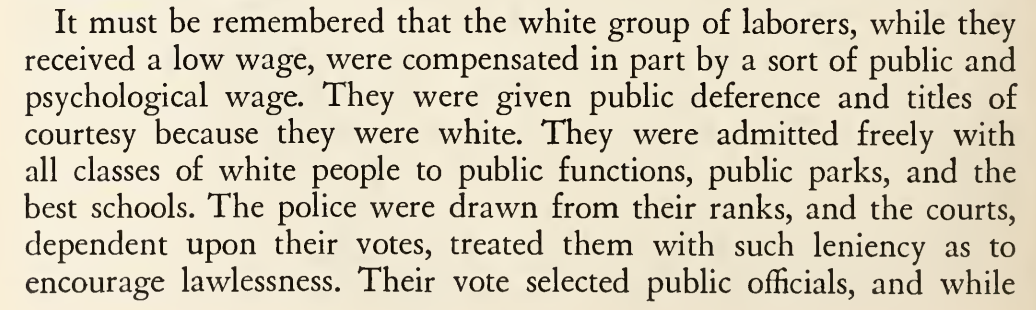
For a refresher, this was what Du Bois actually wrote about Whiteness and wages in Black Reconstruction:

screen-shot-2016-09-22-at-9-01-13-am

“A sort of public and psychological wage,” Du Bois wrote on page 700. Most scholars have explained rather thoroughly the public or material wages of Whiteness, of American racism for Whites on a structural and institutional level. Many have attempted to do so on an individual or internalizing level. But Du Bois was one of a handful who attempted to explain both the collective and individual impetus for being comfortable in racism. A founding member of the field of American sociology, an expert American and Black historian, Du Bois in 1935 discussed with great explanatory power the nature of American racism and how it developed over time to trump class divides.

But this only gets at the material. As for the psychological, Du Bois spent a significant amount of his 760 pages in Black Reconstruction attempting to do so. Except that, as a sociologist, Du Bois explained the psychological wage primarily in terms of group and interpersonal dynamics, and not in terms of group thought or a sort of collective thought.

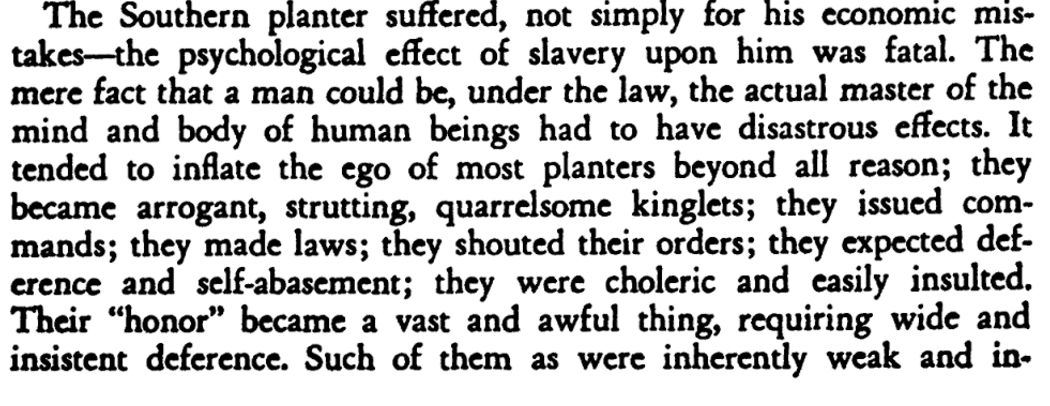
On page 52, though, Du Bois hits home with the following about American racism’s corrosive effect on those practicing it at the individual level:

screen-shot-2016-09-22-at-8-03-27-am

What Du Bois described in 1935 was not just the effect of American racism on the individual Southern planter. If Du Bois had possessed a copy of The Diagnostic and Statistical Manual for Mental Disorders, Fifth Edition (DSM-V), what he described we would call narcissistic personality disorder in 2016. Phrases like “inflate the ego…beyond all reason,” “arrogant, strutting, quarrelsome kinglets,” “expected deference and self-abasement,” and “were choleric and easily insulted.” These could easily be “a persistent manner of grandiosity, a continuous desire for admiration, along with a lack of empathy,” the DSM-V general description of narcissism.

A couple of quotes and a general description of narcissism are likely insufficient to link Du Bois’ prescient nod to social psychology on the issue of American racism. This is what the DSM-V says about narcissistic personality disorder in full:

In order to determine if a patient may have narcissistic personality disorder (NPD), a psychiatrist must determine if that patient meets at least any five (5) of the nine (9) standards below:

  1. A grandiose logic of self-importance
  2. A fixation with fantasies of unlimited success, control, brilliance, beauty, or idyllic love
  3. A credence that he or she is extraordinary and exceptional and can only be understood by, or should connect with, other extraordinary or important people or institutions
  4. A desire for unwarranted admiration
  5. A sense of entitlement
  6. Interpersonally oppressive behavior
  7. No form of empathy
  8. Resentment of others or a conviction that others are resentful of him or her
  9. A display of egotistical and conceited behaviors or attitudes

(American Psychiatric Association, 2013).

Now there are actually far more serious personality disorders that can be part of a larger set of self-destructive, dangerous, or even lethal behaviors, in which narcissistic personality disorder can be entangled. Most individuals with narcissistic personality disorder are not dangerous or self-destructive, and often function as normal human beings. In other words, there are levels of narcissism here, from the ground floor to the edges of the known universe.

Ah, but the DSM-V is describing the behavior of individuals, and not that of a class of people or a society, like what Du Bois attempted to do in Black Reconstruction, right? Yes and no. Du Bois used one individual example after another to build the case that the “white laborer” had come to have the same aspirations for the “public and psychological wages” that the Southern planter class had obtained through generations of owning slaves. Only, Blacks by the time of Reconstruction were slaves no more. The best way for Southern White elites to provide poor Whites all of the amenities of American racism without the latter either revolting against them outright or joining up with Blacks to fight grinding poverty was to codify American racism in the form of Jim Crow.

But where I and Du Bois are not on the same page is in the nature of American racism and narcissism as variables. Du Bois essentially argued that the psychological wage of Whiteness was the effect of American racism on Whites over time. The problem is, where does American racism come out of psychologically and sociologically? The simple yet true answer is out of gaming an advantage through greed and the desire for profit, through fear and the disdain for those whom have been deemed lesser, and through a willful ignorance and ignoring of the condition in which one has left other human beings. And that, for those who are reading, is both racism and narcissism, two separate yet interdependent ideas that help to prop each other up.

Before digging deeper into this, there are two things I want to make clear. One is that to think about American racism and American narcissism as part of the collective culture, think first of an atom. If racism were an atom, narcissism is its neutron. An atom doesn’t necessarily need a neutron to be stable (think Hydrogen atom, for example), and neutrons can be used to split atoms. People can be individually or collectively racist without necessarily being narcissistic, in other words, but the two often go hand-in-hand. Or, one can think about racism as the result of the social construction of race (to slightly quote Barbara Jean Fields), while narcissism is a psychological construction from which socially-constructed racism can spring, and then the former can be reinforced by the latter.

However, do not get it twisted. Just because I am saying that narcissism is a part of racism and vice-versa does not make racism a psychological illness by any means. That narcissists often function normally in nearly all social settings means that the personality disorder is a flaw or weakness of the human condition, not a disease. Racism is the attempt to take as much advantage of this flaw for oneself or for one’s group as better than others, and then use that success to reinforce the belief that one person or one group is better than another by taking even more advantages, materially and otherwise. American racism and American narcissism are two bosom buddies, and intertwine and intermix much more freely in the American context than virtually anywhere else.

We Were Never United

11 Sunday Sep 2016

Posted by decollins1969 in 1, culture, Eclectic, High Rise Buildings, New York City, Patriotism, Politics, Pop Culture, race, Religion

≈ Leave a comment

Tags

"Never Forget", #NeverForget, 9/11, Archetypes, Atlanta, Genocide, Greyhound Bus, Holocaust, Hyper-Patriotism, Ignorance, Islamophobia, Media, Navel Gazing, Racism, Sikhs, Stereotypes, Tropes, Xenophobia


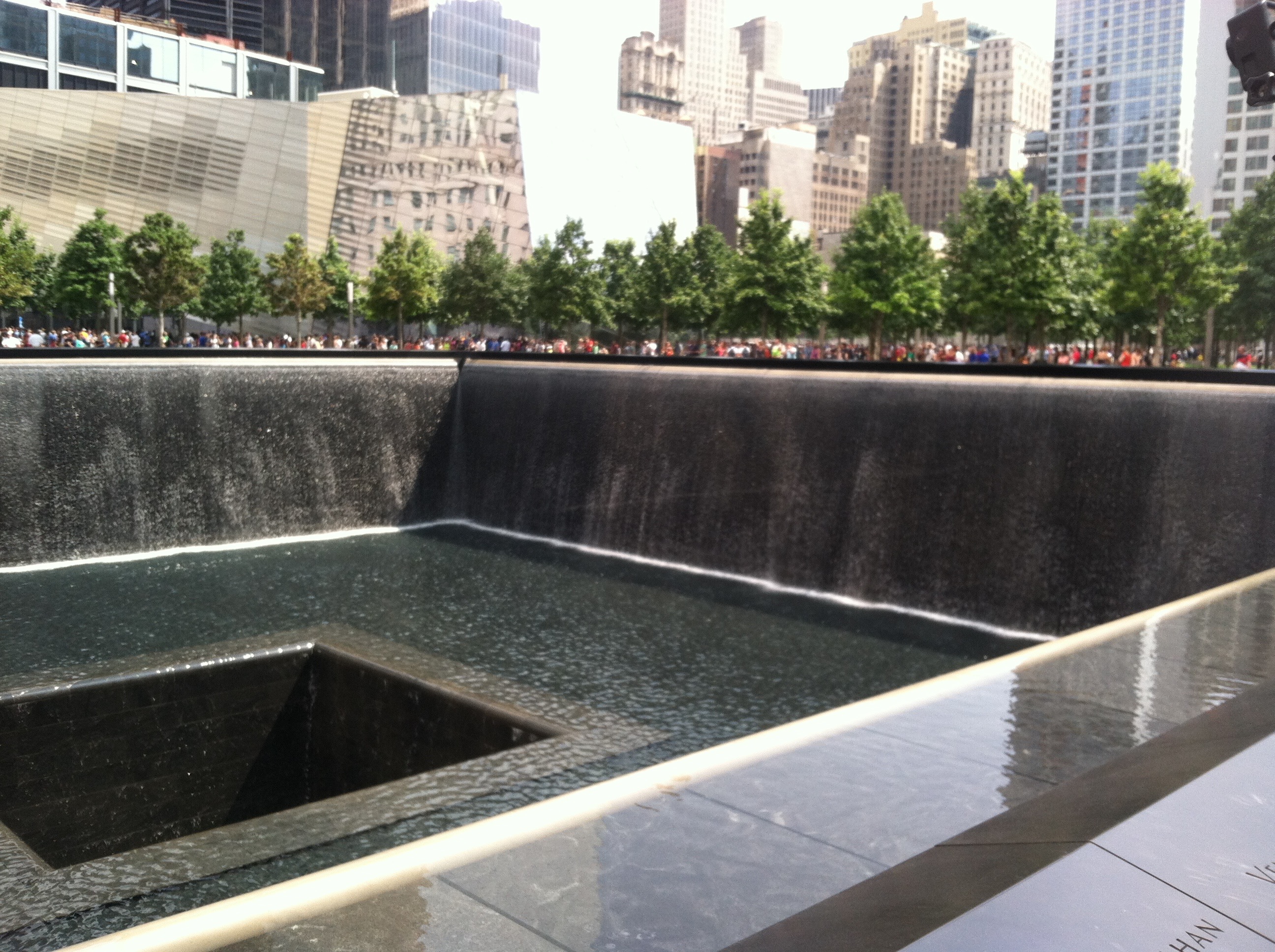
9/11 Memorial reflecting pool (w/ reflection of Freedom Tower off building straight ahead), August 5, 2014. (Donald Earl Collins).

9/11 Memorial reflecting pool (w/ reflection of Freedom Tower off building straight ahead), August 5, 2014. (Donald Earl Collins).

The media trades in archetypes, stereotypes, and tropes the way an alcoholic can become drunk by just smelling ethanol from a block away. It’s been so true around every 9/11 anniversary that it’s somewhat sickening.

There are two tropes the mainstream media has used to keep Americans in a perpetual state of fear and hyper-patriotism since that gruesome second September Tuesday in 2001. One is the theme of “Never Forget” (and the most obvious Twitter hashtag ever). The only other times the mantra of “Never Forget” normally comes up is either in reference to Jews and the Holocaust or to the systematic genocide Native Americans experienced. It should also come up for Blacks and Africans regarding the Middle Passage and slavery, Aborigines in Australia, and other groups who’ve experienced the wanton destruction of their lives and culture in the relatively recent past. Of course Americans shouldn’t forget what happened on 9/11. Nearly 3,000 people died on that tragic day. But 5.9 million Jews, 8-10 million Native Americans, untold millions of Africans, Aborigines, and other groups? Not exactly a fair comparison. If we cannot consistently have empathy and sympathy for the plight of others who suffer and die in the thousands or millions — like with Syrians, Iraqis, South Sudanese — then what does “Never Forget” really mean beyond an extravagant display of navel-gazing?

The second trope the media sells Americans every year is the idea that we “came together” in the weeks after 9/11 like never before. This is some high-grade bull crap. Maybe White Americans did. Maybe Americans who saw Arab Americans, Sikhs, Black and Latinos who looked like they could be Arabs united. But to say that the US “united” in a common bond to bring each other peace in a grand display of patriotism belies the reality of what happened in the six weeks between the attacks and the passage of the USA Patriot Act.

The most poignant moment of my own 9/11 experience was on a fifteen-hour Greyhound bus trip I took from Atlanta to DC after the government grounded commercial airplanes. There was a Sikh man on our bus, who got on somewhere between Atlanta and Charlotte, North Carolina. Two men, one White and one Black, tried to get in the face of this man and blame him for what happened in New York, in DC, and in Western Pennsylvania. I literally had to get in between these dumb asses to keep them from doing worse than their ridiculous name-calling. If this is what the media meant/means by Americans “uniting” after 9/11, then, yes, we did, if only to show our religious and ethnic ignorance, to vent our not-so-subtle hatred and intolerance.

This was some of what I wrote in the days after 9/11 and my wonderful bus trip up I-85/75.

If we as Americans continue to commit and condone through our silence acts of hatred against Arab Americans, are we much better than the tortured souls who flew four Boeing jets as weapons of mass destruction, all in the name of Allah? If we are to defeat terrorism as a nation and a world, we must also defeat its roots, fear and hatred. If we are to be one undivided and multicultural nation united against terrorism, we can no longer tolerate incidents of terrorism against one another, no matter how much we hurt.

Welp, I was wrong. We would “Never Again” condone acts of terror against our own citizens, right? Whether through the systemic use of law enforcement as death squads against Blacks or Latinos, or the occasional White vigilante dispensing their own form of racist justice? We would unite to stop White supremacists from blowing up mosques, synagogues, and temples, to stop other Americans from harassing Arab American citizens and Sikhs for their open display of their First Amendment religious freedoms, no? We Americans would stand up for the rights of those who protest in opposition to existing examples of lethal oppression, because the American flag is about much more than the US military? Yeah, right!

Americans have proven that “united” and “never forget” are proxies for our societal narcissism. It runs as deep as anything that has taken root in American culture, including racism, individualism, and xenophobia. For me, at least, it is why media mantras like “united” and “never forget” ring hollow, despite my memories of the week that was 9/11.


Looking Back to My Future

04 Sunday Sep 2016

Posted by decollins1969 in 1, Boy @ The Window, Christianity, culture, Eclectic, Mount Vernon High School, Mount Vernon New York, My Father, New York City, Pittsburgh, Politics, Pop Culture, race, Religion, University of Pittsburgh, Work, Youth

≈ Leave a comment

Tags

616, 616 East Lincoln Avenue, Blair Kelley, Dr. Jack Daniel, Familial Obligations, Forbes Quadrangle, Fordham University, Grit, Homelessness, Hunter College, Pedro Noguera, Pitt, Poverty, Resilience, Ron Slater, Survivor's Guilt, Wesley V. Posvar Hall, What Ifs


The power of "What If?," September 4, 2016. (http://giphy.com).

The power of “What If?,” September 4, 2016. (http://giphy.com).

I don’t “what if” my past moments nearly as much as I used to, thanks in part to one of my first Twitter conversations six years ago. It was with Blair Kelley, a professor and dean at North Carolina State University. I brought up the fact that I sometimes indulged my students’ “What if…?” scenarios regarding slavery and other issues in US history in order to help them find the truth. She said that this was a waste of time, that “What is…?” is already hard enough for students to understand, much less playing out a “What if…?” to get to a “What is…?”

Kelley was right. Students often play the “What if…?” game to deflect from what actually happened, out of potential pain or discomfort with historical truths, or because their conception of history doesn’t allow for humanity and human nature as significant factors. So I stopped humoring my students in fantasies about the South winning the Civil War or Nazi Germany winning World War II in Europe. It hasn’t made my students any happier, but it has made teaching them easier.

As for my own “What ifs…?,” I still think of a few on occasion. Like what if I had gone to college at Columbia or another elite institution instead of Pitt? Or what if I had possessed the courage to act on my crush on Wendy in seventh grade, or not wear my kufi to school during the Hebrew-Israelite years at all? Those can be very good mental distractions when I’m running a 10K or working on a boring set of revisions to an education piece. But they’re also rather silly distractions, with me knowing full well why I did or didn’t do most things, even knowing my thought process at the time they occurred in ’81, ’82, or ’87.

With this weekend being exactly twenty-eight years since my five days of undergraduate homelessness on Pitt’s campus, I have a real “What if…?” scenario to reconsider. What if I hadn’t bumped into my friend Leandrew, who had told me about the dilapidated fire-trap rowhouse he lived in on Welsford? What if I hadn’t met with my landlord Mr. Fu and gotten my 200-square-foot room with a literal hole in the wall so that two rooms could share a single radiator, all for $140 per month (about $285 in 2016 dollars)? What if I had to spend Labor Day weekend on a closed Pitt campus sleeping on that top floor concrete landing in a Forbes Quadrangle (now Posvar Hall) stairwell, where I had already spent three nights?

The mythical 6th-floor landing I slept on for three days (leading out to the roof), Wesley Posvar Hall, September 29, 2013. (Donald Earl Collins).

The mythical 6th-floor landing I slept on for three days (leading out to the roof), Wesley Posvar Hall, September 29, 2013. (Donald Earl Collins).

I already know the answers to these questions. I decided on this after praying about this on Wednesday, August 31 in ’88 while in that stairwell, laying on some of my clothes and my book bag. If I came out of Labor Day weekend without housing, I’d have to take my remaining $300 and go back to New York, to Mount Vernon, to 616. I’d have to drop or withdraw from my courses at Pitt. Maybe, with add-drop still going on, I could have some of my financial aid refunded, after Pitt deducted the $819 I owed them from my freshman year. I could enroll at Fordham or at CUNY’s Hunter College for the Winter/Spring 1989 semester, maybe find work somewhere in the area, and gut it out a few months at 616 with my nonfunctioning family.

I knew then that this was a scenario as ridiculous as Napoleon conquering Russia in the dead of winter. One of the reasons (but not the main reason) I left for the University of Pittsburgh in the first place was to get away from my family, to meet people unlike my Mom, my idiot stepfather, my five siblings at crowded 616, and the asshole Humanities classmates I’d gone to school with every day for the previous six years. I knew I had to have the mental space I needed to find myself, to figure myself out, all in considering whether I even had a future, much less how that future would take shape or how I’d shape myself into a future.

If I had gone with my cockamamie idea, the best case outcome would’ve been me transferring to Hunter or Fordham with my first year’s credits from Pitt, and me making it through a few semesters full-time before becoming a part-time student. I have no idea if I would’ve finished with a degree in history or something else from Hunter or Fordham. But given how exhausted I was each time I went back to Pitt after a summer of paid and familial work, I likely wouldn’t have even considered grad school.

The weight of guilt, survivor's and otherwise, September 2014. (http://www.fumsnow.com/).

The weight of guilt, survivor’s and otherwise, September 2014. (http://www.fumsnow.com/).

Why? I would’ve been at 616. I would’ve been obligated to help out with everything, from dealing with my idiot stepfather before me and my Mom finally forced him out, to providing food, entertainment, and childcare for my four younger siblings. I know this because during my college years, I did come back to 616 to work each summer and during the holidays. Those additional responsibilities were ones I felt obligated to fulfill until I was in my early thirties, and felt most intense when I had to face my family’s poverty head-on.

Keep in mind, this is the best-case outcome. Most likely, I would have stopped going to school all together after my bout with homelessness. I would’ve found part-time or full-time low-wage work, first to help out, then to find a roach trap somewhere in Mount Vernon or in the Bronx, and been relegated to the torture of “What ifs?” around getting a degree and having a better life. Maybe, just maybe, I would’ve been bumped around enough by that rough life to try again, to seek help from the likes of an ombudsman like Ron Slater or a provost like Jack Daniel. But I barely knew how to seek help when I first went about doing it as a homeless and broke-ass student in ’88. Given my mental makeup back then, it would’ve been a monumental task to trust that much after years of low-wage work and unrelenting poverty at 616.

UCLA education professor (although he is so much more than that) Pedro Noguera reminded me of something I’ve come to disdain in recent years. This idea that philanthropists and researchers can use kids and families as experimental subjects on the issue of “grit” or “resilience” is one I find disgusting. The idea that oppression and inequality can be overcome if you or I simply toughen up, grow a thick outer shell and just push through? The idea that with grit and spit and sweat, anyone can just overcome through sheer will power a lack of preparation, a lack of resources, a lack of access to resources, a lack of connections, and a lack of knowledge? Are you kidding me?

Quaker Instant Grits, Super Family Size, September 4, 2016. (http://soap.com).

Quaker Instant Grits, Super Family Size, September 4, 2016. (http://soap.com).

I had just about the best academic preparation anyone could have going into college, and I still came within three or four days of dropping out and heading back to 616. I was staring into the abyss of my future. The only grit I knew that would’ve worked for me on August 31, ’88 would’ve been a gigantic box of Quaker’s Instant Grits. And that was assuming I found a place to live in Pittsburgh so I could buy a pot and cook them. I didn’t want to be resilient. I’d always been resilient. But I didn’t call it that. I called it surviving.

And without help, without knowing how to ask for help, without some occasional divine or quantum-level intervention, my grit, resiliency, or survival up to August 31, ’88, wouldn’t have mattered. Philanthropists, educators, and social scientists need to stop asking individuals, families, and communities in poverty to be part of their test of resiliency as if we’re all rats in their maze. They need to start asking all of us not just how we survive, but what we need to succeed. Then again, they shouldn’t even need to ask. It’s not as if this is a “What if…?” The Great Society and War on Poverty efforts in the 1960s haven’t already provided a roadmap. Go study that!

← Older posts
Newer posts →

Boy @ The Window: A Memoir

Boy @ The Window: A Memoir

Places to Buy/Download Boy @ The Window

There's a few ways in which you can read excerpts of, borrow and/or purchase and download Boy @ The Window. There's the trade paperback edition of Boy @ The Window, available for purchase via Amazon.com at http://www.amazon.com/Boy-Window-Donald-Earl-Collins/dp/0989256138/

There's also a Kindle edition on Amazon.com. The enhanced edition can be read only with Kindle Fire, an iPad or a full-color tablet. The links to the enhanced edition through Apple's iBookstore and the Barnes & Noble NOOK edition are below. The link to the Amazon Kindle version is also immediately below:

scr2555-proj697-a-kindle-logo-rgb-lg

Boy @ The Window on Amazon.com: http://www.amazon.com/Boy-The-Window-Memoir-ebook/dp/B00CD95FBU/

iBookstore-logo-300x100

Boy @ The Window on Apple's iBookstore: https://itunes.apple.com/us/book/boy-the-window/id643768275?ls=1

Barnes & Noble (bn.com) logo, June 26, 2013. (http://www.logotypes101.com).

Boy @ The Window on Barnes & Noble: http://www.barnesandnoble.com/w/boy-the-window-donald-earl-collins/1115182183?ean=2940016741567

You can also add, read and review Boy @ The Window on Goodreads.com. Just click on the button below:

Boy @ The Window

Twitter Updates

Tweets by decollins1969
  • RSS - Posts
  • RSS - Comments

Archives

  • June 2025
  • April 2023
  • September 2022
  • August 2022
  • July 2022
  • June 2022
  • May 2022
  • April 2022
  • March 2022
  • January 2022
  • December 2021
  • November 2021
  • October 2021
  • September 2021
  • August 2021
  • July 2021
  • June 2021
  • April 2021
  • March 2021
  • February 2021
  • January 2021
  • December 2020
  • November 2020
  • October 2020
  • September 2020
  • August 2020
  • July 2020
  • May 2020
  • April 2020
  • March 2020
  • January 2020
  • December 2019
  • November 2019
  • August 2019
  • July 2019
  • June 2019
  • May 2019
  • April 2019
  • March 2019
  • February 2019
  • January 2019
  • December 2018
  • November 2018
  • October 2018
  • September 2018
  • August 2018
  • July 2018
  • June 2018
  • May 2018
  • March 2018
  • February 2018
  • January 2018
  • December 2017
  • November 2017
  • October 2017
  • September 2017
  • August 2017
  • July 2017
  • June 2017
  • May 2017
  • April 2017
  • March 2017
  • February 2017
  • January 2017
  • December 2016
  • November 2016
  • October 2016
  • September 2016
  • August 2016
  • July 2016
  • June 2016
  • May 2016
  • April 2016
  • March 2016
  • February 2016
  • January 2016
  • December 2015
  • November 2015
  • October 2015
  • September 2015
  • August 2015
  • July 2015
  • June 2015
  • May 2015
  • April 2015
  • March 2015
  • February 2015
  • January 2015
  • December 2014
  • November 2014
  • October 2014
  • September 2014
  • August 2014
  • July 2014
  • June 2014
  • May 2014
  • April 2014
  • March 2014
  • February 2014
  • January 2014
  • December 2013
  • November 2013
  • October 2013
  • September 2013
  • August 2013
  • July 2013
  • June 2013
  • May 2013
  • April 2013
  • March 2013
  • February 2013
  • January 2013
  • December 2012
  • November 2012
  • October 2012
  • September 2012
  • August 2012
  • July 2012
  • June 2012
  • May 2012
  • April 2012
  • March 2012
  • February 2012
  • January 2012
  • December 2011
  • November 2011
  • October 2011
  • September 2011
  • August 2011
  • July 2011
  • June 2011
  • May 2011
  • April 2011
  • March 2011
  • February 2011
  • January 2011
  • December 2010
  • November 2010
  • October 2010
  • September 2010
  • August 2010
  • July 2010
  • June 2010
  • May 2010
  • April 2010
  • March 2010
  • February 2010
  • January 2010
  • December 2009
  • November 2009
  • October 2009
  • September 2009
  • August 2009
  • July 2009
  • June 2009
  • May 2009
  • April 2009
  • March 2009
  • February 2009
  • January 2009
  • December 2008
  • November 2008
  • October 2008
  • September 2008
  • August 2008
  • July 2008
  • June 2008
  • May 2008
  • April 2008
  • March 2008
  • February 2008
  • January 2008
  • December 2007
  • November 2007
  • October 2007
  • September 2007
  • August 2007
  • July 2007
  • June 2007

Recent Comments

MaryPena's avatarMaryPena on My Day of Atonement/Bitter Hat…
decollins1969's avatardecollins1969 on No Good Teaching Deed Goes…
Mary Rose O’Connell's avatarMary Rose O’Connell on No Good Teaching Deed Goes…

NetworkedBlogs on Facebook

NetworkedBlogs
Blog:
Notes From a Boy @ The Window
Topics:
My Life, Culture & Education, Politics & Goofyness
 
Follow my blog

616 616 East Lincoln Avenue A.B. Davis Middle School Abuse Academia Academy for Educational Development AED Afrocentricity American Narcissism Authenticity Bigotry Blackness Boy @ The Window Carnegie Mellon University Child Abuse Class of 1987 CMU Coping Strategies Crush #1 Crush #2 Death Disillusionment Diversity Domestic Violence Economic Inequality Education Family Friendship Friendships Graduate School Hebrew-Israelites High-Stakes Testing Higher Education History Homelessness Humanities Humanities Program Hypocrisy Internalized Racism Jealousy Joe Trotter Joe William Trotter Jr. K-12 Education Love Manhood Maurice Eugene Washington Maurice Washington Misogyny Mother-Son Relationship Mount Vernon High School Mount Vernon New York Mount Vernon public schools Multiculturalism MVHS Narcissism NFL Pitt Pittsburgh Politics of Education Poverty President Barack Obama Race Racial Stereotypes Racism Relationships Self-Awareness Self-Discovery Self-Reflection Sexism Social Justice Teaching and Learning University of Pittsburgh Violence Whiteness Writing

Top Rated

Blog at WordPress.com.

  • Subscribe Subscribed
    • Notes from a Boy @ The Window
    • Join 103 other subscribers
    • Already have a WordPress.com account? Log in now.
    • Notes from a Boy @ The Window
    • Subscribe Subscribed
    • Sign up
    • Log in
    • Report this content
    • View site in Reader
    • Manage subscriptions
    • Collapse this bar
 

Loading Comments...