• About Me
  • Other Writings
  • Interview Clips
  • All About Me: American Racism, American Narcissism, and the Conversation America Can’t Have
  • Video Clips
  • Boy @ The Window Pictures
  • Boy @ The Window Theme Music

Notes from a Boy @ The Window

~

Notes from a Boy @ The Window

Category Archives: Mount Vernon New York

The Road to My Memoir, Part 1: Welfare

07 Tuesday May 2013

Posted by decollins1969 in 1, Academia, Boy @ The Window, culture, Eclectic, High Rise Buildings, Mount Vernon New York, Pittsburgh, Politics, Pop Culture, race, University of Pittsburgh, Youth

≈ Leave a comment

Tags

Academic Writing, Adrian Nicole LeBlanc, AFDC, Case Managers, Case Workers, Criminalization, Discrimination, Emotional Detachment, Irony, Journaling, Journals, Kaaryn Gustafson, Personal Vignettes, Pitt, Public Housing, Racial Stereotypes, Racial Stigmas, Research, Rhonda Y. Williams, Scholarship, Welfare, Writing, Writing Process


Adrian LeBlanc's Random Family (2002) and Rhonda Y. Williams' The Politics of Public Housing (2005), May 7, 2013. (Donald Earl Collins).

Adrian LeBlanc’s Random Family (2002) and Rhonda Y. Williams’ The Politics of Public Housing (2005), May 7, 2013. (Donald Earl Collins).

This isn’t a straight-forward post or series of posts. I didn’t come to Boy @ The Window quickly or easily. I didn’t intend it to be a memoir, even though I’d left myself bread crumbs to turn it into a memoir years ago.

The first time I’d thought about writing a book related to my experiences was at the beginning of my junior year of college, in September and October ’89. Not even three months after my idiot stepfather had left 616 for good, and I was thinking about writing up something about the experience? A bit ambitious I was!

What I did do, though, was somehow find my old scraps of journals about what happened to me when I was twelve before I came back to Pittsburgh and Pitt for the school year. I wrote up additional experiences, about running away from 616 in August ’85, about my Mom’s experience at the feet and fists of my now ex-stepfather, about my time on a drafty Pitt stairwell the year before.

That was painful to write about, so soon after finally being rid of Maurice, too soon, really, for me to fully process it without re-living the experience. So I wrote or rewrote four of these experiences in all, and put them away in one of my Pitt notebooks.

But there was one other experience I wanted to write about, to move from a personal story to one of academic scholarship. It was the experience of my being on welfare from ’83 to ’87, covering on-the-ground perspectives from people like me and my Mom, as well as those of case workers. I thought that it would fill a void in both media coverage and in historical scholarship about the topic of welfare, particularly how it became a racial stereotype and slur.

I thought that by juxtaposing (and that’s the word I used for this back in ’89) the plight of welfare recipients and case workers, that I could show some sense of irony. That so many of the case workers and managers were only a paycheck or two away from being on welfare — and that some of them had been on welfare themselves, at least based on my limited experience — would make for an interesting story. What I hoped to show, ultimately, was the inhumanity of the welfare system itself, pitting people from similar socioeconomic backgrounds against each other because of the mix of welfare as racial and as a form of the undeserving getting their government handouts, of crumbs from America’s table being turned into a political football.

I didn’t say this exactly when I had a conversation about this topic with my former TA Paul Riggs in October ’89. The ideas and many of the sentiments, particularly about “juxtaposing,” “irony,” and “inhumanity,” though, were all part of the conversation. Riggs told me I needed to slow down, that even if I somehow were able to make this topic historical, that I’d need to much more reading on the topic, to divorce myself from my emotions around this topic.

In some ways, my late-twenties mentor was right. It’s hard to do scholarly work on a topic in which you are heavily emotionally invested. The topic wasn’t historical, given that I had just lived it and my Mom and younger siblings were still living it. And I was nineteen after all, and after seven years of seldom writing for any purpose outside of the classroom except letters to former high school classmates and college friends, a book would’ve been a daunting, almost immeasurable task.

That started me on the path to learn how to write like an academic historian, instead of writing out of emotion and irony. One that would delay my writing on anything like Boy @ The Window for the better part of a decade, even as the academic process enabled me to do the interviews and research necessary to put the memoir together.

Luckily, there are three authors whose work over the past decade has covered this topic of welfare, racial stereotypes, inhumanity, criminality and irony. Mostly in ways I would’ve covered it had I had the words and research skills to do this work twenty-four years ago. Adrian LeBlanc‘s Random Family (2002), though a sensational accounting of a Latino family in the Bronx between ’88 and ’01, does provide a glimpse (still MacArthur “genius” Award winner). Rhonda Y. Williams‘ The Politics of Public Housing: Black Women’s Struggles Against Urban Inequality (2005) is her excellent collection of research and personal vignettes about public housing, welfare, Black women and empowerment despite the odds covering the period between the 1940s and the early 1980s (with a bit on the early 1990s). All just before crack cocaine, TANF and the gentrification of previously off-limit poor neighborhoods in a city like Baltimore became bigger themes.

And now there’s Kaaryn Gustafson‘s Cheating Welfare: Public Assistance and the Criminalization of Poverty (2012). She covers in so many ways what I’d once hoped to capture in emotion and storytelling about the stain of welfare as illustrated in policies and politics. Kaaryn’s (I know her from my New Voices days) written a great book, one that I wished I could’ve read or written when I was nineteen.

Kaaryn Gustafson's Cheating Welfare (2012), May 7, 2013. (http://nyupress.org).

Kaaryn Gustafson’s Cheating Welfare (2012), May 7, 2013. (http://nyupress.org).

That wasn’t my path, though I had interests that would include welfare. No, my path was about race, diversity, education and self-discovery, not just about my Mom and family.

Boy @ The Window Update

03 Friday May 2013

Posted by decollins1969 in 1, Boy @ The Window, culture, Eclectic, Mount Vernon High School, Mount Vernon New York, Pittsburgh, Pop Culture, University of Pittsburgh, Youth

≈ Leave a comment

Tags

Apple iBookstore, Breaking News, iTures, Publishing, self-publishing, Smashwords.com, Third Party Distribution


iBookstore-logo-300x100

Final Cover

Latest news: Boy @ The Window is now available in enhanced digital (i.e., video, pictures and links) mode, via Apple’s iBookstore (through iTunes). Yay me!!!

Also, I’ve dropped Smashwords.com as a third-party distributor. Unlike many authors, I understand html/css code, and I have time to review and fill out contracts. Plus, getting support from Smashwords was like pulling teeth out of an elephant’s mouth with a teaspoon.

You can purchase Boy @ The Window for $4.99 through this link: https://itunes.apple.com/us/book/boy-the-window/id643768275?ls=1. And, it’s also available for the Kindle world on Amazon.com. Enjoy!

scr2555-proj697-a-kindle-logo-rgb-lg

Boy @ The Window Is Live!

16 Tuesday Apr 2013

Posted by decollins1969 in 1, Boy @ The Window, Christianity, culture, Eclectic, eclectic music, Hebrew-Israelite, Jimme, Mount Vernon High School, Mount Vernon New York, Movies, music, My Father, New York City, Pittsburgh, Pop Culture, race, Religion, Sports, University of Pittsburgh, Work, Youth

≈ 3 Comments

Tags

E-Book, ebook, PDF edition, Publishing


Final Cover

Final Cover

Well, “it is done,” as my former graduate advisor Joe Trotter used to say. Boy @ The Window is now a published book. For now, it’s an e-book, available on Amazon.com through Kindle Books (as Boy @ The Window: A Memoir) and through Smashwords.com (which will then ensure that the book makes its way to iBooks, Apple’s bookstore, as well as Barnes & Noble.com). I also have a free PDF edition of Boy @ The Window (text only) available on this blog site (in the sidebar to the right), at least for the next three months.

I anticipate putting out a trade paperback edition in the next few months, either in July or in the fall. But with more than forty percent of the book market now in the e-book realm, it made far more sense to start with the fastest growing part of the market first. It’s a bit weird not holding a copy of Boy @ The Window in my hands, being able to leaf through the paper pages. It’s been on my iPad, though, for a couple of days, and seeing it there in 100 percent working order has been a pretty good feeling.

For me, at least, incidents like the Boston Marathon bombing yesterday — and so many other tragedies and dastardly events in the seven years and four months since I first began writing my book — are a reminder to live every day like there may not be a next one. After years of work and waiting for the commercial market to say “yes” to Boy @ The Window, I knew I didn’t want to wait forever to put this work of mine out into the world. So, “hello, world!”

Revised Preliminary Boy @ The Window Book Cover

12 Tuesday Mar 2013

Posted by decollins1969 in 1, Boy @ The Window, culture, Eclectic, Mount Vernon New York, race, Youth

≈ Leave a comment

Tags

Boy @ The Window Book Covers, Giving Thanks


Book Cover (version 9.5 officially) for Boy @ The Window, March 7, 2013. (Donald Earl Collins).

Book Cover (version 9.5 officially) for Boy @ The Window, March 7, 2013. (Donald Earl Collins).

Thanks to all of you who’ve publicly (and privately) given me feedback on the “Potential Boy @ The Window Book Covers” from last month. Much appreciated!

Based on suggestions from friends, Twitter peeps, family and students, above is the revised book cover that I intend to use for Boy @ The Window as eventual ebook and trade paperback. Again, please give me you feedback, of the positive and constructive criticism nature.

Up next: gathering more sage advice on the manuscript itself before I put it out there for public consumption, and myself out there as author (again).

Colorism and the Enduring Power of School Daze

11 Monday Mar 2013

Posted by decollins1969 in 1, Academia, Boy @ The Window, culture, Eclectic, Jimme, Mount Vernon High School, Mount Vernon New York, Movies, My Father, Politics, Pop Culture, race, Youth

≈ Leave a comment

Tags

Brown Paper Bag Rule, Cafe au Lait, Color Struck, Colorism, Dark-Skinned, Fraternities, Giacarlo Esposito, Hazing, HBCUs, Hedonism, High Yellow, Internalized Racism, Intrarace Relations, Laurence Fishburne, Light-Skinned, Mo' Better Blues (1990), Pitt, Redbone, School Daze (1988), Shunning, Sororities, Spike Lee, Tar Baby, The Silent Treatment, Tisha Campbell, University of Pittsburgh, Wesley Snipes


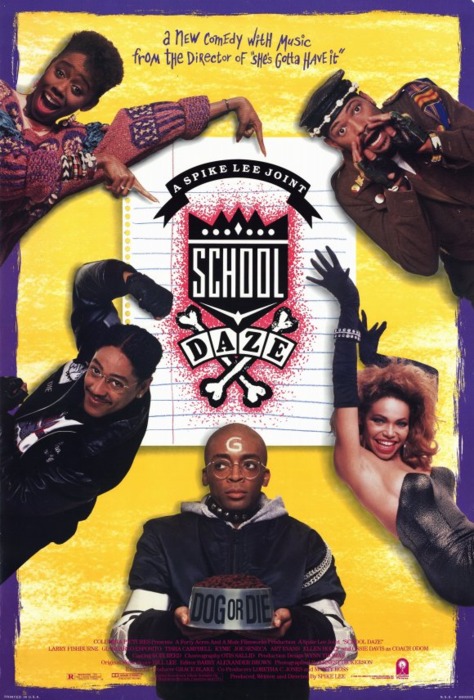
School Daze (1988) movie poster, September 17, 2012. (QuasyBoy via Wikipedia). Qualifies as fair use under US Copyright laws, as depicts subject of blog, is scaled-down and is of low-resolution.

School Daze (1988) movie poster, September 17, 2012. (QuasyBoy via Wikipedia). Qualifies as fair use under US Copyright laws, as depicts subject of blog, is scaled-down and is of low-resolution.

One of the few films I saw soon after it came out in theaters during my Boy @ The Window years was School Daze. It was in fact on this date twenty-five years ago that I went to the old theater in Pittsburgh that once was on Forbes Avenue near the Oakland Primanti Bros. sandwich place to see the film. It gave me some serious food for thought that Spring Break Friday evening, so much so that the lessons of School Daze have stayed with me to this day. Considering that I turned down a date with an upperclassman not interested in seeing the film in the process, School Daze was more than worth it.

The biggest lesson for me was on colorism. Not the macabre hazing of Q-dog frat boys and the cliquish AKA and Delta soros. Not the lack of care for the academic or the step-show battles. Not the hedonist behavior of Black middle class Gen Xers hell-bent on doing everything other than graduating from college. I already knew students like this at Pitt. Really, I already knew former classmates from Mount Vernon High School who attended HBCU’s like Howard, Morehouse, Hampton and Spelman, the kind of people who’d be perfect candidates for this Spike Lee joint. That they would psychologically and physically abuse each other in bed and on campus didn’t surprise me in the least.

"Good and Bad Hair" scene, School Daze (1988), March 10, 2013. (Donald Earl Collins via YouTube). Qualifies as fair use (see previous picture).

“Good and Bad Hair” scene, School Daze (1988), March 10, 2013. (Donald Earl Collins via YouTube). Qualifies as fair use (see previous picture).

No, it was the issue of being color-struck that was truly eye-opening for me. For I think I always knew on a semi-conscious level that colorism was alive and well among Black folks I’d come to know in Mount Vernon and in my first year at Pitt. It was frequently subtle, but also occasionally out in the open. With terms like “café au lait,” “redbone,” “mocha,” “caramel,” light-skinned,” “high yeller,” “dark-skinned,” “tar baby,” “chocolate-brown,” “good hair,” “nappy head,” “paper-bag brown,” and “light, bright and almost White,” among others. With obvious preferences among my male and female counterparts for young Black women and (sometimes) young Black men who passed the brown-paper-bag rule. (For those unfamiliar, if a Black male or female’s skin color was lighter than a brown paper bag, they were light enough to be attractive and acceptable by others. In terms of beauty, sometimes in pledging to a sorority or fraternity, often in terms of being part of a popular and better connected circle of Black folk.)

I certainly saw it with my father Jimme, who threw around the word “redbone” in my last year of high school as if the only young women in my NYC-area universe were light, bright and almost White. But I also saw it in the cliquishness and popularity of some of my classmates and other MVHS attendees and alumni. The most prominent of them at the time was Albert Brown, aka, Al B. Sure. Despite the uni-brow and limited talent, he went a long way in terms of popularity with his Class of ’86 and in the years immediately after high school. But there were others, classmates with bit-role appearances on ABC’s All My Children, folks whose entire circle of so-called close friends met some internalized color line.

It’s safe to say that by the time I left the theater — about 9 pm that Friday — I was actually angry. I wanted to take Giancarlo Esposito behind a building and beat him into another world. But more than that, it put some of the issues I had with high school and my first year at the University of Pittsburgh in perspective. Obvious and subtle forms of bigotry, individual racism and institutional/structural racism are all things I expected to face. This internalized bigotry on the basis of skin color, though, explained some of the shunning that I’d faced in my last couple of years of high school (see my post “The Silent Treatment” from June ’11) especially.

Hazing scene from School Daze (1988), March 10, 2013. (http://tumbler.com). Qualifies as fair use (see previous picture).

Hazing scene from School Daze (1988), March 10, 2013. (http://tumbler.com). Qualifies as fair use (see previous picture).

Yeah, I was weird because I was in a weird place in terms of domestic violence, child abuse and welfare poverty in those years. I didn’t help matters by being down with Tears for Fears and Sting and Mr. Mister and by often walking at Warp Factor Three or higher to cover the twenty-acre school between classes. But being poor and looking poor and a darker shade of brown was the first thing the Rick James-Eddie Murphy “Party All The Time” set saw, even before I turned into a blur walking past them every day.

A few years after School Daze, I went to David Lawrence Hall to watch the Pitt Film Club’s showing of Mo’ Better Blues (1990) with Denzel Washington and Wesley Snipes. A decidedly light-skinned underclassman (who was in my easy-A Intro to Black Studies course – I was a senior at Pitt by this time) – let’s call her ‘R’ – saw me and decided to sit with me to watch the film. Every time Wesley Snipes was on the screen, she commented on how dark he was. Making me uncomfortable, to say the least.

I finally asked, “Well, what about me?,” given her obvious distaste for Snipes. “Oh, you’re fine. Wesley’s just too dark,” R responded. I did a double-take, realizing that her perspective on skin color was just too odd for words. A quarter-century later, and my guess is that there are Black folks (and Whites who love “dark”-skinned Blacks) who still need to “WAAAAKKKKKE UUUUUUPPPPPPP!”

Clover Donuts and Papa Wong’s

07 Thursday Mar 2013

Posted by decollins1969 in 1, Boy @ The Window, culture, Eclectic, Mount Vernon New York, New York City, Pop Culture, race, Youth

≈ 3 Comments

Tags

Arson, Arthur Treacher's Fish & Chips, Carvel Ice Cream, changes, Chicken and Chips, Chocolate Cake Donuts, Clover Donuts, Community Changes, Food, Foodie, Glazed Donuts, Gramatan Avenue, Papa Wong's, Pork Egg Rolls, Poverty, quality of food, Quality of Life, Sue's Rendezvous, Suspicious Fires


Pork Egg Rolls (like the ones Papa Wong's once made), Golden Gate Restaurant, Wyoming, MI, December 6, 2008. (stevendepolo via Flickr). In public domain.

Pork Egg Rolls (like the ones Papa Wong’s once made), Golden Gate Restaurant, Wyoming, MI, December 6, 2008. (stevendepolo via Flickr). In public domain.

Poverty influenced so much of my worldview in the years prior to finishing my doctorate. Including my taste buds. I’m sure that if I used my taste buds today to evaluate the Sicilian slices I used to eat from the pizza shop on East Lincoln, I’d throw it in trash and demand my money back. Yet I could say at thirteen — and say now at forty-three — some foods stand out more than others, foods that I haven’t been able to find anywhere else. In the case of these Mount Vernon/NYC foods, I really can’t go home again.

Eating at Papa Wong’s restaurant on Gramatan Avenue was a real treat for me even at seven or eight. They had great egg rolls, pork, shrimp and chicken fried rice. I loved the place. It smelled the way I thought a Chinese restaurant ought to smell. Ginger, sesame, soy, onions, scallions and garlic. It’s too bad the restaurant burned down suspiciously in ’82, with nothing to replace it with but a parking lot for nearly a decade afterward. The circumstances behind the fire — as with so many on Gramatan and South 4th Avenue in the ’81-’84 period — remain suspicious to this day.

There was also good eating for me at Arthur Treacher’s Fish & Chips on Prospect and Park before it closed down that corner for two years at the end of ’82. I loved their crispy chicken medallions with the chips — awesome! Carvel’s Ice Cream shop a block west on Prospect was also a good place to eat, even if the customer service sucked more times than not. I think I drove myself to lactose intolerance about five years early because of that place. Man, I miss those chocolate-on-vanilla ice cream sandwiches!

Chocolate Honey Dip Donuts (not quite like the ones Clover Donuts used to make), March 6, 2013. (http://honeydewdonuts.com).

Chocolate Honey Dip Donuts (not quite like the ones Clover Donuts used to make), March 6, 2013. (http://honeydewdonuts.com).

But nothing for my precious few dollars topped Clover Donuts. If you could take a Krispy Kreme glazed and genetically cross it with a Dunkin Donuts glazed, you’d end up with the best glazed donut ever! And that’s exactly what Clover Donuts sold. Not to mention those juicy, grilled and amazing Sabrett Hot Dogs. It was all a “kick in da head” for me growing up. On almost every visit I made to Mount Vernon after I went to the University of Pittsburgh, I made a stop there for a glazed donut, their nugget-y yet soft chocolate glazed donuts, and a hot dog. I might’ve not liked many things about Mount Vernon, but Clover Donuts was one thing I really enjoyed.

By the time I hit my mid-teens, though, I realized that Mount Vernon’s food had changed, and not for the better. Papa Wong’s was long gone, and so was Arthur Treacher’s. My home life at 616 meant that most of my shopping time was spent in Pelham at C-Town or in one of their inferior eateries. The pizzerias made slices that varied from absolutely sucks to pretty good, but were common and unimaginative enough that they blended together for me. At Mount Vernon High School, the deli in nearby Chester Heights easily surpassed anything I’d eaten sandwich-wise outside of the city.

Speaking of, going down to 241st in the Bronx, and then to Manhattan, changed my view of food for good. My years working with Jimme and Darren in Midtown, on the Upper East and Upper West Side, near Spanish Harlem on 90th and around Lincoln Center introduced me to great delis and bodegas. The best deli food I ever had from one at the crossroads between Broadway and Columbus between 65 and 66th Street, across from Lincoln Center. The smell of pastrami sizzling on the grill, the thick cuts of turkey and corned beef, the interracializing of cookies, my first taste of a blondie. It all happened there for me in ’84 and ’85, and sorry to say, I was spoiled by that food. Unlike the food I find outside of my kitchen these days (see my post “Washington, DC – Where Bad Food Abounds (DC/MD/VA)” from last month).

Sue's Rendezvous, a strip club a block away from where Papa Wong's used to be, Mount Vernon, NY, March 6, 2013.  (http;//twitter.com).

Sue’s Rendezvous, a strip club a block away from where Papa Wong’s used to be, Mount Vernon, NY, March 6, 2013. (http;//twitter.com).

It’s safe to say that these experiences had as much of an influence on what I eat and what I like to cook as growing up with a great cook in my mother at 616. I’d love to add Clover Donuts’ glazed donut and chocolate cake donut recipes to my repertoire. Not to mention those super-crispy pork egg rolls from Papa Wong’s.  I loved it all, and I miss them all as well.

Toto’s “Africa” & “Reading” Too Much Into It

02 Saturday Mar 2013

Posted by decollins1969 in 1, Boy @ The Window, culture, Eclectic, eclectic music, Hebrew-Israelite, Mount Vernon New York, music, Politics, Pop Culture, race, Religion, Sports, Youth

≈ Leave a comment

Tags

"Africa" (1982), "The Catch", A.B. Davis Middle School, Africa, C-Town, Dwight Clark, Fever, Football, Herschel Walker, Humanities, Imagination, Joe Montana, NFL, Pelham, Puberty, Racialism, Reading, Self-Discovery, Self-Reflection, Tarzan, The Jungle (1906), Toto, Toto IV, Upton Sinclair, USFL, Whiteness, Writing


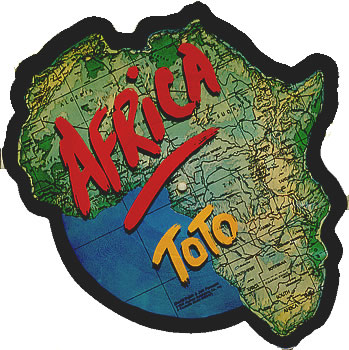
Toto's "Africa" (1982) Singles Sleeve, March 1, 2013. (http://eil.com).

Toto’s “Africa” (1982) Singles Sleeve, March 1, 2013. (http://eil.com).

There are as many reasons my musical tastes are eclectic as there are songs that I like and love. I can’t explain it. There’s no way I can explain why I think one song sounds as unimaginative and boring as Drake’s “Started From The Bottom,” while Nickleback’s “If Today Was Your Last Day” has been one of my favorite songs over the past three and a half years.

My imagination could take the corniest song and make it epic, a mantra, my theme music. Even a song like Toto’s “Africa” (’82-’83), a song that could be interpreted as reflecting White racialism as it related to Tarzan movies of a not-so-bygone era. Yet I’ve seen their video, and probably heard the song at least 3,000 times. It ain’t that deep, but it’s still a song I like.

So, a bit of context. My grades in the early Reagan years — especially in ’82-’83, when I was in eighth grade — didn’t at all reflect our family’s slide into welfare poverty, my ongoing issues with my idiot stepfather, my suicidal struggles or my search for a real relationship with God. What I had to lean on, more than my amazing memory or World Book Encyclopedia, my parents or even God, was my imagination.

The Spark of Imagination (via x-ray), March 1, 2013. (http://esquire.com).

The Spark of Imagination (via x-ray), March 1, 2013. (http://esquire.com).

With puberty and what would turn into a ten-inch growth spurt in a span of twenty months, I became enamored with sports. And the sport I became most interested in early on was football. The strike-shortened ’82 NFL season combined with the formation of the USFL and the coming-out party for soon-to-be draft pick Herschel Walker to get my attention. The vicious hits, the acrobatic catches, the powerful throws were things that I’d seen before. I saw them through the lens of an underdog now, a downtrodden member of an abandoned family who wanted to see folks who’d overcome impossible circumstances achieve great things.

The first person who represented that for me in sports was Joe Montana, quarterback for the San Francisco 49ers. The only ending to a football game I’d ever watched was the end of the NFC Championship Game the year before, with the play known as “The Catch.” I didn’t even know who Joe Montana was, even after watching Dwight Clark go up and catch a ball that was only meant for him.

He was the kind of person I wanted and needed to be in order to overcome what I thought was an impossible deficit. As far as I was concerned, I had to score about a hundred touchdowns to go from welfare to college, let alone anything after college. Yet it didn’t stop me from dreaming about rolling out right to the sidelines on fourth down, sucking in Dallas’ defense, and throwing a ball toward the right-side of end zone, toward the back line, just high enough for Clark to catch and Emerson Walls not to.

It was a dream that required some theme music, and luckily for me it was ’83. Michael Jackson’s Thriller had come out at the start of eighth grade, The Police were big, Toto and Rick Springfield were at their peak, and New Edition had put out there first hit, a Jackson 5 remake. All of it gave me something more modern to move forward with, to get silly about, to “march down field” to when I needed to gear up to get an important A. I’d accidentally found a way to escape my life without ever leaving Mount Vernon.

The Jungle (1906), by Upton Sinclair, 1st Edition, March 31, 2011. (GrahamHardy via Wikipedia). In public domain.

The Jungle (1906), by Upton Sinclair, 1st Edition, March 31, 2011. (GrahamHardy via Wikipedia). In public domain.

Demontravel’s and Carraccio’s classes were the first two places in which I applied this approach to my life and studies. In Carraccio’s case, it was the reading and essay assignment for Upton Sinclair’s The Jungle (1906) a muckraking tale of first-generation, Eastern European, Chicago meatpackers who worked and lived in grueling conditions and where some of them gave their lives — and livers — to Swift and other companies. I’d caught a cold, had a fever, was going to the store for Mom, and had just heard Toto’s “Africa” playing at C-Town in nearby Pelham.

The song served as my background music, giving me the energy and drive I needed to finish the book. I read The Jungle in one night, three hundred pages of it in four hours. I think Carraccio gave me a 95 on my essay. She pulled me aside to say, “You know, if you wanted, you could be a really good writer.” It might’ve been the only thing she said that I thought was right on the mark all year.

Yeah, you could say that I was seriously music deprived, didn’t understand the cultural symbolism or archetypes in the song or video, or simply had and have bad tastes. Y’all may be right, too. But for me, Toto’s “Africa” struck the right note, lifted my imagination, and found the goofball within.

← Older posts
Newer posts →

Boy @ The Window: A Memoir

Boy @ The Window: A Memoir

Places to Buy/Download Boy @ The Window

There's a few ways in which you can read excerpts of, borrow and/or purchase and download Boy @ The Window. There's the trade paperback edition of Boy @ The Window, available for purchase via Amazon.com at http://www.amazon.com/Boy-Window-Donald-Earl-Collins/dp/0989256138/

There's also a Kindle edition on Amazon.com. The enhanced edition can be read only with Kindle Fire, an iPad or a full-color tablet. The links to the enhanced edition through Apple's iBookstore and the Barnes & Noble NOOK edition are below. The link to the Amazon Kindle version is also immediately below:

scr2555-proj697-a-kindle-logo-rgb-lg

Boy @ The Window on Amazon.com: http://www.amazon.com/Boy-The-Window-Memoir-ebook/dp/B00CD95FBU/

iBookstore-logo-300x100

Boy @ The Window on Apple's iBookstore: https://itunes.apple.com/us/book/boy-the-window/id643768275?ls=1

Barnes & Noble (bn.com) logo, June 26, 2013. (http://www.logotypes101.com).

Boy @ The Window on Barnes & Noble: http://www.barnesandnoble.com/w/boy-the-window-donald-earl-collins/1115182183?ean=2940016741567

You can also add, read and review Boy @ The Window on Goodreads.com. Just click on the button below:

Boy @ The Window

Twitter Updates

Tweets by decollins1969
  • RSS - Posts
  • RSS - Comments

Archives

  • June 2025
  • April 2023
  • September 2022
  • August 2022
  • July 2022
  • June 2022
  • May 2022
  • April 2022
  • March 2022
  • January 2022
  • December 2021
  • November 2021
  • October 2021
  • September 2021
  • August 2021
  • July 2021
  • June 2021
  • April 2021
  • March 2021
  • February 2021
  • January 2021
  • December 2020
  • November 2020
  • October 2020
  • September 2020
  • August 2020
  • July 2020
  • May 2020
  • April 2020
  • March 2020
  • January 2020
  • December 2019
  • November 2019
  • August 2019
  • July 2019
  • June 2019
  • May 2019
  • April 2019
  • March 2019
  • February 2019
  • January 2019
  • December 2018
  • November 2018
  • October 2018
  • September 2018
  • August 2018
  • July 2018
  • June 2018
  • May 2018
  • March 2018
  • February 2018
  • January 2018
  • December 2017
  • November 2017
  • October 2017
  • September 2017
  • August 2017
  • July 2017
  • June 2017
  • May 2017
  • April 2017
  • March 2017
  • February 2017
  • January 2017
  • December 2016
  • November 2016
  • October 2016
  • September 2016
  • August 2016
  • July 2016
  • June 2016
  • May 2016
  • April 2016
  • March 2016
  • February 2016
  • January 2016
  • December 2015
  • November 2015
  • October 2015
  • September 2015
  • August 2015
  • July 2015
  • June 2015
  • May 2015
  • April 2015
  • March 2015
  • February 2015
  • January 2015
  • December 2014
  • November 2014
  • October 2014
  • September 2014
  • August 2014
  • July 2014
  • June 2014
  • May 2014
  • April 2014
  • March 2014
  • February 2014
  • January 2014
  • December 2013
  • November 2013
  • October 2013
  • September 2013
  • August 2013
  • July 2013
  • June 2013
  • May 2013
  • April 2013
  • March 2013
  • February 2013
  • January 2013
  • December 2012
  • November 2012
  • October 2012
  • September 2012
  • August 2012
  • July 2012
  • June 2012
  • May 2012
  • April 2012
  • March 2012
  • February 2012
  • January 2012
  • December 2011
  • November 2011
  • October 2011
  • September 2011
  • August 2011
  • July 2011
  • June 2011
  • May 2011
  • April 2011
  • March 2011
  • February 2011
  • January 2011
  • December 2010
  • November 2010
  • October 2010
  • September 2010
  • August 2010
  • July 2010
  • June 2010
  • May 2010
  • April 2010
  • March 2010
  • February 2010
  • January 2010
  • December 2009
  • November 2009
  • October 2009
  • September 2009
  • August 2009
  • July 2009
  • June 2009
  • May 2009
  • April 2009
  • March 2009
  • February 2009
  • January 2009
  • December 2008
  • November 2008
  • October 2008
  • September 2008
  • August 2008
  • July 2008
  • June 2008
  • May 2008
  • April 2008
  • March 2008
  • February 2008
  • January 2008
  • December 2007
  • November 2007
  • October 2007
  • September 2007
  • August 2007
  • July 2007
  • June 2007

Recent Comments

MaryPena's avatarMaryPena on My Day of Atonement/Bitter Hat…
decollins1969's avatardecollins1969 on No Good Teaching Deed Goes…
Mary Rose O’Connell's avatarMary Rose O’Connell on No Good Teaching Deed Goes…

NetworkedBlogs on Facebook

NetworkedBlogs
Blog:
Notes From a Boy @ The Window
Topics:
My Life, Culture & Education, Politics & Goofyness
 
Follow my blog

616 616 East Lincoln Avenue A.B. Davis Middle School Abuse Academia Academy for Educational Development AED Afrocentricity American Narcissism Authenticity Bigotry Blackness Boy @ The Window Carnegie Mellon University Child Abuse Class of 1987 CMU Coping Strategies Crush #1 Crush #2 Death Disillusionment Diversity Domestic Violence Economic Inequality Education Family Friendship Friendships Graduate School Hebrew-Israelites High-Stakes Testing Higher Education History Homelessness Humanities Humanities Program Hypocrisy Internalized Racism Jealousy Joe Trotter Joe William Trotter Jr. K-12 Education Love Manhood Maurice Eugene Washington Maurice Washington Misogyny Mother-Son Relationship Mount Vernon High School Mount Vernon New York Mount Vernon public schools Multiculturalism MVHS Narcissism NFL Pitt Pittsburgh Politics of Education Poverty President Barack Obama Race Racial Stereotypes Racism Relationships Self-Awareness Self-Discovery Self-Reflection Sexism Social Justice Teaching and Learning University of Pittsburgh Violence Whiteness Writing

Top Rated

Blog at WordPress.com.

  • Subscribe Subscribed
    • Notes from a Boy @ The Window
    • Join 103 other subscribers
    • Already have a WordPress.com account? Log in now.
    • Notes from a Boy @ The Window
    • Subscribe Subscribed
    • Sign up
    • Log in
    • Report this content
    • View site in Reader
    • Manage subscriptions
    • Collapse this bar
 

Loading Comments...