• About Me
  • Other Writings
  • Interview Clips
  • All About Me: American Racism, American Narcissism, and the Conversation America Can’t Have
  • Video Clips
  • Boy @ The Window Pictures
  • Boy @ The Window Theme Music

Notes from a Boy @ The Window

~

Notes from a Boy @ The Window

Category Archives: eclectic music

The Great “Original Sin” Debate

03 Wednesday Oct 2012

Posted by decollins1969 in 1, Academia, Boy @ The Window, culture, Eclectic, eclectic music, music, Politics, Pop Culture, race, Youth

≈ Leave a comment

Tags

"Moment of Surrender" (2009), Black Reconstruction (1935), Carnegie Mellon University, Chants Democratic (1984), David Roediger, Marcus Rediker, Media's Game Mentality, Obama-Romney Debate, Original Sin, Pitt, Race, Sean Wilentz, Slavery, U2, University of Pittsburgh, W. E. B. Du Bois, Wages of Whiteness (1991), Wendy Goldman


Obama-McCain Third Debate (post-debate picture), Hofstra University, Hempstead, NY, October 15, 2008. (Jim Bourg/Reuters).

We’ve finally meandered our way into the presidential debate cycle portion of our Election ’12 cycle. I’m grateful to finally see what the media has built up to be a match between the Pittsburgh Steelers and the New York Giants! Not really, of course. But from standpoint of political reporters and pundits alike, tonight’s first debate between President Barack Obama and Mitt Romney might as well be a sports event.

In the end, though, this isn’t as much a presidential debate as it is a personality contest with questions and psychologists’ interpretations of nonverbal communication. It will be more hype than substance, more stiff than an overbaked souffle. One of the men — most likely President Obama — will win this first debate, though it won’t be clear how significant this “win” will be, given the trends for the past couple of months.

Professor Wendy Goldman, Carnegie Mellon University, circa 2012, October 3, 2012. (http://www.history.cmu.edu).

I am reminded of another debate, one that occurred in my Comparative Working-Class Formation graduate seminar at Carnegie Mellon University in the fall of ’93. It was taught by Professor Wendy Goldman, wife of Marcus Rediker, both decidedly Marxist, but in Goldman’s case, Marxist without any considerations of race at all. It was a course that turned into a debate because I’d already grown tired of professors at Pitt who believed race and gender to be identities subsumed under the long, hard human battle over class inequality (see my post “Dairy Queens, Dick Oestreicher and Race” from February ’11).

All semester-long, there had been a three-way tug-of-war between me (and occasionally, my former Pitt grad school colleague who decided to hop across the bridge to Carnegie Mellon to take this course), ten brown-nosing students who’d agree with her despite the evidence (led by Mike and Mark, the “M&M Boys,” as I labeled them for my friends and colleagues) and Goldman. I didn’t expect my now fellow Carnegie Mellon grad students to take my side. But I did expect them to read E.P. Thompson and Sean Wilentz and other folks with a critical eye and not just to get an A out of our professor. There may have been one or two other classes I dreaded more in three years of grad school. Yet I’d never been around a professor more unaware of their own biases than Goldman (see my “Crying Over E.P. Thompson” post from September ’09).

It all came to a head when it was time to discuss David Roediger’s Wages of Whiteness (1991) and, indirectly, Sean Wilentz’s Chants Democratic (1984) on the last Thursday in October ’93, which happened to be my mother’s forty-sixth birthday. Both authors looked at the formation of the White American (and male) working-class in the first half of the nineteenth century. Goldman, as usual, took the stance that the only ideology of significance was one that proclaimed class inequalities the predominant issue explaining the radicalization of the American working-class.

Michelangelo’s sin of Adam and Eve painting, Sistine Chapel ceiling, Vatican City (1508-1512), May 20, 2005. (The Yorck Project via Wikipedia). In public domain.

Finding this a bit laughable (a mistake on my part), I pressed my argument that at least in the case of US history, race and class distinctions have been and remain intertwined. So much so that a typical neo-Marxist analysis of the American working-class couldn’t apply. The next two hours were me and my Pitt colleague against the M&M Boys, the other brown-nosers and Professor Goldman. Luckily in my case, I could not only quote Roediger and Wilentz, but Herbert Gutmann, W.E.B. Du Bois, and a host of other scholars to press home my counterargument. At the end, our professor said to me, in utter exasperation, “I guess we should just go back to original sin.” It meant that I was being a racial determinist, which I guess was supposed to be an insult as well as her version of “No mas, no mas!”

Aside from the fact that America’s “original sin” really was the taking of Native American lands and the systemic destruction of Native American peoples and culture, I really didn’t have much of a response to Goldman’s excited utterance. I finished my argument with a final volley that included Du Bois’ Black Reconstruction (1935) and Roediger, and class adjourned sooner thereafter.

My brown-nosing classmates looked pretty beat from the class session, while me and my colleague from Pitt were both energized from the three-hour class. Still, we couldn’t help but discuss Goldman’s Moment of Surrender at the end of the class. Of course we knew what her “original sin” comment meant when it came to race and slavery. The comment, though, seemed small and petty coming from a professor, one that was too personal, and not professional.

Still, the worst thing I learned is that it took Roediger’s Wages of Whiteness to confirm ideas that Du Bois had begun writing about in 1903 and 1935. That, for me, made me apprehensive about wanting to work with scholars who may well see me and my work as well-intentioned, but inferior to theirs. At the same time, I learned that, for better and for worse, that not going along to get along can be a good thing, especially after years of ridicule from people of all stripes for doing so.

My “original sin” of not going along with whatever Goldman said forced a debate, one of the more exciting times I had in grad school, certainly at Carnegie Mellon. How could that be bad?

Touré’s Post-Blackness ≈ I’ma Be Me?

01 Monday Oct 2012

Posted by decollins1969 in 1, Academia, Boy @ The Window, Christianity, culture, Eclectic, eclectic music, Hebrew-Israelite, Mount Vernon New York, Patriotism, Politics, Pop Culture, race, Religion, Youth

≈ Leave a comment

Tags

"Pound Cake" speech, Acting White, American Identity, Authentic Blackness, Authenticity, Bill Cosby, Black Identity, Blackness, Boy @ The Window, I'ma Be Me (2009), Identity Issues, Intrarace Relations, Litmus Test, Post-Blackness, Post-Civil Rights Generation, Post-Racialism, Race, Racism, Reaching Youth, Self-Discovery, Self-Loathing, Self-Reflection, Touré, Wanda Sykes, Who's Afraid of Post-Blackness (2011)


Illustration of red wolf with dinner after a hunt, by Sandra Koch, September 29, 2012. (http://nc-es.fws.gov). In public domain.

I know, I know. Touré’s Who’s Afraid of Post-Blackness (2011) has been out for over a year, and I’ve finally, finally managed to read it in the past couple of weeks. I did not want to like this book. I found — and still find — the title to be pretentious and over the top, a perfect fit for Touré’s Twitter and TV persona. Touré values his ideas like they all are new finds of platinum or a form of safe and sustained nuclear fusion. Sometimes Touré can be cutting-edge, but many times, he goes over the edge (as was the case in August on MSNBC with his “niggerization” of Obama comment).

But in Who’s Afraid of Post-Blackness, Touré puts forward a variety of ideas and insights that I’ll be contemplating in my blogo-neighborhood off and on over the next few months. Touré’s is a very good book. It’s one that is both intellectual and yet revealing about the challenges Blacks face inter- and intraracially in the early twenty-first century.

The premise — once I got past the ridiculous term post-Blackness — is that African Americans and America has advanced just far enough in terms of race for all of our old conceptions of Blackness to have now become meaningless. That Blackness is fully infused in American — maybe even world — culture. That there was never one way to be Black in the first place. Touré himself says, “[t]here is no dogmatically narrow, authentic Blackness because the possibilities for Black identity are infinite. To say something or someone is not Black — or is inauthentically Black — is to sell Blackness short. To limit the potential of Blackness. To be a child of a lesser blackness.” (p. 5).

Litmus paper used in litmus tests, September 29, 2012. (http://chemistry.about.com).

Ironically, though, much of Touré’s book picks apart the notion that the US has become post-racial in the past couple of decades, as best exemplified by the election of President Barack Obama in 2008. Of course, Touré uses notions of Blackness and where it has expanded beyond the authenticity litmus test to show that race/racial bias/racism is still alive and well in America. At the same time, Touré shows how post-Blackness has also provided opportunities for millions of Americans White, Black and Brown to reach beyond their own misconceptions of race and themselves, to enrich our lives in politics, scholarship, the arts, not to mention through hip-hop.

One of my main criticisms of Who’s Afraid of Post-Blackness is that Touré uses a term like post-Blackness (mind you, I hate terms like post-structuralism, post-modernism, and post-racialism too) and doesn’t try in any way to provide a definition that distinguishes it from post-racial. For the purposes of this post, though, the main issue I have revolves around Touré virtually ignoring poor and struggling African Americans in his post-Blackness tour-de-force.

I get it when Touré says that he “never lived a typical Black experience.” (p. 53). At least, I think I do. That despite Touré middle class upbringing, middle-class neighborhood, private school experience, that his is but one representation of Blackness. And that Touré’s experience is as representative of Blackness as my experience of being a Hebrew-Israelite preteen in a working poor family while enrolled in Humanities in Mount Vernon, New York would’ve been thirty years ago (see my post “A Question of My Blackness, Sexuality and Masculinity” from September ’11). Or, for that matter, Wanda Sykes’ comedy special I’ma Be Me (2009) was for her.

That’s great for us, for anyone with enough intellectual power, outsider status, unusual amounts of wisdom, or just plain middle class standing to get the details of Who’s Afraid of Post-Blackness. But when Touré does bring up the twenty-five percent of Blacks who aren’t part of this post-Blackness elite, he talks at them, and not to them. Yes, I completely agree that Blackness isn’t to be defined in terms of poverty, prison, and projects. No, Blackness shouldn’t be defined by how “down” one is with an impoverished community or how “hard” someone is for beating the shit out of another person (see my “Raised on Hip-Hop?” post from April ’10).

Hakeem Olajuwon posting up Patrick Ewing, 1994 NBA Finals, June 1994. (http://rgj.com).

Still, while I stand with almost one hundred percent of what Touré says in Who Afraid of Post-Blackness in ’12, I don’t think that this book would’ve reached me thirty years ago. The way I would’ve seen it in ’82 or even ’87, a middle class Black guy telling me about how my poverty is insignificant to who I was would’ve been excommunicated from my life for eternity. It wouldn’t have helped me at all deal with the pressures I faced socially, academically and in my family (see my “The Silent Treatment” post from June ’10).

Touré wouldn’t have been able to provide for me a roadmap for how to be me and to ignore the crowd of those in my life — White and Black — who regularly told me that I wasn’t authentically Black or that I was “talkin’ White.” If mild-mannered me at twelve wouldn’t have been reached by Touré’s chapter on Black artists taking Blackness and standing it on its head, I imagine that young African Americans growing up in poverty or struggling with identity issues would find Who’s Afraid of Post-Blackness about as easy to embrace as Bill Cosby’s criticism of poor Blacks in ’04.

For me as a writer, the question of how to reach beyond the already converted is always an issue. Touré, as good as he is in his book, merely affirms the path I’ve traveled over the past thirty-one years. He doesn’t really reach those whose path of Blackness has barely begun.

A Call for Psychological Screenings

13 Thursday Sep 2012

Posted by decollins1969 in 1, Academia, culture, eclectic music, Movies, Politics, Pop Culture

≈ 1 Comment

Tags

Aurora Colorado, College Admissions, Colleges & Universities, Community Engagement, Community Responsibility, Counseling, Gun Control Debate, James Holmes, K-12 Education, K-16 Education, Mass Shootings, Mental Health Screenings, Psychological Profiles, Psychological Testing, Second Amendment, The Dark Knight Rises


Fourth blot of the Rorschach inkblot test, 1921, February 21, 2008. (Bryan Derksen via Wikipedia). In public domain.

Given that it’s the start of a new school year, and in the wake of so many shootings over the summer, it’s time to reformulate how we deal with violence and mass shootings. The saddening eruption of yet another mass shooting by former graduate student James Holmes at the The Dark Knight Rises opening in Aurora, Colorado in July is a case that makes clear my point. It’s time for colleges and universities to do psychological profiles as a requirement for admissions and attendance, and for public schools to be more proactive in providing psychological services.

James Holmes in court in Aurora, July 23, 2012. (Peterson/AP/CBS News).

There’s been much discussion of gun laws, assault weapons bans, and polls that show that a majority of Americans are anti-gun control. But there hasn’t been nearly enough dialogue about how to detect potential domestic threats to our safety to begin with. The majority of domestic threats in the past generation have come from young and mostly White males, either in high school or in higher education. We as a nation are either sympathetic — as in “how could they have turned out so wrong?” — or vengeful toward these perpetrators. We give so much thought to the Second Amendment that we completely neglect the root cause, the one thing the sympathetic and the vengeful do agree on. That someone like James Holmes would have to be psychologically unstable or “crazy” to do what he did.

The list of school and college-related mass murders and shootings goes something like this since 1996. San Diego State University, Pearl, Mississippi, West Paducah, Kentucky, Jonesboro, Arkansas, Littleton, Colorado,  University of Arkansas, University of Arizona School of Nursing, Virginia Tech (twice, in 2007 and 2011), Chardon, Ohio and Oikos University. Though Holmes technically didn’t unload his 100 or so bullets on a college, high school or middle school campus, he lived in the Aurora, Colorado community in part because he was a one-time University of Colorado graduate student.

It’s beyond time for schools and especially colleges and universities to remember that they are very much a part of communities, not just gigantic entities unto themselves. Part of the responsibility of being a significant member of a community is to play a significant role in ensuring the safety of the community. Not just on the actual middle school, high school or a higher education institution campus, but in the surrounding community as well.

Part of taking all necessary actions to ensure the safety of students, teachers, professors, administrators and community members is providing services that could identify behavioral or psychological issues among students. We’ve learned in the cases of Eric Harris and Dylan Klebold — the Columbine High School shooters — and in the case of Seung-Hui Cho — the Virginia Tech shooter — that consistent psychological services may have prevented these murders and injuries. Had psychological screening been performed and other related steps — including barring these individuals from contact with the campus and reporting potential threats to law enforcement — these students might well have become productive citizens.

Peanuts’ Lucy Van Pelt as psychiatrist, September 12, 2012. (http://digitalcitizen.ca). Qualifies as fair use under US Copyright laws due to blog post’s subject matter.

Of course, there’s no way to know for sure if readily available psychological services at the K-12 level and required screenings at the college level would lead to a reduction in student-related mass shootings. But it would allow for the opportunity for students at an early age to discuss their delusions of grandeur, their feelings of isolation or ostracism, their rage and their need to strike out against fellow students and community members alike. It would give colleges and universities the opportunity to truly get to know potential students beyond their grades and community service opportunities, and to understand how first-year students respond to stresses and pressures of college long before they become a threat.

Most importantly, mental health screening would allow a college or university to identify psychological issues with a students before accepting them into their institutions. While this proscription may make university administrators and school district superintendents squeamish, it is certainly a conversation worth having. After all, it’s not as if the debate about gun control has gotten any of us anywhere in the past 50 years.

Summer of Sound

05 Sunday Aug 2012

Posted by decollins1969 in 1, Boy @ The Window, culture, Eclectic, eclectic music, Mount Vernon New York, Movies, music, New York City, Pop Culture, race, Work, Youth

≈ Leave a comment

Tags

"End Of The Road", "Walking On Broken Glass, Annie Lennox, Boyz II Men, Garth Brooks, Grover Washington Jr., Growing Up, John Coltrane, Jon Secada, Mariah Carey, Mary J. Blige, Michael Jackson, Miles Davis, Musical Tastes, Ronny Jordan, Sounds of Blackness, U2, What's the 411?


Mary J. Blige’s What’s the 411? (1992) CD cover, August 5, 2012. (Donald Earl Collins).

One of the few great things for me about being back in Mount Vernon and New York City the summer of ’92 was that I was ahead of the slow pop cultural curve that was Pittsburgh two decades ago (although it’s still slow — just not as slow as it used to be). For one last summer, despite the turmoil of kids and my mother treating me like I was one (see my post “The Last 616 Summer” from June ’12) and the constant chaos at my job (see my “Working With Wackos, Part I” post from July ’12), I had access to all the immediate in music, movies and other forms of culture, pop or otherwise.

This was truly the summer that my tastes turned from randomly weird to eclectic. To think that just five years earlier, early Whitney Houston, Thompson Twins, Glass Tiger and ABC were all part of my regular cassette rotation for my Walkman! My tastes had grown up to the point where music had to have a mood or rhythm to it. It no longer needed to be quirky or silly in order to put me in a quirky or silly mood.

But those weren’t the only emotions available to me by the summer of ’92. I could actually feel sexy, romantic, generous, loving, caring, and not just angry, depressed and goofy in my normal life. A half-decade away from the crushing life of strife at 616 and in Mount Vernon, high school, Humanities and in general, had something to do with that. Dating off and on had brought others into my life, which meant that Crush #1 and Crush #2 had become somewhat repressed memories. The bottom line was, I no longer needed music or pop culture to block out the daily emotional pain that had been my life in the ’80s.

And that opened me up to new and more eclectic (if still occasionally goofy experiences) music experiences that year and summer. I became a big Jon Secada fan that summer (see my “Otro Dia Mas Sin Verte” post from August ’09), both in English and en Espanol. I was so glad he branched off from Gloria Estefan, as I’d had it with the Miami Sound Machine’s sound years ago.

I also became enthralled a bit with jazz and what we now call smooth jazz that summer, between Grover Washington, Jr., Ronny Jordan’s “After Hours”, John Coltrane, even some Miles Davis (who I did appreciate, but never quite understood). I had friend at Pitt who had exposed me to jazz over the previous five years, but it took graduate school for me to finally fully appreciate it. It also took working in an office with a woman who played all kinds of music all the time for me to actually go out and buy their stuff on CDs.

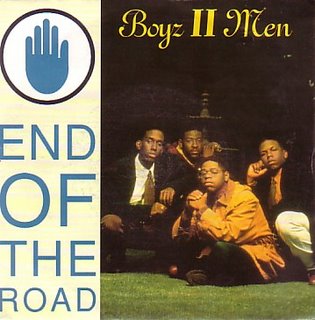
Boyz II Men’s “End Of The Road” (1992) singles cover, May 19, 2009. (Undermedveten via Wikipedia). Qualifies as fair use under US Copyright laws (low resolution picture).

The expansion of hip-hop and rap twenty summers ago to include new and fresh sounds ended up having an impact on my own music collection as well. Mary J. Blige’s What’s The 411? hit the stores and her songs the NYC-area airwaves that July and August, so raw and so new that even I the late-bloomer noticed. And who could forget Boyz II Men’s “End Of The Road.” I heard that song at least eight times a day nearly every day between the end of June and the middle of August, especially at my Mount Vernon Clinic job. I guess if I’d been divorced or in a bad relationship, I would’ve appreciated it more. As it was, any thought of buying Boyz II Men’s second album disappeared by the beginning of August. The same was true for me regarding Jodeci, the hip-hop screechers and beggars from the Upper South. They were like nails on chalkboard to me then.

Still, I incorporated music more typical of my earlier tastes into my collection that summer as well. Mariah Carey’s “I Don’t Wanna Cry” became the song I went to every time my sister Sarai started whining about me telling her to do chores at 616. Sounds of Blackness’ “Optimistic,” I discovered that summer (one summer after its release). U2’s Achtung Baby, Garth Brooks’ “The Thunder Rolls” and Michael Jackson’s “Remember The Time” rounded out my catching up to the current that summer, while Annie Lennox’s “Walking On Broken Glass” was, new, silly and serious at the same time.

There have been other times, other summer in which my tastes have taken leaps forward. I must admit, this has usually occurred after great pain or after having recovered from a major trial in my life. The summer of ’92, though, was a transition summer for me, from having to act like an adult due to stressful circumstances to just being an adult because I actually was.

Working With Wackos, Part I

02 Monday Jul 2012

Posted by decollins1969 in 1, Academia, Boy @ The Window, culture, Eclectic, eclectic music, Mount Vernon New York, music, Pop Culture, race, Work, Youth

≈ 2 Comments

Tags

"End Of The Road", Boyz II Men, Deception, Micromanaging, Office Politics, Ralph Williams, Valerie Johnstone, Westchester County Department of Community Mental Health, Workplace Abuse, Workplace Issues


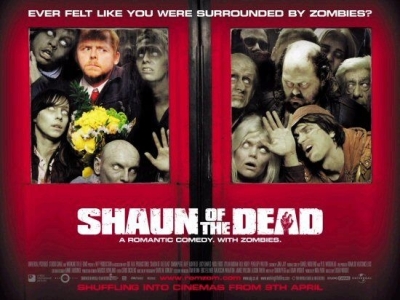
Shaun Of The Dead (2004) poster, August 22, 2011. (Quentin X via Wikipedia). Qualifies as fair use under US Copyright laws because of poster’s low resolution.

I don’t mean this in a literal sense, although in this particular case, it’s pretty close to true. In the case of my last summer working for Westchester County Department of Community Mental Health at its Mount Vernon clinic on 9 East First Street, it’s ironic that the least sane folks around were my bosses and colleagues. The amount of drama generated from such a small office was enough to start a nuclear fusion reaction, providing power for Mount Vernon’s residents for years on end.

Unlike the summer of ’89, the summer of ’92 wasn’t just about the dreaded Valerie Johnstone (see my post “Fried Green Toenails”  from February ’11). This summer involved the head of the clinic, a Dr. Ralph Williams. From my first day there, it was obvious that there was a strange and sordid dynamic at the clinic, one that had little to do with the patients who showed up with everything from associative disorder to schizophrenia, for drugs from Dilantin to Xanax. I got a dressing down from Johnstone about having earned my master’s degree two months earlier, as she said, “See, I have a master’s degree, too.” Except that she was sixty, and I was twenty-two, at least that’s what went through my head while she was telling me how much better she was than me.

Williams wasn’t much better. My first one-on-one with him at the end of June was about how much better we were than “ordinary” folks like Johnstone because he had the ultimate prize – a medical degree from Harvard – and I was about to embark on the ultimate degree, a doctorate. From our first meeting, Williams had described Johnstone as a “dummy” and an “overbearing bitch.” While I knew that the latter was true, I would’ve have never said it, certainly in a workplace setting. And I certainly didn’t expect it from my boss.

By the beginning of July, it had become obvious to me that the main issue with the clinic front office and its director was much more than being three years behind in back-billing to New York State Medicaid and Medicare for psychiatric services. On the first Friday in July, I happened to be outside the director’s office, pulling old files for re-billing to New York State, when I heard someone crying. I overheard Williams say, “you are the dumbest person that I’ve ever worked with,” and another sentence where he called the woman in his office “a bitch.”

The calmness in which Williams spoke, it was as if he was attempting to comfort parents who had learned their kid was autistic. It was scary. I knew that the woman crying was Johnstone, as I’d seen her later on that afternoon, eyes unusually burgundy, mood unusually insecure.

The secret war between the office manager and the clinic director became an open one later on in mid-July, a Thursday to be more precise. They became embroiled in a shouting match over a patient’s records, escalating from “stupid” and “idiot” to “bitch” and “motherfucker” in a matter of seconds. All right in front of the office pool and waiting patients, at 3:30 pm. If I hadn’t known any better, I’d guessed that Johnstone and Williams had been involved prior to a breakup, and were using the office as a way to work out their frustrations over their relationship. But I probably read too much into what was going on.

Finally, at the end of July, came the most foul thing I’d ever been a part of in the workplace. Williams requested a one-on-one meeting with me. He wanted me to write a report that would implicate Johnstone as both incompetent and capricious as the office manager. Williams said, “people like us need to stick together.”

I knew that I wouldn’t be coming back to work for this clinic or the county again. At least, not in this capacity, and not with me starting Pitt’s doctoral program, so I really had no skin in this game. At the same time, I knew that if I wrote the report exactly as Williams had requested, that Johnstone would be out of a job. In their own way, they were both terrible bosses, lousy leaders, and had warped perceptions of the people and the world around them. I didn’t know yet what to do. I just knew that if I did exactly what I’d been told, it would lead to more office chaos, something the outpatients at the clinic didn’t need or deserve.

Origins of the Obsession

13 Wednesday Jun 2012

Posted by decollins1969 in 1, Boy @ The Window, culture, Eclectic, eclectic music, Mount Vernon High School, Mount Vernon New York, Pop Culture, Youth

≈ Leave a comment

Tags

Boy @ The Window, Chicken McNuggets, Crush #2, Fake Meat, Fake Smile, Friendship, Immaturity, Manhood, Obsession, Operation Opportunity, Relationships, Self-Discovery, Self-Revelation, Shyness, The Galleria


Obsession Night For Men, Calvin Klein, June 12, 2012. (http://www.dealsdirect.com.au).

To think that it’s been a quarter-century since I went into obsession mode over a girl. Not love, not so much a crush, but a bonafide obsession. Well, it’s a confirmation of how pathetic I’d allowed myself to become in the summer between the end of high school and my freshman year at the University of Pittsburgh in ’87.

The funny thing was, it was an obsession with Crush #2, and one that almost didn’t happen. After all, I’d given up on seeing Crush #2 again after our graduation ceremony. So the week after, I began working at the General Foods’ (now Kraft Foods) scientific testing facilities in Tarrytown, just down the road from the GM plant and the Tappan Zee Bridge over to Rockland County. I was hired as part of their Operation Opportunity program, a summer internship program for students of color.

It was my first office job, and it showed. I had to take two buses to get to and from work and walk the seven blocks from the bus stop at the corner of North Columbus and East Lincoln to 616. I took the 40 or 41 bus to downtown White Plains and transferred to either the 13 or the 1W to Tarrytown. I was consistently late to work in the first three weeks, not even knowing to call in to let folks know I was going to be late.

About a week into the job, I boarded the bus for White Plains on my way home from work and decided to vary my routine. I got off at the White Plains Galleria, a state-of-the-art mall back then. It was five stories of concrete and a glass ceiling, of shops, eateries and a movie theater.

Mechanically processed chicken, the key ingredient in McDonald’s Chicken McNuggets, pouring out into small tubs, October 5, 2010. (http://huffingtonpost.com).

The mall had a mom-and-pop cookie store that had the best chocolate chip-walnut cookies this side of Mrs. Fields. They also had a McDonald’s, a luxury for me for most of the decade. I stopped to buy my ultimate pre-dinner snack: a six-pack of McNuggets with that sweet-and-sour sauce, small fries, a vanilla “milk”shake and two gooey and warm chocolate chip-walnut cookies. It was heaven-on-earth food for me. When I went outside to wait for the 40 bus back home, there she was. Crush #2 was standing there, also waiting for the bus. We exchanged “Hi”s and started some small talk about college, music and movies. It turned out that Crush #2 had a summer job in White Plains just a couple blocks from the Galleria.

Even as pitiful as I was, I knew I had a window of opportunity to get beyond the idle chatter to the “Do you want to hang with me?” question. But I just didn’t and couldn’t ask. Not on that commute home, and not on any coincidental bus trips after that. In all, I probably had about a dozen opportunities to ask Crush #2 if she liked me or if she wanted to go out with me throughout July.

A standard non-conversation conversation went like

“Hey, [Crush #2].”

“Hi. How are you?,” she’d asked.

“All right,” I’d say.

“How was work?”

“Okay. How was your day?,” I’d ask in response.

“Fine,” Crush #2 would say.

Then, there would be the occasional “Did you see…?” some movie, or a “Did you buy…?” the latest album or tape. Otherwise, it was like two ex-spouses attempting small talk before switching the conversation to concerns about their kids.

These bump-ins weren’t deliberate and not even “by accident-on purpose.” When I did see her, I didn’t get the sense of euphoria that I had when I saw her in high school. My heart didn’t go pitter-patter, and my throat and mouth didn’t turn dry. At times, I felt a sense of dread when I’d come out of the Galleria with my comfort food in hand and Walkman on, only to have to talk to Crush #2 without the cover of school as a pretext.

I preferred to think of Crush #2 from afar. On meandering walks that often took me through Crush #2’s neck of the woods. Or when I listened to certain songs, particularly love duets and Whitney Houston. I never once dared to walk over to her house, and I refused to call even though her family’s number was in the phone book — I did look it up, though. I couldn’t even quench my libido’s growing thirst by thinking of her and how she looked.

In the back of my mind I began to realize that my attraction to Crush #2 didn’t have much to do with Crush #2. Yet when I did bump into her, I tried through our short conversations to see if there was any “there” there. Anybody with about two years’ more maturity than the twelve-year-old in a seventeen-year-old that was me knew that I was on the short road to rejection and embarrassment. And that rejection would lead to six months of obsession over Crush #2, and stalker-esque thoughts, if not stalker actions.

But I couldn’t get that smile of Crush #2’s out of my head. Even if it was more fake than any Chicken McNugget I’d ever eaten. In a year filled with rejection, scorn and externally imposed invisibility, the eventual rejection I suffered from Crush #2 was a bridge too far.

Mitt Romney (via http://news.yahoo.com), May 10, 2012. (Charles Krupa/AP).

The Arrogance of Youth, Grad School Style

05 Tuesday Jun 2012

Posted by decollins1969 in 1, Academia, Boy @ The Window, culture, Eclectic, eclectic music, Mount Vernon New York, music, Politics, Pop Culture, race, Work, Youth

≈ 1 Comment

Tags

6007 Penn Circle South, 616, 616 East Lincoln Avenue, Academic Arrogance, Allegheny County Department of Federal Programs, Americn Arrogance, Arrogance, Assumptions, Carnegie Mellon University, East Liberty, Graduate Fellowships, Graduate School, Independence, Pitt, Self-Discovery, Self-Reflection, unemployment, University of Pittsburgh, Westchester County Department of Community Mental Health


Me taking the most thuggishly-goofy-arrogant picture I could, June 5, 2012. (Donald Earl Collins).

I’m sure that there are plenty of folks I’ve met and known over the past three decades who think that they could sum me up in one word – arrogant. I know beyond a doubt that’s what Crush #1 thought of me back in ’82. I know that some my grad school classmates and friends varied between seeing me as “aloof,” “arrogant,” “cocky,” and “focused” in my five and a half years of master’s and doctoral work. And I know that one person I worked with in the past fifteen years thought of me as arrogant, even though I doubt that he would know what arrogance looked like if he saw it in the mirror every day, which he did (see my post “The Messiah Complex At Work, Part 1” from November ’11).

Former Sen. John Edwards [and new symbol of arrogance], after acquittal/mistrial, Greensboro, NC, May 31, 2012. (AP/Chuck Burton via Salon.com).

But arrogance isn’t simply cockiness run amok, or people bragging about what they intend to do without doing it, or doing it and then showing off with a Tiger Woods’ fist pump or my occasional cross-kick. It’s making assumptions about the things of life as if the march to success is a given, as if victory is guaranteed, like taking the next breath or being able to stand upright.

I did that in the spring and summer of ’93, in the transition between my grad school days at the University of Pittsburgh and my more successful yet gloomy times at Carnegie Mellon. I was a year removed from my great first year of master’s work (see my post “The 4.0 Of It All” from December ’11), and a summer removed from working for Westchester Country Department of Community Mental Health in Mount Vernon for the last time (which I will discuss later this summer). The way I saw things, I knew that God was on my side, that my hard work would pay off, that everything I did led to more success, or more money in my pocket.

I acted on those beliefs that March, April and May. I wanted to move out of my crappy studio and drug-infested apartment building on Penn Circle South in East Liberty, to what I called grad student’s row — Stratford Avenue — off North Negley and Penn Avenue between East Liberty and Friendship. I even put a deposit down on a one-bedroom apartment at the beginning of March, anticipating that I’d find something work-wise for the summer. “Something would come up,” I often thought and said. So typically American of me!

Terrell Owens, somewhere between arrogant and suicidal, 2012. (http://queensofkings.com).

I had applied for three fellowships that year, including a summer fellowship through Pitt and the Ford Foundation’s Predoctoral Fellowship Program (via the National Academies). I just knew that I’d get at least one. But the least laid plans of the arrogant often lead to the land of losses. Throughout April and May, I received rejections for all of my well-received, coming-in-second or “Honorable Mention” applications. Not to mention that my soon-to-be former grad program wouldn’t allow me to teach a US history course, though they didn’t have anyone else to teach it other than me at the time.

I realized after my mid-May root canal (see my “Facing The Tooth” post from May ’12) that I was about to enter a tough summer financially. I managed to get back my deposit for my dream apartment two weeks before I was due to move in, paying my Penn Circle South studio rent in the process. Then, with $350 to work with until further notice, I waited.

It wasn’t until the end of the first week in June that, after some qualms about my over-qualifications, Randy Brockington and the Allegheny County Department of Federal Programs hired me to work on a report. They wanted me to assess the work of their staff on the Job Training Partnership Act portion of their department. And all to the tune of $6 an hour. My mother spent the next four years teasing me about it. As if I had another option, as if coming back to 616 for the summer would be less torturous than falling six weeks behind on my rent and receiving an eviction notice.

I made one minor adjustment in my halcyon days of grad school that in-between summer of ’93. To simply not assume anything to be a sure thing, even when it was, to make Richard Marx’s “Don’t Mean Nothing” my mantra when it came to anything around money. Who knew that a little more than two months later, me and my friend Marc would have a controversial article in Black Issues in Higher Education? Who knew that less than two years later, I’d have a Spencer Foundation Dissertation Fellowship, this despite my advisor? Life is a funny, ironic walk.

← Older posts
Newer posts →

Boy @ The Window: A Memoir

Boy @ The Window: A Memoir

Places to Buy/Download Boy @ The Window

There's a few ways in which you can read excerpts of, borrow and/or purchase and download Boy @ The Window. There's the trade paperback edition of Boy @ The Window, available for purchase via Amazon.com at http://www.amazon.com/Boy-Window-Donald-Earl-Collins/dp/0989256138/

There's also a Kindle edition on Amazon.com. The enhanced edition can be read only with Kindle Fire, an iPad or a full-color tablet. The links to the enhanced edition through Apple's iBookstore and the Barnes & Noble NOOK edition are below. The link to the Amazon Kindle version is also immediately below:

scr2555-proj697-a-kindle-logo-rgb-lg

Boy @ The Window on Amazon.com: http://www.amazon.com/Boy-The-Window-Memoir-ebook/dp/B00CD95FBU/

iBookstore-logo-300x100

Boy @ The Window on Apple's iBookstore: https://itunes.apple.com/us/book/boy-the-window/id643768275?ls=1

Barnes & Noble (bn.com) logo, June 26, 2013. (http://www.logotypes101.com).

Boy @ The Window on Barnes & Noble: http://www.barnesandnoble.com/w/boy-the-window-donald-earl-collins/1115182183?ean=2940016741567

You can also add, read and review Boy @ The Window on Goodreads.com. Just click on the button below:

Boy @ The Window

Twitter Updates

Tweets by decollins1969
  • RSS - Posts
  • RSS - Comments

Archives

  • June 2025
  • April 2023
  • September 2022
  • August 2022
  • July 2022
  • June 2022
  • May 2022
  • April 2022
  • March 2022
  • January 2022
  • December 2021
  • November 2021
  • October 2021
  • September 2021
  • August 2021
  • July 2021
  • June 2021
  • April 2021
  • March 2021
  • February 2021
  • January 2021
  • December 2020
  • November 2020
  • October 2020
  • September 2020
  • August 2020
  • July 2020
  • May 2020
  • April 2020
  • March 2020
  • January 2020
  • December 2019
  • November 2019
  • August 2019
  • July 2019
  • June 2019
  • May 2019
  • April 2019
  • March 2019
  • February 2019
  • January 2019
  • December 2018
  • November 2018
  • October 2018
  • September 2018
  • August 2018
  • July 2018
  • June 2018
  • May 2018
  • March 2018
  • February 2018
  • January 2018
  • December 2017
  • November 2017
  • October 2017
  • September 2017
  • August 2017
  • July 2017
  • June 2017
  • May 2017
  • April 2017
  • March 2017
  • February 2017
  • January 2017
  • December 2016
  • November 2016
  • October 2016
  • September 2016
  • August 2016
  • July 2016
  • June 2016
  • May 2016
  • April 2016
  • March 2016
  • February 2016
  • January 2016
  • December 2015
  • November 2015
  • October 2015
  • September 2015
  • August 2015
  • July 2015
  • June 2015
  • May 2015
  • April 2015
  • March 2015
  • February 2015
  • January 2015
  • December 2014
  • November 2014
  • October 2014
  • September 2014
  • August 2014
  • July 2014
  • June 2014
  • May 2014
  • April 2014
  • March 2014
  • February 2014
  • January 2014
  • December 2013
  • November 2013
  • October 2013
  • September 2013
  • August 2013
  • July 2013
  • June 2013
  • May 2013
  • April 2013
  • March 2013
  • February 2013
  • January 2013
  • December 2012
  • November 2012
  • October 2012
  • September 2012
  • August 2012
  • July 2012
  • June 2012
  • May 2012
  • April 2012
  • March 2012
  • February 2012
  • January 2012
  • December 2011
  • November 2011
  • October 2011
  • September 2011
  • August 2011
  • July 2011
  • June 2011
  • May 2011
  • April 2011
  • March 2011
  • February 2011
  • January 2011
  • December 2010
  • November 2010
  • October 2010
  • September 2010
  • August 2010
  • July 2010
  • June 2010
  • May 2010
  • April 2010
  • March 2010
  • February 2010
  • January 2010
  • December 2009
  • November 2009
  • October 2009
  • September 2009
  • August 2009
  • July 2009
  • June 2009
  • May 2009
  • April 2009
  • March 2009
  • February 2009
  • January 2009
  • December 2008
  • November 2008
  • October 2008
  • September 2008
  • August 2008
  • July 2008
  • June 2008
  • May 2008
  • April 2008
  • March 2008
  • February 2008
  • January 2008
  • December 2007
  • November 2007
  • October 2007
  • September 2007
  • August 2007
  • July 2007
  • June 2007

Recent Comments

MaryPena's avatarMaryPena on My Day of Atonement/Bitter Hat…
decollins1969's avatardecollins1969 on No Good Teaching Deed Goes…
Mary Rose O’Connell's avatarMary Rose O’Connell on No Good Teaching Deed Goes…

NetworkedBlogs on Facebook

NetworkedBlogs
Blog:
Notes From a Boy @ The Window
Topics:
My Life, Culture & Education, Politics & Goofyness
 
Follow my blog

616 616 East Lincoln Avenue A.B. Davis Middle School Abuse Academia Academy for Educational Development AED Afrocentricity American Narcissism Authenticity Bigotry Blackness Boy @ The Window Carnegie Mellon University Child Abuse Class of 1987 CMU Coping Strategies Crush #1 Crush #2 Death Disillusionment Diversity Domestic Violence Economic Inequality Education Family Friendship Friendships Graduate School Hebrew-Israelites High-Stakes Testing Higher Education History Homelessness Humanities Humanities Program Hypocrisy Internalized Racism Jealousy Joe Trotter Joe William Trotter Jr. K-12 Education Love Manhood Maurice Eugene Washington Maurice Washington Misogyny Mother-Son Relationship Mount Vernon High School Mount Vernon New York Mount Vernon public schools Multiculturalism MVHS Narcissism NFL Pitt Pittsburgh Politics of Education Poverty President Barack Obama Race Racial Stereotypes Racism Relationships Self-Awareness Self-Discovery Self-Reflection Sexism Social Justice Teaching and Learning University of Pittsburgh Violence Whiteness Writing

Top Rated

Blog at WordPress.com.

  • Subscribe Subscribed
    • Notes from a Boy @ The Window
    • Join 103 other subscribers
    • Already have a WordPress.com account? Log in now.
    • Notes from a Boy @ The Window
    • Subscribe Subscribed
    • Sign up
    • Log in
    • Report this content
    • View site in Reader
    • Manage subscriptions
    • Collapse this bar
 

Loading Comments...