• About Me
  • Other Writings
  • Interview Clips
  • All About Me: American Racism, American Narcissism, and the Conversation America Can’t Have
  • Video Clips
  • Boy @ The Window Pictures
  • Boy @ The Window Theme Music

Notes from a Boy @ The Window

~

Notes from a Boy @ The Window

Category Archives: eclectic music

Remembering Harold Meltzer

09 Wednesday Jan 2013

Posted by decollins1969 in 1, Academia, Boy @ The Window, culture, Eclectic, eclectic music, Mount Vernon High School, Mount Vernon New York, Politics, Pop Culture, race, Youth

≈ 5 Comments

Tags

AP US History, Bitterness, Confirmed Bachelor, Death, Dedication, Egalitarianism, Eulogy, Friendship, Harold I. Meltzer, Harold Meltzer, Homophobia, Humanities, Humanities Program, Learning, Life, Mentoring, Metropolitan Opera House, Morison & Commanger, Perseverance, Politics of Education, Self-Discovery, Teaching
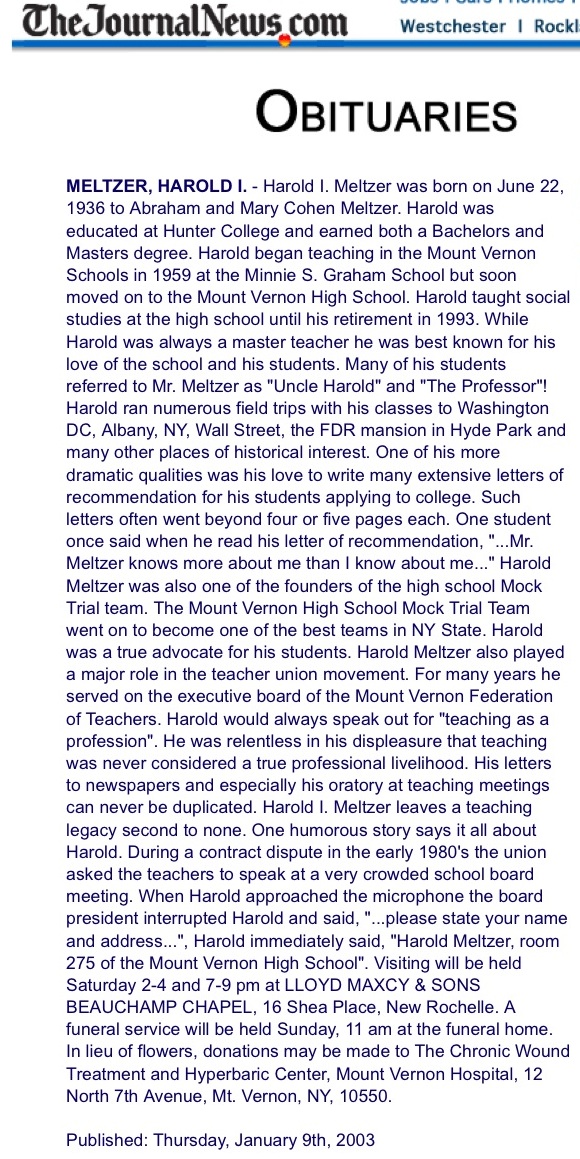

Harold Meltzer obituary (via Frank Pandolfo), January 9, 2003. (Westchester Journal News).

Harold Meltzer obituary (via Frank Pandolfo), January 9, 2003. (The Journal News).

Harold Meltzer, my favorite and best teacher of all, died on January 2, 2003 at the age of sixty-six, ten years ago last week. He was all too young and all too bitter about his years as a history teacher at Mount Vernon High School. But then, dealing with entitled parents and unrepentant administrators in Mount Vernon, New York for thirty-five years would do that to most people. Despite that, Meltzer was a rock, the first teacher since my elementary school years that I genuinely trusted with my family secrets and my inner self. He was the first and maybe only teacher I had in my six years of Humanities who actually seemed like he wanted to teach us (see my post “No Good Teaching Deed Goes Unpunished” from May ’11).

I met Meltzer on our last day of tenth grade, after three days of finals and Regents exams, on June 21, ’85. He had summoned fourteen of us to “Room 275 of Mount Vernon High School,” as the invitation read. We had all registered to take Meltzer’s AP American History class in eleventh grade, our first opportunity to earn college credit while in high school.

Meltzer started off talking to us about Morison and Commager — who I now know as the great consensus historians of the ’50s, until the social history revolution made their textbooks irrelevant by the ’80s — as we sat in this classroom of old history books and even older dust and chalk. Meltzer himself looked to be in his late-fifties (he was actually a day away from his forty-ninth birthday), tall and lanky except for the protruding pouch in the tummy section. His hair was a mutt-like mixture of silver, white and dull gray, and his beard was a long, tangled mess.

Met Logo and A full house, seen from rear of stage, at the Metropolitan Opera House (former bldg, 39th Street), for a concert by pianist Josef Hofmann, November 28, 1937. (National Archives via Wikimedia). In public domain.

Met Logo and A full house, seen from rear of stage, at the Metropolitan Opera House (former bldg, 39th Street), for a concert by pianist Josef Hofmann, November 28, 1937. (National Archives via Wikimedia). In public domain.

The way he spoke, and the way his eyes looked when he spoke made me see him as a yarmulke-wearing preteen on his way to temple. The force with which his words would leave his mouth hit me immediately. As much as I noticed how frequently spit would spew out of Meltzer’s mouth, the rhythm of his speech was slow and sing-song, like an elder or grandfather taking you on a long, winding, roller-coaster-ride of a story. Most of all, I knew that he cared — about history, about teaching, about us learning, about each of us as people. Maybe, just maybe, for some of us, he cared too much.

But for at least for me, Meltzer’s eccentric space in which he told Metropolitan Opera House stories and talked about egalitarianism extended beyond the historical. He was the first teacher I had since before Humanities who’d ask me if things at home were all right, and knew intuitively that things weren’t. He was the first to ask me about how poor my family was and about hunger. And he was the first teacher ever to ask if I had a girlfriend. Needless to say, these questions were unexpected. Yet through these questions, Meltzer had begun to crack my thin, hard wall of separation between school and family.

Because Meltzer cared deeply about reaching students — about reaching me — our student-teacher relationship because a friendship after high school and a mentoring one as well. I wasn’t looking for a mentor, and Meltzer was only being Meltzer. Still, his stories about his battles with MVHS administrators, Board of Education folk, and with upper-crust parents who believed their kids were entitled to A’s just for showing up, were filled with lessons of perseverance, patience, and looking beyond everyday headaches in order to reach people. While this wasn’t a factor in my going to graduate school and spending a significant part of my life as a history professor and educator, these stories have helped me over the years.

1972 Dodge Dart Dark Green (similar to '74 Dodge Dart Meltzer owned when I was at MVHS), December 25, 2009. (http://www.fotosdecarros.com).

1972 Dodge Dart Dark Green (similar to ’74 Dodge Dart Meltzer owned when I was at MVHS), December 25, 2009. (http://www.fotosdecarros.com).

But unfortunately, it was a factor in why Meltzer became embittered and took early retirement in June ’93. The end of the Humanities Program, the intolerance of some administrators toward Meltzer as a “confirmed bachelor,” the lack of decency — forget about gratitude — from many of his most successful students. Those changes, these things, all would take a toll on any teacher who’d stay after school day after day to run Mock Trial, to facilitate study groups, to work on letters of recommendation for students. But no, most of my former classmates who had Meltzer between ’85 and ’87, all they could say was that “Meltzer was weird” or that “I didn’t understand” his lessons.

I’m thankful that I did have Meltzer as a teacher, friend and mentor between ’85 and ’02. I’m thankful that I had a chance to interview him for what is now my Boy @ The Window manuscript in August and November ’02, just a couple of months before he passed (see my post “Mr. Meltzer” from June ’09). I’m glad that despite his physical and psychological pain, Meltzer welcomed me with open arms and answered my questions about his life and his career. I just wish that my former classmates and some of Meltzer’s more cut-throat colleagues had taken the time to really know the man.

James and the PAGPSA

29 Thursday Nov 2012

Posted by decollins1969 in 1, Academia, Boy @ The Window, culture, Eclectic, eclectic music, Hebrew-Israelite, Politics, Pop Culture, race, Religion, Youth

≈ 1 Comment

Tags

Activism, Afrocentric, Afrocentricity, Authentic Blackness, Black Action Society, Campus Climate, Carnegie Mellon University, Community, Diversity, Friendships, Graduate School, GSPIA, Isolation, PAGPSA, Pan African Graduate and Professional Student Association, Pitt, Pittsburgh, Politics of Graduate School, Retention, Self-Discovery, University of Pittsburgh


James and the Giant Peach photo art (1996), November 29, 2012. (http://disneymania.com.br).

About this time twenty years ago, perhaps for the first time in my life, I found myself around like-minded individuals, folks who seemed to understand me on an intellectual level. The fact that these were fellow graduate students, all at Pitt and all willing to form an association that would enable us to develop real connections across the campus, was inspiring to me. After four years of off-and-on involvement in the Black Action Society, not to mention my first year in the History grad program, I’d almost given up on the idea that I could form good friendships and acquaintance-ships through any formal gatherings.

But this was especially true regarding my thinking about my fellow Black students and other students of color. For the most part, I’d been around two kinds of students of color during my first five years at the University of Pittsburgh. One group was the semi-nerdy set, folks who cared deeply about their academic performance, but were also late-bloomers socially — people like me in more than a few ways. They tended to care little, though, about campus activism around diversity, retention or campus climate issues.

The other group was the Afrocentric set, people who often reminded me of my one-time Hebrew-Israelite brethren, whose views of Blackness were so limiting that I would’ve been a traitor just for listening to Chicago or Phil Collins. Those folks had virtually taken over the Black Action Society by my senior year. Forget mentioning popular folks, like sorors, frat guys, football, basketball and track guys and gals, or those fully invested in Pitt’s Honors College. I mingled with them all, and found little in common with them, intellectually or economically.

Me with Mark James, PAGPSA meeting, GSPH building, University of Pittsburgh, February 26, 1993 (Lois Nembhard).

That changed a bit my first year of grad school. Often in my walking and running across campus, I’d bump into a Black grad student here or there. At Hillman Library, the Cathedral of Learning, William Pitt Union, the SLIS building or other places. We’d recognize each other, we said hello, we even exchanged our names. Two of them in particular — Ed and Hayley — reached out to me at the end of the Spring ’92 semester, because they wanted to put together an organization that would represent our interests as grad students of color.

In mid-August, the emails began to go back and forth in earnest to establish what we’d end up calling the Pan African Graduate and Professional Student Association (PAGPSA) that fall. Through Jack Daniel’s office (see my post “The Miracle of Dr. Jack Daniel” from May ’11), we obtained the start-up funds necessary to make the new association go.

At our founding meeting that September, there were eight of us, all highly motivated to be as inclusive as possible, all feeling suddenly less isolated than we had felt a week, month or semester earlier. We decided on the “Pan African” part of the association’s name because we wanted to welcome as many graduate students of color as possible, particularly African and Afro-Caribbean students. The terms “Black” and “African American,” we agreed, wouldn’t be inclusive enough.

We also decided that despite the political implications of our new name, that this association would primarily be about bringing students together for social gatherings, for additional information and education beyond their course work and dissertations, but not to be campus activists. So many of the Black, African and Afro-Caribbean grad students at Pitt were in fact working on master’s or other professional degrees, and wouldn’t be on campus long enough to make lasting changes through activism, strictly speaking. Plus, there was the risk that activism would be so all-consuming — especially on issues like campus climate, long-term support for research and retention rates — that folks would fail to complete the work they came to Pitt to do in the first place.

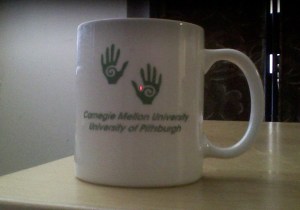
CMU-Pitt mug, from joint PAGPSA/BGSO meeting on diversity and grad school, October 1992, November 29, 2012. (Donald Earl Collins).

By the time that first meeting broke up, I was content to have met folks like Mark, Hayley, Lois, Errol, Ed, and a couple of others, to find us all on the same page about something as serious as starting a new association of a significant cross-section of Pitt’s graduate students of color. But in the process, I’d made a new friend that fall through our meetings and our joint gatherings with Carnegie Mellon’s Black Graduate Student Organization (BGSO).

James came along and challenged PAGPSA in October and November regarding our campus activism stance, arguing that being a part of any organization of students of color meant being active. Of course the leadership disagreed, but that’s how I met the man. He was a charismatic Black Iowan preacher’s son, and more politically active than anyone I’d known under the age of thirty. James had ideas about everything, from the future of hip-hop to the implications of my research on multiculturalism and Black Washington, DC.

Though he was a GSPIA (Graduate School of Public and International Affairs) master’s student and ultimately finished his degree in ’94, we would remain friends through the rest of the ’90s. Between him and Matt (see my post “My Friend Matt” from September) and PAGPSA, I remained grounded even as I became buried in the minutia of US, African American and educational policy historiography over the next half-decade. Thankfully, I no longer felt like a lone wolf. Thankfully, I knew that I wasn’t alone in a sea of graduate school and faculty White maleness after that fall.

Fear of Flying Solo (Not Literally)

19 Monday Nov 2012

Posted by decollins1969 in 1, Boy @ The Window, culture, Eclectic, eclectic music, Mount Vernon High School, Mount Vernon New York, music, Pop Culture, race, Youth

≈ Leave a comment

Tags

"Sign 'O' the Times (1987), Blackness, Busch Beer, Continental Airlines, Coping Strategies, Crush #2, Depression, First Flight, Homesickness, Infatuation, Loneliness, Love, Lust, Manhood, Obsession, Prince, Self-Discovery, Theft, University of Pittsburgh


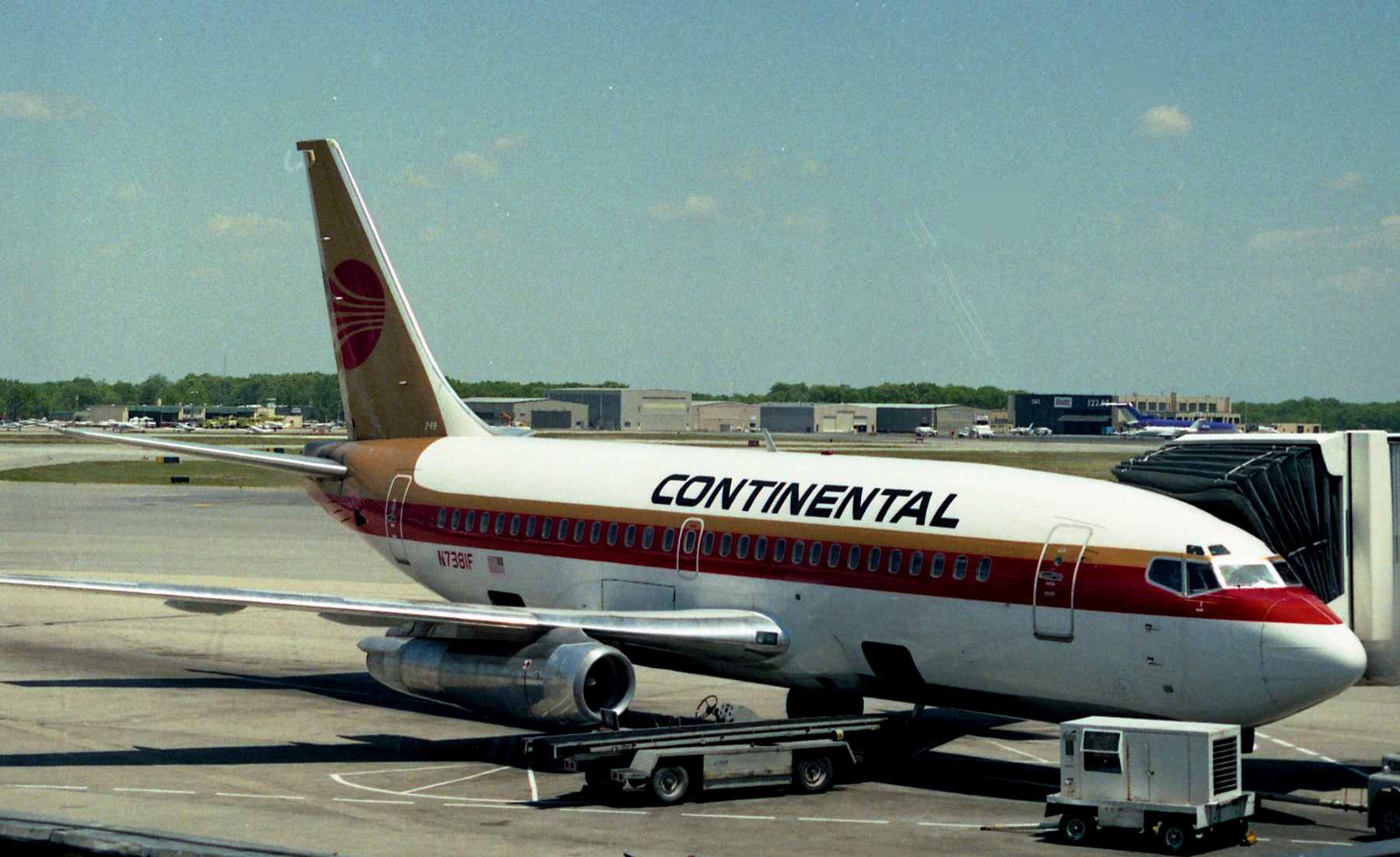
Continental Airlines B737-200 (similar to one I flew on in November ’87, logo included), Providence, RI, 1990, January 2, 2009. (Phillip Capper via Wikipedia). Releases to public domain via cc-Attribution 2.0 Generic license.

This week twenty-five years ago, the pressures of college, “homesickness” and Crush #2 had screwed up the inner movie and music soundtrack (think Enigma’s “I Love You, I’ll Kill You” [1993]) that had been my coping mechanism for the previous half decade. I was in the midst of a psychological breakthrough, but it felt more like a combination of depression and a nervous breakdown at the time. Such were my times as an emotionally tortured seventeen-year-old who should’ve left Mount Vernon a full year earlier (see my post “A One-Year Sooner ‘What If’” from June ’11).

The downward spiral of my first semester at the University of Pittsburgh started with a burglary the third week in October ’87. While I took a bathroom break at my computer lab job in the Cathedral of Learning, someone stole my Calculus textbook. I felt violated, especially since it happened at work. It made me more distrustful of the people I worked with and of Pitt students in general. Of course, I didn’t really even trust myself at the time, and the loss of my textbook didn’t make it any easier. I was out of money to boot, which meant that I wouldn’t be able to replace this loss.

Excerpts of Prince’s Sign ‘O’ the Times (1987) liner notes, November 19, 2012. (Donald Earl Collins). Qualifies as fair use under US Copyright laws – low resolution illustration of text-like writing style for this post.

Crush #2’s response to my letter about her emasculating comments back in the summer made matters worse (see my posts “Origins of the Obsession” from June ’12 and “A Dream That Had to Die” from July ’07). Her letter, dated November 2, was in purple ink, with heart-shapes and circles for dots over “i”s. Reading her letter was like reading the liner notes off of a Prince album in those days. Like the song “I Would Die 4 U,” Crush # 2 had decided to limit her English skills to the ’80s equivalent of text messaging, a real revolution on both their parts. She started, “Thank U 4 your card 2day,” an insult to my intelligence. She wrote indirectly that she did like me at one point in time, but added “but we’re in college now . . . around lots of nu people” She admitted that I was her and her sister’s topic of conversation back in July, but “I needed 2 get over that.” She hinted that I shouldn’t write her again, and that was it. No apologies, no attempt to understand how I felt.

16-ounce “Pounder” can of Busch Beer, November 19, 2012. (http://price2watch.com)

After Crush #2’s wonderful, text-message-like response, I all but stopped going to class. I missed eighteen of twenty-four classes at one stretch between November 3 and Thanksgiving, only showing up for exams or if my black-cloud mood had let up long enough to allow me to function. The weekend before Thanksgiving, I allowed my dorm mates to cheer me up by getting a couple of cases of Busch Beer. These were the pounder type, sixteen-ounce cans of Busch beer. I downed four cans in fifteen minutes, and was drunk within a half hour. I started throwing around the word “bitch” as if it was part of a drinking game. I spent the next day vomiting and trying to regain my balance.

I barely recovered from my bender in time to go home for Thanksgiving that Monday, November 23. I still managed a few firsts, though. That trip back home was my first ever on an airplane. I took a Continental flight from the old and decrepit blue hangar that was Pittsburgh Airport into Newark, with the late Craig “Ironhead” Hayward on the flight sitting in first-class. He was a senior and the starting running back for the Pitt Panthers. Besides being a great player, he was a bit of a party animal and had gotten into fights with Pitt Police. I remember the student newspaper having him in their police blotter, allegedly body-slamming a patron at the O while being arrested for a being a disorderly drunk.

It was the first series of events in which I couldn’t use music, sports or my imagination to escape (see my post “Coping In The Boy @ The Window World” from October ’12). I hadn’t realized that I was attempting to escape myself, not just my immediate past or Mount Vernon. I spent those last weeks of ’87 as if draped in a fog, unable to face the world. I fully understood, though, that I couldn’t drink my way out of my problems. I was obsessed with a woman whom felt sorry for me, had friends at Pitt who weren’t really my friends, and was homesick for 616, a place that was never really mine to call home in the first place.

Male duck swimming solo, Chicago River, Chicago, IL, June 16, 2002. (Donald Earl Collins)

Most of all, after five years of hiding my emotions and opinions, I no longer knew how to be me. Luckily, thinking about Crush #2 as a “triflin’ ass” was, for better and worse, a good start toward recovery for me. And, for that moment in my life, I needed that anger to be a better student, to be a better me. Because as far as I was concerned, I was out in Pittsburgh, alone, facing down my past and present all at once.

2012 Presidential Debates & The Great White Hype (1996)

24 Wednesday Oct 2012

Posted by decollins1969 in 1, culture, Eclectic, eclectic music, Movies, music, Politics, Pop Culture, race

≈ Leave a comment

Tags

"Mama Said Knock You Out" (1990), Boxing Metaphor, Damon Wayans, Election 2012, Mitt Romney, Peter Berg, President Barack Obama, Presidential Debates, The Great White Hype (1996)


Obama-Romney Debate Season

Obama-Romney Debate Season

This next to last scene (in poor resolution, by the way) — the fight between Roper (Damon Wayans) and Conklin (Peter Berg) — sums up perfectly the three debates between President Obama and Mitt Romney this month. Oh, with some additional pictures and LL Cool J’s “Mama Said Knock You Out” (1990). From Obama’s lackluster first debate to his KO of Romney in the third, as illustrated by punches and knockdowns.

The Make-Believe Media

17 Wednesday Oct 2012

Posted by decollins1969 in 1, culture, Eclectic, eclectic music, Movies, music, Politics, Pop Culture, race

≈ 3 Comments

Tags

"Both Sides Do It", "Dirty Laundry" (1982), Anchors, Columnists, Commentators, Jay Rosen, Journalism, Journalists, Liberal Bias, Mainstream Media, Make-Believe Journalism, Media, News Media, Objectivity, Print Journalism, Pundits, What Are Journalists For? (1999)


What media can get wrong (Election 1948, SCOTUS Obamacare Decision), November 3, 1948 and June 28, 2012 [October 17, 2012].

I get so tired of so many “journalists,” commentators and columnists saying the same thing over and over again. About the 2012 Presidential Election, about education, about race relations, about crime, about virtually anything anyone with a working brain cares to think about.

For more than four decades, our media has become like the color commentators for an old World Wrestling Federation (now WWE) event between “Rowdy” Roddy Piper and Hulk Hogan. Where the mere appearance of journalism and fairness has become more important than any actual substance. Where pitching fake debates about actual facts about real events and trends is normal business. Overall, the news industry — TV, print, radio and Internet — is about as professional an operation as a hole-in-the-wall bar attempting to become a strip club.

“If it bleeds, it leads,” whether it’s Ruth Chris Steakhouse or the mainstream media, October 17, 2012. (http://sanfrancisco.com).

Jay Rosen’s ’99 book What Are Journalists For? and Don Henley’s ’82 hit “Dirty Laundry” have plenty in common. They both unmask the news business as just that, a business. All of these ideas about objectivity, access and coverage for mainstream journalism in all its forms are just that, ideas. In actuality, news has grown into another form of entertainment, sometimes in the most literal sense (read The Onion and watch The Daily Show and The Colbert Report as but three examples).

Perhaps the most glaring falsehood of all is that the media is a mere reflection of society, and that journalism’s role is to be the mirror that stands apart, reflecting both the light and the darkness of our world. Both Rosen (in a scholarly tone) and Henley (with sarcasm-dripping lyrics) call bull crap on this idea.

There are too many lies that the media tells itself for me to go through all of them in one blog post, but there are particularly pernicious ones that I need to address here:

1. The built-in “liberal media bias:” This one is about as true as “dolphins fly” and “parrots live at sea” (thank you, Stevie Wonder). Fact is, the news media, with the exceptions of FOX News, represents a centrist view of the US and the world. Period. When’s the last time anyone has heard CNN discuss creating a single-track Pre-K to twelfth grade college and work preparation school system? Since when does the New York Times recommend the legalization of marijuana or the decriminalization of heroin and cocaine? Has the Washington Post ever suggested that America’s imperialist foreign and economic policies were the ultimate reasons for 9/11? These are all liberal positions, and yet, they get next to no play except maybe on non-mainstream TV and rags, liberal talk radio and progressive blogs.

2. The media’s goal is “objectivity:” Are we really that daft? Scholarly objectively went out the window in the humanities and social sciences in the ’80s, because it was obvious that scholars are actually, well, people. Last I checked, journalists, commentators, editors, columnists, anchors and talk show hosts are, too. Their collective main goal – to sell a story to the public (or, in many cases, to others in the media world), and overall, to make money for their newspaper, radio station, news channel or website. For if the business makes money, folks in the media get to keep their jobs and their prestige.

Gold bars and the earth on a set of brass scales (inspired by An Inconvenient Truth [2006]), August 2, 2011. (http://drpinna.com).

3. The “both sides do it” argument: The fact that the media has turned into about five different monopolies has led to this idea that there are two equal and opposite sides to everystory. It’s been true of the mainstream coverage of this election, but it’s applicable to everything they show the public. Climate change, some say “yes” (as in 99.8 percent of all scientists) and some (scientists paid off by Scaife, Olin, and the Heritage Foundation) say “no.” Trayvon Martin, was he a victim or a thug? Look, we all know that life has much more gray than the media is capable of capturing, but most rags and news outlets have long given up trying to provide a full story. All in the name of selling more newspapers, driving up ad sells and pushing up Nielsen ratings.

Megyn Kelly, FOX News, September 27, 2011. (http://huffingtonpost.com).

4. People in the media world are intelligent and sophisticated: This one is a keeper. To be sure, there are plenty of brilliant folk associated with CNN, MSNBC, The Huffington Post, and the New York Times. But most journalists aren’t as smart as we tend to assume. Fact is, journalists are good at two or three things: asking lots of questions, looking professional in front of a camera and writing in middle school sentences. I could’ve done two of these three by the time I finished sixth grade. Since most folks in news spend most of their time talking with each other, their brilliance is self-evident. They certainly don’t need to check in with us for our approval.

I’m sure that the likes of Megyn Kelly, Soledad O’Brien and Tom Friedman won’t be reading my blog to see what I’ve said about their business. After all, they have the pen and the mic, and I’m just an aspiring writer and professor with a blog. But I know something they don’t. You can’t live in the world of make-believe forever.

Election 2012: The Plan

10 Wednesday Oct 2012

Posted by decollins1969 in 1, culture, Eclectic, eclectic music, music, Patriotism, Politics, Pop Culture

≈ Leave a comment

Tags

"Universal Terrorist Playbook", Battlestar Galactica (2004 series), Bear McCreary, Cylons, Debates, Die Hard (1988), Election 2012, Joe Biden, Mitt Romney, Obama-Biden, Opening Credits, Paul Ryan, President Barack Obama, Romney-Ryan


Yes, Mitt Romney and Paul Ryan do have a plan — the universal Neocon/GOP playbook — and they’re running it step by step. Be ready, President Obama and Joe Biden, be ready.


Coping in the Boy @ The Window World

06 Saturday Oct 2012

Posted by decollins1969 in 1, Boy @ The Window, Christianity, culture, earth, wind & fire, Eclectic, eclectic music, Marriage, Mount Vernon High School, Mount Vernon New York, music, Politics, Pop Culture, race, Religion, Sports, Youth

≈ 1 Comment

Tags

"Owner Of A Lonely Heart", Battlestar Galactica, Battlestar Galactica (2004 series), Coping Strategies, Fantasy, Football, Humanities, Imagination, Inner Vision, Inner World, New York Giants, New York Knicks, New York Mets, Psychology, Self-Discovery, Touré, Who's Afraid of Post-Blackness (2011), Yes


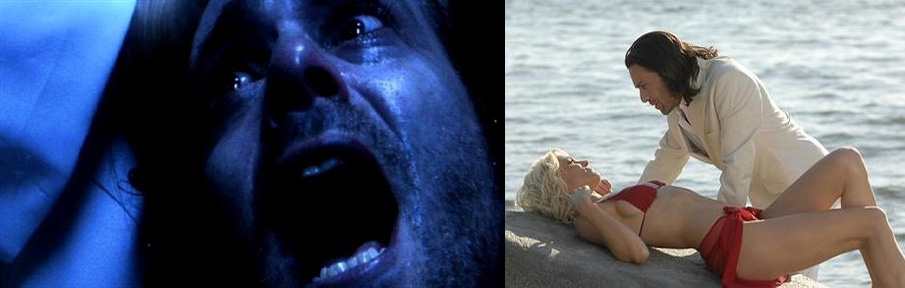
Gaius Baltar tortured/in imagination (merged pics), Battlestar Galactica, October 6, 2012. Qualifies as fair use under US Copyright laws – low res (1st picture) and merged rendering.

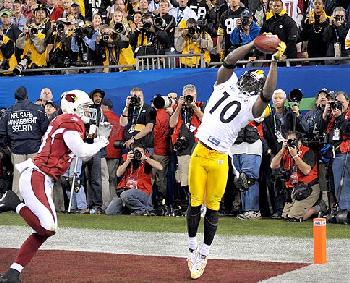
“A wide receiver tiptoeing the sideline of a football field after making an acrobatic catch, barely keeping his left foot in-bounds by tapping his big toe in the two inches of space between the grass and the thick white line in front of him. A note in a song that is so inspiring, so well-balanced between rhythm and harmony, so well sung that the hairs on my neck stand up and my spirit feels like soaring.” This is what I wrote in the first paragraph of the preface (which I need to revise yet again, by the way) to my Boy @ The Window manuscript.

In context, I was writing about the infinitesimal decisions and actions that could’ve added up to success or failure for me growing up in those dismal days and years. But I could’ve just as easily been writing about what imaginations and fantasies went through my head growing up to make my inner world more powerful than anything I saw and experienced in the real world. Much of Boy @ The Window is about how I coped, good, bad and ugly (see my posts “Peanuts Land” from April ’12 and “Mr. Mister’s ‘Kyrie’” from March ’11 for more).

How I coped through imagination, inner projection and fantasy changed during the worst of my preteen and post-puberty years. I went from imagining and acting out an entire city, nation-state and culture in my room to the need for an internal world that couldn’t be taken apart by abuse, poverty and isolation. Ultimately it came for me in the form of the everyday things I either already liked or was on the cusp of liking. I already enjoyed a wide variety of music by the fall of ’82. Once I became a sports fan and occasional sports participant, those images and achievements became part of my inner movie and soundtrack.

It became a partnership that I eventually learned to conjure up at will, that became part of my residual sleeping state, that made the madness of 616, MVHS and Mount Vernon, New York dissolve into background noise.

Santonio Holmes’ Super Bowl XLIII game-winning catch, Tampa, FL, February 1, 2009. (http://bleacherreport.com).

It meant, though, that watching a Mets, Giants or Knicks game or listening to Earth, Wind & Fire wasn’t a simple casual experience. It involved rooting for the underdog, which in turn meant rooting for myself. It included the synching of home runs, touchdown passes and three-pointers to guitar riffs, crescendos and other highlights in a particular song or series of songs. It meant that my imagination became itself a fully dedicated line for coping with stress, checking anger, solving problems, and seeing my world the way I chose to see it, rather than the way my world actually was.

Take one of my favorite songs as a teenager, Yes’ “Owner Of A Lonely Heart” (1983). It wasn’t just the fact that I actually felt lonely and could relate to the song. When I heard the song, I could see myself running a screen play in football, following a group of well set-up blockers all the way to the end zone for a touchdown. I could relate emotionally, because the song was about me as an underdog, because of my unrequited love for Crush #1, because I now knew what a screen pass was. It made existential philosophy easier for me to understand my senior year of high school in my AP English and Philosophy classes.

“Owner Of A Lonely Heart” also reminded me to never “concede my free will,” even when my now ex-stepfather Maurice’s fists met my face and teeth and ribs at fifteen and sixteen. Like a scene from the ’00s Battlestar Galactica involving Gaius Baltar or Caprica Six, I often projected a view of the world I wanted over whatever was going on in reality. Going the mile or so between 616 and the C-Town in Pelham could either be a chance for me to catch a long touchdown pass or for me to figure out to which colleges I should apply.

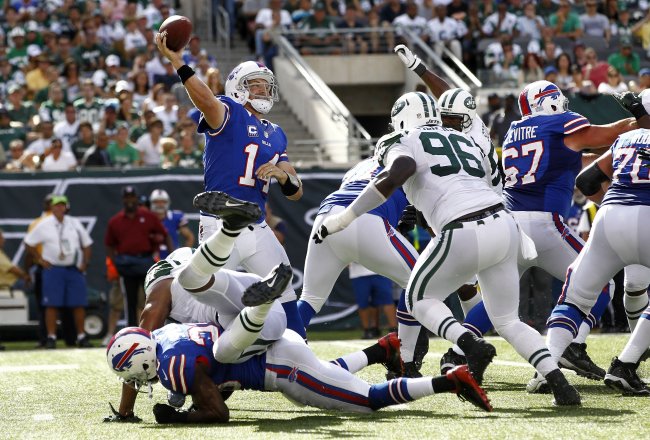
Ryan Fitzpatrick of Buffalo Bills v. NY Jets, in rare protection against blitz while in pocket, October 6, 2012. (http://bleacherreport.com).

Sometimes, if I allowed myself to slip deeply enough, like, in the moments before an exam, I could use a buildup point in the song to bring in an extra blocking tight end to run a max-protect play. I’d snap the ball, send three receivers on one side of the defense, and wait just long enough for one to cross before delivering a perfect pass that allowed my receiver to split the secondary for a long score. All while taking a hit in my right ribs and being knocked down to the turf, just a quarter-second after my index finger’s come off the ball, giving it a smoother spiral rotation while in flight. And so many times, that re-visioning of my world made it so that my natural ability to remember everything and discern many things resulted in very good grades, solid performances, and a balancing act that made life at 616 and MVHS just bearable enough.

I was reminded of how often my mind went down this road by Touré’s Who’s Afraid of Post-Blackness (which I blogged about earlier this week), particularly his chapter on imagination and art, “Keep It Real Is a Prison.” Except that my mind does still go there sometimes. Usually as I’m about to give a speech, or while running a five-miler, drilling a three or driving. Or in writing something for publication, like Boy @ The Window.

← Older posts
Newer posts →

Boy @ The Window: A Memoir

Boy @ The Window: A Memoir

Places to Buy/Download Boy @ The Window

There's a few ways in which you can read excerpts of, borrow and/or purchase and download Boy @ The Window. There's the trade paperback edition of Boy @ The Window, available for purchase via Amazon.com at http://www.amazon.com/Boy-Window-Donald-Earl-Collins/dp/0989256138/

There's also a Kindle edition on Amazon.com. The enhanced edition can be read only with Kindle Fire, an iPad or a full-color tablet. The links to the enhanced edition through Apple's iBookstore and the Barnes & Noble NOOK edition are below. The link to the Amazon Kindle version is also immediately below:

scr2555-proj697-a-kindle-logo-rgb-lg

Boy @ The Window on Amazon.com: http://www.amazon.com/Boy-The-Window-Memoir-ebook/dp/B00CD95FBU/

iBookstore-logo-300x100

Boy @ The Window on Apple's iBookstore: https://itunes.apple.com/us/book/boy-the-window/id643768275?ls=1

Barnes & Noble (bn.com) logo, June 26, 2013. (http://www.logotypes101.com).

Boy @ The Window on Barnes & Noble: http://www.barnesandnoble.com/w/boy-the-window-donald-earl-collins/1115182183?ean=2940016741567

You can also add, read and review Boy @ The Window on Goodreads.com. Just click on the button below:

Boy @ The Window

Twitter Updates

Tweets by decollins1969
  • RSS - Posts
  • RSS - Comments

Archives

  • June 2025
  • April 2023
  • September 2022
  • August 2022
  • July 2022
  • June 2022
  • May 2022
  • April 2022
  • March 2022
  • January 2022
  • December 2021
  • November 2021
  • October 2021
  • September 2021
  • August 2021
  • July 2021
  • June 2021
  • April 2021
  • March 2021
  • February 2021
  • January 2021
  • December 2020
  • November 2020
  • October 2020
  • September 2020
  • August 2020
  • July 2020
  • May 2020
  • April 2020
  • March 2020
  • January 2020
  • December 2019
  • November 2019
  • August 2019
  • July 2019
  • June 2019
  • May 2019
  • April 2019
  • March 2019
  • February 2019
  • January 2019
  • December 2018
  • November 2018
  • October 2018
  • September 2018
  • August 2018
  • July 2018
  • June 2018
  • May 2018
  • March 2018
  • February 2018
  • January 2018
  • December 2017
  • November 2017
  • October 2017
  • September 2017
  • August 2017
  • July 2017
  • June 2017
  • May 2017
  • April 2017
  • March 2017
  • February 2017
  • January 2017
  • December 2016
  • November 2016
  • October 2016
  • September 2016
  • August 2016
  • July 2016
  • June 2016
  • May 2016
  • April 2016
  • March 2016
  • February 2016
  • January 2016
  • December 2015
  • November 2015
  • October 2015
  • September 2015
  • August 2015
  • July 2015
  • June 2015
  • May 2015
  • April 2015
  • March 2015
  • February 2015
  • January 2015
  • December 2014
  • November 2014
  • October 2014
  • September 2014
  • August 2014
  • July 2014
  • June 2014
  • May 2014
  • April 2014
  • March 2014
  • February 2014
  • January 2014
  • December 2013
  • November 2013
  • October 2013
  • September 2013
  • August 2013
  • July 2013
  • June 2013
  • May 2013
  • April 2013
  • March 2013
  • February 2013
  • January 2013
  • December 2012
  • November 2012
  • October 2012
  • September 2012
  • August 2012
  • July 2012
  • June 2012
  • May 2012
  • April 2012
  • March 2012
  • February 2012
  • January 2012
  • December 2011
  • November 2011
  • October 2011
  • September 2011
  • August 2011
  • July 2011
  • June 2011
  • May 2011
  • April 2011
  • March 2011
  • February 2011
  • January 2011
  • December 2010
  • November 2010
  • October 2010
  • September 2010
  • August 2010
  • July 2010
  • June 2010
  • May 2010
  • April 2010
  • March 2010
  • February 2010
  • January 2010
  • December 2009
  • November 2009
  • October 2009
  • September 2009
  • August 2009
  • July 2009
  • June 2009
  • May 2009
  • April 2009
  • March 2009
  • February 2009
  • January 2009
  • December 2008
  • November 2008
  • October 2008
  • September 2008
  • August 2008
  • July 2008
  • June 2008
  • May 2008
  • April 2008
  • March 2008
  • February 2008
  • January 2008
  • December 2007
  • November 2007
  • October 2007
  • September 2007
  • August 2007
  • July 2007
  • June 2007

Recent Comments

MaryPena's avatarMaryPena on My Day of Atonement/Bitter Hat…
decollins1969's avatardecollins1969 on No Good Teaching Deed Goes…
Mary Rose O’Connell's avatarMary Rose O’Connell on No Good Teaching Deed Goes…

NetworkedBlogs on Facebook

NetworkedBlogs
Blog:
Notes From a Boy @ The Window
Topics:
My Life, Culture & Education, Politics & Goofyness
 
Follow my blog

616 616 East Lincoln Avenue A.B. Davis Middle School Abuse Academia Academy for Educational Development AED Afrocentricity American Narcissism Authenticity Bigotry Blackness Boy @ The Window Carnegie Mellon University Child Abuse Class of 1987 CMU Coping Strategies Crush #1 Crush #2 Death Disillusionment Diversity Domestic Violence Economic Inequality Education Family Friendship Friendships Graduate School Hebrew-Israelites High-Stakes Testing Higher Education History Homelessness Humanities Humanities Program Hypocrisy Internalized Racism Jealousy Joe Trotter Joe William Trotter Jr. K-12 Education Love Manhood Maurice Eugene Washington Maurice Washington Misogyny Mother-Son Relationship Mount Vernon High School Mount Vernon New York Mount Vernon public schools Multiculturalism MVHS Narcissism NFL Pitt Pittsburgh Politics of Education Poverty President Barack Obama Race Racial Stereotypes Racism Relationships Self-Awareness Self-Discovery Self-Reflection Sexism Social Justice Teaching and Learning University of Pittsburgh Violence Whiteness Writing

Top Rated

Blog at WordPress.com.

  • Subscribe Subscribed
    • Notes from a Boy @ The Window
    • Join 103 other subscribers
    • Already have a WordPress.com account? Log in now.
    • Notes from a Boy @ The Window
    • Subscribe Subscribed
    • Sign up
    • Log in
    • Report this content
    • View site in Reader
    • Manage subscriptions
    • Collapse this bar
 

Loading Comments...