• About Me
  • Other Writings
  • Interview Clips
  • All About Me: American Racism, American Narcissism, and the Conversation America Can’t Have
  • Video Clips
  • Boy @ The Window Pictures
  • Boy @ The Window Theme Music

Notes from a Boy @ The Window

~

Notes from a Boy @ The Window

Category Archives: culture

The Scourge of Scholarship & Scallops

01 Saturday Jan 2022

Posted by decollins1969 in 1, Academia, Carnegie Mellon University, culture, Eclectic, Politics, Pop Culture, race, Work, Youth

≈ Leave a comment

Tags

Academic Culture, Bias, CMU, Elites, Elitism, Fishiness, Fishy, Genius, Joe William Trotter Jr., Objectivity, Oppression, Privilege, Racism, Scallops, Status Quo


Pan-seared scallops with bacon cream sauce, February 10, 2015 (cropped, December 31, 2021). (https://www.cakenknife.com/pan-seared-scallops-bacon-cream-sauce/).

I am not much of a scholar. No, really, I’m not. At least not in the extremely narrow way those who taught me to do historical research defined scholarship. For me, uncovering deliberately hidden truths or coming to new ideas, realizations, and leap-in-logic epiphanies was always about more than just “evidence.” It was about the nexus between human history and human behavior, the ability to use the past to understand the present and possibly the future. And through all that, to predict, to prevent, to propose remedies or possibilities for being, and being better, as a person, as people, as entire societies.

But all through graduate school in the 1990s, especially during my Carnegie Mellon years, all I was supposed to learn was about the greatness of “scholarship.” The way my dissertation advisor Joe Trotter would say “scholarship,” it reminded me of how my now recovering-alcoholic father would say “pep-up” when he wanted a drink. Trotter said “scholarship” with the zeal and relish of a person ready to eat at their favorite down-home restaurant or fish shack. 

For years even after finishing my doctorate, I could still hear Trotter’s “scholarship” and think of scallops, the ugliest and fishiest tasting of mollusks, in my opinion. I imagined them raw, then either sautéed or seared in butter, as this is the only way to eat the nasty things. Just like with academic scholarship. None of this removed their fishiness or the loads of carcinogens lurking in their lumps of meat.

For years, I have watched former and current colleagues, former and current students, and big-fish academicians I have only seen from my cold and cheap seats in the Kuiper Belt promote scholarship as a great and mystical process. “This is groundbreaking scholarship” is a common phrase in my academic world. “The genius of” so-and-so’s “scholarship” can also be read and heard, in book reviews, in scholarly journals, at academic conferences. I could be jealous, but I’d eat a can of unseasoned and undressed tuna again before eating up these scallop-y descriptions of scholarship.

For those who really don’t know, “scholarship” is really a combination of three things. 

1. Research, which in my field usually involves archival materials, like a letter Martha Washington might have written about making “her” Rum Punch, or a diary left behind by a granddaughter of an enslaved African woman, providing details not normally found in historical literature. For me, it’s interdisciplinary. Interviewing people about their experiences, asking common questions along the way for comparative purposes. It could also mean looking at census records, running microfiche machines for 100-year-old op-eds about “Saturday Night and the Negro.” But it is ALL research, and you don’t even need a high school diploma to be this nosy. I knew this already, but was reminded of this by a former student, an archivist who recently completed his bachelor’s.

2. Training and Methodology helps folks shape the research they do into what we call scholarship. It is very hard to do historical research on any given topic without “going to the archives.” That’s where researchers can commune with the primary sources, where they can most readily find the first-hand and “objective evidence” they need. But, if dead folks didn’t write anything down, then proximate evidence, like census records, can tell us about a people who didn’t leave written records, or because of oppressors, might have seen their records destroyed. Ethnographies, all the rage in my profession in the 1990s, are a sociologist’s and an anthropologist’s tool. So is mere observation or years spent reading others’ research. This is how I and so many others know lazy-ass Martha Washington ain’t never mixed no drinks in her Mount Vernon mansion. Not when she had trusted enslaved Africans as cooks and mixologists doing all the work.

3. Experience works on multiple levels, and is often the way others who like what they’re reading reach the conclusion that so-and-so’s “scholarship” is “genius.” There’s the experience of interpretation and being able to take new information and meld it with everything one already knows about a specific person, a group of people, a given topic, event, question, and/or social problem. There’s the experience of being a human being, and how those experiences have shaped you and how you process information, including the small and big epiphanies gleaned from one’s research. There’s also the experience of being oppressed or benefiting from oppression, which utterly colors whatever “objectivity” one may believe they have. In the case of oppressors and their beneficiaries, those experiences often dilute one’s ability to take quantum and cosmic leaps in logic to cover up the ginormous holes in their research, training, and methodology.

So when like-minded people get together to discuss what is and is not “scholarship,” 3. outweighs 1. and 2., just like Jupiter outweighs the other seven planets in our solar system — combined. It is a toxic, cannibalizing system, made more potent by the riches and miseries of capitalism, where research grants, book deals, and media appearances, and lecture circuit checks are on the line. 

When people ask for “evidence,” whether at this year’s American Historical Association conference or on Twitter, they are saying, “My experiences in life and in my field are privileged and limited, so I have decided your experiences in life and in my field do not matter.” When people refuse to accept your findings, it is often their myopia and their sense of narcissism and entitlement at work, and not flaws within the research you did. Especially when one’s research is about oppression, oppressors, how to fight oppression, and what happens when a people succeed in that fight.

This is why I chafed at Trotter’s salivations over scholarship some 26 years ago. This is why I find much about the idea of scholarship offensive today. Oh, I think doing one’s own research in a field of expertise or even to acquire expertise is fundamentally important. I just don’t think genius and scholarship are in any way related. Not without the experiences of life, the understanding of one’s positionality in privilege, not only to do research, but one’s unique life experience through which to process it. This is why I can never be a scholar. I refuse to be part of a club that has to sear and sauté its poisonous, fishy-ass scallops and declare themselves all “geniuses” for doing so. 

One might say that there’s something fishy going on here in the academic world. Scholarship is like scallops in that way. Do not leave it at room temperature for too long. Just like the academic “geniuses” who refuse to shower while writing their latest unreadable tome.

How Does Self-Determination Work in a Place Determined to Kill Me?

27 Monday Dec 2021

Posted by decollins1969 in 1, Academia, Boy @ The Window, Christianity, culture, Eclectic, Hebrew-Israelite, Mount Vernon High School, Mount Vernon New York, Politics, Pop Culture, race, Religion, Work, Youth

≈ Leave a comment

Tags

Abuse, Faith, Fake People, Fake Unity, Imani, Kujichagulia, Kwanzaa, Maulana Karenga, Nia, Poverty, Self-Determination, Suicide, Ujima, Umoja, Unity


Kujichagulia, the Second Day of Kwanzaa, the principle of self-determination (cropped), December 27, 2021. (Caroline Moman via Pinterest).

Today is my 52nd birthday. My born day always coincides with the early Capricorn season, winter breaks, and falls two days after the celebration of Jesus’ birthday (which is NOT December 25th, no matter what dumb white people and unthinking Christians think). My birthday sometimes falls in the middle of Hanukkah (I think it did one time during the Hebrew-Israelite years, but I’d have to look that one up). My date of birth is also always on the second day of Kwanzaa, known as Kujichagulia, Swahili roughly meaning “self-determination.”

On this last one, I must confess. I learned a bit about Kwanzaa growing up, but it was in my Black Studies courses I learned about Maulana Karenga and his Afrocentric visions and philosophy. Kwanzaa was among the creations of Karenga and other like-minded brothas and sistas from the more radical part of the Movement. That was more than 30 years ago. I am not a Kwanzaa celebrant. But I fully believe in all its principles. Mostly because I would not be here at 52 if I didn’t.

Kujichagulia was a principle I understood long before I took my first Swahili class in Fall 1990. I had to. Between poverty, physical abuse, suicidal ideations, and the occasional bouts with bullying and ostracism, not taking some charge over my life would’ve ended it. Seriously. But too much self-determination without others’ help or guidance (Ujima or Nia) between twelve and a half and my 14th birthday left me one leap off a bridge away from death. Somehow, I managed not to take my own life that day, or in the 38 years since. 

Self-determination has been very good to me, despite the bruises and busted up body parts I picked up early on. I determined I should cut my own path, to the chagrin of my teachers and a good portion of my middle school and high school classmates, not to mention my guidance counselor. I learned how to cook like my mom despite her not wanting to teach me how to cook, a week or so after my youngest brother came into the world. The same thing goes with shooting a J, dribbling left and right handed, writing, jumping rope, loving and forgiving others, moving on (eventually) from those who have hurt me, and a million other things I cannot name because Kujichagulia has been my everything since 1982. I am so fully into Kujichagulia that I’ve made my own birthday cakes and desserts most years since my 15th birthday in 1984. This year, I made myself German Chocolate cupcakes!

But Umoja is just as important. Unity as a principle has been as hard for me as Kujichagulia has been easy. Most people in my life have given me little reason to trust them in their truth, in their half-hearted offers of help, in their words consistently not matching their deeds or follow-through. I live by the words, “do unto others as you would have others do unto you,” but so many have failed to live up to those words, my family members included. Even when I ask for help, what I often get back is silence, or few offers in kind, and usually no equivalent measure in deed. Maybe it’s because I never joined a frat, never found a permanent church home, was never particularly “cool,” or have worked in affluent spaces around folks who would never get my one-generation-removed-from-sharecropping-but-lived-with-welfare-poverty-for five-years self. What makes me truly sad is the Black folks who should get me, but choose not to.

But none of this is really about me. It’s about people who want unity without self-determination or purpose or faith. Umoja cannot work without Kujichagulia, Nia, and Imani. We live in an especially narcissistic age, on top of the half-millennium of narcissism that systemic racism, nationalism, and capitalism has wrought. I am not trying to be popular. I am trying desperately to be me, the best version of me I can be. 

I have a couple of more mountains to climb. One is to finally publish a book in a more traditional way, so that all the work isn’t on me (alternatively, I were to self-publish, maybe raise $20,000 or $25,000 through GoFundMe — probably not). I suspect this goal is not the mountain I have built it up to be. The other is to get out of the adjuncting ratrace. If that means leaving academia again, or leaving the US and living overseas, or even giving up on writing for a time. Whatever is next, I hope that Kujichagulia is the principle guiding me to these places and spaces, and not fake Umoja. There’s already been too much of that in my life.

Another Year of Not Seeing Family

20 Monday Dec 2021

Posted by decollins1969 in 1, Boy @ The Window, Christianity, culture, Eclectic, Mount Vernon New York, New York City, Politics, Pop Culture, race, Religion

≈ Leave a comment

Tags

Anti-Vaxxers, COVID-19, Dysfunction, Family, Home, Hypermasculity, Jealousy, Misogynoir, Mixed Feelings, Patriarchy, Vanity


The Welsh word hiraeth, not easy to say, but easy to understand, December 19, 2021. (Reddit.com)

I wish I could say I am fine with going into my eighth year since my last visit with my mother and sibs in Mount Vernon, New York. I am and I ain’t. The one thing this pandemic has exposed is how little things have changed with my folks back in the New York area, and how little and how much I have changed living away from them and New York in the past couple of decades.

I had originally planned to visit my mom in March 2020 during my “Spring” Break week from teaching at American University and University of Maryland Global Campus. But we know what began to occur in the US due to bad policies combined with brutal narcissism, racism, and capitalism. COVID-19 Alpha slammed into the Big Apple like one of those ginormous worms from Dune, and ate into it faster than a supernova. My mom was sick by mid-April, as was my younger brother Maurice. If you ask her, my mom would say her “tests came back inconclusive,” but given the accuracy of her tests and the reality of her symptoms, she had COVID Alpha. My youngest brother contracted the virus a month later. I do not know for certain if I would have contracted COVID-19 if I had gone through with my plans in March 2020, but had I done so, I very likely could have infected my wife and then 16-year-old son, unacceptable by my standards then and today.

Then they started doing the unthinkably ignorant. They started having gatherings sans masks and vaccinations. My mom had my siblings and niece and nephew over for Thanksgiving 2020, and babysat the young’uns all during this shitstorm. My mom’s apartment is barely 800 square feet. Ten people gathered in the living room/kitchenette area of her place, nine not masked at all. My older brother Darren wore a KN-95, “except when [he] was eating and drinking,” he said. I all but facepalmed my forehead into mashed potatoes.

When the vaccines finally came on line for emergency use last December and the beginning of 2021, I assumed my mom would reluctantly but definitely get hers. After all, she worked for Mount Vernon Hospital and Westchester County Medical Center for a combined 27 or 28 years. Boy was I wrong! We last discussed it in May. “I don’t know what’s in it,” she said. “I wanna wait and see how it affects people,” she also said. Keep in mind, the younger brother between Maurice and the youngest one (convoluted, I know, but the 40-year-old doesn’t want me to mention him on my blog anymore) and his wife caught COVID-19 Delta earlier that month. They went out to eat at a restaurant, unvaccinated. “Probably got it off a fork or something,” my mom said.

After I explained the facts, that at that point, a billion people had been partially or fully vaxxed, she gave her usual defensive response. “I know the facts, Donald. You think I’m stupid?” Even now, though I may think, No mom, but you are acting as stupid as stupid can be, I don’t say it. It’s all part of her vanity, her anger and misunderstanding of me. At this point in her life, I couldn’t convince my mom that water is wet and the sky is blue, not even if I quoted Jesus himself. So I conceded. Do what you want. But it’ll be a long, long time before I come visit again. Don’t expect a lot of phone calls or letters or cards moving forward, either. For me, this was and remains about self-preservation, body, mind, and spirit, and not about anger or spite.

I last checked on my mom and brothers during Thanksgiving last month. I didn’t even bother to ask my mom about her vaccination status or her health. I knew she wouldn’t tell me the truth about her decisions, anyway. But my brother Maurice. Yep. He too refused to vaccinate. “I don’t know what’s in that stuff!,” he raised his voice while lilting on “stuff.” He was out of work, too, because New York State’s not allowing unvaccinated people to work for them.

He said one other thing that made me truly sad. I asked about what being unvaccinated has done with his social life. “I can’t be around these…’modern women’,” Maurice said with a pause and the feel of air quotes around the term. Somehow, a woman who doesn’t need a man to “take care of them” is “modern,” and made Maurice feel obsolete. All I could think was, Wow! Mom’s misogynoir and patriarchy really rubbed off on you. You, and all of us at some point.

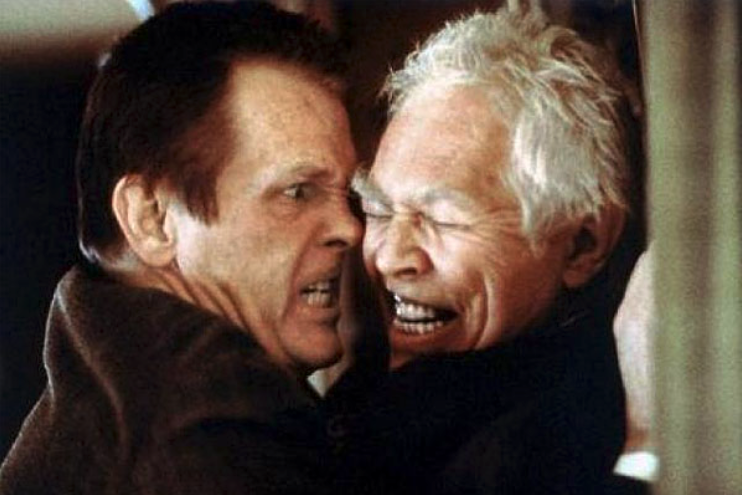
Nick Nolte’s character about ready to kill James Coburn’s (screen shot, cropped), Affliction (1997), December 20, 2021. (http://www.camera-roll.com/raging-bulls-affliction/)

There’s this not-so-famous 1997 movie Affliction, starring the late James Coburn, Nick Nolte, and Willem Dafoe. The cycles of physical and psychological abuse, the obvious misogyny and hypermasculinity, the mental breakdown, the need for distance from family, are all part of this movie. Nolte’s character eventually kills his father (Coburn), and eventually loses his grip with reality. His withdrawn and recluse brother (Dafoe), a writer and English professor, wrote down his brother’s story for posterity. This as Nolte’s character disappears to Canada, where someone eventually finds a cadaver matching his physical features. 

I wonder if I am Willem Dafoe’s character. Probably not. At least, I don’t think my partner since 1995 and my 18-year-old see me that way. But I do feel the lurch to stay away from people, especially my immediate family outside of Silver Spring, Maryland. It’s not like I don’t want to see them. But they have never ever seen me, not even during all the years I stared them in the face.

The Black Man-White Woman Matrix

05 Sunday Dec 2021

Posted by decollins1969 in 1, Boy @ The Window, culture, Eclectic, Marriage, Pittsburgh, Politics, Pop Culture, race, University of Pittsburgh, Youth

≈ Leave a comment

Tags

Alfonso Ribeiro, Binary Thinking, Dave Chappelle, Homophobia, Hubert Davis, Misogynoir, Misogyny, Patriarchy, Pitt, Sexual Harassment, The Matrix (1999), Transphobia, White Supremacy


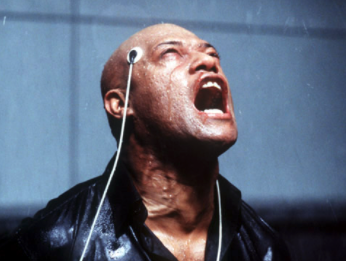
Laurence Fishburne as Morpheus in The Matrix (1999) chained up (screen shot), accessed October 14, 2021. (https://racism.org/articles/defining-racism/338-thematrixa).

There have been and will be tons of think pieces about the misogyny, the homophobia, and the transphobia in Dave Chappelle’s The Closer, his latest/last stand-up comedy special for Netflix. Within that maelstrom of using the stage as a 75-minute patriarchal therapy session, I noticed how most of the people whom Chappelle apparently discussed his id issues with were white women, whether straight, lesbian, or transgender, including the late Daphne Dorman. “Maybe he should spend time with transgender Black women. They are among the most marginalized in the US, with deadly results, between suicides & murders,” I tweeted. But Chappelle never would. His hypermasculine defense of transphobes and homophobes like Harry Potter billionaire J. K. Rowling, fellow comedian Kevin Hart, and rapper DaBaby, means seeing the binary and non-binary white women he referenced throughout his latest stand-up concert as a sign of personal progress, or even, as part of a televised revolution.

From a deeply emotional and psychological level, I fail to understand this penchant for Black men like Chappelle to use and idolize white women as if they are the pentacle of all that America ought to be. Hubert Davis and Alfonso Ribeiro have publicly uplifted their marriages to white women as a commentary on racial progress. “I’m very proud to be African-American. But I’m also very proud that my wife is white, and I’m also very proud that my three very beautiful, unbelievable kids are a combination of us,” Davis said during his opening press conference as the first Black men’s head basketball coach at the University of North Carolina. Ribeiro of Fresh Prince fame believes “the Black house” has ostracized him. “I am in a mixed relationship….And it’s not easy to make that choice…I’m never going to be white and I’m never going to be fully supported in the Black house,” he said in an interview with Newsweek in August.

Davis’ and Ribeiro’s are both very strange statements. Somehow they and many other Black men have convinced themselves that marrying white women is a sign of racism’s end. Somehow, this is the televised revolution the US needs. Somehow, marrying white will dismantle the latticework of racism on which this nation is built. But, as sociologist Crystal M. Fleming wrote in her How to be Less Stupid About Race, “we’re not going to end white supremacy by ‘hugging it out.’ And we’re certainly not going to fuck our way out of racial oppression. That’s not how power works.” The US Supreme Court’s 1967 Loving v. Virginia decision that legalized interracial marriage was groundbreaking, but it never was the “promised land” that Dr. Martin Luther King, Jr. envisioned the night before his death in 1968.

My first time thinking through the social and political implications of Black men and white women together in union or solidarity was in 1990, my third year at the University of Pittsburgh. At the student union one day, I sat down for lunch in between classes to hang out with three of my friends. Two were already in the middle of conversation about a growing visible concern on campus — young Black men dating young white women. The two of them (one man, one woman), were biracial themselves, each the child of a white mother and a Black father. One other Black girlfriend also chimed in. They were decidedly against the idea of interracial dating and marriage. At one point I said, “If they love each other, what does it matter?” My two Black biracial friends both sighed and side-eyed me, and then laughed like I was telling a cruel joke. 

What they understood and I didn’t get in 1990 was that while universal love ultimately conquers all, romantic love and friendships will never negate racism in any of its forms. I also knew about Emmett Till’s lynching for winking or whistling at a white woman. I definitely knew from the movie Birth of a Nation (the original one) the deadly dangers of white women accusing Black men of rape or unwanted flirtations. 

I also knew this from personal experience. The year before, and with the support of my one-time boss, a 26-year-old white woman at my campus computing lab job who was my supervisor’s high school friend accused me of sexual harassment. This after she had groped and squeezed my ass cheeks on two occasions during our shifts. I was 19 years old at the time.

In his Afropessimism, Frank B. Wilderson III wrote, “You marry White. It doesn’t change…What do you do with an unconscious that appears to hate you?” The bigger question is, why would any Black man ever expect to end the latticework of American racism and anti-Blackness through interracial marriage? This is  the typical combination of Black mens’ colorism, hypermasculinity, and seeking the same status as white men through white women. “Those black men who believe deeply in the American dream…a masculine dream of dominance and success at the expense of others, are most likely to express negative feelings about black women and…desire [for] a white woman,” as bell hooks wrote in her Ain’t I A Woman.

Davis, Ribeiro, Chappelle, Wilderson, and many other Black men are too susceptible to the idea of interracial relationships as their revolution, their American Dream. The late critical race theorist Derrick Bell foresaw this in one of his lesser known allegorical essays from Faces at the Bottom of the Well, “The Last Black Hero.” It’s a story about a leading Black revolutionary who fell in love with a white woman. As Bell wrote, many whites in power see Black men with white women “as proof that black men in such relationships were, despite their militant rhetoric, not really dangerous.” For anyone working to dismantle the matrix of American racism, though, this way of Black-man-thinking (and white-woman-thinking) is very dangerous. Especially in the words and deeds of people like Chappelle, Davis, Ribeiro, and Wilderson.

This is why if the revolution does come, not only will it not be televised, it will rely predominantly on Black women binary and non-binary to lead it from imagination to actuality. Like in The Matrix movie series, there are too many Black men and white women who have “the world pulled over their eyes,” a world of white binary hypermasculine and patriarchal racism. Too many Black men — whether they are entertainers in need of long-term therapy like Chappelle or are people who see themselves leading revolutions — are too compromised by their own gendered privilege and social status desires to be the leaders they’ve all been waiting for.

While My PhD’s Getting Cold…

21 Sunday Nov 2021

Posted by decollins1969 in 1, Academia, Boy @ The Window, Carnegie Mellon University, Christianity, culture, Eclectic, Pittsburgh, Politics, Pop Culture, race, University of Pittsburgh, Work, Youth

≈ Leave a comment

Tags

Bruce Anthony Jones, Career Paths, CMU, Dan Resnick, Failure, Joe William Trotter Jr., Lessons Learned, Petty Jealousy, Pitt, Self-Loathing, Self-Reflection, Success, Writing


Cold, lumpy grits, September 26, 2013. (HuffPost via Flickr: Marshall Astor – Food Fetishist).

I have been Dr. Donald Earl Collins for almost half my life. (It will be exactly half my life on October 11 or October 12 of next year, a couple of months before my 53rd birthday.) Only a small handful of things have brought me more pain, failure, and momentary triumphs than earning the PhD during the 1996-97 school year. But while writing is a profession that pays, I am still paying off the debt I generated earning this degree, literally and figuratively. This debt is something I will not pass on. I hope my life has more meaning than earning this degree ever took away.

Friday morning, November 22, 1996, I checked my email just after getting out of bed. Since the beginning of that August, after banging out a full second draft of my dissertation, I knew. Since the end of that July, really, after spending eight hours combing every iteration of every chapter of my doctoral thesis for comments from my advisor I missed, I knew. Since my advisor’s one-page response three weeks later to my six-page memo detailing every change, revision, dressed-up lie, obfuscated statistic, and glossed-over fact, I knew. Really, it was moot on October 23, when my other two committee members both approved it and knew, too.

That Friday morning before Thanksgiving 1996, Professor Joe William Trotter, Jr. sent me a rare email, officially signing off on me becoming Dr. Collins with the words, “It is done.” It was anticlimactic, but it was also freeing at the same time. Yay, me, right?

Not so much. I was a month away from possibly leaving my PhD work behind. That was how much Trotter and the whole process of petty jealous and verbal abuse and threats had taken their toll. To know that my advisor did not support any endeavors to give my career a boost, including the Spencer Fellowship that I won despite his lukewarm letter on my behalf. To feel so betrayed that I felt solace dreaming of wrapping piano wire around his throat from behind and pulling until I spilled his blood and death occurred. It should have been a sign for moving on to something less soul-destroying. But I prayed. I persevered. I finished what I started. 

And I lost the thread for why I started in the first place. I went to graduate school to become a writer with enough knowledge and authority in my expertise to not be challenged in whatever writing project I decided to take on post-PhD. Boy was I a naive, dumb-ass 21-year-old! I ruined my writing for more than a decade as a result of this path. It took me until my blog and Boy @ The Window to find my voice again, my true, authentic, uncopyable voice. By then, I was already fortysomething (or, really between 39 and 44 years old at this point). My doctoral degree was already more than a decade old.

If I could do it all over again, would I choose to relive what I have truly reviled as much as I have relished? No, no, no. You don’t need to have a PhD to be an excellent writer. You certainly do not need one to write in relative obscurity. I learned that from Edgar Allan Poe and Mary Martino in AP English in 1987. No. I probably would have earned a PhD in social psychology instead, with stints of working as a K-12 teacher and a freelance writer or journalist in between. That path would have been more fun — if not just as morbid — at least.

I can think of what pursuing a more direct path to writing and working would have done. It would’ve saved me from four years of Trotter as my advisor, from “poverty wages,” never-to-be-counted-on Bruce Anthony Jones, and from abusive theoretical Marxists like Dick Oestreicher and Wendy Goldman. It would have saved me from myself and my self-doubt and constant need to prove myself to others to the exclusion of everything else in my life. 

My mom does get a few things right about me. After I finished my master’s in 1992, she said one day, “Why you always gotta ‘I’ll show you’?” I wasn’t trying to “I’ll show you,” especially to the white gatekeepers aligned like a fraternity or a gang with baseball balls eager to jump me in (or out) of academia. Still, I do not like being told “No.” Especially by mediocre people with half-baked ideas motivated by their own racism and ageism.

This will not be a self-loathing celebration, though. I have figured it out, myself included. I know what I want to write, and why. I have succeeded more than I have failed on this front since turning 45. I may never make up for those years in the wilderness, between academia and the nonprofit world, chasing dollars and chasing the approval of white gazers and HNIC (Head N-word In Charge) types. But I am still here. I am much closer to the life I’ve always wanted than I am  to the life I have gradually been putting behind me since 2008.

I’ve Been An Educator for 30 Years

05 Friday Nov 2021

Posted by decollins1969 in 1, Academia, Boy @ The Window, culture, Eclectic, Movies, Pittsburgh, Politics, Pop Culture, race, University of Pittsburgh, Youth

≈ Leave a comment

Tags

Black History, History of Black Pittsburgh, Larry Glasco, Laurence Glasco, Pitt, Teaching and Learning, Wylie Avenue Days


Me with my old Duquesne University ID, where I taught in 1998 and 1999, May 2017. (Donald Earl Collins)

It’s a bittersweet anniversary for me. Thirty years since the first time I was in a classroom as an instructor. Thirty years of providing professional development advice (because I assisted with undergraduate advising of history majors in 1991 also). Thirty years of traveling this path, whether in higher education, the nonprofit world, or as a consultant. Thirty years of being seen as “less than,” of exploitation, of disappointment, of disrespect, regardless of my degree status or age or how I dressed. Thirty years of the occasional thanks or pat on the back for a job well done. Thirty years. Maybe too long for a person who should have always put being a writer first.

It was the first Thursday in November 1991 when my advisor Larry (Laurence Glasco) had me run his brand-new course for one evening, History of Black Pittsburgh. It was one of my elective courses toward my MA in History degree, an easy-A in the midst of two core courses, third-semester Swahili, and a primary research paper project on the intercultural education movement. I had fully-charged Energizer bunny energy back then.

Larry’s History of Black Pittsburgh was an evening block course, which at the University of Pittsburgh meant that it met from 5:45 to 8:10 pm. The class met in one of the auditorium-style rooms in David G. Lawrence Hall. The object that evening was for the class to watch and then discuss/critique the documentary “Wylie Avenue Days.” It was a film about the cultural heyday of the Lower and Upper Hill District, Black “Picksburgh’s” mecca from the 1920s until urban renewal wiped out the Lower Hill to build a sports arena in 1958. The film, though, continued through the 1960s, when somehow, the remnants of the Lower Hill did not explode in uprising and riot after MLK’s assassination, but marched in massive protest instead.

I was terrified of the idea of being in front of any classroom in 1991. But with 15 of the 35 students in the course over the age of 35 — and some old enough to have met and have known the people who were in the film — my stomach did flips in the days before I had to run the class. Larry sensed this, I think, which was why he gave me this assignment to begin with. “You’ll do fine, Donald” was the only thing Larry said to me about guest lecturing that day.

Looking back, it was a pretty easy assignment. The documentary took up an hour by itself, and with a ten-minute break, all I really had to do was facilitate discussion for an hour. No big deal.

But it was a big deal. With about 20 traditional college-aged students (mostly Black, with a few brave white Yinzers), the older students would dominate the conversation about “Wylie Avenue Days,” about meeting jazz artist Billy Eckstine or swooning over Lena Horne, about how the clubs were “integrated” every Saturday night between “6 pm and 6 am.” They also discussed the need for community reliance and self-sufficiency, because shopping for clothes “dahntahn” at Horne’s, while not Jim Crow illegal, certainly could get Black Picksburghers in trouble.

We also had retired Pittsburgh Courier correspondent Frank Bolden in the classroom that night. Larry had Bolden as a guest speaker earlier in the course. Bolden would show up on occasion and just hang out and add a story here or there to provide a living perspective on something that would otherwise only be a footnote in a newspaper article or a book. Bolden was in his eighties by this time, so he had a lifetime of stories.

With so many older students and guests in the audience, I barely had to ask any questions at all. My main challenge was to find a way to get the younger students involved, but after a couple of quick comments, I realized that it was better for them to listen and learn than for me to run a more typical and less free-flowing discussion.

The older students were extremely respectful. They kept calling me “Mr. Collins” or “Professor,” even though Larry and I had told them I was just a first-year grad student. “Don’t pay that no never mind,” one of the other students said. “You up there, you a professor.” And then they kept talking about the good-old days, the sense of community on the Lower Hill, and then, the end of it all because of urban renewal and eminent domain.

The class went over by ten minutes, and the younger students began to leave. But a core group of about 10 of the students and Bolden stayed until after 8:30. The last of us didn’t leave until after 9. “Larry, I have to admit, this was fun,” I remember me saying afterward, before catching a bus back to East Liberty and home.

I have TAed for or taught 95 standalone classes in the 30 years since, helped run a national social justice and leadership development project and a national education reform project, and have directly and indirectly worked with thousands of high school, undergraduate, and graduate students since. There have been more good days than difficult ones, and more than a few great discussions and wonderful times with the 2,500 students I have taught directly. 

I must thank Larry for the opportunity, and for allowing me to use his class and classroom as a way to break out of my shell, to get over my social anxiety and other insecurities about being in front of fickle crowds. And yes, students, especially the younger ones, are a fickle bunch, more jaded these days than in the 1990s. I wonder why…

Will I do this thing called teaching another 30 years, just like Larry is still doing? I do not know. If I am doing this into my eighties, I would have to be able to teach the courses I want to teach, not the courses I am assigned or the courses that I’ve designed but are picked apart by the affluent and white who may be a little uncomfortable with my critiques of the rich and powerful, of the capitalistic and the racist. Especially as I have added American narcissism to these critiques. Ha! Here’s 30 years!

Assassin’s Creed is the Story of Modern Racism

18 Monday Oct 2021

Posted by decollins1969 in 1, culture, Eclectic, Movies, Politics, Pop Culture, race, Religion

≈ Leave a comment

Tags

Assassin's Creed, Consumerism, Islamophobia, Origins of Modern Racism, Racism


Assassin’s Creed movie poster (cropped with lower resolution, per fair use laws), October 18, 2021. (https://www.deviantart.com/harzi17/art/Assassin-s-Creed-Movie-Poster-625133669)

Where does modern-day racism come from? There’s a recent movie that inadvertently attempts to answer this question, Assassin’s Creed (2016). The film did not do particularly well in theaters, making only $54.6 million in the US, and just under $241 million worldwide. Perhaps the rise of Donald Trump as president made its themes hit too close to home for too many moviegoers. But somehow, the movie’s director Justin Kurzel and its writers unknowingly shot a one-hour-and-fifty-minute crash-course in racism since 1492.

The Knights Templar versus the Assassin’s Brotherhood, a fight between shared bloodlines, Roman Catholicism, and Islam, that is what the game Assassin’s Creed is about. The movie, though, is about much more. It centers the technological science-fiction wonder known as the Animus, a machine that can tap into one’s DNA and find memories passed down generations ago. The Templars use the Animus to find the Apple, the mythical codex that would theoretically allow them to eliminate free will and the ability of people like the members of The Brotherhood to resist their reign. Except that real life has already surpassed art. In 2013, scientists had already discovered that mice and humans can both store memories in a few lines of code within DNA strands across generations. The scientific term for this is transgenerational epigenetic inheritance. 

There is no real-life version of the Animus yet. But it would figure that the Templars would use such a thing for their dystopian ends. The work of the Abstergo Foundation Rehabilitation Center, a subsidiary of The Templars’ corporation Abstergo Industries, fakes lead character Callum Lynch’s (Michael Fassbender) death and kidnaps him, then uses him to go back to 1492 Andalucia to find the Apple. Once Callum goes through this neurological and psychological “regression” to 1492, he embodies his assassin ancestor Aguilar de Nerha. Aguilar was the last ancient known to have possessed the Apple. 

The year 1492 is important, and not just because of Christopher Columbus. It’s the year Spain unified under the joint rule of Queen Isabella I of Castile and King Ferdinand II of Aragon and Castile, as their forces drove the last Moor ruler out of Granada. That victory ended more than 750 years of Arab Muslim and Moorish rule on the Iberian Peninsula, the Reconquista, as Spanish historians have called it. Later that year, Isabella and Ferdinand expelled all remaining Jews who refused to convert to Catholicism. Spanish Muslims faced persecution from 1492 on, and eventually faced Inquisición and expulsion, too. Between 1609 and 1614, Spain forced as many as 300,000 Muslims of Arab, Moorish, and Spanish descent out of the country.

There are at least three sources from which modern-day racism springs. All are in the mix in Assassin’s Creed. The Arab world and the Trans-Saharan Trade, which included enslaved Africans in exchange for goods and knowledge, some of whom ended up in Arabesque Spain. The Iberian world of what would become Spain and Portugal, with a combination of anti-Arab and anti-Moor nationalism, racism, and Islamophobia on regular display. And, the English, the founders of Jamestown, British plantation slavery in North America and the Caribbean, and heavy contributors to the Transatlantic Slave Trade. The Templars’ headquarters, by the way, are in London. 

Alan Rikkin (Jeremy Irons), the CEO of Abstergo and the embodiment of modern racism, not-so-secretly plans to use the Apple to end free will. In a conversation with Ellen Kaye (Charlotte Rampling) the chairwomen of Abstergo’s board of directors, Alan Rikkin discusses the final demise of human freedom. “The threat remains while free will exists. For centuries we’ve tried, with religion, with politics, and now consumerism, to eliminate dissent. Isn’t it time we gave science a try?” 

Notice how father Rikkin does not mention “systemic racism” or “capitalism,” both central in The Templars’ quest to control people over the past 500 years. This oppression disproportionately impacts the Global South, the Black, the Brown, the Indigenous, and non-Christian Europeans. It is reasonable to conclude that these religious beliefs and their thinly veiled racist beliefs are essentially the same.

One cannot help but notice these racism-based intersections. Especially when nearly every character of color in the film is part of The Brotherhood, and nearly every white character part of The Templars. The late Michael K. Williams plays the only African character in Assassin’s Creed, and he immediately brings to light the oppressive mix of religious bigotry and racism. “They call me Moussa. But my name is Baptiste. I’m dead 200 years now. Voodoo poisoner. I’m harmless,” Moussa says while stretching out his words with hand gestures, in introducing himself to Cal. Moussa confirms he and Cal and the other Assassins are prisoners, that the Templars stripped him of his past even as he reclaimed his ancestor’s name, and signaled that they will need to fight their oppressors (any of this sound familiar historically)? 

Another example comes from Dr. Sofia Rikkin (Marion Cotillard), Alan Rikkin’s daughter and the head of the Animus project. “You are living proof of the connection between violence and genetics,” Sofia says to Cal when discussing the murder that led to his faked death and capture. That’s as eugenics as eugenics can get, the story of modern racism, slavery, colonization, and exploitation of people in a nutshell. This is how the social construct of racism becomes biological determinism, somehow superseding the truth that we are all related genetically.

There are people who would rather drink ground glass than admit how the US has its own special blend of white supremacist racism, one it has exported to the rest of the world. The whataboutisms set has zero interest in an actual answer to the question of racism’s origins. They are only interested in deflecting from their own complicity in white supremacist racism. Assassin’s Creed reveals as much as it deflects on how systemic racism has managed to thrive, through religion, capitalism, imperialism, and the elitist narcissism all of these -isms engender. Every American teacher of world history or European history should use Assassin’s Creed in this manner, providing entertainment with subliminal critical race theory hidden well enough for most white supremacists to not notice. I think.

← Older posts
Newer posts →

Boy @ The Window: A Memoir

Boy @ The Window: A Memoir

Places to Buy/Download Boy @ The Window

There's a few ways in which you can read excerpts of, borrow and/or purchase and download Boy @ The Window. There's the trade paperback edition of Boy @ The Window, available for purchase via Amazon.com at http://www.amazon.com/Boy-Window-Donald-Earl-Collins/dp/0989256138/

There's also a Kindle edition on Amazon.com. The enhanced edition can be read only with Kindle Fire, an iPad or a full-color tablet. The links to the enhanced edition through Apple's iBookstore and the Barnes & Noble NOOK edition are below. The link to the Amazon Kindle version is also immediately below:

scr2555-proj697-a-kindle-logo-rgb-lg

Boy @ The Window on Amazon.com: http://www.amazon.com/Boy-The-Window-Memoir-ebook/dp/B00CD95FBU/

iBookstore-logo-300x100

Boy @ The Window on Apple's iBookstore: https://itunes.apple.com/us/book/boy-the-window/id643768275?ls=1

Barnes & Noble (bn.com) logo, June 26, 2013. (http://www.logotypes101.com).

Boy @ The Window on Barnes & Noble: http://www.barnesandnoble.com/w/boy-the-window-donald-earl-collins/1115182183?ean=2940016741567

You can also add, read and review Boy @ The Window on Goodreads.com. Just click on the button below:

Boy @ The Window

Twitter Updates

Tweets by decollins1969
  • RSS - Posts
  • RSS - Comments

Archives

  • June 2025
  • April 2023
  • September 2022
  • August 2022
  • July 2022
  • June 2022
  • May 2022
  • April 2022
  • March 2022
  • January 2022
  • December 2021
  • November 2021
  • October 2021
  • September 2021
  • August 2021
  • July 2021
  • June 2021
  • April 2021
  • March 2021
  • February 2021
  • January 2021
  • December 2020
  • November 2020
  • October 2020
  • September 2020
  • August 2020
  • July 2020
  • May 2020
  • April 2020
  • March 2020
  • January 2020
  • December 2019
  • November 2019
  • August 2019
  • July 2019
  • June 2019
  • May 2019
  • April 2019
  • March 2019
  • February 2019
  • January 2019
  • December 2018
  • November 2018
  • October 2018
  • September 2018
  • August 2018
  • July 2018
  • June 2018
  • May 2018
  • March 2018
  • February 2018
  • January 2018
  • December 2017
  • November 2017
  • October 2017
  • September 2017
  • August 2017
  • July 2017
  • June 2017
  • May 2017
  • April 2017
  • March 2017
  • February 2017
  • January 2017
  • December 2016
  • November 2016
  • October 2016
  • September 2016
  • August 2016
  • July 2016
  • June 2016
  • May 2016
  • April 2016
  • March 2016
  • February 2016
  • January 2016
  • December 2015
  • November 2015
  • October 2015
  • September 2015
  • August 2015
  • July 2015
  • June 2015
  • May 2015
  • April 2015
  • March 2015
  • February 2015
  • January 2015
  • December 2014
  • November 2014
  • October 2014
  • September 2014
  • August 2014
  • July 2014
  • June 2014
  • May 2014
  • April 2014
  • March 2014
  • February 2014
  • January 2014
  • December 2013
  • November 2013
  • October 2013
  • September 2013
  • August 2013
  • July 2013
  • June 2013
  • May 2013
  • April 2013
  • March 2013
  • February 2013
  • January 2013
  • December 2012
  • November 2012
  • October 2012
  • September 2012
  • August 2012
  • July 2012
  • June 2012
  • May 2012
  • April 2012
  • March 2012
  • February 2012
  • January 2012
  • December 2011
  • November 2011
  • October 2011
  • September 2011
  • August 2011
  • July 2011
  • June 2011
  • May 2011
  • April 2011
  • March 2011
  • February 2011
  • January 2011
  • December 2010
  • November 2010
  • October 2010
  • September 2010
  • August 2010
  • July 2010
  • June 2010
  • May 2010
  • April 2010
  • March 2010
  • February 2010
  • January 2010
  • December 2009
  • November 2009
  • October 2009
  • September 2009
  • August 2009
  • July 2009
  • June 2009
  • May 2009
  • April 2009
  • March 2009
  • February 2009
  • January 2009
  • December 2008
  • November 2008
  • October 2008
  • September 2008
  • August 2008
  • July 2008
  • June 2008
  • May 2008
  • April 2008
  • March 2008
  • February 2008
  • January 2008
  • December 2007
  • November 2007
  • October 2007
  • September 2007
  • August 2007
  • July 2007
  • June 2007

Recent Comments

decollins1969's avatardecollins1969 on No Good Teaching Deed Goes…
Mary Rose O’Connell's avatarMary Rose O’Connell on No Good Teaching Deed Goes…
Lyndah McCaskill's avatarLyndah McCaskill on The Raunchiest of Them Al…

NetworkedBlogs on Facebook

NetworkedBlogs
Blog:
Notes From a Boy @ The Window
Topics:
My Life, Culture & Education, Politics & Goofyness
 
Follow my blog

616 616 East Lincoln Avenue A.B. Davis Middle School Abuse Academia Academy for Educational Development AED Afrocentricity American Narcissism Authenticity Bigotry Blackness Boy @ The Window Carnegie Mellon University Child Abuse Class of 1987 CMU Coping Strategies Crush #1 Crush #2 Death Disillusionment Diversity Domestic Violence Economic Inequality Education Family Friendship Friendships Graduate School Hebrew-Israelites High-Stakes Testing Higher Education History Homelessness Humanities Humanities Program Hypocrisy Internalized Racism Jealousy Joe Trotter Joe William Trotter Jr. K-12 Education Love Manhood Maurice Eugene Washington Maurice Washington Misogyny Mother-Son Relationship Mount Vernon High School Mount Vernon New York Mount Vernon public schools Multiculturalism MVHS Narcissism NFL Pitt Pittsburgh Politics of Education Poverty President Barack Obama Race Racial Stereotypes Racism Relationships Self-Awareness Self-Discovery Self-Reflection Sexism Social Justice Teaching and Learning University of Pittsburgh Violence Whiteness Writing

Top Rated

Blog at WordPress.com.

  • Subscribe Subscribed
    • Notes from a Boy @ The Window
    • Join 103 other subscribers
    • Already have a WordPress.com account? Log in now.
    • Notes from a Boy @ The Window
    • Subscribe Subscribed
    • Sign up
    • Log in
    • Report this content
    • View site in Reader
    • Manage subscriptions
    • Collapse this bar
 

Loading Comments...