• Spinning Sage’s Gold: Allegories on the Western-Dominated Present and a Possible Post-Western Future (2025)
  • About Me
  • Other Writings
  • Interview Clips
  • Video Clips
  • Boy @ The Window Pictures
  • Boy @ The Window Theme Music

Notes from a Boy @ The Window

~

Notes from a Boy @ The Window

Category Archives: Boy @ The Window

Cracking Skulls

10 Monday Jan 2011

Posted by decollins1969 in 1, Academia, Boy @ The Window, culture, race, University of Pittsburgh, Youth

≈ Leave a comment

Tags

Alcoholism, Binge Drinking, Bullying, Depression, Dorms, Dust Mop Handle, Harassment, Lothrop Hall, Pitt, Pranks, Security, Self-Defense, Stereotype Threat, Violence



Bighorn sheep in Silver Canyon near the town of Bishop, California, October 24, 2007. Rhalden (copyright holder of this work, has released it into the public domain).

Originally posted January 10, 2011:

I’ve written about this before, but not completely from the context of violence. Twenty-eight years ago today, I had a violent incident in my college dorm. It was never reported, thank goodness, since it really didn’t do damage to anyone per se. But it did involve striking two human beings out of anger, in response to a prank and violence on the part of two of my Lothrop Hall dorm mates at the University of Pittsburgh, “Mike” and “Aaron.”

I came back to Pitt after the holiday season in January ’88, determined not to make the same mistakes I’d made the semester before, since another 2.63 GPA performance would mean losing my academic scholarship. Whatever homesickness I felt for Mount Vernon and New York was crushed by the realities of home life at 616 and the sheer lack of friends in Mount Vernon in general. I knew I needed to channel the anger, bitterness, hurt and embarrassment I felt regarding my Crush #2 into my second semester at Pitt.

Lothrop Hall (we lived on the third floor in 1987-88), University of Pittsburgh, June 8, 2008. (TheZachMorrisExperience via Wikipedia). Released to the public domain via CC-SA-3.0.

Lothrop Hall (we lived on the fourth floor in 1987-88), University of Pittsburgh, June 8, 2008. (TheZachMorrisExperience via Wikipedia). Released to the public domain via CC-SA-3.0.

The answer as to how to begin involved my dorm mates on the third floor, half of whom were on Pitt’s basketball team, the other half the folks I usually hung around (geeks who would make most of my high school Humanities classmates look like socialites by comparison). The latter group had spent most of November and December binge drinking and occasionally taking me along for the ride. Aaron had begun to build a pyramid of Busch beer cans in their room, one nearly five feet tall by the time I returned from the holiday break. I needed to figure out how to co-exist with these dorm mates, as they had enabled my holiday blues and sheer lack of caring about my grades with their morbid, drinking ways.

The opportunity I needed happened a few days after I straightened out my Pitt bill. As usual, I left my door open and walked down the hall to the bathroom, took a leak, and went back to the room to call my mother. When I called, my mother kept saying “Hello . . . Hello . . . Who’s there?” She apparently couldn’t here me. After my third attempt, I checked my phone to see what was wrong. One of my idiot dorm mates had unscrewed the phone and taken the transmitter piece out, which was why my mother couldn’t hear me. I couldn’t even make a call to report what they did! I set out looking for Aaron and Mike in their room. When Mike saw me, he ran and immediately closed his door, almost breaking my hand and bruising my foot as I kept slamming my body into his door and put my foot between the door and the door jam.

The Breakfas Club Screen Shot, "Cracking Skulls" line, january 9, 2011. Donald Earl Collins.

The Breakfas Club Screen Shot, “Cracking Skulls” line, january 9, 2011. Donald Earl Collins.

I thought about telling our RA, who was too busy screwing his girlfriend to notice that he had no control over our floor. So I took matters in my own hands. The next day, the stupid asses were next door in a mutual dorm mate’s room, bouncing balls off my wall and laughing like there was something funny about it. My anger turned into a rage I hadn’t felt since my fight with one of my classmates six years before. I grabbed my dust mop and unscrewed the handle, walked next door, and proceeded to smash Aaron and Mike — both drunk — on top of their heads. “I don’t hear anyone laughing now!,” I yelled. “If I don’t get my phone piece back by this time tomorrow, there’s going to be a fight, and I don’t intend to lose! We can ALL get kicked out of school!”

I’d never seen three White guys so scared and quiet. I knew I had crossed a line, but so had they. To make sure they knew that I meant business, I smashed my dust mop handle against the wall as hard as I could and said, “That’s what’s gonna happen to your heads if I don’t get my phone piece back.” They sent Samir, another dorm mate — the only other person of color in our group — as an emissary with the transmitter by the end of the day.

I didn’t allow myself to feel bad about going psycho or, from their perspective, “Black” on my dorm mates. With only a couple of exceptions, I saw everyone on my floor as the enemy for a while. And for the next couple of weeks, whenever I left the room at night for the bathroom or for something else on my floor, I kept my door locked and took the dust mop handle with me. I wasn’t crazy. I was as sane as I’d been in a long, long time.

===================================================

Could I have been expelled from the University of Pittsburgh for that incident? Possibly, but not likely. Was I crazy? Hardly. Still, it wasn’t my best moment, if you define good moment by always taking the high road. I suppose I could’ve reported Mike and Aaron to security and gotten the transmitter back that way. But at eighteen, I had already begun to get used to the idea that I had to take life on directly. That included taking risks and not following rules and procedures. I had to learn how to stand up for myself and for what I knew, even if it meant being seen as the angry Black guy or as a troublemaker.

On this day/date twenty-eight years ago, it worked. If only because the dorm mates I confronted probably had no business being in college in the first place.

Mark Twain New Editions: ‘Offensive’ Words To Be Removed

07 Friday Jan 2011

Posted by decollins1969 in 1, Boy @ The Window, culture, Eclectic, music, Politics, Pop Culture, race

≈ Leave a comment

Tags

History, Huckleberry Finn, HuffingtonPost, Mark Twain, N-Word, Nigger, Race, Racial Reconciliation, Racism, Truth & Reconciliation Commissions, Writing


Mark Twain New Editions: ‘Offensive’ Words To Be Removed

Dear HuffingtonPost:

I find your deletion of my comment on the N-word-to-“slave” change in Mark Twain’s Huckleberr­y Finn offensive, Huffington­Post. You can’t erase history by simply erasing a word. Your knee-jerk deletion actually proves the point of my previous comment. That we Americans are willfully dumb and unwilling to have a real, ugly yet conciliato­ry conversati­on about race, racism, and racist behavior and speech. I guess I should’ve written Randall Kennedy’s book [N-word]: The Strange Career of a Troublesom­e Word (2002) or Stevie Wonder’s “Living For The City” (1973), where the warden says “in your cell, [N-word]” or Carl Van Vechten’s [N-word] Heaven (1926) instead of the actual word. We’d spend the next 50 years editing the word out of existence, only having not dealt with the hurt, anger, discrimina­tion, and issues of inferiorit­y contained in the context in which the N-word was and is being used.

Let’s go a step further, and edit Shakespear­e’s Othello or Rudyard Kipling’s “White Man’s Burden” (1899) or any number of other works because they contain potentiall­y offensive attitudes about race. Your deletion explains well why South Africa could do a truth and reconcilia­tion commission on apartheid, and why it will take a cultural revolution for racial reconcilia­tion to happen here in the US.

The 1’s Have It

05 Wednesday Jan 2011

Posted by decollins1969 in 1, Boy @ The Window, Marriage

≈ Leave a comment

Tags

1, 1 Is The Loneliest Number, 9/11, AED, Dating, Graduate School, Hebrew-Israelites, Humanities, Marriage, Morgan Freeman, Mount Vernon New York, New Voices Fellowship Program, One, Pitt, Shawshank Redemption, Shawshank Redemption Quote, The Number 1, University of Pittsburgh


The 1 Train, NYC Subway, January 5, 2011, Screen Shot. Donald Earl Collins

Every year that’s ended in “1” has been an interesting one for me, and I’m hoping that this year’s no different, at least in a positive way. The number 1 may be the loneliest number of all. But for me, the years that have ended in that number have been good, bad, ugly and complicated.


’71: I was a toddler, so only a few fragments of memory here. Still, my mom and my dad married that year, only to break up five years later and divorce in ’78. It was a good year, but it led to a lot of bad ones for my mother and father, and indirectly, for me and my older brother Darren.

’81: Now this is where things for me became really complicated. I started the year a straight-A student in sixth grade, finished second in a writing contest, managed to get into the Humanities Program, and had good friends. But becoming a Hebrew-Israelite and having a head the size of Jupiter with my early successes made the last four months of ’81 about as miserable for me as being naked in a blizzard. It took until ’89 to recover from all of the problems that started at home and at school that year.

’91: What a pivotal year! The year began with me having high hopes of getting into grad school, not knowing whether I’d be in Pittsburgh, DC, New York or even Berkeley in eight months. I hadn’t dated in so long that I figured I’d finished my master’s degree before I started going out again. But the year turned that May, between getting money to go to grad school at Pitt and me moving on from a brief crush on one of my best friends. I finally decided to start dating again, nearly a year before I finished my master’s. It turned out that this sense of hope and acting on hope was the theme for the rest of my decade.

’01: The hope and optimism that I took with me from the ’90s remained. Yet the pessimism of working in the real world and real world events would temper that youthful sense that everything I wanted in life was possible simply because I had the talent, faith and drive to make them all happen. Between working as assistant director for the New Voices Fellowship Program at AED and 9/11, though, I learned that so much in my and our lives was well beyond my control. And with that, that people can do me harm even when my only crime is being myself. That yin and yang reality shaped the stagnation that was this decade, with marriage, Noah and Fear of a “Black” America among the highlights of an up-and-down ten years.

What will ’11 bring? I honestly have no idea. The only thing I do know is that I can’t afford to sit back and wait for something good to happen. This much I learned in ’81, ’91, and ’01. As Morgan Freeman said in Shawshank Redemption, I need to “get busy living, or get busy dying. That’s g__damn right.”

Sweet and Sour 16

27 Monday Dec 2010

Posted by decollins1969 in 1, Boy @ The Window, Christianity, Eclectic, Religion, Youth

≈ Leave a comment

Tags

16th Birthday, 616 East Lincoln Avenue, Birthday Celebrations, Birthdays, Carvel Ice Cream, Ice Cream Cake, Mount Vernon New York, Stories


Slice of cake nicer looking, but similar in style to cake I had 25 years ago, December 27, 2010. Source: http://www.cake-decorating-corner.com

Happy forty-first birthday to me! Competing with the savior of humanity on the last week of the year has never been easy. Most years, there’s been no contest between the observed celebration of Jesus’ birth and the date of my actual birth. But the second half of my growing up years were the worst in terms of how I saw my birthday. From ’78 to ’87, there were two Happy Birthdays for me: one in ’79, and one in ’85. The one that occurred twenty-five years ago, I’d rather forget.

My sixteenth birthday, the twenty-seventh of December, was the first time since I turned nine that anyone bothered to give me a cake. This was a spontaneous decision, as I sat around 616 all day with little to do but watch after my younger siblings. Mom and Maurice agreed to buy me a birthday cake. Since it was my abusive stepfather’s money, I didn’t want any cake. I especially didn’t want the Carvel ice cream cake he thought I should have. I mean, it was a cold last Friday in December day, and all he could come up with was ice cream cake?

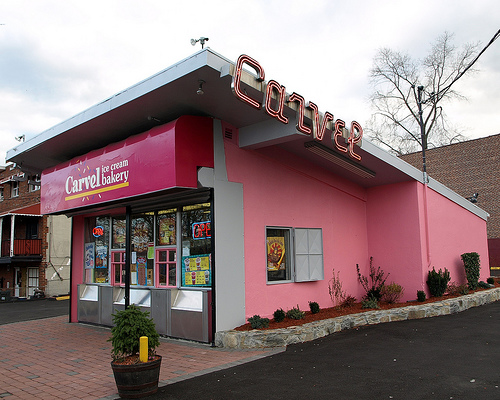
Carvel Ice Cream Store, Edenwald, East 233rd Street & Paulding Avenue, Bronx, New York, December 27, 2010. jag9889 at http://www.flickr.com/photos/jag9889

The kicker was that I had to go get the cake. It was my birthday, but I had to leave 616, catch the 7 bus to Prospect, get off at Waldbaum’s and walk over to the empty Carvel store to buy a chocolate ice cream cake with a huge vanilla ice cream coating. I bought it and brought it home so we could celebrate me turning sixteen.

I wasn’t thankful for this assignment, and it showed. I had two bites before my older brother Darren and my younger siblings devoured the rock-hard dessert. I wished that Maurice would just go somewhere and die. Not a violent death or one that I had to be the cause of. Just a death that he deserved, like a massive coronary blockage due to a diet rich in saturated fats.

About a week ago, I told my seven-year-old son this story. Or at least, an exaggerated, funny and much less painful fictionalized version of it. I made my ex-stepfather into Jabba the Hutt, and my Carvel ice cream cake into a small square boulder that was painted white. At one point in the story, I told Noah that I hit my stepfather in the head with a piece of the cake, “knocking him out cold.” I made it so that my siblings ate the cake like Shaggy and Scooby ate Scooby Snacks after solving a case, with tongues circling their faces and licking off the excess to boot.

Noah just laughed and laughed throughout. I just hope that he finds something to laugh about when he finally hears the real story.

Colleges, HBCUs, and the No-Profit Motive

20 Monday Dec 2010

Posted by decollins1969 in 1, Academia, Boy @ The Window, culture, Eclectic

≈ Leave a comment

Tags

Adult Learners, Carnegie Mellon University, College of General Studies, Course Offerings, Evening Courses, HBCUs, Howard University, Saturday Classes, Student Affairs, Student Development, Student Engagement, Traditional Students, University of Pittsburgh


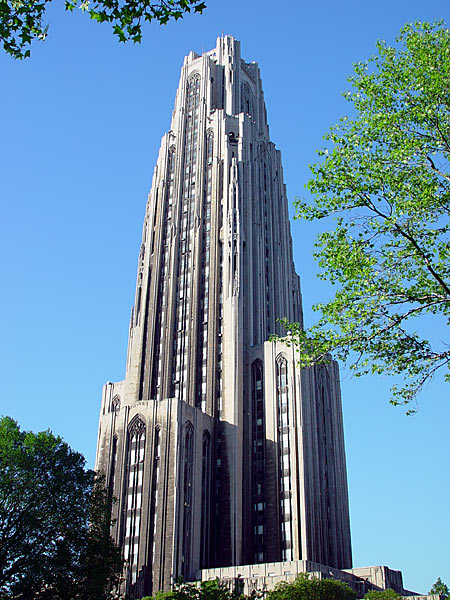
Cathedral of Learning, University of Pittsburgh, December 20, 2010. Source: http://www.photohome.com

At the beginning of my junior year at the University of Pittsburgh (’89-’90), I took a cross-listed English lit and Black Studies course on African American women and men in literature. I took it partly to fulfill a writing requirement, and partly because I wanted to explore literature written by Black authors for once.


Besides the decidedly poor view of Black men in this literature — no doubt why Tyler Perry sees no need in developing a Black male character with the minimal complexity of a Worf of Mogh from the Star Trek franchise — there was another issue I needed to overcome. It was a 5:45 to 8:10 pm class on a Tuesday evening. Prior to the fall of ’89, I’d only taken one course that started after 4 pm, an assembly language course, and I withdraw from it after switching my major to history the previous fall.

But this course was great, despite books like The Women of Brewster Place and A Woman’s Place. I knew what some of the smartest Black women on campus thought of me before I opened my mouth. But much more important than that, I got to know a greater cross-section of students than the traditional daytime students between the ages of eighteen and twenty-four. Nontraditional students — adult learners as we educators call them now — populated our classroom.

They were housed in the College of General Studies, which didn’t mean anything negative to me. Some of my older friends from my freshman courses were CGS students, and were sharper in wit and wisdom than many of my Honors College friends and Humanities classmates from Mount Vernon High School in New York. They added tremendously to this course, and made it so much more fun than I would’ve had with other twenty-year-olds.

I ended up taking six 5:45 to 8:10 courses in my last two years of undergrad, and two more evening courses my first year of grad school at Pitt. They were some of my most memorable courses, with a diverse student population because of CGS, with students who were fully capable of performing well in a college setting. In part because counselors and other student services staff at CGS were available to help these students overcome their relative lack of academic preparation and because almost all of the courses these students took were fully integrated into Pitt’s course schedule.

It seems obvious. But treating adult learners with the care they needed and giving them courses that any traditional student could take made them feel more at home, and probably were significant factors in the success I saw so many of them have.

Fast forward eighteen years to my two semesters as an adjunct professor at Howard University. Besides

Founders Library, Howard University, Washington, DC Photo taken 9 April 2006 with Canon Powershot SD300. David Monack, author, released photo into public domain.

the laziness of the students in my Teaching Black Studies course — not to mention the stuffiness of the faculty (imagine referring to all of your colleagues as “Dr. So-and-So,” and not by their first names) — the main problem I had with them was with the times offered for my course. They originally wanted me to teach on a Monday-Wednesday-Friday noontime schedule. But I worked full-time, and preferred to teach an evening course. The Afro-American Studies department compromised, and gave me a 5 pm course that met Monday-Thursday during the summer.


My fall course, though, fell through, as the latest Howard wanted to schedule it was at 4 pm, and then mislabeled the course on top of that. It was a ridiculous experience, dealing with underprepared and entitled, spoiled students, not to mention a lethargic faculty and administration. I learned later that Howard didn’t offer evening, weekend or distance learning courses at the undergraduate level. I learned soon after that many universities — historically Black and otherwise — were more like Howard than they were like my student and teaching experiences at Pitt, Duquesne and George Washington.

There’s real money that universities — especially HBCUs — are giving up to maintain a false sense of the college experience for faculty and students alike. Even among traditional students, working part-time jobs and having expansive extracurricular activities makes it difficult to fit appropriate classes in between 8 am and 5 pm. While online teaching is one way to go, putting together course offerings that fit the schedules of twenty-first century students is a better place to start.

While the Harvards, Yales, Princetons, and even Carnegie Mellons of the university universe can afford to act like its 1969 still, Howard, Morehouse, Clark Atlanta and so many others cannot. You want to stay solvent and academically relevant? Dusting off the course booklet and looking at evenings and Saturdays to accommodate all of your potential students is a great place to begin.

Slumming Lords Spinning Stories Out Of Suffering

15 Wednesday Dec 2010

Posted by decollins1969 in 1, Academia, Boy @ The Window, culture, Eclectic, Politics, race, Work

≈ Leave a comment

Tags

August 1983, Creative Nonfiction Writing, Food Stamps, Homelessness, John Block, John R. Block, Matthew Boyle, Mediabistro.com, Misery, New York Times, Poverty, Race, Reagan Administration, Secretary of Agriculture, Slumming, USA Today, Welfare, White middle class


New York City – “Doing the slums” – A scene in the Five Points / from a sketch by a staff artist, Policeman leading upper class people through the Five Points neighborhood, Published 1885; December 15, 2010. Source: http://memory.loc.gov/service/pnp/cph/3c20000/3c22000/3c22600/3c22660v.jpg

In July and August ’83, my family’s first summer on welfare, then US Secretary of Agriculture John Block decided to do an experiment involving food stamps, at least as reported by USA Today at the time (unfortunately, USA Today’s archives only go as far back as ’87). He had himself and his family “live” off of food stamps — $58 worth — for a week.

Official Secretary of Agriculture Photo, John R. Block, December 15, 2010. Source: http://news.siu.edu/news/April04/040104pr4039.htm

Mind you, Block didn’t move them out of their comfortable home in NW DC to live in SE Washington or off North Capitol Street and New Jersey Avenue. They didn’t stop buying clothes, driving cars or paying their other bills. No, for a week, the Block family — including their nineteen-year-old daughter and the daughter’s equally anorexic nineteen-year-old friend — bought their food with food stamps to show how hard (or easy) it was for a family of four to budget for all of their eating needs on the government welfare dime.

Last week, Mediabistro.com reported on twenty-three year-old Daily Caller reporter and American University grad student Matthew Boyle’s work to do a three-story account of his food stamps experience. “You wouldn’t think I’d qualify….I don’t meet the traditional definition of a poor person, and in fact I’m not poor. But that didn’t matter to the District’s Department of Human Services. They approved me anyway,” Boyle said. Then Boyle gave his income. “I make $600 a month writing for Daily Caller and another $493 as a teaching assistant at AU. My rent is $1,365.”

Sorry Boyle, but by income alone, you qualify for food stamps, because unless things have changed since my grad school years, only your part-time reporter income counts as traditional income from a workforce standpoint, enabling you to qualify. By definition, you are poor, no matter your middle-income and elite university sensibilities.

But there’s a more important point than shattering Boyle’s socioeconomic views of himself that I need to make here, though. It stems in part from these strokes of Boyle’s keyboard: “The arrangement works because most of my rent and other expenses are covered under my student loans or paid by my parents (thanks, Mom and Dad).”

Vintage Food Stamps. Source: http://slashfood.com

Yes, this is what makes your situation a middle class one, your loans and your parents. As if millions of other people who are poor or solidly middle class haven’t received help from loans, parents, or, God-forbid, food stamps. That someone with Boyle’s background shouldn’t qualify because his parents have the dollars to bail him out.

It’s downright idiotic to complain about qualifying for food stamps. There are millions of other people with similar incomes, including grad students, who are grateful to have the program to supplement their income so that they can eat and pay rent. It’s also a bit arrogant to see the system as flawed from the contrarian perspective of a White middle class outsider — one who is technically poor at present — who thinks that it’s too easy to get food stamps.

This goes beyond John Block or Matthew Boyle, though. I took a creative nonfiction writing class to help kick-start my transition from academic writing to other, more literary forms in September ’01. The class was mostly made up of folks who saw themselves as middle class, many of whom were White. For one particular personal literary account assignment, four of these students decided to interview homeless men and women, all of whom were of color. I think that was the last class I showed up for, to hear these students talk about how touched they were by the horrors that had affected their subjects.

There’s nothing wrong with wanting to understand or even help others less fortunate than us. The need to go slumming so that you can tell a story, though, is all too typical of a superficially minded society and journalism community. I didn’t need Block’s August ’83 experiment to know that it was hard to shop with food stamps — I shopped every day for my mother with them, and usually with a tinge of bitterness about using them. Boyle’s slumming to uncover inconsistencies is an example of yet another wannabe journalist making their name off of others misery.

These are stories that would be much better told by someone who’s either lived the experience or is extremely knowledgeable of the people and subjects involved. But in our screwed up world, people like me are too biased to tell these stories, in articles and in books. And people wonder why writers like James Baldwin and Ralph Ellison became expatriates or bitter later in their careers.

Cream on the Brain

12 Sunday Dec 2010

Posted by decollins1969 in 1, Academia, Boy @ The Window, culture, Eclectic, Mount Vernon High School, Politics, race

≈ Leave a comment

Tags

"A Substance of Things Hoped For", A.B. Davis Middle School, Ability Grouping, Academic Excellence, Barbara Sizemore, Carnegie Mellon University, Creme de la Creme, Culture Wars, Diversity, Fear of a "Black" America, Humanities, Identity, Jeanne Oakes, Keeping Track, Magnet Programs, Magnet Schools, Mount Vernon High School, Mount Vernon New York, Mount Vernon public schools, Multiculturalism, Pittsburgh Public Schools, Student Engagement, Tracking, University of Pittsburgh


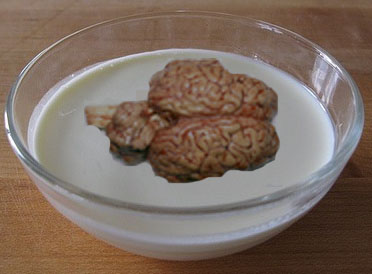
A Brain Floating in the Heavy Cream of Obsession with Academic Excellence, December 13, 2010. Donald Earl Collins

A quarter-century ago, education scholar and Ford Foundation education program director Jeanne Oakes published Keeping Track: How Schools Structure Inequality. Oakes’ groundbreaking, definitive work on the educational inequalities created or reinforced by ability grouping has led a whole generation of scholars to examine the viability of tracking in K-12 education. In a 2005 edition of her book, Oakes wrote that “through tracking, schools continue to replicate existing inequality along lines of race and social class and contribute to the intergenerational transmission of social and economic inequality.”

I picked up Oakes’ Keeping Track for the first time in ’90. By then, I already knew from experience how true her words and research were. Six years in Mount Vernon, New York’s public schools via the Humanities Program had taught me all I’d need to know about the tensions between creating a class of students whose level of academic performance was par excellence while simultaneously addressing segregation and diversity in the school district. The magnet program and the district failed at one and succeeded at the other, which in turn reinforced its failure.

I worked on a paper some twenty years ago for the late Barbara Sizemore, my professor at the University of Pittsburgh my senior year (and a former superintendent of DC Public Schools) looking at how magnet school programs actually created resegregation in individual schools and Pittsburgh Public Schools because of the exclusivity that comes with tracking or ability grouping. It was an easy paper for me to do, guided in no small part by my experiences in Humanities at Davis Middle and Mount Vernon High School. Easy, but not easy to get a handle on beyond the obvious demographics of race, class and test scores.

I managed to wiggle myself into the culture wars of the early ’90s and the debate around multiculturalism and K-12 education soon after that paper. It seems obvious now that the unacknowledged diversity of Humanities was what enabled me to take sides in favor of multiculturalism. That led to my dissertation looking at the historical development of multiculturalism among Blacks in Washington, DC (“A Substance of Things Hoped For,” Carnegie Mellon University, 1997 for those who want more information), and eventually, my first book, Fear of a “Black” America from six years ago.

But it took my memoir Boy @ The Window to bring me back to square one. I realized about a year ago that I’d done nearly thirty interviews of former classmates, teachers and administrators for the manuscript. There was much more material to mine beyond their impressions of me and how to shape their descriptions of themselves — and my memories of them — into characters for Boy @ The Window. I decided to work on an academic piece that looked at the benefits and pitfalls of high-stakes schooling — not just testing — in the form of a history lesson via magnet schools, specifically my Humanities experience.

After a quick rejection, I redoubled my efforts a few months ago. I decided to look at the education psychology and sociology literature, as well as Oakes again, to see how these interviews and my experiences could be useful in our testing-obsessed times. I finally realized what had troubled me about Humanities for the past three decades. It was the reality that all involved with Humanities had taken on the e pluribus unum identity of an academic superstar (much more than just a nerd, by the way). Beyond Black or White, and ignoring the realities of poverty in our district and (at least for me) in our program, Humanities was all about sharpening our academic personas above all else.

This fueled the major success of Humanities during its existence between ’76 and ’93, which in turn would define its failures. In successfully nurturing the idea of academic excellence as identity, as evidenced by so many of us attending and graduating from college, this magnet program failed in its other major educational functions. It failed to embrace diversity, to help its students understand the diversity that was Humanities, to nurture creativity and imagination beyond A’s and college acceptances. It failed to develop the whole student, which aside from its charge to help desegregate Mount Vernon public schools, was its original mission.

Humanities failed because its teachers, administrators (including the former superintendent of schools) and many of the most vocal parents (mostly affluent and White) refused to deal with diversity seriously. Academic excellence without significant parental engagement or the humility necessary to discuss issues of race, gender, class, sexual orientation led to a severe overemphasis on calling us the “creme de la creme.” All of this would have a negative impact on our development as students, and as emerging adults.

I don’t think that it’s asking too much of parents, administrators and teachers to work together in both striving for academic excellence while building programs that embrace difference and nurture creativity and imagination, and not just an addiction to A’s. Or is it?

← Older posts
Newer posts →

Boy @ The Window: A Memoir

Boy @ The Window: A Memoir

Places to Buy/Download Boy @ The Window

There's a few ways in which you can read excerpts of, borrow and/or purchase and download Boy @ The Window. There's the trade paperback edition of Boy @ The Window, available for purchase via Amazon.com at http://www.amazon.com/Boy-Window-Donald-Earl-Collins/dp/0989256138/

There's also a Kindle edition on Amazon.com. The enhanced edition can be read only with Kindle Fire, an iPad or a full-color tablet. The links to the enhanced edition through Apple's iBookstore and the Barnes & Noble NOOK edition are below. The link to the Amazon Kindle version is also immediately below:

scr2555-proj697-a-kindle-logo-rgb-lg

Boy @ The Window on Amazon.com: http://www.amazon.com/Boy-The-Window-Memoir-ebook/dp/B00CD95FBU/

iBookstore-logo-300x100

Boy @ The Window on Apple's iBookstore: https://itunes.apple.com/us/book/boy-the-window/id643768275?ls=1

Barnes & Noble (bn.com) logo, June 26, 2013. (http://www.logotypes101.com).

Boy @ The Window on Barnes & Noble: http://www.barnesandnoble.com/w/boy-the-window-donald-earl-collins/1115182183?ean=2940016741567

You can also add, read and review Boy @ The Window on Goodreads.com. Just click on the button below:

Boy @ The Window

Twitter Updates

Tweets by decollins1969
  • RSS - Posts
  • RSS - Comments

Archives

  • June 2025
  • April 2023
  • September 2022
  • August 2022
  • July 2022
  • June 2022
  • May 2022
  • April 2022
  • March 2022
  • January 2022
  • December 2021
  • November 2021
  • October 2021
  • September 2021
  • August 2021
  • July 2021
  • June 2021
  • April 2021
  • March 2021
  • February 2021
  • January 2021
  • December 2020
  • November 2020
  • October 2020
  • September 2020
  • August 2020
  • July 2020
  • May 2020
  • April 2020
  • March 2020
  • January 2020
  • December 2019
  • November 2019
  • August 2019
  • July 2019
  • June 2019
  • May 2019
  • April 2019
  • March 2019
  • February 2019
  • January 2019
  • December 2018
  • November 2018
  • October 2018
  • September 2018
  • August 2018
  • July 2018
  • June 2018
  • May 2018
  • March 2018
  • February 2018
  • January 2018
  • December 2017
  • November 2017
  • October 2017
  • September 2017
  • August 2017
  • July 2017
  • June 2017
  • May 2017
  • April 2017
  • March 2017
  • February 2017
  • January 2017
  • December 2016
  • November 2016
  • October 2016
  • September 2016
  • August 2016
  • July 2016
  • June 2016
  • May 2016
  • April 2016
  • March 2016
  • February 2016
  • January 2016
  • December 2015
  • November 2015
  • October 2015
  • September 2015
  • August 2015
  • July 2015
  • June 2015
  • May 2015
  • April 2015
  • March 2015
  • February 2015
  • January 2015
  • December 2014
  • November 2014
  • October 2014
  • September 2014
  • August 2014
  • July 2014
  • June 2014
  • May 2014
  • April 2014
  • March 2014
  • February 2014
  • January 2014
  • December 2013
  • November 2013
  • October 2013
  • September 2013
  • August 2013
  • July 2013
  • June 2013
  • May 2013
  • April 2013
  • March 2013
  • February 2013
  • January 2013
  • December 2012
  • November 2012
  • October 2012
  • September 2012
  • August 2012
  • July 2012
  • June 2012
  • May 2012
  • April 2012
  • March 2012
  • February 2012
  • January 2012
  • December 2011
  • November 2011
  • October 2011
  • September 2011
  • August 2011
  • July 2011
  • June 2011
  • May 2011
  • April 2011
  • March 2011
  • February 2011
  • January 2011
  • December 2010
  • November 2010
  • October 2010
  • September 2010
  • August 2010
  • July 2010
  • June 2010
  • May 2010
  • April 2010
  • March 2010
  • February 2010
  • January 2010
  • December 2009
  • November 2009
  • October 2009
  • September 2009
  • August 2009
  • July 2009
  • June 2009
  • May 2009
  • April 2009
  • March 2009
  • February 2009
  • January 2009
  • December 2008
  • November 2008
  • October 2008
  • September 2008
  • August 2008
  • July 2008
  • June 2008
  • May 2008
  • April 2008
  • March 2008
  • February 2008
  • January 2008
  • December 2007
  • November 2007
  • October 2007
  • September 2007
  • August 2007
  • July 2007
  • June 2007

Recent Comments

MaryPena's avatarMaryPena on My Day of Atonement/Bitter Hat…
decollins1969's avatardecollins1969 on No Good Teaching Deed Goes…
Mary Rose O’Connell's avatarMary Rose O’Connell on No Good Teaching Deed Goes…

NetworkedBlogs on Facebook

NetworkedBlogs
Blog:
Notes From a Boy @ The Window
Topics:
My Life, Culture & Education, Politics & Goofyness
 
Follow my blog

616 616 East Lincoln Avenue A.B. Davis Middle School Abuse Academia Academy for Educational Development AED Afrocentricity American Narcissism Authenticity Bigotry Blackness Boy @ The Window Carnegie Mellon University Child Abuse Class of 1987 CMU Coping Strategies Crush #1 Crush #2 Death Disillusionment Diversity Domestic Violence Economic Inequality Education Family Friendship Friendships Graduate School Hebrew-Israelites High-Stakes Testing Higher Education History Homelessness Humanities Humanities Program Hypocrisy Internalized Racism Jealousy Joe Trotter Joe William Trotter Jr. K-12 Education Love Manhood Maurice Eugene Washington Maurice Washington Misogyny Mother-Son Relationship Mount Vernon High School Mount Vernon New York Mount Vernon public schools Multiculturalism MVHS Narcissism NFL Pitt Pittsburgh Politics of Education Poverty President Barack Obama Race Racial Stereotypes Racism Relationships Self-Awareness Self-Discovery Self-Reflection Sexism Social Justice Teaching and Learning University of Pittsburgh Violence Whiteness Writing

Top Rated

Blog at WordPress.com.

  • Subscribe Subscribed
    • Notes from a Boy @ The Window
    • Join 103 other subscribers
    • Already have a WordPress.com account? Log in now.
    • Notes from a Boy @ The Window
    • Subscribe Subscribed
    • Sign up
    • Log in
    • Report this content
    • View site in Reader
    • Manage subscriptions
    • Collapse this bar

Loading Comments...