• Spinning Sage’s Gold: Allegories on the Western-Dominated Present and a Possible Post-Western Future (2025)
  • About Me
  • Other Writings
  • Interview Clips
  • Video Clips
  • Boy @ The Window Pictures
  • Boy @ The Window Theme Music

Notes from a Boy @ The Window

~

Notes from a Boy @ The Window

Category Archives: Boy @ The Window

Golden State Spencer Fellows

12 Saturday Feb 2011

Posted by decollins1969 in 1, Academia, Boy @ The Window, Eclectic

≈ Leave a comment

Tags

Academia, Academic Arrogance, Ambivalence, Berkeley California, Catherine Lacey, Fellows, Misfits, Morgan Freeman, Publish-or-Perish, Shawshank Redemption, Spencer Foundation, Spencer Foundation Dissertation Fellowship Program, UC Berkeley, West Coast


Spencer Foundation Dissertation Fellows Retreat, Berkeley, CA, February 17, 1996. Donald Earl Collins (psst - I'm the young and cute Black guy in the white turtleneck in the back row)

Fifteen years ago this week I went on my first trip to the West Coast. It was for a Spencer Foundation Dissertation Fellows retreat in some villa of a conference center just off UC Berkeley’s campus. It was our second meeting as a cohort, presenting some of our doctoral thesis work in front of a group of professors from Berkeley, Stanford, UCLA and other places. It was also a chance for the thirty-three of us to meet the selection committee that had made it possible for us to be Spencer Foundation Dissertation Fellows in the first place. We spent so much time in Berkeley and in Oakland that most of us didn’t bother to take the BART into San Francisco, so the trip was a failure in that area — not really.

But it was very important in one aspect above all else. I learned during our three days of meetings how I wasn’t alone in the world of academia. That I wasn’t the only misfit was the first revelation. There were other Fellows whose departments and classmates had shunned them and their work because it touched on the “soft” field of education. Or because it wasn’t hardcore quantitative analysis. Or because they weren’t thirty years old yet. Or even because of the age-old academic issues of looking at educational issues through the trifocal lens of race, gender and class.

Some of us talked about our dissertation advisors and their lack of support for us and our work. We were individuals who had won a prestigious individual award and a $15,000 grant to research and write a doctoral thesis, but somehow had managed to do this without the support of tenured faculty at major, even elite, universities! I found that fascinating. I also would’ve found that unbelievable if my advisor hadn’t been Joe Trotter. We didn’t have any obvious solutions to the problem of asshole advisors who may well not have supported us on the job market. Nor did we have a solution to their midlife crises or male pattern baldness. Yet it was good to spend significant time talking about this.

I also discovered through this retreat that I wasn’t the only one of us ambivalent about having a career as a professor. It didn’t help that we had a freshly minted associate professor from U Chicago talking to us about her average work week. Not because a forty to forty-five hour work week seemed anywhere close to arduous. At least to me. The half of the Fellows who really did want academic careers moaned quite loudly at the prospect of teaching, research, writing and serving on committees for so many hours. I, among others, looked at the list and found it rather mundane and restricting.

Many of us were concerned about becoming institutionalized, kind of like the way Morgan Freeman’s character “Red” talked about it in Shawshank Redemption. My own fear was that I could make myself a successful academician, molding my imagination and writing more fully into the forms of academic prose. Meaning that I wouldn’t be able to communicate with anyone outside of my subfield or field, and certainly not with the general reading public, who usually wouldn’t use words like fait accompli unless they were French speakers. There were a few other Fellows who didn’t want to write or do research at all. They wanted to teach, to change the world of K-16 education somehow.

Catherine Lacey, the director of the Dissertation Fellowship program at the time, concluded with a lofty and philosophical speech about our bright futures. It was a good speech. It made me begin to think about what to do with my life if I didn’t get a full-time gig as faculty at an elite university. For many of us, though, this would also be the last time we could be this honest about our hopes, fears, and warts when it came to our doctoral theses and post-doctoral careers. If only I had known about the Ford Foundation’s associate program officer program when it existed back in ’96.

Sarai, A Poet In My Heart

09 Wednesday Feb 2011

Posted by decollins1969 in 1, Boy @ The Window, Eclectic, eclectic music, music, Youth

≈ Leave a comment

Tags

28th Birthday, 616, 616 East Lincoln Avenue, Brother-Sister Relationship, Coping With Death, Death, Fleetwood Mac, Mount Vernon New York, Muse, Sara, Sarah, Sarai, Sarai Washington, Sickle Cell Anemia, Sister, Starship


Sarai, circa 2009. Unknown.

Today, if she were still alive, my sister Sarai would’ve turned twenty-eight years old. To think that I was only six weeks past my thirteenth birthday when she was born. Sarai was the one sibling I didn’t want because she was born in the middle of our plunge into welfare, my ex-stepfather’s abuse, and my mother’s inability to make any good decisions for herself and for the family.

But her life was a miracle in and of itself. Sarai was born a sickly sickle-cell anemia child, another sign of my mother’s indecisiveness and the collective stupidity of adults in my life. None of that really mattered after the first few months, though. From the time she was six months old until I went off to the University of Pittsburgh four years later, I made a point of looking after her, of getting her extra food, of making sure that everything she ate was fortified with iron.

Sarai was my little princess, the only girl I could relate to, the one I could dress and attempt to comb hair for (I say “attempt” because she didn’t have much hair before she became a teenage and my hair-doing skills were mediocre most days). I didn’t want to love her, but I did anyway.

As she grew older, her status as my little baby changed too. But only in a few ways. Whenever I came home

Sarai, Yonkers Apartment, December 23, 1995. Donald Earl Collins

to 616 for the holidays or visits, Sarai would say “hi,” give me a hug, and hold out her right hand for some money. Sometimes I gave her some walking around money, other times I didn’t — I was a poor student for most of the ’90s. It took awhile, but the little girl who was my sister grew up enough to live on her own a few short years before she died. That’s part of how I’d like to remember Sarai.

The first song I ever sang to her outside of lullabies was Starship’s “Sara.” It was the winter of ’86, a quarter-century ago, and Sarai didn’t care too much for my rendition of the song, with my high-falsetto flourishes and adjustments of “Sara” to “Sarai” throughout. (By the way, for those of you who aren’t practicing religious Jews or Judeo-Christian scholars, Sarai was the name of Abram’s wife before God ordained that their names would become Sarah and Abraham.) Of course, I usually sang it to her when she became petulant or when she was teasing her older brothers.

But what I should’ve been singing to her was Fleetwood Mac’s “Sara.” I should’ve been singing “wait a minute baby, stay a little while…” It would’ve been so much more appropriate. Sarai was a “poet in my heart.” She never really changed, and luckily, she never stopped living her life. And now she’s gone, and has been gone for more than seven months now. My life seems more empty, my family even less of a family, than it was before. Hopefully, I’ll see her again, whenever I’m finally called home.

No Rhodes Lead to College Park

04 Friday Feb 2011

Posted by decollins1969 in 1, Academia, Boy @ The Window, culture, Eclectic, Politics

≈ Leave a comment

Tags

Academic Excellence, Academic Politics, College Park, job interview, merit scholarships, Mote, Rhodes, Rhodes Scholar, Rhodes Scholarship, scholarships, Tom McMillen, University of Maryland, University of Michigan, University of Pittsburgh


The Road to the University of Maryland President's Residence, June 11, 2010. Donald Earl Collins

University of Maryland President's Residence, June 11, 2010. Donald Earl Collins. Note the Maryland flag colored shell on the Terrapin (turtle).

Three years ago I did an interview at the University of Maryland for a director position with their National Scholarships Office. It was a day-long interview that went from 9 am until 6:30 pm, meeting faculty and administrators throughout the nine-and-a-half-hour process.

It was one of my best interviews. I didn’t feel like I made any obvious errors, and I genuinely liked all of the people I met that day. But there was one question, one topic, that felt out-of-place, awkward, even stupid as part of the discussion of this position. It was the question, “If you get this job, can you guarantee that the University of Maryland will have a Rhodes Scholarship winner in five years?”

I was almost speechless after hearing the question. Not because I didn’t have confidence in my abilities to detect academic excellence or strong leadership skills in students. Not because I didn’t think I could handle the job. Mostly, I just thought that it would be ridiculous for any responsible professional to guarantee a prize like a Rhodes Scholarship based on variables beyond their control. “I can guarantee that I can get more students into the pipeline for a Rhodes, but I think it would be foolhardy for me to guarantee that I could get a Rhodes Scholarship in two or five years.”

Former U.S. Representative Tom McMillen, a Rhodes Scholar, NBA player, and alumnus of the University of Maryland, 2008. BGervais. Creator has granted permision for free use via Creative Commons.The conversation continued over the next fifteen minutes between me, another director and two deans. I discussed other important scholarships and fellowships. Fulbright. Truman, Mellon Mays, Ford Foundation, and so on. But the conversation returned three times to the mandate of then President Mote and his emphasis on raising Maryland’s prestige by having a student win a Rhodes Scholarship. After all, the university had not had a Rhodes Scholarship winner since basketball star Tom McMillen won the award in ’74. One administrator actually said, “We see no reason why we couldn’t do as well as the University of Michigan.”

I thought, “Wow! He said that with a straight face!” I couldn’t believe what I was hearing. It was as if I was listening to my ex-stepfather talk about how great a father he was while his kids were running around 616 with graying drawers and grumbling stomachs. Given the state of the scholarships office at the University of Maryland, they weren’t ready to compete with the University of Pittsburgh yet, much less the most prestigious land-grant public university in the country, and arguably the world. I graduated with and found myself in the same classes with one Rhodes Scholar when I was an undergrad at Pitt, and knew a finalist for the scholarship when I was a grad student there as well. And Pitt had nowhere near the academic reputation in ’91 or ’94 that it had earned by 2008.

I nudged the administrators who were interviewing me to think more systematically about how the scholarships office at the University of Maryland should go about setting goals. That a university must build its reputation for high-achieving students over time, so that its Rhodes Scholarship candidates will survive to at least be finalists in the process. That our competition was more the University of Virginia or University of Delaware or even Johns Hopkins before setting goals on par with the University of Michigan.

I obviously didn’t get the job. Given that conversation, though, I wasn’t sure if I wanted the job. The university found someone who had previous experience working in a university scholarships office. As with most staff positions at universities, experience working as a staff member (considered different from faculty, in case folks don’t know the difference) is more important than nonprofit management or academic teaching experience. I was definitely disappointed.

Still,  I wanted the challenge of creating a more academically enriching environment at the University of Maryland. And after three years of teaching in the University System of Maryland (via University of Maryland University College), I’ve taught enough College Park students to know that much work remains to create the kind of university necessary to produce Rhodes Scholars. Who knows? Maybe Maryland will have its first Rhodes Scholar recipient in thirty-seven years this spring. However, given the split personality of both the campus and the academic culture there, I seriously doubt it.

Dairy Queens, Dick Oestreicher and Race

01 Tuesday Feb 2011

Posted by decollins1969 in 1, Academia, Boy @ The Window, culture, Eclectic, Mount Vernon High School, Pop Culture, race

≈ Leave a comment

Tags

"Sittin' on the Dock of the Bay", Affirmative Action, Bigotry, Black History Month, Dairy Queen, Dick Oestreicher, History Department, Michael Bolton, Otis Redding, Race, Racism, Richard Oestreicher, Segregation, Thomas Sowell, University of Pittsburgh, William Julius Wilson


Dairy Queen Sign, Near Frankstown Road, Penn Hills (outside of Pittsburgh, PA), June 14, 2005. Shawn Wall. Qualifies as fair use under US Copyright law because there is no attempt to distribute or alter, and this photo is only being used for illustrative purposes.

Black History Month is upon us once again. But instead of the same tired discussion of Carter G. Woodson, MLK or the meaning (or lack thereof) of this month, I’m telling a story that will (hopefully) dredge up issues for many of you.

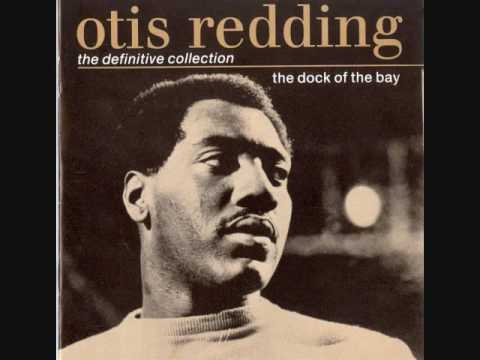
It was the last Tuesday in October ’92. I was a student in Dick Oestreicher’s US General Field 2 graduate seminar in the history department at the University of Pittsburgh. The topic for our discussion this day

Otis Redding Album Cover, January 31, 2011. Unknown. This photo qualified as fair use under US copyright laws because of its low quality.

was, “Why has black economic mobility, political assimilation, and cultural identity differed from other ethnic groups.” On the surface, it sounded like a good academic discussion to have. But after having to write a fifteen-page analysis on the topic, where I was restricted to William Julius Wilson’s Declining Significance of Race (1978), Thomas Sowell’s Ethnic America (1971), and Kenneth Kusmer’s analysis of race in the context of Black migration to Cleveland (1976), I wasn’t so sure. I made the mistake of being provocative, naming my paper “Sittin’ on the Dock of the Bay” — after the Otis Redding version, and not the Michael Bolton one.

It was a long two-and-a-half hour class. Especially since I was the lone African American in the room talking about race and standing up to the classroom consensus that class was more important than race in the case of the thirty-million-plus people who looked like or had been classified the same as me. I was on the hot seat, arguing that both Sowell and Wilson’s bias was politically conservative in nature, which influenced their analysis of the question of Black progress and lack of such. I also decided that — like so many issues in history — the question of race versus class was an and-both and not an either-or one. That race and class were so intertwined in American culture and history that to separate them would do severe damage to our ability as historians to understand the nature of racism and poverty in American society.

One of my classmates, an over-50 White male, decided at this point to cut off my final point. “You should be grateful, to be able to go to an esteemed institution like the University of Pittsburgh, to be able to sit in that chair and get to earn a Ph.D. If it were thirty years ago, we couldn’t stand in the same Dairy Queen line, right here in Pittsburgh,” the older man said as slowly and as deliberately as someone giving an Oscar acceptance speech. I was amazed, angry, ready to put the man in his place academically. I wanted to verbally take a Dairy Queen triple-scooper and smash it in his stubby nose.

Then my mentally absent professor Dick Oestreicher immediately interrupted, literally positioning himself in the middle of the room to keep me from giving my response. Oestreicher ended class right then and there, dismissing us without even summarizing our discussion or criticizing our allegedly weak academic

Dick Oestreicher, circa 2009

analysis, which he had done in all of the previous weeks.

I was incensed, actually more pissed with Oestreicher than with the bigoted older man. I made sure to stop by Oestreicher’s office the next afternoon after my other grad seminar to find out why he interfered. “You’re going to have to deal with this anyway,” he said while shrugging his shoulders. The following week, I received an A- on my paper, with “Sowell’s well read” as the only comment on my critique of the authors and the undeniably conservative, pro-class and anti-race analysis that the authors provided.

Of my five and a half years in graduate school — and in my two years of grad school at Pitt — it was one of my most unbelievable moments. I wanted to pick Oestreicher up by his mangy hair and show him how some people deal with moments of racism and the people who allow it to continue on their watch. I wanted to tell him that he should stay out of the classroom if he’s too scared to actually teach students.

In the end, I was more patient at twenty-two than I’d probably be about something like this now. I remained academically defiant the rest of the semester, opposed every argument he made whenever he made it. Meanwhile, the bigoted old man had withdrawn from the course in the last month of the semester.

I learned, more than anything else, that many so-called liberal professors were only academic liberals, not actual liberals. Oestreicher in my mind was worse than my hard-ass principal Richard Capozzola at Mount Vernon High School. At least with Capozzola, you knew that he didn’t like anyone who looked like me — meaning young, Black, male, unpopular and poor. With Oestreicher and so many in academia, their liberalism and expressions in support of racial equality were mere scholarly arguments. In reality, people like him would never expect someone like me to have a chance in hell or heaven to become one of their academic peers.

But you know what was the funniest thing of all? I’d never been to a Dairy Queen before.

A Giants Anniversary

30 Sunday Jan 2011

Posted by decollins1969 in 1, Academia, Boy @ The Window, culture, Eclectic, Sports

≈ Leave a comment

Tags

"Stuck In A Moment", "Wide Right", Andre Reed, Buffalo Bills, Giants, Graduate School, Jeff Hosteler, Jim Kelly, New York Giants, O.J. Anderson, Operation Desert Storm, Persistence, Phil Simms, Scott Norwood, Star-Spangled Banner, Super Bowl XXV, U2, University of Pittsburgh, Whitney Houston, Wisdom


Super Bowl XXV, "Wide Right" Screen Shot, January 29, 2011. This screenshot qualifies as fair use under US Copyright laws because of its low quality and because it is only being used to illustrate the topic of this article.

It’s been twenty years and two days since my Giants pulled off the unexpected against the juggernaut that was the Buffalo Bills in Super Bowl XXV. It was the “Stuck In A Moment” (via U2) or “Wide Right” game, when Scott Norwood missed a 47-yarder to end the game, Giants winning, 20-19. It was a great and somewhat improbable moment, given that the Giants were minus Phil Simms and had as much offensive firepower as a firecracker under water. Yet, they somehow pulled it together, with great defensive, good special teams, and methodical, disciplined long drives in the second and third quarters to keep Jim Kelly and Thurman Thomas off the field.

There were so many things to remember about that game and day. Whitney Houston’s spectacular performance of the national anthem. O.J. Anderson running three and four yards at a time. Andre Reed having a great game. The fact that the first Gulf War was just a few days old (I didn’t support that war either, but at least it had a real sense of international support). How ridiculous it was that few prognosticators picked the Giants to beat the Bills.

Most importantly, my takeaway was that ’91 was going to be a good year. Now just because my original hometown team won. Not just because they weren’t expected to win. But because of the way they won. They played like grinders, with long drives that led to touchdowns, that kept the opposing team’s offense watching on the sidelines. I had used sports as a metaphor for understanding my own life since I was a teenager. With the Giants winning their second Super Bowl in five seasons (or four calendar years), I saw it as a sign of what I needed to do to move forward that year.

I already knew that many of my history professors at the University of Pittsburgh thought I was a very good student, but at least three (including one of my letter writers, who told me his expectations of me after the fact) who didn’t think I was grad student material, whatever that means. I understood that I also didn’t want to go into the workforce in ’91 with just a B.A. in history and minors in math and Black Studies. I knew that having the masters or another graduate degree would help, and was still contemplating taking my 50th percentile LSAT score and using it to get into law school.

All of this would require persistent, consistent work and agitation on my part, because I had few in my corner going to bat for me, no matter what I finally decided. It was no longer a matter of talent or pure analytical ability. No, what I was going through now required wisdom, diligence, the need to seek allies wherever and whenever they could be found. And a bit of luck. All of which that Giants team exhibited throughout the ’90 season and in Super Bowl XXV. (To be continued…)

The Turd Dream

24 Monday Jan 2011

Posted by decollins1969 in 1, Boy @ The Window, culture, Eclectic, Mount Vernon High School, Politics, Pop Culture, race, Religion, Youth

≈ Leave a comment

Tags

1980s culture, A.B. Davis Middle School, Board of Education, Boy @ The Window, City Hall, Coming-of-Age, Dreams, Friendship, Growing Up, Hebrew-Israelites, Interpreting Dreams, Mount Vernon public schools, Nightmares, Pittsburgh, Race, Racial Strife, Russet Potatoes, Socioeconomic Strife, University of Pittsburgh


Russet Potatoes, January 23, 2011. Source: http://www.Fotosearch.com. Qualifies as fair use under US Copyright laws because of the limited use of picture and because its use is for illustrative purposes directly related to the topic of this post.

I found myself at a party one cold and starry evening, standing in an equally cold kitchen. It was really bright in the kitchen, almost to the point of overpowering my eyes. The walls and cabinets were all-white, the counters made of formica, and the floor light blue-and-white tiled. This was in stark relief from the adjacent living room. It was in a red-brown, ’70s dimmed-light den mode, with beads hanging over the doorway leading out of the kitchen to it. It was the kind of party I never had the chance to go to in high school.

But everyone was there. Even people I hadn’t seen since my Davis Middle School days. The class valedictorian and salutatorian, the affluent and middle class types who went to Pennington Elementary, Crushes #1 and #2, members of the Italian Club, and so many others were there. Two of them were peeling potatoes and throwing them into big pots of boiling water. They started slicing and dicing them, laughing as they were throwing the pieces into the bubbling clean and clear liquid.

Except these weren’t potatoes. These were turds, each shaped like a large Russet, being peeled and chopped, looking white but quickly turning crappy-brown upon contact with the air. The two turd-peelers shared the boiled and mashed turds with my former classmates, who were smiling in glee and eating them up with delight. I then looked at this six-foot, trapezoidal pyramid of a rack in the middle of the super-bright kitchen. It was full of turds, stacked on each one of its seven levels. It was enough to feed the guests several times over.

When I sat up from this dream in my small room in a shared row house on Welsford in Pittsburgh and found myself in the present, the first Saturday of February ’90, I gave Mom a call. I told her about the dream in all of its strange details. I asked her what she thought of it. “You’re friends are full of shit,” she said. After laughing so hard that I nearly rolled out of bed, I said, “That can’t be. It’s got to be more complicated than that.”

Yet I knew that Mom was absolutely right. Most of the people I knew during my years in Humanities — classmates, teachers, administrators, family members and neighbors — were full of crap when it came to me. I certainly included myself in that category. I might’ve made sure of or accidentally given myself a couple of enemas between 7S and the University of Pittsburgh. But it would’ve been hard to stay clean around all the filth on which we dined growing up. This was thanks in large measure to our community leaders and all of the racial and socioeconomic strife that was part of everyday politics and conversations at school and at city hall.

What Mom said was ironic, too. For better and mostly for worse, Mom, father and ex-stepfather had crapped up our lives with their baggage. The turds from their lives were the reason why my dreams had grown to be so vivid, so complicated by the time I reached adulthood. Mostly, my dreams and nightmares brought me to anger, as if someone were trying to steal my life from me, which, as it turned out, was how I felt most of the time when I was awake. And that also made me resolute whenever I left my dreams for the conscious world.

This was the final break between my immediate past of Mount Vernon, the whole Hebrew-Israelite and Humanities thing, and all of the ridicule, ostracism, poverty and abuse that came with those things. My past experiences were all now a part of my dream world. It was an occasional reminder that I wasn’t really myself in the relatively recent past.

That was nearly twenty-one years ago. Except for the occasional email from an ex-teacher or ex-Humanities classmate, the only reminders I have of the time before I became myself again are my Boy @ The Window project and manuscript. And though I don’t necessarily see the people whom I grew up with and around as being full of crap these days, I do see how our collective community baggage would make it difficult for many of us to find our way, our calling. Even in the midst of the best education our city had to offer.

Kate Lynch, Annie Lennox & A CMU Education

15 Saturday Jan 2011

Posted by decollins1969 in 1, Academia, Boy @ The Window, culture, Eclectic, eclectic music, Politics

≈ 3 Comments

Tags

" "Here Comes The Rain Again", "Walking On Broken Glass, Academic Politics, Annie Lennox, Carnegie Mellon University, Dress, Eurythmics, Graduate School, Haircut, Kate Lynch, Katherine Lynch, Male-Centered Faculty, Teaching, Teaching Styles


Annie Lennox, Stock Photo, January 15, 2011. Source: http://www.mediabistro.com

Probably the professor that most approximated a teacher in my courses at Carnegie Mellon University (called “CMU” by folks there, in the ‘Burgh) was Katherine Lynch (she usually went by Kate). I took her for two classes in my transfer year to Carnegie Mellon in ’93-’94.


I had Lynch for Historical Methods my first semester because, you know, a student with a master’s degree and a year of doctoral work at the University of Pittsburgh in history would have no idea about historical methodology by his third year of coursework. But the department insisted that I needed to take courses like that in order to earn their stamp of approval — that I was properly prepared for my comprehensive exams and the dissertation stage once this year of hoop-jumping ended (but that’s a blog post for another time). I also took a course with Lynch in Comparative Urban History (read “Western Europe and the US” here).

What I remember most about Professor Lynch was how much of a contradiction she was, and not necessarily in a bad way. She kept her hair short and platinum blond, wore clothes that were professional but fit that near-rocker style. Compared to the tweed jacket, sweater vest and Shaft-suit-wearing crowd of super-stuffy professors in the history department, Kate Lynch reminded me of, well, Annie Lennox in

Annie Lennox, Gaza Protest, January 3, 2009. Source: http://www.topnews.in

Eurythmics and solo (or Sharon Stone, at least in haircut). Even though I was twenty-four years old by my second time in one of her seminars, my mind in class wandered like I was in high school again. I thought of songs like “Would I Lie To You,” “Walking On Broken Glass,” “No More I Love You’s,” and my favorite when it came to Lynch, “Here Comes The Rain Again.”


The contradiction was in Lynch’s teaching style. Cold, dispassionate, and befuddling, a complete opposite of how she presented herself based on her outward appearances. I’m sure the decidedly male history department played a significant role in how she expressed herself in the classroom. I found her off-putting, to say the least. She was moody, happy and energized one class, irritated and impatient another. She’d lecture on a concept in a graduate seminar for an hour, then somehow expect us to have a vigorous discussion for the next two.

All because Lynch’s style was all about us deciphering her cryptic questions, rather than about us debating fine historical points or big historical themes. In many classes, it came down to one of us — and I was fairly good at this — finding a paragraph on page 88 of a 400-page book that addressed one of her cipher questions. My late eleventh-grade AP US History teacher and mentor Harold Meltzer and his weird and meandering stories were easier to figure out. I’ve always said that Humanities prepared me more for grad school than it did for college. In Lynch’s case, I was absolutely right.

Even with all of that, Lynch was undoubtedly the closest thing to a teacher I had in my nine courses at Carnegie Mellon. Joe Trotter was a better professor, but Lynch acted the most like a teacher, reminding me very much of many of my teachers during my Humanities years from seventh grade through high school. On that scale, at least, she was pretty good.

Yet I sensed that Lynch was holding back, not engaging us in ways that would’ve made us better students, better historians, better intellectuals. And I confirmed that sense when I finished my coursework in May ’94. She was a much warmer person and intellectual outside of the classroom, much more interested in discussing ideas — hers and mine — than she showed at any point in the two classes I had with her. In the classroom, most of my classmates felt like they were “walking on broken glass” around her. But for me outside of the classroom, Lynch was easily the most engaging and caring of the professors I took while in the “madhouse asylum” that was Carnegie Mellon’s history department.

If there was anything I learned from Lynch, it was the need to engage students, to be vulnerable (not weak, mind you) to them in order to reach even the ones that might well be unreachable. Because the opposite approach doesn’t work very well, that is, if one wants to teach and not just facilitate a “shape of the river” discussion.

← Older posts
Newer posts →

Boy @ The Window: A Memoir

Boy @ The Window: A Memoir

Places to Buy/Download Boy @ The Window

There's a few ways in which you can read excerpts of, borrow and/or purchase and download Boy @ The Window. There's the trade paperback edition of Boy @ The Window, available for purchase via Amazon.com at http://www.amazon.com/Boy-Window-Donald-Earl-Collins/dp/0989256138/

There's also a Kindle edition on Amazon.com. The enhanced edition can be read only with Kindle Fire, an iPad or a full-color tablet. The links to the enhanced edition through Apple's iBookstore and the Barnes & Noble NOOK edition are below. The link to the Amazon Kindle version is also immediately below:

scr2555-proj697-a-kindle-logo-rgb-lg

Boy @ The Window on Amazon.com: http://www.amazon.com/Boy-The-Window-Memoir-ebook/dp/B00CD95FBU/

iBookstore-logo-300x100

Boy @ The Window on Apple's iBookstore: https://itunes.apple.com/us/book/boy-the-window/id643768275?ls=1

Barnes & Noble (bn.com) logo, June 26, 2013. (http://www.logotypes101.com).

Boy @ The Window on Barnes & Noble: http://www.barnesandnoble.com/w/boy-the-window-donald-earl-collins/1115182183?ean=2940016741567

You can also add, read and review Boy @ The Window on Goodreads.com. Just click on the button below:

Boy @ The Window

Twitter Updates

Tweets by decollins1969
  • RSS - Posts
  • RSS - Comments

Archives

  • June 2025
  • April 2023
  • September 2022
  • August 2022
  • July 2022
  • June 2022
  • May 2022
  • April 2022
  • March 2022
  • January 2022
  • December 2021
  • November 2021
  • October 2021
  • September 2021
  • August 2021
  • July 2021
  • June 2021
  • April 2021
  • March 2021
  • February 2021
  • January 2021
  • December 2020
  • November 2020
  • October 2020
  • September 2020
  • August 2020
  • July 2020
  • May 2020
  • April 2020
  • March 2020
  • January 2020
  • December 2019
  • November 2019
  • August 2019
  • July 2019
  • June 2019
  • May 2019
  • April 2019
  • March 2019
  • February 2019
  • January 2019
  • December 2018
  • November 2018
  • October 2018
  • September 2018
  • August 2018
  • July 2018
  • June 2018
  • May 2018
  • March 2018
  • February 2018
  • January 2018
  • December 2017
  • November 2017
  • October 2017
  • September 2017
  • August 2017
  • July 2017
  • June 2017
  • May 2017
  • April 2017
  • March 2017
  • February 2017
  • January 2017
  • December 2016
  • November 2016
  • October 2016
  • September 2016
  • August 2016
  • July 2016
  • June 2016
  • May 2016
  • April 2016
  • March 2016
  • February 2016
  • January 2016
  • December 2015
  • November 2015
  • October 2015
  • September 2015
  • August 2015
  • July 2015
  • June 2015
  • May 2015
  • April 2015
  • March 2015
  • February 2015
  • January 2015
  • December 2014
  • November 2014
  • October 2014
  • September 2014
  • August 2014
  • July 2014
  • June 2014
  • May 2014
  • April 2014
  • March 2014
  • February 2014
  • January 2014
  • December 2013
  • November 2013
  • October 2013
  • September 2013
  • August 2013
  • July 2013
  • June 2013
  • May 2013
  • April 2013
  • March 2013
  • February 2013
  • January 2013
  • December 2012
  • November 2012
  • October 2012
  • September 2012
  • August 2012
  • July 2012
  • June 2012
  • May 2012
  • April 2012
  • March 2012
  • February 2012
  • January 2012
  • December 2011
  • November 2011
  • October 2011
  • September 2011
  • August 2011
  • July 2011
  • June 2011
  • May 2011
  • April 2011
  • March 2011
  • February 2011
  • January 2011
  • December 2010
  • November 2010
  • October 2010
  • September 2010
  • August 2010
  • July 2010
  • June 2010
  • May 2010
  • April 2010
  • March 2010
  • February 2010
  • January 2010
  • December 2009
  • November 2009
  • October 2009
  • September 2009
  • August 2009
  • July 2009
  • June 2009
  • May 2009
  • April 2009
  • March 2009
  • February 2009
  • January 2009
  • December 2008
  • November 2008
  • October 2008
  • September 2008
  • August 2008
  • July 2008
  • June 2008
  • May 2008
  • April 2008
  • March 2008
  • February 2008
  • January 2008
  • December 2007
  • November 2007
  • October 2007
  • September 2007
  • August 2007
  • July 2007
  • June 2007

Recent Comments

MaryPena's avatarMaryPena on My Day of Atonement/Bitter Hat…
decollins1969's avatardecollins1969 on No Good Teaching Deed Goes…
Mary Rose O’Connell's avatarMary Rose O’Connell on No Good Teaching Deed Goes…

NetworkedBlogs on Facebook

NetworkedBlogs
Blog:
Notes From a Boy @ The Window
Topics:
My Life, Culture & Education, Politics & Goofyness
 
Follow my blog

616 616 East Lincoln Avenue A.B. Davis Middle School Abuse Academia Academy for Educational Development AED Afrocentricity American Narcissism Authenticity Bigotry Blackness Boy @ The Window Carnegie Mellon University Child Abuse Class of 1987 CMU Coping Strategies Crush #1 Crush #2 Death Disillusionment Diversity Domestic Violence Economic Inequality Education Family Friendship Friendships Graduate School Hebrew-Israelites High-Stakes Testing Higher Education History Homelessness Humanities Humanities Program Hypocrisy Internalized Racism Jealousy Joe Trotter Joe William Trotter Jr. K-12 Education Love Manhood Maurice Eugene Washington Maurice Washington Misogyny Mother-Son Relationship Mount Vernon High School Mount Vernon New York Mount Vernon public schools Multiculturalism MVHS Narcissism NFL Pitt Pittsburgh Politics of Education Poverty President Barack Obama Race Racial Stereotypes Racism Relationships Self-Awareness Self-Discovery Self-Reflection Sexism Social Justice Teaching and Learning University of Pittsburgh Violence Whiteness Writing

Top Rated

Blog at WordPress.com.

  • Subscribe Subscribed
    • Notes from a Boy @ The Window
    • Join 103 other subscribers
    • Already have a WordPress.com account? Log in now.
    • Notes from a Boy @ The Window
    • Subscribe Subscribed
    • Sign up
    • Log in
    • Report this content
    • View site in Reader
    • Manage subscriptions
    • Collapse this bar

Loading Comments...