• About Me
  • Other Writings
  • Interview Clips
  • All About Me: American Racism, American Narcissism, and the Conversation America Can’t Have
  • Video Clips
  • Boy @ The Window Pictures
  • Boy @ The Window Theme Music

Notes from a Boy @ The Window

~

Notes from a Boy @ The Window

Category Archives: Academia

Thanks, Away From Home

27 Tuesday Nov 2018

Posted by decollins1969 in 1, Academia, Boy @ The Window, Christianity, culture, Eclectic, Mount Vernon New York, Movies, Pittsburgh, Politics, Pop Culture, Religion, University of Pittsburgh, Youth

≈ Leave a comment

Tags

American University, Away From Home, Beverly, Depression, Family, Financial Woes, Food, Friends, Grinding Poverty, hunger, Kindness of Strangers, Loneliness, Malnourishment, Melissa, Pitt, Ron Slater, Thanksgiving


Thank You — paying it forward, March 3, 2017. (Catlane/iStock; http://digital.vpr.net/)

Yet another Thanksgiving has come and gone. The holiday is problematic for so many reasons, between the erasure, cultural exploitation, and dehumanizing mythology of indigenous Americans and the climate-change-defying national pig-out that begins every late-November Thursday, and continues for weeks afterward, year after year. But the fact that the days off around Thanksgiving gives us worker bees time to spend with family, friends, and those we seriously like and love can’t be ignored.

Sure. At least for those of us who have such people in our lives with whom to share our time off from work, school, and life’s constant treadmill. My American University students reminded me of the allegedly normal ritual of returning home to eat and spend time with family, et al., this past week. Half of them contacted me to let me know they weren’t going to attend the two classes immediately before Thanksgiving, even after learning I wasn’t granting them an excused absence for the holiday week. All so that they could have a few extra days away from the stresses of higher education and the classroom. I envied them, just an iota, if only because they presumably had good reason to spend time with their families and loved ones. I also figured that not everyone in my class was going home to a welcoming environment, or really, going home at all.
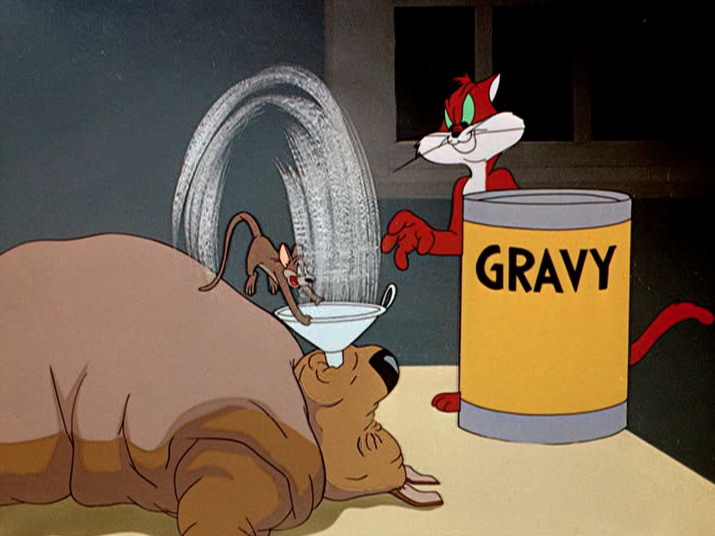
“And this time, we didn’t forget the gravy” Looney Tunes “Chow Hound” episode of bullying, greed, and gluttony, originally aired June 16, 1951. (WB; http://tralfaz.blogspot.com/).

That last one was certainly the case for me during my student days. Growing up the way we grew up, in Mount Vernon, at 616, a good Thanksgiving was one where we had a regular meal to eat. Even before the Hebrew-Israelite years of 1981-84, our Thanksgivings weren’t seven-course eat-a-thons. We were lucky if my Uncle Sam came over to eat with us (which after 1978, was pretty rare), and we didn’t spend time around my Mom’s friends once we dived into being Black Jews and fell into grinding welfare poverty.

After I went off to the University of Pittsburgh in August 1987, I only came home to Mount Vernon and 616 one time for Thanksgiving, three months later. My Mom made the biggest Thanksgiving meal I’d seen her make since 1975. I remember mostly the mashed potatoes and gravy. But it wasn’t a family affair, not really. I was home mostly because I had grown used to the well-worn grooves of poverty, abuse, and adult-level responsibilities that had been my life since the fall of 1982. The food, while the first home-cooked meal I’d eaten in three months, was an escape from my normal attempts at escape.

Twelve months later, after six weeks of depression, getting over my Phyllis obsession, a semester of graduate school-like concentration, a summer of unemployment, a week of homelessness, and three months of financial woes and malnourishment, Thanksgiving 1988 had arrived. Between Ron Slater, Beverly, and finally having enough money to not worry about eating or bills for the first time in almost a year, it felt weird, only having gratitude as my companion for a few years.

But life got even weirder for me, as my friend Melissa had invited me to her father’s house for Thanksgiving. This was not a date of any kind, certainly not from my perspective. I think that Melissa sensed how rough my year had been, knew that I wasn’t going home to New York to see family, and did the Christian thing of looking after one’s neighbors. This even though things weren’t exactly great for her and her father at the time. Melissa’s father was an ailing contractor in his early sixties. I really don’t remember much about that Thanksgiving in terms of the food. I think there may have been dinner rolls or candied yams. What I do remember is the two-and-a-half hours I talked with Melissa and her father, about politics, the “Stillers,” Christianity, and Pitt. It was the most thankful holiday I’d ever experienced, and my first Thanksgiving seeing what Thanksgiving was like for family members who enjoyed each other’s company.

It was the first of seven straight Thanksgivings either spent with friends like Melissa, Howard, Kenny, the Gants and their families, or by myself. The “by myself” Thanksgiving was in 1990. It was a cold and rainy day, where I did nothing but watch football, made myself two double cheeseburgers, and found a nearly usable director’s chair outside a vintage furniture gallery in East Liberty. Even then, folks looked out for me. The next day, two of my older Swahili classmates swung by my apartment to bring me Thanksgiving leftovers. They brought me cornbread, dinner rolls, ham, turkey, mashed potatoes, dressing and stuffing, greens, and candied yams with marshmallows. I had tried to say no, but neither of the women would let me. It was really hard for me not to cry while being thankful for such generosity.

It seems like it’s been a lifetime since those naive and cynical days, where I didn’t trust anyone in my life. The bout with homelessness and the financial straits that followed changed my life in ways that I notice even today. Even with the years of working long hours and fighting for my career as a writer and an educator, I realize that I wouldn’t be here doing any of what I’m able to do today without the kindness of strangers and friends, the ability to weigh, sift, and analyze myself and my past or the sense that God had a purpose for me, a reason for living and being. Even after 30 years, I have this and so much else to be thankful for.

Where Am I Now?

28 Sunday Oct 2018

Posted by decollins1969 in 1, Academia, Boy @ The Window, Christianity, culture, Eclectic, Hebrew-Israelite, Marriage, Mount Vernon New York, New York City, Pop Culture, race, Religion, Youth

≈ Leave a comment

Tags

Birthday Cards, Child Abuse, Damsel-in-Distress Syndrome, Denial, Domestic Violence, Grinding Poverty, Limited Choices, Mama's Boy, Maurice Eugene Washington, Misogynoir, Mom, Mother-as-Best Friend, Mother-Son Relationship, Systemic Racism


Mom with my son Noah at 616, August 4, 2014. (Donald Earl Collins).

This has been a month of months, teaching three classes at two different universities with two very different models for their everyday operations. Not to mention, another Al Jazeera article taking up my time, working on my latest “book” idea, and so many familial and parental events to attend and issues to address. Where did I have the time for all this when I worked full-time in the nonprofit world? Oh yeah, that’s right — I didn’t have the time for all this back then!

But this October’s also been a historic month. Forty years ago, my Mom married my one-time stepfather Maurice Washington. Thirty years ago, I broke free from my Mom’s mantra of practicality and from being first-born son/mama’s boy/younger brother/friend/husband substitute when I changed majors from computer science to history at the University of Pittsburgh. I still feel that becoming a historian has been a mixed blessing over the years. My retirement account and bank account think so as well.

And of course, there’s today, my Mom’s 71st birthday (Happy Birthday, Mom!). I’ve written plenty about Mom on this blog over the years. Lots of what I’ve written has been in the negative, and even eye-opening to me at times. My relationship with Mom has always been complicated, because our respective lives together were hard and horrible, with few moments of joy in between. There were so many moments of boredom, of wishing for a prosperity that never came, along with stacks of violence and threats of violence. Mom was abusive and vain, could be caring and defiant, and was prayerful and profane, all while I was growing up.

So when I say I love Mom, but I don’t like her, I hope it’s something folks can understand, even relate to. Mind you, this isn’t an expectation, because I write often for two people: myself, and that random person one of my posts might help. But in the past few months, on this issue, my friends and Twitter folk have let me down a bit. At least two people I’ve gotten to know pretty well have told me that to discuss my Mom warts and all is a no-go zone. “You can’t be talmabout yo’ mama like that! Hell wrong witchu, boy? That yo’ mama, fool!” Or, the more sophisticated approach: “Your mother is a victim of systemic racism and misgynoir, Donald, so cut her some slack!”

Hmm. It’s funny having folks who otherwise don’t believe in any sacred idols (cows or otherwise) tell me how I should view Mom, as if they were in the same room with me when she beat me with an extension cord at eight years old. Or as if I haven’t spent most of my adult life as a historian and writer involved in understanding human behavior and systems that exploit race, class, gender, sexual orientation in favor of cisgender heterosexual rich White males who feign Christianity as capitalism. Hello! I absolute do get it.

Two things, three things, heck, an infinity of things can be true at the same time, even and especially if they contradict each other. Quantum theory dictates that an electron or some other subatomic particle can be in two places at once and spin in sync with each other at opposite ends of the multiverse. So too it can be true that Mom is a victim of systemic racism, misogynoir, and domestic violence. And it can be equally true that she made some of the most messed up decisions (out of a limited set of choices) a young Black woman with two kids could make in 1978. Including marrying my idiot stepfather, partly in order to “make” me and my older brother Darren “men.”

Folks, if we are to truly understand the people in our lives, we have to grant them the fulness of their humanity. That means acknowledging that the people we love are imperfect, flawed, cracked and broken, maybe even fucked up human beings. That certainly describes me in full, then and now. I think it’s fair to say much of this about Mom as well.

As for whether I love Mom or not, whether I should ever discuss Mom in terms of my growing-up and adulthood times with her or not, it’s really not for anyone to approve or disapprove. After all, so many of you flaunt your wonderful and great relationships with your moms. It’s so sweet and syrupy and sugary and sticky that it’s almost disgusting. How your mama’s your best friend. How folks best be keepin’ your mama’s name outta their mouths before you get ready to throw down. About the oceans of support and love your mamas deluged you with from the moment of conception to this very nanosecond. It’s a truly wonderful thing. I don’t question it, I nearly always applaud it. I also lament it, because even when I thought I had that kind of relationship with Mom, it was in my head, not in reality. That truth hit me harder than a bullet train on its way to Kyoto running at full speed on my PhD graduation day.

And I do love Mom. I do. At times, she did the absolute best she could. Early on, she did tell me she loved me, ever so often. She never wanted the world of racism and evil to hurt me or leave me dead. I’ve long forgiven her for her vanity, her imperfections, and her many, many tragic mistakes as a parent. (Trust me, as a father, I’ve made my own mistakes, but I’ve made a point of always owning up to them.) But I am not God, and with this long memory of mine — usually but not always a blessing — I cannot forget everything that happened on Mom’s watch. Nor can I forget the denials of such from her throughout most of my adult life.

So where am I now? In a state of constant awkwardness on the subject of Mom, especially around her birthday. It’s really difficult to find a birthday card that says “I love you” but doesn’t go into “You’re the greatest, Mom!” or “You’re the reason for every good thing that’s happened in my life” mode. So folks, please just grant me my truth. Just listen without denial, deflection, defense, justification, or excuse. And I’ll promise to keep my envy of your love-enveloping relationship with yo’ moms to a minimum.

Black Women, Feminism, and Writing on My Mind

25 Saturday Aug 2018

Posted by decollins1969 in 1, Academia, Boy @ The Window, Christianity, culture, Eclectic, Politics, Pop Culture, race, Religion, Youth

≈ Leave a comment

Tags

Black Feminism, Brittney Cooper, Chimamanda Ngozi Adichie, Colson Whitehead, Derrick A. Bell, Erica Armstrong Dunbar, Ijeoma Oluo, Interrogation, Intersectionality, Kiese Laymon, Misogynoir, Misogyny, Mona Eltahawy, Morgan Jerkins, Ona Judge, Patricia J. Williams, Roxane Gay, Self-Reflection, Social Justice, Tressie McMillan Cottom, Women of Color, Writing


“This is what a Black Feminist looks like” t-shirt, August 24, 2018. (http://youtube.com).

It’s been a different last year and a half for me as a reader. With the exception of Colson Whitehead’s Underground Railroad, a woman of color has been the author of every book I’ve read since January 2017. Keep in mind, Cora is the main character in Whitehead’s latest masterpiece, so it’s been since Walter Mosley’s last Leonid McGill mystery that I’ve read a book with a Black man as a protagonist.

This wasn’t a deliberate decision, at least at first. It started with me catching up on law professor Patricia J. Williams‘ critical race theory works from the 1990s, especially The Alchemy of Race and Rights (1992). I fell in love with the book, and found it in so many ways better than anything I’ve ever read from Derrick Bell. Williams is simply a better writer and storyteller, even as Bell hit all the right notes in his incredible allegories. Both have informed my Al Jazeera and Washington Post articles over the past year.

Then I started reading Roxane Gay at the end of last summer. I was going to do both Bad Feminist and Hunger, but after reading through the first chapters of Hunger, my wife ended up reading it and telling me about it in detail. I did the same for her with Bad Feminist. There was quite a bit of overlap on the personal side of things from both books. But boy can Gay write, and edit, and edit, and edit some more! Every word she must’ve put through an acid test, quenched in cold water like a samurai sword, then reheated, cooled, and polished for months on end. In recent years, only Whitehead and Kiese Laymon have polished sentences the way Gay does in her books. I felt her hurt, disappointment, anger, laughter, and intellect throughout. After reading it, even in places where I disagreed, I felt like Gay left me with so much to chew on as a sexist feminist heterosexual Black man.

I picked up Brittney Cooper’s Eloquent Rage in May. It was after reading Tressie McMillan Cottom’s Lower Ed and Chimamanda Ngozi Adichie’s Americanah in early 2018. Cottom’s book is so important, especially in understanding that higher education is far from some idealistic and lofty intellectual enterprise. It is lightly regulated capitalism, plain and simple, and not just among the for-profits, either (more on this at some future date). Cottom makes a generous use of rational-choice theory in her assessment of the limited range of decisions poor Black men and especially African American women living with poverty have in choosing for-profits for certificates and degrees, and for borrowing tens of thousands of dollars.

The book shines when Cottom touches on the journeys of the students she interviewed as part of her research. But like most scholars, Cottom’s writing didn’t bridge the divide between important work and compelling writing. I’m sure that this is an unfair assessment. But given the importance of Cottom’s sociology of education work and the stories involved in it, I wanted more direct interrogation of the systemic sexism and misogyny (even misogynoir) embedded in the enrollment practices of for-profit colleges and universities. I wanted more of Cottom’s personal journey (and not just her professional one). I’m sure, though, that Cottom gave her best, and it was more than what I could typically get out of text genuinely attempting to move beyond the academic’s gaze.

Adichie’s work was disappointing. Not because Americanah isn’t reasonably well written. It’s just too long, too centered on Ifemelu (about ninety percent of the book is from her perspective, when the blurbs make it seem a bit more even between Ifemelu and Obinze), and too self-centered, smug, and elitist. I felt all of the meanings of outsider embedded in Americanah to be sure. As a American Black man, I’ve been an outsider even among other heterosexual Black males most of my life. Adichie doesn’t allow for her main character to interrogate her outsider status, though. As a result, Ifemelu related to her American boyfriends in the most superficial of ways, as if they were perfect robotic representations of neurotic Americans. She related to the world as if she was somehow above it all, both in the US and Nigerian contexts. I guess heterosexism was as acceptable in Ifemelu’s world as it has been in Adichie’s comments in the past couple of years. I must admit, though. Adichie can write sex scenes and scenes of trauma in emotionally demanding and touching ways. But not with the precision of Whitehead and Gay, and not with the intellectual awareness of Cottom.

So when I picked up Cooper’s Eloquent Rage, I was expecting to be fighting with myself over boredom and a glut of words. I was so happy to be so wrong! Right from the first paragraph, Cooper was throwing fastball’s like Nolan Ryan and Vida Blue, or rather, hitting first-serve aces like Serena and Venus Williams. Cooper had me at “[t]his is a book by a grown-ass woman written for other grown-ass women. This is a book for women who expect to be taken seriously and for men who take grown women seriously. This is a book for women who know shit is fucked up.” She welcomed me in and said, “hit this 130 mph serve, brotha!” I couldn’t stop reading until I finished the book. I understood so much the struggles she described and the choices she and others made as Black women. I felt her pain, her joy, her anger, and yes, her rage throughout. I regularly interrogate my -isms as is. But Cooper helped me reach another level in Eloquent Rage (all premature hints at Beyoncé’s superhero feminism aside).

After Cooper, I made the deliberate decision to read more feminists of color this summer. I read Morgan Jerkins‘ This Will Be My Undoing and found her a wonderful writer on her coming of age with her own Black feminism, if a bit too young (I am middle-aged, after all). I finally read Mona Eltahawy’s Headscarves and Hymens and wanted to beat up every man she and the women she interviewed encountered over the years. It was compelling (if at times uneven) reading, and it left everything in question regarding the West, Islam, the Arab world and misogyny. There were no sacred cows with Eltahawy. She even addressed her relative privilege in addressing the latticework of gender, LGBT, and sexual oppression in Egypt, Saudi Arabia, the UK, the US, and elsewhere in the world. I wish I had gotten to her book three years ago, when it first came out.

I snuck in Erica Armstrong Dunbar’s book on Ona Judge, Never Caught. I’d been wanting to read it since I heard Dunbar talk about it on WAMU’s The Kojo Nmandi Show Valentine’s Day 2017. Plus, I decided to assign it for my upcoming African American History to 1877 this semester at American University. Dunbar puts the use of narrative nonfiction writing to the test in Never Caught. I can only imagine what my academic historian colleagues would think, as most of their writing is the equivalent of a pressed protein bar made of unflavored soy powder and coated with ground mealworms. Although Dunbar provides many more questions than answers around the inner thoughts and everyday actions of George and Martha Washington eventual escaped slave, I did sense that Dunbar was converting research into a form of textual humanity. So much so that when the moment for Judge to escape came, I said, “Yes! Yes! Yes!” Dunbar compelled me not to be too excited, though. For “Judge knew that…She would transform from a trusted house slave for the most powerful American family to a criminal, guilty of stealing her own body away from her owners.” (p. 112).

Embedded in Dunbar’s narration are the issues I’d been reading about for the past year. Misogyny, misogynoir, enslavement, rights to one’s own body, intersectionality, American history and its mythologies, and the long legacy of American racism, still very much alive in 2018, as it was in 1789 and 1796. To be sure, Dunbar lacks Gay’s precision, and the passion found everywhere with Cooper and Eltahawy is more subdued in Dunbar’s work. But the latter is only true if readers choose to ignore the smoldering billows throughout.

I finished up this month with Ijeoma Oluo’s So you want to talk about race, a primer on basic do’s, don’ts, and don’t-give-ups, regarding starting and sustaining conversations on race and racism in an American context. After the previous reads, I hoped for more, but there wasn’t any more for me to mine as a reader. There were several points, though, where a more careful edit would have made this a clearer read. As a blogger for the past eleven years, I have no room to talk regarding editing. Then again, I presently do not have an agent or editors looking over my work, either.

My biggest criticism (which actually isn’t a criticism) is that the book is geared toward the White man or White woman who believes themselves to be a liberal, colorblind non-racist. Because this is Oluo’s stated intent, her book reads as if I’m an outsider to my own topic. The compelling personal issues with which Oluo contends around race and intersectionality (specifically, Black feminism and relative privilege) aren’t well treated until the last quarter of the book. As someone who once help manage a national social justice fellowship program, I wasn’t expecting to learn anything particularly new about starting and sustaining conversations on race and racism. I hoped, though, to learn more about Oluo, to find her writing more impassioned, to see her use real punch in bringing to bear the reasons that race conversations quickly devolve into White accusations of “reverse racism.” The elements are there, but weren’t mined in sufficient quantities to make this book more than a “Race/Racism Conversations for Dummies,” I’m afraid, for me.

That’s not to say that nothing resonated at all. Oluo early on hits at a theme common to everyone I’ve read over the past eighteen months. That need to find one’s true, authentic voice. Those moments when the people you know now find your writer’s voice too loud, too demanding, and too impractical.

I also started writing. I…started saying all the things that everybody around me had always said were ‘too negative,’ ‘too abrasive,’ and ‘too confrontational.’ It did not go over well. My white friends…some of whom I’d known since high school, were not happy with the real me. This was not the deal they had struck. Yes, they would rage over global warming and yell about Republican shenanigans, but they would not say a word about the racial oppression and brutality facing people of color in this country.

I’ve found this and so much more to be true in my own writing journey. Thanks to all of you who’ve helped make me feel younger, my feminism fresher, and confirmed so much I’ve found wrong (and right) with myself and the world.

What Being #1 Is and Isn’t

24 Thursday May 2018

Posted by decollins1969 in 1, Academia, Boy @ The Window, culture, Eclectic, Politics, Pop Culture, race, Youth

≈ Leave a comment

Tags

American Narcissism, Augusta Uwamanzu, Being #1, College Acceptances, Elite Colleges and Universities, Harold Ekeh, Higher Education, Ivy League Schools, Jealousy, Kelley Williams-Bolar, Micheal Brown, Obsessive Individualism, Racism, Rigged System, Winners and Losers


#1 (cropped), May 24, 2018. (http://www.modern-senior.com).

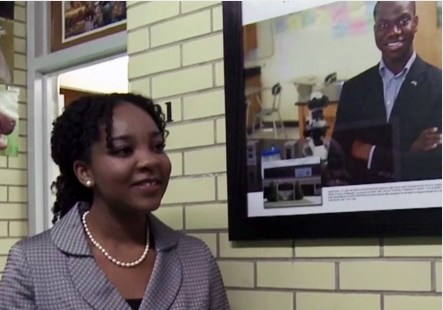
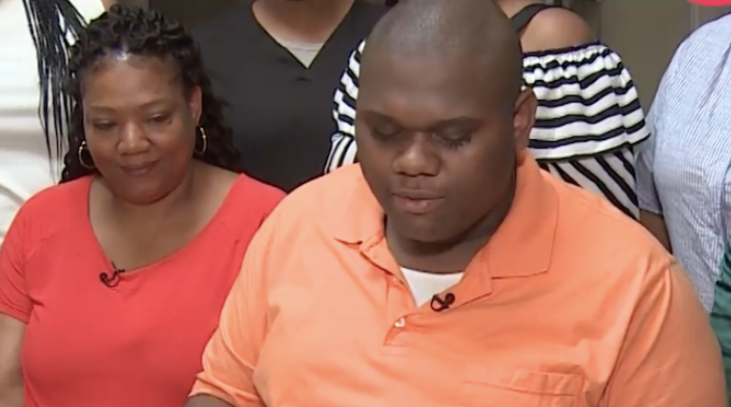
Augusta Uwamanzu-Nna, Harold Ekeh, Micheal Brown, Elmont Memorial High School, and Mirabeau B. Lamar High School must be very proud of themselves these days. And they all should be. After all, Ms. Uwamanzu-Nna joined Mr. Ekeh as being the only two students in the history of this high school to gain acceptance to all eight Ivy League universities — in back-to-back years, in 2015 and 2016. Mr. Brown was four-for-four in his quest for Ivy League admissions at Harvard, Yale, Princeton, and the University of Pennsylvania in 2017-18, and went 20-for-20 in college admissions overall. Uwamanza-Nna and Ekeh each went 13 for 13 in their applications to colleges ranging from Johns Hopkins and New York University to Harvard, Yale, and Princeton.

They are among a very short list of above-the-rim, high-achieving high school students who have the distinction of winning the college entrance lottery. They have credentials (and with full rides, the means) to attend any and every elite institution in the US. That’s just it, though. In so many ways, this narrative of American education as one of  “winners and losers” merely reinforces a society of haves and have-nots narcissistically competing for limited and segregated resources.

With a closer look at Uwamanzu-Nna’s, Ekeh’s, and Brown’s backgrounds, it becomes obvious that despite their amazing achievements, their success was predestined. Both Uwamanzu-Nna and Ekeh’s families are from Nigeria, and both moved to the US when they were of elementary school age. Uwamanzu-Nna’s father remained a physical therapist after moving to the US, while Ekeh’s parents “left comfortable lives in Nigeria” to take jobs at a Target store in Queens to provide opportunities for their five children. Both families picked places within the Sewanhaka Central High School District to live. The district is made up of a group of Long Island bedroom suburban towns within Nassau County, including Elmont.

Augusta Uwamanzu-Nna standing next to a picture of 2015 graduate, Harold Ekeh (cropped), Elmont Memorial High School, Elmont, NY, April 5, 2016. (CBS2).

This decision for the two Nigerian families could not have occurred by accident. The Sewanhaka Central High School District and especially Elmont Memorial High School has long had a reputation of providing an atmosphere of academic excellence and being a welcoming environment to students from immigrant families. Uwamanzu-Nna and Ekeh both benefited from such an environment and from families willing to sacrifice in order to push their children to win the academic lottery. In the US, getting into any Ivy League institution — much less all eight — is the pinnacle of being #1.

Brown’s case is a little less obvious in terms of advantages. But clearly Brown’s mother’s continuous efforts to enrich her life and her son’s life academically and socially were critical to his high-flying success. “When I was in elementary school, I saw my mom graduate from community college and that just meant a lot to me,”  Brown said to USA Today last month. Involvement in extracurricular activities in school and year-round after school programs like “QuestBridge, Emerge Fellowship and Breakthrough Collaborative,” where Brown got to mingle with students of color with college aspirations, must’ve helped with both his academic motivations and preparations. This more than made up for whatever deficiencies Brown faced in his education because of growing up in the Third Ward in Houston (where several of my uncles and cousins on my mother’s side lived between the mid-1970s and the early ’00s).

There are a couple of ways to look at Uwamanzu-Nna’s, Ekeh’s, and Brown’s success. One is to take the route of racist jealousy. “It’s a little obnoxious because you can only go to one, you can only take one full ride, and you are taking a spot from someone else who worked really hard,” co-anchor Holly Morris said on her FOX5 DC morning show. There was a huge backlash in response. The response implied that Brown’s achievement was a sign of showboating, that Brown was merely an attention-seeker. Keep in mind, the media sought Brown out, not the other way around. Keep in mind, Americans obsess over obvious measures of success. But somehow, if you’re Black, you can’t be joyful and in the moment over such success, even when the press is shining a floodlight on you.

Micheal Brown and his mother Berthinia Rutledge-Brown sharing the news of him getting into all 20 schools to which he applied, Houston, TX, March 31, 2018. (https://www.rawstory.com/).

Another way to look at Uwamanzu-Nna’s, Ekeh’s, and Brown’s achievements, though, would be to see their stories as a positive for them as individuals, but a negative for our society as a whole. With the increased emphasis on standardized curricula, standardized testing, and standardized individual teacher evaluations based on this testing has come an obsessive focus on the individual in education. The savior teacher as superhuman, somehow able to make every student into a proficient test-taker. The grinding student, ready to score a proficient or higher score on every school district, state-level, and national standardized test. The tiger mom-esque parent, willing at a moment’s notice to spend money that most Americans do not have to tutor and drill their child into excellent test scores. All involved in education for the greater good, but more and more, for their greater good. All without knowing about what their children have really learned, whether their students can really work in unison on a common goal, or if their kids can create, innovate, or think independently of a test-taking script.

I’m sure that Uwamanzu-Nna, Ekeh, and Brown’s have learned a lot in their respective journeys to Harvard, Yale, and Stanford. But what does this measure of achievement mean for them down the line? Is it merely their ability to meet the right people and find job opportunities looking for them around every corner as a result of their academic achievements? Or do their achievements mean anything beyond the material, for them and for the rest of us?

The “winners and losers” narrative also plays itself out in insidious ways for parents at the have-nots end of the scale. Because America’s educational resources are unevenly segregated by race and social class across its 14,000 school districts, the opportunities for winning this competition are also segregated. School district boundary hopping has become more prevalent in recent years. This as the competition for better-resourced schools has become more intense, all in the wake of the Great Recession and the resulting reduction in education budgets.

Unlevel playing field (soccer in this case), August 5, 2013. (http://funatico.com).

One famous case of boundary hopping occurred in 2011. Kelley Williams-Bolar, an African American, Akron, Ohio-area mother, was arrested for and convicted of falsifying records to enable her two daughters to attend a more affluent school district in the area for two years. (Williams-Bolar’s now deceased father Edward L. Williams was a legal resident of the Copley Township district at the time.) The real crime here is that a patchwork public education system based on income and place of residence exists at all. That it also promotes an obsession with competition and mostly pre-selects students to be #1 in the line for the elite university is worse still. That is why Uwamanzu-Nna’s, Ekeh’s, and Brown’s achievements look so remarkable. They won an educational game that in so many ways our society had rigged for them to lose.

Augusta Uwamanzu-Nna, Harold Ekeh, and Micheal Brown are among a truly lucky handful. Their parents found a welcoming home in a diverse suburban community with well-resourced (if somewhat segregated) schools, or enriched their child with resources not available to most kids in poorer and segregated urban school districts. They won the competition for #1. For most Americans, though, the education game is rigged, as the system reproduces and reinforces residential, racial, income, and academic inequality. Not to mention, the American idea that there should be winners, losers, and a grinding competition to show who won and lost.

Du Bois Was a Marxist. Aye. So?

03 Saturday Feb 2018

Posted by decollins1969 in 1, Academia, culture, Eclectic, Patriotism, Politics, Pop Culture, race, Religion, Work

≈ 1 Comment

Tags

Biography, Black History, Contradictions, David Levering Lewis, E. Ethelbert Miller, Ideology, Marxism, The Crisis, W. E. B. Du Bois


W.E.B. Du Bois at 82 (cropped), New York, NY, 1950. (Keystone/Getty Images). Cropped photo qualifies as fair use under US copyright law.

In recent months, a few people I know have brought up the fact that at least since the mid-1930s, the great W. E. B. Du Bois had professed himself a Marxist. The poet E. Ethelbert Miller, one of my co-panelists at a talk a couple of months back, made a point of interrogating notions of Blackness with the idea that Black activists were/are afraid to identity Du Bois as a Marxist. Certainly by the time Du Bois broke free from the federal government’s McCarthy-era ban on his international travel in 1958, he was. Du Bois re-obtained his passport, traveled the world, and ended up in Ghana in 1961. There, at the age of 93, he renounced his US citizenship and declared himself a Communist. Two years later, on the eve of the March of Washington, Du Bois died. The end.

All the above is true, but not so fast! The thing I’ve known in all my years of reading Du Bois’ work, writing about Du Bois, and in reading others who’ve written about Du Bois, was that Du Bois wasn’t just one thing. Nearly every social science and humanities tradition in the US can claim influence from Du Bois’ work. Poetry, theology, philosophy, psychology, economics, and American literature would be one set of his influences, and that’s just with The Souls of Black Folk!

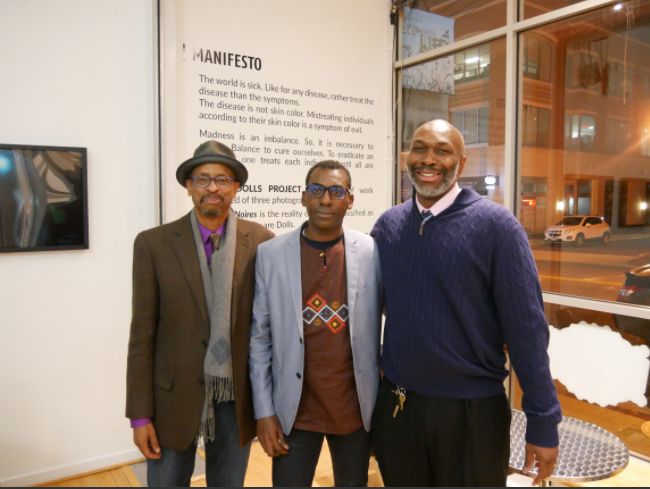
E. Ethelbert Miller, Mirtho Languet, and Me, Anacostia Arts Center, Washington, DC, November 18, 2017. (Keita Stephenson).

Though Du Bois’ Harvard doctorate was in history, he’s widely recognized as one of the founders (if not the actual founder) of American sociology. His 1898 study The Philadelphia Negro is really the first urban sociological study ever conducted in the US. His dissertation on the Trans-Atlantic slave trade was the only major work to cover the cost of the Middle Passage for kidnapped Africans (and estimate the total number of Africans stolen for slavery in the Western Hemisphere) for nearly seven decades. And there’s Black Reconstruction, probably Du Bois’ magnum opus of scholarly work.

With almost 70 years’ worth of Du Bois’ writings alone, anyone who’d think that Du Bois was just one thing would be guilty of a gross oversimplification of the man. Really, Du Bois was a mess of contradictions. He believed in elitist ideas like The Talented Tenth. Yet Du Bois also fought Booker T. Washington in books and in the press for more than a decade over the latter’s prominence as the “race man who Teddy Roosevelt and “liberal” White philanthropists talked to about uplifting Black folk.

He was a founder of both the NAACP and the Niagara Movement that preceded the organization. He befriended White philanthropists just as easily as Washington, though, and kept a personal war between himself and long-time NAACP president Walter White going for nearly two decades. On more than one occasion, Du Bois punned White’s last name as an insult, as the man was biracial, and could’ve easily passed for White.

Du Bois was also a Pan-Africanist. One, though, that used his editorialship at The Crisis to discredit Marcus Garvey and his ill-fated “Back-to-Africa” movement. David Levering Lewis in his Pulitzer Prize-winning, two-volume biography of Du Bois has even documented the likelihood that Du Bois helped the FBI (née BOI) in their mail fraud case against Garvey.

Du Bois was also a socialist. Though for most Americans, socialism and Marxism is a distinction, socialism in Du Bois’ mind meant alleviating the worst effects of market capitalism, not necessarily doing away with capitalism all together.

Du Bois was also a pacifist. But like so many of Du Bois’ positions, this one evolved over time. When the US became a military participant in World War I, Du Bois wrote essays where he argued that Black involvement could provide evidence of the need for full integration and citizenship rights for African Americans. By the Cold War, Du Bois was giving speeches about the threat of American imperialism and nuclear war.

Du Bois was also a multiculturalist. One of his more well-known extramarital affairs was with Rachel Davis DuBois (White, no relation), a key founder of the intercultural education movement, which had its heyday between the late-1920s and early 1940s. The idea of a diverse and inclusive curriculum was first fully demonstrated in DuBois’ work, which Du Bois endorsed in the mid-1930s. At the same time, how much can anyone believe from a man who at this point in his career was also serial adulterer?

Even saying Du Bois was a Marxist isn’t the full truth. “I mean by communism, a planned way of life in the production of wealth and work designed for building a state whose object is the highest welfare of its people and not merely the profit of a part.” This was what Du Bois wrote soon after renouncing his American citizenship in Ghana. Technically, this would be socialism more than communism. But more to the point, it’s anti-capitalism and anti-imperialism. It’s really Du Bois using Marxism to protest American imperialism and capitalism through his Pan-African affinity for Ghanian revolutionary and prime minister Kwame Nkrumah, not to mention, with America’s archenemy, the Soviet Union.

The one thing I wish those in the scholarly community would stop doing is taking the pyramid that was Du Bois’ life and reducing it to a two-dimensional square. Why can’t we just call an idea whose main source is Du Bois, well, Du Boisian? Like, Du Boisian sociology, or Du Boisian economics, or Du Boisian politics? Is this an example of Whiteness rearing its ugly head, where it’s too difficult to give Du Bois his own due without subsuming him under another White guy? It seems to me that so many are attempting to use Du Bois for their own ideological purposes, when it’s better to just let him be the so much that he was.

A Christmas Eve Night In 4.5 Parts

24 Sunday Dec 2017

Posted by decollins1969 in 1, Academia, Boy @ The Window, Carnegie Mellon University, culture, Eclectic, Jimme, Mount Vernon New York, My Father, New York City, Politics, Pop Culture, race, Youth

≈ Leave a comment

Tags

616, 616 East Lincoln, 7 Bus, Bee-Line Bus, Christmas Eve, CMU, Cross County Mall, Drunkeness, Eri, Jimme, Maurice, Mom, Sarai, Toys, Toys "R" Us, Yiscoc, Yonkers


Main entrance to the Cross County Mall, Yonkers, NY, January 2017. (Ernie Garcia/The Journal News).

For so many years before marriage and parenthood, my Christmas’ and Christmas Eves were about as memorable as having surgery while under general anesthesia. As in “wake me up when it’s either my birthday [two days after Christmas] or New Year’s Day.” But not Christmas Eve 1994, especially that dreary night. It wasn’t all bad. It definitely wasn’t good. It was ugly here and there. Mostly it was a confluence of my life before I became more of the person I am right now than it was of the person I had to be growing up.

I was in Mount Vernon and at 616 for my second-longest holiday break ever (my longest break had been the year before), one of the few benefits of attending Carnegie Mellon for my doctoral work. But unlike the previous year, I had money to work with. I had borrowed to cover my dissertation research trips to DC for that fall, and had money left over. God knows my CMU teaching stipend was barely enough to cover my basic expenses!

By now, my 616 visits were accompanied with my sister Sarai literally holding her hand out for extra dollars, of store trips to help Mom stock up on non-perishables, and to buy appliances that everyone needed. This Christmas season, it was obvious. The used TV I had bought for everyone in ’89 was done for. I bought a new 27-inch Toshiba for everyone just before Christmas Eve, along with some games for the kids to play. I was set for a relaxing Christmas Eve.

My father Jimme came over that night. I was the last person he expected to greet him at Mom’s apartment door. “Bo’, didn’t know you was here!,” he said, all surprised. As soon as I looked at my dad, I knew he was drunk. He was standing atilt, and his breath reeked of cheap alcohol and cheaper mints. Mom almost went off on him. Jimme, though, wasn’t there for me or Mom. He was there to impress my younger siblings. At first he was going to give them money. Then Eri and Sarai suggested the grand idea of going to Toys “R” Us to get more games and toys for Christmas. Jimme said yes, and they were all ready to leave within ten minutes, before Mom and I knew what was happening.

Mom agreed to go, but not without reservations. “If you mess up, I’m leaving yo’ ass in the street,” she said to my dad. I went with my four siblings and Mom because I knew my dad would mess up. He was already too far into his drinking routine to do anything other than act abnormal.

The 7 Bee-Line Bus from Yonkers to New Rochelle, via Mount Vernon, Yonkers, NY, September 11, 2007. (Adam E. Moreira via Wikimedia). Released to public domain via CC-BY-SA 3.0.

We made the last 7 Bee-Line bus to Yonkers, around 8 pm. It was packed with parents who were shopping late for toys and Christmas trees, along with a host of younger adults ready to find a club or some other partying spot. Some had been drinking too, so my dad wasn’t a complete oddball in this crowd. Jimme being Jimme, he started in on the diverse human sardine can of “Jamaicans” and “Spanish people” with his “po’ ass muddafuccas” and other favorite Jimme-isms. At one point I squeezed next to him and said, “You need to stop this, or I’m taking you off this bus myself.”

Jimme was so drunk that he fell over on some people on the bus once, and fell into the rear stairwell one other time. With so many on the bus in a partying mood, the group around us just laughed it off. I helped him up both times. I wasn’t embarrassed as much as I was disappointed and saddened to see my 54-year-old dad so old and so out of it. I’m sure Mom was embarrassed. This was her ex-husband, after all.

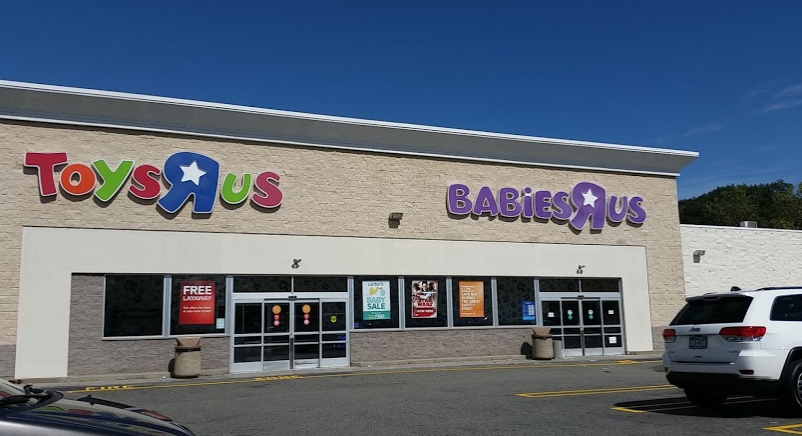
Toys “R” Us/Babies “R” Us, Yonkers, NY (the newest version), September 2017. (Sam Samsonov/Google Photos).

We got to Toys “R” Us and the Cross County Mall around 9:30, and it became a nearly two-hour free-for-all. My siblings went nuts, because Jimme said, “I buy you anythin’ you want. I buy the whole sto’!” I agreed with Mom to chip in if it turned out Jimme’s mouth was bigger than his cash wad. Maurice, Yiscoc, Sarai, and Eri found almost $200 worth of toys in the course of an hour. Kids and babies were screaming and hollering everywhere, along with their parents. At least two kids got ass-whuppins while we were in line. Eri and Yiscoc nearly had a fight while in the store. Jimme’s alcohol-fuel was on empty, and he was ready to fall asleep standing up. And, I had a headache.

We left the store at 11:30 pm, and walked out into cold, damp darkness. The drizzle that was the weather when we left 616 was now a full-on downpour, unusual for late December. It took us twenty minutes to get a taxi, and almost ten minutes to get our wet asses into the cab. My siblings were sitting on top of each other, with Jimme squished in between them. Me and Mom were up front with the cabbie, with my left butt cheek on the cigarette tray between the two bucket seats. We dropped Jimme off first, before cutting across Mount Vernon back to 616. It was 12:30 am Christmas Day by the time we walked through the apartment door, soaked, tired, and with me ready to start 1995.

It would be the last time I’d see my dad until I went to visit him sober and in Jacksonville in January 2002. It was my next to last trip to visit my younger siblings and Mom before the 616 fire of April 1995. It was the last time I came to Mount Vernon as someone who could so easily shed my persona as academic historian and single-minded professional for the loner and super-responsible eldest child I once was. But more than anything else, it was the last time I’d ever go shopping on the night before Christmas. That was just too crazy for me.

Dateline: Noriega

20 Wednesday Dec 2017

Posted by decollins1969 in 1, Academia, Boy @ The Window, culture, Eclectic, Mount Vernon New York, Patriotism, Pittsburgh, Politics, Pop Culture, University of Pittsburgh, Youth

≈ Leave a comment

Tags

#TaxCutScam, 616 East Lincoln Avenue, American Imperialism, George H. W. Bush, Invasion, Iraq, Kuwait, Manuel Noriega, Military, Panama, Paul Ryan, Pitt, Post-Cold War Era, Saddam Hussein


An army helicopter ferries reinforcements to the Vatican embassy in Panama City, where Gen. Manuel Noriega has taken refuge, Panama, December 21, 1989. (David Walters/Miami Herald).

It was on Wednesday, December 20, 1989 was the true beginning of the post-Cold War world, American style. It was on this date twenty-eight years ago that President George H. W. Bush sent in 20,000 soldiers and sailors to end Manuel Noriega’ dictatorial rule over Panama. It remains a date from which any student of history can infer as the beginning of blatant American aggressions abroad and increasingly craven governmental behaviors at home. At least without the counterweight of the Soviet Union to keep the US from running totally amok.

That week was part of my holiday semester break during my junior year at Pitt. I’d only been back in Mount Vernon and 616 for three full days, yet I was once again fully engrossed in my role as eldest child (in responsibility, if not in age). I was washing dishes post-breakfast that Wednesday morning between 11 am and 12 noon, as the national news of that day preempted The Price Is Right. It was no accident that within two months of the end of communist rule across most of Eastern Europe that the US hatches it first invasion of another nation. At least, that’s the thought I had in my head just before I cut the skin in between my middle finger and my ring finger on my right hand. This as I scrubbed out a glass that apparently had a chip around its rim. I bled profusely for a good ten minutes afterward, all while watching Dan Rather and company dig deep for analysis of what was happening in Panama and why.

It wasn’t even as complex as covering my second-level cut with a band-aid (which we didn’t have at 616). Noriega had become increasingly erratic and more difficult for Bush the puppet-master to control. It wasn’t as if his dictatorship and his running drugs through Panama had been any concern of either Bush or Reagan in the eight years before the invasion.

Drug trafficking and dictatorial crimes would be the excuses the Bush Administration would make for Operation Just Cause, an invasion that took 650 lives (150 or so Panamanian soldiers and more than 500 civilians), including 23 Americans. But it was essentially President Bush’s personal use of military forces to take down an asset that was the real reason for this incursion. Noriega was a man who Bush and other CIA officials had been using for the benefit of US interests in the Panama Canal and in Central America for nearly two decades. See? Much simpler than any justification over drugs and human rights violations Bush and Cheney (then Secretary of Defense) could muster.

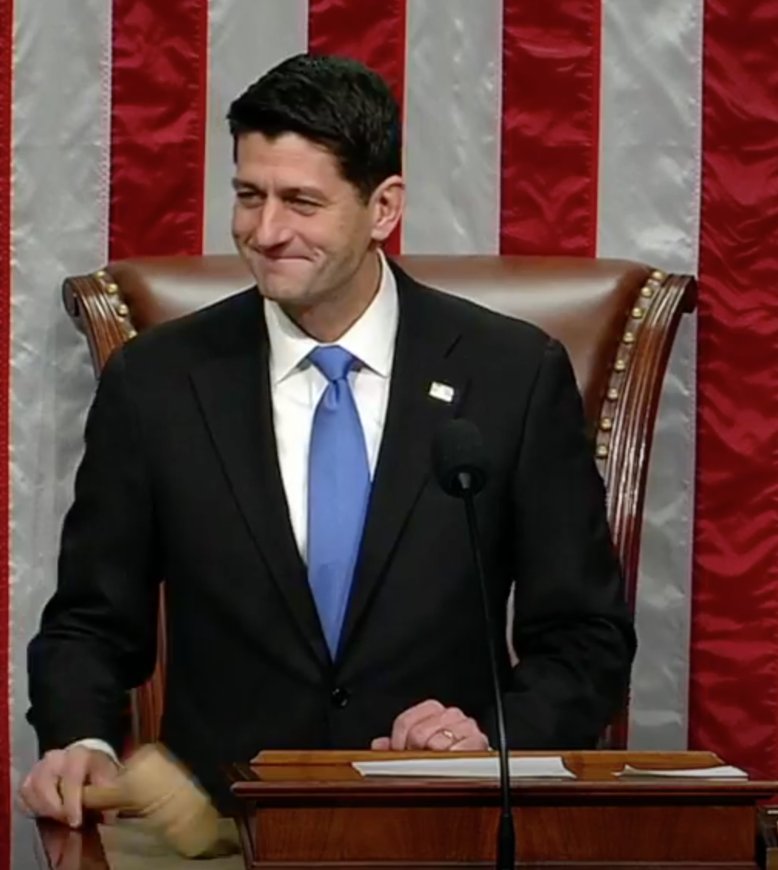
Rep. Paul Ryan (R-WI) gaveling in ecstacy as House passed its $1.45-trillion tax cut bill, December 19, 2017 (http://twitter.com).

Both the UN and the European Parliament condemned the action. It didn’t matter. A year later, the US was part of the largest coalition of forces assembled since the end of World War II, this time to kick another former US asset in Saddam Hussein out of Kuwait. That Hussein invaded Kuwait after getting mixed signals from the Bush Administration is pretty well documented. That Hussein would no longer wear the leash the former head of the CIA had put on him was the ultimate cause for an counter-invasion that ultimately has destabilized the Middle East over the past three decades.

This week, Congress is doing for the US what the US has done to countries and regions with increasing levels of brazen and calloused bigotry since 1989 (and in cases like Batista and Cuba, Pinochet and Chile, far longer than 30 years). What’s another trillion dollars between friends, especially friends who can donate to your congressional campaign or stash hundreds of billions of dollars off-shore?

Who can Americans count on to stop this ride of greed-possessed, craven people who believe that the only Americans who count are the one’s who count suitcases full of cash to go asleep at night? Americans can’t invade themselves, after all. Of course, Americans can resist, elect more Democratic candidates, yada, yada. But dear world, we need your help, because America’s leaders are doing their level best to decay the US from within.

← Older posts
Newer posts →

Boy @ The Window: A Memoir

Boy @ The Window: A Memoir

Places to Buy/Download Boy @ The Window

There's a few ways in which you can read excerpts of, borrow and/or purchase and download Boy @ The Window. There's the trade paperback edition of Boy @ The Window, available for purchase via Amazon.com at http://www.amazon.com/Boy-Window-Donald-Earl-Collins/dp/0989256138/

There's also a Kindle edition on Amazon.com. The enhanced edition can be read only with Kindle Fire, an iPad or a full-color tablet. The links to the enhanced edition through Apple's iBookstore and the Barnes & Noble NOOK edition are below. The link to the Amazon Kindle version is also immediately below:

scr2555-proj697-a-kindle-logo-rgb-lg

Boy @ The Window on Amazon.com: http://www.amazon.com/Boy-The-Window-Memoir-ebook/dp/B00CD95FBU/

iBookstore-logo-300x100

Boy @ The Window on Apple's iBookstore: https://itunes.apple.com/us/book/boy-the-window/id643768275?ls=1

Barnes & Noble (bn.com) logo, June 26, 2013. (http://www.logotypes101.com).

Boy @ The Window on Barnes & Noble: http://www.barnesandnoble.com/w/boy-the-window-donald-earl-collins/1115182183?ean=2940016741567

You can also add, read and review Boy @ The Window on Goodreads.com. Just click on the button below:

Boy @ The Window

Twitter Updates

Tweets by decollins1969
  • RSS - Posts
  • RSS - Comments

Archives

  • June 2025
  • April 2023
  • September 2022
  • August 2022
  • July 2022
  • June 2022
  • May 2022
  • April 2022
  • March 2022
  • January 2022
  • December 2021
  • November 2021
  • October 2021
  • September 2021
  • August 2021
  • July 2021
  • June 2021
  • April 2021
  • March 2021
  • February 2021
  • January 2021
  • December 2020
  • November 2020
  • October 2020
  • September 2020
  • August 2020
  • July 2020
  • May 2020
  • April 2020
  • March 2020
  • January 2020
  • December 2019
  • November 2019
  • August 2019
  • July 2019
  • June 2019
  • May 2019
  • April 2019
  • March 2019
  • February 2019
  • January 2019
  • December 2018
  • November 2018
  • October 2018
  • September 2018
  • August 2018
  • July 2018
  • June 2018
  • May 2018
  • March 2018
  • February 2018
  • January 2018
  • December 2017
  • November 2017
  • October 2017
  • September 2017
  • August 2017
  • July 2017
  • June 2017
  • May 2017
  • April 2017
  • March 2017
  • February 2017
  • January 2017
  • December 2016
  • November 2016
  • October 2016
  • September 2016
  • August 2016
  • July 2016
  • June 2016
  • May 2016
  • April 2016
  • March 2016
  • February 2016
  • January 2016
  • December 2015
  • November 2015
  • October 2015
  • September 2015
  • August 2015
  • July 2015
  • June 2015
  • May 2015
  • April 2015
  • March 2015
  • February 2015
  • January 2015
  • December 2014
  • November 2014
  • October 2014
  • September 2014
  • August 2014
  • July 2014
  • June 2014
  • May 2014
  • April 2014
  • March 2014
  • February 2014
  • January 2014
  • December 2013
  • November 2013
  • October 2013
  • September 2013
  • August 2013
  • July 2013
  • June 2013
  • May 2013
  • April 2013
  • March 2013
  • February 2013
  • January 2013
  • December 2012
  • November 2012
  • October 2012
  • September 2012
  • August 2012
  • July 2012
  • June 2012
  • May 2012
  • April 2012
  • March 2012
  • February 2012
  • January 2012
  • December 2011
  • November 2011
  • October 2011
  • September 2011
  • August 2011
  • July 2011
  • June 2011
  • May 2011
  • April 2011
  • March 2011
  • February 2011
  • January 2011
  • December 2010
  • November 2010
  • October 2010
  • September 2010
  • August 2010
  • July 2010
  • June 2010
  • May 2010
  • April 2010
  • March 2010
  • February 2010
  • January 2010
  • December 2009
  • November 2009
  • October 2009
  • September 2009
  • August 2009
  • July 2009
  • June 2009
  • May 2009
  • April 2009
  • March 2009
  • February 2009
  • January 2009
  • December 2008
  • November 2008
  • October 2008
  • September 2008
  • August 2008
  • July 2008
  • June 2008
  • May 2008
  • April 2008
  • March 2008
  • February 2008
  • January 2008
  • December 2007
  • November 2007
  • October 2007
  • September 2007
  • August 2007
  • July 2007
  • June 2007

Recent Comments

MaryPena's avatarMaryPena on My Day of Atonement/Bitter Hat…
decollins1969's avatardecollins1969 on No Good Teaching Deed Goes…
Mary Rose O’Connell's avatarMary Rose O’Connell on No Good Teaching Deed Goes…

NetworkedBlogs on Facebook

NetworkedBlogs
Blog:
Notes From a Boy @ The Window
Topics:
My Life, Culture & Education, Politics & Goofyness
 
Follow my blog

616 616 East Lincoln Avenue A.B. Davis Middle School Abuse Academia Academy for Educational Development AED Afrocentricity American Narcissism Authenticity Bigotry Blackness Boy @ The Window Carnegie Mellon University Child Abuse Class of 1987 CMU Coping Strategies Crush #1 Crush #2 Death Disillusionment Diversity Domestic Violence Economic Inequality Education Family Friendship Friendships Graduate School Hebrew-Israelites High-Stakes Testing Higher Education History Homelessness Humanities Humanities Program Hypocrisy Internalized Racism Jealousy Joe Trotter Joe William Trotter Jr. K-12 Education Love Manhood Maurice Eugene Washington Maurice Washington Misogyny Mother-Son Relationship Mount Vernon High School Mount Vernon New York Mount Vernon public schools Multiculturalism MVHS Narcissism NFL Pitt Pittsburgh Politics of Education Poverty President Barack Obama Race Racial Stereotypes Racism Relationships Self-Awareness Self-Discovery Self-Reflection Sexism Social Justice Teaching and Learning University of Pittsburgh Violence Whiteness Writing

Top Rated

Blog at WordPress.com.

  • Subscribe Subscribed
    • Notes from a Boy @ The Window
    • Join 103 other subscribers
    • Already have a WordPress.com account? Log in now.
    • Notes from a Boy @ The Window
    • Subscribe Subscribed
    • Sign up
    • Log in
    • Report this content
    • View site in Reader
    • Manage subscriptions
    • Collapse this bar
 

Loading Comments...