• About Me
  • Other Writings
  • Interview Clips
  • All About Me: American Racism, American Narcissism, and the Conversation America Can’t Have
  • Video Clips
  • Boy @ The Window Pictures
  • Boy @ The Window Theme Music

Notes from a Boy @ The Window

~

Notes from a Boy @ The Window

Category Archives: Academia

On Pitt’s Concrete Slab & A Labor Day Pirates Game

02 Monday Sep 2013

Posted by decollins1969 in 1, Academia, Boy @ The Window, culture, Eclectic, High Rise Buildings, Pittsburgh, Pop Culture, race, University of Pittsburgh, Youth

≈ Leave a comment

Tags

1988, Bucs, College Success, Darryl Strawberry, Forbes Quad, Forbes Quadrangle, Handouts, Homeless, Homelessness, Labor Day, Mets, New York Mets, Pittsburgh Pirates, Schenley Park, Self-Discovery, Three Rivers Stadium, Wesley V. Posvar Hall
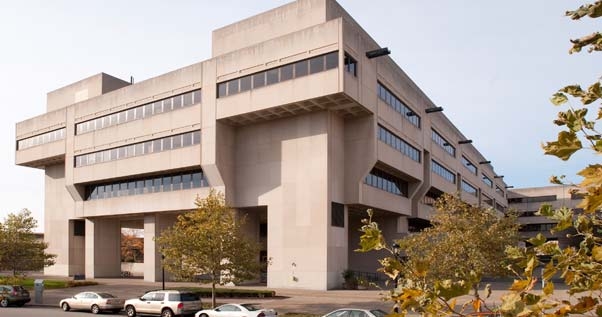

Wesley V. Posvar Hall (formerly Forbes Quadrangle, formerly Forbes Field – I would’ve been on slab in stairwell in SW corner of building 25 years ago), University of Pittsburgh, September 2, 2013. (http://www.tour.pitt.edu).

It was a quarter-century ago that I think I finally became an adult. Or, at least, was no longer stuck at the age of twelve psychologically and emotionally. I understand that five days without a permanent place to sleep, eat and shower isn’t much when compared to many who’ve lived with homelessness much longer. But it was more than enough to wake me up to the fact that my already tumultuous life was on the verge of being a full-blown nightmare if I didn’t find shelter in the form of a South Oakland firetrap.

From Boy @ The Window:

Tuesday and Wednesday were the worst two days of my life since the summer of abuse. Even with the luggage well hidden [in Schenley Park], I worried that fire ants would get a hold of my clothes or that a homeless guy would steal my stuff. But I had no choice. I saw no one from the second half of my freshman year on campus, so I didn’t ask for any other help. I kept looking and calling places for apartment availability. Whether efficiencies or studios or one-bedrooms, the response was always, “the place is taken.” I spent part of the evening at William Pitt Union, watching the news and the Pirates game, thinking all the while about where I’d sleep that night. The student union was out. Pitt Police were always prowling around and looking into the TV room. Hillman Library was still on a summer schedule, and wouldn’t open for its normal hours until after Labor Day. The other buildings were classrooms and faculty offices, better places to hide. My runaway experience in ’85 gave me that idea.

Panther Hollow Lake in Schenley Park, Pittsburgh, PA, September 2, 2013. [note the heavily wooded area behind the lake]. (http://post-gazette.com).

Panther Hollow Lake in Schenley Park, Pittsburgh, PA, September 2, 2013. [note the heavily wooded area behind the lake]. (http://post-gazette.com).

I went over to Forbes Quadrangle (formerly Forbes Field, where the Pirates used to play) and hung out at The Second Plate deli on its benches for a while, pretending to study until well after midnight. Then I looked around for a good place to sleep. Unfortunately, maintenance and security guards locked up all of the classrooms and faculty lounges at night. I settled on the stairwell in the farthest corner of the building away from its two main entrances. I walked up to the fifth floor ledge, laid down on the hard concrete on top of my clothes, and fell asleep. This wasn’t a good sleep, maybe four or five hours. The fluorescent lights were always on, the guard or students would use the stairs, and the ledge was the hardest thing that I’d ever slept on. I woke up on Wednesday and Thursday morning stiffer than I’d been the day before….Before I went to sleep Wednesday night, I got real with myself and real humble with God and started praying. I said, “God, I don’t pray nearly as much as I used to, but I could really use your help. I am your child because of Jesus, and I need you to help me find a place to stay. If you don’t help me find somewhere to live, I’ll have to go home and go to school from home.” I knew full well – and God knew, too – what would happen if I went back home. Nothing. Nothing good, anyway. I was three or four days away from buying a plane ticket back to New York and withdrawing from the university. Thoughts of going to Fordham University or Hunter College crept into my head. They were good schools for someone like me. Living at home, though, wasn’t.

Of course, I did eventually find a house with a room available, one where I’d share a kitchen and bathroom for the next two school years with other Pitt students, reputable and otherwise.

I slept away most of my Labor Day Weekend, except for spending some of my remaining money to take in a Pirates-Mets game at Three Rivers. My Mets won 7-5, on the power of two Darryl Strawberry home runs.

…After what I’d just been through, I learned something new and foreign. That everyone needs folks in their lives – friends, family, mentors and authority figures – if for no other reason than the need to ask for help. I’d come to know at least a dozen people who I could’ve called on during my five-day ordeal, but I never looked through a phone book or gave them a call. Heck, I didn’t even try to keep in touch by getting their addresses and numbers at the end of April. Not to mention contacting Jack Daniel, an Associate Provost at Pitt and the author of the Challenge Scholarship, the one that paid for half of my tuition. If anyone had any incentive to make sure I had a place to lay my head, it would’ve been him. All of these thoughts had been in my head during the week. I didn’t trust them or the instincts or wisdom from which they originated. “I’m so stupid God,” I said to myself, “I’m so incredibly stupid.”

Homeless in Pittsburgh

Homeless in Pittsburgh

Mom’s constant mantra in my head, of not depending on others for help, was a lie, at least for me. I couldn’t will myself through school. Especially when it came to money. I needed all the help I could get. Besides, my family had now been on welfare for five and a half years. If that wasn’t one of my Mom’s examples of so-called handouts, I didn’t know what was.

My approach to college changed with this revelation…I knew that all the things I shied away from talking about were now things I needed to discuss. But I also knew that I had to draw out my better, more sociable self in order to welcome others in my life with open arms. That meant taking some risks, which meant that I could get hurt emotionally or psychologically by them.

My life hasn’t been the same since, thank God.

Grad School & My Most Special Summer Reading List

31 Saturday Aug 2013

Posted by decollins1969 in 1, Academia, Boy @ The Window, culture, Eclectic, Pittsburgh, Politics, Pop Culture, race, University of Pittsburgh, Work, Youth

≈ Leave a comment

Tags

"I Have A Dream" speech, Afrocentricity, Black Culture, Black History, Blackness, Books, Carter G. Woodson, Department of HIstory, Elaine, Graduate School, Higher Education, Joe White, K-12 Education, Malcolm X, March on Washington, Multicultural Education, Pitt, Readings, Self-Discovery, Toni Morrison, W. E. B. Du Bois, Western Psych, Western Psychiatric Institute & Clinic


Just a small sample of the books I read/re-read summer before grad school in 1991, August 31, 2013. (Donald Earl Collins).

Just a small sample of the books I read/re-read summer before grad school in 1991, August 31, 2013. (Donald Earl Collins).

For me, August 28 this week was significant for any number of reasons. It wasn’t just that it was fifty years to the exact day and date that the March on Washington occurred and MLK gave his “I Have A Dream” speech. Or that is was fifty-eight years to the date that White supremacists lynched Emmett Till for allegedly whistling at some flat-butt White girl. This past Wednesday was also twenty-two years to the day and date that I began my first day of graduate school as a master’s student in the University of Pittsburgh’s Department of History.

Of course, I didn’t discuss this earlier this week (it would’ve been incredibly arrogant on my part to bring this up three days ago). My big steps for myself were infinitesimal when in measured comparison to the beginning of the two-year height of the official Civil Rights Movement. But even on an afternoon in which I attended my first course and meeting about teaching/advising assignments for the semester, it did feel like a bit of a triumph. Especially when considering what I had to do that spring and summer to get into the program with funding in the first place.

I didn’t learn that much that day. Except the low contempt Joe White and some of the other professors held toward pedagogy and teaching. “You already know more than your students,” White said as advice to us who’d be TAs that semester. I was lucky to not be among them for my first year. I was a GSA assisting in the advising of history majors, some of whom were my fellow undergrads just a few months before. But even then, I thought two minutes’ worth of advice on viewing students as empty vessels was insufficient training for learning how to lecture and facilitate conversations with upwards of 100 students spread out over several discussion sections each week.

I had other things on my mind at that moment, though, including the relief that I’d survived a summer making $5.20 per hour as a full-time employee with a Western Psychiatric Institute & Clinic project in which the project investigators were far more psychotic than the patients. Aside from that, I thought about how the previous four months had served as my preparation for the White world of grad school.

I’d done a lot of reading that late spring and summer, spurned on by boredom, disappointment in my weirdly evolving friendship with Elaine, and a sense that I needed to read to fortify myself against the neo-Marxists in my eventual field. So I read. I started off with Alex Haley’s The Autobiography of Malcolm X (1965), believe it or not, the first time I’d ever read it. Like so many before me, it made my views of the man less black and white than it had been before. I then picked up W. E. B. Du Bois’ Souls of Black Folk (1903), the first time I’d read that book since I wrote a book report on it for Mrs. O’Daniel’s class in fifth grade. Unsurprisingly, I got much more out of it in May ’91 than I did in May ’80.

I didn’t stop there, as my reading took me on three different tracks in June, July and August. One was the “I didn’t get to read this before” track, as I read Toni Morrison’s Tar Baby, Song of Solomon and Beloved (didn’t understand it then, and still don’t get the big deal about it now). Along with Alice Walker’s The Color Purple, Maya Angelou’s I Know Why The Caged Bird Sings (1969), bell hooks and several others on Black Women’s literature. Then, I decided to go back and reread some James Baldwin and Richard Wright that I’d first read for high school, and added Ralph Ellison’s Invisible Man (1952) to the mix. On the non-literature track, I ended up reading Franz Fanon, Du Bois’ Black Reconstruction (1935) — at least, I put a significant dent in it — Derrick Bell’s And We Are Not Saved (1987), and other writings on Black history and culture (broadly speaking).

But the third track would end up taking me on a path toward my dissertation topic and my first book, Fear of a “Black” America (2004). It started with articles on multicultural education that took me to James Banks’ theoretic constructions of what multicultural education ought to have been, but wasn’t. I also found myself reading books like Jonathan Kozol’s Savage Inequalities (1991), Molefi Asante’s The Afrocentric Idea (1987), Dinesh D’Souza’s Illiberal Education (completely indecipherable in a circular firing squad of a thesis kind of way) and Carter G. Woodson’s The Mis-education of the Negro (1933). I was reading anything that could inform my thinking about K-12 and higher education and how it played the role as both equalizer and oppressor for so many Black folks over the years.

Books, Grad School & Blackness

Books, Grad School & Blackness

It was easily the most reading I’d done on my own since the year before I’d gone into seventh grade, middle school and the Humanities Program. I wanted to read all I wanted to read before spending the next few years drowning my brain in hundreds of books and articles that I’d absolutely need to read as a historian. In the process, I may’ve radicalized myself a bit for the otherwise hum-drum experience of reading mind-numbing accounts of history in which the authors didn’t seem to see their own sense of high-brow White maleness.

And with all of it, I surprised myself. I realized once again that my Black classmates and 616 neighbors were wrong about me not being Black enough. Their “Black” wasn’t my “Black,” of course. But all those books confirmed for me that there were many ways to be Black that folks who didn’t read could barely understand.

K-16 Education Reform and the Unlevel Playing Field

23 Friday Aug 2013

Posted by decollins1969 in 1, Academia, culture, Eclectic, Politics, Pop Culture, race

≈ Leave a comment

Tags

Adult Learners, College Affordability, College Success, Degree Attainment, Dr. Steve Perry, Economic Inequality, Education Inequality, Employability, First-Generation Students, High-Stakes Testing, Higher Education, K-16 Education Reform, Michelle Rhee, Poor Students, Private Foundations, Student Loans, Students of Color, Teacher Accountability, Two-Tiered System, US Department of Education, Wendy Kopp


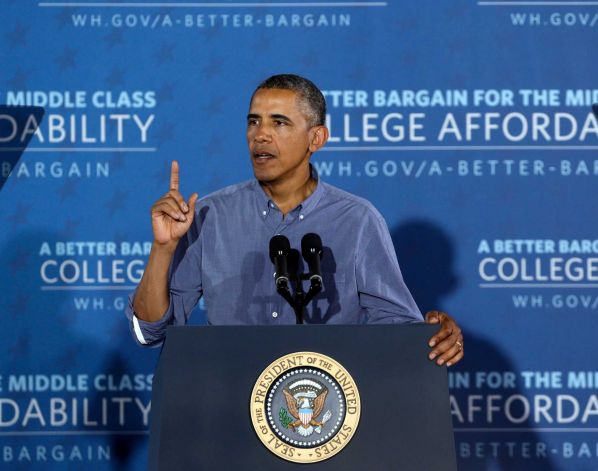
President Barack Obama speaking college affordability and a rating system, University of Buffalo (NY), August 22, 2013. (http://sfgate.com).

President Barack Obama speaking college affordability and a rating system, University of Buffalo (NY), August 22, 2013. (http://sfgate.com).

The shape and direction of education reform in America’s public schools and in US higher education is such that one can only conclude that this is the century in which social mobility will be limited to a precious and lucky few. With high-stakes testing and No Child Left Behind on the K-12 side, and the rise of for-profit online institutions in postsecondary education, we’re well on our way to a two-tiered system of education. One tier for the affluent, who will attend private schools and elite colleges, and a much lower tier for the rest of us, who will increasingly receive a watered down public education and have ever more limited higher education options.

The Problem With Mainstream K-16 Reformers:

The problem is, though, most reformers actually believe that their efforts at reform will result in a fairer and more level playing field for our kids and for first-generation college students of every stripe. They have an unwavering desire to make testing the cornerstone of curriculum revisions and the key determinant in measuring teacher effectiveness, and thus, tying future funds to school performance levels. Or, in the case of for-profit online higher education, they believe that financial aid in the form of student loans, accelerated classes with a curriculum strictly geared for current job market trends and lack of academic support is the shape of their river. Leaving vulnerable millions of first-generation students — particularly low-income adult learners (many of whom are of color) — to dropping out of college with tens of thousands of dollars of student loans to pay off and with few good career prospects.

Mock Time Magazine cover with Michelle Rhee alleging her full knowledge of cheating scandal in DC Public Schools, April 14, 2013.  (By a college student whose mom is a 7th grade teacher -http://www.susanohanian.org/)

Mock Time Magazine cover with Michelle Rhee alleging her full knowledge of cheating scandal in DC Public Schools, April 14, 2013. (By a college student whose mom is a 7th grade teacher -http://www.susanohanian.org/)

These reforms go further in providing an unlevel playing field. One where only a privileged few get to go down Mount Everest in a helicopter. The rest of us, meanwhile, must climb up Everest, ill-equipped for the climate while dodging rock slides, avalanches and other land mines all along the way.

An Unasked Question About K-12 Reform:

That reformers don’t see this is one thing. That they don’t even ask the questions that they should about their reform endgame has been the real problem for years. For example, they don’t ask the simple question, “Will high-stakes testing and teacher effectiveness measures close the achievement gap and make it so that students regardless of race and family income will be well prepared after graduating high school for college or for workforce training?”

The answer to this, of course, is no. High-stakes testing cannot and will not close the achievement gap or lead to students graduating high school better prepared for college and the 21st century working world. Teachers and administrators will continue to devote more of their time and efforts to testing than to other aspects of their jobs, for fear of losing their jobs. Reformers will continue to use the mantra of testing to siphon those precious and limited taxpayer dollars out of state legislatures and school boards to cover the costs of test development and test-based teacher evaluations. And students attending the allegedly worst performing schools will continue to lose good teachers and move from school to school in search of the promise — but not the reality — of a quality K-12 education.

Reformers like Michelle Rhee, Wendy Kopp and Dr. Steve Perry (not to be confused with Journey’s lead singer) don’t ask this question. They are too busy procuring funds from the Bill & Melinda Gates Foundation, Lumina Foundation for Education, the Wallace Foundation and the US Department of Education to discuss the shape of their reform river. They are much more interested in proving a strong correlation between teacher effectiveness and student achievement via test scores, because they believe this is the way, truth and life for K-12 reform. And pretty soon, we will know that this correlation either doesn’t exist or is a weak one at best, under some rather ideal circumstances.

An Unasked Question About Higher Education Reform:

Futurama poster "A Mindless Worker Is A Happy Worker," August 23, 2013. (http://d3.ru)

Futurama poster “A Mindless Worker Is A Happy Worker,” August 23, 2013. (http://d3.ru)

For-profit institutions involved in online higher education do no better in asking fundamental questions about their endgame. University of Phoenix, Kaplan University and Capella University don’t ask, “Is an accelerated online college format that is highly dependent on underprepared first-generation college students, provides few or no academic support services and is heavily subsidized by federal student loans the best possible postsecondary education for these students?” Of course it isn’t. Over the past 20 years, these institutions have been too busy figuring out ways to increase the enrollment of low-income students to ask this question. They have been more interested in drawing in as much federal student loan aid as possible to cover the costs of student enrollment to ask whether they are providing the best services.

For those not-so-lucky students attending these institutions, they face a great distance between the promises of this new higher education regime and its brutal reality. For-profits promise an online education that is tailor-made for students’ job and career aspirations, one even more alluring because it is an allegedly convenient fit for the demands of any adult lifestyle. For-profits seem to be proud of the fact that fewer than 20 percent of their students complete a degree eight years after they first enroll in one of their courses. For those few students who do manage to complete a degree, many are finding that their narrowly focused degrees don’t match up with their career aspirations.

Irony and Shame:

The irony is that for-profit online higher education has all but moved away from testing at a time when the only thing that matters in K-12 education is testing, from a child’s first week in kindergarten to his or her last day of 12th grade. The ironic shame of it all is that reformers in both K-12 and higher education never ask the question of what we should expect at the end of the reforming rainbow. Their reform efforts are purely about making a profit, for themselves or for others. The rest of us, meanwhile, can’t wait for Superman, with reformers stealing his powers on both ends of the K-16 spectrum, and placing kryptonite for real reform at every turn.

—-

I wrote all this months ago. Now, with President Barack Obama offering a formalized version of accountability for higher education institutions that connects market-relevant degrees and employment to college success, him and his administration are pushing the two-tiered agenda even further. Private elite colleges can easily opt out of this Race to the Top-esque rating system for higher education costs-to-employability ratios, and create their own measures around affordability, degree-attainment and career pathways. Or not, for that matter.

Public institutions — the ones tied most directly to US Department of Education funds — will have little choice but to go down this money-wasting path. One that in the end will do nothing for first-generation students, students of color, older students, heck, any student who comes from a humble background. “It’s a shame and a pitiful,” as my father would say.

The Lazarus Woman

22 Thursday Aug 2013

Posted by decollins1969 in 1, Academia, Boy @ The Window, Carnegie Mellon University, culture, Eclectic, Mount Vernon New York, Pittsburgh, Politics, Pop Culture, race, Religion, Youth

≈ Leave a comment

Tags

Barbara B. Lazarus, Barbara Lazarus, Brandie Weston, Carl Zimring, Death, Friendship, Graduate School, Harold Meltzer, Joe Trotter, John Hinshaw, Life and Death, Maurice Eugene Washington, Maurice Washington, Mentoring, Politics of Academia, Politics of Graduate School, Sarai Washington, Susan McElroy


Barbara B. Lazarus, obituary picture, July 17, 2003. (http://cmu.edu).

Barbara B. Lazarus, obituary picture, July 17, 2003. (http://cmu.edu).

Now that my book’s been out for a couple of months (between two and four months, depending on the e-book platform, actually), I’ve found that my thoughts sometimes drift toward those that are no longer around to read it.

Not so much my family or nemeses, though. Sarai, my only sister, who died in July ’10, would likely have never read a word of Boy @ The Window — it would be too honest an assessment of life at 616 for her. My late idiot ex-stepfather Maurice Washington was already unhappy with my numerous posts about his borderline personality issues and constant psychological and physical abuse of me and family when I picked up the phone one day that same week my sister passed.

As for my former classmate Brandie Weston — to whom I’ve dedicated my memoir (actually, a co-dedication that includes my son) — maybe, if she had been well enough. My favorite teacher, the late Harold Meltzer, though, would’ve begun reading  Boy @ The Window five minutes after it had gone live on Amazon.com!

But of all of those folks who are no longer a part of this corporeal world (or who have gone into some state of seclusion from it), one other person stands out today. My dear friend and mentor from my Carnegie Mellon years (and the six years after I finished), Barbara Lazarus. I’ve discussed her here before, but not lately. Probably because I do tear up sometimes when thinking about her support of me specifically and her work at CMU in general. Barbara helped make my otherwise rough and dehumanizing experience at CMU manageable and even career-affirming.

As I wrote about Barbara for the memorial service at CMU in September ’03:

I want to communicate to you that I am in complete solidarity with everyone who attends the gathering at CMU on October 17.  For me, Barbara’s work was more than about women’s equity in the engineering and science fields.  She was about ensuring that all (regardless of gender or race, and regardless of the degree) who attempted the grand enterprise of competing for a degree actually made it through the process … Barbara was a dear friend and mentor who truly believed in me, even in spite of myself.  I loved her, and I will surely miss her, as I am sure you will also.

That only approximated how much she meant to me during and after my four years of doctoral success and failures at CMU. The months immediately before my advisor Joe Trotter and my committee approved my dissertation were the worst, as is well documented on this blog. Barbara convinced me to not become hot-headed and drop-out of the program with a completed first-draft of my dissertation under my belt. She also managed to keep me from requesting a change of advisors so close to the finish line. She did offer to “step in” as her duties as Associate Provost would’ve allowed, but warned me that this political solution would delay my graduation. My connection with Barbara kept me from meeting Trotter in one of CMU’s parking lots late at night wearing a ski mask and dark leather gloves!

She became my best reference professionally and otherwise after those dark days ended with the end of ’96. She read my articles and my first book before they went to print. We swapped stories about family and life and religion. We stayed in touch even after I moved to Silver Spring, Maryland in ’99. Barbara died on July 14, ’03, just sixteen days before my son Noah was born. It’s been a decade, a month and eight days since she passed, nearly as long as I actually knew Barbara (roughly between October ’92 and July ’03). Boy, I wish I could’ve shared my first photos of my son with her!

There were a few people like Barbara at CMU during those years. Susan McElroy (now at UT-Dallas), John Hinshaw (at least prior to my Spencer Fellowship), Carl Zimring (before the O.J. verdict), the Gants and the other Black doctoral students I’d met there (all fourteen of us) were my CMU lifeline beyond multiculturalism and Trotter tired sense of migration studies.

But Barbara Lazarus and I had a friendship that went well beyond academia and career, and went undamaged by petty jealousies or sudden bursts of outrage from jury verdicts. I’d been to her home, met her husband and her kids, learned something about her as a person, and in the process, managed to be my better self even in the worst of circumstances. That is being a good mentor, friend and person. I just hope that I was the same to her, and that Boy @ The Window proves to be the same to others.

My First Walk (and Making Plans)

15 Thursday Aug 2013

Posted by decollins1969 in 1, Academia, Boy @ The Window, culture, Eclectic, Hebrew-Israelite, Mount Vernon New York, race, Religion, Youth

≈ Leave a comment

Tags

Affluence, Bronxville, Child Abuse, College, Coping Strategies, Domestic Violence, Eastchester, Economic Inequality, Making Plans, New Rochelle, Pelham, Phyllis, Poverty, Racism, Tuckahoe, Walking


Thirty-one years ago this week was the beginning of an inadvertent coping strategy that would lead me away from 616, out of Mount Vernon, New York, into Pittsburgh, and college, and grad school. (And eventually, to a worn-out right knee, leg exercises and a running regiment that I’ve adhered to for nearly a decade.) It was a walk that was literally my only time away from home and my summer of abuse at the hands of my late idiot ex-stepfather Maurice Washington (or Judah ben Israel). It was a walk in which I began to plan my escape from the madness.

From Boy @ The Window:

“It was August ’82, and I didn’t know if I’d make it to the end of the year.

“If masturbation were the only thing that I discovered that month, I might’ve begun aspiring for some other kind of life. Instead, I decided on another boring August day to do something else novel. I didn’t want to go to Wilson Woods again. We didn’t have any money anyway. I decided to take my siblings on a walk on the wild side, to walk outside our immediate neighborhood. First Darren and I took baby Maurice and Yiscoc in his new stroller out of 616 and walked to Pelham…The four of us walked and strollered down East Lincoln Avenue, across the stone bridge over the Hutchinson River Parkway into Pelham, and turned left on Fifth Avenue to go north. This was uncharted territory for all of us, especially me. I hadn’t been down in the city all year, and my life for most of the summer was spent between Wilson Woods, Pearsall Drive, and 616. North Pelham might as well have been Helena, Montana to me.

‘We don’t know where we’re going,’ Darren said.

‘Yeah, and?,’ I said in response.

‘Okay, but it’s your fault if we get lost, Donald,’ Darren said.

“We didn’t get lost. We walked until we hit Chester Heights, the beginning of the village of Eastchester. It was amazing in that it was much more suburban than Mount Vernon or the part of Pelham that I’d known up until that moment. The homes were luxurious by my standards. Everyone seemed to own a BMW, Volvo, Mercedes-Benz, or Peugeot. There weren’t many sidewalks around, only well-manicured lawns. We had walked into a ritzy community without any warning. But instead of becoming depressed or angry, it made me introspective. ‘Look at these houses!,’ I said to Darren as we walked by one Tudor-style home after another three-story mansion, broken up only by a few cul-de-sacs.

We walked across another bridge, this one with an overhanging meshed metal fence, across the Cross-County Parkway, and ended up in Mount Vernon for a brief moment. We veered right as we walked up a hill and out of Mount Vernon again. After walking through what appeared to be an enchanted forest, we discovered we were in Bronxville. Even at twelve, I knew that Bronxville was just about the richest community in America. And it looked like it, too. I began to think that the world was a cruel place, having rich Whites living so close to us yet their lives were so far apart from ours. Darren, having been around rich Whites through Clear View for nearly eight years, didn’t think too much of it.

“That’s when it hit me. If I wanted to live a better life, to have a nice house and a car and a family, it seemed to me that I needed an education, a college education. I wasn’t going to get there just graduating from high school, especially in Humanities, where the expectations for college were so high that some kids already knew that they were going to law school. I just knew that I couldn’t go through another summer of abuse. So I said to myself, ‘I’ve got to get through the next five years. I’ve got to go to college.’ I knew almost intuitively that my choices were to continue to experience abuse without reaching for something that I thought I could do based on my smarts. Yet it seemed like an impossible task.

“So as we walked through the villages of Bronxville and Tuckahoe, ending up on North Columbus Avenue/Route 22, I began to think about what I wanted to get out of eighth grade. It seemed to me that the most important class for my future was Algebra, since that led to higher forms of math. I knew English and Social Studies would be really easy, but with success in Algebra, I could go into high school with a little more confidence.

First Walk

First Walk

“That’s when we passed by a ranch-style home with a stone facade. I looked and saw someone out in front I hadn’t seen since the end of the school year. It was Phyllis, outside in the front yard with her sister, apparently back from bike riding. She called us over, and the four of us talked. Phyllis asked what we’d been up to over the summer. This was the first Black family I’d seen during our two-hour walk.

“Of course I didn’t go into any detail about what we’d been up to. After all, the one thing that the past year had taught me was not to open up my mouth and say everything that was on my mind! So I let her and her older sister Claudia do most of the talking. They’d gone somewhere, somewhere down South to visit family. It looked like they were having a good time, the time of their lives compared to us.

‘Do you live around here?,’ Phyllis asked.

‘Oh, we’re on a long walk and just happened to be in the neighborhood,’ I said.

‘Okay,’ she said in response.

“In the neighborhood. Sure, if Bronxville, Eastchester, Pelham and 616, all part of our eight-mile trek, was all part of one gigantic neighborhood. After about ten minutes, we continued home. Darren was more excited about seeing Phyllis and her sister than I was.

“Yet it wasn’t that I was unexcited… I finally had a plan, a long-term plan, for dealing with the situation at 616. I knew that there would be a lot of smaller steps that I’d have to take before even getting to college, much less getting a degree…Otherwise I really didn’t have anything else to look forward to, except what I thought would be a very painful life and an extremely early death.”

That walk — and the hundreds of walks (and runs) I went on all through eighth grade and high school –was the difference between becoming a professor and a writer and having died well before the turn of this century. If not literally, then certainly psychologically.

“The Negro Problem,” “The Jewish Question,” & “Closing the Achievement Gap”

10 Saturday Aug 2013

Posted by decollins1969 in 1, Academia, culture, Eclectic, Politics, Pop Culture, race

≈ Leave a comment

Tags

Anti-Union, Booker T. Washington, Closing the Achievement Gap, Corporatized Education Reform, Crisis in Education, Education Reform, Eugenicists, Eugenics Movement, Frederick Hoffman, High-Stakes Testing, Jewish Question, Negro Problem, Parallels, Private Foundations, Teacher Effectiveness, Teachers Unions, Technocrats, W. E. B. Du Bois


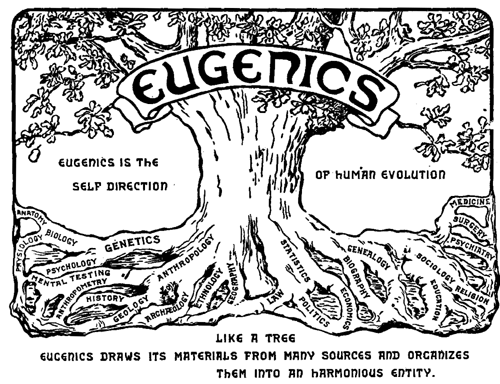
Logo of the Second International Congress of Eugenics, 1921, May 9, 2005. (Fastfission via Wikipedia). In public domain.

Logo of the Second International Congress of Eugenics, 1921, May 9, 2005. (Fastfission via Wikipedia). In public domain.

What do these three disparate phrases have in common? This came up during my recent lunch with my friend Andrew at Lebanese Taverna a little more than a week ago. Among other things, we were lamenting the dominant theme of education reform as union-busting and the supplanting of teachers with high-stakes tests and Teach for America substitutes.

As we discussed Andrew’s second book on the 1990s culture wars and their roots in the 1960s conservative movement, it occurred to me that what both of us have thought of as recent or new really wasn’t. The efforts over the past decade to “close the achievement gap,” an actual problem really, are based in the nineteen and twentieth-century eugenics movement more than it is in a real sincere effort to confront the barriers to high academic achievement for students in poverty and for students of color.

Satirical cartoon of Rudyard Kipling's The White (?) Man's Burden ("white" colonial powers being carried as the burden of their "colored" subjects),  Life Magazine, March 16, 1899. (Travb via Wikipedia). In public domain.

Satirical cartoon of Rudyard Kipling’s The White (?) Man’s Burden (“white” colonial powers being carried as the burden of their “colored” subjects), Life Magazine, March 16, 1899. (Travb via Wikipedia). In public domain.

“How does it feel to be a problem?,” W. E. B. Du Bois asked numerous times and wrote in numerous ways in his The Souls of Black Folk (1903).  The Negro problem for White scholars and politicians at the turn of the twentieth century varied from Frederick Hoffman’s 1896 statistical eugenics argument that predicted the “extinction of the Negro” to the much more common struggle of how to educate the Negro (but not educate them too well). Hoffman’s White supremacy argument was a bit outside the mainstream even for his Whites-are-always-right era. The more mainstream problem of Negro education became one of “practical” vocational (or, as it was called at the time, industrial) education as advocated by accommodationist Booker T. Washington versus Du Bois’ higher education and leadership preparation for the Black Talented Tenth.

We’re here again, in the early twenty-first century, with the technocrats in government and White paternalists in the private foundation world sounding the alarm that there’s an achievement gap between the affluent and the poor, as well as between Whites, Blacks and Latinos. Except that this achievement gap’s been around for a half-century. Except that the biggest single factor in raising student achievement rates is family income and occupation(s), not more testing or a theory of change to assess teacher effectiveness. Except that schools in the districts in which the achievement gap is the most obvious — segregated, mostly poor and of color — are underfunded when accounting for inflation and other factors (e.g., age of school buildings, teacher-student ratios).

So too with the “Jewish question” in comparison to this crisis in education. One of the worst kept secrets in the first half of the twentieth century was that the Jewish question wasn’t just a Nazi German one, but an American one as well. The real Jewish question for American educators was how to explain Jewish overrepresentation as high achievers in public education and as the best and brightest in higher education. That despite the work of eugenicists — the technocrats of their day — to tweak IQ tests and entrance tests in favor of affluent White Anglo-Saxon Protestants.

They couldn’t answer their Jewish question in higher education, except to limit the number of Jews accepted in elite institutions like Harvard, Yale and Princeton (in the latter case, to the point of exclusion). But we know how Nazi Germans decided to address their Jewish question — exclusion, discrimination, persecution, and the Final Solution. All to the detriment of advanced science and technology programs, not to mention the German economy. Vast resources went to a deadly and ultimately useless cause, all in the name of racial purity and betterment for “Nordic Aryans.”

"Mind The Gap" warning in London Underground, Victoria Station, November 27, 2011. (Reinhard Dietrich via Wikipedia). Released to public domain.

“Mind The Gap” warning in London Underground, Victoria Station, November 27, 2011. (Reinhard Dietrich via Wikipedia). Released to public domain.

In a very limited sense, the same is occurring with the education reform movement these days. Educators and politicians all pulling billions of dollars that could otherwise go to free breakfast and lunch programs, psychological services, physical education and arts programs for an eugenics-light agenda. No one from this movement has suggested a final solution as such, but they do believe that teachers unions, bad teachers and not enough STEM programs are the problem. Note that though the goal here is to “close the achievement gap,” the actual things that occur at schools in which most of the high-achieving Whites and Asian Americans (many of whom attend private and parochial schools) aren’t on the table at all.

Ultimately, the problem with the fear-mongering crowd on the “problem,” the “question” and the “gap” is that their perspective is one of the all-knowing, all-seeing White paternalist. One whose ideas about a situation or a group comes out of thin air, in some strange attempt to help said situation or group. In the case of today’s version of education reform, the only end-game is to destroy public education while exacting a profit in the process. Closing the achievement gap? Yeah, if “closing the gap” is defined by closing schools, killing unions and leaving most of America’s poor and of color students with no alternative for a better future.

WWMLKD (What Would Martin Luther King Do) – and Say Now?

05 Monday Aug 2013

Posted by decollins1969 in 1, Academia, Boy @ The Window, culture, Eclectic, Movies, Politics, Pop Culture, race, Youth

≈ 1 Comment

Tags

"I Have A Dream" speech, "I've Been To The Mountaintop" speech, "Return of the King" (2006), Aaron McGruder, Activism, Black Elite, Black Gen Xers, Civil Rights, Civil Rights Generation, Civil Rights Leadership, Civil Rights Movement, Elitism, Institutional Racism, March on Washington, Martin Luther King, Memphis Sanitation Worker's Strike, MLK, MLK Assassination, Post-Civil Rights Generation, Racism, Rev. Dr. Martin Luther King, Socioeconomic Status, The Boondocks, WWJD


"Return of the King" screenshot, Aaron McGruder's The Boondocks, originally aired, January 15, 2006. (Wikipedia). Qualifies as fair use due to picture's low resolution and direct subject of this blog post.

“Return of the King” screenshot, Aaron McGruder’s The Boondocks, originally aired, January 15, 2006. (Wikipedia). Qualifies as fair use due to picture’s low resolution and direct subject of this blog post.

Perhaps the most famous episode of Aaron’s McGruder’s award-winning series The Boondocks was his “Return of the King,” which originally aired on the Martin Luther King, Jr. Holiday in ’06. In it, King survived his ’68 assassination and came out of a coma into an early twenty-first century America and Black America in which his style of activism was no longer in vogue.

Instead, in McGruder’s vision, King came to realize how generations of younger Blacks have become lost in their overt materialism, as symbolized by ass-shaking, hip-hop and rap culture, the constant use of “nigga” in public, and the self-aggrandizement of Black televangelists and other purveyors of the cult of prosperity. In response, McGruder’s King said, “I’ve seen what’s around the corner, I’ve seen what’s over the horizon, and I promise you, you niggas have nothing to celebrate! And no, I won’t get there with you. I’m going to Canada!”

McGruder’s attempt to address the generational and socioeconomic divide between the Civil Rights generation and the post-civil rights generations that have followed was a limited one. It certainly represented well the views of a Black elite nurtured at the altar of the Civil Rights Movement. But despite the hilarity and the double-meanings, I don’t think that The Boondocks‘ “Return of the King” episode is even close to a decent representative of what King would’ve been like had he lived to see the fiftieth anniversary of the March on Washington and his “I Have A Dream” speech at the Lincoln Memorial.

Extrapolating from King’s last years:

The best and easiest guess in thinking about what King would’ve said or done in the years between that dreaded first Thursday in April ’68 and today would be to look at what King was doing in the last months of his life. Openly protesting the Vietnam War and the oppression of the poor and of color in the US and abroad. Breaking with other civil rights leaders on the Vietnam War and issue of addressing the collusion between institutional racism, income inequality and anti-union efforts in Memphis, in Chicago and in other places in the US.

Memphis sanitation workers' strike/march under "I Am A Man" picket signs, Memphis, TN, March 29, 1968. (Ernest C. Withers via http://workers.org).

Memphis sanitation workers’ strike/march under “I Am A Man” picket signs, Memphis, TN, March 29, 1968. (Ernest C. Withers via http://workers.org).

Alienating a president in Lyndon Baines Johnson — the most radical supporter of civil rights and anti-poverty efforts of any president ever — was what King did in expanding his words and deeds beyond “I Have A Dream” and “We Shall Overcome” mobilizations to end segregation and overt racial discrimination. Moving beyond the grassroots movement paradigm of respectable Negroes (i.e., traditional church-going, middle and some working-class Blacks) to include Black men and women who weren’t relatively well-educated and in good jobs — like the sanitation workers in Memphis — was where King had already moved himself.

This is the King that would’ve evolved over the previous forty-five or so years had he lived. Based on this actual King, it would be a bit mystifying to hear him give speeches on, grant interviews for or write op-eds in which his main theme would be to eviscerate the American poor, Blacks and Latinos for buying into a material capitalistic hip-hop culture. Or to spend all of his waning moments lamenting the perpetual stereotype of teenage welfare mothers looking for a handout instead of a hand up. Or to devote his remaining energies to blaming Black males for their inability to wear waist-fitting pants and then connecting hip-hop to a criminal culture, a drug culture and general thuggery (That’s Bill Cosby’s and Don Lemon’s jobs, apparently).

Don Lemon, CNN picture, August 5, 2013. (http://cnn.com).

Don Lemon, CNN picture, August 5, 2013. (http://cnn.com).

King would’ve probably withdrawn from public life by now, maybe even to Canada, as McGruder’s version suggests. But not before an additional two or three decades in which he would’ve boldly gone after the military-industrial complex, corporate welfare, government corruption, the War on Drugs and insufficient investment in America’s public schools and infrastructure. King would’ve seen all of them as factors that would have a negative impact on the life chances of the poor, especially poor African Americans.

Assessing blame – or not:

No doubt that King would’ve also found aspects of how Blacks have expressed themselves in pop culture and in the public sphere over the past four and half decades problematic. Yet based on the last years of his life, I think that he would’ve saved much of his ire for the aging Civil Rights generation for resting on their laurels and standing in judgment of younger Blacks, poor Blacks, or anyone else who didn’t follow directly in their now elitist footsteps. As King evolved in the four years, seven months and one week between the March on Washington and his assassination, so had his views of civil rights leadership. Well-meaning but pretentious, with the assumption that fixing the South would clear the way for Blacks of every socioeconomic stripe everywhere.

What’s most important to realize, though, is that King, had he lived, would’ve seen what most Americans regardless of race have seen in their own lives. Decline in wealth and income, a gulf of wealth between them and the top one-percent of income earners, a significant decline of well-paying union jobs replaced by minimum-wage non-union ones, rising unemployment, and expensive housing and healthcare. These are among so many other things that 240 to 270 million of us face on various levels that didn’t exist at the end of King’s life, things that disproportionately affect the poor, especially the poor and of color.

King and the legacy of the Civil Rights Movement:

The movement never evolved to address such issues, King would’ve said. Individuals did. Jesse Jackson, at least in the 1970s and 1980s, did. But the leaders of the Civil Rights Movement as a whole didn’t. They assumed that eliminating all forms of deliberate and overt discrimination in public institutions would bring down barriers for all African Americans. King would’ve said they were incorrect, and knew as much by the time of the Memphis sanitation workers’ strike in February and March ’68.

Unlevel playing field (soccer in this case), August 5, 2013. (http://funatico.com).

Unlevel playing field (soccer in this case), August 5, 2013. (http://funatico.com).

Despite the Civil Rights Act of 1964 and the Voting Rights Act of 1965 (both of which have obviously been weakened by the Reagan Years and this year’s Supreme Court Shelby County v. Holder decision), the life chances for any Black person born into poverty haven’t improve much at all. They remain in segregated communities, despite the movement toward mixed housing. They send their kids to underfunded and overcrowded schools, despite the paternalistic efforts of the so-called education reform movement. Jobs that pay a living wage are few, and conditions that promote neighborhood stability are better but still rare.

To assume that Blacks a half-century removed from the March on Washington and King’s “I Have A Dream” speech would be eternally grateful for the triumphs of the Civil Rights Movement in the wake of subtle yet pervasive discrimination on the basis of both race and socioeconomic status is ludicrous. It would smack of the elitism in which those who benefited most from the movement have displayed over the years. King would’ve realized the same thing, certainly well before the turn of the twenty-first century.

That anyone poor and of color in particular can overcome such barriers to, say, earn a doctorate or write a book is something akin to a miracle. Or to become a professional athlete or a music artist, a bit more common, if stereotypical, for that matter. King would’ve seen this and brought an analysis to the legacy of civil rights that didn’t put the movement and its leaders on a pedestal or proclaim victory where defeat was obvious.

What King would’ve (maybe) done:

King wouldn’t have given speeches in the years after the height of the movement to Black Gen Xers where he would’ve said, “I’ve got mine. Now it’s time to get yours,” or blamed hip-hop culture for so-called Black-on-Black crime. Instead, King would’ve listened, learned, facilitated and spoken without accusing those most vulnerable to discrimination of being the only ones at fault, if he would’ve faulted them at all. In terms of what he would’ve done beyond the attempt to form multiracial coalitions to fight for better conditions, it’s unclear. It would’ve been better than chest-thumping and belly aching, though.

← Older posts
Newer posts →

Boy @ The Window: A Memoir

Boy @ The Window: A Memoir

Places to Buy/Download Boy @ The Window

There's a few ways in which you can read excerpts of, borrow and/or purchase and download Boy @ The Window. There's the trade paperback edition of Boy @ The Window, available for purchase via Amazon.com at http://www.amazon.com/Boy-Window-Donald-Earl-Collins/dp/0989256138/

There's also a Kindle edition on Amazon.com. The enhanced edition can be read only with Kindle Fire, an iPad or a full-color tablet. The links to the enhanced edition through Apple's iBookstore and the Barnes & Noble NOOK edition are below. The link to the Amazon Kindle version is also immediately below:

scr2555-proj697-a-kindle-logo-rgb-lg

Boy @ The Window on Amazon.com: http://www.amazon.com/Boy-The-Window-Memoir-ebook/dp/B00CD95FBU/

iBookstore-logo-300x100

Boy @ The Window on Apple's iBookstore: https://itunes.apple.com/us/book/boy-the-window/id643768275?ls=1

Barnes & Noble (bn.com) logo, June 26, 2013. (http://www.logotypes101.com).

Boy @ The Window on Barnes & Noble: http://www.barnesandnoble.com/w/boy-the-window-donald-earl-collins/1115182183?ean=2940016741567

You can also add, read and review Boy @ The Window on Goodreads.com. Just click on the button below:

Boy @ The Window

Twitter Updates

Tweets by decollins1969
  • RSS - Posts
  • RSS - Comments

Archives

  • June 2025
  • April 2023
  • September 2022
  • August 2022
  • July 2022
  • June 2022
  • May 2022
  • April 2022
  • March 2022
  • January 2022
  • December 2021
  • November 2021
  • October 2021
  • September 2021
  • August 2021
  • July 2021
  • June 2021
  • April 2021
  • March 2021
  • February 2021
  • January 2021
  • December 2020
  • November 2020
  • October 2020
  • September 2020
  • August 2020
  • July 2020
  • May 2020
  • April 2020
  • March 2020
  • January 2020
  • December 2019
  • November 2019
  • August 2019
  • July 2019
  • June 2019
  • May 2019
  • April 2019
  • March 2019
  • February 2019
  • January 2019
  • December 2018
  • November 2018
  • October 2018
  • September 2018
  • August 2018
  • July 2018
  • June 2018
  • May 2018
  • March 2018
  • February 2018
  • January 2018
  • December 2017
  • November 2017
  • October 2017
  • September 2017
  • August 2017
  • July 2017
  • June 2017
  • May 2017
  • April 2017
  • March 2017
  • February 2017
  • January 2017
  • December 2016
  • November 2016
  • October 2016
  • September 2016
  • August 2016
  • July 2016
  • June 2016
  • May 2016
  • April 2016
  • March 2016
  • February 2016
  • January 2016
  • December 2015
  • November 2015
  • October 2015
  • September 2015
  • August 2015
  • July 2015
  • June 2015
  • May 2015
  • April 2015
  • March 2015
  • February 2015
  • January 2015
  • December 2014
  • November 2014
  • October 2014
  • September 2014
  • August 2014
  • July 2014
  • June 2014
  • May 2014
  • April 2014
  • March 2014
  • February 2014
  • January 2014
  • December 2013
  • November 2013
  • October 2013
  • September 2013
  • August 2013
  • July 2013
  • June 2013
  • May 2013
  • April 2013
  • March 2013
  • February 2013
  • January 2013
  • December 2012
  • November 2012
  • October 2012
  • September 2012
  • August 2012
  • July 2012
  • June 2012
  • May 2012
  • April 2012
  • March 2012
  • February 2012
  • January 2012
  • December 2011
  • November 2011
  • October 2011
  • September 2011
  • August 2011
  • July 2011
  • June 2011
  • May 2011
  • April 2011
  • March 2011
  • February 2011
  • January 2011
  • December 2010
  • November 2010
  • October 2010
  • September 2010
  • August 2010
  • July 2010
  • June 2010
  • May 2010
  • April 2010
  • March 2010
  • February 2010
  • January 2010
  • December 2009
  • November 2009
  • October 2009
  • September 2009
  • August 2009
  • July 2009
  • June 2009
  • May 2009
  • April 2009
  • March 2009
  • February 2009
  • January 2009
  • December 2008
  • November 2008
  • October 2008
  • September 2008
  • August 2008
  • July 2008
  • June 2008
  • May 2008
  • April 2008
  • March 2008
  • February 2008
  • January 2008
  • December 2007
  • November 2007
  • October 2007
  • September 2007
  • August 2007
  • July 2007
  • June 2007

Recent Comments

MaryPena's avatarMaryPena on My Day of Atonement/Bitter Hat…
decollins1969's avatardecollins1969 on No Good Teaching Deed Goes…
Mary Rose O’Connell's avatarMary Rose O’Connell on No Good Teaching Deed Goes…

NetworkedBlogs on Facebook

NetworkedBlogs
Blog:
Notes From a Boy @ The Window
Topics:
My Life, Culture & Education, Politics & Goofyness
 
Follow my blog

616 616 East Lincoln Avenue A.B. Davis Middle School Abuse Academia Academy for Educational Development AED Afrocentricity American Narcissism Authenticity Bigotry Blackness Boy @ The Window Carnegie Mellon University Child Abuse Class of 1987 CMU Coping Strategies Crush #1 Crush #2 Death Disillusionment Diversity Domestic Violence Economic Inequality Education Family Friendship Friendships Graduate School Hebrew-Israelites High-Stakes Testing Higher Education History Homelessness Humanities Humanities Program Hypocrisy Internalized Racism Jealousy Joe Trotter Joe William Trotter Jr. K-12 Education Love Manhood Maurice Eugene Washington Maurice Washington Misogyny Mother-Son Relationship Mount Vernon High School Mount Vernon New York Mount Vernon public schools Multiculturalism MVHS Narcissism NFL Pitt Pittsburgh Politics of Education Poverty President Barack Obama Race Racial Stereotypes Racism Relationships Self-Awareness Self-Discovery Self-Reflection Sexism Social Justice Teaching and Learning University of Pittsburgh Violence Whiteness Writing

Top Rated

Blog at WordPress.com.

  • Subscribe Subscribed
    • Notes from a Boy @ The Window
    • Join 103 other subscribers
    • Already have a WordPress.com account? Log in now.
    • Notes from a Boy @ The Window
    • Subscribe Subscribed
    • Sign up
    • Log in
    • Report this content
    • View site in Reader
    • Manage subscriptions
    • Collapse this bar
 

Loading Comments...