• About Me
  • Other Writings
  • Interview Clips
  • All About Me: American Racism, American Narcissism, and the Conversation America Can’t Have
  • Video Clips
  • Boy @ The Window Pictures
  • Boy @ The Window Theme Music

Notes from a Boy @ The Window

~

Notes from a Boy @ The Window

Category Archives: Academia

JFK & Innocence Never Lost, RFK & Real History

21 Thursday Nov 2013

Posted by decollins1969 in 1, Academia, culture, Eclectic, Movies, music, Patriotism, Politics, Pop Culture, Youth

≈ Leave a comment

Tags

Activism, American Exceptionalism, Assassination, Baby Boomers, Backlash, Camelot, Gun Violence, History, Innocence, JFK, JFK Assassination, LBJ, Lee Harvey Oswald, Legend, Mythology, Neo-Conservative Movement, President John F. Kennedy, President Lyndon Baines Johnson, RFK, Robert Kennedy, Social Justice, The '60s, Violence, Violent Society


President John F. Kennedy, presidential portrait (1961-63). (Wikipedia via John Fitzgerald Kennedy Library, Boston)

President John F. Kennedy, presidential portrait (February 20, 1961). (Wikipedia via John Fitzgerald Kennedy Library, Boston). In public domain.

I’ve heard about the JFK assassination in Dallas my whole life. Only the Civil Rights Movement, World War II and the Holocaust outrank JFK’s murder at the hands of Lee Harvey Oswald (or numerous other candidates) as subjects more often discussed in pop history circles of which I’ve been a part. But with the fiftieth anniversary of President John Fitzgerald Kennedy’s upon us tomorrow (fifty years to both the day and date), the mythology of his presidency and the state of the nation’s soul since November 22, 1963 is well into high gear.

But of all the myths and legends — including this ridiculousness about Camelot and the Kennedys in the White House — there’s one that bothers me more than any other. The common refrain that “America lost its innocence” the day President Kennedy took three bullets to his back and head in Daley Plaza in Dallas. Really? What about Abraham Lincoln, James Garfield and William McKinley? What about slavery, the Civil War, the eradication and forced relocation of American Indians, nuking Hiroshima and Nagasaki? Heck, what about the Cuban Missile Crisis, where JFK came within hours of jeopardizing the lives of eighty million Americans thirteen months before his murder?

Bloom off the rose, November 21, 2013. ( ).

Bloom is off the rose, November 21, 2013. (http://www.marctomarket.com).

The fact is, America has always been a violent nation, especially for those not in charge of running things here. But this bald-faced lie of a myth has been one built by those who were young when Oswald took out JFK. Teenager Baby Boomers and those only a few years older, big fans of President Kennedy, and those who loved him and lamented what could’ve been. Those are the folks that claim that the nation was young and innocent, but somehow deflowered on that dark, dark day. 

I call poppycock and balderdash on this one. Like Malcolm X in the days after the JFK assassination, I say that this was an example of America’s violent chickens coming home to kill. Luckily it’s forty-nine years and 364 days later, so I won’t be setting up my own assassination at the hands of former friends and real foes. Yet there’s some truth to Malcolm X’s statement. In a country as violent as ours, where Presidents like Kennedy endure death threats day after day, where arguments and oppression lead to mass shootings, should we ever be surprised? Ever? I say that there was no innocence lost here.

No, what we should really be discussing this week in terms of what could’ve been is RFK’s assassination in June ’68 in California. For all the sorrow over JFK’s murder, one good thing came out of it. President Lyndon Baines Johnson. LBJ took the best parts of JFK’s potential legacy — civil rights, the spreading of prosperity and Vietnam — and doubled down on it. Given LBJ’s scope of influence when compared with JFK’s, it was doubtful if the slain president could’ve pushed through half of what LBJ did get done. LBJ revealed himself to be to the left of JFK, a real Cold War liberal (for better and for worse), and not a borderline centrist.
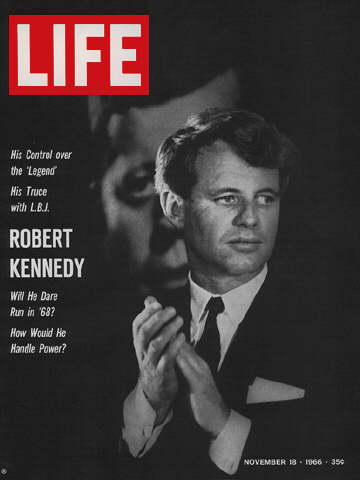
Robert Francis Kennedy, Life Magazine Cover, November 1966. ( )

Robert Francis Kennedy, Life Magazine Cover, November 1966. (http://www.arlingtoncemetery.net/)

Of course, RFK likely wouldn’t have had the chance to run in ’68 but for his brother’s assassination. Keep in mind, too, that LBJ’s successes, failures and decision to not run for re-election also made Robert F. Kennedy’s run possible. But bottom line: RFK’s assassination affected America political and culturally in ways that have been deeper and longer lasting than even JFK’s. For starters, Americans likely do not elect Richard Nixon president in ’68 if RFK’s steadying influence is present at the ’68 Democratic Convention in Chicago. That would’ve set up some real opposition to the neo-conservative movement and the ’70s and ’80s backlash against Blacks, women, gays and labor that had been brewing since JFK’s assassination in ’63.

I know that many of you will vehemently disagree, shake your heads, or deliberately ignore the ideas of this post. What else is new in the land of the Baby Boomers, where a few so-called activists get to tell the rest of us how to see the 77 million of them and their growing up years? I say that this narrative is worn out, and neglects the reality that neither JFK nor America were innocent, but RFK’s evolving left-of-center integrity was a much bigger loss.

Ambient Hero

18 Monday Nov 2013

Posted by decollins1969 in 1, Academia, Boy @ The Window, Carnegie Mellon University, culture, Eclectic, Pittsburgh, Pop Culture, University of Pittsburgh, Youth

≈ Leave a comment

Tags

AMB, Breaking Up, Dating, Hero Complex, Kiss of the Spider Woman, Long Distance Relationships, Maturity, Oscillating Relationships, Pitt, Relationships, Smallville, Superman, Tom Welling, U Maryland, University of Maryland, Vanessa Williams


Tom Welling as Clark Kent/The Blur (almost Superman) from Smallville series, November 18, 2013. (http://latimesherocomplex.files.wordpress.com/).

Tom Welling as Clark Kent/The Blur (almost Superman) from Smallville series, April 2011. (http://latimesherocomplex.files.wordpress.com/).

In the years between the chronological end of Boy @ The Window (February ’90) and when I began dating my wife (December ’95) of now thirteen and a half years, my relationship life was hit and miss, at times in a silo, and for two of those years, almost completely nonexistent. Grad school took up much of my time and energy, and there were times I barely had the money to catch a bus to campus at Pitt or Carnegie Mellon, much less go out for a dinner and a movie.

It was at the end of ’94, after becoming ABD (All But Dissertation for those not pursuing PhDs) that I felt I finally had the time to take my dating life more seriously. I realized that I’d been separating my sex life from my wanting-a-more-serious-relationship-life. Casual sex was fine, but I still found it more daunting to be in a relationship when I wanted more. So did the women in my life back then.

These realizations came to a head in my relationship with a woman I’ll call AMB for the purposes of this post. I’d known AMB off and on since ’90, as a result of a mutual friend whom I’d worked with during my Western Psych job years. By ’95, she was in grad school herself at the University of Maryland, working on her master’s degree in history. It was a different area in the field, luckily, so no frequent debates about how many historians can dance on the head of a pin.

During that summer and into the fall, we began seeing each other off and on. I found it wonderful at first. After years of grad school, of not even being remotely attracted to anyone who was a historian, I could have a conversation with someone about my doctoral thesis research and about my family at the same time. And all without having to explain it as if I were teaching a class or their eyes glazing over!

But there were issues right from the start. At the time, AMB lived with her mother in Maryland, and with me not owning a car, it was a four-and-a-half-hour trip by bus, longer by train, and costly on a grad school budget if I planned on renting a car. My dissertation research, though, brought me to the DC area frequently. So I visited her in August, October and November, while she came to visit me in July and October as well.

Oscillating balls hitting each other, November 18, 2013. (http://www.burbuja.info).

Oscillating balls hitting each other, November 18, 2013. (http://www.burbuja.info).

There was also the matter of her little one. At the time, I couldn’t have imagined working on an M.A. or PhD with a young son or daughter to raise. And although I admired how AMB was juggling, she was also struggling with this as well. Between her ex and the psychological abuse that came with him, her daughter, her mother and grad school, it was no wonder that our phone conversations could turn from boyfriend-girlfriend to psychologist-client on a dime.

The biggest issue, though, was defining the nature of our more-than-friendship as it began to evolve after July ’95. Depending on the week and what set of friends were around, AMB either introduced me as her “boyfriend” or as her “friend.” The first time this occurred, we were around a group of her U Maryland friends during my October visit, the weekend before the Million Man March. But one-on-one or over the phone, she didn’t slip up. I found it a bit strange, even as someone who didn’t date between December ’92 and October ’94.

Then, on AMB’s last visit with me in Pittsburgh, at the end of October ’95, she did it again, at Hillman Library, among a group of our mutual acquaintances and friends. What really clinched it for me, though, was when she added that I was her “hero.” That was a record scratcher for me. Really? How many lives had I saved? Could I shoot laser beams out of my eyes or phase through walls? After having put two younger women on a pedestal in my previous life (Crush #1 and Crush #2, Wendy and Phyllis — see blog), I couldn’t — no, I wouldn’t — allow someone to do the same to me. Especially someone with much more serious issues in her life than dating and high school.

So when AMB invited her up to her hotel room, I came up, but I definitely wasn’t in any mood for anything other than an explanation. She didn’t really give me one then. And three weeks later, after ditching our date to see the Kiss of the Spider Woman musical (it was playing in Baltimore at the time, headlined by Vanessa Williams) by going to see it with her friends two days earlier (all without telling me in advance), I’d had enough.

Vanessa Williams in Kiss of the Spider Woman poster, circa 1994. (http://geminibroadway.com).

Vanessa Williams in Kiss of the Spider Woman poster, circa 1994. (http://geminibroadway.com).

On this date eighteen years ago, we had a two-hour phone conversation, where I broke up with AMB. I told her that I’d tired of our “oscillating relationship, where I was just a ‘friend’ one minute, and a ‘boyfriend’ the next.” I told her that she needed to figure out herself and her relations with her ex, her daughter and her mother if she really wanted a more meaningful relationship in the future.

I’d broken off relationships before, but not like this. Mostly, I’d just ignore phone calls and email, or say something so sarcastic that the woman would get the message. This was hard. I was destroying AMB’s image of me as a hero, not just agreeing not to kiss or hug her anymore. Or maybe, just maybe, I was doing what a real hero does, which in this case meant not taking advantage of another human being at their most vulnerable.

Major Change

18 Friday Oct 2013

Posted by decollins1969 in 1, Academia, Boy @ The Window, culture, Eclectic, Pittsburgh, Politics, race, University of Pittsburgh, Youth

≈ Leave a comment

Tags

Changing Majors, College Majors, Colleges & Universities, Computer Science, History, Mother-Son Relationship, Paul Riggs, Poverty, Psychology, University of Pittsburgh


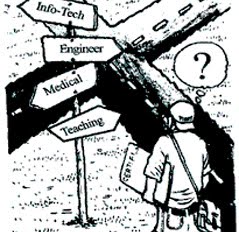
College Major Cartoon. Source: http://choctawsap.blogspot.com

Twenty-five years ago on this date, I made a most important educational decision. Despite my fears, my mother’s misgivings and my former Humanities classmates’ mockery, I changed my major from Computer Science to History. I’d been thinking about making this change since the middle of my first semester at Pitt, but decided against it at first because I knew that it wouldn’t be easy to make enough money to live on as someone with only a bachelor’s degree in History. Luckily my former TA Paul Riggs, a grad student in the History Department at Pitt, helped a lot in convincing me to “follow my heart,” as he put it. It was my third semester, my sophomore year, when I finally had the guts to come out of the closet academically.

The semester went well despite my five days of homelessness and the two months of financial strife that followed. It turned on another nail in my upbringing’s coffin. In addition to Biology, Psych 101, and General Writing, I was taking History of Art and Assembly Language, the last as part of my Computer Science major. Playing around with codes that related to “011000100101010000010” all the time drove me out of my mind with frustration. It was after our first major programming assignment that I recognized the problem. “I’m going to school for Mom and not for me,” I said to myself one late evening after running the debugger software at my CIS job. I had a major decision to make.

On the eighteenth of October, I went to the College of Arts and Sciences office on the eighth floor of Cathedral and changed my major to History. I then walked to Thackeray and withdrew from my Assembly Language course. Boy, did that feel good!

Then I called Mom from William Pitt Union to tell her my good news. She was completely quiet for a good ten seconds.

“What are you gonna do with a degree in history?,” she asked with shock in her voice.

“I don’t know yet, Mom, I don’t know. But I do know that I’ll graduate if I major in something I love.”

“All right, are you sure?,” Mom asked more directly. She already knew I was.

Choices Picture. Source: http://collegejolt.com

Choices Picture. Source: http://collegejolt.com

Looking back, it was probably the best academic decision I made while I was an undergrad at Pitt. My mood, my approach to life, my thinking of the future, all changed that semester. I could’ve easily majored in English writing or Psychology, given the way I see myself now.

But that’s what made majoring in History a wonderful experience. Studying history involved multiple disciplines for me. A great knowledge of history was much more than dates, names and events. It was about understanding the human condition, our attempts at greatness, our exhibition of behaviors that would be considered savage by savages. The ability to write about and analyze critical issues in American and other histories, including apartheid and slavery in South Africa, Latin American revolutions, and the resegregation of Pittsburgh Public Schools through magnet schools. Not to mention looking at the writings of other historians and other scholars in other fields. Most of all, I learned a lot about myself in the process of following a part of my passion.

Still, there were and are practical issues in pursuing a major that doesn’t have a direct relationship to jobs on the job market. I didn’t want to teach high school, and I needed to go to grad school if I wanted to be a professor or scholar. Having come through on the other side, I can say that I learned how to have fun while learning again. That’s what undergrad is for, after all, as the average student changes their major three times in five years. If I had figured out how I was a writer first and a historian second, I would’ve done something different for my master’s degree. But with my major in history, I wouldn’t change a thing.

It’s after finishing my history degree at Pitt in ’91 where, looking back, I’d make a few changes. A master’s degree in education or psychology — not so bad. A PhD in education policy & foundations would’ve likely been a better choice in terms of making my career transitions smoother. I would’ve figured out that I wanted to write Boy @ The Window much sooner than the end of ’02. This is what makes life interesting, though. So many twists and turns, so many times to embrace change, especially if it is for the better.

“I Am Become Columbus, Destroyer of Worlds”

14 Monday Oct 2013

Posted by decollins1969 in 1, Academia, Boy @ The Window, Christianity, culture, Eclectic, Mount Vernon High School, Patriotism, Politics, Pop Culture, race, Religion, Youth

≈ 1 Comment

Tags

American Indians, Christopher Columbus, Columbus Day, Diseases, Enslavement, Exploitation, Genocide, History, Indigenous Groups, J. Robert Oppenheimer, Native Populations, Teaching and Learning


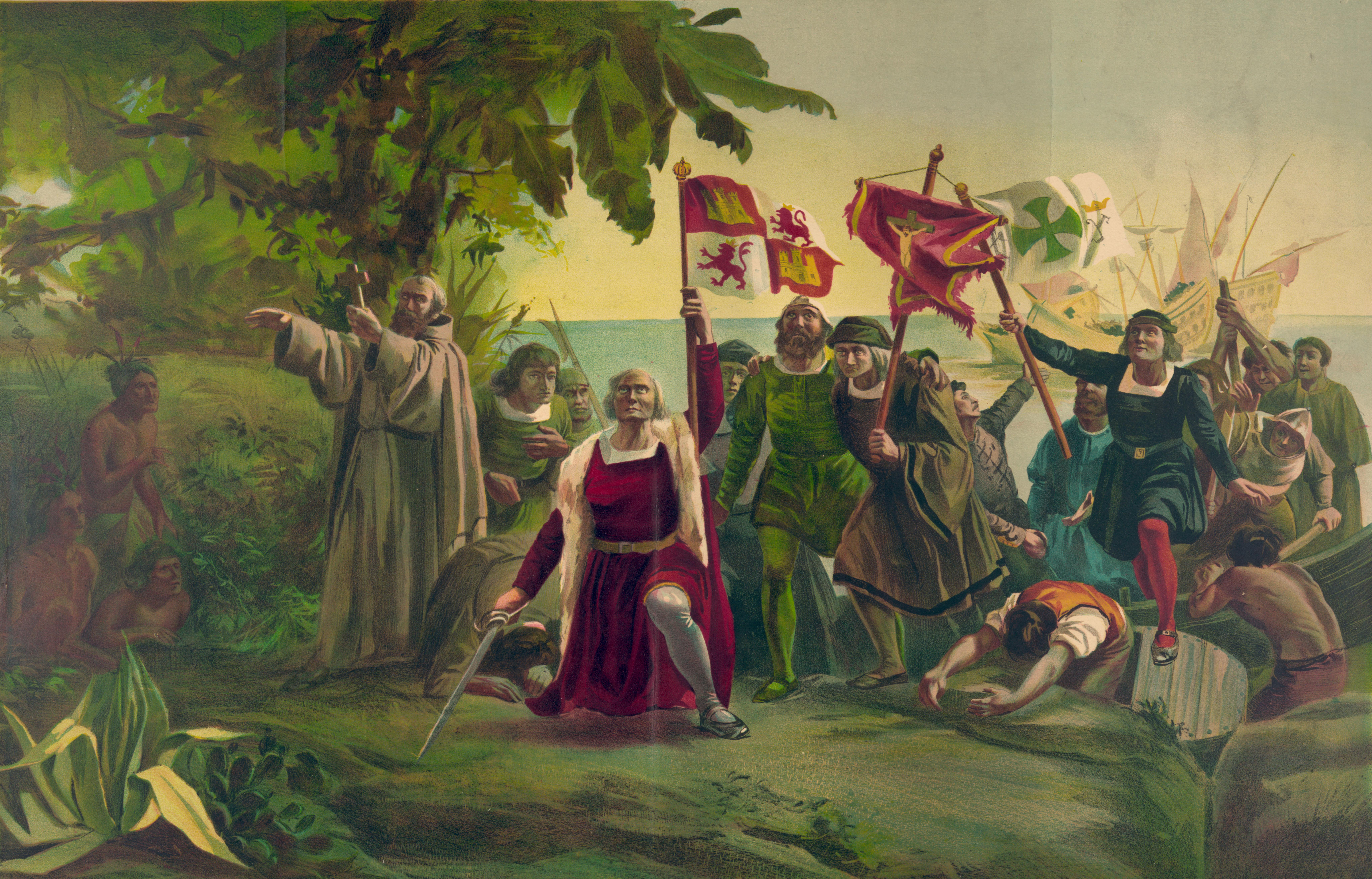
Dióscoro Teófilo Puebla Tolín, First landing of Columbus on the shores of the New World, at San Salvador, West Indies, 1862 (published 1892, Currier& Ives). (Dantadd via Wikipedia). In public domain.

Dióscoro Teófilo Puebla Tolín, First landing of Columbus on the shores of the New World, at San Salvador, West Indies, 1862 (published 1892, Currier& Ives). (Dantadd via Wikipedia). In public domain.

The title kind of says it all, no? On this Columbus Day, 2013, we should all acknowledge this as the beginning of the inadvertent (and frequently deliberate) genocide conducted against the indigenous groups that made up the Western Hemisphere as of October 12, 1492. The day that Christopher Columbus “discovered” America — as if First Nation tribes or Native Americans or American Indians were looking to be discovered — was the first day of more than half a millennium’s worth of physical and psychological assault on the peoples of the Western Hemisphere.

I talk about this in all of my courses — US History, World History (when I get to 1500 CE), and African American History. I describe how this notion of discovery was pretty much invented in the nineteenth century, to create a mythology about the greatness of God-fearing Europeans (and, in the US context, Americans) and their pre-ordained but altruistic triumph over the heathen Indians, those “noble savages.” I go over the fact that the Eurasian diseases that the Spaniards and other Europeans brought with them to the Western Hemisphere wiped out tens of millions of the indigenous between 1492 and 1700. Smallpox, measles, mumps, rubella, bubonic plague, chicken pox all helped reduce a population that experts have estimated to have been between 70 and 100 million at the time of first contact to between seven and 10 million by the end of the seventeenth century.

Drawing accompanying text in Book XII of the 16th-century Florentine Codex (compiled by Fray Bernardino de Sahagún, 1540–1585), showing Nahuas of conquest-era Central Mexico suffering from smallpox, September 11, 2009. (Wikipedia). In public domain.

Drawing in Book XII of Florentine Codex (compiled by Fray Bernardino de Sahagún, 1540–1585), showing Nahuas of Central Mexico suffering from smallpox, September 11, 2009. (Wikipedia). In public domain.

I talk about Columbus’ second voyage, where he helped establish the first European settlement in what is now Haiti and then in the Dominican Republic, all while searching for gold, enslaving Arawak Indians and engaging in full-fledged battles. Just a year and a half after the first, glorious “discovery!”

The justification, of course, was and often remains that Europeans were civilized Catholic Christians, whereas these half-dressed natives were hedonistic polytheists. Even now, we often get caught up in the human sacrifice rituals of the Maya and Aztecs and somehow use that as justification for exploitation, slavery, and the inadvertent wiping out of whole cultures — worlds, if you will. It’s a justification that should make any believer in a higher power queasy, and any non-believer extremely angry.

I’m disappointed. We still sugarcoat the real meaning of Columbus Day for people of all ages. I began to learn about all of this in fifth grade (thank you, Mrs. O’Daniel), in October ’79. But I didn’t come to know most of the full story until high school. Even then, no one — not Flanagan, Zini or Meltzer — mentioned disease, exploitation, slavery and warfare as the genocidal combination that essentially handed Western Europeans the Western Hemisphere. I guess they either didn’t know or thought that it would be too painful a lesson to teach fourteen-to-eighteen year-olds.

As J. Robert Oppenheimer said in ’65, twenty years after the Manhattan Project’s success in creating the world’s first nuclear bomb, “Now I am become Death, the destroyer of worlds.” Well, one doesn’t have to have God-like powers or be a Hindu deity to create large-scale human suffering, as was the case with Columbus. All one really needs is the conviction necessary to treat other humans as if they are only meat with brains and eyes.

The Road to Boy @ The Window, Part 4: Fear of a “Black” America

26 Thursday Sep 2013

Posted by decollins1969 in 1, Academia, Boy @ The Window, Carnegie Mellon University, culture, Eclectic, eclectic music, music, Patriotism, Pittsburgh, Politics, Pop Culture, race, University of Pittsburgh, Youth

≈ Leave a comment

Tags

Academia, Afrocentricity, Authentic Blackness, Authenticity, Emotion, Estelle Abel, Fear of a "Black" America, Fear Of A Black Planet, Fear of Black Males, Joe Trotter, Multicultural Education, Multiculturalism, PE, Personal Vignettes, Politics of Academia, Politics of Education, Politics of Fear, Public Enemy, Rage, Richard Altenbaugh


FearBookCover3copy

Given that Fear of a “Black” America was my first book, but one based on my doctoral dissertation, and that Boy @ The Window is a memoir, the road from one to the other may not be that obvious with an initial glance. But despite the intellectual, semi-scholarly nature of my book on Blacks and multiculturalism, there are parallel themes that run between Fear of a “Black” America and Boy @ The Window. Perhaps none are more important, though, than the challenge of authenticity, of fitting in, of being able to mesh the complicated onion that I’ve found myself to be over the years.

I think that was why I decided in November ’98 to turn my dissertation “A Substance of Things Hoped For” into a more readable book. Yes, after all that work to write a 505-page thesis, it would’ve been a shame to just let it sit on my then girlfriend’s coffee table, to be used either as a door stop or a base for her doing her nails. Yes, I still had something to prove to academia. That my scholarship as a historian and educator on the issue of multiculturalism was sound. That the conventional academic wisdom around Blacks, people of color and multiculturalism was paternalistic fear-mongering.

Public Enemy, Fear Of A Black Planet (1990) Album Cover

Public Enemy, Fear Of A Black Planet (1990) Album Cover

And in thinking that last part through, I came up with my Public Enemy-inspired title and thread for the first book. It was about fear in many forms. Elite White fears of a majority-people-of-color US within their own lifetimes. Conservative fears of a K-16 education system that included the cultural and historical perspectives of peoples of color, of the poor, of women, of the LGBT, of so many others they’d rather discard. General American skepticism that any Blacks had ever given any thought at all to cultural pluralism, intercultural education, or multiculturalism/multicultural education, at least before White theorists had thought through these ideas first.

Afrocentrists and nationalists who thought of multiculturalism as soft and utterly unrepresentative of the Black experience — or, at least, what they considered an authentic version thereof? That was as difficult a challenge as any I faced in writing both my dissertation and Fear of a “Black” America. So much so that I made a few interesting decisions along the way. I sought out an agent — yes, a literary agent — for the first book, and found one, too (things were so much easier in ’99). I wanted the book to have an impact beyond academia.

In the writing process, I decided to weave the theme of fear, skepticism, willful and inadvertent misunderstandings throughout the 200-page book. All while covering Black intellectual thought about what we now call Afrocentricity and multiculturalism, Black activism and activities around education and Negro History Week, and the so-called Culture Wars of the 1980s and 1990s. All to show that multiculturalism was/is a part of America’s evolution, even if some folks are gnashing their teeth and wearing sackcloth and ashes along the way.

One thing was missing, though, from my six chapters. Me, in a word. Yes, my argument was crystal clear, my evidence was sound, my notes and analysis lined up well enough by the summer of ’00. Yet, as my one-time agent noted, “there’s not enough of you in this manuscript.”  Bottom line: folks weren’t going to buy the book unless I made it more compelling, which meant putting something of me or about me in it.

Fear Book & The Authentic Me

Fear Book & The Authentic Me

So I did. I wrote mostly about my experiences in academia and how they paralleled with some of the critical issues in Fear of a “Black” America. I talked about my Duquesne University students in the College of Education in ’98 and ’99, most of whom were cultural conservatives. I brought up conversations I had with professors skeptical about my scholarship, like Richard Altenbaugh in March ’98 or my former dissertation advisor Joe Trotter in April ’96. I also wrote about my conversation with Estelle Abel over my lack of authenticity as a young Black man in June ’87, having thought about it for the first time in thirteen years. I wasn’t sure if that made Fear of a “Black” America any better, but it made me feel better about my first book.

By the time I’d given my agent the final draft of Fear of a “Black” America in October ’00, I was ready — maybe for the first time in years — to take a look at my life before Pitt, grad school, Spencer Fellowship and becoming Dr. Collins. I wasn’t sure if I wanted to open up the emotional side of that Pandora’s box just yet. But in some ways, I really needed to, precisely because of my experiences with people in grad school at Pitt and Carnegie Mellon. And precisely because of my occasional moments of rage and overreaction, if only because Fear of a Black “America” helped me tap into emotions I didn’t know I had.

Letters of Recommendation (or Wreck-o-mendation) Addendum

24 Tuesday Sep 2013

Posted by decollins1969 in 1, Academia, Boy @ The Window, culture, Eclectic, Pittsburgh, Politics, race, University of Pittsburgh, Youth

≈ Leave a comment

Tags

Admissions Process, George Reid Andrews, Graduate School, Law School, Letters of Recommendation, Pitt, Politics of Academia, Transparency


A car wreck on Jagtvej, a road in Copenhagen, Denmark, May 24, 2005. (Thue via Wikipedia). Released to public domain.

A car wreck on Jagtvej, a road in Copenhagen, Denmark, May 24, 2005. (Thue via Wikipedia). Released to public domain.

Three years ago, I wrote a post about my various not-so-good to horrible experiences in getting my then professors to write letters of recommendation for me for grad school, for fellowships and for the academic job market between ’90 and ’99. Over the course of the past three years, this post has been one of my ten most popular ones, garnering comments, emails and mostly positive feedback about what to do (and not) in seeking letters from the professoriate for graduate and professional education and for a real career.

In June, however, Reid Andrews, one of my former professors at the University of Pittsburgh, sent me a rather terse email about my recollections from the 1990-91 school year. He had served as one of my examples of what not to do in terms of seeking a letter of recommendation (like getting a look at the letter first, putting aside the false notion of academic objectivity in the process) as well as in terms of what may or may not have been in the letter itself. In the email, Andrews wrote that my blog “contains false and defamatory material about [him]” and demanded that I “remove [his] photo and all mention of [him] from [my] blog immediately.” Of course, I didn’t remove the blog, or Andrews from it, which earned me a reply in which he called me a “back-stabber,” referencing something I had said about my letter writers in general.

But I did get something in return. Andrews’ letter of recommendation, allegedly from December 1, ’90. Andrews was right. It was hardly a terrible letter, as he described me as “‘exceptionally talented,’ rank[ed] [me] ‘among the ten best undergraduates that [he] ha[d] taught in [his] ten years at Pitt’ and [gave me his  ‘strongest recommendation.'”

But I am actually more right. For there are any number of indications that Andrews’ letter, while not nearly as loopy or as detrimental as some from my former dissertation committee members at Carnegie Mellon, doesn’t in fact provide a strong recommendation at all. For starters, the letter is one long paragraph and a short one that actually takes away from the strength of Andrews’ recommendation.

He also brought to the class an unusually strong command (for an undergraduate) of US and world history, which was helpful both for the purposes of comparison, and for setting the Latin American revolutions in broader context.

How strong was my command? Why was this unusual? Why throw in the “for an undergraduate” at all as a dampener? Did this mean that I wasn’t ready for graduate school material? The long paragraph is about my performance in his Latin American Revolutions course, common for many a recommendation. The lack of specificity, though, would signal to any professor or administrator on any admissions committee that Andrews really knew very little of me as a student and a person. Despite the part about “the ten best undergraduates,” the first paragraph would read like a form letter.

Half True vs. half-hearted, September 24, 2013. (Politifact.com).

Half True vs. half-hearted, September 24, 2013. (http://Politifact.com).

Then there’s Andrews’ shorter second paragraph, the one that made it sound like I was equally interested in going to law school as I was in going into a master’s program in history. I had all of one conversation with Andrews about my forks in the road after undergrad at Pitt. As I told anyone who knew me between May and October ’90, I was “sixty percent in favor of grad school, thirty in favor of law school, and ten in favor of working full-time.” Andrews, however, wrote of me

As of last year his plan was to proceed to law school. However, his talent for history [and]…his enthusiasm for it were so striking that I urged him to consider graduate school in this area, and he has decided to apply both to law schools and to several graduate schools.

I had, in fact, decided by October ’90 not to apply to law schools at all (while applying to six universities for grad school), and communicated that to all of my letter writers at the time. To an admissions committee, this paragraph would make me appear indecisive, and likely to not be as passionate about the prospect of the hard work of academic history as I would be about the law and making money.

In light of everything else I said in my original blog post about letters of recommendation, Andrews’ letter actually proves almost all of my points. That “it’s important to get to know a person, to gain some sense of trust from them, before asking for a letter or a reference.” That “the process of providing a letter of recommendation or a reference ought to be transparent, so that the student or employee can be confident that they’re not being back-stabbed by the same people in which they’re placing significant trust.” Writing a letter of recommendation should always be a serious undertaking, as I’ve learned over the years. Sometimes it’s best to say “No” than to do it in a Freudian-slip fashion.

Freudian "Slip" (2012) by Nathan Davis, September 24, 2013. (http://redbubble.com). Qualifies as fair use - low resolution and subject matter related to post.

Freudian “Slip” (2012) by Nathan Davis, September 24, 2013. (http://redbubble.com). Qualifies as fair use – low resolution and subject matter related to post.

On the “one A in one course does not make for a good recommendation” rule, this has turned out to be inadvertently true. Even if Andrews had intended to write me a glowing letter of recommendation, his feelings about me as a student — ones that he verbalized to me on several occasions between ’90 and ’95 — may well have influenced his rather bland and half-hearted effort at that “good “letter that he supposedly wrote for me in December ’90.

“It was never a question I dared asked — to see my letter of recommendation — before I’d reached the final stages of grad school,” I wrote three years ago. Now that I apparently have Andrews’ letter from twenty-three years ago, my sage advice from three years ago rings as true now as it did then. Maybe even more so.

On Academic Entourages & Standing Apart From Them

11 Wednesday Sep 2013

Posted by decollins1969 in 1, Academia, Carnegie Mellon University, culture, Eclectic, Pittsburgh, Politics, Pop Culture, race, Religion, University of Pittsburgh, Work, Youth

≈ Leave a comment

Tags

Academia, African American Studies, Afrocentricity, Authenticity, Black Issues in Higher Education, Blackness, Entourage, Fear of a "Black" America, Followers, Loner, Marc, Molefi Asante, Multiculturalism, Politics of Academia, Publishing, Sycophants, Writing


Lil Wayne entourage, Hartford, CT, July 2011. (http://4umf.com/).

Lil Wayne entourage, Hartford, CT, July 2011. (http://4umf.com/).

This week for many is about anniversary number twelve of the 9/11 attacks, which if I hadn’t lived through them, would sound like something out of a Kurt Vonnegut novel. But because I’ve been counting my days for years, this week also represents two decades since I realized that radical “Islamic” terrorists, pro athletes and popular music artists aren’t the only ones with followers. I learned for the first time that even in the world of academia, paragons and those who allege themselves as such also have their entourages of true believers and sycophants. It was a realization that bothered the loner and the aspiring academic historian in me.

Letters to the Editor, Black Issues in Higher Education, September 9, 1993. (Donald Earl Collins)

Letters to the Editor, Black Issues in Higher Education, September 9, 1993. (Donald Earl Collins).

It all occurred in the aftermath of my first major publication, co-written with my friend Marc and published in Black Issues In Higher Education in August ’93. “Afrocentricity: The Fight for Control of African-American Thought” was our 1,200 word contribution to the debate over multicultural education and Afrocentricity in both higher education and in Black culture more generally. It was a publication that came as a surprise, because the editors at Black Issues In Higher Education (the same folks who ran Emerge Magazine, by the way) hadn’t contacted us about receiving our pitch and article, about accepting it for publication, or about when they intended to publish. And even though our article was literally in the centerfold of their August 12, ’93 issue, the folks at Black Issues in Higher Education never paid us for the publication of our work.

The reason why because clearer in their September 9 and September 23 issues. In the “Letters to the Editor” section, the editors published a dozen letters, ten of which were critical of our work. These weren’t scholarly or even logical critiques — we were wrong because we weren’t members of the Church of Afrocentric Babble, plain and simple. These were “How dare you!” or “Shame on you!” letters, not ones based on what we’d actually written.

What became obvious  to me was that Molefi Asante’s former and current students had written most of the letters. Not exactly an unbiased set of sources, as in the circle of Afrocentricity in the early ’90s, there were few people more prominent than Asante (he was the Father of Afrocentricity, after all). Once I realized this, I found myself disappointed. With Black Issues in Higher Education, with Black folks in academia — particularly at Temple University — and with academia itself. Me and Marc weren’t being challenged on our ideas, but on the idea that two alleged neophytes had the balls to challenge the orthodoxy of the early ’90s in African American studies and in high-brow Black cultural circles.

Marc pushed for a response from one of the editors about their unprofessionalism (and to find out why we weren’t being paid for our piece), which led to a conversation with one of the big-wigs. He apparently said to Marc, “We published it [the “Afrocentricity” piece] to teach you a lesson.” When Marc told me, I said, “Well, I guess we’re not gonna get paid.” (Turned out this was standard practice for the likes of Black Issues in Higher Education, Emerge, and for freelancers at BET as well). Marc, pissed and disillusioned, said, “We were just trying to help.”

Letters to the Editor, Black Issues in Higher Education, September 23, 1993. (Donald Earl Collins).

Letters to the Editor, Black Issues in Higher Education, September 23, 1993. (Donald Earl Collins).

It was the last one of many factors that pushed me to write my dissertation and my first book Fear of a “Black” America (2004) on the relationship between education, multiculturalism, and Black identity. I wanted to show that Afrocentricity wasn’t the only strain of thought that ran through the heads of Black scholars and found its way into small “c” curriculum and cultural events in Black communities. In doing so, I certainly stood apart, but I also stood alone a lot, too.

In recent years, I’ve seen numerous entourages eviscerate lone wolfs. On Twitter, in our 24/7 media coverage of the mundane and insignificant yet insane, and at academic conferences. As recently as a couple of months ago, I saw a version of this on Facebook in response to a post I wrote about Mark Anthony Neal’s Looking for Leroy (2013). The entourage makes it difficult for an up-and-comer to get off to an honest start, for conformity with only subatomic levels of independent thought seems to be the norm.

Somewhere between now and when my son (knock on wood) reaches my age of forty-three, maybe some of what I’ve written over the past twenty years will break through the ice of entourages, mad-dog and otherwise. Still, it is a damnable thing when groups get together to stomp out different voices (literally and figuratively), because that’s seems to be the only way to keep the band together.

← Older posts
Newer posts →

Boy @ The Window: A Memoir

Boy @ The Window: A Memoir

Places to Buy/Download Boy @ The Window

There's a few ways in which you can read excerpts of, borrow and/or purchase and download Boy @ The Window. There's the trade paperback edition of Boy @ The Window, available for purchase via Amazon.com at http://www.amazon.com/Boy-Window-Donald-Earl-Collins/dp/0989256138/

There's also a Kindle edition on Amazon.com. The enhanced edition can be read only with Kindle Fire, an iPad or a full-color tablet. The links to the enhanced edition through Apple's iBookstore and the Barnes & Noble NOOK edition are below. The link to the Amazon Kindle version is also immediately below:

scr2555-proj697-a-kindle-logo-rgb-lg

Boy @ The Window on Amazon.com: http://www.amazon.com/Boy-The-Window-Memoir-ebook/dp/B00CD95FBU/

iBookstore-logo-300x100

Boy @ The Window on Apple's iBookstore: https://itunes.apple.com/us/book/boy-the-window/id643768275?ls=1

Barnes & Noble (bn.com) logo, June 26, 2013. (http://www.logotypes101.com).

Boy @ The Window on Barnes & Noble: http://www.barnesandnoble.com/w/boy-the-window-donald-earl-collins/1115182183?ean=2940016741567

You can also add, read and review Boy @ The Window on Goodreads.com. Just click on the button below:

Boy @ The Window

Twitter Updates

Tweets by decollins1969
  • RSS - Posts
  • RSS - Comments

Archives

  • June 2025
  • April 2023
  • September 2022
  • August 2022
  • July 2022
  • June 2022
  • May 2022
  • April 2022
  • March 2022
  • January 2022
  • December 2021
  • November 2021
  • October 2021
  • September 2021
  • August 2021
  • July 2021
  • June 2021
  • April 2021
  • March 2021
  • February 2021
  • January 2021
  • December 2020
  • November 2020
  • October 2020
  • September 2020
  • August 2020
  • July 2020
  • May 2020
  • April 2020
  • March 2020
  • January 2020
  • December 2019
  • November 2019
  • August 2019
  • July 2019
  • June 2019
  • May 2019
  • April 2019
  • March 2019
  • February 2019
  • January 2019
  • December 2018
  • November 2018
  • October 2018
  • September 2018
  • August 2018
  • July 2018
  • June 2018
  • May 2018
  • March 2018
  • February 2018
  • January 2018
  • December 2017
  • November 2017
  • October 2017
  • September 2017
  • August 2017
  • July 2017
  • June 2017
  • May 2017
  • April 2017
  • March 2017
  • February 2017
  • January 2017
  • December 2016
  • November 2016
  • October 2016
  • September 2016
  • August 2016
  • July 2016
  • June 2016
  • May 2016
  • April 2016
  • March 2016
  • February 2016
  • January 2016
  • December 2015
  • November 2015
  • October 2015
  • September 2015
  • August 2015
  • July 2015
  • June 2015
  • May 2015
  • April 2015
  • March 2015
  • February 2015
  • January 2015
  • December 2014
  • November 2014
  • October 2014
  • September 2014
  • August 2014
  • July 2014
  • June 2014
  • May 2014
  • April 2014
  • March 2014
  • February 2014
  • January 2014
  • December 2013
  • November 2013
  • October 2013
  • September 2013
  • August 2013
  • July 2013
  • June 2013
  • May 2013
  • April 2013
  • March 2013
  • February 2013
  • January 2013
  • December 2012
  • November 2012
  • October 2012
  • September 2012
  • August 2012
  • July 2012
  • June 2012
  • May 2012
  • April 2012
  • March 2012
  • February 2012
  • January 2012
  • December 2011
  • November 2011
  • October 2011
  • September 2011
  • August 2011
  • July 2011
  • June 2011
  • May 2011
  • April 2011
  • March 2011
  • February 2011
  • January 2011
  • December 2010
  • November 2010
  • October 2010
  • September 2010
  • August 2010
  • July 2010
  • June 2010
  • May 2010
  • April 2010
  • March 2010
  • February 2010
  • January 2010
  • December 2009
  • November 2009
  • October 2009
  • September 2009
  • August 2009
  • July 2009
  • June 2009
  • May 2009
  • April 2009
  • March 2009
  • February 2009
  • January 2009
  • December 2008
  • November 2008
  • October 2008
  • September 2008
  • August 2008
  • July 2008
  • June 2008
  • May 2008
  • April 2008
  • March 2008
  • February 2008
  • January 2008
  • December 2007
  • November 2007
  • October 2007
  • September 2007
  • August 2007
  • July 2007
  • June 2007

Recent Comments

MaryPena's avatarMaryPena on My Day of Atonement/Bitter Hat…
decollins1969's avatardecollins1969 on No Good Teaching Deed Goes…
Mary Rose O’Connell's avatarMary Rose O’Connell on No Good Teaching Deed Goes…

NetworkedBlogs on Facebook

NetworkedBlogs
Blog:
Notes From a Boy @ The Window
Topics:
My Life, Culture & Education, Politics & Goofyness
 
Follow my blog

616 616 East Lincoln Avenue A.B. Davis Middle School Abuse Academia Academy for Educational Development AED Afrocentricity American Narcissism Authenticity Bigotry Blackness Boy @ The Window Carnegie Mellon University Child Abuse Class of 1987 CMU Coping Strategies Crush #1 Crush #2 Death Disillusionment Diversity Domestic Violence Economic Inequality Education Family Friendship Friendships Graduate School Hebrew-Israelites High-Stakes Testing Higher Education History Homelessness Humanities Humanities Program Hypocrisy Internalized Racism Jealousy Joe Trotter Joe William Trotter Jr. K-12 Education Love Manhood Maurice Eugene Washington Maurice Washington Misogyny Mother-Son Relationship Mount Vernon High School Mount Vernon New York Mount Vernon public schools Multiculturalism MVHS Narcissism NFL Pitt Pittsburgh Politics of Education Poverty President Barack Obama Race Racial Stereotypes Racism Relationships Self-Awareness Self-Discovery Self-Reflection Sexism Social Justice Teaching and Learning University of Pittsburgh Violence Whiteness Writing

Top Rated

Blog at WordPress.com.

  • Subscribe Subscribed
    • Notes from a Boy @ The Window
    • Join 103 other subscribers
    • Already have a WordPress.com account? Log in now.
    • Notes from a Boy @ The Window
    • Subscribe Subscribed
    • Sign up
    • Log in
    • Report this content
    • View site in Reader
    • Manage subscriptions
    • Collapse this bar
 

Loading Comments...