• About Me
  • Other Writings
  • Interview Clips
  • All About Me: American Racism, American Narcissism, and the Conversation America Can’t Have
  • Video Clips
  • Boy @ The Window Pictures
  • Boy @ The Window Theme Music

Notes from a Boy @ The Window

~

Notes from a Boy @ The Window

Category Archives: Academia

The Fall of the House of D’Souza

25 Saturday Jan 2014

Posted by decollins1969 in 1, Academia, culture, Eclectic, Patriotism, Politics, Pop Culture, race, Religion

≈ Leave a comment

Tags

Campaign Finance Fraud, Dinesh D'Souza, Indictment, Intellectual Conservatism, Multiculturalism, Race, Racism


It’s been a sad last 20 months for Dinesh D’Souza. Once one of the princes of the intellectual conservatism set, he’s shown himself to be a fascist hypocrite and fool. Between his 2016: Obama’s America — a half-baked documentary only the late Jerry Falwell would’ve been proud of — his extramarital issues, his forced resignation from King’s College, and now, campaign fraud in the Citizens United age? It’s all proof-positive that there really aren’t any intellectual conservatives in the US, at least by global standards of what it means to be a real intellectual.

If anything, what we have are a bunch of pretenders to the throne. Folks who are radical right-wingers and don’t understand anything outside of the affluent, heterosexual and semi-religious (if not spiritual) White male world. So-called scholars who are about as open to new ideas and diverse people as Archie Bunker in season one of All In The Family. Hypocrites who deny for others what they demand for themselves (thanks, U2, for that one).

Since Illiberal Education (1991) and The End of Racism (1995), D’Souza’s been trying to outdo himself. Except that takes more intellectual depth and stamina than he had even when putting together his two most celebrated books (at least, celebrated in his circles). Between his books on Reagan and Obama, it’s like reading the ramblings of, well, a fraudulent author teetering on insanity. I don’t feel sorry at all for D’Souza, who lost his youthful intellectual edge faster than the end of the ticking of an egg-timer. (from HuffPost)

In Denigration of the Black and Accomplished

20 Monday Jan 2014

Posted by decollins1969 in 1, Academia, Carnegie Mellon University, culture, Eclectic, Pittsburgh, Politics, Pop Culture, race, University of Pittsburgh, Work

≈ 1 Comment

Tags

Abuse, Academic Culture, Academic Politics, Accomplishments, Achievements, Black Milwaukee, CMU, Denigration, Joe Trotter, Joe William Trotter Jr., Larry Glasco, Laurence Glasco, Meritocracy, Neglect, Pitt, Richard Oestreicher, Running Interference, Scholarship, Whiteness


Screenshot of Richard Sherman post-game interview with Erin Andrews, NFC Championship Game, Seattle, WA, January 19, 2014. (http://msn.foxsports.com).

Screenshot of Richard Sherman post-game interview with Erin Andrews, NFC Championship Game, Seattle, WA, January 19, 2014. (http://msn.foxsports.com).

I plan half of my blog posts in advance. At the beginning of every year, I make up a list of topics that I intend to cover, listed by month, and then go through that list. For the other half, I take advantage of relevant news stories or sudden life experiences that also seem relevant. Screen shot 2014-01-20 at 9.25.25 AM

Today’s post is a combination of planning and the impromptu. I’d already planned to write about the tightrope of being Black and accomplished — actually, more like the noose of it. But thanks to @profragsdale’s tweet, aka, Rhonda Ragsdale, an Associate Professor of History at Lone Star College-North Harris (Houston, Texas) and a PhD candidate at Rice University, I started on this topic a day early. Her tweet was the kick-off to eight hours of tweets about the cold and often cold-shoulder reception women — and Black male and LGBT — faculty and grad students receive when bringing up, discussing or even promoting themselves and their accomplishments.

Only to see more of these tweets and thoughts confirmed in another arena. The response of the racist, George-Zimmerman-set to Richard Sherman’s post-game interview with Erin Andrews on FOX within a couple of moments after he made the play to seal the game for his Seattle Seahawks to go play in Super Bowl XLVIII. You, Black man, can’t have a flash of anger and moment of passion on TV after playing in the NFC Championship Game, for then your accomplishments will be used against you. (Sarcasm aside, Sherman’s taunting will likely result in a fine, but that’s the NFL).

Single Drum Rollers with Rock Crushing Drum crushing soil and rocks (similar to how Whiteness can crush Black accomplishments), January 20, 2014. (http://bomag.com).

Single Drum Rollers with Rock Crushing Drum crushing soil and rocks (similar to how Whiteness can crush Black accomplishments), January 20, 2014. (http://bomag.com).

My post is much, much closer to home. I had the blessing and the curse of having two Black males as my official advisors while in grad school at Pitt and Carnegie Mellon, Larry Glasco for two years at Pitt, and Joe Trotter for four years at CMU. My gripes and complaints about their neglect, selective attentions to my development, and, in Trotter’s case, harassment and psychological torture I’ve already documented well here. What I haven’t discussed is that they were part of a cycle of academic abuse that they passed down to my generation of grad students, and likely some of my colleagues are passing on to their grad students as I write today.

My best example of how denigration in academia works was a conversation I had with Dick Oestreicher, a Pitt professor for my grad seminar in American Working-Class History in Fall ’92. I was in Trotter’s African American History seminar at CMU at the same time. Oestreicher asked me what else I was taking that semester, I guess because I’d proven resistant to the idea that social class had primacy over all forms of inequality, even in the US (a neo-Marxist to the core, I guessed).

When I told him I was in Trotter’s seminar, Oestreicher said, “Oh, I’ve heard of him,” with the disdain a fashion designer usually reserved for suits off Sears’ rack. You’ve “heard of him?” Really? Trotter, an award-winner scholar and author with a groundbreaking book on Black migration, urbanization and class formation in Black Milwaukee: The Making of an Industrial Proletariat, 1915-1945 (1985; 2007), and you’ve heard of him? A colleague only three blocks and one bridge away, and you’ve heard of him? Even now, the only word I have to that is, “Wow!”

If Oestreicher was the only one to do that, and only to Trotter, then my observations here would be suspect. But I witnessed this same kind of thing from other White history professors at Pitt and CMU toward Trotter and Glasco during my grad school years. Heck, one of the reasons I left for CMU in the first place was because I knew several of the most powerful professors in the Pitt history department didn’t respect Glasco’s work, and by extension, my own progress and work.

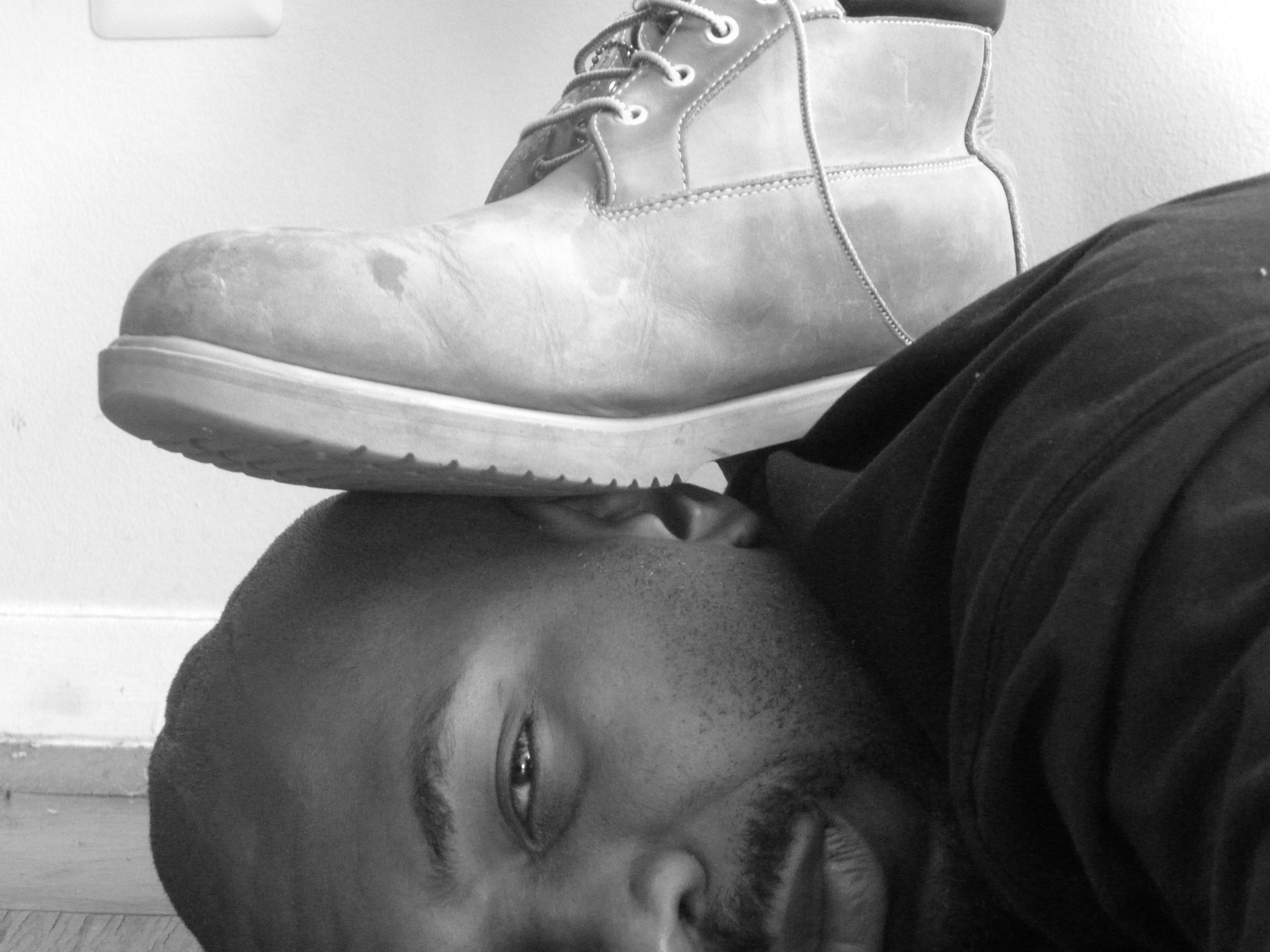
Foot On My Neck & Head, symbolic of my years as a Hebrew-Israelite (also of grad school), April 18, 2011. (Donald Earl Collins).

Foot On My Neck & Head, symbolic of my years as a Hebrew-Israelite (also of grad school), April 18, 2011. (Donald Earl Collins).

Maybe that was part of the reason why Trotter would constantly “run interference” on my behalf, to protect my “interests” during my four years there. Because, despite all the long hours, the sweat, tears and blood, there were folks at CMU who just saw him as a mere Black man, not a colleague or scholar every bit their equal. Given the books, the articles, the grants and so many other accomplishments, Trotter was easily the most productive professor in the department.

None of this justified how Trotter treated me when I was his student. I was semi-aware of the racial politics of accomplishment denial that folks around us practiced. I often chalked it up to jealousy or stress, thinking that the quality of my work or — to use Trotter’s terminology — my scholarship would show the academic world my worth. What White disdain toward Glasco and Trotter — and Trotter’s harassment of me — taught me, though, is that I’d have to be White in order for my accomplishments to seriously matter in academia, and I wasn’t planning on being White in my lifetime. And, that intellectual Whiteness can be nurtured and grown into Black professors.

In the years since finishing my own PhD, I’ve faced my own dilemmas around my achievements. I’ve at times attempted to fit in by downplaying my publications, by not bringing up my degrees, by not talking about my fellowship awards. What have I learned? To deny myself of my own accomplishments is like making a fine wine but not even daring to take a sip. White accomplishment deniers be damned.

Common Core Advocacy As A Job Requirement?

16 Thursday Jan 2014

Posted by decollins1969 in 1, Academia, culture, Politics, Pop Culture, race, Youth

≈ 2 Comments

Tags

Assessments, Common Core State Standards, Corporatized Education Reform, Education, Education Reform, Employment Practices, High-Stakes Testing, North Carolina, Partisan Politics, Teacher Effectiveness, Teacher Evaluations, The Hunt Institute, The James B. Hunt Jr. Institute for Educational Leadership and Policy


The James B. Hunt, Jr. Institute for Educational Leadership and Policy (aka, The Hunt Institute), building and logo, 1000 Park Forty Plaza, Durham, NC, January 16, 2014. (http://www.beacondevelopment.com and Facebook.com).

The James B. Hunt, Jr. Institute for Educational Leadership and Policy (aka, The Hunt Institute), building and logo, 1000 Park Forty Plaza, Durham, NC, January 16, 2014. (http://www.beacondevelopment.com and Facebook.com).

A few months ago, I applied for a Director of Programs job with The Hunt Institute in Durham, North Carolina. I know, I know. I should’ve known better, considering their ties to the Common Core, but I didn’t. In my defense, I did it through the University of North Carolina job website. I received an email on Monday to set up a Thursday interview, followed by another email on Tuesday asking me to write a hypothetical two-page brief “intended for a state legislator that describes why standards and assessments are important; how they interact; and what legislators need to understand about implementation.” (Keep in mind, The Hunt Institute is supposed to be a nonpartisan nonprofit organization).

Below is the brief I wrote in response (also, here):

Over the past decade and a half, you have been a key advocate of public education reform. You have helped pave the way for the adoption of Common Core Standards and a series of comprehensive assessments for students across the state. You have also served on committees that have urged the implementation of new measures for teacher effectiveness, measures based in no small part on the resulting scores that students and schools obtain on the new comprehensive assessments. Your rationale and that of your colleagues has been to cite the need to close the achievement gap between low-income students and students of color on the one hand, and high-income and White students on the other. Although this goal remains laudable, the means that you have advocated and the state of North Carolina has adopted will do more harm than good on the path toward educational equity and the nurturing of high academic achievement regardless of race and socioeconomic status.

There is mounting evidence across the state – indeed, across the country – that more and more comprehensive testing and assessments have failed to achieve the desired result of closing the achievement gap. Teachers and principals have noted that the time devoted to testing and to preparing students for testing has grown to the point where they have time for little else in terms of student learning. Recent surveys of students have shown that student motivation for learning has declined as the amount of testing has increased. And the most undeniable statistic is that nearly half of the state’s veteran teachers (i.e., teachers who have been in the profession for more than five years) have resigned or retired since we began introducing new state standards and assessments a little more than a decade ago.

This isn’t to suggest that we go back in time to the period before the rise of new state standards and assessments in the late-1990s. Rather, this is a time in which we should reflect on the deficiencies of the current model and take the following steps to ensure that our standards and assessments actually encourage student learning and thus a closing of the achievement gap. Below is a list of recommendations before continuing to move forward with Common Core State Standards and school district/statewide testing regimen:

1. Reconsider the Common Core, or at the very least, disconnect the relationship between it and the state assessments. States all over the country, including North Carolina, have reported problems in taking these standards and using them to develop appropriate curricula for their students. The use of these standards, developed in less than a decade, with little input from teachers, administrators, in some cases including administrators in Raleigh, has meant little to no ability for teachers on the ground to match up the standards with the curriculum or the needs of their students. It is simply a too big, one-size-fits-all approach to teaching and learning that results in neither teaching nor learning. The effect has been to reduce our classrooms to laboratories, where our teachers serve as principal investigators, and our students as lab rats. We should have standards, but ones that better fit our state and the needs of our students. Not to mention ones that allow for teacher adaptations to encourage learning.

2. Revise the number, frequency and kinds of assessments that we are doing for our students. As it stands now, we are doing entirely too many assessments too early and too often for students in the state. Assessments start as early as the second grade, with school district and state level assessments occurring throughout the year, approximately once ever six weeks. For students, the psychological effect has been to turn education into a torturous and boring chore, rather than a fun and imaginative process of learning and development. Nearly every study that nonpartisan groups have conducted in the past seven years has shown this to be true. To be sure, we need to do assessments, but not two or more levels of assessment six or seven times a year, especially in the elementary grades. Rather, we should be doing one set of diagnostic assessments twice a year at the elementary school level, and once a year at the middle and high school levels, so that the students in greatest need of academic help can get that help. In practical terms, the money the state legislature currently has devoted to testing and the testing companies for our regimen of assessments could be better spent on diagnostic testing and additional tutoring for students in need of it.

3. Resist the need to tie teacher evaluations to assessment scores. This is simply the wrong way to go about determining a teacher’s ability to reach their students. Even the best researchers in the field on teacher effectiveness have shown that the best teachers can only improve a classroom’s performance on any given assessment regimen by about two (2) percent. From poverty to eating a healthy breakfast and getting a good night’s sleep, there are plenty of factors in assessment scores in which individual teachers have no control. Yet the irony is that because the state has adopted this form of teacher evaluation, it has all but eliminated the ability of teachers to be teachers – to think independently and to act with enough autonomy to best determine how to reach their students. This kind of teacher evaluation process has encouraged every teacher in the state to “teach to the test.” This has significantly reduced the amount of time teachers devote to such tasks as independent reading, geography, social studies and other subjects that, ironically, stimulate student learning. We certainly need better trained teachers. What this means, though, is that the state needs to create a process by which the standards for entering the profession are higher. This could include the use of National Board for Professional Teaching Standards assessments of teacher excellence early on, as well as consistent mentoring and professional development as early as their first day in the classroom.

In summary, the best way to move forward in terms of standards and assessments is for our state not to rely on them as a substitute for actual teachers and actual teaching as the means for improving student performance. What we have in terms of standards and assessments is cost-ineffective, and it actually defeats the goal of closing the achievement gap, the very goal we in this state are all after.

It’s difficult to respect a job process in which a prospective employer isn’t up front about a key component of the position, in this case, the need to promote Common Core State Standards and teacher evaluations based on student assessments. It’s also difficult when they insist they’re nonpartisan, even though taking on the role of advocate for this brand of education reform is decidedly a centrist-conservative position. But being asked to not interview after writing this hypothetical brief is the best example for why education, politics and a job search should never come together. Especially if we really care about education and kids.

Cold Snap 1994

09 Thursday Jan 2014

Posted by decollins1969 in 1, Academia, Carnegie Mellon University, culture, Eclectic, Pittsburgh, Pop Culture, University of Pittsburgh, Youth

≈ Leave a comment

Tags

Cold Snap, John Modell, Media Coverage, Polar Vortex, The Day After Tomorrow (2004)


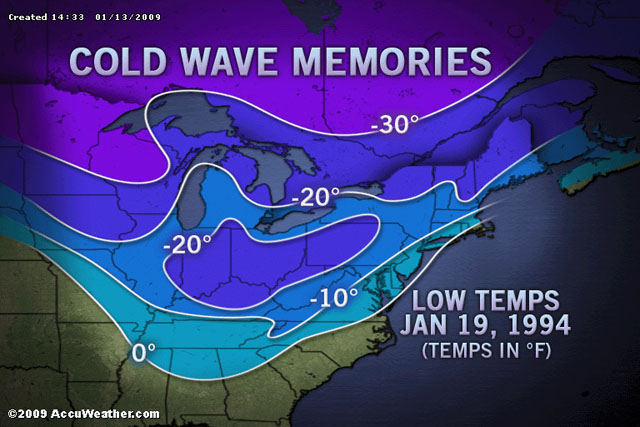
East Cold Wave Compared To 1994,  January 13, 2009. (http://www.accuweather.com).

East Cold Wave Compared To 1994, January 13, 2009. (http://www.accuweather.com).

This week’s so-called polar vortex is hardly the coldest weather I’ve ever experienced, whether living in New York, Pittsburgh or DC, or visiting places like Chicago and New Hampshire in the dead of winter. But like all things driven by traditional and social media coverage, anything that happened five minutes ago becomes the penultimate event of all time.

But imagine a day that was so cold that when the temperature rose to -20°C (that’s -4°F) three days later, it felt like a heat wave. A day that produced multiple states of emergency for much of the country. A day where your windows had thick sheets of ice on their panes, and your breath turned into icicles before you started to take in air.

I’m remembering a day twenty years ago exactly like that, one very different from the current cold snap across much of the Northern US right now.  And yes, the term is and will always be cold snap, as a vortex conjures end-of-times climate change similar to the movie The Day After Tomorrow (2004). Torrents of snow fell in the ‘Burgh, in New York, in Chicago and DC. So much snow fell in Pittsburgh that both Pitt and Carnegie Mellon shut down — something that only happens on near apocalyptic days. By the end of that month, Pittsburgh had already set a seasonal record for snowfall at 96 inches. Of course, that was nothing compared to Chicago, Cleveland or Buffalo that winter.

Frozen Pittsburgh, panoramic three rivers shot,  January 7, 2014. (Steve Mellon, http://www.post-gazette.com).

Frozen Pittsburgh, panoramic three rivers shot, January 7, 2014. (Steve Mellon, http://www.post-gazette.com).

What made it worse was the record cold weather. Over the course of nine days, between January 10 and 19, the temperature fell from a bearable 15° to 10, 8° , 5°, -2°, -10°, -15°, and to -22° on Wednesday, January 19, ’94. The wind chill that day made it feel like -50°. New York was -15° that day, and DC a balmy -11°. Only Chicago had it worse in terms of major cities, a -26° degree day with Lake Michigan wind chills of -70°. It snowed on most of those days, making conditions about as bad as living in Fairbanks, Alaska in the dead of winter.

I awoke to a cold studio apartment on January 19, even though the heat was at full blast and I’d sealed my windows with plastic. I turned on the TV, and found that the Pennsylvania governor had declared a state of emergency because of the cold and because the state’s electrical grid was on the verge of collapse. All businesses, schools, and colleges, as well as all non-essential state work, was to stop that day to preserve energy so that we wouldn’t freeze to death. To a business, everyone complied with the governor’s order.

Everyone except Carnegie Mellon, that is. They cited that they were a private and not a state institution as the reason for them not shutting down that day. Never mind that students who lived off campus would have to brave the killer temperatures to come to class. Or the fact that Pitt, a private institution with far more students than Carnegie Mellon, only two blocks away, was completely shut down. Or the fact that Carnegie Mellon, like the rest of the state, relied on the same overloaded power grid and was stretching limited resources.

So I prepared to go to my 2 pm course. Normally I would’ve walked the 2.75 miles from East Liberty to campus. Even I recognized that -22 was too cold for me to be out in for more than a half-hour, and this a forty minute walk for me in the ice and snow. I wore long-johns and sweats, two layers of socks insulted in plastic Giant Eagle bags that I’d put in my high-tops. I wore six layers of upper body clothing, snapped my hood on my winter jacket, pulled down my black wool cap to my eye lids, and wrapped my blue scarf around my mouth and neck.

I tried to time the bus so that I wouldn’t outside more than a few minutes. With the twenty-mile-per-hour wind gusts, it was like someone was trying to suck the life out of me. It hurt to breathe. Yet I found it funny to feel the icicles forming on my nose hairs and mustache. I took the first bus that came, the old 71C, which didn’t stop close to Carnegie Mellon, did stop right across the street from the Cathedral of Learning, about a half-mile from Baker Hall and my class.

Pitt, of course, was a ghost town. On the bridge that connected Pitt to Schenley Park and the southern entrance to Carnegie Mellon, two idiot joggers passed me, proving once again the dominance of brave alpha males in their attempts to control the world.

Michigan lighthouse entombed by ice, St. Joseph, Michigan, January 6, 2014. (Thomas Zakowski, HotSpot Media, via http://dailymail.co.uk).

Michigan lighthouse entombed by ice, St. Joseph, Michigan, January 6, 2014. (Thomas Zakowski, HotSpot Media, via http://dailymail.co.uk).

Upon entering Baker Hall, I was told by security that Carnegie Mellon was closing after all. I learned from the departmental office that the governor had personally called the president of Carnegie Mellon and ordered the closing under the threat of a $1 million-per-day fine, or something pretty close to that. So the elitist university was shutting down after all, at 2 pm. We could all go home. Or so we thought. John Modell decided that our classes were too precious to cancel over a little thing like a state of emergency. Now I knew that the man had taught for years at U Minnesota, so -22 for him was just a normal winter day, I guessed.

An hour later, with the heat off, we could all see our breath as Modell yammered on and on about cultural anthropology and the meaning of objectivity in that discipline. All I know was that it was way too cold to sit in a classroom wondering what would kill us first, Modell’s disjointed diatribes or the bitter cold classroom. If we’d been ten years younger, Modell would’ve gone to jail.

Finally, Modell released us from his professorial grip, around 3:20 pm. He even acknowledged that is was just too cold to continue class. “We’ll make this up next week,” he said. Yeah, as if he couldn’t have said that an hour before.

Lies We Tell Each Other When In College

04 Saturday Jan 2014

Posted by decollins1969 in 1, Academia, Boy @ The Window, culture, Eclectic, Mount Vernon High School, Mount Vernon New York, Pittsburgh, Politics, Pop Culture, race, University of Pittsburgh, Youth

≈ Leave a comment

Tags

Big Lies, Campus Climate, College Culture, College Retention, College Success, Dishonesty, Disidentification Hypothesis, Grade Inflation, Higher Education, Lying, Stereotype Threat


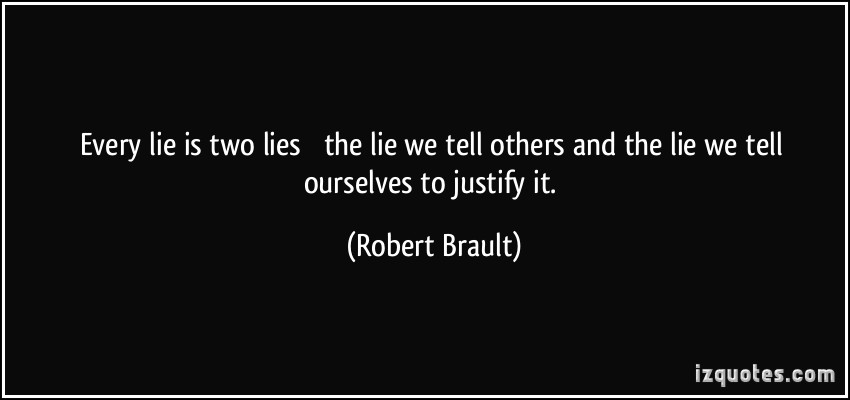
Every lie is two lies quote, Robert Brauilt, January 4, 2014. (http://izquote.com).

Every lie is two lies quote, Robert Brauit, January 4, 2014. (http://izquotes.com).

I thought about posting this at the beginning of this week, but decided against it, figuring that I should end ’13 on a more positive tip. But it must be said that one of the critical issues that we in higher education face in terms of college retention and success is the sheer lack of honesty surrounding student performance, especially in the first year or two of any student’s enrollment. No, I’m not talking about grade inflation — for students doing okay, especially at elite colleges, that’s another rampant issue. It’s about the lies students tell themselves, each other and their loved ones about their performance prior to either being caught in a web of them or, worse still, dropping out altogether.

As a college student and as a professor, I found and find it fascinating and disheartening when I’ve learned of the fantasy life of a student’s alleged good grades being shattered by reality. I fell into this trap myself during my first semester at the University of Pittsburgh. I only tell part of this story in Boy @ The Window. Yeah, I was nowhere near dropping out after a 2.63 GPA first semester (A in Astronomy, B- in Pascal, C in Honors Calc I, and a C in East Asian History), but I relied on an annual GPA of a 3.0 or higher to maintain my academic scholarship.

Yet from about the second week in December ’87 until I received my grades from Pitt on this date twenty-six years ago, I maintained the lie that my GPA was “around a 3.2.” The main difference — I gave myself a C+ in Honors Calc and a B in East Asian History. Mind you, I hardly showed up for either class most of the month of November! I was homesick, heartbroken, and unhealthily horny (and on two occasions hung over) most of the last six weeks of that semester.

The lies we tell ourselves (self-deception), Scientific America, February 4, 2012. (Richard Mia).

The lies we tell ourselves (self-deception), Scientific America, February 4, 2012. (Richard Mia).

So I told my former classmates like Laurell and Erika that my GPA was a 3.2. I told my dorm mates Samir and Chuck the same. It was a mild lie, I realized even at the time, and I knew that if I buckled down, that I could overcome my own lie, especially since I could lose my scholarship if I didn’t. And with a 3.33 second semester in Winter ’88, I did pull my GPA over the 3.0 mark, and in the process, decided not to tell any lies that big ever again.

But over the years, I’ve learned that I was hardly alone in the lying-about-my-college-experience category. The first time I figured this out was at the end of ’88, twenty-five years ago this week. It was a lunch outing with Laurell, her friend Maria and former classmates JD and Joshua at a pizza shop in the Fleetwood section of Mount Vernon. After the previous sixteen months of the Phyllis obsession, rage and grade-raising campaign, homelessness and financial struggles, I was finally fully on track for graduation and potentially, grad school. With this group of former classmates, though, almost all White, all but Laurell with upper middle class resources, I realized too that their struggles, or blues, weren’t exactly like mine.

As I wrote in Boy @ The Window:

There was a lot of “everything’s goin’ well” type of discussion going. Yet I got the sense that things weren’t all that great. Then JD admitted that he was a semester away from academic probation at Berkeley. His engineering classes were kicking his butt. From the looks of things, he was doing much better athletically than anywhere else, having bulked up to 190 with twenty extra pounds of muscle. Josh then admitted that his academic and social life wasn’t exactly going as planned. “I don’t know which one is worse,” he told us. He’d grown four or five inches since MVHS, good enough to put him around five-five or five-six. Laurell, of course, had a killer GPA at Johns Hopkins…and just loved things there. What she didn’t mention, between home and school, was that she was on the verge of burnout, 3.6 average or not…As for me, I talked a bit about some of my new friends and a couple of my classes. Nothing, though, about the drama of the previous year.

Umm, New York style pizza, Vesuvius Pizza, Brooklyn, NY, January 4, 2014. (http://yelp.com).

Umm, New York style pizza, Vesuvius Pizza, Brooklyn, NY, January 4, 2014. (http://yelp.com).

Given how they had reacted to my previous revelations of tiny nuggets from my life while we were in high school, I knew that they would have nothing to say about overcoming homelessness and my Phyllis obsession, much less my now 3.2 GPA overall. At the same time, though, I thought it better to say nothing at all than to tell half-truths and bald-faced lies about my college performance and experiences.

I’ve seen so many students do what I and my former classmates did during our first semesters of college over the years. They lie to me about their issues with my courses, they lie to themselves about their performance and preparation. Mostly, they lie to their friends and family to protect themselves from embarrassment. They lie until the truth of their performance shows up, in their grades, in academic probation, in suspensions and expulsions, in dropping out, in other myriad and dangerous ways.

And we in higher education encourage these lies, as if the money and grade trail won’t expose the reality of struggle and failure for so many. This is where we as educators and administrators need to be much more proactive, to encourage students to seek help, to tell the truth and not bury themselves in a coffin of lies.

A Private School Future For My Son?

21 Saturday Dec 2013

Posted by decollins1969 in 1, Academia, Christianity, culture, Eclectic, Politics, Pop Culture, race, Religion, Youth

≈ 1 Comment

Tags

Common Core State Standards, Creativity, Critical Thinking, Education Reform, High-Stakes Testing, Homeschooling, Imagination, K-12 Education, Parochial Schools, Private Schools, Public Education, School Choice, Schools Overseas


Hogwarts School of Witchcraft and Wizardry, Universal Orlando, January 8, 2011. (Ian Boichat via Flickr.com). In public domain.

Hogwarts School of Witchcraft and Wizardry, Universal Orlando, January 8, 2011. (Ian Boichat via Flickr.com). In public domain.

I’ve written so many times already about the state of education reform and how corporate interests via private philanthropy, government conservatism and the technocratic generation have been hell-bent in deforming public education. I’ve even given some glimpses into my own son’s journey through elementary school in Montgomery County, Maryland over the past five years, as they’ve watered-down their curriculum and grading system while ratcheting up their testing regimen. It’s all led me to one conclusion. We need to do something for my 10-year-old son that neither me nor my wife would’ve ever gone through ourselves, especially with middle school a few months away.

The way I see it, we have four choices going into the 2014-15 school year and beyond:

1. Finding a private school for our son to attend, especially for seventh and eighth grade;

2. Finding an appropriate parochial school for our son to attend, especially for seventh and eighth grade;

3. I become a certified home schooler in time for my son’s sixth, seventh and eighth grade experiences, and educate him myself for a year or two;

4. Somehow find work overseas so that my son can get a proper, non-US public education in say, Canada, the UK, even Hong Kong or Cuba at this point.

Gonzaga College High School, Washington, DC, April 12, 2010. (AgnosticPreachersKid via Wikipedia). Released to public domain via Creative Commons.

Gonzaga College High School, Washington, DC, April 12, 2010. (AgnosticPreachersKid via Wikipedia). Released to public domain via Creative Commons.

There are certain drawbacks to all of these options, of course. A good private school in the DC area is a $15,000 per year prospect or more (as much as $30,000 per year at the upper end). And though my son can and sometimes does excel, he’s just a slightly above-average student (at least, according to MSA, MAP-M, MAP-R and a whole bunch of other tests), meaning scholarship money isn’t likely. The past two years of constant testing have sucked the joy of learning out of my kid’s memory banks. The only reason he reads at home at all is because we make him, not because he’s bought into the idea of reading and the world of imagination that it connects to. Not exactly the way to glide in for a tour of a school in Bethesda, Chevy Chase or DC.

With parochial schools, though definitely within our budget, the question becomes how much constant retraining would we have to do on the religious side. We’re non-denominational Christians, and ones would do not regularly go to church, either. Between the Catholic and Jewish schools, it could get confusing for our school. Yes, I know that they’ve become more secular since my days in K-12, but it does beg the question of whether we’d be trading in one set of endless headaches for another. On the other hand, going to a parochial school’s still likely better than a constant battery of tests for students-turned-lab-rats.

I’ve given homeschooling a lot of thought. It would be a piece of cake for the state to certify me. But it would reduce my income, already up and down since I became an adjunct professor and part-time consultant five years ago. It would curtail my ability to find new and additional work, as my days would be filled with teaching my son myself. Heck, my son might resent not being around kids his own age after a couple of months! But a year of homeschooling from me might be all my son needs. I have the potential to do in one year what my son’s public education couldn’t do in three. Especially if I could resuscitate his joy for learning.

What about finding work that would allow us to escape America’s badly damaged public education system? Sure, but I’d be (and am) competing with folks who already live in Canada, the UK and Hong Kong (among other places). My skills include teaching US, African American and World History and grad courses in Education Foundations, writing articles and books and a decade as a nonprofit manager. Unique, but not so in-demand and so unique that Canadians would beat down my door to hire me just because of my skills. Yet, all it takes is finding one job, one position overseas that could change all of our life trajectories.

A student fast asleep, or the future with Common Core, December 21, 2013. (http://www.medicalxpress.com).

A student fast asleep, or the future with Common Core, December 21, 2013. (http://www.medicalxpress.com).

With all of that, it appears that these are all better choices than sticking with Montgomery County Public Schools for the next seven years. The Common Core — really, the Common Snore of killing students’ imaginations, teachers’ autonomy and the attempt at critical thinking all at once — has arrived. And it is truly a not-so-silent death knell to public education as a vehicle for social change or social justice. So we need to make some life-altering choices, not the kind our federal and state governments and local school boards provide. And we need to make them soon.

Who I Was Thankful For In ’88 — Ron Slater

28 Thursday Nov 2013

Posted by decollins1969 in 1, Academia, Boy @ The Window, culture, Eclectic, Pop Culture, race, University of Pittsburgh, Youth

≈ Leave a comment

Tags

Break Point, College Success, Money, Money Problems, Pitt, Ron Slater, Self-Reflection, Sera-Tec, Student Aid, Thanksgiving, Thanksgiving 1988, Trust


Stretching the dollar, November 28, 2013. (http://kidminspiration.files.wordpress.com/2012/11/stretching-dollar.jpg).

Stretching the dollar, November 28, 2013. (http://kidminspiration.files.wordpress.com/2012/11/stretching-dollar.jpg).

From September 6, ’88 through the beginning of Thanksgiving week twelve weeks later, I had a grand total of $335 to work with. That included money for food, rent and washing clothes. It included the $75 I made over three weeks and six sessions with Sera-Tec donating plasma. It wasn’t the first time I’d tortured dollars into submission, and it’s hardly been the last. But it was the first time in my life I reached out for help beyond myself and family.

From Boy @ The Window:

Despite these acts of generosity and my acts of desperation, I knew that I’d probably starve before the semester was over. I had less than ten dollars to work with after the first week in November. I went to Thackeray Hall to register for classes for next semester. While there, it occurred to me to go upstairs to see one of the financial aid counselors, an older Black woman named Beverly who’d been really nice to me while working through my bill issues earlier in the semester. I told her in detail what was going on. “You need to talk to Ron,” she said, referring to Ron Slater, the university ombudsman, the person who normally resided over tuition payment issues. So there I was the next day, explaining to the ombudsman my situation.

“We’ll take care of this, we’ll find you some extra money. Just hang in there for a few days,” he said. Slater actually offered me money right out of his wallet.

“No thanks, I’ll be all right,” I said, my voice starting to crack because I was so grateful that anyone cared enough to help me through my dire straits. I somehow found a way not to cry right there on the spot.

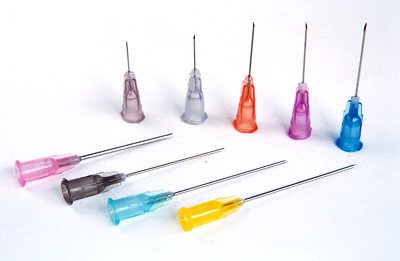
Hypodermic needles used for donating blood or plasma (note the gauge or thickness), November 28, 2013. (http://dmplgrl.blogspot.com).

Hypodermic needles used for donating blood or plasma (note the gauge or thickness), November 28, 2013. (http://dmplgrl.blogspot.com).

The week before Thanksgiving, I went to check in with Beverly. “I’ve got good news for you, but you’ll have to wait a few days.” Through the ombudsman, the university had recalculated my financial aid package, increasing my Pell to the maximum amount allowed, and added the federal SEOG grant (Supplemental Educational Opportunity Grants) to my aid menu. Both gave me an extra $800 to work with. After that weekend, one where Regis’ potatoes became a part of my diet, I bummed five dollars off of one of my classmates from General Writing. The next day I got my check from the ombudsman. “I’m so glad to have been of help. It’s part of my job. I just wish you’d come to me earlier,” Slater said. Hearing that did make me tear up. I was in the spirit of the season already. It was two days before Thanksgiving. I spent that holiday at Melissa’s house with her and her father, an ailing contractor in his early-sixties.

Slater’s wasn’t the only act of generosity I was thankful for that semester. Between my friends Regis and Marc and Melissa, I didn’t starve in those last couple of weeks before Thanksgiving. But Slater’s job, his work had made it so that I could graduate, not just eat peanut butter crackers, horrible tuna sandwiches and pork neck bones and rice into that December.That was a quarter-century ago.

Fast-forward nine years. My then girlfriend and now wife also ended up seeking help from Slater, as she could not finish her degree because she owed several thousand dollars to Pitt in tuition. I encouraged her to write and meet with Slater. He deferred her tuition payments for the upcoming spring semester so that she could graduate in April ’98.

It’s not every day that I get to thank someone for not only helping me, but others in my life as well. I don’t know where Ron Slater is now, but I am truly, truly thankful that our paths crossed in the fall of ’88.

Fall & Thanksgiving 1988

Fall & Thanksgiving 1988

← Older posts
Newer posts →

Boy @ The Window: A Memoir

Boy @ The Window: A Memoir

Places to Buy/Download Boy @ The Window

There's a few ways in which you can read excerpts of, borrow and/or purchase and download Boy @ The Window. There's the trade paperback edition of Boy @ The Window, available for purchase via Amazon.com at http://www.amazon.com/Boy-Window-Donald-Earl-Collins/dp/0989256138/

There's also a Kindle edition on Amazon.com. The enhanced edition can be read only with Kindle Fire, an iPad or a full-color tablet. The links to the enhanced edition through Apple's iBookstore and the Barnes & Noble NOOK edition are below. The link to the Amazon Kindle version is also immediately below:

scr2555-proj697-a-kindle-logo-rgb-lg

Boy @ The Window on Amazon.com: http://www.amazon.com/Boy-The-Window-Memoir-ebook/dp/B00CD95FBU/

iBookstore-logo-300x100

Boy @ The Window on Apple's iBookstore: https://itunes.apple.com/us/book/boy-the-window/id643768275?ls=1

Barnes & Noble (bn.com) logo, June 26, 2013. (http://www.logotypes101.com).

Boy @ The Window on Barnes & Noble: http://www.barnesandnoble.com/w/boy-the-window-donald-earl-collins/1115182183?ean=2940016741567

You can also add, read and review Boy @ The Window on Goodreads.com. Just click on the button below:

Boy @ The Window

Twitter Updates

Tweets by decollins1969
  • RSS - Posts
  • RSS - Comments

Archives

  • June 2025
  • April 2023
  • September 2022
  • August 2022
  • July 2022
  • June 2022
  • May 2022
  • April 2022
  • March 2022
  • January 2022
  • December 2021
  • November 2021
  • October 2021
  • September 2021
  • August 2021
  • July 2021
  • June 2021
  • April 2021
  • March 2021
  • February 2021
  • January 2021
  • December 2020
  • November 2020
  • October 2020
  • September 2020
  • August 2020
  • July 2020
  • May 2020
  • April 2020
  • March 2020
  • January 2020
  • December 2019
  • November 2019
  • August 2019
  • July 2019
  • June 2019
  • May 2019
  • April 2019
  • March 2019
  • February 2019
  • January 2019
  • December 2018
  • November 2018
  • October 2018
  • September 2018
  • August 2018
  • July 2018
  • June 2018
  • May 2018
  • March 2018
  • February 2018
  • January 2018
  • December 2017
  • November 2017
  • October 2017
  • September 2017
  • August 2017
  • July 2017
  • June 2017
  • May 2017
  • April 2017
  • March 2017
  • February 2017
  • January 2017
  • December 2016
  • November 2016
  • October 2016
  • September 2016
  • August 2016
  • July 2016
  • June 2016
  • May 2016
  • April 2016
  • March 2016
  • February 2016
  • January 2016
  • December 2015
  • November 2015
  • October 2015
  • September 2015
  • August 2015
  • July 2015
  • June 2015
  • May 2015
  • April 2015
  • March 2015
  • February 2015
  • January 2015
  • December 2014
  • November 2014
  • October 2014
  • September 2014
  • August 2014
  • July 2014
  • June 2014
  • May 2014
  • April 2014
  • March 2014
  • February 2014
  • January 2014
  • December 2013
  • November 2013
  • October 2013
  • September 2013
  • August 2013
  • July 2013
  • June 2013
  • May 2013
  • April 2013
  • March 2013
  • February 2013
  • January 2013
  • December 2012
  • November 2012
  • October 2012
  • September 2012
  • August 2012
  • July 2012
  • June 2012
  • May 2012
  • April 2012
  • March 2012
  • February 2012
  • January 2012
  • December 2011
  • November 2011
  • October 2011
  • September 2011
  • August 2011
  • July 2011
  • June 2011
  • May 2011
  • April 2011
  • March 2011
  • February 2011
  • January 2011
  • December 2010
  • November 2010
  • October 2010
  • September 2010
  • August 2010
  • July 2010
  • June 2010
  • May 2010
  • April 2010
  • March 2010
  • February 2010
  • January 2010
  • December 2009
  • November 2009
  • October 2009
  • September 2009
  • August 2009
  • July 2009
  • June 2009
  • May 2009
  • April 2009
  • March 2009
  • February 2009
  • January 2009
  • December 2008
  • November 2008
  • October 2008
  • September 2008
  • August 2008
  • July 2008
  • June 2008
  • May 2008
  • April 2008
  • March 2008
  • February 2008
  • January 2008
  • December 2007
  • November 2007
  • October 2007
  • September 2007
  • August 2007
  • July 2007
  • June 2007

Recent Comments

MaryPena's avatarMaryPena on My Day of Atonement/Bitter Hat…
decollins1969's avatardecollins1969 on No Good Teaching Deed Goes…
Mary Rose O’Connell's avatarMary Rose O’Connell on No Good Teaching Deed Goes…

NetworkedBlogs on Facebook

NetworkedBlogs
Blog:
Notes From a Boy @ The Window
Topics:
My Life, Culture & Education, Politics & Goofyness
 
Follow my blog

616 616 East Lincoln Avenue A.B. Davis Middle School Abuse Academia Academy for Educational Development AED Afrocentricity American Narcissism Authenticity Bigotry Blackness Boy @ The Window Carnegie Mellon University Child Abuse Class of 1987 CMU Coping Strategies Crush #1 Crush #2 Death Disillusionment Diversity Domestic Violence Economic Inequality Education Family Friendship Friendships Graduate School Hebrew-Israelites High-Stakes Testing Higher Education History Homelessness Humanities Humanities Program Hypocrisy Internalized Racism Jealousy Joe Trotter Joe William Trotter Jr. K-12 Education Love Manhood Maurice Eugene Washington Maurice Washington Misogyny Mother-Son Relationship Mount Vernon High School Mount Vernon New York Mount Vernon public schools Multiculturalism MVHS Narcissism NFL Pitt Pittsburgh Politics of Education Poverty President Barack Obama Race Racial Stereotypes Racism Relationships Self-Awareness Self-Discovery Self-Reflection Sexism Social Justice Teaching and Learning University of Pittsburgh Violence Whiteness Writing

Top Rated

Blog at WordPress.com.

  • Subscribe Subscribed
    • Notes from a Boy @ The Window
    • Join 103 other subscribers
    • Already have a WordPress.com account? Log in now.
    • Notes from a Boy @ The Window
    • Subscribe Subscribed
    • Sign up
    • Log in
    • Report this content
    • View site in Reader
    • Manage subscriptions
    • Collapse this bar
 

Loading Comments...