• About Me
  • Other Writings
  • Interview Clips
  • All About Me: American Racism, American Narcissism, and the Conversation America Can’t Have
  • Video Clips
  • Boy @ The Window Pictures
  • Boy @ The Window Theme Music

Notes from a Boy @ The Window

~

Notes from a Boy @ The Window

Tag Archives: Self-Discovery

God, Graviano and Darwin

10 Thursday Oct 2013

Posted by decollins1969 in 1, Boy @ The Window, Christianity, culture, Eclectic, Hebrew-Israelite, Mount Vernon High School, Mount Vernon New York, Politics, Pop Culture, race, Religion, Youth

≈ Leave a comment

Tags

Atheism, Biology, Charles Darwin, Creationism, Evangelical Christianity, Evolution, God, Higher Power, Identity, John Graviano, Politics of Religion, Salvation, Self-Discovery, Self-Reflection, The Universe


Galaxies in clusters/ superclusters of  dark matter filaments,  as part of Pan-STARRS sky survey, July 17, 2010. (Boylan-Kolchin/The Virgo Consortium/Durham University/PA Wire)

Tens of thousands of galaxies in clusters/superclusters of dark matter filaments, as part of Pan-STARRS sky survey, July 17, 2010. (Boylan-Kolchin/The Virgo Consortium/Durham University/PA Wire)

From Boy @ The Window, circa October ’83:

Bio with Mr. Graviano did provide some answers for me beyond the science. The man was also an assistant coach for MVHS’ basketball team. Although I know he loved basketball, Graviano was a heck of a science teacher. He didn’t do anything particularly exciting. He just made it seem as if we were learning how to tie our shoes when he was teaching us binomial nomenclature or the difference between mitosis and meiosis. Graviano began the year with Charles Darwin’s trip aboard the HMS Beagle to South America and the Galapagos Islands in the 1830s, observing finches and developing his theory of natural selection. We were learning about Darwin and evolution, something I knew flew in the face of my family’s Hebrew-Israelite beliefs. Despite that, what I learned in Biology every day made more sense to me than attempting to interpret the first chapter of Genesis or Balkis Makeda’s dreams warning us against the imperfect science of intellectual types like Darwin. What surprised me more was the fact that no one in our class questioned Graviano or the fact that he was teaching evolution, at least not in the open.

Biology gave me food for thought. I understood the science, the process of natural selection and mutation, the reality that over numerous eons life gradually evolved on earth to include intelligent mammals, primates, and humans. At the same time, we were being taught in temple that God had created or reclaimed (depending on interpretation) the earth in six days or six thousand years. The reclamation interpretation left room for everything that science said had occurred prior to the ascent of modern humans. The creation story obviously didn’t. I was confused, having to reconcile the scientific method with religious beliefs. I solved the problem in my own mind by choosing to stand on the reclamation interpretation of Genesis’ first chapter. But that didn’t completely satisfy me.

It was part of a long but interesting period that led me to become a plain old, nondenominational Christian by April ’84. But at this point in the Boy @ The Window story, I was literally caught between the stupidity of being a Hebrew-Israelite and the idea that there wasn’t a higher power at all.

Yet, despite Graviano’s class, I couldn’t wrap my head around the idea that evolution was a random process. To me, that seemed to approach the ridiculous. Biological evolution’s hardly been perfect. But one completely random set of changes built upon another set of completely random changes over three or four billion years likely doesn’t yield life on this planet in its current state. Too many patterns for me reflected in biology, mathematics and — as I’d learn in a couple of years — physics to accept evolution as a completely random process.
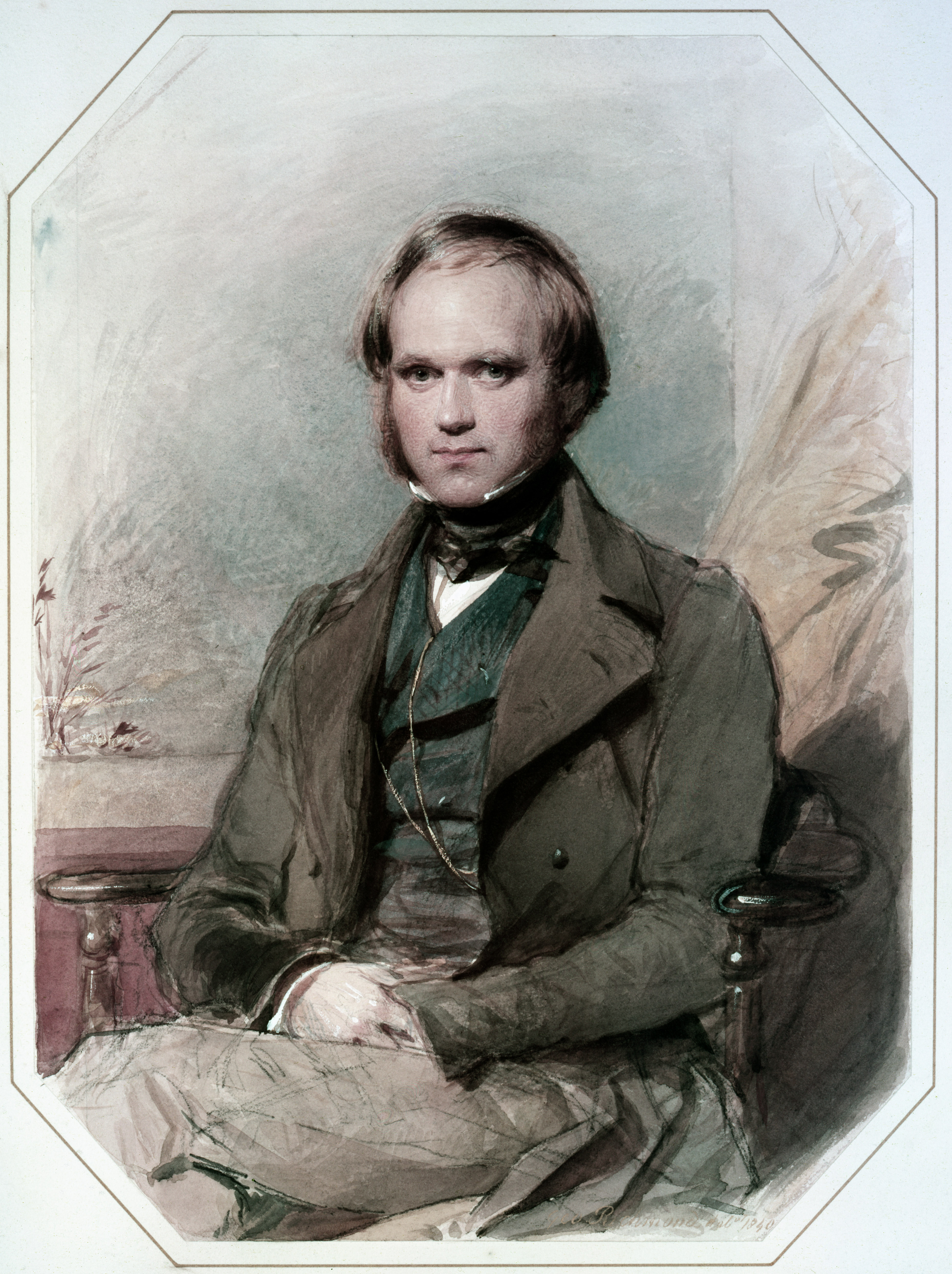
Portrait of Charles Darwin, by George Richmond (circa 1838), October 15, 2012. (Jdcollins13 via Wikipedia). In public domain.

Portrait of Charles Darwin, by George Richmond (circa 1838), October 15, 2012. (Jdcollins13 via Wikipedia). In public domain.

That was really my only sticking point. For my ninth and tenth-grade classmates, though, I couldn’t believe their stone-faced silences over the Darwin story. I knew that some of them held beliefs that ran completely counter to the idea of evolution. Some, even, were likely what we now call evangelical, literal-interpretation-of-the-Bible Christians. Yet they were as silent as comatose patients for most of the first marking period. What I learned a little later on in life was that silence was as much a form of protest or disapproval as outright vocal opposition.

As for me, I found the processes of mutation, mitosis and meiosis fascinating. I felt as if I was learning a small but important secret about God and the universe. That both — if one believes in God and has some understanding of the universe — have intellectual and scientific minds. Graviano, through his mechanical teaching style, was at least able to convey that to us, if any of us paid close enough attention.

If Graviano opened my eyes to modern science and the understanding of life on its most basic level, Yom Kippur ’83 opened me up to understanding why I no longer put my trust in Maurice’s God.

I guess if I hadn’t already been in the midst of a spiritual identity crisis, I wouldn’t have used my classes in ninth grade as my way of figuring out how to rebuild my identity, and in the process, figure out what and in whom I wanted to believe. Too bad folks who now run things in this country never took one moment’s time to do the same.

My Day of Atonement/Bitter Hatred

14 Saturday Sep 2013

Posted by decollins1969 in 1, Boy @ The Window, culture, Eclectic, Hebrew-Israelite, Jimme, Marriage, Mount Vernon New York, My Father, Politics, Pop Culture, race, Religion, Youth

≈ 1 Comment

Tags

Afrocentricity, Day of Atonement, Disillusionment, Family, Forgiveness, Hatred, Judah ben Israel, Judaism, Love, Maurice Eugene Washington, Self-Discovery, Ten Lost Tribes, Torah, Yom Kippur


Prayer at the Wailing Wail, Second Temple, Jerusalem, February 1, 2013. (Steve Ibrom). Released by public domain by author.

Prayer at the Wailing Wail, Second Temple, Jerusalem, February 1, 2013. (Steve Ibrom). Released by public domain by author.

“Yom Kippur ’83 opened me up to understanding why I no longer put my trust in Maurice’s God. I spent part of another September fasting and going to temple to atone for my sins. The temple was on Fifth Avenue and Second Street, just down the street from Washington Elementary School. I’d gone to temple maybe a half-dozen times since the spring of ’81, three of those times to have some rabbi with a ragged beard tell me that Yahweh had forgiven me for my wicked ways.

“And it left me thinking, ‘Well, what about Maurice? His sins are many, and we get treated the same? Does he get forgiveness even if the sin is still in progress?’ It didn’t make sense to me that I needed to starve myself for three days and ask for forgiveness in a situation where a fat, greasy SOB for a stepfather could steal from, cheat on, beat up on, and lie to Mom, get forgiveness, and keep on trying to do what he’d done before Yom Kippur. I said to whoever was a higher power, ‘What did I do to deserve this?’ I didn’t get an answer, and nothing anyone at temple said gave me any answers either. I felt empty, as if everything I thought being in this faith was about was a farce, a morbid, diabolical joke that was played on me and my family. And Maurice was the devil himself.”

That’s what I wrote in Boy @ The Window about my last Yom Kippur as a Hebrew-Israelite. That Saturday, September 17, ’83, was the last time I went to temple, the last time I looked at any aspect of our bizarre and goofy mix of Judaism and Afrocentricity with a modicum of seriousness. By the time I left, I wasn’t in a forgiving mood at all. I hated my then stepfather Maurice, and hated the people who claimed that people like Maurice were descendants of one of the Ten Lost Tribes of Ancient Israelites.

Please understand. When I said, “I hated Maurice,” it wasn’t a euphemism for me in the fall of ’83. If I had access to a gun, I would’ve blown him away and gladly served time in prison for doing so. I had stomach ulcers in the fall of ’83, because I couldn’t stand the smell, sound or sight of the obese asshole. I all but prayed to Yahweh that he get hit by a Mack truck going eighty miles an hour down East Lincoln Avenue. I wanted him dead, and I wanted to piss on his ashes to boot.

Even at thirteen, though, I also understood that this kind of anger and rage wouldn’t help me in the long run between ninth grade and college. Or with sports. Or dating. Or in finding my own path to God or to anything else worth believing. My bitterness and hatred were so deep, about as deep as any love that I’d experienced up to that point in my life. Whether my Mom, my father Jimme, my Uncle Sam or my version of Wendy, all that love was nearly drowned out by my hate for my stepfather.

Even on my irony scale, this hatred broke all records. Especially on a day of atonement, where we all but sacrificed an unblemished lamb at the temple over four hours that Saturday. But I had other reasons to be bitter on this, the holiest of holy days. No bar mitzvah, no celebrations of Hanukkah, no participation in Hebrew-Israelite life for me beyond their 613 rules and regs for nearly two and a half years. I understood and yet didn’t understand this sense of pride and Blackness that came through in a near Asian religion that allowed for reincarnation and an post-Babylonian Israelite diaspora to Sub-Saharan Africa to boot. That confusion didn’t help me deal with a man who wasn’t one, but was a teenage bully who did everything he could to keep me and Mom in submission to him, with Yahweh and Torah as his excuse.

Yom Kippur 1983

Yom Kippur 1983

I knew after I left temple that Yom Kipper afternoon that it would be my last. I didn’t know how, but my days of wearing a kufi or yarmulke were on their way to an end. Still, with hatred and confusion in my heart and mind, I was also lost, more lost than the other ten ancient Israelite tribes undoubtedly were in the aftermath of the Babylonian conquest.

On Pitt’s Concrete Slab & A Labor Day Pirates Game

02 Monday Sep 2013

Posted by decollins1969 in 1, Academia, Boy @ The Window, culture, Eclectic, High Rise Buildings, Pittsburgh, Pop Culture, race, University of Pittsburgh, Youth

≈ Leave a comment

Tags

1988, Bucs, College Success, Darryl Strawberry, Forbes Quad, Forbes Quadrangle, Handouts, Homeless, Homelessness, Labor Day, Mets, New York Mets, Pittsburgh Pirates, Schenley Park, Self-Discovery, Three Rivers Stadium, Wesley V. Posvar Hall


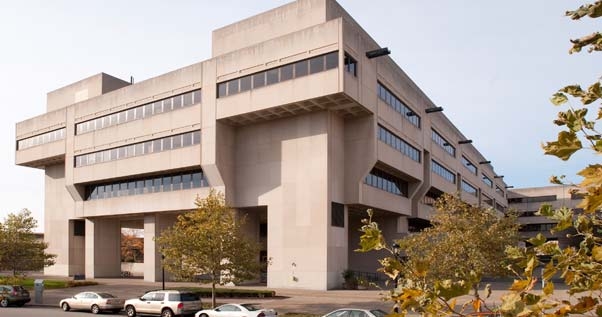
Wesley V. Posvar Hall (formerly Forbes Quadrangle, formerly Forbes Field – I would’ve been on slab in stairwell in SW corner of building 25 years ago), University of Pittsburgh, September 2, 2013. (http://www.tour.pitt.edu).

It was a quarter-century ago that I think I finally became an adult. Or, at least, was no longer stuck at the age of twelve psychologically and emotionally. I understand that five days without a permanent place to sleep, eat and shower isn’t much when compared to many who’ve lived with homelessness much longer. But it was more than enough to wake me up to the fact that my already tumultuous life was on the verge of being a full-blown nightmare if I didn’t find shelter in the form of a South Oakland firetrap.

From Boy @ The Window:

Tuesday and Wednesday were the worst two days of my life since the summer of abuse. Even with the luggage well hidden [in Schenley Park], I worried that fire ants would get a hold of my clothes or that a homeless guy would steal my stuff. But I had no choice. I saw no one from the second half of my freshman year on campus, so I didn’t ask for any other help. I kept looking and calling places for apartment availability. Whether efficiencies or studios or one-bedrooms, the response was always, “the place is taken.” I spent part of the evening at William Pitt Union, watching the news and the Pirates game, thinking all the while about where I’d sleep that night. The student union was out. Pitt Police were always prowling around and looking into the TV room. Hillman Library was still on a summer schedule, and wouldn’t open for its normal hours until after Labor Day. The other buildings were classrooms and faculty offices, better places to hide. My runaway experience in ’85 gave me that idea.

Panther Hollow Lake in Schenley Park, Pittsburgh, PA, September 2, 2013. [note the heavily wooded area behind the lake]. (http://post-gazette.com).

Panther Hollow Lake in Schenley Park, Pittsburgh, PA, September 2, 2013. [note the heavily wooded area behind the lake]. (http://post-gazette.com).

I went over to Forbes Quadrangle (formerly Forbes Field, where the Pirates used to play) and hung out at The Second Plate deli on its benches for a while, pretending to study until well after midnight. Then I looked around for a good place to sleep. Unfortunately, maintenance and security guards locked up all of the classrooms and faculty lounges at night. I settled on the stairwell in the farthest corner of the building away from its two main entrances. I walked up to the fifth floor ledge, laid down on the hard concrete on top of my clothes, and fell asleep. This wasn’t a good sleep, maybe four or five hours. The fluorescent lights were always on, the guard or students would use the stairs, and the ledge was the hardest thing that I’d ever slept on. I woke up on Wednesday and Thursday morning stiffer than I’d been the day before….Before I went to sleep Wednesday night, I got real with myself and real humble with God and started praying. I said, “God, I don’t pray nearly as much as I used to, but I could really use your help. I am your child because of Jesus, and I need you to help me find a place to stay. If you don’t help me find somewhere to live, I’ll have to go home and go to school from home.” I knew full well – and God knew, too – what would happen if I went back home. Nothing. Nothing good, anyway. I was three or four days away from buying a plane ticket back to New York and withdrawing from the university. Thoughts of going to Fordham University or Hunter College crept into my head. They were good schools for someone like me. Living at home, though, wasn’t.

Of course, I did eventually find a house with a room available, one where I’d share a kitchen and bathroom for the next two school years with other Pitt students, reputable and otherwise.

I slept away most of my Labor Day Weekend, except for spending some of my remaining money to take in a Pirates-Mets game at Three Rivers. My Mets won 7-5, on the power of two Darryl Strawberry home runs.

…After what I’d just been through, I learned something new and foreign. That everyone needs folks in their lives – friends, family, mentors and authority figures – if for no other reason than the need to ask for help. I’d come to know at least a dozen people who I could’ve called on during my five-day ordeal, but I never looked through a phone book or gave them a call. Heck, I didn’t even try to keep in touch by getting their addresses and numbers at the end of April. Not to mention contacting Jack Daniel, an Associate Provost at Pitt and the author of the Challenge Scholarship, the one that paid for half of my tuition. If anyone had any incentive to make sure I had a place to lay my head, it would’ve been him. All of these thoughts had been in my head during the week. I didn’t trust them or the instincts or wisdom from which they originated. “I’m so stupid God,” I said to myself, “I’m so incredibly stupid.”

Homeless in Pittsburgh

Homeless in Pittsburgh

Mom’s constant mantra in my head, of not depending on others for help, was a lie, at least for me. I couldn’t will myself through school. Especially when it came to money. I needed all the help I could get. Besides, my family had now been on welfare for five and a half years. If that wasn’t one of my Mom’s examples of so-called handouts, I didn’t know what was.

My approach to college changed with this revelation…I knew that all the things I shied away from talking about were now things I needed to discuss. But I also knew that I had to draw out my better, more sociable self in order to welcome others in my life with open arms. That meant taking some risks, which meant that I could get hurt emotionally or psychologically by them.

My life hasn’t been the same since, thank God.

Grad School & My Most Special Summer Reading List

31 Saturday Aug 2013

Posted by decollins1969 in 1, Academia, Boy @ The Window, culture, Eclectic, Pittsburgh, Politics, Pop Culture, race, University of Pittsburgh, Work, Youth

≈ Leave a comment

Tags

"I Have A Dream" speech, Afrocentricity, Black Culture, Black History, Blackness, Books, Carter G. Woodson, Department of HIstory, Elaine, Graduate School, Higher Education, Joe White, K-12 Education, Malcolm X, March on Washington, Multicultural Education, Pitt, Readings, Self-Discovery, Toni Morrison, W. E. B. Du Bois, Western Psych, Western Psychiatric Institute & Clinic


Just a small sample of the books I read/re-read summer before grad school in 1991, August 31, 2013. (Donald Earl Collins).

Just a small sample of the books I read/re-read summer before grad school in 1991, August 31, 2013. (Donald Earl Collins).

For me, August 28 this week was significant for any number of reasons. It wasn’t just that it was fifty years to the exact day and date that the March on Washington occurred and MLK gave his “I Have A Dream” speech. Or that is was fifty-eight years to the date that White supremacists lynched Emmett Till for allegedly whistling at some flat-butt White girl. This past Wednesday was also twenty-two years to the day and date that I began my first day of graduate school as a master’s student in the University of Pittsburgh’s Department of History.

Of course, I didn’t discuss this earlier this week (it would’ve been incredibly arrogant on my part to bring this up three days ago). My big steps for myself were infinitesimal when in measured comparison to the beginning of the two-year height of the official Civil Rights Movement. But even on an afternoon in which I attended my first course and meeting about teaching/advising assignments for the semester, it did feel like a bit of a triumph. Especially when considering what I had to do that spring and summer to get into the program with funding in the first place.

I didn’t learn that much that day. Except the low contempt Joe White and some of the other professors held toward pedagogy and teaching. “You already know more than your students,” White said as advice to us who’d be TAs that semester. I was lucky to not be among them for my first year. I was a GSA assisting in the advising of history majors, some of whom were my fellow undergrads just a few months before. But even then, I thought two minutes’ worth of advice on viewing students as empty vessels was insufficient training for learning how to lecture and facilitate conversations with upwards of 100 students spread out over several discussion sections each week.

I had other things on my mind at that moment, though, including the relief that I’d survived a summer making $5.20 per hour as a full-time employee with a Western Psychiatric Institute & Clinic project in which the project investigators were far more psychotic than the patients. Aside from that, I thought about how the previous four months had served as my preparation for the White world of grad school.

I’d done a lot of reading that late spring and summer, spurned on by boredom, disappointment in my weirdly evolving friendship with Elaine, and a sense that I needed to read to fortify myself against the neo-Marxists in my eventual field. So I read. I started off with Alex Haley’s The Autobiography of Malcolm X (1965), believe it or not, the first time I’d ever read it. Like so many before me, it made my views of the man less black and white than it had been before. I then picked up W. E. B. Du Bois’ Souls of Black Folk (1903), the first time I’d read that book since I wrote a book report on it for Mrs. O’Daniel’s class in fifth grade. Unsurprisingly, I got much more out of it in May ’91 than I did in May ’80.

I didn’t stop there, as my reading took me on three different tracks in June, July and August. One was the “I didn’t get to read this before” track, as I read Toni Morrison’s Tar Baby, Song of Solomon and Beloved (didn’t understand it then, and still don’t get the big deal about it now). Along with Alice Walker’s The Color Purple, Maya Angelou’s I Know Why The Caged Bird Sings (1969), bell hooks and several others on Black Women’s literature. Then, I decided to go back and reread some James Baldwin and Richard Wright that I’d first read for high school, and added Ralph Ellison’s Invisible Man (1952) to the mix. On the non-literature track, I ended up reading Franz Fanon, Du Bois’ Black Reconstruction (1935) — at least, I put a significant dent in it — Derrick Bell’s And We Are Not Saved (1987), and other writings on Black history and culture (broadly speaking).

But the third track would end up taking me on a path toward my dissertation topic and my first book, Fear of a “Black” America (2004). It started with articles on multicultural education that took me to James Banks’ theoretic constructions of what multicultural education ought to have been, but wasn’t. I also found myself reading books like Jonathan Kozol’s Savage Inequalities (1991), Molefi Asante’s The Afrocentric Idea (1987), Dinesh D’Souza’s Illiberal Education (completely indecipherable in a circular firing squad of a thesis kind of way) and Carter G. Woodson’s The Mis-education of the Negro (1933). I was reading anything that could inform my thinking about K-12 and higher education and how it played the role as both equalizer and oppressor for so many Black folks over the years.

Books, Grad School & Blackness

Books, Grad School & Blackness

It was easily the most reading I’d done on my own since the year before I’d gone into seventh grade, middle school and the Humanities Program. I wanted to read all I wanted to read before spending the next few years drowning my brain in hundreds of books and articles that I’d absolutely need to read as a historian. In the process, I may’ve radicalized myself a bit for the otherwise hum-drum experience of reading mind-numbing accounts of history in which the authors didn’t seem to see their own sense of high-brow White maleness.

And with all of it, I surprised myself. I realized once again that my Black classmates and 616 neighbors were wrong about me not being Black enough. Their “Black” wasn’t my “Black,” of course. But all those books confirmed for me that there were many ways to be Black that folks who didn’t read could barely understand.

Me The Little Runaway

25 Sunday Aug 2013

Posted by decollins1969 in 1, Boy @ The Window, Christianity, culture, Eclectic, Hebrew-Israelite, Jimme, Mount Vernon High School, Mount Vernon New York, music, My Father, Pop Culture, race, Religion, University of Pittsburgh, Youth

≈ 2 Comments

Tags

"Runnin'" (1995), 616, 616 East Lincoln Avenue, Abuse, Child Abuse, Father-Son Relationships, Maurice Eugene Washington, Maurice Washington, Poverty, Running Away, Self-Defense, Self-Discovery, Self-Reflection, The Pharcyde


Literally on this day and date, and at this time twenty-eight years ago, I was at the beginning of a twenty-three hour adventure away from 616, my idiot stepfather (no longer, of course, and recently deceased) Maurice Washington and his abuse, a trek that took me all over Mount Vernon and into both my dreams and fears. As I wrote in Boy @ The Window:

“We got into it over the ‘Dad’ issue again. He told me to do something, and I only said, ‘Okay.’ I didn’t say ‘Okay, Dad,’ and my ‘Okay’ wasn’t exactly enthusiastic. This was the one thing about Maurice that I refused to accept – him as anything other than the leech and bully that he was. He certainly wasn’t my dad, and he gave up the right to be called “stepfather” three years before. Yet he insisted on me calling him “Dad!” I usually walked a fine line between open defiance and acquiescence with him, not referring to him by anything at all. He had no name, no title, no label. Maurice was nothing and meant nothing to me other than the reason I’d eventually have to leave 616. Our incidents had become less frequent only because he worked nights as a security guard and slept during the day. And I stayed home as little as I could when he was around.

“So on the last Sunday of August ’85, we had another round.

“I’m your father, and the Bible says to ‘honor thy father and mother’. . .”

“You’ll never be my father. My father lives at 149 South Tenth Avenue.”

“As long as you live under my roof, you’re gonna call me ‘Dad’.”

“No, I’m not,” I said shaking my head at the same time.

“I’m gonna show you how to respect me, nigga!,” he said as he balled his fists.

“Luckily I had fast feet. He tried to grab me and then hit me at the same time, not a good tactic when you’re significantly overweight and off balance. I slithered past him, got out of his grasp, and dashed down our long hallway to the front door. I ran down the stairs that led to the back dirt courtyard area of 616 and didn’t stop running into I ran into the woods nearby, Wilson Woods. It was a mostly cloudy late summer day, thank God, because I wasn’t in any shape to be bothered with anybody.

“I wound my way through Wilson Woods on its serpentine path toward the southeast side of Mount Vernon. I saw a few folks who recognized me as I walked from the woods toward East Third and South Columbus, but the walk was mostly a blur. I made my way to Jimme’s place on West Third and South Tenth, all the while thinking about the reality of my long-lost childhood and quickly evaporating time as a teenager. Jimme wasn’t home, and I didn’t feel like going on a hunt for him at one of his watering hole after a meandering three-mile walk. So I waited there for a while, maybe an hour or so.

“I made my way past downtown Mount Vernon, up Gramatan Avenue, taking on the hill on which Davis Middle School sits. From there I reached Fleetwood and walked past homes and cars that I thought me and my family deserved but would never own. I likely walked by the homes of some of my classmates without even knowing it. Tudors and townhomes, beamers and Volvos populated this neighborhood. I turned right on Birch Street and headed east, eventually meandering past Pennington-Grimes Elementary. I noted that this was the place where the remaining affluent and most assertive Humanities classmates went to as kids. It made me think for a moment about the reality that when put together, Mom, Maurice and Jimme had no clue about what it was like for me to be in a program like this, with students whose parents owned their own homes or were able to take a vacation overseas. These compadres were more sophisticated than I was, even after four years in the program. Just thinking about it made me clinch my teeth.”

I eventually made my way to Mount Vernon High School, where I spent the night sleeping on the floor in the classroom next to the Humanities coordinator’s office (Joyce Flanagan’s office at the time). I had a morning of meandering, ended up at St. Ursula Catholic Church for three hours of prayer and contemplation about my future. All before going home to my worried (for once) Mom, my dispassionate dipshit of a stepfather, and my uncivilized siblings.

There, around 3 pm that Monday, I just collapsed, in my sometimes bed and bedroom, not knowing I was literally two years away from being on my way to Pitt and Pittsburgh. But I knew for sure that I couldn’t keep running away, either.

The Road to Boy @ The Window, Part 3: Spencer Fellowship

01 Monday Jul 2013

Posted by decollins1969 in 1, Academia, Boy @ The Window, Carnegie Mellon University, culture, Eclectic, Pittsburgh, Politics, Pop Culture, race, Religion, University of Pittsburgh, Youth

≈ Leave a comment

Tags

Ambivalence, Berkeley California, Catherine Lacey, Chicago, Disillusionment, Dissertation Fellowship, Epiphany, George Boudreau, Oakland California, Personal Insights, Personal Stories, Revelations, Sandra Stein, Scholarship, Self-Discovery, Spencer Foundation, Writing, Writing Craft


Why Boy @ The Window, Part 3

Why Boy @ The Window, Part 3

I’ve written before about the epiphanies that came with my status as a Spencer Foundation Dissertation  Fellow during the 1995-96 year, particularly during our retreat in the Bay Area in February ’96. What that time as a fellow and at this retreat revealed was that I had pushed much of what I thought of as ambivalence toward academia into my mind’s subconscious. But that splinter in the back of my head driving me crazy was about much more than academia and my pursuit of a doctorate and a job as a history/education professor. No, it was as much about my purpose in life, my writing gift and the need to pursue this calling despite my being within a year of becoming “Dr. Collins.”

You see, there was a civil war of sorts going on in my soul and spirit over the very nature of who I was and wanted to be. I’d spent more than four years in resistance to the idea that every sentence I wrote in academia needed to be a compound sentence. I fought over the idea of making my writing more accessible to readers who weren’t history majors, graduate students or actual history professors. I wanted to write so that what I wrote wouldn’t be forgotten in five minutes because my writing required a cryptographer’s chart to decipher its meaning.

Whether Dan Resnick or Joe Trotter, Paula Baker and a few other professors, their overarching criticism of my writing was that it didn’t sound scholarly enough. It didn’t have the heft of words like “posits,” “tropes,” “archetypes,” “eschatology,” and a thousand other words that required a minimum of a master’s degree to fully understand their meaning. I tried in my dissertation to address those concerns. But after the first few chapters, I decided to write first, and then rewrite second, third and fourth to mold my language into scholar-speak.

Luckily I had the Spencer Foundation Dissertation Fellowship by then. It saved me at least a year — and possibly as many as three — in terms of completing my doctoral thesis and degree. I didn’t have to teach for a full year, do research or work for Joe Trotter or anyone else for a year.

And it gave me time to think about the kind of career and future I wanted. Maybe too much time. For the first time, I realized the question that had been on my mind for years was about my competing interests in academia and in writing. Was I a writer first? Was I an academic historian? Would it be possible to do both? And if it were, how would I do both?

The Spencer Fellows retreat in Berkeley/Oakland in February ’96 helped broaden my horizons. Some of my fellow Spencer Fellows were struggling with the issue of their career moves as well. I had only considered teaching in schools of education in passing prior to that retreat. I knew that with my interests in diversity in education, in educational equity, in the process of getting into and through college, a traditional history program would be an uncomfortable fit for my interests and talents. The retreat revealed that much to me, at least.

It revealed far more than that, though. I realized that out of the thirty-three Fellows, I was the only one who actually understood on a personal level how difficult issues of race, poverty and the politics of education made it for someone like me to go to college, graduate, get into a grad program, and eventually finish a doctorate. Oh, my fellow Fellows knew all too well the harassment and hazing and jealousies of their professors and dissertation advisors. Still, issues like welfare poverty and magnet school programs like the one I attended in Humanities were abstractions for them. Most of them hadn’t experienced what they were actually studying. The ones who had some experiences approximating my own became my favorite Spencer Fellows to be around, for those were the greatest of conversations.

So the seed of thinking about my work in more personal terms was planted on a conscious level by the time my Spencer Fellowship ended in June ’96. I hadn’t figured out yet that I was a writer first, an academic historian and educator second, but clearly both in the end. I was too invested in earning the degree and getting away from Joe Trotter as fast as I could back then.

I did think incorporating my experiences around the importance of education, of race, of poverty, of family dynamics in my writing would make what I wrote about much more meaningful. It wouldn’t diminish the scholarship, and would provide a creative outlet beyond the mundane world of academic writing.

Conversations With M² About “Big Foot”

15 Friday Mar 2013

Posted by decollins1969 in 1, Boy @ The Window, culture, Eclectic, Pop Culture, race, Youth

≈ Leave a comment

Tags

" "Should've Known Better, "Don't Shed A Tear, Abe Vigoda, Anger, Channeling Emotions, Crush #2, Geology, Manhood, Masculinity, M², Paul Carrack, Pitt, Rage, Richard Marx, Self-Discovery, Sexuality, University of Pittsburgh


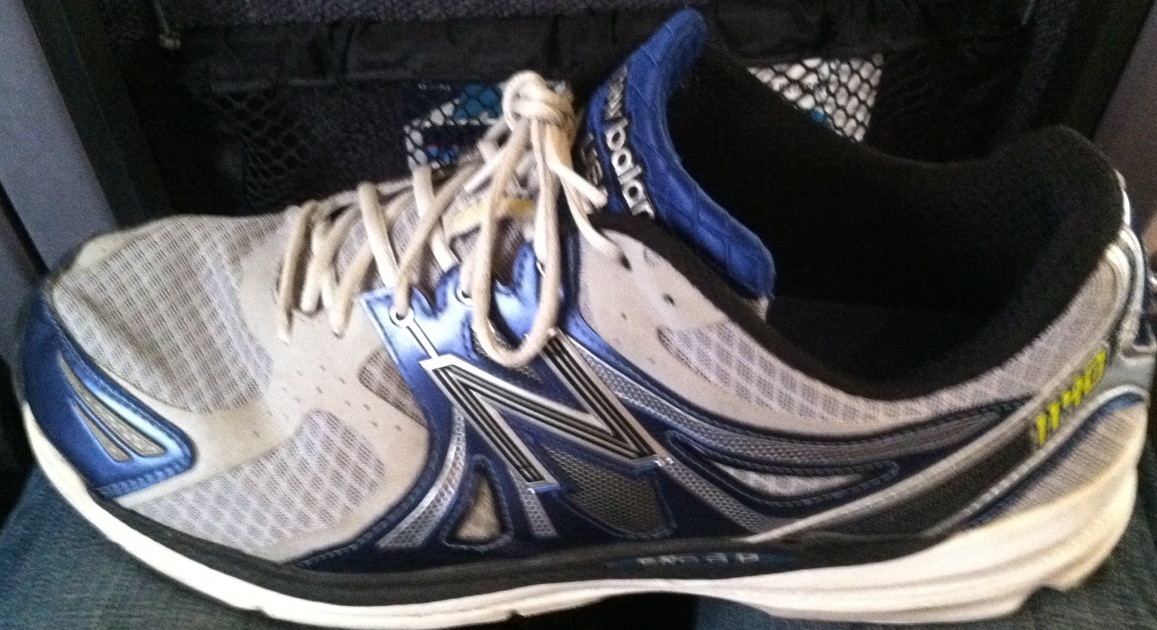
My left foot (excuse movie pun), size 14 4W, March 15, 2013. (Donald Earl Collins).

My left foot (excuse movie pun), size 14 4W, March 15, 2013. (Donald Earl Collins).

Sometimes in my life, my anger and rage are a driver toward the better. Usually it’s because I channel that negative energy into something positive, like writing, running, praying and forgiving. In the case of the year after Crush #2 crushing me emotionally and psychologically, it was school and needing to pull my grades up that gave me a place to channel my anger and rage. But with a twist. I deliberately decided that it was the older students at Pitt that I’d befriend my second semester, shunning all but a few classmates under the age of twenty-two.

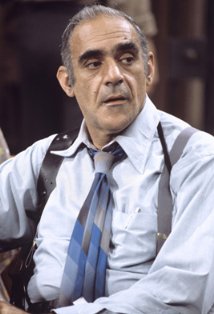
In Geology that Winter ’88 semester, I had a professor who sounded like Abe Vigoda from Barney Miller and looked like he’d been digging up shale every time he lectured in class. The class was pretty easy, all multiple choice. The main issue of significance wasn’t the class, though. It was M². I had met her at the Cathedral lab the previous semester. She always came to the lab with her boyfriend, and always somehow found something she needed help with. She made almost every girl I went to high school with, well, look like they were girls by comparison.

A "young" Abe Vigoda, Barney Miller, circa 1978, March 15, 2013. (http://notalwaysaboutmonkeys.com).

A “young” Abe Vigoda, Barney Miller, circa 1978, March 15, 2013. (http://notalwaysaboutmonkeys.com).

We were in this Geology class together, which apparently gave her a ready-made excuse for toying with me off and on that semester. As sexy and attractive as she was, I was ill-equipped for any drama between her and her boyfriend. M² was twenty-four, her boyfriend twenty-two and six-two at that. He looked like he worked out, or had at least filled out, in ways that I knew I hadn’t yet.

So at first I kept my distance, not wanting any part of what was going on in M²’s head. I bumped into her one day while getting lunch at the Cathedral of Learning, in the Roy Rogers restaurant on the ground floor. She asked me to sit down and eat with her, and for once, I didn’t refuse. We started talking, or rather, M² started talking about her boyfriend and how she felt about their relationship, particularly their sex life. I really didn’t want to know anything about it, but my ears perked up when she said, “You’d think that as tall as he is he would be bigger down there.” That was definitely too much information.

“You know what they say about men with big feet?,” M² asked next.

I really didn’t know. I guessed that I was about to talk my way into a punchline.

“What?”

“Big feet equals a big you-know-what,” she answered while pointing to my size thirteens and then looking at my face.

“You’re blushing,” M² said with a coy smile.

Of course I was blushing. It wasn’t every day that someone six years older than me hinted that they might want to have sex with me, boyfriend or no boyfriend.

Frame 352 from Patterson-Gimlin film, claiming to show Bigfoot, October 20, 1967. (Beao via Wikipedia). Qualifies as fair use under US Copyright laws - low resolution picture.

Frame 352 from Patterson-Gimlin film, claiming to show Bigfoot, October 20, 1967. (Beao via Wikipedia). Qualifies as fair use under US Copyright laws – low resolution picture.

For what it was worth, a gorgeous Black woman in her mid-twenties flirting with and insinuating that she wanted to have sex with me did give me a confidence boost that slowly wore away the anger I started the year with. What also helped was a battery of new music that helped focus my anger and reinvigorate my imagination. Richard Marx’s “Should’ve Known Better” and Paul Carrack’s “Don’t Shed a Tear” were two songs that were close enough in lyrics, meaning and emotion to my situation with Crush #2 that I smiled a silly smile every time I heard or played them both.For the first time in two years, I started paying attention to rap again. Rob Base, Salt ’n Pepa, Big Daddy Kane, and Public Enemy all began to seep into my consciousness that winter and spring. Geto Boys’ “Mind Playin’ Tricks on Me” would’ve been nice to hear six or eight months before, when I was waist deep in obsession over Crush #2.

Still, M² helped me realize, maybe for the very first time, that as much of a mess I was back then, that I was attractive — or at least handsome –in my own right. And that a goodly portion of my former Humanities classmates were assholes.

← Older posts
Newer posts →

Boy @ The Window: A Memoir

Boy @ The Window: A Memoir

Places to Buy/Download Boy @ The Window

There's a few ways in which you can read excerpts of, borrow and/or purchase and download Boy @ The Window. There's the trade paperback edition of Boy @ The Window, available for purchase via Amazon.com at http://www.amazon.com/Boy-Window-Donald-Earl-Collins/dp/0989256138/

There's also a Kindle edition on Amazon.com. The enhanced edition can be read only with Kindle Fire, an iPad or a full-color tablet. The links to the enhanced edition through Apple's iBookstore and the Barnes & Noble NOOK edition are below. The link to the Amazon Kindle version is also immediately below:

scr2555-proj697-a-kindle-logo-rgb-lg

Boy @ The Window on Amazon.com: http://www.amazon.com/Boy-The-Window-Memoir-ebook/dp/B00CD95FBU/

iBookstore-logo-300x100

Boy @ The Window on Apple's iBookstore: https://itunes.apple.com/us/book/boy-the-window/id643768275?ls=1

Barnes & Noble (bn.com) logo, June 26, 2013. (http://www.logotypes101.com).

Boy @ The Window on Barnes & Noble: http://www.barnesandnoble.com/w/boy-the-window-donald-earl-collins/1115182183?ean=2940016741567

You can also add, read and review Boy @ The Window on Goodreads.com. Just click on the button below:

Boy @ The Window

Twitter Updates

Tweets by decollins1969
  • RSS - Posts
  • RSS - Comments

Archives

  • June 2025
  • April 2023
  • September 2022
  • August 2022
  • July 2022
  • June 2022
  • May 2022
  • April 2022
  • March 2022
  • January 2022
  • December 2021
  • November 2021
  • October 2021
  • September 2021
  • August 2021
  • July 2021
  • June 2021
  • April 2021
  • March 2021
  • February 2021
  • January 2021
  • December 2020
  • November 2020
  • October 2020
  • September 2020
  • August 2020
  • July 2020
  • May 2020
  • April 2020
  • March 2020
  • January 2020
  • December 2019
  • November 2019
  • August 2019
  • July 2019
  • June 2019
  • May 2019
  • April 2019
  • March 2019
  • February 2019
  • January 2019
  • December 2018
  • November 2018
  • October 2018
  • September 2018
  • August 2018
  • July 2018
  • June 2018
  • May 2018
  • March 2018
  • February 2018
  • January 2018
  • December 2017
  • November 2017
  • October 2017
  • September 2017
  • August 2017
  • July 2017
  • June 2017
  • May 2017
  • April 2017
  • March 2017
  • February 2017
  • January 2017
  • December 2016
  • November 2016
  • October 2016
  • September 2016
  • August 2016
  • July 2016
  • June 2016
  • May 2016
  • April 2016
  • March 2016
  • February 2016
  • January 2016
  • December 2015
  • November 2015
  • October 2015
  • September 2015
  • August 2015
  • July 2015
  • June 2015
  • May 2015
  • April 2015
  • March 2015
  • February 2015
  • January 2015
  • December 2014
  • November 2014
  • October 2014
  • September 2014
  • August 2014
  • July 2014
  • June 2014
  • May 2014
  • April 2014
  • March 2014
  • February 2014
  • January 2014
  • December 2013
  • November 2013
  • October 2013
  • September 2013
  • August 2013
  • July 2013
  • June 2013
  • May 2013
  • April 2013
  • March 2013
  • February 2013
  • January 2013
  • December 2012
  • November 2012
  • October 2012
  • September 2012
  • August 2012
  • July 2012
  • June 2012
  • May 2012
  • April 2012
  • March 2012
  • February 2012
  • January 2012
  • December 2011
  • November 2011
  • October 2011
  • September 2011
  • August 2011
  • July 2011
  • June 2011
  • May 2011
  • April 2011
  • March 2011
  • February 2011
  • January 2011
  • December 2010
  • November 2010
  • October 2010
  • September 2010
  • August 2010
  • July 2010
  • June 2010
  • May 2010
  • April 2010
  • March 2010
  • February 2010
  • January 2010
  • December 2009
  • November 2009
  • October 2009
  • September 2009
  • August 2009
  • July 2009
  • June 2009
  • May 2009
  • April 2009
  • March 2009
  • February 2009
  • January 2009
  • December 2008
  • November 2008
  • October 2008
  • September 2008
  • August 2008
  • July 2008
  • June 2008
  • May 2008
  • April 2008
  • March 2008
  • February 2008
  • January 2008
  • December 2007
  • November 2007
  • October 2007
  • September 2007
  • August 2007
  • July 2007
  • June 2007

Recent Comments

decollins1969's avatardecollins1969 on No Good Teaching Deed Goes…
Mary Rose O’Connell's avatarMary Rose O’Connell on No Good Teaching Deed Goes…
Lyndah McCaskill's avatarLyndah McCaskill on The Raunchiest of Them Al…

NetworkedBlogs on Facebook

NetworkedBlogs
Blog:
Notes From a Boy @ The Window
Topics:
My Life, Culture & Education, Politics & Goofyness
 
Follow my blog

616 616 East Lincoln Avenue A.B. Davis Middle School Abuse Academia Academy for Educational Development AED Afrocentricity American Narcissism Authenticity Bigotry Blackness Boy @ The Window Carnegie Mellon University Child Abuse Class of 1987 CMU Coping Strategies Crush #1 Crush #2 Death Disillusionment Diversity Domestic Violence Economic Inequality Education Family Friendship Friendships Graduate School Hebrew-Israelites High-Stakes Testing Higher Education History Homelessness Humanities Humanities Program Hypocrisy Internalized Racism Jealousy Joe Trotter Joe William Trotter Jr. K-12 Education Love Manhood Maurice Eugene Washington Maurice Washington Misogyny Mother-Son Relationship Mount Vernon High School Mount Vernon New York Mount Vernon public schools Multiculturalism MVHS Narcissism NFL Pitt Pittsburgh Politics of Education Poverty President Barack Obama Race Racial Stereotypes Racism Relationships Self-Awareness Self-Discovery Self-Reflection Sexism Social Justice Teaching and Learning University of Pittsburgh Violence Whiteness Writing

Top Rated

Blog at WordPress.com.

  • Subscribe Subscribed
    • Notes from a Boy @ The Window
    • Join 103 other subscribers
    • Already have a WordPress.com account? Log in now.
    • Notes from a Boy @ The Window
    • Subscribe Subscribed
    • Sign up
    • Log in
    • Report this content
    • View site in Reader
    • Manage subscriptions
    • Collapse this bar
 

Loading Comments...