• About Me
  • Other Writings
  • Interview Clips
  • All About Me: American Racism, American Narcissism, and the Conversation America Can’t Have
  • Video Clips
  • Boy @ The Window Pictures
  • Boy @ The Window Theme Music

Notes from a Boy @ The Window

~

Notes from a Boy @ The Window

Tag Archives: Mentoring

Remembering Harold Meltzer

09 Wednesday Jan 2013

Posted by decollins1969 in 1, Academia, Boy @ The Window, culture, Eclectic, eclectic music, Mount Vernon High School, Mount Vernon New York, Politics, Pop Culture, race, Youth

≈ 5 Comments

Tags

AP US History, Bitterness, Confirmed Bachelor, Death, Dedication, Egalitarianism, Eulogy, Friendship, Harold I. Meltzer, Harold Meltzer, Homophobia, Humanities, Humanities Program, Learning, Life, Mentoring, Metropolitan Opera House, Morison & Commanger, Perseverance, Politics of Education, Self-Discovery, Teaching
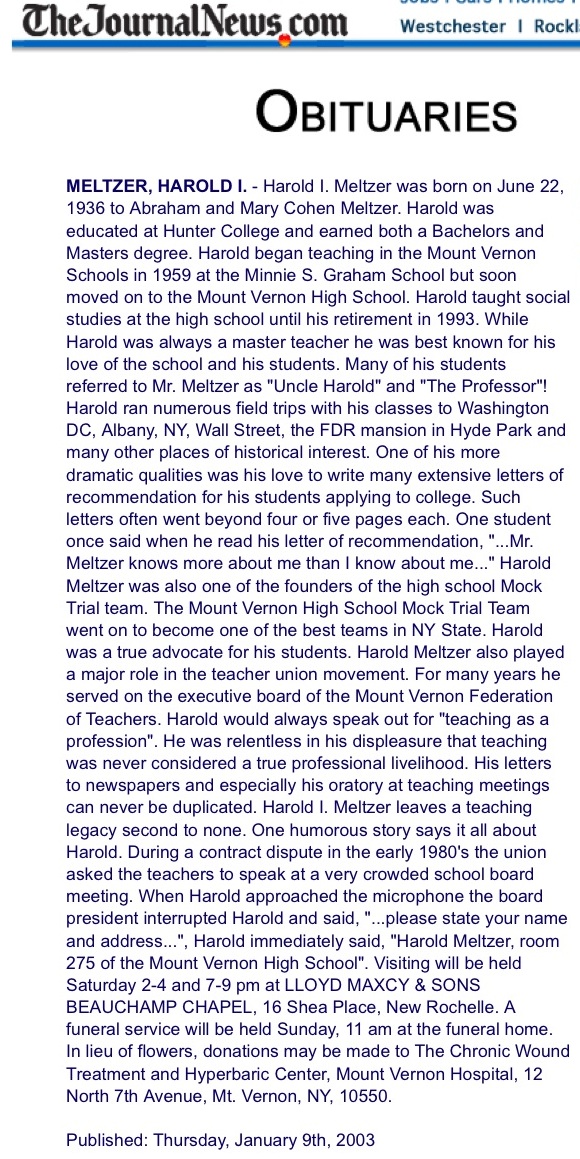

Harold Meltzer obituary (via Frank Pandolfo), January 9, 2003. (Westchester Journal News).

Harold Meltzer obituary (via Frank Pandolfo), January 9, 2003. (The Journal News).

Harold Meltzer, my favorite and best teacher of all, died on January 2, 2003 at the age of sixty-six, ten years ago last week. He was all too young and all too bitter about his years as a history teacher at Mount Vernon High School. But then, dealing with entitled parents and unrepentant administrators in Mount Vernon, New York for thirty-five years would do that to most people. Despite that, Meltzer was a rock, the first teacher since my elementary school years that I genuinely trusted with my family secrets and my inner self. He was the first and maybe only teacher I had in my six years of Humanities who actually seemed like he wanted to teach us (see my post “No Good Teaching Deed Goes Unpunished” from May ’11).

I met Meltzer on our last day of tenth grade, after three days of finals and Regents exams, on June 21, ’85. He had summoned fourteen of us to “Room 275 of Mount Vernon High School,” as the invitation read. We had all registered to take Meltzer’s AP American History class in eleventh grade, our first opportunity to earn college credit while in high school.

Meltzer started off talking to us about Morison and Commager — who I now know as the great consensus historians of the ’50s, until the social history revolution made their textbooks irrelevant by the ’80s — as we sat in this classroom of old history books and even older dust and chalk. Meltzer himself looked to be in his late-fifties (he was actually a day away from his forty-ninth birthday), tall and lanky except for the protruding pouch in the tummy section. His hair was a mutt-like mixture of silver, white and dull gray, and his beard was a long, tangled mess.

Met Logo and A full house, seen from rear of stage, at the Metropolitan Opera House (former bldg, 39th Street), for a concert by pianist Josef Hofmann, November 28, 1937. (National Archives via Wikimedia). In public domain.

Met Logo and A full house, seen from rear of stage, at the Metropolitan Opera House (former bldg, 39th Street), for a concert by pianist Josef Hofmann, November 28, 1937. (National Archives via Wikimedia). In public domain.

The way he spoke, and the way his eyes looked when he spoke made me see him as a yarmulke-wearing preteen on his way to temple. The force with which his words would leave his mouth hit me immediately. As much as I noticed how frequently spit would spew out of Meltzer’s mouth, the rhythm of his speech was slow and sing-song, like an elder or grandfather taking you on a long, winding, roller-coaster-ride of a story. Most of all, I knew that he cared — about history, about teaching, about us learning, about each of us as people. Maybe, just maybe, for some of us, he cared too much.

But for at least for me, Meltzer’s eccentric space in which he told Metropolitan Opera House stories and talked about egalitarianism extended beyond the historical. He was the first teacher I had since before Humanities who’d ask me if things at home were all right, and knew intuitively that things weren’t. He was the first to ask me about how poor my family was and about hunger. And he was the first teacher ever to ask if I had a girlfriend. Needless to say, these questions were unexpected. Yet through these questions, Meltzer had begun to crack my thin, hard wall of separation between school and family.

Because Meltzer cared deeply about reaching students — about reaching me — our student-teacher relationship because a friendship after high school and a mentoring one as well. I wasn’t looking for a mentor, and Meltzer was only being Meltzer. Still, his stories about his battles with MVHS administrators, Board of Education folk, and with upper-crust parents who believed their kids were entitled to A’s just for showing up, were filled with lessons of perseverance, patience, and looking beyond everyday headaches in order to reach people. While this wasn’t a factor in my going to graduate school and spending a significant part of my life as a history professor and educator, these stories have helped me over the years.

1972 Dodge Dart Dark Green (similar to '74 Dodge Dart Meltzer owned when I was at MVHS), December 25, 2009. (http://www.fotosdecarros.com).

1972 Dodge Dart Dark Green (similar to ’74 Dodge Dart Meltzer owned when I was at MVHS), December 25, 2009. (http://www.fotosdecarros.com).

But unfortunately, it was a factor in why Meltzer became embittered and took early retirement in June ’93. The end of the Humanities Program, the intolerance of some administrators toward Meltzer as a “confirmed bachelor,” the lack of decency — forget about gratitude — from many of his most successful students. Those changes, these things, all would take a toll on any teacher who’d stay after school day after day to run Mock Trial, to facilitate study groups, to work on letters of recommendation for students. But no, most of my former classmates who had Meltzer between ’85 and ’87, all they could say was that “Meltzer was weird” or that “I didn’t understand” his lessons.

I’m thankful that I did have Meltzer as a teacher, friend and mentor between ’85 and ’02. I’m thankful that I had a chance to interview him for what is now my Boy @ The Window manuscript in August and November ’02, just a couple of months before he passed (see my post “Mr. Meltzer” from June ’09). I’m glad that despite his physical and psychological pain, Meltzer welcomed me with open arms and answered my questions about his life and his career. I just wish that my former classmates and some of Meltzer’s more cut-throat colleagues had taken the time to really know the man.


In-Abel-ed

10 Sunday Jun 2012

Posted by decollins1969 in 1, Academia, Boy @ The Window, culture, Eclectic, Mount Vernon High School, Mount Vernon New York, Politics, Pop Culture, race, Youth

≈ Leave a comment

Tags

Being Black, Black Teachers, Blackness, Class of '87, Class of 1987, Diversity, Estelle Abel, Harold Meltzer, HBCUs, Intelligence, Lessons, Mentoring, MVHS, Oreo Cookies, Race, Teaching, Un-Black, Uncle Ruckus


“Murder of Cain by Abel,” Ghent Altarpiece painting (1432), Jan van Eyck, January 6, 2007. (Paunaro via Wikipedia). In public domain.

I’ve written about the infamous Estelle Abel in my blog on this date (or at least, this time of year) for each of the previous five years (see “My Last Day,” “The Last Class,” “AP Exam Blues,” “Honors Coronation,” and “Twenty Years in a Week” for the full scoop). She was the chair of Mount Vernon High School’s Science Department while I was a student there, and remain so for years afterward.

As anyone should be able to tell from my previous posts on Abel, I have a bit of an ax to grind. More like a samurai sword, actually. The woman and her ten or fifteen minutes of berating me as both a student and as an un-Black young adult Black male ruined my last day of high school. Forgive me, then, for not being completely objective when it comes to the subject of Estelle Abel and her methods of teaching, motivation, and guidance on issues of academic achievement and race.

Though I’ve also forgiven her, I’m not God, and with my memory, I can hardly forget. But if there had been any chance at forgetting, I lost that opportunity in a conversation I had with my late AP US History teacher Harold Meltzer back in the ’89-’90 school year. Estelle Abel came up as a topic because of something that had occurred with one of his AP students. Apparently, this particular student, a female basketball player, had made the decision to apply to some predominantly White institutions, and had left HBCUs off her application plate. And apparently, Abel had gone after this student for doing so, all but calling her a traitor to her race by taking the route that a majority of traditional African American students have been taking since the ’70s.

Two Oreo Cookies, February 7, 2011. (Evan-Amos via Wikipedia). In public domain.

In all, it took Meltzer about twenty minutes to tell what would’ve been a five or seven-minute-story for the long-winded. That’s how much he could meander in the forests of his stories sometimes. Then I told Meltzer my Estelle Abel story from my last day of school. It sparked a conversation that I wasn’t quite prepared to have. One not only about Estelle Abel, but about the African American faculty at Mount Vernon High School in general.

For most of the rest of the conversation, Meltzer was in full gossip mode, telling me things about individual teachers that I shouldn’t have known, and mostly have forgotten, thankfully. But I did say to him early on in this part of the conversation that I really didn’t know much about the Black teachers at MVHS. The reason was simple. I didn’t have a single Black teacher as my teacher in four years of high school. Humanities classes — particularly the Level 0 and Level 1 classes — had few, if any, Black teachers, much less any teachers of color.

I didn’t say that exactly, but it was the essence of what I said and thought about while Meltzer yammered on about the disunity among MVHS teachers. To think that from Ms. Simmons’ math class in seventh grade at A.B. Davis Middle School until my history and Black Studies classes my junior year at Pitt, I’d gone without a single African American teacher or professor. I knew that some of the blame fell squarely on the shoulders of my guidance counselor Sylvia Fasulo, Humanities coordinators, MVHS’ leadership and the Italian Civic Association.

But how much of this was my fault, being so myopically focused on grades, college and getting away from 616 and Mount Vernon, I didn’t know. After all, I learned in the middle of my senior year that Dr. Spruill taught a Black history class, that there had been efforts to bring in more Black teachers and other teachers of color at Mount Vernon High School dating back at least four years.

Uncle Ruckus screenshot, from Aaron McGruder’s animated TV series The Boondocks, July 4, 2011. (Grapesoda22 via Wikipedia). Qualifies as fair use under US Copyright laws because of picture’s low resolution.

Still, none of that really mattered to me that year. I had already and unsuccessfully attempted to thread the needle between a cushy senior year and a year that prepared me for the rigors of college. Anything else, whether it was Black history, a trip to West Africa or a visit to some HBCU campuses, was hardly on my radar.

Whatever my lack of focus could be construed as in ’86-’87, it wasn’t because I wasn’t Black enough, or ashamed of being Black, as folks like Estelle Abel implied or accused me of in their thoughts and words, and with their eyeballs that year. Sure, I was weird, and readily admit to being weird, aloof, and emotionless in my MVHS days. But given the hell that I lived with at home and in that community in my last years in Mount Vernon, weirdness and a focus on getting out through college should’ve been applauded, or at least tolerated, without teachers like Abel staring at me as if I was demon-possessed.

That it wasn’t tolerated was the real shame. It took me years to get over it, that uncomfortability of being judged by other Blacks as too smart, too weird, too un-Black in their eyes for my own good.

Paula Baker and the 4.0 Aftermath

01 Wednesday Feb 2012

Posted by decollins1969 in 1, Academia, Boy @ The Window, Eclectic, Politics

≈ 2 Comments

Tags

Academia, Department of HIstory, Graduate School, Mentoring, Paula Baker, Scholarship, Smoking, Teaching and Learning, University of Pittsburgh, Writing


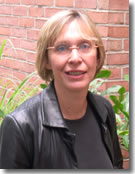
Paula Baker speaking (screen shot) in response to Donald Crichlow's book, Phyllis Schlafly and Grassroots Conservatism at The New School, New York City, March 1, 2006. (http://fora.tv/2006/03/01/Women_and_Grassroots_Conservatism).

Of all the professors I worked with in grad school, there wasn’t a tougher one on me than Paula Baker. Or a better one. She wanted and expected more out of me than even my advisors, Larry Glasco and Joe Trotter. If it weren’t for her, I probably would’ve been content with earning all of my degrees at the University of Pittsburgh. But if it wasn’t for her, I wouldn’t have discovered my ambivalence about academia in the first place.

I took an upper level history course in US history since 1945 and an independent study with Paula the semester after earning straight-As, the one that made my master’s program a seven-and-a-half month one instead of two years (see “The 4.0 Of It All” from December 2011). It was her second semester as an assistant professor in our department, and given the demographics of the ol’ White boys club, I thought it a good idea to take a professor whose graduate studies were still going on while I was in high school. That, and learning of Paula rare feat (at least for ’84) of publishing an article in the Journal of American History while still a grad student herself at Rutgers University, appealed to the competitor in me.

Paula Baker, University of Virginia, Miller Center, December 2006. (http://millercenter.org).

I sat down for my first meeting with Paula in her small, windowless office (except for a glass partition that she had covered up so students couldn’t look in), just across from the grad student cubicles on the third floor of Forbes Quad. She said, “What are you doing here?” I didn’t understand her question at first. What I soon realized was that Paula was asking me the kinds of questions I should’ve asked myself two years earlier, when I first started applying to grad schools. She said that there were better options for a doctorate in American and African American history than Pitt, including the University of Michigan and UCLA.

There were two things that made Paula, though. One, she regularly broke the law while anyone was in her office, including pre-asthmatic me. Paula smoked as if her life depended on it. For me, it was the first time I thought that I might end up dead before I turned thirty for second-hand smoke and lung cancer. Mind you, my mother, my father and my idiot ex-stepfather all smoked, but not in a space unfit for a sardine.

Two, and more important in my second semester of grad school, was her uncompromising perfectionism when it came to my research and writing. Obviously my writing was already good. But it wasn’t scholarly, at least not as scholarly as it needed to be. In writing my paper on the influence of Marxist ideology (perceived and actual) on the early Civil Rights Movement, I must’ve done at least seven drafts for Paula.

She probably used up about three ball point pens editing my drafts, crossing out whole paragraphs at a time, demanding that I raise my level of analysis ever higher. And when it was all said and done, Paula assigned me a grade of B+ in my independent study with her, the lowest grade I’d receive in three years of master’s and doctoral work. Still, she turned me on to Adolph Reed, Jr. and Theda Skocpol.

What Paula didn’t know was that by the middle of February ’92, I was mentally exhausted, mostly from the previous semester’s work and the lack of a holiday break. I wasn’t at my best in her class and in her office. Somewhere in the midst of struggling to stay on task, I learned how to read for arguments, how to use book reviews to supplement my lack of historiographical knowledge, and to expand my thinking to include other fields, like philosophy and sociology.

I also learned that I really didn’t like writing in scholarly-speak. It felt fake, as if I had to learn French and German and high English in order to make an argument that would make old White farts stand at attention. I didn’t blame Paula for this. I fully understood what she was doing and why she was doing it. But I also knew that this wasn’t me, the scholarly world wasn’t quite an exact fit for me. C’est la vie!

After April ’92, I took one other independent study with Paula, the following year, to get ready for the comprehensive exams for my doctorate. I took it as a non-graded course, as I knew I was about to transfer to Carnegie Mellon. She eventually left Pitt — not exactly a surprise.

I bumped into her once in ’01 right outside Union Station in DC, while she was a fellow at Woodrow Wilson Center and I was in my assistant director job with the New Voices Fellowship Program. Paula didn’t seem happy to see me, but then again, sarcasm and irony always seemed to be the key to getting her smile. Like the irony of me not using my degree in academia.

Running Interference

04 Monday Apr 2011

Posted by decollins1969 in 1, Academia, Boy @ The Window, Carnegie Mellon University, culture, Eclectic, race

≈ Leave a comment

Tags

Academia, Academic Suicide, Advising, Advisor, April 4th, Bad Mentoring, CMU, David Montgomery, Dissertation, Doctoral Thesis, Joe Trotter, Joe William Trotter Jr., Manning Marable, Mentoring, Michael Nettles, MLK Assassination, Spencer Foundation Dissertation Fellowship Program


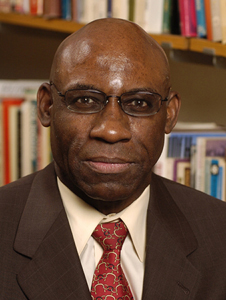
Joe Trotter, circa 2008.

Joe Trotter, circa 2008.

Today is the forty-third anniversary of Martin Luther King’s assassination by James Earl Ray in Memphis, Tennessee. But for the past fifteen years, April 4th has also had the dubious distinction of reminding me of a big argument between me and Joe Trotter. He was my doctoral thesis advisor at Carnegie Mellon and, until that day, someone I considered a mentor in my becoming an academic historian.

Below is an excerpt from my book Fear of a “Black” America (with some minor additions) in which I recount what happened that day:

‘I’m looking out for your best interests’ was what my dissertation advisor typically said in discussing my future with me. As far as Trotter was concerned, he was in charge of the rest of my academic career, determining everything from whether I would finish my doctorate to where I would live and work after I graduated. But as I’d already discovered in the months leading to this moment, he was not nurturing my career at all. Virtually all of my achievements as a graduate student occurred despite my advisor rather than because of him.

This was because my advisor discouraged my attempts to publish, to obtain grants for my research, to participate in major conferences, and to apply for jobs when it was apparent I had nearly completed my doctoral thesis. My advisor would frequently say ‘You’re not ready’ to take on a particular project or to apply for a grant or job to hinder my efforts. Yet Trotter never pointed out what he thought I needed to do to be “ready.”

One of our last official meetings as advisor and student covered this particular issue. Six chapters into an eight-chapter dissertation, I was still being told that I was ‘not ready’ to apply for jobs or to attend major conferences. Trotter had in fact contradicted some of what he had said about my work in a previous meeting. So when he declared for the eighteenth time in this particular meeting that he was not giving me his support because he was ‘looking out for my best interests,’ I sarcastically replied ‘Yeah, right! I don’t believe you!’ I decided that I could not abide the hypocrisy of an advisor who cared little for my future while at the same time professing to care very deeply.”

There was an eerie silence. Trotter actually didn’t know what to say. Neither did I. Mostly because I wanted to strangle him with his own blue neck tie. So I did something less dramatic but far more legal. I said, “I don’t have anything else to say to you,” picked up my stuff, walked out his heavy dark wood door, and slammed it as hard as I could. “Stupid ass,” I said under my breath as I walked out of Baker Hall that day. I was talking about myself as much as I was talking about Trotter.

For any academic scholar who reads this, they’ll likely conclude that I committed academic suicide by exhibiting such defiance to my advisor that day. Not true — I have a doctorate and years teaching in academia to prove otherwise. Not having the support of an advisor — whether that support’s official or in the reality of a friendship or a mentorship — does make building a career harder. But given what I’d learned about Trotter’s lack of support for a Spencer Fellowship that I ended up receiving as an award anyway, despite him, I knew that even if everything had been okay, it wouldn’t have been after graduation.

The reality is that my former advisor and thousands like him commit a form of academic suicide every day by refusing to promote at least one student’s career development. Besides having one’s work published and obtaining grants, developing new talent is key to creating a legacy as a successful professor. It’s why I can go to any history conference and hear stories about David Montgomery, or to an education conference and hear folks discuss their wonderful mentoring relationships with Michael Nettles. Or why so many responded across all of the social networks after learning that Manning Marable had passed away on Friday, April 1st.

I’m not holding these examples up because these professors were saints. Hardly. Just pointing out the fact that when a professor maliciously and deliberately attempts to hold back students otherwise deserving of moving on out of jealousy or some other reason, it puts a pox on their house as well.

A Real Piece of Work

29 Tuesday Jun 2010

Posted by decollins1969 in 1, Eclectic, Mount Vernon High School, Politics, Youth

≈ Leave a comment

Tags

Hostile Work Environment, Mentoring, Micromanaging, Napoleonic Complex, Piece of Work, Real Piece of Work, Social Justice Fellowship Program, Westchester County Department of Community Mental Health, White Plains, Work


Gabe Kaplan as Kotter (an image sub for my former boss)

“You’re a real piece of work,” my former boss Joe Carbone said to me one day, about this time twenty years ago. He smiled when he said it, though, which made me take the statement less seriously than I would’ve otherwise. It was my introduction to the politics of my new workplace for the summer of ’90.

For ten weeks between June and August ’90, I worked at the main office of Westchester County’s Department of Community Mental Health in White Plains. My immediate supervisor that summer was Joe Carbone, a highly-placed higher-up in the department. It turned out that he lived three blocks from me on East Lincoln in Mount Vernon, and that one of his kids graduated a year ahead of me at MVHS. Small world as usual. That gave us a little something in common.

When it came to work, though, I think our styles were a bit different. I worked as hard and as quickly as I could to finish the database-related projects he’d assign, then I worked as hard as I could to get to know the other staff and the other aspects of the office. And when that ran out, I’d work on getting ready for my senior year and my project on the resegregation that occurred in magnet schools in the ’80s. It was in that context that Carbone had called me “a real piece of work.” I guess I didn’t look like I was working that hard. Or maybe it was too obvious that I found my school research more interesting than my database work. Or maybe he just envied the way I used my time when I ran out of things to do (or things to make up to do, for that matter).

Whatever it was, I wasn’t the model worker, at least in the sense that I worried about my job, about pleasing my bosses more than the quality of my work, about making things merely look good. Carbone may well have been saying as much, constantly comparing me to some guy who worked for him in ’89 who was a junior at Yale. Like the Ivy League moniker alone was supposed to impress. If there had been one thing I learned in three years of college, that differential equations, primary resource grad-level research papers, and scholarly monographs looked about the same in the hands of a good Yale or Pitt student. I was glad to hear those comparisons go away after my first six weeks there.

Still, despite this “real piece of work” issue, Carbone remains the best supervisor I ever had. He made my tasks and duties clear, gave me room to work and make mistakes, introduced me to a wide variety of colleagues and work styles, and, if the mental health field had been my passion, would’ve been a great mentor for sure. He was my Kotter and I saw myself as his Horshack.

Yesterday also reminded me of the contrast between someone like Carbone in the workplace and the people I worked for when I was a manager in a social justice fellowship program in DC nine years ago. We had a meeting with our funder in New York in June ’01. Having met with funders before, I already knew the deal, and had explained that deal to the program assistant and associate in the days leading up to the meeting.

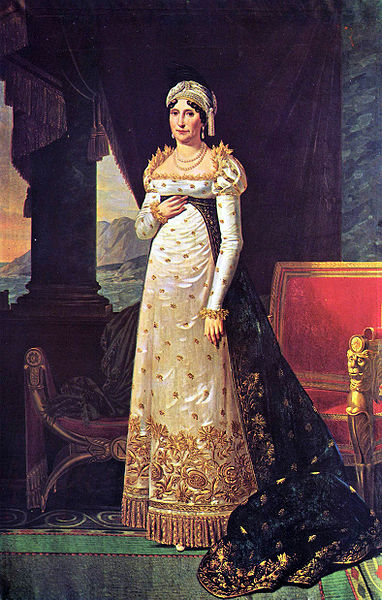
Napoleon's Mother (aka Ms. Wisdom). Source: Robert Lefevre, Letizia Ramolino, 1813

But apparently that wasn’t enough. My immediate supervisor and his all-wise supervisor’s supervisor and so-called mentor (henceforth known as Ms. Wisdom) had us meet twice to discuss this meeting and what each of us were to discuss, right down to the exact words we should use. They discussed protocol and etiquette, as if we were in nuclear disarmament talks with the former Soviet Union, China, North Korea, Iran and Israel all at the same time.

When I pointed out at the second meeting that these meetings were in fact redundant and panic-inducing — very politely, I might add — I got pulled into the superintendent’s office and accused of not taking the meeting up in New York seriously. Ms. Wisdom told me that I could quit at any time, and that she “would be around long after” I was gone. At least she was wrong about that prediction.

It made for a very stressful preparation for a meeting about the state of a program that had only been around for two years. Still, despite the lack of sleep, the micromanaging and threats, I felt ready, and I hoped that the other staff were ready as well. None of that

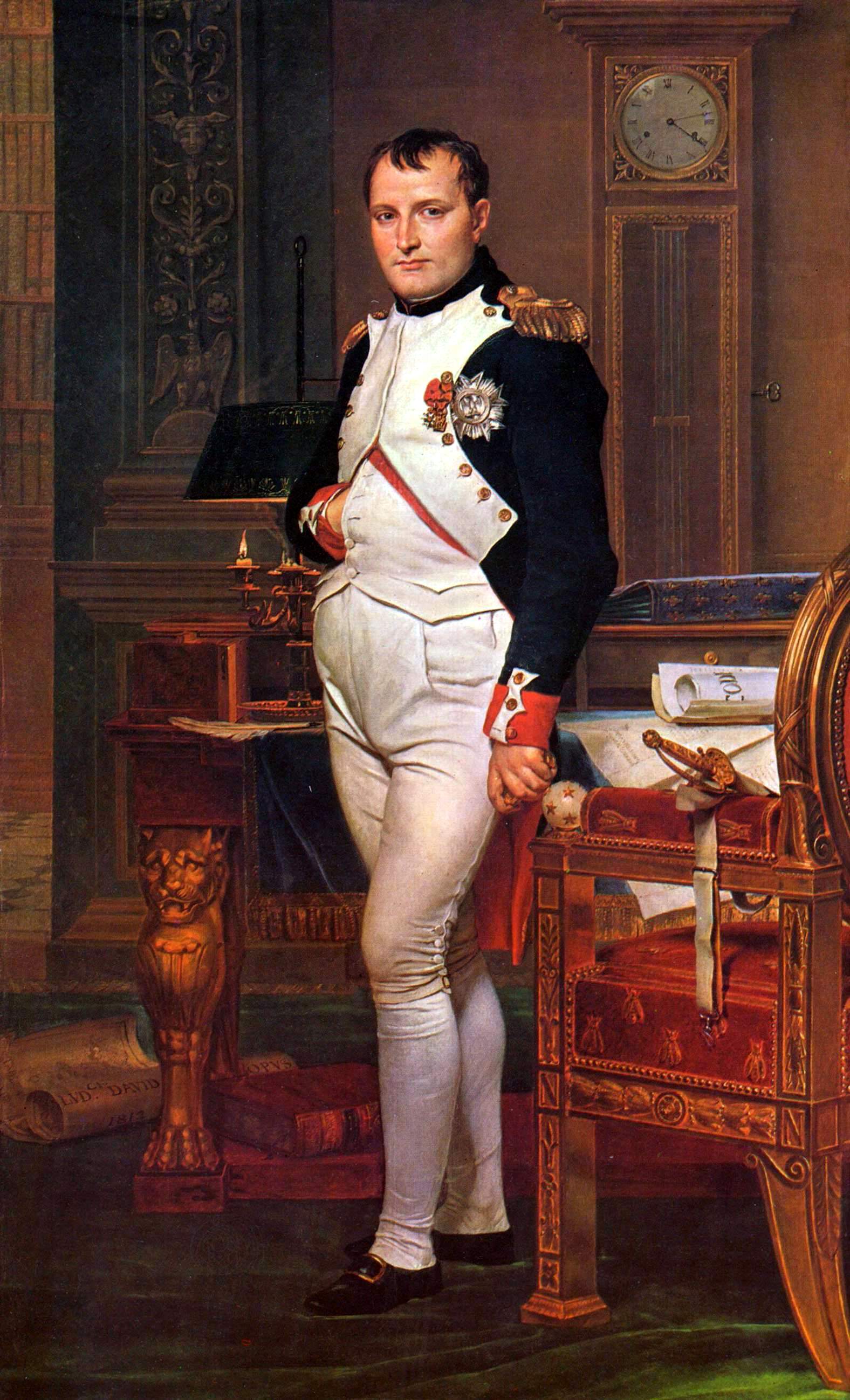
Napoleon I. Source: Jacques-Louis David, 1812

mattered, though, once the meeting in New York was underway. My immediate boss was so keyed up that he literally did all of the talking for our group of six. When I say all, I mean all except for two comments from me, one from Ms. Wisdom, and one from our program associate. By the end of the two hours, I thought that the man would’ve jumped on the conference table and done a jig for an additional $100,000.

My ex-boss was euphoric of course, even though the director at the time (now the executive director of the ACLU) specifically said that we “should consider looking for alternate sources of funding” for the program to ensure its viability after 2004. I thought then that he and Ms. Wisdom were real pieces of work. Even at the time, that reminded me of Joe Carbone, and gave me something to smile about. Maybe I’m a real piece of work, too. But at least I’m one in progress.

On Catherine Lacey

22 Wednesday Apr 2009

Posted by decollins1969 in 1, Academia, Carnegie Mellon University, culture, Eclectic, Pittsburgh, Politics, Work, Youth

≈ Leave a comment

Tags

Catherine Lacey, Friendship, Mentoring, Self-Discovery, Spencer Foundation, Spencer Foundation Dissertation Fellowship Program


Me with Catherine Lacey at the Spencer Foundation, June 25, 2002. (Angelia N. Levy).

Me with Catherine Lacey at the Spencer Foundation, June 25, 2002. (Angelia N. Levy).

This month marks fourteen years since my plans for earning my doctorate were all but assured by a Spencer Foundation Dissertation Fellowship. It was a one-year fellowship, only $15,000, but it meant that I didn’t have to teach for a year, that I didn’t have to do grunt work for my advisor Joe Trotter, and that I wasn’t beholden to the history department at Carnegie Mellon for much of anything. It was a great triumph in my little world of graduate school. But of all the things that resulted from that award, one thing that I didn’t count on was another mentor and friend. Without a doubt, Catherine Lacey has had the longest lasting impact on my career and on my thinking, in and out of academia.

Catherine was the Senior Program Officer and Director of the Spencer Foundation Dissertation Fellowship Program when I applied for it in the fall of ’94. She had taken over the program in ’93, with the apparent charge of making the program more inclusive and more dynamic for its participants. I’m not sure what the foundation’s dissertation fellowship program was like before. All I know is that Catherine’s seven-year-long tenure running it was one in which she practiced compassion, humility, optimism, and quiet leadership. She never sounded like an academician in directing the work, although she was a bit philosophical at times. She never sounded like a bureaucrat or a senior foundation officer who practiced the power of “No,” even though that was certainly a major part of her job. Almost from my first conversation with Catherine, I realized that she was different from anyone I’d met with an academic background or in the foundation world.

Her background was as a Catholic nun who at one point was a Catholic school teacher, at least through the late ’70s, if I remember correctly. At some point she decided to go back to school, to eventually earn a doctorate in education from Harvard’s Graduate School of Education. Even though she was no longer a practicing nun (whatever I mean by that, I’m not entirely sure), I’m sure that this training and philosophical approach to life and work helped her a lot in her position at the Spencer Foundation. Maybe it was also the fact that she grew up in the Midwest, North or South Dakota I believe. Whatever the case, I think that this combination of experiences made her a more flexible and generous person than most of the foundation program officers and academic bureaucrats I’d met before and have come to know since.

The first time I ever heard from Catherine was right after a two-month research stay in Washington, DC and visit home in Mount Vernon, New York. I’d just come off of weeks in the National Archives, the Library of Congress, the Moorland-Spingarn Research collection at Howard University, the Sumner School Archives for DC Public Schools, and several other places doing research on my dissertation topic, multiculturalism in philosophy and practiced among Black Washingtonians. It was the end of March ’95, and it had been five months since I’d submitted my application packet for the Spencer fellowship. When I went to my Carnegie Mellon mailbox in the history department, there it was. A standard #10 envelope with only a one-page letter inside, which I knew because of the envelope’s thinness. I knew it was a rejection letter. Except that it wasn’t, at least not entirely. It had a handwritten note at the bottom of it from Catherine, asking me to give her a call as soon as I received the note.

So I did. Catherine did most of the talking, asking me about my research stay in DC, about my definition of multiculturalism and how it had or hadn’t changed because of my research. Then she talked to me about the selection committee. Apparently out of eight committee members, six voted in favor of awarding me the fellowship, one against, and with one in absentia. The sticking point was how I defined multiculturalism in my research proposal, putting me on the fence between award and no award. Although I would learn later that there were some academic and cultural politics involved in the two non-Yes votes, at the time Catherine told me that she would do everything she could to see if she could still fund my work. “I’m not making any promises,” she said before we got off the phone.

I didn’t know what to make of the call, other than the fact that Catherine cared about funding my work. That it wasn’t everyday that someone with her responsibilities called a student who had technically been rejected was also something I took away from that call. Two weeks passed. On Friday, April 14 of ’95, I got a call at home, right after 9:30 am. I assumed it was my mother or one of my friends. I hadn’t even taken the time to spit and rinse my toothpaste when I answered the phone. After the pleasantries, Catherine excitedly blurted out the good news. And I swallowed my toothpaste in response before asking how and saying thanks.

It turned out that Catherine thought that in addition to the 29 awards that were granted fellowships by the committee, that there were four others (including me) who should also receive the fellowship. Catherine had spent the previous two weeks asking the foundation for additional monies for the other four of us, and found that at least two of the original 29 awardees had accepted other fellowships. As a result, she could then give out four additional fellowships as part of her discretion as the director of the program. I was happy, to say the least about the award. But I was even happier that someone would fight for me and others the way Catherine did.

As a Spencer fellow, I learned a lot from my “fellow Fellows,” as I constantly called our group. That I wasn’t the only one whose advisor was acting as a roadblock toward our degree and career aspirations. That our colleagues on our campuses stared us all down with daggers in their eyes after learning about our awards. That hours upon hours of lonely research and intense writing and editing didn’t make any of our significant others or spouses particularly happy. Still, I learned as much from Catherine as I did from my fellow Fellows. About balance between life and work. About the realization that academia wasn’t our only career option, even as much as we thought it was at the time. That it was all right to feel ambivalent about pursuing an academic career.

This last one was of great importance to me, because my worries about becoming a publish-or-perish professor had always been there. I wanted to do something useful with my degree and life, something to benefit others, something that would allow me to help people who grew up like me, poor, possibly abused, and with the world thinking that I’d sooner go to jail than graduate high school. The one thing that Catherine’s work revealed to me was that it was possible to have a job and career that you could fall in love with, that helps others, and that enabled you to prosper financial. Her job allowed her to do all three, and very well at that.

It was that realization that enabled me to stumble my way into the nonprofit world, doing work on everything from community computer labs and civic education to a social justice fellowship program and education reform work on college access and success. Even after my fellowship ended in June ’96, I kept in contact with Catherine, attended Spencer gatherings and asked for advice. I even took my wife with me on a business trip to Chicago once to, among other things, have her meet Catherine at the Spencer offices in the John Hancock Building. I haven’t had quite the same luck of finding work that is as fulfilling as Catherine’s work was with Spencer. But I haven’t given up trying, and hope that what I have done and am doing does actually help others.

I haven’t talked to Catherine since the end of ’04. Not for lack of trying, though. Catherine decided after two years as a high-level administrator at the University of Pennsylvania’s Graduate School of Education that it was time for her to retire, to move back to the Dakotas, to live in seclusion, I guess. She didn’t particularly like Philly, or the grinding work that is almost pure administration. She missed Spencer, Chicago, and all of the people that she had met over the years. I think that the Bush years and 9/11 depressed her greatly

I miss Catherine. I miss asking her advice on everything from my job to whether I should turn Boy At The Window into a fiction novel instead of keeping it a memoir with narrative nonfiction elements (I know, that’s redundant) or even continue to pursue finding an agent. I miss sending her pictures of Noah or talking to her about her days at Spencer. Most of all, I miss telling her how much her friendship and unofficial mentoring have meant to me over the years. To Catherine, and really, all of my friends, many, many thanks.

Newer posts →

Boy @ The Window: A Memoir

Boy @ The Window: A Memoir

Places to Buy/Download Boy @ The Window

There's a few ways in which you can read excerpts of, borrow and/or purchase and download Boy @ The Window. There's the trade paperback edition of Boy @ The Window, available for purchase via Amazon.com at http://www.amazon.com/Boy-Window-Donald-Earl-Collins/dp/0989256138/

There's also a Kindle edition on Amazon.com. The enhanced edition can be read only with Kindle Fire, an iPad or a full-color tablet. The links to the enhanced edition through Apple's iBookstore and the Barnes & Noble NOOK edition are below. The link to the Amazon Kindle version is also immediately below:

scr2555-proj697-a-kindle-logo-rgb-lg

Boy @ The Window on Amazon.com: http://www.amazon.com/Boy-The-Window-Memoir-ebook/dp/B00CD95FBU/

iBookstore-logo-300x100

Boy @ The Window on Apple's iBookstore: https://itunes.apple.com/us/book/boy-the-window/id643768275?ls=1

Barnes & Noble (bn.com) logo, June 26, 2013. (http://www.logotypes101.com).

Boy @ The Window on Barnes & Noble: http://www.barnesandnoble.com/w/boy-the-window-donald-earl-collins/1115182183?ean=2940016741567

You can also add, read and review Boy @ The Window on Goodreads.com. Just click on the button below:

Boy @ The Window

Twitter Updates

Tweets by decollins1969
  • RSS - Posts
  • RSS - Comments

Archives

  • June 2025
  • April 2023
  • September 2022
  • August 2022
  • July 2022
  • June 2022
  • May 2022
  • April 2022
  • March 2022
  • January 2022
  • December 2021
  • November 2021
  • October 2021
  • September 2021
  • August 2021
  • July 2021
  • June 2021
  • April 2021
  • March 2021
  • February 2021
  • January 2021
  • December 2020
  • November 2020
  • October 2020
  • September 2020
  • August 2020
  • July 2020
  • May 2020
  • April 2020
  • March 2020
  • January 2020
  • December 2019
  • November 2019
  • August 2019
  • July 2019
  • June 2019
  • May 2019
  • April 2019
  • March 2019
  • February 2019
  • January 2019
  • December 2018
  • November 2018
  • October 2018
  • September 2018
  • August 2018
  • July 2018
  • June 2018
  • May 2018
  • March 2018
  • February 2018
  • January 2018
  • December 2017
  • November 2017
  • October 2017
  • September 2017
  • August 2017
  • July 2017
  • June 2017
  • May 2017
  • April 2017
  • March 2017
  • February 2017
  • January 2017
  • December 2016
  • November 2016
  • October 2016
  • September 2016
  • August 2016
  • July 2016
  • June 2016
  • May 2016
  • April 2016
  • March 2016
  • February 2016
  • January 2016
  • December 2015
  • November 2015
  • October 2015
  • September 2015
  • August 2015
  • July 2015
  • June 2015
  • May 2015
  • April 2015
  • March 2015
  • February 2015
  • January 2015
  • December 2014
  • November 2014
  • October 2014
  • September 2014
  • August 2014
  • July 2014
  • June 2014
  • May 2014
  • April 2014
  • March 2014
  • February 2014
  • January 2014
  • December 2013
  • November 2013
  • October 2013
  • September 2013
  • August 2013
  • July 2013
  • June 2013
  • May 2013
  • April 2013
  • March 2013
  • February 2013
  • January 2013
  • December 2012
  • November 2012
  • October 2012
  • September 2012
  • August 2012
  • July 2012
  • June 2012
  • May 2012
  • April 2012
  • March 2012
  • February 2012
  • January 2012
  • December 2011
  • November 2011
  • October 2011
  • September 2011
  • August 2011
  • July 2011
  • June 2011
  • May 2011
  • April 2011
  • March 2011
  • February 2011
  • January 2011
  • December 2010
  • November 2010
  • October 2010
  • September 2010
  • August 2010
  • July 2010
  • June 2010
  • May 2010
  • April 2010
  • March 2010
  • February 2010
  • January 2010
  • December 2009
  • November 2009
  • October 2009
  • September 2009
  • August 2009
  • July 2009
  • June 2009
  • May 2009
  • April 2009
  • March 2009
  • February 2009
  • January 2009
  • December 2008
  • November 2008
  • October 2008
  • September 2008
  • August 2008
  • July 2008
  • June 2008
  • May 2008
  • April 2008
  • March 2008
  • February 2008
  • January 2008
  • December 2007
  • November 2007
  • October 2007
  • September 2007
  • August 2007
  • July 2007
  • June 2007

Recent Comments

MaryPena's avatarMaryPena on My Day of Atonement/Bitter Hat…
decollins1969's avatardecollins1969 on No Good Teaching Deed Goes…
Mary Rose O’Connell's avatarMary Rose O’Connell on No Good Teaching Deed Goes…

NetworkedBlogs on Facebook

NetworkedBlogs
Blog:
Notes From a Boy @ The Window
Topics:
My Life, Culture & Education, Politics & Goofyness
 
Follow my blog

616 616 East Lincoln Avenue A.B. Davis Middle School Abuse Academia Academy for Educational Development AED Afrocentricity American Narcissism Authenticity Bigotry Blackness Boy @ The Window Carnegie Mellon University Child Abuse Class of 1987 CMU Coping Strategies Crush #1 Crush #2 Death Disillusionment Diversity Domestic Violence Economic Inequality Education Family Friendship Friendships Graduate School Hebrew-Israelites High-Stakes Testing Higher Education History Homelessness Humanities Humanities Program Hypocrisy Internalized Racism Jealousy Joe Trotter Joe William Trotter Jr. K-12 Education Love Manhood Maurice Eugene Washington Maurice Washington Misogyny Mother-Son Relationship Mount Vernon High School Mount Vernon New York Mount Vernon public schools Multiculturalism MVHS Narcissism NFL Pitt Pittsburgh Politics of Education Poverty President Barack Obama Race Racial Stereotypes Racism Relationships Self-Awareness Self-Discovery Self-Reflection Sexism Social Justice Teaching and Learning University of Pittsburgh Violence Whiteness Writing

Top Rated

Blog at WordPress.com.

  • Subscribe Subscribed
    • Notes from a Boy @ The Window
    • Join 103 other subscribers
    • Already have a WordPress.com account? Log in now.
    • Notes from a Boy @ The Window
    • Subscribe Subscribed
    • Sign up
    • Log in
    • Report this content
    • View site in Reader
    • Manage subscriptions
    • Collapse this bar
 

Loading Comments...