• About Me
  • Other Writings
  • Interview Clips
  • All About Me: American Racism, American Narcissism, and the Conversation America Can’t Have
  • Video Clips
  • Boy @ The Window Pictures
  • Boy @ The Window Theme Music

Notes from a Boy @ The Window

~

Notes from a Boy @ The Window

Tag Archives: Joe Trotter

In Denigration of the Black and Accomplished

20 Monday Jan 2014

Posted by decollins1969 in 1, Academia, Carnegie Mellon University, culture, Eclectic, Pittsburgh, Politics, Pop Culture, race, University of Pittsburgh, Work

≈ 1 Comment

Tags

Abuse, Academic Culture, Academic Politics, Accomplishments, Achievements, Black Milwaukee, CMU, Denigration, Joe Trotter, Joe William Trotter Jr., Larry Glasco, Laurence Glasco, Meritocracy, Neglect, Pitt, Richard Oestreicher, Running Interference, Scholarship, Whiteness


Screenshot of Richard Sherman post-game interview with Erin Andrews, NFC Championship Game, Seattle, WA, January 19, 2014. (http://msn.foxsports.com).

Screenshot of Richard Sherman post-game interview with Erin Andrews, NFC Championship Game, Seattle, WA, January 19, 2014. (http://msn.foxsports.com).

I plan half of my blog posts in advance. At the beginning of every year, I make up a list of topics that I intend to cover, listed by month, and then go through that list. For the other half, I take advantage of relevant news stories or sudden life experiences that also seem relevant. Screen shot 2014-01-20 at 9.25.25 AM

Today’s post is a combination of planning and the impromptu. I’d already planned to write about the tightrope of being Black and accomplished — actually, more like the noose of it. But thanks to @profragsdale’s tweet, aka, Rhonda Ragsdale, an Associate Professor of History at Lone Star College-North Harris (Houston, Texas) and a PhD candidate at Rice University, I started on this topic a day early. Her tweet was the kick-off to eight hours of tweets about the cold and often cold-shoulder reception women — and Black male and LGBT — faculty and grad students receive when bringing up, discussing or even promoting themselves and their accomplishments.

Only to see more of these tweets and thoughts confirmed in another arena. The response of the racist, George-Zimmerman-set to Richard Sherman’s post-game interview with Erin Andrews on FOX within a couple of moments after he made the play to seal the game for his Seattle Seahawks to go play in Super Bowl XLVIII. You, Black man, can’t have a flash of anger and moment of passion on TV after playing in the NFC Championship Game, for then your accomplishments will be used against you. (Sarcasm aside, Sherman’s taunting will likely result in a fine, but that’s the NFL).

Single Drum Rollers with Rock Crushing Drum crushing soil and rocks (similar to how Whiteness can crush Black accomplishments), January 20, 2014. (http://bomag.com).

Single Drum Rollers with Rock Crushing Drum crushing soil and rocks (similar to how Whiteness can crush Black accomplishments), January 20, 2014. (http://bomag.com).

My post is much, much closer to home. I had the blessing and the curse of having two Black males as my official advisors while in grad school at Pitt and Carnegie Mellon, Larry Glasco for two years at Pitt, and Joe Trotter for four years at CMU. My gripes and complaints about their neglect, selective attentions to my development, and, in Trotter’s case, harassment and psychological torture I’ve already documented well here. What I haven’t discussed is that they were part of a cycle of academic abuse that they passed down to my generation of grad students, and likely some of my colleagues are passing on to their grad students as I write today.

My best example of how denigration in academia works was a conversation I had with Dick Oestreicher, a Pitt professor for my grad seminar in American Working-Class History in Fall ’92. I was in Trotter’s African American History seminar at CMU at the same time. Oestreicher asked me what else I was taking that semester, I guess because I’d proven resistant to the idea that social class had primacy over all forms of inequality, even in the US (a neo-Marxist to the core, I guessed).

When I told him I was in Trotter’s seminar, Oestreicher said, “Oh, I’ve heard of him,” with the disdain a fashion designer usually reserved for suits off Sears’ rack. You’ve “heard of him?” Really? Trotter, an award-winner scholar and author with a groundbreaking book on Black migration, urbanization and class formation in Black Milwaukee: The Making of an Industrial Proletariat, 1915-1945 (1985; 2007), and you’ve heard of him? A colleague only three blocks and one bridge away, and you’ve heard of him? Even now, the only word I have to that is, “Wow!”

If Oestreicher was the only one to do that, and only to Trotter, then my observations here would be suspect. But I witnessed this same kind of thing from other White history professors at Pitt and CMU toward Trotter and Glasco during my grad school years. Heck, one of the reasons I left for CMU in the first place was because I knew several of the most powerful professors in the Pitt history department didn’t respect Glasco’s work, and by extension, my own progress and work.
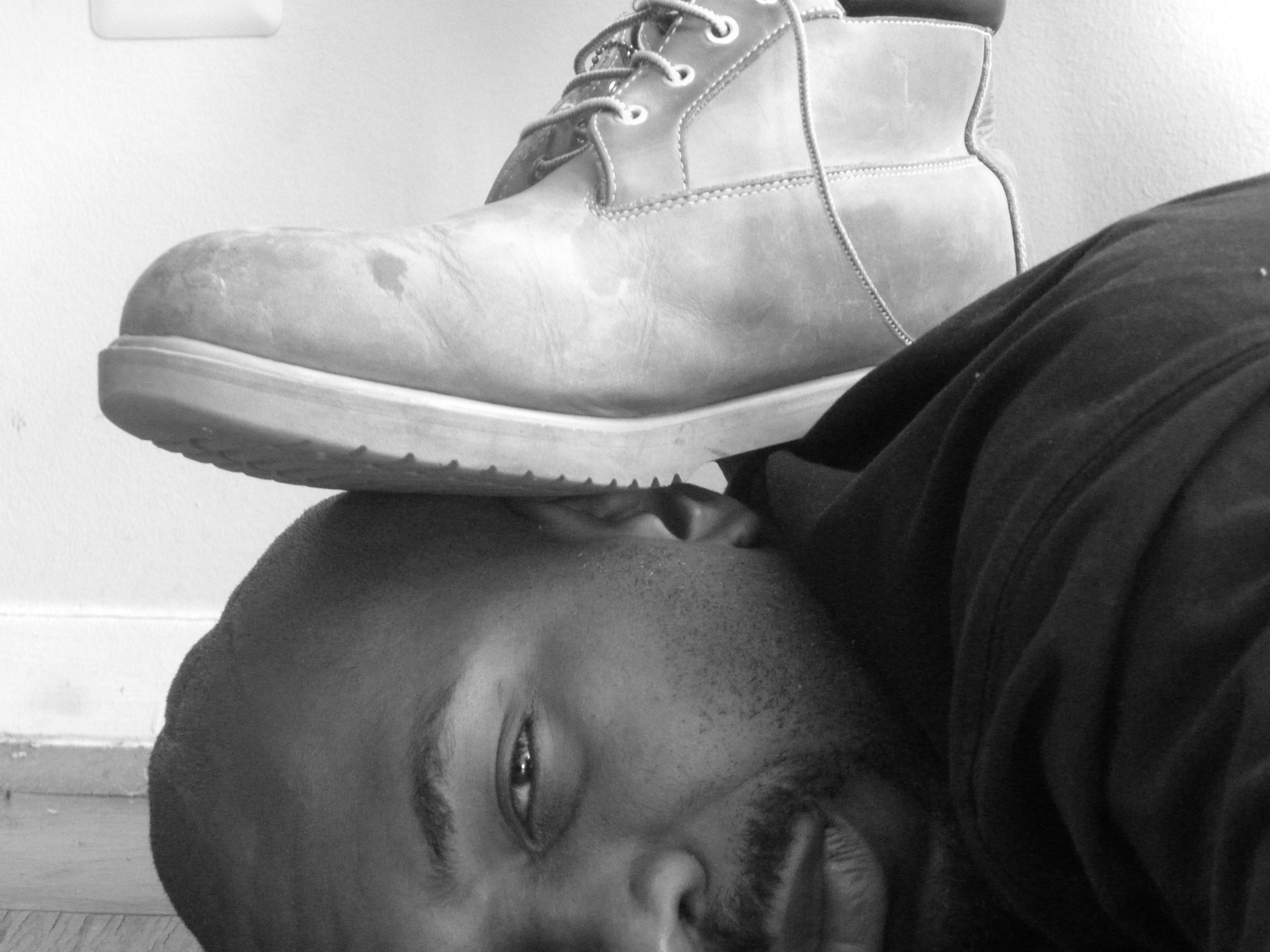
Foot On My Neck & Head, symbolic of my years as a Hebrew-Israelite (also of grad school), April 18, 2011. (Donald Earl Collins).

Foot On My Neck & Head, symbolic of my years as a Hebrew-Israelite (also of grad school), April 18, 2011. (Donald Earl Collins).

Maybe that was part of the reason why Trotter would constantly “run interference” on my behalf, to protect my “interests” during my four years there. Because, despite all the long hours, the sweat, tears and blood, there were folks at CMU who just saw him as a mere Black man, not a colleague or scholar every bit their equal. Given the books, the articles, the grants and so many other accomplishments, Trotter was easily the most productive professor in the department.

None of this justified how Trotter treated me when I was his student. I was semi-aware of the racial politics of accomplishment denial that folks around us practiced. I often chalked it up to jealousy or stress, thinking that the quality of my work or — to use Trotter’s terminology — my scholarship would show the academic world my worth. What White disdain toward Glasco and Trotter — and Trotter’s harassment of me — taught me, though, is that I’d have to be White in order for my accomplishments to seriously matter in academia, and I wasn’t planning on being White in my lifetime. And, that intellectual Whiteness can be nurtured and grown into Black professors.

In the years since finishing my own PhD, I’ve faced my own dilemmas around my achievements. I’ve at times attempted to fit in by downplaying my publications, by not bringing up my degrees, by not talking about my fellowship awards. What have I learned? To deny myself of my own accomplishments is like making a fine wine but not even daring to take a sip. White accomplishment deniers be damned.

The Road to Boy @ The Window, Part 4: Fear of a “Black” America

26 Thursday Sep 2013

Posted by decollins1969 in 1, Academia, Boy @ The Window, Carnegie Mellon University, culture, Eclectic, eclectic music, music, Patriotism, Pittsburgh, Politics, Pop Culture, race, University of Pittsburgh, Youth

≈ Leave a comment

Tags

Academia, Afrocentricity, Authentic Blackness, Authenticity, Emotion, Estelle Abel, Fear of a "Black" America, Fear Of A Black Planet, Fear of Black Males, Joe Trotter, Multicultural Education, Multiculturalism, PE, Personal Vignettes, Politics of Academia, Politics of Education, Politics of Fear, Public Enemy, Rage, Richard Altenbaugh


FearBookCover3copy

Given that Fear of a “Black” America was my first book, but one based on my doctoral dissertation, and that Boy @ The Window is a memoir, the road from one to the other may not be that obvious with an initial glance. But despite the intellectual, semi-scholarly nature of my book on Blacks and multiculturalism, there are parallel themes that run between Fear of a “Black” America and Boy @ The Window. Perhaps none are more important, though, than the challenge of authenticity, of fitting in, of being able to mesh the complicated onion that I’ve found myself to be over the years.

I think that was why I decided in November ’98 to turn my dissertation “A Substance of Things Hoped For” into a more readable book. Yes, after all that work to write a 505-page thesis, it would’ve been a shame to just let it sit on my then girlfriend’s coffee table, to be used either as a door stop or a base for her doing her nails. Yes, I still had something to prove to academia. That my scholarship as a historian and educator on the issue of multiculturalism was sound. That the conventional academic wisdom around Blacks, people of color and multiculturalism was paternalistic fear-mongering.

Public Enemy, Fear Of A Black Planet (1990) Album Cover

Public Enemy, Fear Of A Black Planet (1990) Album Cover

And in thinking that last part through, I came up with my Public Enemy-inspired title and thread for the first book. It was about fear in many forms. Elite White fears of a majority-people-of-color US within their own lifetimes. Conservative fears of a K-16 education system that included the cultural and historical perspectives of peoples of color, of the poor, of women, of the LGBT, of so many others they’d rather discard. General American skepticism that any Blacks had ever given any thought at all to cultural pluralism, intercultural education, or multiculturalism/multicultural education, at least before White theorists had thought through these ideas first.

Afrocentrists and nationalists who thought of multiculturalism as soft and utterly unrepresentative of the Black experience — or, at least, what they considered an authentic version thereof? That was as difficult a challenge as any I faced in writing both my dissertation and Fear of a “Black” America. So much so that I made a few interesting decisions along the way. I sought out an agent — yes, a literary agent — for the first book, and found one, too (things were so much easier in ’99). I wanted the book to have an impact beyond academia.

In the writing process, I decided to weave the theme of fear, skepticism, willful and inadvertent misunderstandings throughout the 200-page book. All while covering Black intellectual thought about what we now call Afrocentricity and multiculturalism, Black activism and activities around education and Negro History Week, and the so-called Culture Wars of the 1980s and 1990s. All to show that multiculturalism was/is a part of America’s evolution, even if some folks are gnashing their teeth and wearing sackcloth and ashes along the way.

One thing was missing, though, from my six chapters. Me, in a word. Yes, my argument was crystal clear, my evidence was sound, my notes and analysis lined up well enough by the summer of ’00. Yet, as my one-time agent noted, “there’s not enough of you in this manuscript.”  Bottom line: folks weren’t going to buy the book unless I made it more compelling, which meant putting something of me or about me in it.

Fear Book & The Authentic Me

Fear Book & The Authentic Me

So I did. I wrote mostly about my experiences in academia and how they paralleled with some of the critical issues in Fear of a “Black” America. I talked about my Duquesne University students in the College of Education in ’98 and ’99, most of whom were cultural conservatives. I brought up conversations I had with professors skeptical about my scholarship, like Richard Altenbaugh in March ’98 or my former dissertation advisor Joe Trotter in April ’96. I also wrote about my conversation with Estelle Abel over my lack of authenticity as a young Black man in June ’87, having thought about it for the first time in thirteen years. I wasn’t sure if that made Fear of a “Black” America any better, but it made me feel better about my first book.

By the time I’d given my agent the final draft of Fear of a “Black” America in October ’00, I was ready — maybe for the first time in years — to take a look at my life before Pitt, grad school, Spencer Fellowship and becoming Dr. Collins. I wasn’t sure if I wanted to open up the emotional side of that Pandora’s box just yet. But in some ways, I really needed to, precisely because of my experiences with people in grad school at Pitt and Carnegie Mellon. And precisely because of my occasional moments of rage and overreaction, if only because Fear of a Black “America” helped me tap into emotions I didn’t know I had.

The Lazarus Woman

22 Thursday Aug 2013

Posted by decollins1969 in 1, Academia, Boy @ The Window, Carnegie Mellon University, culture, Eclectic, Mount Vernon New York, Pittsburgh, Politics, Pop Culture, race, Religion, Youth

≈ Leave a comment

Tags

Barbara B. Lazarus, Barbara Lazarus, Brandie Weston, Carl Zimring, Death, Friendship, Graduate School, Harold Meltzer, Joe Trotter, John Hinshaw, Life and Death, Maurice Eugene Washington, Maurice Washington, Mentoring, Politics of Academia, Politics of Graduate School, Sarai Washington, Susan McElroy


Barbara B. Lazarus, obituary picture, July 17, 2003. (http://cmu.edu).

Barbara B. Lazarus, obituary picture, July 17, 2003. (http://cmu.edu).

Now that my book’s been out for a couple of months (between two and four months, depending on the e-book platform, actually), I’ve found that my thoughts sometimes drift toward those that are no longer around to read it.

Not so much my family or nemeses, though. Sarai, my only sister, who died in July ’10, would likely have never read a word of Boy @ The Window — it would be too honest an assessment of life at 616 for her. My late idiot ex-stepfather Maurice Washington was already unhappy with my numerous posts about his borderline personality issues and constant psychological and physical abuse of me and family when I picked up the phone one day that same week my sister passed.

As for my former classmate Brandie Weston — to whom I’ve dedicated my memoir (actually, a co-dedication that includes my son) — maybe, if she had been well enough. My favorite teacher, the late Harold Meltzer, though, would’ve begun reading  Boy @ The Window five minutes after it had gone live on Amazon.com!

But of all of those folks who are no longer a part of this corporeal world (or who have gone into some state of seclusion from it), one other person stands out today. My dear friend and mentor from my Carnegie Mellon years (and the six years after I finished), Barbara Lazarus. I’ve discussed her here before, but not lately. Probably because I do tear up sometimes when thinking about her support of me specifically and her work at CMU in general. Barbara helped make my otherwise rough and dehumanizing experience at CMU manageable and even career-affirming.

As I wrote about Barbara for the memorial service at CMU in September ’03:

I want to communicate to you that I am in complete solidarity with everyone who attends the gathering at CMU on October 17.  For me, Barbara’s work was more than about women’s equity in the engineering and science fields.  She was about ensuring that all (regardless of gender or race, and regardless of the degree) who attempted the grand enterprise of competing for a degree actually made it through the process … Barbara was a dear friend and mentor who truly believed in me, even in spite of myself.  I loved her, and I will surely miss her, as I am sure you will also.

That only approximated how much she meant to me during and after my four years of doctoral success and failures at CMU. The months immediately before my advisor Joe Trotter and my committee approved my dissertation were the worst, as is well documented on this blog. Barbara convinced me to not become hot-headed and drop-out of the program with a completed first-draft of my dissertation under my belt. She also managed to keep me from requesting a change of advisors so close to the finish line. She did offer to “step in” as her duties as Associate Provost would’ve allowed, but warned me that this political solution would delay my graduation. My connection with Barbara kept me from meeting Trotter in one of CMU’s parking lots late at night wearing a ski mask and dark leather gloves!

She became my best reference professionally and otherwise after those dark days ended with the end of ’96. She read my articles and my first book before they went to print. We swapped stories about family and life and religion. We stayed in touch even after I moved to Silver Spring, Maryland in ’99. Barbara died on July 14, ’03, just sixteen days before my son Noah was born. It’s been a decade, a month and eight days since she passed, nearly as long as I actually knew Barbara (roughly between October ’92 and July ’03). Boy, I wish I could’ve shared my first photos of my son with her!

There were a few people like Barbara at CMU during those years. Susan McElroy (now at UT-Dallas), John Hinshaw (at least prior to my Spencer Fellowship), Carl Zimring (before the O.J. verdict), the Gants and the other Black doctoral students I’d met there (all fourteen of us) were my CMU lifeline beyond multiculturalism and Trotter tired sense of migration studies.

But Barbara Lazarus and I had a friendship that went well beyond academia and career, and went undamaged by petty jealousies or sudden bursts of outrage from jury verdicts. I’d been to her home, met her husband and her kids, learned something about her as a person, and in the process, managed to be my better self even in the worst of circumstances. That is being a good mentor, friend and person. I just hope that I was the same to her, and that Boy @ The Window proves to be the same to others.

What I Didn’t Know (in ’81, in ’97, in ’13)…

18 Saturday May 2013

Posted by decollins1969 in 1, Academia, Boy @ The Window, Carnegie Mellon University, Christianity, culture, Eclectic, eclectic music, Hebrew-Israelite, Mount Vernon New York, Movies, music, Pittsburgh, Politics, Pop Culture, race, Religion, University of Pittsburgh, Work, Youth

≈ Leave a comment

Tags

616 East Lincoln Avenue, Anticipation, Back Stabbers, Bruce Anthony Jones, Child Abuse, CMU, Domestic Violence, Family, Hustling, Joe Trotter, Joe William Trotter Jr., Not Knowing, O'Jays, Pitt, Poverty, Publishing, Success, The Matrix (1999), Welfare Poverty, Wisdom, Writing


Noah with me, January 3, 2004 [he was five months old]. (Angelia N. Levy).

Noah with me, February 28, 2004 [he was seven months old]. (Angelia N. Levy).

What I didn’t know across the past thirty-two years could be another book for me. I assume that would be the case for anyone would could look back across their life and second-guess themselves over that long a period of time. For me, though, the significance of today comes out of my mathematics background. You see, today’s my sixteenth PhD graduation anniversary. Not all that significant, I suppose. Except that I’m as far away from the end of my graduate school days at Carnegie Mellon today as I was from the first days of being a Hebrew-Israelite and watching my family fall into welfare poverty when I graduated in ’97.

100th Commencement Ceremony program, Carnegie Mellon University, May 18, 1997. (Donald Earl Collins).

100th Commencement Ceremony program, Carnegie Mellon University, May 18, 1997. (Donald Earl Collins).

Two things will hurt your success in this life. One is not acting on the things you know you should or must do. I learned that hard lesson from watching my mother make the decision to not make any decisions until it was too late, all while growing up at 616. Two is the enormous danger of not knowing, and therefore, not being able to act or respond to new or damaging situations as they arise. I’ve learned that lesson pretty well, too. Sometimes the hard way, through really bad experiences or decisions I didn’t play out like a game of eleventh-dimension chess. Sometimes through insight, foresight, even divine inspiration, anticipating what I didn’t know ahead of time.

And even with anticipation, you still might not be able to do anything about what you do and don’t know, simply because you’re not in any position to change things. That was especially true in ’81. I knew that my now deceased idiot ex-stepfather Maurice Washington was no good. But when my Mom decided to end her six months’ separation from him, there was nothing I could really do about it. I knew that with inflation rates of 14.5 percent in ’79 and 11.8 percent in ’80 (thank you, Scholastic Weekly Reader) and my Mom income of roughly $15,000 per year that we had less and less to work with at home. Again, not much I could do about that, either. Even paper boy jobs were drying up by the time I turned twelve!

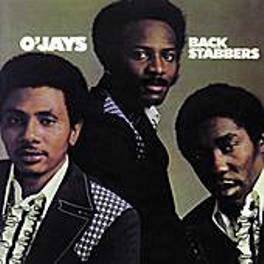
O'Jays Back Stabbers (1972) album cover, November 10, 2011. (Dan56 via Wikipedia). Qualifies as fair use as low-resolution illustration of subject matter.

O’Jays Back Stabbers (1972) album cover, November 10, 2011. (Dan56 via Wikipedia). Qualifies as fair use as low-resolution illustration of subject matter.

What I didn’t know was how quick and violent the shift into poverty would be. What I didn’t know was that Maurice would use his/our conversion as Hebrew-Israelites as justification for abusing my Mom and me. What I didn’t know was that my Mom would have three more kids by this man between July ’81 and May ’84. What I didn’t know was that I would feel so low about the loss of my best friend and my sense of self that I’d attempt to take my own life on my fourteenth birthday, at the end of ’83.

But when I looked back on this in ’97, I mostly thought about the good things that had occurred in the fifteen years between the domestic violence my Mom endured on Memorial Day ’82 and my doctoral graduation ceremony. My independent conversion to Christianity in ’84. Knocking out a 5 on my AP US History exam without ever cracking open Morison and Commager. Overcoming poverty and my lack of self-esteem to build a life at Pitt and in Pittsburgh between ’88 and ’97.

Still, I’d already been wounded, badly. By the things I knew but did nothing about. By those things I could’ve anticipated but my efforts to counteract were insufficient. By those things I couldn’t have known at all. I knew I’d have problems with my “running interference” advisor Joe Trotter coming down the dissertation stretch. Yet because of departmental politics and my need to be done sooner rather than later, I did nothing about this until I was six chapters into an eight-chapter dissertation. I knew my mentor and committee member Bruce Anthony Jones could sometimes be unreliable. Yet I had no idea that he would completely abandon me and his other doctoral students the moment he signed his name to my and their dissertations.

My dissertation's signature page, May 18, 2013. (Donald Earl Collins),

My dissertation’s signature page, May 18, 2013. (Donald Earl Collins),

Most of all, I never anticipated that my Mom would actually be jealous of me, and would spend a whole week with me at 616 and in Pittsburgh doing and saying things to completely disparage what I’d worked so hard for. For me, for her, for my family. That was hard to get over. There are times I’m not sure if I’m entirely over this yet.

What I’m sure of in ’13, though, is what I do know, don’t know, and can only anticipate with the wisdom of experience and wisdom beyond my experience. I know that I love my wife, that there’s a lot in common between her and Crush #1 (for those of you who’ve read Boy @ The Window so far, the implications should be obvious), real and from my own imagination. I didn’t know that I’d have a kid, a son who at nearly ten is both wonderful and perplexing, and hopefully, off to a much better start in life than I ever got. I suspect that one of my references for jobs and consulting gigs has been undermining my efforts over the past five years, and have thus removed her as a reference.

What I don’t know — but can only hope and work like a dog toward — is whether Boy @ The Window will be a success. I’m not sure if quantifying it would help. I sold a thousand copies of Fear of a “Black” America between August ’04 and January ’07, without the benefit of this blog, Twitter, Facebook or the e-book platforms. How long before I sell my first hundred, thousand, 5,000 or more? I have no idea. But as they say, I “must walk the path, not just know it.”

Transfer Anniversary

21 Thursday Mar 2013

Posted by decollins1969 in 1, Academia, Boy @ The Window, Christianity, culture, Eclectic, Patriotism, Politics, Pop Culture, race, Youth

≈ Leave a comment

Tags

Academic Politics, Carnegie Mellon, Carnegie Mellon University, CMU, Department of HIstory, Dissertation Completion, Dissertation Funding, Doctoral Completion, Elite Universities, Elitism, Funding, History Department, Joe Trotter, Joe William Trotter, John Modell, Jr., Larry Glasco, Laurence Glasco, Pitt, Pittsburgh, Politics of Academia, Transfer, University of Pittsburgh


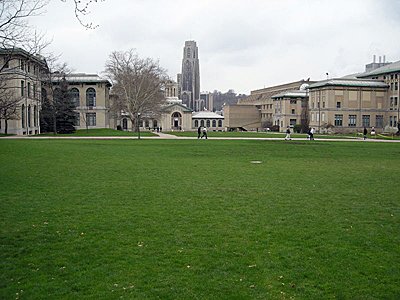
Viewing Pitt's Cathedral of Learning from Carnegie Mellon's mall (with Hamerschlag Hall in foreground), March 29, 2003. (http://post-gazette.com)

Viewing Pitt’s Cathedral of Learning from Carnegie Mellon’s mall (with Hamerschlag Hall in foreground), March 29, 2003. (http://post-gazette.com)

March ’93 was an interesting month for me, to say the least. Just about the biggest thing happening for me that month was my transfer from Pitt to Carnegie Mellon (or CMU) to finish my doctorate. After nearly two years of grad school in the History Department, I knew I needed to leave. Especially with Larry Glasco as my well-meaning but sometimes absentee advisor and with a bunch of professors who never hid their disdain for me as a masters and then a doctoral student. I’d also been at Pitt for six years between undergrad and grad school, most of those focused on history, Black Studies, or education foundations and policy as areas of research.

I knew that Carnegie Mellon wasn’t an ideal situation. I was sure that had I desired, I could’ve applied to and been accepted by doctoral programs as far and wide as NYU, University of Maryland, University of Michigan and other places. All were places where history didn’t simply consist of working-class historians who believed in the supremacy of class and neo-Marxism above all else – race and racism be damned! What I didn’t know, though, was whether those departments would accept my doctoral credits, cutting my coursework time in half. What I couldn’t be sure about was whether I’d be able to move toward PhD comprehensives and my dissertation proposal within a year of enrollment.

See, these were the things that Joe Trotter, my eventual advisor and John Modell, the graduate coordinator for the department, had promised me as part of my deal for transferring across the bridge to CMU. Those promises, along with the idea of working with an enthusiastic professor whose research didn’t seem out-of-date in a department that seemed to fast-track its students toward doctoral completion. That really appealed to me at the time.

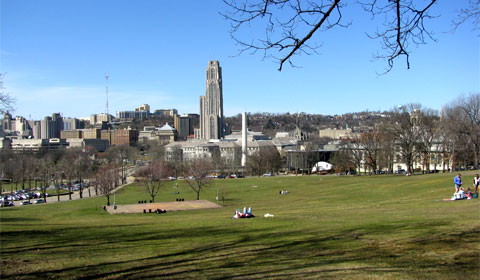
Pitt and Carnegie Mellon (with Forbes Quad & Baker Hall included) as seen from Schenley Park, Pittsburgh, PA, March 21, 2013. (http://milliverstravels.com).

Pitt and Carnegie Mellon (with Forbes Quad & Baker Hall included) as seen from Schenley Park, Pittsburgh, PA, March 21, 2013. (http://milliverstravels.com).

When I finally broke it to Larry at the beginning of March that I’d made this decision, he didn’t exactly try to convince me to stay. I think he knew why. An audit of the program in ’98 confirmed officially what I had learned anecdotally over my six years at Pitt. That there were students in the program who’d been ABD (All But Dissertation) since Nixon and Watergate. That fully half of my cohort from ’91 hadn’t even completed their master’s degrees, and only three of us (counting myself) out of twenty-one would ever go on to complete our doctorates. That no Pitt History grad student had obtained substantial research funding from outside the university since my Mom potty-trained me back in ’72-’73. And that politically, the powers that used to be in the department didn’t take my or Larry’s work with me seriously. Even if Larry didn’t see that, I sure did.

Off then, I went. Into the unknown known of CMU, conservative, elite and elitist, not sure if I’d ever be comfortable on the lily-White and honorary-White-as-Asian campus. Still, I reminded myself that Pitt was really only a couple of blocks away at the closest point between the two campuses, that I still had lots of friends and acquaintances there. I also knew, though, that my relationship with Trotter as my advisor would be crucial to my successful navigation of this drab and stuffy world. Too bad I wasn’t clairvoyant!

December Doctoral Decisions

13 Thursday Dec 2012

Posted by decollins1969 in 1, Academia, Boy @ The Window, culture, Eclectic, Politics, Pop Culture, race, Work, Youth

≈ Leave a comment

Tags

Advisor-Student Relationships, Advisors, Bruce Anthony Jones, Carnegie Mellon University, Doctoral Research, Graduate Fellowships, Graduate School, Joe Trotter, Larry Glasco, Lawrence Glasco, Multiculturalism, PhD programs, Pitt, Politics of Education, Politics of Graduate School, Quantitative Analysis, Quantitative Methods, School of Education, Strategy, Tactics, Tokenism, Transfer, University of Pittsburgh


Saint Wolfgang and The Devil [Faustian Bargain], by Michael Pacher, ca. 1471-1475, Munich, Germany, February 19, 2009. (The Yorck Project via Wikipedia). In public domain.

Saint Wolfgang and The Devil [Faustian Bargain], by Michael Pacher, ca. 1471-1475, Munich, Germany, February 19, 2009. (The Yorck Project via Wikipedia). In public domain.

It was this time twenty years ago that I decided to transfer from the University of Pittsburgh to Carnegie Mellon to complete my PhD in history. It was a solid tactical decision on many levels. The strategy, however, was a bust, although the reasons for this failure wouldn’t become apparent for several years.

I made the decision to leave Pitt based on at least three deficiencies. One, I was a doctoral student who’s dissertation research would be about multiculturalism, education, and a Black urban community (I hadn’t decided on Washington, DC yet). The only person in the history department with expertise in African American history was Larry Glasco, my advisor, and it had become obvious by the beginning of the 1992-93 school year that his interests had shifted to Afro-Caribbean studies, specifically Afro-Cuban history (see my post “Larry Glasco and the Suzy-Q Hypothesis” from August ’11). Larry’s understanding of such things as Black migration studies, Black education and Black intellectual developments pretty much stopped with the year he took his job at Pitt, 1969 (the year I was born).

Two for moving on from Pitt came out of my interactions with other professors and grad students in the department and in the School of Education. It was obvious during the fall of ’92 that most of my professors found me an enigma, from Dick Oestriecher’s “exceptional Black man” allowances in class (see my post “Dairy Queens, Dick Oestriecher and Race” from February ’11) to some colleagues’ comments about how easy I made grad school look (especially since I had time to talk and go up the hill to shoot hoops).

Hammer & Sickle & Pitt Flag [symbolic of Pitt's history department], December 13, 2012. (Donald Earl Collins).

Hammer & Sickle & Pitt Flag [symbolic of Pitt’s history department], December 13, 2012. (Donald Earl Collins).

I realized that in a department that placed a premium on American working-class studies, on the supremacy of class warfare and neo-Marxism above any other historical field, that my chances for graduating anytime before the year 2000 were slim. And forget about picking up a fellowship or grant to do my dissertation research or finding a job if and when I did graduate! There were still professors at Pitt — like Reid Andrews (now department chair) and the former department chair Richard Smethurst — who didn’t even think I was “grad school material,” and they said as much. I was an anomaly in an anomalous department (see my “Letter of Recommendation (or Wreck-o-mendation)” post from September ’10).

I did consider doing a PhD in education at Pitt, with possibly Bruce Anthony Jones as my advisor, or someone more senior like Bill Thomas. Bruce, though, discouraged me from that idea, as he was only an assistant professor at the time. It was obvious that Bill Thomas was a popular professor, so much in demand that I’d be lucky to meet with him three times in a semester to discuss his work, much less my own.

And I already had that kind of relationship with Larry. My third reason that led to my decision to transfer to Carnegie Mellon involved a very angry Larry at the end of November ’92. You see, one of the requirements for getting to the end of coursework status was the completion of a quantitative methodology course or the completion of a project in which quantitative methods drove said project.

I decided on the latter, but told Larry that between teaching four sections of US Since 1877 with over 100 students and taking three grad seminars with 1,500 pages of reading per week, that I wouldn’t be doing an independent study with him that fall. I said that I’d carve out time “on my own” to get started this fall, but wouldn’t be prepared to complete the quantitative methods project until the spring semester.

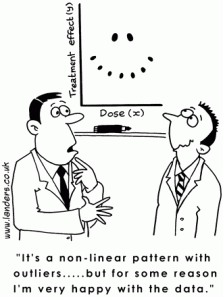
Cartoon on data points & regression analysis involving drug trials, December 13, 2012. (http://www.landers.co.uk).

Cartoon on data points & regression analysis involving drug trials, December 13, 2012. (http://www.landers.co.uk).

So after I presented some of my early findings regarding 1910 census data and infant mortality rates among Black women in Pittsburgh to Larry’s History of Black Pittsburgh class, we met to discuss how far I’d gotten in my regression analysis. I hadn’t done much with the variables yet, simply because I hadn’t had the time in November to do any off-time work. Larry became furious, said that he was “disappointed in me,” and wondered aloud if I’d make it through this year as a grad student. When I pointed out for a second time that I was doing this work in my spare time — not as an independent study course, not for a grade — he finally remember what we had discussed in August.

Larry did apologize, profusely. But I was pissed. “You’re only advising one active student, and you can’t remember what I’m working on,” I thought. With Joe Trotter at Carnegie Mellon attempting to woo me into their program, with me already taking his grad seminar in African American history, and with the writing on the wall at Pitt (where I’d already earned my B.A. and M.A. in history), I set up a meeting with Joe in mid-December to explore the possibility of transferring.

Although it would’ve been a worse decision to stay at Pitt, leaving for Joe Trotter and Carnegie Mellon was just about the worst decision I’d made as an adult (see my post “The Audacity of Youth, Grad School Style” from August ’11). For it set up so many of my other career decisions and choices I’ve made in the two decades since.

A school of education would’ve made more sense for me and the research I wanted to pursue, after all. But I would’ve had to think beyond Western Pennsylvania, taken a year off, and then pointed at Stanford, Harvard, UPenn or Teachers College as possibly better choices, better situations. Chris Rock is right. “Life is long, when you make the wrong decisions.”

My Take on Carnegie Mellon University

23 Tuesday Oct 2012

Posted by decollins1969 in 1, Academia, Boy @ The Window, Eclectic, Politics, Pop Culture, race, Youth

≈ Leave a comment

Tags

47 Percent Video, Affirmative Action, Alumni Association, Barbara Lazarus, Carnegie Mellon, Carnegie Mellon University, CMU, Conservatism, Disappointment, Exclusion, Fundraising, History Department, Isolation, Joe Trotter, Mitt Romney, Pitt, Silent Treatment, University of Pittsburgh


View of Pitt’s Cathedral of Learning from Carnegie Mellon lawn, Pittsburgh, PA, October 22, 2012. (http://www.broadwayspotted.com/).

It’s with extreme disappointment in which I write my latest post, this one on Carnegie Mellon University, or as the locals and attendees call it, CMU (sorry, Central Michigan University folks). But I feel I have little choice, given the amount of crap I’ve received over the past few months from my doctoral institution. The alumni association and the fundraising people at Carnegie Mellon ask me for money at least twice a week, and don’t seem to get it when I say “no” or “never” or even “when Hell freezes over.” I’ve known creditors less persistent about getting money out of people than the fundraising arm of Carnegie Mellon.

The last straw for me, though, was last week. I received three emails on the same day, not to mention a letter in the mail, all asking for donations. One also included an alumni survey, which I dutifully filled out and rated Carnegie Mellon at the low-end of every category in the survey. “Not only do I not mentor my students or aspiring college students about Carnegie Mellon,” I said. “I go out of my way to make sure that they do not ever consider applying to or attending Carnegie Mellon,” I added at the end of the survey.

Romney in 47 Percent Video, September 18, 2012. (Joe Pompeo/http://capitalnewyork.com). Qualifies as fair use under US Copyright Laws – cropped/low resolution.

I don’t think that the alumni association or the fundraisers really understand the depths of my disappointment regarding my four years at CMU between ’93 and ’97. I found the university culture about as welcoming as going to a Mitt Romney fundraiser in Boca Raton, and with many folks from the same crowd as well. Anytime your campus refuses to recognize Martin Luther King, Jr. Day as a holiday, or insists on having Dinesh D’Souza give a two-hour talk on race without an opposing viewpoint, it’s a stifling place. A campus in which the College Republicans stage marches while not having a strong College Democrats or progressive group in place is a bastion of conservatism, not just politically, but socially as well.

In four years, I became friends with a very small group of students and professors. I would’ve made more of an effort, if I hadn’t been told practically from day one that my master’s degree from the University of Pittsburgh and my other achievements meant little because, well, I had a degree from Pitt. And these sentiments came from my professors!

From my fellow students — who often walked by me as if I were a ghost until I forced them to say “Hi” — there was the impression that I must’ve gotten into the History program under some “special dispensation,” as one White guy put it. Yeah, my M.A. — earned in two semesters with a real committee examination — and a year of PhD work had nothing to do with my ability to write rings around my fellow students!

All in all, my Carnegie Mellon experience only worked out as well as it did because I reached out beyond my department and beyond the university to maintain connections and friendships with real people. My list of good folks at Carnegie Mellon is pretty short. The late Barbara Lazarus (see my post “Ladies and Gentlemen, Dr. Barbara B. Lazarus” from July ’09), Susan McElroy, John Hinshaw (who himself didn’t talk to me for two years after I’d gotten a Spencer Fellowship), and “My Friend Matt” (September ’12). The Black Graduate Student Organization (or BGSO), the graduate students of color/women graduate students working group that Barbara headed, and our group of fourteen doctoral students of color (the total number of non-White and non-Asian PhD students at Carnegie Mellon). That and playing intramural and pick-up basketball as much as three times a week were the sum total of my positive people and experiences at CMU.

Carnegie Mellon’s University Center, or “the new sanitarium,” October 22, 2012. (via Wikipedia).

I spent the majority of my non-classroom time on Pitt’s campus hanging out with friends there, working on my dissertation, meeting with some of my former professors, or otherwise enjoying my status as an alumnus. If anything, I needed to walk across that bridge between Carnegie Mellon, Schenley Park and Pitt as much as I did in order to keep my sanity, to make sure that I was essentially the same person I’d been while going to grad school with comparatively less uptight folk.

Of course, I could also go on about how my experiences with Joe Trotter as my advisor (see my “Outrage, Maybe” post from May ’10) turned me into an anti-Carnegie Mellon advocate, or how the sanitarium look of the university buildings could leave Polyanna depressed. But for those involved in alumni fundraising and related tasks at Carnegie Mellon, get this. I will never, ever, ever, give CMU one penny of my hard-earned dollars. I’d sooner give my idiot ex-stepfather a penny at his grave before you could pry a cold copper piece out of my hands, alive or dead. As far as I’m concerned, you owe me for four years of unnecessary anguish in the midst of my determined success.

← Older posts
Newer posts →

Boy @ The Window: A Memoir

Boy @ The Window: A Memoir

Places to Buy/Download Boy @ The Window

There's a few ways in which you can read excerpts of, borrow and/or purchase and download Boy @ The Window. There's the trade paperback edition of Boy @ The Window, available for purchase via Amazon.com at http://www.amazon.com/Boy-Window-Donald-Earl-Collins/dp/0989256138/

There's also a Kindle edition on Amazon.com. The enhanced edition can be read only with Kindle Fire, an iPad or a full-color tablet. The links to the enhanced edition through Apple's iBookstore and the Barnes & Noble NOOK edition are below. The link to the Amazon Kindle version is also immediately below:

scr2555-proj697-a-kindle-logo-rgb-lg

Boy @ The Window on Amazon.com: http://www.amazon.com/Boy-The-Window-Memoir-ebook/dp/B00CD95FBU/

iBookstore-logo-300x100

Boy @ The Window on Apple's iBookstore: https://itunes.apple.com/us/book/boy-the-window/id643768275?ls=1

Barnes & Noble (bn.com) logo, June 26, 2013. (http://www.logotypes101.com).

Boy @ The Window on Barnes & Noble: http://www.barnesandnoble.com/w/boy-the-window-donald-earl-collins/1115182183?ean=2940016741567

You can also add, read and review Boy @ The Window on Goodreads.com. Just click on the button below:

Boy @ The Window

Twitter Updates

Tweets by decollins1969
  • RSS - Posts
  • RSS - Comments

Archives

  • June 2025
  • April 2023
  • September 2022
  • August 2022
  • July 2022
  • June 2022
  • May 2022
  • April 2022
  • March 2022
  • January 2022
  • December 2021
  • November 2021
  • October 2021
  • September 2021
  • August 2021
  • July 2021
  • June 2021
  • April 2021
  • March 2021
  • February 2021
  • January 2021
  • December 2020
  • November 2020
  • October 2020
  • September 2020
  • August 2020
  • July 2020
  • May 2020
  • April 2020
  • March 2020
  • January 2020
  • December 2019
  • November 2019
  • August 2019
  • July 2019
  • June 2019
  • May 2019
  • April 2019
  • March 2019
  • February 2019
  • January 2019
  • December 2018
  • November 2018
  • October 2018
  • September 2018
  • August 2018
  • July 2018
  • June 2018
  • May 2018
  • March 2018
  • February 2018
  • January 2018
  • December 2017
  • November 2017
  • October 2017
  • September 2017
  • August 2017
  • July 2017
  • June 2017
  • May 2017
  • April 2017
  • March 2017
  • February 2017
  • January 2017
  • December 2016
  • November 2016
  • October 2016
  • September 2016
  • August 2016
  • July 2016
  • June 2016
  • May 2016
  • April 2016
  • March 2016
  • February 2016
  • January 2016
  • December 2015
  • November 2015
  • October 2015
  • September 2015
  • August 2015
  • July 2015
  • June 2015
  • May 2015
  • April 2015
  • March 2015
  • February 2015
  • January 2015
  • December 2014
  • November 2014
  • October 2014
  • September 2014
  • August 2014
  • July 2014
  • June 2014
  • May 2014
  • April 2014
  • March 2014
  • February 2014
  • January 2014
  • December 2013
  • November 2013
  • October 2013
  • September 2013
  • August 2013
  • July 2013
  • June 2013
  • May 2013
  • April 2013
  • March 2013
  • February 2013
  • January 2013
  • December 2012
  • November 2012
  • October 2012
  • September 2012
  • August 2012
  • July 2012
  • June 2012
  • May 2012
  • April 2012
  • March 2012
  • February 2012
  • January 2012
  • December 2011
  • November 2011
  • October 2011
  • September 2011
  • August 2011
  • July 2011
  • June 2011
  • May 2011
  • April 2011
  • March 2011
  • February 2011
  • January 2011
  • December 2010
  • November 2010
  • October 2010
  • September 2010
  • August 2010
  • July 2010
  • June 2010
  • May 2010
  • April 2010
  • March 2010
  • February 2010
  • January 2010
  • December 2009
  • November 2009
  • October 2009
  • September 2009
  • August 2009
  • July 2009
  • June 2009
  • May 2009
  • April 2009
  • March 2009
  • February 2009
  • January 2009
  • December 2008
  • November 2008
  • October 2008
  • September 2008
  • August 2008
  • July 2008
  • June 2008
  • May 2008
  • April 2008
  • March 2008
  • February 2008
  • January 2008
  • December 2007
  • November 2007
  • October 2007
  • September 2007
  • August 2007
  • July 2007
  • June 2007

Recent Comments

MaryPena's avatarMaryPena on My Day of Atonement/Bitter Hat…
decollins1969's avatardecollins1969 on No Good Teaching Deed Goes…
Mary Rose O’Connell's avatarMary Rose O’Connell on No Good Teaching Deed Goes…

NetworkedBlogs on Facebook

NetworkedBlogs
Blog:
Notes From a Boy @ The Window
Topics:
My Life, Culture & Education, Politics & Goofyness
 
Follow my blog

616 616 East Lincoln Avenue A.B. Davis Middle School Abuse Academia Academy for Educational Development AED Afrocentricity American Narcissism Authenticity Bigotry Blackness Boy @ The Window Carnegie Mellon University Child Abuse Class of 1987 CMU Coping Strategies Crush #1 Crush #2 Death Disillusionment Diversity Domestic Violence Economic Inequality Education Family Friendship Friendships Graduate School Hebrew-Israelites High-Stakes Testing Higher Education History Homelessness Humanities Humanities Program Hypocrisy Internalized Racism Jealousy Joe Trotter Joe William Trotter Jr. K-12 Education Love Manhood Maurice Eugene Washington Maurice Washington Misogyny Mother-Son Relationship Mount Vernon High School Mount Vernon New York Mount Vernon public schools Multiculturalism MVHS Narcissism NFL Pitt Pittsburgh Politics of Education Poverty President Barack Obama Race Racial Stereotypes Racism Relationships Self-Awareness Self-Discovery Self-Reflection Sexism Social Justice Teaching and Learning University of Pittsburgh Violence Whiteness Writing

Top Rated

Blog at WordPress.com.

  • Subscribe Subscribed
    • Notes from a Boy @ The Window
    • Join 103 other subscribers
    • Already have a WordPress.com account? Log in now.
    • Notes from a Boy @ The Window
    • Subscribe Subscribed
    • Sign up
    • Log in
    • Report this content
    • View site in Reader
    • Manage subscriptions
    • Collapse this bar
 

Loading Comments...