• About Me
  • Other Writings
  • Interview Clips
  • All About Me: American Racism, American Narcissism, and the Conversation America Can’t Have
  • Video Clips
  • Boy @ The Window Pictures
  • Boy @ The Window Theme Music

Notes from a Boy @ The Window

~

Notes from a Boy @ The Window

Tag Archives: History

JFK & Innocence Never Lost, RFK & Real History

21 Thursday Nov 2013

Posted by decollins1969 in 1, Academia, culture, Eclectic, Movies, music, Patriotism, Politics, Pop Culture, Youth

≈ Leave a comment

Tags

Activism, American Exceptionalism, Assassination, Baby Boomers, Backlash, Camelot, Gun Violence, History, Innocence, JFK, JFK Assassination, LBJ, Lee Harvey Oswald, Legend, Mythology, Neo-Conservative Movement, President John F. Kennedy, President Lyndon Baines Johnson, RFK, Robert Kennedy, Social Justice, The '60s, Violence, Violent Society


President John F. Kennedy, presidential portrait (1961-63). (Wikipedia via John Fitzgerald Kennedy Library, Boston)

President John F. Kennedy, presidential portrait (February 20, 1961). (Wikipedia via John Fitzgerald Kennedy Library, Boston). In public domain.

I’ve heard about the JFK assassination in Dallas my whole life. Only the Civil Rights Movement, World War II and the Holocaust outrank JFK’s murder at the hands of Lee Harvey Oswald (or numerous other candidates) as subjects more often discussed in pop history circles of which I’ve been a part. But with the fiftieth anniversary of President John Fitzgerald Kennedy’s upon us tomorrow (fifty years to both the day and date), the mythology of his presidency and the state of the nation’s soul since November 22, 1963 is well into high gear.

But of all the myths and legends — including this ridiculousness about Camelot and the Kennedys in the White House — there’s one that bothers me more than any other. The common refrain that “America lost its innocence” the day President Kennedy took three bullets to his back and head in Daley Plaza in Dallas. Really? What about Abraham Lincoln, James Garfield and William McKinley? What about slavery, the Civil War, the eradication and forced relocation of American Indians, nuking Hiroshima and Nagasaki? Heck, what about the Cuban Missile Crisis, where JFK came within hours of jeopardizing the lives of eighty million Americans thirteen months before his murder?

Bloom off the rose, November 21, 2013. ( ).

Bloom is off the rose, November 21, 2013. (http://www.marctomarket.com).

The fact is, America has always been a violent nation, especially for those not in charge of running things here. But this bald-faced lie of a myth has been one built by those who were young when Oswald took out JFK. Teenager Baby Boomers and those only a few years older, big fans of President Kennedy, and those who loved him and lamented what could’ve been. Those are the folks that claim that the nation was young and innocent, but somehow deflowered on that dark, dark day. 

I call poppycock and balderdash on this one. Like Malcolm X in the days after the JFK assassination, I say that this was an example of America’s violent chickens coming home to kill. Luckily it’s forty-nine years and 364 days later, so I won’t be setting up my own assassination at the hands of former friends and real foes. Yet there’s some truth to Malcolm X’s statement. In a country as violent as ours, where Presidents like Kennedy endure death threats day after day, where arguments and oppression lead to mass shootings, should we ever be surprised? Ever? I say that there was no innocence lost here.

No, what we should really be discussing this week in terms of what could’ve been is RFK’s assassination in June ’68 in California. For all the sorrow over JFK’s murder, one good thing came out of it. President Lyndon Baines Johnson. LBJ took the best parts of JFK’s potential legacy — civil rights, the spreading of prosperity and Vietnam — and doubled down on it. Given LBJ’s scope of influence when compared with JFK’s, it was doubtful if the slain president could’ve pushed through half of what LBJ did get done. LBJ revealed himself to be to the left of JFK, a real Cold War liberal (for better and for worse), and not a borderline centrist.
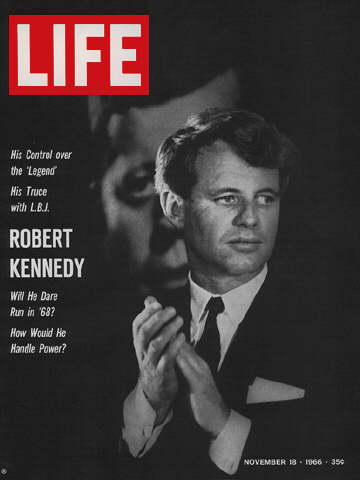
Robert Francis Kennedy, Life Magazine Cover, November 1966. ( )

Robert Francis Kennedy, Life Magazine Cover, November 1966. (http://www.arlingtoncemetery.net/)

Of course, RFK likely wouldn’t have had the chance to run in ’68 but for his brother’s assassination. Keep in mind, too, that LBJ’s successes, failures and decision to not run for re-election also made Robert F. Kennedy’s run possible. But bottom line: RFK’s assassination affected America political and culturally in ways that have been deeper and longer lasting than even JFK’s. For starters, Americans likely do not elect Richard Nixon president in ’68 if RFK’s steadying influence is present at the ’68 Democratic Convention in Chicago. That would’ve set up some real opposition to the neo-conservative movement and the ’70s and ’80s backlash against Blacks, women, gays and labor that had been brewing since JFK’s assassination in ’63.

I know that many of you will vehemently disagree, shake your heads, or deliberately ignore the ideas of this post. What else is new in the land of the Baby Boomers, where a few so-called activists get to tell the rest of us how to see the 77 million of them and their growing up years? I say that this narrative is worn out, and neglects the reality that neither JFK nor America were innocent, but RFK’s evolving left-of-center integrity was a much bigger loss.
Major Change

18 Friday Oct 2013

Posted by decollins1969 in 1, Academia, Boy @ The Window, culture, Eclectic, Pittsburgh, Politics, race, University of Pittsburgh, Youth

≈ Leave a comment

Tags

Changing Majors, College Majors, Colleges & Universities, Computer Science, History, Mother-Son Relationship, Paul Riggs, Poverty, Psychology, University of Pittsburgh


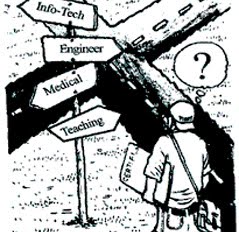
College Major Cartoon. Source: http://choctawsap.blogspot.com

Twenty-five years ago on this date, I made a most important educational decision. Despite my fears, my mother’s misgivings and my former Humanities classmates’ mockery, I changed my major from Computer Science to History. I’d been thinking about making this change since the middle of my first semester at Pitt, but decided against it at first because I knew that it wouldn’t be easy to make enough money to live on as someone with only a bachelor’s degree in History. Luckily my former TA Paul Riggs, a grad student in the History Department at Pitt, helped a lot in convincing me to “follow my heart,” as he put it. It was my third semester, my sophomore year, when I finally had the guts to come out of the closet academically.

The semester went well despite my five days of homelessness and the two months of financial strife that followed. It turned on another nail in my upbringing’s coffin. In addition to Biology, Psych 101, and General Writing, I was taking History of Art and Assembly Language, the last as part of my Computer Science major. Playing around with codes that related to “011000100101010000010” all the time drove me out of my mind with frustration. It was after our first major programming assignment that I recognized the problem. “I’m going to school for Mom and not for me,” I said to myself one late evening after running the debugger software at my CIS job. I had a major decision to make.

On the eighteenth of October, I went to the College of Arts and Sciences office on the eighth floor of Cathedral and changed my major to History. I then walked to Thackeray and withdrew from my Assembly Language course. Boy, did that feel good!

Then I called Mom from William Pitt Union to tell her my good news. She was completely quiet for a good ten seconds.

“What are you gonna do with a degree in history?,” she asked with shock in her voice.

“I don’t know yet, Mom, I don’t know. But I do know that I’ll graduate if I major in something I love.”

“All right, are you sure?,” Mom asked more directly. She already knew I was.

Choices Picture. Source: http://collegejolt.com

Choices Picture. Source: http://collegejolt.com

Looking back, it was probably the best academic decision I made while I was an undergrad at Pitt. My mood, my approach to life, my thinking of the future, all changed that semester. I could’ve easily majored in English writing or Psychology, given the way I see myself now.

But that’s what made majoring in History a wonderful experience. Studying history involved multiple disciplines for me. A great knowledge of history was much more than dates, names and events. It was about understanding the human condition, our attempts at greatness, our exhibition of behaviors that would be considered savage by savages. The ability to write about and analyze critical issues in American and other histories, including apartheid and slavery in South Africa, Latin American revolutions, and the resegregation of Pittsburgh Public Schools through magnet schools. Not to mention looking at the writings of other historians and other scholars in other fields. Most of all, I learned a lot about myself in the process of following a part of my passion.

Still, there were and are practical issues in pursuing a major that doesn’t have a direct relationship to jobs on the job market. I didn’t want to teach high school, and I needed to go to grad school if I wanted to be a professor or scholar. Having come through on the other side, I can say that I learned how to have fun while learning again. That’s what undergrad is for, after all, as the average student changes their major three times in five years. If I had figured out how I was a writer first and a historian second, I would’ve done something different for my master’s degree. But with my major in history, I wouldn’t change a thing.

It’s after finishing my history degree at Pitt in ’91 where, looking back, I’d make a few changes. A master’s degree in education or psychology — not so bad. A PhD in education policy & foundations would’ve likely been a better choice in terms of making my career transitions smoother. I would’ve figured out that I wanted to write Boy @ The Window much sooner than the end of ’02. This is what makes life interesting, though. So many twists and turns, so many times to embrace change, especially if it is for the better.

“I Am Become Columbus, Destroyer of Worlds”

14 Monday Oct 2013

Posted by decollins1969 in 1, Academia, Boy @ The Window, Christianity, culture, Eclectic, Mount Vernon High School, Patriotism, Politics, Pop Culture, race, Religion, Youth

≈ 1 Comment

Tags

American Indians, Christopher Columbus, Columbus Day, Diseases, Enslavement, Exploitation, Genocide, History, Indigenous Groups, J. Robert Oppenheimer, Native Populations, Teaching and Learning


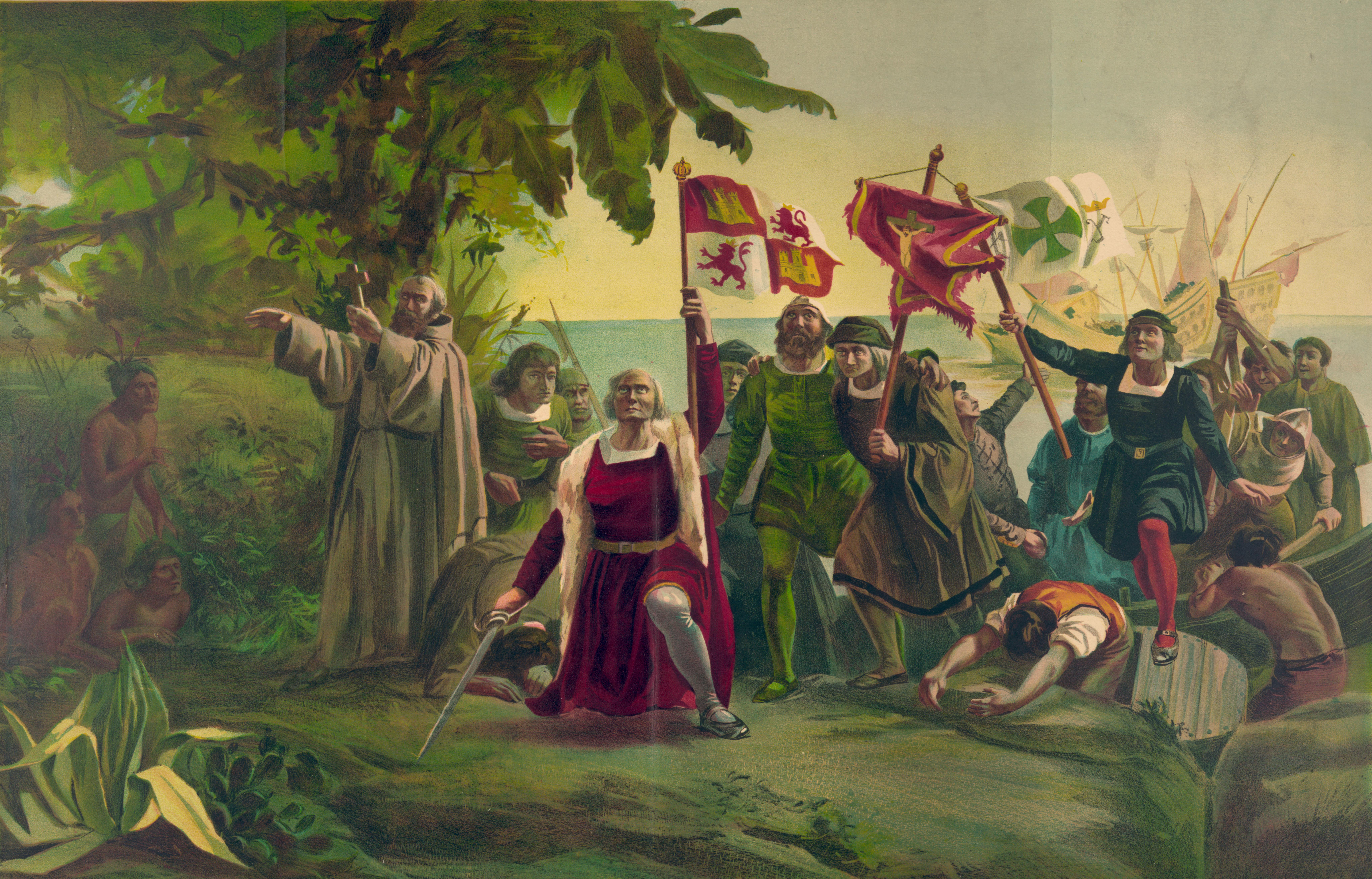
Dióscoro Teófilo Puebla Tolín, First landing of Columbus on the shores of the New World, at San Salvador, West Indies, 1862 (published 1892, Currier& Ives). (Dantadd via Wikipedia). In public domain.

Dióscoro Teófilo Puebla Tolín, First landing of Columbus on the shores of the New World, at San Salvador, West Indies, 1862 (published 1892, Currier& Ives). (Dantadd via Wikipedia). In public domain.

The title kind of says it all, no? On this Columbus Day, 2013, we should all acknowledge this as the beginning of the inadvertent (and frequently deliberate) genocide conducted against the indigenous groups that made up the Western Hemisphere as of October 12, 1492. The day that Christopher Columbus “discovered” America — as if First Nation tribes or Native Americans or American Indians were looking to be discovered — was the first day of more than half a millennium’s worth of physical and psychological assault on the peoples of the Western Hemisphere.

I talk about this in all of my courses — US History, World History (when I get to 1500 CE), and African American History. I describe how this notion of discovery was pretty much invented in the nineteenth century, to create a mythology about the greatness of God-fearing Europeans (and, in the US context, Americans) and their pre-ordained but altruistic triumph over the heathen Indians, those “noble savages.” I go over the fact that the Eurasian diseases that the Spaniards and other Europeans brought with them to the Western Hemisphere wiped out tens of millions of the indigenous between 1492 and 1700. Smallpox, measles, mumps, rubella, bubonic plague, chicken pox all helped reduce a population that experts have estimated to have been between 70 and 100 million at the time of first contact to between seven and 10 million by the end of the seventeenth century.

Drawing accompanying text in Book XII of the 16th-century Florentine Codex (compiled by Fray Bernardino de Sahagún, 1540–1585), showing Nahuas of conquest-era Central Mexico suffering from smallpox, September 11, 2009. (Wikipedia). In public domain.

Drawing in Book XII of Florentine Codex (compiled by Fray Bernardino de Sahagún, 1540–1585), showing Nahuas of Central Mexico suffering from smallpox, September 11, 2009. (Wikipedia). In public domain.

I talk about Columbus’ second voyage, where he helped establish the first European settlement in what is now Haiti and then in the Dominican Republic, all while searching for gold, enslaving Arawak Indians and engaging in full-fledged battles. Just a year and a half after the first, glorious “discovery!”

The justification, of course, was and often remains that Europeans were civilized Catholic Christians, whereas these half-dressed natives were hedonistic polytheists. Even now, we often get caught up in the human sacrifice rituals of the Maya and Aztecs and somehow use that as justification for exploitation, slavery, and the inadvertent wiping out of whole cultures — worlds, if you will. It’s a justification that should make any believer in a higher power queasy, and any non-believer extremely angry.

I’m disappointed. We still sugarcoat the real meaning of Columbus Day for people of all ages. I began to learn about all of this in fifth grade (thank you, Mrs. O’Daniel), in October ’79. But I didn’t come to know most of the full story until high school. Even then, no one — not Flanagan, Zini or Meltzer — mentioned disease, exploitation, slavery and warfare as the genocidal combination that essentially handed Western Europeans the Western Hemisphere. I guess they either didn’t know or thought that it would be too painful a lesson to teach fourteen-to-eighteen year-olds.

As J. Robert Oppenheimer said in ’65, twenty years after the Manhattan Project’s success in creating the world’s first nuclear bomb, “Now I am become Death, the destroyer of worlds.” Well, one doesn’t have to have God-like powers or be a Hindu deity to create large-scale human suffering, as was the case with Columbus. All one really needs is the conviction necessary to treat other humans as if they are only meat with brains and eyes.

Immigration Assignment & Montgomery County Public Schools

29 Wednesday May 2013

Posted by decollins1969 in 1, Academia, culture, Eclectic, Pop Culture, race, Youth

≈ Leave a comment

Tags

Administrators, American History, Fiction, History, Immigration, MCPS, Migration, Montgomery County Public Schools, Parenting, Pedagogy, Personal Stories, Teachers, US History, Woodlin Elementary School, Woodlin ES


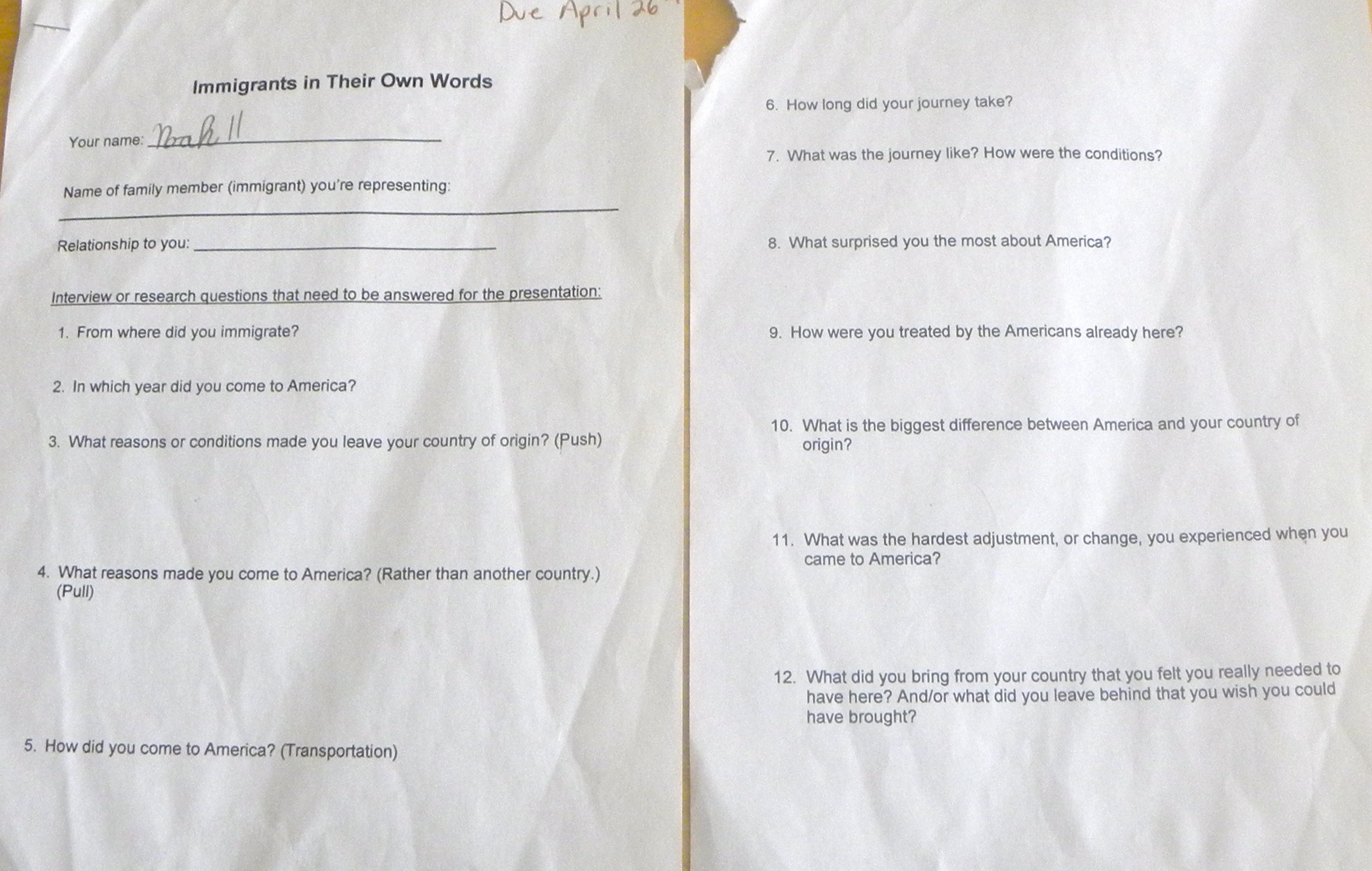
Immigrants In Own Words, Woodlin ES, May 28, 2013. (Donald Earl Collins).

Immigrants In Own Words, Woodlin ES, May 28, 2013. (Donald Earl Collins).

Well, the two-month long ordeal that was my son’s fourth grade immigration/migration segment and assignments concluded at the end of last week. While my son’s teachers at Woodlin ES and administrators at MCPS were well-meaning, this was probably the single worst assignment I’ve seen given by them to my son and his classmates. As I said in my post on this project from earlier this month, teaching undergraduates and graduate students the big and nuanced differences between two enormously important trends in American history is difficult. Teachers with an average understanding (at best) of historical trends and patterns like immigration and migration teaching nine and ten-year olds? That’s an almost impossible task.

It was a thoroughly frustrating assignment to watch my son go through and for me as his helper. It was a terrible set of tasks pedagogically, and just plain bad history, even for elementary school. Their so-called Wax Museum immigration project (they also titled it the 4th grade Legacy Project) called for each student to interview a relative that immigrated to the US. After our complaints, the school modified the assignment to include “a composite of several of your family members, with a mix of fact and fiction to tell the story” (emphasis added). Sorry, but encouraging “realistic” fiction for a big social studies assignment is beyond unacceptable. It shows a complete misunderstanding of US history and proper teaching methods for this subject.

In getting ready for my version of summer academic enrichment for my son (where he can build on his reading, writing and math skills while also doing fun summer camps), I ordered textbooks and other grade-appropriate materials. One of these was the activity workbook for The American Journey textbook, typically US history taught between sixth and eighth grade. I have tons of US history textbooks — I wanted the activities workbook to help guide and calibrate what my son should read and learn without going into every college-level historical nuance.

"An Immigrant's Experience" worksheet from The American Journey activity workbook, May 28, 2013. (Donald Earl Collins).

“An Immigrant’s Experience” worksheet from The American Journey activity workbook, May 28, 2013. (Donald Earl Collins).

When I leafed through the workbook last week, I found a worksheet activity titled “An Immigrant’s Experience.” The worksheet directions asked for students to “[i]nterview someone in your community who immigrated to the United States from another country or research the life of an immigrant to your state.” I realized that the questions from my son’s “Immigrants in Their Own Words” assignment were similar to the ones from this worksheet meant for kids at least two grade levels above his.

That sounds great in some respects, but it’s not. Not really. Not when I considered the fact that this was my son’s (and his classmates’) first real foray into US history at his school. Not when I figured that even this material from Glencoe McGraw-Hill mixed up immigration and migration, and yet the questions were specifically about immigration. These questions were obviously meant to cover either the 1870-1920 period or (in some cases) the period since 1965.

And certainly not when I thought about what my son told me about his teacher’s negative response to changing his assignment questions to specifically reflect migration, in his case, Black migration. Really? I didn’t think that asking his grandmother about what her folks thought about the differences between the US and their home country was an appropriate question.

As part of this social studies segment, my son also had to complete an assignment on waves of immigration, one that listed immigration to the Western Hemisphere in four phases or waves. One being from 1492-1820, then 1820-1890, then 1890-1950, then 1950 to today. This just made me shake my head. The periodization — as we historians call it — was so far off that slaves and conquistadors could be considered immigrants in the same way as Scotch-Irish living in the hills of Kentucky! Apparently MCPS produced this handout in 2001 as part of their social studies focus.

Focus Questions For Waves of Immigration (2001), MCPS, May 28, 2013. (Donald Earl Collins).

Focus Questions For Waves of Immigration (2001), MCPS, May 28, 2013. (Donald Earl Collins).

Now I’ll have to do something I hoped I’d never have to do, at least prior to my son going to high school. I must now correct what my son has been taught in school for the past two months. Good thing, though, that most of what my son learned on this topic will be forgotten by July 4th. It’ll make it easier for me to correct the incorrect.

K-12 Curriculum as a Mystery Novel

02 Thursday May 2013

Posted by decollins1969 in 1, Academia, culture, Eclectic, Pittsburgh, Politics, Pop Culture, race, Youth

≈ 3 Comments

Tags

4th Grade, Facts of Life, Head of the Class, High-Stakes Testing, History, Homework, Immigration, Jacob Lawrence, K-12 Curriculum, K-12 Education, K-12 Education Reform, MAP-M, MAP-R, Maryland, MCPS, Migration, Montgomery County Public Schools, MSA, Mystery Novels, Parenting, Phillips Collection, Sherlock Holmes, Silver Spring, Social Studies, Student Development, Teacher-Parent Relationship, Teaching and Learning, Textbooks, The Migration Series, Washington DC, Writing


Unsolved Mysteries, December 19, 2011. (http://news.discovery.com).

Unsolved Mysteries, December 19, 2011. (http://news.discovery.com).

This week, my son will complete a fourth-grade project in which he interviewed his Pittsburgh grandmother about her migration experience from rural Arkansas to Pittsburgh, Pennsylvania during the Depression decade. Sounds pretty good — and very advanced — on the surface of things. But the reality of how this school project evolved shows how much has changed — and not for the better — regarding schools and curriculum. For my son’s school in Silver Spring, Maryland, for Montgomery County Public Schools and for schools across the country.

You see, the bulk of testing season is over for MCPS’ elementary schools. So instead of practice tests, formative assessments (otherwise known as “formatives”) and the actual exams (MSA, MAP-M and MAP-R), the teachers now have to focus on lesson plans that aren’t test-driven. For April, the fourth-grade teachers at my son’s school decided to do a social studies project on immigration. They started with a wax museum project at school, as well as a field trip to the Phillips Collection in DC.

This was where things began to get interesting for me as a parent. The permission slip for the field trip presented this unit as immigration. Yet in my son’s trip to the Phillips Collection, him and his classmates would peruse a set of Jacob Lawrence’s paintings on migration. For those of you who don’t know, Lawrence’s most famous paintings were of the Great Migration of African Americans from the rural South to the urban North between roughly 1915 and 1930.

Jacob Lawrence: Migration Series, Phillips Collection, Washington, DC (1993), May 1, 2013. (Elizabeth Hutton Turner; http://ucdavis.libguides.com/).

Jacob Lawrence: Migration Series (Cover Art), Phillips Collection, Washington, DC (1993), May 1, 2013. (Elizabeth Hutton Turner; http://ucdavis.libguides.com/).

I could barely contain the historian side of me when I read such an obvious and unbelievable error. But I decided to not assume that the fourth-grade teachers made the decision to treat immigration the same as migration. So I hand-wrote a note that politely suggested that they make a correction on the permission slip and for the overall assignment, since immigration and migration aren’t the same at all.

This was the response I received by email on April 4:

“We have had this wonderful trip planned for the 4th grade for the past 4 years and we always make sure to front load the students with information about the migration process.”

When teachers go into placating-mode without actually addressing my concerns as a parent (and an educator, for that matter), it’s usually a sign of trouble where there otherwise shouldn’t have been any trouble.

Then, nearly two weeks ago, my son brought home his interview/presentation assignment based on the wax museum project and his Phillips Collection field trip. It was titled “Immigrants in Their Own Words.” The fourth-grade teachers had charged the students — including my son — with the task of finding a family member who had immigrated to the US, interviewing them and asking them questions like “In which year did you come to America?” and “What is the biggest difference between America and your country of origin?”

Flabbergasted is just the beginning of my deep sense of puzzlement over the assignment. It was an assignment straight out of a Facts of Life or Head of the Class episode from the 1980s, culturally and racial insensitive to the core. After all, the height of White immigration to the US ended nearly a century ago. For Blacks, well, if I have to explain it, then it may be worth the while of those of you who do teach to take my History of American Education course (that is, whenever I get to teach it again).

My wife wrote an email about this follow-up assignment, to which my son’s teacher replied, “[e]migration and [i]mmigration are almost splitting hairs.” Really? In what history or ed foundations course? With some prodding, we were given the opportunity to adapt the assignment so that my son could work on migration. Of course, even without that note, I would’ve insisted on him doing migration anyway.

Mysterious...the new Sherlock Holmes, January 17, 2011. (H. Armstrong, Roberts/Corbis; http://www.guardian.co.uk/).

Mysterious…the new Sherlock Holmes, January 17, 2011. (H. Armstrong, Roberts/Corbis; http://www.guardian.co.uk/).

That this process was poorly executed is only part of the story. For nearly five years, my son’s curriculum has been a mystery to me, as it jumped around from pre-algebra to basic addition, from writing letters in which he could write phonetically to having to write about beetles in grammatically correct but short sentences. After five years, my son has never brought a textbook home. The weekly emails from teachers and postings on the neighborhood school website and the MCPS website tell me a lot about nothing.

In sum, I know quite a bit about test dates, subject areas and sometimes subject matter in which the state of Maryland and the school district will test the students. What we don’t know from day one of any school year are the themes for each subject for the year or for any given marking period. Because of the priority of testing above all else, the amount of time in the curriculum on subjects like social studies has narrowed, and with it, a teacher’s ability to be autonomous and to think through curriculum in a critical manner. And without textbooks, I as a parent can’t truly anticipate how to help prepare my son for any new or potentially challenging materials.

It’s difficult, though, to anticipate that your son will come home with an assignment on immigration in the fourth marking period of fourth grade. Especially when I as a history professor know how complicated these processes are for undergraduate and graduate students to wrap their brains around. Especially since my son has yet to write a full-fledged book report on any any book he has read for school. Or spent significant time on history or other, non-test-related subjects. Education should always be a journey, but never a mystery.

Sports and “The -tions”

22 Saturday Dec 2012

Posted by decollins1969 in 1, Academia, culture, Eclectic, High Rise Buildings, Politics, Pop Culture, race, Sports, Work

≈ Leave a comment

Tags

"Social Political Economic", African American History, De-industrialization, Declining Cities, Economic Inequality, Gentrification, High School Social Studies Teaching Formula, Higher Education, History, History of American Sports, History of Education, Immigration, Industrialization, Migration, social mobility, Suburbanization, Teaching History, The -tions, Urbanization, US History, World History


Gentrification via sports collage, December 22, 2012. [Includes aerial view of location of new DC baseball stadium site, June 22, 2006, http://www.wreckingcorp.com; Nationals Park Greeting Card; Baseball Stadium Price Tag cartoon, March 27, 2008 (Nate Beeler/Washington Examiner)]

Gentrification via sports collage, December 22, 2012. [Includes aerial view of location of new DC baseball stadium site, June 22, 2006, http://www.wreckingcorp.com; Nationals Park Greeting Card; Baseball Stadium Price Tag cartoon, March 27, 2008 (Nate Beeler/Washington Examiner)]

Off and on for the past twenty years, I’ve attempted to wean my students off the ridiculous high school social studies formula for addressing an essay question or writing a history paper. Thinking about history — particularly modern world history or US history — purely in social, political and economic terms misses so much. History is about patterns, trends and dynamic processes involving people and human tendencies. So in my discussion sections for US History Since 1877 in the fall of ’92, I began to discuss the idea that you can better understand history through applying what I started to call “the -tions” as a series of trends, processes and patterns.

I did this because I’d already grown tired of students who had adopted “the formula.” The formula goes something like this. First, write an introduction (usually, without mention of the need for a clear thesis statement). Then, put facts, events, ideas and evidence in the social, political and economic changes silos (it always has to be these three). Then, write a conclusion that restates the introduction, with a “my essay/paper has proven” sentence.

Steel grain silos, Ralls, Texas, October 12, 2010. (Leaflet via Wikipedia). In public domain.

Steel grain silos, Ralls, Texas, October 12, 2010. (Leaflet via Wikipedia). In public domain.

It’s a terrible way to teach history, and a terrible way to write about it. It leaves so much out, including the idea that history is a constantly evolving process, not a static picture of events involving larger-than-life individuals herding billions of people through one period of history or another. So I decided to make immigration, industrialization, urbanization, and migration (sometimes called internal migration) a bigger focus with my students my second year of graduate school at Pitt. Some liked it, some didn’t, and some just kept writing their formulaic five-paragraph essays for their midterm and final exams. Oh well.

So, in expanding my list of -tions to include de-industrialization, suburbanization, globalization and gentrification over the years, I’ve begun to see patterns beyond what I typically teach or even write about. The rise and decline of American cities are a case in point. Especially if one compares this to the rise and decline of mainstream American team sports over time. That baseball, football and basketball have all been the nation’s first or second most popular sports at one point or another since the 1890s is a reflection of the leisure activities available to ordinary Americans living in growing or declining cities.

Of course, I could also include boxing (as this was America’s most popular sport through the first four decades of the twentieth century). But as an individual sport wrought with even more racial overtones than baseball, boxing deserves a separate discussion. For team sports, though, their rise or decline in popularity seems to have followed a number of trends related to the -tions.

Baseball was the nation’s most popular team sport from the 1890s through the 1950s, mirroring the growth of American cities (urbanization) during the same period. Immigrants from Southern and Eastern Europe helped grow these cities, as they left behind rural poverty, religious persecution and pogroms for industrial exploitation here in the US. Native-born Whites, already enamored with baseball, essentially introduced these immigrant groups to the sport, which in turn made it more popular. Of course, many sons of these immigrants became great baseball players. Blacks migrating to cities such as New York, Pittsburgh, Kansas City and Chicago also adopted the pastime. Every -tion is involved, at least, that’s my argument.

As we well know, though, baseball has declined in popularity since the 1950s, as the professional game became an integrated sport, and as millions of Whites began moving to the suburbs, taking millions of jobs with them. Blacks underwent a second massive wave of migration after 1940 that grew during the 1950s and 1960s.

During this transition, basketball and football (especially the latter) became more popular sports. Both were sports whose history and records were less revered than those in baseball, and at least appeared to be more welcoming of athletes of color than baseball. In the migration of Whites from cities to suburbs and Blacks to cities, the shuffling of team sports’ popularity and their locations began.

Pittsburgh's Civic Arena under demolitiion, March 11, 2012 (AVPHOTOGRAPHICS PGH via Flickr.com). In public domain. The "Igloo" (home of the Pittsburgh Penguins) itself was built after the demolition of the Lower Hill District between 1958 and 1961, displacing thousands of Blacks in the process.

Pittsburgh’s Civic Arena under demolition, March 11, 2012. (AVPHOTOGRAPHICS PGH via Flickr.com). In public domain. The “Igloo” (home of the Pittsburgh Penguins) itself was built after the demolition of the Lower Hill District between 1958 and 1961, displacing thousands of Blacks.

Once the US economy began to decline, and then de-industrialize, in the 1970s, 1980s, and 1990, the role of declining cities attempting to hold on to their sports franchises became a new theme. Declining post-industrial cities like Baltimore, Detroit and Cleveland lost their teams entirely to other cities, or lost them to the suburbs. While Sunbelt cities like Dallas-Fort Worth, Atlanta, Phoenix, Denver and Houston have picked up some of these pieces.

Gentrification, backed by a politically conservative model for economic growth and nary a concern for the declining income of city residents, has led to a return of professional sports teams to city centers. Billions of taxpayer dollars have gone into sports arenas and stadiums in Washington, DC, Brooklyn, Seattle, Detroit, Boston, San Jose, and so many other places across the country. But with little to no benefit for the people living in these cities, especially the poor. As a result of the inflation that came with gentrification and these commercial building ventures, millions of America’s poor have been forced to move out into poorer suburban communities that often border major cities.

Maybe it’s just me. I just don’t find much to celebrate about the business side of sports today, because it reflects the trends of growing economic inequality and much more difficult social mobility. It shows how desperate the mayors of declining cities are for growing their municipalities, without regard for its poor and working-class residents. It’s emblematic of our culture’s inability to see that the shift from industrial work to service industry work has left millions without the ability to live decent lives in city or suburb, whether they migrate to Houston or stay in New York. Sports is a reflection of these trends, but they also exacerbate them as well.

The Audacity of Youth, Grad School Style

06 Saturday Aug 2011

Posted by decollins1969 in 1, Academia, Boy @ The Window, Eclectic, Youth

≈ Leave a comment

Tags

Audacity, Black Washington, Bruce Anthony Jones, Calling, Career, Career Options, Carnegie Mellon University, Certfication, Dan Resnick, Dissertation, Doctoral Thesis, Experience, Fudging Data, History, Joe Trotter, Joe William Trotter Jr., Multiculturalism, Naivete, Pittsburgh, Proletarianization Thesis, Teacher Education, Thesis, Wisdom, Youth


Me as Naruto, the ultimate hollerer, Noah's 7th birthday, July 30, 2010. (Source/Donald Earl Collins)

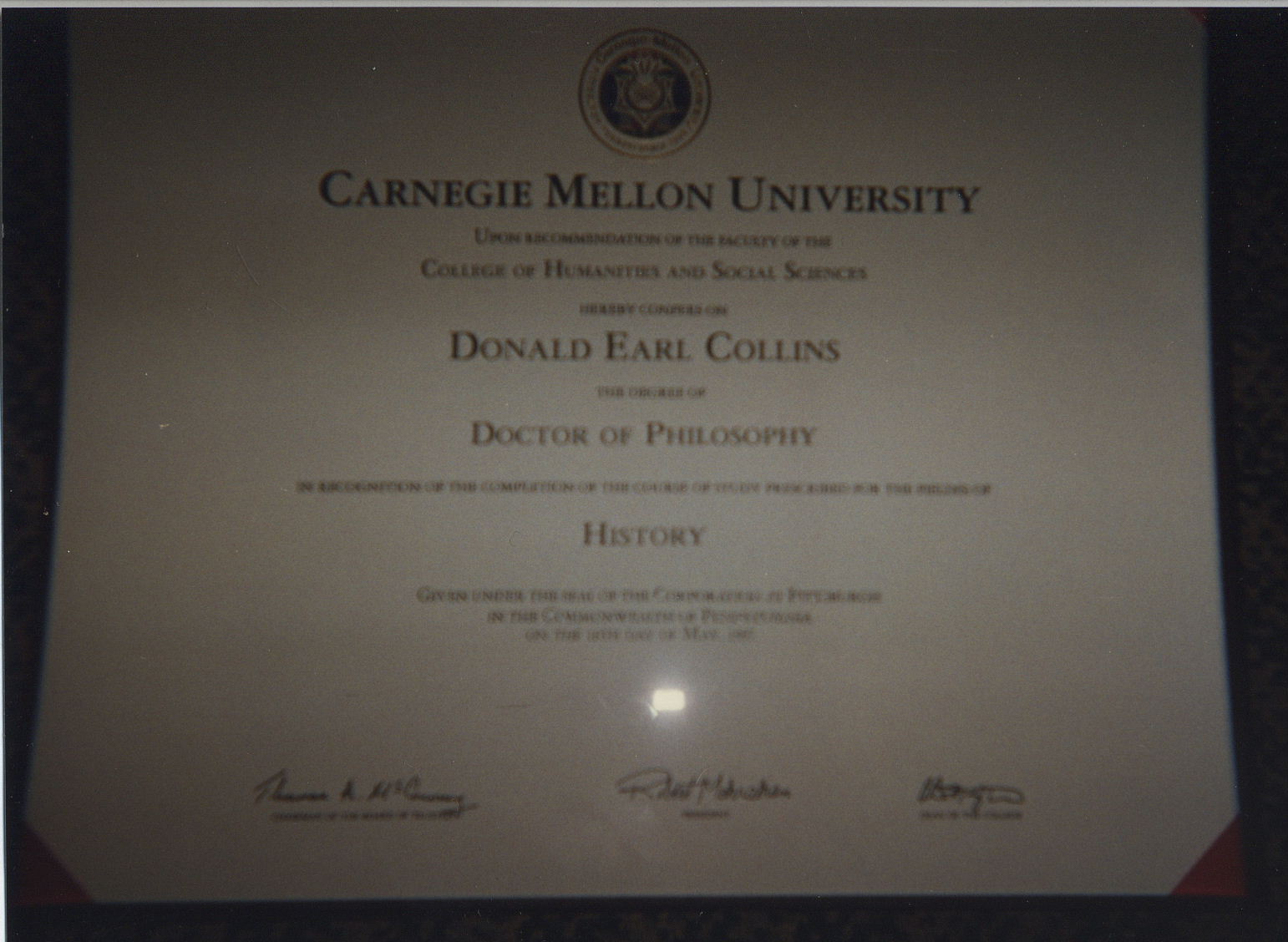
This weekend should be of significance to me. Actually it should be of more significance than anything else I’ve done professionally in the fifteen years since. For this was the weekend that I decided I was “Dr. Collins,” three and a half months before actually becoming Dr. Collins.

I was in the middle of a tumultuous time, caught between Joe Trotter and five years of graduate school, the last three of which had been at Carnegie Mellon. I had just finished revising my first draft of my dissertation, adding thirty pages to an already hefty 475-page manuscript. Me and Trotter hadn’t been getting along for four months, and after two months with my first draft, I’d received a response in mid-July that was disheartening.

Most of my dissertation, examining how multiculturalism was lived intellectually, educationally and culturally in Black Washington, DC, received no comment whatsoever. The chapters on the development of

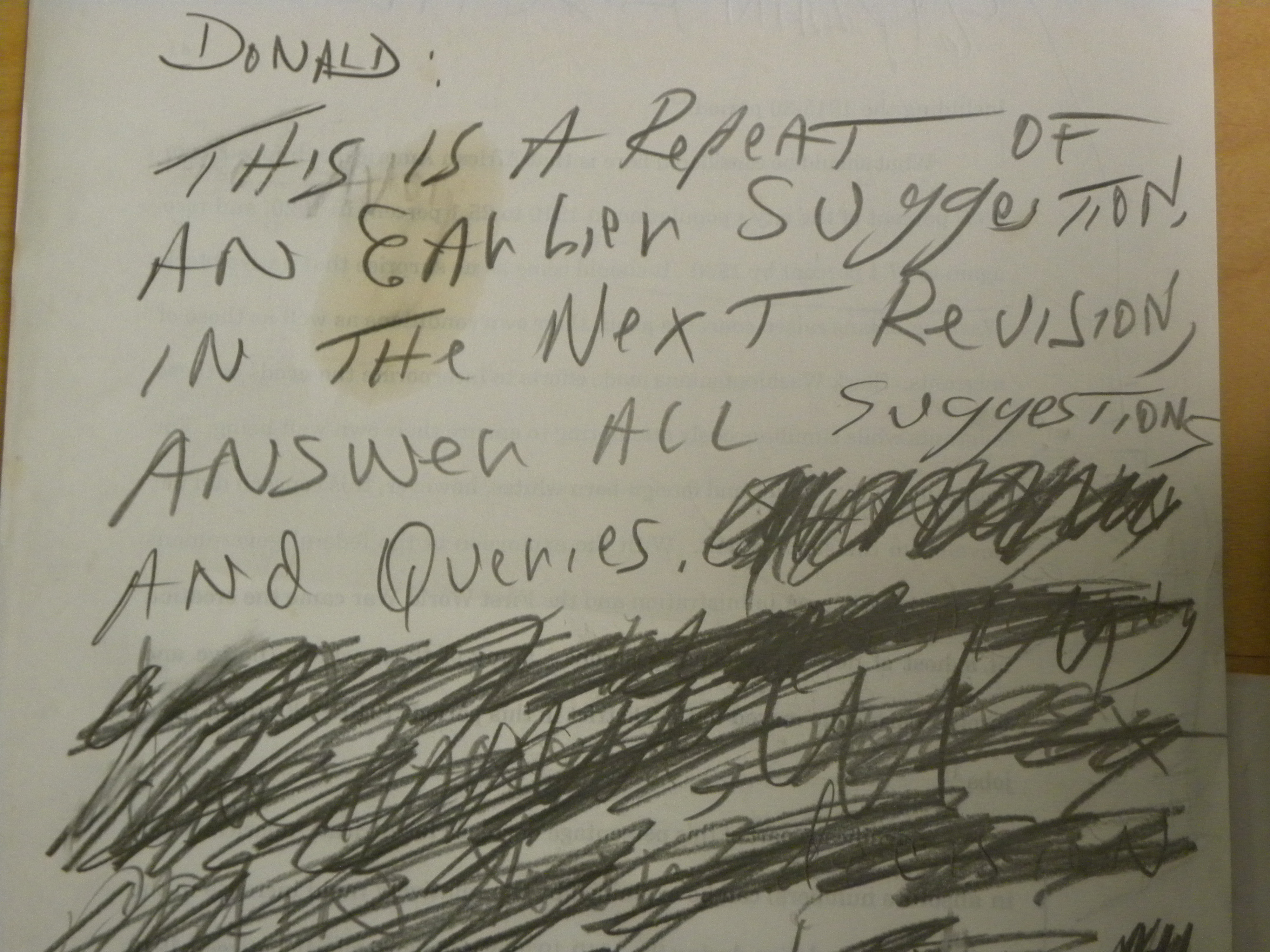
Trotter comments, back of page 43 of first dissertation draft, July 15, 1996. Pic taken August 6, 2011. (Source/Donald Earl Collins)

the Black community in DC, particularly in the period immediately before the 1930-1960 period, had received lots of snarky comments. Like “I told you to change this already,” or “This is the third time I commented on this section,” or “Make these suggested revisions on…already,” handwritten in pencil, big, bold and rushed, as if he wanted to stab me in the neck with the pencil. Comments on writing, evidence, to sharpen analysis of my multiculturalism argument, I expected. What I, naive little me, didn’t expect was a series of comments about data and information that, quite frankly, was irrelevant.

After talking with a couple of professors who weren’t on my dissertation committee — including one whom himself had been Trotter’s advisor back in the ’70s — I finally figured out what had been eating at the man ever since I began handing him chapters. It wasn’t as if Trotter’s comments were transparent in what he wanted me to revise. He wanted me to put together a proletarianization argument for DC. Bottom line was, he was pissed with me because I had written that the Great Migration period (1910-1930) of Blacks leaving the rural South for the industrial, urban North had little effect on DC, a truly Southern city at the time.

I was incensed when I finally figured out why Trotter had been giving me a hard time since last fall and especially since April. It made me think that maybe earning a doctorate in history — especially with him as the head of my committee, along with Dan Resnick and an increasingly distant Bruce Anthony Jones — wasn’t worth it. I thought that if I had to go through another year of this, that I’d drop out of the program.

But I’d only do that after giving the revisions one more shot. I addressed every — and I mean every — comment I had from Trotter by email or written out across a page, and then documented every change in a six-page memo of my revisions. I even went so far as to rhetorically fudge the Great Migration period data, just to see how Trotter would respond. On page 100 of my dissertation, I wrote, “For Washington, a slight acceleration in black migration occurred between 1915 and 1930.” That was an obfuscation, for Blacks migration didn’t “accelerate” until the 1930s, after a twenty-year period of limited migration that only added 20,000 to a Black population of more than a 100,000. Trotter actually praised this revision.

I made a deal with myself to quit after another year if this revision didn’t work out. After receiving a response that only required four minor revisions, Trotter made an attempt to remove the one professor I did have in my corner from my committee in Bruce Jones, using Jones’ recent acceptance of a position at the University of Missouri as an excuse. From that weekend in August ’96 until the week before Thanksgiving, everything about my doctorate became a battle with Trotter.

In a way, I guess I was lucky it did work out. But now, as I did then, I wonder if it was really worth it, to fight as hard as I did for that degree. Would I be a better writer, a better educator, if I had dropped out of the program, gone back to school, and become a high school history or social studies teacher? At least my employment status would’ve been much more stable between ’96 and ’99 if I had, and I’d have an additional career option now.

PhD Graduation - CMU Diploma, May 21, 1997. (Source/Donald Earl Collins)

Even now, thinking about what happened a decade and a half ago makes me clench my teeth, not with anger, but more with a sense of dread and latent rage. What I and at least two other male students went through (as I’d learn later on) was patently unfair. Still, I realize that while I’ve long since forgiven Trotter for his misdeeds, I can’t help but think that professionally, he aged me in my last year in graduate school. The sense of security I felt about my professional future back then was gone, and I don’t think I’ve felt that certain, that youthful, since.

I do know this. That that youthful, if somewhat naive, twenty-six year-old still resides in me. But with the mind of a forty-one year-old man, I can use both wisdom and experience to say that I wouldn’t go through that again. I’d either would’ve gone to law school or a school of education, maybe even with a focus on ed foundations and ed policy. As it is, between Boy @ The Window and my recent articles, that’s really what I’m most intellectually passionate about these days anyway.

I may be Dr. Collins or  Professor Collins, maybe for the rest of my life. But really, I’d be happiest as Donald Earl Collins, the author, educator and troublemaker I believe with all my heart I am and I will always be.

← Older posts
Newer posts →

Boy @ The Window: A Memoir

Boy @ The Window: A Memoir

Places to Buy/Download Boy @ The Window

There's a few ways in which you can read excerpts of, borrow and/or purchase and download Boy @ The Window. There's the trade paperback edition of Boy @ The Window, available for purchase via Amazon.com at http://www.amazon.com/Boy-Window-Donald-Earl-Collins/dp/0989256138/

There's also a Kindle edition on Amazon.com. The enhanced edition can be read only with Kindle Fire, an iPad or a full-color tablet. The links to the enhanced edition through Apple's iBookstore and the Barnes & Noble NOOK edition are below. The link to the Amazon Kindle version is also immediately below:

scr2555-proj697-a-kindle-logo-rgb-lg

Boy @ The Window on Amazon.com: http://www.amazon.com/Boy-The-Window-Memoir-ebook/dp/B00CD95FBU/

iBookstore-logo-300x100

Boy @ The Window on Apple's iBookstore: https://itunes.apple.com/us/book/boy-the-window/id643768275?ls=1

Barnes & Noble (bn.com) logo, June 26, 2013. (http://www.logotypes101.com).

Boy @ The Window on Barnes & Noble: http://www.barnesandnoble.com/w/boy-the-window-donald-earl-collins/1115182183?ean=2940016741567

You can also add, read and review Boy @ The Window on Goodreads.com. Just click on the button below:

Boy @ The Window

Twitter Updates

Tweets by decollins1969
  • RSS - Posts
  • RSS - Comments

Archives

  • June 2025
  • April 2023
  • September 2022
  • August 2022
  • July 2022
  • June 2022
  • May 2022
  • April 2022
  • March 2022
  • January 2022
  • December 2021
  • November 2021
  • October 2021
  • September 2021
  • August 2021
  • July 2021
  • June 2021
  • April 2021
  • March 2021
  • February 2021
  • January 2021
  • December 2020
  • November 2020
  • October 2020
  • September 2020
  • August 2020
  • July 2020
  • May 2020
  • April 2020
  • March 2020
  • January 2020
  • December 2019
  • November 2019
  • August 2019
  • July 2019
  • June 2019
  • May 2019
  • April 2019
  • March 2019
  • February 2019
  • January 2019
  • December 2018
  • November 2018
  • October 2018
  • September 2018
  • August 2018
  • July 2018
  • June 2018
  • May 2018
  • March 2018
  • February 2018
  • January 2018
  • December 2017
  • November 2017
  • October 2017
  • September 2017
  • August 2017
  • July 2017
  • June 2017
  • May 2017
  • April 2017
  • March 2017
  • February 2017
  • January 2017
  • December 2016
  • November 2016
  • October 2016
  • September 2016
  • August 2016
  • July 2016
  • June 2016
  • May 2016
  • April 2016
  • March 2016
  • February 2016
  • January 2016
  • December 2015
  • November 2015
  • October 2015
  • September 2015
  • August 2015
  • July 2015
  • June 2015
  • May 2015
  • April 2015
  • March 2015
  • February 2015
  • January 2015
  • December 2014
  • November 2014
  • October 2014
  • September 2014
  • August 2014
  • July 2014
  • June 2014
  • May 2014
  • April 2014
  • March 2014
  • February 2014
  • January 2014
  • December 2013
  • November 2013
  • October 2013
  • September 2013
  • August 2013
  • July 2013
  • June 2013
  • May 2013
  • April 2013
  • March 2013
  • February 2013
  • January 2013
  • December 2012
  • November 2012
  • October 2012
  • September 2012
  • August 2012
  • July 2012
  • June 2012
  • May 2012
  • April 2012
  • March 2012
  • February 2012
  • January 2012
  • December 2011
  • November 2011
  • October 2011
  • September 2011
  • August 2011
  • July 2011
  • June 2011
  • May 2011
  • April 2011
  • March 2011
  • February 2011
  • January 2011
  • December 2010
  • November 2010
  • October 2010
  • September 2010
  • August 2010
  • July 2010
  • June 2010
  • May 2010
  • April 2010
  • March 2010
  • February 2010
  • January 2010
  • December 2009
  • November 2009
  • October 2009
  • September 2009
  • August 2009
  • July 2009
  • June 2009
  • May 2009
  • April 2009
  • March 2009
  • February 2009
  • January 2009
  • December 2008
  • November 2008
  • October 2008
  • September 2008
  • August 2008
  • July 2008
  • June 2008
  • May 2008
  • April 2008
  • March 2008
  • February 2008
  • January 2008
  • December 2007
  • November 2007
  • October 2007
  • September 2007
  • August 2007
  • July 2007
  • June 2007

Recent Comments

MaryPena's avatarMaryPena on My Day of Atonement/Bitter Hat…
decollins1969's avatardecollins1969 on No Good Teaching Deed Goes…
Mary Rose O’Connell's avatarMary Rose O’Connell on No Good Teaching Deed Goes…

NetworkedBlogs on Facebook

NetworkedBlogs
Blog:
Notes From a Boy @ The Window
Topics:
My Life, Culture & Education, Politics & Goofyness
 
Follow my blog

616 616 East Lincoln Avenue A.B. Davis Middle School Abuse Academia Academy for Educational Development AED Afrocentricity American Narcissism Authenticity Bigotry Blackness Boy @ The Window Carnegie Mellon University Child Abuse Class of 1987 CMU Coping Strategies Crush #1 Crush #2 Death Disillusionment Diversity Domestic Violence Economic Inequality Education Family Friendship Friendships Graduate School Hebrew-Israelites High-Stakes Testing Higher Education History Homelessness Humanities Humanities Program Hypocrisy Internalized Racism Jealousy Joe Trotter Joe William Trotter Jr. K-12 Education Love Manhood Maurice Eugene Washington Maurice Washington Misogyny Mother-Son Relationship Mount Vernon High School Mount Vernon New York Mount Vernon public schools Multiculturalism MVHS Narcissism NFL Pitt Pittsburgh Politics of Education Poverty President Barack Obama Race Racial Stereotypes Racism Relationships Self-Awareness Self-Discovery Self-Reflection Sexism Social Justice Teaching and Learning University of Pittsburgh Violence Whiteness Writing

Top Rated

Blog at WordPress.com.

  • Subscribe Subscribed
    • Notes from a Boy @ The Window
    • Join 103 other subscribers
    • Already have a WordPress.com account? Log in now.
    • Notes from a Boy @ The Window
    • Subscribe Subscribed
    • Sign up
    • Log in
    • Report this content
    • View site in Reader
    • Manage subscriptions
    • Collapse this bar
 

Loading Comments...