• About Me
  • Other Writings
  • Interview Clips
  • All About Me: American Racism, American Narcissism, and the Conversation America Can’t Have
  • Video Clips
  • Boy @ The Window Pictures
  • Boy @ The Window Theme Music

Notes from a Boy @ The Window

~

Notes from a Boy @ The Window

Tag Archives: 616

The Story of a Picture

12 Tuesday Feb 2013

Posted by decollins1969 in 1, Boy @ The Window, culture, Eclectic, Mount Vernon High School, Mount Vernon New York, Pop Culture, race, Youth

≈ Leave a comment

Tags

616, 616 East Lincoln Avenue, C-Town, Emotions, Greasy Face, hunger, lunch, Milk-n-Things, Mount Vernon High School ID, MVHS, MVHS ID Picture, Pictures, Poverty, Self-Reflection, Tandy, Tired, TRS-80
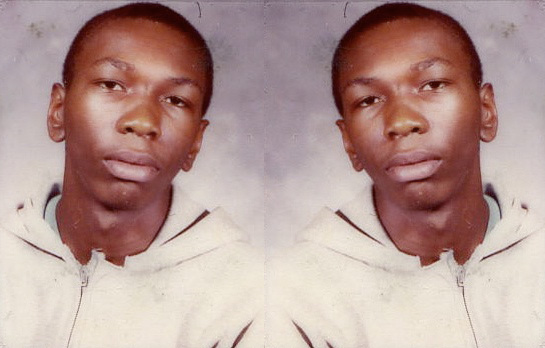

MVHS ID Picture (with horizontal flip), February 12, 2013. (Donald Earl Collins).

MVHS ID Picture (with horizontal flip), February 12, 2013. (Donald Earl Collins).

Many thanks to those of you who’ve responded so far to my post “Potential Boy @ The Window Book Covers” from last week. I truly appreciated all of the feedback and well wishes.

I’m sure that you noticed the one thing every potential front cover for the manuscript had in common — at least, besides the title. The picture I used on all the draft covers was of me not quite two months from my sixteenth birthday, my second Mount Vernon High School ID picture, taken in November ’85. I use this picture because there are only have a dozen or so surviving pictures of me from the period between February ’75 and November ’95.

Who knows? Between the extended Collins and Gill families, occasional photos taken by friends, acquaintances and colleagues, there could be another half-dozen more. A Sears portrait picture of me in March ’75, a couple of pictures that happened to include me from my senior year at MVHS, and a picture of me with my Uncle Sam at my graduation on June 18, ’87. That’s all I have to work with from the Boy @ The Window years, 1981-89.

There weren’t many opportunities for me to capture myself in picture mode during those years. But if I had to have one and only one picture that could encompass the physical and psychological strain, the emotional strife and torment that life and school was for me back then, the MVHS ID picture would be the one. As my good friend Cath already noted, I looked tired with “Samsonite” bags underneath my eyes the morning I took that picture.

That morning was Friday, November 8, ’85, and not a particularly memorable one at that. It seemed like I was always tired, especially before lunch, which was sixth period that year. Maybe I was hungrier than normal that morning, because I often went without. Or maybe, as usual, I hadn’t gotten a full night’s rest, sleeping in the same room with my older brother Darren and two of my younger brothers Maurice and Yiscoc. Or maybe it was a week of making extra runs to C-Town in Pelham or Milk-n-Things for food. It may well have been that I expended too much energy in Meltzer’s AP US History class second period, and I hadn’t properly paced myself.

Whatever it was, I was tired, more tired than usual. I was also fed up with the whimsical decisions of the mercurial staff at MVHS. They were the ones a full two months behind in taking ID pictures for our class, as our ninth-grade IDs were only designed to be actively used for two years. Yet they saw fit to pull us out of class fifth period to take pictures that second November Friday.

Tandy TRS-80 III, February 12, 2013. (http://oldcomputers.net/pics/).

Tandy TRS-80 III, February 12, 2013. (http://oldcomputers.net/pics/).

It was bad enough I had to miss Ms. Walters’ Pascal class, where I was just starting to feel comfortable with the material and the Tandy TRS-80s (or Trash 80s, as we nicknamed them). Now the idiot powers that were had the entire Class of ’87 — more than 600 of us at the time — standing in a wrapping-around-the-room line adjacent to the cafeteria, waiting for them to take our ID pictures.

The process for me lasted over an hour, but not quite seventy-five minutes. By now, it was time for my sixth-period lunch. I’d grown tired of idiot kids trying to cut the line, hearing dumb-ass conversations about music and sports and hair, and standing while the numbskulls with the camera and laminate machine took forever to process one picture at a time.

When I finally came up, I was imagining myself with a baseball bat smashing up everything while screaming as loud as I could. Only to hear the idiot with the camera yell, “Smile for me, honey!” I was nobody’s “honey,” especially the middle-aged Italian woman yelling at me to smile on command! So I narrowed my eyes — and stopped just short of rolling them — and bit down on the right corner of my lip as they took my picture.

That I was in my ripped gray zip-up hoodie, with a faded powder-blue Puma t-shirt underneath it wasn’t a surprise. It was one of a combination of clothes I wore to school as part of my “five-day rotation,” as I called it back then (an homage to baseball). I wouldn’t have worn that combination, though, had I known that MVHS would have my picture taken that day.

I left the room, grabbed what I believe was “murder burgers and suicide fries” for lunch at the cafeteria, and torpedoed them down my throat about fifteen minutes before gym. I was poor, hungry, tired, pissed, determined and greasy, in so many more ways than one, that day — in fact, every day. For one picture on one day, though, I inadvertently showed it all.
Sarai, 30 Years Old Today

09 Saturday Feb 2013

Posted by decollins1969 in 1, Boy @ The Window, culture, Eclectic, Hebrew-Israelite, Marriage, Mount Vernon New York, Pop Culture, race, Youth

≈ 2 Comments

Tags

616, 616 East Lincoln Avenue, Child Abuse, Death, Forgiveness, Genetics, God, Hatred, Health Care, Ignorance, Mount Vernon Hospital, Neglect, Racial Stereotypes, Sarai, Sarai Washington, Sickle Cell Anemia, Stereotype Threat, Trait, Welfare


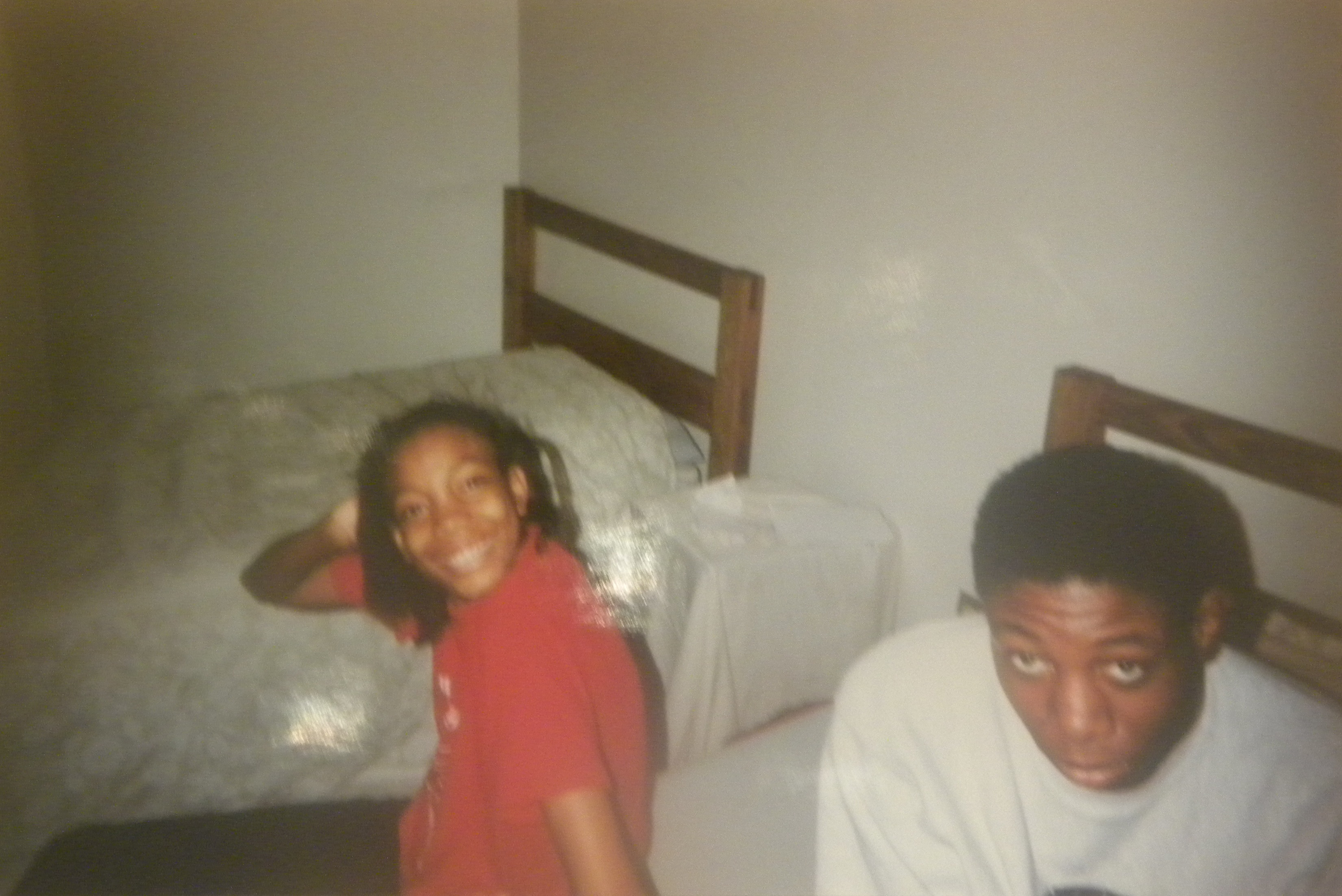
Sarai (with Maurice) at 12 years old, Yonkers, NY, November 21, 1995. (Donald Earl Collins).

My sister Sarai (with Maurice) at 12 years old, Yonkers, NY, November 21, 1995. (Donald Earl Collins).

It’s another February 9, more than two and a half years since my sister Sarai Washington passed away from complications due to sickle-cell anemia at the age of twenty-seven. Today would mark her thirtieth birthday. But given how Sarai’s life began, given her disease and the average life expectancy of people with it, it’s just as well that she isn’t here to become thirty. Sarai would likely be in pain, with skin bruises and lesions, laying on a hospital bed, in the middle of yet another blood transfusion.

My sister’s life and death is a constant reminder to forgive. It especially reminds me that forgiveness for us simple, linear humans is a constant process. It’s one in which we overcome our own feelings with the determination to love and to seek wisdom and grace. That Sarai had to endure sickle-cell anemia for twenty-seven years, five months and two days — or 10,015 total days — could feel me with enough anger so that I’d spend the rest of my life in hatred and contempt.

Not so much toward God. Even in eighth grade, I knew enough to know that people often cause their own calamities, and yet choose to blame God for the perditious decisions they made. No, there was a time I blamed my Mom, from the time I learned that she was pregnant with Sarai and for years afterward. Why? Because I also knew about sickle cell anemia, how it was a genetic disorder, and how two people with the trait had a one-in-four chance of passing on the full-blown disease to one of their progeny. And I knew this because my Mom explained the basics of it to me when I was eight years old!

My mother worked at Mount Vernon Hospital, where they very well could’ve run a genetic test for the disease at the prenatal stage. Of course, that would’ve given my mother a rather difficult decision to make about my eventual sister’s viability. But then again, she knew before the birth of my other siblings Maurice and Yiscoc that my now deceased idiot stepfather also possessed the sickle-cell trait. That she didn’t have any of them tested was, well, lazy and shameful.

I could’ve easily blamed my now dead ex-stepfather Maurice. He was a walking disaster area, as everything he touched turned into crap. Maurice never did anything in his life that didn’t hurt someone at some point. He never once cared enough about Sarai (or any of his other kids, for that matter) to make sure they were born healthy and whole. Forget about what happened to them after they were born. Maurice’s only real interest was telling guys standing on corners about his latest sperm injection. He also liked to buy cigars after the women had to endure the pregnancy and labor, abandoned by him in all meaningful respects in the process.

And there’s the grudge I’ve held against myself. As I’ve said in Boy @ The Window and in various blog posts (including “Pregnant Pauses” from November ’12), I never wanted Sarai here in the first place. Not because I hated kids or her. I knew what her birth would mean, especially after a year in which we were without food at 616 one-third of the time and three weeks’ behind on rent every single month. With my mother’s hours cut at Mount Vernon Hospital, we were on the verge of going on welfare, and I’d been taught by my mom to hate that. We were about to become a racial cliché, living and breathing racial stereotypes, and that went against everything my mother and nearly two years of living as a Hebrew-Israelite had taught me.

So how do I forgive? It’s simple, really (well, maybe not so simple). Forgiveness for me is a WWJD (What Would Jesus Do?) moment. Jesus said on the cross, just before he died, “Forgive them, for they do not know what they do.” I realize that even when we think we know what we’re doing, we don’t really know — we’re not omniscient, after all. We’re never fully aware of the effects of our decisions and actions, of all the intricacies and long-term implications.

That’s why and how I forgave and forgive — my mom, Maurice and myself. It’s the one thing I can honestly say I learned from Sarai, especially today, on her thirtieth birthday.

Potential Boy @ The Window Book Covers

07 Thursday Feb 2013

Posted by decollins1969 in 1, Boy @ The Window, culture, Mount Vernon New York, Youth

≈ 8 Comments

Tags

616, 616 East Lincoln Avenue, Book Covers, Boy @ The Window Book Covers, Mount Vernon High School ID, self-publishing


Boy @ The Window Front Covers, February 7, 2013. (Donald Earl Collins).
Boy@TheWindow.FrontCover4
Boy@TheWindow.FrontCover3
Boy@TheWindow.FrontCover2
Boy@TheWindow.FrontCover

I know. It’s barely been a month since I declared that I will self-publish Boy @ The Window this year, through the most reputable self-publishing program I can find, of course (see my post “The New Gameplan for Boy @ The Window” from last month). But I had to start with something less substantial than finding old photos from the Hebrew-Israelite years of my now deceased idiot ex-stepfather and of my younger siblings, paying a copy editor to comb for grammatical errors or setting up a version of the manuscript for eBook format. So I’ve posted some book cover designs I’ve been working on these last couple of weeks. I like some, but I’m not wedded to any of these (and will likely revise in the next month or so, even without additional input).

So please take a look, tell me which potential book covers you like or hate, are boring or spark no particular feelings at all. Give me you feedback, good, bad, ugly or indifferent. I’m a big boy – I can take it!

Kidneys, Baking Soda & 240 East Third Street

06 Wednesday Feb 2013

Posted by decollins1969 in 1, Boy @ The Window, culture, Eclectic, Jimme, Marriage, Mount Vernon New York, My Father, Politics, Pop Culture, race, Youth

≈ Leave a comment

Tags

240 East Third Street, 616, 616 East Lincoln Avenue, Alcohol Abuse, Alcoholism, Arthur, Baking Soda, Black Migrants, Black Migration, Callie Mae, Cecil Parker Elementary, Child Neglect, Divorce, Domestic Violence, Drinking Buddies, Drug Abuse, Flu, Ida, Kidney Failure, Kidney Transplant, Lo, Mount Vernon Hospital, Nathan Hale Elementary, North Side, Poverty, South Side


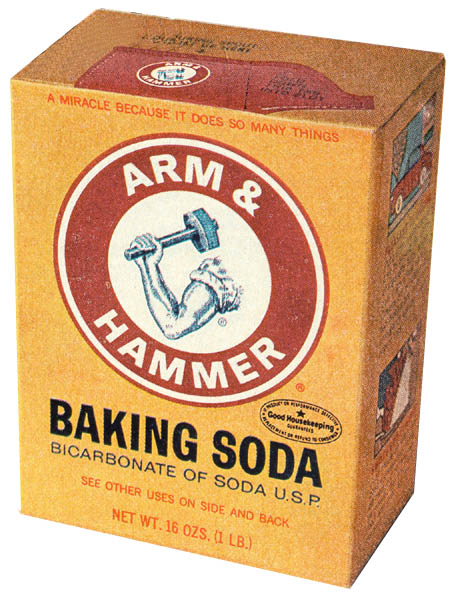
Arm & Hammer Baking Soda, 1lb Box, circa 1970s, February 6, 2013. (http://wackypackages.org).

Arm & Hammer Baking Soda, 1lb Box, circa 1970s, February 6, 2013. (http://wackypackages.org).

I wrote at length thirteen months ago about the devolution of my mother and father’s marriage in ’76 and ’77, and how that led to an incident with a coffee table on or around my seventh birthday (see my post “Stomping in Coffee Table Glass” from December ’11). It was a difficult time in all of our lives, and my grades in second grade reflected this. Me and my older brother Darren had a different living arrangement from week to week between September ’76 and April ’77. But for my mom, it was life-threatening. No wonder my Uncle Sam clotheslined my father Jimme as if he were Deacon Jones and my father was Johnny Unitas!

Despite my mother’s (real and imagined) infidelity and her filing for divorce — or because of it — my father refused to move out of our second-floor flat at 425 South Sixth. From September ’76 through March ’77, he’d come and go as it pleased him. Jimme would be home for a few hours on a Wednesday, cut the cords to the telephone or dump my mom’s mink stole in a bathtub, and then be gone for another five days or a full week. If my mom somehow was home when Jimme was, they’d fight all hours. On the nights my mother was out with her bowling league, or with friends, or (presumably) with my eventual stepfather Maurice, she’d call us to make sure we were okay, only to find Jimme at the other end of the line, threatening to kill her and us.

Starting at the end of that September, barely a month into the school year, Darren and me found ourselves spending more and more time with our babysitter Ida at 240 East Third Street. For folks who have never been to this part of the Mount Vernon, New York’s South Side, the best thing to say about 240 East Third was that it was next door to an environmentally hazardous scrap metal yard. It was a dangerous place, one of extreme poverty, alcohol and drug abuse, a place in which the most recent of Black migrants from the South and their sons and daughters tried to make into a home.

240 East Third Street, Mount Vernon, NY, September 2007. (http://googlemaps.com).

240 East Third Street, Mount Vernon, NY, September 2007. (http://googlemaps.com).

Ida had been our babysitter for as long as long as we could remember. One of my first memories was calling her a “bitch” when I was three because she had made us a bubble bath out of very itchy Tide detergent. I didn’t know the full meaning of what I said, but Ida took a switch and whupped me anyway. Now we were living with her for days at a time, having to walk a mile down East Third, then South Fulton Avenue, and then Sanford Blvd to get to Nathan Hale Elementary (now Cecil Parker Elementary). The irony was that our real home was just two doors down from the school.

That wasn’t the only irony. On the many days we spent with Ida, we also spent time with her friends, Callie Mae, Lo (short for Lorenzo) and Arthur. The reason we could spend so much time with these friends of my mom was precisely because they were Jimme’s friends originally. They were part of his circle of drinking buddies! And, with us already at 240 East Third, my father would swing around and drink to his heart’s content with all of them.

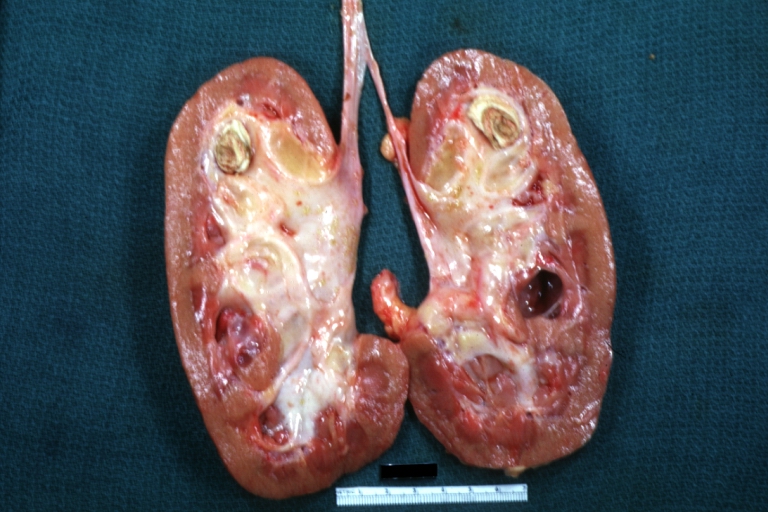
My mother, meanwhile, began experiencing what the doctors at Mount Vernon Hospital thought was mere signs of stress. Her kidneys, though, were shutting down, causing a multitude of health issues. She’d gone to see her primary care physician about this in October, then again in December and January. By the end of January ’77, my mother was stuck at the hospital, as her doctors at one point thought that she would need a fast-track to a kidney transplant. Keep in mind that this is ’77, so kidney transplants weren’t the exact science that they are today.

I ended up in the hospital with her in early February ’77, with a fever of 105°F. They put me in a bed near my mom, stuck a thermometer in my butt, and figured out that I had the flu. That I still have positive thoughts of this visit is a sure sign of delusion and the grimness of that time in our lives.

One human kidney, sliced open to reveal hydronephrosis, typically the obstruction of the free flow of urine from the kidney, February 6, 2013. (http://meducation.net).

One human kidney, sliced open to reveal hydronephrosis, typically the obstruction of the free flow of urine from the kidney, February 6, 2013. (http://meducation.net).

Luckily, my mom and her doctors were smart enough to have a specialist from Westchester County Medical Center come in to check out her candidacy for a kidney transplant. He took one look at her labs and realized that she didn’t need a transplant after all. It turned out that my mom’s sodium levels were so low that they had caused the flow of fluids and waste through her kidneys to drop by something like 80 percent. The doctor’s solution was really simple. “Eat baking soda,” he told my mom and her doctors. That was in March ’77.

Two teaspoons of baking soda a day, to be exact. That’s what it took to bring my mom’s kidneys back to life and for my brother and me to finally move toward a more stable home situation at 616 (at least between April ’77 and the Hebrew-Israelite years). It wasn’t that I hated 240 East Third. I just hated what being there meant for us and for my mom.

All Work and No Play

28 Monday Jan 2013

Posted by decollins1969 in 1, Academia, Boy @ The Window, Christianity, culture, Eclectic, Hebrew-Israelite, Mount Vernon New York, Pop Culture, race, Religion, Work, Youth

≈ Leave a comment

Tags

616, 616 East Lincoln Avenue, Acid, Acting, Atheism, Balance, CIS, Computer and Information System, Evolution, Falcon Crest, Fringe, History Major, Intolerance, John Noble, LSD, Neal Galpern, Pitt, Religion, Robert Foxworth, Sexual Harassment, University of Pittsburgh, Walter Bishop, Yin and Yang


Yin & Yang symbol from Taoism, good symbol for balance in life, January 28, 2013. (http://taoism.about.com).

Yin & Yang symbol from Taoism, good symbol for balance in life, January 28, 2013. (http://taoism.about.com).

As those high schools students I taught through JSA at Princeton in the summers of ’08 and ’09 either have come to realize or are realizing now, finding balance between school, full-time or part-time work, family and some semblance of a social life is just a tad difficult. Sometimes, it’s even impossible. So it was for me the spring of ’89, the last spring before I’d put together what I came to call my “16-week strategy for success and a social life.”

It was the semester where in which I worked 36 hours a week over a seven-week period and faced sexual harassment from a co-worker who was the BFF of my supervisor of Pitt’s Cathedral of Learning labs for Computer and Information Services (CIS) (see my post “On People and Stress” from February ’09). It was the last semester in which I had to worry about my mother and my younger siblings from afar because of the possibility of domestic violence, as my idiot stepfather Maurice still lived with them at 616.

This was my first set of classes as a History major, but I also had some general ed requirements to fulfill (see my post “Major Change” from October ’10). It would’ve been a tough semester even if I hadn’t worked, but with the CIS schedule the way it was, I was in for an interesting ride. For Macro, the chair of the Economics department was our professor. The class was at nine o’clock in the morning on Tuesdays and Thursdays, with a discussion section at 8 am on Tuesday to boot. It was almost as if he wanted folks to fail. With my schedule the way it was, I rarely made it to class on Tuesdays, and I only made it to one discussion section all semester long. To make up for that, I never missed the class on Thursdays, and often participated in the lecture discussions, such as they were.

Actor Robert Foxworth on Broadway in August: Osage County, August 2008. (Joan Marcus/Playbill).

Actor Robert Foxworth on Broadway in August: Osage County, August 2008. (Joan Marcus/Playbill).

Shakespeare was later in the day on Tuesdays and Thursdays, taught by Wion, who looked like the actor Robert Foxworth from the CBS show Falcon Crest, only not quite as handsome. He delivered lines from Taming of The Shrew and Othello like he’d been a wannabe actor in a previous career but realized teaching was more of his shtick. Wion often used Freudian pop psychology to explain the motives of characters in Shakespeare’s plays, and as he did, all of our eyes glazed over. This analysis for us was so ’70s, especially for the second-wave feminists in the class.

My Bio and Philosophy classes seemed to fit under the theme of “questioning God,” as there were students in both who had an ax to grind against “dumb Christians.” Bio in some ways was easier, at least because we had a professor who understood why some of us who were Christian might find evolution difficult to swallow. After several yelps from students during one of his lectures on evolution, mutation and reproduction, he said, “just because there’s evolution doesn’t mean that God doesn’t exist. Who’s to say that evolution isn’t a higher being’s method for the creation of life?” I appreciated that answer very much.

In existentialism class, especially the discussion section, no reconciliation was possible. My discussion section instructor was an Australian man in his late-twenties, with curly hair like the lead singer from Simply Red, except my instructor’s hair was a dirty blonde. He spent discussion after discussion railing on Christians as “people who refuse to believe that God doesn’t exist.” One of our discussions was so anti-anything other than atheism that I found it just as bigoted as anything I’d heard from Hebrew-Israelites or out of a televangelist’s mouth, and said as much. I was ignored.

No class that semester drove me nuts like my History majors writing seminar with Neal Galpern. We met on Monday and Wednesday afternoons for about an hour and a half, and it was the most boring hour and a half on my schedule. Galpern was an aging hippie complete with comb-over who graduated with doctorate in hand from Berkeley in ’75. He sometimes acted like he was still dropping acid. His stuttering starts and stops and numerous “Um”s could stop his lectures and our discussions cold. He wanted each of us to write a research-based paper of no less than twenty papers on any comparative topic in history that we could come up with, as vague as the man himself.

John Noble as Dr. Walter Bishop on Fringe, Season 5, after dropping acid, December 2012. (http://fringetelevision.com).

John Noble as Dr. Walter Bishop on Fringe, Season 5, after dropping acid, December 2012. (http://fringetelevision.com).

I couldn’t stand Galpern and his constant skipping over my hand in class and his snarky comments to all of us as if we were all dense and he was clearer than Antarctic ice melt. I didn’t challenge Galpern in class, at least not directly. I challenged him with my project. I decided to do a paper that compared the main features of the Civil Rights Movement in the US to the Anti-Apartheid Movement in South Africa. Admittedly it was too big a project, but it was Galpern’s job to help me narrow the topic into a doable chunk.

Instead all the advice he gave me consisted of “You need to find another topic, um . . . because, um . . . I’m afraid . . . I don’t, um . . . know much . . . about this.” I refused to budge. I wasn’t about to do a stupid paper on medieval Europe just because that happened to be his area of alleged expertise. After a meeting where Galpern finally gave in to me, I went across the hall to our classroom on the third floor of Forbes Quad and imitated my professor’s halting style of conversation. Galpern walked in, and I just kept going until I finished my, um, sentence. Yeah, it would be safe to say that he didn’t like me too much either!

I finished that semester with two A-‘s in my writing seminar and in existential philosophy, a B+ in Shakespeare, a B in Biology, and even pulled out a C+ in Macro, despite my lack of attendance. It was a difficult time. Yet it was also the start of my growth into early adulthood, and understanding that finding balance would be the key to sustained success.

Jacksonville Visit

24 Thursday Jan 2013

Posted by decollins1969 in 1, Boy @ The Window, Christianity, culture, Eclectic, Jimme, Mount Vernon New York, My Father, Pop Culture, race, Religion, Work, Youth

≈ Leave a comment

Tags

616, 616 East Lincoln Avenue, Alcoholism, Extended Family, Family Intervention, Father-Son Relationships, Forgiveness, Intervention, Jacksonville, Jacksonville Florida, Love


Me and My Father Jimme, Mall, Jacksonville Waterfront, August 27, 2007. (Angelia N. Levy).

Me and My Father Jimme, Jacksonville Waterfront, August 27, 2007. (Angelia N. Levy).

Under almost no circumstances could I have ever seen myself visiting Jacksonville. A nuclear holocaust, the collapse of the federal government, a super-flu pandemic, perhaps. And that would be a hypothetical maybe at best. But I did visit, for the first time, eleven years ago this week, to see my father Jimme for the first time in since Christmas Eve ’94. It was a life-changing event, and for once, for the better.

It was a memorable visit because after three years of talking over the phone, I finally would get to see Jimme and his new family (see my post “Finding My Father for the First Time” from November ’11). It was a calm-before-the-storm two-day visit, nestled in between the sturm und drang of the ’02 New Voices Winter Retreat in Atlanta and my family intervention at 616 in Mount Vernon (see my post “The Intervention” from January ’08).

I honestly had few expectations. I knew Jacksonville covered a lot of acreage as a city, but was basically Georgia south more than it was a major city in Florida. I knew that the town had a high poverty rate, and I knew that they had the Jacksonville Jaguars. Not much more than that was in my memory banks as I touched down on my flight from Hartsdale International Airport to podunk Jacksonville’s airport on a rainy Sunday in January.

Glass extension of Jacksonville International Airport, January 24, 2013. (http://www.airport-technology.com).

Glass extension of Jacksonville International Airport, January 24, 2013. (http://www.airport-technology.com).

Collins family members besides my father were there to greet me, including a couple of second-cousins. They were much more excited to see me than I was to see them, mostly because I hadn’t been prepared to meet extended family on this trip. They gave me a brief tour of the city — although I wasn’t going to see much in the rain (and there wasn’t much to see to begin with). Still, I was happy that they were happy and chatty and welcoming.

Meeting my father’s second wife Mary was interesting, if only because she shared my mother’s first name. Though loud in so many ways, she was also very kind, very Christian and very warm to me. Like most folks, she made assumptions about me that I couldn’t possibly live up to, like viewing everything in life through the lens of the Bible. It made for a lively dinner discussion on the subject my second night there. Ms. Mary has kept her conversations with me much shorter since that first visit.

But the most important part of my visit, though, was the two days I spent with my father. This was my first time seeing him completely sober since ’88, and this was nearly five years since he had given up drinking. The change in his physical appearance was dramatic, as he now only looked his age, and not twenty years older than his age. He looked better and strong than he had in years, maybe decades.

That wasn’t all that had changed. Me and my father talked about everything, from family to work, politics to writing, education and religion over those forty-eight hours. He shared his secret to his new diabetes diet – a case and a half of diet soda per day and no water intake.

My father, Silver Spring, MD, September 8, 2012. (Noah M. Collins).

My father, Silver Spring, MD, September 8, 2012. (Noah M. Collins).

I spend our last conversation telling my father about what I was about to do in Mount Vernon, that I was going to spend an evening airing out three decades of dirty laundry, for the sake of my younger siblings. That’s when he apologized to me about his alcoholism and all the things he had put me and my older brother Darren through growing up. I told him that I’d forgiven him a long time ago.

It was a touching moment out of several touching moments that visit. I left that Tuesday morning, in awe of the fact that sometimes people can and do change for the better, even miraculously so. Even in a place like Jacksonville.

My Beef With Cory Booker’s Food Stamps Experiment

05 Wednesday Dec 2012

Posted by decollins1969 in 1, Boy @ The Window, culture, Eclectic, Jimme, Marriage, Mount Vernon New York, My Father, New York City, Politics, Pop Culture, race, Work, Youth

≈ Leave a comment

Tags

616, 616 East Lincoln Avenue, Academy for Educational Development, C-Town, Cory Booker, Food Stamps, Food Stamps Experiment, hunger, Newark New Jersey, Nutrition, Omar Wasow, Poverty, Social Safety Net, Social Welfare, Stanford University, Welfare


Cory Booker at the 2011 Time 100 Gala, April 27, 2011. (David Shankbone via Wikipedia). Released to public domain via  Creative Commons Attribution 3.0 license.

Cory Booker at the 2011 Time 100 Gala, April 27, 2011. (David Shankbone via Wikipedia). Released to public domain via Creative Commons Attribution 3.0 license.

I like Cory Booker. I worked with someone at Academy for Educational Development in the mid-00s who told me stories about Booker while she knew him at Stanford and her contact with him over the years. I’ve admired his work in Newark, for the most part, and the fact that he’s been a personable, in-your-face Twitter-accessible mayor who has fought hard for his city over the past decade.

But this week-long “I feel your pain” publicity stunt through living on $30 in food stamps (the SNAP program) seems a bad idea at best, and just plain disingenuous otherwise. Booker’s argument has been the need to raise awareness of how difficult it is to live on food stamps for the most impoverished of us, in Newark or anywhere else in the US. After being critical of Booker’s slumming it via food stamps on Twitter a couple of weeks ago, I received this response from Booker through tech guru and Princeton doctoral candidate Omar Wasow:

“@decollins1969 @corybooker said you can’t love your neighbor if you don’t understand them & you can’t understand w/out shared experience”

Really? I didn’t know that Franklin D. Roosevelt had been homeless, old and sick and out of work before ramming through the Social Security Act of 1935! Or that Lyndon Johnson had been a sharecropper or beaten up for marching to Selma before pushing through the Civil Rights Act of 1964 and Voting Rights Act of 1965!

President Bill Clinton (in context of "I feel your pain" quote), July 23, 2009. (http://dailybail.com).

President Bill Clinton (in context of “I feel your pain” quote), July 23, 2009. (http://dailybail.com).

What worries me, though, more than anything else, is how messiah-like this tweet sounds. It would be a different story if so many politicians and journalists hadn’t run this experiment before (see my post “Slumming Lords Spinning Stories Out Of Suffering” from October ’10). It would be even more different if this experiment really opened up a dialogue on the paltry social safety net and deep poverty. Not to mention the working poor and the millions from the struggling middle class who have fallen into poverty since the start of the Great Recession more than four years ago.

But as someone who’s had way more than one week or one month’s worth of experience with poverty, WIC, welfare checks, case workers with Westchester County Department of Social Services, and of course, food stamps, I actually find these attempts to walk in the shoes of my youth — among millions of others who’ve lived in welfare poverty — insulting on so many levels (see my posts “The Five Sense of Poverty,” “Hunger,” and “Shopping at C-Town“).
Here’s what I lived with between ages twelve and seventeen (October ’82 through August ’87). As the second-oldest child and only other sane person in a household of six, then seven, then eight persons (including my four younger siblings, born between ’79 and ’84), I had many adult responsibilities. I negotiated over the phone with Con Edison and NYNEX/Bell Atlantic when we fell behind on the heat bill or the telephone bill. I walked my mom’s $275 rent check (often three weeks late in ’82 and ’83) over to the super’s office for payment, and usually was at the receiving end of verbal insults and threats for being late.
I went to Waldbaum’s, C-Town and other grocery stores almost every day after school, sometimes three times in one evening (because my mom often forgot items). I also washed clothes with my older brother Darren once a week, watched over my siblings, cooked about one out of every five meals from ’84 until I went off to college in ’87.
Lab mice "Avatars" implanted with cancer to treat cancer, October 5, 2012. (http://danisfoundation.org).

Lab mice “Avatars” implanted with cancer to treat cancer, October 5, 2012. (http://danisfoundation.org).

This is the short list. In doing all of this, especially once we went on welfare in April ’83 (after the birth of my now deceased sister Sarai), I learned a lot about how little Americans thought of the poor, and how little the federal government thought of people like me and my family. The average budget for my mom to raise a family of six kids with a consistently unemployed and wayward idiot (now late) stepfather was a monthly welfare check of $558, $75 in food stamps, and about $50 in WIC benefits.
Even in the best months, it meant a week to ten days with little or no food in the house. Great Northern beans and rice, $5 spaghetti and meat sauce dinners, and days without was a typical month. Unless, of course, my weekly weekend excursions to track down my father Jimme in Mount Vernon, the Bronx and sometimes in Midtown Manhattan at his favorite watering holes yielded enough extra funds to keep me, Darren and my family in food and clean clothes during the leaner times each month at 616.

So, you see Cory Booker, your publicity endeavor really teaches us little about the realities of poverty, hunger and nutrition for the poorest among us, whether in Newark, Mount Vernon, New York or the rest of the US. (Except that you have no experience stretching a dollar). Your food stamps experiment will do what it always does – get the media’s attention. But to understand the embarrassment, the cold stares, the harshness of what I went through and millions like me are going through now? One week and $30 isn’t even close to good enough.

← Older posts
Newer posts →

Boy @ The Window: A Memoir

Boy @ The Window: A Memoir

Places to Buy/Download Boy @ The Window

There's a few ways in which you can read excerpts of, borrow and/or purchase and download Boy @ The Window. There's the trade paperback edition of Boy @ The Window, available for purchase via Amazon.com at http://www.amazon.com/Boy-Window-Donald-Earl-Collins/dp/0989256138/

There's also a Kindle edition on Amazon.com. The enhanced edition can be read only with Kindle Fire, an iPad or a full-color tablet. The links to the enhanced edition through Apple's iBookstore and the Barnes & Noble NOOK edition are below. The link to the Amazon Kindle version is also immediately below:

scr2555-proj697-a-kindle-logo-rgb-lg

Boy @ The Window on Amazon.com: http://www.amazon.com/Boy-The-Window-Memoir-ebook/dp/B00CD95FBU/

iBookstore-logo-300x100

Boy @ The Window on Apple's iBookstore: https://itunes.apple.com/us/book/boy-the-window/id643768275?ls=1

Barnes & Noble (bn.com) logo, June 26, 2013. (http://www.logotypes101.com).

Boy @ The Window on Barnes & Noble: http://www.barnesandnoble.com/w/boy-the-window-donald-earl-collins/1115182183?ean=2940016741567

You can also add, read and review Boy @ The Window on Goodreads.com. Just click on the button below:

Boy @ The Window

Twitter Updates

Tweets by decollins1969
  • RSS - Posts
  • RSS - Comments

Archives

  • June 2025
  • April 2023
  • September 2022
  • August 2022
  • July 2022
  • June 2022
  • May 2022
  • April 2022
  • March 2022
  • January 2022
  • December 2021
  • November 2021
  • October 2021
  • September 2021
  • August 2021
  • July 2021
  • June 2021
  • April 2021
  • March 2021
  • February 2021
  • January 2021
  • December 2020
  • November 2020
  • October 2020
  • September 2020
  • August 2020
  • July 2020
  • May 2020
  • April 2020
  • March 2020
  • January 2020
  • December 2019
  • November 2019
  • August 2019
  • July 2019
  • June 2019
  • May 2019
  • April 2019
  • March 2019
  • February 2019
  • January 2019
  • December 2018
  • November 2018
  • October 2018
  • September 2018
  • August 2018
  • July 2018
  • June 2018
  • May 2018
  • March 2018
  • February 2018
  • January 2018
  • December 2017
  • November 2017
  • October 2017
  • September 2017
  • August 2017
  • July 2017
  • June 2017
  • May 2017
  • April 2017
  • March 2017
  • February 2017
  • January 2017
  • December 2016
  • November 2016
  • October 2016
  • September 2016
  • August 2016
  • July 2016
  • June 2016
  • May 2016
  • April 2016
  • March 2016
  • February 2016
  • January 2016
  • December 2015
  • November 2015
  • October 2015
  • September 2015
  • August 2015
  • July 2015
  • June 2015
  • May 2015
  • April 2015
  • March 2015
  • February 2015
  • January 2015
  • December 2014
  • November 2014
  • October 2014
  • September 2014
  • August 2014
  • July 2014
  • June 2014
  • May 2014
  • April 2014
  • March 2014
  • February 2014
  • January 2014
  • December 2013
  • November 2013
  • October 2013
  • September 2013
  • August 2013
  • July 2013
  • June 2013
  • May 2013
  • April 2013
  • March 2013
  • February 2013
  • January 2013
  • December 2012
  • November 2012
  • October 2012
  • September 2012
  • August 2012
  • July 2012
  • June 2012
  • May 2012
  • April 2012
  • March 2012
  • February 2012
  • January 2012
  • December 2011
  • November 2011
  • October 2011
  • September 2011
  • August 2011
  • July 2011
  • June 2011
  • May 2011
  • April 2011
  • March 2011
  • February 2011
  • January 2011
  • December 2010
  • November 2010
  • October 2010
  • September 2010
  • August 2010
  • July 2010
  • June 2010
  • May 2010
  • April 2010
  • March 2010
  • February 2010
  • January 2010
  • December 2009
  • November 2009
  • October 2009
  • September 2009
  • August 2009
  • July 2009
  • June 2009
  • May 2009
  • April 2009
  • March 2009
  • February 2009
  • January 2009
  • December 2008
  • November 2008
  • October 2008
  • September 2008
  • August 2008
  • July 2008
  • June 2008
  • May 2008
  • April 2008
  • March 2008
  • February 2008
  • January 2008
  • December 2007
  • November 2007
  • October 2007
  • September 2007
  • August 2007
  • July 2007
  • June 2007

Recent Comments

MaryPena's avatarMaryPena on My Day of Atonement/Bitter Hat…
decollins1969's avatardecollins1969 on No Good Teaching Deed Goes…
Mary Rose O’Connell's avatarMary Rose O’Connell on No Good Teaching Deed Goes…

NetworkedBlogs on Facebook

NetworkedBlogs
Blog:
Notes From a Boy @ The Window
Topics:
My Life, Culture & Education, Politics & Goofyness
 
Follow my blog

616 616 East Lincoln Avenue A.B. Davis Middle School Abuse Academia Academy for Educational Development AED Afrocentricity American Narcissism Authenticity Bigotry Blackness Boy @ The Window Carnegie Mellon University Child Abuse Class of 1987 CMU Coping Strategies Crush #1 Crush #2 Death Disillusionment Diversity Domestic Violence Economic Inequality Education Family Friendship Friendships Graduate School Hebrew-Israelites High-Stakes Testing Higher Education History Homelessness Humanities Humanities Program Hypocrisy Internalized Racism Jealousy Joe Trotter Joe William Trotter Jr. K-12 Education Love Manhood Maurice Eugene Washington Maurice Washington Misogyny Mother-Son Relationship Mount Vernon High School Mount Vernon New York Mount Vernon public schools Multiculturalism MVHS Narcissism NFL Pitt Pittsburgh Politics of Education Poverty President Barack Obama Race Racial Stereotypes Racism Relationships Self-Awareness Self-Discovery Self-Reflection Sexism Social Justice Teaching and Learning University of Pittsburgh Violence Whiteness Writing

Top Rated

Blog at WordPress.com.

  • Subscribe Subscribed
    • Notes from a Boy @ The Window
    • Join 103 other subscribers
    • Already have a WordPress.com account? Log in now.
    • Notes from a Boy @ The Window
    • Subscribe Subscribed
    • Sign up
    • Log in
    • Report this content
    • View site in Reader
    • Manage subscriptions
    • Collapse this bar
 

Loading Comments...