President Obama vs. Fake Obama Today

Tags

, , , , , , , , , , , , , , , , , , , , ,


Eddie Million’s Obama Effigy, Moreno Valley, CA, October 22, 2012. (Moreno Valley Press-Enterprise).

I’ve already voted, a week ago Sunday at my early voting polling place in downtown Silver Spring, Maryland. So Election Day for me today is both a matter of waiting and reflecting on the past four years. What I’ve come to realize is that this election has never been about Mitt Romney, Republicans, the Tea Baggers or even President Barack Obama’s actual record. No, this election has been between the President Obama who has let us down versus the President Obama who has sullied the White House because he’s a nigger in the minds of millions of Americans (I hate that word, but it sums up the sentiments of a third of the electorate very well).

Both views refuse to take what President Obama has and hasn’t been able to do into account, to treat him as we would any other president. For progressives — real liberals, not the people who the media paint as liberal merely because they’re registered Democrats — President Obama has done almost nothing right since his second day in office. For some, because he hasn’t done a complete 180° turnaround on Gitmo, on the War on Terror, on immigration reform and environmental policy, Obama has merely been a continuation of Bush 43. Because Obama’s charismatic intelligence wasn’t able to turn Congress into a rubber stamp, because Obama’s magic didn’t bring real unemployment down to under five percent, progressives are less enthused this time around.

The late Michael Duncan Clarke in The Green Mile (1999), December 1999. (http://movies.com). Qualifies as fair use under US Copyright laws – related to subject of post.

It’s almost as if many expected the late Michael Duncan Clarke’s character from The Green Mile (1999) or Will Smith’s character Bagger Vance from The Legend of Bagger Vance (2000) to erupt from President Obama. No wonder the disappointment in the first Black president, who only had to face the worst set of economic, financial, social, international and environmental crises any president has ever faced, Lincoln and FDR included.

For Republicans, conservatives and racists, the issue has always been about how to keep this Islamic jihadist, socialist atheist, and communist anti-patriot from destroying the country since his first day in office. Though President Obama received nearly 68 million votes, there’s no way he earned those votes. Somehow, the Black guy either leveraged the White guilt of White liberals, or he used the Chicago machine to electronically stuff ballot boxes by the millions. Plus, of course, we need his college transcripts from Occidental and Columbia, his original birth certificate and his original application for an American passport to prove that he’s a legitimately intelligent American citizen. But somehow, none of this is about race?

Will Smith and Matt Damon in The Legend of Bagger Vance (2000), August 24, 2009. (http://grist.org). Qualifies as fair use under US copyright laws – subject of post.

For this group, it wouldn’t have mattered if Obama had single-handedly developed perpetual nuclear fusion, warp drive for space ships and a cure for cancer. He’s a Black guy in the White House, and they can’t have this. That’s why from the moment Chief Justice John Roberts swore President Obama into office, Congressional leaders, their filthy-rich supporters and Tea Bagger racists have worked non-stop to make Obama a one-term president. They can only paint President Obama in the worst ways because an honest portrayal of him would leave this group with “he’s Black” as their only reason for opposition.

As the rest of you vote today and/or wait for the results, keep the past four years of Obama Derangement Syndrome across the political spectrum in mind, so that you vote for the real President Obama. Don’t vote for the magic man, and certainly don’t vote for the Magic Negro either.

Cath The Great

Tags

, , , , , , , , , , , , , , , , , , , ,


Catherine A. Lugg, circa 2009, November 5, 2012. (Catherine A. Lugg via Facebook).

I define serendipity as the ability of hard work to create what others would consider good luck, fortuitous chances, random opportunities for success. I’ve managed to do just that over and over again over the course of my life, particularly as a student and occasionally as a writer. But as a human being in search of real, positive, life-changing connections and friendships, serendipity has been very hard to make happen. When it does occur, at least for me, it becomes one of those moments that I seal in my mind, like a note in a time capsule.

The beginning of November ’94 was one of those weeks filled with serendipity. It started with the chair of the History Department at Carnegie Mellon, Steven Schlossman. He had decided that he couldn’t make it to the 1994 History of Education Society annual meeting in Chapel Hill, North Carolina. But because he had already booked a room and a flight, Schlossman apparently figured that he could simply transfer both the airline tickets and room to me instead (back in the pre-9/11 days when you could do such things without creating a potential terror alert). So Schlossman met with me a week before this conference and said that I should go “to represent the department” and because he thought it “a great opportunity” for me.

Carolina Inn at night (its better side), Chapel Hill, NC, 2007, November 5, 2012. (http://booked.com).

I wasn’t so sure, with the HES meeting being held in a mansion-turned-hotel, not quite on the University of North Carolina campus. Once I arrived from Pittsburgh on that first Wednesday in November, though, I felt at least free from the burdens of grad school at Carnegie Mellon. The weather was perfect, in the low eighties, and my World History sections for that Thursday and Friday were being covered by other teaching assistants. So I gave myself a tour of Chapel Hill, all the while wondering why didn’t I apply here for graduate school.

That was only the prelude to the four-day conference that began that Thursday. And since Schlossman had charged me to attend four sessions and to take notes on them on his behalf, I went to as many conference offerings as humanly possible. Back then, I had a much higher tolerance for boring academician-speak. So I was easily able to take detailed notes. I asked questions on topics in which I knew little. I even smiled and introduced myself to the mostly over-fifty White male crowd.

By Saturday, I had one mandatory session to attend. It was something about education in Japan and Germany post-World War II and how Japanese textbook makers left Japanese atrocities during World War II out of the nation’s history textbooks. During the Q & A, I asked what I thought was a pedestrian question, pedestrian because I forgot it five minutes after I asked it. Yet several people afterward told me that I’d asked a great question, as if I had some unique perspective or something. “It’s not even my subject matter,” I thought, adding in my mind that “Maybe some of these folks thought that the Black guy in the room didn’t really know anything.”

History of Education Society 1994 Annual Meeting program, November 3-6 1994, November 5, 2012. (Donald Earl Collins).

Or, as it turned out, my dedication to Schlossman’s charge made me seem 1,000 times as enthused about the HES meeting as anyone else attending. For two women did in fact notice me during that session. That Saturday evening, during beer, wine and spirits time in a cramped conference/ball room space, after pleasantries with a couple of older professors, I bumped into the two women again. They immediately engaged me in conversation, because they wanted to know how I managed to remain upbeat during such a boring ass conference.

Barbara and Catherine were both grad students in the School of Education at Penn State, as it turned out. Both were also PhD candidates in the midst of doctoral theses, and because of my being only twenty-four, couldn’t believe that I was a PhD candidate also. What I thought was going to be just another one of thirty conversations with older White male professors and kiss-ass grad students turned into a nearly ninety-minute discussion of research, pop culture, the HES conversation, and the ironies of life, and all with a snarkiness that only someone like me (or Rachel Maddow) could fully appreciate.

It might’ve ended there. Except that Barbara and Catherine’s research on federal education policy and achievement gap data for Latinos (especially Mexican immigrants) dovetailed pretty well with my work on multiculturalism and Black education in Washington, DC. Plus, the three of us saw an opportunity to use next year’s HES meeting as an opportunity to expose the hypocrisy of the old boys’ club and their petri-dish sense of educational issues for women, for communities of color, and for immigrants. We titled it, “Educational Historiography and Diverse Populations: Why Research Isn’t ‘Bringing a Pet to Class’.” Somehow the powers who ran HES accepted our proposal, giving us a chance to present at HES in Minneapolis in October ’95.

A skunk (something a teacher shouldn’t bring to class), November 5, 2012. (http://animal.discovery.com).

By that time, though, Barbara couldn’t make it, having recently married and having moved across the pond to the UK. Catherine ended up taking her place, and ended up doing two presentations in less than twenty-four hours. She’s been there for me as a genuine friend in academia and in my aspirations as a writer ever since.

The HES meetings  were the start of an eighteen-year friendship with Catherine, one that actually survived despite the tendency of the academic life to kill more friendships than one could ever start. I think we’re friends still because we share a same sense of the world, and both are willing to snark our way through the madness of it all.

Pregnant Pauses

Tags

, , , , , , , , , , , , , , , , , , , , ,


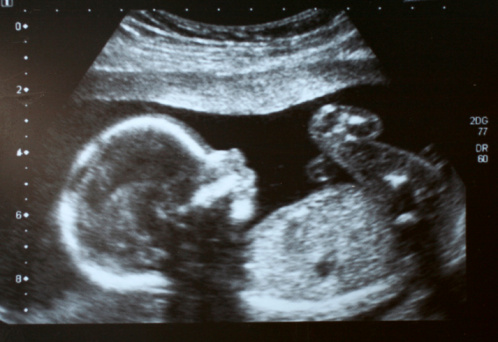
Ultrasound of fetus, 2nd or 3rd Trimester, November 1, 2012. (http://brmh.org).

I agree with President Barack Obama and with so many leading women. Men — especially men in leadership positions — should just shut up when it comes to women’s reproductive rights. Still, my life has given me a unique perspective on a woman’s right to choose, if only because I’ve had little choice as a child and a husband to be involved. I can only say that choice isn’t easy, even for pro-choice males. But I can also say that I knew more about choice at twelve than most men would ever care to know, and more about bringing new life into the world as a result.

The two examples of “the decision” that stand out most for me are twenty Novembers apart, in ’82 and ’02.

A couple of weeks before Thanksgiving ’82, I noticed something about my mother. At a time when we all looked starved, my mother looked round. Her stomach and cheeks were telltale signs. So I asked her, my tweener voice cracking all the while.

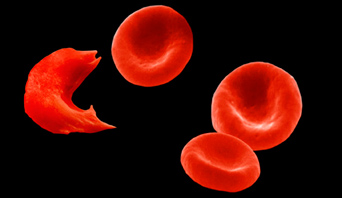
Sickled and normal red blood cells, November 1, 2012. (original source unknown).

“Mom, are you pregnant?!?”

“Yeah, Donald, I’m pregnant,” she sighed.

“What! You got to be kidding! You mean you’re still having sex with him?”

“Watch ya mouth, boy!”

“Mom, what are we going to do? You can’t have a baby, not now, not with all these mouths to feed!”

“Donald, what I’m supposed to do?”

“You need to get an abortion, that’s what!”

“I don’t believe in abortion. It’s against God’s will.”

“Well, we can’t feed the kids that are here now, so how can you feed it? Get an abortion Mom, before it’s too late!”

Before my mother could say anything else, I stormed out for yet another store errand for milk, diapers, and all the things I couldn’t eat. I wanted to cut Maurice’s balls off and shove them down his throat. I wanted to shake Mom until her eyes rolled back in her head. Most of all, I wanted to get her to an abortion clinic yesterday (see my post “The Quest For Work, Past and Present” from August ’12).

That “it” turned out to be my sister Sarai, my late sister, born nearly four months after I came out as a pro-choice feminist and a stress-out Hebrew-Israelite teenager. She lived for twenty-seven years, five months and two days with sickle-cell anemia, without ever knowing I once preferred her not to be born (see my post “My Sister Sarai (Partial Repost)” from July ’10).

Over the next two decades, I’d become so fed up with kids and family, 616 and Mount Vernon and so many things in my life that I once thought that I’d never get married or become a father. The people in my life growing up in Mount Vernon — like my ex-stepfather and the young folks in the neighborhood — refused the responsibility of fatherhood (and in a few cases, motherhood). The idea that there would ever be a child of mine running around without me being in their life made me determined to limit my casual relationships and ensured that I would always have protected sex.

Even after getting married in ’00, I still wasn’t sure if I really wanted a child. Out of any seven-day period, I would’ve been happy to be a dad for four days, and miserable for the other three. I wanted to make sure my wife and me could afford parenthood, that we had the emotional and psychological capacity to take care of any child we brought into this world.

By the middle of ’02, though, it was obvious that my wife wanted to have a child, a son. Coming off of a family intervention, in which my then seventeen-year-old brother Eri had made my mother a grandmother, I was even less excited than I otherwise would’ve been (see my post “Dear Mama (More Like, ‘Dear Mom’)” from October ’09). Still, I loved my wife, and I loved myself enough to think that if I liked the idea of a kid four out of every seven days, it was worth a try.

We didn’t try very long. By Thanksgiving Day ’02, I picked up on my wife’s change of emotions before she did. I had asked her to watch over heavy cream that I was warming up to make a chocolate sauce. The cream wasn’t supposed to boil. It did anyway, as my wife wasn’t paying full attention. Instead of being argumentative with me per usual about my pointing out her lack of attention to detail, she started crying, as if it was the end of the Law & Order franchise. I was startled, and said, “Honey, I think you’re pregnant.” She laughed at first, but as we would eventually find out, I was correct.

It was one of the happiest moments of my life! I had made my wife immeasurably happy, and I found myself wanting something, perhaps for the first time. To be a great father, to live long enough, to be healthy enough, to be productive enough to be the father that I never had growing up.

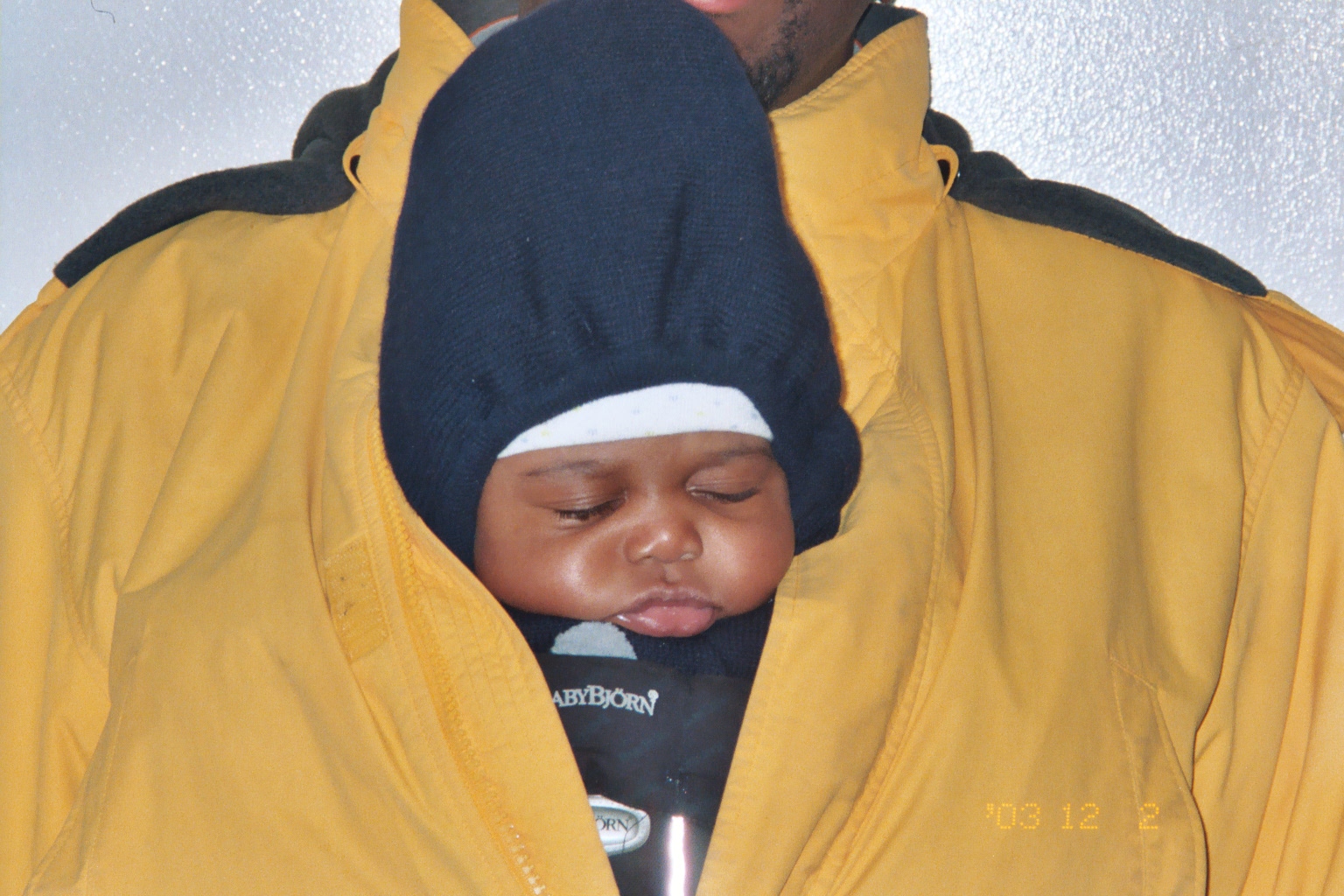
Noah in Baby Bjorn/my parka, Silver Spring, MD, December 3, 2003 (Angelia N. Levy).

If it had turned out that my wife had not wanted to be a mother, and she had become pregnant, and it turned out that she wanted an abortion, I would’ve fully supported her. Not just because I wanted her to be happy, and not just because I’m more firmly pro-choice now than ever. I’ve seen my mother and too many other mothers who’ve made the wrong choices for themselves and their lives.

Life can be long and miserable when making bad decisions, especially when it comes to bringing another life into this world. That anyone would think it a good idea to limit what is already one of the most difficult decisions women and families have to make is anti-Christian and immoral, not to mention just plain stupid.

Irksome American Conversations on Gender & Race With “Impact”

Tags

, , , , , , , , , , , , ,


Wonder Woman, October 30, 2012. (http://tvequals.com).

I’ve wanted to write about this one for a few months now. Post-Tropical Cyclone Sandy or not, this one is important to me. The fact that so much of our discourse in traditional media, social media and everyday conversation remains so much more about cliché commentary than about any exploration of the meaning behind the words we say.

I’ve already looked at the laziness that a monopolized media has created in the world of journalism (see my recent post “The Make-Believe Media” from earlier this month). But this is about more than the “both sides do it” media world. It’s about the contradictions between the style in which we use our words and the substance within. The reality behind our words, then, becomes buried, and has made us all a little bit more ignorant in the process.

For me, three random examples stand out:

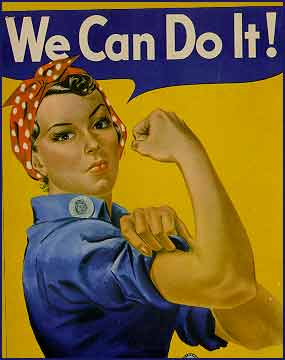
“We Can Do It!” – Rosie the Riveter poster [1942], by J. Howard Miller, October 30, 2012 (Wikipedia). In public domain.

1. “I’m a strong woman” – This could also be “I’m a smart woman,” or “I’m a bitch,” or “I’m a tough woman,” or a hundred other phrases I see every day on Twitter or hear in our public discourse. Even if this is meant to show some sort of feminist solidarity, it seems trite to proclaim strength as part of a conversation about gender (or any other topic, for that matter). I learned my lesson more than thirty years ago, courtesy of Crush #1, at the ripe old age of twelve, to not spend so much of my time telling people how smart I was (see my “Was I Really In Love In 7th Grade?” post from March ’12).

Really, how weird would it sound for me at six-three and 230 pounds to say that “I’m a strong man?” Or in commenting about all the abuse I survived, that “I’m a tough man?” I think that most of us can recognize a strong, tough, intelligent woman without the use of underwhelming language. I think most of us regardless of gender genuinely admire women who are who they are without saying the words all day and every day. To slightly misquote the name of the foundation that Lance Armstrong just stepped down from, just live strong, be strong and stay strong, and tell others females (and occasionally males) to do the same.

2. “Interracial/multiracial marriages are on the rise” = a less racist/post-racial America – Yeah, if there hadn’t been a long history of grossly unequal interracial relationships in this country for the previous two hundred years prior to the late ’80s.  This isn’t to say that the average American citizen isn’t less bigoted or racist than they would’ve been thirty years ago. But a sexual or even marital bond doesn’t automatically mean a lack of prejudice. It certainly doesn’t mean a massive empathy for and participation in social justice and other human rights causes. Just like with any relationship or marriage, people from different ethnic backgrounds can also come together for all the wrong reasons, can be abusive, and can even be racist.

Mildred Loving and Richard Loving (famous for landmark Supreme Court Loving v. Virginia (1967) miscegnation case), January 26, 1965. (AP). Qualifies as fair use under US Copyright laws – subject of post and no other photos available.

Making an exception for a few Whites, Blacks, Latinos or Asians as an individual doesn’t mean that one doesn’t generally view Whites as racist, Blacks as intellectually inferior, Latinos as “illegals” or Asians as “model minorities.” The fact that interracial marriages have been on the rise for nearly thirty years merely proves that the taboo against these marriages has broken down, not that the nation isn’t divided around the issue of race.

Manny Pacquiao v. Antonio Margarito (true meaning of the verb “impact”), Arlington, TX, November 13, 2010. (AP via http://9run.ca).

3. The growing use of impact as a verb and an adverb: Whether “impact,” “impacted,” “impacting,” or “impactful,” most of the time, this term is used incorrectly, especially in terms of politics. Take the use of impact during the 2012 Presidential Election cycle. “Nothing has impacted the 2012 race more than Romney’s 47% tape.” Really? Did someone take the recording and literally hit Mitt Romney in the head with it until he was rendered unconscious? If that didn’t occur, then the correct sentence would be “Nothing has had more of an impact on the 2012 race than Romney’s 47% tape.”

It’s as if journalists, reporters, pundits, commentators, intellectuals and scholars have forgotten that there are other, better words in the English language to use than impact. Like “affect,” or “effect,” or “influence,” or “sway,” or “transform,” or “change.” There are NFL color commentators and WWE announcers who use the word impact more correctly than most in the news and social media worlds. But this incorrect overuse is apparently here to stay, affecting and infecting our already ignorant use of language.

All of these uses of language irk me, because if we are to ever have real discussions of serious issues, we need our language to have real substance to it. Not just platitudes and clichés that wouldn’t survive Fashion Avenue if they took the form of a dress.

The Life of Mary Louise

Tags

, , , , , , , , , , , , , , , , , , ,


My Mom, Thanksgiving 2006, Mount Vernon, NY. (Donald Earl Collins).

Today, my mother turns sixty-five years old. My mom has now officially hit elderly status, which reads and sounds so weird, considering that she’s only twenty-two years and two months older than me. That Mom’s here at all at sixty-five is really a not-so-minor miracle, considering how hard her life’s been from day one in ’47.

This was what I wrote about my mother’s first thirty-five and a half years of her life, courtesy of Boy @ The Window:

Bradley, Arkansas main road (Route 29) with me and my Uncle Charles in the shadows, June 2, 2001. (Donald Earl Collins).

Mom came from a long line of folk whose lives were hard and impossible ones, where they  couldn’t take handouts even if they wanted to. She was born to Samuel and Beulah Gill in October ’47, their first of twelve children and her father’s second overall child of thirteen. The Gills of Bradley, Arkansas were tenant farmers who lived in the Red River valley in the southwest corner of the state and five miles north of the Arkansas-Louisiana border. The town was a one-flashing- yellow-light-four-corner one. Just over five hundred people lived there, with farms, shotgun houses, and ranch-style homes neatly segregated between a few affluent Whites, lots of po’ White trash and the abundantly poor Black side of town. The conditions she grew up in included corrugated tin roofs and outhouses to boot.

Being born into this family in the late-’40s meant that Mom’s life would be a difficult and emotionally tortured one. She started doing household chores when she was five, helping with her siblings when she was six, and graduated to hoeing and picking cotton by the time she was eight. There wasn’t the time, energy, and experience in the household for Mom to receive any affection or nurturing.

My maternal grandfather Sam Gill, Sr. (82 at the time, 93 now), Bradley, AR, June 2, 2001. (Donald Earl Collins).

With all that and her mother’s constant neglect and occasional abuse — she was once beat with the back of a hair brush for not getting ready for church on time — it’s amazing that Mom wanted to get married or have kids. Yet I knew that what little nurturing and affection Mom received came from her great-grandmother, her aunt, and high school basketball. All served that role as Mom grew into an attractive six-foot woman. Her great-grandmother, half-Choctaw and half-Irish and originally from Indian Territory (now Oklahoma), taught Mom to see herself as beautiful despite her dark complexion. Her Texarkana, Texas aunt taught Mom her basic adult survival skills. And high school basketball took her as a senior to the segregated state quarterfinals in ’65, an amazing feat to say the least.

Still, it was a hard life, one that Mom had vowed she’d never live again. That’s why she moved to New York in the first place. I’d heard these stories for years, and like her, I believed that our lives would get better through sheer hard work. Welfare was never to be something we would live with.

After nearly seventeen years in the New York area, never had all but finally arrived. She had spent my whole life up to that point telling us not to take “handouts,” that she’d “never be on welfare.”

By her thirty-fifth birthday at the end of October ’82, my mother no longer had full-time work at Mount Vernon Hospital, with her hours cut and four mouths to feed. That weekend, all we had left to eat in our two-refrigerator kitchen was a box of Duncan Hines’ Devil’s Food cake mix, Pillsbury All-Purpose Flour, and some sugar. That Saturday and Sunday, we truly ate like Torah-era Jews. Mom made us pancakes out of the flour, without baking powder, eggs or milk, and cooked down some sugar in water to make us a crude
glucose syrup.

Between an abusive Maurice for a husband, the loss of an already insufficient income after not joining her union in a strike, and two toddler-age kids (and another one on the way), the period between May ’82 and April ’83 was probably one of the lowest points in her life.

As I’ve realized over the years, though, Mom’s life was always hard. It was simply a matter of degrees, not of distinction or difference. The mistake of marrying Maurice, becoming a scab (see my post “The Quest For Work, Past and Present” from August ’12) and leaving my older brother Darren at The Clearview School for fourteen years has had an impact on all of our lives to this day. Just as much as fourteen years on welfare, the three-year-long loss of our home at 616 in the ’90s (see post “The Fire This Time” from April ’08 for more) and my late sister Sarai’s twenty-seven year-long struggle with sickle-cell anemia. “Wow” is only the beginning of a description of calamity that has been my mother’s life, about as long as the first hundred digits after 3.14.

What’s made the difference? My mother’s belief in God or Jesus? Her general sense of resilience? Her uncanny ability to deny reality and frequent lack of self-reflection? But I’d say that Mom has learned to expect little from this world and, unfortunately, even less for herself. She often expected the worst, and then being surprised at how not-so-bad “the worst”  was, could continue to soldier on.

My Mom and my Uncle Sam Gill, Jr., Mount Vernon, NY, November 23, 2006. (Donald Earl Collins).

So I wish my mother a happy sixty-fifth birthday. One in which she can just spend the day at her church in New Rochelle, and then just rest and be. Only one of my siblings lives at 616 these days, and apparently spends more time out and about than he does at home. So, I hope my mother can relax, knowing that she has endured all the evil that this world could throw at her, and despite her view of life, has come out on the other side, badly damaged, but still here.

2012 Presidential Debates & The Great White Hype (1996)

Tags

, , , , , , , ,


This next to last scene (in poor resolution, by the way) — the fight between Roper (Damon Wayans) and Conklin (Peter Berg) — sums up perfectly the three debates between President Obama and Mitt Romney this month. Oh, with some additional pictures and LL Cool J’s “Mama Said Knock You Out” (1990). From Obama’s lackluster first debate to his KO of Romney in the third, as illustrated by punches and knockdowns.

My Take on Carnegie Mellon University

Tags

, , , , , , , , , , , , , , , , ,


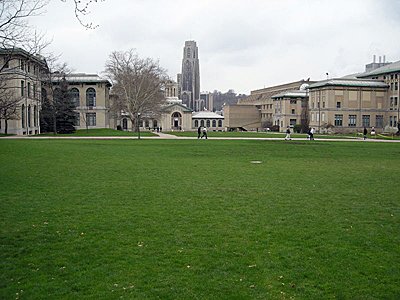
View of Pitt’s Cathedral of Learning from Carnegie Mellon lawn, Pittsburgh, PA, October 22, 2012. (http://www.broadwayspotted.com/).

It’s with extreme disappointment in which I write my latest post, this one on Carnegie Mellon University, or as the locals and attendees call it, CMU (sorry, Central Michigan University folks). But I feel I have little choice, given the amount of crap I’ve received over the past few months from my doctoral institution. The alumni association and the fundraising people at Carnegie Mellon ask me for money at least twice a week, and don’t seem to get it when I say “no” or “never” or even “when Hell freezes over.” I’ve known creditors less persistent about getting money out of people than the fundraising arm of Carnegie Mellon.

The last straw for me, though, was last week. I received three emails on the same day, not to mention a letter in the mail, all asking for donations. One also included an alumni survey, which I dutifully filled out and rated Carnegie Mellon at the low-end of every category in the survey. “Not only do I not mentor my students or aspiring college students about Carnegie Mellon,” I said. “I go out of my way to make sure that they do not ever consider applying to or attending Carnegie Mellon,” I added at the end of the survey.

Romney in 47 Percent Video, September 18, 2012. (Joe Pompeo/http://capitalnewyork.com). Qualifies as fair use under US Copyright Laws – cropped/low resolution.

I don’t think that the alumni association or the fundraisers really understand the depths of my disappointment regarding my four years at CMU between ’93 and ’97. I found the university culture about as welcoming as going to a Mitt Romney fundraiser in Boca Raton, and with many folks from the same crowd as well. Anytime your campus refuses to recognize Martin Luther King, Jr. Day as a holiday, or insists on having Dinesh D’Souza give a two-hour talk on race without an opposing viewpoint, it’s a stifling place. A campus in which the College Republicans stage marches while not having a strong College Democrats or progressive group in place is a bastion of conservatism, not just politically, but socially as well.

In four years, I became friends with a very small group of students and professors. I would’ve made more of an effort, if I hadn’t been told practically from day one that my master’s degree from the University of Pittsburgh and my other achievements meant little because, well, I had a degree from Pitt. And these sentiments came from my professors!

From my fellow students — who often walked by me as if I were a ghost until I forced them to say “Hi” — there was the impression that I must’ve gotten into the History program under some “special dispensation,” as one White guy put it. Yeah, my M.A. — earned in two semesters with a real committee examination — and a year of PhD work had nothing to do with my ability to write rings around my fellow students!

All in all, my Carnegie Mellon experience only worked out as well as it did because I reached out beyond my department and beyond the university to maintain connections and friendships with real people. My list of good folks at Carnegie Mellon is pretty short. The late Barbara Lazarus (see my post “Ladies and Gentlemen, Dr. Barbara B. Lazarus” from July ’09), Susan McElroy, John Hinshaw (who himself didn’t talk to me for two years after I’d gotten a Spencer Fellowship), and “My Friend Matt” (September ’12). The Black Graduate Student Organization (or BGSO), the graduate students of color/women graduate students working group that Barbara headed, and our group of fourteen doctoral students of color (the total number of non-White and non-Asian PhD students at Carnegie Mellon). That and playing intramural and pick-up basketball as much as three times a week were the sum total of my positive people and experiences at CMU.

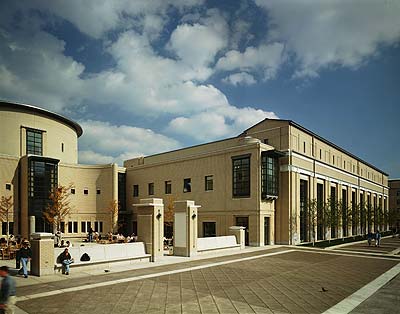
Carnegie Mellon’s University Center, or “the new sanitarium,” October 22, 2012. (via Wikipedia).

I spent the majority of my non-classroom time on Pitt’s campus hanging out with friends there, working on my dissertation, meeting with some of my former professors, or otherwise enjoying my status as an alumnus. If anything, I needed to walk across that bridge between Carnegie Mellon, Schenley Park and Pitt as much as I did in order to keep my sanity, to make sure that I was essentially the same person I’d been while going to grad school with comparatively less uptight folk.

Of course, I could also go on about how my experiences with Joe Trotter as my advisor (see my “Outrage, Maybe” post from May ’10) turned me into an anti-Carnegie Mellon advocate, or how the sanitarium look of the university buildings could leave Polyanna depressed. But for those involved in alumni fundraising and related tasks at Carnegie Mellon, get this. I will never, ever, ever, give CMU one penny of my hard-earned dollars. I’d sooner give my idiot ex-stepfather a penny at his grave before you could pry a cold copper piece out of my hands, alive or dead. As far as I’m concerned, you owe me for four years of unnecessary anguish in the midst of my determined success.