A Big Wheel and Recovered Memories, Part Two

Tags

, , , , , , , , , , , , , , , , , ,


It took me until three weeks after the sex assault on the Nathan Hale ES playground before I told my parents. Those three weeks are a blur, but not the blur that the incident with the light-skinned teenager and his three friends would become until three weeks before my forty-fifth birthday

At the beginning of August ’76, my Mom and my dad Jimme were having another one of their vicious arguments. It was that Saturday afternoon when I finally learned that my Mom had filed for a divorce the month before. Anyway, I somehow managed to get myself in the middle of that argument. I complained that Darren’s bigger butt had been the final straw for my Big Wheel. It had broken in half after he tried to ride it earlier that week.

“I told him, it says ‘90-lb limit’,”  I said to my Mom (which I pronounced as “ninety lebs”) while pointing at the inscribed warning label on my now broken Big Wheel, crying.

“You broke that shit weeks ago!,” my Mom yelled.

“I didn’t break it. A bunch of kids did,” I said.

“And you didn’t try to stop ‘em?,” Mom asked.

“I did try to stop ‘em. But they took it and one of them stuck a pee-pee in my mouth,” I explained.

“I done told you not to leave the house when I’m not here! That’s what you get for not listenin’!,” my Mom screamed.

I was so shocked by how angry she was. I was mad, too. I didn’t think. I just ran out the house and out into the middle of the street. I saw a tan Chevy Malibu coming down the street and I just stood there.
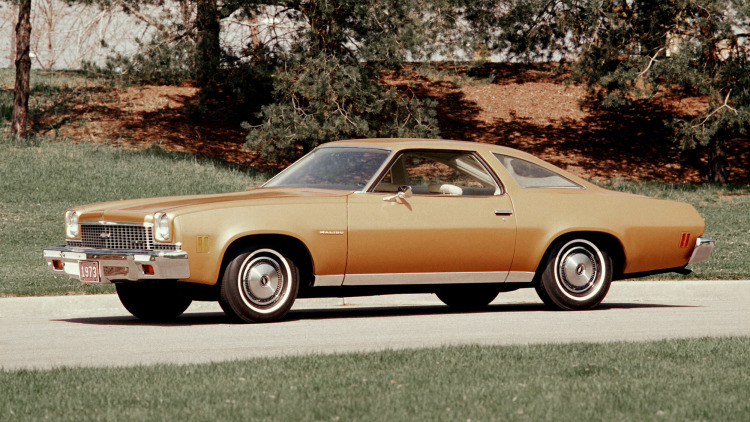
1973 tan-ish Chevy Malibu, August 5, 2016. (http://www.autoblog.com).

1973 tan-ish Chevy Malibu, August 5, 2016. (http://www.autoblog.com).

The older, salt-and-pepper bearded and balding Black man didn’t slow down until he realized I wasn’t planning to move. He slammed on the brakes and came to a stop about three feet in front of me. The man put his car in park and got out. He then slammed his driver’s side door really hard, and yelled, “Boy, what’s wrong with you? Are you tryin’ to get yourself killed? Where’s your mama?”

He grabbed me by the back of my chocolate-brown t-shirt and made me show him where I lived. We marched upstairs to the second-floor, where he proceeded to explain my suicidal actions. My Mom then took the older man’s belt and beat me with it in front of him, with Darren and Jimme watching. Afterwards, she said “Thank you” to the older man, and then sent me to bed without dinner. “Don’t you EVER do that again!,” she screamed.

Nine months after that bicentennial summer, we moved across town to 616 East Lincoln, a three-in-one, five-story Tudor-style apartment complex. After a summer camp at Darren’s Clear View School in Dobbs Ferry, we went outside on 616’s grounds for the first time, in August ’77. The kids at 616 and 630 East Lincoln chased us around the vast two-building complex while throwing rocks at us. Scared, we hid behind the big, wooden, dark-brown front door and huddled, hoping that the kids wouldn’t find us.

Instead, a couple of young Black Turks saw us and took us upstairs to my Mom and my eventual stepfather Maurice. The two young men said that they saw us doing “the dukey.” I had no idea what they were talking about. All I knew was that my Mom and stepfather proceeded to whip us as if we’d gone to the grocery store and stolen $100 worth of candy and soda. Both “dukey” and “faggot” were part of my vocabulary — again.

The mind of a child is a strange place. Mine was no different. For years afterward, I’d managed to forget these most painful memories. I managed to bury them without burying all of my other memories, so many memories that I have for the last forty-one out of my forty-five years. I somehow didn’t remember the connections between my Big Wheel, the light-skinned teenager and standing in the middle of South Sixth, waiting to be run over. I didn’t remember my Mom’s response to finding out that her six-year-old son had been sexually assaulted.

It’s ironic. Ironic because I’ve already written my coming-of-age memoir in Boy @ The Window. I spent the better part of a decade researching, writing and revising it before self-publishing it in 2013. I included excruciating details about my family, my Mom, my father Jimme. I included as many relevant and embarrassing events as I could about how I became the person I always wanted to be. And with all that work, I never remembered the moment a teenager forced his penis tip into my mouth.

Buildings/dream in state of collapse, via Inception (2010), August 5, 2016. (http://www.cinemablend.com).

Buildings/dream in state of collapse, via Inception (2010), August 5, 2016. (http://www.cinemablend.com).

I only remembered during the holidays in 2014. One night in early December, I had a really bad trying-to-escape dream — again. This time, though, I remembered the taste of a penis in my mouth, and then I saw the light-skinned teenager. Even in my dream, I said, “That’s him. That’s it.”

After I woke up, a flood of images erupted in my brain. The Chevy Malibu and me standing in the street. Seeing the light-skinned kid who  assaulted me on the playground at 616 on the same day the other kids chased Darren and me around the building while pelting us with pebbles and rocks. The wall of fear that my Mom had on her face when the neighbors told her that they thought Darren and me were “faggots” because we were standing so close to each other that we looked like we were “doing the dukey.”

The now-remembered incident explained so much. My Mom’s constant fear that I’d turn out gay. My father Jimme constantly calling me a “faggat” (as he pronounced it when he was drunk) whenever I stepped out of line or looked at people the wrong way. My Mom giving my one-time idiot stepfather Maurice carte blanche to “turn” me and Darren “into men” through Isshin-ryu karate and draconian physical abuse. Me being terrified at times when around Black guys on the basketball courts or in other social setting. My looking at young women from afar, attainable and yet all but unattainable for me. The sheer desire to save the people in my life from violence and destruction, especially my Mom and Darren, but the inability to do either.

My family’s fear of the mere possibility that I or my brother Darren could be gay drove many of their measures of physical, verbal and emotional abuse. So much so that they ignored all the signs of my actual abuse. Like standing in middle of the street to get run over by a car, were just considered “defiant” or “weird.” Or with me constantly chewing my fingernails right down to nail bed. Or me constantly stuffing sandwiches and other food down into the recesses of my winter coats, having already ripped out the pockets, and leaving the food there. Or the day I stood on Nathan Hale’s playground during recess in May ’77, when I took some string from my red and blue-striped t-shirt, gradually unraveled it, and swallowed nearly a third of it. My Mom figured she could beat the “something’s wrong with you, fool” out of me. My father calling me a “faggat” from the time I turned fourteen was just tough love, not a form of abuse piled on top of abuse.

Now that I remember everything about the physical and the sexual abuse, what do I do next? It’s been forty years since I found out how horrible life could be. It’s not as if I’ll be able to track down and then beat up the light-skinned teenager, who’s now in his early fifties, assuming he’s still alive.

I could start by revising Boy @ The Window. I wasn’t just weird because I wore a kufi, spoke too slowly, or grew up with weird people. I wasn’t just a child of poverty, abuse, and divorce. I was also a sexual abuse victim, all but completely unacknowledged, and yet such a major part of the story.

Forgiving my abuser could be at the top of the list. It would be difficult to be angry at someone whom I’d forgotten about for nearly four decades. But you know what? If I could just punch him in the throat and then knee him in the balls until one fell out and rolled down the street, that would give me some satisfaction.

Mostly, I’m just satisfied that I know my past in full. I already paid the bill. Now that I know what I paid for, I can move forward. I can look at my past, present, and future with more sanity than I thought possible.

Fun Times With Stepfather Maurice

Tags

, , , , , , , , , , , ,


Male lion eating carcass (the equivalent of fun times with Maurice), August 3, 2016. (Aljameen Alston via http://pinterest.com).

Male lion eating carcass (the equivalent of fun times with Maurice), August 3, 2016. (Aljameen Alston via http://pinterest.com).

Today would be my idiot ex-stepfather’s Maurice Eugene Washington’s sixty-sixth birthday. Maurice died almost four years ago, after a twenty-year losing battle with Type-2 diabetes, kidney failure, hypertension, heart disease, limbs lost, and a host of other ailments included. That, after years of abusing his body with food, much more often than he laid a fist or kick on me or my Mom.

Most of the time these days, I feel far more pity for Maurice than anger. Forgiveness does come with the benefit of some empathy. If only because I know that Maurice had less maturity and more confusion in his heart than a sociopathic misogynist in the middle of puberty. Which, in point of fact, would pretty much describe my ex-stepfather from the time his was fifteen until his death in 2012.

So in the spirit of macabre humor, below are some of Maurice’s favorite stock phrases from my being forced to grow up around him between ’81 and ’89. Most of these made it to Boy @ The Window:

“You and your brother [Darren] are gonna be my brown-skinned servants.”

“Take that base outta ya voice, boy, before I cave yo’ chest in!”

Maurice would sometimes sing his threats, bellowing

‘I’m gonna beat yo’ ass, jus’ like a car burns gas,’ adding, ‘And ya KNOW that!’ at the end

It was something he pulled from the disco group known as the The Jammers.

Whenever I reminded him that he wasn’t my father or whenever I told him that I’d never call him “Dad” again, Maurice would yell

Don’t you EVER say that again, muthafucka! I’ll kill you next time!

Sometimes, he’d threatened to kick me out of 616.

That boy’s defiant. I won’t tolerant it in my house!

Once I passed fourteen, I knew this was an idle threat. Boy, he loved calling me “boy” or “it” when I stood my ground. Maurice had colorism issues long before I ever knew what colorism was.

Or, Maurice would get all Hebrew-Israelite on me and quote from Exodus 20.

Honour thy father and thy mother: that thy days may be long upon the land which the LORD thy God giveth thee.

Even in the midst of busted lips, bruised ribs, and knots on my forehead, I found that last one absolutely preposterous. We owned nothing. This irrational abusive asshole wasn’t my father, and had beaten up my Mom in front of me. Only a god in cahoots with the devil him or herself — or my idiot ex-stepfather — would think that Exodus 20 applied to my situation with this shell of a human being. Mind you, the fool kept quoting this verse to me as late as the week before he broke up with my Mom in ’89!

There is some humor to glean from these, as much as you can find alcohol content in a fresh slice of bacon. I just hope I never say things even in the same galaxy of stupid, demeaning, or threatening to my own son as this idiot said to me growing up.

Sometimes, though, when my son asks, I tell him what it would be like to have an abusive father in the form of Maurice. Sometimes I’ve even imitated how the fool would’ve sounded, and my son will then start to laugh. Luckily, he sees my stories as stories, not the hellish nightmare that my life had once been.

How I Met My Son

Tags

, , , , , , , , , , , , , , , , , , , , , , , , ,


Noah's birthday cake, Cheesecake Factory Original Cheesecake, adorned with candles, July 30, 2016. (Donald Earl Collins).

Noah’s birthday cake, Cheesecake Factory Original Cheesecake, adorned with candles, July 30, 2016. (Donald Earl Collins).

My son turned thirteen yesterday. That sentence by itself speaks volumes. That I have a son, that he’s reached an age where he’s in the midst of puberty, with a discernible personality, with a set of abilities and potential for developing more talents. Wow! Noah loves art, anime, and apples. He’s a classic contrarian who’s just beginning to realize that he has academic and athletic talents. He’s mostly observant, thoughtful, and independent thinking enough to deal with this crazy world outside our home. That he’s managed to get to this point without me messing him up with my own baggage as his father. To me, that’s not just amazing. That’s a miracle.

As late as the early spring of ’02, a half-year before me and my wife conceived our one and only egg, I had some doubts about ever being a dad. But those small doubts mattered little compared to where I’d been the summer and fall of ’01. I wasn’t dead set against becoming a parent. I just felt that in this dangerous, chaotic, racist, oppressive world, how could I be so selfish as to bring a child into this life?

Daddy Emperor Penguin with baby penguin, accessed July 31, 2016. (National Geographic via http://pinterest.com).

Daddy Emperor Penguin with baby penguin, accessed July 31, 2016. (National Geographic via http://pinterest.com).

I wasn’t just thinking of Amadou Diallo or the aftermath of 9/11. This wasn’t just about the expense of raising a kid. Mostly, it had to do with growing up as the second of six, but with ALL of the responsibilities of a first-born Gen-Xer watching over four siblings ten to fourteen years younger than me, not to mention my wayward older brother. It was the trauma of living through eight years of abject, unrelenting poverty with an abusive asshole of a bully who frequently threatened my and my Mom’s existence. It was having to swallow shit from all of my legal guardians about my lack of observable Black testosterone coursing through my brain cells. Add going through a magnet program from middle school to high school and going to the University of Pittsburgh to this baggage. What I was by twenty was a hopeful but yet emotionally exhausted human being.

So, I was never someone who had this American evangelical desire to get married or have kids (which is also a passion connected to Whiteness, by the way, to propagate their numbers, but not just). Even when it was obvious that me and my wife were heading toward marriage by 1998, I was more against having kids than in favor of the idea. I was still occasionally sending money to my Mom and my siblings to help them out, and taking trips to 616 to put out figurative fires. I had changed enough diapers, made enough bottles, dressed, lunched, dinnered, and laundered enough for my siblings to say “I’m good” when it came to having my own child.

But when my youngest brother Eri beat me to the punch by siring his own kid with his high school girlfriend at seventeen in the spring of ’01, I lost it. I couldn’t sleep soundly for months. I listened to my Mom complain week after week about him and his post-high school dropout future. My brothers Maurice and Yiscoc weren’t doing much better. My family was a cyclone of a disaster, and nothing I had done to blaze a trail for them since 1982 had done much good.

This was when I decided to do my intervention, to go after both my Mom and my siblings. Not so much out of anger, and yes, I had enough anger to keep my current iPhone powered for three days. No, this was a combination of righteous indignation and, well, love. I did my due diligence to dig into my Mom’s life with a few questions that I already knew the answers to, about when and how it all went so wrong for us all. And then I did the intervention, in January ’02, right after the birth of my only nephew.

Only later did I realize the intervention I did was really for me. Only later did I figure out that the 616 intervention had freed me from my self-imposed burden to help lift my family out of poverty. The constant anguish and exhaustion I felt when dealing with my family went away in the weeks after the intervention, and I was able to get a good night’s sleep for the first time in months, maybe years.

Noah in portrait, May 16, 2016. (Donald Earl Collins)

Noah in portrait, May 16, 2016. (Donald Earl Collins)

That’s when I was ready to do my part in the miracle of conception, childbirth, and parenting. Giving myself that permission and then having the recognition of the baggage I carried going in has made fatherhood and parenting much easier (not easy, just much easier) than it would’ve been if I had done like Eri or followed Phil Knight’s “Just Do It” advice.

It’s hard to really be passionate about having a child when nearly all your free time with family between the ages of twelve and thirty-one has been to participate in raising kids. Since my little egg arrived thirteen years ago, though, I’ve reserved my parenting for him. I’m the father penguin in -100°F temps, braving blizzards in eighty-mile-an-hour winds to see my son through. I think it’s paid off so far.

We Really Are A Center-Right Nation

Tags

, , , , , , , , , ,


First pitch, Mets vs Pirates (Pedro Martinez pitched for the Mets this day), July 20, 2005. (alpineinc via Wikipedia/Flickr). Released to public domain via CC-SA-3.0.

First pitch, Mets vs Pirates (Pedro Martinez pitched for the Mets this day), PNC Park, Pittsburgh, PA, July 20, 2005. (alpineinc via Wikipedia/Flickr). Released to public domain via CC-SA-3.0.

Folks, I cannot put it any simpler than this. Imagine a baseball game in which all the players played between home plate, second base, first base, and from center field, right-center field, and far right field. It would be a harder game to watch, and it’s hard enough to sit through already. That is the state of America’s national discourse and decision-making. Perhaps it’s always been the default setting on which the US was built four centuries ago.

Crop of PNC Park (as metaphor for the political state of the US), Pittsburgh, PA, July 20 2005 (alpineinc via Wikipedia/Flickr). Released to public domain via CC-SA-3.0.

Crop of PNC Park (as metaphor for the political state of the US), Pittsburgh, PA, July 20 2005 (alpineinc via Wikipedia/Flickr). Released to public domain via CC-SA-3.0.

One of the more optimist points that Michael Moore attempted to make in his books Stupid White Men (2001) and Dude, Where’s My Country? (2003) was that he saw that, after all, the US was a center-left nation. Moore’s evidence came from polls suggesting that most Americans would support gun control legislation and gay marriage, were pro-choice and peace doves. His wasn’t the only White progressive voice trying to flip the script on some of the media’s narrative that the US has and remains mostly center-right politically and ideologically. Bill Maher, Jon Stewart, and a host of comedians-turned-news-makers have similar points in words or deeds over the past two decades.

The problem is, they are dead wrong. The US really is center-right. Why? Because polls are but a snapshot of people and their thinking. It’s a moment where people may put on their best selves, and frequently skew their attitudes toward more forward-thinking ideals, even if they don’t believe them. Polls are about as accurate as a Soviet/Iraqi Scud missile from the First Gulf War. And they’re also about as worthless.

The media contributes to this delusion of center-left by portraying everything as if there are two sides to it. CNN, MSNBC, the major mainstream networks, even FOX News frames everything between liberal and conservative, as if 160 million people belong to one side or the other. While the best arguments on most issues tend to be left-of-center, they aren’t the best just because of one’s ideology. Most left-of-center arguments contain nuance and context, two things that have been anathema in the world of mainstream corporate media for at least a generation.

Since the press presents everything from agricultural subsidies to zoo protections as an either-or, left-or-right, good-or-bad, nuance and context are missing in action, like whole grain from Wonder Bread. So really, if there are any differences in argument, they are in degree. Being pro-choice with a plethora of restrictions is a centrist argument, not a leftist one. Being for some regulation of military-style rifles and guns is a centrist argument. Wanting to raise the minimum wage to $15 per hour — the equivalent of the minimum wage in the mid-1990s — is a centrist argument.

Chants of "No More War!" and "U-S-A! U-S-A! U-S-A!" erupt from crowd during Leon Panetta's 2016 DNC Convention speech, Philadelphia, PA, July 27, 2016. (http://theguardian.com).

Chants of “No More War!” and “U-S-A! U-S-A! U-S-A!” erupt from crowd during Leon Panetta’s 2016 DNC Convention speech, Philadelphia, PA, July 27, 2016. (http://theguardian.com).

Most scholars have it correct when they say that the Democratic Party has lurched to the right over the past forty years. That lurch kicked in big time during the Bill Clinton years. The corporate mainstream media during the DNC Convention in Philadelphia has discussed the “left-wing” of the Democratic Party all week. But they have it wrong. This so-called left-wing is really just “less centrist.”

Nothing proved this more than last night’s competing chants during Leon Panetta’s speech. “No more war!” was quickly drowned out by the narcissistic chants of “U-S-A! U-S-A! U-S-A!” These are the same chants repeated by RNC delegates in Cleveland the week before. Both chants were meant to shut up those handful of folk committed to something other than getting in line with a political process or their party’s nominee. Both chants basically said to anyone who is truly in left-center field or further left than that to “shut the hell up.” The tone and rhetoric of the two parties may be different — and stances on cultural issues may be as well. But overall, the state of the American belief in the plutocratic/oligarchic nature of our democracy and projection of American power remains strong.

A Big Wheel and Recovered Memories, Part One

Tags

, , , , , , , , , , , , ,


Big Wheel, pretty much as I remember it, April 2014. (http://sf.funcheap.com/bring-big-wheel-race/).

Big Wheel, pretty much as I remember it, April 2014. (http://sf.funcheap.com/bring-big-wheel-race/).

As most who read me know, I wrote a book about the worst of my growing up years three years ago, Boy @ The Window. I wrote about how I saw things between the ages of eleven and nineteen during the 1980s. I covered everything from a preteen’s fantasy life and Black masculinity to child abuse and domestic violence. I dug into my memories for haunting moments of poverty, for examples of ostracism, for stories about my family, my high-achieving yet soulless classmates, and for any oases of good moments, too.

Or so I though. (And no, it’s not just that I should’ve given the book to another professional to edit.) I focused so heavily on what turned me into the professional, writing, teaching, fairly erudite and extremely goofy me. Really, too heavily, as it turns out. I forgot that there had been a me prior to World Book Encyclopedia and Black America, Starling, 616 East Lincoln Avenue, the Hebrew-Israelites, and Humanities. That even younger me apparently had a story to tell. It was a story that I should’ve told, but I didn’t, I couldn’t remember. Maybe part of me really didn’t want to recall. No, I had to finish Boy @ The Window, publish it, and promote it for a year before I reacquainted myself with that splinter deep in my mind.

I found it, too, in a story that didn’t quite add up. The story that turned me into all of me, good, bad, and yes, obviously ugly began forty years ago this month. Well, it actually started with Christmas 1975. My Mom and my father Jimme had bought me a Big Wheel for Christmas and my sixth birthday, because my birthday comes two days after Christmas. I had begged them for this ride for months, at least as early as that July. I was so happy that as soon as I could, with my dark blue winter coat and all, I rode up and down South Sixth Avenue’s blue-slate sidewalks with it. I thought I was the coolest kid on my block!

The 400-block of South Sixth was one of two and three-story homes with 150-square-foot front yards with interlocked steel gates, and ample backyards. But there were few kids for me to play with, at least kids my age. This despite Nathan Hale Elementary holding up the southeastern end of the block. I rode around that stark early winter-looking block for days, with hardly a toddler to greet me.

At 425 South Sixth, we lived just two doors down from Nathan Hale and its playground area/parking lot. Here was me and Darren struggling to be in front when my mother took this photo.

Me and Darren struggling to be in front when my mother took this photo, Nathan Hale ES playground, February 1975.

Back then I had no trouble talking to anyone about anything, including how I felt. By the end of first grade, a girl in my class named Diana had taken a liking to me. She had skin the color of butterscotch, and bright hazel-green eyes to go with her puffy lips. Diana’s light brown hair was always a mess, but then again, I could pick out a piece of corn or a grain of white rice from my jet-black knotty roots more days than not.

We kissed several times, in class and on the short walk up South Sixth back to our homes. We even attempted to French kiss a few times, including once in class before being caught by our teacher Ms. Griffin. All I know was, there was a lot of spit and tongue involved. When I’d ride my Big Wheel after school, and see Diana on the rough and bumpy asphalt playground between my house and the school, I’d let her ride on it. And we’d continue with tongue practice sometimes, too.

When the school year came to an end in June, Diana and her family moved away. I waved her goodbye as they drove away from South Sixth, me riding my Big Wheel down the block behind them. I felt sad to lose such a good friend.

But I still had my Big Wheel. For weeks after the end of first grade, I rode it around the block and on the school playground. Sometimes my older brother Darren would be there, but most of the time I was by myself. With Diana gone, there were no kids my age around. It was the summer of 1976, and like most parents back then, mine were only interested in seeing me come home for lunch or dinner, not in me being inside all day.

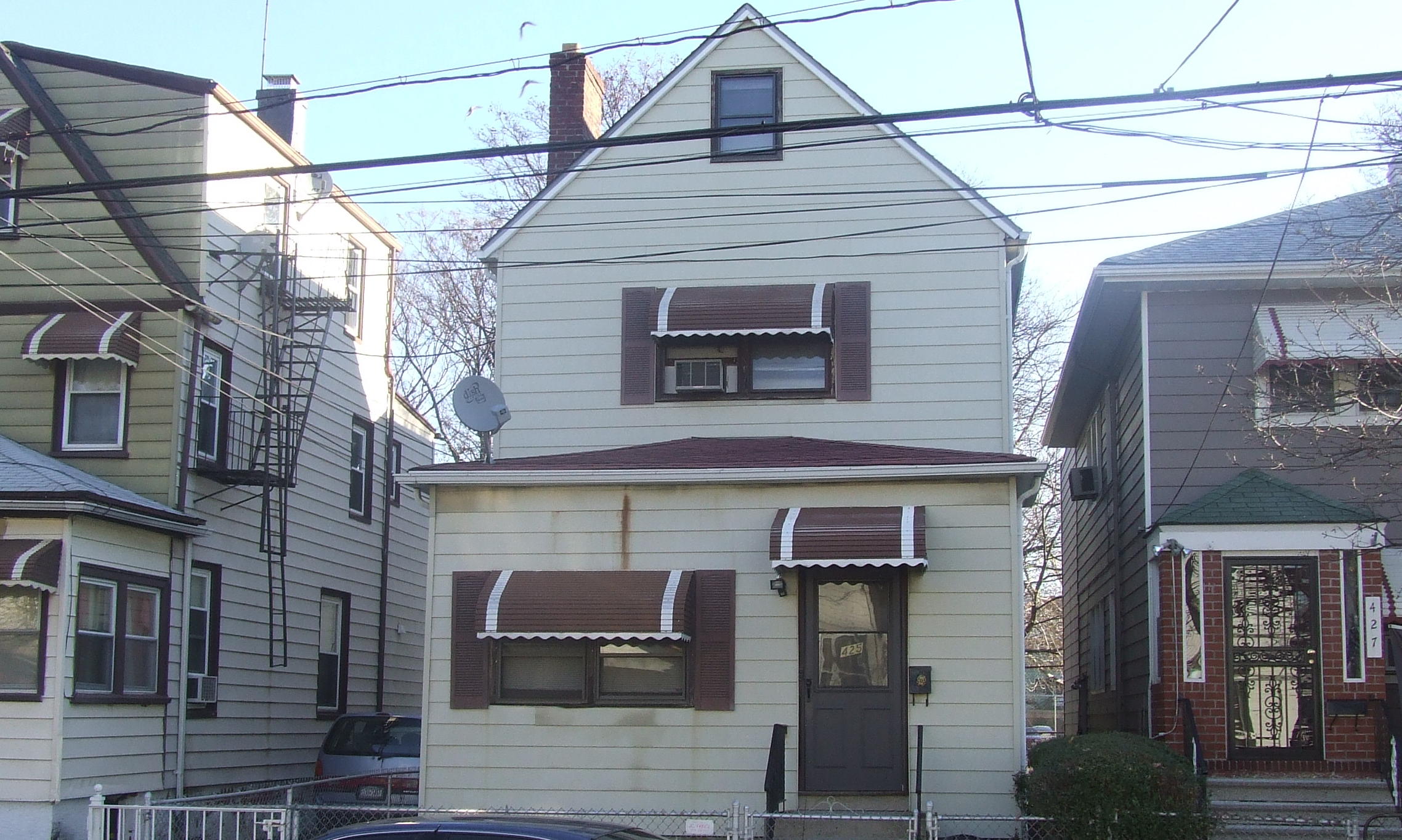
425 South 6th Avenue, Mount Vernon, NY, November 22, 2006. (Donald Earl Collins).

425 South 6th Avenue, Mount Vernon, NY, November 22, 2006. (Donald Earl Collins).

Inside was a second-floor, two bedroom and one bath flat within the three-story tan and off-white house that was 425 South Sixth. We had a separate entrance, giving us the appearance of living in our own home without actually owning the place. It sometimes seemed spacious, except when my Mom and Jimme would fight, or when Darren would take my toys, or when my Mom went into the kitchen and made fried porgies and whiting or chitlins. On many a day during our short two and a half years at 425 South Sixth, I stared at the cars parked or rolling down the street. A dark-green ‘68 Chevy Camaro here, a grape-colored AMC Gremlin there. The Chevy Monte Carlo series from between ‘69 and ‘75 was my favorite back then. Maybe it was how high the curvy back-end of the car seemed raised an extra foot off the ground. That summer, though, my Mom and my father weren’t home often to engage me in the car model guessing game that I liked playing when I was bored.

What made this worse for me was that my Mom and my father Jimme were getting a divorce. Only I didn’t know it at the time. All I knew was that things seemed different. They weren’t fighting as much. My Mom had bought all new furniture for her bedroom and the living room. She even bought a Polaroid camera, to take pictures of herself while wearing a scarf with earth-tone artwork around her head, all without makeup on. Even though anyone over eighteen seemed old to me at six, my Mom seemed ageless, like she would be in her twenties forever, a shade of brown consistent with my own medium dark with copper undertones. I thought it was a good picture of her.

My father had never been home for more than a few days at a time, with his binge drinking and all. He was a night janitor at Salesian High School in New Rochelle, but hardly made it home during the day. My diminutive father worked this job years after losing his custodian job with the Federal Reserve Bank in downtown Manhattan, but still acted as if he worked as a banker on Wall Street. My brother Darren and I would sometimes be with him at Salesian whenever he took an evening shift. My Mom’s shifts as one of the dietary supervisors at Mount Vernon Hospital varied, between 7 am and 3 pm during the day and 3 to 11 in the afternoons and evenings. So, some days she was home when I was on one of my Big Wheel adventures. Sometimes Jimme was home. Sometimes, I was with my babysitter Ida or one of my dad’s drinking buddies.

And, there were days I was alone. On a lonely Wednesday in July, just a week and a half after the bicentennial Independence Day, my Mom left for work. She was on a 3-11 pm shift that day. She told me, “Keep your butt upstairs while I’m gone.” Then she left. No one was home. Darren was at his Clear View School in summer day camp. God only knows where Jimme was.

I did that day what I always did when left alone. I got on my now nearly worn out Big Wheel wearing my blue and red-striped t-shirt and dark blue shorts, and rode it down to the school playground. It had rained earlier that afternoon, and the asphalt was still wet from the summer showers. I skidded along the playground, and noticed two things. One, the air still smelled of rain, even though there were breaks in the clouds. Two, a group of four older Black kids had taken over the swing area.

Something had told me to not go over by the swings, but my Big Wheel’s skidding and sliding brought me over there anyway. As soon as I ended up near the swings, the four older boys surrounded me. One of them grabbed me off of my Big Wheel, while another took my ride. I yelled, “Give it back! Give it back!” The lightest skinned one in the group, their leader it seemed, came up to me, unzipped his pants, and said, “You get it back after you suck my dick, muthafucka.”

I shook my head, but then one of them threatened to destroy my Big Wheel by banging it on one of the swing poles. Crying while being held by two of the twelve or thirteen year-olds, they pried open my mouth long enough for the light-skinned leader to stick the tip of his penis in my mouth. I felt the dry meat on my tongue long enough to want to throw up.

“The little muthafucka’s sucking my dick!,” the light-skinned one yelled while laughing.

They started laughing so hard, I was able to pull myself away from them and grab my Big Wheel. While I ran and rode, the four boys kept yelling, “You a faggot! You a faggot!”  One also yelled, “You a dukey!”

I rode straight home and tried to forget what just happened. But I couldn’t. My Big Wheel now had a crack in it, between the back of the seat and the back axle. It wasn’t broken, but it was definitely damaged. My Mom noticed it a few days later. “That’s what you get for leaving the house,” she said after I told her about the Big Wheel and the older boys trying to break it. I didn’t tell her about the other part.

I’ve complained for years that my ability to remember has been both a blessing and a curse. But I didn’t deliberately hone this skill until after I turned nine. Between the age of four, when Nixon resigned, and my first time running away, three weeks before my ninth birthday in December 1978, I have lots of memories. Those memories are those of a young child drifting from day to day, as they should be. The result, though, was not being able to recall details like being molested at six. Until twenty months ago, I remembered it as a vague attempt. And not as the damaging, trauma-inducing incident that it really was (to be continued).

Fife and Shalom

Tags

, , , , , , , , , , , , , , , , , ,


Civil War-era wooden fife, May 19, 2004. (Kevin Saff/National Parks Service via Wikipedia). In public domain.

Civil War-era wooden fife, May 19, 2004. (Kevin Saff/National Parks Service via Wikipedia). In public domain.

One thing I never discussed here or in Boy @ The Window were the handful of “leisure” activities I had during the Hebrew-Israelite years. The world in which we lived back in the ’81-to-’84 period had precious few resources and even less room for things like summer camps, overseas travel, baseball games, amusement parks, or even a free impromptu rap battle at Van Cortlandt or Hartley Park. Heck, the Kool cigarettes’ music series that sponsored “Teddy Pendergast” or “Rufus and Chaka Khan” in those days might as well have been a trip to see the World Cup in France compared to our pitiful roach-and-belt circumstances.

One of my idiot stepfather Maurice’s Hebrew-Israelite friends, though, did provide a free service for us males in ’81 and ’82. His name was Tamrin. He was a heavy-set dude, probably about five-foot-eight, maybe 120 or 125 kilos (between 245-260 pounds), and likely in his late-thirties. Unlike so many of the Hebrew-Israelite men I had the curse to meet in those naiveté-shattering years, Tamrin had a lighter touch. His idea was to put together a boy’s band of fifes, drums, bugles, and other marching instruments to lead us Hebrew-Israelites in marches through the street of Mount Vernon, as well as temple sites in the Bronx, in Harlem, and in Brooklyn (specifically, Bed-Stuy and Flatbush, if memory serves). Even at twelve, I knew how ridiculously uncool that idea sounded.

That was his plan, anyway. So off and on, between August ’81 through the second week in July ’82, Tamrin gave me and other kids music lessons to play overly bombastic marching band music. These were the kind of joyless songs which one was mostly likely to hear at Moscow’s May Day parade of soldiers and nuclear missiles than hear anywhere in ancient Israel. I was picked out because I had musical training in my immediate pass. I played the trombone in fifth grade. Or rather, I had six months of trombone-playing lessons at William H. Holmes ES before my music teacher had a heart attack and died in March ’80. I sang in chorus all through sixth, seven, and eventually, eighth grade. I could read music, though I struggled in transition between half-notes and quarter-notes.

Pulaski Day Parade on Fifth Avenue in Manhattan, October 6, 2013. (http://www.posteaglenewspaper.com).

Pulaski Day Parade on Fifth Avenue in Manhattan, October 6, 2013. (http://www.posteaglenewspaper.com).

So Tamrin would come over about twice a month, usually on Saturday afternoons, and spend a couple of hours with me playing the fife. (Can you imagine that? A twelve-year-old, kufi-wearing Donald playing such a small and delicate reed instrument? Really? Really!) Tamrin took us to the Pulaski Day Parade down in Manhattan the first Sunday in October ’81 to see how the pros do the fife-and-drum thing. The costumes I found fascinating, but I dreamed of food, not of marching around with fife.

Once Mom’s already pitiful funds got down to a disposal income of $5 per day — that was in December ’81 — Tamrin didn’t come around as much. Though he wasn’t getting paid much, I think he still expected $10 per lesson. Still, he came around even when he wasn’t getting paid, though it was only once a month during the ’81-’82 winter. That’s when I noticed, though just barely, that Tamrin had diabetes. His fingers had swelled during the winter, and he moved slower, too.

From mid-April to the beginning of July, Tamrin was around nearly every Saturday for an hour at a time, working with me on marching while playing fife, polishing up fife-ful flourishes, and getting me to learn more bombastic music. There were a couple of times I played with the other preteen and teenage Hebrew-Israelite kids. They seemed about as cool with this fife-and-drum band as I was with having an abusive stepfather.

And that’s who stopped my participation in Tamrin’s pet project. After my summer of abuse began in earnest on July 6, ’82, Tamrin came around that Saturday, July 10. I played my fife to some music, but the knot on my head, the bruises to my left cheek and jaw, and my busted lip would’ve been obvious to any observer in the week after Maurice tried to beat me into submission. I kept playing my music, but I knew that Tamrin and Maurice were jawing at each other about something or other, hopefully not me. All I know was, that was Tamrin’s last time working with me to play the fife. I’d continue to see Tamrin at temple. But that second Saturday in July ’82 would be the last he’d come over to 616 to teach me terrible music for the fife.

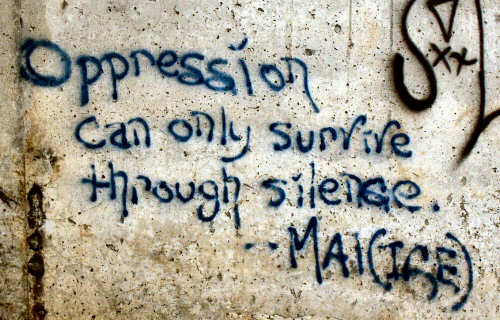
Oppression graffiti, January 15, 2013. (Students for Liberty via http://genderlitutopiadystopia.wikia.com).

Oppression graffiti, January 15, 2013. (Students for Liberty via http://genderlitutopiadystopia.wikia.com).

Did I play a good fife? Tamrin thought so. Compared to my Hebrew-Israelite comrades, I’m pretty sure I did. But like with so many things Hebrew-Israelite during those years, it was a bitter march to nowhere. The fife was part of a Hebrew-Israelite physical and spiritual gulag that put me into more chains, rather than freeing me to be me. Despite Tamrin’s intentions, the idea of molding me and others into men in conditions that would make most “men” contemplate homelessness or running away was a ridiculous pipe-dream.

That Tamrin was likely the only adult male in the Hebrew-Israelite camp who saw Maurice for the lying, abusive, womanizing asshole he was made me realize not everyone in this world was against me. But in a religion that when practiced helped oppress me and others more than the outside world, what was any Tamrin to do?

“Fear of The Unknown” or “Other” = Inhumanity

Tags

, , , , , , , , , , , , , , , ,


A black box with question mark, a certain "fear of the unknown," July 9, 2016. (http://socialcapitalmarkets.net).

A black box with question mark, a certain “fear of the unknown,” July 9, 2016. (http://socialcapitalmarkets.net).

The phrases “fear of the unknown” or “fear of the other” has been something that I’ve been familiar with as long as I’ve been in the classroom. So many essays, so many discussions, so many presentations where these stock phrases have greeted me in my capacity as instructor, professor, facilitator, administrator, and public speaker. Ultimately, the use of these all-too-often used phrases reflects the inability of the people who speak and write them to see other people as Homo sapiens, thus diminishing their humanity in the process.

The first time I seriously encountered either phrase, though, was in my second semester of teaching History of American Education in the College of Education at Duquesne University for MAT students. It was the fall of 1998, and I was teaching a required education foundations course (I was also doing Multicultural Education that semester). To be sure, there were a couple of veteran teachers who didn’t like having a twenty-eight year-old Black man telling them about the marbled history of their profession and the institutions for which they served as K-12 teachers. Some of their bigoted evaluation responses disclosed as much.

It was the week I lectured on the Southern and Eastern European immigrant experience in America’s emerging public school systems between roughly 1880 and 1930. In going through the efforts of educators to literally beat out of these children the language of their mother countries (e.g., Italian, Yiddish, Greek, Polish, etc.) while sorting them into lower intellectual tracks within public schools, I noted the anti-immigrant xenophobia among WASPs at that time. One of my students during discussion tried to explain it away as a WASP “fear of the unknown.” I asked, “What was the unknown? Were these immigrants aliens?” — in this case, I meant “extraterrestrials.”

Data Mining/Fear of the Unknown cartoon, Adam Zyglis, Buffalo News, July 6, 2013. (http://adamzyglis.buffalonews.com/2013/07/06/data-mining/).

Data Mining/Fear of the Unknown cartoon, Adam Zyglis, Buffalo News, July 6, 2013. (http://adamzyglis.buffalonews.com/2013/07/06/data-mining/).

The student didn’t really answer my question, as if “fear of the unknown” needed no explanation. But on the paper related to the experiences of the children of Southern and Eastern European immigrants, Black migrants, and working-class women, over and over again, the phrase “fear of the unknown” kept showing up. What made this use of phrase even more disappointing was an even more sobering Western Pennsylvanian reality. Most of my students were the descendants of Southern and Eastern European immigrants, some of whom were old enough to have had contact with grandparents who must have recounted their experiences with xenophobia in public education. That these students couldn’t possibly see the inhumanity of the phrase “fear of the unknown” made me question whether these current and future teachers should be in a classroom at all.

Luckily, I did manage to reach a few of my more skeptical students around these sorts of issues as this course progressed. After all, most teachers really do want to help their students. A couple even wrote me notes after slamming me in their evaluations about how my History of American Education course had opened their eyes to inequality and social reproduction in K-12 education.

Since then, I have remained keenly aware of when students, colleagues, public speakers, and fellow administrators (specifically in the context of the nonprofit world) have said or written the “fear of the unknown” or “fear of others” phrases. Mostly, it’s not in the context of White ethnics from an era in which “White” mostly meant “White Anglo-Saxon Protestants.” Over the past fifteen years, I’ve seen and heard “fear of the unknown” in reference to Blacks, Latinos viewed only as free-loading immigrants, and Arab-Muslim Americans as US-hating terrorists. There have been students who have justified the race riots of the not-so-recent past (the ones where White mobs stormed into Black neighborhoods and burned them out while maiming and killing Black men, women, and children) with the phrase “fear of the unknown.” Or co-workers who’ve explained away their xenophobia or homophobia as a natural “fear of the other.” Or public speakers who’ve explained Islam as if it were a magical black box that churns out terrorists the way Detroit used to turn out automobiles.

Caravaggio's Narcissus (1594-96) , May 15, 2011. (Masur via Wikipedia). In public domain.

Caravaggio’s Narcissus (1594-96) , May 15, 2011. (Masur via Wikipedia). In public domain.

Stop it. Just stop it. What does “fear of the unknown” really mean? That you didn’t know that Black Americans were human beings with a need for work, education, housing, sleep, air to breathe, and food to eat? That you couldn’t conceive of Latinos as a group of folks who’ve been part of the American landscape (specifically Texas and the southwestern US) for far longer than there has been a US? That you can’t contemplate the idea that Arab Muslims have just as much right to exercise their First Amendment rights to freedom of speech, religion, and assembly as any “red-blooded American?”

Using the phrase “fear of the unknown” says more about the people using it than it does about the “others” they attempt to describe as “unknowns.” All anyone really needs to know is that the so-called others are human beings. To say “unknown” or “other” means than you think you are superior to these “unknowns.” Or, conversely, that these “other” humans are not “normal,” that they are defective or not quite your equals. When groups of humans attempt to justify inequality or their fear with phrases like “fear of the unknown” or “fear of the other,” it means they have little or no empathy for the “unknown” or “other.” And when we as humans can cut ourselves off from other humans in this way, doesn’t that make us less humane, more “other” because we believe ourselves to be normal, even special, and therefore, better, than these “unknown others?”

Of course, there are tremendous psychological and material advantages to seeing other humans as “unknowns” and “others.” This week of #AltonSterling, #PhiladoCastile, and #Dallas has been proof positive of the value of some lives versus “unknown others.” The truth is, no Homo sapiens live in black holes. Unless those with the power to cut off empathy to their psychological and material advantage make a mental home for us there.