• About Me
  • Other Writings
  • Interview Clips
  • All About Me: American Racism, American Narcissism, and the Conversation America Can’t Have
  • Video Clips
  • Boy @ The Window Pictures
  • Boy @ The Window Theme Music

Notes from a Boy @ The Window

~

Notes from a Boy @ The Window

Category Archives: Work

Facing The Tooth

14 Monday May 2012

Posted by decollins1969 in 1, Academia, Boy @ The Window, culture, Eclectic, Politics, race, Work, Youth

≈ 1 Comment

Tags

6007 Penn Circle South, Advil, Carnegie Mellon University, Comps, Dentistry, Department of HIstory, Departmental Politics, Doctoral, Drug, East Liberty, History Department, Joe Trotter, Joe William Trotter, John Modell, Jr., Motrin, Naivete, PhD, Pitt, Pittsburgh, Root Canal, Stress, Toothache, unemployment, University of Pittsburgh, Written Comprehensives


My front teeth, including slightly darker lower tooth (right/my left), two root canals later, May 14, 2012, (Donald Earl Collins).

A funny series of events occurred on the transition from Pitt PhD student to Carnegie Mellon doctoral student in the spring and summer of ’93. Well, not really funny at the time. Nineteen years later, the months between April and October ’93 look like a semi-hilarious blip on my screen of life compared to what I’d gone through before and have faced since. But for a three-week period in April and May of that year, one of my teeth helped me both begin grad school at Carnegie Mellon and brought home the truth of my impoverished existence at the same time.

The week before the end of spring semester at the University of Pittsburgh — as well as the end of six years of undergraduate, master’s and doctoral work there — I woke up with a throbbing that went around the left side of my jaw. It radiated up through my left cheekbone, ear and temple. It was a toothache, one that I assumed was stress-related. Between the transfer to Carnegie Mellon, my efforts to move out of my crappy studio in East Liberty, and my search for summer work, I assume that it was just me grinding my teeth.

I relieved my stress and pain the way any normal twenty-three year-old male would. I took some Advil, went to sleep, hung out with friends and at hole-in-the-wall bars once the semester was over, and had myself a pretty good time. I took the approach that “everything will work itself out” to all the worries I had.

I also met with Carnegie Mellon’s History department’s graduate advisor that first week, John Modell (I learned later that he had been Joe Trotter’s dissertation advisor back in the mid-1970s). Modell cleared me to take the written part of the PhD comprehensive examination that the department’s second year students could take at the end of the year, which in ’93 was on May 14. Modell cleared me despite the fact that my first course as a Carnegie Mellon student wouldn’t begin until the end of August.

Then, after a week or so pain-free, I woke up a little after 5 am. I snapped up in my bed, knowing that

Severe premolar tooth decay (abscess), December 17, 2006. (Lycaon via Wikipedia). Released to public domain via Creative Commons 3.0 license.

something was wrong. Then, the pain came. It was like Mike Tyson had punched me in the left side of my jaw and I’d fallen head-first onto a boulder. The pain shot up and around like a puck in an NHL playoff game in overtime. The toothache was back, and it wasn’t going away.

Dumb-ass me, who rarely took meds for headaches, much less a rare toothache, tried to gut it out for a couple of days without much medicine at all. I went to Pitt that Monday and Tuesday to see if there was any chance to pick up a course to teach for the summer. There, I discovered how cold the History department administrators were regarding my time there. It turned out that there were two courses available. Even though I technically could’ve taught those courses, they held my transfer to the “other program” against me.

That made my pain worse. I couldn’t eat without a construction team of bacteria pounding my jaw. I couldn’t have a conversation without feeling brass knuckles punch my face in. I certainly couldn’t sleep more than four or five hours, and then only sitting up in a chair. By Wednesday afternoon, I couldn’t think straight anymore.

I finally walked across the bridge on South Highland Avenue to a dentist’s office next to the local neighborhood laundromat, and after an hour, scheduled an appointment for 2 pm that Friday, and picked up a prescription for 800 mg Motrin pills. For someone as drug adverse as me, it might as well have been heroin. I was taking two at a time — the equivalent of eight Advil tablets — between Wednesday evening and Friday morning. In doing so, it became obvious that my lower left front tooth was the culprit, and that my dentist was correct. I needed a root canal procedure to drain the abscess.

Second floor of Baker Hall, Carnegie Mellon University, Pittsburgh, PA, December 2, 2010. (Daderot via Wikimedia). In public domain.

So it was that on that fateful May 14, with three more horse-sized Motrin pills in my system, that I took my written comprehensives on the second floor of dark and factory-like (with its sloped floors) Baker Hall. I hadn’t studied at all, and all I really wanted to do was sleep. I chose two questions: one on women’s history/rights and historiography, the other on immigration history. From 9 am until about 12:30 pm, I wrote page after page on both subjects and conjured all the books and articles that I knew on both topics, which turned out to be quite considerable. I found the comps quite easy. Easier than any hoop that I had to jump through while at Pitt.

Still, I felt the throbbing of my tooth. Not the pain — the Motrin did its job — just the nerve in the tooth and the blood supply pushing pass the well of abscess in that tooth. I handed in my essays (I filled out four booklets’ worth of essays) and meandered my way to my dentist’s office. The root canal surgery took about two hours, but it only seemed like a dream, as I fell asleep off and on throughout.

I floated the two blocks home to 6007 Penn Circle South, secure in the fact that I passed my comps (as it turned out, with high distinction, although one of the examiners was puzzled by the fact that I had used sources not taught by any of the professors in the department). Just before I hit my pillow, ready to snore for the next fifteen hours, I thought, “Boy, is this going to be a long summer!”
Diversity Isn’t As Simple As Reaching Out To HBCUs

25 Wednesday Apr 2012

Posted by decollins1969 in 1, Academia, Boy @ The Window, culture, Eclectic, Politics, race, Work, Youth

≈ Leave a comment

Tags

Academy for Educational Development, Admissions, Black Students, Carnegie Mellon University, Center for American Progress, Diversity, Diversity Solutions, Enrollement, Graduation, HBCUs, Hiring Process, Historically Black Colleges and Universities, Latino Students, Montgomery County MD, Montgomery County Public Schools, Panacea, Predominantly White Institutions, PWIs, STEM Fields, Tokenism, University of Pittsburgh, White House Initiative on Historically Black Colleges and Universities


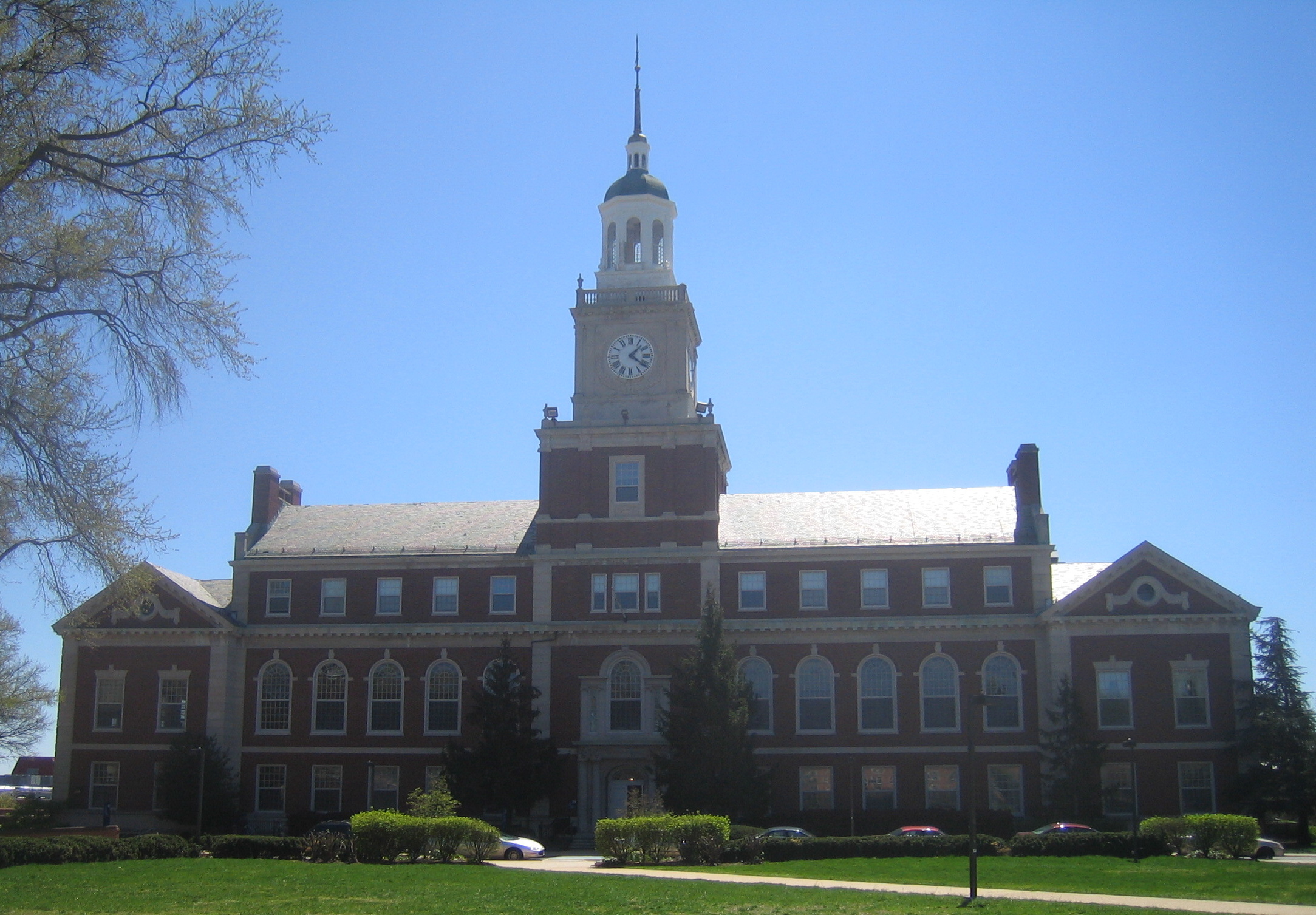
Founders Library, Howard University, Washington, DC, April 9, 2006. (David Monack via Wikipedia). Released to public domain.

There were many things that made me want to holler during my graduate school days two decades ago. One of them was constantly hearing that there were no students or faculty of color to be found because no one Black or Brown was qualified, or “in the pipeline,” or interested in this field or that field. I’d hear this at meetings on Pitt’s campus, at meetings on Carnegie Mellon’s campus, at conferences like the American Education Research Association’s annual meeting, at other academic conferences and settings.

Thank goodness those days are over. Now most of us realize there’s a few folks Black and Latino to find in almost every career option. But a new excuse for lack of diversity in higher education and on the job front has come up in meetings, at conferences, and in conversations, at least in terms of solutions. In job interviews, at local meetings regarding Montgomery County Public Schools, at Center for American Progress conferences on K-12 reform, at my previous jobs with the Academy for Educational Development and in other settings. The way to solve the diversity problem seems to come down to one prescriptive. “We need to reach out to HBCUs.”

So, it all comes down to the 110 or so Historically Black Colleges and Universities to solve the lack of diversity problem facing K-12 education, higher education, STEM careers, social justice nonprofits, public service, civic education, journalism, international development and foreign service, among other sectors? Really? Statistics over the past twenty years have shown that about twenty percent of all African American undergraduate students attend HBCUs. Statistics also show that about eleven percent of all Blacks who complete a four-year degree do so at a HBCU. According to the latest data from the US Department of Education (in conjunction with the White House Initiative on Historically Black Colleges and Universities), nearly 30,000 Blacks graduated with either a two-year or four-year degree from an HBCU in 2011.

The interesting thing about this initiative is that it has existed in some form or another since President Jimmy Carter signed the original executive order creating it in 1980, with every president contributing to it or strengthening it since then. This White House initiative has always been about helping HBCUs build their capacities for admitting, enrolling and graduating more African American students. Yet there’s a huge snag around the capacity of HBCUs to meet the goal to bring the number of undergraduate degrees produced on par with the overall 2020 goal of making the US the number one producer of college graduates again. It would mean that HBCUs would be responsible for graduating 166,713 students a year by 2020.

Besides the reality that this is a near-impossible goal for most HBCUs– most lack the resources necessary

Old New York City Subway token, phased out (like notion of token Black ought to be), May 30, 2005. (Jessamyn West via Wikipedia). Released to public domain.

to admit and enroll so many students — there’s a couple of trends being ignored by the worlds of work and academia. HBCUs aren’t some untapped resource that folks at predominantly White institutions and in various fields suddenly discovered in the late-1990s and the ’00s. HBCU graduates have been working in all of these fields that have lacked diversity in terms of demographics and ideas for years.

With only eleven percent of all Black graduates, few, if any, fields will benefit from the one-shot solution they hope HBCUs will provide. Unless the goal of a school district, a social justice organization or a business is only to hire one, a ’70s-era goal in the 2010s that’s hardly worth a sentence of my time.

The other trend is the overall trend of the kinds of higher institutions African Americans attend. About half of all Black undergraduates — traditional students, adult learners and first-generation students — enroll at two-year schools, community colleges and for-profit institutions (the last a black hole if one’s expecting students to actually graduate). Which means that about thirty percent of all African American students — about 600,000 in all — attend predominantly White four-year institutions.

It’s not as if folks in leading positions propose that to increase the number of Latinos in certain fields, the answer would somehow lie in the couple of dozen Hispanic-Serving Institutions (HSIs), right? Or that to bring more women into the STEM fields, that a singular strategy would involve outreach to Sarah Lawrence, Spelman, Bryn Mawr, and Vassar? At least one would hope not.

It seems that a multi-pronged approach to addressing diversity issues for a school district, a technical field, the nonprofit sector or academia needs to be in order. One that starts much earlier, like in elementary school. One that doesn’t treat Black students at predominantly White institutions as a foregone conclusion, and HBCUs as a panacea.

But somehow, I’ll find myself at another meeting in the near future, hearing from some leader or official about their efforts to address diversity by contacting HBCUs as their one and only solution. A conversation that I find myself dreading more and more.

How Our Politicians See Us

18 Wednesday Apr 2012

Posted by decollins1969 in 1, Academia, culture, Eclectic, Movies, Patriotism, Politics, Pop Culture, race, Religion, Work

≈ Leave a comment

Tags

American People, Antichrist, Apocalypse, Batteries, Carnegie Mellon University, Mitt Romney, Oligarchy, Politicians, President Barack Obama, President Obama, Slaughterhouse, The Matrix, University of Pittsburgh


Uruguay slaughterhouse with hanging cow carcasses, April 2, 2012. (http://www.meattradenewsdaily.co.uk).

A slightly left-of-center friend of mine from my grad school days at the University of Pittsburgh and Carnegie Mellon has gone off the rails in the past couple of years. At least once a week, he posts on Facebook and The Washington Post his views of the “nice guy…to have at a barbecue,” the “dangerous man” he consistently describes President Barack Obama to be.

Every parsed word, every decision, every breath President Obama takes my friend construes as evidence of the president’s link to the Antichrist and the Apocalypse. My friend has become an unlikely crackpot, willing to see everything President Obama does in the most negative light. To the point where he doesn’t give the president credit for decisions in which few could find fault.

But there’s one thing in which my friend from the ’90s is certain and correct. That if we the people only hold the conservative, reactionary and fascist oligarchs — the GOP and their neocon supporters — accountable, the centrist, not-so-progressive and Wall-Street-beholden oligarchs — the Democratic Party — will be able to get away with demolishing what remains of a sense of progression and fairness in American culture and politics. The two-party system has been broken for a while, rusted out from citizen apathy, a military-industrial complex, and the corruption of money, power and religious absolutism mixed with our nation’s other -isms.

It does beg the question, how do our politicians see us? I already discussed this in my post from last August, “When Politicians Say, ‘The American People…'” But I think moving pictures and good old-fashioned pixels might tell us more about the likes of Mitt Romney and the Koch brothers think of us on a collective scale, courtesy of The Matrix and the meatpacking industry.

The Matrix (Human Battery Scene – Low Res)

The Matrix (Human Battery Scene – Low Res)

Ultimately, we are packets of employment and consumerism, meant to be exploited to the fullest extent that capitalism and our politicians will allow. And if we don’t hold those who may well have our best interests at heart accountable, like President Obama, they too could easily fall prey to those who only see us as carcasses, cash cows or batteries to power their oligarchic lives. Even if my grad school days’ friend is a crackpot.

Miller Genuine Draft: The Messiah Complex At Work, Part III

30 Friday Mar 2012

Posted by decollins1969 in 1, Boy @ The Window, culture, Eclectic, eclectic music, music, New York City, Pop Culture, Work

≈ Leave a comment

Tags

"Personal Jesus", Academy for Educational Development, Bipolar Disorder, De-funding, Depeche Mode, Depression, Ford Foundation, Human Rights and International Cooperation, Manic Depression, Messiah Complex, MGD, Miller Genuine Draft, New Voices, New Voices Fellowship Program, The Ford Foundation


MGD & Messiah Complex

MGD & Messiah Complex

This is the third in a series of posts I’ve done about my experiences with a former supervisor during my years with the New Voices Fellowship Program at the Academy for Educational Development (see my earlier posts, “The Messiah Complex At Work, Part I” and “Breakdown: The Messiah Complex At Work, Part II” for more). This one is a bit out-of-order, but it’s also both funny and sad at the same time.

It was the last Friday in March ’03 that the powers that were at the Ford Foundation had requested a meeting with Ken about the program up in New York. Not me and Ken, not “Driving Miss Daisy” Sandra and Ken, and not Yvonne and Ken. Just Ken. I knew immediately that this was a bad sign when I learned of the meeting. But Ken said, “No, no, this could be good. We’ve done everything they’ve asked of us.”

With Alan Jenkins now the head of the Human Rights and International Cooperation unit — Anthony Romero having left more than a year before for the ACLU — and with Yvonne about to retire, there really wasn’t anyone on either side of the AED-Ford Foundation relationship that would ensure the continuing, intact funding of our little program. If I could figure this out, I figured anyone could. At least, anyone with any experience working with foundations.

So around 5:30 on March 28, as I was cleaning up my office and preparing for the much-needed weekend with my five-months’ pregnant wife, my phone rang. I half-expected it to be Angelia making some requests for stuff to pick up from CVS or the grocery store on my way from the Silver Spring Metro, so I left the music running, which happened to be Depeche Mode’s “Personal Jesus.”

As soon as I picked up and said my name and “New Voices,” Ken began to talk. He asked me,”Are you sitting down?,” and then continued about the main event at 320 East 43rd. Despite the efforts of Ken, me and the rest of the staff to attract new kinds of fellows to New Voices, the various successes of those Fellows and their organizations, that a couple of program officers were unhappy with the amount of investment it took to attract these highly qualified individuals. That, and an overall change in priorities — which could have been seen from Mount Everest looking down on New York once Ford had launched its International Fellowship program at the end of ’01 — meant that there was a decreasing interest in New Voices.

Two things occurred at this meeting. One, the Human Rights and International Cooperation unit would now only renew funding for New Voices on an annual basis — it was funded in two-year chunks up until that day. And two, starting in ’04, Ford would reduce their overall funding effort by fifteen percent across all aspects of the New Voices budget.

“Well, at least they didn’t cancel the program,” I thought. Ken, though, seemed distraught. Then I noticed

Depressed Forty Year Old Man Drinking Alone, May 6, 2010. (http://istockphoto.com).

that he was slurring his words, a bunch of voices, and the clinking of glasses.

“Ken, where are you?,” I asked.

“Oh, I’m at a bar, drinking a Miller Genuine Draft,” he said.

“Really, you’re drinking?,” I responded, with a gasp as a substitute for laughter.

“I have to drown my sorrows somehow,” Ken said.

“Oh geez,” I thought. He continued talking about the good fight, about parts of the program that we’d have to curtail immediately, about looking for new funding streams for New Voices (the last one I had suggested two years earlier).

“Given where you are, I don’t think that this is a good time or place for us to discuss these issues. Plus, I can barely hear you,” I said.

“You’re right. Well, have a good weekend,” Ken said with his worried, crazy laugh.

I got off the telephone, and turned off the music from my computer’s Windows Media system. Two songs had played since Depeche Mode’s “Personal Jesus,” but it was pounding in my head. It was now mixed up with the image of Ken looking disheveled post-Ford meeting, downing a bottle of Miller Genuine Draft while sitting on a bar stool, then ordering another. All by himself. All the while, everyone else around Park Avenue and Grand Central having themselves a good time. I realized at that moment that I wouldn’t see or hear “Personal Jesus” the same way again.

I felt sorry for him, but knowing what I’d gone through with Ken two years earlier, I couldn’t trust his judgment either (see my “Working At AED: Alternate Sources of Fear” post from June ’11). It was the first evening of the end of my time at New Voices, as well as the first day of Ken’s ten-month spiral that led to Georgetown University Hospital’s psychiatric ward. Apparently, a bottle of MGD’s hardly strong enough to take the weight of mental illness off. Nor did it make Ken wise enough to recognize that when a messiah has failed to deliver, that it would be a good time to rethink how one sees himself and the world.

The Washington Post Publishing Drivel on College Costs

27 Tuesday Mar 2012

Posted by decollins1969 in 1, Academia, Politics, Work

≈ Leave a comment

Tags

Adjuncts, Administration Costs, College Costs, David C. Levy, Faculty Salaries, Half-Truths, Higher Education, Inaccuracies, Lies, Tenured Faculty, Washington Post


David C. Levy, President CIG Education Group, March 27, 2012. (http://cig.com).

This past weekend, The Washington Post was dumb enough to published an article by the former New School University chancellor David C. Levy titled “Do College Professors Work Hard Enough?” It was in their Outlook/Close to Home section. The editors there didn’t do any due diligence to fact check Levy’s biased and grossly incorrect article on a topic in which a high school student could have found accurate facts in five or ten minutes.

This article is incredibly disingenuous, as if university professors are living the lives of the Top 1%, and all without having to work a full-time gig. Most folks in the college teaching profession (somewhere in the 60-70% range) — yours truly included — are part-time professors (known as adjuncts) or are graduate students. The idea that there are legions of tenured faculty members making high-five figure and six-figure incomes and that they represent today’s standard teaching faculty is ridiculous. It’s as absurd as thinking that folks who believe President Obama wasn’t born in the US don’t use this irrationality as a proxy for their racial bias.

The fact is, most of the dwindling tenured faculty who are lucky enough to earn these salaries have two things going for them. One, they teach at places where their job may be teaching, but their career is based on their research and publishing their research. Period. Until those in leadership (like this article’s writer) decide that the publish-or-perish system of granting tenure runs contrary to the mission of the professorship — to be teachers first, in other words — we can count on tenured faculty not spending 40 hours or more per week in their role as teachers.

Two, those most successful faculty often make their own money beyond the classroom. These folks usually draw additional money to their universities through research grants, fellowships and private donations. Some of these highly paid professors have enough panache to draw more students to their universities, a pretty good justification for a higher salary.

Finally, the biggest single reason for the rise in costs at universities isn’t faculty — adjunct or tenured. It’s administration. The size and salaries of administration has grown in concert with the increases in tuition over the past 30 or so years. Some of these costs are justified, as universities have needed more staff to handle recruitment, admission, academic support and services, the need to build a diverse student body and to provide supports to retain students so that they will be successful in college and graduate. But between billion-dollar capital campaigns, the building out of universities to gargantuan proportions, the bringing in of business executives as chief academic officers, university administration really is the largest non-student related cost here.

David C. Levy should know better, and probably does. He obviously has an ax to grind, for whatever reason, against faculty, and picked a completely wrong approach to reducing costs. Levy should ask himself the question, “Did I as a former university president work hard enough on my Washington Post article?,” and then answer the question, “Heck, no!” And as a former university president and chancellor, he should look himself in the mirror, as people like him are most responsible for the high-cost system we have now.

My Wife, My Life

07 Tuesday Feb 2012

Posted by decollins1969 in 1, Boy @ The Window, culture, Eclectic, Marriage, Pop Culture, Work

≈ 2 Comments

Tags

American University, Family, Finding Peace, Love, Marriage, My Wife, New York Giants, Perseverance, Persistence, Pittsburgh, Sleep, Super Bowl XLVI


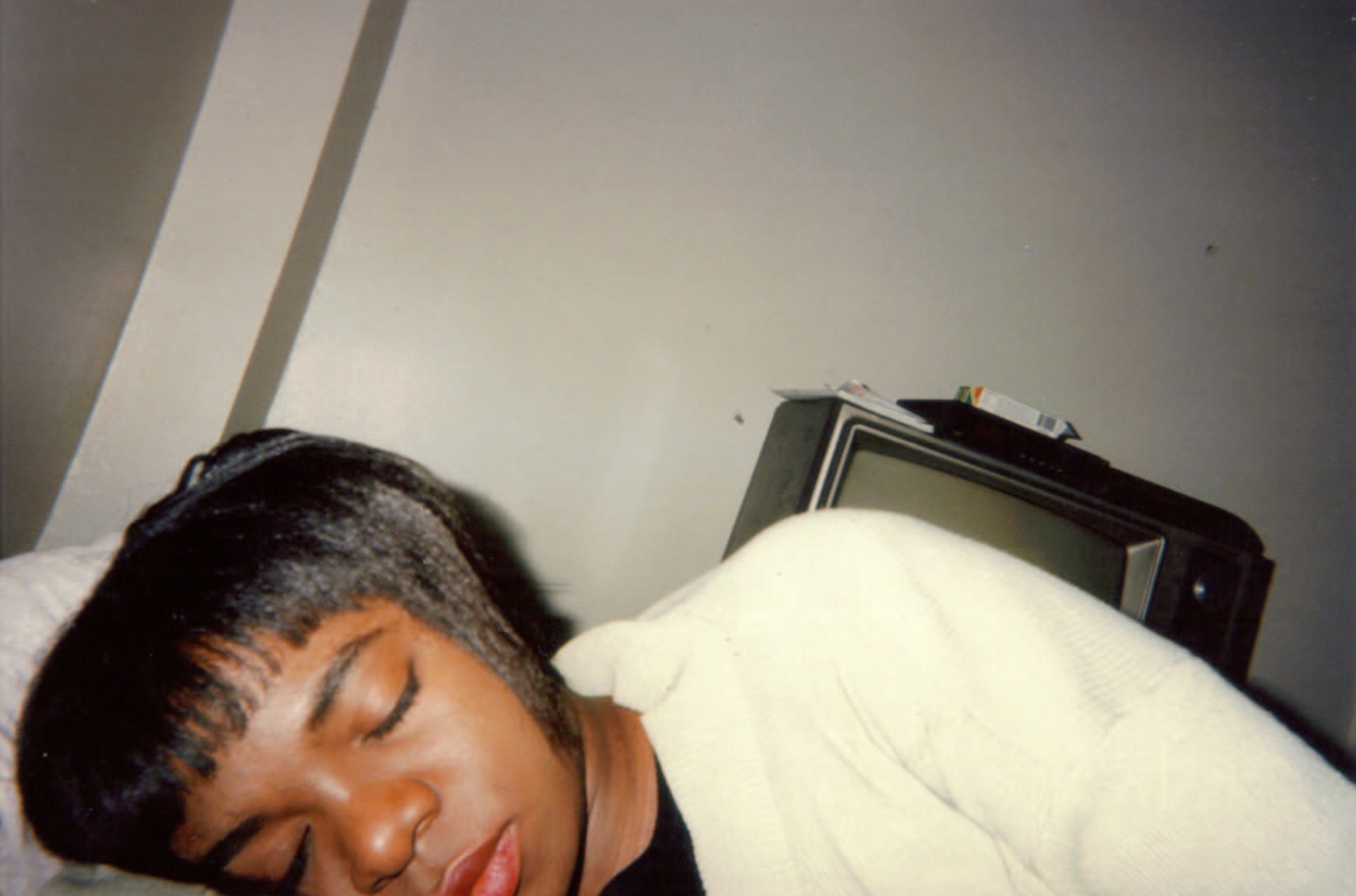
My wife (then girlfriend) sleeping, Pittsburgh, February 8, 1996. (Donald Earl Collins).

I don’t spend a lot of time talking about my wife and son on this blog. Not because I don’t want to. It’s mostly to protect them from my thoughts, my feelings, which can change from moment to moment and from context to context. But it’s also because our marriage and our family is a work in progress. Most of what I write about here has already occurred, and I’ve emotionally already moved on from those happenings. Or my posts are about educational policy, politics, race and racism, inequality and unfairness, places where I can tap into my past and present emotions and relate to events of my past.

My wife, April 2010. (Angelia N. Levy).

Today, if only for one post, I’ll talk about my wife. Today she officially passes into that grey area of life known as middle age. She doesn’t look it at all. Heck, about seventy percent of the time, she looks a good five or ten years younger than me. God knows, though, that our life over the last sixteen years (including nearly twelve years of marriage) has been anything but an opportunity to stay young.

The last four years have been especially stressful. Between my work on Boy @ The Window and piecing together teaching and consulting gigs, with feast and famine moments throughout. Between Noah growing up and reaching the full-blown kid stage (and a year or two away from being a preteen), her two years as a masters student in interactive journalism at American University, and living in the DC area. It hasn’t been easy for either of us.

There have been moments, days, even a couple of weeks like in October, where we haven’t been in sync emotionally and psychologically. I have habits that drive my wife to drink, literally. She has an attitude about her life that sometimes makes me feel like picking up a jagged rock and pounding myself in my right temple until I hit grey matter. And, for the past year, we’ve spent as much time sleeping alone as we do collapsing together after another day of school, Noah, teaching, writing, working, consulting and cringing at our finances.

But we do have a few things that remain in our favor. We do love each other, and we do talk to each other about the things we care about the most. In the latter case, about eighty percent of the time. It would be nice if it was 100 percent. But after a decade and a half, we both need our space. We also have an eight-and-a-half year-old who is a joy to be around and nurture, even if he’s way too nosy, knowledgeable and smart-mouthed for his own good.

Today, though, while the Giants celebrate in New York City and at City Hall their fourth Super Bowl win, I

Camera-shy/mean look from Angelia at The Balcony, Pittsburgh, February 7, 1996. (Donald Earl Collins).

must celebrate the fact that I’ve been together with my wife as boyfriend and husband since she was in her late-twenties. I think back to sixteen years ago today, when I threw a surprise birthday get-together for my new girlfriend at my cramped studio in Pittsburgh’s East Liberty section. I made her a lemon cake with vanilla icing, took her to The Balcony jazz club in Shadyside for dinner, and afterwards, she came to my place and fell asleep.

She looked so peaceful after such a simple evening that I took a picture of her in my bed. Sometimes I think that this is the most peaceful I’ve ever seen her, that night, that birthday, seven weeks into a decades-long relationship.

There are so many things that I want to see happen, for me, for Noah, for my wife. But one thing near the top of the list is for her to see herself the way I see her. A person who persists, who fails and is disappointed time and time again, until they achieve and exceed their goals. A person who, somewhere in that process, is at peace with themselves. Happy Birthday, my sweet duck of a love!

Burnout

16 Monday Jan 2012

Posted by decollins1969 in 1, Academia, Boy @ The Window, culture, Eclectic, race, Work, Youth

≈ Leave a comment

Tags

Betrayal, Burnout, Emotional Turmoil, Exhaustion, Forgiveness, Hate, Love, Mother-Son Relationship, PhD, PhD Graduation, Pittsburgh, Relationships, Renewal


Cartoon of a patient consulting a doctor about a burn-out (Dutch -- "You are having a burnout."), April 17, 2008. (Welleman via Wikipedia). In public domain.

It’s a word I rarely admit to. One that I usually notice signs of, but try to work through anyway. But as I’ve learned over the years, I’ve needed to acknowledge and understand my burnouts before moving forward and avoiding the conditions that produced it in the first place.

My first experience with burnout was my sophomore year of high school in June ’85. It came after three solid months of applying my memorization skills (some would say near-photograph memory skills) full-time, without the time and space to study at 616 or the support of good teachers that year, especially in Chemistry with the not-so-great Mr. Lewis. That, and no food at home during finals/Regents exams week made me actually sick of school for the first time (see my “Hunger” post from June ’08).

I went through something similar in late November and December ’89, the end of the first half of my junior year at Pitt. I had put together what I called a “total semester” plan for the first time, to organize my life so that I’d have a life outside of my classes and to take a shot at a 4.0 that semester. Only, I was dumb enough to take third-semester calculus a year and a half after my last math course, and I was now a history major taking writing intensive courses.

That, and finding out that one of my closest female friends was attracted to another, much shorter guy — also a friend of mine — meant for a rocky last three weeks of ’89. And I’d unwittingly helped to set them up. I managed a 2.98 GPA that terrible semester, including a D+ in multiple integrals and differential equations. Terrible, at least by my own standards.

Burning Brain (cropped), January 16, 2012. (Selestron76 via http://dreamstime.com). Qualifies as fair use under US Copyright laws.

I was beginning to understand that my occasional burnout wasn’t just because of school or work, but because some area of my life had caused me significant emotional turmoil, which in turn affected my performance in other areas. The period between December ’96 and September ’98 was a long period of burnout for me. I have written here before about my battles with Joe Trotter and Carnegie Mellon as I completed my dissertation at the end of ’96 — too many times for some people’s tastes. What I haven’t discussed is the emotional toll that process took on me and how long it took for me to recover.

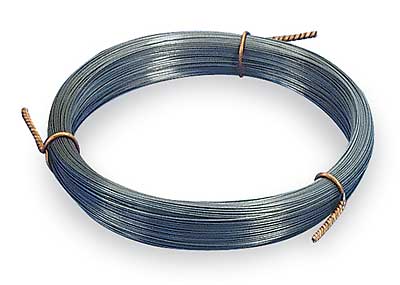
I spent most of ’97 and ’98 angry, raging ready to actually strangle most of the folks on Carnegie Mellon’s campus after finishing the degree. I couldn’t look at Trotter without wanting to wrap piano wire around his throat from behind and feeling him squirm as I cut the life out of him. Yeah, it was bad. As my now wife of twelve years can attest, I’d get into arguments with cashiers at CVS over a nickel and their complete disdain for their duties, ready to throw a punch.

But I also couldn’t write, at least write in the ways in which I wanted. I could execute the mechanical exercise of writing well enough, even put together papers for presentation and articles for publication. I even wrote an editorial on race with my then girlfriend that was published in the Pittsburgh Post-Gazette in March ’98. Still, I was writing mostly because I didn’t believe in writer’s block or in burnout, this despite all the contrary evidence.

Add the fact that I’d learned that my own mother was actually jealous of me for going to school, among other things (see “My Post-Doctoral Life” post from May ’08). I was burned out, a sad person to be around for most of ’97 and a good portion of ’98. All while I was an underemployed adjunct professor at Duquesne and working part-time at Carnegie Library of Pittsburgh. I’m not sure how Angelia put up with me, because it was hard for me to put up with me.

So, how did I pull out of my burnout? Time after the doctorate, away from Carnegie Mellon (I didn’t set foot on the campus for nearly two years after I cleaned out my cubicle in July ’97), for starters. Having people in my life who needed me to be me at my best, like Angelia and my Duquesne students, for instance, helped.

But the need to find full-time work and the realization that staying in Pittsburgh to wait for Trotter to be run

Spool of piano wire, with 247 ft-lbs of torque (enough to kill), January 16, 2012. (http://http://www.monumentalelevatorsupply.com).

over by a PA-Transit bus for a potential job opening was also a great motivator. I realized that despite everything, I’d gained more than I lost in earning my doctorate, and that I may yet find my better self again by putting those roiling emotions in a box in my mind’s attic.

I’ve felt burnout since. In a family intervention from a decade ago, in moving on from New Voices, even in my current context as consultant and professor. At least I’m more aware when I’m feeling that way, and am able to cope with those emotions with reminders of what and whom I have in my life that remains true and good.

← Older posts
Newer posts →

Boy @ The Window: A Memoir

Boy @ The Window: A Memoir

Places to Buy/Download Boy @ The Window

There's a few ways in which you can read excerpts of, borrow and/or purchase and download Boy @ The Window. There's the trade paperback edition of Boy @ The Window, available for purchase via Amazon.com at http://www.amazon.com/Boy-Window-Donald-Earl-Collins/dp/0989256138/

There's also a Kindle edition on Amazon.com. The enhanced edition can be read only with Kindle Fire, an iPad or a full-color tablet. The links to the enhanced edition through Apple's iBookstore and the Barnes & Noble NOOK edition are below. The link to the Amazon Kindle version is also immediately below:

scr2555-proj697-a-kindle-logo-rgb-lg

Boy @ The Window on Amazon.com: http://www.amazon.com/Boy-The-Window-Memoir-ebook/dp/B00CD95FBU/

iBookstore-logo-300x100

Boy @ The Window on Apple's iBookstore: https://itunes.apple.com/us/book/boy-the-window/id643768275?ls=1

Barnes & Noble (bn.com) logo, June 26, 2013. (http://www.logotypes101.com).

Boy @ The Window on Barnes & Noble: http://www.barnesandnoble.com/w/boy-the-window-donald-earl-collins/1115182183?ean=2940016741567

You can also add, read and review Boy @ The Window on Goodreads.com. Just click on the button below:

Boy @ The Window

Twitter Updates

Tweets by decollins1969
  • RSS - Posts
  • RSS - Comments

Archives

  • June 2025
  • April 2023
  • September 2022
  • August 2022
  • July 2022
  • June 2022
  • May 2022
  • April 2022
  • March 2022
  • January 2022
  • December 2021
  • November 2021
  • October 2021
  • September 2021
  • August 2021
  • July 2021
  • June 2021
  • April 2021
  • March 2021
  • February 2021
  • January 2021
  • December 2020
  • November 2020
  • October 2020
  • September 2020
  • August 2020
  • July 2020
  • May 2020
  • April 2020
  • March 2020
  • January 2020
  • December 2019
  • November 2019
  • August 2019
  • July 2019
  • June 2019
  • May 2019
  • April 2019
  • March 2019
  • February 2019
  • January 2019
  • December 2018
  • November 2018
  • October 2018
  • September 2018
  • August 2018
  • July 2018
  • June 2018
  • May 2018
  • March 2018
  • February 2018
  • January 2018
  • December 2017
  • November 2017
  • October 2017
  • September 2017
  • August 2017
  • July 2017
  • June 2017
  • May 2017
  • April 2017
  • March 2017
  • February 2017
  • January 2017
  • December 2016
  • November 2016
  • October 2016
  • September 2016
  • August 2016
  • July 2016
  • June 2016
  • May 2016
  • April 2016
  • March 2016
  • February 2016
  • January 2016
  • December 2015
  • November 2015
  • October 2015
  • September 2015
  • August 2015
  • July 2015
  • June 2015
  • May 2015
  • April 2015
  • March 2015
  • February 2015
  • January 2015
  • December 2014
  • November 2014
  • October 2014
  • September 2014
  • August 2014
  • July 2014
  • June 2014
  • May 2014
  • April 2014
  • March 2014
  • February 2014
  • January 2014
  • December 2013
  • November 2013
  • October 2013
  • September 2013
  • August 2013
  • July 2013
  • June 2013
  • May 2013
  • April 2013
  • March 2013
  • February 2013
  • January 2013
  • December 2012
  • November 2012
  • October 2012
  • September 2012
  • August 2012
  • July 2012
  • June 2012
  • May 2012
  • April 2012
  • March 2012
  • February 2012
  • January 2012
  • December 2011
  • November 2011
  • October 2011
  • September 2011
  • August 2011
  • July 2011
  • June 2011
  • May 2011
  • April 2011
  • March 2011
  • February 2011
  • January 2011
  • December 2010
  • November 2010
  • October 2010
  • September 2010
  • August 2010
  • July 2010
  • June 2010
  • May 2010
  • April 2010
  • March 2010
  • February 2010
  • January 2010
  • December 2009
  • November 2009
  • October 2009
  • September 2009
  • August 2009
  • July 2009
  • June 2009
  • May 2009
  • April 2009
  • March 2009
  • February 2009
  • January 2009
  • December 2008
  • November 2008
  • October 2008
  • September 2008
  • August 2008
  • July 2008
  • June 2008
  • May 2008
  • April 2008
  • March 2008
  • February 2008
  • January 2008
  • December 2007
  • November 2007
  • October 2007
  • September 2007
  • August 2007
  • July 2007
  • June 2007

Recent Comments

MaryPena's avatarMaryPena on My Day of Atonement/Bitter Hat…
decollins1969's avatardecollins1969 on No Good Teaching Deed Goes…
Mary Rose O’Connell's avatarMary Rose O’Connell on No Good Teaching Deed Goes…

NetworkedBlogs on Facebook

NetworkedBlogs
Blog:
Notes From a Boy @ The Window
Topics:
My Life, Culture & Education, Politics & Goofyness
 
Follow my blog

616 616 East Lincoln Avenue A.B. Davis Middle School Abuse Academia Academy for Educational Development AED Afrocentricity American Narcissism Authenticity Bigotry Blackness Boy @ The Window Carnegie Mellon University Child Abuse Class of 1987 CMU Coping Strategies Crush #1 Crush #2 Death Disillusionment Diversity Domestic Violence Economic Inequality Education Family Friendship Friendships Graduate School Hebrew-Israelites High-Stakes Testing Higher Education History Homelessness Humanities Humanities Program Hypocrisy Internalized Racism Jealousy Joe Trotter Joe William Trotter Jr. K-12 Education Love Manhood Maurice Eugene Washington Maurice Washington Misogyny Mother-Son Relationship Mount Vernon High School Mount Vernon New York Mount Vernon public schools Multiculturalism MVHS Narcissism NFL Pitt Pittsburgh Politics of Education Poverty President Barack Obama Race Racial Stereotypes Racism Relationships Self-Awareness Self-Discovery Self-Reflection Sexism Social Justice Teaching and Learning University of Pittsburgh Violence Whiteness Writing

Top Rated

Blog at WordPress.com.

  • Subscribe Subscribed
    • Notes from a Boy @ The Window
    • Join 103 other subscribers
    • Already have a WordPress.com account? Log in now.
    • Notes from a Boy @ The Window
    • Subscribe Subscribed
    • Sign up
    • Log in
    • Report this content
    • View site in Reader
    • Manage subscriptions
    • Collapse this bar
 

Loading Comments...