• About Me
  • Other Writings
  • Interview Clips
  • All About Me: American Racism, American Narcissism, and the Conversation America Can’t Have
  • Video Clips
  • Boy @ The Window Pictures
  • Boy @ The Window Theme Music

Notes from a Boy @ The Window

~

Notes from a Boy @ The Window

Category Archives: Pop Culture

Beyond The Asexual Me

14 Tuesday Jun 2011

Posted by decollins1969 in 1, Boy @ The Window, culture, Eclectic, Pop Culture, race, Youth

≈ Leave a comment

Tags

Concealing, Friendship, Male Psyche, Manhood, Pittsburgh, Psychological Development, Relationships, Revealing, Self-Discovery, Sex, Sexuality, University of Pittsburgh, Youth
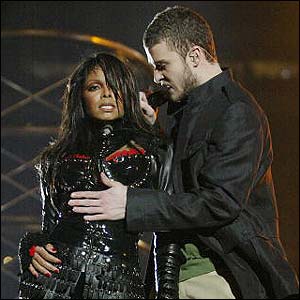

Janet Jackson & Justin Timberlake, one second from revealing more than concealing, Super Bowl 2004. Source: http://www.eurweb.com

The art of the personal essay or larger memoir is the balance between revealing and concealing. You don’t want to reveal too much, but just enough to tell a good and compelling story. You also don’t want to hide too much, because concealing degrades the honesty of the work. For me, though, today’s post reveals a bit more than I’m comfortable with, even though it may not reveal enough for some of you.

This time twenty years ago, even as much as I’d become a more open person and young man in most respects, I still struggled with my heterosexual identity. I’d dated off and on as an undergrad at Pitt and had a few sexual encounters. But I really wasn’t comfortable with any woman within three years of my age. They were often confused about men, themselves, and life in general. I had enough confusion in my life already from my Mount Vernon, New York years without spending time with another confused twenty-two-year-old whose goal in life was to be a professional student.

The personification of “another confused twenty-two-year-old” was my sometimes friend, sometimes more in “Another E” (see my post “The Power of Another E” from April ’09). By the time June ’91 rolled around, she’d bitterly disappointed me — again. E had stood me up for a date to see Godfather III, had stopped returning my phone calls, and somehow managed to duck me for lunch for more than two weeks. I was angry, more with myself than her, about how turned around I felt about this sudden loss of contact.

I wanted to move on, to get over the pedestal-building, damsel-in-distress paradigm that had been my relationship with girls and women since the days of Crush #1 (and the need to save my mother from my ex-stepfather) from so many years before. So I deliberately sought advice, deciding for once that I could live with the shame and embarrassment of liking a female who may have liked me well enough, but also enjoyed the thought of taking advantage of me.

A Black guy I worked with at the PAARC project at Western Psych was my key counsel. We’d become good acquaintances over the previous couple of months while he complained about his doctoral courses and I complained about the flat-butt Whites in charge of the project. On the first Saturday in June, he invited me and a couple of his closer friends over to his place on the North Side for barbecue and basketball. He killed me on the court, not telling me until he won 21-12 that he’d played as a starter on Grambling’s basketball team.

Later we talked about my troubles with E, in between the ribs and the beer on his over-leathery couch. After

Woman on a pedestal, with a man on his knees, in this case, me from '82 to '91, June 14, 2011. Source: http://elephantjournal.com

two minutes of hearing me pine and opine, he said, “She’s trifling, dude. Just ignore her and move on.” I said, “I’m not sure I can,” thinking, I don’t want to play games here. Then my friend explained that I needed to see E exactly the way I saw myself, as a flawed human being with human needs. That if she really liked me like she said, then she’d eventually give me a call or try to contact me. If not, then get out there in the world and find someone else to hook up with.

I left, reluctant about the man’s advice, but determined to do something besides feeling lonely all summer. For nearly a year, I’d lived in the East Liberty neighborhood, about a block away from a hole-in-the-wall bar that’s now a CVS on Penn Avenue. I’d thought about going in before, but that second Saturday in June ’91, I finally did, by myself, with no plans other than to observe the wild life. I witnessed two fights, at least two women too drunk to stand up, and a bartender that mixed drinks about as well as a seven-year-old making Kool-Aid.

Then I met her. An older woman — at least by my twenty-one-year-old standards — who was in much better shape than anyone I’d been in undergrad with. She started a conversation with me, and I engaged, something I usually avoided. After about fifteen minutes, our small talk that suddenly became very direct. We left, for my place.

It turned out that she was thirty-four, had been married once, and had two kids between ten and fifteen years old. She also had experience (no, not just that kind of experience) that taught me quite a bit in those months before my first year of grad school at Pitt. I learned that I liked older women — if by older, women between twenty-four and fifty — and that I was much more of a butt man than I was a breast man.

But I learned something much more valuable than developing a mental tape measurer. I learned that I could be intimate, really intimate with another person, with a woman, about who I was and wanted to be, without putting them on a pedestal and making them untouchable, heavenly beings. I learned that a sexual encounter could be both awkward and fun at the same time. I learned to see myself as a man, not just a young man or a man-child, but as a man and only a man, in no small part because of that encounter and that summer.

Eugene Robinson Disses Black Generation X

08 Wednesday Jun 2011

Posted by decollins1969 in 1, Academia, Boy @ The Window, culture, Eclectic, Politics, Pop Culture, race

≈ Leave a comment

Tags

Abandoned, Abandoned Communities, African Americans, African Immigrants, Black Americans, Black Baby Boomers, Black Gen Xers, Caribbean Immigrants, Disintegration, Emergent, Eugene Robinson, Generational Divide, Intrarace Relations, Invisibility, Mainstream, Mlllennial Generation Blacks, Model Minority, MSNBC, Post-Civil Rights Generation, Pulitzer Prize, Race, Racism, Thomas Sowell, Transcendent, Washington Post


Disintegration Book Cover, June 8, 2011. Donald Earl Collins. Note the beat-up look of the cover, thanks to my wife, who had it for more than five months before I read it last week.

I finally got around to reading Eugene Robinson’s Disintegration: The Splintering of Black America this week. Despite my doubts, I hoped that the famed Washington Post columnist, MSNBC rock star and Pulitzer Prize winner would say something profound, or at the least, provocative. Not only did I not learn anything new in the three and half hours it took for me to read Disintegration. I learned that Robinson, like so many accomplished Blacks of his generation, doesn’t see Black Generation Xers when talking about the state of African America. The generational divide, perhaps the greatest example of disintegration that Robinson should’ve discussed, he rendered invisible throughout his book.

I know I’m late by Black literati standards in taking so long to sit down and read this book. After all, I bought the book this past Christmas as my personal birthday present. I had a feeling, though, that somehow, this book really wasn’t for me, a forty-one year-old Black Gen Xer who’s spent about half of my life thinking about this and other related issues. To slightly misquote Arnold Schwarzenegger from Total Recall, “Welcome to the party, Robinson!”

Over and over again in Disintegration, Robinson referred to the positions of Black Baby Boomers in a splintered Black America, as well as to the hopes, fears and aspirations of millennial generation African Americans (particularly on issues like the decline of interracial prejudice and educational attainment). I guess because Robinson mostly relied on his personal journey as a guide to understanding the history of African America’s disintegration — including using his sons as a time line template — it meant that folks born between ’65 and ’85 didn’t really count.

Unless, of course, they were part of the Abandoned class, the ones who found themselves increasingly poor and isolated after ’68 in communities like Shaw and U Street in DC. Or, in my case, on the South Side and other pockets of Mount Vernon, New York by the late 70s and ’80s. Then Robinson’s sympathetic voice kicked in, one which acknowledged all of the ills that one in four Blacks face every day. Still, Black Gen Xers are only in the Abandoned in Robinson’s mind and words by proxy.

There are far more obvious errors of omission in Robinson’s somewhat thought-provoking, 237-page column than leaving out an entire generation of post-Civil Rights era Black folk. Like Robinson stumbling his way into Thomas Sowell’s “model minority” argument like a punch-drunk boxer in the final round of a fight. Or, really, like a writer running out of steam at the end of a manuscript.

Robinson’s fifteen-page chapter “The Emergence (Part 1): Coming To America” is all about a new immigration wave of Blacks from sub-Saharan Africa and the Caribbean who are more highly educated than any other immigrant group arriving these days (and are better educated than most Americans, for that matter). Yes this is true in the aggregate. But besides a few examples that serve to exaggerate more than enlighten, Robinson’s analysis sounds like Sowell’s arguments from ’72. Only without the conservative policy implications and with a generous lack of sophistication in understanding the diversity within these immigrant groups.

There’s also the use of these troubling terms of Transcendent and Mainstream, both of which evoke a ’70s-style thinking about African Americans who’ve “made it.” How about “New Black Elite” and “Successful Yet Struggling Black Middle,” both of which are more accurate descriptors? I understand that Robinson’s purpose with Disintegration was to poke and prod readers, albeit in a light way. Still, the book seems written for what he would describe as aspiring Transcendents who are far too busy climbing social ladders to think about cultural and community disintegration post-1968, rather than those of us who do.

Which brings me back to Robinson’s Black Gen X blind spot. How is it possible that someone with the panache and diligence of Robinson could forget about the 26-46 year-old demographic in Disintegration? The reasons are as plain as the positions of prestige that Transcendent African American Baby Boomers occupy and cling to like a man with a fingernail death grip on a precipice. (And, despite Robinson’s protestations to the contrary, by his own definition, he and his family are Transcendent. Who else gets to hang out with Oprah and Vernon Jordan or do interviews with President Obama without being Transcendent?)

Me and my generation of Blacks had been written off by Robinson’s gangs of elites and wannabe elites by the time I was a college freshman at the University of Pittsburgh in ’87. Our ideas about the disintegration of Black America and what that has meant over the past forty years are undoubtedly fresher. Yet we as a group aren’t asked about our ideas. Apparently when Black America disintegrated, we fell into a black hole. At least in Mr. Robinson’s neighborhood.

GOP/TPers’ Theme Music for Election 2012

30 Monday May 2011

Posted by decollins1969 in 1, culture, Eclectic, eclectic music, music, Patriotism, Politics, Pop Culture, race

≈ 3 Comments

Tags

ABC, Al Green, Bruce Springsteen, Climate Change, Conservatives, Creed, Donald Trump, Election 2012, Gay Rights, Genesis, GOP, Grover Washington Jr., Herman Cain, Human Rights, Immigration Reform, James Blunt, John Mellencamp, Lower Taxes, Maxwell, Michelle Bachmann, Mike Huckabee, Mitt Romney, Newt Gingrich, Patriotism, PE, Political Messages, Presidential Candidates, Protest Songs, Public Enemy, Racial Justice, Republicans, Sade, Sarah Palin, Tea Party, Ted Nugent, The Cranberries, Theme Songs, Tim Pawlenty, TPers, U2, unemployment, Usurping Messages


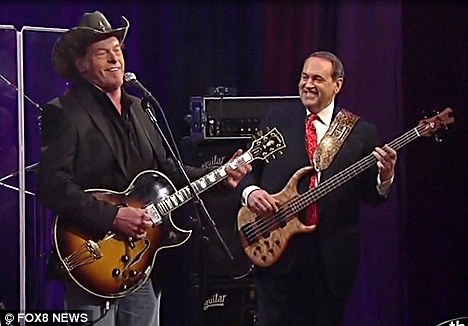
Huckabee with Ted Nugent on guitar, Huckabee Show, FOX News Channel, May 14, 2011. Source: http://dailymail.co.uk

Ever since Mike Huckabee announced that he wasn’t running for POTUS in the Election ’12 cycle (after playing chords with Ted Nugent), I’ve been thinking about an appropriately snarky and sarcastic way to understand the GOP/Tea Party candidacy process. It’s been a bit confusing. Between Trump and Huckabee, Newt Gingrich and Herman Cain, Pawlenty and Romney, Palin and Bachmann, I’d have a hard time finding a candidate I’d vote for even if I were a true American conservative.

But I do know what would help. Theme music to get our juices flowin’, to rile us up about how excited we should be that among these candidates is a challenger worthy of President Barack Obama. Heck, it’s worked before. Ed Meese and Don Regan used Bruce Springsteen’s “Born In The U.S.A.” and John Mellencamp’s “Pink Houses” as theme music in ’84. This despite the fact that these were protests songs of an America anti-common man and pro-war.

GOP/TPers can do the same in ’12. Here’s a list of songs to usurp — oops, I mean use — between now and November 6 of next year.

1. Genesis, “Illegal Alien” (1983), as in, “It’s no fun/being an illegal alien” — especially if the GOP/TPers take over in ’12.

2. James Blunt, “No Bravery” (2005), a truthful description of what it takes to run on the GOP/TP ticket, i.e., no independent thought.

3. ABC, “How To Be A Millionaire” (1985), which should be retitled, “How To Be A Billionaire,” since that’s the ultimate goal of the leaders of the GOP – “a million is not enough” could be the party’s new slogan.

4. U2, “Crumbs From Your Table,” (2004), which, if these folks are elected next year, will be all we’ll have to eat by the ’16 election cycle.

Crumbs on my table, courtesy of Noah's old elephant and a Lipton tea bag wrapped around trunk, May 30, 2011. Donald Earl Collins.

5. Chicago, “Hard Habit To Break,” (1984), especially in the refrain, “I’m addicted to you,” meaning easy money from top 1%, debt and low taxes, and oil, oh, sweet crude oil!

6. The Cranberries, “Zombie,” (1994), the sincerest hope of the GOP/TPers when it comes to what’s left of our voting populace.

Herman Cain, They Think You're Stupid Book Cover (more like We Think You're Stupid), 2009. Source: National Black Republican Association, http://nbra.info

7. Al Green, “One Of These Good Old Days,” (1972), a tribute to the way the Party of Corporations wants things to be for rich – it’s their climax song!

8. Prince, “1999,” (1983), except they would definitely change it to “1899,” the height of affluent largesse, corporate greed and monopoly-building (until the ’00s), and acceptable racism.

9. Creed, “My Own Prison,” (1997), one of the ultimate dreams of the GOP/TPers, that we’d build our own prisons and then put ourselves in them so they don’t have to worry about job creation.

10. Grover Washington, Jr., “Summer Chill,” (1992), what the party hopes their paid-off scientists can “prove” in a new study funded by the John M. Olin Foundation, the Heritage Foundation, and the Scaife Foundations, making “Drill, baby, drill” a reality in ANWR.

11. Public Enemy, “Welcome To The Terrordome,” (1989), most likely would be used by the GOP/TPers to promote gladiator-like games as a way to bring the unemployment rate down for those they can’t get to build their own prisons.

12. Sade, “The Sweetest Taboo,” (1985), a tribute to all of their in the closet and anti-gay party members willing to sacrifice the civil and human rights of LGBT Americans everywhere for a seat in Washington.

13. Maxwell, “…Til The Cops Come Knockin’,” (1996), the general plan for all elected GOP/TPers until they’re caught in illegal activities.

In addition, there’s Alexander O’Neal’s “When The Party’s Over” (1987), another example of what would happen to us, our country and our world if the GOP/TPers reclaimed and remained in charge. They’d suck the bottom ninety-nine percent of us dry until the good times are over, and then blame us for not letting them steal the plumbing, too. Please add to this list. I could’ve created an iPod list of a hundred appropriate songs, but fourteen’s just a start. Eat your heart out, Ted Nugent!

Black Male Id-entity & the F-Bomb

26 Thursday May 2011

Posted by decollins1969 in 1, Boy @ The Window, culture, Eclectic, Politics, Pop Culture, race, Youth

≈ Leave a comment

Tags

616, 616 East Lincoln Avenue, Anti-Gay Slur, Authenticity, Basketball, Basketball Courts, Bigotry, Black Males, Carnegie Mellon University, Context, Coolness, F-Bomb, F-word, Faggot, Heterosexism, Homophobia, Joakim Noah, Kobe Bryant, Michael Wilbon, Mount Vernon New York, Nathan Hale Elementary, NBA, Nigga, Pitt, Pittsburgh, Playgrounds, Sean Miller, Toure X, Twitter, University of Pittsburgh, Washington DC, Words


Joakim Noah Apparently Says ‘F–k You Faggot’ To Fan (VIDEO)

Joakim Noah Apparently Says ‘F–k You Faggot’ To Fan (VIDEO)

Gay Rights Month isn’t for another six days, as it’s still May. But in light of Joakim Noah’s unfortunate anti-gay slur outburst, “Fuck you, faggot!,” it makes sense to start this year’s conversation a week early.

This is more than about the NBA, gay athletes in the closet or what professional athletes should and shouldn’t say to fans and to each other. The behind-the-curtain issue here could just as well be about Black male identity (whether heterosexual or gay) and how Black males express themselves to each other and to the rest of the world.

My first memories playing with a group of Black males in Mount Vernon, New York are all negative. When I was six in ’76, a group of preteens on the neighborhood playground near Nathan Hale Elementary on South 6th Avenue tried to force me into sucking one of their dicks, practically sticking it in my face to do so. I got away before being truly scarred for life. After we moved to 616 East Lincoln Avenue in April ’77, our first time playing outside was spent running away from the other kids, who greeted us by throwing rocks at us and calling me and my brother Darren “faggots.” (see my June 1, 2009 post, “In the Closet, On the Down Low” for more).

When I was nine, I played basketball on a court near 616 for the first time with a group of kids from my building. After throwing up an awkward brick and an air ball, I got five minutes of “You terrible!,” “You need to sit down!,” “You’re never gonna be an athlete!,” “You need to get back to reading them books of yours!,” and “You shoot like a faggot!”

Even though I eventually learned how to dribble with both hands, shoot a j, make layups, block shots, and on rare occasions, dunk a basketball, I’ve been leery being around other Black males on the basketball court. One would think after playing pickup with former Pitt basketball players while in grad school that I’d completely forgotten what happened to me back in the spring of ’79. But I hadn’t, at least on an unconscious level. I often watched what I said, I mean, down to every single word. Not to mention how I walked, where my arms were, and how I held my head. Still, I sometimes felt inadequate on the court, whether I went 8-for-9 or 2-for-7, blocked a shot, stole a ball, or got knocked down guarding someone six-foot-six and 260 pounds.

But I figured out something in those years of playing pickup at Pitt and Carnegie Mellon and other places in Pittsburgh and DC over the years. That blending in doesn’t matter. Fools — even ones with momentary lapses in judgment like Joakim Noah — will be fools because on the playground or court, it makes them cool in the minds of their peers.

Yes, this isn’t just a Black male issue. Sean Miller, currently coach of the University of Arizona men’s basketball team — not to mention an all-time Pitt basketball great — once played a prank on me our freshmen year. He called me up in my Lothrop Hall dorm room late one night, offered me a blow job, and called me a “faggot” in the process.  So being called a “faggot” or saying that something or someone is “gay” is part of our culture on and off the basketball court, for Black and White males to be sure.

But unlike Michael Wilbon, I can’t excuse it because it’s commonplace and therefore it may be difficult for some young men to immediately stop themselves from saying “faggot.” Nor can I rationalize this like Touré (a.k.a. TouréX on Twitter) attempted to do in a Twitter exchange with me a couple of days ago. He compared the use of “faggot” to “nigga,” with the idea that both words have more than one meaning and that the meaning can sometimes be positive, depending on context.

I can see the argument for “nigga,” even though I don’t like it when younger men use it to affirm each other and especially me. But “faggot” meaning “less than a man?” Or “stupid” or “dumb?” So is Noah or Kobe more of a man for telling someone else they’re not a man? Even in context, this isn’t positive — it’s potentially soul-destroying, and not just for someone being called a faggot.

Of the preteens and young boys who called me “faggot” growing up, at least three have served hard time. Is there a direct connection? Of course not. Still, it seems that a culture steeped in the requirement of being cool, finding quick and easy success and putting down others while doing so lends itself well to a crash-and-burn mentality that so many of us have about our lives.

Hail To Pitt

27 Wednesday Apr 2011

Posted by decollins1969 in 1, Academia, Boy @ The Window, culture, Eclectic, eclectic music, Mount Vernon High School, music, New York City, Pop Culture, race, Sports, Work, Youth

≈ Leave a comment

Tags

'91, 1991, Adulthood, Civic Arena, Class of 1991, Diversity, Fellowships, Financial Aid, Graduate School, Graduation, Job, Mount Vernon High School, Mount Vernon New York, NYU, Pitt, Student Loans, Uncertainty, Ungraduate Education, University of Maryland, University of Pittsburgh, Wesley Posvar, Western Psychiatric Institute & Clinic, Work


University of Pittsburgh Logo, April 27, 2011. http://www.pitt.edu

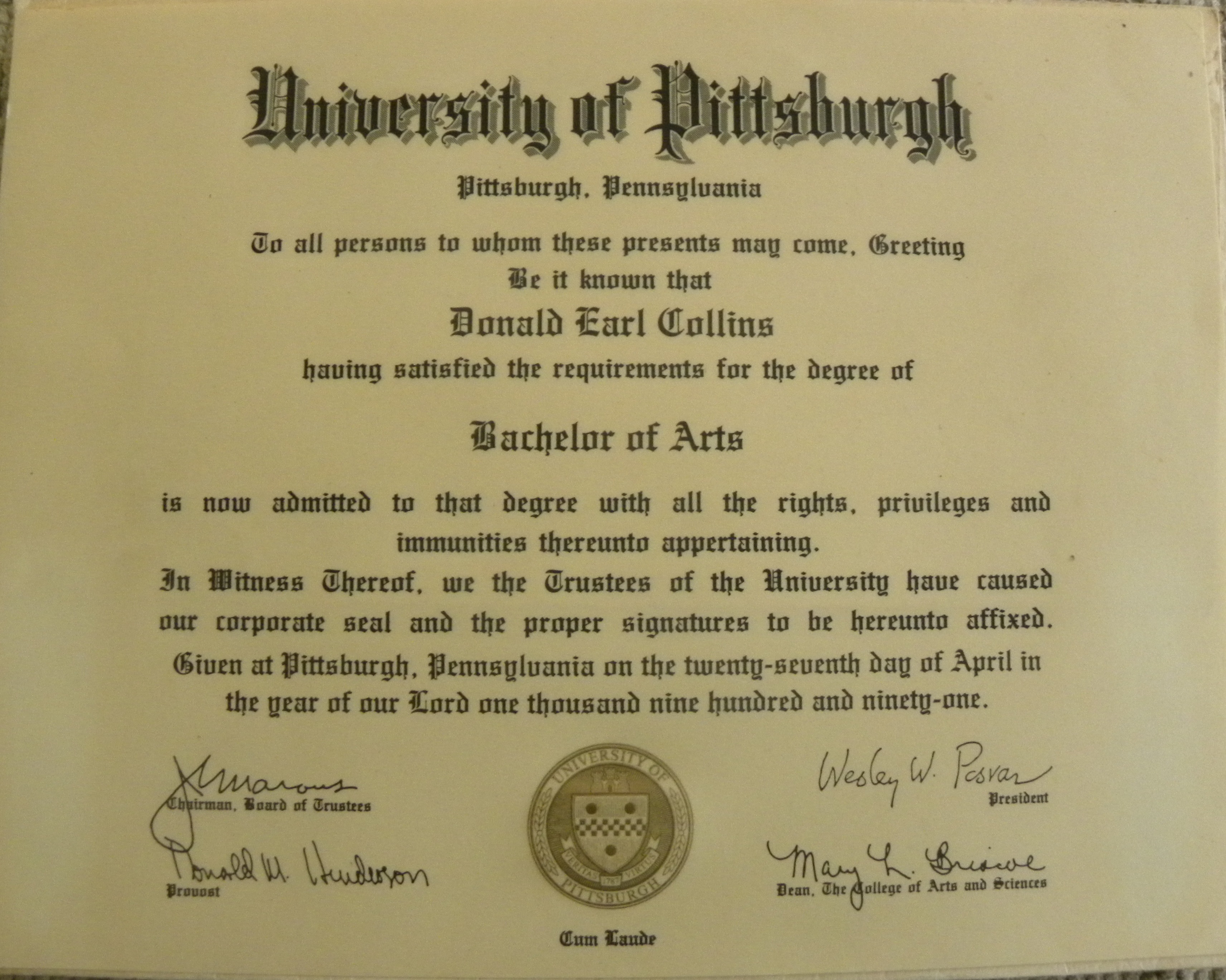
I can be hard on people, places and things, especially the ones I like and love. That’s as true of my undergraduate alma mater as anything else. Twenty years ago this date, I graduated from the University of Pittsburgh. I didn’t attend the cattle-call ceremony at the Civic Arena that Sunday in ’91. Almost none of my immediate circle of friends attended, either. My mother and my younger siblings, still in the midst of welfare, weren’t going to be there to see me anyway. The Penguins were on that day, in the middle of a dominant playoff run, with Lemieux scoring at will. And I had other things on my mind that day and weekend. Like, will I be able to go to grad school without taking out tens of thousands of dollars in student loans?

This was a time of major transition for me. Two years removed from the end of the reign of my ex-stepfather at 616, and four years after I graduated from Mount Vernon High School and my obsession

My B.A. degree, University of Pittsburgh, April 27, 2011. Note that this was Wesley Posvar's last graduation signature. The university president would retire the following month amid a $3 million golden parachute scandal.

with Crush #2. I was essentially the same person, and yet there was something inside me that had started clawing its way out over the previous year. It was a drive, a determination, a rage that I’d buried since my first year in Humanities and the summer of abuse that followed in ’82. I was going to graduate school, at least I hoped that I was. Or I was going to have to find a real job, something that made me feel like I had diarrhea.

I knew on my Pitt graduation date that the departments of history at NYU, University of Maryland and Pitt had accepted me into their masters programs. But NYU wanted me to make a signed commitment before they awarded me any financial aid. The University of Maryland conveniently lost my application packet during their graduate fellowship decision process. By the time my packet resurfaced, the department had awarded all of their fellowships, and decided to put me on provisional status. Not based on my grades, mind you, but based on how late they were in going through my application. Pitt had accepted me a couple of weeks before my graduation, but I was sixth on the alternate list for teaching fellowships that would cover my tuition and provide a stipend.

I felt a lot of anxiety about all of this uncertainty regarding my immediate future. It helped to have friends, even with my friends in the middle of their own uncertainty. My friend Marc was working at a Black newspaper, dreaming of law school but uncertain about his prospects. Three other friends, including someone I was sort of dating, were taking their last classes or unsure about grad school or law school. Even my summer job working for a project at the Western Psychiatric Institute and Clinic was shaky. It only paid $5.20 an hour, and I could’ve easily gone back to Mount Vernon and New York making $8 an hour or more doing the same work.

But as uncertain as I felt about things, this much I was certain about. The four years I spent at Pitt were ones that cocooned me in a way that none of my time growing up in Mount Vernon, New York did. I began to heal while I was there, academically, socially, emotionally. I was far from done learning how to connect to people, but I wasn’t the twelve-year-old neophyte keeping only the most rudimentary connections to humans either. My education was a valuable part of that experience. The friendships and other bonds I forms, the lessons I learned about trust, the efforts — however limited — the university made toward creating a campus climate that embraced diversity were all appreciated.

Even at the time, I felt comfortable at Pitt because it was the first place I learned to be comfortable in my own skin. It was a place where my friends, my acquaintances and others around me didn’t look at me like I was a freak because I listened to U2, sang in high-falsetto or walked at Warp Factor 3 to get across campus.

Those are the feelings, those good feelings, that I have about my four years of undergrad and two years of grad school (more on that in May) at the University of Pittsburgh. So, “Hail to Pitt,” and to my Pitt friends and folks from the classes of ’90-’94, Happy Graduation Anniversary Day.

High Falsetto Highs and Lows

25 Monday Apr 2011

Posted by decollins1969 in 1, Boy @ The Window, culture, Eclectic, eclectic music, music, Pop Culture, race, Youth

≈ Leave a comment

Tags

Belonging, Billboard Pop Chart, Black Males, Chorus, Code Switching, Context, High Falsetto, Identity, Masculinity, Mount Vernon High School, Mount Vernon New York, Music, Ostracism, Pop Culture, Pop Music, Race, Singing, Voice


High Falsetto Test

High Falsetto Test

I know that I’m weird, a freak, and if I were a quarter-century younger, a bit geekish. Well, maybe a geek in a tall man’s body with fourteen percent body fat. Music is one of those things that separates me as weird. Not just because of what I listen to from moment to moment. Smooth jazz to R&B to hip-hop soul to ’80s pop to ’90 White male angst grunge to rap to divas like Mariah Carey and Celine Dion. Few people I know — much less males, much, much less Black males — have any appreciation for eclectic musical tastes. But they’ve had almost no tolerance for my high-falsetto singing voice over the years.

Puberty was the reason I discovered it all. My closest friends and wife don’t believe me when I tell them that I used to be able to hold a tune. That in sixth, seventh and eight grade, I sang with my elementary school and middle school chorus. I was a baritone, and a decent one at that. But the voice changes of puberty cracked my voice and sent it into high falsetto in ’83, ’84 and into ’85, whenever I did try to sing.

So I went with it. Once I reconnected with music outside of school in the ’80s, I sang mostly in that ear-splitting, shaky and unevenly high tone and pitch to everything I liked. And that made me stand out, mostly as the weird guy with the Walkman that my fellow Black males made fun of for not being cool. Did I care? Sure, in an obvious, I-know-I-don’t-fit-in kind of way. But, did I care? For the most part, no. I knew enough to not walk down certain streets in Mount Vernon and certain part of the high school singing in that voice, walking to the beat of my own internal music box.

The Fool’s Speech Part II

The Fool’s Speech Part II

That voice was my release. As awful as I sounded in it, as imperfect and grating my tone, as much of a strain as I put on my cords, it was one of a handful of ways for me to experience happiness, joy, laughter. Other emotions besides rage, fear and anger. That’s what singing Cyndi Lauper’s “Time After Time,” Michael Jackson’s “Human Nature,” and a-ha’s “Take On Me” well outside my normal vocal range did for me. It gave me a high without the benefit of pot, and a low without the benefit of friends.

Singing in high falsetto still brings a natural high. Except now, I laugh at myself while doing it, and I don’t care about the people who think I’m a freak because I sound like a buffoon. Damn right.

Milky White Skin

21 Thursday Apr 2011

Posted by decollins1969 in 1, Boy @ The Window, culture, eclectic music, Pop Culture, race, Youth

≈ Leave a comment

Tags

616, 616 East Lincoln Avenue, Adjectives, Adverbs, Bethedsa Maryland, Bethesda Literary Festival 2011, Boy @ The Window, Essay and Short Story Contest, Finding Forrester, Georgetown Cupcakes, Literary Devices, Literary Nonfiction, Literature, Milky Skin, Milky White Skin, Sean Connery, Whiteness, Winners, Writing


Bethesda Literary Festival logo, April 21, 2011. http://www.bethesda.org

I attended the Bethesda Literary Festival last weekend. It’s been a while since I’ve gone to any conference involving writers, wannabe writers, published authors and other curiously weird types. I usually find these events somewhere between dreadfully boring and undeniably soul-sucking. I wish that I could say that the festival held at various parts of downtown Bethesda were an exception. But what I can say is that the Bethesda Literary Festival provided the best desserts — especially the cupcakes (my guess, from Georgetown Cupcakes) — I’ve had at any literary event.

Bethesda Literary Festival 2011 Logo, April 21, 2011. http://www.bethesda.org

The most poignant event at the festival for me was the Essay and Short Story Contest winners for ’11. Grouped into two categories — over 18 and young adults — the winners were announced and had the opportunity to read from their stories and essays. I must admit, some of the stories were compelling. (That word, compelling, a common word lit agents have used as a reason for rejection of Boy @ The Window. I often think that they’re working from an unspoken definition of what compelling really is.) But I also found most of the stories cliché, typical, White both in terms of the actual color as well in racial and cultural terms.

Listening to these aspiring authors, young and talented writers read their work reminded me so much of a line from Finding Forrester, where the character played by Sean Connery says, “Writers write so that readers can read. Let someone else read it.” It’s difficult for any writer to read something they’ve written with the passion and emotion contained within their own words. And with two exceptions — a mother reading for her daughter about a dying aunt, and a seventeen-year-old reading his essay in poetry slam fashion — the Forrester axiom was in full effect.

I kept checking my watch, hoping that I’d hear something that would inspire me or at least pique my interest. The latter did occur, but not in the way in which I would’ve expected. I listened to one forty-

Ridiculousness of Milky Skin, April 21, 2011. Donald Earl Collins

something short-story honorable mention read about a “tongue licking ice cream.” Earlier, there had been a young adult winner, reading phrases like “Same cloudless indigo eyes. Same auburn, frizzy locks. Same childish, pearly pudge of skin…”

It all took me back to novels and other pieces of literature from my high school days. Like Shakespearean plays in which actors described some young English woman as having “milky skin,” as a point of attraction and lust. That kind of writing, the constant shifting and sliding of adjectives and adverbs. It drove me crazy in ’85. Last weekend, it made my eyes glaze over, with both looking like the clear frosting on a glazed donut.

I yawned with the anticipation of more of the same stories that writers and publishers have been selling for as long as I’ve been alive. I knew what was coming. Stories of epiphanies and social consciousness, upper-middle-class-White-Bethesda-and-Potomac-style. Stories of parallel and pain, from climbing Mt. Kilimanjaro and grave illness to autism to death and dying. Universal stories that somehow were milky White, told in a style that made the messy truth of it as palatable as a slice of key lime pie.

I don’t write that way. But not because I can’t. I could write page after page in vivid description of Crush #1. I could count each hair on her well-muscled forearms on the way to measuring every mole on her shoulders, every tooth in magnitude of whiteness, every capillary in her eyeballs. I could spend a few pages describing the different smells of flatulence and excrement I grew up with at 616. From the sweetness of a spaghetti and meat sauce fart to the lingering death-knell scent of a bathroom after the flushing of what once was a combination of coffee, beer and fried chicken.

Literary nonfiction, memoir, or other serious writing endeavors, though, are about the balance between the sweet milky whiteness of the literary and the messy realness of me as the writer. In the case of Boy @ The Window, of me as the main character as well. Descriptions of milky or caramel colored skin do reside among its pages. But so do descriptions of conversations, characters, actions and emotions. All as part of telling a story, sharing some truth, beyond the romance of the purely literary.

← Older posts
Newer posts →

Boy @ The Window: A Memoir

Boy @ The Window: A Memoir

Places to Buy/Download Boy @ The Window

There's a few ways in which you can read excerpts of, borrow and/or purchase and download Boy @ The Window. There's the trade paperback edition of Boy @ The Window, available for purchase via Amazon.com at http://www.amazon.com/Boy-Window-Donald-Earl-Collins/dp/0989256138/

There's also a Kindle edition on Amazon.com. The enhanced edition can be read only with Kindle Fire, an iPad or a full-color tablet. The links to the enhanced edition through Apple's iBookstore and the Barnes & Noble NOOK edition are below. The link to the Amazon Kindle version is also immediately below:

scr2555-proj697-a-kindle-logo-rgb-lg

Boy @ The Window on Amazon.com: http://www.amazon.com/Boy-The-Window-Memoir-ebook/dp/B00CD95FBU/

iBookstore-logo-300x100

Boy @ The Window on Apple's iBookstore: https://itunes.apple.com/us/book/boy-the-window/id643768275?ls=1

Barnes & Noble (bn.com) logo, June 26, 2013. (http://www.logotypes101.com).

Boy @ The Window on Barnes & Noble: http://www.barnesandnoble.com/w/boy-the-window-donald-earl-collins/1115182183?ean=2940016741567

You can also add, read and review Boy @ The Window on Goodreads.com. Just click on the button below:

Boy @ The Window

Twitter Updates

Tweets by decollins1969
  • RSS - Posts
  • RSS - Comments

Archives

  • June 2025
  • April 2023
  • September 2022
  • August 2022
  • July 2022
  • June 2022
  • May 2022
  • April 2022
  • March 2022
  • January 2022
  • December 2021
  • November 2021
  • October 2021
  • September 2021
  • August 2021
  • July 2021
  • June 2021
  • April 2021
  • March 2021
  • February 2021
  • January 2021
  • December 2020
  • November 2020
  • October 2020
  • September 2020
  • August 2020
  • July 2020
  • May 2020
  • April 2020
  • March 2020
  • January 2020
  • December 2019
  • November 2019
  • August 2019
  • July 2019
  • June 2019
  • May 2019
  • April 2019
  • March 2019
  • February 2019
  • January 2019
  • December 2018
  • November 2018
  • October 2018
  • September 2018
  • August 2018
  • July 2018
  • June 2018
  • May 2018
  • March 2018
  • February 2018
  • January 2018
  • December 2017
  • November 2017
  • October 2017
  • September 2017
  • August 2017
  • July 2017
  • June 2017
  • May 2017
  • April 2017
  • March 2017
  • February 2017
  • January 2017
  • December 2016
  • November 2016
  • October 2016
  • September 2016
  • August 2016
  • July 2016
  • June 2016
  • May 2016
  • April 2016
  • March 2016
  • February 2016
  • January 2016
  • December 2015
  • November 2015
  • October 2015
  • September 2015
  • August 2015
  • July 2015
  • June 2015
  • May 2015
  • April 2015
  • March 2015
  • February 2015
  • January 2015
  • December 2014
  • November 2014
  • October 2014
  • September 2014
  • August 2014
  • July 2014
  • June 2014
  • May 2014
  • April 2014
  • March 2014
  • February 2014
  • January 2014
  • December 2013
  • November 2013
  • October 2013
  • September 2013
  • August 2013
  • July 2013
  • June 2013
  • May 2013
  • April 2013
  • March 2013
  • February 2013
  • January 2013
  • December 2012
  • November 2012
  • October 2012
  • September 2012
  • August 2012
  • July 2012
  • June 2012
  • May 2012
  • April 2012
  • March 2012
  • February 2012
  • January 2012
  • December 2011
  • November 2011
  • October 2011
  • September 2011
  • August 2011
  • July 2011
  • June 2011
  • May 2011
  • April 2011
  • March 2011
  • February 2011
  • January 2011
  • December 2010
  • November 2010
  • October 2010
  • September 2010
  • August 2010
  • July 2010
  • June 2010
  • May 2010
  • April 2010
  • March 2010
  • February 2010
  • January 2010
  • December 2009
  • November 2009
  • October 2009
  • September 2009
  • August 2009
  • July 2009
  • June 2009
  • May 2009
  • April 2009
  • March 2009
  • February 2009
  • January 2009
  • December 2008
  • November 2008
  • October 2008
  • September 2008
  • August 2008
  • July 2008
  • June 2008
  • May 2008
  • April 2008
  • March 2008
  • February 2008
  • January 2008
  • December 2007
  • November 2007
  • October 2007
  • September 2007
  • August 2007
  • July 2007
  • June 2007

Recent Comments

MaryPena's avatarMaryPena on My Day of Atonement/Bitter Hat…
decollins1969's avatardecollins1969 on No Good Teaching Deed Goes…
Mary Rose O’Connell's avatarMary Rose O’Connell on No Good Teaching Deed Goes…

NetworkedBlogs on Facebook

NetworkedBlogs
Blog:
Notes From a Boy @ The Window
Topics:
My Life, Culture & Education, Politics & Goofyness
 
Follow my blog

616 616 East Lincoln Avenue A.B. Davis Middle School Abuse Academia Academy for Educational Development AED Afrocentricity American Narcissism Authenticity Bigotry Blackness Boy @ The Window Carnegie Mellon University Child Abuse Class of 1987 CMU Coping Strategies Crush #1 Crush #2 Death Disillusionment Diversity Domestic Violence Economic Inequality Education Family Friendship Friendships Graduate School Hebrew-Israelites High-Stakes Testing Higher Education History Homelessness Humanities Humanities Program Hypocrisy Internalized Racism Jealousy Joe Trotter Joe William Trotter Jr. K-12 Education Love Manhood Maurice Eugene Washington Maurice Washington Misogyny Mother-Son Relationship Mount Vernon High School Mount Vernon New York Mount Vernon public schools Multiculturalism MVHS Narcissism NFL Pitt Pittsburgh Politics of Education Poverty President Barack Obama Race Racial Stereotypes Racism Relationships Self-Awareness Self-Discovery Self-Reflection Sexism Social Justice Teaching and Learning University of Pittsburgh Violence Whiteness Writing

Top Rated

Blog at WordPress.com.

  • Subscribe Subscribed
    • Notes from a Boy @ The Window
    • Join 103 other subscribers
    • Already have a WordPress.com account? Log in now.
    • Notes from a Boy @ The Window
    • Subscribe Subscribed
    • Sign up
    • Log in
    • Report this content
    • View site in Reader
    • Manage subscriptions
    • Collapse this bar
 

Loading Comments...