• About Me
  • Other Writings
  • Interview Clips
  • All About Me: American Racism, American Narcissism, and the Conversation America Can’t Have
  • Video Clips
  • Boy @ The Window Pictures
  • Boy @ The Window Theme Music

Notes from a Boy @ The Window

~

Notes from a Boy @ The Window

Category Archives: Politics

How Nixon’s Resignation Made Me A Self-Aware 4-Year-Old

06 Wednesday Aug 2014

Posted by decollins1969 in 1, Boy @ The Window, culture, Eclectic, eclectic music, Jimme, Marriage, Mount Vernon New York, Movies, My Father, Politics, Pop Culture, race, Youth

≈ Leave a comment

Tags

48 Adams Street, Another World, Continual Memories, Days of Our Lives, Headstart, Home Accident, Hot Oven, Hot Stove, Impeachment, Memories, Memory Cap, Mom, Mother-Son Relationship, My Mom, Nixon, President Nixon, President Richard M. Nixon, Resignation, Richard Nixon, Seared Skin, Self-Awareness, Self-Discovery, Total Recall (1990), Watergate


President Richard Nixon delivering his resignation speech (cropped screen shot) ahead of impeachment over Watergate, abuse of power, August 8, 1974. (http://washingtonpost.com). In public domain.

President Richard Nixon delivering his resignation speech (cropped screen shot) ahead of impeachment over Watergate, abuse of power, August 8, 1974. (http://washingtonpost.com). In public domain.

I have a deeply personal perspective from which I saw President Richard Nixon’s resignation forty years ago. It’s a perspective that has ordered my steps nearly every day for the past four decades. If it weren’t for a kitchen accident and his televised resignation speech, I probably wouldn’t be the person I am today, or the person I’ve been over the past 14,610 days. Nixon and my kitchen accident combined to “pop my memory cap,” to quote a line from the original Total Recall (1990) starring Arnold Schwarzenegger.

Total Recall (1990) scene where fake memories meet real ones (a.k.a., "memory cap scene"), August 5, 2014. (http://www.rellimzone.com/).

Total Recall (1990) scene where fake memories meet real ones (a.k.a., “memory cap scene”), August 5, 2014. (http://www.rellimzone.com/).

That Thursday evening, August 8, ’74, was the very first time I became continually self-aware, forming memories like a video camera records scenes, with thoughts of myself and the world around me. I didn’t understand everything I saw, of course. But I did know that I saw what I saw, and for more than just a few moments.

Seeing Nixon’s big head on my Mom’s 19-inch color Zenith wasn’t my first memory, though. I remember crawling by my Mom’s TV set in ’72 at our second-floor flat in which we shared a kitchen with another family in Mount Vernon, NY. I remember because it was the first time I’d seen numbers, the numbers being 1972 with a copyright symbol in front of it. (I told a graduate student friend of mine about this first memory once – she told me it would be impossible for me as a two-year-old to remember specific numbers. What did she know?) I also remember the closing theme song from the show that was on immediately before Another World, which I figured out in later years was NBC’s other soap opera Days of Our Lives.
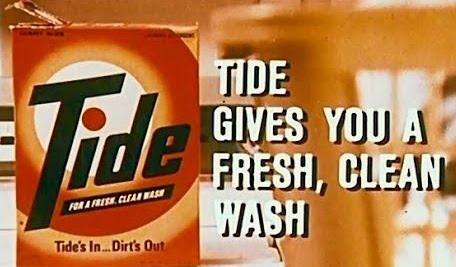
"Tide Gives You A Fresh, Clean Wash" commercial (cropped screen shot), circa 1970 (guess our babysitter took this literally), October 14, 2013. (http://article.wn.com).

“Tide Gives You A Fresh, Clean Wash” commercial (cropped screen shot), circa 1970 (guess our babysitter took this literally), October 14, 2013. (http://article.wn.com).

Two other memories prior to August 8, ’74 stand out. One was me escaping from the front yard at 48 Adams Street and walking down the block to the local asphalt playground, with basketball hoops and jungle gym included. I remember playing with much older boys, having fun, and my Mom whupping me from the playground all the way down the block back to the house. The other was when our babysitter Ida bathed me and my older brother Darren in a tub full of scolding hot water with Tide Detergent. I was so angry, I called her a “Bitch!” Angry likely because I was itching all over, the b-word likely because my Mom and my father Jimme used the word like it was a period to end a sentence. Miss Ida backhanded me like I was going cross-court as a tennis ball at the US Open. All of this happened when I was three.

The flood gates opened the following summer of ’74, though. It started because of a traumatic injury. My Mom was cooking in the shared kitchen at 48 Adams, making some kind of chicken dish. She had the oven door open, having just taken the chicken out of it and having placed it on the stove. I asked her if I could have a bite. Of course my Mom said, “No, Donald, it’s too hot!” I didn’t listen. I tried to climb up to the top of the stove by using the open oven door as a step stool, and lo and behold, I scorched my right leg when I put it on the inside of the door. I remember my Mom screaming, “Oh my God!” as I fell to the floor, screaming along with her.
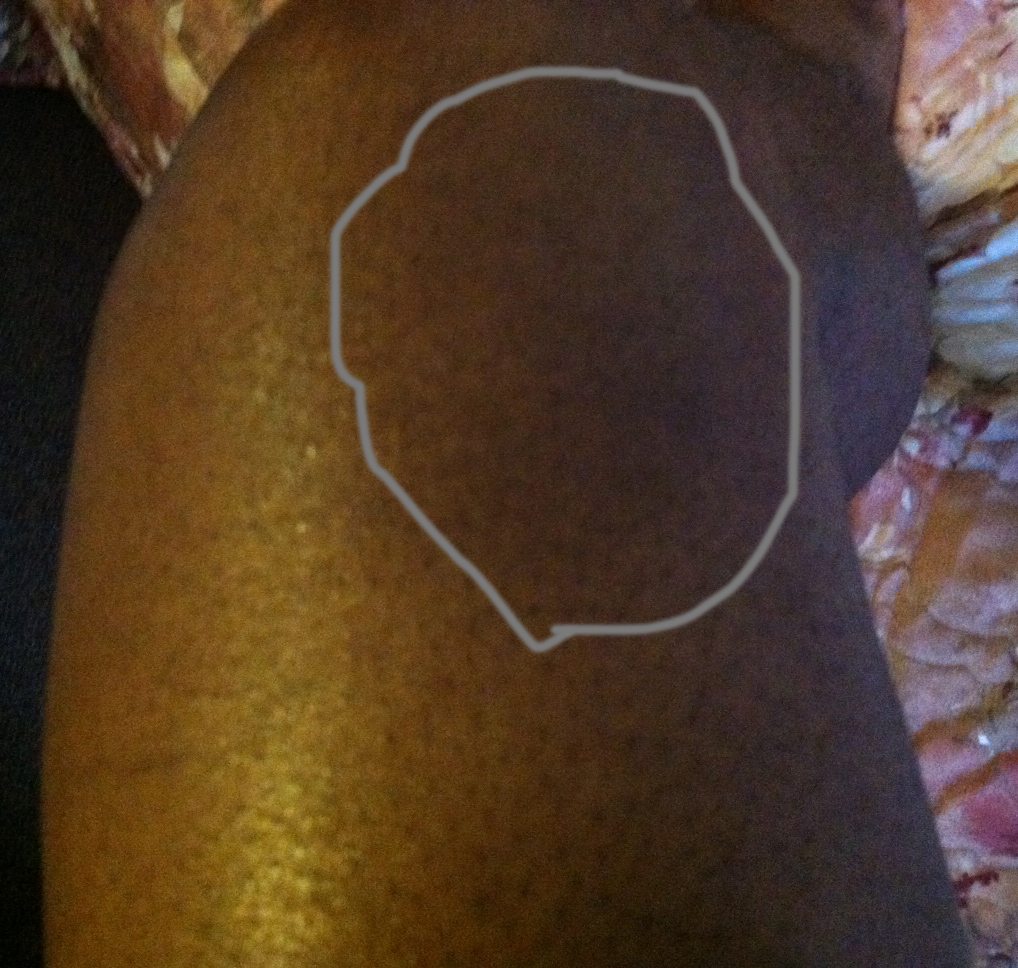
My second-degree leg burn, 40 years later - darker area circled is faded mark that was once on the right side of my right calf, August 5, 2014. (Donald Earl Collins).

My second-degree leg burn, 40 years later – darker area circled is faded mark that was once on the right side of my right calf, August 5, 2014. (Donald Earl Collins).

The skin around the burn area was gone (if it had happened today, it would’ve been a pretty good second-degree burn, and I probably would’ve ended up at the hospital), leaving a white — not pink, white — circular burn mark. My Mom applied ointment and a bandage, made me take two Bayer aspirin for the pain, and told me to calm down and be quiet. She plopped me down on the couch in the living room, which was slightly to the right of the TV.

I was still crying in pain from the shock of seeing, smelling and feeling my skin being seared in the kitchen. As my Mom sat me down, a man with a gigantic head appeared on the television screen, a man I vaguely knew as the President of the United States. I really didn’t understand much of what President Nixon said, but I do recall my Mom shaking her head, and Cronkite calling it a “sad time” for the country. Given how sad I already felt, I think I might have felt sorry for the man with the big head on the TV set.

From that moment on, I’ve had continual memories. I remember my Mom taking me to Darren’s Headstart program somewhere around South 2nd or South 3rd Avenue in Mount Vernon the next day to pick him up, seeing the man with the big head wave with his fingers sticking in the air before going on a helicopter ride, and then being dragged to Met Grocery Store on South Fulton Avenue for groceries, all with a painfully sore leg. Luckily, my Mom caught us a cab home.

And the week after that, we moved to 425 South Sixth, next to Nathan Hale Elementary, where I would go to kindergarten the following month. And the week after that, my father Jimme introduced Darren to The Clear View School, after an argument with my Mom about him “drinkin’ up all his money again.” Ah, the parallels between big historical events and key moments in my life haven’t stopped since!

A Children’s Crusade

02 Saturday Aug 2014

Posted by decollins1969 in 1, Academia, Boy @ The Window, Christianity, culture, Eclectic, eclectic music, music, Patriotism, Politics, Pop Culture, race, Religion, Youth

≈ 1 Comment

Tags

"Children's Crusade" (1984), 100th Anniversary, Aggression, Colonialism, Culture of Imperialism, Dehumanization, Ethnic Cleansing, Ethnocentrism, First World War, Genocide, Imperialism, Nationalism, Parallels, Religious Nationalism, Settler Colonialism, Sting, The Dream of the Blue Turtles, War, Western Culture, World History, World Powers, World War I


Living among the dead, Flanders, Belgium, most likely during Second Battle of Ypres, April 21-May 25, 1915. (http://www.flandersfieldsmusic.com/).

Living among the dead, Flanders, Belgium, most likely during Second Battle of Ypres, April 21-May 25, 1915. (http://www.flandersfieldsmusic.com/).

World War I reached its 100th anniversary on Monday. One hundred years ago this week, European imperialism, nationalism, and Social Darwinism/scientific racism all led to what was once known as the Great War. It was a war that would leave ten million soldiers, sailors and airmen dead, another seven million civilians dead from military action, malnutrition and disease, and another 23 million wounded in action on both sides.

A British Mark V tank coming out of a trench, France, circa 1917. (Imperial War Museum via http://i.dailymail.co.uk/i/pix/2013/10/05/).

A British Mark V tank coming out of a trench, France, circa 1917. (Imperial War Museum via http://i.dailymail.co.uk/i/pix/2013/10/05/).

That war, a mostly European war of the great world powers, was itself based in the idea that Western culture and technologies would make this a quick and winnable war of dominance, for Germany, Britain, France and possibly Russia. The first war planes, the first tanks, the first submersibles, along with mustard and chlorine gas, nests of machine guns and trench warfare. It’s amazing how small-minded these so-called great powers were a full century ago, and so remarkable that we’ve grown beyond this thinking today!

Actually, not so fast! Our world seems to have learned little from the lessons of the First World War, repeating practices that leave the globe perpetually on the brink of chaos and potentially in peril of annihilation. We’ve seen this with the Second World War, with the Cold War and its myriad proxy wars in the Global South, with post-Cold War aggression in the Balkans, the Middle East, Sub-Saharan Africa, and with US preemptive aggressions in the Muslim world. Ethnocentrism and ethnic cleansing in the name of a religion (or a lack thereof, in a couple of cases) or nationalism has been a part of modern war since World War I.

Poppies in field between Kelling and Weybourne, North Norfolk, England, UK,  June 2002. (John Beniston via Wikipedia). Released to public domain via CC-SA-3.0.

Poppies in field between Kelling and Weybourne, North Norfolk, England, UK, June 2002. (John Beniston via Wikipedia). Released to public domain via CC-SA-3.0.

Imperialism and colonialism and resistance to both in the name of freedom, or too frequently, another form of ethnocentrism and religious nationalism. Name a given nation, and you have some strain of Western imperialism and colonization, resistance and ethnocentrism and nationalism (religious, anti-religious or otherwise) running through their recent history. India, Pakistan, the former Soviet Union, Nazi Germany, the former Yugoslavia, Perón’s Argentina, Pinochet’s Chile, the Khmer Rouge and Cambodia, South Africa and apartheid, Israel and Zionism and settler colonialism, Japan and its military occupation of China, just to name a few. The First World War unleashed these forces this week one hundred years ago, a Pandora’s box that we will need to destroy, for it’s obviously too late to close it.

One of Sting’s songs from his first solo album, The Dream of the Blue Turtles, is titled “Children’s Crusade” (1984). It’s the story of Britain’s blind march into the First World War, the wasting of a generation of youth in the name of the empire, juxtaposed with the UK’s heroin and drug epidemic of the early 1980s.

Young men and soldiers, Nineteen Fourteen
Marching through countries they’d never seen
Virgins with rifles, a game of charades
All for a Children’s Crusade

Pawns in the game are not victims of chance
Strewn on the fields of Belgium and France
Poppies for young men, death’s bitter trade
All of those young lives betrayed

Though not his best work, Sting’s “Children’s Crusade” has made me think more than once about the brutality of humanity and this inherent need to dominate other human beings, as well as the lands and resources for which vulnerable people have been cleansed and displaced. He should update it for 2014 this way:

Midnight in Gaza, Twenty Fourteen
Bombed and shelled hospitals, pawns in the game
Ashes and sackcloth, death’s bitter trade
All of those young lives betrayed

And all for a century-old crusade of nationalistic paranoia, imperialistic abuse, and dehumanizing ethnocentric warfare.

An “Acting White” Conversation

28 Monday Jul 2014

Posted by decollins1969 in 1, Academia, Boy @ The Window, culture, Eclectic, eclectic music, Mount Vernon High School, Mount Vernon New York, New York City, Pittsburgh, Politics, Pop Culture, race, University of Pittsburgh, Youth

≈ 1 Comment

Tags

"Not Black Enough", 616, 616 East Lincoln Avenue, Acting White, Authentic Blackness, Authenticity, Denial, Internalized Racism, Mother-Son Relationship, My Brother's Keeper Initiative, Nia-Malika Henderson, President Barack Obama, Racial Denial, Racial Stereotypes, Racism, Structural Racism, Whiteness


Two Oreo Cookies, February 6, 2011. (Evan-Amos via Wikipedia).

Two Oreo Cookies, February 6, 2011. (Evan-Amos via Wikipedia).

Two years ago, a conservative woman engaged me in what became an increasingly vitriolic conversation on “acting White,” blind loyalty and political ideology. The below only covers (for the most part) the “acting White” part of the conversation.

 Apologies for commenting here but the Star Trek one [my blog post Why Ferengi Are Jewish & The Maquis Are Latino from 2011] had comments closed. In light of your thoughts on positive or negative stereotypes, how do you feel about the cultural phenomena of “acting white” term in Black community? (in case it needs explaining, that’s a derogatory term – by Black community – for a minority child who studies hard. See http://en.wikipedia.org/wiki/Acting_white)

To which I responded:

Given how my life has evolved over the past four decades, I think I understand what “acting White” means. But the fact is, African Americans have a diversity of opinions on this issue. There are some Blacks, though, who believe in the idea of an authentic Blackness, which I’ve written about as an educator, historian and from a personal perspective over the years. Part of this is generational, and part of this is socioeconomic in nature. And this issue of authenticity has been around since the days of slavery, so it’s not new. What’s new is the increasing push-back from Blacks of various backgrounds about this issue of “acting White.” Bottom line: those who use this phrase tend to be anti-intellectual, distrustful of higher education and as bigoted as any other group in American society toward “others.”

But my visitor to my blog wasn’t done, not by a long shot:

Sorry, Wasn’t too clear in my question. Do you feel that the fact of how widespread it is in the culture (both the use and the lack of disapproval) has any *material* consequences to the socioeconomic outcomes for Blacks as a group in the 1990-2020 period? It’s clear that you disapprove of it, but do you feel it is a problem that **must** be fixed for Blacks to succeed (beyond mere “bigotry is bad” angle)?

In response, I broke down the assumptions embedded in the previous comment:

Is your head in the sand?, July 28, 2014. (http://www.thelifecoach.co.nz/).

Is your head in the sand?, July 28, 2014. (http://www.thelifecoach.co.nz/).

Your assumption here is troubling, as if 40 million African Americans all think alike on this topic. Sure, there’s a slice of Blacks who have a litmus test for “authentic” Blackness, and for them, those who can’t meet this test are considered “acting White.” But no, there’s no agreed upon definition for either in African America. Your premise supposes the sociological or psychological effect of this is a lower socioeconomic status for African Americans. Keep in mind that since the 1970s, more than 50 percent of Blacks have been middle or upper middle class, while the poverty rate for Blacks has varied between 25 and 33 percent over the past 40 years. Your question ignores other factors, including de-industrialization, expanding economic inequality, and structural racism as factors that have far more effect on social mobility than a cultural litmus test that a small slice of Blacks strictly adhere to.

There’s more, much more, and the comments section under About Me from the period August 30-September 3, 2012 has the rest. The assumption that I was protecting the race under a false sense of loyalty. The idea that Blacks who were otherwise equal in intelligence and from equally impoverished backgrounds were doing better than her because of affirmative action and other forms of alleged “reverse racism” (whatever this fiction is). My response was to treat her like one of my ideologically bull-headed student for whom facts and scholarly research matter about as much as ants inside an anthill.

President Barack Obama’s recent comments about the meaning and implications of “acting White”  has made me think about this issue — again. The fact is, there may well be individuals who decide to not go to college or medical school, take certain jobs or listen to Pearl Jam because of their notions of “acting White” and “authentic Blackness.” I know there are — including a friend of mine who committed suicide sixteen years ago after deciding to not go to medical school over this whole issue. But the idea that large groups of Blacks in poverty or as practicing Afrocentrists are avoiding success and education because it may be too White for them? Absolute bullshit! Period. Anything to come up with a simple-minded excuse to cover up structural racism, residential segregation and poverty as the factors for lack of Black social mobility when compared to Whites.

“Acting White,” or at least, being “not Black enough,” comes out of the following (between my experience and thirty years of research):

1. The idea that “acting White” = not cool. That’s all. Not about intellect per se, but more about the constant expression of high intellect in casual situations, or at least, lacking the ability to switch up from high-brow to colloquial language. I’ve been in this situation many times, with neighborhood kids in Mount Vernon, New York, at MVHS, at the University of Pittsburgh and even in my own classroom.

2. “Acting White” = doing things that Blacks have only seen Whites do. In this case, beyond language, it could include forms of dress, having eclectic music tastes, or eating fried chicken with a fork and knife. Or, more seriously, taking a political position that others can easily perceive as being against the interests of African Americans. I can attest to the comments I’ve gotten for embracing “White” music as part of my overall repertoire over the years.

The Fool’s Speech Part II

The Fool’s Speech Part II

3. “Acting White” = not wanting to be around or like other Blacks. In my experience, this applies even more within African American families than it does to Black neighbors, classmates or friends. My Mom wanted me to go to college, but she also wasn’t comfortable with the idea that college would change the way I saw her and the rest of the world. She was especially not happy when I decided to go to graduate school, because it meant that I might no longer be able to relate to her and my brother.

I can honestly say that even with all this, I’ve never met anyone who deliberately practiced self-sabotage in their education or in any other area of their lives to avoid “acting White.” That this is a topic of conversation at all confirms that Americans love living in denial of all things connected to racial inequality. Especially the structural racism from which they draw a benefit — material and/or psychological — every single day. Calling “acting White” a theory is an insult to the scientific method and to all Blacks, including those who’ve used the term over the years.

Brother, Can You Spare Me A Job?

26 Saturday Jul 2014

Posted by decollins1969 in 1, Academia, Boy @ The Window, culture, Eclectic, eclectic music, Mount Vernon High School, Mount Vernon New York, music, Pittsburgh, Politics, Pop Culture, race, University of Pittsburgh, Work, Youth

≈ Leave a comment

Tags

"Brother Can You Spare a Dime" (1932), Al Jolson, Booker T. Washington, Corporate Responsibility, Gender Discrimination, General Foods, Hard Work Mythology, My Brother's Keeper, My Brother's Keeper Initiative, Operation Opportunity, Paternalism, Philanthropy, Poverty, President Barack Obama, Race, Racial Paternalism, White House


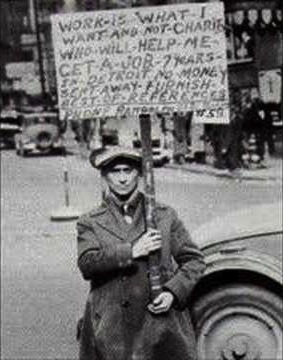
Screenshot from "Brother, Can You Spare Me a Dime" video/song (song originally recorded in 1932), July 26, 2014. (http://youtube.com).

Screenshot from “Brother, Can You Spare a Dime” video/song (song originally recorded in 1932), July 26, 2014. (http://youtube.com).

In the past five months, there’s been much debate and derision over the White House’s My Brother’s Keeper Task Force and Initiative. Most of it has centered around the exclusion of girls and young women of color from the initiative, as if the problems affecting Black and Latino males aren’t the same ones affecting Black and Latino females. Poverty, a resource-poor education, lack of entry-level jobs leading to careers, woeful access to higher education, lack of access to public services. These effects may lead to different responses from boys/young men of color and girls/young women of color, but the problems that effect vulnerable populations of color are no respecter of gender.

There’s other problems with the initiative, even if President Barack Obama and the White House were to ensure the inclusion of Black and Latino females in the My Brother’s Keeper Initiative tomorrow. It’s an extremely racially paternalistic initiative. On the face of things, it’s not much different from the work Booker T. Washington did a century ago via the William McKinley and Teddy Roosevelt administrations and with money from White philanthropists such as Henry Huttleston Rogers (Standard Oil), Julius Rosenwald (Sears), and George Eastman (Kodak).

Sure, in the case of Washington, The Rosenwald Fund built a few thousand schools, and the philanthropists contributed money to Washington that would build an endowment for Tuskegee. Still, that money came with strings attached. Most of the schools built weren’t high schools, were geared toward what we would call low-level vocational education today, and certainly weren’t part of any agenda to end Jim Crow. For all the good Washington was able to do through these robber-baron era philanthropists — especially in reducing Black illiteracy — it took Black migration out of the South to lead to lasting changes around notions of racial progress and the idea of segregation as the norm for a representative democracy.

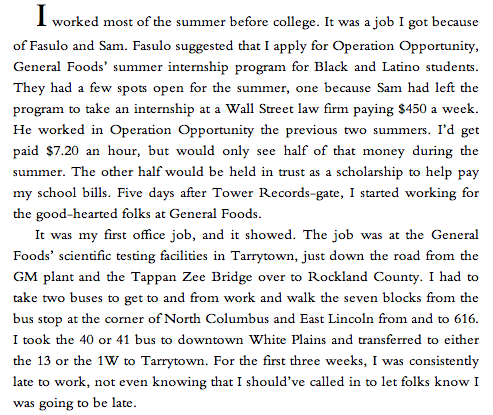
As for My Brother’s Keeper, I am reminded of a passage from my Boy @ The Window about my very first full-time “office” job in the summer of ’87, in between my graduation from Mount Vernon High School and my freshman year at the University of Pittsburgh. It’s about my working for General Foods (now Kraft Foods) in Tarrytown, New York as part of their Operation Opportunity program.

Screen shot 2014-07-26 at 11.10.49 AM

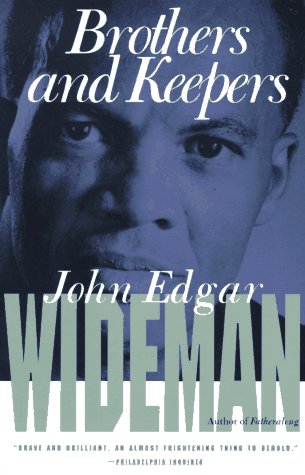
John Edgar Wideman, Brothers and Keepers (originally published in 1984), July 26, 2014. (http://goodreads.com).

John Edgar Wideman, Brothers and Keepers (originally published in 1984), July 26, 2014. (http://goodreads.com).

Beyond the $1,022 the program saved on my behalf — which would go toward room, board and two textbooks for my second semester at Pitt — there really wasn’t much about this program that was opportunity-inducing. Operation Opportunity seemed like it was a checkmark that General Foods could put in its “doing good” column. It provided an opportunity to observe others and do menial tasks without actually promising anything that would help me even a year later, as I went through the summer of ’88 unemployed, and the first week of my sophomore year at Pitt homeless. Not to mention, I picked up a terrible cold in the heat of a 98-degree-July day while spending two hours in a meat-locker-of-a-trailer doing measurements on Jell-O pudding pops!

Now I have no idea what the Annie E. Casey Foundation, the W.K. Kellogg Foundation or Magic Johnson Enterprises intends to do to be keepers of brothers, or brothas, for that matter. But all too frequently, these efforts turn into one-time experiments or corporate-responsibly checkmarks. As my friend and colleague Catherine Lugg has said more than once over the years (albeit, on education research, not specifically on this), social change and diversity efforts are far more than just “bringing a pet to class.” The idea that we need to learn how to work hard is yet another myth that this initiative will perpetuate, whether it’s a success or a failure.

It’s not hard to figure that poor children and young adults of color need more access to public health services, more resources in their formal education, more and better quality food to eat, and more nurturing. Whether any of these kids or young adults — male or female — can obtain these resources without racial paternalism, experimentation or other strings attached, I for one remain extremely skeptical.

Shalom Milhama, Where Do My Sympathies Lie?

21 Monday Jul 2014

Posted by decollins1969 in 1, Boy @ The Window, culture, Eclectic, Hebrew-Israelite, Mount Vernon New York, New York City, Politics, Pop Culture, race, Religion, Youth

≈ 2 Comments

Tags

Arab-Israeli Wars, Colonialism, Conflict, Gaza, Gaza City, Hamas, IDF, Intifada, Invasion, Israel, Jewishness, Judaism, Oppression, Palestine, Palestinians, Police State, Rebellion, Revolution, Settler Colonialism, Terrorism, Two-State Solution, Zionism


"Israel-Palestine peace," July 29, 2013. (Wickey-nl - Own work via Wikipedia). Licensed under CC-SA- 3.0 (converted from .svg to .jpg file).

“Israel-Palestine peace,” July 29, 2013. (Wickey-nl – Own work via Wikipedia). Licensed under CC-SA- 3.0 (converted from .svg to .jpg file).

As a Hebrew-Israelite between ’81 and ’84, I was taught in temple that we as the members of the Ten Lost Tribes of ancient Israel shared a spiritual and physical bond with the descendants of the tribes of Judah and Levi. As a Hebrew-Israelite, I was also taught that Arab, African and Black Muslims were my spiritual cousins, due respect because of the whole Abraham, Isaac and Ishmael story from the Torah. We, Black Jews, Arab Muslims and European-Jewish-Israelis, were related by blood, history, and Yahweh, and so should support each other.

There were to be no contradictions in supporting the right of Israel to exist as a nation-state, this despite the fact that the Arab states of Syria, Egypt, Saudi Arabia and Jordan had fought “to push Israel into the Mediterranean Sea” in 1948, 1956, 1967 and 1973. Israel had a Jehovah-given right to the land between the cedar forests of Lebanon and the Sinai Desert, between the river Jordan and the Mediterranean, at least, that’s what the Torah said. It was a covenant right that couldn’t be undone by anyone or anything except by El Shaddai himself.

So naturally, despite my growing knowledge of history, I supported Israel in everything it did in defense of itself. So if Mossad or an Israeli commando unit assassinated a foreign minister, it was fine. When Israel launched an air strike and destroyed an Iraqi nuclear reactor in June ’81, I was all for it. Golda Meir was among my group of female heroes as a preteen and teenager. Somehow in those three years as a Hebrew-Israelite, my political perspective on Israel merged with my religious perspective on Judaism and my understanding of the oppression that Blacks, Africans and Jews have all faced in recent centuries.

My understanding of all this, though, began to change even before I converted to Christianity in ’84. It started with an exodus of Ethiopian Jews to Israel in ’84 and ’85, during the government-imposed famine that killed nearly half a million Ethiopians. Unlike the claims of Hebrew-Israelites in the US, the claims of Ethiopian Jews could be clearly traced back to 1000 BCE, the time of King Solomon. Yet for months, Israel held up the immigration process, and then created policies that would make it even more difficult for this groups and the country’s other 120,000 Ethiopian Jews to assimilate. No doubt the fact that it took Israel until ’75 to officially recognize these Ethiopian Jews as Jews has played a role in their somewhat segregated existence in the country.

Faris Odeh throws a stone at an Israeli tank near the Israel-Gaza border, October 29, 2000, during the 2nd Palestinian Intifada (ten days before the IDF gunned him down in Gaza). (http://socialistworker.org).

Faris Odeh throws a stone at an Israeli tank near the Israel-Gaza border, October 29, 2000, during the 2nd Palestinian Intifada (ten days before the IDF gunned him down in Gaza). (http://socialistworker.org).

Then came the First Palestinian Intifada of ’87 that ran well into the ’90s, when the setting up of Palestinian self-governance zones in Gaza, the West Bank and Jericho gradually began to take shape, leading ultimately to the current state of invasion and chaos between Israel and Gaza. The Intifada began just as I was beginning to understand the full nature of oppression beyond slavery and the Civil Rights Movement. For years, it seemed like I saw the same images of Palestinian youth throwing rocks and marching in the streets while the Israeli Defense Forces responded with tanks, machine guns, tear gas and bulldozers, taking land to build new Israeli settlements in the process.

By that point, I’d become interested in South African history, or apartheid in another part of the world. Comparing and contrasting student movements against Jim Crow in the US and against apartheid in South Africa led me to one simple conclusion beyond that undergraduate research paper. That settlement for one group of people was removal, segregation and loss of rights and lands for another group. This was a process that was particularly horrible in South Africa. It led to protests nonviolent and violent, terrorist activities, extreme and ruthless counter-terrorist activities, and international outrage, protests and divestment before the Afrikaner leadership in South Africa finally moved to dismantle their ugly system.

It made me realize that what was going on in Israel wasn’t all that different from what had been going on in South Africa for nearly a century. Only, it involved a population of Palestinians only slightly larger that the population of European-born Israeli Jews and their descendants, not a nine-to-one advantage in favor of Black South Africans. Only the form of nationalism in Israel grew out of a mix of Torah-based birthright, European-based ethnocentrism (the first two otherwise known as Zionism) and post-World War I imperialism the British imposed on the crumbling Ottoman Empire, and not out of Boer nationalism and anti-Black African racism.

A Palestinian boy rests on a mattress next to the rubble of a house destroyed in an Israeli airstrike, Gaza City, July 9, 2014. (Reuters; http://www.dailymail.co.uk).

A Palestinian boy rests on a mattress next to the rubble of a house destroyed in an Israeli airstrike, Gaza City, July 9, 2014. (Reuters; http://www.dailymail.co.uk).

Aside from these unique features, the theme was the same. A democracy for a select and easily identifiable us (read race and religion here, or at least, skin color and not obviously Muslim). A refugee existence and well-policed apartheid state for those who aren’t us, an assumed group of radical terrorists, even from birth.

It’s a bit too late to be on any side that supports the dissolution of Israel as a nation-state. But to support this Israeli government, a right-wing one that responses to any act of violence toward Israelis — whether random or deliberately terrorist in nature — as if Egypt, Jordan and Syria are invading again. It strains my almost boundless imagination. To say that it’s okay to respond to homemade rockets with a military airstrike and ground invasion in an area as densely population as the island of Manhattan is ridiculous. To suggest that the demolition of Gaza isn’t about resources or is a both-sides-are-equally-guilty scenario is to either live in denial or to see Palestinians as less human than Israelis. Last I checked, Hamas doesn’t have an air force or Russian T-72 tanks.

So here’s what I see. A one-state solution, forcing Israelis and Palestinians to live together, forcing Israel to end its version of an apartheid system, and forcing both groups regardless of politics to come up with a path to full citizenship rights for Palestinians. Period. The two-state solution is a mirage, and some Israelis seem to only want one state, for Israelis only. Of course, this means that those Palestinians who support an armed struggle will eventually have to follow the path that Nelson Mandela and the ANC and Yasser Arafat and the PLO followed decades ago. Just not today, not while the IDF is destroying a city. At least not until the world and especially the US divests from the state of Israel and embargoes all arms shipments.

I wish sometimes that I could go back to that simpler time, when Israel seemed to represent what was right in this world, and the US in supporting them. But I can’t. Those Hebrew-Israelite days were my most oppressed ones as well.

Poverty, Violence and PTSD – But What About Racism?

07 Monday Jul 2014

Posted by decollins1969 in 1, Boy @ The Window, culture, Eclectic, High Rise Buildings, Jimme, Marriage, Mount Vernon New York, My Father, Politics, Pop Culture, race, Work, Youth

≈ Leave a comment

Tags

616 East Lincoln Avenue, Chicago, Child Abuse, Community Violence, Culture of Poverty, Culture of Violence, Domestic Violence, Gun Violence, July 4th, July 4th Weekend, Mainstream Media, Mental Health, Mental Illness, Post-Traumatic Stress Disorder, Poverty, PTSD, Public Health, Shooting Deaths, Soft Bigotry, Structural Racism, Uncle Sam


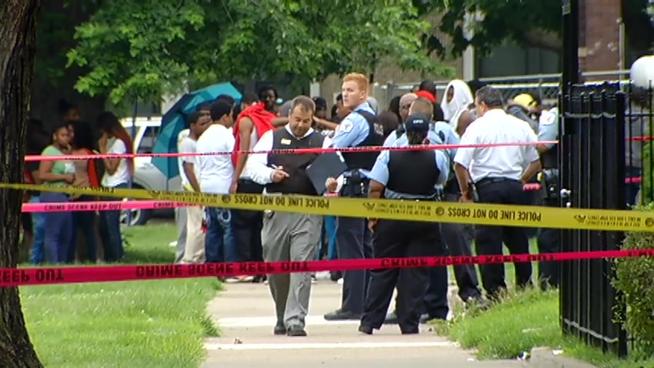
Chicago Police fatally shot a 16-year-old boy in the city’s Gresham neighborhood Saturday night and distraught family members are questioning the incident, July 6, 2014. (http://nbcchicago.com).

Chicago Police fatally shot a 16-year-old boy in the city’s Gresham neighborhood Saturday night and distraught family members are questioning the incident, July 6, 2014. (http://nbcchicago.com).

Over the past two weeks, thanks to Chris Hayes’ reporting on the state of Chicago for MSNBC, not to mention a horrific July 4th weekend, Mayor Rahm Emanuel’s lie of declining violent crime in the metropolis has been thoroughly exposed. In the past eighty-four hours, dozens of shootings in Chicago injured at least sixty people, with between nine and eleven killed. Six of these shootings involved the Chicago PD, as they killed two teenagers over the weekend. But if we leave it to the mainstream media and the moralist Black elite to explain, the Blacks on Chicago’s South Side are just immersed in a “culture of violence.” Black youth simply live careless, nihilistic lives, that “gang, drug, [and] gun violence” is the root of the problem

For those White, bright, and bi-racially White, though, there’s the knee-jerk reaction of media and caring adults that comes with it. For mass shooters apparently with much better aim than folks in Chicago, like Elliot Rodger, Adam Lanza, James Holmes, Wade Michael Page, Eric Harris and Dylan Klebold, mental health and mental illness, along with gun control, is the mainstream media’s topic of the day. Even their explicit racism and misogyny can become the media’s evidence for their mental illness. White and Black moral leaders don’t then speak of cultural deficiencies or of an enjoyment of crime and violence as reasons for their shootings.

It’s terrible that we afford one group of young men every benefit of the doubt because they were/are affluent or White, and the deny humanity of another because they were/are poor and Black or Brown. Yet recent sociological and psychological studies indicate what anyone who has lived in poverty and with violence has at least sensed throughout their lives. That many (if not most) growing up in these conditions experience post-traumatic stress disorder (PTSD), leading to more poverty and violence in adulthood.

I know this better than most. Below is a short sample of the violence I witnessed or experienced from birth through adulthood:

September ’70 – my father, drunk and jealous, attempted to attack my mother with a knife. My Mom with me and my brother Darren in tow, picked up a heavy quartz crystal ashtray and threw it at my father as he charged her in the kitchen. He was apparently struck in the head and knocked unconscious. The ashtray had detached the retina in his left eye, which he never had repaired. Nine years later, my father had to have his left eye removed. I don’t remember this attack or my Mom defending herself — I was all of ten months old. I do remember my father’s eye being removed, and the headache and vertigo he had prior to the surgery in the summer of ’79 The research indicates, though, that there would have been a psychological impact on me and my nearly three-year-old brother nevertheless, and not a good one at that.

July ’75 –  from Boy @ The Window

Screen shot 2014-07-07 at 1.08.28 PM

December ’76 – when my father stomped in a brand-new glass coffee table and had to go to the hospital with several serious bloody cuts in his legs.

April ’77 – when my Uncle Sam clotheslined my father after his months of psychological and abuse toward my Mom had landed her in Mount Vernon Hospital with kidney problems.

April ’82, May ’82, July-August ’82 – my then stepfather beating me up in a Karate studio in front of a group of men because I refused to call him “Dad,” beating up my Mom for not “lovin’ him,” and beating me up for the first six weeks of my summer between seventh and eighth grade for me defending my Mom.

January ’86 – the last time my stepfather actually laid a fist on me, damaging or chipping three of my front teeth and busting my lip in the process.

June ’89 – the last fight between my Mom and my stepfather, where the same crystal ashtray my Mom used in ’70 easily could’ve fractured her jaw and left cheekbone. Thankfully, my then stepfather had terrible aim.

If it were just a matter of domestic violence and child abuse for me alone, that would be tragic, but not necessarily relevant. The violence of 616 East Lincoln Avenue, sadly, wasn’t contained to A32. Domestic violence was the way of the A-building at 616, starting with our adjacent next-door neighbors. In the two-bedroom department immediately below us, the husband and wife had a violent, alcoholic relationship, so bad that it was a rare weekend in the years between ’77 and ’87 where a plate or wine glass didn’t break or the police weren’t called. Their son once pointed a gun at me on my walk up the front steps of 616 when I was a senior in high school and claimed he’d secretly pointed a gun at me in the past. Muggings and robberies, including the four that I experienced, were as common as the common cold

At the near-door apartment building, 630 East Lincoln, the drug trade had been alive and well years before the arrival of crack cocaine. Fights involving knives and baseball bats were normal, often involved a crowd of kids as spectators. Sometimes these fights would spill onto the front lawn of 616’s A-building, where I could witness it first-hand.

That violence was a frequent companion in my life wasn’t surprising. I never lived anywhere growing up where the majority of the people around me weren’t welfare-poor, working-poor or working-class Blacks, where the heating oil came in time for winter, and where maintaining mental health was a topic of conversation. To act as if employment practices, education policy, public health access, police neglect or brutality or housing policies had nothing to do with the sheer concentration of poverty and violence around me would be at the least naive. Fundamentally, it was the benign neglect in the chain between individual racial assumptions, the soft bigotry of mainstream media, and the hard concrete of structural racism in play.

What was my constant companion growing up in Mount Vernon, New York has remained the story of poverty, race and violence in Chicago’s South Side for a century. Don’t feel sorry, for me or for all of those shot up in Chicago this past July 4th weekend. Do something, say something, or don’t. But feeling sorrow without saying or doing something about shouldn’t be an option.

Talking Tocqueville Too Much

05 Saturday Jul 2014

Posted by decollins1969 in 1, Academia, culture, Eclectic, Patriotism, Politics, Pop Culture, race, Work, Youth

≈ Leave a comment

Tags

4th of July, Alexis de Tocqueville, American Exceptionalism, Bankers, Chris Matthews, Democracy, Economic Inequality, Egalitarianism, Freedom, Industrialization, July 4th, Labor Exploitation, Liberty, Media, Merchants, Plutocracy, Slavery, Tocqueville, Tourism, Universal White Male Suffrage


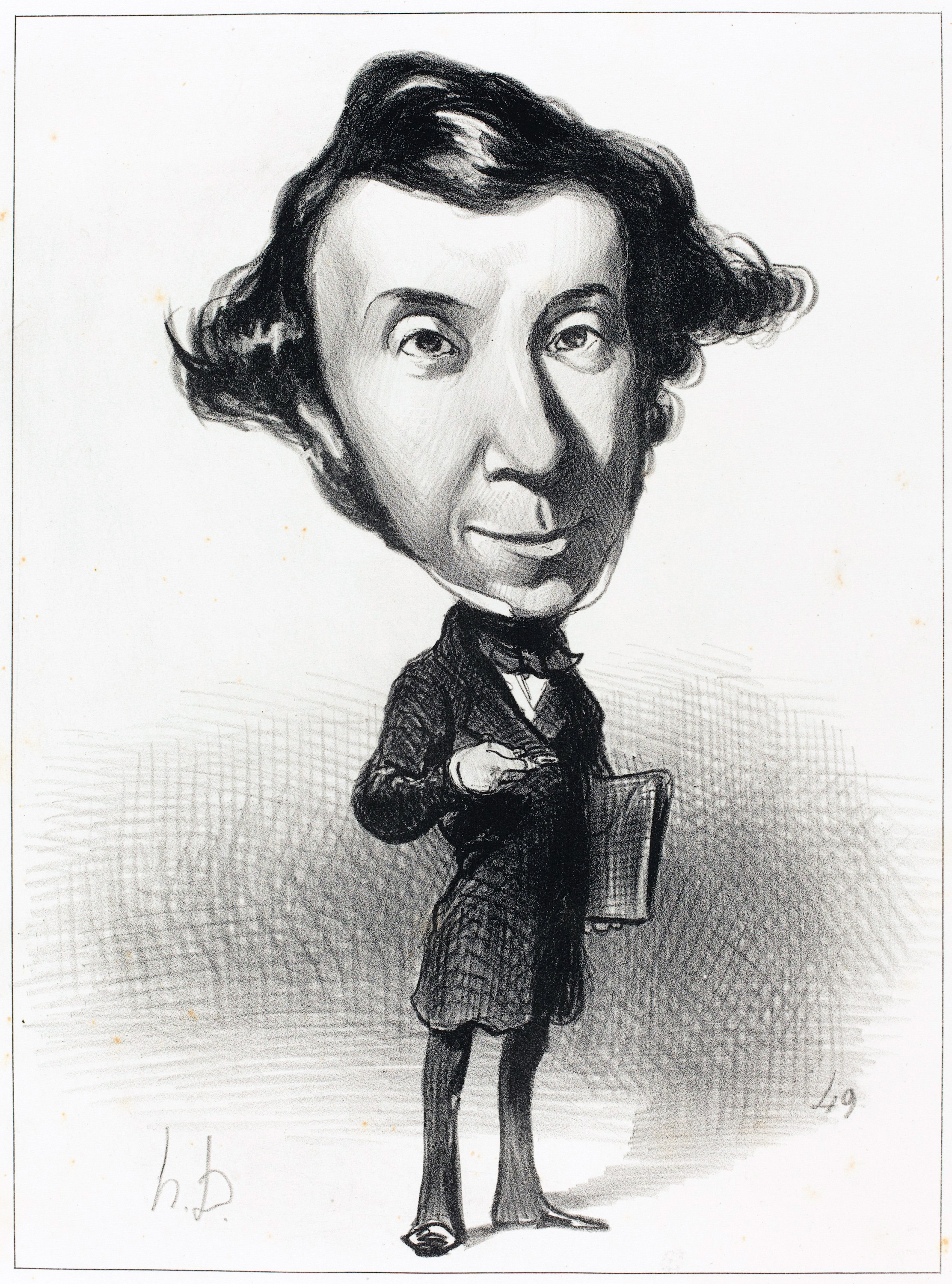
Alexis Tocqueville caricature (1849), by Honoré Daumier, National Gallery of Art, Washington, DC. (Wikipedia). In public domain.

Alexis Tocqueville caricature (1849), by Honoré Daumier, National Gallery of Art, Washington, DC. (Wikipedia). In public domain.

Every year for at least the past thirty years, without fail, I’ve read at least one article, seen or read at least one book, or watched at least one commentary about the great Alexis de Tocqueville. These are almost always about the French political theorist’s grand tour of America in the early 1830s and his affirmation of America’s exceptional democracy, egalitarianism and lack of permanent social classes. Over the years, I’ve found these all too frequent comments and examinations of a long-dead tourist vomit-inducing.

Tocqueville may have gotten it right, that America and its democracy was in a unique position in 1833 to take off and become a powerful nation, if given the time. But he didn’t understand America at all, at least, not really. Tocqueville didn’t understand how central inequality was to the development of America’s unique and exceptional democracy. He assumed, quite wrongly, that any issues of inequality in our then young nation were limited to the American South, where cotton was king and slavery was the backbone of the economy. Tocqueville only saw slavery as a moral dilemma of debasing humanity — slave owner and slave — and not as a political or economic one. So what if he predicted the rise of the US and Russia as world powers if he didn’t predict the American Civil War?

The Half Has Never Been Told: Slavery and the Making of American Capitalism by Edward E. Baptist (due out September 9, 2014 -- there's always Eric Williams' Capitalism and Slavery [1944]), July 5, 2014. (http://bn.com).

The Half Has Never Been Told, by Edward E. Baptist (due out September 9, 2014 – there’s always Eric Williams’ Capitalism and Slavery [1944]), July 5, 2014. (http://bn.com).

Tocqueville looked at America outside of the South and saw an egalitarian and agrarian society, one unconnected to the slavery located south of the Mason-Dixon line and spreading southwest across the Mississippi River. Where did he think the money came from to finance plantations, to ship the raw materials of these plantations overseas and to buy more slaves? How did Tocqueville think these plantation owners could turn cotton into cloth and tobacco into cigarettes and cigars? Much of it came from bankers and merchants in New York, Boston and Philadelphia, and from the factories of New England and New York. Slavery was the backbone of the rise of the American economic system, and was America’s industrialized foundation. Period.

Tocqueville argued that America was unique because of its lack of a permanent class system, particularly an aristocracy. Our country’s democracy, in fact, guaranteed the constant churning of social mobility. Tocqueville must’ve been high on the tobacco leaves he sniffed in his tour of Virginia! While the nation had shed most of the obvious symbolism that came with wealth in Europe, Tocqueville had completely ignored that for the first half-century of US, only rich, land-owning White males could vote (and in many cases, hold office). Only in the five or ten years before his tour of the US did non-propertied White males gain the right to vote.

On top of this, though most Americans were farmers in the 1831-33 period, American urbanization had already begun. American cities didn’t have the age or splendor of European ones, to be sure. But what Tocqueville didn’t recognize was that wealth was already beginning to be concentrated in cities like Philadelphia, Boston and New York, in the form of commerce, in banking, and in the beginnings of modern industries. And though large-scale exploitation of poor and uneducated Irish immigrations wouldn’t begin for another fifteen years, the exploitation of poor, native White (and frequently, female and child) labor was already well underway, pulling Whites from countryside to cities in the process.

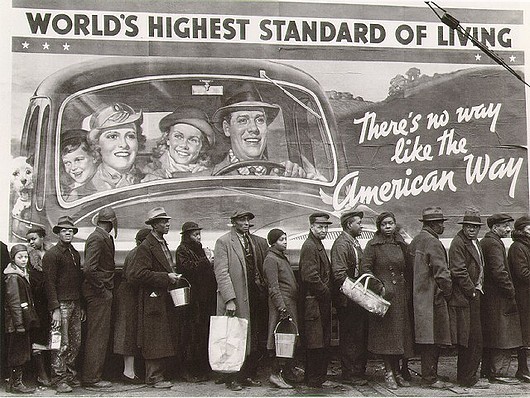
"World's Highest Standard of Living" poster with Black flood victims in bread line, Louisville, Kentucky, by  Margaret Bourke White, February 15, 1937. (ThunderPeel2001 via Wikipedia). Qualifies as fair use under copyright laws -- low resolution.

“World’s Highest Standard of Living” poster with Black flood victims in bread line, Louisville, Kentucky, by Margaret Bourke-White, February 15, 1937. (Wikipedia). Qualifies as fair use under copyright laws — low resolution.

And this is the man who so many of my historian and political scientist colleagues like to cite and quote? Especially around Independence Day! Sorry, but if I did a two-year tour of, say, South Africa right now, and predicted their eventual greatness because of their unique racial democracy and rapid economic development, who’d take me seriously by 2200 CE? Maybe MSNBC host Chris Matthews‘ great-great-great-great grandson, who would then claim South African exceptionalism based on my predictive power from 180 years before.


← Older posts
Newer posts →

Boy @ The Window: A Memoir

Boy @ The Window: A Memoir

Places to Buy/Download Boy @ The Window

There's a few ways in which you can read excerpts of, borrow and/or purchase and download Boy @ The Window. There's the trade paperback edition of Boy @ The Window, available for purchase via Amazon.com at http://www.amazon.com/Boy-Window-Donald-Earl-Collins/dp/0989256138/

There's also a Kindle edition on Amazon.com. The enhanced edition can be read only with Kindle Fire, an iPad or a full-color tablet. The links to the enhanced edition through Apple's iBookstore and the Barnes & Noble NOOK edition are below. The link to the Amazon Kindle version is also immediately below:

scr2555-proj697-a-kindle-logo-rgb-lg

Boy @ The Window on Amazon.com: http://www.amazon.com/Boy-The-Window-Memoir-ebook/dp/B00CD95FBU/

iBookstore-logo-300x100

Boy @ The Window on Apple's iBookstore: https://itunes.apple.com/us/book/boy-the-window/id643768275?ls=1

Barnes & Noble (bn.com) logo, June 26, 2013. (http://www.logotypes101.com).

Boy @ The Window on Barnes & Noble: http://www.barnesandnoble.com/w/boy-the-window-donald-earl-collins/1115182183?ean=2940016741567

You can also add, read and review Boy @ The Window on Goodreads.com. Just click on the button below:

Boy @ The Window

Twitter Updates

Tweets by decollins1969
  • RSS - Posts
  • RSS - Comments

Archives

  • June 2025
  • April 2023
  • September 2022
  • August 2022
  • July 2022
  • June 2022
  • May 2022
  • April 2022
  • March 2022
  • January 2022
  • December 2021
  • November 2021
  • October 2021
  • September 2021
  • August 2021
  • July 2021
  • June 2021
  • April 2021
  • March 2021
  • February 2021
  • January 2021
  • December 2020
  • November 2020
  • October 2020
  • September 2020
  • August 2020
  • July 2020
  • May 2020
  • April 2020
  • March 2020
  • January 2020
  • December 2019
  • November 2019
  • August 2019
  • July 2019
  • June 2019
  • May 2019
  • April 2019
  • March 2019
  • February 2019
  • January 2019
  • December 2018
  • November 2018
  • October 2018
  • September 2018
  • August 2018
  • July 2018
  • June 2018
  • May 2018
  • March 2018
  • February 2018
  • January 2018
  • December 2017
  • November 2017
  • October 2017
  • September 2017
  • August 2017
  • July 2017
  • June 2017
  • May 2017
  • April 2017
  • March 2017
  • February 2017
  • January 2017
  • December 2016
  • November 2016
  • October 2016
  • September 2016
  • August 2016
  • July 2016
  • June 2016
  • May 2016
  • April 2016
  • March 2016
  • February 2016
  • January 2016
  • December 2015
  • November 2015
  • October 2015
  • September 2015
  • August 2015
  • July 2015
  • June 2015
  • May 2015
  • April 2015
  • March 2015
  • February 2015
  • January 2015
  • December 2014
  • November 2014
  • October 2014
  • September 2014
  • August 2014
  • July 2014
  • June 2014
  • May 2014
  • April 2014
  • March 2014
  • February 2014
  • January 2014
  • December 2013
  • November 2013
  • October 2013
  • September 2013
  • August 2013
  • July 2013
  • June 2013
  • May 2013
  • April 2013
  • March 2013
  • February 2013
  • January 2013
  • December 2012
  • November 2012
  • October 2012
  • September 2012
  • August 2012
  • July 2012
  • June 2012
  • May 2012
  • April 2012
  • March 2012
  • February 2012
  • January 2012
  • December 2011
  • November 2011
  • October 2011
  • September 2011
  • August 2011
  • July 2011
  • June 2011
  • May 2011
  • April 2011
  • March 2011
  • February 2011
  • January 2011
  • December 2010
  • November 2010
  • October 2010
  • September 2010
  • August 2010
  • July 2010
  • June 2010
  • May 2010
  • April 2010
  • March 2010
  • February 2010
  • January 2010
  • December 2009
  • November 2009
  • October 2009
  • September 2009
  • August 2009
  • July 2009
  • June 2009
  • May 2009
  • April 2009
  • March 2009
  • February 2009
  • January 2009
  • December 2008
  • November 2008
  • October 2008
  • September 2008
  • August 2008
  • July 2008
  • June 2008
  • May 2008
  • April 2008
  • March 2008
  • February 2008
  • January 2008
  • December 2007
  • November 2007
  • October 2007
  • September 2007
  • August 2007
  • July 2007
  • June 2007

Recent Comments

MaryPena's avatarMaryPena on My Day of Atonement/Bitter Hat…
decollins1969's avatardecollins1969 on No Good Teaching Deed Goes…
Mary Rose O’Connell's avatarMary Rose O’Connell on No Good Teaching Deed Goes…

NetworkedBlogs on Facebook

NetworkedBlogs
Blog:
Notes From a Boy @ The Window
Topics:
My Life, Culture & Education, Politics & Goofyness
 
Follow my blog

616 616 East Lincoln Avenue A.B. Davis Middle School Abuse Academia Academy for Educational Development AED Afrocentricity American Narcissism Authenticity Bigotry Blackness Boy @ The Window Carnegie Mellon University Child Abuse Class of 1987 CMU Coping Strategies Crush #1 Crush #2 Death Disillusionment Diversity Domestic Violence Economic Inequality Education Family Friendship Friendships Graduate School Hebrew-Israelites High-Stakes Testing Higher Education History Homelessness Humanities Humanities Program Hypocrisy Internalized Racism Jealousy Joe Trotter Joe William Trotter Jr. K-12 Education Love Manhood Maurice Eugene Washington Maurice Washington Misogyny Mother-Son Relationship Mount Vernon High School Mount Vernon New York Mount Vernon public schools Multiculturalism MVHS Narcissism NFL Pitt Pittsburgh Politics of Education Poverty President Barack Obama Race Racial Stereotypes Racism Relationships Self-Awareness Self-Discovery Self-Reflection Sexism Social Justice Teaching and Learning University of Pittsburgh Violence Whiteness Writing

Top Rated

Blog at WordPress.com.

  • Subscribe Subscribed
    • Notes from a Boy @ The Window
    • Join 103 other subscribers
    • Already have a WordPress.com account? Log in now.
    • Notes from a Boy @ The Window
    • Subscribe Subscribed
    • Sign up
    • Log in
    • Report this content
    • View site in Reader
    • Manage subscriptions
    • Collapse this bar
 

Loading Comments...