• About Me
  • Other Writings
  • Interview Clips
  • All About Me: American Racism, American Narcissism, and the Conversation America Can’t Have
  • Video Clips
  • Boy @ The Window Pictures
  • Boy @ The Window Theme Music

Notes from a Boy @ The Window

~

Notes from a Boy @ The Window

Category Archives: Jimme

Stinking Up The Joint

15 Tuesday Apr 2014

Posted by decollins1969 in 1, Boy @ The Window, culture, Eclectic, Jimme, Mount Vernon High School, Mount Vernon New York, New York City, Pop Culture, race, Youth

≈ Leave a comment

Tags

Brandon Lee, Classmates, Deodorant, Geometry, Gym Class, Humanities, Looney Tunes, Louis Cuglietto, Pepe Le Pew, Poverty, Puberty, Smell, Speed Stick Deodorant, Stench, Stick, Swimming, The Crow (1994), Tough-Love, Underarm Stench, Underarms


Pepe Le Pew stinking up the flowers, April 15, 2014. (Chuck Jones/WB, via http://www.animationartwork.com/). Qualifies as fair use because of picture's low resolution and related subject matter.

Pepe Le Pew stinking up the flowers, April 15, 2014. (Chuck Jones/WB, via http://www.animationartwork.com/). Qualifies as fair use because of picture’s low resolution and related subject matter.

Puberty is often a confusing and scatterbrained time even for the most well-adjusted of folks. Changes in body chemistry, hair growth, body parts, height, weight and sleep patterns are all part of this excruciating rite of passage. When thrown in with the realities of poverty and the cruelty of Humanities and Mount Vernon High School, puberty was also a long march of embarrassing moments.

One of my last embarrassing moment strictly thanks to puberty came around this time three decades ago. It was an unusually warm early April Tuesday in ’84, one in which I was hardly prepared. I’d just started using deodorant the year before, once spring had sprung in ’83, with basketball and softball as a regular part of gym class. In gym for ninth grade, we were in the swimming pool for March and April.

We just happened to be out of deodorant at 616 while I was in the midst of this class. It wouldn’t have been much of a problem, except for the fact that the cool weather of early spring had given way to a sudden heatwave, bringing temps into the upper seventies the second week in April. On that fateful Tuesday, I tried one of my Mom’s home remedies, and put a baking soda paste on my armpits, hoping to conceal my still new manly smell.

Well, it actually did work, at least from periods one through six. Then it was time for gym. I didn’t count on the fact that the high level of chlorine in the pool would completely wash away my makeshift deodorant. Nor did I consider that the swimming pool area would be about ten degrees warmer than it was outdoors. Nor did I think about the fact that we ordinary students weren’t allowed to shower after swimming or any other gym activity, for that matter. That was reserved for the school’s athletes — equipment must be protected from the “animals,” as some administrators and parents saw fit to describe us.

Speed Stick (green) deodorant by Mennen, 1980s edition (en Español), April 15, 2014. (http://www.b2bsupply.co/).

Speed Stick (green) deodorant by Mennen, 1980s edition (en Español), April 15, 2014. (http://www.b2bsupply.co/).

So, no deodorant, in a hot area of an already warm school with the air conditioning turned off, and with no opportunity to rinse off — what do you think happened eighth period? I went to Geometry class, completely unable to conceal my underarm stench. From about the second minute on, my equally sweaty classmates complained about “the smell” and “the stink,” all the while, fanning themselves with manila folders. Even with Mr. Louis Cuglietto’s windows open, it didn’t help — there was no wind to speak of.

But of all the sweat and smells, mine was the one that stood out most. Why? Because, despite it all, I remained an engaged student, and raised my right hand to answer questions. Which meant that I raised my right arm, and anyone within a six-foot radius could smell me. After ten minutes of complaints, I put my arms down, and held them close to my body for the remainder of class, looking forward to the end of the school day.

After class, Cuglietto pulled me aside to tell me, “You’re a man now. You need to get some deodorant,” as if he was offering sage advice or tough love. This wasn’t the first time Cuglietto played his version of poor assumptions about race, class and gender, and it wouldn’t be his last. I ignored him, and went on my way home.

But I didn’t stop there. I went over to Jimme’s on South 10th that evening. It was the middle of the week, a time of hungover sobriety for my father, which meant he would be home early from work. I bummed $20 off him while taking a stick of his surplus Speed Stick with me.

Is there a lesson here? Remember to keep deodorant in stock no matter what? Don’t swim with baking-soda-for-deodorant under your arms? That some teachers and classmates wouldn’t understand a moment of my life even if I passed it onto them like Brandon Lee’s character from the movie The Crow (1994)? That I was poor and in puberty, and things like this sometimes happen? Yeah, sure, I guess. The real lesson here is to remember, not for revenge or retribution, but so that younger others like me know that they’re not alone, so that the story can be told, later and better.

Bow Down to Isabel Wilkerson

27 Thursday Mar 2014

Posted by decollins1969 in 1, Academia, Boy @ The Window, Carnegie Mellon University, culture, Eclectic, Jimme, Marriage, Mount Vernon New York, My Father, New York City, Politics, Pop Culture, race, Youth

≈ Leave a comment

Tags

Academic Writing, Black Migration, Book Review, Creative Nonfiction Writing, Great Migration, Isabel Wilkerson, Joe William Trotter Jr., Proletarianization Thesis, The Warmth of Other Suns (2011)


Isabel Wilkerson, The Warmth of Other Suns, front cover (2011), Random House.

Isabel Wilkerson, The Warmth of Other Suns, front cover (2011), Random House.

I’ve finally read Isabel Wilkerson’s book The Warmth of Other Suns (2011) this month, just as I finished teaching a mini-course in post-1865 African American history. If I ever have the opportunity again to choose my own books for a survey-level course in African American history, this would be one of my cornerstone books. I know I stand at the back of a very long list when I say this, but this is a wonderfully powerful and insightful book, with language and a writing style equally as tender.

This was what I wrote regarding my first impressions on Goodreads.com:

My God – this book is a masterpiece! Wilkerson has done what historians and writers as diverse and groundbreaking as Kenneth Kusmer, David Levering Lewis, Joe William Trotter, Jr., Nicholas Lemann, Thomas Sugrue and James Grossman couldn’t (and in a couple of cases, wouldn’t) do. She put flesh, blood and bones on the Black individuals and families who migrated “up North” and out West throughout the bulk of the twentieth century. She didn’t distract with neo-Marxist, post-modern, post-structural, proletarian, or other overly academic theories for understanding the “hows” and “whys” behind Black migration between 1915 and the 1970s.

Reading Wilkerson’s The Warmth of Other Suns (2011) was like reading into my own family’s pasts (my mother and father came to New York City — specifically, the Bronx (Pelham Parkway and Wakefield) — during the 1960s from Arkansas and Georgia/Florida before moving to Mount Vernon). She captured so well the aspirations, the inspirations and the trepidations of the people who migrated, and the things they faced upon arrival. Wilkerson, most of all, grounded herself in the scholarly, but weaved it into a story that was nothing less than literary. If you’re a US or African American historian, a Black Studies, Black Women’s Studies or American Studies scholar, you must incorporate in your curriculum if you haven’t already. If you’re a writer who aspires to tell an important story — one that educates as it entertains — then The Warmth of Other Suns is a great place to start and Wilkerson a great writer to emulate.

Wilkerson called the Great Migration one of the great events of the twentieth century. But it was more than that. It was one of the great events in American history, a silent and gradual revolution on par with westward expansion and more significant than the second wave of immigration from Southern and Eastern Europe to the US between 1870 and 1914. I and millions of others like me should know. I wouldn’t be writing at all if I wasn’t a child of two Black migrants who left farms in the South for New York City.

Amateur Eugenicists: Why Smart Poor Students Have a Hard Time

05 Wednesday Mar 2014

Posted by decollins1969 in 1, Academia, Boy @ The Window, Carnegie Mellon University, culture, Eclectic, Jimme, Mount Vernon High School, My Father, Pop Culture, race, University of Pittsburgh, Youth

≈ 4 Comments

Tags

"Why Ivy League Schools Are So Bad at Economic Diversity", Bigotry, Christy2012, Elitism, Eugenics, Jerome Karabel, Meritocracy, Poverty and Intelligence, Race and Intelligence, Racial Determinism, Racism, Robin J. Hayes, Scientific Racism, Social Darwinism, The Atlantic, The Chosen (2005), Yale


Scientific racism, using "evidence" to compare the Irish to the African, by H. Strickland Constable, Harper's Weekly, 1899. (JasonAQuest via Wikipedia). In public domain.

Scientific racism, using “evidence” to compare the Irish to the African, by H. Strickland Constable, Harper’s Weekly, 1899. (JasonAQuest via Wikipedia). In public domain.

I do generally loathe reading the comments sections of most news sites (any sites, really), but the one on Robin J. Hayes’ “Why Ivy League Schools Are So Bad at Economic Diversity” in The Atlantic is a real trip. There are dozens of comments in which people are playing amateur eugenicists, as they’ve connected wealth & poverty to intelligence. For these folks, the poor perpetuate themselves because they are stupid, and when they have kids, they’ll be born stupid as well, and therefore, will remain poor. As if structural inequality and structural racism have nothing to do with creating the gaps in wealth and education for millions of Americans.

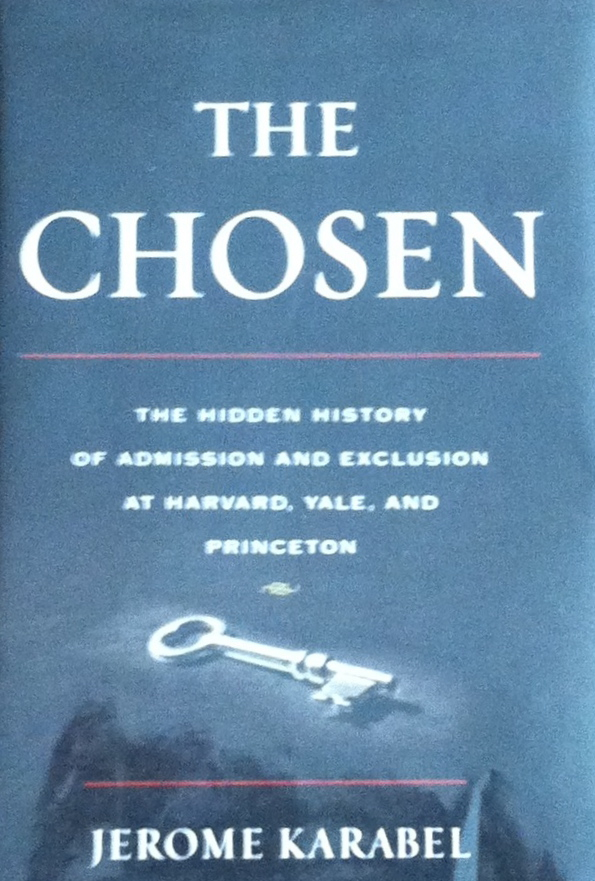
I’m sure I haven’t seen more Social Darwinist /scientific racist /pro-eugenics comments anywhere, including on neo-Nazi websites. Apparently, the only thing The Atlantic’s commentators read while in college (as this is allegedly the profile of their readers) was Charles Murray and Richard Herrnstein’s The Bell Curve (1994), as their arguments came out of studies that are now well over 100 years old. (I defy anyone to say they’ve read all 838 pages, though!) What these people should’ve been reading is Jerome Karabel’s The Chosen (2005) and Nick Lemann’s The Big Test (1999), both of which indicate the Ivy League’s long history of high racial and socioeconomic bias, not just high selectivity.

The Chosen (2005) front cover, March 5, 2014. (Donald Earl Collins).

The Chosen (2005) front cover, March 5, 2014. (Donald Earl Collins).

So I responded, using the lessons I’ve learned from my life and from writing Boy @ The Window, pointing out along the way that “Yale and the others offer what they offer to us po’ folk because they want to appear like they’re doing good, knowing full well that actually working to increase economic diversity is too much for them to fathom.” It elicited this counter-response from someone calling themselves Christy2012:

Pardon me for being so blunt, but you seem to imply that you were somehow obvious Yale material based on your top 2% status. However, you indicated on your blog that you earned a 2.6 GPA at University of Pittsburgh, a much less competitive institution, in your freshman year. Do you suppose you would have attained a higher GPA at Yale? Many rich people get turned down by Yale with even better credentials and Columbia is a fairly elite school itself. That Columbia offered you at chance and that you didn’t exactly hit it out of the park at UPitt is not exactly evidence that the schools are biased against the poor (maybe even the opposite).

Maybe there was (or is) an issue relating to how they consider deadbeat fathers in financial aid and scholarship consideration. It seems you should probably focus on that and that is probably an issue for more middle class applicants too.

It turns out that Christy2012 made these personal swipes from an extremely selective and incorrect reading of my blog because she believes all poor students and students of color really aren’t smart. I/we apparently benefited instead from “affirmative action and/or the pity of bleeding-heart White liberals,” and “not because of our abilities or because of hard work” (my translation of her other comments, by the way). Of course, Christy2012 never revealed anything personal about herself. It’s likely she never attended an elite college and has never met a poor person — especially one of color — that she didn’t feel superiority over.

From The Matrix: A sea of pods in which humans are fusion batteries (the future of the poor, as viewed by The Atlantic's amateur eugenicists), March 5, 2014. (http://www.tony5m17h.net/MatrixNet.gif).

From The Matrix: A sea of pods in which humans are fusion batteries (the future of the poor, as viewed by The Atlantic’s amateur eugenicists), March 5, 2014. (http://www.tony5m17h.net/MatrixNet.gif).

If this set of comments is any indication, it will be hard for Yale or any other school — even if they’re sincere in their efforts at racial and economic diversity — to fulfill them. So many folks even without holding positions of power or serving as gatekeepers decide before looking that poor folks and poor folks who look like me are incapable and unqualified for anything other than a mop, a broom or a jail cell. Is there any wonder that so few of America’s poor and of color have a chance at any higher education of significance, forget about getting into an elite or Ivy League institution?

What I Didn’t Know Growing Up – It Still Hurts

27 Thursday Feb 2014

Posted by decollins1969 in 1, Boy @ The Window, Christianity, culture, Eclectic, Hebrew-Israelite, Jimme, Marriage, Mount Vernon New York, My Father, New York City, Politics, Pop Culture, race, Religion, Sports, Work, Youth

≈ Leave a comment

Tags

Achievements, Ancestors, Arkansas, Basketball, Black History Month, Collins Family, Family, Gill Family, Harrison Georgia, Houston Texas, Ignorance, Jim Crow, Knowledge, Lineage, Mom, Mother, Parenting, Poverty, Segregation, Tenant Farming, Universality, Wisdom


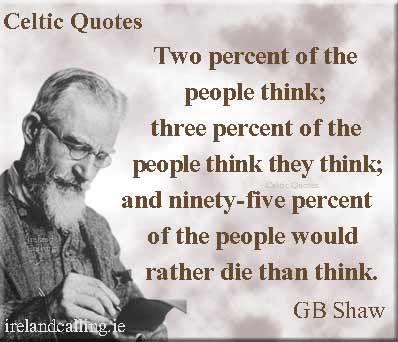
George Bernard Shaw and ignorance, June 2013. (http://www.irelandcalling.ie/).

George Bernard Shaw and ignorance, June 2013. (http://www.irelandcalling.ie/).

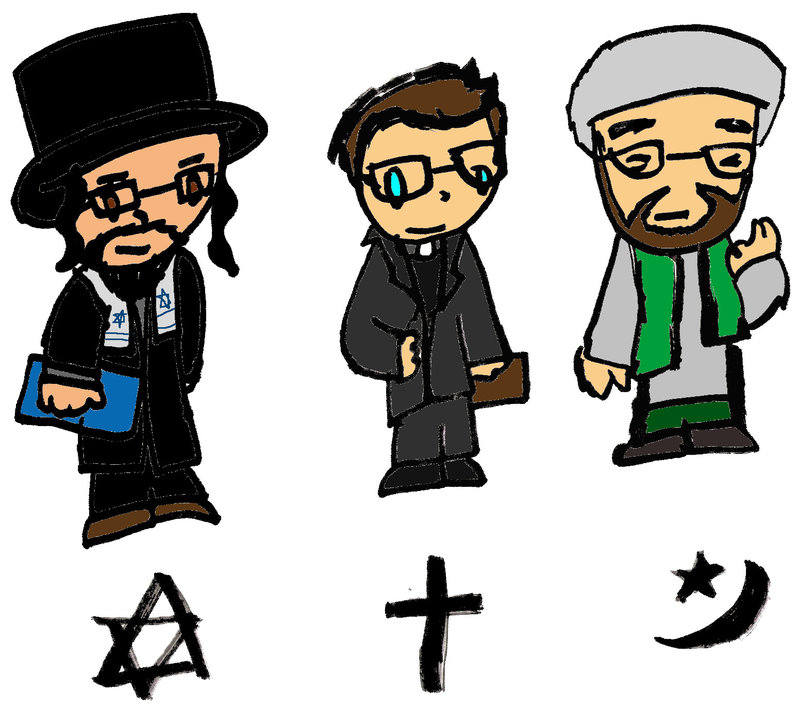
“My people perish for a lack of knowledge,” it seems, is something that anyone can find in almost any religion’s texts anywhere. Heck, depending on perspective, even atheists in general can agree with this statement (of course, the issue would be what constitutes “knowledge”). I read this verse (it’s in Hosea and Isaiah, and versions of it as well as in Jewish texts and the Qur’an) for the first time when I was fifteen in ’85, less than a year after I converted to Christianity. Boy, I had no idea how little I knew about myself, my family and my history when I first read that verse twenty-nine years ago.

In light of the end of Black History Month, I wouldn’t be me without noting how little any of us know about our families, our lineages and our ancestors. But it’s not just true of the millions of us descended from West and Central Africans kidnapped, bound, abused, raped and nearly worked to death to provide Europeans (and Arabs) wealth and comfort. Most of us don’t even know what we think we know about much more recent history and events than surviving the Middle Passage or overcoming Jim Crow.

A rabbi, a priest and an imam, 2013-2014. (PizzaSpaghetti via http://www.deviantART.com).

A rabbi, a priest and an imam, 2013-2014. (PizzaSpaghetti via http://www.deviantART.com).

For me and my family, I knew so little about us that my Mom could’ve told me that Satan had thrown us out of Hell for being too brown to burn and I would’ve accepted it as an appropriate answer. All I really knew of my mother’s side of my family was that they were from Arkansas, that my Uncle Sam (I chuckled sometimes thinking of the irony) was my Mom’s closest sibling, and that they grew up as dirt poor as anyone could get without living in a thatched root hut on less than $1 a day.

I asked for more during those rare moments when my focus wasn’t on high school, getting into college and getting as far away from 616 and Mount Vernon, New York as possible. I ended up finding out about how my Mom’s mother once beat her with the back of a wooden brush for not being ready on time for church, that there were years where her father made only $200 total from cotton farming, and that she was the oldest of twelve kids. She had done some form of work either taking care of her siblings, cooking, cleaning, washing clothes by hand, and hoeing and picking cotton, since she was five or six. Oh yeah, and she played basketball in high school.

On my father’s side, I knew a bit more, if only because Darren and me went with my father to visit the Collins farm in Harrison, Georgia in August ’75. I was five and a half then, but I do remember the fresh smoked ham and bacon, the smell of my grandfather’s Maxwell House coffee, me being too scared to ride a horse, so they put me on a sow (my brother did ride the horse, though). But what people did, how a Black family owned their own land going back to the turn of the twentieth century, I wouldn’t have known to even ask about at not quite six years old.

What I didn’t know until after high school, college, even after earning a Ph.D. in knowing (that’s what a history degree ultimately is) was so much worse than I imagined. To find out at twenty-three that my Mom was a star basketball player in high school. She played center, and led her team to Arkansas’ segregated state quarterfinals in ’65. My Uncle Sam played four sports in high school (basketball, football, baseball and track and field) and was offered college scholarships, but didn’t have the grades to move forward. I learned a year later that my Uncle Paul followed in their footsteps, and played three years at the University of Houston, left early and played for the Houston Rockets in ’82-’83 (not a good year for them, or for me, for that matter) before blowing out a knee and moving into entertainment work.

My father’s family — at least the women of the family — boasted at least three college degrees. Two of my aunts became school teachers. My uncles started businesses in Atlanta and in parts of rural Georgia, working their way well beyond the farm to the work they wanted to do.

Unidentified tenant farmer, his home, automobile, and family, Lee Wilson & Company, rural Arkansas, 1940s. (http://libinfo.uark.edu/SpecialCollections/)

Unidentified tenant farmer, his home, automobile, and family, Lee Wilson & Company, rural Arkansas, 1940s. (http://libinfo.uark.edu/SpecialCollections/)

I learned all of this by the time I turned thirty-two, just a year and a half before my own son was born. How many different decisions I would’ve made about my life if I had known that one half of my family was full of athletes, and the other half was full of business owners, not to mention three aunts with a college education? I would’ve known to try out for any sport in high school — particularly basketball — and to not be afraid to fail. I would’ve known that I was only the first person in my immediate family to take a go at college beyond a certificate in dietary science (my Mom earned that in the summer of ’75), and not the first one on either side as I once thought.

Most of all, I would’ve known that though I was lonely and played the role of a loner my last years growing up, that I wasn’t alone. There were a whole bunch of people in my lineage, some of whom were alive and well, from whom I could’ve drawn strength, found kinship, felt pride and confidence in, where I wouldn’t have seen myself as an abandoned and abused underdog anymore.

If I’d known all this growing up, I wouldn’t have felt and sometimes feel robbed now, by poverty and parenting, abuse and alcoholism. This is why having knowledge to draw from is so important.

When Work Really Is Too Much

27 Monday Jan 2014

Posted by decollins1969 in 1, Carnegie Mellon University, culture, High Rise Buildings, Jimme, My Father, New York City, Pittsburgh, Politics, Pop Culture, race, University of Pittsburgh, Work, Youth

≈ Leave a comment

Tags

Bigotry, Burnout, CIS, Computer and Information Systems, Hard Work, Hard Work Mythology, Jay Wickliff, Long Hours, Pitt, Presidential Classroom, Racism, Sexual Harassment, Sleep Deprivation, Workplace Harassment


From "How to Do More Work in Less Time" article, Forbes Magazine, February 28, 2012. (Deborah L. Jacobs/http://forbes.com).

From “How to Do More Work in Less Time” article, Forbes Magazine, February 28, 2012. (Deborah L. Jacobs/http://forbes.com).

I’ve been working for a paycheck in some capacity since September ’84, when me and my brother Darren began working with our father Jimme down in Upper West/East Side and Midtown Manhattan. Back then, we cleaned the floors of corporate offices, the carpets of condos and co-ops, and endured Jimme’s alcoholic ups and downs. There was one lesson, though, that stuck with me in the year or so that we worked for our father, one that extended the lesson we observed from our Mom before we fell into welfare in April ’83. That we wouldn’t get far without hard work or without having work, and that if we wanted to avoid the work of a low-paying, back-breaking job like buffing and waxing floors, we also needed to work smart, to use our brains and our muscles

Since then, the longest I’ve been without a job has been ten months, between August ’86 and June ’87. I worked all the way through undergrad at Pitt and was a grad assistant and teaching assistant throughout grad school (with the exception of my time as a Spencer Foundation Dissertation Fellow in ’95-’96, and even then, I worked on two of Joe Trotter’s research projects). I’ve faced periods of unemployment and longer periods where I’ve cobbled together part-time and full-time work, as well as held stable full-time work in the nonprofit and higher education worlds.

Working long hours, January 23, 2014. (Mark Holder/http://www.findersandsellers.com).

Working long hours, January 23, 2014. (Mark Holder/http://www.findersandsellers.com).

In all that time, I’ve only held two jobs where I’d been overwhelmed with work. Not the actual act of performing the duties of these jobs, mind you. The number of hours in which I had to show up for work was what eventually made these jobs overwhelming. My first time experiencing full-time work outside of a summer job was in the middle of my Winter/Spring ’89 semester. I worked for Pitt’s Computer and Information Systems’ (CIS) computer labs back then. I had requested more hours, and had gone from twelve to twenty to thirty-six between the beginning of January and the second-half of February, covering for folks who had moved on to real full-time work after graduating.

This was a seven-week period in which I averaged 36 hours per week while taking sixteen credits — five classes — and all while facing sexual harassment from my co-worker Pam, harassment tacitly sanctioned by our boss and her friend Cindy. Despite it all and my $4.15/hour salary, I focused on the work, the need for extra cash, and my friends, and came out the other side, and hoped to avoid a situation like that again.

I stumbled my way into a worse situation in my first full-time work after earning my doctorate, with the now out-of-business Presidential Classroom. My official title was Director of Curriculum, but that was my main job for only nine months out of the year. Because Presidential Classroom had dedicated itself to edu-tainment with a full-time staff of only a dozen, this meant that all full-time staff were also part of what we called Program. Fifteen weeks during the winter, early spring and summer, one group of 300-400 high school juniors and seniors from across the country (and Puerto Rico and outside the US/commonwealth) after another would spend a week in DC learning about “how government and politics work on Capitol Hill.” Or, as our brochures would say, “Not your typical week in Washington.”

One version of Presidential Classroom logo, January 27, 2014. (http://congressionalaward.org).

One version of Presidential Classroom logo, January 27, 2014. (http://congressionalaward.org).

I worked on-site at the Georgetown University Conference Center (where Marriott had a hotel, primarily for families visiting their hospitalized loved ones at Georgetown University Hospital) for seven of those weeks. I supervised interns, so-called faculty (some of whom were government employees who seemed more interested in chasing skirts than in sharing their experiences) and worked with other staff while watching over these groups of students roaming all over DC and Northern Virginia week after week.

One week in February ’00, I counted up, and found that I’d worked 120 hours in all. This included a 21-hour-day, in which I’d caught a boy in a girls’ hotel room, and then proceeded to contact his parents and expel him from the program. Between that and the bigoted staff I worked with — including my boss, the ED, who once told the joke that “slavery was a hoax” — I knew that putting in 100+ hours per week and sleeping in lumpy beds for $35,000 a year wasn’t worth it. By the last week of June ’00, I was severely sleep-deprived and ready to run my co-workers through with a long spear.

The lesson here was that we all need work, and we all need to work hard in order to guarantee success. But working hard also requires hard thinking and decision-making. It required me to say “No” to things that I had said “Yes” to when I was younger and more desperate for any job. What’s the damnable misery of it, though, is knowing that there are millions of people stuck in jobs that require so much more of them than they should be willing to give.

No job should require the kind of hours I put in combined with harassment and bigotry unless the salary is in the six-figure range, and even then, it’s not worth it. It won’t be worth the loss of self-esteem, the sleep deprivation, the sudden weight gain, the irritability and the temptation to turn to forms of self-medication. It wasn’t worth it for me in ’89 or in ’00, as I’m sure it isn’t for those of you in jobs like this now.

Suicide, or, My Last Day as a Hebrew-Israelite

27 Friday Dec 2013

Posted by decollins1969 in 1, Boy @ The Window, culture, Eclectic, Hebrew-Israelite, Jimme, Marriage, Mount Vernon High School, Mount Vernon New York, My Father, Pop Culture, race, Religion, Youth

≈ Leave a comment

Tags

Atheism, Child Abuse, God, Holidays, Loneliness, Maurice Eugene Washington, My Birthday, Ostracism, PTSD, Silly Season, Suicidal Thoughts, Suicide, Suicide Attempt, Teenage Angst


A stone bridge over the Hutchinson River Parkway, near Pelham, NY (about a mile from the bridge I stood on), May 3, 2007. (Anthony22 via Wikipedia). Released to public domain via Creative Commons.

A stone bridge over the Hutchinson River Parkway, near Pelham, NY (about a mile from the bridge I stood on), May 3, 2007. (Anthony22 via Wikipedia). Released to public domain via Creative Commons.

Thirty years ago on this date, on my fourteenth birthday, I was one thirteen-foot jump away from taking my own life. I’d felt this way before, quite a bit throughout ’81, ’82 and ’83, but I’d never come close to actually acting on my suicidal thoughts. I knew that despite getting beat by my then stepfather Maurice, neglected by Mom and family, ostracized at school and walking around with a kufi that only held the promise for more poverty, that my life wasn’t that bad. At least, compared to living in Biafra in the late-1960s or in Cambodia under the Khmer Rouge.

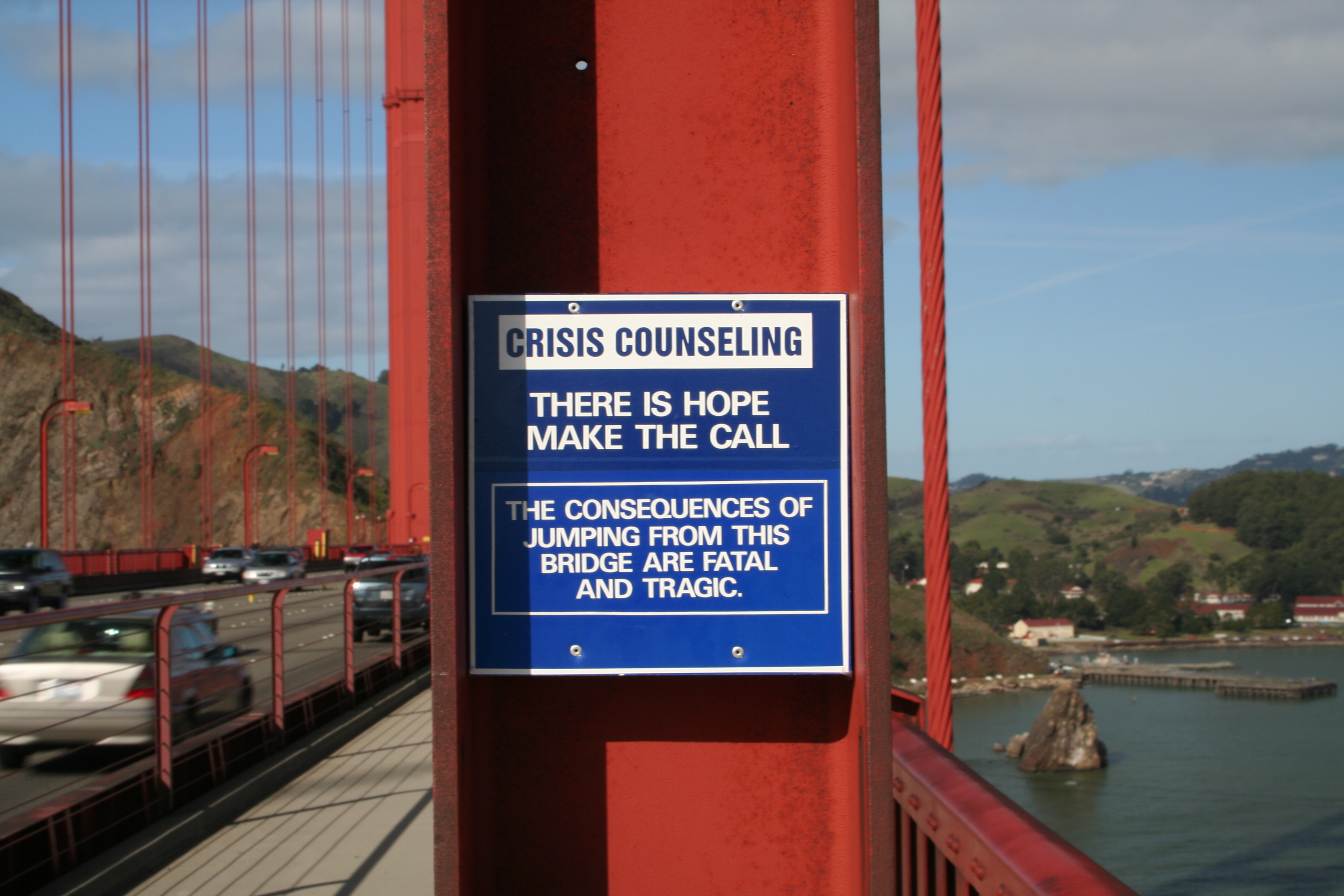
But the support of my classmates after my recent mugging reminded me of the reality that I had no friends, and hadn’t had a friend for more than two and a half years. Combined with the silly season of the holidays and no birthday celebration for me for the sixth year in a row, I was so down on by the morning of Tuesday, December 27, ’83. So much so that when I went to the store for my Mom that mid-afternoon, the stone bridge across the Hutchinson River Parkway that connected Mount Vernon to Pelham via East Lincoln called to me. It might as well have said, “This is the way. This is the only way.”

From Boy @ The Window:

I looked down at the cars underneath as I put myself, one leg at a time, atop the short stone wall, meant to keep young kids from falling off the bridge. As I stood there, I kept thinking, “What do I have to live for anyway?” Tears started to well up as I continued to look down at the cars as they zoomed by on both sides of the four-lane parkway.

The suicide prevention message on the Golden Gate Bridge (the #1 bridge in the US to jump to one's death), San Francisco CA, February 19, 2006. (David Corby/Miskatonic via Wikipedia). Released to public domain via Creative Commons.

The suicide prevention message on the Golden Gate Bridge (#1 bridge in US to jump to one’s death), San Francisco CA, February 19, 2006. (David Corby/Miskatonic via Wikipedia). Released to public domain via Creative Commons.

Then I had thoughts. And having any thoughts at all, especially thoughts of anything other than suicide, will short-circuit any attempt to kill yourself. One was of the remote possibility that taking my life could actually hurt someone else, Mom, my family, maybe even my classmates or teachers. A second, even more sobering thought was that I could survive the thirteen-foot jump. Only to be run over by a car going at fifty or fifty-five. And I could possibly survive that, too. But I’d end up brain-damaged or paralyzed or a vegetable or in a coma. There were too many risks involved to just jump off the bridge. For a few seconds I stood there, lost and not sure of what to do next. My next thought, my third one, was that maybe, just maybe, this is what hitting bottom really feels like. Maybe something good for me and my life was just around the corner. Maybe if I hold out a little longer, I’d find a reason to live my life and live it well. My fourth thought brought me to Maurice. “Wouldn’t that be the best revenge, that I overcome every situation in my life and become successful? Wouldn’t making the ultimate comeback from the edge of the cliff be better than ending it all now?,” I thought. With that, I got down from the stone wall and went on a long walk through Pelham before going home. I wasn’t relieved, but I wasn’t ready to take my own life yet either.

This was the moment I decided no one else was ever going to make another decision about religion or my eternal spirit for me ever again. That I was no longer a Hebrew-Israelite. But I needed more to believe in, sometime bigger than me, because it was way too early yet for me to simply believe in myself. The only way being an atheist made any sense to me was only if there really was no god or God at all, and the scientific evidence didn’t lean in any direction. Plus, if atheism were a proven fact, and not just a belief born of both science and emotion, then suicide made perfect sense, and after coming off that ledge, it really didn’t seem rational anymore.

Suicide – What If

Suicide – What If

Thank God Facebook or Twitter didn’t exist in ’83. Between Alex and Starling and Wendy, my family and their religion, our poverty and my PTSD, all it would’ve taken thirty years ago would’ve been one tweet or post, and the timeline for me that now includes three degrees, three careers, a wife and a son (not to mention two books) wouldn’t exist. But if there really are alternate universes, then I killed myself in at least one of them three decades ago. And to that version of me, I get it, I understand, and I’m sorry that you didn’t make it.

On Becoming A Father — 11 Years Later

16 Monday Dec 2013

Posted by decollins1969 in 1, Boy @ The Window, Carnegie Mellon University, culture, Eclectic, Jimme, Marriage, Mount Vernon New York, My Father, New York City, Pittsburgh, Pop Culture, University of Pittsburgh, Youth

≈ Leave a comment

Tags

Fatherhood, Fear, Fears, Pregnancy, Self-Awareness, Self-Discovery, Self-Revelation, Thanksgiving


Wife and son, August 16, 2003. (Donald Earl Collins).

Wife and son, latter at two weeks and change old, August 16, 2003. (Donald Earl Collins).

This week eleven years ago is when I first learned from my wife that she was pregnant with our one and only child, our son Noah. It was a high that took a few months of post-natal sleep deprivation to come down from, not to mention a fight to keep my job and move on from it courtesy of AED in ’03 and early ’04. But learning that I was soon to become a father didn’t just bring joy and euphoria. It came with baggage and the fear that my baggage would be a handicap to me as a father and to my gestating son.

Luckily I had a bit of time to prepare for becoming a father. I figured out that my wife was pregnant a few weeks before she did. It was on Thanksgiving Day ’02, and I was whisking a cream sauce to go with some chocolate torte dessert I was making. I asked my wife to watch over the cream and to make sure that it didn’t boil over when I went to the bathroom. Sure enough, the sauce was boiling over when I came back. I said sarcastically, “Thanks for messing up the cream!,” which led to my wife going to the bathroom, crying. You have to understand, my wife rarely cries, and never cries over my brand of New York-esque sarcasm. So when she said, “I’m sorry,” I said, “It’s okay, honey,” followed by, “Why are you literally crying over boiling cream? Are you sure you’re not pregnant?”

From that moment until my wife had given herself an EPT test three weeks later, I’d already started the process of psychological preparation. We’d barely begun trying to have a kid. We talked about it in July ’02, changed our diets in August and September, and I started taking herbal supplements by the end of September. Two months of actual trying in total. Really? That’s all it took?

All I knew was that fatherhood would bring back so many memories, some good, most of them bad and ugly. About my father Jimme and his alcoholism and homophobia as directed at me, my ex-stepfather’s physical and psychological abuse, about having to serve in my father-like role with my younger siblings and with Darren. By the time I’d reached grad student, some eleven years earlier, I wasn’t sure if I’d ever fall in love or get married, much less become a father. I mean, who would want to be with me, have little Donalds and Donnas running around that had about half of my features and traits? I wasn’t sure if I’d ever want that.

Fast-forward through grad school at Pitt and Carnegie Mellon, through four and half years of dating and two years of marriage. I was in a different place, not much different, but different enough to be much more sure about what I wanted. As I said to my wife, “There are four days out of the week where I’m sure about having a kid, two where I don’t want a child, and one where I simply don’t know.”

Be(com)ing A Father

Be(com)ing A Father

That was still good enough for my wife. And she’s the reason I could be firmly committed to fatherhood. I don’t think that I would’ve become a father otherwise. Have I made mistakes over the past ten years and five months with Noah? Of course! I once left him in a carrier on our table when he was five months over, and it flipped over end-over-end, scaring the crap out of him (literally!). I’ve yelled at him when I shouldn’t have, and I’ve cursed out at least one hundred too many bad DC area drivers with him in the back seat of our Honda Element over the years.

But despite all of the ups and downs in my life, career(s) and even marriage, one of the handful of things I’m sure about is having become a father to my son a good eight and a half months before he was born. I still check on him nearly every night to watch him sleep (and breath).

← Older posts
Newer posts →

Boy @ The Window: A Memoir

Boy @ The Window: A Memoir

Places to Buy/Download Boy @ The Window

There's a few ways in which you can read excerpts of, borrow and/or purchase and download Boy @ The Window. There's the trade paperback edition of Boy @ The Window, available for purchase via Amazon.com at http://www.amazon.com/Boy-Window-Donald-Earl-Collins/dp/0989256138/

There's also a Kindle edition on Amazon.com. The enhanced edition can be read only with Kindle Fire, an iPad or a full-color tablet. The links to the enhanced edition through Apple's iBookstore and the Barnes & Noble NOOK edition are below. The link to the Amazon Kindle version is also immediately below:

scr2555-proj697-a-kindle-logo-rgb-lg

Boy @ The Window on Amazon.com: http://www.amazon.com/Boy-The-Window-Memoir-ebook/dp/B00CD95FBU/

iBookstore-logo-300x100

Boy @ The Window on Apple's iBookstore: https://itunes.apple.com/us/book/boy-the-window/id643768275?ls=1

Barnes & Noble (bn.com) logo, June 26, 2013. (http://www.logotypes101.com).

Boy @ The Window on Barnes & Noble: http://www.barnesandnoble.com/w/boy-the-window-donald-earl-collins/1115182183?ean=2940016741567

You can also add, read and review Boy @ The Window on Goodreads.com. Just click on the button below:

Boy @ The Window

Twitter Updates

Tweets by decollins1969
  • RSS - Posts
  • RSS - Comments

Archives

  • June 2025
  • April 2023
  • September 2022
  • August 2022
  • July 2022
  • June 2022
  • May 2022
  • April 2022
  • March 2022
  • January 2022
  • December 2021
  • November 2021
  • October 2021
  • September 2021
  • August 2021
  • July 2021
  • June 2021
  • April 2021
  • March 2021
  • February 2021
  • January 2021
  • December 2020
  • November 2020
  • October 2020
  • September 2020
  • August 2020
  • July 2020
  • May 2020
  • April 2020
  • March 2020
  • January 2020
  • December 2019
  • November 2019
  • August 2019
  • July 2019
  • June 2019
  • May 2019
  • April 2019
  • March 2019
  • February 2019
  • January 2019
  • December 2018
  • November 2018
  • October 2018
  • September 2018
  • August 2018
  • July 2018
  • June 2018
  • May 2018
  • March 2018
  • February 2018
  • January 2018
  • December 2017
  • November 2017
  • October 2017
  • September 2017
  • August 2017
  • July 2017
  • June 2017
  • May 2017
  • April 2017
  • March 2017
  • February 2017
  • January 2017
  • December 2016
  • November 2016
  • October 2016
  • September 2016
  • August 2016
  • July 2016
  • June 2016
  • May 2016
  • April 2016
  • March 2016
  • February 2016
  • January 2016
  • December 2015
  • November 2015
  • October 2015
  • September 2015
  • August 2015
  • July 2015
  • June 2015
  • May 2015
  • April 2015
  • March 2015
  • February 2015
  • January 2015
  • December 2014
  • November 2014
  • October 2014
  • September 2014
  • August 2014
  • July 2014
  • June 2014
  • May 2014
  • April 2014
  • March 2014
  • February 2014
  • January 2014
  • December 2013
  • November 2013
  • October 2013
  • September 2013
  • August 2013
  • July 2013
  • June 2013
  • May 2013
  • April 2013
  • March 2013
  • February 2013
  • January 2013
  • December 2012
  • November 2012
  • October 2012
  • September 2012
  • August 2012
  • July 2012
  • June 2012
  • May 2012
  • April 2012
  • March 2012
  • February 2012
  • January 2012
  • December 2011
  • November 2011
  • October 2011
  • September 2011
  • August 2011
  • July 2011
  • June 2011
  • May 2011
  • April 2011
  • March 2011
  • February 2011
  • January 2011
  • December 2010
  • November 2010
  • October 2010
  • September 2010
  • August 2010
  • July 2010
  • June 2010
  • May 2010
  • April 2010
  • March 2010
  • February 2010
  • January 2010
  • December 2009
  • November 2009
  • October 2009
  • September 2009
  • August 2009
  • July 2009
  • June 2009
  • May 2009
  • April 2009
  • March 2009
  • February 2009
  • January 2009
  • December 2008
  • November 2008
  • October 2008
  • September 2008
  • August 2008
  • July 2008
  • June 2008
  • May 2008
  • April 2008
  • March 2008
  • February 2008
  • January 2008
  • December 2007
  • November 2007
  • October 2007
  • September 2007
  • August 2007
  • July 2007
  • June 2007

Recent Comments

MaryPena's avatarMaryPena on My Day of Atonement/Bitter Hat…
decollins1969's avatardecollins1969 on No Good Teaching Deed Goes…
Mary Rose O’Connell's avatarMary Rose O’Connell on No Good Teaching Deed Goes…

NetworkedBlogs on Facebook

NetworkedBlogs
Blog:
Notes From a Boy @ The Window
Topics:
My Life, Culture & Education, Politics & Goofyness
 
Follow my blog

616 616 East Lincoln Avenue A.B. Davis Middle School Abuse Academia Academy for Educational Development AED Afrocentricity American Narcissism Authenticity Bigotry Blackness Boy @ The Window Carnegie Mellon University Child Abuse Class of 1987 CMU Coping Strategies Crush #1 Crush #2 Death Disillusionment Diversity Domestic Violence Economic Inequality Education Family Friendship Friendships Graduate School Hebrew-Israelites High-Stakes Testing Higher Education History Homelessness Humanities Humanities Program Hypocrisy Internalized Racism Jealousy Joe Trotter Joe William Trotter Jr. K-12 Education Love Manhood Maurice Eugene Washington Maurice Washington Misogyny Mother-Son Relationship Mount Vernon High School Mount Vernon New York Mount Vernon public schools Multiculturalism MVHS Narcissism NFL Pitt Pittsburgh Politics of Education Poverty President Barack Obama Race Racial Stereotypes Racism Relationships Self-Awareness Self-Discovery Self-Reflection Sexism Social Justice Teaching and Learning University of Pittsburgh Violence Whiteness Writing

Top Rated

Blog at WordPress.com.

  • Subscribe Subscribed
    • Notes from a Boy @ The Window
    • Join 103 other subscribers
    • Already have a WordPress.com account? Log in now.
    • Notes from a Boy @ The Window
    • Subscribe Subscribed
    • Sign up
    • Log in
    • Report this content
    • View site in Reader
    • Manage subscriptions
    • Collapse this bar
 

Loading Comments...