• About Me
  • Other Writings
  • Interview Clips
  • All About Me: American Racism, American Narcissism, and the Conversation America Can’t Have
  • Video Clips
  • Boy @ The Window Pictures
  • Boy @ The Window Theme Music

Notes from a Boy @ The Window

~

Notes from a Boy @ The Window

Category Archives: eclectic music

A Musical Mirror in Time

13 Saturday Nov 2010

Posted by decollins1969 in 1, Boy @ The Window, culture, earth, wind & fire, Eclectic, eclectic music, music, Pop Culture

≈ Leave a comment

Tags

"White Discussion", Anthony Hamilton, Boy @ The Window, Eclectic Music, Futurists, iPod, Live, Mariah Carey, Michael Bolton, Mr. Mister, Music, Musical Tastes, Nickelback, Sting, The Police, Time Traveling


My iPod, November 13, 2010. Donald Earl Collins

A side benefit to working on Boy @ The Window has been walking down memory lane in describing the music of those times. The music I listened to for inspiration, out of love, rage or goofiness. Or music that provided my means of escape from the drudgery of poverty at 616, the organized chaos that was Humanities and Mount Vernon public schools. Music that I stumbled upon, or deliberately discovered or discounted.

I’ve wondered off and on what the tunes in my ear and head would’ve been like if all the music that I’ve been exposed to since the end of the ’80s had all been at my fingertips in ’81 and ’82. I know one thing for sure. Had I the ability to send my eleven or twelve-year-old self my iPod from ’10, weird or not, Hebrew-Israelite or not, I’d been one of the coolest kids in school. Assuming that I wouldn’t have had to defend my improbable toy against bullies and muggers, that is.

So, now that I have access to music from any time and any year up to 2010, what would I’ve listened to

My iPod, Sting's "Desert Rose", November 13, 2010. Donald Earl Collins

during the Boy @ The Window years? Thinking about Crush #1, the music I had available in mind and in ear was Stevie Wonder’s “As” and “That Girl,” and The Police’s “Every Little Thing She Does Is Magic” between March and June ’82.

Fully acknowledging that I was in some sort of love then, gee, what would’ve fit my mood? What would’ve been appropriate to the chaos in the rest of my life? U2’s “Beautiful Day” — where “you’ve been all over, and it’s been all over you?” Or Coldplay’s “Clocks,” Sting’s “Desert Rose,” Tevin Campbell’s “Can We Talk,” and Celine Dion’s “That’s The Way It Is,” all songs of shyness and unrequited love? Talk about framing a mood!

Well, what about Crush #2, my obsession with her, and the pain she helped cause? What could complement music like Richard Marx’s “Should’ve Known Better,” Paul Carrack’s “Don’t Shed A Tear,” or Geto Boys’ “My Mind Playin’ Tricks On Me”? Going back to January ’88, Live’s “White, Discussion” would’ve been a place to start. White male angst about race and possibly love — “Look what all this talking got us, baby” screamed at maximum lung-ness by lead singer Ed Kowalczyk — could’ve just as easily been my sarcastic and rage-laced refrain regarding Crush #2.

Other, more goofy and less epic tunes to lay out my anger and disappointment — or to get over it — hmm. Probably something like Michael Bolton’s “Time, Love & Tenderness,” Mariah Carey’s “Can’t Let Go,” or Annie Lennox’s “Walking On Broken Glass.” Music from the ’90s. So much better for coping with crushes and trifling people.

On a more serious tip, what from my present would’ve soothed my constantly worried mind back in the days when mp3 would’ve been thought of as a kind of motor oil? My faves of the ’80s were Mr. Mister’s “Kyrie” and “Broken Wings,” because the songs met me where I was, a teenager struggling to find his true self, to succeed in school, to survive life at 616. Other than some social justice-lite songs like Marvin Gaye’s “What’s Goin’ On,” Sting’s “They Dance Alone,” or Peter Gabriel’s “Don’t Give Up,” there wasn’t much of a message in most of the music from the mid- to late-80s — at least related to my life.
My iPod, Nickelback's "If Today Was Your Last Day," November 13, 2010. Donald Earl Collins.

But bringing music back from the future would’ve helped. Like Anthony Hamilton’s “Comin’ From Where I’m From,” Creed’s “Higher,” Sounds of Blackness’ “Optimistic,” even Nickelback’s “If Today Was Your Last Day.” The line of lines — “Against the grain should be a way of life” — has been when I’ve gotten the most out of myself, my God and my life.

I can only imagine what life would’ve been like with a piece of second-decade, twenty-first century
My iPod w/ U2, November 13, 2010. Donald Earl Collins

technology in the early ’80s. It made have made most of my embarrassing, disheartening and sorrowful moments easier to bear. But without those moments, I certainly wouldn’t have as full an appreciation of the music I listen to now and the blessings that have occurred in my life in the three decades since. As Anthony Hamilton would say, “Sometimes you gotta walk alone,” although with music, not completely alone.

This Thing Called Rap

30 Saturday Oct 2010

Posted by decollins1969 in 1, Boy @ The Window, culture, Eclectic, eclectic music, music, race, Religion, Youth

≈ 2 Comments

Tags

"I've Got The Power", "Rapper's Delight", Arrested Development, Grandmaster Flash, KRS-One, Lyrics, Manhood, Musical Tastes, Notorious B.I.G., PE, Public Enemy, Rap, Run-D.M.C., Snap, Sugar Hill Gang, Tupac


Snap - I've Got The Power Screenshot, October 30, 2010. Donald Earl Collins

At nearly forty-one, I ultimately don’t care what anyone thinks about my musical tastes. I haven’t cared for years. Heck, I make fun of some of the stuff I still listen to. Some of it’s deserved, but much of it’s a function of the music segregation that’s part of the cultural segregation that still exists in this country we call America.

Like most growing up in the ’70s and ’80s, I was introduced to rap in late-’79 by the Sugar Hill Gang “Rapper’s Delight,” rap lyrics with Chic’s “Good Times” — a disco hit the year before — as the background music. I got to see a rap venue once growing up, the following summer at Van Courtland Park in the Bronx. Back then, me and my Holmes Elementary School friends weren’t sure if rap was much more than a curiosity or fad, or would be here to last.

Who knows if the Hebrew-Israelite years or Humanities or just having parents who’d barely made it out of the ’60s music-wise had anything to do with it, but the years between ’81 and ’84 were lost ones as far as rap was concerned. I heard more classical than probably any other genre in middle school, thanks mostly to our wacko music teacher Mrs. Mallory. We didn’t have cable, and me listening to the radio at 616 wasn’t permitted unless it was religious programming. I caught pieces of music from videos on ABC on Saturdays sometimes, from my nearly daily runs to C-Town, and from my classmates and their conversations.

That was until I rebelled in the summer of ’84.  Grandmaster Flash. Kurtis Blow. The whole Roxanne thing. That’s what I got to hear when I began to turn the radio dial to WBLS-FM and a couple of other stations in ’84 and ’85. Of course, Run-D.M.C. Doug E. Fresh, Kool Moe Dee, and early LL Cool J would all hit the scene in the two years that followed.

But unlike my other Black male classmates, I didn’t take a liking to most rap. And that made me wack. I was preoccupied with escaping 616, trying to find my true self, with succeeding and surviving Humanities and high school. Chasing skirts, trying to one-up and put down those around me, going to Mount Vernon Knight basketball games and hanging out on weekends? That wasn’t me, and the rap of those times didn’t have much of me in them. To think that a quarter-century ago, rap lyrics that referred to neighborhoods in the Bronx, Harlem or Brooklyn hardly ever commented on bling or blight — especially the blight — shows how far the genre had to grow in ’85.

PE, October 30, 2010. Source: http://www.melophobe.com

It took college and Public Enemy for me to fully appreciate rap and its power and popularity. It took PE and KRS-One and Arrested Development for rap to do something that all of the other music I listened to had done. They made me think. They touched my mind and my heart. The anger and rage of their rap other ’90s rap finally matched the early music of U2 and the romance of love balled R&B. I finally felt like the game had gotten serious, enough for me to pay attention.

Then the whole fake East Coast-West Coast crap of Tupac and B.I.G. came along to ruin rap for me again. What were they doing and thinking? Really, would Pearl Jam and Creed threaten to kill each other in order to promote their music? It was “a shame and a pitiful,” as my father would say. It took me a few years after Tupac’s death to come back to him, his contradictions and his poetry as rap.

Hate to say it, but only Eminem has picked up where Tupac left off since ’97 — and he’s just as contradictory. I’ve never really liked Jay-Z. Not because I don’t see the talent or can’t bump to the music.

Kanye West Album Art, October 30, 2010. Donald Earl Collins

But because until recently, his words never made me think, never gave me anything to feel at all. His music reminded me of why I didn’t like rap in the mid-’80s. It was cotton candy rap, the kind my superficially cool Black male classmates liked. Nas may be the most talented one of them all, but seems almost tormented between being a slut (this is a gender-neutral term for me) and being a soothsayer.

I find the music that is hip-hop and rap today wanting, with the same tired themes, with about as much originality as a ’60s radical patting themselves on their backs for striking a blow against “the man.” After three decades, the genre’s come full circle. I want to listen and learn. But I don’t think that the folks who step to the mike now are worth listening to or learning from.

An a-ha Moment

08 Friday Oct 2010

Posted by decollins1969 in 1, Boy @ The Window, Eclectic, eclectic music, Mount Vernon High School, music, Youth

≈ Leave a comment

Tags

"Take On Me", a-ha, Aiwa, Albany NY, Billboard Pop Chart, FDR, FDR Mansion, Friendship, High Falsetto, Hunting High And Low, Hyde Park, Music, Walkman


Screen shot from the music video of “Take on Me” *Artist(s): a-ha *Director: Steve Barron *Copyright: ©1985 Warner Bros. Records==Fair use in “Take on Me”

Today’s date marks a full twenty-five years — a whole quarter century — since me and my AP US History classmates rolled out from Mount Vernon High School at 6:30 am for a trip to Albany and Hyde Park. But nothing historical was especially eye-opening on this date. No, it was really more about the people, one in particular, that made this time an a-ha moment.

Our eccentric and late AP US History teacher, Harold Meltzer, used this trip to get us out of the classroom. to make history and government more real to us. We — meaning our AP class and folks from Meltzer’s Government class — went to Albany to meet our state representative and to learn a bit about the history of New York State’s governance. We also made a stop to visit the FDR mansion in Hyde Park. The trip to Albany was itself a three-and-a-half hour school bus ride.

Besides the standard exaggerated bouncing up and down we did whenever the bus hit a bump somewhere along I-87 North, there were a couple of things to note. It was my first time outside the New York metro area since ‘78, when Darren, my mother, my soon-to-be-stepfather and I went to Amish country in Pennsylvania. The Roosevelt’s master bedroom and “king-sized” bed was much smaller than I thought. FDR and Eleanor both looked pretty tall to me in their pictures and in those ’30s newsreels. And the Norwegian pop band a-ha had climbed to the top of the Top-40 pop charts with “Take on Me” a few days before.

A-ha? Well, “SD” had a brand-new $150 Aiwa Walkman (its normal retail value in ’85) with a state-of-the-art design and stereo system, including Dolby noise reduction and equalizer controls. The entire trip to Albany and Hyde Park and back she played a-ha’s Hunting High and Low album nonstop on the bus. After hearing the beginning of the song for what seemed like the 117th time, I chimed in, and SD sang briefly out loud with me: “Talking away, I don’t know what I’m to say….” I’d heard the lead singer’s “TAAAAAKKKKEEE!” without the need for an interpreter so many times already, since SD sat a row or two behind me. So me being me, during the return trip I attempted to hit the same high falsetto note to see if I could compete with a Norwegian pop star.

As soon as I hit the note for “TAAAAAKKKKEEE!” — badly, as it was in my balls-strangled version of high falsetto — the window in the row behind me on my right shattered and scattered all around D and A’s seats. D was closest to the window, and she was unhurt, but we had to stop for about ten minutes. Everyone was laughing this nervous, “this-is-funny-but . . . ” laugh, like audience members laughing at a Richard Pryor joke. Five of my classmates all but gave me a sarcastic standing ovation. After all, it turned out that no rocks or stones were found on the bus, and there wasn’t a sign of a sniper anywhere. All we could think was that I’d dialed up the correct frequency and shattered a glass window that may’ve been weak already from everyday wear and tear. I thought it was amazing to generate that kind of power with my voice. Even if it meant that I’d get flack for it.

But that’s not all I took from that day. I’d accidentally become more than an acquaintance with SD. Not only did I eventually go and buy a-ha’s Hunting High and Low. I appreciated all of her ’80s pop music. From Heart’s “What About Love” to Scandal’s “The Warrior” — it’s listed in our yearbook as SD’s favorite song. I picked up a writing habit that I use to this day, putting a dash through my 7’s and Z’s to make sure to distinguish them from 1’s and S’s.

It was a fun trip for me, even though most in my class would’ve likely preferred a trip to Grand Central over Albany and FDR’s mansion. It was fun because I had made a connection that would lead to friendship.

The Eclectic, Authentic Donald

04 Saturday Sep 2010

Posted by decollins1969 in 1, Boy @ The Window, culture, earth, wind & fire, Eclectic, eclectic music, Mount Vernon High School, Pop Culture, race, Youth

≈ Leave a comment

Tags

"Broken Wings", "What About Love", 616 East Lincoln Avenue, Authenticity, BET, Cable, Heart, Humanities, Mount Vernon High School, Mount Vernon New York, Mr. Mister, MTV, Music, Race, Sade, VH1


Maxwell's Embrya (1997) Album Art

I am, and will always remain, a goofy oddball. I’ve known that for at least twenty-five years, probably closer to thirty. For it was this week in ’85 that we finally got cable at 616. More than four years after MTV, and a few months into VH1, we finally no longer needed antennas to watch TV. My fat, greasy slob of a stepfather hogged the gigantic wood-framed hand-me-down of a nineteen-inch Zenith, along with the living room, most of the time. But I came home from the beginning of the school year — my junior year of Meltzer and AP US History at MVHS — at the end of the first week, with no one home.

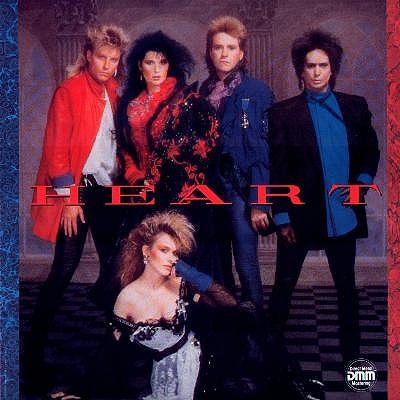
I turned on the TV, found MTV, and boom, I was in the heart of the ’80s. As soon as I hit the channel, a new video began, heavily synthesized and very much over the top. It turned out to be Heart’s “What About Love,” the first release off of their new album. I liked the song immediately. But more importantly, I liked

Heart, 1985. (Look at that hair!?!)

the fact that I could now also put faces and styles to voices and lyrics. I was late, four years too late in understanding the jokes, the fashion motifs and consumerism concerns of my more socioeconomically- blessed classmates. As the saying goes, though, better late than never.

That afternoon, I ended up seeing videos from Sade, Tears for Fears, Dire

Mr. Mister (1985) Welcome To The Real World

Straits, Sting, and Mr. Mister’s “Broken Wings.” The last one was a weird video, but very heartfelt, and one that has stayed with as long as any song I’ve heard or video I’ve seen since (more on that in December). I eventually checked out some boring Alexander O’Neal videos on BET before my mother and younger siblings came home from school and grocery shopping.

It wasn’t as if I hadn’t listened to music before September ’85. I was already well aware of the fact that my music tastes weren’t stereotypically Black, weren’t all that White, and certainly weren’t all that old and mature. Having played the trombone in fifth grade, the fife for Hebrew-Israelite stuff all through ’82, and sang in school choirs sixth, seventh and eighth grade (until my voice started cracking), it wasn’t as if I didn’t know when someone was off key or timing their drum sequences.

Still, I found music that didn’t have the voice of Luther (Vandross) or Patti (Austin or LaBelle) or the beats of Doug E. Fresh, Grandmaster Flash or Run-D.M.C. appealing. It reached me because I had moments I needed to be reached, to be serious, to focus on the pain that was my life in the mid-80s, a pain that few artists sang or wrote about in any direct way. I could relate to the lyrics of rejection, redemption and

The Best of Sade (1992) Album Art

resolution more than I could relate to someone stepping on my brand new sneakers and getting attitude. Songs that could reach me because I had moments I needed to feel and be goofy, to laugh at myself for feeling as pathetic as I did back then. Nothing, and I mean nothing, in the R&B and early hip-hop repertoire of ’85 did that for me.

So I branched out, almost immediately after that MTV afternoon in early-fall early-September. I became even more interested in what some of my classmates called “that White music,” even deliberately listening to WPLJ and Z-100, adding that to WBLS. I also took the occasional turn to WCBS-101 (oldies station of Sinatra, Nat King Cole and Dean Martin), had a brief foray into Phillip Glass and ’80s new age, a rare stumble into jazz, and yes, for those who believe I embody the rejection of all things “Black,” found my need for R&B and some rap in my eyes and ears.That first week in September ’85 pretty much sealed my fate as an eclectic music listener. Many who know me and my Mount Vernon past would say that Humanities and being around all those White kids had something to do with this. Some, including my mother, would say that my education has led to some sense of racial self-loathing, that I deliberately gave up my heritage to chase some false sense of Whiteness — or,

Seal (1994) Album Art

that I’m “acting White.”

I’d say that I was a goofy and serious late-bloomer, who listened to music and lyrics for meaning, for a kernel of wisdom and hope. Some or all of those things can be found in any genre of music, anywhere, anytime, under any circumstance. Music, like people, can’t be separated into races unless people choose to be separate, a truth I understand now and guessed at intuitively then.

The Writing Bug

19 Thursday Aug 2010

Posted by decollins1969 in 1, Boy @ The Window, Eclectic, eclectic music, music, Youth

≈ Leave a comment

Tags

616 East Lincoln Avenue, Abuse, Domestic Violence, Humanities, Mount Vernon New York, Writing


Writing Bug. Source: http://imaginationsoup.net/wp-content/uploads/2009/06/

It’s been twenty-nine years since I first saw myself as a writer and attempted to pursue writing in any form. It was the summer of ’81, the summer before Humanities and seventh grade, the year before the summer of my abuse. For me at least, this was a calm summer, like I was sitting out by a lake with only a slight breeze blowing around me. I was enjoying the peace and quiet of being near still water, of an occasional rustle of trees, of a plop or two of something dropped into the lake. This was a time for me to imagine our lives as better, better than they actually were. I was on an end-of-elementary school and Humanities-acceptance high. I couldn’t have been any higher than if I had snorted coke at one of those drug-fueled parties my mother used to drag us to hang out with her Mount Vernon Hospital buddies when I was five or six (Luckily, my mother didn’t do drugs.)

I spent most of that summer writing my first book. It was a book about the top-secret military hardware the Department of Defense didn’t want the rest of America to know about. I remained consumed with reading about war and military technology in my spare time — I wouldn’t have learned the word “fortnight” otherwise! Everything from the B-1 bomber to the M-1 Abrams tank to the Trident submarine and MX missile was to be in this scoop on the latest in military high-tech. I even wrote a letter to the Pentagon for declassified pictures of these weapons, which I received in mid-July. By the time of my brother Yiscoc’s birth (one form of Hebrew for “Isaac” and pronounced “yizz-co”) later in the month, I’d written nearly fifty pages on these weapons and why they were so cool for the US military to have. Especially in light of the Soviet military threat. Unfortunately, they didn’t declassify the fact that America’s latest tank used depleted uranium in parts of its hull or in its cannon shells. That would’ve been a real scoop at the time.

I also began to keep my own journal as I began to lose interest in America’s military hardware at the end of that summer. Little did I know what was to come at 616 and in seventh grade in Humanities. My journal was an off and on again project of dreadful tales of hunger, humiliation and heartache. By the time of Crush #1 and witnessing my stepfather’s attack of my mother on Memorial Day ’82, I could barely write at all. The last thing I wrote for my journal (which was a spiral notebook) was about my own abuse throughout July ’82. By the time that ended, I didn’t feel like writing anymore.

But that wasn’t the end of the story. My imagination, my constant talking to myself, my eventual fascination with having an eclectic variety of music and rooting for underdog teams and athletes were all part of a writing process that actually didn’t require me to write. All of these coping mechanisms and more gave me more to write about once I went off to college, and especially after my ex-stepfather broke up with my mother after my sophomore. It wasn’t an accident that within a few months of dumb ass moving out in June ’89, I had started my first journal in seven years. I guess that I always had the writing bug, even when I didn’t possess the paper necessary to write.

Raised on Hip-Hop?

10 Saturday Apr 2010

Posted by decollins1969 in 1, culture, Eclectic, eclectic music, music, Politics, Pop Culture, race

≈ Leave a comment

Tags

Authenticity, Cultural Segregation, Culture, Hip-Hop, Music, Politics, Pop Culture, Race


About seven years ago, I had lunch with a young woman and my former boss (see “What We’ll Do for $$$” post, July ’09) at some overpriced Dupont Circle restaurant specializing in Russian cuisine. It was just before the birth of my son Noah. There was so much wrong in that lunch, in that conversation, in the dynamics of that conversation. But in between the idiotic moments of conversation, there was something completely unrelated to it mentioned that topped everything else. In describing her background in the arts and humanities, the young woman said, “I grew up on hip-hop…”

“Huh?,” I thought. Where did that come from? At the time, I was thirty-three, and she was twenty-seven. That would’ve meant that the young woman was born in ’75 or ’76. Hip-hop was barely an embryo the day she was born, and hadn’t become a truly national phenomenon until the end of ’86. Even then, it would take until the ’90s for hip-hop to dominate the music scene. And, given that this individual had grown up in the mid-Atlantic region and in the Midwest — not exactly hotbeds for the development of hip-hop — I found her statement somewhere between ridiculous and as true as a hollow bell.

It did get me thinking, though, about how circumscribed lives in this country of ours can be when we believe that everyone should see the world the way we see it. As if everyone else’s experience can be encompassed in our little life story. “I was raised on hip-hop” sounded to me like this young woman’s family, friends, community and education was completely immersed in the development and growth of hip-hop. Short of her being best friends with Russell Simmons, Sean Coombs and MC Lyte, the statement’s unbelievable on its face. But it’s also a refusal to recognize that the idealized way in which we describe our lives and world doesn’t really add up to what our world was, is, or the way in which we would like it to be.

Now, there are a whole generation of folks who’ve grown up listening to nothing but hip-hop, dancing in nothing but hip-hop rhythms, reading hip-hop-based novels and watching movies with hip-hop themes. Those folk, born after ’82, have the right to say that they were “raised on hip-hop.” But what does that mean, really? That they see the world through the lens of hip-hop culture? That American politics, globalization, social justice, education, popular culture, sports and entertainment can all be seen by folks simply and completely through the lens of hip-hop culture? If it does mean that, then I guess that’s a’ight. After all, that’s how some of these people in the hip-hop era have grown up.

I suspect, however, that this isn’t what folks like the young woman I described earlier mean when they say that they were “raised on hip-hop.” They’re asserting a sense of Blackness, an essence of an understanding of being Black or African American that they assume cannot be distilled as easily through their parents’ R&B, Jazz or pop music, through dance or art that’s more consistent with more culturally integrative times. For them, hip-hop is being Black — or “keepin’ it real” — a step beyond The Lost Poets, a phase past Marvin Gaye and Jackie Wilson, a grittiness that can’t be expressed through Diana Ross, Michael Jackson or Quincy Jones. Hip-hop is being Black in an urban and impoverished context — or being real and cool, I suppose — even when the people growing up on it aren’t impoverished or aren’t even Black.

And I have problems with this assessment of what being “raised on hip-hop” means for so many who have embraced it without understanding the eclectic origins of hip-hop. Or without acknowledging that too much drink from this well can be as isolating as only embracing neo-conservative ideology or only believing that one denomination of a religion — much less an entire religious ideology — can provide all of the answers we will ever need in this life.

The rhythms of my voice, my ability to speak and write in standard English, my eclectic music collection and my understanding of math and science, all illuminate the fact that I have lived a life of many textures. Yet I am still a Black man whose life was shaped by poverty, racism, community, education, music, sports and so many other things that other African Americans of similar backgrounds face and often embrace. I would never claim that I was “raised on hip-hop” any more than I’d say that I was “raised on physical abuse.” I heard Sugar Hill Gang, Doug E. Fresh and Run D.M.C. between ’80 and ’86, and I experienced physical abuse, but I wasn’t “raised” by either. My experiences are a part of me, but they don’t define me, and I certainly wouldn’t allow myself as an African American be defined by them.

To misquote Laurence Fishburne’s character Morpheus from The Matrix (1999), I’ll say this: “What is Black? How do you define, Black? If you’re talking about what you can feel, what you can smell, what you can taste and see, then ‘Black’ is simply a social construct interpreted by our brains.” Being Black isn’t all that’s hip-hop, and hip-hop isn’t all that makes or defines anyone as Black. It’s the totality of our experiences and actions that do so. Even if we were “raised” on country music, lima beans and Ex-lax.

Born In The U.S.A.

08 Thursday Oct 2009

Posted by decollins1969 in 1, Boy @ The Window, culture, Eclectic, eclectic music, Mount Vernon New York, music, Patriotism, Politics, Pop Culture, race, Work, Youth

≈ Leave a comment

Tags

"Born In The U.S.A.", American Politics, Bruce Springsteen, Economic Inequality, Oligarchy, Poverty, Power of Music, Racism, Social Change, Social Justice


What does it say about a nation or society when a quarter century can go by and the same issues that were front and center then are ones that vex us now? What does it say about us when our standard operating procedure is to avert our eyes to problems that we know must be fixed yesterday? How should we see ourselves if the arguments of our grandparents and parents become our own, especially as we tidy them up for our children and our eventual grandchildren?

If I were Bruce Springsteen (and the E Street Band, for that matter), I might be a bit pessimistic right now. It’s been twenty five years since his groundbreaking single and album made him a household — and not just a New York tri-state area — name. All of his work prior to the summer and fall of ’84 contained threads of social commentary on America’s malaise. But Born In the U.S.A. and “Born In The U.S.A.” raised his level of folksy commentary to a new level, at least for those of us who weren’t listening to Nebraska or who hadn’t heard of the band or Springsteen before.

It was such a simple song. And yet it expressed all of the disappointment, disillusionment and disgust of a generation of folks who grew up seeing America one way. Only to find out that the promise of America the Beautiful and free that they were fed growing up was really somewhere between porridge and gruel. “Born down in a dead man’s town, the first kick I took was when I hit the ground” is such a bitter, yet appropriate way to start a song about a Vietnam veteran whose life never worked out the way it was supposed to. Work hard, do the patriotic thing, and expect to have a job and a comfortable life, if not a happy and prosperous one was the expectation of most Americans. Not poverty, debt, welfare, homelessness, drug addiction, undereducation, unemployment and incarceration.

I became a closet Bruce Springsteen fan because of “Born In The U.S.A.” With my mother out of work and on welfare, my father in the middle of his third decade of alcohol abuse, a stepfather with the familial skills of Charles Manson, I could relate to all of the rage and confusion in the song. It was a refreshing change from the coke-induced pop, R&B and rap of the period. The mid-80s were so weird. Between Springsteen and the E Street Band, John Mellencamp and U2, you had Thompson Twins, Doug E. Fresh, Madonna’s “Like A Virgin,” New Edition’s “Mr. Telephone Man,” Prince’s “Purple Rain” and “I Would Die 4 U,” and battles over who was the real Roxanne. At least some artists were awake and aware enough to write something for those of us whose lives weren’t exactly a Benetton commercial.

Here we are, a quarter-century later, and nothing really has changed. The highly educated have at least something to fall back on, while those of us with a high school diploma or less face a permanently uncertain future. The rich, while not getting as rich as they were just two years ago, remain far richer than those of us working hard but not getting anywhere. We are still fighting wars with little long-term purpose and without sufficient benefits to those who are fighting on our government’s behalf. Our government continues to drag its feet on anything that would benefit anyone with an income under $200,000 a year.

It’s no wonder that somewhere between two and three million Americans are in jail or prison, that three out of ten of us never graduate from high school, and that the richest one percent of Americans have a net worth greater than the bottom 80 percent of us. It’s such a shame that it could render all of us helpless. I, for one, may need to consider refugee status in a nation with even a modicum of universal health care and moderately less hypocrisy in its government.

But Bruce Springsteen hasn’t given up, at least in his music. His work continues to speak truth to power, to say things that most in the music world don’t have the courage or the innate wisdom to say. It’s unfortunate that what sells today is the bling of booty and booty, and not the thought-provoking lyrics and feelings of folks like Springsteen, of artists like Chuck D and Tupac, of those who dare to use music as a weapon of social change (although Pink, John Mayer and James Blunt are occasional exceptions).

With the end of a disappointing first decade of the twenty-first century looming though, maybe we can still hold out hope for a more permanent nexus between our wild world of pop culture and our need for a stimulated social consciousness. That kind of hope is what keeps me going.

← Older posts
Newer posts →

Boy @ The Window: A Memoir

Boy @ The Window: A Memoir

Places to Buy/Download Boy @ The Window

There's a few ways in which you can read excerpts of, borrow and/or purchase and download Boy @ The Window. There's the trade paperback edition of Boy @ The Window, available for purchase via Amazon.com at http://www.amazon.com/Boy-Window-Donald-Earl-Collins/dp/0989256138/

There's also a Kindle edition on Amazon.com. The enhanced edition can be read only with Kindle Fire, an iPad or a full-color tablet. The links to the enhanced edition through Apple's iBookstore and the Barnes & Noble NOOK edition are below. The link to the Amazon Kindle version is also immediately below:

scr2555-proj697-a-kindle-logo-rgb-lg

Boy @ The Window on Amazon.com: http://www.amazon.com/Boy-The-Window-Memoir-ebook/dp/B00CD95FBU/

iBookstore-logo-300x100

Boy @ The Window on Apple's iBookstore: https://itunes.apple.com/us/book/boy-the-window/id643768275?ls=1

Barnes & Noble (bn.com) logo, June 26, 2013. (http://www.logotypes101.com).

Boy @ The Window on Barnes & Noble: http://www.barnesandnoble.com/w/boy-the-window-donald-earl-collins/1115182183?ean=2940016741567

You can also add, read and review Boy @ The Window on Goodreads.com. Just click on the button below:

Boy @ The Window

Twitter Updates

Tweets by decollins1969
  • RSS - Posts
  • RSS - Comments

Archives

  • June 2025
  • April 2023
  • September 2022
  • August 2022
  • July 2022
  • June 2022
  • May 2022
  • April 2022
  • March 2022
  • January 2022
  • December 2021
  • November 2021
  • October 2021
  • September 2021
  • August 2021
  • July 2021
  • June 2021
  • April 2021
  • March 2021
  • February 2021
  • January 2021
  • December 2020
  • November 2020
  • October 2020
  • September 2020
  • August 2020
  • July 2020
  • May 2020
  • April 2020
  • March 2020
  • January 2020
  • December 2019
  • November 2019
  • August 2019
  • July 2019
  • June 2019
  • May 2019
  • April 2019
  • March 2019
  • February 2019
  • January 2019
  • December 2018
  • November 2018
  • October 2018
  • September 2018
  • August 2018
  • July 2018
  • June 2018
  • May 2018
  • March 2018
  • February 2018
  • January 2018
  • December 2017
  • November 2017
  • October 2017
  • September 2017
  • August 2017
  • July 2017
  • June 2017
  • May 2017
  • April 2017
  • March 2017
  • February 2017
  • January 2017
  • December 2016
  • November 2016
  • October 2016
  • September 2016
  • August 2016
  • July 2016
  • June 2016
  • May 2016
  • April 2016
  • March 2016
  • February 2016
  • January 2016
  • December 2015
  • November 2015
  • October 2015
  • September 2015
  • August 2015
  • July 2015
  • June 2015
  • May 2015
  • April 2015
  • March 2015
  • February 2015
  • January 2015
  • December 2014
  • November 2014
  • October 2014
  • September 2014
  • August 2014
  • July 2014
  • June 2014
  • May 2014
  • April 2014
  • March 2014
  • February 2014
  • January 2014
  • December 2013
  • November 2013
  • October 2013
  • September 2013
  • August 2013
  • July 2013
  • June 2013
  • May 2013
  • April 2013
  • March 2013
  • February 2013
  • January 2013
  • December 2012
  • November 2012
  • October 2012
  • September 2012
  • August 2012
  • July 2012
  • June 2012
  • May 2012
  • April 2012
  • March 2012
  • February 2012
  • January 2012
  • December 2011
  • November 2011
  • October 2011
  • September 2011
  • August 2011
  • July 2011
  • June 2011
  • May 2011
  • April 2011
  • March 2011
  • February 2011
  • January 2011
  • December 2010
  • November 2010
  • October 2010
  • September 2010
  • August 2010
  • July 2010
  • June 2010
  • May 2010
  • April 2010
  • March 2010
  • February 2010
  • January 2010
  • December 2009
  • November 2009
  • October 2009
  • September 2009
  • August 2009
  • July 2009
  • June 2009
  • May 2009
  • April 2009
  • March 2009
  • February 2009
  • January 2009
  • December 2008
  • November 2008
  • October 2008
  • September 2008
  • August 2008
  • July 2008
  • June 2008
  • May 2008
  • April 2008
  • March 2008
  • February 2008
  • January 2008
  • December 2007
  • November 2007
  • October 2007
  • September 2007
  • August 2007
  • July 2007
  • June 2007

Recent Comments

MaryPena's avatarMaryPena on My Day of Atonement/Bitter Hat…
decollins1969's avatardecollins1969 on No Good Teaching Deed Goes…
Mary Rose O’Connell's avatarMary Rose O’Connell on No Good Teaching Deed Goes…

NetworkedBlogs on Facebook

NetworkedBlogs
Blog:
Notes From a Boy @ The Window
Topics:
My Life, Culture & Education, Politics & Goofyness
 
Follow my blog

616 616 East Lincoln Avenue A.B. Davis Middle School Abuse Academia Academy for Educational Development AED Afrocentricity American Narcissism Authenticity Bigotry Blackness Boy @ The Window Carnegie Mellon University Child Abuse Class of 1987 CMU Coping Strategies Crush #1 Crush #2 Death Disillusionment Diversity Domestic Violence Economic Inequality Education Family Friendship Friendships Graduate School Hebrew-Israelites High-Stakes Testing Higher Education History Homelessness Humanities Humanities Program Hypocrisy Internalized Racism Jealousy Joe Trotter Joe William Trotter Jr. K-12 Education Love Manhood Maurice Eugene Washington Maurice Washington Misogyny Mother-Son Relationship Mount Vernon High School Mount Vernon New York Mount Vernon public schools Multiculturalism MVHS Narcissism NFL Pitt Pittsburgh Politics of Education Poverty President Barack Obama Race Racial Stereotypes Racism Relationships Self-Awareness Self-Discovery Self-Reflection Sexism Social Justice Teaching and Learning University of Pittsburgh Violence Whiteness Writing

Top Rated

Blog at WordPress.com.

  • Subscribe Subscribed
    • Notes from a Boy @ The Window
    • Join 103 other subscribers
    • Already have a WordPress.com account? Log in now.
    • Notes from a Boy @ The Window
    • Subscribe Subscribed
    • Sign up
    • Log in
    • Report this content
    • View site in Reader
    • Manage subscriptions
    • Collapse this bar
 

Loading Comments...