
• Spinning Sage’s Gold: Allegories on the Western-Dominated Present and a Possible Post-Western Future (2025)
  • About Me
  • Other Writings
  • Interview Clips
  • Video Clips
  • Boy @ The Window Pictures
  • Boy @ The Window Theme Music

Notes from a Boy @ The Window

~

Notes from a Boy @ The Window

Category Archives: culture

Colleges, HBCUs, and the No-Profit Motive

20 Monday Dec 2010

Posted by decollins1969 in 1, Academia, Boy @ The Window, culture, Eclectic

≈ Leave a comment

Tags

Adult Learners, Carnegie Mellon University, College of General Studies, Course Offerings, Evening Courses, HBCUs, Howard University, Saturday Classes, Student Affairs, Student Development, Student Engagement, Traditional Students, University of Pittsburgh
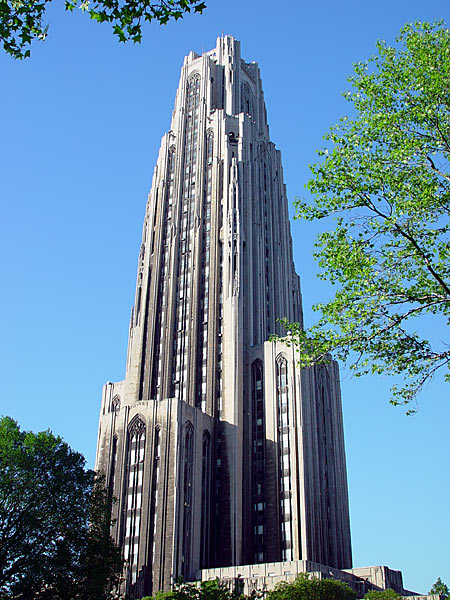

Cathedral of Learning, University of Pittsburgh, December 20, 2010. Source: http://www.photohome.com

At the beginning of my junior year at the University of Pittsburgh (’89-’90), I took a cross-listed English lit and Black Studies course on African American women and men in literature. I took it partly to fulfill a writing requirement, and partly because I wanted to explore literature written by Black authors for once.


Besides the decidedly poor view of Black men in this literature — no doubt why Tyler Perry sees no need in developing a Black male character with the minimal complexity of a Worf of Mogh from the Star Trek franchise — there was another issue I needed to overcome. It was a 5:45 to 8:10 pm class on a Tuesday evening. Prior to the fall of ’89, I’d only taken one course that started after 4 pm, an assembly language course, and I withdraw from it after switching my major to history the previous fall.

But this course was great, despite books like The Women of Brewster Place and A Woman’s Place. I knew what some of the smartest Black women on campus thought of me before I opened my mouth. But much more important than that, I got to know a greater cross-section of students than the traditional daytime students between the ages of eighteen and twenty-four. Nontraditional students — adult learners as we educators call them now — populated our classroom.

They were housed in the College of General Studies, which didn’t mean anything negative to me. Some of my older friends from my freshman courses were CGS students, and were sharper in wit and wisdom than many of my Honors College friends and Humanities classmates from Mount Vernon High School in New York. They added tremendously to this course, and made it so much more fun than I would’ve had with other twenty-year-olds.

I ended up taking six 5:45 to 8:10 courses in my last two years of undergrad, and two more evening courses my first year of grad school at Pitt. They were some of my most memorable courses, with a diverse student population because of CGS, with students who were fully capable of performing well in a college setting. In part because counselors and other student services staff at CGS were available to help these students overcome their relative lack of academic preparation and because almost all of the courses these students took were fully integrated into Pitt’s course schedule.

It seems obvious. But treating adult learners with the care they needed and giving them courses that any traditional student could take made them feel more at home, and probably were significant factors in the success I saw so many of them have.

Fast forward eighteen years to my two semesters as an adjunct professor at Howard University. Besides

Founders Library, Howard University, Washington, DC Photo taken 9 April 2006 with Canon Powershot SD300. David Monack, author, released photo into public domain.

the laziness of the students in my Teaching Black Studies course — not to mention the stuffiness of the faculty (imagine referring to all of your colleagues as “Dr. So-and-So,” and not by their first names) — the main problem I had with them was with the times offered for my course. They originally wanted me to teach on a Monday-Wednesday-Friday noontime schedule. But I worked full-time, and preferred to teach an evening course. The Afro-American Studies department compromised, and gave me a 5 pm course that met Monday-Thursday during the summer.


My fall course, though, fell through, as the latest Howard wanted to schedule it was at 4 pm, and then mislabeled the course on top of that. It was a ridiculous experience, dealing with underprepared and entitled, spoiled students, not to mention a lethargic faculty and administration. I learned later that Howard didn’t offer evening, weekend or distance learning courses at the undergraduate level. I learned soon after that many universities — historically Black and otherwise — were more like Howard than they were like my student and teaching experiences at Pitt, Duquesne and George Washington.

There’s real money that universities — especially HBCUs — are giving up to maintain a false sense of the college experience for faculty and students alike. Even among traditional students, working part-time jobs and having expansive extracurricular activities makes it difficult to fit appropriate classes in between 8 am and 5 pm. While online teaching is one way to go, putting together course offerings that fit the schedules of twenty-first century students is a better place to start.

While the Harvards, Yales, Princetons, and even Carnegie Mellons of the university universe can afford to act like its 1969 still, Howard, Morehouse, Clark Atlanta and so many others cannot. You want to stay solvent and academically relevant? Dusting off the course booklet and looking at evenings and Saturdays to accommodate all of your potential students is a great place to begin.

Slumming Lords Spinning Stories Out Of Suffering

15 Wednesday Dec 2010

Posted by decollins1969 in 1, Academia, Boy @ The Window, culture, Eclectic, Politics, race, Work

≈ Leave a comment

Tags

August 1983, Creative Nonfiction Writing, Food Stamps, Homelessness, John Block, John R. Block, Matthew Boyle, Mediabistro.com, Misery, New York Times, Poverty, Race, Reagan Administration, Secretary of Agriculture, Slumming, USA Today, Welfare, White middle class


New York City – “Doing the slums” – A scene in the Five Points / from a sketch by a staff artist, Policeman leading upper class people through the Five Points neighborhood, Published 1885; December 15, 2010. Source: http://memory.loc.gov/service/pnp/cph/3c20000/3c22000/3c22600/3c22660v.jpg

In July and August ’83, my family’s first summer on welfare, then US Secretary of Agriculture John Block decided to do an experiment involving food stamps, at least as reported by USA Today at the time (unfortunately, USA Today’s archives only go as far back as ’87). He had himself and his family “live” off of food stamps — $58 worth — for a week.

Official Secretary of Agriculture Photo, John R. Block, December 15, 2010. Source: http://news.siu.edu/news/April04/040104pr4039.htm

Mind you, Block didn’t move them out of their comfortable home in NW DC to live in SE Washington or off North Capitol Street and New Jersey Avenue. They didn’t stop buying clothes, driving cars or paying their other bills. No, for a week, the Block family — including their nineteen-year-old daughter and the daughter’s equally anorexic nineteen-year-old friend — bought their food with food stamps to show how hard (or easy) it was for a family of four to budget for all of their eating needs on the government welfare dime.

Last week, Mediabistro.com reported on twenty-three year-old Daily Caller reporter and American University grad student Matthew Boyle’s work to do a three-story account of his food stamps experience. “You wouldn’t think I’d qualify….I don’t meet the traditional definition of a poor person, and in fact I’m not poor. But that didn’t matter to the District’s Department of Human Services. They approved me anyway,” Boyle said. Then Boyle gave his income. “I make $600 a month writing for Daily Caller and another $493 as a teaching assistant at AU. My rent is $1,365.”

Sorry Boyle, but by income alone, you qualify for food stamps, because unless things have changed since my grad school years, only your part-time reporter income counts as traditional income from a workforce standpoint, enabling you to qualify. By definition, you are poor, no matter your middle-income and elite university sensibilities.

But there’s a more important point than shattering Boyle’s socioeconomic views of himself that I need to make here, though. It stems in part from these strokes of Boyle’s keyboard: “The arrangement works because most of my rent and other expenses are covered under my student loans or paid by my parents (thanks, Mom and Dad).”

Vintage Food Stamps. Source: http://slashfood.com

Yes, this is what makes your situation a middle class one, your loans and your parents. As if millions of other people who are poor or solidly middle class haven’t received help from loans, parents, or, God-forbid, food stamps. That someone with Boyle’s background shouldn’t qualify because his parents have the dollars to bail him out.

It’s downright idiotic to complain about qualifying for food stamps. There are millions of other people with similar incomes, including grad students, who are grateful to have the program to supplement their income so that they can eat and pay rent. It’s also a bit arrogant to see the system as flawed from the contrarian perspective of a White middle class outsider — one who is technically poor at present — who thinks that it’s too easy to get food stamps.

This goes beyond John Block or Matthew Boyle, though. I took a creative nonfiction writing class to help kick-start my transition from academic writing to other, more literary forms in September ’01. The class was mostly made up of folks who saw themselves as middle class, many of whom were White. For one particular personal literary account assignment, four of these students decided to interview homeless men and women, all of whom were of color. I think that was the last class I showed up for, to hear these students talk about how touched they were by the horrors that had affected their subjects.

There’s nothing wrong with wanting to understand or even help others less fortunate than us. The need to go slumming so that you can tell a story, though, is all too typical of a superficially minded society and journalism community. I didn’t need Block’s August ’83 experiment to know that it was hard to shop with food stamps — I shopped every day for my mother with them, and usually with a tinge of bitterness about using them. Boyle’s slumming to uncover inconsistencies is an example of yet another wannabe journalist making their name off of others misery.

These are stories that would be much better told by someone who’s either lived the experience or is extremely knowledgeable of the people and subjects involved. But in our screwed up world, people like me are too biased to tell these stories, in articles and in books. And people wonder why writers like James Baldwin and Ralph Ellison became expatriates or bitter later in their careers.

Cream on the Brain

12 Sunday Dec 2010

Posted by decollins1969 in 1, Academia, Boy @ The Window, culture, Eclectic, Mount Vernon High School, Politics, race

≈ Leave a comment

Tags

"A Substance of Things Hoped For", A.B. Davis Middle School, Ability Grouping, Academic Excellence, Barbara Sizemore, Carnegie Mellon University, Creme de la Creme, Culture Wars, Diversity, Fear of a "Black" America, Humanities, Identity, Jeanne Oakes, Keeping Track, Magnet Programs, Magnet Schools, Mount Vernon High School, Mount Vernon New York, Mount Vernon public schools, Multiculturalism, Pittsburgh Public Schools, Student Engagement, Tracking, University of Pittsburgh


A Brain Floating in the Heavy Cream of Obsession with Academic Excellence, December 13, 2010. Donald Earl Collins

A quarter-century ago, education scholar and Ford Foundation education program director Jeanne Oakes published Keeping Track: How Schools Structure Inequality. Oakes’ groundbreaking, definitive work on the educational inequalities created or reinforced by ability grouping has led a whole generation of scholars to examine the viability of tracking in K-12 education. In a 2005 edition of her book, Oakes wrote that “through tracking, schools continue to replicate existing inequality along lines of race and social class and contribute to the intergenerational transmission of social and economic inequality.”

I picked up Oakes’ Keeping Track for the first time in ’90. By then, I already knew from experience how true her words and research were. Six years in Mount Vernon, New York’s public schools via the Humanities Program had taught me all I’d need to know about the tensions between creating a class of students whose level of academic performance was par excellence while simultaneously addressing segregation and diversity in the school district. The magnet program and the district failed at one and succeeded at the other, which in turn reinforced its failure.

I worked on a paper some twenty years ago for the late Barbara Sizemore, my professor at the University of Pittsburgh my senior year (and a former superintendent of DC Public Schools) looking at how magnet school programs actually created resegregation in individual schools and Pittsburgh Public Schools because of the exclusivity that comes with tracking or ability grouping. It was an easy paper for me to do, guided in no small part by my experiences in Humanities at Davis Middle and Mount Vernon High School. Easy, but not easy to get a handle on beyond the obvious demographics of race, class and test scores.

I managed to wiggle myself into the culture wars of the early ’90s and the debate around multiculturalism and K-12 education soon after that paper. It seems obvious now that the unacknowledged diversity of Humanities was what enabled me to take sides in favor of multiculturalism. That led to my dissertation looking at the historical development of multiculturalism among Blacks in Washington, DC (“A Substance of Things Hoped For,” Carnegie Mellon University, 1997 for those who want more information), and eventually, my first book, Fear of a “Black” America from six years ago.

But it took my memoir Boy @ The Window to bring me back to square one. I realized about a year ago that I’d done nearly thirty interviews of former classmates, teachers and administrators for the manuscript. There was much more material to mine beyond their impressions of me and how to shape their descriptions of themselves — and my memories of them — into characters for Boy @ The Window. I decided to work on an academic piece that looked at the benefits and pitfalls of high-stakes schooling — not just testing — in the form of a history lesson via magnet schools, specifically my Humanities experience.

After a quick rejection, I redoubled my efforts a few months ago. I decided to look at the education psychology and sociology literature, as well as Oakes again, to see how these interviews and my experiences could be useful in our testing-obsessed times. I finally realized what had troubled me about Humanities for the past three decades. It was the reality that all involved with Humanities had taken on the e pluribus unum identity of an academic superstar (much more than just a nerd, by the way). Beyond Black or White, and ignoring the realities of poverty in our district and (at least for me) in our program, Humanities was all about sharpening our academic personas above all else.

This fueled the major success of Humanities during its existence between ’76 and ’93, which in turn would define its failures. In successfully nurturing the idea of academic excellence as identity, as evidenced by so many of us attending and graduating from college, this magnet program failed in its other major educational functions. It failed to embrace diversity, to help its students understand the diversity that was Humanities, to nurture creativity and imagination beyond A’s and college acceptances. It failed to develop the whole student, which aside from its charge to help desegregate Mount Vernon public schools, was its original mission.

Humanities failed because its teachers, administrators (including the former superintendent of schools) and many of the most vocal parents (mostly affluent and White) refused to deal with diversity seriously. Academic excellence without significant parental engagement or the humility necessary to discuss issues of race, gender, class, sexual orientation led to a severe overemphasis on calling us the “creme de la creme.” All of this would have a negative impact on our development as students, and as emerging adults.

I don’t think that it’s asking too much of parents, administrators and teachers to work together in both striving for academic excellence while building programs that embrace difference and nurture creativity and imagination, and not just an addiction to A’s. Or is it?

The POTUS and The Last Airbender

08 Wednesday Dec 2010

Posted by decollins1969 in 1, Boy @ The Window, culture, Eclectic, Movies, Politics, Pop Culture, race

≈ Leave a comment

Tags

Avatar, Avatar: The Last Airbender, Bryan Konietzko, Bush Tax Cuts, Capitulation, Compromise, GOP, James Cameron, Left of Center, Liberals, M. Night Shyamalan, Michael DiMartino, Noah Ringer, Obama Administration, POTUS, POTUS 44, President Obama, Press Conference, Progressives, Tea Party, The Last Airbender, The Lexus and the Olive Tree, Thomas L. Friedman


C-SPAN Video Player - President Obama News Conference on Tax Cut Agreement Screen Shot, December 8, 2010. Donald Earl Collins. Qualifies as fair use under United States copyright law because screen shot is of low quality and is only intended to highlight the subject of this post.

In a post I did during President Obama’s campaign run (see “The Avatar State” post, July 22, 2008), I dared to hope that the then energized candidate and senator would be a bridge that would work across the divides of race and ideology. Much like the main character of my favorite animation series of all time, Aang of the Avatar: The Last Airbender. But unlike Thomas L. Friedman’s The Lexus and the Olive Tree (1999), I don’t purport to have a special wisdom about how he can do this.


And like the animated series, Obama’s run for president also came to a successful end. For both the creators of the series and our beleaguered president, it was time for the big time. For one, it was the opportunity to do a live-action, big screen movie to introduce the epic nature of kids embarking on a journey to save the world to a larger audience. For Obama and his group, it was the chance to govern based on the ideas and ideals that they communicated successfully to nearly 67 million voters.

Unfortunately, both have disappointed, and not just a little. James Cameron managed to wrest away the very title of the movie — Avatar — from the Avatar: The Last Airbender creators Michael DiMartino and Bryan Konietzko, even though his movie was merely a dream at the time that series had begun in ’04. That, and settling for M. Night Shyamalan as director turned The Last Airbender into an irrelevant movie that hurt the brand, while inadvertently helping Cameron’s Avatar make money-making history.

Poor Noah Ringer as Aang of M. Night Shyamalan's The Last Airbender Screen Shot, December 8, 2010. Donald Earl Collins. Qualifies as fair use under United States copyright law because screen shot is of low quality and is only intended to highlight the subject of this post.


The Obama Administration also began conceding its brand within weeks of reaching office. They say that governing dilutes the rhetoric of campaigns, and even hopeful me maintained enough jadedness to realize that. Yet to see how quickly Obama and his administration moved from action on the stimulus bill to a bunker mentality on virtually everything else was a bit distressing. The picks of Larry Summers, Peter McNickol of Ally McBeal fame — I mean Timothy Geithner — and Arne Duncan to be pillars of his economic and education teams should’ve been signs. That the Obama Administration would look after corporate and rich people’s interests before it would look out for mine. That there would be little fighting for the ideas and ideals of his campaign.

Only yesterday afternoon did Obama decide to flash anger at liberals and progressives. To be truthful, some of them have been bitter and overly critical of Obama’s decisions almost from day one. But to paint all of those left of center with the same broad brush, as if we all “have the satisfaction of having a purist position, and no victories for the American people. And we will be able to feel good about ourselves and sanctimonious about how pure our intentions are and how tough we are.”

It’s a nice sentiment. Except that the president doesn’t seem to understand the difference between compromise and capitulation. As David Gergen put it on CNN yesterday, while Obama may well be right in heading off political opposition from the Tea/GOP group looking to hold Americans and him hostage, his execution of this from a communications standpoint was terrible.

We’re approaching the midway point of his first — and possibly only — term in office, and Obama has yet to take a serious stand on any principle he campaigned for in ’08. I’m not speaking as a liberal or

"Sozin's Comet, Part 4" from Avatar: The Last Airbender Screen Shot, December 4, 2010. Donald Earl Collins. Qualifies as fair use under United States copyright law because screen shot is of low quality and is only intended to highlight the subject of this post.

progressive here. Just look at his memoirs, his speeches and campaign promises, even the speeches and pressers Obama gave in his first months in office. Now, some of this is the result of real compromise. But after nearly two years, those compromises look more and more like concessions for the rich and corporate, and less like compromises to protect the poor, unemployed and underemployed.


Like the poor kid who didn’t have a chance in heaven to measure up to the character Avatar Aang in the Avatar: The Last Airbender series, it looks as if President Obama is having a hard time measuring up to his forty-six-year-old self. But hopefully, like the animation version of Aang, the real Obama will find his way. He needs to take a stand on something important to him and us, and do it with the bravado in which he ran on. So that even the folks who wouldn’t vote for him if God asked them to will at least get out of his way.

On Broken Wings

02 Thursday Dec 2010

Posted by decollins1969 in 1, Boy @ The Window, culture, Eclectic, eclectic music, Mount Vernon High School, Pop Culture, race, Youth

≈ Leave a comment

Tags

"Broken Wings", 616, 616 East Lincoln Avenue, Billboard Pop Chart, Eclectic Music, Forgiveness, Healing, Hip-Hop, Humanities, Mending Hearts, Mount Vernon High School, Mount Vernon New York, Mr. Mister, Musical Tastes, Race, Rap, Top 40, Welcome To The Real World


Two pictures of a seagull that eventually soared, Puget Sound off Bainbridge Island, WA, May 21, 2001. (Donald Earl Collins).

Two pictures of a seagull that eventually soared, Puget Sound off Bainbridge Island, WA, May 21, 2001. (Donald Earl Collins).

It was thirty years ago on this date that Mr. Mister’s “Broken Wings” Broken Wings was #1 on Billboard’s Top 40 pop charts. Twenty-five years, another time, another person, I was in and was. Somehow in a world dominated by hip-hop and rap, it seems like it’s been way more than a quarter-century since a bunch of studio musicians in their mid-thirties got together to create the album Welcome To The Real World.

What I remember most about my fifteen-year-old self in ’85 what how music served as an escape from the violence — or the potential of it — at 616 and from my loneliness at school. I could find myself in another world through song, where no one could touch or hurt me in any way, where life seemed more worthwhile. The sounds, images and smells that lyrics and notes could conjure gave me a place to find myself, a confidence that I otherwise didn’t have.

I liked a lot of crap in those days of my renewed interest in music. I liked Mr. Mister, Tears for Fears, some Heart, Sting, Simple Minds, some Madonna or a-ha, and U2 even before I knew who U2 was. I also liked Kool In The Gang, Billy Ocean, Lisa Lisa and Cult Jam (with Full Force), Run DMC, early Whitney Houston, some Freddy Jackson, Sade, and Luther. The problem was, I had trouble combining these divergent interests in music. Sade would make me feel sad. “Another woman out of my reach,” I often thought. While I liked Run-DMC (especially “My Adidas”), the lyrics were sometimes silly, and I couldn’t be silly all the time. Kool In The Gang had gone from cool to wack in the last year or so. For me, most of the R&B from the mid-’80s was boring, romantic yet stiff. I wasn’t feelin’ it.

Sunset Over Clouds (feeling of soaring), December 2, 2010. Source: http://www.writeideaonleadership.com

Sunset Over Clouds (feeling of soaring), December 2, 2010. Source: http://www.writeideaonleadership.com

Certainly the pop of ’85 wasn’t exactly full of passion, pride, or pain. It often had the feel of folks working off a high in a recording studio, which has turned out to be true in many cases. But it was easier to listen to. Keep in mind that the music world had just started to recover from seven or eight years of music that was without social conscience and virtually pain-free — and that’s even accounting for Phyllis Hyman, Miki Howard and U2.

Mr. Mister’s “Broken Wings” met me at a place where I needed to be met in ’85. My own “wings” needed some mending. I wanted to be free of my family’s so-called love, and I wanted to know what love as an emotion really felt like. I needed inspiration on a weekly basis because of what I saw at home and at Mount Vernon High School. R&B rarely provided that kind of fuel for my mind and spirit.

I found it in the lyrics, the liner notes, the pace of the music, the ability of a voice or synthesizer (as the case often was) to make a song soar. Given my situation, it was a no-brainer for me to choose lyrics like “take these broken wings and learn to fly again, learn to live so free . . .” over “rock . . . steady . . . steady rockin’ all night long . . .” in the mid-’80s.

I certainly don’t walk the streets of Mount Vernon with $20 Walkman knockoff singing in high falsetto to Mr. Mister like I did twenty-five (or thirty) years ago (I do that in DC and Maryland running 10Ks, with my iPod or iPhone instead). But I do still find songs like “Broken Wings” appealing. At almost forty-one (now almost forty-six), I understand much better the need to mend broken relationships, to heal bruised and broken hearts, to want to make yourself and those you love whole again. From my wife to my mother to my late sister Sarai and older brother Darren, I really do understand. I sometimes can’t believe I got this much out of one song from so long ago. Especially when I was so young and so injured myself.

Deep Race 9

30 Tuesday Nov 2010

Posted by decollins1969 in 1, culture, Eclectic, Movies, Politics, Pop Culture, race

≈ 1 Comment

Tags

1990s, Acting, Alexander Siddig, Avery Brooks, Culture, Nana Visitor, Pop Culture, Race, Screenwriting, Star Trek, Star Trek: Deep Space 9, Star Trek: Deep Space Nine, Star Trek: DS9, Terry Farrell


Star Trek: DS9, "What You Leave Behind" Screen Shot, November 30, 2010. Donald Earl Collins. Qualifies as fair use under US copyright law because this screen shot is used for limited illustrative purposes in identifying the theme of this article.

I just finished re-watching the Star Trek: Deep Space Nine series via Netflix, probably one of the more underappreciated Star Trek franchise shows, not to mention underappreciated during the good-old ’90s. Since the middle of June, through the death of my sister, teaching, writing and revising different pieces and Boy @ The Window, I re-watched all 176 episodes (although, admittedly, I’d missed most of the seventh and final season in ’98-’99, between travel and a long job search).

This was easily the Star Trek series with the best acting, the most interesting story lines, and the most complicated in terms of moral choices and the complexity of humanity (and the universe more broadly). I gained an even greater appreciation for Avery Brooks — who’d previously been known as Spenser: For Hire’s Hawk character — Terry Farrell, Alexander Siddig and the rest of the cast as they grew the show over the course of seven years.

But you can’t find the series anywhere in the cable TV universe. It’s as if it disappeared in a singularity — a black hole for the layman. Even Star Trek: Enterprise, a terribly written series with mediocre acting on its best days, can be found in rerun syndication. I can’t help but think that Avery Brooks’ position as the lead actor in the series has a little something to do with my inability to find DS9 on TV.

The lead cast, dealing with complicated issues in ways that some have written would’ve made Gene Roddenberry spin like a top in his grave, may have made many uncomfortable in our intolerant of anything serious times. Race, genocide, oppression, the darker side of human — maybe even alien — nature, the idea that not everything in the distant future will be paradise. All too much for those who prefer their liberalism brewed in a ’60s era coffee machine.

The last five months of using Netflix to relive a piece of ’90s culture was wonderful. Watching classically trained theater actors on the small screen, watching religion, science, race and conflict brought to together so nicely. It made me want to give James Lipton a call to get him to interview Avery Brooks, if he hasn’t done so already. After watching the series finale last week, I felt like I lost a dear old friend again.

An Alternate Universe Donald

23 Tuesday Nov 2010

Posted by decollins1969 in 1, Academia, Boy @ The Window, culture, Eclectic, eclectic music, Marriage, music, Politics, Pop Culture, race, Religion, Youth

≈ Leave a comment

Tags

Alternate Universe, Amy Holmes, Carnegie Mellon University, Conservatism, Dinesh D'Souza, Faust, FOX News, John McWhorter, Jon Secada, Kafka, Mariah Carey, Megyn Kelly, Tara Wall, Tupac, University of Pittsburgh, Wu-Tang Clan


Muppet as Michael Steele on The Daily Show Screen Shot, November 23, 2010. Source: http://tellingthetruthiness.blogspot.com

In light of revelations — skin-deep, that is — from FOX News’ not-so-dumb-butt Megyn Kelly in an upcoming GQ article titled “She Reports, We Decided She’s Hot,” it seems to me that I missed out. Not in taking photos that reveal arms, chest, butt, abs or flanks. But in the massive gold rush that anyone with brains and without a conscience could have been a part of over the last thirty years. That gold rush? The “I’m a conservative and will saying anything, true or not” gold rush.

If I had turned conservative while at Pitt or Carnegie Mellon, it would’ve opened up doors. More doors than have been opened to or for me over the past twenty years. Imagine, a tall Black guy with a doctorate and still in his twenties and willing to serve as a mouthpiece for low taxes on the rich, a minimal social welfare safety net, and corporatization of public schools and Capitol Hill? I’d be a senior staff person of the American Enterprise Institute or the Heritage Foundation by now, with a 3-handicap on the golf course to boot!

But back in the days when I attended Pitt, conservatives were not nearly that organized. There were plenty of them, but not working to identify future leaders the way conservatives have at places like Dartmouth or Stanford or even Carnegie Mellon, my second grad school. No, at Pitt, most conservatives hunkered down in bathroom stalls calling people like me the N-word or offered me bananas through their scrawlings on the metal partitions and doors.

College Republicans and other conservatives were much more organized on Carnegie Mellon’s campus, and with nearly four years there, I could’ve joined at any time. I’d probably adapted my music list. I’m not sure Mariah Carey or Jon Secada would’ve gone over well with this group, much less Tupac or Wu-Tang. I definitely would’ve needed to shave the goat-tee, my signature look for most of the past seventeen years. And I would’ve started using a knife and fork to eat fried chicken for sure.

Still, these would’ve been small prices to pay for steady and well-paying employment. I would’ve hit a six-figure income before I turned thirty. And I would’ve easily been able to turn my history of multicultural thoughts and actions of African Americans in the twentieth century — Fear of a “Black”

John McWhorter at the ISMIL conference in Leiden, June 2008, downloaded November 23, 2010. Jasy jatere (in public domain)

America — into a book about the fears of Blacks and Whites of a new and dangerous multicultural world. I might’ve even been able to keep my title, without the word Black in quotes, though. It would’ve been a bestseller, and I would’ve offed Dinesh D’Souza and John McWhorter as the intellectual giants of conservative thought on race. Yay, alternative me!

I’m not sure if me and my wife of more than ten years would’ve made it past the boyfriend-girlfriend stage. Her views are less leftist and more amoral in some areas than mine. But I couldn’t see her supporting me being a mouthpiece against gay rights and marriage, abortion, education reform without community engagement and austerity cuts in public services. It probably wouldn’t have mattered how much money I made. All of my memories of marriage, of good times and bad, of arguments and making up, of Noah from pregnancy to seven — all gone. Only a person equally conservative and amoral — more than likely White, although Tara Wall or Amy Holmes are among notable exceptions. — would’ve likely married me or would’ve wanted to have a kid with me.

For some folks, this is a pointless exercise. I’m a liberal, a social-Christian, democratic-leftist, one with a handful of cultural conservative views around etiquette and public conduct that I wouldn’t impose on anyone except myself, a progressive, in a word. I didn’t have tons of opportunities to become a lucrative mouthpiece and writer for the Right. And I wouldn’t have taken them if I’d been taken to a strip club and given a suitcase full of $100-bills to be turned. Still, it’s good to dream. To realize that my life, such as it has been, has had so much more color and flavor to it than it would’ve in this Faust-Kafka vision of one of my alternate universes.

← Older posts
Newer posts →

Boy @ The Window: A Memoir

Boy @ The Window: A Memoir

Places to Buy/Download Boy @ The Window

There's a few ways in which you can read excerpts of, borrow and/or purchase and download Boy @ The Window. There's the trade paperback edition of Boy @ The Window, available for purchase via Amazon.com at http://www.amazon.com/Boy-Window-Donald-Earl-Collins/dp/0989256138/

There's also a Kindle edition on Amazon.com. The enhanced edition can be read only with Kindle Fire, an iPad or a full-color tablet. The links to the enhanced edition through Apple's iBookstore and the Barnes & Noble NOOK edition are below. The link to the Amazon Kindle version is also immediately below:

scr2555-proj697-a-kindle-logo-rgb-lg

Boy @ The Window on Amazon.com: http://www.amazon.com/Boy-The-Window-Memoir-ebook/dp/B00CD95FBU/

iBookstore-logo-300x100

Boy @ The Window on Apple's iBookstore: https://itunes.apple.com/us/book/boy-the-window/id643768275?ls=1

Barnes & Noble (bn.com) logo, June 26, 2013. (http://www.logotypes101.com).

Boy @ The Window on Barnes & Noble: http://www.barnesandnoble.com/w/boy-the-window-donald-earl-collins/1115182183?ean=2940016741567

You can also add, read and review Boy @ The Window on Goodreads.com. Just click on the button below:

Boy @ The Window

Twitter Updates

Tweets by decollins1969
  • RSS - Posts
  • RSS - Comments

Archives

  • June 2025
  • April 2023
  • September 2022
  • August 2022
  • July 2022
  • June 2022
  • May 2022
  • April 2022
  • March 2022
  • January 2022
  • December 2021
  • November 2021
  • October 2021
  • September 2021
  • August 2021
  • July 2021
  • June 2021
  • April 2021
  • March 2021
  • February 2021
  • January 2021
  • December 2020
  • November 2020
  • October 2020
  • September 2020
  • August 2020
  • July 2020
  • May 2020
  • April 2020
  • March 2020
  • January 2020
  • December 2019
  • November 2019
  • August 2019
  • July 2019
  • June 2019
  • May 2019
  • April 2019
  • March 2019
  • February 2019
  • January 2019
  • December 2018
  • November 2018
  • October 2018
  • September 2018
  • August 2018
  • July 2018
  • June 2018
  • May 2018
  • March 2018
  • February 2018
  • January 2018
  • December 2017
  • November 2017
  • October 2017
  • September 2017
  • August 2017
  • July 2017
  • June 2017
  • May 2017
  • April 2017
  • March 2017
  • February 2017
  • January 2017
  • December 2016
  • November 2016
  • October 2016
  • September 2016
  • August 2016
  • July 2016
  • June 2016
  • May 2016
  • April 2016
  • March 2016
  • February 2016
  • January 2016
  • December 2015
  • November 2015
  • October 2015
  • September 2015
  • August 2015
  • July 2015
  • June 2015
  • May 2015
  • April 2015
  • March 2015
  • February 2015
  • January 2015
  • December 2014
  • November 2014
  • October 2014
  • September 2014
  • August 2014
  • July 2014
  • June 2014
  • May 2014
  • April 2014
  • March 2014
  • February 2014
  • January 2014
  • December 2013
  • November 2013
  • October 2013
  • September 2013
  • August 2013
  • July 2013
  • June 2013
  • May 2013
  • April 2013
  • March 2013
  • February 2013
  • January 2013
  • December 2012
  • November 2012
  • October 2012
  • September 2012
  • August 2012
  • July 2012
  • June 2012
  • May 2012
  • April 2012
  • March 2012
  • February 2012
  • January 2012
  • December 2011
  • November 2011
  • October 2011
  • September 2011
  • August 2011
  • July 2011
  • June 2011
  • May 2011
  • April 2011
  • March 2011
  • February 2011
  • January 2011
  • December 2010
  • November 2010
  • October 2010
  • September 2010
  • August 2010
  • July 2010
  • June 2010
  • May 2010
  • April 2010
  • March 2010
  • February 2010
  • January 2010
  • December 2009
  • November 2009
  • October 2009
  • September 2009
  • August 2009
  • July 2009
  • June 2009
  • May 2009
  • April 2009
  • March 2009
  • February 2009
  • January 2009
  • December 2008
  • November 2008
  • October 2008
  • September 2008
  • August 2008
  • July 2008
  • June 2008
  • May 2008
  • April 2008
  • March 2008
  • February 2008
  • January 2008
  • December 2007
  • November 2007
  • October 2007
  • September 2007
  • August 2007
  • July 2007
  • June 2007

Recent Comments

MaryPena's avatarMaryPena on My Day of Atonement/Bitter Hat…
decollins1969's avatardecollins1969 on No Good Teaching Deed Goes…
Mary Rose O’Connell's avatarMary Rose O’Connell on No Good Teaching Deed Goes…

NetworkedBlogs on Facebook

NetworkedBlogs
Blog:
Notes From a Boy @ The Window
Topics:
My Life, Culture & Education, Politics & Goofyness
 
Follow my blog

616 616 East Lincoln Avenue A.B. Davis Middle School Abuse Academia Academy for Educational Development AED Afrocentricity American Narcissism Authenticity Bigotry Blackness Boy @ The Window Carnegie Mellon University Child Abuse Class of 1987 CMU Coping Strategies Crush #1 Crush #2 Death Disillusionment Diversity Domestic Violence Economic Inequality Education Family Friendship Friendships Graduate School Hebrew-Israelites High-Stakes Testing Higher Education History Homelessness Humanities Humanities Program Hypocrisy Internalized Racism Jealousy Joe Trotter Joe William Trotter Jr. K-12 Education Love Manhood Maurice Eugene Washington Maurice Washington Misogyny Mother-Son Relationship Mount Vernon High School Mount Vernon New York Mount Vernon public schools Multiculturalism MVHS Narcissism NFL Pitt Pittsburgh Politics of Education Poverty President Barack Obama Race Racial Stereotypes Racism Relationships Self-Awareness Self-Discovery Self-Reflection Sexism Social Justice Teaching and Learning University of Pittsburgh Violence Whiteness Writing

Top Rated

Blog at WordPress.com.

  • Subscribe Subscribed
    • Notes from a Boy @ The Window
    • Join 103 other subscribers
    • Already have a WordPress.com account? Log in now.
    • Notes from a Boy @ The Window
    • Subscribe Subscribed
    • Sign up
    • Log in
    • Report this content
    • View site in Reader
    • Manage subscriptions
    • Collapse this bar
 

Loading Comments...