• About Me
  • Other Writings
  • Interview Clips
  • All About Me: American Racism, American Narcissism, and the Conversation America Can’t Have
  • Video Clips
  • Boy @ The Window Pictures
  • Boy @ The Window Theme Music

Notes from a Boy @ The Window

~

Notes from a Boy @ The Window

Tag Archives: University of Pittsburgh

The Master’s – Too Young, Too Soon

14 Saturday Apr 2012

Posted by decollins1969 in 1, Academia, Boy @ The Window, culture, Eclectic, Politics, race, Youth

≈ 3 Comments

Tags

Academic Politics, Comprehensive Exam, Department of HIstory, Doctoral Research, History Department, Larry Glasco, Lawrence Glasco, Master's Degree, Oral Exam, Paula Baker, Pitt, Self-Discovery, University of Pittsburgh, Van Beck Hall


The Masters 2011, 13th fairway and green, Augusta National Golf Club, Augusta, GA, April 6, 2011. (Ed-supergolfdude via Flickr.com). In public domain.

Twenty years ago today, I took my master’s oral exam and passed, and my committee recommended me into Pitt’s history doctoral program. It should’ve been a day of celebration, as I had knocked out a second degree two weeks shy of two semesters, in just seven and a half months. But, as with many euphoric events in my life, the other shoe dropped, one that led me down a road to a degree and betrayal from my eventual dissertation committee.

The two-hour comprehensive exam was easy enough. My advisor Larry Glasco (see my “Larry Glasco and the Suzy-Q Hypothesis” post from August ’11), along with Paula Baker (see my “Paula Baker and the 4.0 Aftermath” post from February ’12) and Van Beck Hall (department chair) made up my oral examination committee. Most of the questions weren’t about my research and coursework during the 1991-92 school year. They were about my potential dissertation topic and how I’d approach it from a coursework and research perspective. The first question was, in fact, “If we recommend you into the PhD program here, what would your research topic be?”

Needless to say, those questions put me at ease for finishing my master’s and moving forward into the world of the doctoral student. I waited anxiously for ten minutes before my committee came out of the conference room within the department to congratulate me on my performance. I managed to hide my smile as Paula and Hall shook my hand, knowing how easy it would be for professors to misinterpret relief and happiness for cocky arrogance.
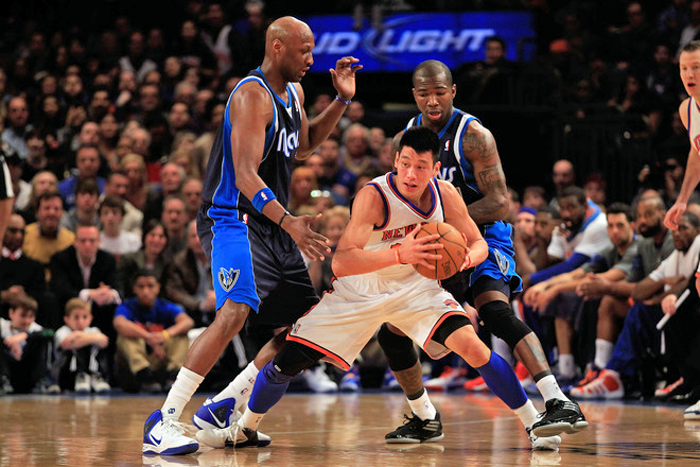
NY Knicks' Jeremy Lin double-teamed by Dallas Mavericks, MSG, New York, February 19, 2012. (Trendsetter via Streetball.com). Qualifies as fair use under US Copyright laws because of limited reproduction/distribution value.

It didn’t take long for Larry to burst my bubble, though. “You passed, but we’re going to have to slow you down,” he said. I was, according to at least one member of the committee, “moving way too fast,” at least that was what Larry followed up with. I was stunned. It was as if I’d done something wrong, as if I’d broken some golden rule around what age I should’ve been and how long I should’ve taken to do my master’s work.

I went home that Tuesday evening and tried not to think about what Larry had said. But that was all I could think about. How was it that I was to blame for knocking out a thirty-credit master’s program — including language proficiency requirement, master’s research and reading papers, and five graduate seminars — in two semesters? Or that I was only twenty-two when I did all of this? It didn’t seem fair that a history program as difficult as Pitt’s had professors who intended to make the path toward a PhD even more difficult for me.

I think that despite my DC trip and Georgetown University visit that March, that the night after my master’s oral exam was the first time I knew that it was time to leave Pitt for greener doctoral pastures. I liked Larry, and I generally trusted him. But given my history with the department (see my post “The Miracle of Dr. Jack Daniel” from May ’11), it seemed suicidal to try to complete a PhD there. I already knew that there were grad students there who had reached the dissertation stage in the early-70s — before I was in kindergarten — and had yet to finish. I also knew that Larry had about as much influence on departmental politics as I did.

Maybe it was too soon. Maybe I was too young. Maybe Larry was attempting to look out for my best interests. What I did know, though, flew in the face of all three of those assumptions. It really was time to move on.

The Ivy League Dilemma

17 Saturday Mar 2012

Posted by decollins1969 in 1, Academia, Boy @ The Window, culture, Eclectic, Jimme, Mount Vernon High School, Mount Vernon New York, My Father, New York City, Politics, race, Upper West Side, Youth

≈ 1 Comment

Tags

Acceptance Letters, Advice, Class of 1987, Classmates, College Decisions, Columbia University, Counsel, Financial Aid, Humanities, Manhood, MVHS, Pitt, Pittsburgh, Private Investigators, scholarships, University of Pittsburgh, Yale University


Columbia University's Butler Library at night, New York City, October 13, 2008. (Andrew Chen via Wikipedia). Permission granted via GNU Free Documentation License.

A quarter-century ago this weekend, I made the decision to attend the University of Pittsburgh over Columbia University. Given that I lived in Mount Vernon, New York, this was a decidedly weird decision. So much so that I didn’t tell my mother of my plans for nearly two weeks, and waited until April to tell my classmates. But there’s a well marbled story here, of bad Ivy League practices, not to mention my need to get away from family and classmates alike.

I applied to eight schools in all, including Yale, Columbia and Pitt. If it weren’t for Pitt’s brochure of pizza and students having a good time, I wouldn’t have applied there to begin with. The only rejection I received was from Yale, in early February ’87. Oh well!

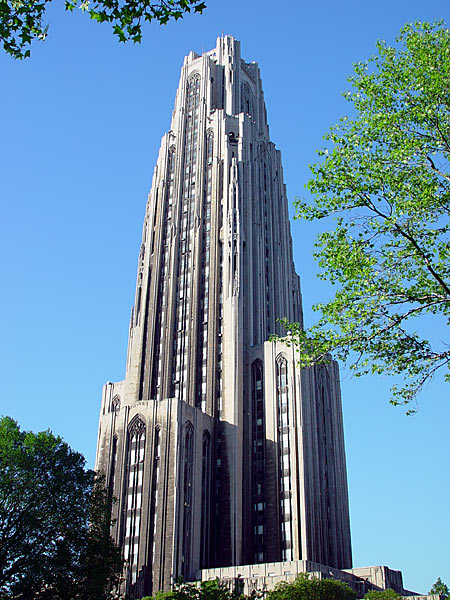
Cathedral of Learning, University of Pittsburgh, December 20, 2010. (http://www.photohome.com). In public domain.

Over the next five weeks, I received one acceptance and packet of materials after another, including Columbia and the University of Pittsburgh. All but Columbia gave me a full financial aid package of one kind or another. All offered either a partial or a full-tuition scholarship for four years except for Columbia. Pitt had offered me one of their inaugural half-tuition academic scholarships that they called the Challenge Scholarship, meant to attract low-income students and students of color from across the country.

I called Columbia’s financial aid office in mid-March to ask why they hadn’t offered me any kind of academic scholarship. They called me back to tell me that they wanted to “make sure” that I really couldn’t afford to go their West Harlem, er, Morningside Heights school.

“But you have my Mom’s financial paperwork,” I said.

“Well, we could send out a private investigator to track down your father and take a look at his finances. If everything checks out, either he can cover part of your tuition or we can offer you a scholarship,” the man on the other end of the phone said.

I was floored by the smug arrogance coming out of the phone. “My dad hasn’t paid child support in eight years,” I said, ready for an argument.

“We want to make sure that he doesn’t have money for your tuition,” was the creditor’s response.

“Thanks but no thanks. You either trust me or you don’t,” I said with conviction, and hung up the phone.

I was torn between having some idiot private investigator digging through my father Jimme’s pitiful life and finances and saying “Go to Hell!” to Columbia. I didn’t want to see the worst case scenario occur, which was that some fool would go back to Columbia and say that Jimme could afford to pay $3,000 of my tuition per year. In the three years up to March ’87, Jimme had given me $3,500 total.

Then I thought of other pros and cons, and as I thought of them, I wrote them out. Columbia was an Ivy League school, the University of Pittsburgh wasn’t. Yet, Columbia was more expensive than Pitt by more than two dollars to one ($18,000 per year versus $7,500) and the students at Columbia would likely be similar in education, socioeconomic background and attitudes to my Humanities classmates.

But the most important factor in saying “No” to Columbia besides their financial aid sleaziness was 616 and Mount Vernon. If I went to school there, where would I live and where would I study? Home? You got to be kidding! Mount Vernon Public Library? They only stayed open until nine pm, and were never open on Sundays. On campus? That would only work if I were able to get a decent paying part-time job on campus. After sorting through this, I knew that Columbia was out.

The look on my mother’s face when I told her said it all. She was as shocked as I’d ever seen her. She kept

Low Memorial Library, Columbia University, New York City, August 25, 2006. (Wikipedia). Permission granted via Creative Commons Attribution-Share Alike 2.5 Generic.

trying to convince me to go upstate to Hobart and William Smith, to see about going to Columbia for their private investigator. This after a year of her telling me that applying to West Point would “make me a man” because “women love men in uniform” and applying to HBCUs made sense because she’d given $25 to the United Negro College Fund.

My classmates spent the next couple of months asking me where Pittsburgh was and why I wanted to go there. All I knew was that I needed to get away from the New York area for a while and that the University of Pittsburgh’s tuition was cheaper than almost anything I would’ve faced in New York. I knew that they had a decent computer science program — this was to be my first major. But I also knew that I wasn’t stuck if I wanted to change majors or study something other that computer science.

In the end, I obviously made the right decision for me at the time. If I had to do it again, maybe I would’ve applied to the University of Pennsylvania or Georgetown. I certainly would’ve been better off in terms of immediate career options and income. But given the friendships that I formed, the degrees I earned and the wife that I have, I’m not sure if another good choice like the ones above would’ve been any better than going to Pitt. At least for my rather fragile psyche and near nonexistent social life.

My First Vacation, Valedictorian Included

10 Saturday Mar 2012

Posted by decollins1969 in 1, Academia, Boy @ The Window, High Rise Buildings, Mount Vernon High School, Mount Vernon New York, Politics, race

≈ 3 Comments

Tags

Arlington Virginia, Class of '87, Class of 1987, Diversity, Family, Friendship, Georgetown University, Humanities, Metrorail, Mount Vernon New York, MVHS, Pitt, Pittsburgh, Spring Break, Suitland High School, University of Pittsburgh, Vacation, Valedictorian


Ballston high-rise (on right), Arlington, VA, where I stayed with "V" and her roommate during first DC area visit, June 26, 2008. (http://therealestatedirt.com).

I’ve lived in the DC area now for nearly thirteen years, but it was this time two decades ago that I came to the DC area for the first time. This was my first vacation ever as an adult, and the first time I’d gone on a vacation of any kind since my mother took me and my older brother Darren on a day trip to Amish country in Pennsylvania at the end of third grade, in June ’78. The visit had as many layers to it as a Vidalia onion, as it involved my past, present and future, and all at once.

At the center of my visit was spending time with my Humanities classmate and friend “V,” the valedictorian of Mount Vernon High School’s Class of ’87. I crashed at her and her roommate’s place in the Ballston section of Arlington, Virginia for a week during my spring break in March ’92. As I said in a previous post (see my “A Friendship Changing Lanes” post from October ’11), I’m not sure how our acquaintanceship ever became a friendship. Somewhere between having circumstances in which our fathers weren’t around consistently, or at least being able to relate to Billy Joel, or both of us scoring “5”s on the AP US History exam.

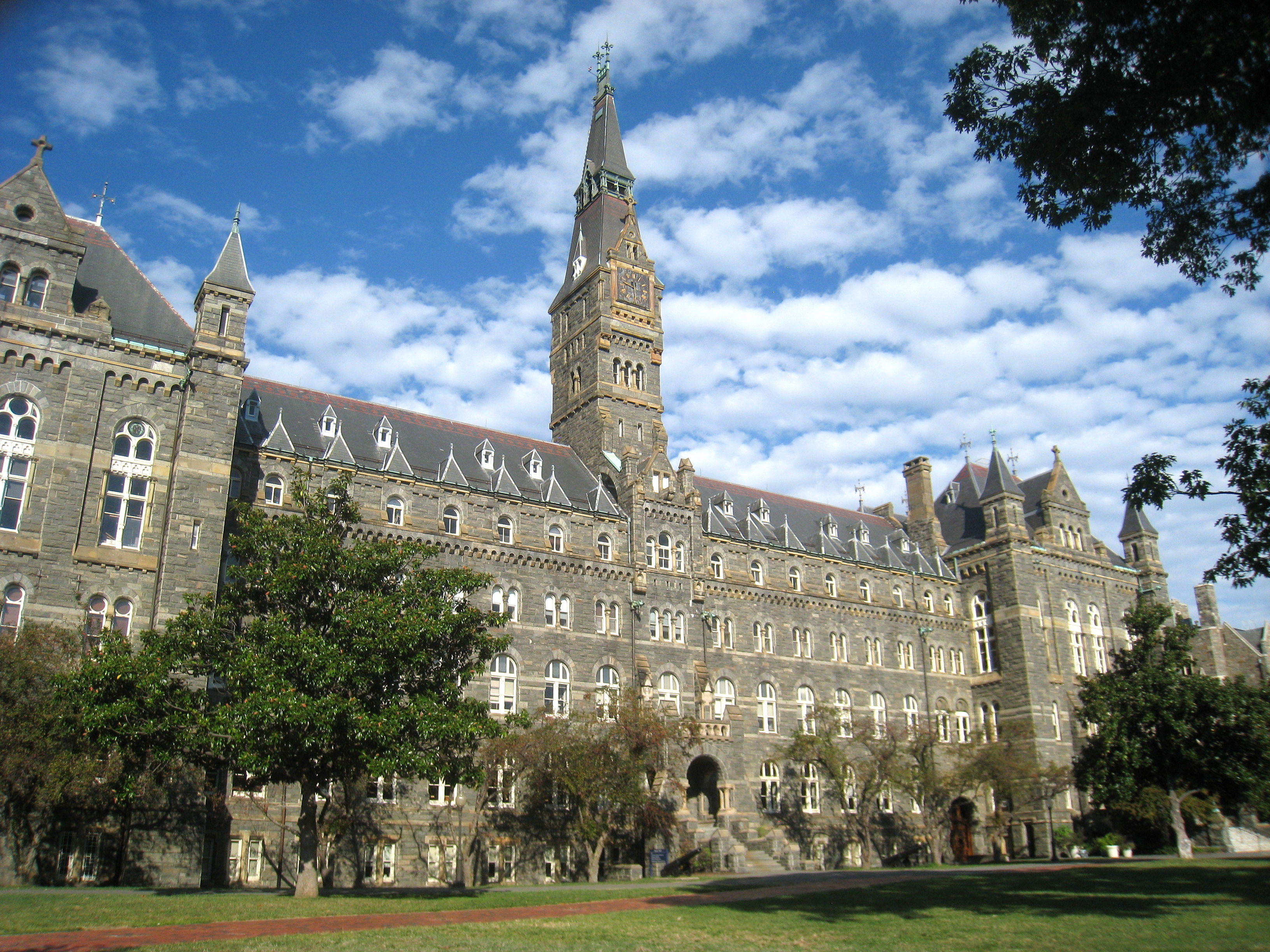
Healey Hall (front gate perspective), Georgetown University, Washington, DC, September 19, 2010. (Daderot via Wikipedia). In public domain.

The fact that we went our respective ways, to Pitt and Johns Hopkins, helped. The fact that we wrote each other about some of our social triumphs and challenges helped more. Most importantly, it helped a lot that we both were more honest about our family troubles. Everything from my mother’s need to divorce my idiot ex-stepfather and the issues with my younger siblings to V’s mother’s health issues and her struggling with burnout trying to watch over her family while going to school. So, by the time I began my second semester of grad school, we’d become fairly close.

I hadn’t seen V since the day before New Years Eve ’88, the last Friday of that year. I hadn’t planned to visit V at the start of the year, but by the middle of February, I needed a break from Pitt and graduate school (see my “Paula Baker and The 4.0 Aftermath” post from January ’12). As I knew that I was two months away from finishing my master’s, I had begun to check out some alternatives to doing my history PhD at Pitt.

Key Bridge, connecting Georgetown area with Rosslyn section of Arlington, VA, at sunset (picture taken from west), September 18, 2008. (Jersey JJ via Flickr.com). In public domain.

Through Dr. Transatlantic Studies himself, Marcus Rediker — he was a Georgetown University history professor who somehow had been given an empty office in Pitt’s history department — I made arrangements to do some informational interviews at Georgetown during my early March spring break.

As soon as I told V of my opportunity to check out Georgetown, she offered me a place to stay for the week. I made arrangements through a couple of friends driving to Virginia to have them drop me at V’s that first Saturday in March.

The trip was a whole series of firsts and seconds for me. I rode Metrorail for the first time, went to Capitol Hill for the first time, and visited Howard University for the first time. I also spent one full day hanging out with V at Suitland High School in Prince George’s County, Maryland, where she was a first-year math teacher. Other than a couple of rowdy students, V was a very good teacher, and not just for a rookie.

My meeting at Georgetown went pretty well also. I managed to get a sweatshirt out of the deal, one that I still wear to this day. Aside from that, finding out from a then second-year grad student (and now and associate professor in African American history at Georgetown) that his annual stipend was only $7,500 a year in expensive DC made my decision for me. I decided that despite the name recognition, Georgetown wouldn’t be where I’d earn a PhD.

I also visited with V’s sister and mother toward the end of that week. V’s sister was in the process of transferring to Goucher, a far cry from the rising high school freshman I’d last seen a week before my freshman year at the University of Pittsburgh. V’s mother seemed happier in Virginia than in New York, but medically speaking, she had gotten worse since ’87. Her speech was slower and more slurred, and her upper body motions were even more limited than I last remembered. It was a reminder that as much as things had gone well for V over the years, she also faced the intense pressure of trying to care for a slowing dying mother and her sister, and all at twenty-two years old.

What I came away with from that week as my friends picked me up the following Saturday afternoon were two things. One, that I really liked being in an area with great diversity, with Whites, Blacks, Latinos and Asians from all walks of life, but without the rude chaos and energy that was and remains New York. Two, that V and I had truly become friends, as adults in our twenties, mostly unattached from how we saw each other when we were in Humanities and high school.

Paula Baker and the 4.0 Aftermath

01 Wednesday Feb 2012

Posted by decollins1969 in 1, Academia, Boy @ The Window, Eclectic, Politics

≈ 2 Comments

Tags

Academia, Department of HIstory, Graduate School, Mentoring, Paula Baker, Scholarship, Smoking, Teaching and Learning, University of Pittsburgh, Writing


Paula Baker speaking (screen shot) in response to Donald Crichlow's book, Phyllis Schlafly and Grassroots Conservatism at The New School, New York City, March 1, 2006. (http://fora.tv/2006/03/01/Women_and_Grassroots_Conservatism).

Of all the professors I worked with in grad school, there wasn’t a tougher one on me than Paula Baker. Or a better one. She wanted and expected more out of me than even my advisors, Larry Glasco and Joe Trotter. If it weren’t for her, I probably would’ve been content with earning all of my degrees at the University of Pittsburgh. But if it wasn’t for her, I wouldn’t have discovered my ambivalence about academia in the first place.

I took an upper level history course in US history since 1945 and an independent study with Paula the semester after earning straight-As, the one that made my master’s program a seven-and-a-half month one instead of two years (see “The 4.0 Of It All” from December 2011). It was her second semester as an assistant professor in our department, and given the demographics of the ol’ White boys club, I thought it a good idea to take a professor whose graduate studies were still going on while I was in high school. That, and learning of Paula rare feat (at least for ’84) of publishing an article in the Journal of American History while still a grad student herself at Rutgers University, appealed to the competitor in me.

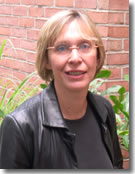
Paula Baker, University of Virginia, Miller Center, December 2006. (http://millercenter.org).

I sat down for my first meeting with Paula in her small, windowless office (except for a glass partition that she had covered up so students couldn’t look in), just across from the grad student cubicles on the third floor of Forbes Quad. She said, “What are you doing here?” I didn’t understand her question at first. What I soon realized was that Paula was asking me the kinds of questions I should’ve asked myself two years earlier, when I first started applying to grad schools. She said that there were better options for a doctorate in American and African American history than Pitt, including the University of Michigan and UCLA.

There were two things that made Paula, though. One, she regularly broke the law while anyone was in her office, including pre-asthmatic me. Paula smoked as if her life depended on it. For me, it was the first time I thought that I might end up dead before I turned thirty for second-hand smoke and lung cancer. Mind you, my mother, my father and my idiot ex-stepfather all smoked, but not in a space unfit for a sardine.

Two, and more important in my second semester of grad school, was her uncompromising perfectionism when it came to my research and writing. Obviously my writing was already good. But it wasn’t scholarly, at least not as scholarly as it needed to be. In writing my paper on the influence of Marxist ideology (perceived and actual) on the early Civil Rights Movement, I must’ve done at least seven drafts for Paula.

She probably used up about three ball point pens editing my drafts, crossing out whole paragraphs at a time, demanding that I raise my level of analysis ever higher. And when it was all said and done, Paula assigned me a grade of B+ in my independent study with her, the lowest grade I’d receive in three years of master’s and doctoral work. Still, she turned me on to Adolph Reed, Jr. and Theda Skocpol.

What Paula didn’t know was that by the middle of February ’92, I was mentally exhausted, mostly from the previous semester’s work and the lack of a holiday break. I wasn’t at my best in her class and in her office. Somewhere in the midst of struggling to stay on task, I learned how to read for arguments, how to use book reviews to supplement my lack of historiographical knowledge, and to expand my thinking to include other fields, like philosophy and sociology.

I also learned that I really didn’t like writing in scholarly-speak. It felt fake, as if I had to learn French and German and high English in order to make an argument that would make old White farts stand at attention. I didn’t blame Paula for this. I fully understood what she was doing and why she was doing it. But I also knew that this wasn’t me, the scholarly world wasn’t quite an exact fit for me. C’est la vie!

After April ’92, I took one other independent study with Paula, the following year, to get ready for the comprehensive exams for my doctorate. I took it as a non-graded course, as I knew I was about to transfer to Carnegie Mellon. She eventually left Pitt — not exactly a surprise.

I bumped into her once in ’01 right outside Union Station in DC, while she was a fellow at Woodrow Wilson Center and I was in my assistant director job with the New Voices Fellowship Program. Paula didn’t seem happy to see me, but then again, sarcasm and irony always seemed to be the key to getting her smile. Like the irony of me not using my degree in academia.

Taking the Long Road: Driver’s Delight

23 Monday Jan 2012

Posted by decollins1969 in 1, Boy @ The Window, culture, Eclectic, Mount Vernon New York, Youth

≈ Leave a comment

Tags

Adulthood, Driver's License, Kauffman's Driving School, Late Bloomer, Learning How to Drive, Mount Vernon New York, Perseverance, Pittsburgh, Rite of Passage, University of Pittsburgh


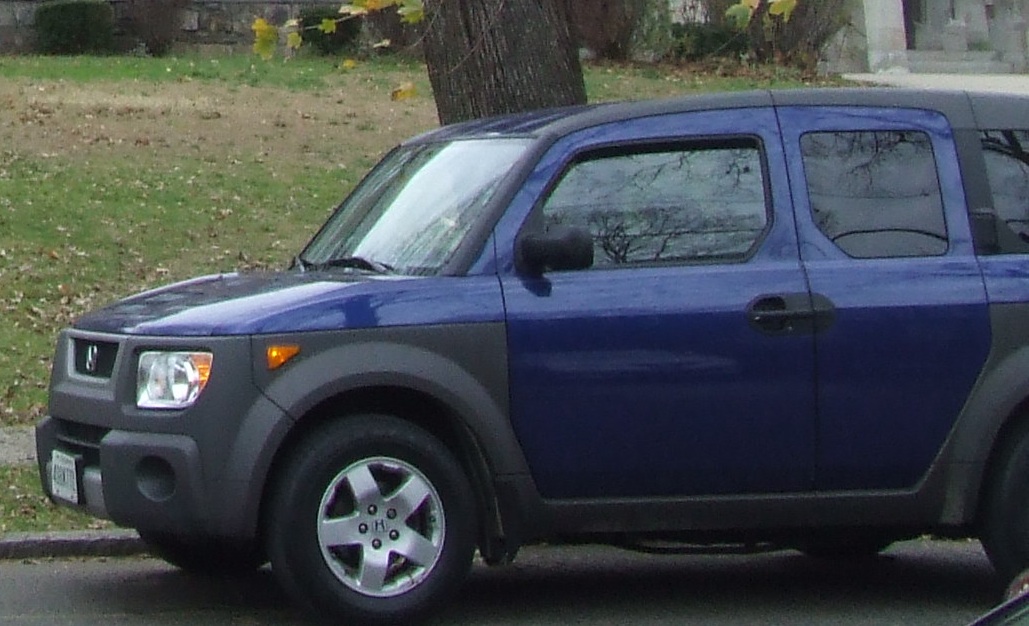
Our 2004 Honda Element, Mount Vernon, NY, November 2006. (Donald Earl Collins)

How I was able to get my driver’s license twenty years ago tomorrow is a shining example of my late bloomer status. I started in the middle of May ’88, a couple of weeks after the end of my freshman year at the University of Pittsburgh. My main motivation was the fact that the only piece of picture identification I had was a choice between my Pitt ID and my old Mount Vernon High School ID. It also seemed to me that I couldn’t hope to travel or to get a good job without having a driver’s license.

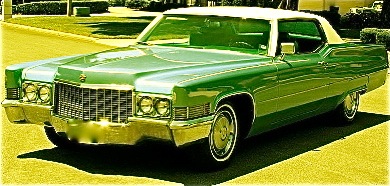
1974 or 1975 Cadillac Coupe de Ville, cropped and colored green, January 23, 2012. (http://http://www.allcollectorcars.com). Qualifies as fair use under US Copyright laws because photo is of low resolution, cropped and altered for purposes of post.

I knew plenty of people with cars, but in my family and immediate circle, only my idiot stepfather Maurice had a license. In the eleven years he’d been in our lives, he had access to his Reliable cab for two years (’77-’79), and had owned a ’70s-era Coupe de Ville for about a year and a half. At least until he burned out his engine on the New Jersey Turnpike earlier in ’88.

Despite all of these disadvantages, I began my journey. At the end of my second week back, I grabbed a manual at the White Plains DMV, leafed through it, and took the exam. I passed with a 70, making the cut by two questions. I scheduled and took my first driving lesson two days later. I was quickly on my way to becoming a licensed driver.

But if I hoped to follow-up on that quick success with a job that could cover the cost of more driving lessons, I was sorely mistaken. I spent the rest of the summer of ’88 unemployed, like nearly seventy percent of Black males my age that summer. This began the off and on again cycle of my quest for one simple symbol of adulthood.

Even in the midst of my fall of homelessness and with $205 to work with between Labor Day and Thanksgiving ’88, I continued plugging away. I’d gone at the end of October to the Pittsburgh DMV center off Washington Boulevard, near the bridge across the Allegheny River into the northern suburbs. I ended up walking from Welsford through Oakland to Forbes, then Fifth Avenue, stayed on Fifth through Shadyside and Point Breeze and Homewood-Brushton until it turned into Washington Blvd, then kept going until I reached the center. It took me an hour to get there and another to get back. In between I scored a 95 on the Learner’s Permit exam, making me eligible to get a driver’s license in two states.

I even got my former CIS (Computer and Information Systems) co-worker Bill to give me a driving lesson in Highland Park Zoo’s parking lots before he left for Virginia that March for a job with AT&T. It was February ’89. I was behind the wheel of Bill’s car, his “babemobile,” his white ’88 Ford Thunderbird. It was an easy lesson until I screwed up. I was going too fast on a left-turn, cut the car too close to an embankment. We ended up going down a short grassy hill that cut off one side of the large parking lot from the other. Bill was terrified and a scary shade of purple for his car. I’d no sooner parked it then he had jumped out to make sure there wasn’t any damage. I knew that this lesson was over.

I continued taking driving lessons off and on in ’89 and ’90, between Kauffman’s Driving School (at $53 an hour), my Pitt friends, and a couple of 616 folks in Mount Vernon. By September ’90, with about twenty-five hours of driving lessons under my belt, I thought I was ready. After three driving test failures, I was obviously mistaken. Then my money ran out again, and then I started grad school the following year. I wondered, sometimes out loud, whether I’d finish my master’s degree before I’d earn my driver’s license.

It all came together at the beginning of January ’92. I decided to spend whatever it would take for me to pass the driver’s test on the Washington Blvd course in Pittsburgh. I took seven hours’ worth of lessons from Kauffman’s in ten days, mostly to practice parallel parking and three-point turns in a ’88 Chevy Cavalier. I

1991 Chevy Cavalier - similar to one I drove on day I got my driver's license, Gaithersburg, Maryland, July 5, 2008. (IFCAR via Wikipedia). In public domain.

practiced turns with my dinner plate in my apartment in between the lessons.

Finally, we scheduled my driver’s test for 9 am on Friday, January 24. That morning, it began to snow. By the time I drove to the test site, six inches of snow had fallen. I was the first person on the course. Between that and the falling snow, I was comfortable. Seven minutes later, I’d done it all, and had barely parked the car after hearing the words “You’ve passed” before literally jumping out of it and into the snow.

It took me three years, eight months and eleven days in all to pass my driver’s test in Pittsburgh. At the time, I was prouder of that than I was of any of my academic achievements or other personal triumphs. A month after my twenty-second birthday, I’d now earned the right to add to humanity’s carbon footprint. As well as a real badge of adulthood.

Regis and Donald Earl

12 Thursday Jan 2012

Posted by decollins1969 in 1, Academia, Boy @ The Window, culture, Eclectic, Mount Vernon New York, Movies, Pop Culture, race, Work, Youth

≈ Leave a comment

Tags

Friendship, Pitt, Pittsburgh, Regis, Relationships, University of Pittsburgh, Weird, Weirdness, Youth


Regis & Kathie Lee cover, cropped, People Magazine, September 30, 1991. (http://people.com). Qualifies as fair use under US Copyright laws because picture is cropped and of low resolution.

In a conversation I had with my mother about sixteen years ago, she said, “I always thought that all your friends were weird.” This after having broken up with a girlfriend a few weeks before, my first serious relationship in three years. Thanks, Mom! Of course, a month later, I began dating my wife of nearly twelve years (and yes, my mother thinks that Angelia’s weird, too!).

But she did have a point, albeit a small one. Some nerve, since I’m her son, after all! I had accepted this reality by my second semester at the University of Pittsburgh. This after a semester of attempting to be cool, then to not be cool, then to just close myself off out of picking my old Crush #2 scab.

I began my second semester in January ’88, attempting to meet people more like myself, which often meant meeting people a good five or ten years older than me, students comfortable in their own weirdness. The first friend I made this way was Regis. He was a working-class Western Pennsylvanian through and through, with that guttural Pittsburgh-ese accent. Regis said “jag-off” for “jack-off,” “ruff” for “roof,” “yinz” for “you all” or “y’all,” and “dahntahn” for “downtown.”

Regis had been unemployed for nearly a year, laid-off by Westinghouse, where for the previous five years he guarded a boiler room in one of their plants. He was about five-foot-six, constantly scruffy and disheveled, and sometimes looked like he was a step or two away from insanity. Kind of like a Pitt student’s version of Rasputin.

Richard Dreyfuss in Close Encounters of the Third Kind (1977), screen shot -- closest approximation to Regis, circa 1988 -- January 12, 2012. (http://examiner.com). Qualifies as fair use under US Copyright Laws due to low resolution and limited use for blog post.

But Regis was a quick study and absolutely enjoyed going to college, as he was a deeply critical thinker. Heck, he was the smartest person I knew during my Pitt and Carnegie Mellon years! As a result, we hit it off right away in our discussion sections on Friday mornings in Western Civilization II. Me and Regis would often gang up on the rest of the class in the discussion of all things Western European-related, from the French Revolution  to the connections between the European slave trade, the Industrial Revolution, and European imperialism. It was wonderful not being the only oddball in class for a change.

What made us friends, though, had more to do with the fact that Regis didn’t allow himself to be blinded by my attempts to hide the real truth behind my weirdness. He saw through my coping strategies to mask the battering I’d taken from poverty, abuse and Humanities in Mount Vernon. Regis was there for me my sophomore year at Pitt in a way that any true friend would be.

After my bout with homelessness — which I hadn’t told Regis about — I was broke from Labor Day to Thanksgiving. Despite my pride and my mother’s constant mantra of not asking for “handouts,” I first asked Regis for help in November ’88. This after he noticed that we weren’t even hanging out at the Roy Rogers in the Cathedral of Learning anymore.

“To be honest, I’ve only had $205 to my name since September,” I said.

“How’ve you been making it?,” Regis asked.

“Spaghetti one week, pork neck bones and rice the next, tuna fish after that. I’m now down to peanut butter sandwiches,” I said.

“What’s ‘pork neck bones’?” Regis asked, with this incredulous look on his face.

After explaining the intricacies of my diet and poor people’s cooking — especially since this was the first time I’d eaten any pork in seven and a half years — Regis finally said

“I don’t have much, but I can at least bring you some bread and a potata. We don’t want you out here starvin’,” having patted me on my right shoulder as our conversation ended.

Sure enough, later that week, Regis actually gave me some bread and a small sack of potatoes. It would’ve been enough to make me cry, but I was too hungry and tired to do much more than say a weak “Thank you.” That, and make the most of four days’ worth of Russet potatoes.

Regis was in my circle on other matters that semester. We talked, mostly about his Heidegger course, a scary existential philosophy course for anyone to take. I heard so much from Regis about Heidegger’s Being and Time that I felt like I was in the course. Whenever the subject came up, he was always like, “So you got a hot date tonight, right?” No excuse was good enough for him, whether it was lack of money or lack of confidence.

I stayed in touch with Regis for years after that semester and year. We took a Greek History course together in the fall of ’89. I began introducing him to my other weird and not-so-weird friends. He introduced me to working-class White Pittsburgh, for better and for worse. We stayed in touch during the summers I was back in Mount Vernon, through our master’s degrees and my doctorate at Carnegie Mellon.

The last time I saw Regis was in May ’96, just as my fight over my dissertation with Joe Trotter (see my “Running Interference” post from April ’11) was in high gear. Despite two degrees — both in Philosophy — and a professorial disposition, Regis hadn’t secured regular work and was still living at home in East Pittsburgh with his parents. I encouraged him to get a doctorate. But sensing how unhappy I was with my own process, Regis said, “How’s that workin’ out for ya?”

I wonder how Regis is doing today. Well, I should just look him up. After all, we’re both weird Pitt grads!

Reinventing the Writing Wheel

17 Saturday Dec 2011

Posted by decollins1969 in 1, Academia, Boy @ The Window, culture, Eclectic, eclectic music, Hebrew-Israelite, music, Pop Culture, race, Religion, Youth

≈ Leave a comment

Tags

"Children's Crusade", 616, 616 East Lincoln Avenue, Coping Strategies, Historian, Mount Vernon New York, Paul Riggs, Pitt, Re-Discovery, Reinventing the Wheel, Scholar, Self-Discovery, Sting, The Dream of the Blue Turtles, University of Pittsburgh, Western Civilization II, World War I, Writer, Writing


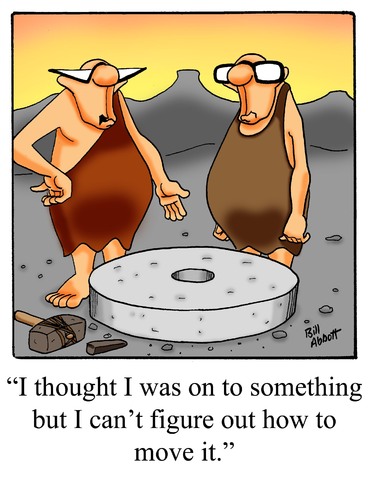
Inventing the Wheel cartoon, October 2, 2009. (Bill Abbott/http://www.toonpool.com/).

One of the side effects of having lived through the hell of my family struggles at 616 in Mount Vernon, New York between ’81 and ’89 was that I’d forgotten about the person I was before we became Hebrew-Israelites. As great as I am at recalling faces, smells, conversations, exact facts and phrases based on images and songs, I’ve been almost equally as good at blocking out whole sections of my personality. All in an effort to cope with the emotional pain and psychological trauma that is betrayal, abuse and neglect.

I have the unfortunate distinction of having seen myself as a writer in ’81 at the age of eleven, only to take nearly twenty years to see myself that way again. There were a few sign posts in the dark forest of confusion about my calling that I found on my way to getting back on the writing road. One of those sign posts was my teaching assistant and friend during my undergraduate years at the University of Pittsburgh in Paul Riggs.

Paul Riggs, Professor and Department Chair, Department of History, Valdosta State University (GA), December 17, 2011. (http://www.valdosta.edu).

Paul was the TA for my section of the Western Civilization II course taught by his advisor in Sy Drescher in the Spring semester of ’88. He was a second-year history grad student, a nice looking White guy for a nerd. Already in his mid-twenties with, his blonde-brown hair and around six-feet, Paul was a rarity on campus. So was his class. Paul found a way to do more than ask us a bunch of questions that were meant to quiz us on the textbook. We debated the significance of things like a richer diet and its impact on population growth and the expansion of European imperialism, the connections between Charles Darwin, evolution, and the advent of scientific racism at the end of the nineteenth century, and so many other things that allowed us to connect the dots.

Paul was also the first teacher I had at Pitt who assumed that I could do the work without acting as if I shouldn’t have been in their classroom. It helped that he occasionally indulged me. When our weekly discussion turned to the killing fields that had been northern France and Belgium for the bulk of the four years of World War I, I allowed my imagination to get the better of me. I made a comment that connected the tragedy of deadly trench warfare to a song by Sting called “Children’s Crusade.” I started quoting lyrics, like “virgins with rifles, a game of charade,” “the flower of England, faced down in the mud, and stained in the blood of a whole generation,” and “corpulent generals safe behind lines.”

I related it all to the documents book and Drescher’s lectures on the war that wiped out a generation of

Sting, The Dream of the Blue Turtle CD Cover (1985), December 17, 2011. (Donald Earl Collins).

young men in Western Europe. It took me two minutes of class time to draw all of the different connections. Paul, shaking his head at the end, got this incredulous smile on his face. All he said was, “um, you know Sting’s overrated?”

But Paul proved to be much more helpful a year and a half later. By then I was in my junior year at Pitt, no longer living in constant worry that I’d have to return to 616 to bury my mother and press charges against my idiot stepfather. By then, Maurice was my ex-stepfather, and thankfully so. For the first time in eight years, I kept a journal, putting together a series of stories based on my worst experiences at 616, on welfare, with my family, and in Mount Vernon.

All of it made me think about writing a book that looked at the sociological and psychological dimensions of the welfare system, for both recipients and for case managers charged with providing benefits. I wanted to make Westchester County Department of Social Services the centerpiece for such a book. I decided to talk to Paul about all of my ideas, not wanting to give away how personal this issue was for me. Paul asked me the questions that it would take another eleven years to answer. “What kind of writer do you want to be?,” and “How is history related to what you want to write about?,” he asked over the course of our conversation.

I really didn’t know the answers to either question. I wasn’t even sure that I wanted to pursue an advanced degree, become a professor, or become a writer. But I knew that I needed to find out.

Still, one thing that I decided to do that would determine most of my career travels over the next decade is to make myself into the semi-dispassionate scholar I knew I needed to become in order to be a better historian, which I presumed would make me a better writer. Only to spend this past decade reconnecting to my emotions and passion, which has made me the writer I once hoped to become.

← Older posts
Newer posts →

Boy @ The Window: A Memoir

Boy @ The Window: A Memoir

Places to Buy/Download Boy @ The Window

There's a few ways in which you can read excerpts of, borrow and/or purchase and download Boy @ The Window. There's the trade paperback edition of Boy @ The Window, available for purchase via Amazon.com at http://www.amazon.com/Boy-Window-Donald-Earl-Collins/dp/0989256138/

There's also a Kindle edition on Amazon.com. The enhanced edition can be read only with Kindle Fire, an iPad or a full-color tablet. The links to the enhanced edition through Apple's iBookstore and the Barnes & Noble NOOK edition are below. The link to the Amazon Kindle version is also immediately below:

scr2555-proj697-a-kindle-logo-rgb-lg

Boy @ The Window on Amazon.com: http://www.amazon.com/Boy-The-Window-Memoir-ebook/dp/B00CD95FBU/

iBookstore-logo-300x100

Boy @ The Window on Apple's iBookstore: https://itunes.apple.com/us/book/boy-the-window/id643768275?ls=1

Barnes & Noble (bn.com) logo, June 26, 2013. (http://www.logotypes101.com).

Boy @ The Window on Barnes & Noble: http://www.barnesandnoble.com/w/boy-the-window-donald-earl-collins/1115182183?ean=2940016741567

You can also add, read and review Boy @ The Window on Goodreads.com. Just click on the button below:

Boy @ The Window

Twitter Updates

Tweets by decollins1969
  • RSS - Posts
  • RSS - Comments

Archives

  • June 2025
  • April 2023
  • September 2022
  • August 2022
  • July 2022
  • June 2022
  • May 2022
  • April 2022
  • March 2022
  • January 2022
  • December 2021
  • November 2021
  • October 2021
  • September 2021
  • August 2021
  • July 2021
  • June 2021
  • April 2021
  • March 2021
  • February 2021
  • January 2021
  • December 2020
  • November 2020
  • October 2020
  • September 2020
  • August 2020
  • July 2020
  • May 2020
  • April 2020
  • March 2020
  • January 2020
  • December 2019
  • November 2019
  • August 2019
  • July 2019
  • June 2019
  • May 2019
  • April 2019
  • March 2019
  • February 2019
  • January 2019
  • December 2018
  • November 2018
  • October 2018
  • September 2018
  • August 2018
  • July 2018
  • June 2018
  • May 2018
  • March 2018
  • February 2018
  • January 2018
  • December 2017
  • November 2017
  • October 2017
  • September 2017
  • August 2017
  • July 2017
  • June 2017
  • May 2017
  • April 2017
  • March 2017
  • February 2017
  • January 2017
  • December 2016
  • November 2016
  • October 2016
  • September 2016
  • August 2016
  • July 2016
  • June 2016
  • May 2016
  • April 2016
  • March 2016
  • February 2016
  • January 2016
  • December 2015
  • November 2015
  • October 2015
  • September 2015
  • August 2015
  • July 2015
  • June 2015
  • May 2015
  • April 2015
  • March 2015
  • February 2015
  • January 2015
  • December 2014
  • November 2014
  • October 2014
  • September 2014
  • August 2014
  • July 2014
  • June 2014
  • May 2014
  • April 2014
  • March 2014
  • February 2014
  • January 2014
  • December 2013
  • November 2013
  • October 2013
  • September 2013
  • August 2013
  • July 2013
  • June 2013
  • May 2013
  • April 2013
  • March 2013
  • February 2013
  • January 2013
  • December 2012
  • November 2012
  • October 2012
  • September 2012
  • August 2012
  • July 2012
  • June 2012
  • May 2012
  • April 2012
  • March 2012
  • February 2012
  • January 2012
  • December 2011
  • November 2011
  • October 2011
  • September 2011
  • August 2011
  • July 2011
  • June 2011
  • May 2011
  • April 2011
  • March 2011
  • February 2011
  • January 2011
  • December 2010
  • November 2010
  • October 2010
  • September 2010
  • August 2010
  • July 2010
  • June 2010
  • May 2010
  • April 2010
  • March 2010
  • February 2010
  • January 2010
  • December 2009
  • November 2009
  • October 2009
  • September 2009
  • August 2009
  • July 2009
  • June 2009
  • May 2009
  • April 2009
  • March 2009
  • February 2009
  • January 2009
  • December 2008
  • November 2008
  • October 2008
  • September 2008
  • August 2008
  • July 2008
  • June 2008
  • May 2008
  • April 2008
  • March 2008
  • February 2008
  • January 2008
  • December 2007
  • November 2007
  • October 2007
  • September 2007
  • August 2007
  • July 2007
  • June 2007

Recent Comments

decollins1969's avatardecollins1969 on No Good Teaching Deed Goes…
Mary Rose O’Connell's avatarMary Rose O’Connell on No Good Teaching Deed Goes…
Lyndah McCaskill's avatarLyndah McCaskill on The Raunchiest of Them Al…

NetworkedBlogs on Facebook

NetworkedBlogs
Blog:
Notes From a Boy @ The Window
Topics:
My Life, Culture & Education, Politics & Goofyness
 
Follow my blog

616 616 East Lincoln Avenue A.B. Davis Middle School Abuse Academia Academy for Educational Development AED Afrocentricity American Narcissism Authenticity Bigotry Blackness Boy @ The Window Carnegie Mellon University Child Abuse Class of 1987 CMU Coping Strategies Crush #1 Crush #2 Death Disillusionment Diversity Domestic Violence Economic Inequality Education Family Friendship Friendships Graduate School Hebrew-Israelites High-Stakes Testing Higher Education History Homelessness Humanities Humanities Program Hypocrisy Internalized Racism Jealousy Joe Trotter Joe William Trotter Jr. K-12 Education Love Manhood Maurice Eugene Washington Maurice Washington Misogyny Mother-Son Relationship Mount Vernon High School Mount Vernon New York Mount Vernon public schools Multiculturalism MVHS Narcissism NFL Pitt Pittsburgh Politics of Education Poverty President Barack Obama Race Racial Stereotypes Racism Relationships Self-Awareness Self-Discovery Self-Reflection Sexism Social Justice Teaching and Learning University of Pittsburgh Violence Whiteness Writing

Top Rated

Blog at WordPress.com.

  • Subscribe Subscribed
    • Notes from a Boy @ The Window
    • Join 103 other subscribers
    • Already have a WordPress.com account? Log in now.
    • Notes from a Boy @ The Window
    • Subscribe Subscribed
    • Sign up
    • Log in
    • Report this content
    • View site in Reader
    • Manage subscriptions
    • Collapse this bar
 

Loading Comments...