• About Me
  • Other Writings
  • Interview Clips
  • All About Me: American Racism, American Narcissism, and the Conversation America Can’t Have
  • Video Clips
  • Boy @ The Window Pictures
  • Boy @ The Window Theme Music

Notes from a Boy @ The Window

~

Notes from a Boy @ The Window

Tag Archives: Elitism

NOT “Only In America”

30 Sunday Apr 2017

Posted by decollins1969 in 1, culture, Eclectic, Politics, Pop Culture, race

≈ Leave a comment

Tags

"Only in America", 45, American Press, Elitism, Hasan Minhaj, Narcissism, WHCD, White House Correspondents' Dinner


Daily Show with Trevor Noah’s Hasan Minhaj speaking at White House Correspondents’ Dinner, Washington, DC, April 29, 2017. (http://complex.com)

Once again, I made myself into a gullible dupe for the American press. I watched the White House Correspondents’ Dinner last night when I had so many other choices. I could’ve watched the Pittsburgh Penguins dismantle the playoff adverse Washington Capitals 6-2. Or slept through an NBA playoff game or rerun. Or watched the last four episodes of season one of This Is Us, or the season-ender to The Expanse. Instead, I chose to watch those smug, not-so-objective elites with pens, notepads, microphones, cameras, laptops, and press passes gaze longingly at each other. I sat and watched them talk about the freedom of the press as if it was still 1974 and the nation could still believe it was a just one.

The narcissistic navel-gazing continued even as Hasan Minhaj took the stage and began to roast the press for its ineptitude, and 45 for his voluminous idiocies. It was a pretty good roasting, but compared to Stephen Colbert in ’06 and Larry Wilmore last year, Minhaj was underwhelming. Then, Minhaj said something at the end of his speech that momentary kept me from REM sleep.

And it’s the same position a lot of minority kids feel in this country. You know—do I come up here and just try to fit in, and not ruffle any feathers? Or do I say how I really feel?

Because this event is about celebrating the First Amendment and free speech. Free speech is the foundation of an open and liberal democracy. From college campuses to the White House, only in America can a first-generation, Indian-American Muslim kid get on this stage and make fun of the president.

Really? “Only in America?” An Indian American Muslim couldn’t do what Minhaj did in, say, Canada, or in the UK, where Sadiq Khan, a British Pakistani, is London’s mayor, or even, say, in India?  This statement alone answered Minhaj’s question for me. Sir, wasn’t this an attempt to “just try to fit in, and not ruffle any features?” You just told every America elite to the left of the Islamophobic set exactly what they wanted to hear!

There are two other problems with the refrain, “Only in America,” especially in the context of Minhaj and free speech, free expression, and freedom of the press. One is that none of the First Amendment is free. Sure, if one narrowly means free from government coercion and persecution, then what Minhaj highlighted is mostly true. But given the platform Minhaj had last night, his truth was a lie for most of us. Because for most of us, the connections and money isn’t readily available to have such a lofty platform to proclaim America as uniquely free.

“Only in America” also assumes that anyone who couldn’t be Hasan Minhaj is a loser. Millions of Americans of color and tens of millions of poor and low-income Whites, you simply have worked hard enough, been extroverted enough, or told enough off-color jokes. Apparently, that’s what it takes to make “Only in America” true for us all. Despite his calling 45 the “orange man behind the Muslim ban,” in this one fundamental area of belief, Minhaj is no different from 45. For “Only in America” may be the most narcissistic, hypocritical, and fact-denying thing anyone can say about themselves and the US.

The “Are You Sure’s” and Doubting Sylvias

30 Tuesday Dec 2014

Posted by decollins1969 in 1, Academia, Boy @ The Window, culture, Eclectic, Mount Vernon High School, Mount Vernon New York, Pittsburgh, Pop Culture, race, University of Pittsburgh, Work

≈ Leave a comment

Tags

"Are You Sure?", Advising, Career Options, Cigarette Smoke, Doubters, Doubting Thomas, Doubts, Elitism, JD, MD, Mentoring, MVHS, PhD, Racism, Sylvia Fasulo, Tiki Barber, Vassar College


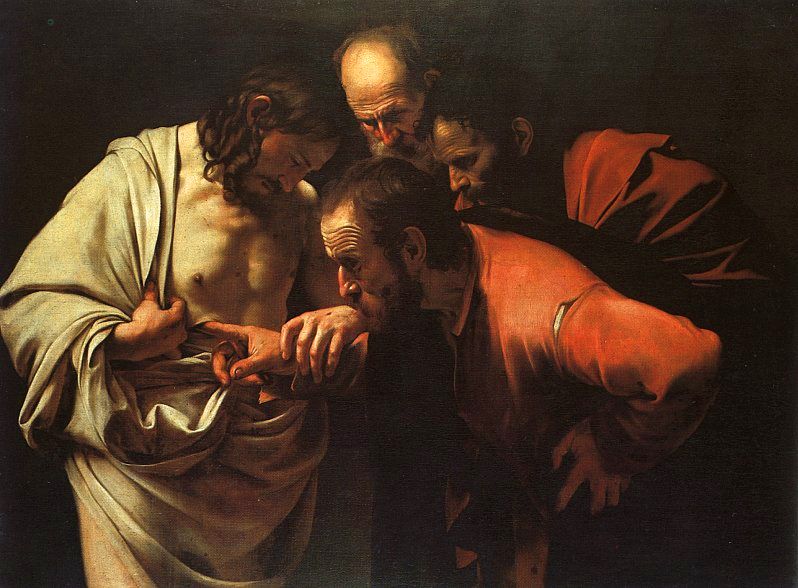
The Incredulity of Saint Thomas, by Caravaggio, c. 1601-02, uploaded April 13, 2005. (Dante Alighieri via Wikipedia). In public domain.

The Incredulity of Saint Thomas, by Caravaggio, c. 1601-02, uploaded April 13, 2005. (Dante Alighieri via Wikipedia). In public domain.

We all have doubters in our lives. Even if the only doubters turn out to be ourselves. As someone without much of a roadmap for any success, doubt has been a constant companion, one that I often had to ignore to experience any victories in my life. To have those with influence pretend to be on my side but add to those doubts, though. As a twenty-year-old, it was somewhere between bewildering and rage inducing. As a forty-five year-old who regularly advises students, love ones, friends and others about their futures, looking back at those doubters, it’s almost unforgivable the seeds they attempted to plant.

Of all the non-relatives in positions to advise me, few were worse than my high school guidance counselor Sylvia Fasulo. For four years, Fasulo forced me to listen to her “Are you sure…?” questions about difficult classes, the colleges I wanted to attend, the career paths I thought about taking. Her patrician Vassar arrogance toward me as the poor Black kid drove me up a wall every time I walked into her cigarette-filled office.

"Raleigh's First Pipe in England," an illustration in Frederick William Fairholt's Tobacco (1859), June 8, 2014. (Materialscientist via Wikipedia). In public domain.

“Raleigh’s First Pipe in England,” an illustration in Frederick William Fairholt’s Tobacco (1859), June 8, 2014. (Materialscientist via Wikipedia). In public domain.

I hated having Fasulo as my counselor especially once it was time for me to apply for college. She was condescending, demeaning and chain-smoked up my clothes for my troubles. Most of all, I hated having to reveal things about myself to her that I otherwise wouldn’t have shared. Like my family’s financial situation. Fasulo became only the second person I would tell that we were on welfare, that my father and mother had divorced and that he hadn’t made a child support payment since ’78. I had to talk to her about my role in my family as acting first-born child and my responsibilities. It was necessary and humiliating at the same time.

Despite and not because of Fasulo, things worked out for me in the end. Going to Pitt, meeting the people and the professors I’d become friends and colleagues with, was probably one of the best decisions I ever made. Still, I had one parting shot from her in the middle of my junior year at the University of Pittsburgh. It was the holiday season in ’89, and I took time while home in Mount Vernon to visit my favorite teacher, the late Harold Meltzer. I had just missed him, but bumped into Fasulo. It was about as fortuitous as having diarrhea and being nowhere near a toilet with toilet paper.

She asked me where I was in school, and I told her about my considerations for graduate school, law school and the world of work. It was a toss-off sentence, my attempt to end a conversation, not begin one. “Being a lawyer’s hard work,” Fasulo said in response. She then went on to tell me about 70-hour work weeks and billable hours and the bar exam, as if any of this was supposed to be surprising or would somehow scare me. I cut her off, saying “You know, you’re not my counselor anymore, so thanks but no thanks for your advice,” and left her office while she tried to explain her idiotic perspective.

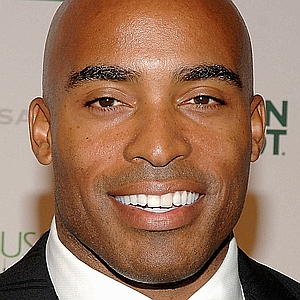
Tiki Barber, the personification of a doubter, at the American Museum of Natural History, October 16, 2008. (Jamie McCarthy/WireImage.com via http://thenypost.files.wordpress.com/).

Tiki Barber, the personification of a doubter, at the American Museum of Natural History, October 16, 2008. (Jamie McCarthy/WireImage.com via http://thenypost.files.wordpress.com/).

A quarter-century later, and though I am more than content with the fact that I opted for a PhD over a JD thirteen out of every fourteen days (people with law degrees do make more money on average), I sometimes question if the PhD in history was worth it. After all, a JD is far more portable. A JD would’ve served me better in my nonprofit and consulting careers than having to explain a doctorate. I wouldn’t want to think that I went in the direction of a graduate program for five and a half years simply because I had a conversation with a racial elitist.

It’s probably more likely that I didn’t go to medical school to earn an MD because my Mom and my idiot late-ex-stepfather both told me I couldn’t be a surgeon because I had “ten thumbs.” By more likely, I mean highly unlikely on both counts. I ultimately did what I wanted to do educationally speaking, despite own my doubts, despite the doubts of those who believed it was their job to advise me. But constantly asking, “Are you sure, Donald…?” isn’t exactly the best way to advise or mentor anyone, especially someone in their teens or a literal twenty-year-old. You lay out options, you ascertain what’s going on in their heart as well as their mind. You introduce them to other people who could provide better advice, based on direct expertise or experiences. Otherwise, you’re a doubter, not an advisor or a mentor.

The ’72 Dolphins and Baby-Boomer Narcissism

01 Saturday Nov 2014

Posted by decollins1969 in 1, culture, Eclectic, Politics, Pop Culture, race, Work, Youth

≈ Leave a comment

Tags

17-0, 1972 Dolphins, American Narcissism, Baby Boom Generation, Baby Boomers, Civil Rights Generation, Elitism, Gen Xers, Generation X, Generation Y, Hypocrisy, Miami Dolphins, Millennials, Narcissism, NFL, Perfect Season, Self-Aggrandizement


For as long as I’ve been alive, America has confronted me with its Baby-Boomer narcissism. This idea that the Boomers were the generation that forever changed the country and the world, the folks who’ve shaped our popular culture — and the response of younger generations to it — has been around for more than sixty years. The Beatles, Watergate, Vietnam, Led Zeppelin, The Rolling Stone, Roe v. Wade, “I Have A Dream” — Boomers have taken credit for it all. It sometimes makes me wanna puke.

Bill and Hillary Clinton (nee Rodham), circa 1971, Yale University, New Haven, CT. (Charles F. Palmer/HuffPost via http://clintonlibrary.gov/photogallery.html?galAlbum=28).

Bill and Hillary Clinton (nee Rodham), circa 1971, Yale University, New Haven, CT. (Charles F. Palmer/HuffPost via http://clintonlibrary.gov/photogallery.html?galAlbum=28).

Along with the arrogance of this constant supposition of their centrality to the sort-of-historical is the obvious factual ignorance that comes with it. It’s as if the ’80s didn’t happen and Generation X wasn’t born and didn’t grow up. Or the ’90s were only about Baby Boomers having kids of their own. Or that Boomers somehow didn’t vote for the likes of Nixon, Reagan, Bush 41 and Bush 43 — seven times in all!

But nothing, absolutely nothing, has demonstrated Baby-Boomer narcissism more than that annual rite of fall that has been the ’72 Miami Dolphins celebrating when every NFL team has lost their first game of a given season. The remaining members of that team get together with the hopes that no other NFL team finishes the season with a perfect record. It’s a sad sight watching elderly men long out of professional football show their glee on TV and in pictures when every team has at least one loss on the season. Every. Single. Year.

Yet it so represents this nation of Baby Boomers that have ruled this roost for so many years. Before most Gen Xers were old enough to vote, much less protest, Baby Boomers had coined us “slackers” and “apathetic” about life and politics. Heck, Baby Boomers took away Gen Xers’ right to drink — but not to die in war — just as the first Gen Xers turned eighteen! And for the past ten years, Boomers have turned their critical eye to Millennials, looking for flaws in their politics, voting patterns and vapid obsession with pop culture. As if Millennials didn’t cut their self-absorbed eyeteeth on a steady diet of Baby-Boomer megalomania.

President Barack Obama honors the Super Bowl VII Champions and their 1972 perfect season, East Room, White House, August 20, 2013. (UPI/Kevin Dietsch). Read more: http://www.upi.com/Top_News/US/2013/08/20/Obama-welcomes-72-Dolphins-to-the-White-House/UPI-27321377029133/#ixzz3HopWhqwX

President Barack Obama honors the Super Bowl VII Champions and their 1972 perfect season, East Room, White House, August 20, 2013. (UPI/Kevin Dietsch).
Read more: http://www.upi.com/Top_News/US/2013/08/20/Obama-welcomes-72-Dolphins-to-the-White-House/UPI-27321377029133/#ixzz3HopWhqwX

So when Mercury Morris or Bob Griese or elder statesman Don Shula have gone on TV year after year after year to gloat about their perfect season, it doesn’t reflect pride in their 17-0 record. It’s a reflection of their desperation, a selfish attempt to hang on to a past that is irrelevant in today’s NFL. And yes, it’s their fault. Kind of like when civil rights Boomers who claim the blood and name of the movement, yet root for younger generations of social justice activists to not do so well as them. All while taking ginormous amounts of credit for every good thing that happened during their watch years and years ago.

Is there something to be done about this? Maybe. We could try to ignore these winners of yesteryear and the annual ESPN champagne cork-popping graphic in honor of the ’72 Dolphins team. Or, better still, we can say, “Enough!” Forty-two years is long enough to celebrate the so-called perfect season. Especially when it was on a fourteen-game schedule.

As for the rest of the elite Baby Boomers, you can continue to self-aggrandize, as if three million protesters and stoners could fully represent the other 76 million Americans born between 1945 and 1961. Just remember. Gen Xers and Millennials will be the near-final arbiters of your history. It will be one in which you were as responsible preemptive war as LBJ and Robert McNamara, as accountable for NSA and a virtual police state as Nixon was for Watergate, as culpable for climate change as Ford and GM. That’s as much your narcissistic legacy as the anti-war movement and free-love.

Billy Joel, "We Didn't Start The Fire" (video screen shot), 1989. (http://denverlibrary.org/).

Billy Joel, “We Didn’t Start The Fire” (video screen shot), 1989. (http://denverlibrary.org/).

Fear and (White) Women’s History Month

06 Thursday Mar 2014

Posted by decollins1969 in 1, Boy @ The Window, culture, Eclectic, Politics, Pop Culture, race, Youth

≈ Leave a comment

Tags

Death By A Thousand Cuts, Domestic Violence, Elitism, Fear, Feminism, Microaggressions, Misogyny, Racism, Sexual Harassment, Stereotypes, Threats, Violence, Whiteness, Women's History Month


The Scream (1893) by Edvard Munch, The National Gallery, Oslo, Norway, November 27, 2013. (The Herald via Wikipedia). In public domain (US).

The Scream (1893) by Edvard Munch, The National Gallery, Oslo, Norway, November 27, 2013. (The Herald via Wikipedia). In public domain (US).

I often find it ironic that Women’s History Month follows immediately after Black History Month. In this sequence, both are racialized, as the former tends to represent White women, while the latter represents all Blacks regardless of gender, sexual orientation, or country of origin. Meaning that women of color often have to fight to be recognized during Women’s History Month, that poor women often go unrecognized in both Black and Women’s History months, and that other nuances of demographics and history aren’t thought of at all.

Such is the case with issues of -isms within feminism and Women’s History Month. Particularly when combined with the actualization of fear. In the cases of domestic violence, rape, assault, kidnapping, harassment and other threats against women, it’s certainly understandable that the fear of such things (and the breaking down those threats and fears in dialogue) are a big part of feminism and Women’s History Month more specifically. But when combined with certain -isms — especially racism and elitism — these issues become more about profiling stereotypical threats rather than dealing with real threats against women, especially (but not exclusively) for White women.

Compact Glock 19 in 9x19mm Parabellum, November 4, 2007. (Vladimir Dudak via Wikipedia). Released to public domain via CC 3.0 & GNU.

Compact Glock 19 in 9x19mm Parabellum, November 4, 2007. (Vladimir Dudak via Wikipedia). Released to public domain via CC 3.0 & GNU.

It’s something I experience every day. A White woman crossing the street as I approach, on my way home, to my car, to run an errand, or to pick up my son from school. A woman — White or Black — gasping audibly at the sight of me in an elevator, some even not getting on board, as if I had a ski mask over my face and a Glock in my right hand. White female co-workers who, upon seeing me outside the office, would put on a blank face and walk by me while I’m holding open a door, too scared to even say “Hello,” much less a “Thank you.”

It’s the nearly daily reminder that where feminism and Whiteness intertwine, I represent the Black male misogynist. I am dangerous, the guy whom White women and middle class women of color imbue anti-feminist threats and violence. Even when standing still on an elevator, deep in my own thoughts about work, teaching, family and writing.

Martyrdom of Joseph Marchand (1860) by unknown, September 27, 2008. (World Imaging via Wikipedia). Released to public domain via CC 3.0 and GNU.

Martyrdom of Joseph Marchand (1860) by unknown (or death by 1,000 cuts), September 27, 2008. (World Imaging via Wikipedia). Released to public domain via CC 3.0 and GNU.

I get it. White women often have to expend micro-energies on microaggressions from men — including Black men — in order to get through the day. For some, it’s probably an exhausting part of their existence. Likely so much so that they forget to turn off their shields even when bumping into a male co-worker or friend.

From my perspective, though, it’s not that simple. It’s not like I look at every White male and female and see another willfully ignorant and entitled racist ready to accuse me of ruining the country or threaten me with bodily harm. I think that in some feminist circles, racial and classist profiling goes on even more so than with most police officers. Fear is an important part of our existence, but it shouldn’t be the centerpiece of how anyone lives their lives, even when it’s justifiable.

In thinking about feminism, Whiteness and Women’s History Month, my two little cents’ worth of thoughts come down to this. I’m tired of being a victim of your fears, which when multiplied over the past 150 years, have often led to misunderstandings, false accusations, arrests, convictions, beatings and deaths. I’m tired of abstract discussions of microaggressions, threats and violence against mostly White women that don’t include the perspectives of women of color. And I’m tired of feminists who refuse to evaluate their own elitism and Whiteness in how they go about their everyday lives.

Amateur Eugenicists: Why Smart Poor Students Have a Hard Time

05 Wednesday Mar 2014

Posted by decollins1969 in 1, Academia, Boy @ The Window, Carnegie Mellon University, culture, Eclectic, Jimme, Mount Vernon High School, My Father, Pop Culture, race, University of Pittsburgh, Youth

≈ 4 Comments

Tags

"Why Ivy League Schools Are So Bad at Economic Diversity", Bigotry, Christy2012, Elitism, Eugenics, Jerome Karabel, Meritocracy, Poverty and Intelligence, Race and Intelligence, Racial Determinism, Racism, Robin J. Hayes, Scientific Racism, Social Darwinism, The Atlantic, The Chosen (2005), Yale


Scientific racism, using "evidence" to compare the Irish to the African, by H. Strickland Constable, Harper's Weekly, 1899. (JasonAQuest via Wikipedia). In public domain.

Scientific racism, using “evidence” to compare the Irish to the African, by H. Strickland Constable, Harper’s Weekly, 1899. (JasonAQuest via Wikipedia). In public domain.

I do generally loathe reading the comments sections of most news sites (any sites, really), but the one on Robin J. Hayes’ “Why Ivy League Schools Are So Bad at Economic Diversity” in The Atlantic is a real trip. There are dozens of comments in which people are playing amateur eugenicists, as they’ve connected wealth & poverty to intelligence. For these folks, the poor perpetuate themselves because they are stupid, and when they have kids, they’ll be born stupid as well, and therefore, will remain poor. As if structural inequality and structural racism have nothing to do with creating the gaps in wealth and education for millions of Americans.

I’m sure I haven’t seen more Social Darwinist /scientific racist /pro-eugenics comments anywhere, including on neo-Nazi websites. Apparently, the only thing The Atlantic’s commentators read while in college (as this is allegedly the profile of their readers) was Charles Murray and Richard Herrnstein’s The Bell Curve (1994), as their arguments came out of studies that are now well over 100 years old. (I defy anyone to say they’ve read all 838 pages, though!) What these people should’ve been reading is Jerome Karabel’s The Chosen (2005) and Nick Lemann’s The Big Test (1999), both of which indicate the Ivy League’s long history of high racial and socioeconomic bias, not just high selectivity.

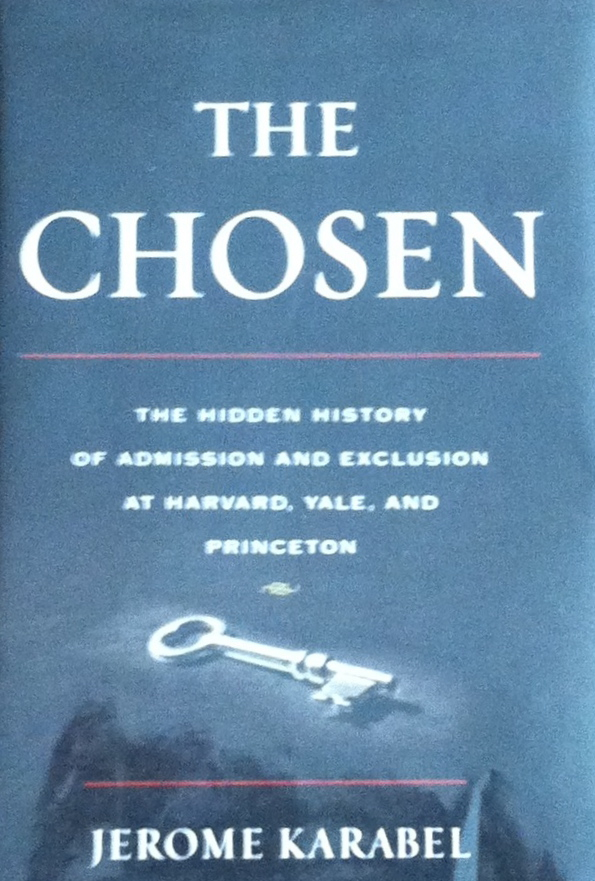
The Chosen (2005) front cover, March 5, 2014. (Donald Earl Collins).

The Chosen (2005) front cover, March 5, 2014. (Donald Earl Collins).

So I responded, using the lessons I’ve learned from my life and from writing Boy @ The Window, pointing out along the way that “Yale and the others offer what they offer to us po’ folk because they want to appear like they’re doing good, knowing full well that actually working to increase economic diversity is too much for them to fathom.” It elicited this counter-response from someone calling themselves Christy2012:

Pardon me for being so blunt, but you seem to imply that you were somehow obvious Yale material based on your top 2% status. However, you indicated on your blog that you earned a 2.6 GPA at University of Pittsburgh, a much less competitive institution, in your freshman year. Do you suppose you would have attained a higher GPA at Yale? Many rich people get turned down by Yale with even better credentials and Columbia is a fairly elite school itself. That Columbia offered you at chance and that you didn’t exactly hit it out of the park at UPitt is not exactly evidence that the schools are biased against the poor (maybe even the opposite).

Maybe there was (or is) an issue relating to how they consider deadbeat fathers in financial aid and scholarship consideration. It seems you should probably focus on that and that is probably an issue for more middle class applicants too.

It turns out that Christy2012 made these personal swipes from an extremely selective and incorrect reading of my blog because she believes all poor students and students of color really aren’t smart. I/we apparently benefited instead from “affirmative action and/or the pity of bleeding-heart White liberals,” and “not because of our abilities or because of hard work” (my translation of her other comments, by the way). Of course, Christy2012 never revealed anything personal about herself. It’s likely she never attended an elite college and has never met a poor person — especially one of color — that she didn’t feel superiority over.

From The Matrix: A sea of pods in which humans are fusion batteries (the future of the poor, as viewed by The Atlantic's amateur eugenicists), March 5, 2014. (http://www.tony5m17h.net/MatrixNet.gif).

From The Matrix: A sea of pods in which humans are fusion batteries (the future of the poor, as viewed by The Atlantic’s amateur eugenicists), March 5, 2014. (http://www.tony5m17h.net/MatrixNet.gif).

If this set of comments is any indication, it will be hard for Yale or any other school — even if they’re sincere in their efforts at racial and economic diversity — to fulfill them. So many folks even without holding positions of power or serving as gatekeepers decide before looking that poor folks and poor folks who look like me are incapable and unqualified for anything other than a mop, a broom or a jail cell. Is there any wonder that so few of America’s poor and of color have a chance at any higher education of significance, forget about getting into an elite or Ivy League institution?

WWMLKD (What Would Martin Luther King Do) – and Say Now?

05 Monday Aug 2013

Posted by decollins1969 in 1, Academia, Boy @ The Window, culture, Eclectic, Movies, Politics, Pop Culture, race, Youth

≈ 1 Comment

Tags

"I Have A Dream" speech, "I've Been To The Mountaintop" speech, "Return of the King" (2006), Aaron McGruder, Activism, Black Elite, Black Gen Xers, Civil Rights, Civil Rights Generation, Civil Rights Leadership, Civil Rights Movement, Elitism, Institutional Racism, March on Washington, Martin Luther King, Memphis Sanitation Worker's Strike, MLK, MLK Assassination, Post-Civil Rights Generation, Racism, Rev. Dr. Martin Luther King, Socioeconomic Status, The Boondocks, WWJD


"Return of the King" screenshot, Aaron McGruder's The Boondocks, originally aired, January 15, 2006. (Wikipedia). Qualifies as fair use due to picture's low resolution and direct subject of this blog post.

“Return of the King” screenshot, Aaron McGruder’s The Boondocks, originally aired, January 15, 2006. (Wikipedia). Qualifies as fair use due to picture’s low resolution and direct subject of this blog post.

Perhaps the most famous episode of Aaron’s McGruder’s award-winning series The Boondocks was his “Return of the King,” which originally aired on the Martin Luther King, Jr. Holiday in ’06. In it, King survived his ’68 assassination and came out of a coma into an early twenty-first century America and Black America in which his style of activism was no longer in vogue.

Instead, in McGruder’s vision, King came to realize how generations of younger Blacks have become lost in their overt materialism, as symbolized by ass-shaking, hip-hop and rap culture, the constant use of “nigga” in public, and the self-aggrandizement of Black televangelists and other purveyors of the cult of prosperity. In response, McGruder’s King said, “I’ve seen what’s around the corner, I’ve seen what’s over the horizon, and I promise you, you niggas have nothing to celebrate! And no, I won’t get there with you. I’m going to Canada!”

McGruder’s attempt to address the generational and socioeconomic divide between the Civil Rights generation and the post-civil rights generations that have followed was a limited one. It certainly represented well the views of a Black elite nurtured at the altar of the Civil Rights Movement. But despite the hilarity and the double-meanings, I don’t think that The Boondocks‘ “Return of the King” episode is even close to a decent representative of what King would’ve been like had he lived to see the fiftieth anniversary of the March on Washington and his “I Have A Dream” speech at the Lincoln Memorial.

Extrapolating from King’s last years:

The best and easiest guess in thinking about what King would’ve said or done in the years between that dreaded first Thursday in April ’68 and today would be to look at what King was doing in the last months of his life. Openly protesting the Vietnam War and the oppression of the poor and of color in the US and abroad. Breaking with other civil rights leaders on the Vietnam War and issue of addressing the collusion between institutional racism, income inequality and anti-union efforts in Memphis, in Chicago and in other places in the US.
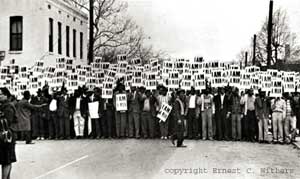
Memphis sanitation workers' strike/march under "I Am A Man" picket signs, Memphis, TN, March 29, 1968. (Ernest C. Withers via http://workers.org).

Memphis sanitation workers’ strike/march under “I Am A Man” picket signs, Memphis, TN, March 29, 1968. (Ernest C. Withers via http://workers.org).

Alienating a president in Lyndon Baines Johnson — the most radical supporter of civil rights and anti-poverty efforts of any president ever — was what King did in expanding his words and deeds beyond “I Have A Dream” and “We Shall Overcome” mobilizations to end segregation and overt racial discrimination. Moving beyond the grassroots movement paradigm of respectable Negroes (i.e., traditional church-going, middle and some working-class Blacks) to include Black men and women who weren’t relatively well-educated and in good jobs — like the sanitation workers in Memphis — was where King had already moved himself.

This is the King that would’ve evolved over the previous forty-five or so years had he lived. Based on this actual King, it would be a bit mystifying to hear him give speeches on, grant interviews for or write op-eds in which his main theme would be to eviscerate the American poor, Blacks and Latinos for buying into a material capitalistic hip-hop culture. Or to spend all of his waning moments lamenting the perpetual stereotype of teenage welfare mothers looking for a handout instead of a hand up. Or to devote his remaining energies to blaming Black males for their inability to wear waist-fitting pants and then connecting hip-hop to a criminal culture, a drug culture and general thuggery (That’s Bill Cosby’s and Don Lemon’s jobs, apparently).

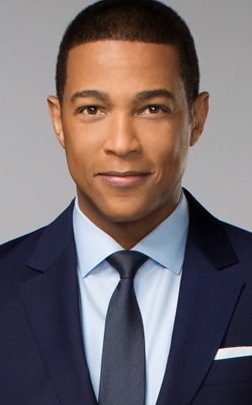
Don Lemon, CNN picture, August 5, 2013. (http://cnn.com).

Don Lemon, CNN picture, August 5, 2013. (http://cnn.com).

King would’ve probably withdrawn from public life by now, maybe even to Canada, as McGruder’s version suggests. But not before an additional two or three decades in which he would’ve boldly gone after the military-industrial complex, corporate welfare, government corruption, the War on Drugs and insufficient investment in America’s public schools and infrastructure. King would’ve seen all of them as factors that would have a negative impact on the life chances of the poor, especially poor African Americans.

Assessing blame – or not:

No doubt that King would’ve also found aspects of how Blacks have expressed themselves in pop culture and in the public sphere over the past four and half decades problematic. Yet based on the last years of his life, I think that he would’ve saved much of his ire for the aging Civil Rights generation for resting on their laurels and standing in judgment of younger Blacks, poor Blacks, or anyone else who didn’t follow directly in their now elitist footsteps. As King evolved in the four years, seven months and one week between the March on Washington and his assassination, so had his views of civil rights leadership. Well-meaning but pretentious, with the assumption that fixing the South would clear the way for Blacks of every socioeconomic stripe everywhere.

What’s most important to realize, though, is that King, had he lived, would’ve seen what most Americans regardless of race have seen in their own lives. Decline in wealth and income, a gulf of wealth between them and the top one-percent of income earners, a significant decline of well-paying union jobs replaced by minimum-wage non-union ones, rising unemployment, and expensive housing and healthcare. These are among so many other things that 240 to 270 million of us face on various levels that didn’t exist at the end of King’s life, things that disproportionately affect the poor, especially the poor and of color.

King and the legacy of the Civil Rights Movement:

The movement never evolved to address such issues, King would’ve said. Individuals did. Jesse Jackson, at least in the 1970s and 1980s, did. But the leaders of the Civil Rights Movement as a whole didn’t. They assumed that eliminating all forms of deliberate and overt discrimination in public institutions would bring down barriers for all African Americans. King would’ve said they were incorrect, and knew as much by the time of the Memphis sanitation workers’ strike in February and March ’68.

Unlevel playing field (soccer in this case), August 5, 2013. (http://funatico.com).

Unlevel playing field (soccer in this case), August 5, 2013. (http://funatico.com).

Despite the Civil Rights Act of 1964 and the Voting Rights Act of 1965 (both of which have obviously been weakened by the Reagan Years and this year’s Supreme Court Shelby County v. Holder decision), the life chances for any Black person born into poverty haven’t improve much at all. They remain in segregated communities, despite the movement toward mixed housing. They send their kids to underfunded and overcrowded schools, despite the paternalistic efforts of the so-called education reform movement. Jobs that pay a living wage are few, and conditions that promote neighborhood stability are better but still rare.

To assume that Blacks a half-century removed from the March on Washington and King’s “I Have A Dream” speech would be eternally grateful for the triumphs of the Civil Rights Movement in the wake of subtle yet pervasive discrimination on the basis of both race and socioeconomic status is ludicrous. It would smack of the elitism in which those who benefited most from the movement have displayed over the years. King would’ve realized the same thing, certainly well before the turn of the twenty-first century.

That anyone poor and of color in particular can overcome such barriers to, say, earn a doctorate or write a book is something akin to a miracle. Or to become a professional athlete or a music artist, a bit more common, if stereotypical, for that matter. King would’ve seen this and brought an analysis to the legacy of civil rights that didn’t put the movement and its leaders on a pedestal or proclaim victory where defeat was obvious.

What King would’ve (maybe) done:

King wouldn’t have given speeches in the years after the height of the movement to Black Gen Xers where he would’ve said, “I’ve got mine. Now it’s time to get yours,” or blamed hip-hop culture for so-called Black-on-Black crime. Instead, King would’ve listened, learned, facilitated and spoken without accusing those most vulnerable to discrimination of being the only ones at fault, if he would’ve faulted them at all. In terms of what he would’ve done beyond the attempt to form multiracial coalitions to fight for better conditions, it’s unclear. It would’ve been better than chest-thumping and belly aching, though.

Transfer Anniversary

21 Thursday Mar 2013

Posted by decollins1969 in 1, Academia, Boy @ The Window, Christianity, culture, Eclectic, Patriotism, Politics, Pop Culture, race, Youth

≈ Leave a comment

Tags

Academic Politics, Carnegie Mellon, Carnegie Mellon University, CMU, Department of HIstory, Dissertation Completion, Dissertation Funding, Doctoral Completion, Elite Universities, Elitism, Funding, History Department, Joe Trotter, Joe William Trotter, John Modell, Jr., Larry Glasco, Laurence Glasco, Pitt, Pittsburgh, Politics of Academia, Transfer, University of Pittsburgh


Viewing Pitt's Cathedral of Learning from Carnegie Mellon's mall (with Hamerschlag Hall in foreground), March 29, 2003. (http://post-gazette.com)

Viewing Pitt’s Cathedral of Learning from Carnegie Mellon’s mall (with Hamerschlag Hall in foreground), March 29, 2003. (http://post-gazette.com)

March ’93 was an interesting month for me, to say the least. Just about the biggest thing happening for me that month was my transfer from Pitt to Carnegie Mellon (or CMU) to finish my doctorate. After nearly two years of grad school in the History Department, I knew I needed to leave. Especially with Larry Glasco as my well-meaning but sometimes absentee advisor and with a bunch of professors who never hid their disdain for me as a masters and then a doctoral student. I’d also been at Pitt for six years between undergrad and grad school, most of those focused on history, Black Studies, or education foundations and policy as areas of research.

I knew that Carnegie Mellon wasn’t an ideal situation. I was sure that had I desired, I could’ve applied to and been accepted by doctoral programs as far and wide as NYU, University of Maryland, University of Michigan and other places. All were places where history didn’t simply consist of working-class historians who believed in the supremacy of class and neo-Marxism above all else – race and racism be damned! What I didn’t know, though, was whether those departments would accept my doctoral credits, cutting my coursework time in half. What I couldn’t be sure about was whether I’d be able to move toward PhD comprehensives and my dissertation proposal within a year of enrollment.

See, these were the things that Joe Trotter, my eventual advisor and John Modell, the graduate coordinator for the department, had promised me as part of my deal for transferring across the bridge to CMU. Those promises, along with the idea of working with an enthusiastic professor whose research didn’t seem out-of-date in a department that seemed to fast-track its students toward doctoral completion. That really appealed to me at the time.

Pitt and Carnegie Mellon (with Forbes Quad & Baker Hall included) as seen from Schenley Park, Pittsburgh, PA, March 21, 2013. (http://milliverstravels.com).

Pitt and Carnegie Mellon (with Forbes Quad & Baker Hall included) as seen from Schenley Park, Pittsburgh, PA, March 21, 2013. (http://milliverstravels.com).

When I finally broke it to Larry at the beginning of March that I’d made this decision, he didn’t exactly try to convince me to stay. I think he knew why. An audit of the program in ’98 confirmed officially what I had learned anecdotally over my six years at Pitt. That there were students in the program who’d been ABD (All But Dissertation) since Nixon and Watergate. That fully half of my cohort from ’91 hadn’t even completed their master’s degrees, and only three of us (counting myself) out of twenty-one would ever go on to complete our doctorates. That no Pitt History grad student had obtained substantial research funding from outside the university since my Mom potty-trained me back in ’72-’73. And that politically, the powers that used to be in the department didn’t take my or Larry’s work with me seriously. Even if Larry didn’t see that, I sure did.

Off then, I went. Into the unknown known of CMU, conservative, elite and elitist, not sure if I’d ever be comfortable on the lily-White and honorary-White-as-Asian campus. Still, I reminded myself that Pitt was really only a couple of blocks away at the closest point between the two campuses, that I still had lots of friends and acquaintances there. I also knew, though, that my relationship with Trotter as my advisor would be crucial to my successful navigation of this drab and stuffy world. Too bad I wasn’t clairvoyant!

Newer posts →

Boy @ The Window: A Memoir

Boy @ The Window: A Memoir

Places to Buy/Download Boy @ The Window

There's a few ways in which you can read excerpts of, borrow and/or purchase and download Boy @ The Window. There's the trade paperback edition of Boy @ The Window, available for purchase via Amazon.com at http://www.amazon.com/Boy-Window-Donald-Earl-Collins/dp/0989256138/

There's also a Kindle edition on Amazon.com. The enhanced edition can be read only with Kindle Fire, an iPad or a full-color tablet. The links to the enhanced edition through Apple's iBookstore and the Barnes & Noble NOOK edition are below. The link to the Amazon Kindle version is also immediately below:

scr2555-proj697-a-kindle-logo-rgb-lg

Boy @ The Window on Amazon.com: http://www.amazon.com/Boy-The-Window-Memoir-ebook/dp/B00CD95FBU/

iBookstore-logo-300x100

Boy @ The Window on Apple's iBookstore: https://itunes.apple.com/us/book/boy-the-window/id643768275?ls=1

Barnes & Noble (bn.com) logo, June 26, 2013. (http://www.logotypes101.com).

Boy @ The Window on Barnes & Noble: http://www.barnesandnoble.com/w/boy-the-window-donald-earl-collins/1115182183?ean=2940016741567

You can also add, read and review Boy @ The Window on Goodreads.com. Just click on the button below:

Boy @ The Window

Twitter Updates

Tweets by decollins1969
  • RSS - Posts
  • RSS - Comments

Archives

  • June 2025
  • April 2023
  • September 2022
  • August 2022
  • July 2022
  • June 2022
  • May 2022
  • April 2022
  • March 2022
  • January 2022
  • December 2021
  • November 2021
  • October 2021
  • September 2021
  • August 2021
  • July 2021
  • June 2021
  • April 2021
  • March 2021
  • February 2021
  • January 2021
  • December 2020
  • November 2020
  • October 2020
  • September 2020
  • August 2020
  • July 2020
  • May 2020
  • April 2020
  • March 2020
  • January 2020
  • December 2019
  • November 2019
  • August 2019
  • July 2019
  • June 2019
  • May 2019
  • April 2019
  • March 2019
  • February 2019
  • January 2019
  • December 2018
  • November 2018
  • October 2018
  • September 2018
  • August 2018
  • July 2018
  • June 2018
  • May 2018
  • March 2018
  • February 2018
  • January 2018
  • December 2017
  • November 2017
  • October 2017
  • September 2017
  • August 2017
  • July 2017
  • June 2017
  • May 2017
  • April 2017
  • March 2017
  • February 2017
  • January 2017
  • December 2016
  • November 2016
  • October 2016
  • September 2016
  • August 2016
  • July 2016
  • June 2016
  • May 2016
  • April 2016
  • March 2016
  • February 2016
  • January 2016
  • December 2015
  • November 2015
  • October 2015
  • September 2015
  • August 2015
  • July 2015
  • June 2015
  • May 2015
  • April 2015
  • March 2015
  • February 2015
  • January 2015
  • December 2014
  • November 2014
  • October 2014
  • September 2014
  • August 2014
  • July 2014
  • June 2014
  • May 2014
  • April 2014
  • March 2014
  • February 2014
  • January 2014
  • December 2013
  • November 2013
  • October 2013
  • September 2013
  • August 2013
  • July 2013
  • June 2013
  • May 2013
  • April 2013
  • March 2013
  • February 2013
  • January 2013
  • December 2012
  • November 2012
  • October 2012
  • September 2012
  • August 2012
  • July 2012
  • June 2012
  • May 2012
  • April 2012
  • March 2012
  • February 2012
  • January 2012
  • December 2011
  • November 2011
  • October 2011
  • September 2011
  • August 2011
  • July 2011
  • June 2011
  • May 2011
  • April 2011
  • March 2011
  • February 2011
  • January 2011
  • December 2010
  • November 2010
  • October 2010
  • September 2010
  • August 2010
  • July 2010
  • June 2010
  • May 2010
  • April 2010
  • March 2010
  • February 2010
  • January 2010
  • December 2009
  • November 2009
  • October 2009
  • September 2009
  • August 2009
  • July 2009
  • June 2009
  • May 2009
  • April 2009
  • March 2009
  • February 2009
  • January 2009
  • December 2008
  • November 2008
  • October 2008
  • September 2008
  • August 2008
  • July 2008
  • June 2008
  • May 2008
  • April 2008
  • March 2008
  • February 2008
  • January 2008
  • December 2007
  • November 2007
  • October 2007
  • September 2007
  • August 2007
  • July 2007
  • June 2007

Recent Comments

MaryPena's avatarMaryPena on My Day of Atonement/Bitter Hat…
decollins1969's avatardecollins1969 on No Good Teaching Deed Goes…
Mary Rose O’Connell's avatarMary Rose O’Connell on No Good Teaching Deed Goes…

NetworkedBlogs on Facebook

NetworkedBlogs
Blog:
Notes From a Boy @ The Window
Topics:
My Life, Culture & Education, Politics & Goofyness
 
Follow my blog

616 616 East Lincoln Avenue A.B. Davis Middle School Abuse Academia Academy for Educational Development AED Afrocentricity American Narcissism Authenticity Bigotry Blackness Boy @ The Window Carnegie Mellon University Child Abuse Class of 1987 CMU Coping Strategies Crush #1 Crush #2 Death Disillusionment Diversity Domestic Violence Economic Inequality Education Family Friendship Friendships Graduate School Hebrew-Israelites High-Stakes Testing Higher Education History Homelessness Humanities Humanities Program Hypocrisy Internalized Racism Jealousy Joe Trotter Joe William Trotter Jr. K-12 Education Love Manhood Maurice Eugene Washington Maurice Washington Misogyny Mother-Son Relationship Mount Vernon High School Mount Vernon New York Mount Vernon public schools Multiculturalism MVHS Narcissism NFL Pitt Pittsburgh Politics of Education Poverty President Barack Obama Race Racial Stereotypes Racism Relationships Self-Awareness Self-Discovery Self-Reflection Sexism Social Justice Teaching and Learning University of Pittsburgh Violence Whiteness Writing

Top Rated

Blog at WordPress.com.

  • Subscribe Subscribed
    • Notes from a Boy @ The Window
    • Join 103 other subscribers
    • Already have a WordPress.com account? Log in now.
    • Notes from a Boy @ The Window
    • Subscribe Subscribed
    • Sign up
    • Log in
    • Report this content
    • View site in Reader
    • Manage subscriptions
    • Collapse this bar
 

Loading Comments...