• About Me
  • Other Writings
  • Interview Clips
  • All About Me: American Racism, American Narcissism, and the Conversation America Can’t Have
  • Video Clips
  • Boy @ The Window Pictures
  • Boy @ The Window Theme Music

Notes from a Boy @ The Window

~

Notes from a Boy @ The Window

Tag Archives: Afrocentricity

My Trouble w/ the Lauryn Hill Reaction

09 Thursday May 2013

Posted by decollins1969 in 1, culture, Eclectic, eclectic music, music, Pop Culture, race

≈ Leave a comment

Tags

"Ready or Not" (1996), Afrocentricity, Class Privilege, Criminal Justice System, Crying, Die Hard (1988), Federal Government, Hip-Hop, Income Tax Evasion, IRS, Lauryn Hill, Music and Politics, New Jersey, Newark New Jersey, Sentencing, Sobbing, Speaker John Boehner


House Speaker John Boehner sobbing in public (again), May 8, 2013. (http://www.goodbye-blue-monday.com/).

House Speaker John Boehner sobbing in public (again), May 8, 2013. (http://www.goodbye-blue-monday.com/).

I am by no means a supporter of our slanted US justice system. It’s all too often slanted against the poor, of color and male. But I can’t sit around and watch folks gnash their teeth over the federal court in New Jersey sentencing her to three months in jail for over $1 million in income tax evasion.

Sure, it’s not fair. Perhaps even very unfair. We must keep in mind the simple fact that the IRS, et al. take years attempting to work with the rich (and yes, Lauryn Hill is a rich person) before putting a case together for the federal courts. It’s not as if the feds immediately swooped in, tasered Hill and then dragged her  through the streets in chains on the way to court. After all, she didn’t file federal or state income tax returns on $2.3 million in income from ’05 through ’09 — for five years! Heck, if Willie Nelson could figure out a way to stay out of federal courts and prison while paying off $17 million in back taxes, then surely Hill could’ve done the same at some point.

Lauryn Hill in court for one of her sentencing hearings, April 22, 2013 (Eduardo Munoz/Reuters). Qualifies as fair use under US Copyright laws, given subject matter and public hearing.

Lauryn Hill in court for one of her sentencing hearings, April 22, 2013. (Eduardo Munoz/Reuters). Qualifies as fair use under US Copyright laws, given subject matter and public hearing.

Those who’ve compared drug-addled celebs like Lindsey Lohan to Lauryn Hill as a case of Black versus While and the criminal justice system are missing a couple of valuable points. One, Lohan’s cases have never been federal, with mandatory sentences included. Two, and this is way more important, the feds tend to be pretty unforgiving once they do bring a case against a rich person for income tax evasion (e.g., Al Capone, Wesley Snipes, Leona Helmsley).

As much as I like Lauryn Hill’s music, I may feel bad for her, but I’m not going to make a federal case out of her serving three months in a federal prison for tax evasion. She’s not Mumia Abu Jamal, Angela Davis, Assata Shakur or even Tupac Shakur. Maybe Hill should’ve heeded lyrics straight from The Fugees, adapted federal government-style: “Ready or not, here [they] come, you can’t hide (uhhhh-huhhh) /gonna find you, and take it slowly…” As for the “find you” part, I also have to misquote Die Hard (1988) here, courtesy of the character Hans Gruber: “when you steal $600, you can just disappear. When you steal [one] million, they will find you, unless they think you’re already dead.”

I’ll take crap for writing this I’m sure. But Hill will be breathing free air again before Columbus Day, if not sooner.

James and the PAGPSA

29 Thursday Nov 2012

Posted by decollins1969 in 1, Academia, Boy @ The Window, culture, Eclectic, eclectic music, Hebrew-Israelite, Politics, Pop Culture, race, Religion, Youth

≈ 1 Comment

Tags

Activism, Afrocentric, Afrocentricity, Authentic Blackness, Black Action Society, Campus Climate, Carnegie Mellon University, Community, Diversity, Friendships, Graduate School, GSPIA, Isolation, PAGPSA, Pan African Graduate and Professional Student Association, Pitt, Pittsburgh, Politics of Graduate School, Retention, Self-Discovery, University of Pittsburgh


James and the Giant Peach photo art (1996), November 29, 2012. (http://disneymania.com.br).

About this time twenty years ago, perhaps for the first time in my life, I found myself around like-minded individuals, folks who seemed to understand me on an intellectual level. The fact that these were fellow graduate students, all at Pitt and all willing to form an association that would enable us to develop real connections across the campus, was inspiring to me. After four years of off-and-on involvement in the Black Action Society, not to mention my first year in the History grad program, I’d almost given up on the idea that I could form good friendships and acquaintance-ships through any formal gatherings.

But this was especially true regarding my thinking about my fellow Black students and other students of color. For the most part, I’d been around two kinds of students of color during my first five years at the University of Pittsburgh. One group was the semi-nerdy set, folks who cared deeply about their academic performance, but were also late-bloomers socially — people like me in more than a few ways. They tended to care little, though, about campus activism around diversity, retention or campus climate issues.

The other group was the Afrocentric set, people who often reminded me of my one-time Hebrew-Israelite brethren, whose views of Blackness were so limiting that I would’ve been a traitor just for listening to Chicago or Phil Collins. Those folks had virtually taken over the Black Action Society by my senior year. Forget mentioning popular folks, like sorors, frat guys, football, basketball and track guys and gals, or those fully invested in Pitt’s Honors College. I mingled with them all, and found little in common with them, intellectually or economically.

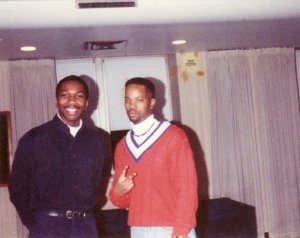
Me with Mark James, PAGPSA meeting, GSPH building, University of Pittsburgh, February 26, 1993 (Lois Nembhard).

That changed a bit my first year of grad school. Often in my walking and running across campus, I’d bump into a Black grad student here or there. At Hillman Library, the Cathedral of Learning, William Pitt Union, the SLIS building or other places. We’d recognize each other, we said hello, we even exchanged our names. Two of them in particular — Ed and Hayley — reached out to me at the end of the Spring ’92 semester, because they wanted to put together an organization that would represent our interests as grad students of color.

In mid-August, the emails began to go back and forth in earnest to establish what we’d end up calling the Pan African Graduate and Professional Student Association (PAGPSA) that fall. Through Jack Daniel’s office (see my post “The Miracle of Dr. Jack Daniel” from May ’11), we obtained the start-up funds necessary to make the new association go.

At our founding meeting that September, there were eight of us, all highly motivated to be as inclusive as possible, all feeling suddenly less isolated than we had felt a week, month or semester earlier. We decided on the “Pan African” part of the association’s name because we wanted to welcome as many graduate students of color as possible, particularly African and Afro-Caribbean students. The terms “Black” and “African American,” we agreed, wouldn’t be inclusive enough.

We also decided that despite the political implications of our new name, that this association would primarily be about bringing students together for social gatherings, for additional information and education beyond their course work and dissertations, but not to be campus activists. So many of the Black, African and Afro-Caribbean grad students at Pitt were in fact working on master’s or other professional degrees, and wouldn’t be on campus long enough to make lasting changes through activism, strictly speaking. Plus, there was the risk that activism would be so all-consuming — especially on issues like campus climate, long-term support for research and retention rates — that folks would fail to complete the work they came to Pitt to do in the first place.

CMU-Pitt mug, from joint PAGPSA/BGSO meeting on diversity and grad school, October 1992, November 29, 2012. (Donald Earl Collins).

By the time that first meeting broke up, I was content to have met folks like Mark, Hayley, Lois, Errol, Ed, and a couple of others, to find us all on the same page about something as serious as starting a new association of a significant cross-section of Pitt’s graduate students of color. But in the process, I’d made a new friend that fall through our meetings and our joint gatherings with Carnegie Mellon’s Black Graduate Student Organization (BGSO).

James came along and challenged PAGPSA in October and November regarding our campus activism stance, arguing that being a part of any organization of students of color meant being active. Of course the leadership disagreed, but that’s how I met the man. He was a charismatic Black Iowan preacher’s son, and more politically active than anyone I’d known under the age of thirty. James had ideas about everything, from the future of hip-hop to the implications of my research on multiculturalism and Black Washington, DC.

Though he was a GSPIA (Graduate School of Public and International Affairs) master’s student and ultimately finished his degree in ’94, we would remain friends through the rest of the ’90s. Between him and Matt (see my post “My Friend Matt” from September) and PAGPSA, I remained grounded even as I became buried in the minutia of US, African American and educational policy historiography over the next half-decade. Thankfully, I no longer felt like a lone wolf. Thankfully, I knew that I wasn’t alone in a sea of graduate school and faculty White maleness after that fall.

Meeting Joe Trotter

10 Thursday May 2012

Posted by decollins1969 in 1, Academia, Boy @ The Window, culture, Eclectic, Mount Vernon New York, Politics, Pop Culture, race, Youth

≈ Leave a comment

Tags

African American History, Afrocentricity, Black History in Pennsylvania, Carnegie Mellon University, HBCUs, Horace Mann Bond, Intercultural Education, Joe Trotter, Joe William Trotter Jr., Julian Bond, Lincoln University, Molefi Asante, Multicultural Education, Multiculturalism, Pitt, Road Trip, Self-Discovery, Trust, University of Pittsburgh, V. P. Franklin, Vincent P. Franklin


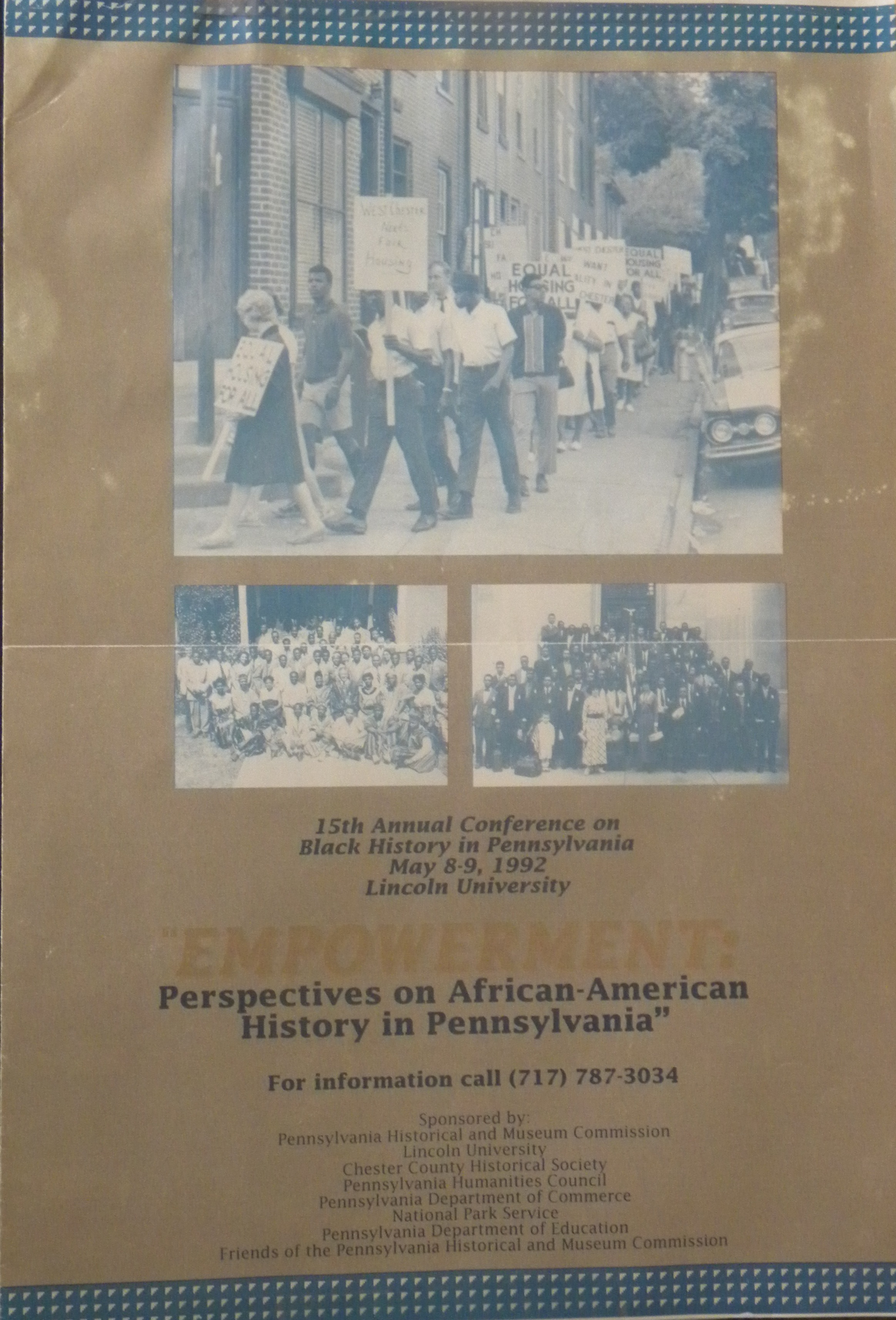
Conference agenda, 15th Annual Conference on Black History in Pennsylvania, Lincoln University (May 8/9 1992), May 10, 2012. (Donald Earl Collins).

This time two decades ago, I was driving my way home from a conference at Lincoln University in southeastern Pennsylvania. It was a week of more firsts that had become a small sample of a year of many firsts for me since getting into graduate school at the University of Pittsburgh in April ’91. It was my first road trip anywhere, and the first time I’d been in a car since earning my driver’s license in January ’92 (see my post “Taking the Long Road: Driver’s Delight” from January ’12). It was part of my first visit to NYC, Mount Vernon, and 616 since finishing my master’s degree.

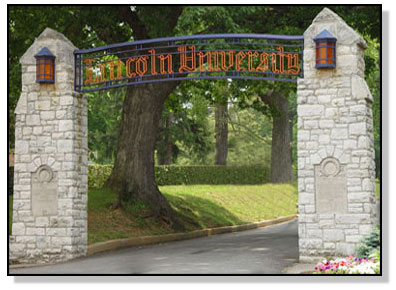
That’s where my road trip began, Mount Vernon, as I’d wind my way to Yonkers, the Bronx, the GW Bridge, New Jersey and Philly (where I got lost twice) before ending up on the bucolic HBCU campus. I was at Lincoln University to present at my first academic conference, the 15th Annual Conference on Black History in Pennsylvania. The theme for that year’s conference was “Empowerment: Perspectives on African-American History in Pennsylvania. Somehow, the conference organizers approved me to present my paper comparing elements of intercultural education, multicultural education and Afrocentric education in Pittsburgh and Philadelphia during the 1930s and early 1990s.

Lincoln University entrance and alumni arch, dedicated in 1921, May 10, 2012. (http://lincoln.edu).

If the road trip and the presentation were the only things important about this conference, that would’ve been plenty for me in May ’92. But there was so much more to this first conference for me than driving a Ford Escort in North Philly or getting on stage for the first time since sixth grade (see my post “Peaking As A Sixth Grader” from June ’11). It was my first time around a large number of Black academicians and activists. I met Julian Bond for the first time (his father, Horace Mann Bond, by the way, had served as president of Lincoln University from 1945 to 1957). Folks from the African American studies department at Temple University attempted to recruit me for their doctoral program. Knowing that Molefi Asante was there, I respectfully declined.

Above all else, I came away with two valuable experiences that would have an effect on me for years to come. One was being in the audience for a presentation from V.P. (or Vincent P.) Franklin, whose work on Black education in Philadelphia in the 1920s and 1930s I already knew. His was an extemporaneous presentation that lasted for well over twenty minutes. It was full of quotes, links between different historians’ research, and stories. It was extremely entertaining, delivered in an engrossing public speaking style, though not like some Southern Baptist preacher, either.

I was blown away by Franklin’s presentation. Especially in comparison to the one that I’d deliver some

Conference agenda (inside pages), 15th Annual Conference on Black History in Pennsylvania, Lincoln University (1992), May 10, 2012 (Donald Earl Collins).

twenty hours later. Mine was a well-studied delivery of ten pages of excerpts from my original paper. It was okay, not exactly a winner compared to anything that I’ve done in the two decades since. For it was with Franklin’s presentation and style from the day before that stuck with me. I decided immediately after my lackluster performance to always present my work extemporaneously, to work on my public speaking skills, to understand that presenting one’s work was a very different task than simply reading from it.

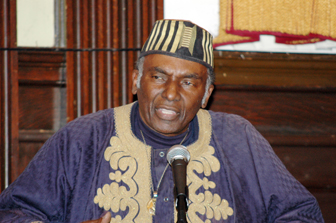
The second takeaway was in meeting my eventual dissertation advisor, Joe William Trotter, Jr. I met him after the first set of presentations on Friday morning, and ended up sitting with him for part of the Friday luncheon. I learned a few things in that first meeting. Up until that day, the only Black historians I knew in the Pittsburgh area were at Pitt or somehow affiliated with Pitt, including my then advisor Larry Glasco. The fact that Joe was across the way at Carnegie Mellon meant that there was at least the hope of gaining a different perspective on African American history than the stiff responses to Whites misconstruing the Black experience.

What made this first meeting even more intriguing was that Joe was in the process of putting together a graduate seminar for the Fall ’92 semester in African American history. It would be the first time that one had been taught at Carnegie Mellon. No such course existed at Pitt, either, at least as a graduate seminar. It meant that I could expect to get something out of my second year of graduate school (and first year as a PhD student) after all. “Where do I sign up?,” I asked after hearing what seemed like wonderful news at the time.

I returned to 616 twenty years ago on this date recharged and ready for another year of intellectual growth. But I should’ve also returned with far more insight into the politics of race, academia, trust, and academic competition than I actually had. The dynamics within the conference were extremely subtle, like an ultrasonic pulse undetected by most human hearing, but there driving the subconscious crazy anyway.

I didn’t see Joe’s invite to his classroom as a competition for me initially because I was obviously all-too-desperate to move on from Pitt, but not desperate enough to join Asante’s Temple of Afrocentricity (see my post “Writer’s Start” from August ’10 for more). Joe got me, all right. I just didn’t know it yet.

When Being An American Equals Never Having to Say Sorry

08 Friday Jul 2011

Posted by decollins1969 in 1, Academia, Boy @ The Window, culture, Eclectic, Mount Vernon High School, Politics, race, Religion

≈ Leave a comment

Tags

"Another E", A Curriculum of Inclusion, Academia, Afrocentricity, Arthur Schlesinger Jr., Asa Hilliard III, Blackness, Commissioner's Task Force on Minorities: Equity and Excellence, Cultural Pluralism, Culture Wars, Davis Middle School, Diane Ravitch, Diversity, Ethnic Studies, Ethnicity, Humanities, Humanities Program, K-12 Curriculum, K-12 Educaiton, Leonard Jeffries, Mount Vernon High School, Multicultural Education, Multiculturalism, New York State Department of Education, Race, University of Pittsburgh, Whiteness, Writing


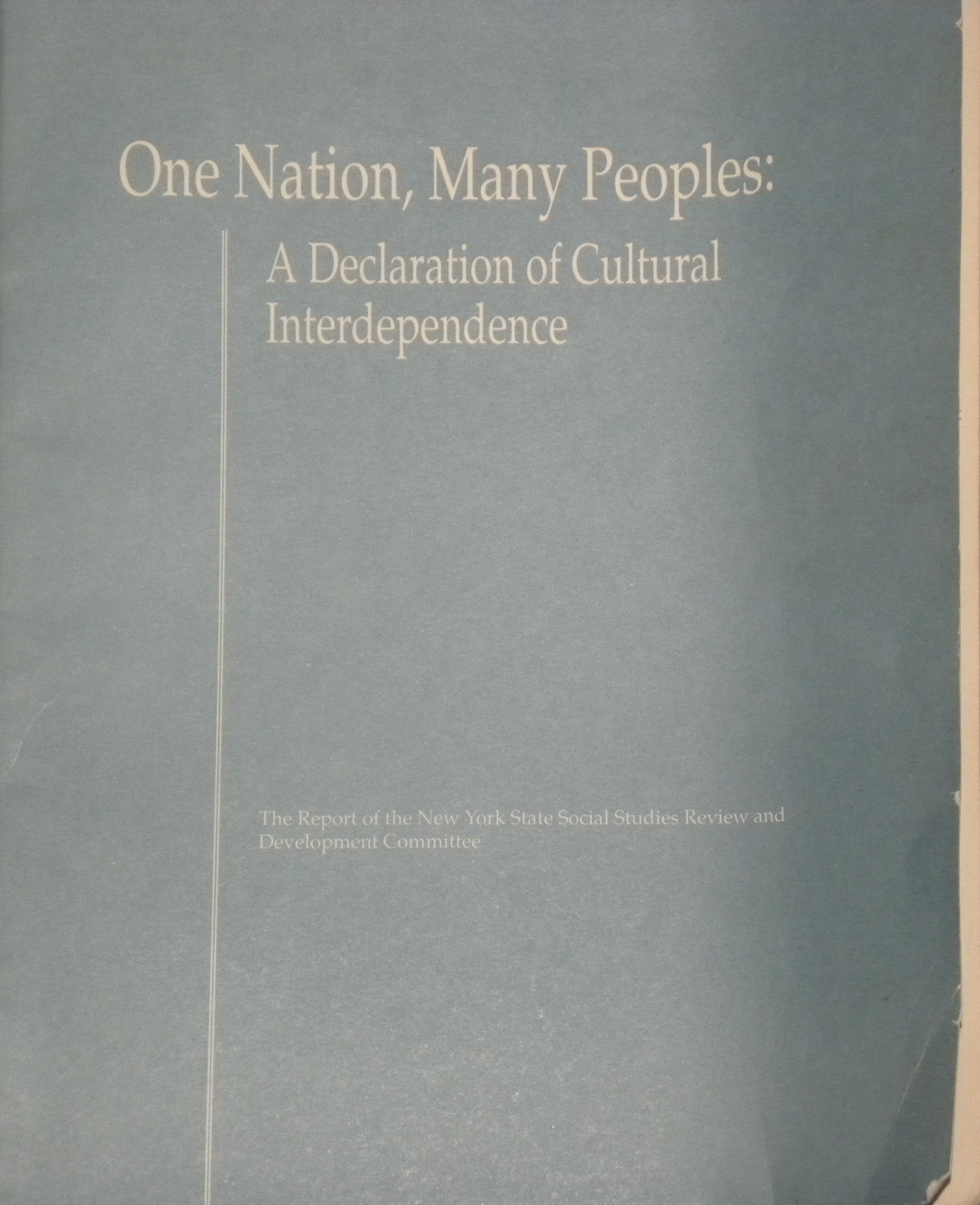
New York State Social Studies Review and Development Committee Report, June 1991 (Picture/Donald Earl Collins). One of several reports produced for the New York State Education Department and Commissioner, as part of the Commissioner's Task Force on Minorities: Equity and Excellence

Twenty years ago this week, I began writing an academic piece that would lead to my dissertation topic, doctorate and first book Fear of a “Black” America (2004). It was a topic that I’d fall in and then out of love with. Ironically, I pursued this topic because of my academic experiences in Humanities at Davis Middle and Mount Vernon High School. The topic was multiculturalism, and more specifically, multicultural education, and how to achieve this kind of curriculum reform in K-12 education. Just writing these words makes me feel both young and naive at the same time.

This whole quest started with a girl. Actually, with the young woman “Another E” (see “The Power of Another E” from April ’09 and “Beyond the Asexual Me” from last month”). She wanted to put an article together for publication, in response to what was then a major controversy involving research into the revision of New York State’s social studies and other curricula. The New York State Department of Education had given a committee the task of figuring out how to make the state’s K-12 curriculum more inclusive and representative of the state’s tremendous racial, ethnic and other forms of diversity.

By the end of September ’91, it would produce A Curriculum of Inclusion: Report of the Commissioner’s Task Force on Minorities: Equity and Excellence. But that deliverable was far from my mind when, tired from my weeks of near starvation post-graduation that April (see “Sometimes Starvation” from May ’11), I reluctantly said okay to working on this article.

Leonard Jeffries, Newark Public Library, February 1, 2007. (http://npl.org)

Now here I was, minus the young woman in whom I no longer had an interest, now working on a piece that had become more academic than either of us had originally intended. By the time I’d written my first words on multiculturalism, I’d already learned the names Leonard Jeffries, Asa Hilliard III and Arthur Schlesinger, Jr. I’d read articles from the New York Times and the Wall Street Journal about Jeffries’ name-calling, Schlesinger’s incredulousness about calling slaves “enslaved persons,” and about the committee in general getting along like hyenas tearing at a dead wildebeest.

If I’d been just a tad bit smarter, I would’ve done an investigative piece and called and emailed the people on this task force. I would’ve asked them to divulge to me what they would eventually tell the world about their dislike of each other and of anything “multicultural,” which was in quotes for them. For Schlesinger, multicultural was the equivalent of bad ethnic studies or a kind of Afrocentrism that blamed Whites for all that has ailed America and the world for the past 500 years. For Jeffries, it was a racist attempt at appeasing Blacks and other groups of color while maintaining the main theme of Whites on top.

Although this is an oversimplification, it’s not by much. There really wasn’t anyone from the task force, the

Arthur Schlesinger, Jr., CUNY, circa 2006, months before his death on February 28, 2007. (http://www.nytimes.com)

NYS Department of Education, or anyone who spoke on the Himalayas-out-of-a-termite-mound controversy over a more inclusive K-12 curriculum without taking one of those two views. That’s what interested me the most. Schlesinger, and eventually, folks like Diane Ravitch, Mario Cuomo and others completely against revision that even approached cultural pluralism, versus Jeffries, Hilliard and others arguing beyond what they called a White multiculturalism.

I didn’t have the capacity at that stage of my life to see myself as a writer or a journalist in any way. Just two years removed from the end of my mother’s marriage to my now idiot ex-stepfather, I only saw the piece that I’d turn into a Master’s research paper, doctoral thesis and first book as an academic exercise, one where I found the philosophical middle. I hadn’t a clue as to how to make myself part of the Ground Zero issue of the first seven years of the ’90s, the Culture Wars.

But I did have one experience that provided unique insight into multiculturalism and the arguments made by scholars and pols on all sides. Six years in Humanities in Mount Vernon, New York’s public schools. A place where cultural diversity and how to deal with it within the curriculum was the elephant in the classroom. Some teachers and classes addressed it, and many didn’t, to the detriment of what was a solid program, not to mention me and the others who were my classmates.

Either way, I saw more issues of diversity crop up where a multiculturalist approach would’ve been helpful all during my time in Humanities, including with my kufi and my Hebrew-Israelite years. It was a missed opportunity, one that I unconsciously wanted to address with my research of and writing on multiculturalism.

Elephant in School, retrieved July 7, 2011. (http://teachhub.com)

Writer’s Start

13 Friday Aug 2010

Posted by decollins1969 in 1, Academia, Boy @ The Window, Eclectic

≈ Leave a comment

Tags

Afrocentricity, Writing


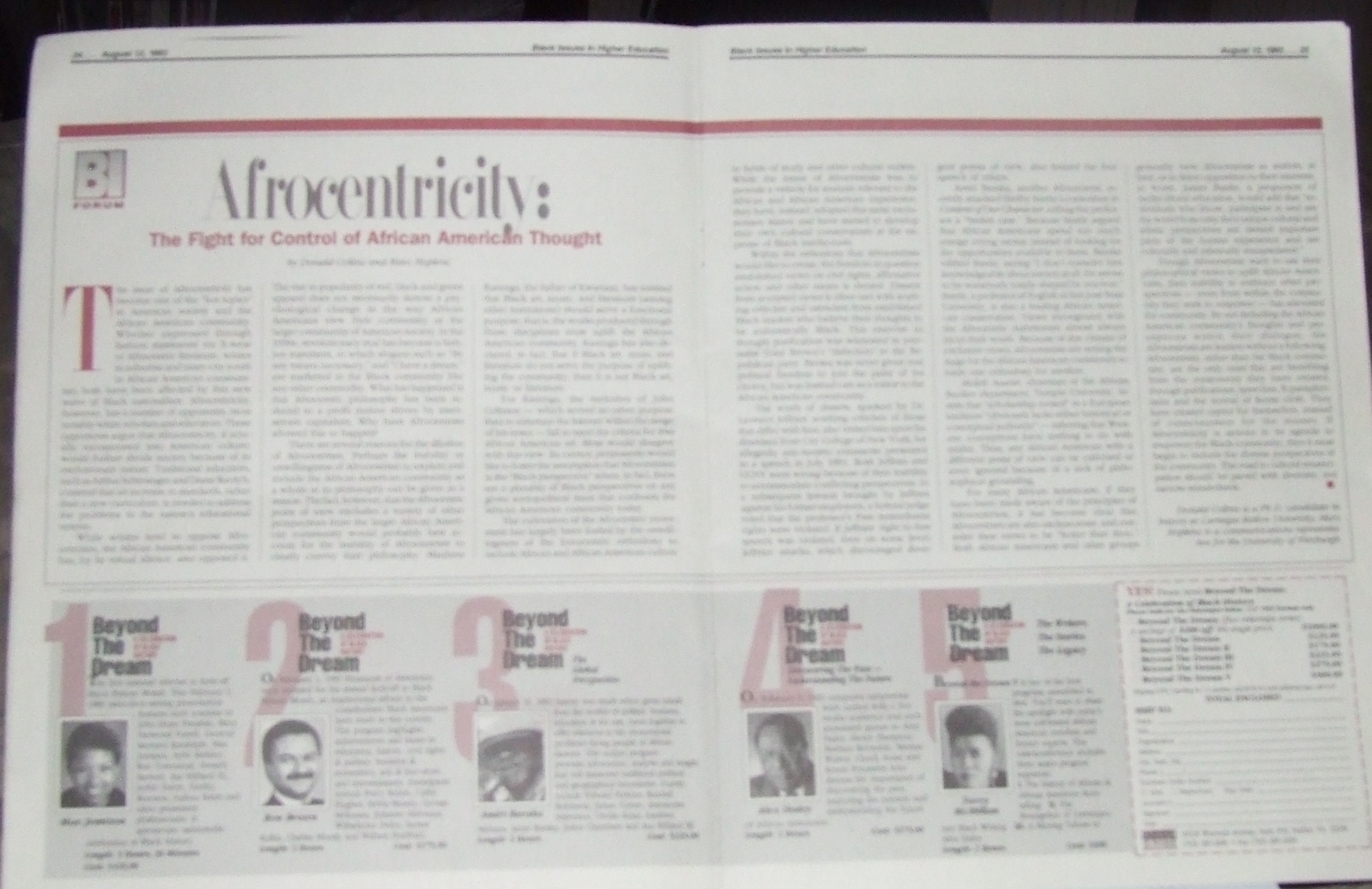
"Afrocentricity" Piece, August 12, 1993

Seventeen years ago today, I found out that an article that I had worked on with my dear friend Marc had been published by Black Issues in Higher Education. It wasn’t the typical process in which an editor or an editorial assistant contacts you to let you know that your piece has made the cut. No, I found out from Marc, who found out from a librarian at Hillman Library at Pitt, that our 1,200-word “Afrocentricity: The Fight for Control of African American Thought” was already published by Black Issues as their central Forum article for their August 12, ’93 issue. We did so many things incorrectly in getting that article published. But in the end, it meant renewing a struggle for a sense of my own purpose in life. At twenty-three years old, I was half my lifetime removed from seeing myself as a writer, and had spent most of the previous eleven years denying that any such yearnings remained in my mind and heart.

It was an article borne out of Marc’s desire to have an impact on a ridiculous debate over what is and isn’t authentically “Black” or “African” and my need for a few extra dollars. Unfortunately, authentic Blackness – along with my need for increased income – remains after so many years. We worked for two weekends in May on this short critique of Black Studies greats such as Maulana Karenga, Molefi Asante and the latter’s cult of Afrocentric followers, including those who would claim that such things as jazz aren’t authentically Black. After we finished the draft, I left it to Marc to compile the contact information for editors and periodicals. I was too busy looking for work and making sure that I wasn’t evicted from my firetrap of an apartment in East Liberty to put much more work beyond the piece into getting it published.

Other than Marc occasionally calling me to let me know that he’d been in contact with Harper’s or had mailed the article to Emerge, I didn’t give the piece much thought until that day in August seventeen years ago. Since our piece was already published, it meant that we’d have to fight to get paid. Based on the number of words, they owed us about $100 a piece. We’d never even received an acknowledgment letter, much less an acceptance or rejection follow-up. In all, Marc contacted some seventeen different magazines about “Afrocentricity,” probably too many to keep up with and police, especially in the case of Black Issues.

We learned later that one of the editors hoped to use our article as a straw man for Molefi Asante and his students/followers to burn in effigy, with one letter after another describing us as “Uncle Toms,” “inauthentic,” and “misguided Negroes.” We were virtually everything except children of God. This went on for two months’ worth of Black Issues issues. I wanted to write a rebuttal letter, one that would at least stick it to our melanin-worshipping, authentically-seasoned-fried-chicken-eating, Afrocentric brothas and sistas. My description, not Marc’s. But Marc refused to partake in a follow-up. “We were just trying to help,” he said more than once, as if we were the 300 Spartans at Thermopylae, about to be killed off by an ignorant swarm.

I learned quite a bit from those days of naiveté. One, that as a writer, that it was just as important for me to be involved in the selling of our article as it was for me to do the actual writing. Two, that mass mailings of articles for publication only work if you don’t care about making money or about how you as a writer are treated. Three, that I as a writer must stand by my work, especially when I know I’m in the right. And four, that even in the midst of my climb into all things PhD, that I was and would always remain a writer. This experience would serve to help me figure out how much of a writer I could and should be as my time pursuing an academic career came and passed.

Newer posts →

Boy @ The Window: A Memoir

Boy @ The Window: A Memoir

Places to Buy/Download Boy @ The Window

There's a few ways in which you can read excerpts of, borrow and/or purchase and download Boy @ The Window. There's the trade paperback edition of Boy @ The Window, available for purchase via Amazon.com at http://www.amazon.com/Boy-Window-Donald-Earl-Collins/dp/0989256138/

There's also a Kindle edition on Amazon.com. The enhanced edition can be read only with Kindle Fire, an iPad or a full-color tablet. The links to the enhanced edition through Apple's iBookstore and the Barnes & Noble NOOK edition are below. The link to the Amazon Kindle version is also immediately below:

scr2555-proj697-a-kindle-logo-rgb-lg

Boy @ The Window on Amazon.com: http://www.amazon.com/Boy-The-Window-Memoir-ebook/dp/B00CD95FBU/

iBookstore-logo-300x100

Boy @ The Window on Apple's iBookstore: https://itunes.apple.com/us/book/boy-the-window/id643768275?ls=1

Barnes & Noble (bn.com) logo, June 26, 2013. (http://www.logotypes101.com).

Boy @ The Window on Barnes & Noble: http://www.barnesandnoble.com/w/boy-the-window-donald-earl-collins/1115182183?ean=2940016741567

You can also add, read and review Boy @ The Window on Goodreads.com. Just click on the button below:

Boy @ The Window

Twitter Updates

Tweets by decollins1969
  • RSS - Posts
  • RSS - Comments

Archives

  • June 2025
  • April 2023
  • September 2022
  • August 2022
  • July 2022
  • June 2022
  • May 2022
  • April 2022
  • March 2022
  • January 2022
  • December 2021
  • November 2021
  • October 2021
  • September 2021
  • August 2021
  • July 2021
  • June 2021
  • April 2021
  • March 2021
  • February 2021
  • January 2021
  • December 2020
  • November 2020
  • October 2020
  • September 2020
  • August 2020
  • July 2020
  • May 2020
  • April 2020
  • March 2020
  • January 2020
  • December 2019
  • November 2019
  • August 2019
  • July 2019
  • June 2019
  • May 2019
  • April 2019
  • March 2019
  • February 2019
  • January 2019
  • December 2018
  • November 2018
  • October 2018
  • September 2018
  • August 2018
  • July 2018
  • June 2018
  • May 2018
  • March 2018
  • February 2018
  • January 2018
  • December 2017
  • November 2017
  • October 2017
  • September 2017
  • August 2017
  • July 2017
  • June 2017
  • May 2017
  • April 2017
  • March 2017
  • February 2017
  • January 2017
  • December 2016
  • November 2016
  • October 2016
  • September 2016
  • August 2016
  • July 2016
  • June 2016
  • May 2016
  • April 2016
  • March 2016
  • February 2016
  • January 2016
  • December 2015
  • November 2015
  • October 2015
  • September 2015
  • August 2015
  • July 2015
  • June 2015
  • May 2015
  • April 2015
  • March 2015
  • February 2015
  • January 2015
  • December 2014
  • November 2014
  • October 2014
  • September 2014
  • August 2014
  • July 2014
  • June 2014
  • May 2014
  • April 2014
  • March 2014
  • February 2014
  • January 2014
  • December 2013
  • November 2013
  • October 2013
  • September 2013
  • August 2013
  • July 2013
  • June 2013
  • May 2013
  • April 2013
  • March 2013
  • February 2013
  • January 2013
  • December 2012
  • November 2012
  • October 2012
  • September 2012
  • August 2012
  • July 2012
  • June 2012
  • May 2012
  • April 2012
  • March 2012
  • February 2012
  • January 2012
  • December 2011
  • November 2011
  • October 2011
  • September 2011
  • August 2011
  • July 2011
  • June 2011
  • May 2011
  • April 2011
  • March 2011
  • February 2011
  • January 2011
  • December 2010
  • November 2010
  • October 2010
  • September 2010
  • August 2010
  • July 2010
  • June 2010
  • May 2010
  • April 2010
  • March 2010
  • February 2010
  • January 2010
  • December 2009
  • November 2009
  • October 2009
  • September 2009
  • August 2009
  • July 2009
  • June 2009
  • May 2009
  • April 2009
  • March 2009
  • February 2009
  • January 2009
  • December 2008
  • November 2008
  • October 2008
  • September 2008
  • August 2008
  • July 2008
  • June 2008
  • May 2008
  • April 2008
  • March 2008
  • February 2008
  • January 2008
  • December 2007
  • November 2007
  • October 2007
  • September 2007
  • August 2007
  • July 2007
  • June 2007

Recent Comments

MaryPena's avatarMaryPena on My Day of Atonement/Bitter Hat…
decollins1969's avatardecollins1969 on No Good Teaching Deed Goes…
Mary Rose O’Connell's avatarMary Rose O’Connell on No Good Teaching Deed Goes…

NetworkedBlogs on Facebook

NetworkedBlogs
Blog:
Notes From a Boy @ The Window
Topics:
My Life, Culture & Education, Politics & Goofyness
 
Follow my blog

616 616 East Lincoln Avenue A.B. Davis Middle School Abuse Academia Academy for Educational Development AED Afrocentricity American Narcissism Authenticity Bigotry Blackness Boy @ The Window Carnegie Mellon University Child Abuse Class of 1987 CMU Coping Strategies Crush #1 Crush #2 Death Disillusionment Diversity Domestic Violence Economic Inequality Education Family Friendship Friendships Graduate School Hebrew-Israelites High-Stakes Testing Higher Education History Homelessness Humanities Humanities Program Hypocrisy Internalized Racism Jealousy Joe Trotter Joe William Trotter Jr. K-12 Education Love Manhood Maurice Eugene Washington Maurice Washington Misogyny Mother-Son Relationship Mount Vernon High School Mount Vernon New York Mount Vernon public schools Multiculturalism MVHS Narcissism NFL Pitt Pittsburgh Politics of Education Poverty President Barack Obama Race Racial Stereotypes Racism Relationships Self-Awareness Self-Discovery Self-Reflection Sexism Social Justice Teaching and Learning University of Pittsburgh Violence Whiteness Writing

Top Rated

Blog at WordPress.com.

  • Subscribe Subscribed
    • Notes from a Boy @ The Window
    • Join 103 other subscribers
    • Already have a WordPress.com account? Log in now.
    • Notes from a Boy @ The Window
    • Subscribe Subscribed
    • Sign up
    • Log in
    • Report this content
    • View site in Reader
    • Manage subscriptions
    • Collapse this bar
 

Loading Comments...