Shopping at C-Town

Tags

, , , , , , ,


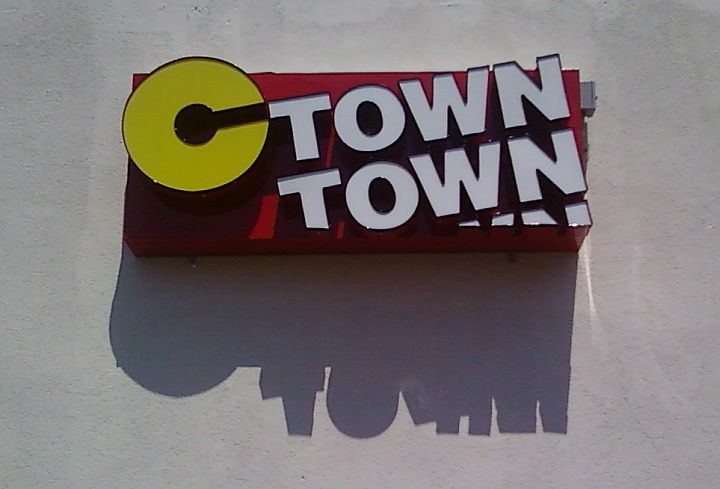
C-Town Sign, Plainfield, NJ. Source: Plainfield Today, http://ptoday.blogspot.com/2010/07/c-town-supermarket-touches-nerve.html

I’ve spent very little time walking down memory lane regarding Crush #1 this year. Partly because I’m sure some of my readers are sick of hearing about my love for her, and partly because I’m sure she’s sick of hearing about herself. But this short story is more about me than her.

Twenty-seven years ago this week, I experienced my first — and nearly my last — embarrassment around food stamps at the one-time C-Town grocery store near the corner of Park Avenue and East Prospect Avenue in Mount Vernon. I was shopping after 7 pm for groceries after a quick stop at Mount Vernon Public Library early on in my freshman year at Mount Vernon High School. It was right around the last Rosh Hashanah I’d recognize as a Hebrew-Israelite, a Wednesday or Thursday night. I was buying some pinto beans, Carolina Long Grain Rice, beef neck bones and other healthy yet cheap things to eat for the next few days.

It’d always been a struggle to shop for my family during the Hebrew-Israelite years, to find kosher food, to buy strange things like matzohs or kosher salt. But it had become stranger for me earlier that year, when we ended up on welfare and using food stamps after April ’83. By that fateful evening, I’d maybe used my

Vintage Food Stamps. Source: http://slashfood.com

mother’s food stamps a half-dozen times. Other times, I’d used my father Jimme’s money to pay for the groceries, the indignity of using food stamps was so great. And when I shopped in Mount Vernon, I was acutely aware of the possibility that I could bump into one of my better-off classmates while paying for groceries with my stereotypical food stamps. As far as I was concerned, they already had too many things they could make fun of me about as it was.

So as I finished combing the slender and short aisles of C-Town for kosher bargains, I began my trek to the cash registers at the front, relieved that I hadn’t bumped into any folks I knew. Only to run into Crush #1, having beaten me to the cashier that was open at the time.” Damn,” I thought, one of the few times before the age of twenty-one that the word damn ever invaded my thoughts. She was polite enough to say “Hey, Donald,” to engage me in a short conversation about the start of high school.

Although I was usually grateful to be in my first love’s presence, all I wanted to do at that moment was run away, get out of the store as fast as I could. Instead, I went through the motions, answering her questions and asking a couple of ones about the teachers we had in common that year, like Cuglietto and Murphy. Luckily for me, she didn’t linger after she paid the cashier, and said her laters while I was still being rung up. I quickly handed the cashier my $20 in food stamps, told them to keep the Monopoly money change, and walked around the corner and down Prospect to 616 at Warp Factor 3.

The funny thing about getting older — not old, but older — is that it would take a lot more than food stamps to embarrass me these days. Especially now that you can get welfare checks and food stamps through direct deposit and EBT cards. I’m sure that Crush #1 thought nothing of our short conversation that evening, and neither did I, other than feeling awkward about the reminder that I was completely out of my league, not only from a relationship standpoint, but in terms of my lot in life overall. Boy, I’m glad that things have changed — that I’ve grown — so much in past twenty-seven years. Otherwise, I wouldn’t have a blog to remind me of my ridiculous past.

Opposite World

Tags

, , , , , , , , , ,


Ignorance and Apathy. Source: http://iftheshoefitz.com

I know that I don’t fit very well in this world. My way of speaking, my walk, my music tastes. They and so much more make me an oddball in a land full of narcissistic conformists who all believe that they’re special. It’s opposite world for me, and has become more so over the past thirty years. No longer is it that “the customer’s always right.” It’s acceptable that people refuse to give up space in public, step on your shoes and toes and dare you to make them say “excuse me.” Folks refuse to say “thank you” for simple and well-meaning gestures, as if a courtesy would force them to acknowledge your existence. Blind loyalty is how we define patriotism, and becomes a quick path of career advancement. It’s a world that’s full of crap, and makes me wish I owned a societal sewage treatment or compost plant to deal with it all. But none of it is more disappointing that our world’s embracing of stupidity.

As any serious scholar knows, there’s a long history of anti-intellectualism in American culture. It’s existed since the days of Woodrow Wilson, and likely at least a generation longer than that. Yet that’s not what I’m concerned with here. These days, we have a people absolutely proud of their lack of knowledge, choosing to avoid knowing anything for fear of rejection by friends, colleagues, voters and leaders. Our pride in ignorance and stupidity knows no bounds. We have folks like Maureen Dowd and Kathleen Parker, as well

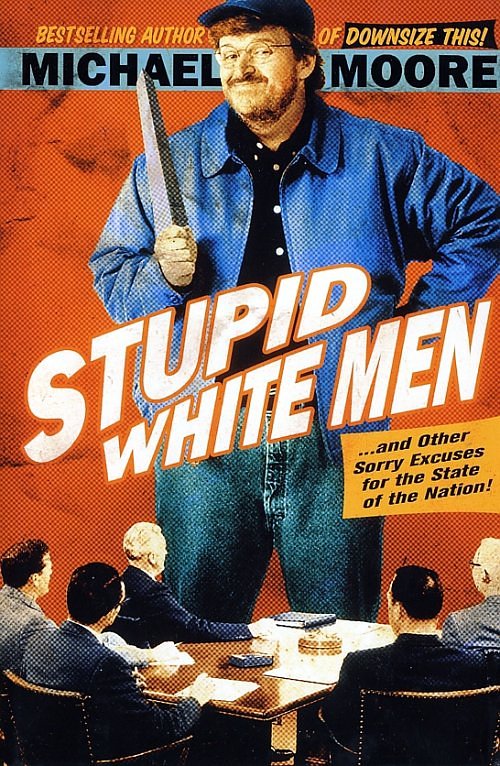
Michael Moore's Stupid White Men (should include women as well). Source: http://www.michaelmoore.com

as Faux News, of course, critical of President Obama, mostly because of his biracial Black and elite education background. That includes criticisms over his being “overly patient” and “too deliberate” in addressing complex foreign policy issues. We have NFL coaches laughing on HBO’s Hard Knocks because they couldn’t figure out that two yardsticks and one twelve-inch ruler equals seven feet in length, something that any fifth-grader supposedly should be able to do.

Sarah Palin’s still a popular candidate — perhaps for president, but more likely as a conservative lightning rod — in no small part because she’s refused to embrace knowledge and “those so-called experts” of such. Apparently it’s okay to not listen to what the opposition has to say because they attended Harvard or graduated from Princeton. At least she’s not as stupid as she appears, having made $13 million since the beginning of ’09 off of selling ignorance to her fans.

We have policy wonks, politicians and bigoted Tea Baggers willing to dismiss any and all evidence — not opinion, but objective, painstakingly gathered evidence — that doesn’t fit their White is right and the Right is right view of the world. We have progressives and liberals — from assisted suicide advocates to vegans — who deny others’ points of view or overall context, leaping into full-throated arguments without looking or without imparting their opinions or their knowledge.

Anyone who disagrees with any side based on evidence, knowledge, and of course, wisdom, can expect to see their knowledge shoved to the side. If it were a book, they’d all burn it. If it were a person, they’d jail it. That’s how much our nation hates knowledge and those who possess it. It’s what makes this world so uncomfortable to live in.

The Eclectic, Authentic Donald

Tags

, , , , , , , , , , , , , , ,


Maxwell's Embrya (1997) Album Art

I am, and will always remain, a goofy oddball. I’ve known that for at least twenty-five years, probably closer to thirty. For it was this week in ’85 that we finally got cable at 616. More than four years after MTV, and a few months into VH1, we finally no longer needed antennas to watch TV. My fat, greasy slob of a stepfather hogged the gigantic wood-framed hand-me-down of a nineteen-inch Zenith, along with the living room, most of the time. But I came home from the beginning of the school year — my junior year of Meltzer and AP US History at MVHS — at the end of the first week, with no one home.

I turned on the TV, found MTV, and boom, I was in the heart of the ’80s. As soon as I hit the channel, a new video began, heavily synthesized and very much over the top. It turned out to be Heart’s “What About Love,” the first release off of their new album. I liked the song immediately. But more importantly, I liked

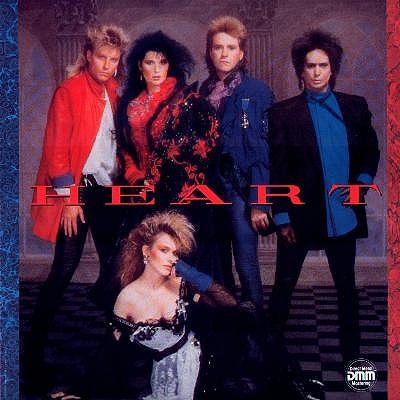
Heart, 1985. (Look at that hair!?!)

the fact that I could now also put faces and styles to voices and lyrics. I was late, four years too late in understanding the jokes, the fashion motifs and consumerism concerns of my more socioeconomically- blessed classmates. As the saying goes, though, better late than never.

That afternoon, I ended up seeing videos from Sade, Tears for Fears, Dire

Mr. Mister (1985) Welcome To The Real World

Straits, Sting, and Mr. Mister’s “Broken Wings.” The last one was a weird video, but very heartfelt, and one that has stayed with as long as any song I’ve heard or video I’ve seen since (more on that in December). I eventually checked out some boring Alexander O’Neal videos on BET before my mother and younger siblings came home from school and grocery shopping.

It wasn’t as if I hadn’t listened to music before September ’85. I was already well aware of the fact that my music tastes weren’t stereotypically Black, weren’t all that White, and certainly weren’t all that old and mature. Having played the trombone in fifth grade, the fife for Hebrew-Israelite stuff all through ’82, and sang in school choirs sixth, seventh and eighth grade (until my voice started cracking), it wasn’t as if I didn’t know when someone was off key or timing their drum sequences.

Still, I found music that didn’t have the voice of Luther (Vandross) or Patti (Austin or LaBelle) or the beats of Doug E. Fresh, Grandmaster Flash or Run-D.M.C. appealing. It reached me because I had moments I needed to be reached, to be serious, to focus on the pain that was my life in the mid-80s, a pain that few artists sang or wrote about in any direct way. I could relate to the lyrics of rejection, redemption and

The Best of Sade (1992) Album Art

resolution more than I could relate to someone stepping on my brand new sneakers and getting attitude. Songs that could reach me because I had moments I needed to feel and be goofy, to laugh at myself for feeling as pathetic as I did back then. Nothing, and I mean nothing, in the R&B and early hip-hop repertoire of ’85 did that for me.

So I branched out, almost immediately after that MTV afternoon in early-fall early-September. I became even more interested in what some of my classmates called “that White music,” even deliberately listening to WPLJ and Z-100, adding that to WBLS. I also took the occasional turn to WCBS-101 (oldies station of Sinatra, Nat King Cole and Dean Martin), had a brief foray into Phillip Glass and ’80s new age, a rare stumble into jazz, and yes, for those who believe I embody the rejection of all things “Black,” found my need for R&B and some rap in my eyes and ears.That first week in September ’85 pretty much sealed my fate as an eclectic music listener. Many who know me and my Mount Vernon past would say that Humanities and being around all those White kids had something to do with this. Some, including my mother, would say that my education has led to some sense of racial self-loathing, that I deliberately gave up my heritage to chase some false sense of Whiteness — or,

Seal (1994) Album Art

that I’m “acting White.”

I’d say that I was a goofy and serious late-bloomer, who listened to music and lyrics for meaning, for a kernel of wisdom and hope. Some or all of those things can be found in any genre of music, anywhere, anytime, under any circumstance. Music, like people, can’t be separated into races unless people choose to be separate, a truth I understand now and guessed at intuitively then.

Finding Home

Tags

, , , , , , , , , , ,


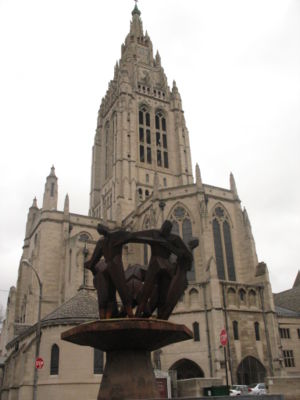
Highland Building (tall) and 6007 Penn Circle South (short). Source: http://urbanplacesandspaces.blogspot.com

A flat at 48 Adams Street in Mount Vernon, New York. Followed by one at 24 Adams Street. Then 48 Adams Street again. Then the entire second floor of the house at 425 South Sixth Avenue. After that, a 1,200-square-foot apartment on the third floor of the front building of the 616 East Lincoln Avenue

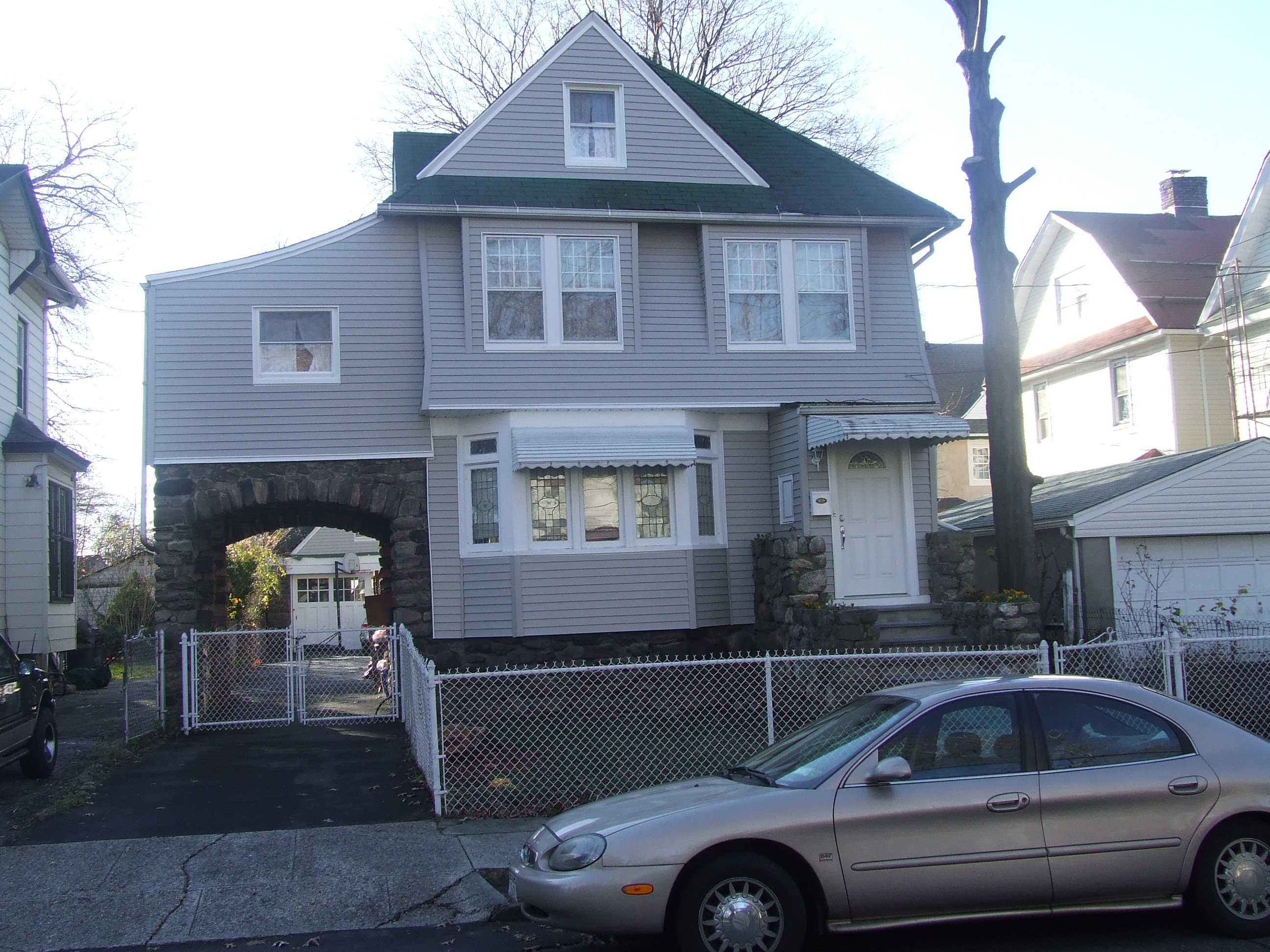
48 Adams Street, circa 2006

complex. After going to Pittsburgh for college, a dorm room at Lothrop Hall my freshman year. Five days of Howard Johnson’s and sleeping on a concrete landing on the fifth floor in a stairwell at Forbes Quadrangle (now Wesley Posvar Hall) the beginning of my sophomore year. A poorly partitioned one-room flat with a shared kitchen and bathroom in a firetrap for a row house, 25 Welsford Avenue, the rest of my sophomore and all of my junior years at Pitt.

The above is every place I’ve lived during my first twenty years on the planet. I never felt at home in any of those places, and when I’d come close, something violent or life changing would occur to remove that feeling of at least a sense of minor uneasiness. Alcoholism, domestic violence, divorce, second marriage, financial pressures, religious stupidity, more domestic violence and abuse, more siblings, financial collapse, college, homelessness, lack of funds and privacy defined the spaces in which I lived between ’69 and ’90. I was mostly lonely and yet hardly alone for all of those years. I had about as much space to think and write as I would’ve had in a bathroom stall at Grand Central before the renovations there during the ’90s (a story for another post). Which is why most of my Mount Vernon classmates and friends can testify to dozens of “Donald sightings” — me walking everywhere — between the ages of twelve and eighteen.

I made the decision after my junior year to find my own place, my own space, as close to or as far away from Pitt’s campus as I could. I took a week off from my summer job at Westchester County Department of Community Mental Health in White Plains at the beginning of August ’90 and took the express Greyhound to the ‘Burgh. I stayed with my friend Terri and her mother — a blog post unto itself — while looking all over the city and its po’ White and Black trash suburbs for anything between $150 and $300 a month in rent, one with my own kitchen and bath.

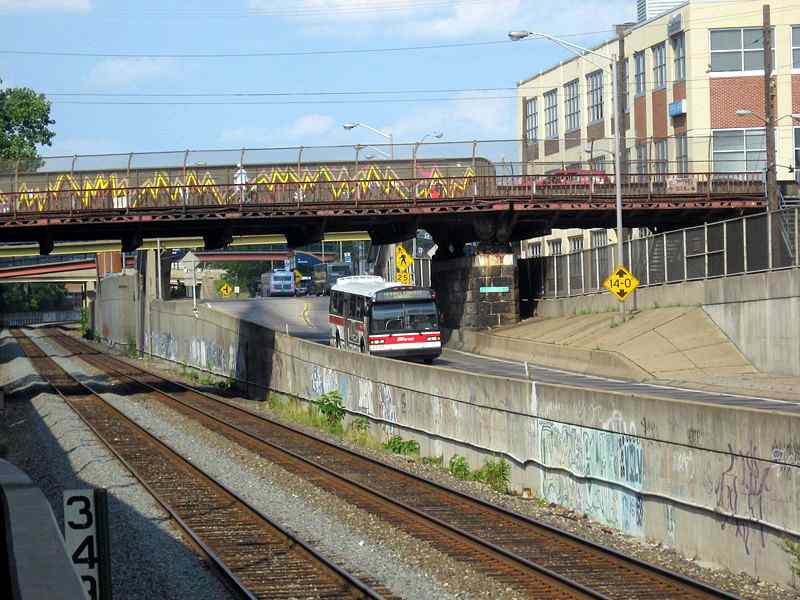
I found a nice place in Wilkinsburg, only discouraged by the distance it was from the East Busway East Busway near East Liberty stop. Source: http://www.pittsburghtransit.info(Pittsburgh elected in ’64 to spend twenty years building a busway instead of a subway to connect downtown with the suburbs — talk about being cheap!) and Pitt. Not to mention feeling uneasy about a slightly older next door neighbor who looked like she caroused a bit too much. I looked at places in Shady Side, Squirrel Hill, Highland Park, North Oakland, off Braddock Road and near Frick Park, even the Manchester and Friendship neighborhoods (somewhere between middle class, affluent, and student housing). The rent was either too rich for me or the places looked a bit run down.

Finally, on my next to last day to look, I found a place at 6007 Penn Circle South in East Liberty, right

East Liberty Presbyterian Church, down the street. Source: http://www.citizendia.org

across from the Shady Side neighborhood. It was a one-room efficiency (calling it a “studio” would make it sound better than it was). I had a kitchenette area with a sink, counter, cabinets, a stove and oven with a ventilation fan, and a fridge. I had my own bathroom and enough closet space for my meager clothes and toiletries. I was within walking distance of Giant Eagle, the big grocery store in the area, as well as the busway. The Highland Park Zoo bus, the 71B, as well as the 71C, ran their way to Oakland and Pitt. And Pitt was within my walking distance back then — it was more than two and a half miles from Penn Circle South to the Cathedral of Learning.

It was $220 if rent for each month was paid before the first day of the month, and $245 if not. I took the 450-square-foot flat, this despite some of the riff-raff living in the building, the hole-in-the-wall bar Constantine’s within a couple of blocks, or Kelly’s Bar for the down and out across the street. The heating and cooling, the toilet and shower, the food in my fridge was all mine. My friends Kenny, Elaine, Marc all thought it was a dump. Maybe so, especially compared to the places I’ve lived since. But it was my dump. Those eight and a half years there, I learned so much about myself and life and God and women and love. I learned how to live my life while I was in apartment 204. That began twenty years ago today. The building’s now gone (at least, it was slated to be), but the memories remain.

By The Time I Get To Arizona

Tags

, , , , , , , , , , ,


Immigrant Rights Rally, Los Angeles, May 2010. Photo credit Paul J. Richards/AFP/Getty Images.

An old high school friend of my wife’s pulled me into a debate about the Arizona immigration law (currently under appeal in federal court) the other day. Although neither of us disagreed that the US needs better policies and enforcement around undocumented people, his approach was somewhere between the old Fugitive Slave Laws of the nineteenth century and apartheid in South Africa. He all but let corporate greed, malfeasance, and economic exploitation, the root cause of this issue, off the hook.

So, in honor of Public Enemy, I’ve named this post “By The Time I Get To Arizona,” hoping that our country hasn’t gotten all the way there yet, between Arizona’s immigration law, the Islamic cultural center near Ground Zero, and Glenn Beck. But in case it has, I’m posting a combination of my responses to my wife friend about how unconstitutional, racist and fear-confirming this response is.

“In the case of the Arizona law, the only way it would work is if one were to profile a particular group in order to enforce it. The idea that anyone without papers could be arrested and potentially deported means that if the law was practiced at random, someone White, Black or otherwise a likely American citizen could be caught up in a grave law enforcement error, leading to controversies and lawsuits. But if the focus is on Mexicans, Salvadorans and Latin Americans most likely to emigrate to the US, then it would work the way in which it’s intended.

The law was made with the Mexican border in mind. It wasn’t made to stop Russians or Canadians from coming into the US – we’d have more immigration enforcement at airports, ports, and the US-Canada border if that were the case. Bottom line is, laws like this don’t get made to stop groups that aren’t of color from using services or exercise what have been presumed to be their rights once on American soil.

But beyond this point is this simple reality. Whether it’s the 14th Amendment, requiring papers for undocumented people, or denying kids financial aid for college because their parents are undocumented, the fact is that a particular group of people are having all kinds of rights denied. The law granting citizenship rights to anyone born on American soil was originally used to make 4 million freed persons and 200,000 free persons — Black folks — American citizenship. It also gave the sons and daughters of European immigrants — who weren’t illegal even though millions of them came without papers (i.e., “Wop” [without papers] Italians, Poles, Jews, Greeks, etc.) citizenship rights and a simple process for naturalization.

These laws would set in motion a chain of events that would lead to denying Latin American immigrants (legal and otherwise) and Latinos born in the US what all of us expect to take for granted, especially freedom of movement. This isn’t all that different from when Congress passed the Chinese Exclusion Act in 1882, denying the Chinese immigration rights and the Chinese that were already here citizenship and ownership rights for more than sixty years, or from Fugitive Slave laws passed between 1793 and 1850, which required free Blacks to carry their freedom papers wherever they went. If this isn’t at all about racism attached to the serious issue of immigration control but minus the issue of economic exploitation, then why the need to concentrate on supply (the undocumented) rather than demand?

Until we deal with the heart of the problem — companies exploiting desperate immigrants (legal and

undocumented) for profit — we’ll continue to make bad and downright racist law around this. Since we think that corporations have no responsibilities in all this, they get off the hook for creating this situation, while poor people get labeled as if they’re roaches.”

One other thing. Glenn Beck’s in DC today dishonoring MLK and the Civil Rights Movement, not to mention progressives across the board. To quote Chuck D and his crew, Beck “to be a goner,” though not necessarily with the blood-wrenching screams in the middle of “By The Time I Get To Arizona.” Otherwise, Arizona will be the most liberal state in an increasingly fearful, repressive and policed nation.

What A Fool Believes

Tags

, , , , , , , , ,


Wall Collapse Rattles Mount Vernon High School - wcbstv.com, April 13, 2010

Mount Vernon really has changed, and unfortunately, not for the better. I’m talking about in the past four years, and not just since I left for college and Pittsburgh twenty-three years ago this week. As some of you may know, I was threatened the week of my sister’s death and funeral by a young thug because I stopped him from choking his girlfriend in front of me and her three-year-old daughter.

That’s not a completely accurate description. I yelled “Hey! Stop!” as I ran toward the side gate of 616. I saw a short, nappy-headed, unkempt-corn-rowed-haired, light-skinned thug. At first, he was yelling, “Get out the godd**m car you B***H” at a young woman in a blue older-modeled Toyota Camry, punching his fists on the driver’s side window at the same time. Then, when she did get out, she grabbed her three or four-year-old daughter and attempted to get toward the side gate. The fool then pushed her up against the back right side of the car and proceeded to wrap his hands around the young woman’s neck, as if no one else was around.

I was on the telephone with my father, talking to him about the rough week it had been, standing outside to get away from folks for a moment or two, staring across the gates and driveway to the five-story red-brick sister complex 630 East Lincoln when I witnessed this episode of domestic violence. After I yelled and distracted the dumb ass, the young woman ran inside with her daughter. Then the short butt attempted to run up on me, telling me to “mind your own godd**m bisness, you stupid f**k!” He tried to get in my face, but at five-foot-four, he was much too short to intimidate me with rage. I told him if he took another step, that I’d call the cops. He did, and then I dialed 911.

“Oh, you think your life’s miserable now! It just got a whole lot worse for you and your family. And for what? You willing to risk your life for her? For a b***h?,” the stupid ass said as he gradually backed out of the yard and then outside the 616 gate. Apparently he wasn’t as stupid as he looked, as he kept moving farther away while yelling “I ain’t goin’ nowhere, you stupid f**k!” Finally, I said something. “Yeah, I’m a stupid f**k. You and your homies could beat me up, kill me, put me out of my misery. But I’m not the one walking away, you are!” Mr. Thuggish Ruggish Bone then disappeared.

There were numerous other reminders that what was once my hometown would never be again. The fact that neighborhoods that were once affluent White ones were now a mixture of White, African American and Latino, and weren’t so affluent anymore. The closings of Athena’s and Baskin-Robbins and other businesses in once ritzy Fleetwood, the rundown sense that I saw in faces Black and White and Brown all during that week.

Other parts of the city had long succumbed to poverty, crime and neglect, but with the middle class regardless of race in full flight, the uphill battle for a thriving bedroom suburb was now an unorganized retreat, with carnage all along the way. The newest thing I saw in Mount Vernon during my midsummer night and day-mare was the track behind Mount Vernon High School and the construction crew working on a new wall for the southwest corner of the building.

I know that a fair number of my Mount Vernon-based or nostalgic readers will think me biased, ungrateful even for having grown up in a town that they themselves found enriching and enjoyable. If that is the case, then that’s wonderful. Your Mount Vernon wasn’t the one I experienced, and “your blues ain’t like mine” (as the late Bebe Moore Campbell would say), sorry to say.

Aside from the atypical experience of dealing with the death of my sister, the Mount Vernon I grew up with and the one I witnessed last month were one and the same. My time growing up there included unpleasant moments with young punks and thugs, far too much rage and violence and poverty for me to stick around after high school. The difference now is, the city as a whole has become a reflection of my worst experiences, and not a “city on the move.” Silver linings like Ben Gordon or Denzel Washington or not, anyone who refuses to acknowledge that this is the reality for most living in Mount Vernon should tune into a 70s station and look up Michael McDonald for advice on foolishness and wisdom.

The Writing Bug

Tags

, , , , ,


It’s been twenty-nine years since I first saw myself as a writer and attempted to pursue writing in any form. It was the summer of ’81, the summer before Humanities and seventh grade, the year before the summer of my abuse. For me at least, this was a calm summer, like I was sitting out by a lake with only a slight breeze blowing around me. I was enjoying the peace and quiet of being near still water, of an occasional rustle of trees, of a plop or two of something dropped into the lake. This was a time for me to imagine our lives as better, better than they actually were. I was on an end-of-elementary school and Humanities-acceptance high. I couldn’t have been any higher than if I had snorted coke at one of those drug-fueled parties my mother used to drag us to hang out with her Mount Vernon Hospital buddies when I was five or six (Luckily, my mother didn’t do drugs.)

I spent most of that summer writing my first book. It was a book about the top-secret military hardware the Department of Defense didn’t want the rest of America to know about. I remained consumed with reading about war and military technology in my spare time — I wouldn’t have learned the word “fortnight” otherwise! Everything from the B-1 bomber to the M-1 Abrams tank to the Trident submarine and MX missile was to be in this scoop on the latest in military high-tech. I even wrote a letter to the Pentagon for declassified pictures of these weapons, which I received in mid-July. By the time of my brother Yiscoc’s birth (one form of Hebrew for “Isaac” and pronounced “yizz-co”) later in the month, I’d written nearly fifty pages on these weapons and why they were so cool for the US military to have. Especially in light of the Soviet military threat. Unfortunately, they didn’t declassify the fact that America’s latest tank used depleted uranium in parts of its hull or in its cannon shells. That would’ve been a real scoop at the time.

I also began to keep my own journal as I began to lose interest in America’s military hardware at the end of that summer. Little did I know what was to come at 616 and in seventh grade in Humanities. My journal was an off and on again project of dreadful tales of hunger, humiliation and heartache. By the time of Crush #1 and witnessing my stepfather’s attack of my mother on Memorial Day ’82, I could barely write at all. The last thing I wrote for my journal (which was a spiral notebook) was about my own abuse throughout July ’82. By the time that ended, I didn’t feel like writing anymore.

But that wasn’t the end of the story. My imagination, my constant talking to myself, my eventual fascination with having an eclectic variety of music and rooting for underdog teams and athletes were all part of a writing process that actually didn’t require me to write. All of these coping mechanisms and more gave me more to write about once I went off to college, and especially after my ex-stepfather broke up with my mother after my sophomore. It wasn’t an accident that within a few months of dumb ass moving out in June ’89, I had started my first journal in seven years. I guess that I always had the writing bug, even when I didn’t possess the paper necessary to write.