• About Me
  • Other Writings
  • Interview Clips
  • All About Me: American Racism, American Narcissism, and the Conversation America Can’t Have
  • Video Clips
  • Boy @ The Window Pictures
  • Boy @ The Window Theme Music

Notes from a Boy @ The Window

~

Notes from a Boy @ The Window

Category Archives: Work

The Endless Drivel of NBC’s Education Nation

22 Saturday Sep 2012

Posted by decollins1969 in 1, culture, Eclectic, Politics, Pop Culture, Work, Youth

≈ Leave a comment

Tags

"Casualties in the Education Reform Wars", Bill & Melinda Gates Foundation, Corporatized Education Reform, CTU Strike, Drivel, Education Nation, Education Nation Week, Education Policy, Education Politics, High-Stakes Testing, K-12 Education Reform, Low-Income Students, Melissa Harris-Perry, MSNBC, NBC, Parent Engagement, Prattle, Teacher Engagement, The Nation, University of Phoenix


NBC Nightly News/Rock Center anchor Brian Williams, host of Education Nation Week, September 4, 2012. (http://educationnews.org).

This weekend, for the third year in a row, NBC will kick off their Education Nation Week in New York City. It will involve MSNBC’s rising stars like Melissa Harris-Perry, Chuck Todd and Alex Wagner. It will include a two-day summit broken down into a series of case studies about the various issues in K-12 education and how to improve it for America’s children. It will also include a teacher town hall and a student town hall.

In the end, it will all be a staged pageant of concern about kids, a subliminal message of corporatized education reform, a series of half-baked ideas that wouldn’t have been good for schools a hundred years ago, much less now. I don’t normally trash events before they begin, but I’ve seen this movie before. It’s the one that’s been given a bad title, a poor script worked on by five writers, with poor character development, mediocre actors and a wholly implausible ending.

NBC News Education Nation logo, March 10, 2012. (http://mediabistro.com).

NBC’s Education Nation Week fits all of those because its hosts know about as much about the nuances of education as I do about the interactions of neutrinos with the Higgs boson particle. The week-long event is sponsored by University of Phoenix, the Bill & Melinda Gates Foundation, ExxonMobil, Target, Citi and the General Motors Foundation (the last one as a “Knowledge Partner”). Seriously? A for-profit institution with a ten (10) percent graduation rate? The biggest funder of ill-conceived education reform efforts, ones that have little chance of actually creating better conditions for teachers to effectively teach students of all stripes? Not to mention a bunch of corporations that have little incentive to reform public education for America’s low-income students in a way that would truly level the playing field? Are you kidding me?

In light of the recent Chicago Teachers Union strike and the serious issues that the union, Chicago’s parents and the local (not the national) media raised about the corporate-based assumptions behind education reform, NBC’s should (but won’t) call off this year’s Education Nation Week. High-stakes testing and a concentration on teacher effectiveness as reflected by test scores is the mantra of the mainstream education reform movement these days. Along with charter schools as “choice” for low-income families, battles to weaken teacher’s unions, an insistence on STEM fields as the content-based focus of reform, and the creation of a standard curriculum that is neither standard nor a full curriculum.

All in all, a prescription that would make the technocrats at the Gates Foundation and ExxonMobil feel better. But given the lack of funding at the state and federal level these days for everyday school needs — much less funding to implement such reforms — it simply cannot work. Without any concentration on critical thinking, writing comprehension skills, physical education, music, art, creativity, the leaders and hosts of Education Nation Week expect teachers and students to do more with less in a system that was never meant to work for most students in the first place.

Harris-Perry’s all-over-the-place commentary on the CTU strike in The Nation this week is an example of media ignorance of what reforms would actually look like in the long-term, even in the case of a prominent political science professor. Her piece “Casualties in the Education Reform Wars” is based on a suffer-the-little-children (and parents) premise that demonizes all sides of the education deform battles. It shows that she has little understanding of education history, policy and politics.

This is by far the most disappointing piece I’ve ever read by Harris-Perry. It’s a piece based purely on emotion, and not on the challenges that educational policy/politics have forced on teachers, administrators, students and parents. A system based on high-stakes testing and the corporatized education reform movement doesn’t work for anyone. Evaluating teachers based primarily on exams created by technocrats from afar and taken by their students means a watery gruel of education for all of our kids.
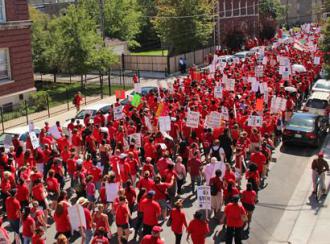
Striking Chicago teachers turn the West Side streets into a river of red, September 14, 2012. (David Rapkin/Socialist Worker)

Unlike Harris-Perry, cursing all sides isn’t an option for most of us. Engaging and engaged teachers, school leaders, and yes, being involved in our kids’ education is where we need to start. Holding our politicians’ feet to the fire on real education reform is another piece. And also, holding columnists’ feet to the fire when they write a piece short on facts and long on hand-wringing when writing on educational issues is something we as parents and educators must do. Especially since folks like Harris-Perry only write about these issues after a strike or a tragedy.

I can guarantee, sadly, that NBC’s Education Nation Week, with the vapid thinking of thinkers like Harris-Perry involved, will be yet another media event devoid of substance and full of style points. In other words, endless drivel.

Grading and the 21st Century Professor

03 Monday Sep 2012

Posted by decollins1969 in 1, Academia, culture, Eclectic, Politics, race, Work

≈ 3 Comments

Tags

Academic Integrity, Adult Learners, Duquesne University College of Education, Ethical Dilemma, Excuses, Grade Inflation, Grading, Higher Education, Job Security, Plagiarism, Student Entitlement, Students, Teaching, UMUC, University of Pittsburgh


Between a rock and a hard place, The Simpsons (movie), September 2, 2012. (http://clubsnap.com). Qualifies as fair use under US copyright laws –  low resolution.

The Chronicle of Higher Education and other prominent periodicals have been talking about the precarious rise of grade inflation for more than two decades now. Article after article and story after story has shown professors at elite and public institutions lowering their standards and bending into advanced yoga positions to give students higher grades than they’ve earned. All to ensure a minimum of contention over grades and maximum scores in student evaluations of their courses.

But what of the many professors who don’t want to lower their standards but so far, who can’t ignore a student’s lack of attendance or participation, their late assignments or attempts at plagiarism? For those college instructors, they can expect more grief and stupid ass excuses from students, not to mention lower evaluation scores.

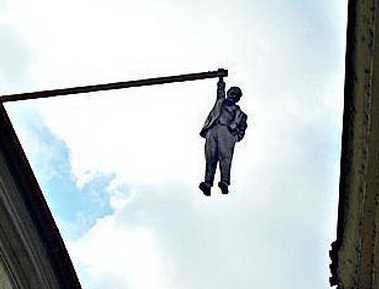
Sigmund Freud hanging by one hand by David Cerney (1997), Prague, September 2, 2012. (http://swick.co.uk/). Qualifies as fair use – pic has low resolution.

For tenured professors, particularly those at research universities, this doesn’t matter at all. For some tenure-track professors, instructors at teaching-focused liberal arts colleges, and the army of adjuncts that are the majority of instructors at the college level, this could mean the difference between steady employment and homelessness. It’s a sad situation when folks aren’t secure enough in their jobs to actually do the most difficult parts of their jobs, to evaluate a student’s performance accurately and to confront students whenever they violate an academic code of conduct.

It was part of the deal that I made with myself when I began teaching my own sections and then course as a graduate student twenty years ago at the University of Pittsburgh. To be fair and flexible, to be tough when necessary, but to be compassionate when the circumstances called for it. For the vast majority of the 2,000 or so high school, undergraduate and graduate students I’ve taught since ’92, that has been a workable philosophy. It’s even gotten me the occasional praise and recognition for being a very good professor.

Of course, I faced the occasional student who complained to me about their grade. Most of those students were C students looking for a C+ or a B, or a B+/A- student hoping for an A. Really, prior to my current faculty position, I had only had three complaints of any major consequence. One was from a student who managed to never show up for my US History to 1877 sections the spring semester of ’93, who failed the final exam so badly that I let him get away with his attempts at cheating — his cheat notes were that bad!

The other two came from two students in my History of American Education graduate course in the summer of ’98 at Duquesne University. One thought that someone as young (and as Black) as me could give her a grade lower than an A, while another harassed me with emails for a month because her A- in my course ruined her 4.0 average. Though an adjunct, I stood my ground, knowing that I had the support of my department chair.

Since starting my current teaching position in January ’08, I’ve faced a couple of dozen situations in which students have complained about their grades. I think I’ve only taught three courses out of about twenty in the past four years in which I haven’t fielded any complaints from students about their grades.

Most of these complaints have been really ones about me not accepting every cockamamie excuse for a late assignment or plagiarism. Excuses like their Internet or their access to the university’s online classroom platform being down. Or not knowing that cutting and pasting ten pages’ worth of other people’s words for a ten-page history research paper was in fact blatant plagiarism. Or that their jobs, last-minute deployments (which were hardly last-minute), children (who in many cases were teenagers), three car accidents in two weeks or other life challenges managed to get in the way of them submitting multiple assignments on time, even with extensions. But somehow, when I’ve held these students accountable and assigned an appropriate grade, I’m the bad guy.

That the students I teach these days are technically adult learners (I say “technically” because they don’t act like adults when they complain about their grading) actually makes this matter worse. Whether in the military, married with children, or working a full-time job, these students in their twenties, thirties and older tend to complain, beg, threaten me and then beg again. It’s exhausting to constantly have to persuade students to read my syllabus in order to make them understand that the rules and rubrics I’ve laid out are the reasons for their F, D, C or B.

But no matter the vitriol I provoke from assigning a grade, I also have to be careful in my language, emotions and tone. That is the reality that is teaching in many higher education institutions today. It is unfortunate, for there are many students who don’t understand that being a student requires being a responsible and ethical adult. Whether seventeen or seventy, whining, complaining and threatening your professor for a higher grade is completely unacceptable, and deserves at least a little sarcasm in response.

Crooked Fingers

31 Friday Aug 2012

Posted by decollins1969 in 1, Boy @ The Window, culture, Eclectic, Mount Vernon High School, Mount Vernon New York, Politics, race, Work, Youth

≈ Leave a comment

Tags

616, 616 East Lincoln Avenue, Benign Tumors, Crooked Fingers, Keloids, Medicaid, Mount Vernon Hospital, Physical Therapy, Poverty, Social Welfare, Welfare, Westchester County Medical Center


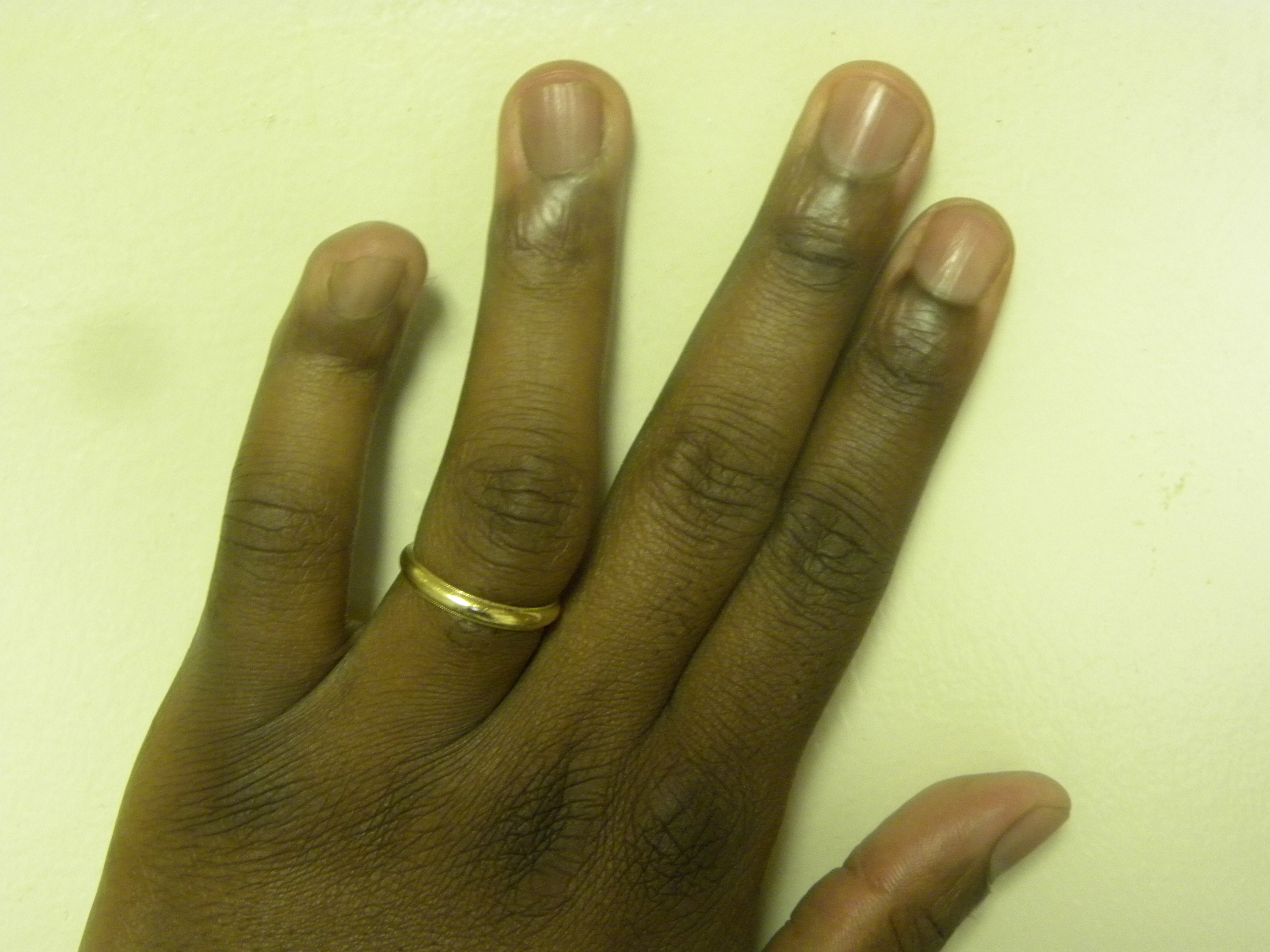
My crooked left fingers, August 31, 2012. (Donald Earl Collins).

It’s been a bit more than thirty years since I’ve had surgery on two left fingers in an attempt to straighten them. These fingers are symbolic of what happens when a family slides off a cliff in the Himalayas into deep poverty, of when a nation doesn’t have an adequate social safety net or adequate healthcare for the poor.

At the very end of my glorious summer of ’82, I needed surgery on the ring and pinky fingers of my left hand to remove two benign tumors. The tumors had apparently been there since I was eight and had caused the two fingers to grow crookedly, to the point where I couldn’t use them. After the hospital strike (see my “The Quest For Work, Past and Present” post from earlier this month) and my ordeal with Maurice had ended (see my post “Boy, Interrupted” from July ’12), my mother realized that I needed to see a doctor, and within a week I was at Mount Vernon Hospital in surgery.

They removed the tumors, straightened my fingers, stitched them up and put them in a cast. If all went well, after a month, they’d remove the cast and the stitching. That, and a few checkups to check the progress and scar tissue buildup on my fingers, and I should’ve been good to go. But that happy ending wasn’t to be. After the casts came off in early September, I didn’t see a doctor again until April ’85.

Why? My mother had been downgraded to part-time status at Mount Vernon Hospital by October ’82, and after the birth of my sister Sarai in February ’83, could not work and take care of five kids at the same time. We went on welfare in April ’83, and with that, received Medicaid services. Those services, as anyone who has spent any serious time in America’s worst poverty should already know, are limited in scope, and don’t exactly cover the removal of post-surgery scar tissue.

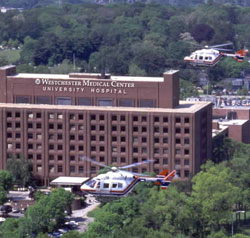
Choppers and Westchester County Medical Center, Valhalla, NY, August 31, 2012. (http://nymc.edu)

So, a year or so after my tumor removal/finger-straightening surgery, my left ring and pinky fingers went crooked again. By the time me and my mother had schlepped on the old Bee-Line Route 41 bus to Westchester County Medical Center in Valhalla in ’85, my fingers were about half as crooked as they had been before surgery in August ’82. The doctor, of course, misdiagnosed my fingers as having keloids, and offered steroids to shrink them down. Injections, by the way, not covered under Medicaid at the time.

But that wasn’t the only problem. My crooked fingers itched a lot, and made it difficult for me to make one-handed grabs in football tryouts in ’84, not to mention wearing a baseball glove for baseball tryouts in ’86. Some girls at Mount Vernon High School grilled me with questions whenever they noticed them, as if I was a Yeti who decided to visit Western civilization for the first time. One of them told me point-blank, “I can’t go with you — your fingers are too ugly.” A young woman said something to the same effect to me my freshman year at the University of Pittsburgh.

It wasn’t until the fall of ’02 that I finally saw a specialist at Johns Hopkins about my finger, one who confirmed the initial diagnosis of tumors from ’82. Between two doctors and a physical therapist, I gained about two-thirds of my total range of motion in my ring finger, but only five degrees’ worth of motion in my left pinky by the time my son was born in July ’03.

I got to the point where I could finally palm a basketball in my left hand. But ultimately, that was all I could do. It turned out that I’d have to lose a joint in my crooked fingers — to have them fused — in order to straighten them. Otherwise, there was nothing wrong with the bones. It made more sense to leave them crooked.

Maybe this is good thing, though. That no matter my past, present or future successes, that I have them as a reminder of how far I’ve come. They also serve to remind me how many others suffer in the US because of poverty.

The Quest For Work, Past and Present

21 Tuesday Aug 2012

Posted by decollins1969 in 1, Academia, Boy @ The Window, culture, Eclectic, Mount Vernon New York, Politics, Pop Culture, race, Work, Youth

≈ 8 Comments

Tags

616, 616 East Lincoln Avenue, Carnegie Library of Pittsburgh, Carnegie Mellon University, Duquesne University College of Education, Economic Inequality, Hard Work, Individualism, Joblessness, Marginalization, Mount Vernon Hospital, Pittsburgh, Psychological Impact, Psychological Scars, Social Safety Net, Underemployment, unemployment, Unions, Welfare


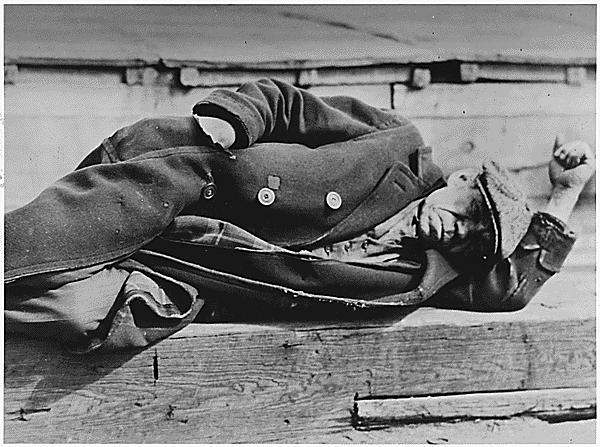
Down and out on New York pier, 1935, June 2009. (Lewis W. Hine via FDR Presidential Library). In public domain.

Election ’12 should be about how to generate more jobs and how to grow the economy. Sadly, it hasn’t been about these issues, and given the toxic political and cultural climate, it will not be about jobs or the economy when this cycle ends on November 6.

I’ve seen this horror movie of economic downturns and mini-depressions in American society and in my own life now three times in the past thirty-five years. Each time, I’ve been better prepared, more informed, more able to ride out the storm. And each time, I’ve seen the ugly side of what we call the United States of America, a place that has and will continue to punish the unemployed and underemployed for problems beyond their control. Especially if they were and are women, young, over forty, of color, and among the poor.

In the period between ’79 and ’83, when the effective inflation rate for that four-year period was more than thirty-five percent, when we experienced a double-dip recession, when interest rates reached 22.5 percent. My mother’s meager income of $12,000 in ’79 didn’t keep up, even as it reached $15,000 in ’82. We were late with our rent at 616 by an average of three weeks each month and didn’t have food in the apartment the last ten days of any month, going back to October ’81. Things were so bad that my mother, a supervisor in Mount Vernon Hospital’s dietary department, brought food home from the hospital kitchen for us to eat for dinner several times each month.

“Negro Women,” Earle, Arkansas, July 1936, August 21, 2012. (Dorothea Lange via Library of Congress/http://libinfo.uark.edu). In public domain.

The good news was, Mount Vernon Hospital’s employees went on strike for higher wages and increased job security in mid-July ’82. The bad news was, although Mom was a sixteen-year veteran, nearly fifteen of those as a dietary department supervisor, Mom never joined the union. She didn’t want to pay “them bloodsuckers” dues, and said that she “couldn’t afford them” anyway.

I can only imagine how much spit and venom Mom faced on her way to work every day for three weeks. Considering our money situation, which I knew because I checked the mail and looked at our bills every day, picketing and getting union benefits might have been better than working. It wasn’t as if there was food in the house to eat anyway. As much as I enjoyed Mount Vernon Hospital’s Boston Cream Pie, I thought that picketing for a better wage was the way to go.

Soon after I started eighth grade, the other shoe dropped. Mom, so insistent on not joining Mount Vernon Hospital’s union, was the odd woman out. The hospital’s concession of five percent increases per year over three years left them looking to cut costs. The only personnel left vulnerable were non-union service workers and their supervisors. My Mom had been cut to half-time by her boss Mrs. Hunce. Mom was screwed, but it was a screwing partly of her own making. It was the beginning of a two-decade-long period of welfare, underemployment, unemployment welfare-to-work, with an associate’s degree along the way. So much for hard work leading to prosperity!

I’ve gone through my own periods of unemployment and underemployment over the years. The most severe one for me was between June and September ’97, right after I finished my PhD. It was the first time in four years I hadn’t had work or a fellowship to rely on, and it was brutal. I did interviews with Teachers College and Slippery Rock University for tenure-track positions in education foundations, only to finish second for one job, and to see the folks at Slippery Rock cancel the other search. In the latter case, I think that they felt uncomfortable hiring someone of my age — twenty-seven — and my, um, ilk (read race here).

What made it worse was the fact that I couldn’t simply apply for any old job. I did actually try, too. McDonald’s, UPS, FedEx, Barnes & Noble, among others. I couldn’t even get Food Stamps in July, because my income threshold for March, April and May ’97 — $1,200 per month — was too high. And because I technically was a student for tax purposes my last two semesters at Carnegie Mellon — even though I was adjunct professor teaching history courses — I didn’t qualify for unemployment benefits either.

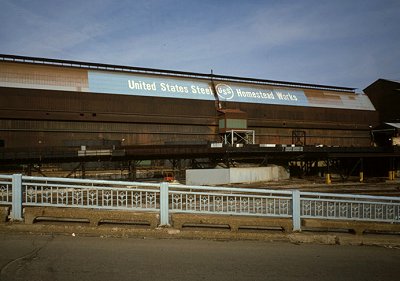
Shuttered Homestead steel mill, 1989, August 21, 2012. (Jet Lowe/Historical American Engineering Record). In public domain.

I had to omit the fact that I had a PhD to get a part-time job at Carnegie Library of Pittsburgh, which began after Labor Day ’97. I ended up teaching as an adjunct professor at Duquesne University’s College of Education the following year. Still, my income level did not return to where it was my last year of graduate school until June ’99, when I’d accepted a position with Presidential Classroom in the DC area.

I am nowhere near those times of being considered or treated as a statistic, marginalized in media and in politics as being lazy, shiftless, not smart or hard-working enough. But as a person who teaches near full-time and has more than occasional consulting work, I know how precarious and temporary work can be.

Ironic, then, that the people making decisions that have put people like me and my Mom in terrible financial straits have never missed a meal or not paid a bill because they were choosing between heat and not making phone calls. That most Americans regardless of party affiliation shun the poor, unemployed and underemployed is a shame and a pitiful example of how we really don’t pull together during tough times.

These attitudes are why rugged individualism and hard work aren’t enough to get and hold a job. An education, a real social safety net, even regulation of the job market, would help level the playing field for millions. Or, maybe some of us should learn Mandarin Chinese, Hindi, Arabic or Portuguese and move to where the jobs really are.

Defining Loyalty

16 Thursday Aug 2012

Posted by decollins1969 in 1, Academia, Boy @ The Window, Christianity, culture, Eclectic, Patriotism, Politics, Pop Culture, race, Religion, Work, Youth

≈ 6 Comments

Tags

Carnegie Mellon University, Collaboration, Contradictions, Covenant Church of Pittsburgh, Integrity, job interview, Joe Trotter, Ken, Lap Dog, Mitt Romney, New Voices Fellowship Program, Paul Ryan, Synergy, Vision, Yes-Man


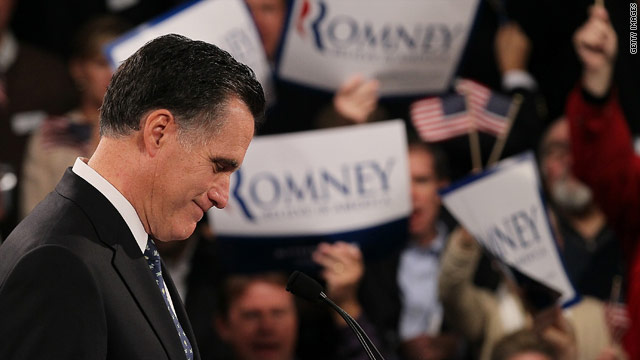
Gov. Mitt Romney and ‘blind trust,’ June 7, 2012. (http://politicalticker.blogs.cnn.com).

One of any number of concepts I’ve had trouble wrapping my head and heart around over the years has been loyalty. At least, what others in my life have defined as loyalty. For the most part, loyalty for the vast majority of these folk has meant surrounding themselves with yes-men and yes-women, to have people around them who’d prefer the method of going along to get along. True loyalty, of course, is more about supporting a person and their ideals, ideas, calling and purpose, and not just agreeing with their every word and deed, no matter the contradictions, no matter who it hurts.

I’ve seen it in my own life, so many times, in high school, college, grad school, academia, the nonprofit world, and in church. Over and over again, people who believe that leadership means everyone should fall in line and follow someone else’s vision, without question or contribution. It’s the ultimate form of American entitlement, the one thing that all people in authority — secular or spiritual — have in common in our society and culture.

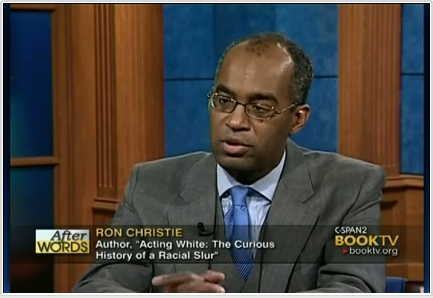
Republican operative Ron Christie, the ultimate yes-man, November 9, 2010. (http://c-spanvideo.org). In public domain.

One example of this was my former boss Ken, who complained about what he claimed was my lack of loyalty to the New Voices Fellowship Program when I made the decision to move on to another position at the end of ’03. He talked about loyalty as if I was a feral dog who needed to be broken and tamed in order to be useful. I said that loyalty “isn’t just about the person, it’s about the work that needs to be done.”

But I’d go a step further than that now. Loyalty in the workplace requires not only the ability of two or more individuals to trust each others’ judgment and quality of work. It also requires a synergy of vision, a sense of purpose that obligates the people in question to provide transparency, constant communication and certainly criticism in the journey to make any vision a reality.

I remembered this a few years after moving on from New Voices, at an interview I had with the head of the Center of Africana Studies at the University of Pennsylvania. He began with the question, “So how are you going to contribute to my vision of building the kind of world-class center that will attract the attention of scholarship everywhere?” The director lost me with his emphasis on “my vision.” I’m thinking, “I don’t know you, but somehow, I’m supposed to trust your vision purely because you say so. Are you kidding me? I’m to be loyal to you just because — you’re Black, you’re a decade older than me, you’re at an Ivy League university? Really?” To this day, that was the weirdest interview in which I’d ever been a part.

I saw this also at the church to which I’d been a member of the longest in my adult life, Covenant Church of Pittsburgh (which was in Wilkinsburg, by the way). From ’91 to ’97, I attended services, was part of the men’s choir, tutored high school students and went on retreats. I sometimes turned a blind eye to the occasional hypocrisy around sex, money and marriage in sermons versus what I actually witnessed.

One February ’97 Sunday after I finished a year’s worth of battles with my dissertation advisor Joe Trotter — another person who wanted my false sense of loyalty (see my “Running Interference” post from April ’11)  — I couldn’t take it at CCOP anymore. After a month-long drive to raise $250,000 above our normal tithes and offerings to buy a plot of land to build a megachurch in Monroeville, our pastor made an announcement and delivered a fiery sermon. The announcement was that God had told him to now up the ante to a three-million dollar campaign for money to build the church on this new property.

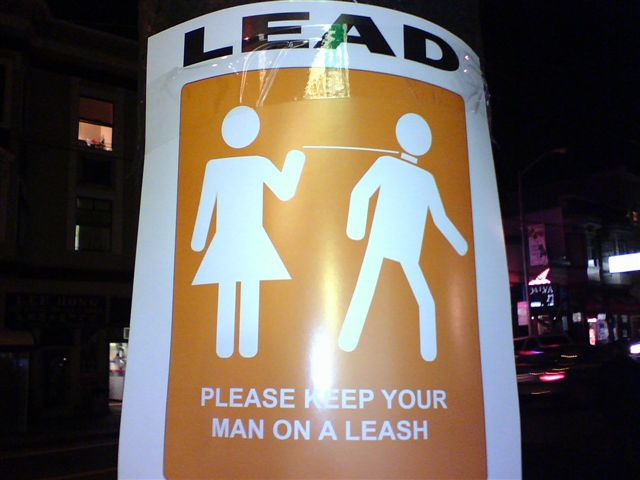
Man on a leash, June 12, 2010. (dtoy2009 via Flickr.com). In public domain.

Before I had time or faith to absorb that bit of information, my pastor delivered a forty-five minute sermon that blamed Wilkinsburg’s fifty-percent unemployment rate, gang violence and despair on “homosexuals and whoremongers.” I’d heard other statements and similar sermons like this before, but not for nearly an hour, not after an appeal to worshippers to give more than one-tenth of their gross income to CCOP for a new church.

I knew for a fact that some of my fellow CCOP members were giving as much as one-fifth of their disposable income already. I also knew that their were some CCOP members who were in the closet. To require loyalty to a vision without building a consensus on such, while also denigrating the very people from whom you demand loyalty was just downright disgusting to me. So I left CCOP, never to return.

This year’s presidential election cycle, particularly on the GOP/TPer side, seems to demand the same kind of blind loyalty that my former boss, potential boss, former dissertation advisor and former pastor all wanted from me or people like me. I learned a long time ago, though, that what people like Mitt Romney and Paul Ryan want isn’t loyalty. They want lap dogs, people willing to overlook their own interests in order to help them achieve theirs.

The Human Race Addendum

13 Monday Aug 2012

Posted by decollins1969 in 1, Academia, Boy @ The Window, Christianity, culture, Eclectic, Mount Vernon New York, Politics, Pop Culture, race, Religion, Work, Youth

≈ Leave a comment

Tags

Barry Switzer, Economic Inequality, Hard Work, Human Race, Individual, Leveling Playing Field, Marathon, Mitt Romney, Paul Ryan, Romney-Hood, social mobility, Track & Field, William H. Holmes Elementary


2008 NYC Marathon. Source: http://ingnewyorkcitymarathon.files.wordpress.com

2008 NYC Marathon. Source: http://ingnewyorkcitymarathon.files.wordpress.com

Two years ago, I wrote a post about a curious observation I made about inequality, unfairness and humanity, all courtesy of my fourth grade teacher, Mrs. Pierce (“Hard Work and the Human Race,” September ’10 – see below). In the thirty-four years since this observation, it’s fairly obvious that the great college football coach legend Barry Switzer was right about how people like Romney think about their station in life. “Some people are born on third base and go through life thinking they hit a triple.”

GOP presidential hopeful Mitt Romney’s pick of Paul Ryan as his vice-president is a confirmation of the idea that there are folks in America who truly believe that their success came only as a result of hard work, luck and prayer. But to use a better analogy, it’s easy to be a winner when your born in middle of the fourth lap of a 400m race, while someone like me had to fight just to get in the starting block. Politically, Carter and Reagan was the spark for my understanding of economic inequality. Three and a half decades later, the Romney-Ryan ticket reflects the long and winding road this mythology of “equal opportunity, not equal outcomes” has taken our nation. Only, equal opportunities do not exist for most of us, as the track and field analogy illuminates.

===========================

When I was nine years old, my fourth grade teacher at Holmes, Mrs. Pierce — a grouch of an older White woman, really — talked about the human race and attempted to describe our species’ variations. She tried to do what we’d call a discussion of diversity now. It went over our heads, no doubt because she didn’t quite get the concept of diversity herself.

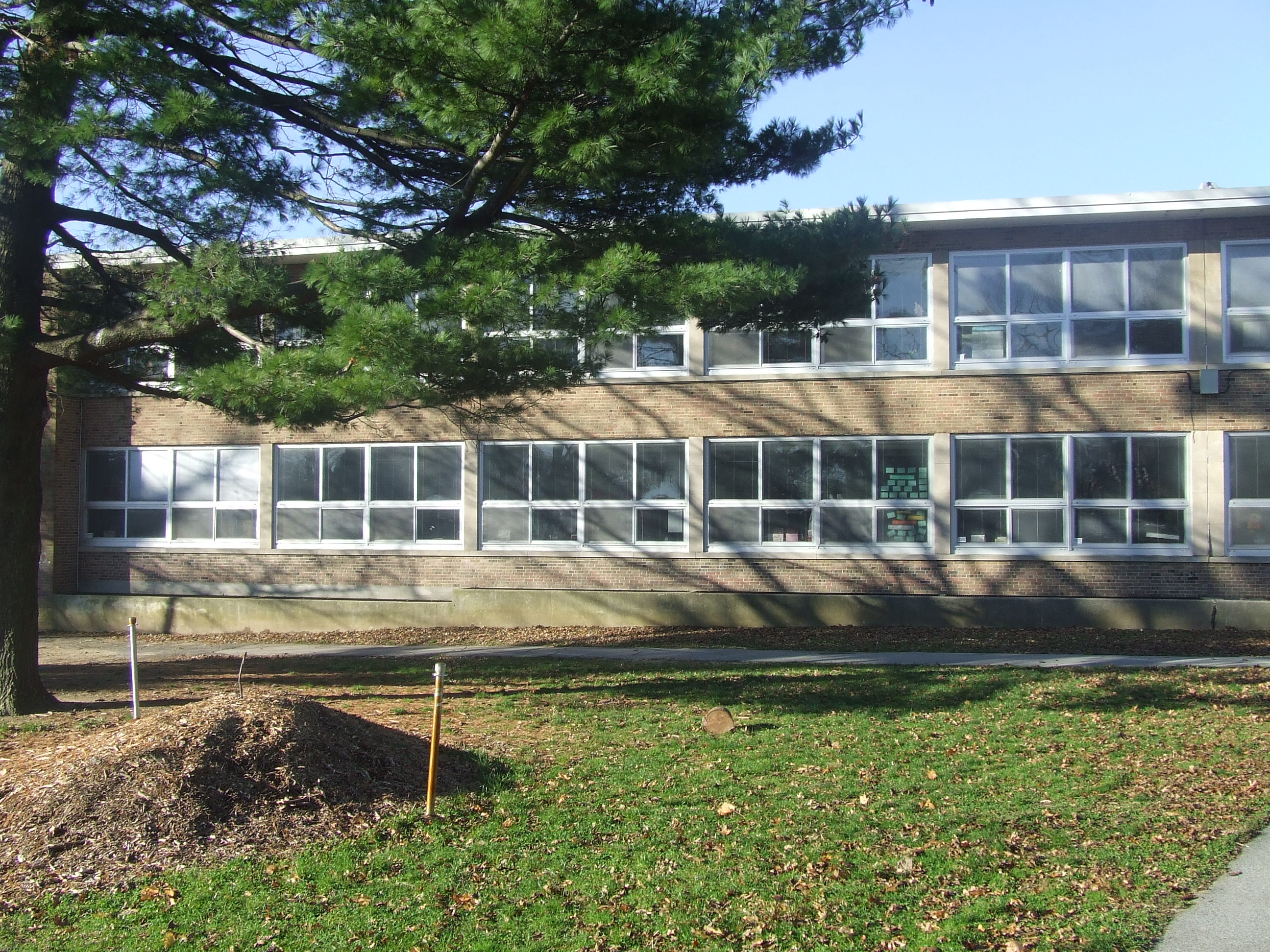
Holmes Elementary School, Mount Vernon, NY [Top left corner was Mrs. Pierce’s classroom in 1978-79 year], November 22, 2006. (Donald Earl Collins).

Like the fourth-grader I was, I daydreamed about the term, human race. I thought of Whites, Blacks, Asians, Hispanics, young and old, male and female, from all over the world, all on a starting line. It was as if four billion people — that was the world population in ’79 — were lined up to run a race to the top of the world. In my daydream, some were faster than others, or at least appeared to be, while others hobbled along on crutches and in wheelchairs. Still others crawled along, falling farther and farther behind those who were in the lead, the ones that looked like runners in the New York City marathon. Before I could ponder the daydream further, Mrs. Pierce yelled, “Wake up, Donald!.” as if I’d really been asleep.

A high school friend recently gave me some much-needed feedback on my Boy @ The Window manuscript. Her feedback was helpful and insightful, and very much appreciated. But some of it reminded me of the realities of having someone who’s a character in a story actually read that story. Their perceptions will never fully match up with those of the writer, which is what is so groovy and fascinating about writing in the first place.

One of the things that struck me as a thread in her comments — not to mention in so many conversations I’ve had with my students about race and socioeconomics — was the theme of individual hard work trumping all obstacles and circumstances. As if words, slights, and mindsets in the world around us don’t matter. As if poverty is merely a mirage, and bigotry, race and racism merely words on a page. Sure, a story such as the one I have told in this blog for the past three years is about overcoming roadblocks, especially the ones that we set ourselves up for in life, forget about the ones external to our own fears and doubts.

At the same time, I realized what my weird daydream from thirty-one years ago meant. Some people get a head start — or, in NASCAR terms, the pole — before the race even starts. That certainly doesn’t make what that individual accomplishes in life any less meaningful, but knowing that the person had an advantage that most others didn’t possess does provide perspective and illuminates how much distance the disadvantaged need to cover to make up ground. Those who limp and crawl and somehow are able to compete in this human race have also worked hard, likely at least as hard as those with a head start, and more than likely, harder than most human beings should ever have to work.

2009 London Marathon. (http://www.newsoftheworld.co.uk/)

Plus, there are intangibles that go with race, class and other variables that determines how the human race unfolds. “Good luck is where hard work meets opportunity,” at least according to former Pittsburgh Penguins goaltender Tom Barrasso. Most human beings work hard, but all need opportunities that may provide a real sprint to catch up or take a lead in the human race. Family status, political influence, social and community networks, religious memberships, being in the right place at the right time, all matter and are connected to race and class, at least in the US.

The moral of this story is, hard work matters, individual accomplishment matters. Yet a panoramic view of the race in which humans are engaged matters more in putting our individual successes and the distance that remains in some reasonable perspective. Without that, we’re all just pretending that individual hard work is the only thing that matters, when that’s only half the battle, or half of half the battle.

Working With Wackos, Part 2

10 Friday Aug 2012

Posted by decollins1969 in 1, Academia, Boy @ The Window, culture, Mount Vernon New York, Politics, Work, Youth

≈ Leave a comment

Tags

Bob Beane, Demotion, Firing, Micromanagement, Mismanagement, Mount Vernon Clinic, Office Politics, Ralph Williams, report, Self-Discovery, Valerie Johnstone, Westchester County Department of Community Mental Health


Daniel Craig in Layer Cake (2004), October 4, 2010. (http://www.guardian.co.uk).

This is the second of my two posts about my last summer working with a group of misfits and backstabbing micro-managers at the Mount Vernon Mental Health Clinic (as part of Westchester County Department of Community Mental Health) in ’92. I left off by talking about the decision I faced when the head of the clinic, Dr. Williams, wanted me to write a report that would implicate Johnstone as both an incompetent and capricious office manager. It would’ve been a report that would’ve led to Valerie Johnstone’s firing (see my “Working With Wackos, Part 1” post from last month).

Luckily I had the weekend before my last week at the job to think it through. I approached my task the same way I approached a research project. I interviewed my co-workers — at least in a way without them knowing that I was doing a formal interview — about their problems with Johnstone and about their refusal to learn the new computers and billing system for the office. I documented various incidents that I either experienced or witnessed in which Johnstone was far from professional. I even discussed the overall office dynamics and argued that they were the reason why the clinic had fallen behind twice in the past decade on hundreds of thousands of dollars worth of Medicaid and Medicare billing to New York State.

But I did more than that. I in fact put together two versions of the report. One version was specifically for Dr. Williams, one that could justify the demotion — if not the firing — of Johnstone. The other, much fuller version was one in which I made the case that Dr. Williams and Johnstone were both culpable as they created an unprofessional and chaotic atmosphere at the clinic.

The Things We Think And Do Not Say “Memo” from Jerry Maguire (1997), August 9, 2012. (http://theuncool.com).

I made the point in the second version that it wasn’t just their violent language and their nasty public and private arguments. Nor was it just their disappearances from the office for hours at a time or showing up hours late looking hung over. Their mercurial natures and their lack of respect for the office and each other had trickled down to the office staff. So much so that some summer office worker like myself had no chance of training staff on how to use a computer or a new billing system.

On my last day at work, Friday, July 31, I handed in version one to Dr. Williams, who was giddy with delight, and gave me a hug and a handshake. I left work early that day, and immediately took the 40 bus up to White Plains, to the main Westchester County Department of Community Mental Health on Post Road. I went to Bob Beane’s office (the department’s director), and dropped off version two of my report. Beane had already left for the weekend. I sneaked in and out that day, as I had worked at this office the summer and holiday season ’90, and I didn’t want questions from my one-time co-workers about why I was there.

The following Friday morning, as I got ready to walk from 616 to the Mount Vernon clinic to pick up my final summer paycheck, the phone rang. It was Beane on the other end of the phone, asking me questions about my report. He asked me how much of what was in it was true. “All of it,” I said. “I need you to come into the office so I ask you some more questions,” Beane said in response. Since I was already about to walk out the door, I hung up and went into my warp-factor-9-walk to find out what was going on (and to get my paycheck without a lot of fuss).

Heads Will Roll sculpture, Embarcadero Center #4, San Francisco, June 25, 2010. (http://artsysf.buzznet.com).

I walked into the equivalent of an emotional tsunami. One of my former co-workers was in tears, while another looked completely stunned. Beane pulled me into Johnstone’s office, and closed the door. I explained what had been going on at the office between Dr. Williams and Johnstone over the previous eight weeks, and likely over the previous three years. Beane paused, then told me what had occurred when he read my report earlier in the week. He decided to fire Dr. Williams, while he demoted Johnstone and moved her to the Yonkers clinic. Beane was in the process of meeting with my former co-workers to verify what was in my report.

After he apprised me, Beane handed me my final paycheck. Then he said, “Thank you. What you did here was very brave and very helpful. But you know you can’t work here again.”

“I know. I knew that when I gave you my report,” I said. Thus ended my career working for Westchester County government.

← Older posts
Newer posts →

Boy @ The Window: A Memoir

Boy @ The Window: A Memoir

Places to Buy/Download Boy @ The Window

There's a few ways in which you can read excerpts of, borrow and/or purchase and download Boy @ The Window. There's the trade paperback edition of Boy @ The Window, available for purchase via Amazon.com at http://www.amazon.com/Boy-Window-Donald-Earl-Collins/dp/0989256138/

There's also a Kindle edition on Amazon.com. The enhanced edition can be read only with Kindle Fire, an iPad or a full-color tablet. The links to the enhanced edition through Apple's iBookstore and the Barnes & Noble NOOK edition are below. The link to the Amazon Kindle version is also immediately below:

scr2555-proj697-a-kindle-logo-rgb-lg

Boy @ The Window on Amazon.com: http://www.amazon.com/Boy-The-Window-Memoir-ebook/dp/B00CD95FBU/

iBookstore-logo-300x100

Boy @ The Window on Apple's iBookstore: https://itunes.apple.com/us/book/boy-the-window/id643768275?ls=1

Barnes & Noble (bn.com) logo, June 26, 2013. (http://www.logotypes101.com).

Boy @ The Window on Barnes & Noble: http://www.barnesandnoble.com/w/boy-the-window-donald-earl-collins/1115182183?ean=2940016741567

You can also add, read and review Boy @ The Window on Goodreads.com. Just click on the button below:

Boy @ The Window

Twitter Updates

Tweets by decollins1969
  • RSS - Posts
  • RSS - Comments

Archives

  • June 2025
  • April 2023
  • September 2022
  • August 2022
  • July 2022
  • June 2022
  • May 2022
  • April 2022
  • March 2022
  • January 2022
  • December 2021
  • November 2021
  • October 2021
  • September 2021
  • August 2021
  • July 2021
  • June 2021
  • April 2021
  • March 2021
  • February 2021
  • January 2021
  • December 2020
  • November 2020
  • October 2020
  • September 2020
  • August 2020
  • July 2020
  • May 2020
  • April 2020
  • March 2020
  • January 2020
  • December 2019
  • November 2019
  • August 2019
  • July 2019
  • June 2019
  • May 2019
  • April 2019
  • March 2019
  • February 2019
  • January 2019
  • December 2018
  • November 2018
  • October 2018
  • September 2018
  • August 2018
  • July 2018
  • June 2018
  • May 2018
  • March 2018
  • February 2018
  • January 2018
  • December 2017
  • November 2017
  • October 2017
  • September 2017
  • August 2017
  • July 2017
  • June 2017
  • May 2017
  • April 2017
  • March 2017
  • February 2017
  • January 2017
  • December 2016
  • November 2016
  • October 2016
  • September 2016
  • August 2016
  • July 2016
  • June 2016
  • May 2016
  • April 2016
  • March 2016
  • February 2016
  • January 2016
  • December 2015
  • November 2015
  • October 2015
  • September 2015
  • August 2015
  • July 2015
  • June 2015
  • May 2015
  • April 2015
  • March 2015
  • February 2015
  • January 2015
  • December 2014
  • November 2014
  • October 2014
  • September 2014
  • August 2014
  • July 2014
  • June 2014
  • May 2014
  • April 2014
  • March 2014
  • February 2014
  • January 2014
  • December 2013
  • November 2013
  • October 2013
  • September 2013
  • August 2013
  • July 2013
  • June 2013
  • May 2013
  • April 2013
  • March 2013
  • February 2013
  • January 2013
  • December 2012
  • November 2012
  • October 2012
  • September 2012
  • August 2012
  • July 2012
  • June 2012
  • May 2012
  • April 2012
  • March 2012
  • February 2012
  • January 2012
  • December 2011
  • November 2011
  • October 2011
  • September 2011
  • August 2011
  • July 2011
  • June 2011
  • May 2011
  • April 2011
  • March 2011
  • February 2011
  • January 2011
  • December 2010
  • November 2010
  • October 2010
  • September 2010
  • August 2010
  • July 2010
  • June 2010
  • May 2010
  • April 2010
  • March 2010
  • February 2010
  • January 2010
  • December 2009
  • November 2009
  • October 2009
  • September 2009
  • August 2009
  • July 2009
  • June 2009
  • May 2009
  • April 2009
  • March 2009
  • February 2009
  • January 2009
  • December 2008
  • November 2008
  • October 2008
  • September 2008
  • August 2008
  • July 2008
  • June 2008
  • May 2008
  • April 2008
  • March 2008
  • February 2008
  • January 2008
  • December 2007
  • November 2007
  • October 2007
  • September 2007
  • August 2007
  • July 2007
  • June 2007

Recent Comments

MaryPena's avatarMaryPena on My Day of Atonement/Bitter Hat…
decollins1969's avatardecollins1969 on No Good Teaching Deed Goes…
Mary Rose O’Connell's avatarMary Rose O’Connell on No Good Teaching Deed Goes…

NetworkedBlogs on Facebook

NetworkedBlogs
Blog:
Notes From a Boy @ The Window
Topics:
My Life, Culture & Education, Politics & Goofyness
 
Follow my blog

616 616 East Lincoln Avenue A.B. Davis Middle School Abuse Academia Academy for Educational Development AED Afrocentricity American Narcissism Authenticity Bigotry Blackness Boy @ The Window Carnegie Mellon University Child Abuse Class of 1987 CMU Coping Strategies Crush #1 Crush #2 Death Disillusionment Diversity Domestic Violence Economic Inequality Education Family Friendship Friendships Graduate School Hebrew-Israelites High-Stakes Testing Higher Education History Homelessness Humanities Humanities Program Hypocrisy Internalized Racism Jealousy Joe Trotter Joe William Trotter Jr. K-12 Education Love Manhood Maurice Eugene Washington Maurice Washington Misogyny Mother-Son Relationship Mount Vernon High School Mount Vernon New York Mount Vernon public schools Multiculturalism MVHS Narcissism NFL Pitt Pittsburgh Politics of Education Poverty President Barack Obama Race Racial Stereotypes Racism Relationships Self-Awareness Self-Discovery Self-Reflection Sexism Social Justice Teaching and Learning University of Pittsburgh Violence Whiteness Writing

Top Rated

Blog at WordPress.com.

  • Subscribe Subscribed
    • Notes from a Boy @ The Window
    • Join 103 other subscribers
    • Already have a WordPress.com account? Log in now.
    • Notes from a Boy @ The Window
    • Subscribe Subscribed
    • Sign up
    • Log in
    • Report this content
    • View site in Reader
    • Manage subscriptions
    • Collapse this bar
 

Loading Comments...