• About Me
  • Other Writings
  • Interview Clips
  • All About Me: American Racism, American Narcissism, and the Conversation America Can’t Have
  • Video Clips
  • Boy @ The Window Pictures
  • Boy @ The Window Theme Music

Notes from a Boy @ The Window

~

Notes from a Boy @ The Window

Category Archives: Hebrew-Israelite

Post-Mortem Post

12 Monday Nov 2012

Posted by decollins1969 in 1, Boy @ The Window, Christianity, culture, Eclectic, Hebrew-Israelite, Mount Vernon New York, music, Pop Culture, race, Religion, Youth

≈ Leave a comment

Tags

616, 616 East Lincoln Avenue, Child Abuse, Death, Declining Health, Domestic Violence, Eulogy, Ex-stepfather, Fatherhood, Forgiveness, Judah ben Israel, Kidney Failure, Maurice Eugene Washington, Maurice Washington, Mourning, The Wizard of Oz (1939), Type 2 Diabetes
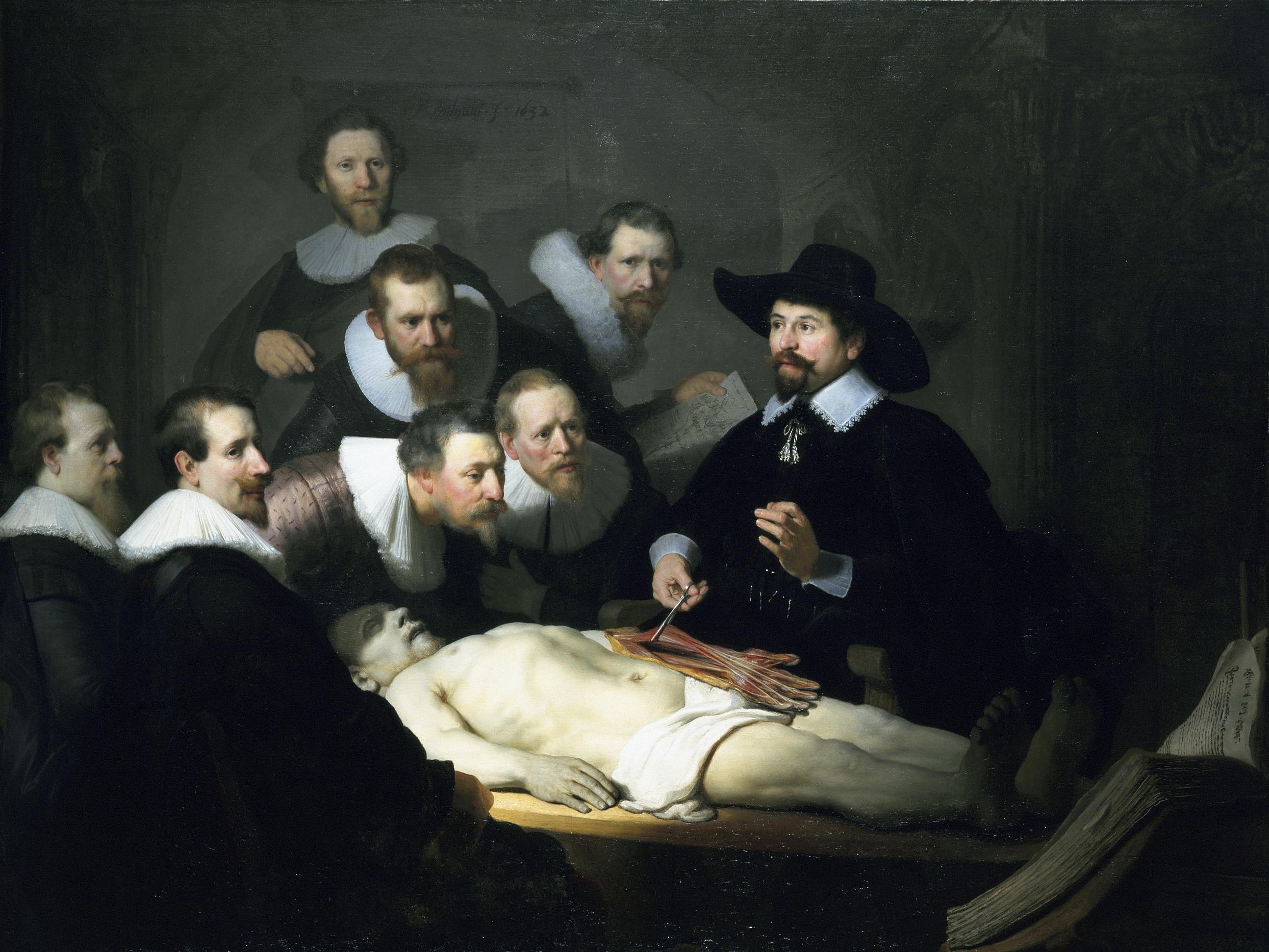

The Anatomy Lesson of Dr. Nicolaes Tulp (1632) by Rembrandt, November 12, 2012. In public domain.

My idiot ex-stepfather died over the weekend, sometime Saturday evening, November 10. He was three months past his sixty-second birthday. I learned of his death early Sunday morning, as two of my younger siblings (technically half-brothers, I suppose) had posted on Facebook their grief over their father’s death overnight. As I read their posts, I realized that I myself felt no particular emotion over the final physical demise of Maurice Eugene Washington.

For the longest time while I was in my teens and early twenties, the song “Ding Dong! The Witch Is Dead” from The Wizard of Oz (1939) would come to mind when I thought about how I’d feel if the man collapsed from his own obesity and died. As far as I was concerned, my ex-stepfather could die a horrible death every day for eternity, and it still wouldn’t have been enough. A steamroller crushing him one day, a stabbing the next, getting smashed into by a semi-tractor trailer doing eighty miles an hour the day after that. Thoughts like that in the ’80s and early ’90s were a regular part of my mindset on Maurice Washington, not to mention a part of my dreams once every six weeks.

But, as I learned to forgive him — for my sake, certainly not for his — I found myself still frequently angry, but also feeling sorry for such a lost person. Whether in exacting abuse on me or my mother, eating himself into kidney failure and Type 2 diabetes, having affairs and producing kids out of those affairs, or in his bouncing back and forth between a Christian and a Hebrew-Israelite life, he was in search of love and stability. None of which, though, he could find from within. A life with only kids from at least three women and damaged lives to show for it. Not to mention a two-decades-long physical decline, in which the man lost both of his legs.

The Cowardly Lion from The Wizard of Oz (1939), November 12, 2012. (http://time.com).

They say living your life to the fullest is the best revenge for survivors of abuse like myself. I suppose that’s true. But what they don’t say is that eight years’ of living in fear for yourself and your family leaves scars, physical, emotional, psychological, even spiritual. I’ve spent nearly a quarter-century recovering from those years, making sure to make myself a better person, and hoping that I don’t pass my scars on to my nine-year-old son in the process.

Two of my more popular posts over the past year have been “Ex-Stepfather’s Balance Sheet” (August ’10) and “Whipped and Beaten” (July ’12). I don’t think that this is random. There are millions of us who’ve grown up with physical, sexual and psychological abuse, and most of us have no one to talk to about these hellish experiences. And nearly as often as not, there are folks who will say, “It wasn’t really that bad, right?” Or, in the case of the very first comment I received on my blog back in July ’07, “you should be grateful, he was just trying to make you a man. Obviously he didn’t do enough.”

So, though I’m not gleeful that Maurice Washington is dead, I’m not exactly in mourning either. I had to kill him as an abuser in my heart and mind a long time ago in order to move on. I feel for my younger siblings, but they didn’t really know their father either. I did, mostly for the worse. May he — and a part of me — now rest in peace.
Pregnant Pauses

02 Friday Nov 2012

Posted by decollins1969 in 1, Boy @ The Window, Christianity, culture, Eclectic, Hebrew-Israelite, Marriage, Mount Vernon New York, Pop Culture, Religion, Youth

≈ 1 Comment

Tags

616, 616 East Lincoln Avenue, Abortion, Angelia N. Levy, Boy @ The Window, Choice, decisions, Eri, Family, Fatherhood, Intervention, Maurice Eugene Washington, Mom, Motherhood, Parenthood, Pregnancy, Pro-Choice, Pro-Life, Reproductive Rights, Sarai, Silver Spring, Women's Rights


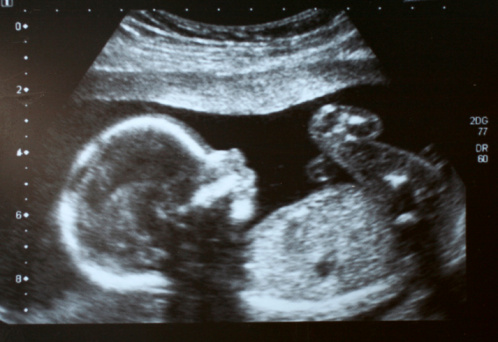
Ultrasound of fetus, 2nd or 3rd Trimester, November 1, 2012. (http://brmh.org).

I agree with President Barack Obama and with so many leading women. Men — especially men in leadership positions — should just shut up when it comes to women’s reproductive rights. Still, my life has given me a unique perspective on a woman’s right to choose, if only because I’ve had little choice as a child and a husband to be involved. I can only say that choice isn’t easy, even for pro-choice males. But I can also say that I knew more about choice at twelve than most men would ever care to know, and more about bringing new life into the world as a result.

The two examples of “the decision” that stand out most for me are twenty Novembers apart, in ’82 and ’02.

A couple of weeks before Thanksgiving ’82, I noticed something about my mother. At a time when we all looked starved, my mother looked round. Her stomach and cheeks were telltale signs. So I asked her, my tweener voice cracking all the while.

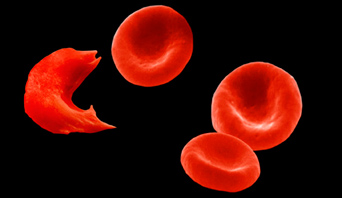
Sickled and normal red blood cells, November 1, 2012. (original source unknown).

“Mom, are you pregnant?!?”

“Yeah, Donald, I’m pregnant,” she sighed.

“What! You got to be kidding! You mean you’re still having sex with him?”

“Watch ya mouth, boy!”

“Mom, what are we going to do? You can’t have a baby, not now, not with all these mouths to feed!”

“Donald, what I’m supposed to do?”

“You need to get an abortion, that’s what!”

“I don’t believe in abortion. It’s against God’s will.”

“Well, we can’t feed the kids that are here now, so how can you feed it? Get an abortion Mom, before it’s too late!”

Before my mother could say anything else, I stormed out for yet another store errand for milk, diapers, and all the things I couldn’t eat. I wanted to cut Maurice’s balls off and shove them down his throat. I wanted to shake Mom until her eyes rolled back in her head. Most of all, I wanted to get her to an abortion clinic yesterday (see my post “The Quest For Work, Past and Present” from August ’12).

That “it” turned out to be my sister Sarai, my late sister, born nearly four months after I came out as a pro-choice feminist and a stress-out Hebrew-Israelite teenager. She lived for twenty-seven years, five months and two days with sickle-cell anemia, without ever knowing I once preferred her not to be born (see my post “My Sister Sarai (Partial Repost)” from July ’10).

Over the next two decades, I’d become so fed up with kids and family, 616 and Mount Vernon and so many things in my life that I once thought that I’d never get married or become a father. The people in my life growing up in Mount Vernon — like my ex-stepfather and the young folks in the neighborhood — refused the responsibility of fatherhood (and in a few cases, motherhood). The idea that there would ever be a child of mine running around without me being in their life made me determined to limit my casual relationships and ensured that I would always have protected sex.

Even after getting married in ’00, I still wasn’t sure if I really wanted a child. Out of any seven-day period, I would’ve been happy to be a dad for four days, and miserable for the other three. I wanted to make sure my wife and me could afford parenthood, that we had the emotional and psychological capacity to take care of any child we brought into this world.

By the middle of ’02, though, it was obvious that my wife wanted to have a child, a son. Coming off of a family intervention, in which my then seventeen-year-old brother Eri had made my mother a grandmother, I was even less excited than I otherwise would’ve been (see my post “Dear Mama (More Like, ‘Dear Mom’)” from October ’09). Still, I loved my wife, and I loved myself enough to think that if I liked the idea of a kid four out of every seven days, it was worth a try.

We didn’t try very long. By Thanksgiving Day ’02, I picked up on my wife’s change of emotions before she did. I had asked her to watch over heavy cream that I was warming up to make a chocolate sauce. The cream wasn’t supposed to boil. It did anyway, as my wife wasn’t paying full attention. Instead of being argumentative with me per usual about my pointing out her lack of attention to detail, she started crying, as if it was the end of the Law & Order franchise. I was startled, and said, “Honey, I think you’re pregnant.” She laughed at first, but as we would eventually find out, I was correct.

It was one of the happiest moments of my life! I had made my wife immeasurably happy, and I found myself wanting something, perhaps for the first time. To be a great father, to live long enough, to be healthy enough, to be productive enough to be the father that I never had growing up.

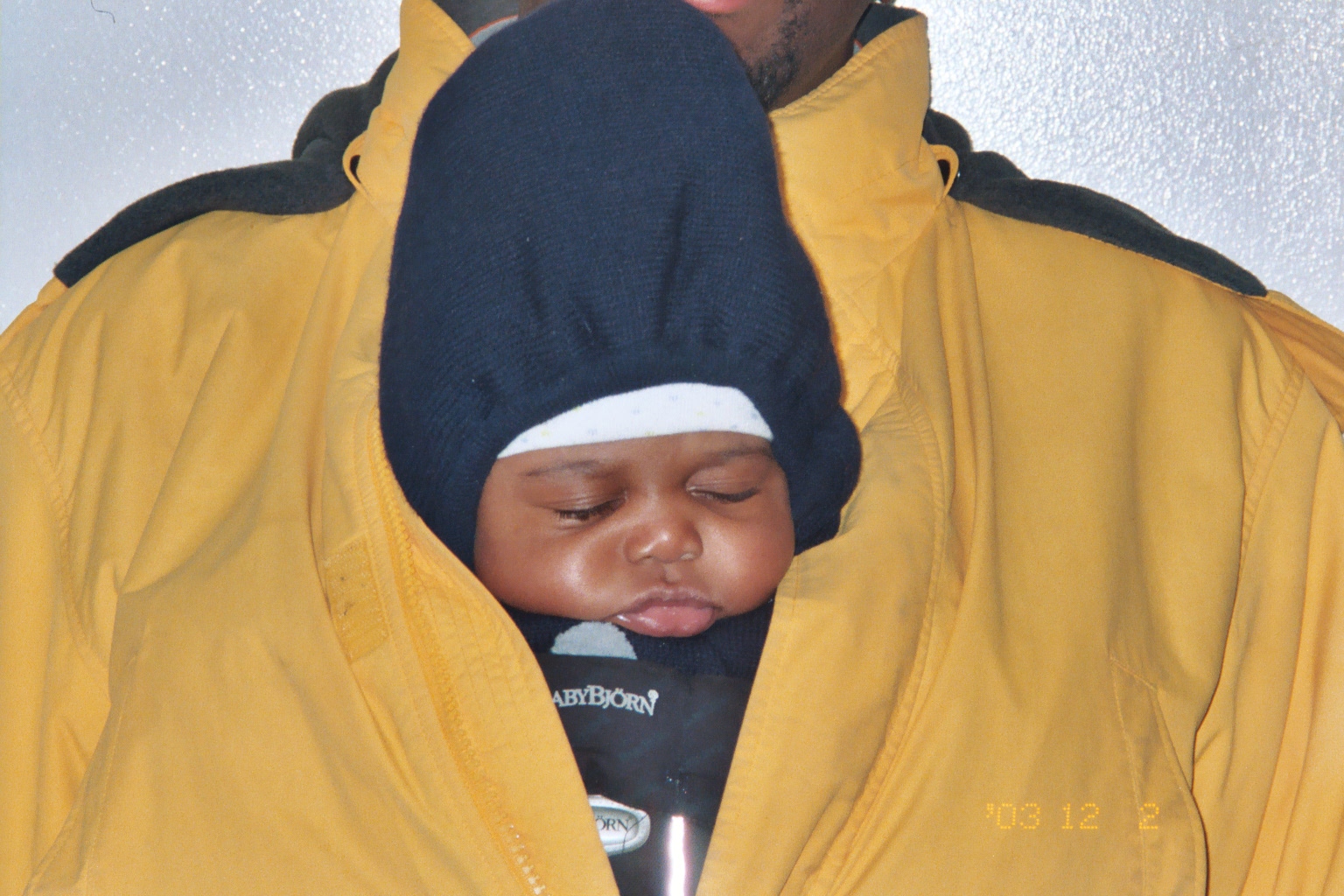
Noah in Baby Bjorn/my parka, Silver Spring, MD, December 3, 2003 (Angelia N. Levy).

If it had turned out that my wife had not wanted to be a mother, and she had become pregnant, and it turned out that she wanted an abortion, I would’ve fully supported her. Not just because I wanted her to be happy, and not just because I’m more firmly pro-choice now than ever. I’ve seen my mother and too many other mothers who’ve made the wrong choices for themselves and their lives.

Life can be long and miserable when making bad decisions, especially when it comes to bringing another life into this world. That anyone would think it a good idea to limit what is already one of the most difficult decisions women and families have to make is anti-Christian and immoral, not to mention just plain stupid.

The Life of Mary Louise

28 Sunday Oct 2012

Posted by decollins1969 in 1, Boy @ The Window, Christianity, culture, Eclectic, Hebrew-Israelite, Marriage, Mount Vernon New York, New York City, Politics, race, Religion, Work, Youth

≈ 2 Comments

Tags

616, 616 East Lincoln Avenue, Bradley Arkansas, Depression, Faith, Gill Family, Happiness, Homelessness, Jim Crow, Joblessness, Mary Louise Gill, Mount Vernon Hospital, Resilience, Self-Awareness, Self-Loathing, Self-Reflection, Sixty-Fifth Birthday, Underemployment, unemployment, Welfare


My Mom, Thanksgiving 2006, Mount Vernon, NY. (Donald Earl Collins).

Today, my mother turns sixty-five years old. My mom has now officially hit elderly status, which reads and sounds so weird, considering that she’s only twenty-two years and two months older than me. That Mom’s here at all at sixty-five is really a not-so-minor miracle, considering how hard her life’s been from day one in ’47.

This was what I wrote about my mother’s first thirty-five and a half years of her life, courtesy of Boy @ The Window:

Bradley, Arkansas main road (Route 29) with me and my Uncle Charles in the shadows, June 2, 2001. (Donald Earl Collins).

Mom came from a long line of folk whose lives were hard and impossible ones, where they  couldn’t take handouts even if they wanted to. She was born to Samuel and Beulah Gill in October ’47, their first of twelve children and her father’s second overall child of thirteen. The Gills of Bradley, Arkansas were tenant farmers who lived in the Red River valley in the southwest corner of the state and five miles north of the Arkansas-Louisiana border. The town was a one-flashing- yellow-light-four-corner one. Just over five hundred people lived there, with farms, shotgun houses, and ranch-style homes neatly segregated between a few affluent Whites, lots of po’ White trash and the abundantly poor Black side of town. The conditions she grew up in included corrugated tin roofs and outhouses to boot.

Being born into this family in the late-’40s meant that Mom’s life would be a difficult and emotionally tortured one. She started doing household chores when she was five, helping with her siblings when she was six, and graduated to hoeing and picking cotton by the time she was eight. There wasn’t the time, energy, and experience in the household for Mom to receive any affection or nurturing.

My maternal grandfather Sam Gill, Sr. (82 at the time, 93 now), Bradley, AR, June 2, 2001. (Donald Earl Collins).

With all that and her mother’s constant neglect and occasional abuse — she was once beat with the back of a hair brush for not getting ready for church on time — it’s amazing that Mom wanted to get married or have kids. Yet I knew that what little nurturing and affection Mom received came from her great-grandmother, her aunt, and high school basketball. All served that role as Mom grew into an attractive six-foot woman. Her great-grandmother, half-Choctaw and half-Irish and originally from Indian Territory (now Oklahoma), taught Mom to see herself as beautiful despite her dark complexion. Her Texarkana, Texas aunt taught Mom her basic adult survival skills. And high school basketball took her as a senior to the segregated state quarterfinals in ’65, an amazing feat to say the least.

Still, it was a hard life, one that Mom had vowed she’d never live again. That’s why she moved to New York in the first place. I’d heard these stories for years, and like her, I believed that our lives would get better through sheer hard work. Welfare was never to be something we would live with.

After nearly seventeen years in the New York area, never had all but finally arrived. She had spent my whole life up to that point telling us not to take “handouts,” that she’d “never be on welfare.”

By her thirty-fifth birthday at the end of October ’82, my mother no longer had full-time work at Mount Vernon Hospital, with her hours cut and four mouths to feed. That weekend, all we had left to eat in our two-refrigerator kitchen was a box of Duncan Hines’ Devil’s Food cake mix, Pillsbury All-Purpose Flour, and some sugar. That Saturday and Sunday, we truly ate like Torah-era Jews. Mom made us pancakes out of the flour, without baking powder, eggs or milk, and cooked down some sugar in water to make us a crude
glucose syrup.

Between an abusive Maurice for a husband, the loss of an already insufficient income after not joining her union in a strike, and two toddler-age kids (and another one on the way), the period between May ’82 and April ’83 was probably one of the lowest points in her life.

As I’ve realized over the years, though, Mom’s life was always hard. It was simply a matter of degrees, not of distinction or difference. The mistake of marrying Maurice, becoming a scab (see my post “The Quest For Work, Past and Present” from August ’12) and leaving my older brother Darren at The Clearview School for fourteen years has had an impact on all of our lives to this day. Just as much as fourteen years on welfare, the three-year-long loss of our home at 616 in the ’90s (see post “The Fire This Time” from April ’08 for more) and my late sister Sarai’s twenty-seven year-long struggle with sickle-cell anemia. “Wow” is only the beginning of a description of calamity that has been my mother’s life, about as long as the first hundred digits after 3.14.

What’s made the difference? My mother’s belief in God or Jesus? Her general sense of resilience? Her uncanny ability to deny reality and frequent lack of self-reflection? But I’d say that Mom has learned to expect little from this world and, unfortunately, even less for herself. She often expected the worst, and then being surprised at how not-so-bad “the worst”  was, could continue to soldier on.

My Mom and my Uncle Sam Gill, Jr., Mount Vernon, NY, November 23, 2006. (Donald Earl Collins).

So I wish my mother a happy sixty-fifth birthday. One in which she can just spend the day at her church in New Rochelle, and then just rest and be. Only one of my siblings lives at 616 these days, and apparently spends more time out and about than he does at home. So, I hope my mother can relax, knowing that she has endured all the evil that this world could throw at her, and despite her view of life, has come out on the other side, badly damaged, but still here.

Touré’s Post-Blackness ≈ I’ma Be Me?

01 Monday Oct 2012

Posted by decollins1969 in 1, Academia, Boy @ The Window, Christianity, culture, Eclectic, eclectic music, Hebrew-Israelite, Mount Vernon New York, Patriotism, Politics, Pop Culture, race, Religion, Youth

≈ Leave a comment

Tags

"Pound Cake" speech, Acting White, American Identity, Authentic Blackness, Authenticity, Bill Cosby, Black Identity, Blackness, Boy @ The Window, I'ma Be Me (2009), Identity Issues, Intrarace Relations, Litmus Test, Post-Blackness, Post-Civil Rights Generation, Post-Racialism, Race, Racism, Reaching Youth, Self-Discovery, Self-Loathing, Self-Reflection, Touré, Wanda Sykes, Who's Afraid of Post-Blackness (2011)


Illustration of red wolf with dinner after a hunt, by Sandra Koch, September 29, 2012. (http://nc-es.fws.gov). In public domain.

I know, I know. Touré’s Who’s Afraid of Post-Blackness (2011) has been out for over a year, and I’ve finally, finally managed to read it in the past couple of weeks. I did not want to like this book. I found — and still find — the title to be pretentious and over the top, a perfect fit for Touré’s Twitter and TV persona. Touré values his ideas like they all are new finds of platinum or a form of safe and sustained nuclear fusion. Sometimes Touré can be cutting-edge, but many times, he goes over the edge (as was the case in August on MSNBC with his “niggerization” of Obama comment).

But in Who’s Afraid of Post-Blackness, Touré puts forward a variety of ideas and insights that I’ll be contemplating in my blogo-neighborhood off and on over the next few months. Touré’s is a very good book. It’s one that is both intellectual and yet revealing about the challenges Blacks face inter- and intraracially in the early twenty-first century.

The premise — once I got past the ridiculous term post-Blackness — is that African Americans and America has advanced just far enough in terms of race for all of our old conceptions of Blackness to have now become meaningless. That Blackness is fully infused in American — maybe even world — culture. That there was never one way to be Black in the first place. Touré himself says, “[t]here is no dogmatically narrow, authentic Blackness because the possibilities for Black identity are infinite. To say something or someone is not Black — or is inauthentically Black — is to sell Blackness short. To limit the potential of Blackness. To be a child of a lesser blackness.” (p. 5).

Litmus paper used in litmus tests, September 29, 2012. (http://chemistry.about.com).

Ironically, though, much of Touré’s book picks apart the notion that the US has become post-racial in the past couple of decades, as best exemplified by the election of President Barack Obama in 2008. Of course, Touré uses notions of Blackness and where it has expanded beyond the authenticity litmus test to show that race/racial bias/racism is still alive and well in America. At the same time, Touré shows how post-Blackness has also provided opportunities for millions of Americans White, Black and Brown to reach beyond their own misconceptions of race and themselves, to enrich our lives in politics, scholarship, the arts, not to mention through hip-hop.

One of my main criticisms of Who’s Afraid of Post-Blackness is that Touré uses a term like post-Blackness (mind you, I hate terms like post-structuralism, post-modernism, and post-racialism too) and doesn’t try in any way to provide a definition that distinguishes it from post-racial. For the purposes of this post, though, the main issue I have revolves around Touré virtually ignoring poor and struggling African Americans in his post-Blackness tour-de-force.

I get it when Touré says that he “never lived a typical Black experience.” (p. 53). At least, I think I do. That despite Touré middle class upbringing, middle-class neighborhood, private school experience, that his is but one representation of Blackness. And that Touré’s experience is as representative of Blackness as my experience of being a Hebrew-Israelite preteen in a working poor family while enrolled in Humanities in Mount Vernon, New York would’ve been thirty years ago (see my post “A Question of My Blackness, Sexuality and Masculinity” from September ’11). Or, for that matter, Wanda Sykes’ comedy special I’ma Be Me (2009) was for her.

That’s great for us, for anyone with enough intellectual power, outsider status, unusual amounts of wisdom, or just plain middle class standing to get the details of Who’s Afraid of Post-Blackness. But when Touré does bring up the twenty-five percent of Blacks who aren’t part of this post-Blackness elite, he talks at them, and not to them. Yes, I completely agree that Blackness isn’t to be defined in terms of poverty, prison, and projects. No, Blackness shouldn’t be defined by how “down” one is with an impoverished community or how “hard” someone is for beating the shit out of another person (see my “Raised on Hip-Hop?” post from April ’10).

Hakeem Olajuwon posting up Patrick Ewing, 1994 NBA Finals, June 1994. (http://rgj.com).

Still, while I stand with almost one hundred percent of what Touré says in Who Afraid of Post-Blackness in ’12, I don’t think that this book would’ve reached me thirty years ago. The way I would’ve seen it in ’82 or even ’87, a middle class Black guy telling me about how my poverty is insignificant to who I was would’ve been excommunicated from my life for eternity. It wouldn’t have helped me at all deal with the pressures I faced socially, academically and in my family (see my “The Silent Treatment” post from June ’10).

Touré wouldn’t have been able to provide for me a roadmap for how to be me and to ignore the crowd of those in my life — White and Black — who regularly told me that I wasn’t authentically Black or that I was “talkin’ White.” If mild-mannered me at twelve wouldn’t have been reached by Touré’s chapter on Black artists taking Blackness and standing it on its head, I imagine that young African Americans growing up in poverty or struggling with identity issues would find Who’s Afraid of Post-Blackness about as easy to embrace as Bill Cosby’s criticism of poor Blacks in ’04.

For me as a writer, the question of how to reach beyond the already converted is always an issue. Touré, as good as he is in his book, merely affirms the path I’ve traveled over the past thirty-one years. He doesn’t really reach those whose path of Blackness has barely begun.

Moving (On) To Pittsburgh

26 Sunday Aug 2012

Posted by decollins1969 in 1, Academia, Boy @ The Window, culture, Eclectic, Hebrew-Israelite, Mount Vernon New York, New York City, Politics, race, Religion, Youth

≈ Leave a comment

Tags

241st Street Subway, 616, 616 East Lincoln Avenue, Abuse, Alternative History, Alternative Universe, Amtrak, Darren Gill, Eri Washington, Fighting Demons, Hebrew-Israelites, Maurice Eugene Washington, Maurice Washington, Pitt, Pittsburgh, Poverty, Self-Discovery, Subway, University of Pittsburgh


241st Street-Wakefield Subway Station, Bronx, NY, August 25, 2012. (jag9889 via http://flickr.com). In public domain.

I’m now a quarter-century removed from leaving my original hometown, Mount Vernon, New York, for Pittsburgh and the University of Pittsburgh. Wednesday, August 26, ’87 wasn’t my first day of adulthood, but it turned into my first day of freedom from the disappointment that my years in Mount Vernon and at 616 East Lincoln Avenue had turned into. It’s been a long road of triumphs and setbacks, of mistakes and sins, of excellence and miracles (see my post “Trip to the ‘Burgh” from August ’09).

But I’ve frequently wondered what would’ve happened if I’d stayed in Mount Vernon, or, at least, somewhere in or near New York City. Would I have turned out like my older brother Darren, a forty-four year-old who’s never been able to shake off the years of psychological torture he endured at 616? He was caught between my mother believing him to be retarded and being in a school for the mentally retarded as a kid with an above-average IQ for fourteen years. Darren never had a chance to build on him teaching himself to read at three and teaching me how to read at five (see post “About My Brother” from December ’07).

Outside of the upper-crust lily-Whiteness that was his Clear View School experience, Darren’s never known a middle-class adult life, a middle-class education or people he could talk to about his experience in order to move on from it. My brother lives around 233rd Street in the Bronx, as isolated now as he was at 616, trapped in our 616 past and in the warped thinking that has retarded his growth as a human being for nearly forty years.

Or would I have turned into my youngest brother Eri, a twenty-eight year-old frequently angry with the world? He’s been taking solace in a father (my ex-stepfather) who was never there for him and in his father’s twisted sense of Afrocentric Judaism? Unlike me and my older brother Darren, who at least knew what it was like to live in a time when even we experienced some sense of the old American Dream, Eri never had that chance.

Poverty, the grinding-with-millstones kind, and joblessness are really all that Eri’s seen the past three decades. Job Corp and the Army National Guard have really been his only times away from the daily anguish of 616 and Mount Vernon. And with the death of our sister Sarai two years ago, I know that he’s felt even more angst and isolation. Leading Eri to begin the process of re-upping with Uncle Sam for this fall.

Amtrak’s Pennsylvanian passing the 1895 Bryn Mawr Interlocking Control Towerat Bryn Mawr, PA, en route from New York to Pittsburgh, June 6, 2011. (Centpacrr via Wikipedia). Permission granted via cc-by-sa-3.0.

If I had stayed, my story would likely have ended up somewhere between Darren’s and Eri’s. I would’ve somehow gone to college, maybe Westchester Community College, Hunter or possibly Fordham. But the drama of living at 616 and the constant reminders of the worst years of my life all around me would’ve made demon-slaying a near-impossible task.

It was bad enough occasionally bumping into Crush #1, Crush #2 or one of my silent treatment classmates during the holidays and summers I was away from Pittsburgh between ’87 and ’92. Seeing them regularly and knowing that they only saw me as a twelve-year-old asshole or socially-inept seventeen-year-old? That would’ve stunted me (see my post “The Silent Treatment” from June ’10). I simply wouldn’t have felt that I had the space — geographically or psychologically — to move on from those morbid times.

Even if I somehow found the focus of Tiger Woods and Michael Jordan combined to complete a bachelor’s degree, I would’ve needed to make the decision to leave the area anyway. Especially if I had any other aspirations besides helping my mother take care of my younger siblings, including going to graduate school.

All the decisions I made after August 26, ’87, in fact, wouldn’t have occurred if I had stayed at 616, in Mount Vernon, even anywhere in the New York City area. I would’ve been too close to allow my mother to be beaten by my ex-stepfather again. I would’ve been too embarrassed by my father’s increasing alcoholism. And I would’ve been too angry with myself for all of the fun I’d denied myself while my former high school classmates were living what I assumed was the equivalent of Sheila E’s “Fabulous Life.”

Moving (On) To Pittsburgh

Moving (On) To Pittsburgh

There would’ve been no decision to even risk being homeless my sophomore year for a degree — much less actually being homeless for nearly a week. There then wouldn’t have been a decision to change my major to history, much less rediscovering myself as a writer years later. I wouldn’t have ever seen myself as worthy of happiness, or seen myself as handsome, or seen myself through the eyes of others as funny or charming or goofy. Instead, I could’ve counted on anger, rage, disappointment and misery to be my four emotional companions, ever ready to introduce themselves to the New York City area.

We often need change to move on from the demons of our past and present. Thank God I made the decision to literally leave 616 and Mount Vernon for Pittsburgh. That decision has enabled me to remember the past without wallowing in it.

Boy, Interrupted

16 Monday Jul 2012

Posted by decollins1969 in 1, Boy @ The Window, culture, Eclectic, Hebrew-Israelite, Jimme, Mount Vernon New York, Movies, race, Religion, Youth

≈ 1 Comment

Tags

"Oz" (HBO), 616, 616 East Lincoln Avenue, Child Abuse, Crush #1, Girl, Hatred, Imagination, Interrupted", Judah ben Israel, Maurice Eugene Washington, Maurice Washington, Stolen Childhood, Torture, Uncle Sam


Oz (HBO series) wallpaper, July 15, 2012. (http://blabla-series.com).

As I continue on my blogger’s journey reliving parts of my summer of abuse from thirty years ago, I’m reminded of some simple truths. That in terms of time, while I certainly remember everything that happened to me in July ’82, I don’t remember being outside the confines of 616 at any point during that month, even during those times when I actually was. Mount Vernon had become my prison. I don’t recall a single moment of laughter or goofiness, a single song or thought beyond surviving my ordeal. It was as if someone had kidnapped and then tortured me for five weeks. It was the longest interruption of my higher ordered thinking that I can remember.

Not only did my stepfather Maurice/Judah forbid me from the outdoors or from reading because I refused to acknowledge him as my father, but he forced me to do every conceivable household chore (see my “Whipped And Beaten” post from earlier this month). He invented them on a whim to keep me busy every day. His justification, of course, was the Torah. “Honour thy father and thy mother…” was what I’d allegedly violated as a sinful Hebrew-Israelite. I scrubbed behind our two refrigerators on a Saturday afternoon in mid-July — our so-called Sabbath day — while they were turned on, burning myself on coils and cleaning walls with plain water. I whitewashed the bedroom, living room, foyer, and hallway walls on Saturdays and other days, again without any soap or other cleansers.

Maurice inspected my work for any mistake, and if there were any, I’d get beat with a belt or punched in the chest or gut and would have to start the whole thing all over again. All while he laid on his unemployed ass farting and watching the ’30s Tarzan movie series starring Johnny Weissmuller on WNEW-Channel 5. On a Sanyo TV set my father Jimme had bought us the year before, just before his Louisville Slugger incident! I scrubbed those kitchen walls as if I were scrubbing Maurice with a steel rake tipped with Brillo pads. It didn’t matter that I didn’t have anything but water to clean them with.

A modern jail cell (numbering modified by author), Brecksville, Ohio PD, January 3, 2006. (Andrew Bardwell via Wikipedia/Flickr.com). In public domain.

Both Jimme and my Uncle Sam tried to see me during this torture. My stepfather threatened to kill Jimme, practically running him off. I got in trouble for chasing after my father down East Lincoln Avenue after Maurice threatened him. Maurice yelled at me, “If you go after him, you betta keep goin’!” Mom stopped my Uncle Sam from confronting my stepfather about his abuse of her and me when he came over for a visit at the end of July. He was obviously frustrated beyond belief. Uncle Sam said, “Don’t expect me to keep comin’ over here while that son-of-a-bitch’s still here!”

I was completely exhausted by then. I dreamed every day of slaughter. I thought about cutting up my stepfather in his sleep with a steak knife and feeding him to wild dogs. I’d start with his balls, then his whale-blubber belly, and then his throat. Then I would stuff his balls down his throat. These wonderful thoughts probably kept me from committing suicide.

Despite it all, the idiot had failed to break me. Off and on throughout my month of torture, I did think of Crush #1. She’d sometimes show up in my dreams. Or I’d think of her as I walked the streets of North Side Mount Vernon, as I passed her  block near East Prospect, on the way to pick up a new stroller for Yiscoc or to go to Waldbaum’s or some other grocery store. Then I started thinking that this was a pitiful waste of time. After all that had happened, there was no way someone as great as Crush #1 would ever be interested in me, I thought one day at the end of July, just a couple of days before my five weeks of continual abuse had ended.

I assumed that I was damaged goods, a person no self-respecting individual would see as having any value. Kids, even poor kids, made fun of me all the time, my religion was a sham since my stepfather had become a worse person, Mom was making dumb decisions, and my grades despite my end-of-the-year rally didn’t meet my usual standards. It was July ’82 and I didn’t know if I’d make it to my thirteenth birthday.

I was so stressed out that I hadn’t noticed that I was in the midst of growing four inches in two short months. I missed my foot growing a full size in a span of a month, my first pubic hair growth. I even masturbated without knowing what it was I was doing, having made it my way to release all of my fear and stress. If a psychiatrist had evaluated me on July 16 of ’82, they would’ve put me on antidepressants. That’s how out of sorts I was.

Whipped and Beaten

06 Friday Jul 2012

Posted by decollins1969 in 1, Boy @ The Window, culture, Eclectic, Hebrew-Israelite, Mount Vernon New York, Movies, race, Religion, Youth

≈ 1 Comment

Tags

616, 616 East Lincoln Avenue, Child Abuse, Childhood, Judah ben Israel, Maurice Eugene Washington, Maurice Washington, Pookie


Whipped and beaten buttercream, October 10, 2010. (http://farm5.static.flickr.com/). In public domain.

Another day, another “thirty years ago on this date” post. But this one was my full confirmation that my childhood was over, that humans — especially Blacks males — couldn’t be trusted, and that I had a long way to go to make my life worth living (see my post “Another Day of Days” from July ’07 for more). It took years for me to undo the conclusions I drew from what occurred on this date.

My stepfather cut my Pookie hunt three days short on the sixth of July (see my “Lightning On A Cloudless Day” from last week) of ’82. Because I wasn’t man enough to actually find and confront Pookie to get the money back, it was now time for my whuppin’.

Whap! Whap! Whap!

“Are you gonna do what I say nigga!,” Maurice kept saying as he kept whipping me with his belt.

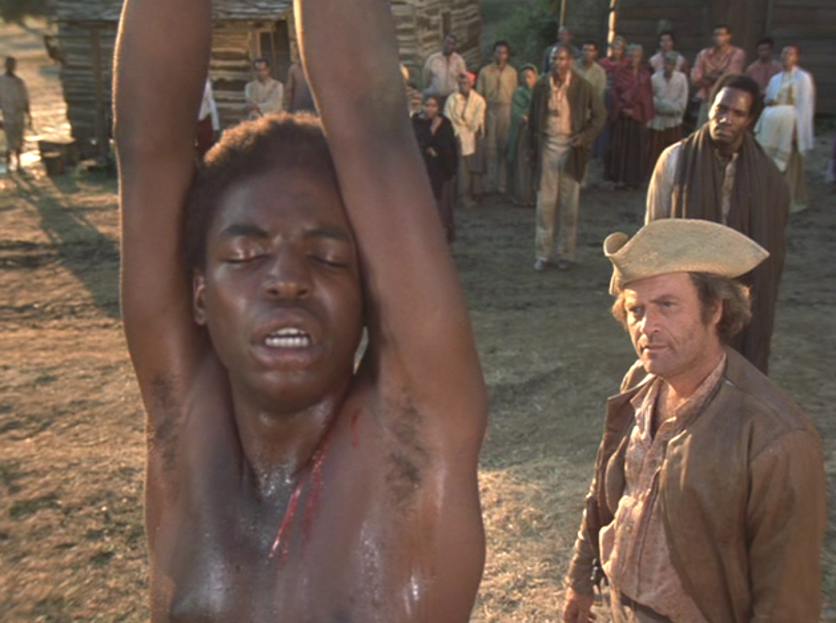
Kunta Kinte being whipped, Roots (1977) screenshot, July 6, 2012. (http://irvine.wikis.gdc.georgetown.edu). Qualifies as fair use under US Copyright laws because of low resolution.

I stood there with my arms and legs stretched out — and with my pants and underwear pulled down to my ankles — in front of a grimy white wall in my room being whipped by him with his leather belt. I could hear the belt cut through the air before it landed on my nearly naked body. I assumed that he pulled this straight from the ABC miniseries Roots.

Whap! Whap! Whap!

“I’m yo’ father and yo’ gonna listen to me!” he barked.

As the inquisition continued, my room started to spin in my head, and the white walls turned yellow and red.

Whap! Whap! Whap!

“Are you gonna listen to me? Are you gonna listen to me?” he kept saying as each hit became harder and harder on my back, butt, and legs. I started seeing pools of blood forming on the ceiling and nothing but hatred was forming in my mind.

Whap! Whap! Whap!

“Are you gonna listen to me?,” he screamed.

“I hate you! I hate you! You’re not my father, you’re just a bully!” I yelled.

My stepfather then paused from whipping me. Punches and kicks followed about a second later. First came three punches to my head and jaw, after he spun me around from the wall.

“You hate me, huh nigga?!?”

Then he kicked me in the stomach and the mouth as I lay on the floor, at least until I started to spit blood. After I threatened to go to the police, Maurice picked me up and threw me by my arms four feet into a corner wall, almost knocking me unconscious.

“Go to the police, muthafucka! I dare you! If you talk to the police, I’ll kill you!,” he said.

When I came out of my daze, my stepfather told me to move out and go live with Jimme. He told me, “This is MY house. If you hate me get out!” A suitcase then greeted my head as my stepfather said, “Start packin’!”

Mom arrived from a long day at work, around 3:15 pm, as Mount Vernon Hospital was about to go on strike, and she wasn’t a part of the union. “My poor mom,” I thought. When she came into my room, she immediately became angry. “What happened?,” she asked. I told her the story, and she told me to unpack.

After five minutes of quiet, I heard her arguing with Maurice in the living room.

“He’s a defiant child. We have to get rid of IT!,” he said.

“Who pays the bills? Who feeds your fat black ass? If this child of mine leaves, we’re gonna turn this mutha out, and you’re gonna be the one goin’ to hell!,” Mom said in response. I guess she really didn’t remember what happened to her on Memorial Day.

My stepfather then walked into my room to say “Unpack, nigga.” I finished unpacking, and then I sat in my walk-in closet and began to cry. I hadn’t cried in the closet since the day I finished third grade, because Mrs. Shannon was no longer my teacher. I had a crush on her all through that year. Now I closed the closet door, wanting no light to shine on me.

I felt trapped, with no place to escape from the wrath of my stepfather. I thought about poisoning his food, the fat slob. Or slitting his throat when he was asleep, because he could sleep through a thermonuclear detonation. Then I thought about killing myself again. I could jump out of the window in the living room and land flat on the blue-gray slate walkway between 616’s front door and the five stairs leading to the sidewalk and street. I thought that one of us would have to die to end this senseless ordeal.

Muhammad Ali at end of last fight, SI cover, October 13, 1980. (http://www.crowntiques.com). Qualifies as fair use under US Copyright laws because of low resolution.

I discovered that my waking nightmare had just begun. It turned out that my ribs and stomach were bruised, I had another knot on my forehead, my lower lip was busted, and my butt and right leg had bloody scars on them as a result of the belt. And I knew, all too well now, that there was more to come.

If there’s anything to learn from my experience, it’s to not wait for a teacher to notice — in my case, the late Harold Meltzer — or twenty years to feel comfortable enough to talk about your child abuse without being embarrassed.

← Older posts
Newer posts →

Boy @ The Window: A Memoir

Boy @ The Window: A Memoir

Places to Buy/Download Boy @ The Window

There's a few ways in which you can read excerpts of, borrow and/or purchase and download Boy @ The Window. There's the trade paperback edition of Boy @ The Window, available for purchase via Amazon.com at http://www.amazon.com/Boy-Window-Donald-Earl-Collins/dp/0989256138/

There's also a Kindle edition on Amazon.com. The enhanced edition can be read only with Kindle Fire, an iPad or a full-color tablet. The links to the enhanced edition through Apple's iBookstore and the Barnes & Noble NOOK edition are below. The link to the Amazon Kindle version is also immediately below:

scr2555-proj697-a-kindle-logo-rgb-lg

Boy @ The Window on Amazon.com: http://www.amazon.com/Boy-The-Window-Memoir-ebook/dp/B00CD95FBU/

iBookstore-logo-300x100

Boy @ The Window on Apple's iBookstore: https://itunes.apple.com/us/book/boy-the-window/id643768275?ls=1

Barnes & Noble (bn.com) logo, June 26, 2013. (http://www.logotypes101.com).

Boy @ The Window on Barnes & Noble: http://www.barnesandnoble.com/w/boy-the-window-donald-earl-collins/1115182183?ean=2940016741567

You can also add, read and review Boy @ The Window on Goodreads.com. Just click on the button below:

Boy @ The Window

Twitter Updates

Tweets by decollins1969
  • RSS - Posts
  • RSS - Comments

Archives

  • June 2025
  • April 2023
  • September 2022
  • August 2022
  • July 2022
  • June 2022
  • May 2022
  • April 2022
  • March 2022
  • January 2022
  • December 2021
  • November 2021
  • October 2021
  • September 2021
  • August 2021
  • July 2021
  • June 2021
  • April 2021
  • March 2021
  • February 2021
  • January 2021
  • December 2020
  • November 2020
  • October 2020
  • September 2020
  • August 2020
  • July 2020
  • May 2020
  • April 2020
  • March 2020
  • January 2020
  • December 2019
  • November 2019
  • August 2019
  • July 2019
  • June 2019
  • May 2019
  • April 2019
  • March 2019
  • February 2019
  • January 2019
  • December 2018
  • November 2018
  • October 2018
  • September 2018
  • August 2018
  • July 2018
  • June 2018
  • May 2018
  • March 2018
  • February 2018
  • January 2018
  • December 2017
  • November 2017
  • October 2017
  • September 2017
  • August 2017
  • July 2017
  • June 2017
  • May 2017
  • April 2017
  • March 2017
  • February 2017
  • January 2017
  • December 2016
  • November 2016
  • October 2016
  • September 2016
  • August 2016
  • July 2016
  • June 2016
  • May 2016
  • April 2016
  • March 2016
  • February 2016
  • January 2016
  • December 2015
  • November 2015
  • October 2015
  • September 2015
  • August 2015
  • July 2015
  • June 2015
  • May 2015
  • April 2015
  • March 2015
  • February 2015
  • January 2015
  • December 2014
  • November 2014
  • October 2014
  • September 2014
  • August 2014
  • July 2014
  • June 2014
  • May 2014
  • April 2014
  • March 2014
  • February 2014
  • January 2014
  • December 2013
  • November 2013
  • October 2013
  • September 2013
  • August 2013
  • July 2013
  • June 2013
  • May 2013
  • April 2013
  • March 2013
  • February 2013
  • January 2013
  • December 2012
  • November 2012
  • October 2012
  • September 2012
  • August 2012
  • July 2012
  • June 2012
  • May 2012
  • April 2012
  • March 2012
  • February 2012
  • January 2012
  • December 2011
  • November 2011
  • October 2011
  • September 2011
  • August 2011
  • July 2011
  • June 2011
  • May 2011
  • April 2011
  • March 2011
  • February 2011
  • January 2011
  • December 2010
  • November 2010
  • October 2010
  • September 2010
  • August 2010
  • July 2010
  • June 2010
  • May 2010
  • April 2010
  • March 2010
  • February 2010
  • January 2010
  • December 2009
  • November 2009
  • October 2009
  • September 2009
  • August 2009
  • July 2009
  • June 2009
  • May 2009
  • April 2009
  • March 2009
  • February 2009
  • January 2009
  • December 2008
  • November 2008
  • October 2008
  • September 2008
  • August 2008
  • July 2008
  • June 2008
  • May 2008
  • April 2008
  • March 2008
  • February 2008
  • January 2008
  • December 2007
  • November 2007
  • October 2007
  • September 2007
  • August 2007
  • July 2007
  • June 2007

Recent Comments

MaryPena's avatarMaryPena on My Day of Atonement/Bitter Hat…
decollins1969's avatardecollins1969 on No Good Teaching Deed Goes…
Mary Rose O’Connell's avatarMary Rose O’Connell on No Good Teaching Deed Goes…

NetworkedBlogs on Facebook

NetworkedBlogs
Blog:
Notes From a Boy @ The Window
Topics:
My Life, Culture & Education, Politics & Goofyness
 
Follow my blog

616 616 East Lincoln Avenue A.B. Davis Middle School Abuse Academia Academy for Educational Development AED Afrocentricity American Narcissism Authenticity Bigotry Blackness Boy @ The Window Carnegie Mellon University Child Abuse Class of 1987 CMU Coping Strategies Crush #1 Crush #2 Death Disillusionment Diversity Domestic Violence Economic Inequality Education Family Friendship Friendships Graduate School Hebrew-Israelites High-Stakes Testing Higher Education History Homelessness Humanities Humanities Program Hypocrisy Internalized Racism Jealousy Joe Trotter Joe William Trotter Jr. K-12 Education Love Manhood Maurice Eugene Washington Maurice Washington Misogyny Mother-Son Relationship Mount Vernon High School Mount Vernon New York Mount Vernon public schools Multiculturalism MVHS Narcissism NFL Pitt Pittsburgh Politics of Education Poverty President Barack Obama Race Racial Stereotypes Racism Relationships Self-Awareness Self-Discovery Self-Reflection Sexism Social Justice Teaching and Learning University of Pittsburgh Violence Whiteness Writing

Top Rated

Blog at WordPress.com.

  • Subscribe Subscribed
    • Notes from a Boy @ The Window
    • Join 103 other subscribers
    • Already have a WordPress.com account? Log in now.
    • Notes from a Boy @ The Window
    • Subscribe Subscribed
    • Sign up
    • Log in
    • Report this content
    • View site in Reader
    • Manage subscriptions
    • Collapse this bar
 

Loading Comments...