• About Me
  • Other Writings
  • Interview Clips
  • All About Me: American Racism, American Narcissism, and the Conversation America Can’t Have
  • Video Clips
  • Boy @ The Window Pictures
  • Boy @ The Window Theme Music

Notes from a Boy @ The Window

~

Notes from a Boy @ The Window

Category Archives: Politics

Living in the Land of “No!”

23 Wednesday Mar 2011

Posted by decollins1969 in 1, Academia, Boy @ The Window, culture, Eclectic, Politics, race, Youth

≈ Leave a comment

Tags

Academia, Academic Writing, Ageism, Bias, Bigotry, Career Options, Forbes Quadrangle, Historical Dictionary of American Education, History of Education Quarterly, Multiculturalism, No!, Passion, Pitt, Race, Richard J. Altenbaugh, The Second Plate, University of Pittsburgh, Wesley Posvar Hall, Writing, Yes


People forming a "NO" to London's Heathrow Airport Expansion, May 31, 2008. Source: The Daily Mail http://bit.ly/hc0KSP

There was a time in my career and life when I was desperate to publish an article in a scholarly journal. Right after finishing grad school at Carnegie Mellon at the end of ’96, I set out to write a literature review essay on how folks in education foundations and education policy had covered multiculturalism and connected it — or, in most cases, not connected it — to the politics around this controversial topic during the 1980s and 1990s. Of all the things I’d written up to this point in my career, this was a bit ambitious.

I had submitted an article for publication with the History of Education Quarterly in March ’97 and had made several revisions at Richard Altenbaugh’s request. He was the new senior editor of the journal, as it had recently moved from Indiana University to Slippery Rock to be under his direction. Altenbaugh had also been my professor for my education foundations graduate class in the spring of ’92, and I’d done entries for his Historical Dictionary of American Education, which was published in ’99.

Historical Dictionary of American Education Cover, March 23, 2011. Donald Earl Collins

At Altenbaugh’s behest, I met him and a wildly bearded co-editor at an informal meeting in March ’98. We met at The Second Plate, an eating place on the second floor of Forbes Quadrangle at Pitt, where I’d spent my homeless days in ’88, my history major days, and my first two years of grad school. Over the course of a two-hour lunch that had little to do with the food, Altenbaugh and his assistant grilled me about the contents of my article, my writing in general, and about the publishing business. Now I knew that this essay would need more revisions, but a two-hour inquisition on why a twenty-eight-year-old was too young to make bold conclusions based on existing studies was just a ridiculous argument.

For Altenbaugh and the other editor, I was simply too young to write an essay that reviewed previous scholarly work. Their logic: “even a senior scholar with fifteen years in the field would have trouble pulling this off.” The editors also insisted that the only road to academic Nirvana regarding my work would be through publishing academic articles and books that met the approval of an exclusive scholarly community. Translation: “write something that is interesting to a few other professors — but not so exciting that it would catch the public’s attention — and by all means do not work on something as controversial as multiculturalism.” Oh yeah, they also recommended that get approval for my essay draft from two elderly, nearly-dead White historians before resubmitting to the journal.

Bottom line: my essay was rejected, given a “No!” Not because it didn’t have potential, or because the early drafts weren’t any good. But because I was working on a topic too cutting edge as a Black male who even now at forty-one would be too young — according to these guys — to work on a state of the profession essay on multiculturalism, much less thirteen years ago.

Did their “No!” matter? In one sense it really did. I knew that the topic itself was too controversial for most conservative-thinking (in a topical, not political, sense) editors in scholarly publishing. That there were few venues for me to address multiculturalism in an academic sense. I also knew that their “No!” was about much more than my topic. My age and my race also played a role in their decision to not publish my essay — they said as much by implication. Funny thing is, that in these weird times, I’d probably have a much better shot at publishing this essay now than I did when multiculturalism seemed more relevant.

But in the end, it didn’t matter at all. I was already in the middle of a five-year period of questioning whether I was an academic historian first and a writer second, or was it really the other way around? If the latter was true — and it’s turned out to be — then what did it matter that I pushed to publish on a topic that I cared about, but I was already beginning to lose passion for?

What I learned from that “No!” is that there are times to force a “Yes!” out of the land of “No!” And that there are other times when I should choose to take that “No!” and evaluate my own motives for wanting a “Yes!” In the case of my growth as a writer — both in academic writing and in other kinds of writing — there couldn’t have been a better, more bigoted “No!” than the one I received thirteen years ago.

This…Is…Jeopardy?

18 Friday Mar 2011

Posted by decollins1969 in 1, Academia, Boy @ The Window, culture, Politics, Pop Culture, Youth

≈ Leave a comment

Tags

Alex Trebek, Grading, History Trivial, Humanities, Humanities Program, Instructor, Jeopardy, Mount Vernon High School, Mount Vernon public schools, Pitt, Professor, Students, Teaching, Teaching and Learning, Teaching Assistant, Teaching History, University of Pittsburgh


This Is Jeopardy?

This Is Jeopardy?

The first class I ever taught was as a guest lecturer my first semester of grad school at Pitt. Larry Glasco, my advisor, had me take charge of his History of Black Pittsburgh course one November Thursday in ’91. It was a task made easier by the showing of the documentary Wylie Avenue Days during the two-hour and twenty-minute class. With about a quarter of the class composed of adult learners, including several who’d grown up in the Hill District during the time frame covered in the documentary, it became a real conversation about experiences with racism and inter- and intra-racial relations in Pittsburgh in the first two-thirds of the twentieth century. It was a great introduction to teaching.

In the two decades since, I’ve often wish that all of my classes had the kind of intellectual balance that my first class possessed and I as instructor helped provide. Sadly, many times in my journey as a teacher, instructor and professor, I’ve had students who showed as much interest in discussing the hows and whys of history as Glenn Beck of FOX News Channel has in science and the truth.

These students, about one out of every six I’ve taught over the past two decades (about 300 in all) have taken up an amount of my teaching time. They’ve groused about the assignments I’ve given them to do, the exam questions I’ve created to assess their knowledge. They’ve gnashed their teeth about my grading, about how tough I supposedly can be in assigning grades. With papers, short-answer exams, multiple choice tests, even fill-in-the-blank quizzes. There’s been no pleasing this group of students.

Until now. It occurred to me about a year ago. I was watching yet another episode of Jeopardy, and it swung to a history category, one that I would’ve swept if I’d been on the show that day or anytime since the show came back on the air in ’85. That then reminded me of something one of my Humanities classmates from Mount Vernon High School said to me soon after finding out that I was ranked fourteenth in the Class of ’87. “All you can do with history is play Jeopardy,” he said with derision.

That memory then reminded me of how teachers like our seventh through tenth grade social studies teachers taught us. Whether Court, Demontravel (who I’ll talk about later this year), Flanagan or Zini, the idea was to be able to spit out as many date-connected facts, names and battles as quickly and accurately as possible. With no thought about human nature, empathy with the struggles of individuals and groups, or any attempt to explain the processes behind why something happened, like slavery, Jim Crow or Indian removal, for instance.

To satisfy my students who want a high school version of history, I need to come to class next semester and draw a gigantic box on the chalkboard. In that box, I’ll draw six columns by five rows of smaller boxes within this huge box. In the top box of each column, I’ll write in a topic area, say, “Colonial America,” “Expanding Voting Rights,” “‘Eq’-words,” “Myths & Legends,” “My Founding Fathers,” and “Rebel Yell” (this on the American Revolution and the Civil War) across all six. There wouldn’t be any money values, just number values, from 1 to 5 from the easiest to most difficult questions. Daily Doubles would help struggling students make up points, while Double Jeopardy sessions would help the best students solidify their A’s.

This is a great idea, isn’t it? My least interested students can then pretend that they’re learning history by being entertained and memorizing history trivia. My students who need to learn or sharpen their critical thinking skills will find themselves sorely neglected. And my most interested students would be ready to strangle me.

In the end, it’s not worth it to turn my part in this profession into Sony Entertainment, especially for a minority of the students I’ve taught over the years. Besides, I can’t afford to buy Watson to impress my students, or at least, have someone pretend that they have the artificial intelligence of IBM’s Watson by sounding like a teraflop supercomputer.

Five Ingredients to Higher Education Access and Success

11 Friday Mar 2011

Posted by decollins1969 in 1, Academia, Boy @ The Window, culture, Eclectic, Politics, race, Youth

≈ Leave a comment

Tags

Academic Preparation, College Access and Success, Disadvantaged Students, Education Reform, Financial Aid, Higher Education Access and Success, K-16 Education, Low-Income Students, Parental Engagement, Postsecondary Education Access and Success, Race, Social Class, Social Preparation, Student Development, Student Engagement, Students of Color, Underrepresented Students, Will to Power


Five Ingredients for Cream of Mushroom Gravy with Bell Peppers, Soy Sauce, Chicken Broth and More Mushrooms, March 10, 2011. Donald Earl Collins

There should be five pillars to college access and success, similar to the Five Pillars of Islam, essential for the successful and lifelong practice of Islam. For all students, but especially for disadvantaged and underrepresented students, having a guide to the five most necessary ingredients for college entrance, matriculation and graduation is long overdue.


I should know. Between six years of Humanities in Mount Vernon, New York’s public schools in the ’80s, twenty years off and on as an instructor and professor, and a decade’s worth of nonprofit work in fields like civic education and K-16 education reform. So many students — especially those without the financial means and the academic preparation necessary to be successful at the college level — fail for lack of knowledge and lack of access to such knowledge as well.

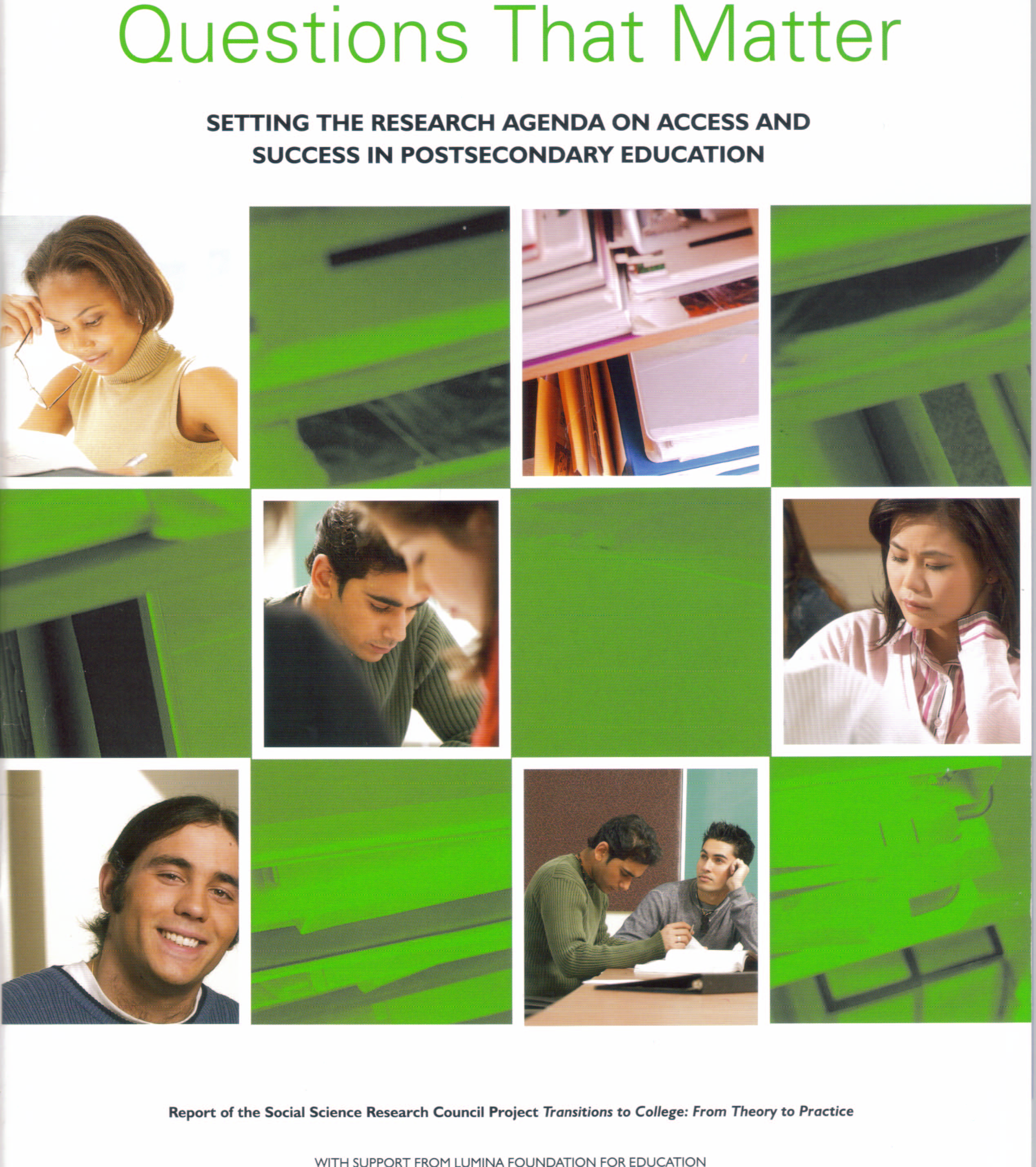
Based on reports like the Pathways to College Network‘s  A Shared Agenda (2004) and the Social Science

Questions That Matter Report Cover, June 15, 2006. Social Science Research Council

Research Council’s Questions That Matter (2006), the book Double the Numbers (2004) edited by staff from Jobs for the Future, as well as the work of innovative organizations like The Posse Foundation, below are what I believe are the five ingredients of higher education access and success, in order of their importance.


1. Social Preparation: Students must be prepared for the world outside of their towns, cities, neighborhoods, blocks, apartment buildings, homes and individual families. Most disadvantaged and underrepresented students are inadequately prepared for the cultural, social class, philosophical, ideological and spiritual differences between them and most traditional college and college-age students. Leadership development, critical thinking (and not just for academic purposes), a sense of belonging, a passion for active learning are all the seasonings needed to help students become socially comfortable in a postsecondary setting. Academic preparation is one important aspect of a student’s social preparation for college, but it’s not the only one.

2. Academic Preparation: This is of obvious importance, but in terms of higher education access and success, it’s actually overemphasized. Or at least, the acquisition of facts and the assessments used to determine how successful students were at assimilating these facts has been overdone. This high-stakes testing phase in the history of American education has also put too much of the task of preparation on individual teachers, and not enough on the students themselves. Academic preparation for college requires broad knowledge. But it also requires students to be able to analyzes and interpret facts, to begin to put facts together in combinations that cannot be derived by simply reading a textbook or from a teacher’s lesson plan. That requires good-to-great teachers, administrators, and students.

3. Parent, Family and Community Engagement: This aspect of K-16 educational success never gets the attention it deserves. Active parents and adults in schools can and does create the atmosphere necessary for students’ academic and social preparation in the college access and success process. There are times, of course, in which parental engagement can evolve into abuse of staff and teachers, particularly with parents and families who have unrealistic expectations of their children and their children’s teachers. For disadvantaged and underrepresented students, however, it’s of the utmost importance for parents and other concerned adults to be engaged in this process, to apply pressure on schools and students when necessary.

4. Financial Means and Aid: This is a nice phrase, but the fact is, student loans account for nearly three-fifths of the funds for a four-year degree for most students. The real issue here is to not only take advantage of scholarships, application fee-waivers and need-based aid like the Pell Grant and SEOG grants. It’s also to use social preparation and engaged parents to find additional funds and to agitate for more need-based state and federal aid. Or to use academic preparation to obtain the substantial private and state-level merit-based scholarships to cover the skyrocketing costs of college.

5. Will to Power: Researchers and practitioners rarely discuss this aspect of postsecondary access and success. But the bottom line is, the difference between success and failure for any student really is how much pain they are willing to endure to be successful in finishing a college degrees. Even with the proper academic preparation, excellent social preparation, solid financial aid and consistent parental and community engagement, it’s ultimately up to each student to decide to overcome whatever obstacles they face, especially once they become a college student. While willpower alone isn’t enough, it’s still a necessary ingredient to make the other four ingredients jell.


Columns In The Inner Court of The Baal Temple, December 4, 2007. Ddxc. Already in the public domain.


Had I known even half of this back in the day, I wouldn’t have been homeless my sophomore year at Pitt, struggling financially most of my time as an undergrad, or reluctant to take on leadership roles prior to my senior year. But my will to realize success and graduate overcame all of that, making the difference between where I am now and where I was so long ago.

Sexism – It’s Complicated

03 Thursday Mar 2011

Posted by decollins1969 in 1, Boy @ The Window, culture, Eclectic, Marriage, Politics, Pop Culture, Youth

≈ Leave a comment

Tags

Academy for Educational Development, AED, Chick, Contradictions, Damsel-in-Distress, Feminism, Girl, New Voices, New Voices Fellowship Program, Objectification, Objectify, Sexism, Terminology, Woman, Womanism, Women, Youth


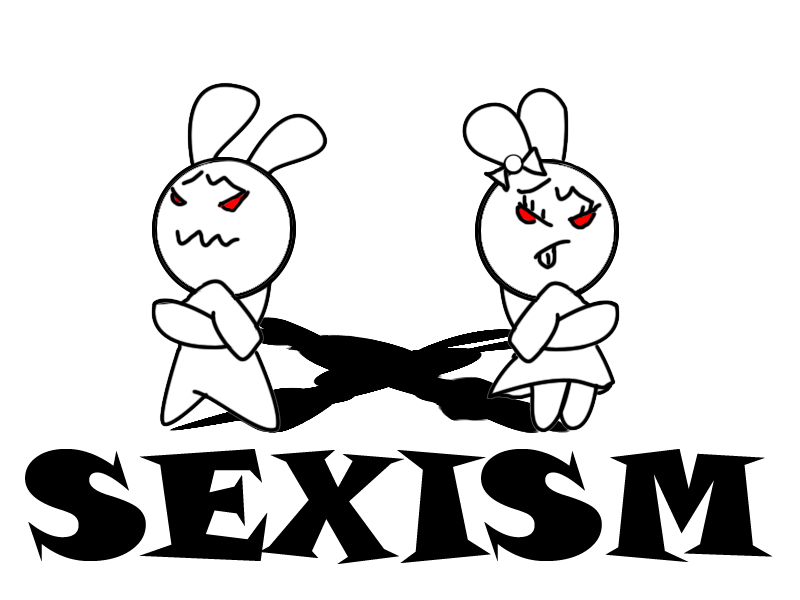
Sexism Hurt Everyone, March 2, 2011. Source: http://dribbleglass.com

I started writing this in response to the contradictions anyone can find in looking at Women’s History Month. Particularly the distance between feminist/womanist rhetoric about girls and women loving themselves for who they are and not how they look. Versus the everyday barrage of images about beauty and achieving it for others’ pleasure, if not for one’s own. Then I realized that this is an issue for women and men, boys and girls, regardless and because of race and socioeconomics. Then I thought that beauty isn’t the only insecurity folks who are blessed or gifted become neurotic about over time.


It just proves that most of us, even the most well-rounded, well-meaning and well-adjusted of us, can’t help but be somewhat sexist. And that there are many of us who represent walking contradictions of feminism and sexism who call others on their -ism “isht” but refuse to recognize it in ourselves.

Sexism is complicated by the fact that it often is more than just the mere objectification of women. After all, men can be eye-candy as well, and using the term women in the universal, at least in the Western world, equates almost exclusively to White women. I haven’t even begun to describe the exclusion of the transgender community from this conversation, as well as how embedded middle class and affluent values are in our understanding feminism (but not womanism) in our Women’s History discourse.

Such was the case for me nine years ago at my job as assistant director of the New Voices Fellowship Program at the Academy for Educational Development (AED). (It’s the organization that finds itself under suspension from government grants because of serious financial malfeasance since the beginning of last December — see my blog post from December 2010). We were prepping binders and other materials for a New Voices selection panel meeting when a staff member engaged me in a conversation about how I moved from dating to marriage. It was a question that required me to discuss my progression to serious relationships.

Though I didn’t want to go into major details about my personal life, I did want to give the young man an answer that made sense. So I started with how I saw women when I was about twenty-two or twenty-three (the younger man’s age at the time, by the way), and worked my way forward. I noted how I often interchanged the terms “woman,” “girl” and “chick” when I was younger, but had pretty much grown out of objectifying women in that manner by the time I’d started dating my future wife a few years later.

A female co-worker walked into the conference room while I was in mid-sentence, and the only thing she heard was “chick.” She demanded a retraction on the spot, which I summarily refused. “I’m not going to change a story by using a different term when I know I used that term ten years ago,” I said. I added that the conversation wasn’t really her business, especially since she walked into the middle of it without

Sexism, March 2, 2011. Source: http://swpeng.com

knowing the context of it.


She reported my allegedly sexist misdeed to my immediate supervisor, who didn’t know how to respond, so he did nothing. That, at least to me, was actually more sexist than anything I may have said and regardless how anyone could’ve interpreted it. That my co-worker never followed up to discuss why I happened to be using the term “chick” seemed to me a sign that even she knew she overreacted to something that was never an issue to begin with.

A few months later, the young woman had resigned, leaving to work on her master’s at the Woodrow Wilson School at Princeton. She told me, in the way of sage advice, that I “needed to open up more and be honest” with younger staff. I just looked at her and wished her well. How can anyone be honest about anything if the first thing we say to each other is to change our stories about our experiences because the words we use can be interpreted as sexist (or racist, or fatist or any other -ist or -ism)?  It seemed to me that if anyone had any serious problems negotiating feminism and sexism, it was my former staff member, not me.

Not that I didn’t realize I had some issues regarding my feminism/womanism versus my own sexism. Most of them have come from what I haven’t said, what I have and haven’t done regarding White women and women of color over the years. As I’ll discuss in my next blog, I’ve had three decades’ worth of damsel-in-distress neurosis (I have no idea what the DSM-IV code is for that).

I’m Not Happy Feet (or Ted Williams)

21 Monday Feb 2011

Posted by decollins1969 in 1, Academia, Boy @ The Window, culture, Eclectic, Movies, music, Politics, Pop Culture, race

≈ Leave a comment

Tags

Acting, Avatar: The Last Airbender, Class, Classism, Dancing for Dinner, Drug Abuse, Drug Addiction, Entitlement, Gender, Happy Feet, Homelessness, Hustle, Hustlin', Hustling, Poverty, Prince Zuko, Race, Racism, Shuckin' an' Jivin', Tap Dancing, Ted Williams, The Soloist, Trained Seals, Uncle Iroh, Voyeurism, YouTube


Happy Feet Big Dancing Scene Screen Shot, February 19, 2011. Qualifies as fair use under US Copyright laws, as screen shot is of low quality and illustrates the subject of this post.

Happy Feet Big Dancing Scene Screen Shot, February 19, 2011. Qualifies as fair use under US Copyright laws, as screen shot is of low quality and illustrates the subject of this blog post.

Remember that homeless Black guy who kicked off our new year a few weeks ago through the power of YouTube and some folks who recorded him and his golden voice on their smartphone? Yeah, how could any of you forget, really? Ted Williams had a whirlwind ten days, as thirteen million people watched the YouTube recording, companies and individuals offered him jobs and money, his family came back into his life. And then, of course, Williams became violent, relapsed into drug use, and is in the midst of rehab — again.

But it all started with his YouTube performance for the good folks of voyeur America. The whole incident made me cringe from start to finish. It also made me think about something that has always bothered me about race in America. Why? Especially since the video surfaced a man who’d been on a downward spiral for three decades? Because it seems that in order for a Black person to be taken seriously in this society, we have to perform like trained seals in order to get the attention we need and deserve.

Ted Williams, Columbus, OH, January 3, 2011. AP. Qualifies as fair use under US Copyright laws because of low resolution and use as subject in blog post.

This isn’t about some metaphorical relationship between excellence and success, or displaying intellect at school and in the world of work. No, this is actually about giving a performance, acting, or as the older folks would say, shuckin’ an’ jivin’, or hustlin’, to grab the attention of mostly Whites in high places. While this isn’t always a bad thing, it also is mostly not good. For it also seems that many of us must experience hardship, prison, drug addiction, abuse and homelessness in order to get attention in the first place.

That’s why it pisses me off when hearing about journalists shadowing the homeless in order to learn about life on the streets. Or when writers sit down with a homeless man or woman to learn about their ironic life story. It also bothers me when I see lists of the “50 Most Successful X” and the “100 Most Innovative Y,” knowing before I read one word that the only Blacks who made these lists were entertainers (I include professional athletes in this category, by the way). It’s disheartening to know that, for all of my writing ability and intellect, the only way I’ll likely be as successful as I hope to be will be by delivering a performance that allows Americans — mostly White — to be voyeurs of my life beyond my words and deep thoughts.

It all came together for me in the Avatar: The Last Airbender episode  (Season 2, Episode 4) “The Swamp,” where Prince Zuko and his uncle Iroh sit at the side of the road in an Earth Kingdom town begging for change. One man forces the once proud general to dance for a gold coin — “Nothing like a fat man dancing for his dinner,” the man says. It speaks to shameful classism — or, at the very least, a sense of class and race entitlement — that we in this country engage in every day.

Fat Man Dancing For His Dinner

Fat Man Dancing For His Dinner

So, here are a few more thoughts. I look at Ted Williams, The Soloist with Robert Downey, Jr. and Jamie Foxx, even the Pixar/Disney movie Happy Feet (2006) — which me and my wife made the mistake of taking our son Noah to see (he didn’t like the movie, by the way) — and see lots of shuffling across a floor for the attention of Whites (and some people of color) in high places. Do two million penguins really need to tap dance ala Savion Glover in order to get attention from White scientists trying to save life on this planet from our global warming ways? No, but Blacks have had to literally tap dance for food and spare change in the exact same way.

I felt this way in grad school and at various times throughout my career. That I needed to sing, dance and do flips and cartwheels to make myself stand out for my middling White professors and supervisors. It would explain why some of them would ignore my grades, papers and awards to ask me if I could palm or dunk a basketball — out of the blue! Or why a muckity-muck at the Academy for Educational Development would walk by my office, notice the PhD on my name plate, and say, “Wow! You have a doctorate! I thought you only played softball!” I said, “Yeah, that’s why I’ve been working here for three years, just so I can play on the organization’s softball team.”

We ignore those suffering the most, whether because of race or class or gender or a combination of the three (or more) until they do something that impresses us. That’s when they deserve a chance, at least from the perspective of those laughing at them. And that’s shameful, demeaning, and yes, racist and elitist in a very specific way.

The Contrarian One

15 Tuesday Feb 2011

Posted by decollins1969 in 1, Boy @ The Window, Christianity, culture, Eclectic, eclectic music, Mount Vernon High School, Politics, race, Religion, Youth

≈ Leave a comment

Tags

A.B. Davis Middle School, Anonymity, Contrarian, Dune, Humanities, MacGyver, Mount Vernon High School, Mount Vernon New York, Mount Vernon public schools, Privacy, Richard Dean Anderson, Sting, troubled youth


Sting as Feyd-Rautha in David Lynch's Dune, July 20, 2007. TAnthony. Qualifies as fair use under US Copyright laws because this is a low-resolution screenshot illustrating a character which is a subject in the article that uses it, and by nature no free version exists.

For the most part, I have protected the privacy of my childhood classmates and friends by not calling them by their actual names in this blog. I have used pseudonyms, code names like “Crush #1” or “Crush #2,” code letters based on their position in my cohort or how I saw them growing up. I don’t apply these rules to the adults I interacted with because they were public figures, authority figures really. That’s been one of my unofficial journalist-esque rules for this blog, and I’m sticking to it.

In this case, however, I’m pushing the envelope a bit. Even though I have no plans on using a name today, I’m using some initials of a former classmate that almost none of my readers will know. But for those that went through Humanities with me and read this post, the initials may make this person obvious. This classmate — and friend, I guess — was one of the few free thinkers I knew in my Humanities days. He wasn’t just smart — we were all smart. He fashioned himself an intellectual, someone who either thought against the grain or refused to get caught up in what he considered the daily stupid stress sandwich of grades, awards, and more grades that was our magnet program. Most of all, the kid was a contrarian, the one and only JD.

Just like with most of my classmates, I didn’t get along with him at first. He immediate came off to me as someone who saw himself above the fray, maybe even better than the rest of us. It didn’t help that JD introduced himself as “half-Russian, one-quarter French and one-quarter English” that first day of seventh grade nearly thirty years ago. For most of the first year, I thought that his persona was an act, an attempt at upper-crust coolness. I didn’t understand how girls — White and Black — liked this guy, zits and all.

Richard Dean Anderson as MacGyver, May 18, 2007. Source: http://www.just-whatever.com/2007/05/18/what-would-macgyver-do/

At various times during our Humanities days, his looks were compared to Sting, and later, MacGyver — actor Richard Dean Anderson’s most famous character. I’m sure that he liked the comparisons. If you meshed the two, you’d maybe end up with a JD, but probably about two inches shorter than the real life person.

At first, I didn’t think that he was all that smart. After all, we ended up in a fight over my outburst of laughter because he said Australians spoke “Australian” instead of English. I always wondered why we fought this week, of all weeks (twenty-nine years ago this week, by the way). It wasn’t as if we hadn’t annoyed each other before. Eventually I did begin to get Mr. OshKosh, as I called JD in my mind — and occasionally, out loud — during our Davis years. He was a deliberate individual, often trying too hard to be one. It was obvious to me that he thought the whole Humanities thing was a joke, that he found school a Sisyphean effort.

Still, even though we had fought — and I somehow managed to win against the karate kid — we’d get caught up in weird intellectual conversations about communism versus capitalism, or about America’s endless cultural corruption. JD would always take the most extreme view of America the ugly, leaving me no choice other than to argue with him or to agree with him, depending on the severity of his argument. He was a devout atheist, at least in argument, indirectly questioning my Hebrew-Israelite and, later on, early Christian beliefs. That he made me question what I thought I believed and what I actually did believe, I appreciated even at the time. I also got the sense that he was constantly questioning his world while casting doubt in my direction.

It was part of the dissatisfaction that I sensed in him all during our six years together in Mount Vernon’s schools. I didn’t know how much of it came from his home life, but my guess by the middle of high school was that we only saw a tip of a very large iceberg for six and half hours a day and five days a week. What was more obvious, at least to me, was that he seemed comfortable in his uncomfortability at Mount Vernon High School, with the flight of his White classmates in ninth and tenth grade, with the hypocrisy of Humanities as academic light in a sea of ignorance while ignoring the elephants in the room.

Despite holding many of his most private cards to his vest, JD was probably one of the five most honest people I knew in all of my education. His body language, his lack of interest in most things in the classroom, his varied cultural and intellectual interests outside of the classroom, his dating habits all but betrayed his closed-mouthness when it came to who he understood himself to be. He was, and has remained, my favorite contrarian.

No Rhodes Lead to College Park

04 Friday Feb 2011

Posted by decollins1969 in 1, Academia, Boy @ The Window, culture, Eclectic, Politics

≈ Leave a comment

Tags

Academic Excellence, Academic Politics, College Park, job interview, merit scholarships, Mote, Rhodes, Rhodes Scholar, Rhodes Scholarship, scholarships, Tom McMillen, University of Maryland, University of Michigan, University of Pittsburgh


The Road to the University of Maryland President's Residence, June 11, 2010. Donald Earl Collins

University of Maryland President's Residence, June 11, 2010. Donald Earl Collins. Note the Maryland flag colored shell on the Terrapin (turtle).

Three years ago I did an interview at the University of Maryland for a director position with their National Scholarships Office. It was a day-long interview that went from 9 am until 6:30 pm, meeting faculty and administrators throughout the nine-and-a-half-hour process.

It was one of my best interviews. I didn’t feel like I made any obvious errors, and I genuinely liked all of the people I met that day. But there was one question, one topic, that felt out-of-place, awkward, even stupid as part of the discussion of this position. It was the question, “If you get this job, can you guarantee that the University of Maryland will have a Rhodes Scholarship winner in five years?”

I was almost speechless after hearing the question. Not because I didn’t have confidence in my abilities to detect academic excellence or strong leadership skills in students. Not because I didn’t think I could handle the job. Mostly, I just thought that it would be ridiculous for any responsible professional to guarantee a prize like a Rhodes Scholarship based on variables beyond their control. “I can guarantee that I can get more students into the pipeline for a Rhodes, but I think it would be foolhardy for me to guarantee that I could get a Rhodes Scholarship in two or five years.”

Former U.S. Representative Tom McMillen, a Rhodes Scholar, NBA player, and alumnus of the University of Maryland, 2008. BGervais. Creator has granted permision for free use via Creative Commons.The conversation continued over the next fifteen minutes between me, another director and two deans. I discussed other important scholarships and fellowships. Fulbright. Truman, Mellon Mays, Ford Foundation, and so on. But the conversation returned three times to the mandate of then President Mote and his emphasis on raising Maryland’s prestige by having a student win a Rhodes Scholarship. After all, the university had not had a Rhodes Scholarship winner since basketball star Tom McMillen won the award in ’74. One administrator actually said, “We see no reason why we couldn’t do as well as the University of Michigan.”

I thought, “Wow! He said that with a straight face!” I couldn’t believe what I was hearing. It was as if I was listening to my ex-stepfather talk about how great a father he was while his kids were running around 616 with graying drawers and grumbling stomachs. Given the state of the scholarships office at the University of Maryland, they weren’t ready to compete with the University of Pittsburgh yet, much less the most prestigious land-grant public university in the country, and arguably the world. I graduated with and found myself in the same classes with one Rhodes Scholar when I was an undergrad at Pitt, and knew a finalist for the scholarship when I was a grad student there as well. And Pitt had nowhere near the academic reputation in ’91 or ’94 that it had earned by 2008.

I nudged the administrators who were interviewing me to think more systematically about how the scholarships office at the University of Maryland should go about setting goals. That a university must build its reputation for high-achieving students over time, so that its Rhodes Scholarship candidates will survive to at least be finalists in the process. That our competition was more the University of Virginia or University of Delaware or even Johns Hopkins before setting goals on par with the University of Michigan.

I obviously didn’t get the job. Given that conversation, though, I wasn’t sure if I wanted the job. The university found someone who had previous experience working in a university scholarships office. As with most staff positions at universities, experience working as a staff member (considered different from faculty, in case folks don’t know the difference) is more important than nonprofit management or academic teaching experience. I was definitely disappointed.

Still,  I wanted the challenge of creating a more academically enriching environment at the University of Maryland. And after three years of teaching in the University System of Maryland (via University of Maryland University College), I’ve taught enough College Park students to know that much work remains to create the kind of university necessary to produce Rhodes Scholars. Who knows? Maybe Maryland will have its first Rhodes Scholar recipient in thirty-seven years this spring. However, given the split personality of both the campus and the academic culture there, I seriously doubt it.

← Older posts
Newer posts →

Boy @ The Window: A Memoir

Boy @ The Window: A Memoir

Places to Buy/Download Boy @ The Window

There's a few ways in which you can read excerpts of, borrow and/or purchase and download Boy @ The Window. There's the trade paperback edition of Boy @ The Window, available for purchase via Amazon.com at http://www.amazon.com/Boy-Window-Donald-Earl-Collins/dp/0989256138/

There's also a Kindle edition on Amazon.com. The enhanced edition can be read only with Kindle Fire, an iPad or a full-color tablet. The links to the enhanced edition through Apple's iBookstore and the Barnes & Noble NOOK edition are below. The link to the Amazon Kindle version is also immediately below:

scr2555-proj697-a-kindle-logo-rgb-lg

Boy @ The Window on Amazon.com: http://www.amazon.com/Boy-The-Window-Memoir-ebook/dp/B00CD95FBU/

iBookstore-logo-300x100

Boy @ The Window on Apple's iBookstore: https://itunes.apple.com/us/book/boy-the-window/id643768275?ls=1

Barnes & Noble (bn.com) logo, June 26, 2013. (http://www.logotypes101.com).

Boy @ The Window on Barnes & Noble: http://www.barnesandnoble.com/w/boy-the-window-donald-earl-collins/1115182183?ean=2940016741567

You can also add, read and review Boy @ The Window on Goodreads.com. Just click on the button below:

Boy @ The Window

Twitter Updates

Tweets by decollins1969
  • RSS - Posts
  • RSS - Comments

Archives

  • June 2025
  • April 2023
  • September 2022
  • August 2022
  • July 2022
  • June 2022
  • May 2022
  • April 2022
  • March 2022
  • January 2022
  • December 2021
  • November 2021
  • October 2021
  • September 2021
  • August 2021
  • July 2021
  • June 2021
  • April 2021
  • March 2021
  • February 2021
  • January 2021
  • December 2020
  • November 2020
  • October 2020
  • September 2020
  • August 2020
  • July 2020
  • May 2020
  • April 2020
  • March 2020
  • January 2020
  • December 2019
  • November 2019
  • August 2019
  • July 2019
  • June 2019
  • May 2019
  • April 2019
  • March 2019
  • February 2019
  • January 2019
  • December 2018
  • November 2018
  • October 2018
  • September 2018
  • August 2018
  • July 2018
  • June 2018
  • May 2018
  • March 2018
  • February 2018
  • January 2018
  • December 2017
  • November 2017
  • October 2017
  • September 2017
  • August 2017
  • July 2017
  • June 2017
  • May 2017
  • April 2017
  • March 2017
  • February 2017
  • January 2017
  • December 2016
  • November 2016
  • October 2016
  • September 2016
  • August 2016
  • July 2016
  • June 2016
  • May 2016
  • April 2016
  • March 2016
  • February 2016
  • January 2016
  • December 2015
  • November 2015
  • October 2015
  • September 2015
  • August 2015
  • July 2015
  • June 2015
  • May 2015
  • April 2015
  • March 2015
  • February 2015
  • January 2015
  • December 2014
  • November 2014
  • October 2014
  • September 2014
  • August 2014
  • July 2014
  • June 2014
  • May 2014
  • April 2014
  • March 2014
  • February 2014
  • January 2014
  • December 2013
  • November 2013
  • October 2013
  • September 2013
  • August 2013
  • July 2013
  • June 2013
  • May 2013
  • April 2013
  • March 2013
  • February 2013
  • January 2013
  • December 2012
  • November 2012
  • October 2012
  • September 2012
  • August 2012
  • July 2012
  • June 2012
  • May 2012
  • April 2012
  • March 2012
  • February 2012
  • January 2012
  • December 2011
  • November 2011
  • October 2011
  • September 2011
  • August 2011
  • July 2011
  • June 2011
  • May 2011
  • April 2011
  • March 2011
  • February 2011
  • January 2011
  • December 2010
  • November 2010
  • October 2010
  • September 2010
  • August 2010
  • July 2010
  • June 2010
  • May 2010
  • April 2010
  • March 2010
  • February 2010
  • January 2010
  • December 2009
  • November 2009
  • October 2009
  • September 2009
  • August 2009
  • July 2009
  • June 2009
  • May 2009
  • April 2009
  • March 2009
  • February 2009
  • January 2009
  • December 2008
  • November 2008
  • October 2008
  • September 2008
  • August 2008
  • July 2008
  • June 2008
  • May 2008
  • April 2008
  • March 2008
  • February 2008
  • January 2008
  • December 2007
  • November 2007
  • October 2007
  • September 2007
  • August 2007
  • July 2007
  • June 2007

Recent Comments

MaryPena's avatarMaryPena on My Day of Atonement/Bitter Hat…
decollins1969's avatardecollins1969 on No Good Teaching Deed Goes…
Mary Rose O’Connell's avatarMary Rose O’Connell on No Good Teaching Deed Goes…

NetworkedBlogs on Facebook

NetworkedBlogs
Blog:
Notes From a Boy @ The Window
Topics:
My Life, Culture & Education, Politics & Goofyness
 
Follow my blog

616 616 East Lincoln Avenue A.B. Davis Middle School Abuse Academia Academy for Educational Development AED Afrocentricity American Narcissism Authenticity Bigotry Blackness Boy @ The Window Carnegie Mellon University Child Abuse Class of 1987 CMU Coping Strategies Crush #1 Crush #2 Death Disillusionment Diversity Domestic Violence Economic Inequality Education Family Friendship Friendships Graduate School Hebrew-Israelites High-Stakes Testing Higher Education History Homelessness Humanities Humanities Program Hypocrisy Internalized Racism Jealousy Joe Trotter Joe William Trotter Jr. K-12 Education Love Manhood Maurice Eugene Washington Maurice Washington Misogyny Mother-Son Relationship Mount Vernon High School Mount Vernon New York Mount Vernon public schools Multiculturalism MVHS Narcissism NFL Pitt Pittsburgh Politics of Education Poverty President Barack Obama Race Racial Stereotypes Racism Relationships Self-Awareness Self-Discovery Self-Reflection Sexism Social Justice Teaching and Learning University of Pittsburgh Violence Whiteness Writing

Top Rated

Blog at WordPress.com.

  • Subscribe Subscribed
    • Notes from a Boy @ The Window
    • Join 103 other subscribers
    • Already have a WordPress.com account? Log in now.
    • Notes from a Boy @ The Window
    • Subscribe Subscribed
    • Sign up
    • Log in
    • Report this content
    • View site in Reader
    • Manage subscriptions
    • Collapse this bar
 

Loading Comments...