• About Me
  • Other Writings
  • Interview Clips
  • All About Me: American Racism, American Narcissism, and the Conversation America Can’t Have
  • Video Clips
  • Boy @ The Window Pictures
  • Boy @ The Window Theme Music

Notes from a Boy @ The Window

~

Notes from a Boy @ The Window

Category Archives: music

Born In The U.S.A.

08 Thursday Oct 2009

Posted by decollins1969 in 1, Boy @ The Window, culture, Eclectic, eclectic music, Mount Vernon New York, music, Patriotism, Politics, Pop Culture, race, Work, Youth

≈ Leave a comment

Tags

"Born In The U.S.A.", American Politics, Bruce Springsteen, Economic Inequality, Oligarchy, Poverty, Power of Music, Racism, Social Change, Social Justice


What does it say about a nation or society when a quarter century can go by and the same issues that were front and center then are ones that vex us now? What does it say about us when our standard operating procedure is to avert our eyes to problems that we know must be fixed yesterday? How should we see ourselves if the arguments of our grandparents and parents become our own, especially as we tidy them up for our children and our eventual grandchildren?

If I were Bruce Springsteen (and the E Street Band, for that matter), I might be a bit pessimistic right now. It’s been twenty five years since his groundbreaking single and album made him a household — and not just a New York tri-state area — name. All of his work prior to the summer and fall of ’84 contained threads of social commentary on America’s malaise. But Born In the U.S.A. and “Born In The U.S.A.” raised his level of folksy commentary to a new level, at least for those of us who weren’t listening to Nebraska or who hadn’t heard of the band or Springsteen before.

It was such a simple song. And yet it expressed all of the disappointment, disillusionment and disgust of a generation of folks who grew up seeing America one way. Only to find out that the promise of America the Beautiful and free that they were fed growing up was really somewhere between porridge and gruel. “Born down in a dead man’s town, the first kick I took was when I hit the ground” is such a bitter, yet appropriate way to start a song about a Vietnam veteran whose life never worked out the way it was supposed to. Work hard, do the patriotic thing, and expect to have a job and a comfortable life, if not a happy and prosperous one was the expectation of most Americans. Not poverty, debt, welfare, homelessness, drug addiction, undereducation, unemployment and incarceration.

I became a closet Bruce Springsteen fan because of “Born In The U.S.A.” With my mother out of work and on welfare, my father in the middle of his third decade of alcohol abuse, a stepfather with the familial skills of Charles Manson, I could relate to all of the rage and confusion in the song. It was a refreshing change from the coke-induced pop, R&B and rap of the period. The mid-80s were so weird. Between Springsteen and the E Street Band, John Mellencamp and U2, you had Thompson Twins, Doug E. Fresh, Madonna’s “Like A Virgin,” New Edition’s “Mr. Telephone Man,” Prince’s “Purple Rain” and “I Would Die 4 U,” and battles over who was the real Roxanne. At least some artists were awake and aware enough to write something for those of us whose lives weren’t exactly a Benetton commercial.

Here we are, a quarter-century later, and nothing really has changed. The highly educated have at least something to fall back on, while those of us with a high school diploma or less face a permanently uncertain future. The rich, while not getting as rich as they were just two years ago, remain far richer than those of us working hard but not getting anywhere. We are still fighting wars with little long-term purpose and without sufficient benefits to those who are fighting on our government’s behalf. Our government continues to drag its feet on anything that would benefit anyone with an income under $200,000 a year.

It’s no wonder that somewhere between two and three million Americans are in jail or prison, that three out of ten of us never graduate from high school, and that the richest one percent of Americans have a net worth greater than the bottom 80 percent of us. It’s such a shame that it could render all of us helpless. I, for one, may need to consider refugee status in a nation with even a modicum of universal health care and moderately less hypocrisy in its government.

But Bruce Springsteen hasn’t given up, at least in his music. His work continues to speak truth to power, to say things that most in the music world don’t have the courage or the innate wisdom to say. It’s unfortunate that what sells today is the bling of booty and booty, and not the thought-provoking lyrics and feelings of folks like Springsteen, of artists like Chuck D and Tupac, of those who dare to use music as a weapon of social change (although Pink, John Mayer and James Blunt are occasional exceptions).

With the end of a disappointing first decade of the twenty-first century looming though, maybe we can still hold out hope for a more permanent nexus between our wild world of pop culture and our need for a stimulated social consciousness. That kind of hope is what keeps me going.

Strange Days

24 Wednesday Jun 2009

Posted by decollins1969 in 1, Boy @ The Window, Christianity, culture, Eclectic, Jimme, Marriage, Mount Vernon High School, Mount Vernon New York, Movies, music, race, Youth

≈ Leave a comment

Tags

616 East Lincoln Avenue, Black Male Identity, College Years, Crush #1, Humanities, Identity, Mount Venron HIgh School, Popularity, Salutatorian, Self-Reflection


Cover for the album Strange Days by The Doors, September 1967, scanned June 27, 2008. (Father McKenzie via Wikipedia). Qualifies as fair use because of low resolution of scanned album cover.

Being on campus at Princeton teaching for a few weeks and working with college-ready high school students sometimes takes me back into my past. It’s funny really, realizing that the “best and the brightest” were hardly the best and weren’t quite so bright, even at the time I went to school with them. That’s not to say that the students I’ve had or have now at Princeton or the classmates I graduated with didn’t or don’t have loads of potential. They did and do. It’s more about what can happen when teachers, administrators and parents fill our heads full with delusions of grandeur, with ideas of intellectual greatness based on signs of academic excellence. It’s what can happen when students spend more time trying to keep up with the image of high academic achievement that others have created for them rather than finding their own path, one that allows them to be themselves and to tap into their potential.

I know, I know, some students strive and thrive even with the pressures from their parents, the doting of teachers, and the turning-the-other-way of administrators. I could also be accused of playa hatin’, I suppose. After all, I was far from popular in my glory days of high school, and only found myself in the last two and a half years of college. But that’s just it. Even I had to come to grips with my family’s expectations — especially the lack of them — in high school and college. I needed to find myself in order to be all that I could be in college and in grad school. I needed to make a clean break from the doubters in my life — including of course, my teachers and administrators.

That’s the unfortunate truth I faced in my last two years at Mount Vernon High School. Especially when the class rankings came out a month into our senior year. Out of 545 potential graduates, I was ranked fourteenth. I was a little disappointed because I didn’t crack the top ten, mostly because I knew I needed scholarship money and a good financial aid package to help pay for college, wherever I went. I had already learned that my performance wasn’t good enough for my teachers in eleventh grade. They kept reminding me that I was doing nothing in comparison to the salutatorian in our class, an involved-in-everything Black male. I guess I could’ve argued that they should’ve been comparing me to our Class of ’87 valedictorian, but my teachers saw the second in our class as a much more well-rounded student. At the very least, I knew from the comparisons that the person I was supposed to be more like had a charming way with our teachers.

I saw this particular classmate as more of an enigma than many of the other ones I had done time with in Humanities. I genuinely felt both in awe of and disheartened by his presence in my life during the Humanities years. I thought it was amazing that he was able to do as much as he did. The high school band. The mock trial team. The school newspaper. Our yearbook. An appearance on Phil Donahue! At least he wasn’t a star basketball player too, especially in Mount Vernon.

Yet I saw the results of all of that involvement on his part, and not just in terms of how teachers saw me. As far as teachers were concerned, it was as if I was this classmate’s younger, underachieving brother. But I also saw how the young man occasionally worked his reputation to his advantage, cashing in on his built-up academic capital to give himself more time to work on assignments no one else got a second of overtime to do. I don’t think I ever wanted to be him or become close friends with him, though. Something about his need to be well-liked by our peers and teachers bothered me. So I was happy in more ways than one to see our salutatorian gallop into the sunset with his diploma, a law firm job in Manhattan, and his ticket to Harvard punched some twenty-two years ago.

Ralph Fiennes and Angela Bassett in Strange Days (1995), screen shot, November 12, 2009. (http://ugo.com via Fox Entertainment). Qualifies as fair use because of low resolution of screen shot, not meant for redistribution.

Something strange happened in the days after the final fight between my mother and ex-stepfather in June ’89 (see my “The Miracle of Divorce” post from earlier this month). It was a week after idiot Maurice had moved out for the last time. Me and my older brother Darren were on our way to my father Jimme’s for money and because Darren was in the process of moving out of 616 — God knows he needed to. Along the way, we bumped into Crush #1, which is a story unto itself, a good one that is. Ten minutes later we bumped into salutatorian off The Avenue and West First, still trekking toward Jimme’s. This surprise meeting trumped my Crush #1 conversation and made a lasting impression on my understanding of myself as a Black male. So much so that I had a long conversation with my late teacher Harold Meltzer about it years later.

When I bumped into the man en route to Jimme’s with Darren, he’d just gotten off work at his summer law firm job in the city, his third summer working there. He was wearing a hideous green-and-white-checkered dress shirt with dark green suspenders and even darker green slacks. Why hideous? Because on a hot and hazy day in late-June ’89, a day in which batting an eyelash required some degree of sweat, the guy was dressed like it was the middle of March. The color scheme didn’t blend at all with his dark chocolate skin, and his face was both greasy and sweaty from a long, hard day. But the biggest shock was his hair. It was conked — or fried as some folks say — ala Miles Davis or Malcolm Little before he became Malcolm X. This was the first thing I noticed, even before the Green Giant getup. Since I was already in a pissy mood, one only mildly moderated by my Crush #1 sighting and conversation, I didn’t outwardly react to it.

I realized as I stood there with Darren talking to my former classmate what had bothered me about him

Jolly Green Giant statue in Blue Earth, Minnesota, May 20, 2006. (Jonathunder via Wikipedia). Released into public domain via CC and & GFDL.

during all of our years together in Humanities. I had called him an “Oreo Cookie “—Black on the outside, White in the middle — in my head and under my breath on a few occasions during our Humanities years. Yet this sighting and conversation let me know that I was wrong. Sadly, I realized that our salutatorian didn’t have any identity at all. He made himself into whomever others wanted him to be. To his family, he was the mild-mannered and religiously faithful kid who just happened to be smart. To our teachers, he was super-intelligent, an overstretched overachiever whom teachers gave the benefit of the doubt if his assignment was late and he needed an extra day. To many of us, he was the polar opposite of our eventual valedictorian, a talented competitor who was far more worthy of our school’s number one status. I’m sure to a fair number of his Harvard classmates saw him as a marvel, either not “Black” enough or too much of a “credit to his race.”

The person I saw that day wasn’t the confident, take-on-the-world with a-smile-on-his-face person I’d seen in action for six years in Humanities. He was confident enough to attempt to act that way toward me, though. I got the story about how life at Harvard was good, that he was succeeding academically and that he’d found a way to fit in with his mostly White, six-figure and two-comma classmates. He also still intended to go to law school. And though his job at the law firm was difficult, he said that he enjoyed that also. My former classmate must’ve thought that he was talking to the uncultured twelve-year-old I once had been. His utter lack of details about classes, people, majors or professors let me know right away that life for his at America’s preeminent university was somewhere between rocky and a living hell.

My conversation with the person folks thought I should be much more like was a major revelation. It explained why it took until I was a sophomore in college to find my footing. We all had significant identity issues, exaggerated by our competitive conditioning as Humanities students. These weren’t typical teenage struggles over being cool or not. Especially when being cool meant being “Black” or “Italian” or “anti-intellectual” or a “brainiac,” not just “cool” in general. You could say that our grades and ranks—or shunning them as the case might’ve been—were as much a part of our individual identities as being affluent or Jewish or Black. Our salutatorian may well have been an extreme example of this, but he was hardly alone. Everyone in Humanities, even the “cool” cliques within had their share of identity issues to reconcile or struggle with.

My own identity issues were many and varied. In my case, though, I’d been working on reconciling mine since the middle of seventh grade. I realized that the battle I’d been waging for so long came out of my identity crisis, one that started as a spiritual disconnect between being a Hebrew-Israelite and watching my stepfather break every rule in the Talmud while attempting to break me and my mother. That battle didn’t even begin to subside until I decided to embrace myself for who I was, good, bad and ugly. Once I took that proactive step, shooting for the best person I could be and small miracles like real friendships were only a matter of time. It’s a lesson that I hope the high-potential students I’ve taught the past couple of years learn, and learn well.

Summer Camp

20 Saturday Jun 2009

Posted by decollins1969 in 1, Boy @ The Window, culture, Eclectic, eclectic music, Jimme, Mount Vernon New York, music, Politics, Pop Culture, race, Youth

≈ Leave a comment

Tags

Darren, Development Disabilities, Karen Holtslag, Mental Retardation, Psychological Abuse, Psychology, Summer Camp, The Clear View School


I’ve had more than a few friends ask me, “Are you sure your doctorate’s not in psychology?” over the years. I usually laughed it off, saying that well-heeled historians are ones that can look at the human condition through a variety of disciplines. But that’s hardly the whole truth. I have a lifetime of experiences that have enabled me to play the role of pop psychologist and psychiatrist, mostly because of Darren and issues related to him.

For example, if this were any summer between ‘77 and ‘83, these would’ve been years I could’ve gone with my older brother to his summer day camps at The Clear View School in Dobbs Ferry, upper Westchester County. For four summers I did go with Darren to his private school for the mentally retarded and developmentally disabled, between ‘77 and ‘80. It was a strange experience, but I learned a lot about diversity, the human psyche, and perceptions of intelligence. I hardly realized how much until much later, in my years in the workforce and in grad school.

The first two summers at Clear View were a blur for me. I remember a few things. Like going to see Star Wars for the first time. Or going swimming, learning how to ride a bike, bowling, and lots of other fun activities. In that sense, Clear View was a fun place to be. I picked up a bunch of things there that I would’ve never learned at 616.

It wasn’t until my third summer there, the summer of ‘79, that I noticed the distinct differences between myself and Darren’s friends and classmates. Not to mention between Darren and them. It came as a bit of a shock to realize that Darren simply didn’t belong at a school for the mentally retarded — he was acting out at times in order to get whatever he wanted. As for me, I seldom had any lengthy conversations with the other kids. Not for lack of trying, though. It was the summer between fourth and fifth grade for me, and I’d already become used to talking politics and pop culture with a few kids my age.

I ended up talking mostly with staff, summer staff or regular staff. It didn’t matter. Even as socially awkward some of the teachers were, it was far better than forcing a conversation with a kid who might’ve had the equivalent abilities of Noah at two and a half or three years old. I had nothing against the kids at Clear View. They obviously suffered from Down’s syndrome, autism, bipolar disorder, severe brain injuries and so on. But at nine years old, I recognized the differences, and they were in stark contrast to anything I’d ever seen from Darren. I knew by the middle of that summer that my older brother wasn’t mentally retarded. I also knew, deep down, that staying at Clear View would do permanent damage to his psyche and destroy his best chances at living a normal life.

A visit to Mrs. Holtslag’s (Darren’s psychiatrist’s) Hastings-on-the-Hudson home in ’79, in which the front sat on a hill, the back on stilts, all overlooking a pale sandy-rock beach and the Hudson River below, was further evidence of both his relative normal-ness and of what bothered me about Clear View. This was my first experience of visiting anyone from an affluent or upper-middle class background, and certainly anyone White. A bunch of kids were there, including Darren. My older brother’s well-practiced autistic behavior — similar to at least three of his friends — was what bothered me about the visit. That, and being in a house I’d only seen before in a Hollywood movie. Wow, I remember thinking. Psychiatrists must make a ton of money.

I learned about other things affluent and White through my summers at Clear View in ‘79 and ‘80. That Darren’s initial diagnosis had changed, from “mildly mentally retarded” to “emotional mentally retarded.” That Clear View’s tuition was $33,000 a year – about $55,000 in today’s dollars. That New York State was paying for all of the tuition. That our group of healthy-eating White counselors thought that a cottage cheese and cucumber sandwich on whole wheat was a normal lunch. And that they were moving in ‘81 to a lush private campus in Briarcliff Manor.

I did get something out of that summer. Another layer of eclectic-ness to add to my already eclectic music tastes. Donna Summer, meet Kool & The Gang. Billy Joel, meet Barbra Streisand. I did get to see Star Wars: The Empire Strikes Back. But I also saw affluent White parents who’d occasionally visit, sometimes with their “normal” kids in tow. It made me realize that despite all of the hardships of life, many of these mentally retarded and developmental disabled kids had it better financially than anything I would see for more than twenty years. That’s hardly to say that this wasn’t a hardship, either for the parents or the kids in question. It was something I noticed, an ironic twist between the psychology of race and class and the psychiatry involved in working with both.

I provoked my mother into at least thinking about getting Darren out of Clear View after my last summer there in ‘80, six years after my father Jimme had him placed there because of Darren’s shyness. Darren at twelve had been institutionalized long enough to become more comfortable around the mentally retarded than in mainstream settings. He threw a temper-tantrum, kicking and screaming on the floor of our neighborhood laundromat when my mother suggested that she should send him to our local public school. My mother gave up, saying that “Darren only listens to White people,” and Darren stayed at Clear View for another seven years. This was typical Mom, taking the path of least resistance when the best option was often the more difficult one. It’s sad, but I still haven’t given up, on Darren or my mother.

Jeremy Spoke In Class Today (updated)

19 Sunday Apr 2009

Posted by decollins1969 in 1, Boy @ The Window, Eclectic, eclectic music, Mount Vernon High School, Mount Vernon New York, music, Patriotism, Politics, Pop Culture, race, Religion, Youth

≈ Leave a comment

Tags

"Jeremy" (1992), Bowling for Columbine (2004), Columbine, Dylan Klebold, Gun Violence, OAH Conference 1999, Oklahoma City Bombing, Pearl Jam, Terrorism, The Culture of Fear (1999), Timothy McVeigh, Toronto, Violence, White Angst, White Male Angst


Helena Garrett, right, mother of bombing victim Tevin Garrett, breaks down as she speaks during a ceremony for the 20th anniversary of the Oklahoma City bombing, Oklahoma City National Memorial, April 19, 2015. (Sue Ogrocki/AP via http://sfchronicle.com).

Helena Garrett, right, mother of bombing victim Tevin Garrett, breaks down as she speaks during a ceremony for the 20th anniversary of the Oklahoma City bombing, Oklahoma City National Memorial, April 19, 2015. (Sue Ogrocki/AP via http://sfchronicle.com).

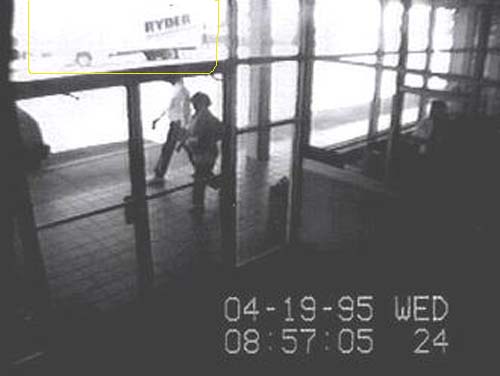
Sometimes as Americans we can be so stupid. It’s been fourteen twenty years since Timothy McVeigh left a Ryder van in front of the Alfred P. Murrah Federal Building building in Oklahoma City filled with two and a half tons of ammonium nitrate and fuel to blow a tragic hole into it, leaving 168 women, men and children dead. It’s been ten sixteen years since two White male teens decided to lock and load at their high school in Columbine, Colorado, leaving 12 students and a teacher dead, 25 others wounded, all before killing themselves in a blaze of White male angst glory. Yet we’re still up in arms over any significant legislation to keep assault guns out of the hands of folks who may do their neighbors harm, as if the Second Amendment doesn’t itself provide limitations on the use of firearms in our society.

Right now, without any abatement, some idiotic father or mother is so depressed about their financial situation and the future of their family that they’re willing to go into their garage, pull out the 9mm pistol or .45 caliber rifle and take out their children, their spouse and themselves in a public display of psychotic-ness. It’s happened in recent months in Chicago, in Maryland, in California, in Florida, and in so many other places that the public only barely pays attention to it anymore. Then there are the folks who are literally clinging to their guns — if not their religion — because the nuts on Fox News Channel and on the conservative talk radio shows have stirred them up about President Barack Obama. That the Obama Administration had any plans to take people’s guns away from them is about as ludicrous as blaming the grunge group Pearl Jam for the Columbine massacre in ’99.

Cover art of Pearl Jam's single "Jeremy" (1992), September 25, 2005. (Tempuser123456 via Wikipedia).

Cover art of Pearl Jam’s single “Jeremy” (1992), September 25, 2005. (Tempuser123456 via Wikipedia).

To think that it’s been more than a decade since Columbine and that we as a nation have learned next to nothing from it is just a sad commentary on how fearful we as a nation are. I remember as I packed my bags for my presentation at the Organization for American Historians conference in Toronto how the events of Columbine unfolded. One of the first things that came out of the media was that songs like Pearl Jam’s “Jeremy” was to blame for stirring the minds of Eric Harris and Dylan Klebold into killing and maiming their unaccepting, cliquish classmates. Except that “Jeremy” killed himself in front of his classmates. He imploded — he didn’t take his rage and angst out on the rest of the world.

Harris and Klebold’s disproportionate response had little to do with Pearl Jam or grunge, and more to do with our culture of fear, as explained by Michael Moore in Bowling for Columbine (2004) through Barry Glassner’s The Culture of Fear (1999). When combined with easy access to guns and other weapons, it’s no wonder why events like Columbine and Oklahoma City, Virginia Tech and more recent ones in Binghamton, New York, Tennessee, Alabama, Pittsburgh, Oakland, Newtown, Connecticut, Aurora, Colorado and so many other places across the country are happening regularly. Kind of like the bombings and shootouts that have taken many a life of American soldiers while keeping Iraq safe for democracy since ’03. In our case, all it took was a severe economic downturn and the election of President Obama to produce disproportionate fear and rage, implosion and explosion, family annihilators and gun-hoarding psychopaths.

I would’ve thought ten years ago that Columbine would take the Brady Bill passed by Clinton and Congress in ’94 a step further, but it didn’t. I would’ve thought that Americans might become more willing to be introspective in considering the reasons for all of our senseless democracy-based violence. But we haven’t been. We haven’t even conducted national townhalls on these issues. We’ve allowed the NRA, gun-makers and others who benefit from the proliferation of assault weapons to dictate how we exercise our Second Amendment rights.

Columbine High School, Littleton, Colorado, April 17, 2008. (Ed Andrieski/AP via http://nytimes.com).

Columbine High School, Littleton, Colorado, April 17, 2008. (Ed Andrieski/AP via http://nytimes.com).

There were the kinds of things I thought about during my five days in Toronto, which seemed as far away from the violence and fear of the US as Rome at the time. I also thought about my experiences in middle school and in high school. I wasn’t bullied, at least in not any physical way. But I felt ostracized at times, and I was certainly made fun of more times than I could count. I didn’t have access to guns, and it never would’ve occurred to me to shoot the folks who were clownin’ me. In later years, in seeing signs of the US melting down economically and culturally, it wouldn’t have been in my thought process to blow up a federal building, threaten the president or another public official, or otherwise arm myself for a coming race war or war against the federal government.

No, what I thought about while in Canada was how peaceful and settled it seemed compared to anywhere I’d been in the US. I didn’t feel my skin color or race the way I usually felt it as an American citizen in America. I loved the multicultural atmosphere and the fact that folks truly embraced it there, and not just by serving hummus and falafel at parties and by taking yoga classes. If I could, I’d move all of us up there to live a less fearful and more accepting lifestyle than the one that we can live here.

Ryder truck that Timothy McVeigh drove caught on camera minutes before explosion, Alfred Murrah Federal Building, Oklahoma City, April 19, 1995. (http://murderpedia.org/).

Ryder truck that Timothy McVeigh drove caught on camera minutes before explosion, Alfred Murrah Federal Building, Oklahoma City, April 19, 1995. (http://murderpedia.org/).

Somehow, some way, we as a country need to find ways to deal with our fear of each other, of failure, of the loss of power and dominance as a nation among nations, as Whites over everyone else. Confronting these fears as part of a public display of transparency and openness will allow for angst without implosion or explosion, and dissent without a turn to ridiculously senseless violence. This is the reason why we have so many dead and wounded every year from gun use (though not usually bombs), in everything from homegrown terrorism to everyday acts of community annihilation. If not, we will continue to serve as a model of first-world dreams and third-world chaos, offering the world not much more than our hypocrisy in the process.

On Public Enemy and Eclectic Music

31 Saturday Jan 2009

Posted by decollins1969 in 1, Boy @ The Window, culture, Eclectic, eclectic music, music, Politics, Pop Culture, race, Youth

≈ Leave a comment

Tags

Chuck D, Fear Of A Black Planet, Fight The Power, Flava Flav, Hip-Hop, PE, Pittsburgh, Public Enemy, Rap, Syria Mosque, University of Pittsburgh, Welcome To The Terrordome


PE, Fear Of A Black Planet (1990) Album Cover

Tomorrow’s an important milestone in my life. Nineteen years ago, I went to a Public Enemy concert with one of my Pitt friends. It was a Thursday evening engagement at the old Syria Mosque, a weird name for a place that was a entertainment hall, not a place of worship. I believe it was a Masonic temple, one located less than two blocks from Pitt’s Cathedral of Learning on Bigelow Blvd near or on Fifth Avenue. It wasn’t the beginning of my interest in hip-hop, my friendly date for that evening, or maintaining an eclectic sense of thought and style. But it confirmed in many ways how unbounded my mind was, regarding music and so much else.

I’m still amazed at times what I’ve come to like over the past three decades of almost continuous music consumption, as reflected when I allow my iPod to randomly select from some 1,300 songs. My home life at 616 wasn’t much of a guide. My mother liked Al Green, Gladys Knight and the Pips, The Temptations and The Four Tops. My idiot stepfather loved The Ohio Players and The Commodores. My alcoholic father was into anything that he could snap his fingers to off- rhythm, including Motown, and especially James Brown. I guess that makes sense, since Jimme and the Godfather of Soul spoke in the same incomprehensible cadence. For me, it all started with Earth, Wind & Fire’s “Fantasy.” I just happened to catch it on the radio one day, it must have been on WBLS 107.5 FM, sometime in second grade, ’76-’77 for me. I loved the song, I don’t know why, but it was literally the first time I consciously came into contact with music.

Two years later, I had a much easier way of gaining exposure to music without waiting for my mother or stepfather to turn on my mother’s beat-up stereo system from her days with my father. One of the first things Jimme bought me and my brother Darren after we started our occasional weekend times with him was a small transistor radio. It had both FM and AM, which in the days of the late ’70s was a relatively new technology. Both me and my older brother would play around with the radio, but I used it more often. I eventually settled on two stations — WABC 77 AM and WBLS.

Because I had no immediate guide as to what to listen for, my criteria for music was to like whatever sounded good as it bounced around my ears and brain. Frank Sinatra, Billy Joel, Donna Summer, E ,W & F, Christopher Cross, Michael Jackson (the Off the Wall album), Stephanie Mills, Teddy Pendergrass, Marvin Gaye, The Commodores (post-funk — my stepfather made me sick of “Brickhouse“) and so on. I loved how WBLS signed off at the end of the night, with “Moody’s Mood for Love,” a song from the mid-’50, with the “there I go, there I go, there I go” refrain at the beginning of the song. Call me weird, but this is where my eclecticness started.

The summer of ’80, just before my mother and stepfather separated for the first time, we went to a concert in the park, somewhere in the Bronx, most likely Van Cortlandt Park between 242nd and 262nd. It was a rap concert, my first one, and it featured Sugar Hill Gang among others. I kind of liked it, especially since I couldn’t believe how quickly the rappers put words together in combination and in rhythm. It was as silly as it was profound, at least for me at ten. I liked it, but it wasn’t exactly playing on every radio station in New York. Even WBLS almost completely ignored rap in those days. My stepfather bought their album soon after that concert.

For the next year, my musical tastes continued to take shape, including Pink Floyd, Queen, Luther Vandross, REO Speedwagon, Kenny Rogers, Kenny Loggins, Genesis and Phil Collins, along with what I already liked. Then my stepfather came back into our lives with his Hebrew-Israelite religion, disrupting the songs in my head for a few years. My saving grace, in the weirdest of ways, was being in Humanities, the gifted track program in which I was enrolled for six years.

I’ve counted off numerous negatives about this program in this blog over the past nineteen months. One positive, though, at least for me, was the rich mix of pop culture in the classroom. I could vicariously keep up with music through the singing of classmates, the music that some of them would play on their radios, boom boxes, and their first Walkmans. I learned to despise The Who, like The Police, tune out the heavy metal, continue to feel ambivalent about rap, and wish I didn’t have to wait for my classmates or for a trip to a grocery store to keep up with music’s constant evolution. Much of the rest around my explorations of pop music and rock, of silliness and search for spiritual meaning, I’ve described in my previous postings.

Like many folks in the late ’80s and early ’90s, I became caught up in this sense of affirming or reaffirming my sense of Blackness, of understanding my world through the lens of race, of attempting to make sense of Afrocentricity and how I fit or didn’t fit into it. One of my grad school friends tried to define this as a period of renewed Black pride, between roughly ’88 and ’92, with the rise of what he called “Afrocentric rap,” including Arrested Development, Digable Planets, Wu-Tang, and of course, PE. I think that’s a bit too cerebral, and that’s saying a lot. For me, it was a period of experimentation and discovery, between ’87 and ’95, when hip-hop evolved and devolved between socially-conscious messages, materialism, and socially-conscious messages through materialism. That’s what PE represented for me, even before I left for Pitt in ’87.

By the beginning of the new decade, the ’90s, I’d already been reconfiguring my inner and outer musical soundtrack for more than two years. I had already weeded out such wonderful artists and groups such as Thompson Twins, Starship, Glass Tiger (don’t ask), Whitney Houston (can’t listen to anything from her first two albums) and other things that one should only listen to while snorting coke. As soon as I found out that PE was coming to Pittsburgh to play songs from Fear of a Black Planet and from their other albums, I went over to Syria Mosque and snapped up two tickets, presuming I could get one of my friends to come with me to see them perform.

I knew who to ask and why. As much as any person over the years, this friend made me feel all right about my eclectic music tastes, partly because hers were almost as eclectic as my own. Other than my wife, who loves Roxy Music and Bryan Ferry along with Talib Kweli and Blind Willie Johnson (’20s era Blues), I can’t think of another person who’s influenced my musical likings more. I mean, how many Blacks did I know who both liked The Beatles and PE, unless they were artists like Doug E. Fresh or Grandmaster Flash?

It was a great concert, probably the best concert I’ve ever been to (not that I’ve been to all that many over the years). It made me realize that music was truly universal, that there was some merit to any music genre, no matter how silly, serious or scintillating. I felt connected again, in that music was about more than my enduring march of miracles and fantasies, of using it as an escape or as a way to motivate myself academically or otherwise. It was something to enjoy, to read into it as much or as little meaning as I wanted. It was a way to build connections to other people, to form friendships and relationships. And it was a way to map the events that unfolded in my life. That PE concert wasn’t the beginning of my modern eclecticism of music, and it was hardly the end. But it really did help.

Newer posts →

Boy @ The Window: A Memoir

Boy @ The Window: A Memoir

Places to Buy/Download Boy @ The Window

There's a few ways in which you can read excerpts of, borrow and/or purchase and download Boy @ The Window. There's the trade paperback edition of Boy @ The Window, available for purchase via Amazon.com at http://www.amazon.com/Boy-Window-Donald-Earl-Collins/dp/0989256138/

There's also a Kindle edition on Amazon.com. The enhanced edition can be read only with Kindle Fire, an iPad or a full-color tablet. The links to the enhanced edition through Apple's iBookstore and the Barnes & Noble NOOK edition are below. The link to the Amazon Kindle version is also immediately below:

scr2555-proj697-a-kindle-logo-rgb-lg

Boy @ The Window on Amazon.com: http://www.amazon.com/Boy-The-Window-Memoir-ebook/dp/B00CD95FBU/

iBookstore-logo-300x100

Boy @ The Window on Apple's iBookstore: https://itunes.apple.com/us/book/boy-the-window/id643768275?ls=1

Barnes & Noble (bn.com) logo, June 26, 2013. (http://www.logotypes101.com).

Boy @ The Window on Barnes & Noble: http://www.barnesandnoble.com/w/boy-the-window-donald-earl-collins/1115182183?ean=2940016741567

You can also add, read and review Boy @ The Window on Goodreads.com. Just click on the button below:

Boy @ The Window

Twitter Updates

Tweets by decollins1969
  • RSS - Posts
  • RSS - Comments

Archives

  • June 2025
  • April 2023
  • September 2022
  • August 2022
  • July 2022
  • June 2022
  • May 2022
  • April 2022
  • March 2022
  • January 2022
  • December 2021
  • November 2021
  • October 2021
  • September 2021
  • August 2021
  • July 2021
  • June 2021
  • April 2021
  • March 2021
  • February 2021
  • January 2021
  • December 2020
  • November 2020
  • October 2020
  • September 2020
  • August 2020
  • July 2020
  • May 2020
  • April 2020
  • March 2020
  • January 2020
  • December 2019
  • November 2019
  • August 2019
  • July 2019
  • June 2019
  • May 2019
  • April 2019
  • March 2019
  • February 2019
  • January 2019
  • December 2018
  • November 2018
  • October 2018
  • September 2018
  • August 2018
  • July 2018
  • June 2018
  • May 2018
  • March 2018
  • February 2018
  • January 2018
  • December 2017
  • November 2017
  • October 2017
  • September 2017
  • August 2017
  • July 2017
  • June 2017
  • May 2017
  • April 2017
  • March 2017
  • February 2017
  • January 2017
  • December 2016
  • November 2016
  • October 2016
  • September 2016
  • August 2016
  • July 2016
  • June 2016
  • May 2016
  • April 2016
  • March 2016
  • February 2016
  • January 2016
  • December 2015
  • November 2015
  • October 2015
  • September 2015
  • August 2015
  • July 2015
  • June 2015
  • May 2015
  • April 2015
  • March 2015
  • February 2015
  • January 2015
  • December 2014
  • November 2014
  • October 2014
  • September 2014
  • August 2014
  • July 2014
  • June 2014
  • May 2014
  • April 2014
  • March 2014
  • February 2014
  • January 2014
  • December 2013
  • November 2013
  • October 2013
  • September 2013
  • August 2013
  • July 2013
  • June 2013
  • May 2013
  • April 2013
  • March 2013
  • February 2013
  • January 2013
  • December 2012
  • November 2012
  • October 2012
  • September 2012
  • August 2012
  • July 2012
  • June 2012
  • May 2012
  • April 2012
  • March 2012
  • February 2012
  • January 2012
  • December 2011
  • November 2011
  • October 2011
  • September 2011
  • August 2011
  • July 2011
  • June 2011
  • May 2011
  • April 2011
  • March 2011
  • February 2011
  • January 2011
  • December 2010
  • November 2010
  • October 2010
  • September 2010
  • August 2010
  • July 2010
  • June 2010
  • May 2010
  • April 2010
  • March 2010
  • February 2010
  • January 2010
  • December 2009
  • November 2009
  • October 2009
  • September 2009
  • August 2009
  • July 2009
  • June 2009
  • May 2009
  • April 2009
  • March 2009
  • February 2009
  • January 2009
  • December 2008
  • November 2008
  • October 2008
  • September 2008
  • August 2008
  • July 2008
  • June 2008
  • May 2008
  • April 2008
  • March 2008
  • February 2008
  • January 2008
  • December 2007
  • November 2007
  • October 2007
  • September 2007
  • August 2007
  • July 2007
  • June 2007

Recent Comments

MaryPena's avatarMaryPena on My Day of Atonement/Bitter Hat…
decollins1969's avatardecollins1969 on No Good Teaching Deed Goes…
Mary Rose O’Connell's avatarMary Rose O’Connell on No Good Teaching Deed Goes…

NetworkedBlogs on Facebook

NetworkedBlogs
Blog:
Notes From a Boy @ The Window
Topics:
My Life, Culture & Education, Politics & Goofyness
 
Follow my blog

616 616 East Lincoln Avenue A.B. Davis Middle School Abuse Academia Academy for Educational Development AED Afrocentricity American Narcissism Authenticity Bigotry Blackness Boy @ The Window Carnegie Mellon University Child Abuse Class of 1987 CMU Coping Strategies Crush #1 Crush #2 Death Disillusionment Diversity Domestic Violence Economic Inequality Education Family Friendship Friendships Graduate School Hebrew-Israelites High-Stakes Testing Higher Education History Homelessness Humanities Humanities Program Hypocrisy Internalized Racism Jealousy Joe Trotter Joe William Trotter Jr. K-12 Education Love Manhood Maurice Eugene Washington Maurice Washington Misogyny Mother-Son Relationship Mount Vernon High School Mount Vernon New York Mount Vernon public schools Multiculturalism MVHS Narcissism NFL Pitt Pittsburgh Politics of Education Poverty President Barack Obama Race Racial Stereotypes Racism Relationships Self-Awareness Self-Discovery Self-Reflection Sexism Social Justice Teaching and Learning University of Pittsburgh Violence Whiteness Writing

Top Rated

Blog at WordPress.com.

  • Subscribe Subscribed
    • Notes from a Boy @ The Window
    • Join 103 other subscribers
    • Already have a WordPress.com account? Log in now.
    • Notes from a Boy @ The Window
    • Subscribe Subscribed
    • Sign up
    • Log in
    • Report this content
    • View site in Reader
    • Manage subscriptions
    • Collapse this bar
 

Loading Comments...