• Spinning Sage’s Gold: Allegories on the Western-Dominated Present and a Possible Post-Western Future (2025)
  • About Me
  • Other Writings
  • Interview Clips
  • Video Clips
  • Boy @ The Window Pictures
  • Boy @ The Window Theme Music

Notes from a Boy @ The Window

~

Notes from a Boy @ The Window

Category Archives: culture

My Mom, Birthday 63

27 Wednesday Oct 2010

Posted by decollins1969 in 1, Academia, Boy @ The Window, Christianity, culture, Eclectic, Marriage, New York City, Religion, Youth

≈ Leave a comment

Tags

Bradley Arkansas, Death, Finding Peace, Funeral Arrangements, Happy Birthday, Mother-Son Relationship, Mount Vernon New York, New York City, Regrets


My Mother, Thanksgiving Day 2006. Donald Earl Collins

This has been a rough year for my family. But even with my financial difficulties and writing struggles, teaching, looking for additional work, my wife in grad school and Noah turning seven, nothing compares to what my mother’s gone through in the past few months. In July, my only sister Sarai passed away at twenty-seven after a lifelong struggle with sickle-cell anemia. Earlier this month, my grandmother — my mother’s mother — died after a battle with cancer and dementia at the age of eighty-three.


That’s difficult enough, to lose your only daughter and your mother three months apart. It became a hardship almost immediately. Neither my sister nor my mother made any preparations for Sarai’s death, funeral or burial. “It cost too much,” my mother said after I asked about next steps the morning Sarai passed. It took three days’ worth of work to get Sarai’s afterlife arrangements done. In the case of my mother’s-side grandmother, they were never close. My mother had been back to Bradley, Arkansas to visit her father and mother only two times since she left for the Bronx and Mount Vernon in ’66. Once in the summer of ’69, when she was pregnant with me. The other was in ’04.

Because my mother married and remarried at an early age, I’ve had a front-row seat for watching her in her twenties, thirties, forties and fifties. My mother has always avoided looking back in her life, reflecting on her mistakes or triumphs, or talking about anything that matters other than God. But one thing that was obvious to me when I went home to 616 and Mount Vernon to help with my late sister’s funeral and cremation arrangements was the sense of regret that I could feel coming out of her body. It wasn’t just grief, mourning, the rage that I’ve seen and felt when others dear to me have died. No, there was a sense of deep, repressed regret, about all the things that could’ve and should’ve happened, but never did.

I heard that same sense of missed opportunity in my mother’s voice a few weeks ago, after my mother called to let me know that my grandmother had passed. I’d only met my grandmother once, when I made arrangements during what I called “my Southern poverty tour” as part of my social justice fellowship job to visit Shreveport, Louisiana and Bradley, Arkansas. So while I didn’t feel much for the woman, I did feel for my mother.

I felt for her because unlike my mother, I’ve said everything that I could’ve left unsaid to her years ago. The family intervention (see “The Intervention,” January 21, 2008) I orchestrated nearly nine years ago. All of the arguments we had when I was growing up. My PhD graduation ceremony at Carnegie Mellon in ’97. My I love you’s to her now.

I may regret that our relationship isn’t closer, but at least I know why. I certainly regret how I’ve said some of the things I’ve said to my mother over the years, but not the meaning of my words. The only serious regret I have now is not being in a financial position to do more for my mother than I have over the past quarter-century, to make some aspects of her life easier. Still, all I can wish for her is a Happy Birthday, or at least, a day in which she can find peace. Hopefully, one birthday, she’ll have both.


The Land of Second Chances – For Who?

21 Thursday Oct 2010

Posted by decollins1969 in 1, Boy @ The Window, culture, Eclectic, Politics, Pop Culture, race, Sports

≈ Leave a comment

Tags

America the Beautiful, Born in the USA, Bruce Springsteen, Chris Rock, Eliot Spitzer, John Mellencamp, Level Playing Field, Life Chances, Michael Vick, Mike Barnicle, Pink Houses, Ray Rice, Second Chances, Struggling Middle Class, Tony Kornheiser, Working Poor


Purple Mountain Majesty, October 21, 2010. Source: http://bojack.org

I’m so tired of hearing commentators talk about how this is a country that gives people second chances. “What? Really? Are you insane?,” I think when I hear such drivel from people like Tony Kornheiser and Joe Scarborough. Do these talking heads even think about who they’re talking about or what they mean when they say the words “second chances?”

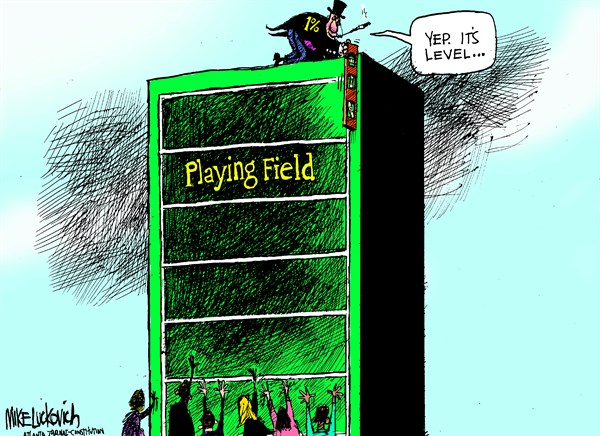
Seriously, true second chances in this country are reserved for folks who are among the elite — rich, famous, public officials, entertainers, athletes (sometimes), usually (but not always) White, almost always male and heterosexual. For these folk, America is a land of second chances. For most of us, this isn’t even a land of first chances, much less second ones. As Bruce Springsteen would say, “born down in a dead man’s town, the first kick I took was when I hit the ground” is an apt description for a majority of Americans.

The working-poor and living-from-paycheck-to-paycheck sub-middle class, while doing all they can to improve the life chances of their kids, ultimately are dependent on breaks provided within our society for their kids to have a chance. It comes down to a decent, if not happy family life, with no major financial or job disruptions. And living in a decent neighborhood, along with being able to attend an above-average public school or having parents willing to scrape together the money for private or parochial school. Not to mention finding opportunities for outside opportunities for their kids to explore themselves, like through art classes, soccer teams, travel, and so many other things that make growing up more than just a biological process that occurs in chaos.

Little Pink Houses, Carole Spandau, Uploaded October 21, 2010. Source: http://fineartamerica.com

Little Pink Houses, Carole Spandau, Uploaded October 21, 2010. Source: http://fineartamerica.com

If anything goes wrong, if a kid makes even a relatively minor mistake, that first chance will go away. Homelessness, bankruptcy, poor grades, even minor criminal activity or rebellion against authority figures will short-circuit chance number one. For kids of color, especially males, a robbery, playing around with marijuana, a fight at school or repeating a grade puts them in jeopardy long before they may realize that life doesn’t grant them a whole lot of first chances to begin with.

If these kids are lucky or disciplined enough to make it to adulthood with a high-school education, that may open a door, but it still won’t grant even the first chance. As comedian Chris Rock would say, many of these kids have to “make miracles happen” — force open doors — for that first real chance for their lives.

Not so for the likes of Eliot Spitzer, Ben Roethlisberger, even (to a lesser extent) Michael Vick. These folks aren’t struggling to find themselves while living in obscurity, and have more opportunities to work with in any given day than the average American person will likely have in their lifetime. But for White males with money and/or the public spotlight, second chances are almost automatic. Spitzer has his own show on CNN. Roethlisberger would’ve only lost his job if he’d been convicted of rape. Former Boston Globe columnist Mike Barnicle is still a respected journalist in many circles, even though he’s a proven a plagiarist and fiction writer. Vick, meanwhile, only got a second chance after he served two years hard time for dogfighting.

Even for the famous and financially fortunate — yet of color — the second chance remains elusive. Tiger Woods didn’t break any laws, didn’t commit a crime, but has spent the past year as a pariah (no need to go into the psychosis that comes with race and males of color, Black ones in particular). Jayson Blair will probably never have another shot at hardcore journalism. Maybe Blair shouldn’t have a second chance, but then, neither should Barnicle.

1%'s Playing Field cartoon (applicable to who gets second chances, too), December 28, 2013. (Mike Luckovich, Atlanta Journal-Constitution).

1%’s Playing Field cartoon (applicable to who gets second chances, too), December 28, 2013. (Mike Luckovich, Atlanta Journal-Constitution).

To be sure, John Edwards, Larry Craig and Jim McGreevey won’t be running for office again. But they are exceptions to the rule. Edwards could’ve jeopardized the Democratic Party’s ’08 election with his scandal, while Craig and McGreevey were outed as closeted gays involved in down-low activities. We don’t give politicians like these second chances.

So, we are a land of second chances. At least for those with the keys to the kingdom of the public arena. You just have to be straight, White, male, affluent, committed a crime before the age of twenty-one — and one that didn’t involve murder or Black-on-White crime — to have them.

As for Ray Rice, because many assume that his one act of domestic violence toward his now wife Janay Palmer Rice is the only one he’s committed, and because of all his charitable contributions, the NFL will grant him a second chance. The question isn’t whether Rice deserves a second chance. The question is why Janay Palmer Rice never had a first chance at a violence-free relationship. The answer is patriarchy, misogyny, racial animus, and increasing class inequality. What second chances, and for whom indeed!

The Testing Season

12 Tuesday Oct 2010

Posted by decollins1969 in 1, Academia, Boy @ The Window, culture, Eclectic, Politics, race

≈ Leave a comment

Tags

Academic Achievement, ACT, Anthony Carnevale, AP, Colleges & Universities, Educational Testing Service, ETS, GMAT, GRE, High-Stakes Testing, LSAT, MCAT, SAT, Standardized Testing, Strivers Research


Mock SAT Answer Sheet, October 12, 2010. Source: http://kellgradcoach.blogspot.com

This really is the testing season, isn’t it? In many more ways than one. For voters, the underemployed and the unemployed, the welfare poor, for undocumented workers, for the Obama Administration, for so many others. But the testing season I’m talking about is standardized testing. Between the SAT, GRE, LSAT, MCAT, GMAT, and ACT, high school students and college undergrads face incredible amounts of stress over a five-decade-long practice that, in the end, reveals more about the system of competition that technocratic university administrators and eugenics-type scientists have created than it actually does

ETS Logo, from http://www.ETS.org, October 12, 2010

about our own abilities.


My own standardized testing history includes the following (not counting the AP or New York State Regents exams, which occur in May and June, another testing season), starting with elementary school:

1. SRAs (1st through 6th grade – ironically, started by Lyle Spencer, who also founded the Spencer Foundation, which sponsored my doctoral dissertation research in 1995-96)

2. PSATs (10th grade)

3. SATs (11th and 12th grade)

4. GREs (junior and senior years, Pitt)

5. LSATs (senior year, Pitt)

My highest score on the SAT — 1120 (540 Verbal, 580 Math). My highest score on the GRE — 1730 (530 Verbal, 580 Math, 620 Analytical). On the LSAT, I scored in the 50th percentile, not bad for someone who studied for it for only two weeks. What does any of this prove in the whole scheme of things? Nothing, really. If these scores were truly great predictors of future academic performance, then Harvard, Yale, Princeton and Carnegie Mellon should have graduation rates approaching 100 percent. Which would explain why many elite institutions have either downgraded their use of these tests in their admissions formulas, or in the case of the big three and UC-Berkeley regarding the SAT, are barely using them at all.


My GRE Score, October 1990.

But for most colleges and universities, these tests are a critical factor in a student’s acceptance and enrollment. They are a necessary evil for figuring out who has academic potential and who doesn’t, at least according to ETS and admissions directors. Which is why I still don’t understand why educators and other folks haven’t taken former ETS vice-president Anthony Carnevale’s work around “strivers” seriously. Or, rather, I do understand. Why give someone like me a leg up because my SAT score was an 1120 — giving my score more weight than a 1280 score for a White kid from a middle class background? All scores are equal. That’s why we call them standardized tests, a standard that doesn’t measure up to the realities of earning a degree.


I guess for those I know who are rolling into these exams this fall (and in some cases, before March or April), the best advice I can give is to get the best score you can. But don’t despair if your scores are only in the 51th, 64th, or 74th percentile, like mine were on the different sections of the GRE. What will ultimately matter is how you perform after you’ve been accepted by and enrolled in that institution.

I’ve given some thought to going back to school in the next couple of years, possibly even law school. Not to become a lawyer, but to make myself more marketable outside of academia and within the philanthropic world. For some odd reason, there are lots of people with law degrees who are working in education reform, international development, and social justice. Go figure.

But even this professor will likely have to take the LSATs again in order to apply to a law program at Georgetown, UPenn or some other school. And that will mean trying to figure out why A and B won’t sit together at the same conference table, but B can sit next to E, except when meetings are held on Tuesdays.

Half-Baked Z and Christian Zeal

27 Monday Sep 2010

Posted by decollins1969 in 1, Boy @ The Window, Christianity, culture, Eclectic, Jimme, Mount Vernon High School, New York City, Religion, Youth

≈ Leave a comment

Tags

Arrogance, Baked Ziti, Christian Zeal, Kufi, Religion, Religious Zeal, Teaching and Learning, Wisdom


Baked Ziti. Source: http://culinariaitalia.files.wordpress.com/

Sometimes I’ve let my enthusiasm for good things in my life get the better of me. Perhaps that’s because there have been few periods in my life where nearly everything has gone the way I’d expect, especially in my Humanities years. One of those times had been in the months before, during and after my conversion to Christianity in ’84. After I outed myself at the beginning of tenth grade as a Christian and stood up (for once) to my idiot stepfather by refusing to wear my kufi ever again, things in my mind had improved. So much so that I was ready for my life to change, as if my conversion were a magic wand and I was Cinderella.

My conversion became a badge of honor, my Bible my new crutch in the first few months after becoming a Christian and the beginning of tenth grade. I read it every chance I had. At lunch, in my trips into New York with my father Jimme and my brother Darren, before I went to bed at night. Like a nine-year-old, I so wanted my life to change that I forgot that I still had work to do in order to change it. Prayer and fasting (deliberate, of course, and not the empty refrigerator kind) wouldn’t be enough. But I acted like it was.

Torture & the Spanish Inquisition (the direction of unchecked zeal).

It didn’t help that I had Z as a history teacher, one who almost automatically rubbed me the wrong way. She assumed that she was right about everything and looked like an older, worn-out, schoolmarmish version of Madonna to me, a woman whose best days were long past. She was about average height with blonde-gray hair, which looked like it had been freeze-dried. She dressed like a woman who didn’t realize we were in a public school and who didn’t see herself as a real person. Her voice was a slow-whine Brooklyn-accented version of Cyndi Lauper’s, the kind that made me think that she was talking down to us. It irritated the heck out of me when she’d call one of us “Peaches” or when she’d say, “When they’re slow they’re slow,” a reference to how long it would take us to answer one of her idiotic, non-history history questions. A personable person with emotions and empathy, the kind of person equipped to teach a diverse student body, Z was not.

After finishing one of Z’s bubble tests early, fifteen minutes early, as a matter of fact, I handed it in and pulled out my Bible. When she noticed what I was reading, she panicked. “Put that away! Put that away now!,” she yelled from her gray steel desk, exasperated. The exchange we had occurred while other classmates were finishing their exams.

“I’m just reading my Bible.”

“You can’t read that in school!”

“I know my rights! I have a First Amendment right to read the Bible in school, and you’re not teaching right now anyway!”

She threatened to send me to the principal’s office. I called her an “atheist” and put my Bible away. It was the start of a confrontational relationship between me and her.

We got into it quite a few times. One time was over what she was teaching in class, what exactly I don’t remember. What I did in response to it was to blurt out “Is this what you call history? All you talk about is art and music!” She banished me to the hallway outside of class for that one. I called her a “stupid atheist” on my way out.

We were both right and both wrong, both arrogant in our own way. Z was a teacher without an appreciation for student development and socialization. I was a new Christian on a high, believing that my spiritual status would by itself put me in right standing whatever I did. In the end, Z should’ve allow me to read my Bible, and I shouldn’t have confronted her based on her religious or non-religious beliefs. Our perspectives were half-baked, our stances too inflexible. I’m just glad that I’ve become a better person and Christian since those first days.

Class Silence

20 Monday Sep 2010

Posted by decollins1969 in 1, culture, Eclectic, Politics, race

≈ Leave a comment

Tags

"Silence Must Be Heard", Affluence, Bill Cosby, Bill Gates, Bill O"Reilly, Class, Enigma, Hard Work, Middle Class, Poverty, Race, Rush Limbaugh, Social Class, Working Class, Working Poor


Mum's the word on class.

One of the things that has driven me nuts over the past three decades is how we in this country walk in silence around issues of wealth and social class. We must never speak of our wealth, or poverty, lest we risk embarrassing ourselves or appearing arrogant. All Americans with an income between $20,000 and $20 million a year are middle class, not upper middle class, not affluent, not rich, just middle class.

Any mention of the top three percent in income (people whose income is more than $250,000 a year) amounts to class warfare, even though they control some 35-40 percent of the nation’s $57 trillion in wealth. No, poverty and affluence are relative, not absolute, and can only be measured subjectively,

Atacama Desert in Chile. Driest desert on Earth and place to stick our heads. (Public Domain)

through one’s own experience. Which is why any mention of our troubles is closer to sacrilege than declaring that there isn’t a God, especially in a nation that prints “In God We Trust” on its money.

There are ways to measure affluence and poverty regardless of cost of living and inflation. And please spare me the comparisons between the poor in the US and the poor in the Global South (Third World to those of you who like making other distinctions between fellow humans that actually dehumanize). I’ve seen too many corrugated roofs in Arkansas and Louisiana (all before Katrina), too many outhouses in rural Arkansas and Mississippi, too many families sleeping in the streets in San Francisco and New York, too many malnourished kids in Oklahoma and in DC to hear that “our poor are the richest poor people in the world” song-and-dance.

It’s simple really. Truly middle class people own a car and a home, or at least, have the option of doing both, with a steady income from a permanent job or from an established niche for work. If folks have one and rent an apartment or home, and aren’t really in a position to buy, they’re right on the borderline of the American middle class, but not quite there.

Of course, this definition does not mean that everything’s all right. Tens of millions of Americans, including yours truly, are struggling to pay car notes, student loans, mortgages and rent — not to mention credit card and other debt — and maintain a middle class or lower middle class lifestyle. Unfortunately, there are millions more who are working toward middle class, but aren’t quite there. They may say they’re middle class, but they’re really working-class or working poor.

Upper middle class or affluent Americans do more than own a house or a car. They own quality homes and quality cars, a Volvo or an Acura, maybe even a Lexus. They take at least one vacation a year with their families or friends, to other parts of the US, and on occasion, international trips. They eat at restaurants with their families at least as often as they eat a home-cooked meal. When shopping for groceries, sales are fine, as long as the sales aren’t on off-brand products like Faygo or Giant, Safeway or Krasdale. They have life insurance on every family member, 529 plans for their kids and contribute at least half as much to their 401K as their employer does in any given year (more than that if self-employed).

I’m certainly not arguing that the lives of the upper middle class or affluent or sub-rich are like being on Real Housewives or Keeping Up With the Kardashians. Yet so many in our public discourse make their lives now and times growing up sound humble, as if they grew up like me or others I’ve known over the past thirty years. People like Bill Cosby, Bill Gates or Bill O’Reilly, Dinesh D’Souza or Rush Limbaugh. It’s well beyond dishonest. It’s disgusting, and it helps to perpetuate the myth that the only reason all of us aren’t affluent is due only to our lack of hard work.

As the richest country on Earth — for the time being, at least — we’ve never reconciled our democratic ideals with our capitalistic obsessions. What helps maintain some sense of order, though, is our silence and quiet, desperate acquiescence to ever-increasing economic divisions in a country full of allegedly middle class people. As a song from Enigma goes, however, we should “question the absurd” here, as “silence must be heard.”

Hard Work and the Human Race

17 Friday Sep 2010

Posted by decollins1969 in 1, Boy @ The Window, culture, Eclectic, New York City, Politics, race, Work, Youth

≈ Leave a comment

Tags

Advantage, Boy @ The Window, Daydreams, Hard Work, Holmes Elementary School, Human Race, Individualism, Mount Vernon New York, New York City Marathon, Race, Social Class


Race card cartoon, no date, August 5, 2015. (Emanu!, http://pinterest.com).

Race card cartoon, no date, August 5, 2015. (Emanu!, http://pinterest.com).

When I was nine years old, my fourth grade teacher at Holmes, Mrs. Pierce — a grouch of an older White woman, really — talked about the human race and attempted to describe our species’ variations. She tried to do what we’d call a discussion of diversity now. It went over our heads, no doubt because she didn’t quite get the concept of diversity herself.

Holmes Elementary. Top left corner was Mrs. Pierce's classroom in 1978-79 year.

Holmes Elementary. Top left corner was Mrs. Pierce’s classroom in 1978-79 year.

Like the fourth-grader I was, I daydreamed about the term, human race. I thought of Whites, Blacks, Asians, Hispanics, young and old, male and female, from all over the world, all on a starting line. It was as if four billion people — that was the world population in ’79 — were lined up to run a race to the top of the world. In my daydream, some were faster than others, or at least appeared to be, while others hobbled along on crutches and in wheelchairs. Still others crawled along, falling farther and farther behind those who were in the lead, the ones that looked like runners in the New York City marathon. Before I could ponder the daydream further, Mrs. Pierce yelled, “Wake up, Donald!.” as if I’d really been asleep.

A high school friend recently gave me some much-needed feedback on my manuscript. Her feedback was helpful and insightful, and very much appreciated. But some of it reminded me of the realities of having someone who’s a character in a story actually read that story. Their perceptions will never fully match up with those of the writer, which is what is so groovy and fascinating about writing in the first place.

One of the things that struck me as a thread in her comments — not to mention in so many conversations I’ve had with my students about race and socioeconomics — was the theme of individual hard work trumping all obstacles and circumstances. As if words, slights, and mindsets in the world around us don’t matter. As if poverty is merely a mirage, and bigotry, race and racism merely words on a page. Sure, a story such as the one I have told in this blog for the past three years is about overcoming roadblocks, especially the ones that we set ourselves up for in life, forget about the ones external to our own fears and doubts.

2009 London Marathon. Source: http://www.newsoftheworld.co.uk/

2009 London Marathon. Source: http://www.newsoftheworld.co.uk/

At the same time, I realized what my weird daydream from thirty-one years ago meant. Some people get a head start — or, in NASCAR terms, the pole — before the race even starts. That certainly doesn’t make what that individual accomplishes in life any less meaningful, but knowing that the person had an advantage that most others didn’t possess does provide perspective and illuminates how much distance the disadvantaged need to cover to make up ground. Those who limp and crawl and somehow are able to compete in this human race have also worked hard, likely at least as hard as those with a head start, and more than likely, harder than most human beings should ever have to work.

Plus, there are intangibles that go with race, class and other variables that determines how the human race unfolds. “Good luck is where hard work meets opportunity,” at least according to former Pittsburgh Penguins goaltender Tom Barrasso. Most human beings work hard, but all need opportunities that may provide a real sprint to catch up or take a lead in the human race. Family status, political influence, social and community networks, religious memberships, being in the right place at the right time, all matter and are connected to race and class, at least in the US.

The moral of this story is, hard work matters, individual accomplishment matters. Yet a panoramic view of the race in which humans are engaged matters more in putting our individual successes and the distance that remains in some reasonable perspective. Without that, we’re all just pretending that individual hard work is the only thing that matters, when that’s only half the battle, or half of half the battle.

Where the Past Meets the Future

15 Wednesday Sep 2010

Posted by decollins1969 in 1, culture, Eclectic, Movies, Politics, race, Religion

≈ 2 Comments

Tags

"Past Tense Part 1", Adrian Fenty, Alexander Siddiq, Avery Brooks, Benjamin Sisko, Bigotry, Carl Paladino, Charles Rangel, Christine O'Donnell, Economic Woes, Election Primary 2010, Julian Bashir, Kevin Powell, Star Trek: Deep Space Nine, Star Trek: DS9, Tea Baggers, Tea Party, Vincent Gray


Star Trek DS9 - Past Tense Pt. 1, Screen Shot

Last night, I was reminded of the power of entertainment, Netflix and how art and life converge. I was watching episodes of Star Trek: Deep Space Nine when a familiar two-part episode, “Past Tense,” began. I had planned to skip it, but once I remembered the story line, I watched it again, for the first time in at least thirteen years.

The crew of the Defiant, in attempting to beam down to 24th-century San Francisco, find themselves in the year 2024, in a San Francisco and an America turned upside down by bad economic times. Two members of the crew, played by Avery Brooks (Cmdr. Benjamin Sisko, or “Hawk” for those of you who remember Spencer For Hire on ABC from the ’80s) and Alexander Siddiq (Dr. Julian Bashir, or more recently, on 24 and in the movie Kingdom of Heaven) find themselves in one of many government-run concentration camps for the homeless and unemployed. This just days before an uprising that exposes the truth of an unjust system of economic neglect and government cover-up to the nation and world.

It’s not that Americans don’t care, according to Brooks’ Sisko and Siddiq’s Bashir, it’s that “they’ve given up,” they’ve “forgotten how to care.” I paused the DVD and thought about that statement as I watched Tea Baggers’ Christine O’Donnell and Carl P. Paladino win in Delaware and New York, Kevin Powell get slaughtered by Ed Towns in Brooklyn, and Charles Rangel paste five other opponents in Harlem. Not to mention young Turk Adrian Fenty losing to the ol’ Blacks network and Vincent Gray in DC.

Last night proved to me that most Americans simply don’t know how to care about anything except for someone who looks and sounds like them, whether that politician represents their interests or not. Some may care, some may not, some may even have forgotten how to care. But way, way too many of us get caught up in style over substance, in grandiose grandstanding over a sensible platform, over a good handshake rather than someone giving us a real hand in our lives.

We are as shortsighted as a roach, running just hard enough to not get stomped on, but not seeing that the person with the size 14-4Es has two feet, not one. As Polyanna-ish as Star Trek is, that two-part episode from season three of Deep Space Nine presents a stark and nasty future that is already beginning to manifest itself right now. All because we’ve allowed our bigotry and fear to lead us in the direction of creating a self-fulfilling prophecy.

← Older posts
Newer posts →

Boy @ The Window: A Memoir

Boy @ The Window: A Memoir

Places to Buy/Download Boy @ The Window

There's a few ways in which you can read excerpts of, borrow and/or purchase and download Boy @ The Window. There's the trade paperback edition of Boy @ The Window, available for purchase via Amazon.com at http://www.amazon.com/Boy-Window-Donald-Earl-Collins/dp/0989256138/

There's also a Kindle edition on Amazon.com. The enhanced edition can be read only with Kindle Fire, an iPad or a full-color tablet. The links to the enhanced edition through Apple's iBookstore and the Barnes & Noble NOOK edition are below. The link to the Amazon Kindle version is also immediately below:

scr2555-proj697-a-kindle-logo-rgb-lg

Boy @ The Window on Amazon.com: http://www.amazon.com/Boy-The-Window-Memoir-ebook/dp/B00CD95FBU/

iBookstore-logo-300x100

Boy @ The Window on Apple's iBookstore: https://itunes.apple.com/us/book/boy-the-window/id643768275?ls=1

Barnes & Noble (bn.com) logo, June 26, 2013. (http://www.logotypes101.com).

Boy @ The Window on Barnes & Noble: http://www.barnesandnoble.com/w/boy-the-window-donald-earl-collins/1115182183?ean=2940016741567

You can also add, read and review Boy @ The Window on Goodreads.com. Just click on the button below:

Boy @ The Window

Twitter Updates

Tweets by decollins1969
  • RSS - Posts
  • RSS - Comments

Archives

  • June 2025
  • April 2023
  • September 2022
  • August 2022
  • July 2022
  • June 2022
  • May 2022
  • April 2022
  • March 2022
  • January 2022
  • December 2021
  • November 2021
  • October 2021
  • September 2021
  • August 2021
  • July 2021
  • June 2021
  • April 2021
  • March 2021
  • February 2021
  • January 2021
  • December 2020
  • November 2020
  • October 2020
  • September 2020
  • August 2020
  • July 2020
  • May 2020
  • April 2020
  • March 2020
  • January 2020
  • December 2019
  • November 2019
  • August 2019
  • July 2019
  • June 2019
  • May 2019
  • April 2019
  • March 2019
  • February 2019
  • January 2019
  • December 2018
  • November 2018
  • October 2018
  • September 2018
  • August 2018
  • July 2018
  • June 2018
  • May 2018
  • March 2018
  • February 2018
  • January 2018
  • December 2017
  • November 2017
  • October 2017
  • September 2017
  • August 2017
  • July 2017
  • June 2017
  • May 2017
  • April 2017
  • March 2017
  • February 2017
  • January 2017
  • December 2016
  • November 2016
  • October 2016
  • September 2016
  • August 2016
  • July 2016
  • June 2016
  • May 2016
  • April 2016
  • March 2016
  • February 2016
  • January 2016
  • December 2015
  • November 2015
  • October 2015
  • September 2015
  • August 2015
  • July 2015
  • June 2015
  • May 2015
  • April 2015
  • March 2015
  • February 2015
  • January 2015
  • December 2014
  • November 2014
  • October 2014
  • September 2014
  • August 2014
  • July 2014
  • June 2014
  • May 2014
  • April 2014
  • March 2014
  • February 2014
  • January 2014
  • December 2013
  • November 2013
  • October 2013
  • September 2013
  • August 2013
  • July 2013
  • June 2013
  • May 2013
  • April 2013
  • March 2013
  • February 2013
  • January 2013
  • December 2012
  • November 2012
  • October 2012
  • September 2012
  • August 2012
  • July 2012
  • June 2012
  • May 2012
  • April 2012
  • March 2012
  • February 2012
  • January 2012
  • December 2011
  • November 2011
  • October 2011
  • September 2011
  • August 2011
  • July 2011
  • June 2011
  • May 2011
  • April 2011
  • March 2011
  • February 2011
  • January 2011
  • December 2010
  • November 2010
  • October 2010
  • September 2010
  • August 2010
  • July 2010
  • June 2010
  • May 2010
  • April 2010
  • March 2010
  • February 2010
  • January 2010
  • December 2009
  • November 2009
  • October 2009
  • September 2009
  • August 2009
  • July 2009
  • June 2009
  • May 2009
  • April 2009
  • March 2009
  • February 2009
  • January 2009
  • December 2008
  • November 2008
  • October 2008
  • September 2008
  • August 2008
  • July 2008
  • June 2008
  • May 2008
  • April 2008
  • March 2008
  • February 2008
  • January 2008
  • December 2007
  • November 2007
  • October 2007
  • September 2007
  • August 2007
  • July 2007
  • June 2007

Recent Comments

MaryPena's avatarMaryPena on My Day of Atonement/Bitter Hat…
decollins1969's avatardecollins1969 on No Good Teaching Deed Goes…
Mary Rose O’Connell's avatarMary Rose O’Connell on No Good Teaching Deed Goes…

NetworkedBlogs on Facebook

NetworkedBlogs
Blog:
Notes From a Boy @ The Window
Topics:
My Life, Culture & Education, Politics & Goofyness
 
Follow my blog

616 616 East Lincoln Avenue A.B. Davis Middle School Abuse Academia Academy for Educational Development AED Afrocentricity American Narcissism Authenticity Bigotry Blackness Boy @ The Window Carnegie Mellon University Child Abuse Class of 1987 CMU Coping Strategies Crush #1 Crush #2 Death Disillusionment Diversity Domestic Violence Economic Inequality Education Family Friendship Friendships Graduate School Hebrew-Israelites High-Stakes Testing Higher Education History Homelessness Humanities Humanities Program Hypocrisy Internalized Racism Jealousy Joe Trotter Joe William Trotter Jr. K-12 Education Love Manhood Maurice Eugene Washington Maurice Washington Misogyny Mother-Son Relationship Mount Vernon High School Mount Vernon New York Mount Vernon public schools Multiculturalism MVHS Narcissism NFL Pitt Pittsburgh Politics of Education Poverty President Barack Obama Race Racial Stereotypes Racism Relationships Self-Awareness Self-Discovery Self-Reflection Sexism Social Justice Teaching and Learning University of Pittsburgh Violence Whiteness Writing

Top Rated

Blog at WordPress.com.

  • Subscribe Subscribed
    • Notes from a Boy @ The Window
    • Join 103 other subscribers
    • Already have a WordPress.com account? Log in now.
    • Notes from a Boy @ The Window
    • Subscribe Subscribed
    • Sign up
    • Log in
    • Report this content
    • View site in Reader
    • Manage subscriptions
    • Collapse this bar
 

Loading Comments...