• About Me
  • Other Writings
  • Interview Clips
  • All About Me: American Racism, American Narcissism, and the Conversation America Can’t Have
  • Video Clips
  • Boy @ The Window Pictures
  • Boy @ The Window Theme Music

Notes from a Boy @ The Window

~

Notes from a Boy @ The Window

Category Archives: culture

Touré’s Post-Blackness ≈ I’ma Be Me?

01 Monday Oct 2012

Posted by decollins1969 in 1, Academia, Boy @ The Window, Christianity, culture, Eclectic, eclectic music, Hebrew-Israelite, Mount Vernon New York, Patriotism, Politics, Pop Culture, race, Religion, Youth

≈ Leave a comment

Tags

"Pound Cake" speech, Acting White, American Identity, Authentic Blackness, Authenticity, Bill Cosby, Black Identity, Blackness, Boy @ The Window, I'ma Be Me (2009), Identity Issues, Intrarace Relations, Litmus Test, Post-Blackness, Post-Civil Rights Generation, Post-Racialism, Race, Racism, Reaching Youth, Self-Discovery, Self-Loathing, Self-Reflection, Touré, Wanda Sykes, Who's Afraid of Post-Blackness (2011)


Illustration of red wolf with dinner after a hunt, by Sandra Koch, September 29, 2012. (http://nc-es.fws.gov). In public domain.

I know, I know. Touré’s Who’s Afraid of Post-Blackness (2011) has been out for over a year, and I’ve finally, finally managed to read it in the past couple of weeks. I did not want to like this book. I found — and still find — the title to be pretentious and over the top, a perfect fit for Touré’s Twitter and TV persona. Touré values his ideas like they all are new finds of platinum or a form of safe and sustained nuclear fusion. Sometimes Touré can be cutting-edge, but many times, he goes over the edge (as was the case in August on MSNBC with his “niggerization” of Obama comment).

But in Who’s Afraid of Post-Blackness, Touré puts forward a variety of ideas and insights that I’ll be contemplating in my blogo-neighborhood off and on over the next few months. Touré’s is a very good book. It’s one that is both intellectual and yet revealing about the challenges Blacks face inter- and intraracially in the early twenty-first century.

The premise — once I got past the ridiculous term post-Blackness — is that African Americans and America has advanced just far enough in terms of race for all of our old conceptions of Blackness to have now become meaningless. That Blackness is fully infused in American — maybe even world — culture. That there was never one way to be Black in the first place. Touré himself says, “[t]here is no dogmatically narrow, authentic Blackness because the possibilities for Black identity are infinite. To say something or someone is not Black — or is inauthentically Black — is to sell Blackness short. To limit the potential of Blackness. To be a child of a lesser blackness.” (p. 5).

Litmus paper used in litmus tests, September 29, 2012. (http://chemistry.about.com).

Ironically, though, much of Touré’s book picks apart the notion that the US has become post-racial in the past couple of decades, as best exemplified by the election of President Barack Obama in 2008. Of course, Touré uses notions of Blackness and where it has expanded beyond the authenticity litmus test to show that race/racial bias/racism is still alive and well in America. At the same time, Touré shows how post-Blackness has also provided opportunities for millions of Americans White, Black and Brown to reach beyond their own misconceptions of race and themselves, to enrich our lives in politics, scholarship, the arts, not to mention through hip-hop.

One of my main criticisms of Who’s Afraid of Post-Blackness is that Touré uses a term like post-Blackness (mind you, I hate terms like post-structuralism, post-modernism, and post-racialism too) and doesn’t try in any way to provide a definition that distinguishes it from post-racial. For the purposes of this post, though, the main issue I have revolves around Touré virtually ignoring poor and struggling African Americans in his post-Blackness tour-de-force.

I get it when Touré says that he “never lived a typical Black experience.” (p. 53). At least, I think I do. That despite Touré middle class upbringing, middle-class neighborhood, private school experience, that his is but one representation of Blackness. And that Touré’s experience is as representative of Blackness as my experience of being a Hebrew-Israelite preteen in a working poor family while enrolled in Humanities in Mount Vernon, New York would’ve been thirty years ago (see my post “A Question of My Blackness, Sexuality and Masculinity” from September ’11). Or, for that matter, Wanda Sykes’ comedy special I’ma Be Me (2009) was for her.

That’s great for us, for anyone with enough intellectual power, outsider status, unusual amounts of wisdom, or just plain middle class standing to get the details of Who’s Afraid of Post-Blackness. But when Touré does bring up the twenty-five percent of Blacks who aren’t part of this post-Blackness elite, he talks at them, and not to them. Yes, I completely agree that Blackness isn’t to be defined in terms of poverty, prison, and projects. No, Blackness shouldn’t be defined by how “down” one is with an impoverished community or how “hard” someone is for beating the shit out of another person (see my “Raised on Hip-Hop?” post from April ’10).

Hakeem Olajuwon posting up Patrick Ewing, 1994 NBA Finals, June 1994. (http://rgj.com).

Still, while I stand with almost one hundred percent of what Touré says in Who Afraid of Post-Blackness in ’12, I don’t think that this book would’ve reached me thirty years ago. The way I would’ve seen it in ’82 or even ’87, a middle class Black guy telling me about how my poverty is insignificant to who I was would’ve been excommunicated from my life for eternity. It wouldn’t have helped me at all deal with the pressures I faced socially, academically and in my family (see my “The Silent Treatment” post from June ’10).

Touré wouldn’t have been able to provide for me a roadmap for how to be me and to ignore the crowd of those in my life — White and Black — who regularly told me that I wasn’t authentically Black or that I was “talkin’ White.” If mild-mannered me at twelve wouldn’t have been reached by Touré’s chapter on Black artists taking Blackness and standing it on its head, I imagine that young African Americans growing up in poverty or struggling with identity issues would find Who’s Afraid of Post-Blackness about as easy to embrace as Bill Cosby’s criticism of poor Blacks in ’04.

For me as a writer, the question of how to reach beyond the already converted is always an issue. Touré, as good as he is in his book, merely affirms the path I’ve traveled over the past thirty-one years. He doesn’t really reach those whose path of Blackness has barely begun.

edX and Ex-lax (& Higher Education’s Future)

26 Wednesday Sep 2012

Posted by decollins1969 in 1, Academia, culture, Eclectic, Movies, Politics, Pop Culture

≈ 1 Comment

Tags

Affordability, College Access, College Success, Education, Education Reform, edX, Elite Universities, Ex-lax, Future of Higher Education, Harvard, Higher Education, iCollege, K-16 Education, MIT, Online Education, Sebastian Thrun


Ex-lax Chocolated Laxative, September 26, 2012. (http://overstockdrugstore.com).

Last May, Harvard and MIT announced a $60 million partnership that would provide free online courses to 600,000 students worldwide. That this came on the heels of an experiment in which former Stanford professor (and now co-founder of the Udacity.com online classroom platform) Sebastian Thrun made his “Introduction to AI” course available for free online in the fall of 2011 says something. The current model of providing a college education or postsecondary training – for-profit, public, community college or otherwise – will be dead for most students by 2030.

What will this new form of higher education look like? Will students who can now take a couple of Harvard or MIT online courses for free so overwhelm these schools that paying customers will also demand a free online education, and lead to the disintegration of higher education as we know it?

The answer lies somewhere in between higher education feast and famine. For the selected few, Ivy League and other elite institutions will continue to thrive, no matter the costs. Parents will continue to send their kids to Harvard, Stanford and Georgetown – and students will enthusiastically attend them – for far more than a degree. The social networks that students will build at these universities and use as alumni for jobs, careers and even marriages easily outweigh the high cost of tuition. Just ask the Obamas.

For most college students, though, edX is but the tip of the spear. Ultimately, a decade or so from now, going to college will be as simple as clicking on an app on your iPhone, iPad, or whatever an Apple, a Google or some other corporation comes up with next.

edX logo, May 2, 2012. (http://news.harvard.edu). Qualifies as fair use under US copyright laws – main subject of post.

No one institution or single university collaboration can take charge of this transition to a national and international online higher education experience, even with edX’s implementation. But with an Apple or a Google’s history of collaboration, technical expertise, and innovative vision, they can pull off the moving of the higher education platform to an accredited application. One that even Harvard, MIT and Oxford could get behind – though they may have to hold their noses at first.

By the time this transition is complete, online college – or, dare I say, iCollege – will look more like a combination of EA Sports’ Madden NFL ’13, Skype, Twitter and Facebook than the standard threaded discussions and video recordings we have today. It will be a process where any professor could be put in a lab with sensors and a classroom full of students asking every possible question and providing every possible answer to a series of topics that would add up to a course. And an Apple or a Google could do this over and over again for the thousands of possible courses an undergraduate student could take, in the US or anywhere in the world.

That alone would make this a decent revolution, at least technologically. Combining it with Apple’s or Google’s ability to negotiate agreements with accrediting agencies and with universities across the country, though, would make iCollege an all-out revolution. Because of these partnerships, the future iCollege would be light-years beyond the new edX, as this would enable students to transfer their credits to a UC Berkeley, Harvard or New York University if they so chose to take an in-person course whenever necessary.

Corridor in code, The Matrix (1999) screen shot, September 26, 2012. (http://luisangelv.wordpress.com).

This could be a one-time $500 million investment that could yield tens of billions in profits annually. In the process, it would make higher education much cheaper, more democratic and less exploitive of students and government resources. For an industry or job-related certificate: $5,000. For a two-year or associate’s degree: $10,000. For a four-year degree: $24,000.

There would be casualties, of course. Testing entities like the College Board, Educational Testing Service, and ACT will somehow have to adapt to this democratization of higher education or die out. The current set of for-profit institutions, community colleges and large state public institutions will have to become specialists in specific career training activities, partner within an iCollege consortium, or go out of business. Like it or not, this is the road that American and international higher education is on, one rapid stride after another. But it’s all for the better. Or at least, it could be?

The Endless Drivel of NBC’s Education Nation

22 Saturday Sep 2012

Posted by decollins1969 in 1, culture, Eclectic, Politics, Pop Culture, Work, Youth

≈ Leave a comment

Tags

"Casualties in the Education Reform Wars", Bill & Melinda Gates Foundation, Corporatized Education Reform, CTU Strike, Drivel, Education Nation, Education Nation Week, Education Policy, Education Politics, High-Stakes Testing, K-12 Education Reform, Low-Income Students, Melissa Harris-Perry, MSNBC, NBC, Parent Engagement, Prattle, Teacher Engagement, The Nation, University of Phoenix


NBC Nightly News/Rock Center anchor Brian Williams, host of Education Nation Week, September 4, 2012. (http://educationnews.org).

This weekend, for the third year in a row, NBC will kick off their Education Nation Week in New York City. It will involve MSNBC’s rising stars like Melissa Harris-Perry, Chuck Todd and Alex Wagner. It will include a two-day summit broken down into a series of case studies about the various issues in K-12 education and how to improve it for America’s children. It will also include a teacher town hall and a student town hall.

In the end, it will all be a staged pageant of concern about kids, a subliminal message of corporatized education reform, a series of half-baked ideas that wouldn’t have been good for schools a hundred years ago, much less now. I don’t normally trash events before they begin, but I’ve seen this movie before. It’s the one that’s been given a bad title, a poor script worked on by five writers, with poor character development, mediocre actors and a wholly implausible ending.

NBC News Education Nation logo, March 10, 2012. (http://mediabistro.com).

NBC’s Education Nation Week fits all of those because its hosts know about as much about the nuances of education as I do about the interactions of neutrinos with the Higgs boson particle. The week-long event is sponsored by University of Phoenix, the Bill & Melinda Gates Foundation, ExxonMobil, Target, Citi and the General Motors Foundation (the last one as a “Knowledge Partner”). Seriously? A for-profit institution with a ten (10) percent graduation rate? The biggest funder of ill-conceived education reform efforts, ones that have little chance of actually creating better conditions for teachers to effectively teach students of all stripes? Not to mention a bunch of corporations that have little incentive to reform public education for America’s low-income students in a way that would truly level the playing field? Are you kidding me?

In light of the recent Chicago Teachers Union strike and the serious issues that the union, Chicago’s parents and the local (not the national) media raised about the corporate-based assumptions behind education reform, NBC’s should (but won’t) call off this year’s Education Nation Week. High-stakes testing and a concentration on teacher effectiveness as reflected by test scores is the mantra of the mainstream education reform movement these days. Along with charter schools as “choice” for low-income families, battles to weaken teacher’s unions, an insistence on STEM fields as the content-based focus of reform, and the creation of a standard curriculum that is neither standard nor a full curriculum.

All in all, a prescription that would make the technocrats at the Gates Foundation and ExxonMobil feel better. But given the lack of funding at the state and federal level these days for everyday school needs — much less funding to implement such reforms — it simply cannot work. Without any concentration on critical thinking, writing comprehension skills, physical education, music, art, creativity, the leaders and hosts of Education Nation Week expect teachers and students to do more with less in a system that was never meant to work for most students in the first place.

Harris-Perry’s all-over-the-place commentary on the CTU strike in The Nation this week is an example of media ignorance of what reforms would actually look like in the long-term, even in the case of a prominent political science professor. Her piece “Casualties in the Education Reform Wars” is based on a suffer-the-little-children (and parents) premise that demonizes all sides of the education deform battles. It shows that she has little understanding of education history, policy and politics.

This is by far the most disappointing piece I’ve ever read by Harris-Perry. It’s a piece based purely on emotion, and not on the challenges that educational policy/politics have forced on teachers, administrators, students and parents. A system based on high-stakes testing and the corporatized education reform movement doesn’t work for anyone. Evaluating teachers based primarily on exams created by technocrats from afar and taken by their students means a watery gruel of education for all of our kids.

Striking Chicago teachers turn the West Side streets into a river of red, September 14, 2012. (David Rapkin/Socialist Worker)

Unlike Harris-Perry, cursing all sides isn’t an option for most of us. Engaging and engaged teachers, school leaders, and yes, being involved in our kids’ education is where we need to start. Holding our politicians’ feet to the fire on real education reform is another piece. And also, holding columnists’ feet to the fire when they write a piece short on facts and long on hand-wringing when writing on educational issues is something we as parents and educators must do. Especially since folks like Harris-Perry only write about these issues after a strike or a tragedy.

I can guarantee, sadly, that NBC’s Education Nation Week, with the vapid thinking of thinkers like Harris-Perry involved, will be yet another media event devoid of substance and full of style points. In other words, endless drivel.

A Call for Psychological Screenings

13 Thursday Sep 2012

Posted by decollins1969 in 1, Academia, culture, eclectic music, Movies, Politics, Pop Culture

≈ 1 Comment

Tags

Aurora Colorado, College Admissions, Colleges & Universities, Community Engagement, Community Responsibility, Counseling, Gun Control Debate, James Holmes, K-12 Education, K-16 Education, Mass Shootings, Mental Health Screenings, Psychological Profiles, Psychological Testing, Second Amendment, The Dark Knight Rises


Fourth blot of the Rorschach inkblot test, 1921, February 21, 2008. (Bryan Derksen via Wikipedia). In public domain.

Given that it’s the start of a new school year, and in the wake of so many shootings over the summer, it’s time to reformulate how we deal with violence and mass shootings. The saddening eruption of yet another mass shooting by former graduate student James Holmes at the The Dark Knight Rises opening in Aurora, Colorado in July is a case that makes clear my point. It’s time for colleges and universities to do psychological profiles as a requirement for admissions and attendance, and for public schools to be more proactive in providing psychological services.

James Holmes in court in Aurora, July 23, 2012. (Peterson/AP/CBS News).

There’s been much discussion of gun laws, assault weapons bans, and polls that show that a majority of Americans are anti-gun control. But there hasn’t been nearly enough dialogue about how to detect potential domestic threats to our safety to begin with. The majority of domestic threats in the past generation have come from young and mostly White males, either in high school or in higher education. We as a nation are either sympathetic — as in “how could they have turned out so wrong?” — or vengeful toward these perpetrators. We give so much thought to the Second Amendment that we completely neglect the root cause, the one thing the sympathetic and the vengeful do agree on. That someone like James Holmes would have to be psychologically unstable or “crazy” to do what he did.

The list of school and college-related mass murders and shootings goes something like this since 1996. San Diego State University, Pearl, Mississippi, West Paducah, Kentucky, Jonesboro, Arkansas, Littleton, Colorado,  University of Arkansas, University of Arizona School of Nursing, Virginia Tech (twice, in 2007 and 2011), Chardon, Ohio and Oikos University. Though Holmes technically didn’t unload his 100 or so bullets on a college, high school or middle school campus, he lived in the Aurora, Colorado community in part because he was a one-time University of Colorado graduate student.

It’s beyond time for schools and especially colleges and universities to remember that they are very much a part of communities, not just gigantic entities unto themselves. Part of the responsibility of being a significant member of a community is to play a significant role in ensuring the safety of the community. Not just on the actual middle school, high school or a higher education institution campus, but in the surrounding community as well.

Part of taking all necessary actions to ensure the safety of students, teachers, professors, administrators and community members is providing services that could identify behavioral or psychological issues among students. We’ve learned in the cases of Eric Harris and Dylan Klebold — the Columbine High School shooters — and in the case of Seung-Hui Cho — the Virginia Tech shooter — that consistent psychological services may have prevented these murders and injuries. Had psychological screening been performed and other related steps — including barring these individuals from contact with the campus and reporting potential threats to law enforcement — these students might well have become productive citizens.

Peanuts’ Lucy Van Pelt as psychiatrist, September 12, 2012. (http://digitalcitizen.ca). Qualifies as fair use under US Copyright laws due to blog post’s subject matter.

Of course, there’s no way to know for sure if readily available psychological services at the K-12 level and required screenings at the college level would lead to a reduction in student-related mass shootings. But it would allow for the opportunity for students at an early age to discuss their delusions of grandeur, their feelings of isolation or ostracism, their rage and their need to strike out against fellow students and community members alike. It would give colleges and universities the opportunity to truly get to know potential students beyond their grades and community service opportunities, and to understand how first-year students respond to stresses and pressures of college long before they become a threat.

Most importantly, mental health screening would allow a college or university to identify psychological issues with a students before accepting them into their institutions. While this proscription may make university administrators and school district superintendents squeamish, it is certainly a conversation worth having. After all, it’s not as if the debate about gun control has gotten any of us anywhere in the past 50 years.

Man-Made Black Hole

10 Monday Sep 2012

Posted by decollins1969 in 1, culture, Eclectic, Movies, Politics, Pop Culture

≈ 2 Comments

Tags

Artificial Black Hole, Election 2012, Mitt Romney, Paul Ryan, Planet Vulcan, Star Trek (2009)


What’s happening to the Romney-Ryan campaign as we speak…

While I know that our electorate’s divided and our politics typically not representative of ordinary Americans, Mitt Romney’s and Paul Ryan’s screw-ups the past two days deserve a moment of hilarity.

School of Dreams (and Nightmares)

10 Monday Sep 2012

Posted by decollins1969 in 1, Academia, Boy @ The Window, culture, Eclectic, Mount Vernon High School, Mount Vernon New York, Politics, Pop Culture, race, Youth

≈ Leave a comment

Tags

A.B. Davis Middle School, Academic Competition, Advanced Placement, Cerritos California, Cheating, College Preparation, Edward Humes, High Ability Students, High Achieving Students, High-Stakes Testing, Humanities, Humanities Program, Magnet Programs, MVHS, Psychological Abuse, School of Dreams, Social and Psychological Development, Starbucks, Whitney High School, Zero-Sum Game


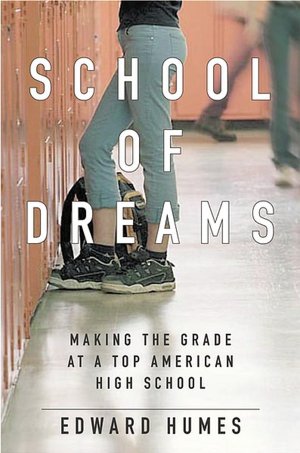
School of Dreams (2003), by Edward Humes, September 9, 2012. (Donald Earl Collins).

Yesterday was the thirty-first anniversary of my first day of seventh grade at A.B. Davis Middle School, my first day in a six-year slog in Mount Vernon public schools’ Humanities Program. The academic pressures that came with being part of a gifted-talented track magnet program were such that the lessons I learned during those years remain with me to this day. The unique lessons about who I was and whom I wanted and needed to become, though, are the kinds of lessons reserved for a memoir, like, say, Boy @ The Window.

But there are other lessons, other issues that anyone who has gone through such a program, is in one, or has kids in one, should heed. Perhaps the best book I’ve ever read about the experiences of high ability students in a gifted track middle or high school has been Edward Humes’ School of Dreams: Making the Grade at a Top American High School (2003). Despite some of the flaws in the Pulitzer-Prize winning journalist and author’s account covering a year in the life of Whitney High School in Cerritos, California, this is a book I’d use in many of my future graduate seminars in US educational history.

A particularly poignant passage was where Humes wrote, the “combination of a school built upon high expectations and a student population whose dominant culture elevates learning to a high priority—and hard work in school to an absolute necessity—makes for a kind of education echo chamber” (p. 340). Humes meant this as a positive comment on the academic culture of a public high school in Southern California.  But it also reflected a constant tension between learning and zero-sum competition.

Starbucks double chocolate chip frappucino, September 10, 2012. (htttp://wwwcoffeespitfire.blogspot.com).

Humes somehow doesn’t fully take stock of this tension beyond the context of the high school in which he embedded himself in 2000-01. There were stories, disheartening stories about seventh graders hitting up Starbucks for coffee before school, during lunch and after school to stay awake. Of parents who shunned their kids’ artistic talent and aspirations in their quest to ensure they earned a degree in a STEM (science, technology, engineering, mathematics) field. Of students taking as many as six AP (Advanced Placement) courses in a single school year, or colluding to cheat on a calculus or physics exam when the pace of study and testing proved to be too much.

Yes, despite this, Whitney has produced thousands of elite college-goers, and 4.0 is the standard, not the exception, that its students shoot for. But now, in an age in which high-stakes testing is the norm, what’s the social and psychological message that we’re communicating to the current crop of K-12 students in the US today?

For me, the best way to answer this question is to look back on my own experience and the experiences of my former Humanities classmates. Based on my own writings and findings, there’s plenty of evidence that intensive academic rigor and competition — like intensive athletic training and competition — will produce excellent students well prepared for college, but not necessarily well prepared for life. Many of my former Humanities classmates (and many of the students Humes tracked and interviewed for School of Dreams) were socially inept, put themselves under constant stress (not to mention experiencing psychological pressures from each other, their parents and teachers) and lacked the deeper critical reasoning skills necessary to make college a worthwhile experience.

The students had a “cram-and-exam” methodology to learning, spending hours learning techniques and concepts and little time in applying them beyond the classroom in the vast majority of their subjects. Often when students discovered a new talent, particularly in writing, the arts or in music, many of their parents pounced into action to admonish teachers for encouraging these developments or to force their kids into their way of thinking about their future. Bottom line: while many of these high-achievers were willing to slit each others’ throats for an A, an AP “5” or an SAT 1600, they hadn’t really made up their minds about who they wanted to be, the talents they wanted to explore, or the world in which they wanted to live.

“Nightmares & Daydreams” episode screen shot, Avatar: The Last Airbender, September 10, 2012. (Donald Earl Collins). Qualifies as fair use under US Copyright laws due to pic’s low resolution.

When I first read Humes’ School of Dreams nine years ago, it forced me to think about these parallels. I realized that if Starbucks was within a mile of either A.B. Davis Middle or Mount Vernon High School in the ’80s, our class alone would’ve spent about $160,000 a year there on coffee and pastries. That most of us were sane enough to only take three or four AP courses my senior year. That our standard for a minimally acceptable SAT score was a 1200. That, instead of kids crying or running away from home for two days over a B, attempted suicides or a turn to crystal meth would’ve been more common. I guess by Whitney’s standards, we would’ve been slackers.

Still, more than a quarter-century since my last Humanities course, with tighter budgets and far more high-stakes testing (see the correlation?), the crush of intense academic competition has made our public schools a poor place for polishing students into well-adjusted young adults. Yes, I know that this is primarily a parent’s responsibility. But then again, public schools are meant to be far more than an octagon ring with No. 2 pencils.

My Friend Matt

07 Friday Sep 2012

Posted by decollins1969 in 1, Academia, Boy @ The Window, culture, Eclectic, Politics, Pop Culture, race, Youth

≈ 2 Comments

Tags

African American History, Beavis and Butt-head, Bedtime Stories, Boston Market, Burden of Success, Canasta, Carnegie Mellon University, Friendship, Graduate School, Joe Trotter, Matt, Pitt, Pressures, University of Pittsburgh


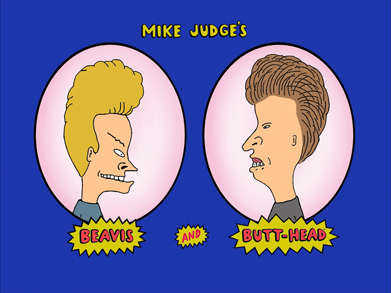
Beavis and Butt-head titlecard, May 21, 2012. (Nerd 101 via Wikipedia). Qualifies as fair use under US Copyright laws due to image’s low resolution.

Over the past couple of years, one of my son’s favorite bedtime stories has been about a character I named Matt (see my post “Crush #1 and Other Bedtime Stories” from July ’10). Having a friend with superhuman farts or a friend who belts out ’80s pop tunes while beating up some of the other characters isn’t exactly based on my growing up experience. In the case of Matt, his character was one that always over-explained things — like why 2+2=4 — and wanted to play Canasta in the middle of a basketball game.

Buried in all the ridiculousness and hyperbole around the character was a real-life friend named Matt, whom I met twenty years ago this month. Matt was in my African American History graduate seminar at Carnegie Mellon University in the fall of ’92. I took the course on the advice of my eventual advisor Joe Trotter, whom I had met that spring at my first academic conference at Lincoln University (see my “Meeting Joe Trotter” post from May ’12). I decided to take the course because my history grad program at Pitt didn’t have anything close to a course on Black historiography. In fact, I couldn’t find a course that would even approximate a graduate seminar in African American studies at the University of Pittsburgh in ’92.

I was one of seven students in the course, with two women (one of whom was Black and in her thirties) and three young White males, though not as young as twenty-two year-old me. And there was Matt, the first Black male I’d seen in either my own or Carnegie Mellon’s History PhD who wasn’t me. What I noticed immediately was the fact that in our Tuesday 9:30-12:30 course, Matt was the only one who spent the first two hours leafing through the one or two books and five articles we were to read every single week. Leafing, because as it turned out, Matt had already finished all of his coursework for the doctorate. He was auditing the course, and rarely read anything for the seminar in advance.

Carnegie Mellon University logo, June 27, 2012. (Abrio via Wikipedia). In public domain.

That’s what I learned when we had our first lunch together in the cafeteria of University of Pittsburgh Medical Center, where I could get a cheap lunch before or after shooting hoops. It was then that I also noticed something peculiar about Matt. He chewed his food with his mouth half-open, where if I looked too closely, I’d notice the mix of saliva, wild rice, green beans and chicken breast being crushed by his raptor-like teeth. I never knew anyone over twelve, much less someone approaching forty, who didn’t know how to chew with their mouth closed until I’d met Matt.

Despite my observation of some weird tendencies, I found my first conversations with Matt to be exhilarating. I simply hadn’t been around anyone in my graduate school experience aside from a professor or two who was as knowledgeable about American and African American history, politics and culture as Matt. That, and the fact that he had worked in the community development corporation world as a community organizer made him an atypical graduate student, even compared to the other older perpetual-student-graduates I’d known over the previous five years.

I learned from our eatery outings — especially after the first Boston Market in Pittsburgh opened in Squirrel Hill in mid-September — that Matt was the younger son of two prominent Black/Afro-Caribbean parents, both of whom were in the social work field, both of whom had doctorates, both of whom were prominent on Pitt’s campus. His father, of course, was also an ordained minister. I could only imagine the kind of pressure that would’ve put on Matt over the years to do something meaningful with his life.

Canasta, May 31, 2007. (Roland Scheicher via Wikipedia). Released to public domain by author.

The one political argument that Matt made during the fall presidential election cycle in ’92 was the need for serious campaign finance reform. Remember, this was a good four years before McCain-Feingold, which has since of course been shredded by the Supreme Court’s Citizens United decision. Aside from that, most of what we agreed on were issues of interpretation in African American historiography and the fact that two of our classmates, Mark and Mike, were the ultimate brown-nosers. They kissed butt at times like their lives depended on it, leading to heated arguments in our seminar every week. The fact that they thought Fogel and Engelmann’s Time on the Cross (1974) was a great work on slavery said it all on these future neo-cons.

Still, while I found Matt’s contrarian Beavis and Butt-head view of the world interesting at times, I also realized that Matt spent an amazing amount of time talking. At Hillman Library, in front of William Pitt Union, in the halls of Baker Hall, at Boston Market. And as I’d learn later on, there was a great distance between Matt’s interesting and sometimes great ideas and the hard work needed to put them on paper for a committee or to put them in action in his own life.

← Older posts
Newer posts →

Boy @ The Window: A Memoir

Boy @ The Window: A Memoir

Places to Buy/Download Boy @ The Window

There's a few ways in which you can read excerpts of, borrow and/or purchase and download Boy @ The Window. There's the trade paperback edition of Boy @ The Window, available for purchase via Amazon.com at http://www.amazon.com/Boy-Window-Donald-Earl-Collins/dp/0989256138/

There's also a Kindle edition on Amazon.com. The enhanced edition can be read only with Kindle Fire, an iPad or a full-color tablet. The links to the enhanced edition through Apple's iBookstore and the Barnes & Noble NOOK edition are below. The link to the Amazon Kindle version is also immediately below:

scr2555-proj697-a-kindle-logo-rgb-lg

Boy @ The Window on Amazon.com: http://www.amazon.com/Boy-The-Window-Memoir-ebook/dp/B00CD95FBU/

iBookstore-logo-300x100

Boy @ The Window on Apple's iBookstore: https://itunes.apple.com/us/book/boy-the-window/id643768275?ls=1

Barnes & Noble (bn.com) logo, June 26, 2013. (http://www.logotypes101.com).

Boy @ The Window on Barnes & Noble: http://www.barnesandnoble.com/w/boy-the-window-donald-earl-collins/1115182183?ean=2940016741567

You can also add, read and review Boy @ The Window on Goodreads.com. Just click on the button below:

Boy @ The Window

Twitter Updates

Tweets by decollins1969
  • RSS - Posts
  • RSS - Comments

Archives

  • June 2025
  • April 2023
  • September 2022
  • August 2022
  • July 2022
  • June 2022
  • May 2022
  • April 2022
  • March 2022
  • January 2022
  • December 2021
  • November 2021
  • October 2021
  • September 2021
  • August 2021
  • July 2021
  • June 2021
  • April 2021
  • March 2021
  • February 2021
  • January 2021
  • December 2020
  • November 2020
  • October 2020
  • September 2020
  • August 2020
  • July 2020
  • May 2020
  • April 2020
  • March 2020
  • January 2020
  • December 2019
  • November 2019
  • August 2019
  • July 2019
  • June 2019
  • May 2019
  • April 2019
  • March 2019
  • February 2019
  • January 2019
  • December 2018
  • November 2018
  • October 2018
  • September 2018
  • August 2018
  • July 2018
  • June 2018
  • May 2018
  • March 2018
  • February 2018
  • January 2018
  • December 2017
  • November 2017
  • October 2017
  • September 2017
  • August 2017
  • July 2017
  • June 2017
  • May 2017
  • April 2017
  • March 2017
  • February 2017
  • January 2017
  • December 2016
  • November 2016
  • October 2016
  • September 2016
  • August 2016
  • July 2016
  • June 2016
  • May 2016
  • April 2016
  • March 2016
  • February 2016
  • January 2016
  • December 2015
  • November 2015
  • October 2015
  • September 2015
  • August 2015
  • July 2015
  • June 2015
  • May 2015
  • April 2015
  • March 2015
  • February 2015
  • January 2015
  • December 2014
  • November 2014
  • October 2014
  • September 2014
  • August 2014
  • July 2014
  • June 2014
  • May 2014
  • April 2014
  • March 2014
  • February 2014
  • January 2014
  • December 2013
  • November 2013
  • October 2013
  • September 2013
  • August 2013
  • July 2013
  • June 2013
  • May 2013
  • April 2013
  • March 2013
  • February 2013
  • January 2013
  • December 2012
  • November 2012
  • October 2012
  • September 2012
  • August 2012
  • July 2012
  • June 2012
  • May 2012
  • April 2012
  • March 2012
  • February 2012
  • January 2012
  • December 2011
  • November 2011
  • October 2011
  • September 2011
  • August 2011
  • July 2011
  • June 2011
  • May 2011
  • April 2011
  • March 2011
  • February 2011
  • January 2011
  • December 2010
  • November 2010
  • October 2010
  • September 2010
  • August 2010
  • July 2010
  • June 2010
  • May 2010
  • April 2010
  • March 2010
  • February 2010
  • January 2010
  • December 2009
  • November 2009
  • October 2009
  • September 2009
  • August 2009
  • July 2009
  • June 2009
  • May 2009
  • April 2009
  • March 2009
  • February 2009
  • January 2009
  • December 2008
  • November 2008
  • October 2008
  • September 2008
  • August 2008
  • July 2008
  • June 2008
  • May 2008
  • April 2008
  • March 2008
  • February 2008
  • January 2008
  • December 2007
  • November 2007
  • October 2007
  • September 2007
  • August 2007
  • July 2007
  • June 2007

Recent Comments

MaryPena's avatarMaryPena on My Day of Atonement/Bitter Hat…
decollins1969's avatardecollins1969 on No Good Teaching Deed Goes…
Mary Rose O’Connell's avatarMary Rose O’Connell on No Good Teaching Deed Goes…

NetworkedBlogs on Facebook

NetworkedBlogs
Blog:
Notes From a Boy @ The Window
Topics:
My Life, Culture & Education, Politics & Goofyness
 
Follow my blog

616 616 East Lincoln Avenue A.B. Davis Middle School Abuse Academia Academy for Educational Development AED Afrocentricity American Narcissism Authenticity Bigotry Blackness Boy @ The Window Carnegie Mellon University Child Abuse Class of 1987 CMU Coping Strategies Crush #1 Crush #2 Death Disillusionment Diversity Domestic Violence Economic Inequality Education Family Friendship Friendships Graduate School Hebrew-Israelites High-Stakes Testing Higher Education History Homelessness Humanities Humanities Program Hypocrisy Internalized Racism Jealousy Joe Trotter Joe William Trotter Jr. K-12 Education Love Manhood Maurice Eugene Washington Maurice Washington Misogyny Mother-Son Relationship Mount Vernon High School Mount Vernon New York Mount Vernon public schools Multiculturalism MVHS Narcissism NFL Pitt Pittsburgh Politics of Education Poverty President Barack Obama Race Racial Stereotypes Racism Relationships Self-Awareness Self-Discovery Self-Reflection Sexism Social Justice Teaching and Learning University of Pittsburgh Violence Whiteness Writing

Top Rated

Blog at WordPress.com.

  • Subscribe Subscribed
    • Notes from a Boy @ The Window
    • Join 103 other subscribers
    • Already have a WordPress.com account? Log in now.
    • Notes from a Boy @ The Window
    • Subscribe Subscribed
    • Sign up
    • Log in
    • Report this content
    • View site in Reader
    • Manage subscriptions
    • Collapse this bar
 

Loading Comments...